20 Results for "

Reactive oxygen generation agent

" in MedChemExpress (MCE) Product Catalog:
Products (20)

20 Results for "Reactive oxygen generation agent" in MCE Product Catalog:

87
87 Cited Publications
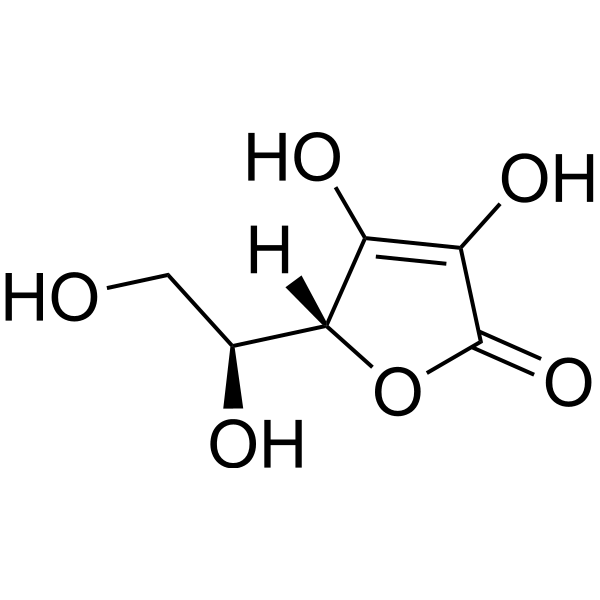
Cat. No.: HY-B0166
CAS No.: 50-81-7
Synonyms: L-Ascorbate; Vitamin C
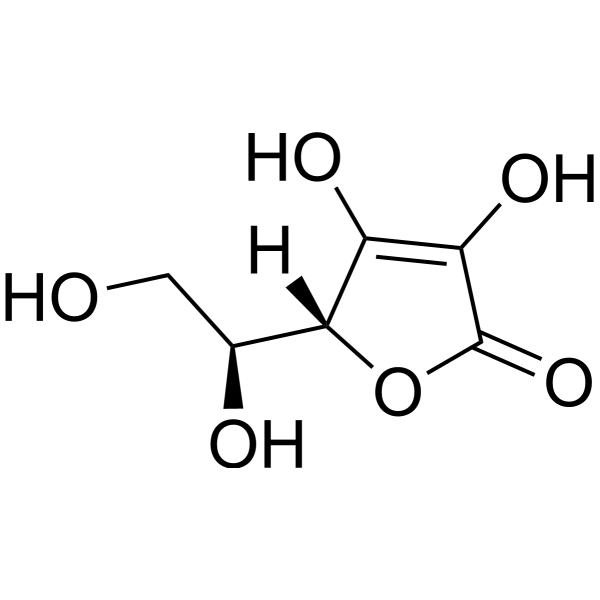
L-Ascorbic acid (L-Ascorbate), an electron donor, is an endogenous antioxidant agent. L-Ascorbic acid inhibits selectively Cav3.2 channels with an IC50 of 6.5 μM. L-Ascorbic acid is also a collagen deposition enhancer and an elastogenesis inhibitor . L-Ascorbic acid exhibits anti-cancer effects through the generation of reactive oxygen species (ROS) and selective damage to cancer cells .
loading...
    loading...
2
2 Cited Publications
Cat. No.: HY-B0166R
CAS No.: 50-81-7
Synonyms: L-Ascorbate (Standard); Vitamin C (Standard)
L-Ascorbic acid (Standard) is the analytical standard of L-Ascorbic acid. This product is intended for research and analytical applications. L-Ascorbic acid (L-Ascorbate), an electron donor, is an endogenous antioxidant agent. L-Ascorbic acid inhibits selectively Cav3.2 channels with an IC50 of 6.5 μM. L-Ascorbic acid is also a collagen deposition enhancer and an elastogenesis inhibitor . L-Ascorbic acid exhibits anti-cancer effects through the generation of reactive oxygen species (ROS) and selective damage to cancer cells .
loading...
    loading...
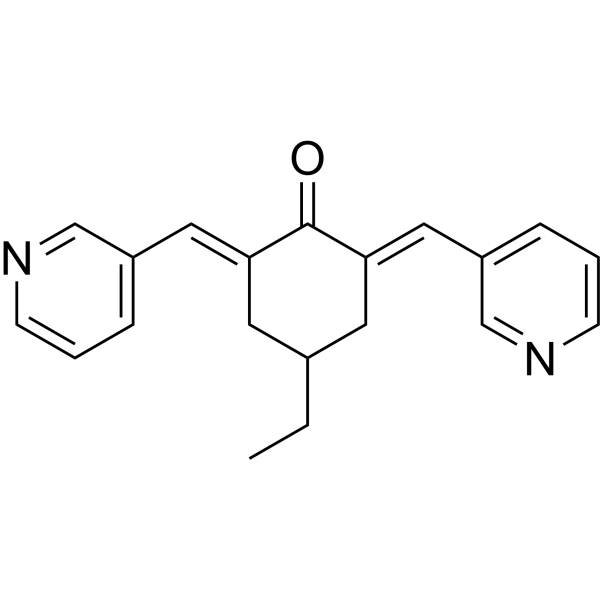
Cat. No.: HY-19625
CAS No.: 1162656-22-5
Research Areas:  

Cancer

MCB-613 is a potent Steroid receptor coactivator SRC small molecule ‘stimulator’ (SMS), super-stimulates SRCs’ transcriptional activity. MCB-613 increases SRCs’ interactions with other coactivators and markedly induces ER stress coupled to the generation of reactive oxygen species (ROS). MCB-613 is a SMS that target oncogenes can be exploited as anti-cancer agents by over-stimulating the SRC oncogenic program .
loading...
    loading...
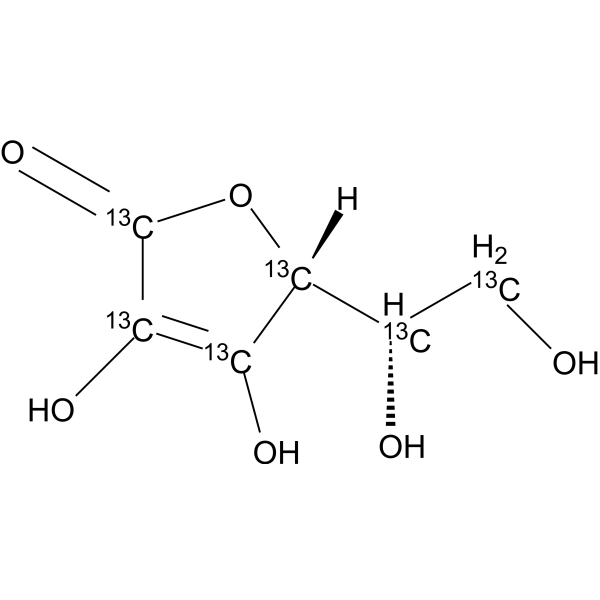
Cat. No.: HY-B0166S
CAS No.: 1354064-87-1
Synonyms: L-Ascorbate-13C6; Vitamin C-13C6
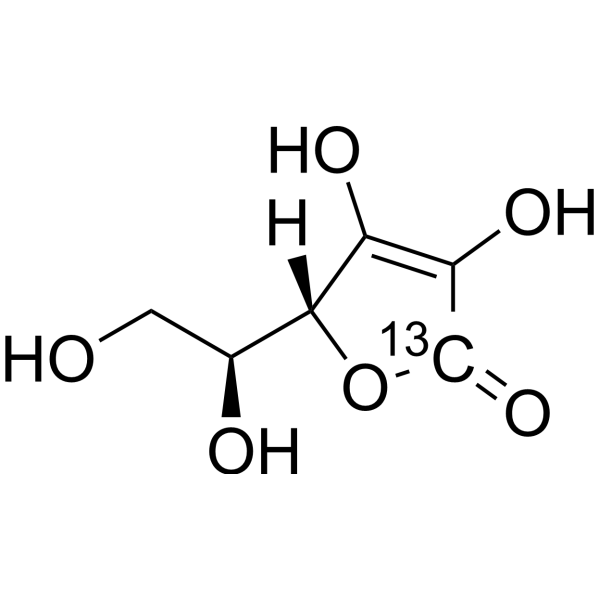
L-Ascorbic acid- 13C6 is the 13C-labeled L-Ascorbic acid. L-Ascorbic acid (L-Ascorbate), an electron donor, is an endogenous antioxidant agent. L-Ascorbic acid inhibits selectively Cav3.2 channels with an IC50 of 6.5 μM. L-Ascorbic acid is also a collagen deposition enhancer and an elastogenesis inhibitor . L-Ascorbic acid exhibits anti-cancer effects through the generation of reactive oxygen species (ROS) and selective damage to cancer cells .
loading...
    loading...
Cat. No.: HY-W115721
CAS No.: 523-21-7
Synonyms: Sodium rhodizonate dibasic
Rhodizonic acid disodium (Sodium rhodizonate dibasic) is a transition metal-dependent pro-oxidant and lead detection agent that induces reactive oxygen species generation, DNA damage, and inhibits Aconitase activity. Rhodizonic acid disodium generates superoxide anion radicals in an iron (II)-dependent manner, leading to aconitase inactivation. Rhodizonic acid disodium also triggers hydroxyl radical-mediated DNA strand breaks and 8-OHdG formation via copper ion reduction. Rhodizonic acid disodium reacts with lead to form a scarlet precipitate, with the color intensity proportional to lead content, enabling qualitative or quantitative analysis of lead. Rhodizonic acid disodium can also be used for real-time visualization of the dynamic process of lead sequestration in the plant rhizosphere and evaluation of the effects of environmental factors such as soil type on the stability of lead-sequestering structures .
loading...
    loading...
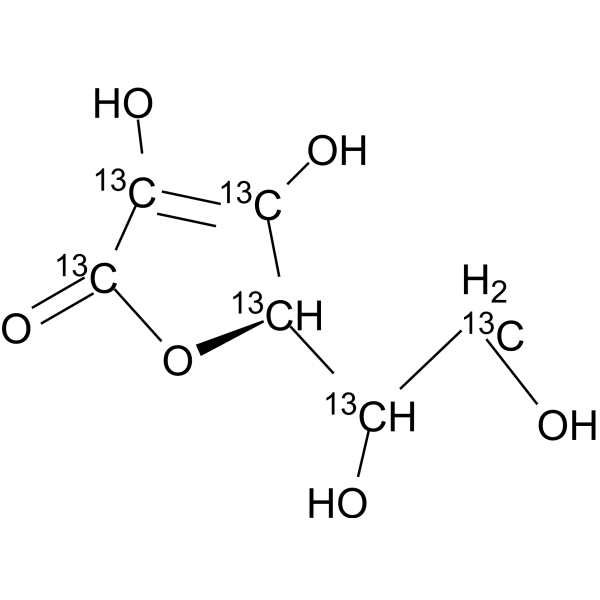
Cat. No.: HY-B0166S8
CAS No.: 1331939-77-5
Synonyms: L-Ascorbate-1; Vitamin C-13C6-1
L-Ascorbic acid- 13C6-1 (L-Ascorbate-1; Vitamin C- 13C6-1) is a 13C labeled L-Ascorbic acid (HY-B0166) . L-Ascorbic acid (L-Ascorbate), an electron donor, is an endogenous antioxidant agent. L-Ascorbic acid inhibits selectively Cav3.2 channels with an IC50 of 6.5 μM. L-Ascorbic acid is also a collagen deposition enhancer and an elastogenesis inhibitor . L-Ascorbic acid exhibits anti-cancer effects through the generation of reactive oxygen species (ROS) and selective damage to cancer cells .
loading...
    loading...
Cat. No.: HY-B0166S1
CAS No.: 178101-88-7
Synonyms: L-Ascorbate-13C; Vitamin C-13C
L-Ascorbic acid- 13C is the 13C-labeled L-Ascorbic acid. L-Ascorbic acid (L-Ascorbate), an electron donor, is an endogenous antioxidant agent. L-Ascorbic acid inhibits selectively Cav3.2 channels with an IC50 of 6.5 μM. L-Ascorbic acid is also a collagen deposition enhancer and an elastogenesis inhibitor . L-Ascorbic acid exhibits anti-cancer effects through the generation of reactive oxygen species (ROS) and selective damage to cancer cells .
loading...
    loading...
Cat. No.: HY-B0166GL
CAS No.: 50-81-7
Synonyms: L-Ascorbate (GMP Like); Vitamin C (GMP Like)
L-Ascorbic acid (GMP Like) is the GMP Like class L-Ascorbic acid (HY-B0166). L-Ascorbic acid (L-Ascorbate, Vitamin C), an electron donor, is an endogenous antioxidant agent. L-Ascorbic acid inhibits selectively Cav3.2 channels with an IC50 of 6.5 μM. L-Ascorbic acid is also a collagen deposition enhancer and an elastogenesis inhibitor . L-Ascorbic acid exhibits anti-cancer effects through the generation of reactive oxygen species (ROS) and selective damage to cancer cells .
loading...
    loading...
Cat. No.: HY-176738
Research Areas:  

Cancer

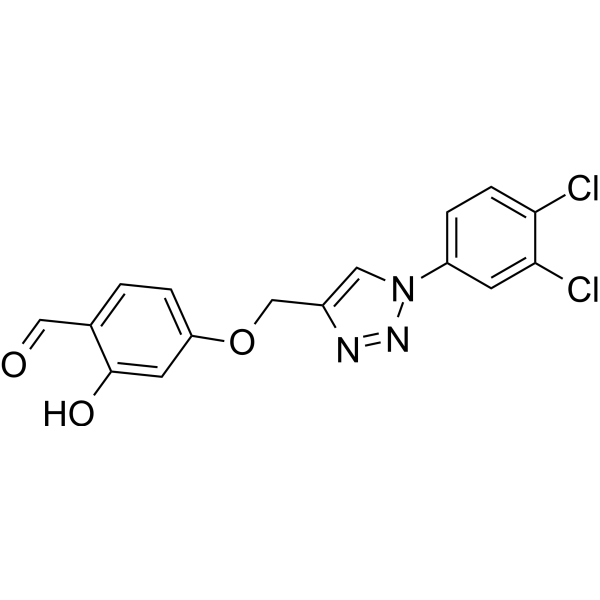
Antitumor agent-204 (compound 15a) is a potent antitumor agent. Antitumor agent-204 shows cytotoxicity. Antitumor agent-204 induces nitric oxide (NO) release and reactive oxygen species (ROS) generation. Antitumor agent-204 induces apoptosis and induces cell cycle arrest at G2/M phase. Antitumor agent-204 shows antitumor activity .
loading...
    loading...
Cat. No.: HY-120896B
Research Areas:  

Cancer

Imipramine Blue chloride is a potent anti-invasive agent. Imipramine Blue chloride inhibits the invasion of glioma. Imipramine Blue chloride inhibits NADPH oxidase-mediated reactive oxygen species generation .
loading...
    loading...
Cat. No.: HY-155964
CAS No.: 2982527-32-0
Target:  

Apoptosis

Research Areas:  

Cancer

Anticancer agent 153 (Compound 3) induces apoptosis by Reactive Oxygen Species generation. Anticancer agent 153 increases the loss of mitochondrial membrane potential (MMP) levels. Anticancer agent 153 inhibits cancer cell proliferation .
loading...
    loading...
Cat. No.: HY-170416
CAS No.: 3105301-86-5
Research Areas:  

Cancer

ROS inducer 6 (compound 9) is a reactive oxygen species (ROS) inducer. ROS inducer 6 (compound 9) acts as an anticancer agent by inducing ROS generation through the depletion of intracellular glutathione .
loading...
    loading...
Cat. No.: HY-D1468
CAS No.: 2555045-67-3
Research Areas:  

Cancer

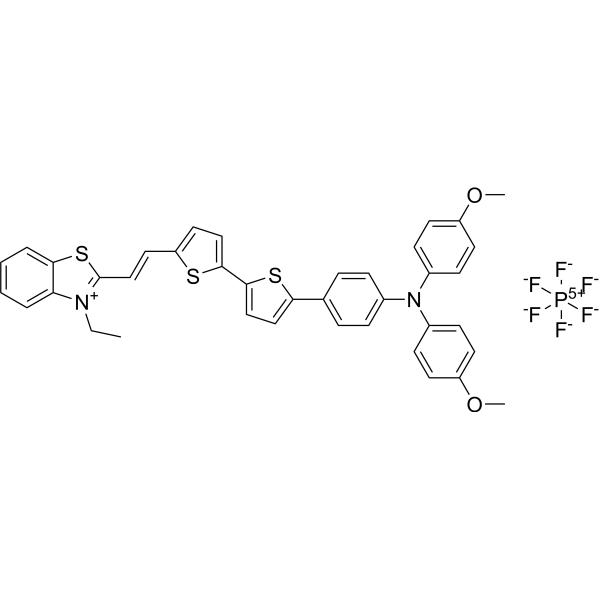
Phototherapeutic agent-1 is a multi-modal light diagnosis agent with aggregation-induced emission properties. have certain Phototherapeutic agent-1 has certain reactive oxygen species (ROS) generation capacity in illumination condition. Phototherapeutic agent-1 can effectively kill cancer cells and tumor tissue .
loading...
    loading...
Cat. No.: HY-175364
CAS No.: 3048504-54-4
Research Areas:  

Infection

Antiparasitic agent-27 (Compound 2) is a potent antiparasitic agent targeting Leishmania infantum (IC50=3.1 μM). Antiparasitic agent-27 induces G0/G1 cell cycle arrest and reactive oxygen species (ROS) generation to trigger programmed cell death. Antiparasitic agent-27 is promising for research of visceral leishmaniasis (VL) .
loading...
    loading...
Cat. No.: HY-161647
Antitumor agent-156 (Compound 20) causes DNA damage and mitochondrial dysfunction, promotes reactive oxygen species generation, activates endoplasmic reticulum stress, and induce apoptosis, autophagy and ferroptosis. Antitumor agent-156 shows superior antitumor activity against cancer cells including Cisplatin (HY-17394) resistance cells. Antitumor agent-156 displayS good liver-targeting ability .
loading...
    loading...
Cat. No.: HY-162488
Target:  

Fungal

Research Areas:  

Infection

Laccase-IN-3 (Compound 2b) is a laccase inhibitor (IC50 = 1.02= μM) with significant antifungal activity. Laccase-IN-3 shows superior inhibitory effect on Botryosphaeria dothidea (EC50 = 0.17 mg/L). Laccase-IN-3 effectively blocks the catalytic function of laccase by binding to its active center. Laccase-IN-3 also disrupts pathogen cell membrane integrity and increases ROS .
loading...
    loading...
Cat. No.: HY-118129
CAS No.: 55511-14-3
Synonyms: Ganwuweizic acid
Target:  

PARP Apoptosis

Research Areas:  

Cancer

Schisandronic acid is a triterpenoid antioxidant and anticancer agent extracted from Schisandra chinensis, which has potent cytotoxicity against human breast cancer cells, especially MCF-7. Schisandronic acid induces apoptosis and reduces cell viability in a time-dependent manner (MCF-7, IC50=8.06 μM). Schisandronic acid can upregulate active caspase-3 expression and cleave PARP, reduce the generation of reactive oxygen species and exhibit antioxidant effects .
loading...
    loading...
Cat. No.: HY-170991
Research Areas:  

Infection

C12-rrw-NH2 (Compound Lip7) is an antibacterial agent against gram-positive bacteria, especially against Methicillin (HY-121544)-resistant Staphylococcus aureus (MRSA). C12-rrw-NH2 induces bacterial death via depolarizing the bacterial cytoplasmic membrane, disrupting the integrity of the bacterial membrane, leading to leakage of nucleic acid and protein and promoting the generation of Reactive Oxygen Species. C12-rrw-NH2 is potential to be used for research of developing high-stability antimicrobial peptides .
loading...
    loading...
Cat. No.: HY-133794R
CAS No.: 910297-52-8
Research Areas:  

Cancer

L-Ascorbic acid (GMP Like) (Standard) is the analytical standard of L-Ascorbic acid (GMP Like). This product is intended for research and analytical applications. L-Ascorbic acid (GMP Like) is the GMP Like class L-Ascorbic acid (HY-B0166). L-Ascorbic acid (L-Ascorbate, Vitamin C), an electron donor, is an endogenous antioxidant agent. L-Ascorbic acid inhibits selectively Cav3.2 channels with an IC50 of 6.5 μM. L-Ascorbic acid is also a collagen deposition enhancer and an elastogenesis inhibitor . L-Ascorbic acid exhibits anti-cancer effects through the generation of reactive oxygen species (ROS) and selective damage to cancer cells .
loading...
    loading...
Cat. No.: HY-180825
Anticancer agent 292 (Compound P4) is a photosensitizer for anti-melanoma. Anticancer agent 292 shows good biocompatibility under dark conditions and, upon illumination, induces apoptosis and partial necrosis in B16-F10 cells by disrupting the lysosomal membrane. Anticancer agent 292 not only directly kills tumor cells through the generation of reactive oxygen species (ROS), but also induces immune-prone cell death (ICD), thereby generating anti-tumor immune effects. Anticancer agent 292 can be used in the research of photodynamic therapy for melanoma .
loading...
    loading...
  • 1

