
1. Search Result
Search Result
Results for "

Reduction product

" in MedChemExpress (MCE) Product Catalog:

73

Inhibitors & Agonists

3

Fluorescent Dye

4

Biochemical Assay Reagents

26

Natural
Products

Cat. No. Product Name Target Research Areas Chemical Structure
  • HY-P1956
    Human serum albumin
    4 Publications Verification

    HSA

    NF-κB NO Synthase Cardiovascular Disease Inflammation/Immunology Cancer
    Human serum albumin (HSA) is the most abundant protein in plasma and is a major determinant of plasma oncotic pressure. Human serum albumin exhibits antioxidant, anticoagulant, anti-inflammatory, anti-platelet aggregation activities as well as colloid osmotic action. Human serum albumin can block the inhibitory effect of GML on human T cells, providing protective function for T cells. Human serum albumin is also associated with cardiovascular diseases and can partially prevent the LPS (HY-D1056) induced oxidative stress, as well as the upregulation of NF-κB, NF-κB, and peroxynitrite (ONOO ) in the vascular wall, contributing to the reduction of blood pressure .
    This product is recombinant Human Serum Albumin expressed in a microbial expression system.
    Human serum albumin
  • HY-P1956A

    HSA (Cell culture grade, Endotoxin<0.125 EU/mg)

    NF-κB NO Synthase Cardiovascular Disease Inflammation/Immunology
    Human serum albumin (Cell culture grade, Endotoxin<0.125 EU/mg) (HSA) is the most abundant protein in plasma and is a major determinant of plasma oncotic pressure. Human serum albumin (Cell culture grade, Endotoxin<0.125 EU/mg) exhibits antioxidant, anticoagulant, anti-inflammatory, anti-platelet aggregation activities as well as colloid osmotic action. Human serum albumin (Cell culture grade, Endotoxin<0.125 EU/mg) can block the inhibitory effect of GML on human T cells, providing protective function for T cells. Human serum albumin (Cell culture grade, Endotoxin<0.125 EU/mg) is also associated with cardiovascular diseases and can partially prevent the LPS (HY-D1056) induced oxidative stress, as well as the upregulation of NF-κB, iNOS, and peroxynitrite (ONOO ) in the vascular wall, contributing to the reduction of blood pressure. Human serum albumin (Cell culture grade, Endotoxin<0.125 EU/mg) can be used for in vitro cell culture .
    This product is human serum albumin recombinantly expressed in an Escherichia coli expression system.
    Human serum albumin (Cell culture grade, Endotoxin<0.125 EU/mg)
  • HY-137006

    Fluorescent Dye Others
    MTT Formazan is a purple water-insoluble product formed by the reduction of yellow soluble MTT by succinate dehydrogenase in the mitochondria of viable cells. The amount of MTT Formazan produced is proportional to cellular metabolic activity, and it can serve as an indicator for evaluating cell viability and proliferation. MTT Formazan exhibits solvent-dependent solubility properties, and its absorbance value can be measured by spectrophotometry to reflect cellular status. MTT Formazan also supports the assessment of cell viability in bacterial MTT assays. MTT Formazan can be used in photoacoustic microscopy to enhance the imaging effect of viable cells, especially in applications in the fields of three-dimensional cell culture and tissue engineering .
    MTT Formazan
  • HY-78036

    Citronic acid; Methylfumaric acid

    Endogenous Metabolite Others
    Mesaconic acid is an active product that can be extracted from Saxifraga stolonifera. Mesaconic acid is used as a fire retardant and is a competitive inhibitor of fumarate reduction .
    Mesaconic acid
  • HY-100582R

    Adonitol (Standard); Adonite (Standard)

    Reference Standards Endogenous Metabolite Others
    Ribitol (Standard) is the analytical standard of Ribitol. This product is intended for research and analytical applications. Ribitol is a crystalline pentose alcohol formed by the reduction of ribose. Enhancing the flux of D-glucose to the pentose phosphate pathway in Saccharomyces cerevisiae for the production of D-ribose and ribitol.
    Ribitol (Standard)
  • HY-B1941
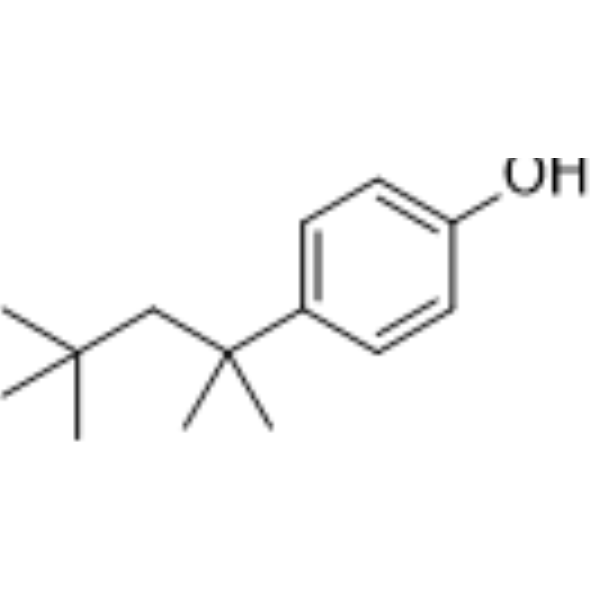
    4-tert-Octylphenol
    2 Publications Verification

    Endogenous Metabolite Apoptosis DNA/RNA Synthesis Neurological Disease Metabolic Disease Inflammation/Immunology Endocrinology
    4-tert-Octylphenol, a endocrine-disrupting chemical, is an estrogenic agent. 4-tert-Octylphenol is also a biodegradation product of non-ionic surfactants alkylphenol polyethoxylates. 4-tert-Octylphenol induces apoptosis in neuronal progenitor cells in offspring mouse brain. 4-tert-Octylphenol reduces bromodeoxyuridine (BrdU), mitotic marker Ki67, and phospho-histone H3 (p-Histone-H3), resulting in a reduction of neuronal progenitor proliferation. 4-tert-Octylphenol disrupts brain development and behavior in mice, which is promising for reserch of immune response, neuro-related diseases and ethology .
    4-tert-Octylphenol
  • HY-114351

    Fluorescent Dye Others
    BODIPY FL Hydrazide is a green-fluorescent dye, BODIPY FL Hydrazide is reactive with aldehyde/ketone on polysaccharides and glycoproteins, yielding a reversible Schiff base product that can be transformed to a stable linkage using a reducing agent like sodium borohydride or sodium cyanoborohydride. (λex=495 nm, λem=516 nm) .
    BODIPY FL hydrazide
  • HY-B0456R
    Riboflavin (Standard)
    1 Publications Verification

    Vitamin B2 (Standard); E101 (Standard)

    Reference Standards Endogenous Metabolite Bacterial Metabolic Disease Cancer
    Riboflavin (Standard) is the analytical standard of Riboflavin. This product is intended for research and analytical applications. Riboflavin, an orally active and easily absorbed micronutrient, is a precursor of flavin mononucleotide (FMN) and flavin adenine dinucleotide (FAD), which serve as coenzymes for numerous enzymatic reactions and perform key metabolic functions by mediating the transfer of electrons in biological oxidation-reduction reaction .
    Riboflavin (Standard)
  • HY-111391R

    Diazoresorcinol sodium (Standard)

    Reference Standards Bacterial Others
    Resazurin (sodium) (Standard) is the analytical standard of Resazurin (sodium). This product is intended for research and analytical applications. Resazurin sodium (Diazoresorcinol sodium) is commonly used to measure bacterial and eukaryotic cell viability through its reduction to the fluorescent product resorufin.
    Resazurin sodium (Standard)
  • HY-W018584

    o-Phenoxyphenol

    Drug Derivative Others
    2-Phenoxyphenol (o-Phenoxyphenol) is the main product in the photocatalytic reduction and dechlorination reaction of Triclosan (HY-B1119). 2-Phenoxyphenol has low toxicity and can be recycled and utilized as a chemical raw material .
    2-Phenoxyphenol
  • HY-B1901R

    (±)-Eperisone hydrochloride (Standard)

    P2X Receptor Reference Standards Neurological Disease
    Eperisone (hydrochloride) (Standard) is the analytical standard of Eperisone (hydrochloride). This product is intended for research and analytical applications. Eperisone Hydrochloride ((±)-Eperisone hydrochloride) is an orally active antispastic agent with a vasodilator effect, used for the research of muscle stiffness and pain. Eperisone Hydrochloride is a potent and selectively P2X7 receptor antagonist, also shows antagonism for human P2X3. Eperisone Hydrochloride works by relaxing both skeletal muscles and vascularsmooth muscles, demonstrating a variety of effects such as reduction ofmyotonia, improvement of circulationand and suppression of the pain reflex .
    Eperisone hydrochloride (Standard)
  • HY-30004R

    Reference Standards Endogenous Metabolite Cardiovascular Disease Metabolic Disease
    1-Aminocyclopropane-1-carboxylic acid (Standard) is the analytical standard of 1-Aminocyclopropane-1-carboxylic acid. This product is intended for research and analytical applications. 1-Aminocyclopropane-1-carboxylic acid is an endogenous metabolite. In the presence of low concentrations (1 μM) of glutamate, 1-Aminocyclopropane-1-carboxylic acid acts as a small molecule agonist of NMDA receptors with an EC50 of 0.7-0.9 μM. At high concentrations (10 μM) of glutamate, 1-Aminocyclopropane-1-carboxylic acid acts as a competitive antagonist of NMDA receptors with an EC50 of 81.6 nM. 1-Aminocyclopropane-1-carboxylic acid exerts neuroprotective activity by moderately activating NMDA receptors to prevent neuronal cell death in ischemic animal models. Additionally, 1-Aminocyclopropane-1-carboxylic acid is an antagonist of NMDA receptors, inducing blood pressure reduction and antioxidant effects in stroke-prone hypertensive rats. 1-Aminocyclopropane-1-carboxylic acid enhances object recognition memory and cognitive flexibility dependent on the prefrontal cortex, but does not affect impulsivity nor exhibit an antipsychotic-like profile. 1-Aminocyclopropane-1-carboxylic acid shows promise for research in the field of neurotoxicity. .
    1-Aminocyclopropane-1-carboxylic acid (Standard)
  • HY-N0893R

    HZIV 81-2 (Standard)

    Reference Standards Cytochrome P450 Autophagy Endogenous Metabolite Inflammation/Immunology Cancer
    Tetrahydrocurcumin (Standard) is the analytical standard of Tetrahydrocurcumin. This product is intended for research and analytical applications. Tetrahydrocurcumin is a Curcuminoid found in turmeric (Curcuma longa) that is produced by the reduction of Curcumin. Tetrahydrocurcumin inhibit CYP2C9 and CYP3A4.
    Tetrahydrocurcumin (Standard)
  • HY-N0710R

    α-Cyperone (Standard); (+)-α-Cyperone (Standard)

    Reference Standards Endogenous Metabolite Inflammation/Immunology
    alpha-Cyperone (Standard) is the analytical standard of alpha-Cyperone. This product is intended for research and analytical applications. alpha-Cyperone (α-Cyperone) is associated with the down-regulation of COX-2, IL-6, Nck-2, Cdc42 and Rac1, resulting in reduction of inflammation, which would be highly beneficial for treatment of inflammatory diseases such as AD.
    alpha-Cyperone (Standard)
  • HY-167917

    Drug Isomer Metabolic Disease Inflammation/Immunology Endocrinology Cancer
    Conjugated linoleic acid is a group of isomers of Linoleic acid (HY-N0729) containing conjugated double bonds. Conjugated linoleic acid is mainly derived from dairy products and ruminant meats. Conjugated linoleic acid exhibits various activities such as anti-carcinogenicity, immunomodulation, weight loss promotion, reduction of muscle damage, and alleviation of inflammatory responses. Conjugated linoleic acid can be used as a food additive .
    Conjugated linoleic acid
  • HY-B1272R

    Reference Standards Adrenergic Receptor ERK JNK p38 MAPK NF-κB AP-1 Apoptosis Reactive Oxygen Species (ROS) Mitochondrial Metabolism TNF Receptor Neurological Disease Inflammation/Immunology Cancer
    Desipramine hydrochloride (Standard) is the analytical standard of Desipramine hydrochloride (HY-B1272). This product is intended for research and analytical applications. Desipramine hydrochloride is a first-generation tricyclic antidepressant. Desipramine hydrochloride selectively binds to norepinephrine transporter and blocks neuronal norepinephrine reuptake. Desipramine hydrochloride activates MAPK signaling via ERK1/2, JNK, and p38, represses NF-κB and AP-1 activity, and induces apoptosis via ROS elevation, mitochondrial membrane potential reduction, and intracellular calcium increase. Desipramine hydrochloride also shows anyi-inflammatory activity, inhibiting TNF-α production. Desipramine hydrochloride can be used for the research of hepatocellular cancer, inflammation, and neurological diseases .
    Desipramine hydrochloride (Standard)
  • HY-W017206

    Drug Intermediate Others
    1-Phenyl-2-nitropropene is the reduction product of acetophenone and can be used to prepare chiral amine compounds .
    1-Phenyl-2-nitropropene
  • HY-N1282R

    Reference Standards Glutathione S-transferase Cytochrome P450 Cancer
    Seneciphylline (Standard) is the analytical standard of Seneciphylline. This product is intended for research and analytical applications. Seneciphylline is a toxic pyrrolizidine alkaloid in Gynura japonica . Seneciphylline significantly increases the activities of epoxide hydrase and glutathione-S-transferase but causes reduction of cytochrome P-450 and related monooxygenase activities .
    Seneciphylline (Standard)
  • HY-W013140A

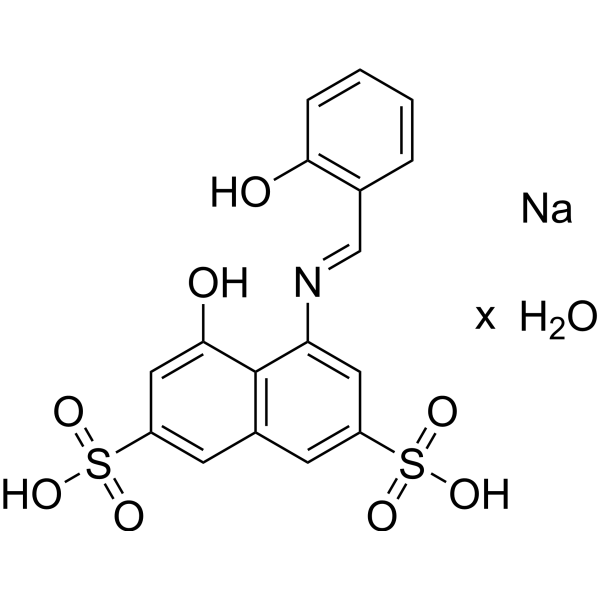
    Azomethine-H monosodium salt hydrate

    Biochemical Assay Reagents Others
    Azomethine-H sodium hydrate is a compound belonging to the class of organic compounds. It is a derivative of hydrazine and is commonly used as a reducing agent in various industrial and biomedical applications. Azomethine-H sodium hydrate is particularly suitable for the reduction of ketones and aldehydes, making it valuable in organic synthesis reactions. It is also used in the production of medicines, dyes, and other chemical products.
    Azomethine-H sodium hydrate
  • HY-N6967R

    (-)-α-Bisabolol (Standard)

    Reference Standards Apoptosis Neurological Disease Inflammation/Immunology
    Levomenol (Standard) is the analytical standard of Levomenol. This product is intended for research and analytical applications. Levomenol ((-)-α-Bisabolol), a monocyclic sesquiterpene alcohol, exerts antioxidant, anti-inflammatory, and anti-apoptotic activities. Levomenol also has neuroprotective effects and prevents neuronal damage and memory deficits through reduction of proinflammatory markers induced by permanent focal cerebral ischemia in mice. Levomenol attenuates nociceptive behaviour and central sensitisation in a rodent model of trigeminal neuropathic pain. Orally active .
    Levomenol (Standard)
  • HY-23155R

    2-PE ITC (Standard)

    Fungal Reference Standards Infection
    2-Phenylethyl isothiocyanate (Standard) is the analytical standard of 2-Phenylethyl isothiocyanate. This product is intended for research and analytical applications. 2-Phenylethyl isothiocyanate is a potent antifungal agent. 2-Phenylethyl isothiocyanate significantly inhibited spore germination and mycelial growth of Alternaria alternata, with a MIC (minimum inhibitory concentration) of 1.22 mM. The antifungal effect of 2-Phenylethyl isothiocyanate against Alternaria alternate might be via reduction in toxin content and breakdown of cell membrane integrity .
    2-Phenylethyl isothiocyanate (Standard)
  • HY-113224R

    Reference Standards Endogenous Metabolite LXR Fatty Acid Synthase (FASN) Interleukin Related Reactive Oxygen Species (ROS) NOD-like Receptor (NLR) Cardiovascular Disease Metabolic Disease Inflammation/Immunology
    Desmosterol (Standard) is the analytical standard of Desmosterol. This product is intended for research and analytical applications. Desmosterol is a cholesterol-like molecule. In the Bloch pathway of cholesterol biosynthesis, Desmosterol is a direct precursor of cholesterol. As an endogenous metabolite, Desmosterol is used to study cholesterol metabolism [1]. Desmosterol is an LXR activator and SREBP inhibitor, which can suppress macrophage inflammasome activation and prevent vascular inflammation and atherosclerosis. A reduction in Desmosterol promotes the production of mitochondrial reactive oxygen species (ROS) in macrophages and pyrin domain-dependent inflammasome activation of NLRP3. Desmosterol holds potential for research in inflammation, metabolism, and cardiovascular diseases [1][2][3].
    Desmosterol (Standard)
  • HY-116161

    Drug Intermediate Cardiovascular Disease Others
    15(R)-17-phenyl trinor Prostaglandin F2α isopropyl ester (15(R)-17-phenyl trinor PGF2α isopropyl ester) is the latanoprost-related isomer containing both a double bond at 13,14 and an inverted (β) hydroxyl group at C-15. Similar to 15(S)-latanoprost, 15(R)-17-phenyl trinor PGF2α isopropyl ester is a potential impurity in most commercial preparations of the latanoprost bulk drug product. The IC50 values for the free acid forms of 15(S)-17-phenyl trinor PGF2α and 15(R)-17-phenyl trinor PGF2α were determined to be 0.71 nM and 30 nM, respectively, in a FP receptor binding assay using the cat iris sphincter muscle.1 A 3 μg dose of 15(R)-17-phenyl trinor PGF2α caused a 1.9 mmHg reduction of IOP in normotensive cynomolgus monkeys.
    Bimatoprost isopropyl ester
  • HY-78036R

    Citronic acid (Standard); Methylfumaric acid (Standard)

    Endogenous Metabolite Reference Standards Others
    Mesaconic acid (Standard) is the analytical standard of Mesaconic acid. This product is intended for research and analytical applications. Mesaconic acid is an active product that can be extracted from Saxifraga stolonifera. Mesaconic acid is used as a fire retardant and is a competitive inhibitor of fumarate reduction[1].
    Mesaconic acid (Standard)
  • HY-N9903

    TDDC

    Others Others
    Tetrahydrodehydrodiconiferyl alcohol (TDDC) is a reduction product of dihydrodehydrodiconiferyl alcohol catalyzed by phenylcoumaran benzylic ether reductase. Tetrahydrodehydrodiconiferyl alcohol can be isolated from a hydrogenolysis product of protolignin .
    Tetrahydrodehydrodiconiferyl alcohol
  • HY-N15575

    Drug Metabolite Metabolic Disease
    Rhamnitol is the reduction product of L-rhamnose that can be found in the metabolism of ingested rhamnose in the body. Rhamnitol is promising for research of intestinal permeability assessment and carbohydrate metabolism .
    Rhamnitol
  • HY-N1803

    11,12-Dehydroursolic lactone acetate

    Others Others
    3-Acetoxy-11-ursen-28,13-olide (11,12-dehydroursolic lactone acetate) is a reduction product of 11-ketoursolic acid .
    3-Acetoxy-11-ursen-28,13-olide
  • HY-105129AR

    Reference Standards Others Cancer
    Pimonidazole (Standard) is the analytical standard of Pimonidazole. This product is intended for research and analytical applications. Pimonidazole is a novel hypoxia marker for complementary study of tumor hypoxia and cell proliferation in tumor . Pimonidazole accumulates in hypoxic cells via covalent binding with macromolecules or by forming reductive metabolites after reduction of its nitro group, it can be used for qualitative and quantitative assessment of tumor hypoxia .
    Pimonidazole (Standard)
  • HY-105129R

    Reference Standards Others Cancer
    Pimonidazole (hydrochloride) (Standard) is the analytical standard of Pimonidazole (hydrochloride). This product is intended for research and analytical applications. Pimonidazole is a novel hypoxia marker for complementary study of tumor hypoxia and cell proliferation in tumor . Pimonidazole accumulates in hypoxic cells via covalent binding with macromolecules or by forming reductive metabolites after reduction of its nitro group, it can be used for qualitative and quantitative assessment of tumor hypoxia .
    Pimonidazole hydrochloride (Standard)
  • HY-113114R

    Endogenous Metabolite Reference Standards Others
    Tetrahydrocortisone (Standard) is the analytical standard of Tetrahydrocortisone. This product is intended for research and analytical applications. Tetrahydrocortisone is a stress-induced hormone. Tetrahydrocortisone is also a urinary metabolite of Cortisone derived from the reduction of Cortisone by 5-reductase .
    Tetrahydrocortisone (Standard)
  • HY-W015915R

    Thiourea dioxide (Standard)

    Reference Standards Biochemical Assay Reagents Others
    Aminoiminomethanesulphinic acid (Thiourea dioxide) (Standard) is the analytical standard of Aminoiminomethanesulphinic acid. This product is intended for research and analytical applications. Aminoiminomethanesulphinic acid is a solid formaldehyde substitute with both electrophilic and reductive properties. Aminoiminomethanesulphinic acid is commonly used in bleaching processes in the textile industry .
    Aminoiminomethanesulphinic acid (Standard)
  • HY-120512

    Fluorescent Dye Others
    5-Phenyl-4E-pentenol is a product of the peroxidase-catalyzed reduction of PPHP. 5-Phenyl-4E-pentenol can be rapidly isolated by solid phase extraction and quantified by isocratic reversed-phase high performance liquid chromatography (HPLC) with UV detection. 5-Phenyl-4E-pentenol is a fluorescent dye that can be used to determine the kinetic properties of heme-containing and non-heme peroxidases and to evaluate the ability of oxidative compounds to serve as substrates for peroxidase reduction. .
    5-Phenyl-4E-pentenol
  • HY-A0057R

    Reference Standards Calcium Channel Neurological Disease Cancer
    Gabapentin (Standard) is the analytical standard of Gabapentin. This product is intended for research and analytical applications. Gabapentin is a potent, orally active P/Q type Ca2+ channel blocker. Gabapentin inhibits neuronal Ca2+ influx and reduction of neurotransmitter release. Gabapentin is a GABA analog that can be used to relieve neuropathic pain .
    Gabapentin (Standard)
  • HY-139420R

    Prostaglandin Receptor Reference Standards Others
    Tafluprost ethyl amide (Standard) is the analytical standard of Tafluprost ethyl amide. This product is intended for research and analytical applications. Tafluprost ethyl amide is a prostaglandin derivative. Tafluprost ethyl amide is capable of intraocular pressure (IOP) reduction and influencing eyelash growth. Tafluprost ethyl amide can be used in antiglaucoma ophthalmic compositions or cosmetics .
    Tafluprost ethyl amide (Standard)
  • HY-B0562R

    Reference Standards Carbonic Anhydrase Cardiovascular Disease Metabolic Disease
    Methyclothiazide (Standard) is the analytical standard of Methyclothiazide. This product is intended for research and analytical applications. Methyclothiazide is an orally active antihypertensive agent and a diuretic agent. Methyclothiazide leads to a reduction of the vascular response to the action of endogenous vasoconstricting stimuli, such as Norepinephrine (HY-13715). Methyclothiazide is against voltage-dependent Ca-channel (VDCC) activity in vitro .
    Methyclothiazide (Standard)
  • HY-123189

    Dopamine Receptor Neurological Disease
    LY 171859 is a D2 receptor agonist with significant reductase activity. LY 171859 exhibits enzymatic activity in the cytoplasm of liver, lung, and kidney, and also contains significant reductase activity in rat and human blood. LY 171859 has higher hepatic reductase activity in guinea pigs, followed by hamsters, rabbits, rats, and mice. The substrate of LY 171859 shows an apparent Km of 5.6 μM. The reduction reaction of LY 171859 is NADPH-dependent with an apparent Km of 14.8 μM. Only the A-side hydrogen of NADPH is incorporated in the reduction product of LY 171859. The reaction of LY 171859 is inhibited by cyanide and thiol reagents, and phenobarbital does not induce its activity in rats .
    LY 171859
  • HY-14518R

    4-Aminofolic acid (Standard); APGA (Standard)

    Reference Standards Antifolate Inflammation/Immunology Cancer
    Aminopterin (Standard) is the analytical standard of Aminopterin. This product is intended for research and analytical applications. Aminopterin (4-Aminofolic acid), the 4-amino derivative of folic acid, is a folic acid antagonist. Aminopterin catalyses the reduction of folic acid to tetrahydrofolic acid, and competitively inhibits dihydrofolate reductase (DHFR) with a Ki of 3.7 pM. Aminopterin has anticancer and immunosuppressive activity. Aminopterin is used in treatment of pediatric leukemia .
    Aminopterin (Standard)
  • HY-105651AR

    Cholinesterase (ChE) Reference Standards Cardiovascular Disease
    Butalamine (hydrochloride) (Standard) is the analytical standard of Butalamine (hydrochloride). This product is intended for research and analytical applications. Butalamine (hydrochloride) is a peripheral vasodilator with local anesthetic effects. :Butalamine (hydrochloride) can produce in animals coronary vasodilation, local anaesthesia, analgesia and a papaverine like action in duodenal preparations. Butalamine (hydrochloride) causes a slowing in rate of spontaneous activity, a decrease in amplitude and a reduction in isolated human smooth muscle .
    Butalamine hydrochloride (Standard)
  • HY-100442R

    ABR-215757 (Standard); ABR 25757 (Standard)

    Reference Standards SARS-CoV Metabolic Disease Inflammation/Immunology
    Paquinimod (Standard) is the analytical standard of Paquinimod. This product is intended for research and analytical applications. Paquinimod (ABR 215757) is a specific and orally active inhibitor of S100A8/S100A9. Paquinimod rescues the pneumonia with substantial reduction of viral loads in SARS-CoV-2-infected mice .
    Paquinimod (Standard)
  • HY-150971

    Pyroptosis Cancer
    ICy-Q is a quinone oxidoreductase 1 (NQO-1)-activated near-infrared (NIR) reagent which can react with NQO-1 to release the reduction product ICy-OH. ICy-OH selectively induces pancreatic cancer cell death through the pyroptosis pathway. ICy-Q can be used as an effective tool for rapid and accurate diagnosis of intraoperative pathological sections .
    ICy-Q
  • HY-14926R

    (S)-(-)-Nadifloxacin (Standard); WCK 771 (Standard)

    Reference Standards Antibiotic Bacterial Infection
    Levonadifloxacin (Standard) is the analytical standard of Levonadifloxacin. This product is intended for research and analytical applications. Levonadifloxacin ((S)-(-)-Nadifloxacin; WCK 771) is a broad-spectrum anti-staphylococcal agent. Levonadifloxacin shows antibacterial activity against Methicillin (HY-121544)-susceptible Staphylococcus aureus (MSSA) and Methicillin-resistant S. aureus (MRSA) strains, with a reduction of which phagocytized in THP-1 monocytes .
    Levonadifloxacin (Standard)
  • HY-111346R

    1-Linoleoyl-rac-glycerol (Standard); 1-Monolinolein (Standard)

    Phospholipase Apolipoprotein Interleukin Related Reference Standards Metabolic Disease Inflammation/Immunology
    1-Linoleoyl Glycerol (Standard) is the analytical standard of 1-Linoleoyl Glycerol. This product is intended for research and analytical applications. 1-Linoleoyl glycerol is a LpPLA2 inhibitor. 1-Linoleoyl glycerol acts as a precursor for synthesizing various functional lipids, such as phospholipids. 1-Linoleoyl glycerol mitigates inflammation induced by Apolipoprotein CIII (reduction of IL-6) .
    1-Linoleoyl Glycerol (Standard)
  • HY-125365R

    Reference Standards Bacterial Reactive Oxygen Species (ROS) Antibiotic Infection
    Rifamycin S (Standard) is the analytical standard of Rifamycin S. This product is intended for research and analytical applications. Rifamycin S, a quinone, is an antibiotic against Gram-positive bacteria (including MRSA). Rifamycin S is the oxidized forms of a reversible oxidation-reduction system involving two electrons. Rifamycin S generates reactive oxygen species (ROS) and inhibits microsomal lipid peroxidation. Rifamycin S can be used for tuberculosis and leprosy .
    Rifamycin S (Standard)
  • HY-N7126R

    Reference Standards Potassium Channel Neurological Disease
    Citronellal (Standard) is the analytical standard of Citronellal. This product is intended for research and analytical applications.Citronellal is a monoterpene that can be found in the essential oils in various aromatic species of plants, with antiinflammatory and antinociceptive properties. Citronellal attenuates mechanical nociception, mediated in part by the NO-cGMP-ATP-sensitive K+ channel pathway. Citronellal induces reduction of spontaneuous activity, ataxia, analgesia, and sedation in vivo. Citronellal can attenuate mechanical nociception response in mouse model .
    Citronellal (Standard)
  • HY-118103R

    5β-Cholestan-3β-ol (Standard)

    Reference Standards Endogenous Metabolite Others
    Coprostanol (5β-Cholestan-3β-ol) (Standard) is the analytical standard of Coprostanol. This product is used for research and analytical applications. Coprostanol is a fecal sterol formed by the reduction of cholesterol by microorganisms in the human and higher animal intestines. Coprostanol can be used as an indicator sterol for fecal contamination. Coprostanol has been recognized as a good indicator of water resource pollution caused by sewage discharge. Coprostanol can serve as a potential biological indicator for cerebral chondrodystrophy (CTX).
    Coprostanol (Standard)
  • HY-13543R

    CB 1954 (Standard)

    DNA Alkylator/Crosslinker Reference Standards Cancer
    Tretazicar (Standard) is the analytical standard of Tretazicar. This product is intended for research and analytical applications. Tretazicar (CB 1954), an antitumor proagent, is highly selective against the Walker 256 rat tumour line. Tretazicar is enzymatically activated to generate a bifunctional agent, which can form DNA-DNA interstrand cross-links. Tretazicar in rat cells involves the reduction of its 4-nitro group to a 4-hydroxylamine by the enzyme NAD(P)H:quinone oxidoreductase 1 (NQO1) .
    Tretazicar (Standard)
  • HY-113413R

    Imidazolyl-4-acetic acid (Standard)

    Reference Standards Endogenous Metabolite GABA Receptor Cardiovascular Disease Neurological Disease Metabolic Disease
    Imidazoleacetic acid (Standard) is the analytical standard of Imidazoleacetic acid (HY-113413). This product is intended for research and analytical applications. Imidazoleacetic acid (Imidazolyl-4-acetic acid) is a blood-brain barrier-permeable full agonist of the GABAA receptor. Imidazoleacetic acid forms via histamine oxidation in the mouse brain. Imidazoleacetic acid exerts multiple neurochemical and behavioral effects. Imidazoleacetic acid induces a range of centrally mediated effects, including analgesia, sedation, hypnosis, as well as reductions in blood pressure, body temperature, isolation-induced aggression and motor activity .
    Imidazoleacetic acid (Standard)
  • HY-B2041R

    Parasite Reference Standards Infection
    Benfuracarb (Standard) is the analytical standard of Benfuracarb. This product is intended for research and analytical applications. Benfuracarb is a broad-spectrum carbamate insecticide with crop protection activity. Benfuracarb is used to control springtails, aphids, and other pests, typically on sugar beet crops. Benfuracarb exhibits toxicity to humans and aquatic organisms. Benfuracarb exposure to zebrafish embryos resulted in a reduction in the body length of zebrafish larvae. Superoxide dismutase (SOD) activity was significantly increased after Benfuracarb treatment. Benfuracarb also interfered with the transcriptional levels of marker genes associated with early embryonic development .
    Benfuracarb (Standard)
  • HY-W099331R

    MEGX hydrochloride (Standard); Norlidocaine hydrochloride (Standard)

    Reference Standards Drug Metabolite Metabolic Disease Inflammation/Immunology
    Benfuracarb (Standard) is the analytical standard of Benfuracarb. This product is intended for research and analytical applications. Benfuracarb is a broad-spectrum carbamate insecticide with crop protection activity. Benfuracarb is used to control springtails, aphids, and other pests, typically on sugar beet crops. Benfuracarb exhibits toxicity to humans and aquatic organisms. Benfuracarb exposure to zebrafish embryos resulted in a reduction in the body length of zebrafish larvae. Superoxide dismutase (SOD) activity was significantly increased after Benfuracarb treatment. Benfuracarb also interfered with the transcriptional levels of marker genes associated with early embryonic development .
    Monoethylglycinexylidide hydrochloride (Standard)
  • HY-135470R

    P-7138 (Standard)

    Reference Standards Bacterial Infection
    Nifurpirinol (P-7138) (Standard) is the analytical standard of Nifurpirinol (HY-135470). This product is intended for research and analytical applications. Nifurpirinol (P-7138) is a selective prosubstrate of bacterial nitroreductase (NTR). NTR catalyzes the reduction of nifurpirinol to generate cytotoxic metabolites that induce apoptosis in target cells. Nifurpirinol selectively ablates NTR-expressing cells such as pancreatic β cells, osteoblasts, dopaminergic neurons, and podocytes in transgenic zebrafish models. Nifurpirinol can be used in regeneration studies and disease modeling such as focal segmental glomerulosclerosis (FSGS) .
    Nifurpirinol (Standard)

Inquiry Online

Your information is safe with us. * Required Fields.

Salutation


Country or Region *

Applicant Name *


Organization Name *

Department *


Email Address *


Product Name *

Cat. No.


Requested quantity *

Phone Number *


Remarks

Inquiry Online

Inquiry Information

Product Name:
Cat. No.:
Quantity:
MCE Japan Authorized Agent:

