18 Results for "

S-180

" in MedChemExpress (MCE) Product Catalog:
Products (18)

18 Results for "S-180" in MCE Product Catalog:

4
4 Cited Publications
Cat. No.: HY-P1408
CAS No.: 404882-00-4
Target:  

Integrin VEGFR

Research Areas:  

Cancer

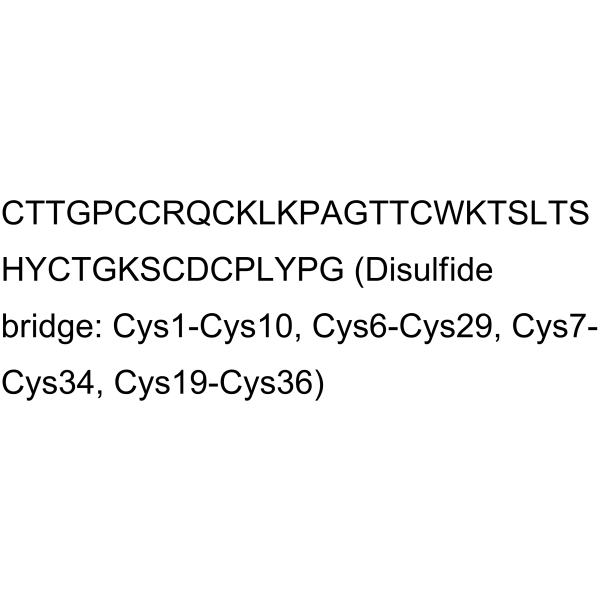
Obtustatin is a non-RGD disintegrin consisting of 41 residues. Obtustatin inhibits the adhesion of α1β1 integrin to type IV Collagen (HY-NP003), blocks α1β1 integrin signaling in endothelial cells, and suppresses FGF2-induced angiogenesis. Obtustatin inhibits tumor progression in mouse models and upregulates VEGF expression in sarcoma-bearing mice. Obtustatin can be used in research related to Lewis lung carcinoma and S-180 sarcoma .
loading...
    loading...
3
3 Cited Publications
Cat. No.: HY-119182
CAS No.: 54824-17-8
Purity:  99.79%
Synonyms: NSC 300288
Target:  

DNA/RNA Synthesis

Research Areas:  

Cancer

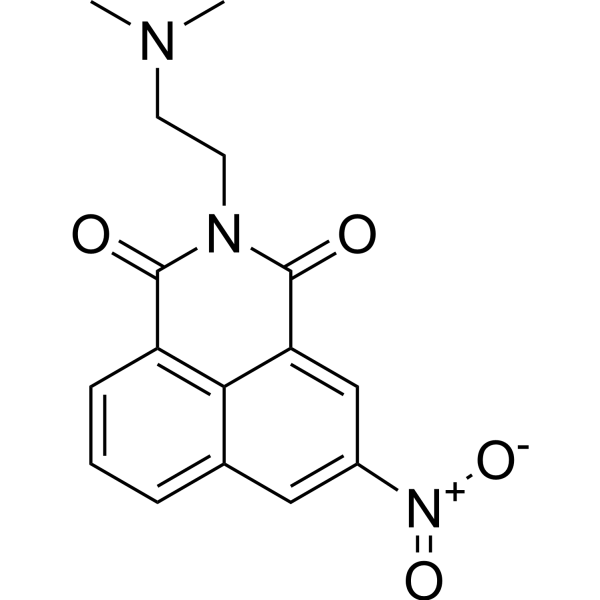
Mitonafide (NSC 300288) is a cytostatic agent. Mitonafide binds to double-stranded DNA through intercalation, and inhibits DNA and RNA synthesis. Mitonafide is an antitumor agent that can be used in the research of cancers, such as non-small cell lung cancer (NSCLC), leukemia .
loading...
    loading...
Cat. No.: HY-204056
CAS No.: 1884341-01-8
Target:  

Telomerase

Research Areas:  

Cancer

Telomerase-IN-8 is an orally active telomerase inhibitor, with an IC50 value of 0.98 μM. Telomerase-IN-8 exhibits potent antiproliferative activity against multiple tumor cell lines, including PC3, Bcap-37, MGC-803 and HepG2. Telomerase-IN-8 demonstrates potent antitumor efficacy in S180 sarcoma or HepG2 hepatoma xenograft mice. Telomerase-IN-8 can be used for the study of telomerase-targeted anticancer .
loading...
    loading...
Cat. No.: HY-19015
CAS No.: 95604-83-4
Synonyms: AT-2153
Target:  

Calmodulin

Research Areas:  

Cancer

Probimane (AT-2153) is a potent anticancer agent. Probimane is effective against mouse tumors S37, S180, Lewis lung carcinoma, L1210 and human pulmonary adenocarcinoma heterotransplanted into nude mice .
loading...
    loading...
Cat. No.: HY-N7776
CAS No.: 90332-64-2
Synonyms: 7-xylosyl-10-Deacetylpaclitaxel B
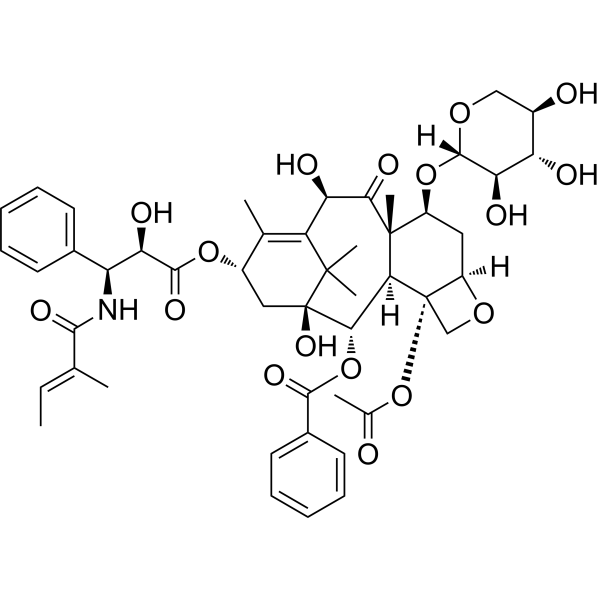
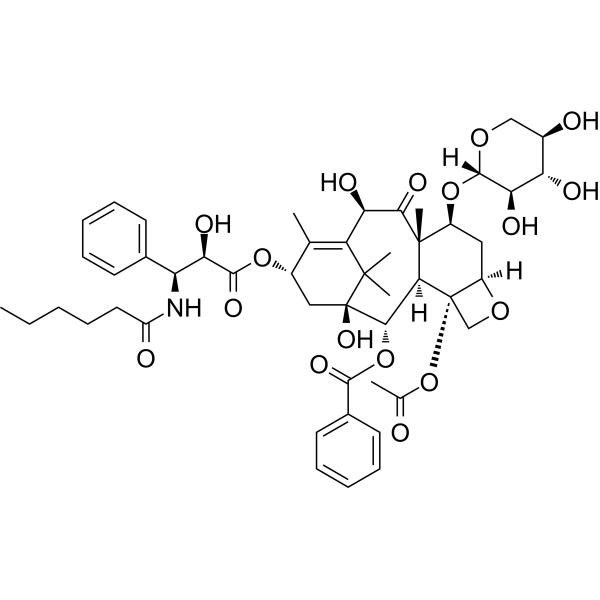
7-Xylosyl-10-Deacetyltaxol B (7-xylosyl-10-Deacetylpaclitaxel B) is a paclitaxel derivative derived from T. cuspidate. 7-Xylosyl-10-Deacetyltaxol B has anti-tumor activity and inhibits the growth of S180 sarcoma .
loading...
    loading...
Cat. No.: HY-118965
CAS No.: 1397-84-8
Target:  

Antibiotic Parasite

Research Areas:  

Infection Cancer

Alazopeptin is a non-ribosomal tripeptide azoamino acid antibiotic isolated from various Streptomyces species, with significant anti-tumor, antibacterial and trypanocidal activities. Alazopeptin exhibits cytotoxicity against mouse leukemia cells and S-180 tumor cells, inhibits the growth of Bacillus subtilis, and shows activity against Trypanosoma brucei. Alazopeptin can be widely used in studies related to mouse leukemia, S-180 tumor, human African trypanosomiasis and nagana .
loading...
    loading...
Cat. No.: HY-N16371
CAS No.: 39051-96-2
6-Methoxy-8-hydroxyisocoumarin-3-carboxylic acid (Compound MC-1), an isocoumarin, is a metabolite of Cytogenin (HY-19606). 6-Methoxy-8-hydroxyisocoumarin-3-carboxylic acid has anti-angiogenic activity in S-180 implanted dorsal air sac mice model. 6-Methoxy-8-hydroxyisocoumarin-3-carboxylic acid also modifies collagen-induced arthritis. 6-Methoxy-8-hydroxyisocoumarin-3-carboxylic acid can be used for cancers and inflammatory diseases research .
loading...
    loading...
Cat. No.: HY-N12208
CAS No.: 918785-00-9
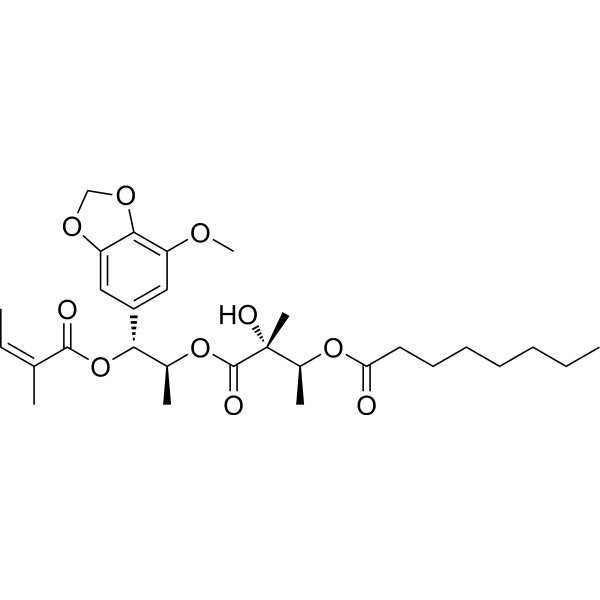
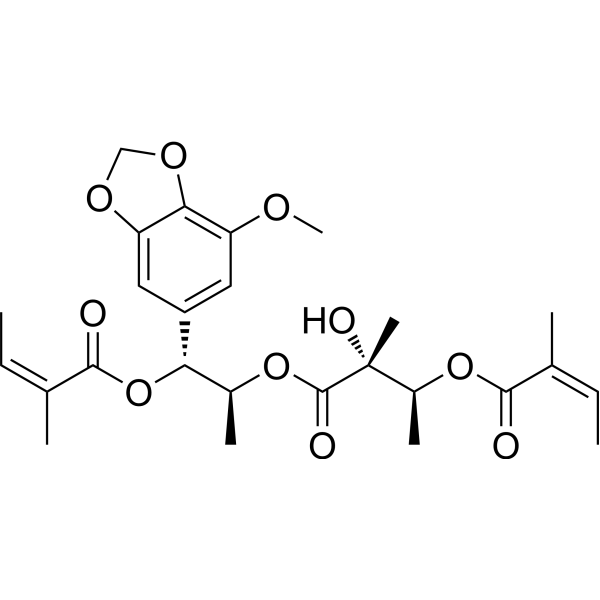
Neohelmanthicin B is a phenylpropanoid that can be isolated from Thapsia garganica. Neohelmanthicin B exhibits cytotoxicity against EL4, S180 and MCF7 cell lines with IC50s of 10, 5 and12 μM, respectively .
loading...
    loading...
Cat. No.: HY-N12209
CAS No.: 920758-09-4
Neohelmanthicin A (compound 3A) is a phenylpropanoid compound with antitumor activity. The IC50s of Neohelmanthicin A for inhibiting leukemia cell line EL4, breast cancer cell line S180 and breast cancer cell line MCF7 are 0.13 μM, 7 μM and 23 μM respectively .
loading...
    loading...
Cat. No.: HY-N14144
CAS No.: 182285-29-6
Cremimycin has anti-Gram-positive bacteria activity including methicillin-resistant Staphylococcus aureus (MRSA), MIC is 0.2-0.39 μg/mL. Cremimycin shows cytotoxicity to mouse tumor cell lines P388, L1210, IMC, S180, B16 and SS3 in vitro .
loading...
    loading...
Cat. No.: HY-N7777
CAS No.: 90332-65-3
Synonyms: 7-Xylosyl-10-Deacetylpaclitaxel C
7-Xylosyl-10-Deacetyltaxol C (7-Xylosyl-10-Deacetylpaclitaxel C) is a paclitaxel derivative derived from T. cuspidate. 7-Xylosyl-10-Deacetyltaxol C has anti-tumor activity and inhibits the growth of S180 sarcoma .
loading...
    loading...
Cat. No.: HY-N14237
CAS No.: 175448-31-4
Epoxyquinomicin A is an antibiotic that can be isolated from Amycolatopsis sp. Epoxyquinomicin A exhibits inhibitory activity against Micrococcus luteus, Bacillus subtilis, Pasteurella piscicida and Staphylococcus aureus with a MIC of 3-12.5 µg/mL. Epoxyquinomicin A exhibits cytotoxicity in cancer cell L1210, B16 and S180 with IC50 of 2-8 µg/mL. Epoxyquinomicin A exhibits anti-inflammatory effects against collagen-induced arthritis .
loading...
    loading...
Cat. No.: HY-N14722
CAS No.: 182234-02-2
Lactonamycin had strong activity against Gram-positive bacteria including Staphylococcus, Streptococcus, Enterococcus, MRSA (MIC of 0.39-0.78 μg/mL) and VRE (MIC of 0.39-0.78 μg/mL). Lactonamycin also has inhibitory effect on L-1210, P388, S180, FS-3, Ehrlich, B16-BL5 and other tumor cell lines (IC50s of 0.06-3.3 μg/mL) .
loading...
    loading...
Cat. No.: HY-121365
CAS No.: 71522-58-2
Target:  

Bacterial

Research Areas:  

Infection

Forphenicinol is an immunomodulator and a derivative of the bacterial metabolite forphenicine. It increases the phagocytosis of yeast by peritoneal macrophages isolated from thioglycolate-stimulated mice. Forphenicinol (100 μg/animal) prevents cyclophosphamide-induced suppression of delayed-type hypersensitivity (DTH), as well as enhances DTH in response to the hapten oxazolone or sheep red blood cells in mice. It enhances the bactericidal activity of macrophages against P. aeruginosa in mice when administered at a dose of 0.5 mg/kg.2 Forphenicinol (15.6-1,000 μg/animal) increases survival in a mouse model of P. aeruginosa infection. It also inhibits tumor growth in S180 sarcoma and IMC carcinoma mouse xenograft models when administered at doses ranging from 0.05 to 5 mg/kg per day.
loading...
    loading...
Cat. No.: HY-119182R
CAS No.: 54824-17-8
Synonyms: NSC 300288 (Standard)
Research Areas:  

Cancer

Mitonafide (Standard) is the analytical standard of Mitonafide. This product is intended for research and analytical applications. Mitonafide (NSC 300288) is a cytostatic agent. Mitonafide binds to double-stranded DNA through intercalation, and inhibits DNA and RNA synthesis. Mitonafide is an antitumor agent that can be used in the research of cancers, such as non-small cell lung cancer (NSCLC), leukemia .
loading...
    loading...
Cat. No.: HY-N14530
CAS No.: 11050-22-9
Target:  

Bacterial

Cremeomycin has anti-Gram-positive bacteria activity including methicillin-resistant Staphylococcus aureus (MRSA), MIC is 0.2-0.39 μg/mL. Cremeomycin shows cytotoxicity to mouse tumor cell lines P388, L1210, IMC, S180, B16 and SS3 in vitro .
loading...
    loading...
Cat. No.: HY-N17442
CAS No.: 75410-53-6
Echinoside A is a saponin. Echinoside A can be isolated from sea cucumber. Echinoside A inhibits the catalytic activity of Top2α, reduces the noncovalent binding of Top2α to DNA. Echinoside A activates Caspase-3 and induces PARP cleavage. Echinoside A induces Apoptosis. Echinoside A has anticancer activity against prostate cancer, hepatocellular carcinoma, and S-180 sarcoma. Echinoside A exhibits antifungal activity against a variety of fungi, with a minimum growth inhibitory concentration range of 3.12 to 50.0 μg/mL, including potent activity against Aspergillus and Penicillium species .
loading...
    loading...
Cat. No.: HY-182447
CAS No.: 69095-83-6
Synonyms: DL111-IT
Target:  

CDK Apoptosis

Research Areas:  

Endocrinology Cancer

Contragestazol (DL111-IT) is a non-hormonal antifertility agent. Contragestazol reduces the expression of Cyclin D1 and CDK4, increases the expression of total retinoblastoma protein (pRb), and decreases the level of hyperphosphorylated pRb. Contragestazol induces G0/G1 phase cell cycle arrest. Contragestazol inhibits embryonic development by inducing luteal cell apoptosis and reducing intrauterine polyamine levels. Contragestazol exhibits antitumor activity against prostate cancer, S180 tumor and H22 tumor. Contragestazol shows extremely potent activity in terminating early pregnancy in animals .
loading...
    loading...
  • 1

