1. Search Result
Search Result
Results for "

SHR rats

" in MedChemExpress (MCE) Product Catalog:

20

Inhibitors & Agonists

1

Peptides

2

Natural
Products

Cat. No. Product Name Target Research Areas Chemical Structure
  • HY-W005255

    Endogenous Metabolite Cardiovascular Disease
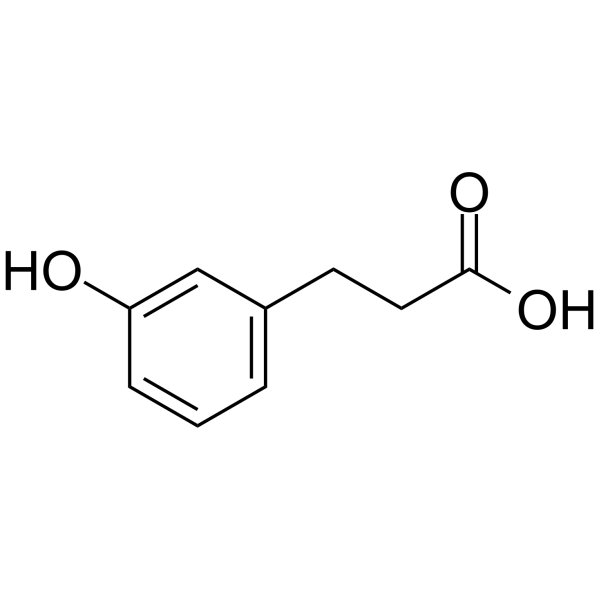
    3-(3-Hydroxyphenyl)propionic acid (3HPPA) is an endothelium-dependent nitric oxide (NO) release promoter and endothelial nitric oxide synthase (eNOS) activator. 3-(3-Hydroxyphenyl)propionic acid activates eNOS to mediate vascular smooth muscle relaxation and enhances endothelial cell NO synthesis, inducing vasodilation and reducing peripheral vascular resistance. 3-(3-Hydroxyphenyl)propionic acid can dose-dependently reduce systolic and diastolic blood pressure in spontaneously hypertensive rats (SHR) without affecting cardiac contractility or heart rate. 3-(3-Hydroxyphenyl)propionic acid has antihypertensive and vascular protective effects and can be used in the prevention and treatment of cardiovascular diseases .
    3-(3-Hydroxyphenyl)propionic acid
  • HY-W010435

    6-Methyl-5-hepten-2-one

    Environmental Pollutants Parasite Endogenous Metabolite Adenosine Receptor Fungal Cytochrome P450 Infection Cardiovascular Disease Metabolic Disease Inflammation/Immunology
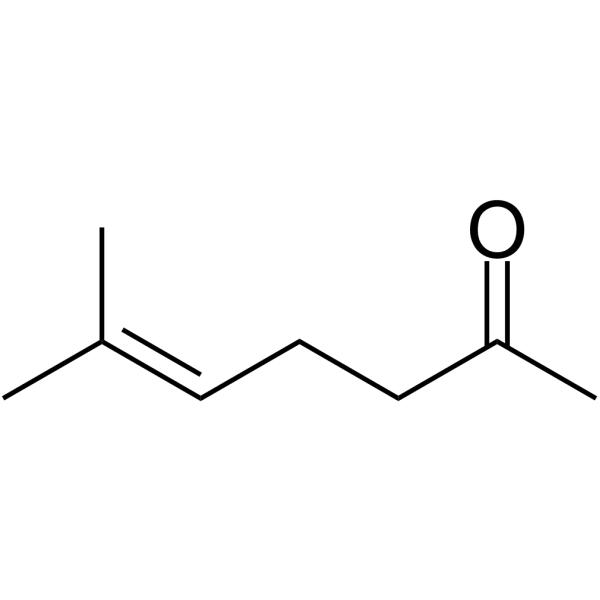
    Sulcatone (6-Methyl-5-hepten-2-one) is a plant-derived volatile organic compound with activities such as insecticidal, antifungal, and blood pressure-lowering effects. Sulcatone also serves as an insect pheromone and an endogenous metabolite, which can be found in feces. Changes in Sulcatone levels can be used for the auxiliary diagnosis of ulcerative colitis .
    Sulcatone
  • HY-107398

    Adrenergic Receptor Amine N-methyltransferase Cardiovascular Disease
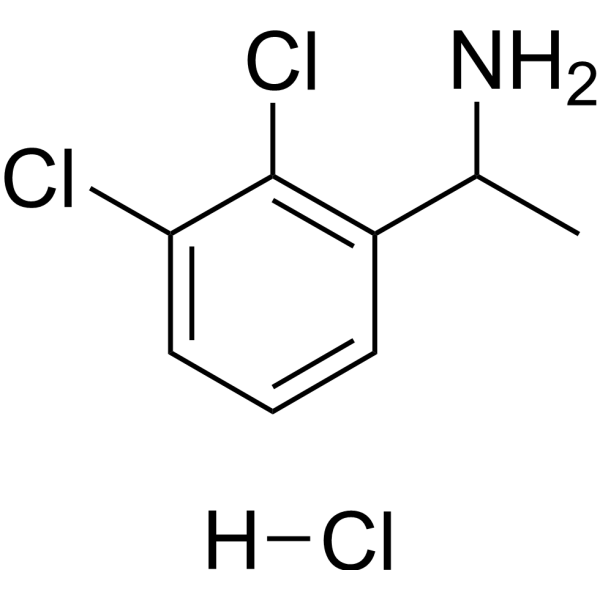
    1-(2,3-Dichlorophenyl)ethanamine hydrochloride is a phenylethanolamine N-methyltransferase (PNMT) inhibitor. 1-(2,3-Dichlorophenyl)ethanamine hydrochloride effectively reduces blood pressure of spontaneously hypertensive. 1-(2,3-Dichlorophenyl)ethanamine hydrochloride can be used for the research of blood pressure .
    1-(2,3-Dichlorophenyl)ethanamine hydrochloride
  • HY-153369

    BAY 1165747

    Guanylate Cyclase Cardiovascular Disease Neurological Disease
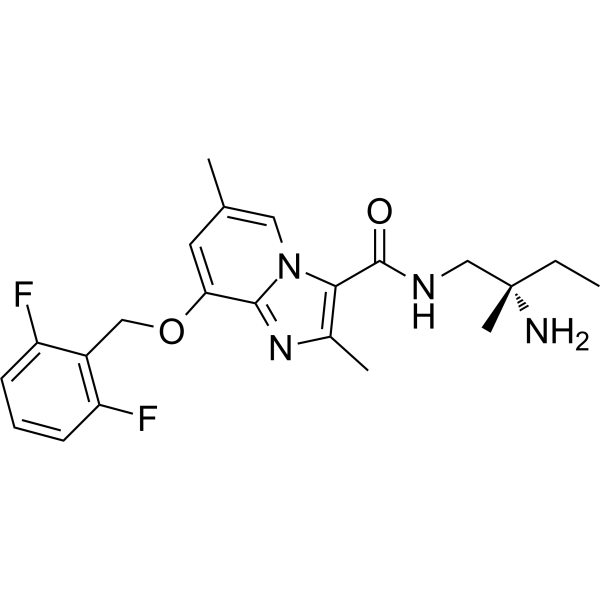
    BAY-747 (BAY 1165747) is an orally active and brain-penetrant stimulator of soluble guanylate cyclase (sGC). BAY-747 reverses L-NAME induced memory impairments and enhances cognition of rats in the object location task (OLT). BAY-747 also decreases blood pressure in both conscious normotensive and spontaneously hypertensive rats (SHR). BAY-747 improves function of the skeletal muscle associated with Duchenne muscular dystrophy (DMD) in mdx/mTRG2 mice model .
    BAY-747
  • HY-116680

    5-HT Receptor Cardiovascular Disease Neurological Disease
    LY53857 is a potent antagonist of vasoconstriction and serotonin-mediated 5-HT2 receptors. LY53857 did not reduce mean arterial blood pressure in spontaneously hypertensive rats (SHR) at doses that blocked the depressor response to serotonin and blocked central serotonin receptors. In addition, LY53857 was able to enhance neurotransmitter release in rat vas deferens and guinea pig ileal nerves .
    LY53857
  • HY-121550

    Angiotensin-converting Enzyme (ACE) Cardiovascular Disease
    ME3221 is an angiotensin AT1 receptor antagonist that effectively antagonizes the pressor response to angiotensin II in rats and marmosets without affecting the hypotensive response to bradykinin. It demonstrates potent antihypertensive effects in renal hypertensive rats and spontaneously hypertensive rats (SHR). ME3221's repeated administration in SHR results in sustained and stable hypotensive effects without affecting heart rate, indicating its potential for studying both renal and essential hypertension .
    ME3221
  • HY-155042

    Angiotensin Receptor Cardiovascular Disease
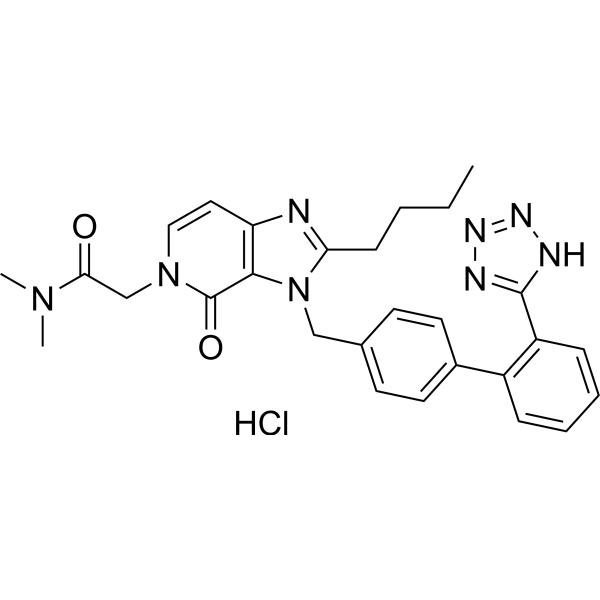
    Antihypertensive agent 3 (compound 4a) is an antagonis of angiotensin II receptor 1. Antihypertensive agent 3 exhibits antihypertensive activity in a spontaneously hypertensive rats (SHRs) model .
    Antihypertensive agent 3
  • HY-P4296

    Amino Acid Derivatives Others
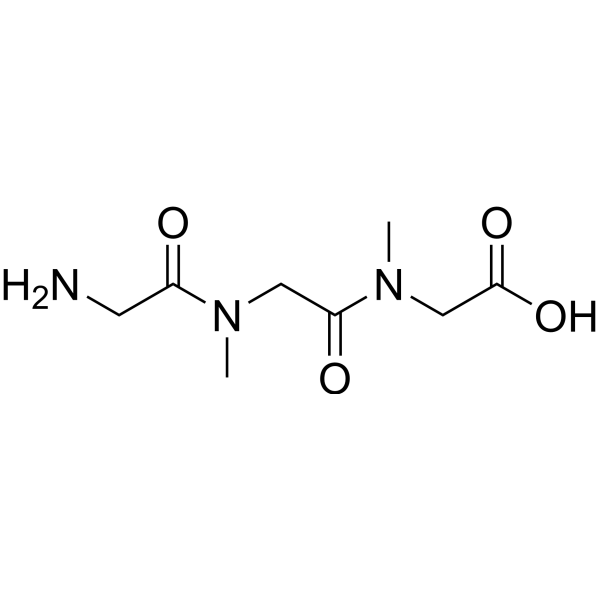
    H-Gly-Sar-Sar-OH is an orally active tripeptide. H-Gly-Sar-Sar-OH is transported through PepT1 within Caco-2 cells. H-Gly Sar Sar OH has potential applications in material transportation .
    H-Gly-Sar-Sar-OH
  • HY-116262

    Phosphodiesterase (PDE) Cardiovascular Disease Inflammation/Immunology
    SCH 51866 is a potent, selective and orally active inhibitor of PDE1 (IC50=70 nM) and PDE5 (IC50=60 nM). SCH 51866 inhibits collagen-induced aggregation of human washed platelets (IC50=10 μM), prevents neointimal formation in balloon catheter-injured carotid arteries of spontaneously hypertensive rats (SHR), and reduces blood pressure in SHR. SCH 51866 can be used in the study of hypertension .
    SCH 51866
  • HY-A0117

    Temocapril diacid; Temocaprilate; RS 5139

    Angiotensin-converting Enzyme (ACE) Cardiovascular Disease
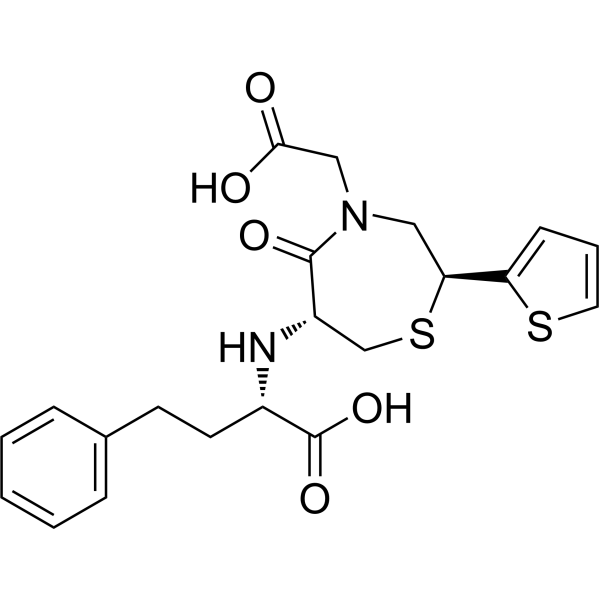
    Temocaprilat (Temocapril diacid) is an inhibitor of angiotensin-converting enzyme (ACE). Temocaprilat alleviates the inhibitory effect of high glucose on the proliferation of aortic endothelial cells. Temocaprilat has potential applications in hypertension and vascular inflammation .
    Temocaprilat
  • HY-136630

    SHR110008

    Drug Derivative Others
    Felotaxel (SHR110008) is a derivate of Docetaxel (HY-B0011), with antitumor activity and specific pharmacokinetic properties in rats. Felotaxel is rapidly distributed to normal tissues. The kidney is the major excretion organ, and its plasma protein binding capacity is nearly linearly related to concentration.
    Felotaxel
  • HY-106720

    YM 09538

    Adrenergic Receptor Cardiovascular Disease
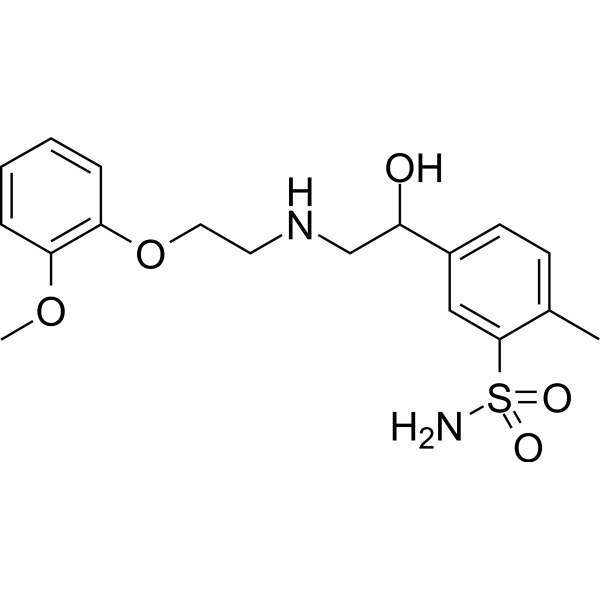
    Amosulalol (YM 09538) is an orally active and dual inhibitor of α1/β1-Adrenergic Receptor. Amosulalol exhibits antihypertensive activity via α1-Adrenergic Receptor inhibition. Amosulalol decreases reflexogenic increases in heart rate and plasma renin activity (PRA) via β1-Adrenergic Receptor inhibition in spontaneously hypertensive rats (SHR) .
    Amosulalol
  • HY-106720A

    YM 09538 hydrochloride

    Adrenergic Receptor Cardiovascular Disease
    Amosulalol (YM 09538) hydrochloride is an orally active and dual inhibitor of α1/β1-Adrenergic Receptor. Amosulalol hydrochloride exhibits antihypertensive activity via α1-Adrenergic Receptor inhibition. Amosulalol hydrochloride decreases reflexogenic increases in heart rate and plasma renin activity (PRA) via β1-Adrenergic Receptor inhibition in spontaneously hypertensive rats (SHR) .
    Amosulalol hydrochloride
  • HY-106720C

    (+)-YM 09538

    Adrenergic Receptor Others
    (+)-Amosulalol ((+)-YM 09538) is an isomer of Amosulalol (HY-106720), an orally active dual inhibitor of α1/β1-adrenergic receptors. Amosulalol exhibits antihypertensive activity by inhibiting α1-adrenergic receptors. Amosulalol reduces the reflex increase in heart rate and plasma renin activity (PRA) in spontaneously hypertensive rats (SHR) by inhibiting β1-adrenergic receptors.
    (+)-Amosulalol
  • HY-106720B

    (-)-YM 09538

    Adrenergic Receptor Others
    (-)-Amosulalol ((-)-YM 09538) is an isomer of Amosulalol (HY-106720), an orally active dual inhibitor of α1/β1-adrenergic receptors. Amosulalol exhibits antihypertensive activity by inhibiting α1-adrenergic receptors. Amosulalol reduces the reflex increase in heart rate and plasma renin activity (PRA) in spontaneously hypertensive rats (SHR) by inhibiting β1-adrenergic receptors.
    (-)-Amosulalol
  • HY-171469

    Potassium Channel Cardiovascular Disease
    SKP-451 is an ATP-sensitive potassium (K +) channel agonist. SKP-451 activates the ATP-sensitive K + channels, promotes the efflux of K +, causes membrane hyperpolarization, and inhibits the influx of Ca 2+, thereby relaxing the vascular smooth muscle. SKP-451 relaxs the canine coronary artery, rabbit basilar artery, and vertebral artery. SKP-451 also reduces the mean arterial blood pressure of conscious spontaneously hypertensive rats (SHR). SKP-451 is promising for research of cardiovascular diseases .
    SKP-451
  • HY-103247

    Angiotensin Receptor Cardiovascular Disease
    EMD 66684 is an antagonist of Angiotensin II Type 1 (AT1) receptor. EMD 66684 shows potent binding affinities for the AT1 subtype Ang II receptor with an IC50 value of 0.7 nM. EMD 66684 also serves as an antiischemic cytoprotectant - .
    EMD 66684
  • HY-105527

    Adrenergic Receptor Cardiovascular Disease
    Flavodilol is an orally active antihypertensive agent. Flavodilol extensively depletes catecholamines and serotonin in heart tissue of normotensive and spontaneously hypertensive rats (SHR). Flavodilol can be used for hypertension research .
    Flavodilol
  • HY-107398R

    Adrenergic Receptor Amine N-methyltransferase Reference Standards Cardiovascular Disease
    1-(2,3-Dichlorophenyl)ethanamine hydrochloride (Standard) is the analytical standard of 1-(2,3-Dichlorophenyl)ethanamine (hydrochloride) (HY-107398). This product is intended for research and analytical applications. 1-(2,3-Dichlorophenyl)ethanamine hydrochloride is a phenylethanolamine N-methyltransferase (PNMT) inhibitor. 1-(2,3-Dichlorophenyl)ethanamine hydrochloride effectively reduces blood pressure of spontaneously hypertensive. 1-(2,3-Dichlorophenyl)ethanamine hydrochloride can be used for the research of blood pressure .
    1-(2,3-Dichlorophenyl)ethanamine hydrochloride (Standard)
  • HY-183206

    Potassium Channel Calcium Channel Cardiovascular Disease Inflammation/Immunology
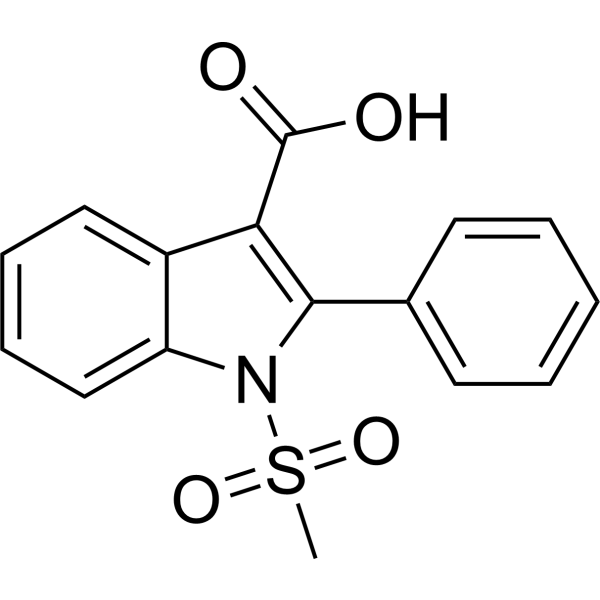
    UR 8225 is an orally active ATP-sensitive K + channel activator with vasodilator, smooth muscle relaxant, antihypertensive, and bronchodilator activities. UR 8225 induces membrane hyperpolarization by increasing outward K + conductance and reduces Ca 2+ influx through voltage-gated L-type Ca 2+ channels. UR 8225 reduces total peripheral vascular resistance, shortens cardiac action potential duration, inhibits agonist-induced Ca 2+ influx, and stimulates renin release. UR 8225 induces reflex tachycardia but lacks β-adrenergic receptor blocking activity. UR 8225 is widely applicable to research in fields related to hypertension, myocardial ischemia, ventricular fibrillation, and other conditions .
    UR 8225

Inquiry Online

Your information is safe with us. * Required Fields.

Salutation


Country or Region *

Applicant Name *


Organization Name *

Department *


Email Address *


Product Name *

Cat. No.


Requested quantity *

Phone Number *


Remarks

Inquiry Online

Inquiry Information

Product Name:
Cat. No.:
Quantity:
MCE Japan Authorized Agent:

