
1. Search Result
Search Result
Results for "

Subcellular localization

" in MedChemExpress (MCE) Product Catalog:

17

Inhibitors & Agonists

4

Fluorescent Dye

3

Biochemical Assay Reagents

3

Inhibitory Antibodies

1

Natural
Products

2

Click Chemistry

Cat. No. Product Name Target Research Areas Chemical Structure
  • HY-118563

    ICMT Apoptosis Ras Cancer
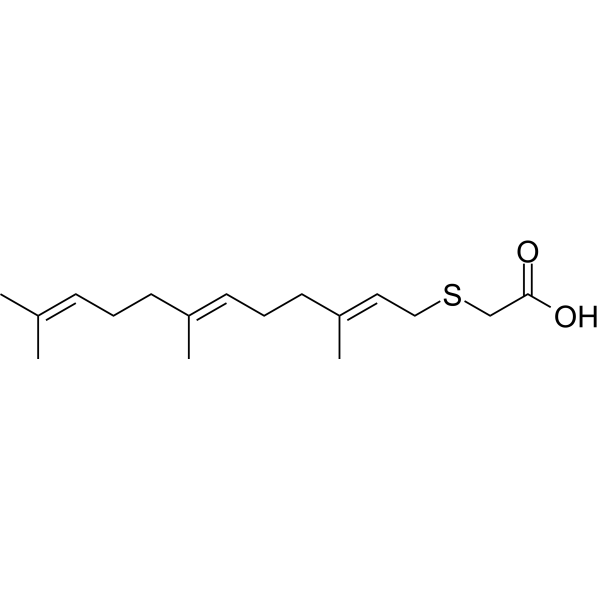
    Farnesylthioacetic acid is a competitive, non-substrate inhibitor of Prenylcysteine α-carboxyl methyltransferase. It acts as a non-substrate competitive inhibitor of Arabidopsis thaliana Prenylcysteine α-carboxyl methyltransferase and blocks methyltransferase activity. Farnesylthioacetic acid does not inhibit protein farnesyltransferase activity in Arabidopsis. It induces Apoptosis. Farnesylthioacetic acid regulates the subcellular localization of Ras protein, reducing the proportion of cytoplasmic Ras protein without disrupting membrane binding. It enhances ABA-induced seed dormancy, delays seed germination, and promotes maximum stomatal closure at lower exogenous ABA concentrations. Farnesylthioacetic acid can be used in studies related to promyelocytic leukemia .
    Farnesylthioacetic acid
  • HY-D1606

    Adrenergic Receptor Metabolic Disease
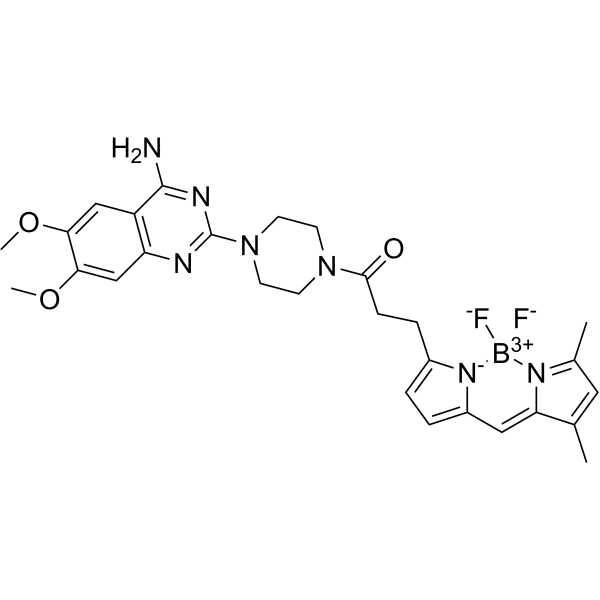
    BODIPY FL prazosin is a fluorescent α1-adrenergic antagonist with Ki values of 14.5, 43.3 nM for α1a-AR and α1b-AR, respectively. BODIPY FL prazosin also is a fluorescent ligand with the excitation and emission wavelengths are 485 and 535 nm, respectively. BODIPY FL prazosin can be used for study the differences in the subcellular localization of α1-adrenoceptor subtypes .
    BODIPY FL prazosin
  • HY-W112938

    DNA Alkylator/Crosslinker Photosensitizer Infection Cancer
    TMPyP tetrachloride is a DNA-binding agent, singlet oxygen Sensitizer and photobleaching agent. TMPyP tetrachloride binds to DNA via intercalation or external groove complexation; irradiation induces its photoinduced release from DNA. TMPyP tetrachloride sensitizes the generation of singlet molecular oxygen upon irradiation, and prolonged irradiation leads to photobleaching. TMPyP tetrachloride initially localizes preferentially in neuronal nuclei and cytoplasm, and irradiation triggers its subcellular relocalization. TMPyP tetrachloride binds to K + -free single-molecule G4-DNA nanowires via intercalation, and binds to K + -type variants via non-intercalation. TMPyP tetrachloride can be used in studies related to cancer, HIV infection and bacterial infection .
    TMPyP tetrachloride
  • HY-110334

    Fluorescent Dye Others
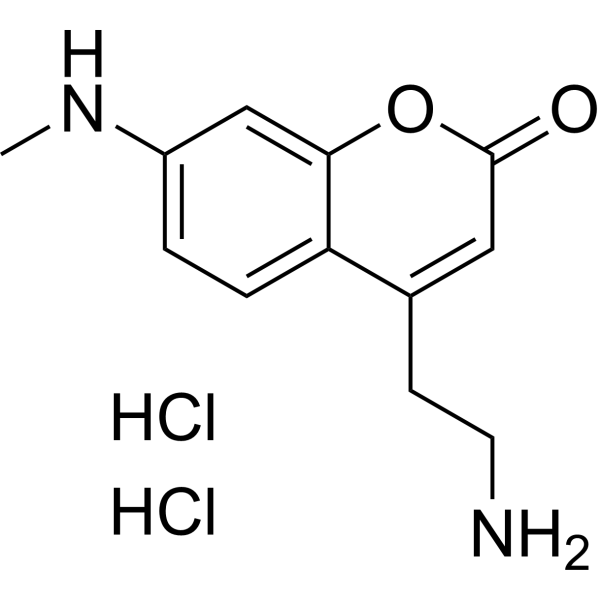
    FFN 206 dihydrochloride, a fluorescent probe, is used as an excellent Vesicular Monoamine Transporter 2 (VMAT2) substrate with an apparent Km of 1.16 μM. FFN 206 dihydrochloride is capable of detecting VMAT2 activity in intact cells using fluorescence microscopy, with subcellular localization to VMAT2-expressing acidic compartments without apparent labeling of other organelles .
    FFN 206 dihydrochloride
  • HY-W002438

    Biochemical Assay Reagents Endogenous Metabolite OAT Ferroptosis Neurological Disease Metabolic Disease
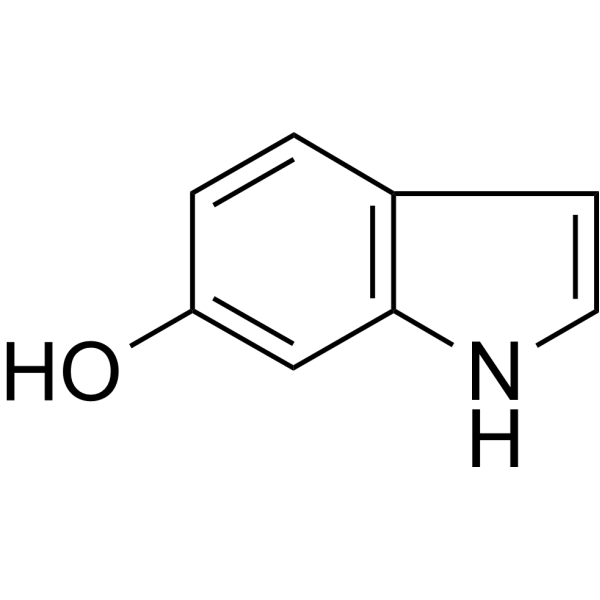
    6-Hydroxyindole is an orally active, endogenous long-acting OATP1B1 inhibitor. 6-Hydroxyindole does not alter the cell surface expression or subcellular localization of OATP1B1. 6-Hydroxyindole protects cells against Ferroptosis. 6-Hydroxyindole possesses intrinsic radical-trapping antioxidant activity. 6-Hydroxyindole serves as a component of oxidative hair dyes. 6-Hydroxyindole can be used in research related to renal failure and neurodegenerative diseases .
    6-Hydroxyindole
  • HY-160187A

    Cadherin MMP Akt FAK ERK NF-κB Cancer
    (Rac)-AAA is a regulator and inhibitor targeting GPR75. By blocking the 20-HETE-induced downregulation of GPR75 expression, (Rac)-AAA effectively inhibits the activation of key downstream signaling pathways including EGFR, AKT, NF-κB and FAK. (Rac)-AAA reverses 20-HETE-mediated epithelial-mesenchymal transition, which is specifically characterized by downregulating vimentin (vimentin), upregulating E-Cadherin, as well as reducing MMP-2 activity and cancer cell migration ability. (Rac)-AAA also abolishes the 20-HETE-induced upregulation of HIC-5 expression and anchorage-independent growth, and modulates the subcellular localization of PKC-α and phosphorylated AKT. (Rac)-AAA is investigated in androgen-independent prostate cancer (castration-resistant prostate cancer) .
    (Rac)-AAA
  • HY-131364

    Nuclear Hormone Receptor 4A/NR4A Apoptosis Cancer
    Nur77 modulator 1 is a good Nur77 binder (KD = 3.58 μM). Nur77 modulator 1 up-regulates Nur77 expression, mediates sub-cellular localization of Nur77, induces Nur77-dependent ER stress and autophagy, and results in cell apoptosis. Anti-hepatoma activity .
    Nur77 modulator 1
  • HY-139286

    Pacsph; Pacsphingosine (d18:1)

    Biochemical Assay Reagents Others
    Photoclick sphingosine (Pacsph) is a photosensitizing and clickable sphingosine analog. Photoclick sphingosine is metabolized in cells into endogenous lipid metabolic pathways and can be visualized by its clickable alkyne group. Photoclick sphingosine can be used to study intracellular sphingolipid metabolism and subcellular localization .
    Photoclick sphingosine
  • HY-144368

    TNF Receptor Inflammation/Immunology
    CO delivery molecule 1 (compound 4) localizes to the endoplasmic reticulum, mitochondria, and lysosomes. Subcellular localization of CO delivery molecule 1 results in CO-induced toxicity effects. Anti-inflammatory effects of CO delivery molecule 1, as measured by TNF-α suppression, occur at the nanomolar level in the absence of CO release, and are enhanced with visible-light-induced CO release .
    CO delivery molecule 1
  • HY-149710

    ICMT ERK Cancer
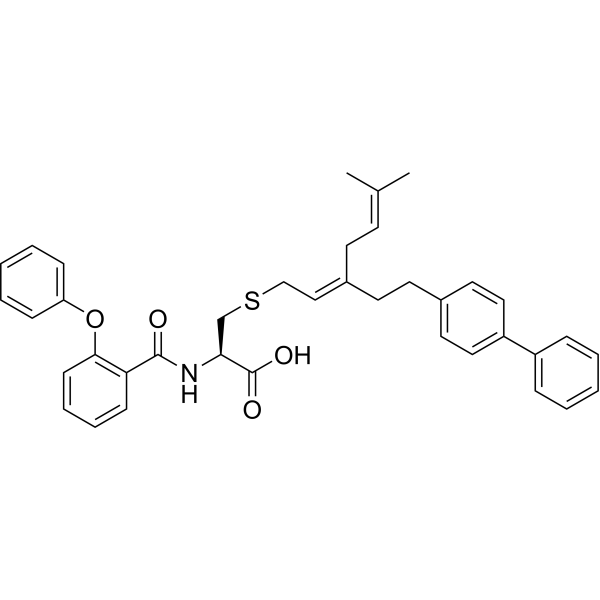
    POP-3MB (compound 1b) is an ICMT inhibitor (IC50: 2.5 μM). POP-3MB changes the subcellular localization of K-Ras and inhibits Ras activation. POP-3MB also inhibits Erk phosphorylation .
    POP-3MB
  • HY-D2966

    Fluorescent Dye Others
    TMR-NO-BG is a hybrid probe (Ex/Em: 557 nm/571 nm). TMR-NO-BG covalently connects the tetramethylrhodamine (TMR) lactone NO sensing unit with the SNAP-tag reactive benzyl guanine (BG) for achieving subcellular-specific nitric oxide (NO) detection .
    TMR-NO-BG
  • HY-163981

    P-glycoprotein Cancer
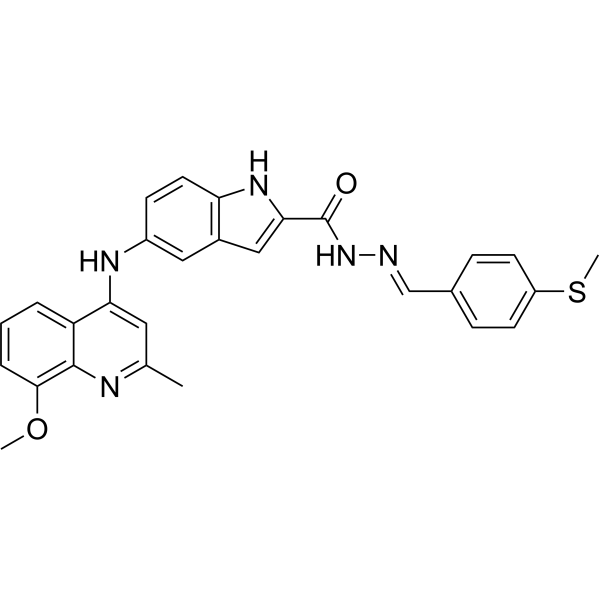
    ABCB1-IN-2 (compound 16q) is a functional inhibitor that can directly bind to the ABCB1 protein and stabilize its structure without affecting the expression and subcellular localization of ABCB1. ABCB1-IN-2 can increase the sensitivity of MCF-7/ADR cells to paclitaxel (PTX), increase the accumulation of PTX, and prevent the accumulation and excretion of luciferin Rh123 mediated by ABCB1. ABCB1-IN-2, as an ABCB1-mediated multidrug resistance (MDR) reversal agent, shows a strong ability to reverse MDR .
    ABCB1-IN-2
  • HY-D2946

    BC-TMR

    Fluorescent Dye Infection
    CLIP-TMR (BC-TMR) is a TMR-labeled CLIP tag fluorescent probe. CLIP-TMR combines the high specificity recognition ability of the CLIP-tag and the excellent optical performance of the TMR fluorophore, and can be used for the specific labeling and visualization of the HCV NS5A protein .
    CLIP-TMR
  • HY-158636

    19-Ethynyl cholesterol

    Drug Derivative Others
    19-Alkyne Cholesterol is an alkyne derivative of cholesterol. It has been used to track cholesterol localization and subcellular distribution in cells.
    19-Alkyne cholesterol
  • HY-D3251

    Fluorescent Dye Cancer
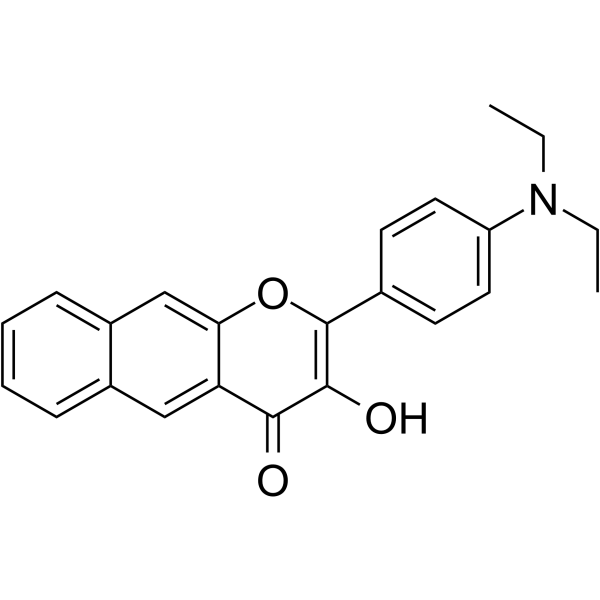
    LCP is a fluorescent probe applicable for subcellular localization. LCP responds to polarity changes in the cellular microenvironment via fluorescence resonance energy transfer, emitting blue fluorescence in low-polarity environments and red fluorescence in high-polarity environments. LCP enables dual-color visualization of dynamic changes in lysosomes and cytoplasmic membranes during drug-induced cell apoptosis, and monitors cell viability through localization and emission color changes. LCP can be used in cancer research .
    LCP
  • HY-183061

    LYTACs Epigenetic Reader Domain Neurological Disease Cancer
    MrTAC-8, methylarginine-targeting chimera (MrTAC), is a BRD4 degrader with DC50 values of 46 nM in HeLa cells. MrTAC-8 recruits PRMT1, PRMT3, PRMT4, PRMT5, and PRMT7 to target proteins, inducing arginine methylation that triggers lysosomal degradation. MrTAC-8 degrades proteins across diverse subcellular localizations and independent of native proteolytic routes. MrTAC-8 can be used for the research of cervical cancer, glioblastoma .
    MrTAC-8
  • HY-P992056

    Autophagy Cancer
    Anti-Human/Mouse LY6E Antibody (9B12) is a high-affinity, multi-target antibody that binds specifically to LY6E. Anti-Human/Mouse LY6E Antibody (9B12) binds specifically to cell-surface LY6E and enters lysosomes via lipid raft-dependent endocytosis, thereby effectively inhibiting the growth of various LY6E-expressing solid tumors (such as breast cancer and lung cancer) in both in vitro and in vivo models. Anti-Human/Mouse LY6E Antibody (9B12) exerts a dual mechanism of action: on one hand, it blocks the interaction between PILRα and CD8α, specifically reduces the survival rate of peripheral CD8 + T cells and induces their activation, breaking the state of cellular quiescence; on the other hand, it recognizes and immunoprecipitates IDE under both non-denaturing and denaturing conditions, which is applicable to studies on the subcellular localization and protein interactions of IDE. The regulatory effect of Anti-Human/Mouse LY6E Antibody (9B12) on CD8 + T cells strictly depends on the presence of PILRα, and it does not affect CD4 + T cells or T cell development in the thymus, exhibiting high specificity .
    Anti-Human/Mouse LY6E Antibody (9B12)

Inquiry Online

Your information is safe with us. * Required Fields.

Salutation


Country or Region *

Applicant Name *


Organization Name *

Department *


Email Address *


Product Name *

Cat. No.


Requested quantity *

Phone Number *


Remarks

Inquiry Online

Inquiry Information

Product Name:
Cat. No.:
Quantity:
MCE Japan Authorized Agent:

