


Search Result
Results for "
Substrate peptide
" in MedChemExpress (MCE) Product Catalog:
12
Biochemical Assay Reagents
1
Isotope-Labeled Compounds
| Cat. No. |
Product Name |
Target |
Research Areas |
Chemical Structure |
-
- HY-P4931
-
|
|
MMP
|
Cancer
|
|
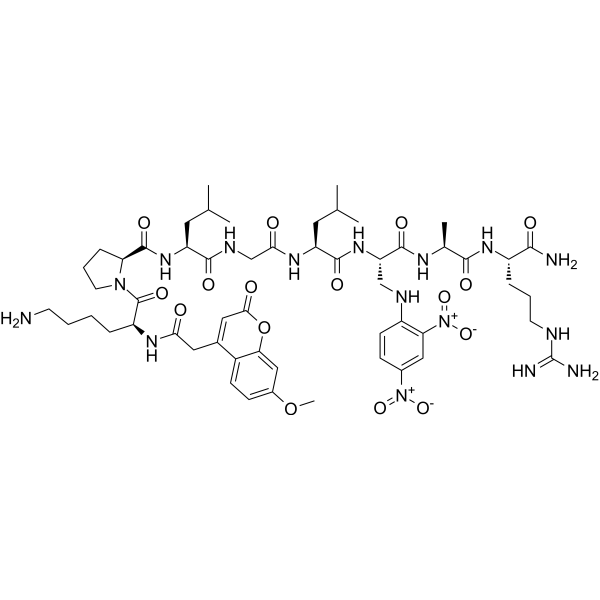
Mca-Lys-Pro-Leu-Gly-Leu-Dap(Dnp)-Ala-Arg-NH2 (FS-6) is a fluorescent peptide that is a quenched MMP peptide substrate. Mca-Lys-Pro-Leu-Gly-Leu-Dap(Dnp)-Ala-Arg-NH2 can be used for real-time quantification of MMP enzymatic activity. Mca-Lys-Pro-Leu-Gly-Leu-Dap(Dnp)-Ala-Arg-NH2 is an elongated peptide of MMP substrate (FS-1) and is active against collagenases (MMP-1, MMP-8, MMP-13 ) and MT1-MMP with higher specificity constants than FS-1 . (Ex/Em=325 nm/400 nm)
|
-
-
- HY-119244
-
|
|
Dipeptidyl Peptidase
|
Metabolic Disease
|
|
Gly-Pro-pNA hydrochloride is a chromogenic peptide substrate that can be cleaved by the circulating enzyme dipeptidyl peptidase IV (DPP IV). Gly-Pro-pNA hydrochloride is mainly used to detect the activity of aminopeptidases such as DPP IV. Gly-Pro-pNA hydrochloride can be investigated as an experimental antidiabetic agent .
|
-
-
- HY-P1821
-
|
MHP4-14
|
PKC
|
Neurological Disease
|
|
Myelin Basic Protein (MHP4-14), a synthetic peptide comprising residues 4-14 of myelin basic protein, is a very selective PKC substrate (Km=7 μM). Myelin Basic Protein is not phosphorylated by cyclic AMP-dependent protein kinase, casein kinases I and II, Ca 2+/calmodulin-dependent protein kinase II, or phosphorylase kinase, and can be routinely used for the assay of protein kinase C with low background in the crude tissue extracts .
|
-
-
- HY-P2295
-
|
|
SARS-CoV
|
Others
|
|
Dabcyl-KTSAVLQSGFRKME-Edans TFA is a fluorogenic peptide. Dabcyl-KTSAVLQSGFRKME-Edans TFA is used as the substrate to measure the enzymatic activities of protease forms. Dabcyl-KTSAVLQSGFRKME-Edans TFA has the potential for study 2019-nCoV (COVID-19) infection .
|
-
-
- HY-P1883A
-
|
|
Fluorescent Dye
|
Infection
|
|
Bacterial Sortase Substrate III, Abz/DNP TFA is a fluorescent peptide substrate. Bacterial Sortase Substrate III, Abz/DNP TFA undergoes cleavage catalyzed by Staphylococcus aureus sortase A (SrtAΔN24) and Streptococcus pyogenes sortase A (SrtAΔN81), and catalyzes the formation of an amide bond between the carboxyl group of threonine and the amino group of the cell wall cross-bridge. Cleavage of this substrate can be detected at Ex/Em=320 nm/420 nm .
|
-
-
- HY-P3815
-
|
|
Casein Kinase
|
Others
|
|
Casein Kinase 2 Substrate Peptide is a common CK2 substrate peptide. Casein Kinase 2 Substrate Peptide is synthesized with its C-terminus conjugated to 5-[(2-aminoethyl)amino]naphthalene-1-sulfonic acid (EDANS). Casein Kinase 2 Substrate Peptide can be used for protein kinase CK2 activity determination .
|
-
-
- HY-137199
-
-
-
- HY-P4425
-
|
|
Biochemical Assay Reagents
|
Others
|
|
Gly-Phe-AMC is a fluorogenic peptide substrate consisting of a peptide sequence composed of glycine and phenylalanine, linked to the fluorophore AMC. Gly-Phe-AMC also serves as a cathepsin C substrate. Gly-Phe-AMC is widely used to detect the activity of various proteases .
|
-
-
- HY-P10605
-
|
|
Akt
GSK-3
|
Cancer
|
|
GSK3β-peptide is a substrate mimetic peptide of glycogen synthase kinase 3-β (GSK3-β) that can bind to the active site of GSK3-β and mimic the behavior of a real substrate. GSK3β-peptide can be used to develop substrate mimetic inhibitors of Akt as potential anticancer drugs .
|
-
-
- HY-P10620
-
|
|
Bacterial
|
Others
|
|
GGGYK-Biotin is a substrate peptide designed to study the substrate specificity of Sortase A. GGGYK-Biotin can be used to develop Sortase A variants with different substrate specificities .
|
-
-
- HY-P5354A
-
|
|
Fluorescent Dye
|
Others
|
|
FRETS-VWF73 TFA, a 73-amino-acid peptide, is a fluorogenic substrate for ADAMTS13 assay (Ex=340 nm; Em=450 nm) .
|
-
-
- HY-P3722A
-
|
|
Fluorescent Dye
MMP
|
Others
|
|
Mca-PLAQAV-Dpa-RSSSR-NH2 TFA is a fluorescent substrate peptide that can be used to detect ADAM9, ADAM10, and tumor necrosis factor-α converting enzyme (TACE/ADAM17). Mca-PLAQAV-Dpa-RSSSR-NH2 TFA is a fluorescence resonance energy transfer-based substrate, and its activity can be determined by changes in fluorescence intensity upon cleavage (Ex = 320 nm
; Em = 405 nm) .
|
-
-
- HY-P10602
-
|
RII phosphopeptide
|
PKA
|
Others
|
|
PKA Regulatory Subunit II Substrate (RII phosphopeptide) is a tool peptide derived from the regulatory subunit Type II (RII) of cyclic AMP-dependent protein kinase (PKA). PKA Regulatory Subunit II Substrate is commonly used to mimic the phosphorylation of protein kinases and as a specific substrate for protein phosphatases to assess the activities of these enzymes .
|
-
-
- HY-P10280
-
|
|
ATM/ATR
|
Cancer
|
|
ATR kinase substrate peptide (ASELPASQPQPFSAKKK) is a peptide substrate for ATR protein kinase and can be used to detect ATR kinase activity .
|
-
-
- HY-P5432
-
|
IRAK-1 (360-380)
|
IRAK
|
Others
|
|
IRAK-4 Peptide substrate (IRAK-1 (360-380)) is a biological active peptide. (This is a substrate peptide for Interleukin-1 Receptor-Associated Kinase (IRAK) 4)
|
-
-
- HY-P1486
-
|
|
Endogenous Metabolite
|
Cardiovascular Disease
|
|
Angiotensinogen (1-14), human is a fragment of the renin substrate angiotensinogen. Angiotensinogen is naturally occurring substrate for renin and a precursor for all angiotensin peptides .
|
-
-
- HY-155667A
-
|
|
Cathepsin
|
Others
|
|
Z-Nle-Lys-Arg-AMC acetate is a fluorogenic peptide substrate that specifically monitors cathepsin B activity over a broad pH range .
|
-
-
- HY-122142A
-
|
S-2366 hydrochloride
|
APC
Factor XI
Biochemical Assay Reagents
|
Others
|
|
Pyr-Pro-Arg-pNA (S2366) hydrochloride is a chromogenic peptide substrate for Factor XI and Activated protein C (APC). Pyr-Pro-Arg-pNA hydrochloride can induce noncompetitive inhibition of factor XI activation through occupancy of the active site of the factor XIa-light chain. Pyr-Pro-Arg-pNA hydrochloride can be used for measurement of APC amidolytic activity .
|
-
-
- HY-P10100
-
|
|
CDK
|
Others
|
|
RS Repeat peptide is a substrate peptide for Clk1 .
|
-
-
- HY-P3818
-
|
|
PKC
|
Others
|
|
PKCδ Peptide Substrate is an absolutely specific substrate for the δ-type of PKC, with a sequence corresponding to sequence 422-443 of murine eEF-1α and containing Thr-431 .
|
-
-
- HY-P1344A
-
|
|
DAPK
|
Cancer
|
|
DAPK Substrate Peptide TFA is a synthetic peptide substrate for death associated protein kinase (DAPK), with a Km of 9 μM .
|
-
-
- HY-P0136AF
-
|
|
Fluorescent Dye
|
Others
|
|
FAM-SAMS TFA is a 5-FAM (HY-66022) labeled SAMS (HY-P0136). SAMS peptide is a specific substrate for the AMP-activated protein kinase (AMPK) .
|
-
-
- HY-P5378A
-
|
Cathepsin S Substrate TFA
|
Ser/Thr Protease
|
Others
|
|
Ac-KQKLR-AMC TFA is a substrate peptide of Cathepsin S fluorescently labeled with AMC (Ex/Em=354 nm/442 nm). Ac-KQKLR-AMC TFA can be used to measure Cathepsin S activity) .
|
-
-
- HY-P4254
-
|
|
PAI-1
Ser/Thr Protease
|
Others
|
|
H-Gly-Glu-pNA is a chromogenic peptide substrate that can be widely used in enzymatic analysis, including trypsin and urokinase-type plasminogen activator (uPA) .
|
-
-
- HY-P1821A
-
|
MHP4-14 TFA
|
PKC
|
Neurological Disease
|
|
Myelin Basic Protein (MHP4-14) TFA, a synthetic peptide comprising residues 4-14 of myelin basic protein, is a very selective PKC substrate (Km=7 μM). Myelin Basic Protein TFA is not phosphorylated by cyclic AMP-dependent protein kinase, casein kinases I and II, Ca 2+/calmodulin-dependent protein kinase II, or phosphorylase kinase, and can be routinely used for the assay of protein kinase C with low background in the crude tissue extracts .
|
-
-
- HY-P5965
-
|
|
HSP
|
Others
|
|
BiP substrate is a peptide substrate of BiP that can be used to measure the BiP ATPase activity .
|
-
-
- HY-P1448
-
-
-
- HY-P4520
-
-
-
- HY-P3921
-
|
|
Casein Kinase
|
Cancer
|
|
Casein Kinase II Substrate is a casein kinase II (CK2) peptide substrate that can be selectively phosphorylated by CK2 .
|
-
-
- HY-P2162
-
|
|
Myosin
|
Cancer
|
|
Kemptamide, a 13 amino acid fragment with a sequence corresponding to residues 11-23 of gizzard light chain. Kemptamide is a peptide substrate of myosin light-chain kinase (MLCK) .
|
-
-
- HY-P3940
-
|
|
PKC
|
Others
|
|
Ac-MBP (4-14) Peptide is an acetylated MBP (4-14) peptide. MBP (4-14) Peptide is a very selective (protein kinase C) PKC substrate. Ac-MBP (4-14) Peptide can be used for PKC assay in extracts without prior purification to eliminate interfering protein kinases or phosphatases .
|
-
-
- HY-P3743
-
|
|
Src
Others
|
Others
|
|
p60c-src Substrate is an efficient and specific substrate for p60c-src protein tyrosine kinase (PTK). p60c-src Substrate can be used to synthesize chimeric branched peptides .
|
-
-
- HY-148218
-
|
N-[(6S)-6-Carboxy-6-(glycylamino)hexanoyl]-D-alanyl-D-alanine
|
Amino Acid Derivatives
|
Metabolic Disease
|
|
Glycyl-L-alpha-amino-epsilon-pimelyl-D-alanyl-D-alanine is a specific peptide substrate of Streptomyces R1 d-alanyl-d-alanine(dd)-peptidases .
|
-
-
- HY-P3791
-
|
|
Fluorescent Dye
|
Others
|
|
N-Succinyl-Ile-Ile-Trp-AMC is a peptide-based fluorescent substrate or probe for carboxypeptidase Y (CPY) .
|
-
-
- HY-P5378
-
|
Cathepsin S Substrate
|
Ser/Thr Protease
|
Others
|
|
Ac-KQKLR-AMC is a substrate peptide of Cathepsin S fluorescently labeled with AMC (Ex/Em=354 nm/442 nm). Ac-KQKLR-AMC can be used to measure Cathepsin S activity) .
|
-
-
- HY-W250725
-
|
|
Fluorescent Dye
|
Neurological Disease
|
|
H-GLU-AMC-OH is an amino acid derivative that can be used as A fluorescent peptide substrate for the determination of aminopeptidase A enzyme activity .
|
-
-
- HY-P5027
-
-
-
- HY-126809A
-
|
Bz-PFR-pNA hydrochloride
|
Factor Xa
|
Others
|
|
Bz-Pro-Phe-Arg-pNA (Bz-PFR-pNA) hydrochloride is a chromogenic peptide substrate for plasma and glandular Kallikrein, cysteine proteinase (Cruzipain) and Trypsin. Bz-Pro-Phe-Arg-pNA hydrochloride can be used in Factor XII assay .
|
-
-
- HY-P11302
-
|
|
CHIKV
Virus Protease
|
Infection
|
|
DABCYL-RAGGYIFS-(E-EDANS)-NH2, an octapeptide, is a FRET-based substrate peptide of CHIKV nsP2protease with highly sensitivity. DABCYL-RAGGYIFS-(E-EDANS)-NH2 can be cleaved by the active CHIKV nsP2protease, separating fluorophore and quencher and resulting in an increase of fluorescence signal. DABCYL-RAGGYIFS-(E-EDANS)-NH2 can used for the determination of CHIKV nsP2protease activity .
|
-
-
- HY-P1883
-
|
|
Fluorescent Dye
|
Infection
|
|
Bacterial Sortase Substrate III, Abz/DNP is a fluorescent peptide substrate. Bacterial Sortase Substrate III, Abz/DNP undergoes cleavage catalyzed by Staphylococcus aureus sortase A (SrtAΔN24) and Streptococcus pyogenes sortase A (SrtAΔN81), and catalyzes the formation of an amide bond between the carboxyl group of threonine and the amino group of the cell wall cross-bridge. Cleavage of this substrate can be detected at Ex/Em=320 nm/420 nm .
|
-
-
- HY-P3770
-
|
|
PKC
|
Others
|
|
Phosphate acceptor peptide is a substrate for cAMP-dependent protein kinase (PKA). phosphate acceptor peptide is also a weak PKC inhibitor .
|
-
-
- HY-P1113
-
|
|
GSK-3
|
Others
|
|
Phospho-Glycogen Synthase Peptide-2 (substrate) is peptide substrate for glycogen synthase kinase-3 (GSK-3) and can be used for affinity purification of protein-serine kinases .
|
-
-
- HY-P10541
-
|
|
HSP
|
Others
|
|
HSP70/DnaK substrate peptide is a short peptide that the HSP70/DnaK molecular chaperone can bind and act on. HSP70/DnaK substrate peptide can be used to study the mechanism of action of HSP70/DnaK in molecular chaperone function .
|
-
-
- HY-P1113A
-
|
|
GSK-3
|
Others
|
|
Phospho-Glycogen Synthase Peptide-2 (substrate) is peptide substrate for glycogen synthase kinase-3 (GSK-3) and can be used for affinity purification of protein-serine kinases .
|
-
-
- HY-P5434
-
|
JAK3 peptide Substrate
|
JAK
|
Others
|
|
Jak3tide (JAK3 Peptide substrate) is a biological active peptide. (This peptide is a substrate for Jak3. It may be used used in kinase assays. Jak3tide contains the phosphorylation site at Tyr7.)
|
-
-
- HY-P10541A
-
|
|
HSP
|
Others
|
|
HSP70/DnaK substrate peptide TFA is a short peptide that the HSP70/DnaK molecular chaperone can bind and act on. HSP70/DnaK substrate peptide TFA can be used to study the mechanism of action of HSP70/DnaK in molecular chaperone function .
|
-
-
- HY-P10569
-
|
|
EGFR
|
Cancer
|
|
Biotin HER-2 substrate peptide is a substrate of Her4 and Her2/neu tyrosine kinase with a Km value of 60 μm for Her2/neu kinase domain .
|
-
-
- HY-P1803
-
|
PKCε; PRKCE ; peptide Epsilon
|
PKC
|
Neurological Disease
Inflammation/Immunology
Endocrinology
|
|
Protein Kinase C Peptide Substrate is targeted to a specific cellular compartment in a manner dependent on second messengers and on specific adapter proteins in response to extracellular signals that activate G-protein-coupled receptors, tyrosine kinase receptors, or tyrosine kinase-coupled receptors. Protein Kinase C Peptide Substrate then regulates various physiological functions including the activation of nervous, endocrine, exocrine, inflammatory, and immune systems .
|
-
-
- HY-P10967
-
|
|
PKC
|
Metabolic Disease
|
|
EGFR Peptide is a selective substrate peptide for PKC. EGFR Peptide can used to measure PKC activity .
|
-
-
- HY-P1344
-
|
|
DAPK
|
Cancer
|
|
DAPK Substrate Peptide is a synthetic peptide substrate for death associated protein kinase (DAPK), with a Km of 9 μM .
|
-
- HY-P2842
-
-
- HY-155667
-
|
|
Cathepsin
Fluorescent Dye
|
Others
|
|
Z-Nle-Lys-Arg-AMC is a fluorogenic peptide substrate that specifically monitors cathepsin B activity over a broad pH range .
|
-
- HY-W324458
-
|
|
Fluorescent Dye
|
Others
|
|
MCA succinimidyl ester is a derivative of MCA (HY-W027544). MCA succinimidyl ester has succinimidyl ester can react selectively with amines. MCA succinimidyl ester can be used as peptide substrate for fluorescence resonance energy transfer .
|
-
- HY-P10609
-
|
|
Btk
|
Others
|
|
Btk substrate peptide is a peptide substrate corresponding to residues 217-229 of human Bruton’s tyrosine kinase (Btk), of which the tyrosine at residue 223 is the major autophosphorylation site of Btk. Btk substrate peptide is used as a substrate in in vitro kinase assays to evaluate the activity of Btk or other tyrosine kinases .
|
-
- HY-P5915
-
|
|
HIF/HIF Prolyl-Hydroxylase
|
Cancer
|
|
FAM-DEALA-Hyp-YIPMDDDFQLRSF-NH2, a 5-FAM labeled HIF-1α peptide, is a substrate of VHL. FAM-DEALA-Hyp-YIPMDDDFQLRSF-NH2 binds to VHL protein with a KD of 3 nM. Ex/Em (λ) = 485/520 nm .
|
-
- HY-P3814
-
|
|
Ribosomal S6 Kinase (RSK)
|
Cancer
|
|
S6 Kinase Substrate Peptide 32 is a substrate of Ribosomal S6 Kinase (RSK). S6 Kinase Substrate Peptide 32 can be used to measure the activity of RSKs which phosphorylate ribosomal protein S6 .
|
-
- HY-122142
-
|
S-2366
|
APC
Factor XI
Biochemical Assay Reagents
|
Others
|
|
Pyr-Pro-Arg-pNA (S2366) is a chromogenic peptide substrate for Factor XI and Activated protein C (APC). Pyr-Pro-Arg-pNA can induce noncompetitive inhibition of factor XI activation through occupancy of the active site of the factor XIa-light chain. Pyr-Pro-Arg-pNA can be used for measurement of APC amidolytic activity .
|
-
- HY-P11297
-
|
|
Angiotensin-converting Enzyme (ACE)
|
Cardiovascular Disease
|
|
AC-SDKP-NH2 is a substrate peptide of Angiotensin converting enzyme (ACE). AC-SDKP-NH2 has anti-inflammatory and anti-fibrotic activities. AC-SDKP-NH2 directly acts on tissues and prevents or reverses them from excessive fibrosis, but fails to reduce blood pressure and left ventricular hypertrophy (LVH). AC-SDKP-NH2 attenuates inflammation and cell differentiation, proliferation and migration, therefore reducing fibrosis in the heart, vessels and kidneys in mice model. AC-SDKP-NH2 can be used for cardiovascular diseases such as hypertension research .
|
-
- HY-P3797
-
|
|
Furin
|
Cancer
|
|
Furin Substrate is an peptide. Furin Substrate can be used for the research of various biochemical .
|
-
- HY-P2714
-
-
- HY-P10098
-
|
|
PKA
|
Cancer
|
|
PKA Substrate is a potent and selective substrate peptide of PKA that can be used to detect PKA activity .
|
-
- HY-P1576
-
-
- HY-P2505
-
|
|
Syk
|
Others
|
|
Syk Kinase Peptide Substrate is a Syk kinase peptide substrate.
|
-
- HY-P11496
-
|
|
Casein Kinase
|
Neurological Disease
|
|
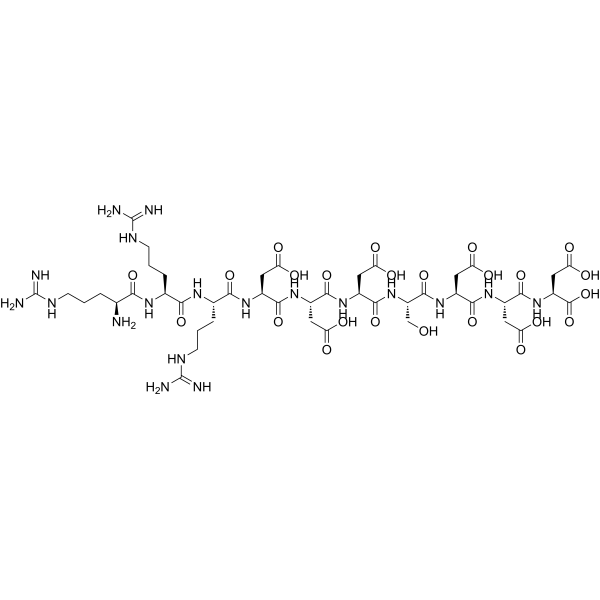
CK2 Substrate peptide (Compound RRRADDSDDDDD) is a specific CK2 peptide substrate with Km of 13 μM. CK2 Substrate peptide can be used for the research of neurological disease, such as Alzheimer's Disease .
|
-
- HY-P0141
-
|
|
Akt
|
Others
|
|
Akt/SKG Substrate Peptide is a synthetic peptide suitable as a substrate for Akt/PKB, which is not phosphorylated by p70S6K or
MAPK1 .
|
-
- HY-P2504
-
|
|
Syk
|
Others
|
|
Syk Kinase Peptide Substrate, Biotin labeled is a biotin-labled Syk kinase peptide substrate.
|
-
- HY-P0141A
-
|
|
Akt
|
Others
|
|
Akt/SKG Substrate Peptide TFA is a synthetic peptide suitable as a substrate for Akt/PKB, which is not phosphorylated by p70S6K or MAPK1 .
|
-
- HY-P5526
-
|
|
Casein Kinase
|
Others
|
|
CCK1-specific peptide substrate is a biological active peptide. (This peptide sequence is based on rabbit muscle glycogen synthase with Ser7 phosphorylated. It is a peptide substrate for Casein Kinase I (CK1). CK1 phosphorylates Ser10. Ser7 is phosphorylated by PKA in vivo.)
|
-
- HY-P3904
-
|
|
Biochemical Assay Reagents
|
Others
|
|
P34cdc2 Kinase Substrate Peptide is a synthetic peptide substrates for P34 cdc2 kinase, with a Km of 74 μM for the purified human enzyme. P34cdc2 Kinase Substrate Peptide can be used in a rapid assay of P34 cdc2 phosphorylation in vitro. P34 cdc2, a protein serinehhreonine kinase, is a cell division cycle-regulated protein kinase .
|
-
- HY-P11119
-
-
- HY-P10163
-
|
|
Fluorescent Dye
|
Others
|
|
α-Secretase Substrate II, Fluorogenic is an internally quenched fluorogenic peptide substrate for α-Secretase that contains the α-secretase cleavage site of β-Amyloid precursor protein (APP) .Ex/Em = 340/490 nm
|
-
- HY-P3920
-
|
|
PKA
|
Cancer
|
|
Cys-Kemptide is a cysteine-terminated substrate peptide that can used to measure protein kinase A (PKA) activity .
|
-
- HY-P4334
-
|
Bz-Arg-Gly-Phe-Phe-Leu-4MβNA
|
Fluorescent Dye
|
Others
|
|
Bz-RGFFL-4MβNA (Bz-Arg-Gly-Phe-Phe-Leu-4MβNA) is a peptide and can be used fluorogenic substrate .
|
-
- HY-P10082
-
|
|
Caspase
|
Others
|
|
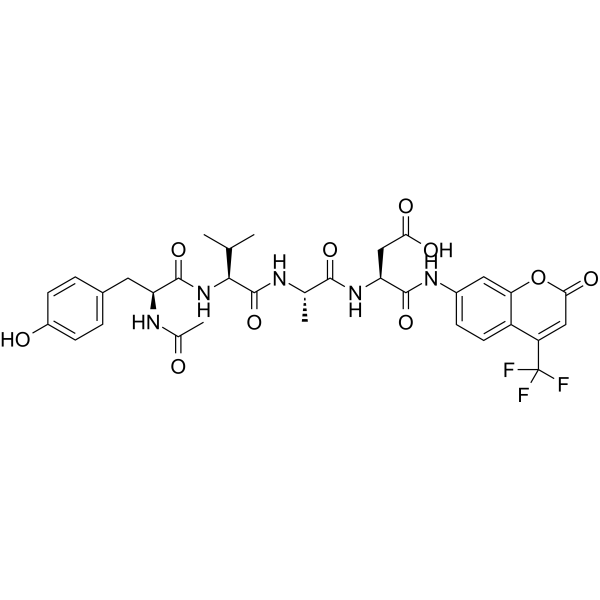
Ac-VETD-AMC is a synthetic peptide substrate for caspase 8. Ac-VETD-AMC also has potential to assess functional activity of recombinant phytaspase .
|
-
- HY-P1486A
-
|
|
Endogenous Metabolite
|
Cardiovascular Disease
|
|
Angiotensinogen (1-14), human TFA is a fragment of the renin substrate angiotensinogen. Angiotensinogen is naturally occurring substrate for renin and a precursor for all angiotensin peptides .
|
-
- HY-P0136F
-
|
|
AMPK
|
Others
|
|
FAM-SAMS is a 5-FAM (HY-66022) labeled SAMS (HY-P0136). SAMS peptide is a specific substrate for the AMP-activated protein kinase (AMPK) .
|
-
- HY-113786
-
|
|
Histone Methyltransferase
|
Cancer
|
|
EZH2-IN-21 is a potent inhibitor of the histone lysine methyltransferase enhancer of zeste homologue 2 (EZH2) with anticancer activity. EZH2-IN-21 is competitive with the cofactor SAM and noncompetitive with peptide or nucleosome substrates .
|
-
- HY-P10574
-
|
|
Checkpoint Kinase (Chk)
|
Cancer
|
|
Phosphorylated CHKtide is a synthetic peptide substrate derived from CDC25C, which is phosphorylated by CHK1/CHK2 in one of the DNA repair pathways. Phosphorylated CHKtide is used in the assays of cell cycle checkpoint kinases 1 and 2 (CHK1/CHK2) and salt-inducible kinases (SIKs) .
|
-
- HY-P1115
-
|
|
Akt
|
Others
|
|
AKTide-2T is an excellent in vitro substrate for AKT and shows competitive inhibition of histone H2B phosphorylation with a Ki of 12 nM. AKTide-2T mimics the optimal phosphorylation sequence of Akt and is an inhibitory peptide with the wildtype AKTide lacking Thr in the S22 position .
|
-
- HY-P1115A
-
|
|
Akt
|
Others
|
|
AKTide-2T TFA is an excellent in vitro substrate for AKT and shows competitive inhibition of histone H2B phosphorylation with a Ki of 12 nM. AKTide-2T TFA mimics the optimal phosphorylation sequence of Akt and is an inhibitory peptide with the wildtype AKTide lacking Thr in the S22 position .
|
-
- HY-126809
-
|
Bz-PFR-pNA
|
Kallikrein
Ser/Thr Protease
Parasite
Factor Xa
|
Others
|
|
Bz-Pro-Phe-Arg-pNA (Bz-PFR-pNA) is a chromogenic peptide substrate for plasma and glandular Kallikrein, cysteine proteinase (Cruzipain) and Trypsin. Bz-Pro-Phe-Arg-pNA can be used in Factor XII assay .
|
-
- HY-W927376
-
|
|
Fluorescent Dye
|
Others
|
|
Boc-Val-Arg-AMC is a synthetic peptide compound. As a specific fluorescent substrate, Boc-Val-Arg-AMC can be specifically cleaved by specific enzymes, especially thrombin, to release a fluorescent molecule AMC (7-amino-4-methylcoumarin), which can be used to monitor thrombin activity. Boc-Val-Arg-AMC can be used to detect thrombin activity in plasma samples .
|
-
- HY-P3944
-
|
|
CaMK
|
Neurological Disease
|
|
Calmodulin Dependent Protein Kinase Substrate is a Ca 2+- and calmodulin (CaM)-dependent protein kinase (CaMK) substrate peptide. Calmodulin Dependent Protein Kinase Substrate is a synthetic peptide substrate for protein kinases .
|
-
- HY-P3943
-
|
|
CaMK
|
Neurological Disease
|
|
Calmodulin Dependent Protein Kinase Substrate Analog is a Ca 2+- and calmodulin (CaM)-dependent protein kinase (CaMK) substrate peptide. Calmodulin Dependent Protein Kinase Substrate Analog is a synthetic peptide substrate for protein kinases .
|
-
- HY-P5449
-
-
- HY-P5428
-
|
|
CDK
|
Others
|
|
Cdc2 kinase substrate is a biological active peptide. (The native peptide HATPPKKKRK is a substrate for cyclin-dependent protein kinase 1 (CDC2; CDK1).)
|
-
- HY-P5385
-
|
|
Angiotensin Receptor
|
Others
|
|
Renin substrate, angiotensinogen (1-14), rat is a biological active peptide. (This peptide is derived from rat angiotensinogen amino acid residues 1-14. It is a synthetic renin substrate.)
|
-
- HY-P2547A
-
|
|
Src
|
Others
|
|
Tyrosine Kinase Peptide 1 (acetate) is a control substrate peptide for c-Src assay .
|
-
- HY-P5456
-
|
|
PKC
|
Others
|
|
KRPpSQRHGSKY-NH2 is a biological active peptide. (This is a phosphorylated PKC substrate peptide)
|
-
- HY-P2547
-
|
|
Src
|
Others
|
|
Tyrosine Kinase Peptide 1 is a control substrate peptide for c-Src assay .
|
-
- HY-P5433F
-
|
|
Insulin Receptor
|
Others
|
|
IRS-1 Peptide, FAM labeled is a biological active peptide. (Insulin receptor substrate)
|
-
- HY-P10036
-
|
|
PKG
|
Others
|
|
G-Subtide is a G-substrate peptide localized in Purkinje cells of the cerebellum. G-Subtide has little activity distinct from background and is a preferentially phosphorylated peptide substrate of recombinant PfPKG2 protein .
|
-
- HY-P5447
-
|
|
Phosphatase
|
Others
|
|
RRLIEDAEpYAARG is a biological active peptide. (Phosphatase substrate.)
|
-
- HY-P10372
-
|
|
Src
|
Cancer
|
|
pFYN peptide is a biotin-labled phosphorylated peptide substrate derived from FYN (a Src family kinase) .
|
-
- HY-P2492
-
|
|
Angiotensin Receptor
|
Metabolic Disease
|
|
Renin FRET Substrate I is a substrate of human renin. Renin FRET Substrate I is designed to incorporate the renin cleavage site that occurs in the N-terminal peptide of human angiotensinogen .
|
-
- HY-P3364A
-
|
|
Fluorescent Dye
Sirtuin
HDAC
|
Others
|
|
Ac-QPKK(Ac)-AMC acetate is a p53-derived peptide conjugated with a fluorophore, which serves as a fluorescent peptide substrate for detecting the deacylase activity of zinc-dependent HDACs and sirtuins (Ex = 360 nm; Em = 460 nm) .
|
-
- HY-P11734
-
|
|
Ser/Thr Protease
|
Others
|
|
Suc-AAPY-pNA is an oligptide compound and protease substrate. Suc-AAPY-pNA undergoes hydrolysis by proteases at the peptide bond between tyrosine and p-nitroaniline, releasing p-nitroaniline with an absorption peak at OD410. Suc-AAPY-pNA functions as a substrate in preclinical assays for measuring activity of acidic, neutral, and alkaline proteases .
|
-
- HY-P11724
-
-
- HY-P11765
-
|
|
Adrenergic Receptor
|
Others
|
|
RESA peptide is a substrate peptide of β-adrenergic receptor kinase (βARK). RESA peptide serves as a substrate for βARK-mediated phosphorylation, and its N-terminal acidic residues enhance phosphorylation efficiency and substrate binding capacity .
|
-
- HY-P11420
-
|
|
Dengue Virus
|
Infection
|
|
2A/2B Dengue protease substrate (Ac-RTSKKR-pNA) is a peptide substrate for Dengue NS2B-NS3 protease. 2A/2B Dengue protease substrate is used for Dengue NS2B-NS3 protease substrate peptide selective inhibitor development .
|
-
- HY-P5441A
-
|
|
Phosphatase
|
Others
|
|
KRpTIRR acetate is a phosphothreonine-containing peptide that serves as a substrate for phosphatases .
|
-
- HY-P4345
-
-
- HY-P4342
-
-
- HY-P5998
-
|
|
Myosin
|
Cancer
|
|
Myosin Light Chain Kinase Substrate (smooth muscle) is a smooth muscle myosin light chain kinase (MLCK) synthetic peptide substrate .
|
-
- HY-P5426
-
|
|
Bcr-Abl
|
Others
|
|
Abl protein tyrosine kinase substrate is a biological active peptide. (Abltide is a peptide substrate for Abl Kinase (Abl protein tyrosine kinase), a partner in the gag-Abl fusion protein of the Abelson murine leukemia virus. Used in Western blot and kinase assay.)
|
-
- HY-P5431
-
|
|
Insulin Receptor
|
Others
|
|
Insulin receptor (1142-1153), pTyr1150 is a biological active peptide. (Peptide used as insulin receptor tyrosine kinase substrate.)
|
-
- HY-P5939
-
|
|
Angiotensin Receptor
|
Cardiovascular Disease
|
|
Angiotensinogen (1-13) (human) is a fragment of the renin substrate angiotensinogen. Angiotensinogen is naturally occurring substrate for renin and a precursor for all angiotensin peptides .
|
-
- HY-P5441
-
|
|
Phosphatase
|
Others
|
|
KRpTIRR is a phosphothreonine-containing peptide and can serve as a substrate for phosphatases .
|
-
- HY-P4363
-
-
- HY-P0136
-
SAMS
2 Publications Verification
|
AMPK
|
Metabolic Disease
|
|
SAMS peptide is a specific substrate for the AMP-activated protein kinase (AMPK).
|
-
- HY-P4348
-
|
|
Proteasome
|
Others
|
|
MeOSuc-Gly-Leu-Phe-AMC is a peptide substrate of proteasomal .
|
-
- HY-P0248F
-
|
|
PKA
Fluorescent Dye
|
Metabolic Disease
|
|
Kemptide, 5-FAM labeled is a 5-FAM labeled Kemptide (HY-P0248). Kemptide is a phosphate acceptor peptide that serves as a synthetic substrate for PKA (Km = 16 μM). The corresponding fluorescent and biotinylated peptides are also proven to be good substrates for PKA.
|
-
- HY-P3794
-
-
- HY-P1746
-
|
PKC (19-31)
|
PKC
|
Inflammation/Immunology
|
|
Protein Kinase C (19-31), a peptide inhibitor of protein kinase C (PKC), derived from the pseudo-substrate regulatory domain of PKCa (residues 19-31), is used as protein kinase C substrate peptide for testing the protein kinase C activity .
|
-
- HY-P4390
-
-
- HY-P4366
-
-
- HY-P4347
-
-
- HY-P4344
-
|
|
MetAP
|
Others
|
|
Met-Gly-Pro-AMC is a fluorescent peptide substrate of MetAP2 .
|
-
- HY-P2134
-
-
- HY-P1746A
-
|
PKC (19-31) TFA
|
PKC
|
Inflammation/Immunology
|
|
Protein Kinase C (19-31) TFA, a peptide inhibitor of protein kinase C (PKC), derived from the pseudo-substrate regulatory domain of PKCa (residues 19-31), is used as protein kinase C substrate peptide for testing the protein kinase C activity .
|
-
- HY-P0320B
-
|
|
Phosphatase
Biochemical Assay Reagents
|
Others
|
|
EGF Receptor Substrate 2 (Phospho-Tyr5) acetate, a biologically active peptide, is a tyrosine phosphate substrate. EGF Receptor Substrate 2 (Phospho-Tyr5) acetate can be used to detect protein tyrosine phosphatases activity .
|
-
- HY-P0320
-
|
|
Phosphatase
|
Others
|
|
EGF Receptor Substrate 2 (Phospho-Tyr5) acetate, a biologically active peptide, is a tyrosine phosphate substrate. EGF Receptor Substrate 2 (Phospho-Tyr5) acetate can be used to detect protein tyrosine phosphatases activity .
|
-
- HY-P0320A
-
|
|
Phosphatase
Biochemical Assay Reagents
|
Others
|
|
EGF Receptor Substrate 2 (Phospho-Tyr5) acetate, a biologically active peptide, is a tyrosine phosphate substrate. EGF Receptor Substrate 2 (Phospho-Tyr5) acetate can be used to detect protein tyrosine phosphatases activity .
|
-
- HY-P10346
-
|
Smooth-Muscle Myosin Light-Chain Kinase (796-815)
|
Myosin
|
Cardiovascular Disease
Inflammation/Immunology
|
|
smMLCK peptide is a specific inhibitor of smooth muscle myosin light chain kinase (smMLCK). The smMLCK peptide mimics the substrate and competitively inhibits the binding of the actual substrate to the enzyme, thereby inhibiting the kinase activity. This inhibition prevents the phosphorylation of the myosin light chain, thus inhibiting muscle contraction .
|
-
- HY-P4350
-
|
|
Elastase
|
Others
|
|
Suc-Ala-Ala-Ala-AMC is a peptide substrate of elastase or elastase-like .
|
-
- HY-P4338
-
|
|
PAI-1
|
Others
|
|
Glutaryl-Gly-Arg-AMC is a peptide substrate of urokinase plasminogen activator (uPA) .
|
-
- HY-P5386
-
-
- HY-P4471
-
-
- HY-P1595
-
|
|
PKA
PKC
|
Metabolic Disease
|
|
CREBtide is a CREB (cAMP response element binding protein)-like peptide. CREBtide, a synthetic 13 amino acid peptide, has been reported as a PKA and PKC substrate.
|
-
- HY-153859
-
|
|
Biochemical Assay Reagents
|
Others
|
|
Ser-SNAC TFA is a small-molecule substrate for NRPS C domains. As for NRPSs, refers to nonribosomal peptide synthetases, are large multidomain proteins to catalyze the formation of biologically active natural products. Ser-SNAC TFA can be used for characterizing the substrate specificity of C domain-catalyzed peptide bond formation .
|
-
- HY-P5450
-
|
|
PDK-1
|
Others
|
|
PDKtide, a biological active peptide is a substrate for Phosphatidylinositide-Dependent Kinase 1 (PDK1) .
|
-
- HY-P10231
-
|
|
Carboxypeptidase
|
Others
|
|
Ac-Phe-Thiaphe-OH is a modified peptide, which is utilized as substrate for carboxypeptidase A (CPA) .
|
-
- HY-P2559
-
|
|
CDK
|
Cancer
|
|
CDK7/9 tide is peptide substrate for CDK7 or CDK9 .
|
-
- HY-P2558
-
|
|
GSK-3
|
Others
|
|
GSK3 Substrate, α, β subunit is peptide substrate for glycogen synthase kinase-3 (GSK-3) and can be used to measure GSK-3 activity .
|
-
- HY-P4364
-
-
- HY-P4359
-
|
|
PIN1
|
Others
|
|
Suc-AEPF-AMC is a peptide substrate of Pin1 and Par14 peptidyl prolyl isomerase .
|
-
- HY-P10060
-
-
- HY-P4514
-
|
|
Proteasome
|
Others
|
|
Z-Gly-Gly-Arg-βNA is the synthetic peptide substrate of trypsin-like activities of the proteasome .
|
-
- HY-P5450A
-
|
|
PDK-1
|
Others
|
|
PDKtide TFA, a biological active peptide, is a substrate for phosphatidylinositide-dependent kinase 1 (PDK1) .
|
-
- HY-148372
-
-
- HY-P5376
-
|
S-2586
|
Ser/Thr Protease
|
Others
|
|
MeOSuc-Arg-Pro-Tyr-pNA (S-2586) is a biological active peptide. (chymotrypsin substrate)
|
-
- HY-P11034
-
|
|
PKG
|
Inflammation/Immunology
|
|
BPDEtide is a synthetic peptide. BPDEtide has apparent Km values of 68 and 320 μM for cGK and cAK, respectively. BPDEtide is the most selective peptide substrate for measuring cGK activity .
|
-
- HY-139201B
-
|
PDLHB (MW 84000)
|
CaSR
|
Neurological Disease
Cancer
|
|
Poly-D-lysine hydrobromide (MW 84000) is a synthetic polymeric substrate and is one of the most widely used substrate in neural cell culture. Poly-D-lysine hydrobromide is a CaSR agonist peptide .
|
-
- HY-P10471E
-
|
MARCKS-ED control peptide TFA
|
MARCKS
|
Others
|
|
MPSD control peptide (MARCKS-ED control peptide) TFA is the control peptide of MPSD (HY-P10471). MPSD (MARCKS-ED) is a 25-amino acid peptide based on the effector domain sequence of the intracellular membrane protein myristoylated alanine-rich C-kinase substrate (MARCKS) .
|
-
- HY-P4346
-
|
|
Elastase
|
Others
|
|
MeOSuc-Ala-Ala-Pro-Met-AMC is a peptide substrate of elastases and chymotrypsin-like serine peptidases .
|
-
- HY-P4388
-
|
|
SARS-CoV
|
Infection
|
|
Z-Arg-Leu-Arg-Gly-Gly-AMC is a peptide substrate of SARS-CoV PL pro .
|
-
- HY-137837
-
-
- HY-P0021A
-
|
Spectrozyme PCa; Chromozym Pca diacetate
|
Fluorescent Dye
|
Others
|
|
D-Lys(Z)-Pro-Arg-pNA diacetate is a chromogenic peptide substrate of activated protein C (APC) .
|
-
- HY-P11484
-
|
|
EGFR
|
Cancer
|
|
Myosin Regulatory Light Chain MRCL3 (11-24) is a peptide substrate for the EGF-activated kinase .
|
-
- HY-P4490
-
-
- HY-P4388A
-
|
|
SARS-CoV
|
Infection
|
|
Z-Arg-Leu-Arg-Gly-Gly-AMC acetate is a peptide substrate for SARS-CoV PL pro .
|
-
- HY-137367
-
|
|
Cathepsin
|
Infection
|
|
Z-Val-Val-Arg-AMC is a fluorescent peptide substrate that can be used to test the activity of cathepsins .
|
-
- HY-P1576A
-
-
- HY-W098322
-
|
|
Drug Intermediate
|
Others
|
|
Z-Lys-OMe hydrochloride is a synthetic intermediate that can be used in the synthesis of peptide enzyme substrates and lysine cationic surfactants.
|
-
- HY-P5440
-
|
|
ERK
|
Others
|
|
ERKtide is a biological active peptide. (ERKtide is a peptide substrate for ERK2. Extracellular regulated protein kinase 2 (ERK2) is a eukaryotic protein kinase whose activity is regulated by mitogenic stimuli.)
|
-
- HY-P1230
-
|
|
Dipeptidyl Peptidase
GLP Receptor
|
Metabolic Disease
|
|
HAEGT is the first N-terminal 1-5 residues of glucagon like peptide-1 (GLP-1) peptide, and the sequence is His-Ala-Glu-Gly-Thr. HAEGT acts as a competitive substrate for probing prime substrate binding sites of human dipeptidyl peptidase-IV (DPP-IV) 1, in which the N-terminal His-Ala is catalyzed cleavage by DPP-IV. HAEGT can be used in the research of diabetes, obesity .
|
-
- HY-139201A
-
|
PDLHB (MW 70000-150000)
|
Biochemical Assay Reagents
CaSR
|
Neurological Disease
Cancer
|
|
Poly-D-lysine hydrobromide (MW 70000-150000) is a synthetic polymeric substrate and is one of the most widely used substrate in neural cell culture. Poly-D-lysine hydrobromide is a CaSR agonist peptide .
|
-
- HY-139201
-
|
PDLHB (MW 30000-70000)
|
CaSR
|
Neurological Disease
Metabolic Disease
Cancer
|
|
Poly-D-lysine hydrobromide (MW 30000-70000) is a synthetic polymeric substrate and is one of the most widely used substrate in neural cell culture. Poly-D-lysine hydrobromide is a CaSR agonist peptide .
|
-
- HY-P4209A
-
|
|
Virus Protease
|
Others
|
|
Boc-GRR-AMC (TFA) is a tri-peptide Substrate. Boc-GRR-AMC can be used for a fluorogenic West Nile virus (WNV) substrate, profiling the substrate specificity for the NS2B-NS3 proteases or determining the pH optimum of LdMC activity .
|
-
- HY-P1595A
-
|
|
PKA
PKC
|
Metabolic Disease
|
|
CREBtide TFA is a CREB (cAMP response element binding protein)-like peptide. CREBtide TFA a synthetic 13 amino acid peptide, has been reported as a PKA and PKC substrate .
|
-
- HY-D1705
-
|
|
Proteasome
|
Inflammation/Immunology
|
|
Ac-ANW-AMC is a fluorogenic substrate for immunoproteasome. Ac-ANW-AMC can be used to measure β5i activity (Ex=345 nm, Em=445 nm) .
|
-
- HY-106377A
-
-
- HY-P0315
-
|
|
Akt
|
Others
|
|
Crosstide is a peptide analog of glycogen synthase kinase α/β fusion protein sequence which is a substrate for Akt.
|
-
- HY-P3118
-
-
- HY-P5467
-
|
|
ROCK
|
Others
|
|
S6(229-239), Amide, biotinalyted is a biological active peptide. (substrate for Rho-Kinase II)
|
-
- HY-137834A
-
-
- HY-P3748
-
|
|
Casein Kinase
|
Others
|
|
Casein Kinase II Receptor Peptide is a substrate for casein kinase II with an Km value of 500 µM. Casein Kinase II Substrate can be used for measure casein kinase II activity in crude enzyme preparations .
|
-
- HY-138143
-
|
Chromozym-TH
|
Fluorescent Dye
|
Others
|
|
N-(p-Tosyl)-GPR-pNA acetate (Chromozym-TH) is a chromogenic substrate targeting the synthetic peptides Hirunorm IV and Hirunorm V and can be used to detect the dissociation constants (KI) of both peptides. Hirunorm IV and Hirunorm V are reversible inhibitors of amidolytic thrombin activity. By varying the peptide concentration at a fixed concentration of the chromogenic substrate N-(p-Tosyl)-GPR-pNA acetate, the dissociation constants determined were 0.134 nM (Hirunorm IV) and 0.245 nM (Hirunorm V) .
|
-
- HY-P10922
-
|
|
Cathepsin
|
Others
|
|
Cathepsin E substrate e is a substrate of Cathepsin E. Cathepsin E substrate e was designed in such a way that due to the close proximity of a Mca-donor and a Dnp-acceptor, a near complete intramolecular quenching effect was achieved in its intact state. After the proteolytic cleavage of the hydrophobic motif of the peptide substrate, both Mca and Dnp would be further apart, resulting in bright fluorescence .
|
-
- HY-P2548
-
|
|
EGFR
|
Others
|
|
pp60 (v-SRC) Autophosphorylation Site, Phosphorylated is the phosphorylated peptide of an EGFR substrate. pp60 (v-SRC) Autophosphorylation Site, Phosphorylated can be used for the screening of EGFR Kinase inhibitors via phosphorylated-substrate quantification .
|
-
- HY-P5374
-
|
|
Elastase
|
Others
|
|
MeOSuc-AAPV-AFC is a biological active peptide. (A highly specific neutrophil elastase substrate, Abs/Em=380/500 nm.)
|
-
- HY-P0228
-
|
|
PKA
|
Neurological Disease
|
|
PKA RII peptide is a PKA substrate that, after being phosphorylated at the serine residue, can be used for the detection of calcineurin activity .
|
-
- HY-P3918
-
|
|
p38 MAPK
|
Others
|
|
EGF-R (661-681) T669 Peptide is a MAPK substrate that can used to measure MAPK catalytic activity .
|
-
- HY-P4891
-
|
|
Angiotensin Receptor
|
Others
|
|
Angiotensin (1-12) (human) is an endogenous substrate for the production of biologically active angiotensin peptides by a non-renin-dependent mechanism .
|
-
- HY-P0021
-
|
Chromozym Pca
|
Fluorescent Dye
|
Others
|
|
D-Lys(Z)-Pro-Arg-pNA (Chromozym Pca) is a chromogenic peptide substrate of activated protein C (APC) .
|
-
- HY-P3115
-
-
- HY-P0291
-
|
[Phospho-Ser5]kemptide
|
PKA
|
Others
|
|
Phosphorylated kemptide is a phosphoserine-containing Kemptide (HY-P0248) peptide. Phosphorylated kemptide can be used as a substrate for phosphatases .
|
-
- HY-125103
-
-
- HY-P2377
-
|
|
Fluorescent Dye
|
Others
|
|
Ac-YVAD-AFC is the the fluorometric peptide substrate of caspase-1, with λ excitation of 400 nm and λ emission of 505 nm .
|
-
- HY-P0228A
-
|
|
PKA
|
Metabolic Disease
|
|
PKA RII peptide TFA is a PKA substrate that, after being phosphorylated at the serine residue, can be used for the detection of calcineurin activity .
|
-
- HY-P4773
-
|
|
HSV
|
Infection
|
|
HSV-1 Protease substrate is a peptide substrate for HSV-1 (Herpes Simplex Virus Type 1) protease, and the specificity constant (kcat/Km) at pH 7.5 for cleavage is 5.2 M -1 s -1 .
|
-
- HY-P10218A
-
|
|
MARCKS
PKC
|
Inflammation/Immunology
Cancer
|
|
MANS peptide TFA is the TFA salt form of MANS peptide (HY-P10218). MANS peptide TFA is an inhibitor for myristoylated alanine-rich C kinase substrate (MARCKS), which competes with MARCKS in cells for membrane binding, and thus inhibits the stimulation of mucin secretion and tumor metastasis .
|
-
- HY-P5371
-
|
|
Thrombin
|
Others
|
|
TFLLRNPNDK-NH2 is a biological active peptide. (This peptide is a thrombin receptor activating peptide. This PAR-1 agonist peptide reversibly binds to PAR-1 mimicking the 'tethered ligand' that thrombin makes available through proteolytic cleavage of substrate. It is also known to cause increase in liquid and protein permeability much like thrombin.)
|
-
- HY-P0225
-
|
Autocamtide II
|
CaMK
Autophagy
|
Neurological Disease
|
|
Autocamtide 2 is a highly selective peptide substrate of calcium/calmodulin-dependent protein kinase II (CaMKII). It can be used in the CaMKII activity assay.
|
-
- HY-P5355
-
|
|
Fluorescent Dye
|
Others
|
|
Z-Gly-Gly-Arg-AFC is a biological active peptide. (Plasminogen Activator Acrosine Substrate, fluorescent Z-Gly-Gly-Arg-AFC)
|
-
- HY-135172
-
|
|
Fluorescent Dye
|
Others
|
|
Suc-Leu-Tyr-AMC is a fluorometric peptide substrate for µ-calpain and m-calpain. The excitation wavelength is 360 nm and the emission wavelength is 460 nm .
|
-
- HY-P3364
-
|
|
Fluorescent Dye
Sirtuin
HDAC
|
Others
|
|
Ac-QPKK(Ac)-AMC is a p53-derived peptide conjugated with a fluorophore, which serves as a fluorescent peptide substrate for detecting the deacylase activity of zinc-dependent HDACs and sirtuins (Ex = 360 nm; Em = 460 nm) .
|
-
- HY-P1906A
-
|
|
CDK
|
Neurological Disease
|
|
[pThr3]-CDK5 Substrate TFA is an effective Phospho-Thr3CDK5 Substrate. [pThr3]-CDK5 Substrate is derived from the sequence of the histone H1 peptide that docks in the active site of CDK5. [pThr3]-CDK5 Substrate is phosphorylated by CDK5 with a Km value of 6 µM .
|
-
- HY-P1906
-
|
|
CDK
|
Neurological Disease
|
|
[pThr3]-CDK5 Substrate is an effective Phospho-Thr3CDK5 Substrate. [pThr3]-CDK5 Substrate is derived from the sequence of the histone H1 peptide that docks in the active site of CDK5. [pThr3]-CDK5 Substrate is phosphorylated by CDK5 with a Km value of 6 µM .
|
-
- HY-10340
-
|
KX2-391; KX-01
|
Src
Microtubule/Tubulin
|
Cancer
|
|
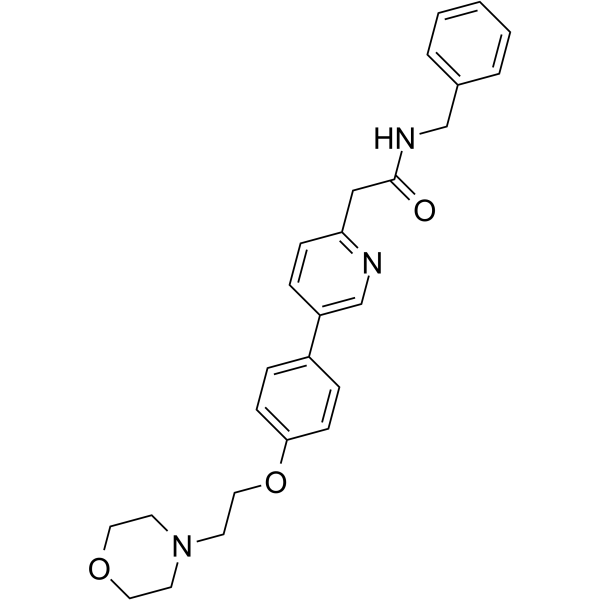
Tirbanibulin (KX2-391) is an inhibitor of Src that targets the peptide substrate site of Src, with GI50 of 9-60 nM in cancer cell lines.
|
-
- HY-148073
-
|
|
Fluorescent Dye
Ser/Thr Protease
|
Others
|
|
MeO-Succ-Arg-Pro-Tyr-AMC TFA is a fluorogenic peptide substrate for chymotrypsin-like proteases that detects protease activity . (measured at 460 nm)
|
-
- HY-P2610
-
|
|
Caspase
|
Others
|
|
Ac-VEID-pNA is an artificially synthesized peptide. Ac-VEID-pNA is utilized as substrate for caspase 6, that cleaves the lamin A at the cleavage site of VEID .
|
-
- HY-P10958
-
|
|
Biochemical Assay Reagents
|
Others
|
|
EEKAR-AMC is a PsCaspase substrate. The EEKAR-AMC peptide can be cleaved by PsCaspase when incubated with metabolites from infected cells expressing PsTIR .
|
-
- HY-10340B
-
|
KX2-391 Mesylate; KX01 Mesylate
|
Src
Microtubule/Tubulin
|
Cancer
|
|
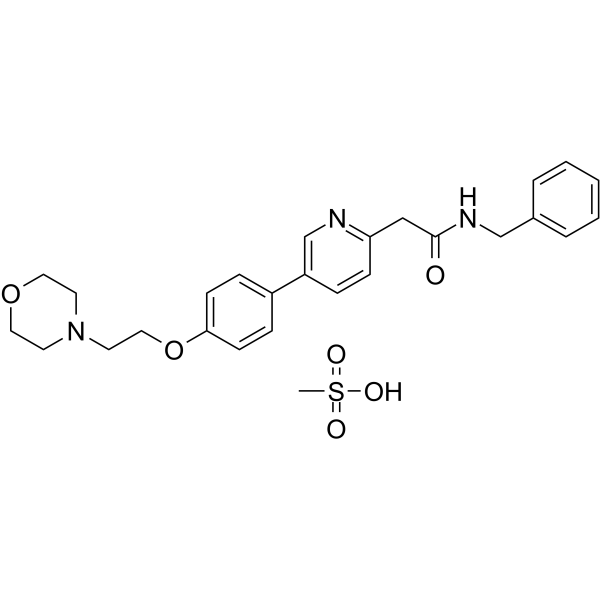
Tirbanibulin Mesylate (KX2-391 Mesylate) is an inhibitor of Src that targets the peptide substrate site of Src, with GI50 of 9-60 nM in cancer cell lines.
|
-
- HY-10340A
-
|
KX2-391 dihydrochloride; KX-01 dihydrochloride
|
Src
Microtubule/Tubulin
|
Cancer
|
|
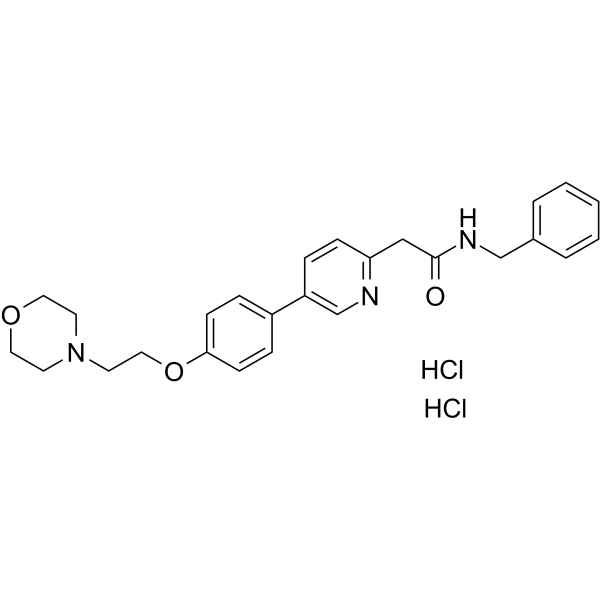
Tirbanibulin (dihydrochloride) (KX2-391 (dihydrochloride)) is an inhibitor of Src that targets the peptide substrate site of Src, with GI50 of 9-60 nM in cancer cell lines.
|
-
- HY-P3892
-
|
|
PKC
|
Inflammation/Immunology
|
|
Protein Kinase C (19-35) Peptide is the PKC pseudosubstrate inhibitor/region. Protein Kinase C (19-35) Peptide possibly blocks the substrate-binding site in its kinase domain, makes the cytoplasmic form of PKC inactive .
|
-
- HY-P2480
-
|
|
CDK
|
Others
|
|
Histone H1-derived Peptide is a phosphopeptide and the peptide substrates containes a sequence in accordance with the optimal recognition motif for CDK, can be used to detecting CDK1-cyclinB1 enzyme activity .
|
-
- HY-P4899
-
|
RE(EDANS)EVNLDAEFK(DABCYL)R
|
Beta-secretase
|
Neurological Disease
|
|
β-Secretase substrate VI, fluorogenic is an EDANS and DABCYL double-labeled peptide,serves as a fluorescent substrate for BACE1(Em=360nm,Ex=528nm). β-Secretase substrate VI, fluorogenic can be used for BACE1 activity measurement and the enzyme activity level is directly proportional to the fluorescence reaction .
|
-
- HY-P10422
-
|
ML-peptide, Multi-Leucine (ML)-peptide
|
Autophagy
|
Cancer
|
|
Multi-Leu peptide (ML-peptide) is a potent inhibitor of PACE4 (Ki=22 nM). Multi-Leu peptide can competitively bind to the active site of PACE4 by simulating the substrate sequence of PACE4, thereby inhibiting its catalytic activity. Multi-Leu peptide can be used to study the specific mechanism of PACE4 in the development of prostate cancer .
|
-
- HY-P10471D
-
|
MARCKS-ED control peptide
|
MARCKS
PKC
|
Others
|
|
MPSD control peptide (MARCKS-ED control peptide) is a control peptide for MPSD peptide (HY-P10471). MPSD (MARCKS-ED) is a 25-amino acid peptide based on the effector domain sequence of the intracellular membrane protein myristoylated alanine-rich C-kinase substrate (MARCKS). MPSD can sense membrane curvature and recognize phosphatidylserine. MPSD can be utilized as biological probe to study membrane shape and lipid composition .
|
-
- HY-P11425
-
|
|
Fluorescent Dye
|
Infection
|
|
Dabcyl-GLRTQSFS-EDANS is a fluorogenic peptide substrate. Dabcyl-GLRTQSFS-EDANS can be used to measure the enzymatic activities of Hepatitis A Virus 3C proteinase .
|
-
- HY-P4399
-
|
|
Bacterial
ClpP
|
Others
|
|
Z-Gly-Gly-Leu-AMC is the substrate of ClpP1 and ClpP2, to detect the enzymatic activity in the presence of the activating peptide Z-Leu-Leu .
|
-
- HY-P0020
-
|
tos-GPR-ANBA-IPA
|
Biochemical Assay Reagents
|
Others
|
|
Tos-Gly-Pro-Arg-ANBA-IPA is a chromogenic peptide substrate. Tos-Gly-Pro-Arg-ANBA-IPA can be used for luminescence measurement .
|
-
- HY-P2716
-
|
|
MMP
|
Others
|
|
Mca-Arg-Pro-Lys-Pro-Tyr-Ala-Nva-Trp-Met-Lys(Dnp)-NH2 is a biological active peptide. (MMP substrate)
|
-
- HY-P3934
-
|
|
HIV Protease
|
Infection
|
|
HIV Protease Substrate I is a chromogenic substrate of HIV-1 protease. HIV Protease Substrate I has the cleavage site of HIV protease .
|
-
- HY-P11081
-
|
|
Enterovirus
|
Infection
|
|
P08 is a substrate for EV71 3C protease cleavage with a Kcat/Km of 11.8 mM −1 min −1 .
|
-
- HY-111173
-
|
|
Dipeptidyl Peptidase
|
Others
|
|
Diprotin B is a dipeptidyl aminopeptidase IV (DPP IV) inhibitor. The apparent competitive inhibition of DPP-IV by the diprotins is a kinetic artifact, derived from the substrate-like nature of tripeptides containing a penultimate proline residue .
|
-
- HY-P3792
-
|
|
Biochemical Assay Reagents
|
Others
|
|
Mca-Pro-Leu-Gly-Pro-D-Lys(Dnp) is a FRET substrate of Thimet oligopeptidase. Mca-Pro-Leu-Gly-Pro-D-Lys(Dnp) can be used for the determination of Thimet oligopeptidase activity .
|
-
- HY-138126A
-
|
|
Others
|
Others
|
|
Dansyl-Tyr-Val-Gly TFA is a substrate of peptidylglycine monooxygenase (PHM), with a KD of 22 μM for PHM. Dansyl-Tyr-Val-Gly TFA can be used to investigate the catalytic mechanism, kinetics and inactivation characteristics of PHM .
|
-
- HY-P10422A
-
|
ML-peptide, Multi-Leucine (ML)-peptide triacetate
|
Autophagy
|
Cancer
|
|
Multi-Leu peptide (ML-peptide) triacetate is a potent inhibitor of PACE4 (Ki=22 nM). Multi-Leu peptide triacetate can competitively bind to the active site of PACE4 by simulating the substrate sequence of PACE4, thereby inhibiting its catalytic activity. Multi-Leu peptide triacetate can be used to study the specific mechanism of PACE4 in the development of prostate cancer .
|
-
- HY-137286
-
|
Z-Leu-Leu-Glu-β-naphthylamide
|
Proteasome
|
Others
|
|
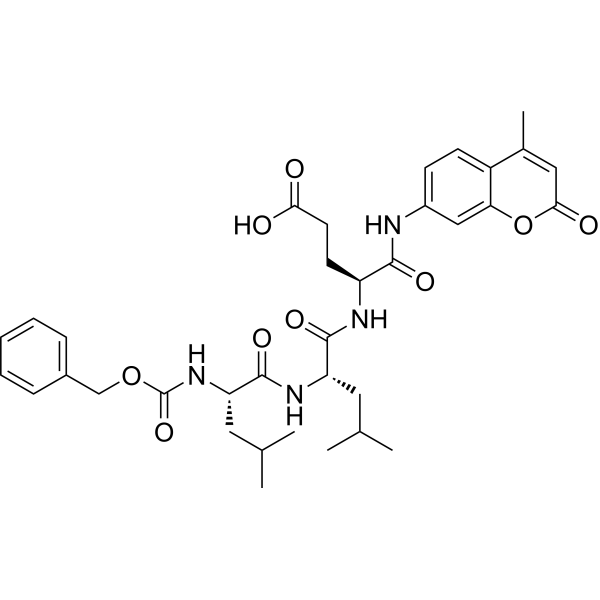
Z-Leu-Leu-Glu-βNA (Z-Leu-Leu-Glu-β-naphthylamide) is a substrate for determination of the glutamylpeptidyl-peptide hydrolase activity of the 20S proteasome .
|
-
- HY-P2008
-
|
IEGR-AMC
|
Factor Xa
|
Cardiovascular Disease
|
|
Boc-Ile-Glu-Gly-Arg-AMC (IEGR-AMC) is an activated factor X (FXa) specific fluorogenic peptide substrate used for Factor VIII determination .
|
-
- HY-120659
-
|
|
Fluorescent Dye
|
Others
|
|
Gly-Gly-AMC is a fluorogenic peptide substrate. Gly-Gly-AMC can be used to assess bacterial protease activity of P. aeruginosa and S. aureus .
|
-
- HY-P3811A
-
|
|
CaMK
|
Neurological Disease
|
|
Autocamtide-3 acetate, a 13-amino-acid peptide containing Thr287, is a selective CaMKII (Ca 2+/calmodulin-dependent kinase II) (CaMK) substrate .
|
-
- HY-P3811
-
|
|
CaMK
|
Neurological Disease
|
|
Autocamtide-3, a 13-amino-acid peptide containing Thr287, is a selective CaMKII (Ca 2+/calmodulin-dependent kinase II) (CaMK) substrate .
|
-
- HY-P10293
-
|
|
Thrombin
Others
|
Others
|
|
NQEQVSP, a fibrin-binding protein-derived peptide (FBP), is a factor XIIIa substrate. NQEQVSP can be recognized by factor XIII and is enzymatically conjugated into fibrin during polymerization .
|
-
- HY-P5430
-
|
|
DYRK
|
Others
|
|
DYRKtide is a biological active peptide. (Dyrktide is designed as the optimal substrate sequence efficiently phosphorylated by DYRK1A, which is a dual-specificity protein kinase that is thought to be involved in brain development.)
|
-
- HY-P5377
-
|
Cathepsin K Substrate
|
Ser/Thr Protease
|
Others
|
|
Abz-HPGGPQ-EDDnp (Cathepsin K substrate) is a biological active peptide. (Cathepsins are a class of globular lysosomal proteases, playing a vital role in mammalian cellular turnover. They degrade polypeptides and are distinguished by their substrate specificities. Cathepsin K is the lysosomal cysteine protease involved in bone remodeling and resorption. It has potential as a drug target in autoimmune diseases and osteoporosis.This FRET peptide can be used to monitor selectively cathepsin K activity in physiological fluids and cell lysates. Abz-HPGGPQ-EDDnp [where Abz represents o-aminobenzoic acid and EDDnp represents N -(2, 4-dinitrophenyl)-ethylenediamine], a substrate initially developed for trypanosomal enzymes, is efficiently cleaved at the Gly-Gly bond by cathepsin K. This peptide is resistant to hydrolysis by cathepsins B, F, H, L, S and V, Ex/Em=340 nm/420 nm.)
|
-
- HY-112080
-
|
|
Histone Methyltransferase
|
Cancer
|
|
BAY-6035, a chemical probe, is a potent, selective and substrate-competitive inhibitor of SMYD3. BAY-6035 inhibits methylation of MEKK2 peptide with an IC50 of 88 nM .
|
-
- HY-P11150
-
|
|
Biochemical Assay Reagents
|
Others
|
|
Human Histatin 1 is a histidine-rich peptide. Human Histatin 1can be isolated from saliva. Human Histatin 1 promotes cell-substrate and cell-cell adhesion .
|
-
- HY-P3236
-
|
Ac-IEPD-pNA
|
Ser/Thr Protease
|
Cancer
|
|
N-Acetyl-Ile-Glu-Pro-Asp-p-nitroanilide (Ac-IEPD-pNA) is a colorimetric peptide substrate of granzyme B that allows accurate measurement of granzyme B activity .
|
-
- HY-P5323
-
|
|
Bacterial
|
Others
|
|
Dabcyl-AGHDAHASET-Edans is a biological active peptide. (This is a type I signal peptidase (SPase1) substrate peptide labeled with EDANS/ DABCYL FRET pair, and contains a crucial cleavage site derived from the C-terminal region of the Staphylococcus epidermidis pre-SceD protein. Abs/Em = 340/490 nm.)
|
-
- HY-P0020A
-
|
tos-GPR-ANBA-IPA acetate
|
Biochemical Assay Reagents
|
Others
|
|
Tos-Gly-Pro-Arg-ANBA-IPA (tos-GPR-ANBA-IPA) acetate is a chromogenic peptide substrate. Tos-Gly-Pro-Arg-ANBA-IPA acetate can be used for luminescence measurement .
|
-
- HY-P10218
-
|
|
MARCKS
PKC
|
Inflammation/Immunology
Cancer
|
|
MANS peptide is an inhibitor for myristoylated alanine-rich C kinase substrate (MARCKS), which competes with MARCKS in cells for membrane binding, and thus inhibits the stimulation of mucin secretion and tumor metastasis .
|
-
- HY-P6028
-
|
|
N-myristoyltransferase
|
Others
|
|
GSNKSKPK-NH2 is a synthetic model peptide based on the c-Src N-terminal sequence and model peptide substrate for human NMT1 and NMT2.GSNKSKPK-NH2 facilitates in vitro assays measuring transfer of myristate or X10 fatty acid moieties .
|
-
- HY-P10161
-
|
|
Biochemical Assay Reagents
|
Others
|
|
Ac-DMQD-pNA is a peptide substrate. Both of the recombinant CgCaspase-1 (rCgCaspase-1) and the C-terminus of CgCaspase-1 (rCgCaspase-1-C) exhibits similar caspase activity towards proteolytic substrate Ac-DMQD-pNA and Ac-DEVD-pNA (HY-P1006) .
|
-
- HY-168378A
-
|
S-2251 acetate
|
Fluorescent Dye
|
Others
|
|
D-Val-Leu-Lys-pNA acetate (S-2251 acetate) is a chromogenic peptide substrate that serves as a characteristic substrate for plasmin and plasminogen. D-Val-Leu-Lys-pNA acetate acts as a sensitive substrate for the DFE27 serine protease derived from Bacillus subtilis DC27. Catalyzed by plasmin, D-Val-Leu-Lys-pNA acetate binds and hydrolyzes to release p-nitroaniline (pNA), which can be detected colorimetrically at 405 nm as a measure of fibrinolytic activity .
|
-
- HY-168378
-
|
S-2251
|
Fluorescent Dye
|
Others
|
|
D-Val-Leu-Lys-pNA (S-2251) is a chromogenic peptide substrate that serves as a characteristic substrate for plasmin and plasminogen. D-Val-Leu-Lys-pNA acts as a sensitive substrate for the DFE27 serine protease derived from Bacillus subtilis DC27. Catalyzed by plasmin, D-Val-Leu-Lys-pNA binds and hydrolyzes to release p-nitroaniline (pNA), which can be detected colorimetrically at 405 nm as a measure of fibrinolytic activity .
|
-
- HY-118570
-
-
- HY-P5415
-
|
|
HIV
|
Others
|
|
DABCYL-GABA-Ser-Gln-Asn-Tyr-Pro-Ile-Val-Gln-EDANS is a biological active peptide. (DABCYL-GABA-Ser-Gln-Asn-Tyr-Pro-Ile-Val-Gln-EDANS is also called HIV protease substrate I in some literature. It is widely used for the continuous assay for HIV protease activity. The 11-Kd protease (PR) encoded by the human immunodeficiency virus 1 (HIV-1) is essential for the correct processing of viral polyproteins and the maturation of infectious virus, and is therefore a target for the design of selective acquired immunodeficiency syndrome (AIDS) therapeutics. The FRET-based fluorogenic substrate is derived from a natural processing site for HIV-1 PR. Incubation of recombinant HIV-1 PR with the fluorogenic substrate resulted in specific cleavage at the Tyr-Pro bond and a time-dependent increase in fluorescence intensity that is linearly related to the extent of substrate hydrolysis. The fluorescence quantum yields of the HIV-1 PR substrate in the FRET assay increased by 40.0- and 34.4-fold, respectively, per mole of substrate cleaved. Because of its simplicity and precision in the determination of reaction rates required for kinetic analysis, this substrate offers many advantages over the commonly used HPLC or electrophoresis-based assays for peptide substrate hydrolysis by retroviral PRs. Abs/Em = 340nm/490nm.)
|
-
- HY-P5344
-
|
Fluorigenic PEXEL peptide
|
Parasite
|
Others
|
|
Dabcyl-LNKRLLHETQ-Edans (Fluorigenic PEXEL peptide) is a biological active peptide. (This FRET substrate peptide for Plasmepsin V (PMV) is derived from the conserved Plasmodium Export Element (PEXEL) motif of Histidine-Rich Protein II (HRPII). PMV is an ER aspartic protease that recognizes and cleaves the RXL sequence within the PEXEL motif of proteins exported by human malaria parasite Plasmodium falciparum, allowing them to translocate into host erythrocytes.)
|
-
- HY-P6028A
-
|
|
N-myristoyltransferase
|
Others
|
|
GSNKSKPK-NH2 TFA is a synthetic model peptide based on the c-Src N-terminal sequence and model peptide substrate for human NMT1 and NMT2.GSNKSKPK-NH2 TFA facilitates in vitro assays measuring transfer of myristate or X10 fatty acid moieties .
|
-
- HY-P4038
-
|
|
HCV Protease
|
Infection
|
|
Hepatitis C Virus S5A/5B is a synthetic peptide substrate. Hepatitis C Virus S5A/5B mimics the NS5A/5B junction of the nonstructural protein (NS), served as the substrate for the study of HCV NS3 protease activity .
|
-
- HY-P2651
-
|
|
Fluorescent Dye
|
Others
|
|
Dansyl-D-Ala-Gly-Phe(pNO2)-Gly is a synthetic peptide substrate. As a substrate of NEP, Dansyl-D-Ala-Gly-Phe(pNO2)-Gly can be specifically recognized and cleaved by the enzyme, thereby releasing the fluorophore dansyl, which can be quantitatively detected. Therefore, it is often used to determine the activity of NEP .
|
-
- HY-P0271
-
|
|
CaMK
Autophagy
|
Neurological Disease
|
|
Syntide 2, a Ca 2+- and calmodulin (CaM)-dependent protein kinase II (CaMKII) substrate peptide, selectively inhibits the gibberellin (GA) response, leaving constitutive and abscisic acid-regulated events unaffected .
|
-
- HY-W441014B
-
|
|
Biochemical Assay Reagents
|
Others
|
|
DSPE-PEG20000-NHS ammonium is one of the most commonly used reactive phospholipids for coupling antibodies, proteins, peptides or other substrates to the surface of liposomes and other lipid PEG nanoparticles .
|
-
- HY-150242A
-
|
|
Liposome
|
Others
|
|
Cbz-Ala-Ala-Asn TFA is a peptide that designed based on the sequence of the substrate of legumain. Legumain is a cysteine protease. Cbz-Ala-Ala-Asn TFA can be applied as a scaffold for drug delivery .
|
-
- HY-W441014C
-
|
|
Biochemical Assay Reagents
|
Others
|
|
DSPE-PEG40000-NHS ammonium is one of the most commonly used reactive phospholipids for coupling antibodies, proteins, peptides or other substrates to the surface of liposomes and other lipid PEG nanoparticles .
|
-
- HY-W441014A
-
|
|
Biochemical Assay Reagents
|
Others
|
|
DSPE-PEG10000-NHS ammonium is one of the most commonly used reactive phospholipids for coupling antibodies, proteins, peptides or other substrates to the surface of liposomes and other lipid PEG nanoparticles .
|
-
- HY-131409
-
|
D-Val-Leu-Lys-p-itoailide dihydrochloride; D-VLK-pNA dihydrochloride; S 2251 dihydrochloride
|
Fluorescent Dye
|
Others
|
|
D-Val-Leu-Lys-pNA (D-Val-Leu-Lys-p-nitroanilide) dihydrochloride is a chromogenic peptide substrate that serves as a characteristic substrate for plasmin and plasminogen. D-Val-Leu-Lys-pNA dihydrochloride acts as a sensitive substrate for the DFE27 serine protease derived from Bacillus subtilis DC27. Catalyzed by plasmin, D-Val-Leu-Lys-pNA dihydrochloride binds and hydrolyzes to release p-nitroaniline (pNA), which can be detected colorimetrically at 405 nm as a measure of fibrinolytic activity .
|
-
- HY-E71017
-
|
|
Biochemical Assay Reagents
|
Metabolic Disease
|
|
Proteinase A, from baker's yeast (S. cerevisiae) (EC 3.4.23.25), hydrolyzes proteins and exhibits broad specificity for peptide bonds. Proteinase A can cleave the leucine-leucine-valine-tyrosine bonds in synthetic substrates.
|
-
- HY-P0271A
-
|
|
CaMK
|
Neurological Disease
|
|
Syntide 2 (TFA), a Ca 2+- and calmodulin (CaM)-dependent protein kinase II (CaMKII) substrate peptide, selectively inhibits the gibberellin (GA) response, leaving constitutive and abscisic acid-regulated events unaffected .
|
-
- HY-P5435
-
|
|
Ser/Thr Kinase
|
Others
|
|
LKBtide is a biological active peptide. (This is a peptide substrate that is phosphorylated by Serine/Threonine kinase 11 (STK11), also known as LKB1. LKBtide is derived from sucrose non-fermenting 1 (SNF1) protein kinase, which is normally activated by the LKB1/AMP-activated protein kinase (AMPK) signaling pathway.)
|
-
- HY-P10570
-
|
|
Histone Methyltransferase
|
Cancer
|
|
[Nle20] H4 peptide (16−23) is a peptide with strong inhibitory activity against histone methyltransferase SETD8 (Kd=0.14 μM), which inhibits SETD8's methylation of histone H4 by competing with SETD8's substrate binding site. [Nle20] H4 peptide (16−23) can be used as a lead compound for anticancer therapy .
|
-
- HY-P4341
-
|
|
PAI-1
Fluorescent Dye
|
Others
|
|
D-Val-Leu-Lys-AMC is a selective fluorogenic peptide substrate of plasmin. D-Val-Leu-Lys-AMC can be used for the quantification of enzymatic activity of plasmin. Ex: 360-380 nm, Em: 440-460 nm .
|
-
- HY-P5354
-
|
|
Fluorescent Dye
|
Cardiovascular Disease
|
|
FRETS-VWF73, a 73-amino-acid peptide, is a fluorogenic substrate for ADAMTS13 assay (Ex = 340 nm; Em = 450 nm). FRETS-VWF73 is a predictive tool for thrombotic thrombocytopenic purpura .
|
-
- HY-P5356
-
|
Plasmin Substrate
|
Fluorescent Dye
|
Others
|
|
H-D-Val-Leu-Lys-AFC (Plasmin substrate) is a biological active peptide. (This is a fluorescent plasmin substrate, Abs/Em=380/500 nm.Plasmin belongs to the family of serine proteases. It plays a key role in fibrinolysis by dissolving fibrin in blood clots. Besides fibrinolysis, plasmin is also involved in such physiological and pathological processes as wound healing, liver repair, and the maintenance of liver homeostasis.)
|
-
- HY-10340BR
-
|
KX2-391 Mesylate (Standard); KX01 Mesylate (Standard)
|
Reference Standards
Src
Microtubule/Tubulin
|
Cancer
|
|
Tirbanibulin (Mesylate) (Standard) is the analytical standard of Tirbanibulin (Mesylate). This product is intended for research and analytical applications. Tirbanibulin Mesylate (KX2-391 Mesylate) is an inhibitor of Src that targets the peptide substrate site of Src, with GI50 of 9-60 nM in cancer cell lines.
|
-
- HY-10340AR
-
|
KX2-391 dihydrochloride (Standard); KX-01 dihydrochloride (Standard)
|
Reference Standards
Src
Microtubule/Tubulin
|
Cancer
|
|
Tirbanibulin (dihydrochloride) (Standard) is the analytical standard of Tirbanibulin (dihydrochloride). This product is intended for research and analytical applications. Tirbanibulin (dihydrochloride) (KX2-391 (dihydrochloride)) is an inhibitor of Src that targets the peptide substrate site of Src, with GI50 of 9-60 nM in cancer cell lines.
|
-
- HY-E70933
-
|
|
Endogenous Metabolite
|
Metabolic Disease
|
|
Protease, Streptomyces griseus, exhibits broad substrate specificity. Its active site consists of one aspartic acid residue, one histidine residue, and one serine residue. Protease tends to hydrolyze the peptide bond on the carboxyl side of glutamate or aspartate.
|
-
- HY-P10636
-
|
|
LRRK2
|
Others
|
|
Nictide is a peptide substrate of LRRK2 (leucine-rich repeat protein kinase-2). Nictide can be phosphorylated by the activated LRRK2[G2019S] with a Km of 10 μM .
|
-
- HY-10340R
-
|
KX2-391 (Standard); KX-01 (Standard)
|
Reference Standards
Src
Microtubule/Tubulin
|
Cancer
|
|
Tirbanibulin (Standard) is the analytical standard of Tirbanibulin. This product is intended for research and analytical applications. Tirbanibulin (KX2-391) is an inhibitor of Src that targets the peptide substrate site of Src, with GI50 of 9-60 nM in cancer cell lines.
|
-
- HY-P10173
-
|
|
Angiotensin-converting Enzyme (ACE)
|
Others
|
|
Abz-LFK(Dnp)-OH is an angiotensin I-converting enzyme (ACE) peptide substrate. Abz-LFK(Dnp)-OH is selective for the C domain of ACE. Abz-LFK(Dnp)-OH can be used to assess ACE activity .
|
-
- HY-133125
-
|
|
Aminopeptidase
|
Inflammation/Immunology
|
|
ERAP1-IN-1 is an endoplasmic reticulum aminopeptidase 1 (ERAP1) inhibitor. ERAP1-IN-1 competitively inhibits ERAP1 activity towards a nonamer peptide representative of physiological substrates .
|
-
- HY-W090942
-
|
|
Endogenous Metabolite
Sodium Channel
|
Others
|
|
Z-Gly-Gly-Phe-OH is a substrate for pepsin and thermolysin. Z-Gly-Gly-Phe-OH has an IC50 of 15.8 μM for open sodium channels under pepsin catalysis. Z-Gly-Gly-Phe-OH forms peptide bonds with amine components (such as H-Leu-NHPh) through enzyme-catalyzed condensation reactions, and is active as an intermediate in peptide synthesis .
|
-
- HY-19593
-
|
|
Fungal
|
Infection
|
|
Nikkomycin Z is a nucleoside peptide and an orally active antifungal agent. Nikkomycin Z inhibits chitin synthesis by acting as a competitive analogue of the chitin synthase substrate UDP-N-acetylglucosamine. Nikkomycin Z has antifungal activity .
|
-
- HY-P4341A
-
|
|
PAI-1
Fluorescent Dye
|
Others
|
|
D-Val-Leu-Lys-AMC TFA is a selective fluorogenic peptide substrate of plasmin. D-Val-Leu-Lys-AMC TFA can be used for the quantification of enzymatic activity of plasmin. Ex: 360-380 nm, Em: 440-460 nm .
|
-
- HY-123053
-
|
Z-LLE-AMC
|
Proteasome
|
Neurological Disease
|
|
Z-Leu-Leu-Glu-AMC (Z-LLE-AMC) is a peptide-AMC linked substrate used to measure the postacidic-like hydrolysing activity of proteasome. Z-Leu-Leu-Glu-AMC can be used for the research of parkinson's disease .
|
-
- HY-P1986
-
|
|
Caspase
|
Cancer
|
|
Z-DEVD-AFC is a cell-permeant substrate for caspase-3, which causes a shift in fluorescence uponcleavage of the AFC fluorophore. Z-DEVD-AFC can be used to detect caspase-3-like enzymes activity .
|
-
- HY-P2536
-
-
- HY-P4987
-
|
|
Protease Activated Receptor (PAR)
|
Cardiovascular Disease
|
|
TRAP-7 is a thrombin receptor (PAR) activating peptide. TRAP-7 stimulates total inositol phosphate (IP) accumulation and phosphorylation of a specific endogenous substrate for activated PKC. TRAP-7 can be used in cardiovascular disease research .
|
-
- HY-P11349
-
|
|
Biochemical Assay Reagents
|
Others
|
|
TG-Gln (a glutamine donor peptide with the sequence H-NQEQVSPLERCG-NH₂) is a substrate-type crosslinker targeting activated coagulation transglutaminase XIII (FXIIIa). TG-Gln is promising for research of angiogenesis induction, cartilage repair, and wound healing .
|
-
- HY-P5438
-
|
|
Btk
c-Kit
FAK
FLT3
Insulin Receptor
|
Others
|
|
Srctide is a biological active peptide. (This is a peptide substrate for many protein kinases, such as Blk, BTK, cKit, EPHA1, EPHB2, EPHB3, ERBB4, FAK, Flt3, IGF-1R, ITK, Lck, MET, MUSK, Ret, Src, TIE2, TrkB, VEGF-R1 (Flt-1) and VEGF-R2 (KDR).)
|
-
- HY-137870
-
|
gamma-Glutamyl-beta-naphthylamide
|
Biochemical Assay Reagents
|
Others
|
|
γ-Glutamyl-β-naphthylamide is a substrate for γ-glutamine peptidase. γ-Glutamyl-β-naphthylamide is specifically recognized and the peptide chain is cleaved. γ-Glutamyl-β-naphthylamide can be used to distinguish between gonococci and meningococci .
|
-
- HY-P5312
-
|
|
Virus Protease
|
Infection
|
|
Abz-Nle-Lys-Arg-Arg-Ser-3-(NO2)Tyr is a WNV NS2B-NS3 protease substrate. Abz-Nle-Lys-Arg-Arg-Ser-3-(NO2)Tyr is used for WNV NS2B-NS3 protease substrate peptide selective inhibitor development .
|
-
- HY-P11080
-
|
|
Bacterial
|
Infection
|
|
Oncocin is an antibacterial peptide. It belongs to proline-rich antimicrobial peptides (PrAMPs). Oncocin works against Gram-negative bacteria. It has MIC values of 0.125-8 μg/mL for 34 strains and clinical isolates of Enterobacteriaceae and nonfermenters. Oncocin binds to the substrate-binding domain of the chaperone DnaK. The binding has dissociation constants in the micromolar range. This binding causes protein misfolding and aggregation and the bacteria death .
|
-
- HY-P3722
-
|
|
Fluorescent Dye
MMP
|
Others
|
|
Mca-PLAQAV-Dpa-RSSSR-NH2 is a fluorescent substrate peptide that can be used to detect ADAM9, ADAM10, and tumor necrosis factor-α converting enzyme (TACE/ADAM17). Mca-PLAQAV-Dpa-RSSSR-NH2 is a fluorescence resonance energy transfer-based substrate, and its activity can be determined by changes in fluorescence intensity upon cleavage (Ex = 320 nm
; Em = 405 nm) .
|
-
- HY-125564
-
|
|
Aminopeptidase
|
Others
|
|
Acetyltrialanine is a peptide containing three amino acid residues in which the N-terminal amino acid is acetylated and used as a substrate for Nα-acetyl alanine aminopeptidase in order to study the activity and properties of the enzyme. Acetyltrialanine can be used in the study of protein degradation and N-terminal regulation .
|
-
- HY-P5525
-
|
Autocamtide-3 Derived Inhibitory peptide
|
CaMK
|
Others
|
|
AC3-I, myristoylated is a biological active peptide. (This is a myristoylated form of Autocamtide-3-Derived Inhibitory Peptide (AC3-I), a highly specific inhibitor of Calmodulin-Dependent Protein Kinase ll (CaMKII) that is resistant to proteolysis. AC3-I is derived from Autocamtide-3, a substrate for CaMKII, with the Thr-9 phosphorylation site substituted with Ala.)
|
-
- HY-120833
-
|
|
Caspase
|
Others
|
|
Ac-Ile-Glu-Thr-Asp-pNA is a substrate for caspase-8. Caspase-8 binds to and cleaves the Ile-Glu-Thr-Asp (IETD) peptide sequence to release p-nitroalinide, which can be quantified by colorimetric detection at 405 nm as a measure of enzyme activity .
|
-
- HY-P10172
-
-
- HY-W015450
-
|
D-Alanyl-D-alanine; H-D-Ala-D-Ala-OH
|
Endogenous Metabolite
|
Others
|
|
D-Ala-D-Ala is a bacterial endogenous metabolite. D-Ala-D-Ala constitutes the terminus of the peptide part of the peptidoglycan monomer unit and is involved in the transpeptidation reaction as the substrate. D-Ala-D-Ala is catalyzed by D-Alanine-D-Alanine ligase .
|
-
- HY-P5312A
-
|
|
Virus Protease
|
Infection
|
|
Abz-Gly-Leu-Lys-Arg-Gly-Gly-3-(NO2)Tyr acetate is the acetate salt form of Abz-Gly-Leu-Lys-Arg-Gly-Gly-3-(NO2)Tyr. Abz-Gly-Leu-Lys-Arg-Gly-Gly-3-(NO2)Tyr acetate is the substrate for WNV NS2B NS3 protease, which is utilized for the development of WNV protease substrate peptide selective inhibitor .
|
-
- HY-114645
-
|
|
PDK-1
|
Cancer
|
|
PDK1-IN-RS2 is a mimic of peptide docking motif (PIFtide) and is a substrate-selective PDK1 inhibitor with a Kd of 9 μM. PDK1-IN-RS2 suppresses the activation of the downstream kinases S6K1 by PDK1 .
|
-
- HY-W027544
-
|
7-Methoxycoumarin-4-acetic acid
|
Fluorescent Dye
|
Others
|
|
MCA (7-Methoxycoumarin-4-acetic acid) is a Coumarin (HY-N0709) derivative. MCA quantitates platelet-activating factor (PAF) by high-performance liquid chromatography with fluorescent detection. MCA can modify FRET peptide substrates for analyzing protease activities .
|
-
- HY-B2072AR
-
|
|
Reference Standards
Antibiotic
Bacterial
|
Infection
|
|
Cefadroxil (hydrate) (Standard) is the analytical standard of Cefadroxil (hydrate). This product is intended for research and analytical applications. Cefadroxil hydrate (BL-S 578 hydrate) is an orally active and first-generation cephalosporin with a broad spectrum antibacterial activity. Cefadroxil hydrate (BL-S 578 hydrate) also acts as a substrate of the peptide transporter PEPT1 and PEPT2 .
|
-
- HY-P10471
-
|
MARCKS-ED
|
MARCKS
PKC
|
Others
|
|
MPSD (MARCKS-ED) is a 25-amino acid peptide based on the effector domain sequence of the intracellular membrane protein myristoylated alanine-rich C-kinase substrate (MARCKS). MPSD can sense membrane curvature and recognize phosphatidylserine. MPSD can be utilized as biological probe to study membrane shape and lipid composition .
|
-
- HY-P5272
-
|
|
Bacterial
|
Inflammation/Immunology
|
|
Histatin-3 TFA, a 32 amino acid peptide, possesses powerful antimicrobial properties. Histatin-3 TFA behaves as a substrate for proprotein convertase 1 (PC1), being cleaved by this endoprotease primarily at a site carboxy terminal to the single Arg25 residue (HRGYR decrease SN). Histatin-3 TFA is a moderately potent, reversible and competitive inhibitor of the furin-mediated cleavage of the pentapeptide pGlu-Arg-Thr-Lys-Arg-MCA fluorogenic substrate, with an estimated inhibition constant Ki of 1.98 μM .
|
-
- HY-114365
-
|
UDP-N-acetyl-D-galactosamine disodium
|
Endogenous Metabolite
|
Metabolic Disease
Cancer
|
|
UDP-GalNAc (UDP-N-acetyl-D-galactosamine) disodium is a sugar nucleotide and a substrate for EpsC115. EpsC115 is a mutant with N-terminal residues 1-115 deleted from the exopolymeric substance (EPS). UDP-GalNAc disodium is a donor substrate for many N-acetylgalactosaminyltransferases, which transfer GalNAc from nucleotide sugars to sugar or peptide acceptors. UDP-GalNAc disodium provides a sugar group donor for glycosylation reactions. UDP-GalNAc disodium can be used in cancer research, such as colorectal and breast cancer .
|
-
- HY-P11620
-
|
|
Drug Derivative
|
Others
|
|
H-Asn-Pro-Glu-Tyr(PO3H2)-OH is a phosphorylated peptide derivative of the tetramine motif Asn-Pro-Glu-Tyr (NPEY), and is a substrate binding domain common to the insulin-like growth factor-I receptor (IGF-IR) and the insulin receptor (IR).
|
-
- HY-W344383
-
|
|
Ser/Thr Protease
|
Others
|
|
Boc-Phe-Ser-Arg-AMC is a trypsin peptide substrate containing a Boc protecting group. Boc-Phe-Ser-Arg-AMC can be degraded by trypsin, releasing AMC (HY-D0027) which has fluorescence activity. Boc-Phe-Ser-Arg-AMC can be used to assess the activity of trypsin .
|
-
- HY-134393
-
|
N6-Methyl-ATP
|
GSK-3
|
Others
|
|
6-Me-ATP (N6-Methyl-ATP) is a N 6-modified ATP derivative. 6-Me-ATP shows excellent binding affinity to GSK3, serving as the phosphate group donor for GSK3β-catalyzed phosphorylation of its substrate peptide .
|
-
- HY-P2089
-
|
|
MMP
|
Others
|
|
Dnp-PYAYWMR is a peptide substrate that selectively targets MMP3. Dnp-PYAYWMR is cleaved by MMP3 to produce Dnp-PYA (nonfluorescent) and YWMR (fluorophore detectable at 360 nm). After incubation of MMP3 with Dnp-PYAYWMR for 2 h, MMP3 fluorescence intensity was measured. Ex/Em=328/350 nm .
|
-
- HY-137858
-
|
Gly-Arg-4-NA hydrochloride; GR-pNA hydrochloride; GR p-itoailide hydrochloride
|
Fluorescent Dye
|
Others
|
|
H-Gly-Arg-pNA hydrochloride (GR-pNA hydrochloride) is a colorimetric substrate for thrombin. H-Gly-Arg-pNA is preferentially bound by thrombin and cleaves the Gly-Arg (GR) peptide sequence, releasing p-nitroaniline (pNA) that can be detected colorimetrically at 405 nm. H-Gly-Arg-pNA hydrochloride is used as a fluorescent dye to measure thrombin activity .
|
-
- HY-P11641
-
|
|
MMP
|
Inflammation/Immunology
|
|
GCRRGPLGLSLGKRRCG is an MMP13-specific substrate peptide cleaved by MMP13. GCRRGPLGLSLGKRRCG contributes to an MMP13-responsive hydrogel microsphere system that achieves intelligent and controllable drug release in osteoarthritis (OA), decelerates disease progression, and promotes articular cartilage repair. GCRRGPLGLSLGKRRCG can be used for the research of osteoarthritis .
|
-
- HY-110196
-
|
|
Histone Methyltransferase
|
Others
|
|
(S)-PFI-2 hydrochloride is an inhibitor of lysine methyltransferase SETD7 and is approximately 500-fold more active than its enantiomer (R)-PFI-2. (R)-PFI-2 is a cofactor-dependent and substrate-competitive inhibitor. (R)-PFI-2 can occupy the substrate peptide binding groove of SETD7 (including the catalytic lysine binding channel) and interact with the cofactor The donor methyl group is in direct contact. However, (S)-PFI-2 was not observed to have the same interaction as (R)-PFI-2 .
|
-
- HY-131618
-
|
Bz-Gly-Arg
|
Amino Acid Derivatives
|
Others
|
|
Hippuryl-Arg (Bz-Gly-Arg) is a substrate used for fluorescence detection and is commonly used in biochemical studies, especially in studying enzyme activity. The phenylalanine portion of Hippuryl-Arg is connected by an aromatic side chain, which allows it to be detected under ultraviolet light. Hippuryl-Arg is used to detect enzymes that recognize and cut peptide bonds containing arginine .
|
-
- HY-130656
-
|
cis-8-Eicosenoic acid
|
Endogenous Metabolite
|
Metabolic Disease
|
|
8(Z)-Eicosenoic acid is a cis-unsaturated free fatty acid with a 20-carbon chain. It potentiates acetylcholine (ACh) receptor channel currents without depression and enhances PCKε phosphorylation of a substrate peptide in Xenopus oocytes. 8(Z)-Eicosenoic acid constitutes 6% of the fatty acid pool in seed oil isolated from B. collina.
|
-
- HY-N15079
-
|
|
Bacterial
|
Infection
|
|
Arphamenine B is a Zn 2+-dependent exopeptidase that selectively removes arginine and/or lysine residues from the NH2-terminus of several peptide substrates. Arphamenine B is an inhibitor of aminopeptidase B that can be isolated from bacteria. Arphamenine B enhances the immune response and is used to characterize novel proteases .
|
-
- HY-W016042
-
|
|
Drug Intermediate
|
Others
|
|
N-Cbz-Hydroxy-L-proline is a chiral N-Cbz-protected amino acid derivative. N-Cbz-Hydroxy-L-proline is commonly used in the synthesis of polypeptides and pharmaceutical intermediates. N-Cbz-Hydroxy-L-proline undergoes decarboxylation under AlCl3/HFIP conditions .
|
-
- HY-18962
-
|
|
Histone Methyltransferase
|
Cancer
|
|
AMI-1 is a potent, cell-permeable and reversible inhibitor of protein arginine N-methyltransferases (PRMTs), with IC50s of 8.8 μM and 3.0 μM for human PRMT1 and yeast-Hmt1p, respectively. AMI-1 exerts PRMTs inhibitory effects by blocking peptide-substrate binding .
|
-
- HY-P2810
-
|
EC 3.4.23.4
|
Endogenous Metabolite
Ser/Thr Protease
|
Metabolic Disease
|
|
Rennin, also known as Chymosin, is a pepsin-related proteolytic enzyme synthesized by cells in the stomach of certain animals that efficiently converts liquid milk into a semi-solid, allowing it to remain in the stomach for longer. The natural substrate of Rennin is K-casein, which is specifically cleaved at the peptide bond between amino acid residues 105 and 106, phenylalanine and methionine, and is widely used in cheese production .
|
-
- HY-16707
-
|
Z-Ile-Glu-Pro-Phe-Ome
|
Proteasome
|
Inflammation/Immunology
|
|
CH 5450 (Z-Ile-Glu-Pro-Phe-Ome) is a selective short peptide human cardiac chymase inhibitor. CH-5450 inhibits the action of rat MAB elastase 2 on substrate Ang I with an IC50 value of 49 µM and N-succinyl-Ala-Ala-Pro-Phe-p-nitroanilide with an IC50 value of 4.8 µM .
|
-
- HY-P4403
-
|
(Z-Asp-Glu-Val-Asp)₂-Rhodamine 110
|
Fluorescent Dye
Apoptosis
Caspase
|
Others
|
|
Z-DEVD-R110 ((Z-Asp-Glu-Val-Asp)2-Rhodamine 110) is a fluorogenic caspase-3/7 substrate. Z-DEVD-R110 can be used to detect apoptosis. Z-DEVD-R110 is a rhodamine derivative with two four–amino acid (DEVD) peptides linked to the fuorophore .
|
-
- HY-126437A
-
|
|
Bacterial
|
Infection
Inflammation/Immunology
|
|
Poly-L-lysine hydrochloride is a nonspecific attachment factor for cells useful in promoting cell adhesion to solid substrates by enhancing electrostatic interaction between negatively charged ions of the cell membrane and the culture surface. Poly-L-lysine hydrochloride is a strong-attraction regulator that promotes liquid-liquid phase separation (LLPS) at low concentrations but suppresses LLPS at high concentrations. Antibacterial cationic peptide. .
|
-
- HY-134393B
-
|
N6-Methyl-ATP trisodium solution (100 mM)
|
GSK-3
|
Others
|
|
6-Me-ATP (N6-Methyl-ATP) trisodium solution (100 mM) is a N 6-modified ATP derivative. 6-Me-ATP trisodium shows excellent binding affinity to GSK3, serving as the phosphate group donor for GSK3β-catalyzed phosphorylation of its substrate peptide .
|
-
- HY-135773
-
|
|
Prostaglandin Receptor
PDK-1
|
Cardiovascular Disease
Inflammation/Immunology
|
|
CRTh2 antagonist 3 is a potent chemoattractant receptor-homologous molecule expressed on Th2 cells (CRTh2) antagonist . CRTh2 antagonist 3 enhances the activity of PDK1 toward a short peptide substrate, with an EC50 of 2 μM and a Kd of 8.4 μM. CRTh2 antagonist 3 has the potential for cardiovascular inflammation .
|
-
- HY-180846
-
|
|
Histone Methyltransferase
|
Cancer
|
|
NT32 is a selective METTL13 stabilizer with a Kd value of 14 μM. NT32 could occupy both the SAM/SAH-binding pocket and the peptide substrate-binding site of METTL13 simultaneously. NT32 specifically targets and stabilizes METTL13. NT32 shows no inhibitory activity against non-small cell lung cancer .
|
-
- HY-136898
-
|
|
Thrombin
|
Others
|
|
PS-915 dihydrochloride is a peptide substrate used in a colorimetric assay for plasma antithrombin III (ATIII). PS-915 dihydrochloride is highly specific for thrombin. By enzyme hydrolysis, PS-915 dihydrochloride liberates 3-carboxy-4-hydroxyaniline (CHA), which turns blue in color due to the complex formation with added alkaline-pentacyanoammine ferroate .
|
-
- HY-136887
-
|
|
Bacterial
|
Infection
|
|
Arphamenine B hemisulfate is a Zn 2+-dependent exopeptidase that selectively removes arginine and/or lysine residues from the NH2-terminus of several peptide substrates. Arphamenine B hemisulfate is an inhibitor of aminopeptidase B that can be isolated from bacteria. Arphamenine B hemisulfate enhances the immune response and is used to characterize novel proteases .
|
-
- HY-P1173
-
|
Myristoylated L 803; GSK-3β Inhibitor XIII
|
GSK-3
Amyloid-β
|
Neurological Disease
|
|
L803-mts (Myristoylated L 803) is a selective and substrate-competitive GSK-3 peptide inhibitor (IC50: 40 μM). L803-mts also reduces Aβ deposits and ameliorates cognitive deficits in 5XFAD mice. L803-mts shows antidepressive effect in the forced swimming test .
|
-
- HY-18962A
-
|
|
Histone Methyltransferase
|
Cancer
|
|
AMI-1 free acid is a potent, cell-permeable and reversible inhibitor of protein arginine N-methyltransferases (PRMTs), with IC50s of 8.8 μM and 3.0 μM for human PRMT1 and yeast-Hmt1p, respectively. AMI-1 free acid exerts PRMTs inhibitory effects by blocking peptide-substrate binding .
|
-
- HY-P10463
-
|
|
Histone Methyltransferase
|
Cancer
|
|
ssK36 is a supersubstrate peptide of the histone methyltransferase (SET) domain protein 2 (SETD2), and ssK36 is designed for the SETD2 protein, a specific PKMT. ssK36 is responsible in human cells for adding methyl groups to the 36th lysine residue of histone H3 (H3K36) to form H3K36me3. ssK36 can be methylated by SETD2 at a rate more than 100 times faster than the natural substrate H3K36. ssK36 can be used to study the catalytic mechanism of PKMTs, especially substrate specificity and catalytic efficiency .
|
-
- HY-W007599
-
|
|
Drug Derivative
|
Cancer
|
|
(S)-2,6-Bis((tert-butoxycarbonyl)amino)hexanoic acid is a polypeptide derivative, can be used to synthesis multifunctional amphiphilic peptide dendrimer for non-viral gene delivery in cancer research. (S)-2,6-Bis((tert-butoxycarbonyl)amino)hexanoic acid can be used in the preparation of organic substances that enhance the luminescence intensity of alkaline phosphatase substrates .
|
-
- HY-183872
-
|
|
Fungal
N-myristoyltransferase
|
Infection
|
|
FTR1335 is an Antifungal agent as well as a selective, substrate peptide-competitive, and myristoyl-CoA non-competitive inhibitor of N-myristoyltransferase CaNmt, with an IC50 of 0.49 nM against Candida albicans CaNmt. FTR1335 exhibits fungicidal activity against Candida albicans and inhibits the growth of Candida tropicalis. FTR1335 can be used in research related to Candida albicans infections .
|
-
- HY-W062835
-
|
|
Src
|
Cancer
|
|
CGP77675 is an orally active and potent inhibitor of Src family kinases. CGP77675 inhibits phosphorylation of peptide substrates and autophosphorylation of purified Src (IC50s of 5-20 and 40 nM, respectively), and also inhibits Src, EGFR, KDR, v-Abl, and Lck with IC50s of 5-20, 40, 20, 150, 1000, 310, and 290 nM, respectively. Anticancer activity .
|
-
- HY-137872
-
|
|
Biochemical Assay Reagents
|
Others
|
|
L-Leucyl-4-nitroanilide hydrochloride is a commonly used substrate in various biochemical assays to measure the activity of enzymes that cleave peptide bonds, such as proteases. L-Leucine p-nitroanilide hydrochloride has unique chemical properties that allow it to be cleaved by these enzymes to form a yellow product called p-nitroaniline. This makes it a useful tool for detecting and quantifying protease activity in biological samples such as blood or tissue extracts.
|
-
- HY-E70393J
-
|
|
Factor XI
|
Others
|
|
Bovine Factor XIa is an enzyme, which is involved in the intrinsic pathway of blood coagulation. Bovine Factor XIa is highly selective and exhibits a minimal extended substrate recognition site of at least five residues long. Bovine Factor XIa is reactive as Bovine Factor IXa (HY-E70393I) does, that it cleaves all the peptides bearing factor IX activation site sequences .
|
-
- HY-183267
-
|
|
Aminopeptidase
|
Cancer
|
|
ERAP1-IN-4 is an orally acvtive endoplasmic reticulum aminopeptidase 1 (ERAP1) inhibitor with a pIC50 of 7.9 and an LLE of 5.3. ERAP1-IN-4 inhibits hydrolysis of peptide substrates by ERAP1, with high activity against Allotype1 and Allotype2. ERAP1-IN-4 reduced efficacy against other allotypes, and modulates ERAP1-mediated peptide processing to inhibit antigenic epitope presentation. ERAP1-IN-4 can be used for the research of cancer[1].
|
-
- HY-13463A
-
|
AKR-501 maleate; E5501 maleate; YM477 maleate
|
Thrombopoietin Receptor
Cytochrome P450
ERK
STAT
|
Inflammation/Immunology
Cancer
|
|
Avatrombopag (AKR-501) maleate is an orally active, non-peptide thrombopoietin receptor (TPO receptor) agonist (EC50: 3.3 nM). Avatrombopag maleate mimics the biological activity of TPO. Avatrombopag maleate increases platelet production by activating intracellular signaling systems and promotes the production of platelets and megakaryocytes from hematopoietic precursor cells. Avatrombopag maleate is a substrate for cytochrome P450 (CYP) 2C9 and CYP3A .
|
-
- HY-E70918
-
|
|
Endogenous Metabolite
|
Metabolic Disease
|
|
N-Methylhydantoinase (ATP-hydrolyzing), Arthrobacter sp., belongs to the hydrolase family and acts on carbon-nitrogen bonds other than peptide bonds, especially the carbon-nitrogen bonds in cyclic amides. N-Methylhydantoinase (ATP-hydrolyzing) is involved in the metabolism of arginine, creatinine, and proline. Its three substrates are ATP, N-methylimidazolidine-2,4-dione, and water, while its three products are ADP, phosphate, and N-carbamoylsarcosine.
|
-
- HY-P3752
-
|
H-Gly-Ala-Tyr-OH
|
Biochemical Assay Reagents
Bacterial
|
Others
|
|
Gly-Ala-Tyr (H-Gly-Ala-Tyr-OH) is a tripeptide substrate composed of L-glycine, alanine, and L-tyrosine joined in sequence by peptide linkages. Gly-Ala-Tyr can be hydrolyzed at both extracellular and intracellular levels by Streptococcus thermophilus, Lactobacillus delbrueckii ssp. bulgaricus, Lactobacillus acidophilus, and Bifidobacterium spp. Ala-Gly-Tyr is functionally related to L-alanine, glycine and L-tyrosine. .
|
-
- HY-W015450R
-
|
D-Alanyl-D-alanine (Standard); H-D-Ala-D-Ala-OH (Standard)
|
Reference Standards
Endogenous Metabolite
|
Others
|
|
D-Ala-D-Ala (Standard) is the analytical standard of D-Ala-D-Ala. This product is intended for research and analytical applications. D-Ala-D-Ala is a bacterial endogenous metabolite. D-Ala-D-Ala constitutes the terminus of the peptide part of the peptidoglycan monomer unit and is involved in the transpeptidation reaction as the substrate. D-Ala-D-Ala is catalyzed by D-Alanine-D-Alanine ligase .
|
-
- HY-P3123
-
|
|
Fluorescent Dye
|
Others
|
|
Dnp-RPLALWRS is a fluorescent peptide substrate designed for human matrilysin (MMP-7). After enzymatic cleavage of Dnp-RPLALWRS at the alanine-leucine bond, the release of the Dnp group alleviates fluorescence quenching, thereby enabling real-time quantitative analysis of MMP-7 activity by increasing tryptophan emission. Dnp-RPLALWRS provides a sensitive and efficient detection method for kinetic studies and inhibitor screenin .
|
-
- HY-W027544S
-
|
7-Methoxycoumarin-4-acetic acid-d3
|
Isotope-Labeled Compounds
Fluorescent Dye
|
Others
|
|
MCA-d3 (7-Methoxycoumarin-4-acetic acid3) is the deuterium labeled MCA (HY-W027544) . MCA is a Coumarin (HY-N0709) derivative. MCA quantitates platelet-activating factor (PAF) by high-performance liquid chromatography with fluorescent detection. MCA can modify FRET peptide substrates for analyzing protease activities .
|
-
- HY-P10471A
-
|
MARCKS-ED TFA
|
MARCKS
PKC
|
Others
|
|
MPSD TFA (MARCKS-ED TFA) is the TFA salt form of MPSD (HY-P10471). MPSD TFA is a 25-amino acid peptide based on the effector domain sequence of the intracellular membrane protein myristoylated alanine-rich C-kinase substrate (MARCKS). MPSD TFA can sense membrane curvature and recognize phosphatidylserine. MPSD TFA can be utilized as biological probe to study membrane shape and lipid composition .
|
-
- HY-W062835A
-
|
|
Src
|
Cancer
|
|
CGP77675 hydrate is an orally active and potent inhibitor of Src family kinases. CGP77675 hydrate inhibits phosphorylation of peptide substrates and autophosphorylation of purified Src (IC50s of 5-20 and 40 nM, respectively),and also inhibits Src, EGFR, KDR, v-Abl, and Lck with IC50s of 0.02, 0.15, 1.0, 0.31, and 0.29 μM, respectively. Anticancer activity .
|
-
- HY-P3123A
-
|
|
Fluorescent Dye
|
Others
|
|
Dnp-RPLALWRS TFA is a fluorescent peptide substrate designed for human matrilysin (MMP-7). After enzymatic cleavage of Dnp-RPLALWRS TFA at the alanine-leucine bond, the release of the Dnp group alleviates fluorescence quenching, thereby enabling real-time quantitative analysis of MMP-7 activity by increasing tryptophan emission. Dnp-RPLALWRS TFA provides a sensitive and efficient detection method for kinetic studies and inhibitor screenin .
|
-
- HY-P10463A
-
|
|
Histone Methyltransferase
|
Cancer
|
|
ssK36 TFA is a supersubstrate peptide of the histone methyltransferase (SET) domain protein 2 (SETD2) , and ssK36 TFA is designed for the SETD2 protein, a specific PKMT. ssK36 TFA is responsible in human cells for adding methyl groups to the 36th lysine residue of histone H3 (H3K36) to form H3K36me3. ssK36 TFA can be methylated by SETD2 at a rate more than 100 times faster than the natural substrate H3K36. ssK36 TFA can be used to study the catalytic mechanism of PKMTs, especially substrate specificity and catalytic efficiency .
|
-
- HY-110197
-
6bK TFA
2 Publications Verification
|
IDE
|
Metabolic Disease
|
|
6bK TFA is a selective insulin-degrading enzyme (IDE) inhibitor with an IC50 of 50 nM. 6bK TFA binds to the distal pocket of IDE, thereby blocking substrate binding, peptide unfolding and cleavage processes, and reducing the degradation of insulin, glucagon and amylin. 6bK TFA improves oral glucose tolerance but impairs intraperitoneal glucose tolerance. 6bK TFA can be used in research related to type 2 diabetes .
|
-
- HY-P2185
-
|
|
MMP
|
Others
|
|
NFF-3, the peptide, is a selective MMP substrate. NFF-3 selectively binds to MMP-3 and MMP-10 to be hydrolyzed. NFF-3 is also cleaved by trypsin, hepatocyte growth factor activator, and factor Xa. Label NFF-3 with a CyDye pair, Cy3/Cy5Q, can produce fluorescence in cell assays to detect cell activity .
|
-
- HY-E71011
-
|
|
Biochemical Assay Reagents
|
Metabolic Disease
|
|
N-Carbamoylsarcosine Amidase, E. coli, belongs to the hydrolase family. This family of enzymes acts on carbon-nitrogen bonds other than peptide bonds, particularly the carbon-nitrogen bonds in linear amides, and participates in the metabolism of arginine and proline. The two substrates of N-Carbamoylsarcosine Amidase, E. coli, are N-carbamoylsarcosine and H2O, while its three products are sarcosine, CO2, and NH3.ions to the healing immune response.
|
-
- HY-P2661A
-
|
|
Biochemical Assay Reagents
Bacterial
|
Infection
|
|
FA-Leu-Gly-Pro-Ala-OH TFA is a furylacryloyl-terminal tetrapeptide that serves as a substrate for bacterial collagenase and spirochete metalloendopeptidase. FA-Leu-Gly-Pro-Ala-OH TFA is specifically hydrolyzed by spirochete collagenase only at the Leu-Gly bond. FA-Leu-Gly-Pro-Ala-OH TFA can be used to determine the equilibrium constant of peptide bond hydrolysis, and also to detect collagenase-mediated cleavage reactions via turbidimetry based on absorbance reduction .
|
-
- HY-P5485
-
|
|
Bacterial
|
Others
|
|
Dabcyl-QALPETGEE-Edans is a synthetic peptide substrate for fluorescence resonance energy transfer (FRET) detection of Sortase A (SrtA) enzymatic activity. Dabcyl-QALPETGEE-Edans is labeled at both ends with the fluorescent group Edans (donor) and the quencher Dabcyl (acceptor), respectively. Dabcyl-QALPETGEE-Edans's central sequence contains a conserved motif specifically recognized by SrtA. Dabcyl-QALPETGEE-Edans demonstrates high sensitivity in vitro assays, enabling precise determination of the half-maximal inhibitory concentration of SrtA .
|
-
- HY-P2661
-
|
|
Biochemical Assay Reagents
Bacterial
|
Infection
|
|
FA-Leu-Gly-Pro-Ala-OH is a furylacryloyl-terminal tetrapeptide that serves as a substrate for bacterial collagenase and spirochete metalloendopeptidase. FA-Leu-Gly-Pro-Ala-OH is specifically hydrolyzed by spirochete collagenase only at the Leu-Gly bond. FA-Leu-Gly-Pro-Ala-OH can be used to determine the equilibrium constant of peptide bond hydrolysis, and also to detect collagenase-mediated cleavage reactions via turbidimetry based on absorbance reduction .
|
-
- HY-W141916
-
|
Tetraglycylglycine; Gly-Gly-Gly-Gly-Gly; NSC 96353
|
Amino Acid Derivatives
Bacterial
|
Infection
|
|
Pentaglycine (Tetraglycylglycine; NSC 96353) is a bridging structure composed of five glycine residues. Pentaglycine serves as a characteristic peptidoglycan cross-bridge component of staphylococci and a specific substrate for lysostaphin. Pentaglycine maintains the integrity of the peptidoglycan cell wall of Staphylococcus aureus via peptide chain cross-linking and regulates bacterial growth. Pentaglycine expression is downregulated in high-glucose environments, inhibiting bacterial proliferation. Pentaglycine can be applied to studies related to Staphylococcus aureus infection .
|
-
- HY-18962R
-
|
|
Histone Methyltransferase
|
Cancer
|
|
AMI-1 (Standard) is the analytical standard of AMI-1. This product is intended for research and analytical applications. AMI-1 is a potent, cell-permeable and reversible inhibitor of protein arginine N-methyltransferases (PRMTs), with IC50s of 8.8 μM and 3.0 μM for human PRMT1 and yeast-Hmt1p, respectively. AMI-1 exerts PRMTs inhibitory effects by blocking peptide-substrate binding .
|
-
- HY-P2185A
-
|
|
MMP
|
Others
|
|
NFF-3 TFA, the peptide, is a selective MMP substrate. NFF-3 TFA selectively binds to MMP-3 and MMP-10 to be hydrolyzed. NFF-3 TFA is also cleaved by trypsin, hepatocyte growth factor activator, and factor Xa. Label NFF-3 TFA with a CyDye pair, Cy3/Cy5Q, can produce fluorescence in cell assays to detect cell activity .
|
-
- HY-18962AR
-
|
|
Histone Methyltransferase
|
Cancer
|
|
AMI-1 (free acid) (Standard) is the analytical standard of AMI-1 (free acid). This product is intended for research and analytical applications. AMI-1 free acid is a potent, cell-permeable and reversible inhibitor of protein arginine N-methyltransferases (PRMTs), with IC50s of 8.8 μM and 3.0 μM for human PRMT1 and yeast-Hmt1p, respectively. AMI-1 free acid exerts PRMTs inhibitory effects by blocking peptide-substrate binding .
|
-
- HY-P6023B
-
|
|
Factor Xa
|
Cardiovascular Disease
|
|
D-Leu-Pro-Arg-Rh110-D-Pro acetate is a substrate for Factor Xa I (FXIa) with binding affinity. D-Leu-Pro-Arg-Rh110-D-Pro acetate consists of Rhodamine 110 (HY-D0817) linked to a peptide chain through a cleavable bond. Cleavable bond cleavage enhances fluorophore intensity. D-Leu-Pro-Arg-Rh110-D-Pro acetate can be used to detect FXIa activity .
|
-
- HY-B2228
-
|
|
Biochemical Assay Reagents
|
Cancer
|
|
Proteinase, Aspergillus oryzae is a serine protease that hydrolyzes peptide bonds in protein substrates, preferring alkaline conditions (optimal pH 10.5). It efficiently degrades casein, poly-L-glutamic acid, and poly-L-lysine, with activity irreversibly inhibited by diisopropylfluorophosphate (DFP) and potato inhibitor. This enzyme catalyzes proteolysis via serine residues in its active site, finding applications in food processing (e.g., soy sauce fermentation), detergents, and leather industries due to its high yield in solid-state fermentation and cost-effective production.
|
-
- HY-P4919
-
|
|
Beta-secretase
|
Others
|
|
Mca-SEVNLDAEFK(Dnp) is a Beta-secretase 1 (BACE-1) peptide FRET substrate, containing the 'Swedish' Lys-Met/Asn-Leu mutation of the amyloid precursor protein (APP) β-secretase cleavage site. Cleavage at -Leu-Asp- of Mca-SEVNLDAEFK(Dnp) liberates the highly fluorescent 7-methoxycoumarin (Mca) fragment from the proximity quenching effect of the 2,4-dinitrophenyl (Dnp) internal quencher resulting in a large and easily detectable increase in fluorescence intensity.
|
-
- HY-101117
-
EED226
Maximum Cited Publications
14 Publications Verification
|
Histone Methyltransferase
|
Cancer
|
|
EED226 is a polycomb repressive complex 2 (PRC2) inhibitor, which binds to the K27me3-pocket on embryonic ectoderm development (EED) and shows strong antitumor activity in xenograft mice model . EED226 is a potent, selective, and orally bioavailable EED inhibitor . EED226 inhibits PRC2 with an IC50 of 23.4 nM when the H3K27me0 peptide is used as a substrate in the in vitro enzymatic assays .
|
-
- HY-139201H
-
|
PDLHB (MW ≥300000)
|
CaSR
|
Others
|
|
Poly-D-lysine hydrobromide (MW ≥300000) (PDLHB (MW ≥300000)) is a cationic polymer and cell adhesion promoter. Poly-D-lysine hydrobromide (MW ≥300000) serves as a substrate coating to support the adhesion and proliferation of rat dorsal root ganglion satellite glial cells in vitro. Poly-D-lysine hydrobromide (MW ≥300000) promotes the adhesion and immobilization of cells on plastic culture dishes. Poly-D-lysine hydrobromide is also known as a calcium-sensing receptor (CaSR) agonist peptide .
|
-
- HY-P6023
-
|
|
Factor Xa
|
Cardiovascular Disease
|
|
D-Leu-Pro-Arg-Rh110-D-Pro is a substrate for Factor Xa I (FXIa) with binding affinity. D-Leu-Pro-Arg-Rh110-D-Pro consists of Rhodamine 110 (HY-D0817) linked to a peptide chain through a cleavable bond. Cleavable bond cleavage enhances fluorophore intensity. D-Leu-Pro-Arg-Rh110-D-Pro can be used to detect FXIa activity .
|
-
- HY-142021
-
|
|
Cathepsin
Parasite
|
Infection
Inflammation/Immunology
|
|
Z-Leu-Arg-AMC is a fluorogenic peptide substrate for cysteine proteases (e.g., Cathepsin) (Ex=350 nm,Em=460 nm). Z-Leu-Arg-AMC is preferentially cleaved by Cathepsin K and S under weakly acidic conditions, while its hydrolysis relies on residual Cathepsin S activity at neutral pH. Z-Leu-Arg-AMC serves as a substrate for recombinant Sphenophorus levis Cathepsin L, falcipain-2, falcipain-3, berghepain-2, knowlepain-2, vivapain-2, as well as falcipain-2 chimeras and constructs. It enables quantitative detection of cysteine protease activity in human inflammatory bronchoalveolar lavage fluid via fluorescence generation. Z-Leu-Arg-AMC can be used in research related to pulmonary inflammatory diseases and malaria .
|
-
- HY-P5062
-
|
Decanoyl-Arg-Val-Arg-Lys-chloromethylketone
|
Furin
|
Infection
|
|
DEC-RVRK-CMK (Decanoyl-Arg-Val-Arg-Lys-chloromethylketone) is a peptide-based CMK (chloromethylketone) inhibitor that targets and inactivates the secreted soluble kexin (Kex2) (Ki=8.45 μM). The yeast enzyme Kex2 (kexin, EC 3.4.21.61) is a calcium-dependent transmembrane protease and belongs to the mammalian protease family of the serine protease subtilisin family. The binding mechanism of Kex2 with different CMK inhibitors depends on substrate selectivity, particularly the selective differences between lysine and arginine at the P1 position .
|
-
- HY-145934B
-
|
|
OGT
Biochemical Assay Reagents
Glycosidase
|
Metabolic Disease
|
|
UDP-GlcNAz is the analogue of UDP-GlcNAc disodium (HY-112174). UDP-GlcNAc disodium is the donor substrate of many N-acetylgalactosaminyltransferases, enzymes which transfer GlcNAc from the nucleotide sugar to a saccharide or peptide acceptor. UDP-GlcNAc disodium is a click chemistry reagent, it contains an Azide group and can undergo copper-catalyzed azide-alkyne cycloaddition reaction (CuAAc) with molecules containing Alkyne groups. It can also undergo strain-promoted alkyne-azide cycloaddition (SPAAC) reactions with molecules containing DBCO or BCN groups .
|
-
- HY-145934A
-
|
|
OGT
Biochemical Assay Reagents
Glycosidase
|
Metabolic Disease
|
|
UDP-GlcNAz disodium is the analogue of UDP-GlcNAc disodium (HY-112174). UDP-GlcNAc disodium is the donor substrate of many N-acetylgalactosaminyltransferases, enzymes which transfer GlcNAc from the nucleotide sugar to a saccharide or peptide acceptor. UDP-GlcNAc disodium is a click chemistry reagent, it contains an Azide group and can undergo copper-catalyzed azide-alkyne cycloaddition reaction (CuAAc) with molecules containing Alkyne groups. It can also undergo strain-promoted alkyne-azide cycloaddition (SPAAC) reactions with molecules containing DBCO or BCN groups .
|
-
- HY-P6023A
-
|
|
Factor Xa
|
Cardiovascular Disease
|
|
D-Leu-Pro-Arg-Rh110-D-Pro TFA is a substrate for Factor Xa I (FXIa) with binding affinity. D-Leu-Pro-Arg-Rh110-D-Pro TFA consists of Rhodamine 110 (HY-D0817) linked to a peptide chain through a cleavable bond. Cleavable bond cleavage enhances fluorophore intensity. D-Leu-Pro-Arg-Rh110-D-Pro TFA can be used to detect FXIa activity .
|
-
- HY-P5062A
-
|
Decanoyl-Arg-Val-Arg-Lys-chloromethylketone TFA
|
Furin
|
Infection
|
|
DEC-RVRK-CMK (Decanoyl-Arg-Val-Arg-Lys-chloromethylketone) TFA is a peptide-based CMK (chloromethylketone) inhibitor that targets and inactivates the secreted soluble kexin (Kex2) (Ki=8.45 μM). The yeast enzyme Kex2 (kexin, EC 3.4.21.61) is a calcium-dependent transmembrane protease and belongs to the mammalian protease family of the serine protease subtilisin family. The binding mechanism of Kex2 with different CMK inhibitors depends on substrate selectivity, particularly the selective differences between lysine and arginine at the P1 position .
|
-
- HY-155995
-
|
MK-905
|
Biochemical Assay Reagents
|
Cancer
|
|
Pro-905 is a phosphite peptide with antitumor activity. Pro-905 delivers the active nucleotide antimetabolite thioguanosine monophosphate (TGMP) to the tumor. Pro-905 effectively prevents incorporation of purine salvage substrates into nucleic acids and inhibits colony formation in human malignant peripheral nerve sheath tumors (MPNST) cells. Pro-905 inhibits purine salvage incorporation to nucleic acids and prevents cell growth. Pro-905 inhibits the growth of MPNST and enhances the anti-tumor efficacy of JHU395 (HY-124778) .
|
-
- HY-P10316
-
|
Calmodulin-Dependent Protein Kinase I (299-320) Binding Domain
|
CaMK
|
Others
|
|
CaMKI (299-320) refers to a peptide consisting of residues 299-320 of Calcium/calmodulin-dependent protein kinase I (CaMKI). CaMKI (299-320), as a protein kinase, has a high affinity interaction with Ca 2+-CAM (Kd≤1 nM≤1 nM), which can phosphorylate specific substrate proteins, thereby regulating their activity. CaMKI (299-320) contains the CAM-binding domain and the self-inhibition domain, and CaMKI (299-320) can be used to study cell physiological processes, including cell proliferation, differentiation, and apoptosis .
|
-
- HY-145934
-
|
UDP-N-azidoacetylgalactosamine disodium
|
Biochemical Assay Reagents
OGT
Glycosidase
|
Metabolic Disease
|
|
UDP-GalNAz (UDP-N-azidoacetylgalactosamine) disodium is the analogue of UDP-GalNAc disodium (HY-114365). UDP-GalNAc disodium is the donor substrate of many N-acetylgalactosaminyltransferases, enzymes which transfer GalNAc from the nucleotide sugar to a saccharide or peptide acceptor. UDP-GalNAz disodium is a click chemistry reagent, it contains an Azide group and can undergo copper-catalyzed azide-alkyne cycloaddition reaction (CuAAc) with molecules containing Alkyne groups. It can also undergo strain-promoted alkyne-azide cycloaddition (SPAAC) reactions with molecules containing DBCO or BCN groups .
|
-
- HY-101117R
-
|
|
Histone Methyltransferase
Reference Standards
|
Cancer
|
|
EED226 (Standard) is the analytical standard of EED226 (HY-101117). This product is intended for research and analytical applications. EED226 is a polycomb repressive complex 2 (PRC2) inhibitor, which binds to the K27me3-pocket on embryonic ectoderm development (EED) and shows strong antitumor activity in xenograft mice model . EED226 is a potent, selective, and orally bioavailable EED inhibitor . EED226 inhibits PRC2 with an IC50 of 23.4 nM when the H3K27me0 peptide is used as a substrate in the in vitro enzymatic assays .
|
-
- HY-186020
-
|
L-4-Aminoarabinose-BP
|
Endogenous Metabolite
|
Infection
|
|
L-4-Aminoarabinose-bactoprenyl phosphate (L-4-Aminoarabinose-BP) is a substrate of the ArnT enzyme and participates in lipid A modification through covalent bonding. L-4-Aminoarabinose-bactoprenyl phosphate transfers L-4-aminoarabinose (Ara4N) to the lipid A portion of lipopolysaccharide (LPS), mediating cationic modification of lipid A, thereby conferring resistance to cationic antimicrobial peptides (CAMPs) in Gram-negative bacteria. L-4-Aminoarabinose-bactoprenyl phosphate is an endogenous intermediate synthesized in vivo by a series of enzymes such as ArnC and ArnD encoded by the arn operon in Gram-negative bacteria such as Escherichia coli .
|
-
- HY-W040088
-
|
H-Ala-Leu-OH
|
Aminopeptidase
|
Metabolic Disease
|
|
L-Alanyl-L-leucine is a competitive inhibitor of small intestinal glycyl-L-leucine hydrolase with Ki values of 0.53 mM (phosphate buffer) or 0.22 mM (Tris buffer). L-Alanyl-L-leucine can be used for research on Hartnup disease and cystinuria .
|
-
- HY-W040088R
-
|
H-Ala-Leu-OH (Standard)
|
Reference Standards
Aminopeptidase
|
Metabolic Disease
|
|
L-Alanyl-L-leucine is an endogenous metabolite. This product is used for research and analytical applications. L-Alanyl-L-leucine is a competitive inhibitor of small intestinal glycyl-L-leucine hydrolase with Ki values of 0.53 mM (phosphate buffer) or 0.22 mM (Tris buffer). L-Alanyl-L-leucine can be used for research on Hartnup disease and cystinuria .
|
-
- HY-D2738
-
|
|
Fluorescent Dye
|
Others
|
|
BP Fluor 532 NHS ester is an amine reactive, yellow-emitting dye routinely used to label proteins or antibodies through primary amines (Lys), amine-modified oligonucleotides, and other amine-containing biomolecules. The labeling occurs most efficiently at pH 7-9 and forms a stable, covalent amide bond.
BP Fluor 532 is a bright yellow-fluorescent dye with pH insensitive emission from pH 4 to pH 10. The excitation of BP Fluor 532 is ideally suited for the frequency-doubled Nd:YAG laser line. BP Fluor 532 can be conjugated to a variety of antibodies, peptides, proteins, tracers, and amplification substrates, and is often used for the generation of stable signals in imaging and flow cytometry.
|
-
- HY-173186
-
|
|
TLK
Apoptosis
|
Cancer
|
|
TLK1-IN-1 is a TLK1B inhibitor with a human IC50 of 7.2 μM. TLK1-IN-1 causes accumulation of DNA damage and induces apoptotic cell death in cancer cells. TLK1-IN-1 can be used for the research of metastatic castration-resistant prostate cancer .
|
-
- HY-163316
-
|
|
Sirtuin
Glutamate Dehydrogenase (GLDH)
PDHK
|
Metabolic Disease
Cancer
|
|
SIRT4-IN-1 is a selective and potent Sirtuin 4 (Sirt4) inhibitor with an IC50 of 16 μM for hSirt4. SIRT4-IN-1 also inhibits hSirt1, hSirt2, hSirt3, hSirt4 and hSirt6. SIRT4-IN-1 competes with acyl peptide substrate for Sirt4's acyl binding site, and is noncompetitive with NAD +. SIRT4-IN-1 increases glutamate dehydrogenase (GDH) activity and rescues pyruvate dehydrogenase (PDH) activity. SIRT4-IN-1 inhibits adipocyte differentiation and suppresses Sirt4 overexpression-induced increased differentiation. SIRT4-IN-1 can be used for the researches of cancer and metabolic disease .
|
-
- HY-W800701
-
|
|
Biochemical Assay Reagents
|
Others
|
|
BP Fluor 546 DBCO is an azide-reactive probe that can be used for imaging azide-tagged biomolecules via a copper-free click reaction. The DBCO moiety reacts with azides to form a stable triazole and does not require a Cu-catalyst or elevated temperatures. In applications where the presence of copper is a concern, BP Fluor 546 DBCO is an ideal alternative to copper-requiring fluorescent alkynes.
BP Fluor 546 is a water-soluble, pH-insensitive (from pH 4-10), orange-fluorescent dye with absorption and emission maxima at 554 and 570 nm, respectively. It can be used with the 488 nm and 532 nm laser lines. BP Fluor 546 dye conjugates to a variety of antibodies, peptides, proteins, tracers, and amplification substrates, which are often used for generating stable signals in imaging and flow cytometry.
|
-
- HY-117747
-
|
JCR 424; XM 323
|
HIV Protease
|
Infection
|
|
DMP 323 is a potent, nonpeptide cyclic urea inhibitor of HIV protease, effective against both HIV type 1 and type 2. Designed using structural information and database searching, it competitively inhibits the cleavage of both peptide and HIV-1 gag polyprotein substrates. DMP 323 shows comparable potency to other highly effective HIV protease inhibitors like A-80987 and Ro-31-8959. Importantly, its efficacy against HIV protease remains unaffected by human plasma or serum, suggesting low affinity for plasma proteins. Furthermore, DMP 323 demonstrates minimal inhibition of various mammalian proteases at concentrations much higher than those needed for HIV protease inhibition, highlighting its specificity for viral targets .
|
-
- HY-D2763
-
|
|
Fluorescent Dye
|
Others
|
|
BP Fluor 532 maleimide is a photostable, bright yellow-fluorescent dye with pH insensitive emission from pH 4 to pH 10. The excitation of BP Fluor 532 is ideally suited for the frequency-doubled Nd:YAG laser line. BP Fluor 532 dye can be conjugated to a variety of antibodies, peptides, proteins, tracers, and amplification substrates, and is often used for the generation of stable signals in imaging and flow cytometry.
Maleimide is the most popular sulfhydryl-reactive group for conjugating the dye to a thiol group on a protein, oligonucleotide thiophosphate, or low molecular weight ligand. The maleimide group specifically and efficiently reacts with reduced thiols (sulfhydryl groups, –SH) at pH 6.5 to 7.5 to form a stable thioether bond. The resulting conjugates exhibit brighter fluorescence and greater photostability than the conjugates of many other spectrally similar fluorophores.
|
-
- HY-P4122
-
|
|
HIV
|
Others
|
|
TAT (47-57), FAM-labeled is a 5(6)-Carboxyfluorescein (HY-15940)-labeled TAT (HY-P0281). TAT (YGRKKRRQRRR) is derived from the transactivator of transcription (TAT) of human immunodeficiency virus-1 (HIV-1) and is a cell-penetrating peptide .
|
-
- HY-D2745
-
|
|
Fluorescent Dye
|
Others
|
|
BP Fluor 594 NHS ester is the most popular tool for modifying proteins or antibodies through the primary amines (Lys), amine-modified oligonucleotides, and other amine-containing biomolecules with BP Fluor 594 label. The labeling occurs most efficiently at pH 7-9 and forms a stable, covalent amide bond. BP Fluor 594 dye can be used for proteins labeling at high molar ratios without significant self-quenching, enabling brighter conjugates and more sensitive detection.
BP Fluor 594 is bright, water-soluble, and pH-insensitive from pH 4 to pH 10 red-fluorescent dye with absorption and emission maxima at 590 and 617 nm, respectively. It can be used with the 561 nm and 594 nm laser lines. BP Fluor 594 dye conjugated to a variety of antibodies, peptides, proteins, tracers, and amplification substrates often used for generation of stable signal in imaging and flow cytometry.
|
-
- HY-131498
-
|
Mca-Pro-Leu-Gly-Leu-Dpa-Ala-Arg-NH2
|
Fluorescent Dye
MMP
|
Cancer
|
MOCAc-PLGL (Dpa) AR (Mca-Pro-Leu-Gly-Leu-Dpa-Ala-Arg-NH2) is a synthetic fluorescent substrate mainly used for in vitro enzymatic activity assays of MMP-7 (detection at 393 nm after excitation at 328 nm). MOCAc-PLGL (Dpa) AR is specifically cleaved and hydrolyzed by MMP-7 at the Gly-Leu peptide bond, allowing enzymatic activity to be monitored via fluorometry or HPLC (DMSO is usually added to ensure sufficient dissolution when determining kinetic parameters). MOCAc-PLGL (Dpa) AR is used to accurately evaluate the catalytic activity and pH dependence of recombinant mature human MMP-7 in vitro. MOCAc-PLGL (Dpa) AR is suitable for research on the mechanisms of tumor metastasis and invasion, particularly in fields such as prostate cancer, colon cancer, lung cancer and breast cancer .\n
|
-
- HY-162275
-
|
|
Histone Demethylase
Histone Methyltransferase
STAT
|
Cancer
|
|
JMJD1C-IN-1 is an orally active and selective inhibitor of JMJD1C (IC50 = 0.59 μM, Kd = 1.96 μM). JMJD1C-IN-1 inhibits the binding of JMJD1C to H3K9me2 peptide substrate in the HTRF assay (IC50 = 1.47 μM). JMJD1C-IN-1 disrupts intratumoral regulatory T (Treg) cell fitness by dual mechanisms: promoting H3K9me2 accumulation to downregulate PD1 expression and reducing STAT3 demethylation to enhance STAT3 activation. JMJD1C-IN-1 demonstrates dose-dependent antitumor efficacy in multiple mouse tumor models (MCA205 fibrosarcoma, B16-F10 melanoma, LLC lung cancer, Hepa1-6 hepatocellular carcinoma, CT26 colorectal cancer). JMJD1C-IN-1 can be used for the study of tumor immunotherapy by selectively targeting intratumoral Treg cells .
|
-
| Cat. No. |
Product Name |
Type |
-
- HY-131498
-
|
Mca-Pro-Leu-Gly-Leu-Dpa-Ala-Arg-NH2
|
Fluorescent Dye
|
MOCAc-PLGL (Dpa) AR (Mca-Pro-Leu-Gly-Leu-Dpa-Ala-Arg-NH2) is a synthetic fluorescent substrate mainly used for in vitro enzymatic activity assays of MMP-7 (detection at 393 nm after excitation at 328 nm). MOCAc-PLGL (Dpa) AR is specifically cleaved and hydrolyzed by MMP-7 at the Gly-Leu peptide bond, allowing enzymatic activity to be monitored via fluorometry or HPLC (DMSO is usually added to ensure sufficient dissolution when determining kinetic parameters). MOCAc-PLGL (Dpa) AR is used to accurately evaluate the catalytic activity and pH dependence of recombinant mature human MMP-7 in vitro. MOCAc-PLGL (Dpa) AR is suitable for research on the mechanisms of tumor metastasis and invasion, particularly in fields such as prostate cancer, colon cancer, lung cancer and breast cancer .\n
|
-
- HY-D1705
-
|
|
Fluorescent Dye
|
|
Ac-ANW-AMC is a fluorogenic substrate for immunoproteasome. Ac-ANW-AMC can be used to measure β5i activity (Ex=345 nm, Em=445 nm) .
|
-
- HY-131409
-
|
D-Val-Leu-Lys-p-itoailide dihydrochloride; D-VLK-pNA dihydrochloride; S 2251 dihydrochloride
|
Fluorescent Dye
|
|
D-Val-Leu-Lys-pNA (D-Val-Leu-Lys-p-nitroanilide) dihydrochloride is a chromogenic peptide substrate that serves as a characteristic substrate for plasmin and plasminogen. D-Val-Leu-Lys-pNA dihydrochloride acts as a sensitive substrate for the DFE27 serine protease derived from Bacillus subtilis DC27. Catalyzed by plasmin, D-Val-Leu-Lys-pNA dihydrochloride binds and hydrolyzes to release p-nitroaniline (pNA), which can be detected colorimetrically at 405 nm as a measure of fibrinolytic activity .
|
-
- HY-W027544
-
|
7-Methoxycoumarin-4-acetic acid
|
Fluorescent Dye
|
|
MCA (7-Methoxycoumarin-4-acetic acid) is a Coumarin (HY-N0709) derivative. MCA quantitates platelet-activating factor (PAF) by high-performance liquid chromatography with fluorescent detection. MCA can modify FRET peptide substrates for analyzing protease activities .
|
-
- HY-P3236
-
|
Ac-IEPD-pNA
|
Fluorescent Dye
|
|
N-Acetyl-Ile-Glu-Pro-Asp-p-nitroanilide (Ac-IEPD-pNA) is a colorimetric peptide substrate of granzyme B that allows accurate measurement of granzyme B activity .
|
-
- HY-P1986
-
|
|
Fluorescent Dye
|
|
Z-DEVD-AFC is a cell-permeant substrate for caspase-3, which causes a shift in fluorescence uponcleavage of the AFC fluorophore. Z-DEVD-AFC can be used to detect caspase-3-like enzymes activity .
|
-
- HY-P2377
-
|
|
Fluorescent Dye
|
|
Ac-YVAD-AFC is the the fluorometric peptide substrate of caspase-1, with λ excitation of 400 nm and λ emission of 505 nm .
|
-
- HY-148073
-
|
|
Fluorescent Dye
|
|
MeO-Succ-Arg-Pro-Tyr-AMC TFA is a fluorogenic peptide substrate for chymotrypsin-like proteases that detects protease activity . (measured at 460 nm)
|
-
- HY-P0021A
-
|
Spectrozyme PCa; Chromozym Pca diacetate
|
Fluorescent Dye
|
|
D-Lys(Z)-Pro-Arg-pNA diacetate is a chromogenic peptide substrate of activated protein C (APC) .
|
-
- HY-P2536
-
|
|
Fluorescent Dye
|
|
Mca-Ala-Pro-Lys(Dnp)-OH, a specific ACE2 quenched fluorogenic substrate, can be used to detect ACE2 activity, such as urinary, heart and lung .
|
-
- HY-P0136AF
-
|
|
Fluorescent Dye
|
|
FAM-SAMS TFA is a 5-FAM (HY-66022) labeled SAMS (HY-P0136). SAMS peptide is a specific substrate for the AMP-activated protein kinase (AMPK) .
|
-
- HY-P1448
-
-
- HY-P3791
-
|
|
Fluorescent Dye
|
|
N-Succinyl-Ile-Ile-Trp-AMC is a peptide-based fluorescent substrate or probe for carboxypeptidase Y (CPY) .
|
-
- HY-137834A
-
|
|
Fluorescent Dye
|
|
Gly-Pro-AMC is a biological active peptide. (This is a fluorescent dipeptidylaminopeptidase IV substrate, Abs/Em=353/442 nm.)
|
-
- HY-P2185
-
|
|
Fluorescent Dye
|
|
NFF-3, the peptide, is a selective MMP substrate. NFF-3 selectively binds to MMP-3 and MMP-10 to be hydrolyzed. NFF-3 is also cleaved by trypsin, hepatocyte growth factor activator, and factor Xa. Label NFF-3 with a CyDye pair, Cy3/Cy5Q, can produce fluorescence in cell assays to detect cell activity .
|
-
- HY-W800701
-
|
|
Fluorescent Dye
|
|
BP Fluor 546 DBCO is an azide-reactive probe that can be used for imaging azide-tagged biomolecules via a copper-free click reaction. The DBCO moiety reacts with azides to form a stable triazole and does not require a Cu-catalyst or elevated temperatures. In applications where the presence of copper is a concern, BP Fluor 546 DBCO is an ideal alternative to copper-requiring fluorescent alkynes.
BP Fluor 546 is a water-soluble, pH-insensitive (from pH 4-10), orange-fluorescent dye with absorption and emission maxima at 554 and 570 nm, respectively. It can be used with the 488 nm and 532 nm laser lines. BP Fluor 546 dye conjugates to a variety of antibodies, peptides, proteins, tracers, and amplification substrates, which are often used for generating stable signals in imaging and flow cytometry.
|
-
- HY-W324458
-
|
|
Fluorescent Dye
|
|
MCA succinimidyl ester is a derivative of MCA (HY-W027544). MCA succinimidyl ester has succinimidyl ester can react selectively with amines. MCA succinimidyl ester can be used as peptide substrate for fluorescence resonance energy transfer .
|
-
- HY-137858
-
|
Gly-Arg-4-NA hydrochloride; GR-pNA hydrochloride; GR p-itoailide hydrochloride
|
Fluorescent Dye
|
|
H-Gly-Arg-pNA hydrochloride (GR-pNA hydrochloride) is a colorimetric substrate for thrombin. H-Gly-Arg-pNA is preferentially bound by thrombin and cleaves the Gly-Arg (GR) peptide sequence, releasing p-nitroaniline (pNA) that can be detected colorimetrically at 405 nm. H-Gly-Arg-pNA hydrochloride is used as a fluorescent dye to measure thrombin activity .
|
-
- HY-D2745
-
|
|
Fluorescent Dye
|
|
BP Fluor 594 NHS ester is the most popular tool for modifying proteins or antibodies through the primary amines (Lys), amine-modified oligonucleotides, and other amine-containing biomolecules with BP Fluor 594 label. The labeling occurs most efficiently at pH 7-9 and forms a stable, covalent amide bond. BP Fluor 594 dye can be used for proteins labeling at high molar ratios without significant self-quenching, enabling brighter conjugates and more sensitive detection.
BP Fluor 594 is bright, water-soluble, and pH-insensitive from pH 4 to pH 10 red-fluorescent dye with absorption and emission maxima at 590 and 617 nm, respectively. It can be used with the 561 nm and 594 nm laser lines. BP Fluor 594 dye conjugated to a variety of antibodies, peptides, proteins, tracers, and amplification substrates often used for generation of stable signal in imaging and flow cytometry.
|
-
- HY-P0021
-
|
Chromozym Pca
|
Fluorescent Dye
|
|
D-Lys(Z)-Pro-Arg-pNA (Chromozym Pca) is a chromogenic peptide substrate of activated protein C (APC) .
|
-
- HY-D2738
-
|
|
Fluorescent Dye
|
|
BP Fluor 532 NHS ester is an amine reactive, yellow-emitting dye routinely used to label proteins or antibodies through primary amines (Lys), amine-modified oligonucleotides, and other amine-containing biomolecules. The labeling occurs most efficiently at pH 7-9 and forms a stable, covalent amide bond.
BP Fluor 532 is a bright yellow-fluorescent dye with pH insensitive emission from pH 4 to pH 10. The excitation of BP Fluor 532 is ideally suited for the frequency-doubled Nd:YAG laser line. BP Fluor 532 can be conjugated to a variety of antibodies, peptides, proteins, tracers, and amplification substrates, and is often used for the generation of stable signals in imaging and flow cytometry.
|
-
- HY-P11724
-
-
- HY-D2763
-
|
|
Fluorescent Dye
|
|
BP Fluor 532 maleimide is a photostable, bright yellow-fluorescent dye with pH insensitive emission from pH 4 to pH 10. The excitation of BP Fluor 532 is ideally suited for the frequency-doubled Nd:YAG laser line. BP Fluor 532 dye can be conjugated to a variety of antibodies, peptides, proteins, tracers, and amplification substrates, and is often used for the generation of stable signals in imaging and flow cytometry.
Maleimide is the most popular sulfhydryl-reactive group for conjugating the dye to a thiol group on a protein, oligonucleotide thiophosphate, or low molecular weight ligand. The maleimide group specifically and efficiently reacts with reduced thiols (sulfhydryl groups, –SH) at pH 6.5 to 7.5 to form a stable thioether bond. The resulting conjugates exhibit brighter fluorescence and greater photostability than the conjugates of many other spectrally similar fluorophores.
|
| Cat. No. |
Product Name |
Type |
-
- HY-114365
-
|
UDP-N-acetyl-D-galactosamine disodium
|
Biochemical Assay Reagents
|
|
UDP-GalNAc (UDP-N-acetyl-D-galactosamine) disodium is a sugar nucleotide and a substrate for EpsC115. EpsC115 is a mutant with N-terminal residues 1-115 deleted from the exopolymeric substance (EPS). UDP-GalNAc disodium is a donor substrate for many N-acetylgalactosaminyltransferases, which transfer GalNAc from nucleotide sugars to sugar or peptide acceptors. UDP-GalNAc disodium provides a sugar group donor for glycosylation reactions. UDP-GalNAc disodium can be used in cancer research, such as colorectal and breast cancer .
|
-
- HY-B2228
-
|
|
Biochemical Assay Reagents
|
|
Proteinase, Aspergillus oryzae is a serine protease that hydrolyzes peptide bonds in protein substrates, preferring alkaline conditions (optimal pH 10.5). It efficiently degrades casein, poly-L-glutamic acid, and poly-L-lysine, with activity irreversibly inhibited by diisopropylfluorophosphate (DFP) and potato inhibitor. This enzyme catalyzes proteolysis via serine residues in its active site, finding applications in food processing (e.g., soy sauce fermentation), detergents, and leather industries due to its high yield in solid-state fermentation and cost-effective production.
|
-
- HY-126437A
-
|
|
Biochemical Assay Reagents
|
|
Poly-L-lysine hydrochloride is a nonspecific attachment factor for cells useful in promoting cell adhesion to solid substrates by enhancing electrostatic interaction between negatively charged ions of the cell membrane and the culture surface. Poly-L-lysine hydrochloride is a strong-attraction regulator that promotes liquid-liquid phase separation (LLPS) at low concentrations but suppresses LLPS at high concentrations. Antibacterial cationic peptide. .
|
-
- HY-145934A
-
|
|
Biochemical Assay Reagents
|
|
UDP-GlcNAz disodium is the analogue of UDP-GlcNAc disodium (HY-112174). UDP-GlcNAc disodium is the donor substrate of many N-acetylgalactosaminyltransferases, enzymes which transfer GlcNAc from the nucleotide sugar to a saccharide or peptide acceptor. UDP-GlcNAc disodium is a click chemistry reagent, it contains an Azide group and can undergo copper-catalyzed azide-alkyne cycloaddition reaction (CuAAc) with molecules containing Alkyne groups. It can also undergo strain-promoted alkyne-azide cycloaddition (SPAAC) reactions with molecules containing DBCO or BCN groups .
|
-
- HY-W016042
-
|
|
Biochemical Assay Reagents
|
|
N-Cbz-Hydroxy-L-proline is a chiral N-Cbz-protected amino acid derivative. N-Cbz-Hydroxy-L-proline is commonly used in the synthesis of polypeptides and pharmaceutical intermediates. N-Cbz-Hydroxy-L-proline undergoes decarboxylation under AlCl3/HFIP conditions .
|
-
- HY-139201H
-
|
PDLHB (MW ≥300000)
|
Biochemical Assay Reagents
|
|
Poly-D-lysine hydrobromide (MW ≥300000) (PDLHB (MW ≥300000)) is a cationic polymer and cell adhesion promoter. Poly-D-lysine hydrobromide (MW ≥300000) serves as a substrate coating to support the adhesion and proliferation of rat dorsal root ganglion satellite glial cells in vitro. Poly-D-lysine hydrobromide (MW ≥300000) promotes the adhesion and immobilization of cells on plastic culture dishes. Poly-D-lysine hydrobromide is also known as a calcium-sensing receptor (CaSR) agonist peptide .
|
-
- HY-134393B
-
|
N6-Methyl-ATP trisodium solution (100 mM)
|
Biochemical Assay Reagents
|
|
6-Me-ATP (N6-Methyl-ATP) trisodium solution (100 mM) is a N 6-modified ATP derivative. 6-Me-ATP trisodium shows excellent binding affinity to GSK3, serving as the phosphate group donor for GSK3β-catalyzed phosphorylation of its substrate peptide .
|
-
- HY-137872
-
|
|
Biochemical Assay Reagents
|
|
L-Leucyl-4-nitroanilide hydrochloride is a commonly used substrate in various biochemical assays to measure the activity of enzymes that cleave peptide bonds, such as proteases. L-Leucine p-nitroanilide hydrochloride has unique chemical properties that allow it to be cleaved by these enzymes to form a yellow product called p-nitroaniline. This makes it a useful tool for detecting and quantifying protease activity in biological samples such as blood or tissue extracts.
|
-
- HY-W441014B
-
|
|
Biochemical Assay Reagents
|
|
DSPE-PEG20000-NHS ammonium is one of the most commonly used reactive phospholipids for coupling antibodies, proteins, peptides or other substrates to the surface of liposomes and other lipid PEG nanoparticles .
|
-
- HY-W441014A
-
|
|
Biochemical Assay Reagents
|
|
DSPE-PEG10000-NHS ammonium is one of the most commonly used reactive phospholipids for coupling antibodies, proteins, peptides or other substrates to the surface of liposomes and other lipid PEG nanoparticles .
|
-
- HY-137870
-
|
gamma-Glutamyl-beta-naphthylamide
|
Biochemical Assay Reagents
|
|
γ-Glutamyl-β-naphthylamide is a substrate for γ-glutamine peptidase. γ-Glutamyl-β-naphthylamide is specifically recognized and the peptide chain is cleaved. γ-Glutamyl-β-naphthylamide can be used to distinguish between gonococci and meningococci .
|
-
- HY-W441014C
-
|
|
Biochemical Assay Reagents
|
|
DSPE-PEG40000-NHS ammonium is one of the most commonly used reactive phospholipids for coupling antibodies, proteins, peptides or other substrates to the surface of liposomes and other lipid PEG nanoparticles .
|
| Cat. No. |
Product Name |
Target |
Research Area |
-
- HY-P4931
-
|
|
MMP
|
Cancer
|
|
Mca-Lys-Pro-Leu-Gly-Leu-Dap(Dnp)-Ala-Arg-NH2 (FS-6) is a fluorescent peptide that is a quenched MMP peptide substrate. Mca-Lys-Pro-Leu-Gly-Leu-Dap(Dnp)-Ala-Arg-NH2 can be used for real-time quantification of MMP enzymatic activity. Mca-Lys-Pro-Leu-Gly-Leu-Dap(Dnp)-Ala-Arg-NH2 is an elongated peptide of MMP substrate (FS-1) and is active against collagenases (MMP-1, MMP-8, MMP-13 ) and MT1-MMP with higher specificity constants than FS-1 . (Ex/Em=325 nm/400 nm)
|
-
- HY-P1821
-
|
MHP4-14
|
PKC
|
Neurological Disease
|
|
Myelin Basic Protein (MHP4-14), a synthetic peptide comprising residues 4-14 of myelin basic protein, is a very selective PKC substrate (Km=7 μM). Myelin Basic Protein is not phosphorylated by cyclic AMP-dependent protein kinase, casein kinases I and II, Ca 2+/calmodulin-dependent protein kinase II, or phosphorylase kinase, and can be routinely used for the assay of protein kinase C with low background in the crude tissue extracts .
|
-
- HY-P2295
-
|
|
SARS-CoV
|
Others
|
|
Dabcyl-KTSAVLQSGFRKME-Edans TFA is a fluorogenic peptide. Dabcyl-KTSAVLQSGFRKME-Edans TFA is used as the substrate to measure the enzymatic activities of protease forms. Dabcyl-KTSAVLQSGFRKME-Edans TFA has the potential for study 2019-nCoV (COVID-19) infection .
|
-
- HY-P1883A
-
|
|
Fluorescent Dye
|
Infection
|
|
Bacterial Sortase Substrate III, Abz/DNP TFA is a fluorescent peptide substrate. Bacterial Sortase Substrate III, Abz/DNP TFA undergoes cleavage catalyzed by Staphylococcus aureus sortase A (SrtAΔN24) and Streptococcus pyogenes sortase A (SrtAΔN81), and catalyzes the formation of an amide bond between the carboxyl group of threonine and the amino group of the cell wall cross-bridge. Cleavage of this substrate can be detected at Ex/Em=320 nm/420 nm .
|
-
- HY-P3815
-
|
|
Casein Kinase
|
Others
|
|
Casein Kinase 2 Substrate Peptide is a common CK2 substrate peptide. Casein Kinase 2 Substrate Peptide is synthesized with its C-terminus conjugated to 5-[(2-aminoethyl)amino]naphthalene-1-sulfonic acid (EDANS). Casein Kinase 2 Substrate Peptide can be used for protein kinase CK2 activity determination .
|
-
- HY-137199
-
-
- HY-P4425
-
|
|
Biochemical Assay Reagents
|
Others
|
|
Gly-Phe-AMC is a fluorogenic peptide substrate consisting of a peptide sequence composed of glycine and phenylalanine, linked to the fluorophore AMC. Gly-Phe-AMC also serves as a cathepsin C substrate. Gly-Phe-AMC is widely used to detect the activity of various proteases .
|
-
- HY-P10605
-
|
|
Akt
GSK-3
|
Cancer
|
|
GSK3β-peptide is a substrate mimetic peptide of glycogen synthase kinase 3-β (GSK3-β) that can bind to the active site of GSK3-β and mimic the behavior of a real substrate. GSK3β-peptide can be used to develop substrate mimetic inhibitors of Akt as potential anticancer drugs .
|
-
- HY-P10620
-
|
|
Bacterial
|
Others
|
|
GGGYK-Biotin is a substrate peptide designed to study the substrate specificity of Sortase A. GGGYK-Biotin can be used to develop Sortase A variants with different substrate specificities .
|
-
- HY-P5354A
-
|
|
Fluorescent Dye
|
Others
|
|
FRETS-VWF73 TFA, a 73-amino-acid peptide, is a fluorogenic substrate for ADAMTS13 assay (Ex=340 nm; Em=450 nm) .
|
-
- HY-137409
-
|
|
Peptides
|
Others
|
|
Suc-AAA-pNA is a hydrolyzable peptide substrate. Suc-AAA-pNA serves as a chromogenic substrate for porcine pancreatic elastase, and undergoes hydrolysis via a virtual transition state with a minor physical step and a dominant chemical step, thereby forming a stable reactant state .
|
-
- HY-P3722A
-
|
|
Fluorescent Dye
MMP
|
Others
|
|
Mca-PLAQAV-Dpa-RSSSR-NH2 TFA is a fluorescent substrate peptide that can be used to detect ADAM9, ADAM10, and tumor necrosis factor-α converting enzyme (TACE/ADAM17). Mca-PLAQAV-Dpa-RSSSR-NH2 TFA is a fluorescence resonance energy transfer-based substrate, and its activity can be determined by changes in fluorescence intensity upon cleavage (Ex = 320 nm
; Em = 405 nm) .
|
-
- HY-P10602
-
|
RII phosphopeptide
|
PKA
|
Others
|
|
PKA Regulatory Subunit II Substrate (RII phosphopeptide) is a tool peptide derived from the regulatory subunit Type II (RII) of cyclic AMP-dependent protein kinase (PKA). PKA Regulatory Subunit II Substrate is commonly used to mimic the phosphorylation of protein kinases and as a specific substrate for protein phosphatases to assess the activities of these enzymes .
|
-
- HY-P10280
-
|
|
ATM/ATR
|
Cancer
|
|
ATR kinase substrate peptide (ASELPASQPQPFSAKKK) is a peptide substrate for ATR protein kinase and can be used to detect ATR kinase activity .
|
-
- HY-P5432
-
|
IRAK-1 (360-380)
|
IRAK
|
Others
|
|
IRAK-4 Peptide substrate (IRAK-1 (360-380)) is a biological active peptide. (This is a substrate peptide for Interleukin-1 Receptor-Associated Kinase (IRAK) 4)
|
-
- HY-P1486
-
|
|
Endogenous Metabolite
|
Cardiovascular Disease
|
|
Angiotensinogen (1-14), human is a fragment of the renin substrate angiotensinogen. Angiotensinogen is naturally occurring substrate for renin and a precursor for all angiotensin peptides .
|
-
- HY-P10100
-
|
|
CDK
|
Others
|
|
RS Repeat peptide is a substrate peptide for Clk1 .
|
-
- HY-P5375
-
|
|
Peptides
|
Others
|
|
O-Linked GlcNAc transferase substrate is a biological active peptide. (A peptide substrate of O-linked GlcNAc transferase (OGT), a eukaryotic glycosyltransferase that uses UDP-GlcNAc as a glycosyl donor.)
|
-
- HY-P3818
-
|
|
PKC
|
Others
|
|
PKCδ Peptide Substrate is an absolutely specific substrate for the δ-type of PKC, with a sequence corresponding to sequence 422-443 of murine eEF-1α and containing Thr-431 .
|
-
- HY-P1344A
-
|
|
DAPK
|
Cancer
|
|
DAPK Substrate Peptide TFA is a synthetic peptide substrate for death associated protein kinase (DAPK), with a Km of 9 μM .
|
-
- HY-P0136AF
-
|
|
Fluorescent Dye
|
Others
|
|
FAM-SAMS TFA is a 5-FAM (HY-66022) labeled SAMS (HY-P0136). SAMS peptide is a specific substrate for the AMP-activated protein kinase (AMPK) .
|
-
- HY-P5378A
-
|
Cathepsin S Substrate TFA
|
Ser/Thr Protease
|
Others
|
|
Ac-KQKLR-AMC TFA is a substrate peptide of Cathepsin S fluorescently labeled with AMC (Ex/Em=354 nm/442 nm). Ac-KQKLR-AMC TFA can be used to measure Cathepsin S activity) .
|
-
- HY-P4254
-
|
|
PAI-1
Ser/Thr Protease
|
Others
|
|
H-Gly-Glu-pNA is a chromogenic peptide substrate that can be widely used in enzymatic analysis, including trypsin and urokinase-type plasminogen activator (uPA) .
|
-
- HY-P1821A
-
|
MHP4-14 TFA
|
PKC
|
Neurological Disease
|
|
Myelin Basic Protein (MHP4-14) TFA, a synthetic peptide comprising residues 4-14 of myelin basic protein, is a very selective PKC substrate (Km=7 μM). Myelin Basic Protein TFA is not phosphorylated by cyclic AMP-dependent protein kinase, casein kinases I and II, Ca 2+/calmodulin-dependent protein kinase II, or phosphorylase kinase, and can be routinely used for the assay of protein kinase C with low background in the crude tissue extracts .
|
-
- HY-P5965
-
|
|
HSP
|
Others
|
|
BiP substrate is a peptide substrate of BiP that can be used to measure the BiP ATPase activity .
|
-
- HY-P1448
-
-
- HY-P1797A
-
|
|
Peptides
|
Others
|
|
Sakamototide substrate peptide TFA is a peptide substrate for members of the AMPK family of kinases, used in kinase activity assays .
|
-
- HY-P4520
-
-
- HY-P3921
-
|
|
Casein Kinase
|
Cancer
|
|
Casein Kinase II Substrate is a casein kinase II (CK2) peptide substrate that can be selectively phosphorylated by CK2 .
|
-
- HY-P2162
-
|
|
Myosin
|
Cancer
|
|
Kemptamide, a 13 amino acid fragment with a sequence corresponding to residues 11-23 of gizzard light chain. Kemptamide is a peptide substrate of myosin light-chain kinase (MLCK) .
|
-
- HY-P3940
-
|
|
PKC
|
Others
|
|
Ac-MBP (4-14) Peptide is an acetylated MBP (4-14) peptide. MBP (4-14) Peptide is a very selective (protein kinase C) PKC substrate. Ac-MBP (4-14) Peptide can be used for PKC assay in extracts without prior purification to eliminate interfering protein kinases or phosphatases .
|
-
- HY-P3743
-
|
|
Src
Peptides
|
Others
|
|
p60c-src Substrate is an efficient and specific substrate for p60c-src protein tyrosine kinase (PTK). p60c-src Substrate can be used to synthesize chimeric branched peptides .
|
-
- HY-148218
-
|
N-[(6S)-6-Carboxy-6-(glycylamino)hexanoyl]-D-alanyl-D-alanine
|
Amino Acid Derivatives
|
Metabolic Disease
|
|
Glycyl-L-alpha-amino-epsilon-pimelyl-D-alanyl-D-alanine is a specific peptide substrate of Streptomyces R1 d-alanyl-d-alanine(dd)-peptidases .
|
-
- HY-P3791
-
|
|
Fluorescent Dye
|
Others
|
|
N-Succinyl-Ile-Ile-Trp-AMC is a peptide-based fluorescent substrate or probe for carboxypeptidase Y (CPY) .
|
-
- HY-P5378
-
|
Cathepsin S Substrate
|
Ser/Thr Protease
|
Others
|
|
Ac-KQKLR-AMC is a substrate peptide of Cathepsin S fluorescently labeled with AMC (Ex/Em=354 nm/442 nm). Ac-KQKLR-AMC can be used to measure Cathepsin S activity) .
|
-
- HY-P5027
-
-
- HY-126809A
-
|
Bz-PFR-pNA hydrochloride
|
Factor Xa
|
Others
|
|
Bz-Pro-Phe-Arg-pNA (Bz-PFR-pNA) hydrochloride is a chromogenic peptide substrate for plasma and glandular Kallikrein, cysteine proteinase (Cruzipain) and Trypsin. Bz-Pro-Phe-Arg-pNA hydrochloride can be used in Factor XII assay .
|
-
- HY-P11302
-
|
|
CHIKV
Virus Protease
|
Infection
|
|
DABCYL-RAGGYIFS-(E-EDANS)-NH2, an octapeptide, is a FRET-based substrate peptide of CHIKV nsP2protease with highly sensitivity. DABCYL-RAGGYIFS-(E-EDANS)-NH2 can be cleaved by the active CHIKV nsP2protease, separating fluorophore and quencher and resulting in an increase of fluorescence signal. DABCYL-RAGGYIFS-(E-EDANS)-NH2 can used for the determination of CHIKV nsP2protease activity .
|
-
- HY-P1883
-
|
|
Fluorescent Dye
|
Infection
|
|
Bacterial Sortase Substrate III, Abz/DNP is a fluorescent peptide substrate. Bacterial Sortase Substrate III, Abz/DNP undergoes cleavage catalyzed by Staphylococcus aureus sortase A (SrtAΔN24) and Streptococcus pyogenes sortase A (SrtAΔN81), and catalyzes the formation of an amide bond between the carboxyl group of threonine and the amino group of the cell wall cross-bridge. Cleavage of this substrate can be detected at Ex/Em=320 nm/420 nm .
|
-
- HY-P1583
-
-
- HY-P2668
-
|
|
Peptides
|
Others
|
|
Cdk5 Substrate is a biological active peptide. (substrate for the cdc2 protein kinase)
|
-
- HY-P5433
-
|
|
Peptides
|
Others
|
|
IRS1-derived peptide is a biological active peptide. (This is a peptide fragment (979-989) of the insulin receptor substrate-1 containing the sequence motif YMXM known to bind to the two domains of SH2 on the 85kDa subunit of phosphoinositide 3-kinase.)
|
-
- HY-P1113
-
|
|
GSK-3
|
Others
|
|
Phospho-Glycogen Synthase Peptide-2 (substrate) is peptide substrate for glycogen synthase kinase-3 (GSK-3) and can be used for affinity purification of protein-serine kinases .
|
-
- HY-P10541
-
|
|
HSP
|
Others
|
|
HSP70/DnaK substrate peptide is a short peptide that the HSP70/DnaK molecular chaperone can bind and act on. HSP70/DnaK substrate peptide can be used to study the mechanism of action of HSP70/DnaK in molecular chaperone function .
|
-
- HY-P1113A
-
|
|
GSK-3
|
Others
|
|
Phospho-Glycogen Synthase Peptide-2 (substrate) is peptide substrate for glycogen synthase kinase-3 (GSK-3) and can be used for affinity purification of protein-serine kinases .
|
-
- HY-P5434
-
|
JAK3 peptide Substrate
|
JAK
|
Others
|
|
Jak3tide (JAK3 Peptide substrate) is a biological active peptide. (This peptide is a substrate for Jak3. It may be used used in kinase assays. Jak3tide contains the phosphorylation site at Tyr7.)
|
-
- HY-P10541A
-
|
|
HSP
|
Others
|
|
HSP70/DnaK substrate peptide TFA is a short peptide that the HSP70/DnaK molecular chaperone can bind and act on. HSP70/DnaK substrate peptide TFA can be used to study the mechanism of action of HSP70/DnaK in molecular chaperone function .
|
-
- HY-P10569
-
|
|
EGFR
|
Cancer
|
|
Biotin HER-2 substrate peptide is a substrate of Her4 and Her2/neu tyrosine kinase with a Km value of 60 μm for Her2/neu kinase domain .
|
-
- HY-P1803
-
|
PKCε; PRKCE ; peptide Epsilon
|
PKC
|
Neurological Disease
Inflammation/Immunology
Endocrinology
|
|
Protein Kinase C Peptide Substrate is targeted to a specific cellular compartment in a manner dependent on second messengers and on specific adapter proteins in response to extracellular signals that activate G-protein-coupled receptors, tyrosine kinase receptors, or tyrosine kinase-coupled receptors. Protein Kinase C Peptide Substrate then regulates various physiological functions including the activation of nervous, endocrine, exocrine, inflammatory, and immune systems .
|
-
- HY-P10967
-
|
|
PKC
|
Metabolic Disease
|
|
EGFR Peptide is a selective substrate peptide for PKC. EGFR Peptide can used to measure PKC activity .
|
- HY-P1344
-
|
|
DAPK
|
Cancer
|
|
DAPK Substrate Peptide is a synthetic peptide substrate for death associated protein kinase (DAPK), with a Km of 9 μM .
|
- HY-P10609
-
|
|
Btk
|
Others
|
|
Btk substrate peptide is a peptide substrate corresponding to residues 217-229 of human Bruton’s tyrosine kinase (Btk), of which the tyrosine at residue 223 is the major autophosphorylation site of Btk. Btk substrate peptide is used as a substrate in in vitro kinase assays to evaluate the activity of Btk or other tyrosine kinases .
|
- HY-P5915
-
|
|
HIF/HIF Prolyl-Hydroxylase
|
Cancer
|
|
FAM-DEALA-Hyp-YIPMDDDFQLRSF-NH2, a 5-FAM labeled HIF-1α peptide, is a substrate of VHL. FAM-DEALA-Hyp-YIPMDDDFQLRSF-NH2 binds to VHL protein with a KD of 3 nM. Ex/Em (λ) = 485/520 nm .
|
- HY-P3814
-
|
|
Ribosomal S6 Kinase (RSK)
|
Cancer
|
|
S6 Kinase Substrate Peptide 32 is a substrate of Ribosomal S6 Kinase (RSK). S6 Kinase Substrate Peptide 32 can be used to measure the activity of RSKs which phosphorylate ribosomal protein S6 .
|
- HY-P11297
-
|
|
Angiotensin-converting Enzyme (ACE)
|
Cardiovascular Disease
|
|
AC-SDKP-NH2 is a substrate peptide of Angiotensin converting enzyme (ACE). AC-SDKP-NH2 has anti-inflammatory and anti-fibrotic activities. AC-SDKP-NH2 directly acts on tissues and prevents or reverses them from excessive fibrosis, but fails to reduce blood pressure and left ventricular hypertrophy (LVH). AC-SDKP-NH2 attenuates inflammation and cell differentiation, proliferation and migration, therefore reducing fibrosis in the heart, vessels and kidneys in mice model. AC-SDKP-NH2 can be used for cardiovascular diseases such as hypertension research .
|
- HY-P3797
-
|
|
Furin
|
Cancer
|
|
Furin Substrate is an peptide. Furin Substrate can be used for the research of various biochemical .
|
- HY-P5507
-
|
Erktide
|
Peptides
|
Others
|
|
ERK2 Substrate (Erktide) is a biological active peptide. (Erktide is a peptide substrate for ERK2 (extracellular regulated protein kinase 2) whose activity is regulated by mitogenic stimuli.)
|
- HY-P2714
-
- HY-P10098
-
|
|
PKA
|
Cancer
|
|
PKA Substrate is a potent and selective substrate peptide of PKA that can be used to detect PKA activity .
|
- HY-P1576
-
- HY-P2505
-
|
|
Syk
|
Others
|
|
Syk Kinase Peptide Substrate is a Syk kinase peptide substrate.
|
- HY-P11496
-
|
|
Casein Kinase
|
Neurological Disease
|
|
CK2 Substrate peptide (Compound RRRADDSDDDDD) is a specific CK2 peptide substrate with Km of 13 μM. CK2 Substrate peptide can be used for the research of neurological disease, such as Alzheimer's Disease .
|
- HY-P0141
-
|
|
Akt
|
Others
|
|
Akt/SKG Substrate Peptide is a synthetic peptide suitable as a substrate for Akt/PKB, which is not phosphorylated by p70S6K or
MAPK1 .
|
- HY-P2504
-
|
|
Syk
|
Others
|
|
Syk Kinase Peptide Substrate, Biotin labeled is a biotin-labled Syk kinase peptide substrate.
|
- HY-P0141A
-
|
|
Akt
|
Others
|
|
Akt/SKG Substrate Peptide TFA is a synthetic peptide suitable as a substrate for Akt/PKB, which is not phosphorylated by p70S6K or MAPK1 .
|
- HY-P5526
-
|
|
Casein Kinase
|
Others
|
|
CCK1-specific peptide substrate is a biological active peptide. (This peptide sequence is based on rabbit muscle glycogen synthase with Ser7 phosphorylated. It is a peptide substrate for Casein Kinase I (CK1). CK1 phosphorylates Ser10. Ser7 is phosphorylated by PKA in vivo.)
|
- HY-P3904
-
|
|
Biochemical Assay Reagents
|
Others
|
|
P34cdc2 Kinase Substrate Peptide is a synthetic peptide substrates for P34 cdc2 kinase, with a Km of 74 μM for the purified human enzyme. P34cdc2 Kinase Substrate Peptide can be used in a rapid assay of P34 cdc2 phosphorylation in vitro. P34 cdc2, a protein serinehhreonine kinase, is a cell division cycle-regulated protein kinase .
|
- HY-P11119
-
- HY-P10163
-
|
|
Fluorescent Dye
|
Others
|
|
α-Secretase Substrate II, Fluorogenic is an internally quenched fluorogenic peptide substrate for α-Secretase that contains the α-secretase cleavage site of β-Amyloid precursor protein (APP) .Ex/Em = 340/490 nm
|
- HY-P3920
-
|
|
PKA
|
Cancer
|
|
Cys-Kemptide is a cysteine-terminated substrate peptide that can used to measure protein kinase A (PKA) activity .
|
- HY-P4334
-
|
Bz-Arg-Gly-Phe-Phe-Leu-4MβNA
|
Fluorescent Dye
|
Others
|
|
Bz-RGFFL-4MβNA (Bz-Arg-Gly-Phe-Phe-Leu-4MβNA) is a peptide and can be used fluorogenic substrate .
|
- HY-P10082
-
|
|
Caspase
|
Others
|
|
Ac-VETD-AMC is a synthetic peptide substrate for caspase 8. Ac-VETD-AMC also has potential to assess functional activity of recombinant phytaspase .
|
- HY-P1486A
-
|
|
Endogenous Metabolite
|
Cardiovascular Disease
|
|
Angiotensinogen (1-14), human TFA is a fragment of the renin substrate angiotensinogen. Angiotensinogen is naturally occurring substrate for renin and a precursor for all angiotensin peptides .
|
- HY-P0136F
-
|
|
AMPK
|
Others
|
|
FAM-SAMS is a 5-FAM (HY-66022) labeled SAMS (HY-P0136). SAMS peptide is a specific substrate for the AMP-activated protein kinase (AMPK) .
|
- HY-P5970
-
|
TACE Substrate
|
Peptides
|
Cancer
|
|
DABCYL-TNF-α-EDANS (-4 to +6) (human) is a FRET peptide substrate of tumor necrosis factor convertase (TACE) .
|
- HY-P2509
-
|
|
Peptides
|
Others
|
|
Histone H2A (1-20), a 35-residue a peptide of histone H2A, is a substrate for methyltransferase/demethylase enzymes .
|
- HY-P10574
-
|
|
Checkpoint Kinase (Chk)
|
Cancer
|
|
Phosphorylated CHKtide is a synthetic peptide substrate derived from CDC25C, which is phosphorylated by CHK1/CHK2 in one of the DNA repair pathways. Phosphorylated CHKtide is used in the assays of cell cycle checkpoint kinases 1 and 2 (CHK1/CHK2) and salt-inducible kinases (SIKs) .
|
- HY-P1115
-
|
|
Akt
|
Others
|
|
AKTide-2T is an excellent in vitro substrate for AKT and shows competitive inhibition of histone H2B phosphorylation with a Ki of 12 nM. AKTide-2T mimics the optimal phosphorylation sequence of Akt and is an inhibitory peptide with the wildtype AKTide lacking Thr in the S22 position .
|
- HY-P1115A
-
|
|
Akt
|
Others
|
|
AKTide-2T TFA is an excellent in vitro substrate for AKT and shows competitive inhibition of histone H2B phosphorylation with a Ki of 12 nM. AKTide-2T TFA mimics the optimal phosphorylation sequence of Akt and is an inhibitory peptide with the wildtype AKTide lacking Thr in the S22 position .
|
- HY-126809
-
|
Bz-PFR-pNA
|
Kallikrein
Ser/Thr Protease
Parasite
Factor Xa
|
Others
|
|
Bz-Pro-Phe-Arg-pNA (Bz-PFR-pNA) is a chromogenic peptide substrate for plasma and glandular Kallikrein, cysteine proteinase (Cruzipain) and Trypsin. Bz-Pro-Phe-Arg-pNA can be used in Factor XII assay .
|
- HY-P3944
-
|
|
CaMK
|
Neurological Disease
|
|
Calmodulin Dependent Protein Kinase Substrate is a Ca 2+- and calmodulin (CaM)-dependent protein kinase (CaMK) substrate peptide. Calmodulin Dependent Protein Kinase Substrate is a synthetic peptide substrate for protein kinases .
|
- HY-P3943
-
|
|
CaMK
|
Neurological Disease
|
|
Calmodulin Dependent Protein Kinase Substrate Analog is a Ca 2+- and calmodulin (CaM)-dependent protein kinase (CaMK) substrate peptide. Calmodulin Dependent Protein Kinase Substrate Analog is a synthetic peptide substrate for protein kinases .
|
- HY-P5449
-
- HY-P4530
-
|
|
Peptides
|
Others
|
|
D-Ala-Gly-Gly-OH is a peptide substrate. DppA has a poor efficiency on peptide substrates D-Ala-Gly-Gly-OH .
|
- HY-P5428
-
|
|
CDK
|
Others
|
|
Cdc2 kinase substrate is a biological active peptide. (The native peptide HATPPKKKRK is a substrate for cyclin-dependent protein kinase 1 (CDC2; CDK1).)
|
- HY-P5385
-
|
|
Angiotensin Receptor
|
Others
|
|
Renin substrate, angiotensinogen (1-14), rat is a biological active peptide. (This peptide is derived from rat angiotensinogen amino acid residues 1-14. It is a synthetic renin substrate.)
|
- HY-P2547A
-
|
|
Src
|
Others
|
|
Tyrosine Kinase Peptide 1 (acetate) is a control substrate peptide for c-Src assay .
|
- HY-P5456
-
|
|
PKC
|
Others
|
|
KRPpSQRHGSKY-NH2 is a biological active peptide. (This is a phosphorylated PKC substrate peptide)
|
- HY-P2547
-
|
|
Src
|
Others
|
|
Tyrosine Kinase Peptide 1 is a control substrate peptide for c-Src assay .
|
- HY-P5433F
-
|
|
Insulin Receptor
|
Others
|
|
IRS-1 Peptide, FAM labeled is a biological active peptide. (Insulin receptor substrate)
|
- HY-P10036
-
|
|
PKG
|
Others
|
|
G-Subtide is a G-substrate peptide localized in Purkinje cells of the cerebellum. G-Subtide has little activity distinct from background and is a preferentially phosphorylated peptide substrate of recombinant PfPKG2 protein .
|
- HY-P5447
-
|
|
Phosphatase
|
Others
|
|
RRLIEDAEpYAARG is a biological active peptide. (Phosphatase substrate.)
|
- HY-P5473
-
|
|
Peptides
|
Others
|
|
EA2 is a biological active peptide. (This is a peptide substrate for polypeptide N-acetylgalactosaminyltransferase (polypeptide GalNAc-T).)
|
- HY-P10372
-
|
|
Src
|
Cancer
|
|
pFYN peptide is a biotin-labled phosphorylated peptide substrate derived from FYN (a Src family kinase) .
|
- HY-P2513
-
|
|
Peptides
|
Others
|
|
Src Optimal Peptide Substrate is a highly specific Src substrate. Src Optimal Peptide Substrate can used to measure the Src activity .
|
- HY-P3364A
-
|
|
Fluorescent Dye
Sirtuin
HDAC
|
Others
|
|
Ac-QPKK(Ac)-AMC acetate is a p53-derived peptide conjugated with a fluorophore, which serves as a fluorescent peptide substrate for detecting the deacylase activity of zinc-dependent HDACs and sirtuins (Ex = 360 nm; Em = 460 nm) .
|
- HY-P11734
-
|
|
Ser/Thr Protease
|
Others
|
|
Suc-AAPY-pNA is an oligptide compound and protease substrate. Suc-AAPY-pNA undergoes hydrolysis by proteases at the peptide bond between tyrosine and p-nitroaniline, releasing p-nitroaniline with an absorption peak at OD410. Suc-AAPY-pNA functions as a substrate in preclinical assays for measuring activity of acidic, neutral, and alkaline proteases .
|
- HY-P11724
-
- HY-P11765
-
|
|
Adrenergic Receptor
|
Others
|
|
RESA peptide is a substrate peptide of β-adrenergic receptor kinase (βARK). RESA peptide serves as a substrate for βARK-mediated phosphorylation, and its N-terminal acidic residues enhance phosphorylation efficiency and substrate binding capacity .
|
- HY-P10064
-
|
|
Peptides
|
Others
|
|
Akt Substrate (Akt/SKG substrate) is a 7 amino acid synthetic peptide suitable as a substrate for Akt .
|
- HY-P2492
-
|
|
Angiotensin Receptor
|
Metabolic Disease
|
|
Renin FRET Substrate I is a substrate of human renin. Renin FRET Substrate I is designed to incorporate the renin cleavage site that occurs in the N-terminal peptide of human angiotensinogen .
|
- HY-P11420
-
|
|
Dengue Virus
|
Infection
|
|
2A/2B Dengue protease substrate (Ac-RTSKKR-pNA) is a peptide substrate for Dengue NS2B-NS3 protease. 2A/2B Dengue protease substrate is used for Dengue NS2B-NS3 protease substrate peptide selective inhibitor development .
|
- HY-P3770
-
|
|
PKC
|
Others
|
|
Phosphate acceptor peptide is a substrate for cAMP-dependent protein kinase (PKA). phosphate acceptor peptide is also a weak PKC inhibitor .
|
- HY-P5454
-
|
|
Peptides
|
Others
|
|
RS Domain derived peptide is a biological active peptide. (This peptide is a substrate for Clk/Sty and is phosphorylated by Clk/Sty protein kinase (Km=102 microM).)
|
- HY-P5441A
-
|
|
Phosphatase
|
Others
|
|
KRpTIRR acetate is a phosphothreonine-containing peptide that serves as a substrate for phosphatases .
|
- HY-P4345
-
- HY-P4342
-
- HY-P5998
-
|
|
Myosin
|
Cancer
|
|
Myosin Light Chain Kinase Substrate (smooth muscle) is a smooth muscle myosin light chain kinase (MLCK) synthetic peptide substrate .
|
- HY-P5426
-
|
|
Bcr-Abl
|
Others
|
|
Abl protein tyrosine kinase substrate is a biological active peptide. (Abltide is a peptide substrate for Abl Kinase (Abl protein tyrosine kinase), a partner in the gag-Abl fusion protein of the Abelson murine leukemia virus. Used in Western blot and kinase assay.)
|
- HY-P5431
-
|
|
Insulin Receptor
|
Others
|
|
Insulin receptor (1142-1153), pTyr1150 is a biological active peptide. (Peptide used as insulin receptor tyrosine kinase substrate.)
|
- HY-P5939
-
|
|
Angiotensin Receptor
|
Cardiovascular Disease
|
|
Angiotensinogen (1-13) (human) is a fragment of the renin substrate angiotensinogen. Angiotensinogen is naturally occurring substrate for renin and a precursor for all angiotensin peptides .
|
- HY-P5441
-
|
|
Phosphatase
|
Others
|
|
KRpTIRR is a phosphothreonine-containing peptide and can serve as a substrate for phosphatases .
|
- HY-P4361
-
- HY-P4363
-
- HY-P0136
-
SAMS
2 Publications Verification
|
AMPK
|
Metabolic Disease
|
|
SAMS peptide is a specific substrate for the AMP-activated protein kinase (AMPK).
|
- HY-P5445
-
|
|
Peptides
|
Others
|
|
Neurogranin 28-43 is a biological active peptide. (selective PKC substrate)
|
- HY-P4348
-
|
|
Proteasome
|
Others
|
|
MeOSuc-Gly-Leu-Phe-AMC is a peptide substrate of proteasomal .
|
- HY-P0248F
-
|
|
PKA
Fluorescent Dye
|
Metabolic Disease
|
|
Kemptide, 5-FAM labeled is a 5-FAM labeled Kemptide (HY-P0248). Kemptide is a phosphate acceptor peptide that serves as a synthetic substrate for PKA (Km = 16 μM). The corresponding fluorescent and biotinylated peptides are also proven to be good substrates for PKA.
|
- HY-P5429
-
|
|
Peptides
|
Others
|
|
DNA-PK Substrate is a biological active peptide. (A substrate for DNA-dependent protein kinase (DNA-PK), phosphorylation. DNA-PK is essential for the repair of DNA double-strand breaks. This peptide corresponding to 11–24 amino acids of human p53 with threonine 18 and serine 20 changed to alanine is used as a substrate for the assay of DNA-PK activityPyroglutamyl (pGlu) peptides may spontaneously form when either Glutamine (Q) or Glutamic acid (E) is located at the sequence N-terminus. The conversion of Q or E to pGlu is a natural occurrence and in general it is believed that the hydrophobic γ-lactam ring of pGlu may play a role in peptide stability against gastrointestinal proteases. Pyroglutamyl peptides are therefore considered a normal subset of such peptides and are included as part of the peptide purity during HPLC analysis.)
|
- HY-P3794
-
- HY-P1746
-
|
PKC (19-31)
|
PKC
|
Inflammation/Immunology
|
|
Protein Kinase C (19-31), a peptide inhibitor of protein kinase C (PKC), derived from the pseudo-substrate regulatory domain of PKCa (residues 19-31), is used as protein kinase C substrate peptide for testing the protein kinase C activity .
|
- HY-P4390
-
- HY-P4343
-
|
|
Peptides
|
Others
|
|
Lys(Abz)-Pro-Pro-pNA is a fluorescent peptide substrate of PepP .
|
- HY-P4366
-
- HY-P4347
-
- HY-P4344
-
|
|
MetAP
|
Others
|
|
Met-Gly-Pro-AMC is a fluorescent peptide substrate of MetAP2 .
|
- HY-P2134
-
- HY-P1746A
-
|
PKC (19-31) TFA
|
PKC
|
Inflammation/Immunology
|
|
Protein Kinase C (19-31) TFA, a peptide inhibitor of protein kinase C (PKC), derived from the pseudo-substrate regulatory domain of PKCa (residues 19-31), is used as protein kinase C substrate peptide for testing the protein kinase C activity .
|
- HY-P0320B
-
|
|
Phosphatase
Biochemical Assay Reagents
|
Others
|
|
EGF Receptor Substrate 2 (Phospho-Tyr5) acetate, a biologically active peptide, is a tyrosine phosphate substrate. EGF Receptor Substrate 2 (Phospho-Tyr5) acetate can be used to detect protein tyrosine phosphatases activity .
|
- HY-P0320
-
|
|
Phosphatase
|
Others
|
|
EGF Receptor Substrate 2 (Phospho-Tyr5) acetate, a biologically active peptide, is a tyrosine phosphate substrate. EGF Receptor Substrate 2 (Phospho-Tyr5) acetate can be used to detect protein tyrosine phosphatases activity .
|
- HY-P0320A
-
|
|
Phosphatase
Biochemical Assay Reagents
|
Others
|
|
EGF Receptor Substrate 2 (Phospho-Tyr5) acetate, a biologically active peptide, is a tyrosine phosphate substrate. EGF Receptor Substrate 2 (Phospho-Tyr5) acetate can be used to detect protein tyrosine phosphatases activity .
|
- HY-P10346
-
|
Smooth-Muscle Myosin Light-Chain Kinase (796-815)
|
Myosin
|
Cardiovascular Disease
Inflammation/Immunology
|
|
smMLCK peptide is a specific inhibitor of smooth muscle myosin light chain kinase (smMLCK). The smMLCK peptide mimics the substrate and competitively inhibits the binding of the actual substrate to the enzyme, thereby inhibiting the kinase activity. This inhibition prevents the phosphorylation of the myosin light chain, thus inhibiting muscle contraction .
|
- HY-P4350
-
|
|
Elastase
|
Others
|
|
Suc-Ala-Ala-Ala-AMC is a peptide substrate of elastase or elastase-like .
|
- HY-P4338
-
|
|
PAI-1
|
Others
|
|
Glutaryl-Gly-Arg-AMC is a peptide substrate of urokinase plasminogen activator (uPA) .
|
- HY-P5386
-
- HY-P4471
-
- HY-P1595
-
|
|
PKA
PKC
|
Metabolic Disease
|
|
CREBtide is a CREB (cAMP response element binding protein)-like peptide. CREBtide, a synthetic 13 amino acid peptide, has been reported as a PKA and PKC substrate.
|
- HY-P5450
-
|
|
PDK-1
|
Others
|
|
PDKtide, a biological active peptide is a substrate for Phosphatidylinositide-Dependent Kinase 1 (PDK1) .
|
- HY-P10231
-
|
|
Carboxypeptidase
|
Others
|
|
Ac-Phe-Thiaphe-OH is a modified peptide, which is utilized as substrate for carboxypeptidase A (CPA) .
|
- HY-P2559
-
|
|
CDK
|
Cancer
|
|
CDK7/9 tide is peptide substrate for CDK7 or CDK9 .
|
- HY-P2171
-
|
|
Peptides
|
Inflammation/Immunology
|
|
CCP peptide is a synthetic cyclic citrullinated peptide (CCP) and used as the substrate for detecting anti-CCP antibodies serologically. CCP peptide functions as a target for autoantibodies with a very high specificity for rheumatoid arthritis (RA) .
|
- HY-P2558
-
|
|
GSK-3
|
Others
|
|
GSK3 Substrate, α, β subunit is peptide substrate for glycogen synthase kinase-3 (GSK-3) and can be used to measure GSK-3 activity .
|
- HY-P5348
-
|
|
Peptides
|
Others
|
|
Ac-LEHD-pNA is a biological active peptide. (Caspase-9 substrate; pNA (4-nitroaniline)-derived caspase substrates are widely used for the colorimetric detection of various caspase activities. Cleavage of pNA peptides by caspases generates pNA that is monitored colorimetrically at ~405 nm. pNA has maximum absorption around 408 nm.)
|
- HY-P4364
-
- HY-P4359
-
|
|
PIN1
|
Others
|
|
Suc-AEPF-AMC is a peptide substrate of Pin1 and Par14 peptidyl prolyl isomerase .
|
- HY-P10060
-
- HY-P4514
-
|
|
Proteasome
|
Others
|
|
Z-Gly-Gly-Arg-βNA is the synthetic peptide substrate of trypsin-like activities of the proteasome .
|
- HY-P4381
-
- HY-P5450A
-
|
|
PDK-1
|
Others
|
|
PDKtide TFA, a biological active peptide, is a substrate for phosphatidylinositide-dependent kinase 1 (PDK1) .
|
- HY-P5376
-
|
S-2586
|
Ser/Thr Protease
|
Others
|
|
MeOSuc-Arg-Pro-Tyr-pNA (S-2586) is a biological active peptide. (chymotrypsin substrate)
|
- HY-P2171A
-
|
|
Peptides
|
Inflammation/Immunology
|
|
CCP peptide TFA is a synthetic cyclic citrullinated peptide (CCP) and used as the substrate for detecting anti-CCP antibodies serologically. CCP peptide TFA functions as a target for autoantibodies with a very high specificity for rheumatoid arthritis (RA) .
|
- HY-P5353
-
|
IKVAV sequence; Laminin A-chain fragment
|
Peptides
|
Others
|
|
PA22-2 (IKVAV sequence; Laminin A-chain fragment) is a biological active peptide. (This peptide is derived from mouse laminin a1 . Cell matrix substrate constituted with this peptide can promote neurite outgrowth.)
|
- HY-P11034
-
|
|
PKG
|
Inflammation/Immunology
|
|
BPDEtide is a synthetic peptide. BPDEtide has apparent Km values of 68 and 320 μM for cGK and cAK, respectively. BPDEtide is the most selective peptide substrate for measuring cGK activity .
|
- HY-P10471E
-
|
MARCKS-ED control peptide TFA
|
MARCKS
|
Others
|
|
MPSD control peptide (MARCKS-ED control peptide) TFA is the control peptide of MPSD (HY-P10471). MPSD (MARCKS-ED) is a 25-amino acid peptide based on the effector domain sequence of the intracellular membrane protein myristoylated alanine-rich C-kinase substrate (MARCKS) .
|
- HY-P4346
-
|
|
Elastase
|
Others
|
|
MeOSuc-Ala-Ala-Pro-Met-AMC is a peptide substrate of elastases and chymotrypsin-like serine peptidases .
|
- HY-P4388
-
|
|
SARS-CoV
|
Infection
|
|
Z-Arg-Leu-Arg-Gly-Gly-AMC is a peptide substrate of SARS-CoV PL pro .
|
- HY-P0021A
-
|
Spectrozyme PCa; Chromozym Pca diacetate
|
Fluorescent Dye
|
Others
|
|
D-Lys(Z)-Pro-Arg-pNA diacetate is a chromogenic peptide substrate of activated protein C (APC) .
|
- HY-P11484
-
|
|
EGFR
|
Cancer
|
|
Myosin Regulatory Light Chain MRCL3 (11-24) is a peptide substrate for the EGF-activated kinase .
|
- HY-P4490
-
- HY-P4388A
-
|
|
SARS-CoV
|
Infection
|
|
Z-Arg-Leu-Arg-Gly-Gly-AMC acetate is a peptide substrate for SARS-CoV PL pro .
|
- HY-137367
-
|
|
Cathepsin
|
Infection
|
|
Z-Val-Val-Arg-AMC is a fluorescent peptide substrate that can be used to test the activity of cathepsins .
|
- HY-P1576A
-
- HY-P5466
-
|
|
Peptides
|
Others
|
|
S6(229-239) is a biological active peptide. (This is a synthetic peptide substrate for S6 kinase shown to be phosphorylated by protein kinase c with phosphorylation site identified at Ser235)
|
- HY-W436471
-
|
|
Peptides
|
Others
|
|
H-Ala-Pro-AFC is a biological active peptide. (This is a fluorescent peptide, Abs/Em=380/500nm. It is a substrate for dipeptidyl peptidase IV (DPP IV) and Xaa-Pro dipeptidase.)
|
- HY-P5440
-
|
|
ERK
|
Others
|
|
ERKtide is a biological active peptide. (ERKtide is a peptide substrate for ERK2. Extracellular regulated protein kinase 2 (ERK2) is a eukaryotic protein kinase whose activity is regulated by mitogenic stimuli.)
|
- HY-P4209
-
|
|
Peptides
|
Others
|
|
Boc-GRR-AMC is a tri-peptide Substrate. Boc-GRR-AMC can be used for a fluorogenic West Nile virus (WNV) substrate, profiling the substrate specificity for the NS2B-NS3 proteases or determining the pH optimum of LdMC activity .
|
- HY-P1230
-
|
|
Dipeptidyl Peptidase
GLP Receptor
|
Metabolic Disease
|
|
HAEGT is the first N-terminal 1-5 residues of glucagon like peptide-1 (GLP-1) peptide, and the sequence is His-Ala-Glu-Gly-Thr. HAEGT acts as a competitive substrate for probing prime substrate binding sites of human dipeptidyl peptidase-IV (DPP-IV) 1, in which the N-terminal His-Ala is catalyzed cleavage by DPP-IV. HAEGT can be used in the research of diabetes, obesity .
|
- HY-P4209A
-
|
|
Virus Protease
|
Others
|
|
Boc-GRR-AMC (TFA) is a tri-peptide Substrate. Boc-GRR-AMC can be used for a fluorogenic West Nile virus (WNV) substrate, profiling the substrate specificity for the NS2B-NS3 proteases or determining the pH optimum of LdMC activity .
|
- HY-P1595A
-
|
|
PKA
PKC
|
Metabolic Disease
|
|
CREBtide TFA is a CREB (cAMP response element binding protein)-like peptide. CREBtide TFA a synthetic 13 amino acid peptide, has been reported as a PKA and PKC substrate .
|
- HY-106377A
-
- HY-P2618
-
|
|
Peptides
|
Others
|
|
Pro-Phe-Arg-AMC acetate is a peptide that can be used as the substrate of human glandular kallikrein 2 (hK2) .
|
- HY-P0315
-
|
|
Akt
|
Others
|
|
Crosstide is a peptide analog of glycogen synthase kinase α/β fusion protein sequence which is a substrate for Akt.
|
- HY-P3118
-
- HY-P5467
-
|
|
ROCK
|
Others
|
|
S6(229-239), Amide, biotinalyted is a biological active peptide. (substrate for Rho-Kinase II)
|
- HY-137834A
-
- HY-P3748
-
|
|
Casein Kinase
|
Others
|
|
Casein Kinase II Receptor Peptide is a substrate for casein kinase II with an Km value of 500 µM. Casein Kinase II Substrate can be used for measure casein kinase II activity in crude enzyme preparations .
|
- HY-P10922
-
|
|
Cathepsin
|
Others
|
|
Cathepsin E substrate e is a substrate of Cathepsin E. Cathepsin E substrate e was designed in such a way that due to the close proximity of a Mca-donor and a Dnp-acceptor, a near complete intramolecular quenching effect was achieved in its intact state. After the proteolytic cleavage of the hydrophobic motif of the peptide substrate, both Mca and Dnp would be further apart, resulting in bright fluorescence .
|
- HY-P1820
-
|
|
Peptides
|
Infection
|
|
SNAP-25 (187-203), a peptide corresponding to residues 187–203 of SNAP-25, is a substrate for botulinum neurotoxin (BoNT)/A and can be used as a substrate for quantifying the activity of BoNT/C1(1-430) .
|
- HY-P2548
-
|
|
EGFR
|
Others
|
|
pp60 (v-SRC) Autophosphorylation Site, Phosphorylated is the phosphorylated peptide of an EGFR substrate. pp60 (v-SRC) Autophosphorylation Site, Phosphorylated can be used for the screening of EGFR Kinase inhibitors via phosphorylated-substrate quantification .
|
- HY-P5374
-
|
|
Elastase
|
Others
|
|
MeOSuc-AAPV-AFC is a biological active peptide. (A highly specific neutrophil elastase substrate, Abs/Em=380/500 nm.)
|
- HY-P0228
-
|
|
PKA
|
Neurological Disease
|
|
PKA RII peptide is a PKA substrate that, after being phosphorylated at the serine residue, can be used for the detection of calcineurin activity .
|
- HY-P3918
-
|
|
p38 MAPK
|
Others
|
|
EGF-R (661-681) T669 Peptide is a MAPK substrate that can used to measure MAPK catalytic activity .
|
- HY-P4891
-
|
|
Angiotensin Receptor
|
Others
|
|
Angiotensin (1-12) (human) is an endogenous substrate for the production of biologically active angiotensin peptides by a non-renin-dependent mechanism .
|
- HY-P0021
-
|
Chromozym Pca
|
Fluorescent Dye
|
Others
|
|
D-Lys(Z)-Pro-Arg-pNA (Chromozym Pca) is a chromogenic peptide substrate of activated protein C (APC) .
|
- HY-P3115
-
- HY-P0291
-
|
[Phospho-Ser5]kemptide
|
PKA
|
Others
|
|
Phosphorylated kemptide is a phosphoserine-containing Kemptide (HY-P0248) peptide. Phosphorylated kemptide can be used as a substrate for phosphatases .
|
- HY-P2377
-
|
|
Fluorescent Dye
|
Others
|
|
Ac-YVAD-AFC is the the fluorometric peptide substrate of caspase-1, with λ excitation of 400 nm and λ emission of 505 nm .
|
- HY-P0228A
-
|
|
PKA
|
Metabolic Disease
|
|
PKA RII peptide TFA is a PKA substrate that, after being phosphorylated at the serine residue, can be used for the detection of calcineurin activity .
|
- HY-P5512
-
|
|
Peptides
|
Others
|
|
MUC5AC-3 is a biological active peptide. (glycopeptide transferase, ppGaNTase-T9 substrate)
|
- HY-P4773
-
|
|
HSV
|
Infection
|
|
HSV-1 Protease substrate is a peptide substrate for HSV-1 (Herpes Simplex Virus Type 1) protease, and the specificity constant (kcat/Km) at pH 7.5 for cleavage is 5.2 M -1 s -1 .
|
- HY-P10218A
-
|
|
MARCKS
PKC
|
Inflammation/Immunology
Cancer
|
|
MANS peptide TFA is the TFA salt form of MANS peptide (HY-P10218). MANS peptide TFA is an inhibitor for myristoylated alanine-rich C kinase substrate (MARCKS), which competes with MARCKS in cells for membrane binding, and thus inhibits the stimulation of mucin secretion and tumor metastasis .
|
- HY-P5371
-
|
|
Thrombin
|
Others
|
|
TFLLRNPNDK-NH2 is a biological active peptide. (This peptide is a thrombin receptor activating peptide. This PAR-1 agonist peptide reversibly binds to PAR-1 mimicking the 'tethered ligand' that thrombin makes available through proteolytic cleavage of substrate. It is also known to cause increase in liquid and protein permeability much like thrombin.)
|
- HY-P1834
-
|
|
Peptides
|
Inflammation/Immunology
|
|
MARCKS Peptide(151-175), Phosphorylated is a phosphorylated peptide corresponding to the basic effector domain of myristoylated alanine-rich protein kinase C substrate protein (MARCKS). Phosphorylation of MARCKS Peptide (151-175) reverses its inhibition of phospholipase C (PLC)-catalyzed hydrolysis of phosphatidylinositol 4,5-bisphosphate (PIP2) .
|
- HY-P0225
-
|
Autocamtide II
|
CaMK
Autophagy
|
Neurological Disease
|
|
Autocamtide 2 is a highly selective peptide substrate of calcium/calmodulin-dependent protein kinase II (CaMKII). It can be used in the CaMKII activity assay.
|
- HY-P5511
-
|
|
Peptides
|
Others
|
|
MUC5AC-3/13 is a biological active peptide. (glycopeptide transferase, ppGaNTase-T9 substrate)
|
- HY-P5355
-
|
|
Fluorescent Dye
|
Others
|
|
Z-Gly-Gly-Arg-AFC is a biological active peptide. (Plasminogen Activator Acrosine Substrate, fluorescent Z-Gly-Gly-Arg-AFC)
|
- HY-135172
-
|
|
Fluorescent Dye
|
Others
|
|
Suc-Leu-Tyr-AMC is a fluorometric peptide substrate for µ-calpain and m-calpain. The excitation wavelength is 360 nm and the emission wavelength is 460 nm .
|
- HY-P3364
-
|
|
Fluorescent Dye
Sirtuin
HDAC
|
Others
|
|
Ac-QPKK(Ac)-AMC is a p53-derived peptide conjugated with a fluorophore, which serves as a fluorescent peptide substrate for detecting the deacylase activity of zinc-dependent HDACs and sirtuins (Ex = 360 nm; Em = 460 nm) .
|
- HY-P1906A
-
|
|
CDK
|
Neurological Disease
|
|
[pThr3]-CDK5 Substrate TFA is an effective Phospho-Thr3CDK5 Substrate. [pThr3]-CDK5 Substrate is derived from the sequence of the histone H1 peptide that docks in the active site of CDK5. [pThr3]-CDK5 Substrate is phosphorylated by CDK5 with a Km value of 6 µM .
|
- HY-P1906
-
|
|
CDK
|
Neurological Disease
|
|
[pThr3]-CDK5 Substrate is an effective Phospho-Thr3CDK5 Substrate. [pThr3]-CDK5 Substrate is derived from the sequence of the histone H1 peptide that docks in the active site of CDK5. [pThr3]-CDK5 Substrate is phosphorylated by CDK5 with a Km value of 6 µM .
|
- HY-148073
-
|
|
Fluorescent Dye
Ser/Thr Protease
|
Others
|
|
MeO-Succ-Arg-Pro-Tyr-AMC TFA is a fluorogenic peptide substrate for chymotrypsin-like proteases that detects protease activity . (measured at 460 nm)
|
- HY-P2610
-
|
|
Caspase
|
Others
|
|
Ac-VEID-pNA is an artificially synthesized peptide. Ac-VEID-pNA is utilized as substrate for caspase 6, that cleaves the lamin A at the cleavage site of VEID .
|
- HY-P10958
-
|
|
Biochemical Assay Reagents
|
Others
|
|
EEKAR-AMC is a PsCaspase substrate. The EEKAR-AMC peptide can be cleaved by PsCaspase when incubated with metabolites from infected cells expressing PsTIR .
|
- HY-P3892
-
|
|
PKC
|
Inflammation/Immunology
|
|
Protein Kinase C (19-35) Peptide is the PKC pseudosubstrate inhibitor/region. Protein Kinase C (19-35) Peptide possibly blocks the substrate-binding site in its kinase domain, makes the cytoplasmic form of PKC inactive .
|
- HY-P2480
-
|
|
CDK
|
Others
|
|
Histone H1-derived Peptide is a phosphopeptide and the peptide substrates containes a sequence in accordance with the optimal recognition motif for CDK, can be used to detecting CDK1-cyclinB1 enzyme activity .
|
- HY-P4899
-
|
RE(EDANS)EVNLDAEFK(DABCYL)R
|
Beta-secretase
|
Neurological Disease
|
|
β-Secretase substrate VI, fluorogenic is an EDANS and DABCYL double-labeled peptide,serves as a fluorescent substrate for BACE1(Em=360nm,Ex=528nm). β-Secretase substrate VI, fluorogenic can be used for BACE1 activity measurement and the enzyme activity level is directly proportional to the fluorescence reaction .
|
- HY-P10422
-
|
ML-peptide, Multi-Leucine (ML)-peptide
|
Autophagy
|
Cancer
|
|
Multi-Leu peptide (ML-peptide) is a potent inhibitor of PACE4 (Ki=22 nM). Multi-Leu peptide can competitively bind to the active site of PACE4 by simulating the substrate sequence of PACE4, thereby inhibiting its catalytic activity. Multi-Leu peptide can be used to study the specific mechanism of PACE4 in the development of prostate cancer .
|
- HY-P5510
-
|
HCV NS3 protease Substrate
|
Peptides
|
Others
|
|
Ac-Asp-Glu-Asp(EDANS)-Glu-Glu-Abu-ψ-(COO)Ala-Ser-Lys(DABCYL)-NH2 (HCV NS3 protease substrate) is a biological active peptide. (This peptide is a HCV protease substrate incorporating an ester bond between residues P1 and P1. Due to ready transesterification of the scissile bond to the acyl-enzyme intermediate, this substrate shows very high kcat/Km values, enabling detection of activity with subnanomolar nonstructural protein 3 (NS3 protease) concentrations. It is widely used for the continuous assay of NS3 protease activity. Substrate cleavage is proportional to the enzyme concentration with a detection limit for NS3 between 1 nM and 250 pM.
|
- HY-P10471D
-
|
MARCKS-ED control peptide
|
MARCKS
PKC
|
Others
|
|
MPSD control peptide (MARCKS-ED control peptide) is a control peptide for MPSD peptide (HY-P10471). MPSD (MARCKS-ED) is a 25-amino acid peptide based on the effector domain sequence of the intracellular membrane protein myristoylated alanine-rich C-kinase substrate (MARCKS). MPSD can sense membrane curvature and recognize phosphatidylserine. MPSD can be utilized as biological probe to study membrane shape and lipid composition .
|
- HY-P11425
-
|
|
Fluorescent Dye
|
Infection
|
|
Dabcyl-GLRTQSFS-EDANS is a fluorogenic peptide substrate. Dabcyl-GLRTQSFS-EDANS can be used to measure the enzymatic activities of Hepatitis A Virus 3C proteinase .
|
- HY-P4399
-
|
|
Bacterial
ClpP
|
Others
|
|
Z-Gly-Gly-Leu-AMC is the substrate of ClpP1 and ClpP2, to detect the enzymatic activity in the presence of the activating peptide Z-Leu-Leu .
|
- HY-P0020
-
|
tos-GPR-ANBA-IPA
|
Biochemical Assay Reagents
|
Others
|
|
Tos-Gly-Pro-Arg-ANBA-IPA is a chromogenic peptide substrate. Tos-Gly-Pro-Arg-ANBA-IPA can be used for luminescence measurement .
|
- HY-P2716
-
|
|
MMP
|
Others
|
|
Mca-Arg-Pro-Lys-Pro-Tyr-Ala-Nva-Trp-Met-Lys(Dnp)-NH2 is a biological active peptide. (MMP substrate)
|
- HY-P3934
-
|
|
HIV Protease
|
Infection
|
|
HIV Protease Substrate I is a chromogenic substrate of HIV-1 protease. HIV Protease Substrate I has the cleavage site of HIV protease .
|
- HY-P11081
-
|
|
Enterovirus
|
Infection
|
|
P08 is a substrate for EV71 3C protease cleavage with a Kcat/Km of 11.8 mM −1 min −1 .
|
- HY-111173
-
|
|
Dipeptidyl Peptidase
|
Others
|
|
Diprotin B is a dipeptidyl aminopeptidase IV (DPP IV) inhibitor. The apparent competitive inhibition of DPP-IV by the diprotins is a kinetic artifact, derived from the substrate-like nature of tripeptides containing a penultimate proline residue .
|
- HY-P3792
-
|
|
Biochemical Assay Reagents
|
Others
|
|
Mca-Pro-Leu-Gly-Pro-D-Lys(Dnp) is a FRET substrate of Thimet oligopeptidase. Mca-Pro-Leu-Gly-Pro-D-Lys(Dnp) can be used for the determination of Thimet oligopeptidase activity .
|
- HY-P10422A
-
|
ML-peptide, Multi-Leucine (ML)-peptide triacetate
|
Autophagy
|
Cancer
|
|
Multi-Leu peptide (ML-peptide) triacetate is a potent inhibitor of PACE4 (Ki=22 nM). Multi-Leu peptide triacetate can competitively bind to the active site of PACE4 by simulating the substrate sequence of PACE4, thereby inhibiting its catalytic activity. Multi-Leu peptide triacetate can be used to study the specific mechanism of PACE4 in the development of prostate cancer .
|
- HY-P5326
-
|
|
Peptides
|
Others
|
|
EDANS-CO-CH2-CH2-CO-ALERMFLSFP-Dap(DABCYL)OH is a biological active peptide. (Plasmepsin I substrate)
|
- HY-137286
-
|
Z-Leu-Leu-Glu-β-naphthylamide
|
Proteasome
|
Others
|
|
Z-Leu-Leu-Glu-βNA (Z-Leu-Leu-Glu-β-naphthylamide) is a substrate for determination of the glutamylpeptidyl-peptide hydrolase activity of the 20S proteasome .
|
- HY-P2008
-
|
IEGR-AMC
|
Factor Xa
|
Cardiovascular Disease
|
|
Boc-Ile-Glu-Gly-Arg-AMC (IEGR-AMC) is an activated factor X (FXa) specific fluorogenic peptide substrate used for Factor VIII determination .
|
- HY-P3811A
-
|
|
CaMK
|
Neurological Disease
|
|
Autocamtide-3 acetate, a 13-amino-acid peptide containing Thr287, is a selective CaMKII (Ca 2+/calmodulin-dependent kinase II) (CaMK) substrate .
|
- HY-P5529
-
|
|
Peptides
|
Others
|
|
2Abz-GLQRALEI-Lys(Dnp)-NH2 is a biological active peptide. (C4 P4-P4′ substrate)
|
- HY-P3811
-
|
|
CaMK
|
Neurological Disease
|
|
Autocamtide-3, a 13-amino-acid peptide containing Thr287, is a selective CaMKII (Ca 2+/calmodulin-dependent kinase II) (CaMK) substrate .
|
- HY-P10293
-
|
|
Thrombin
Peptides
|
Others
|
|
NQEQVSP, a fibrin-binding protein-derived peptide (FBP), is a factor XIIIa substrate. NQEQVSP can be recognized by factor XIII and is enzymatically conjugated into fibrin during polymerization .
|
- HY-P5430
-
|
|
DYRK
|
Others
|
|
DYRKtide is a biological active peptide. (Dyrktide is designed as the optimal substrate sequence efficiently phosphorylated by DYRK1A, which is a dual-specificity protein kinase that is thought to be involved in brain development.)
|
- HY-P5377
-
|
Cathepsin K Substrate
|
Ser/Thr Protease
|
Others
|
|
Abz-HPGGPQ-EDDnp (Cathepsin K substrate) is a biological active peptide. (Cathepsins are a class of globular lysosomal proteases, playing a vital role in mammalian cellular turnover. They degrade polypeptides and are distinguished by their substrate specificities. Cathepsin K is the lysosomal cysteine protease involved in bone remodeling and resorption. It has potential as a drug target in autoimmune diseases and osteoporosis.This FRET peptide can be used to monitor selectively cathepsin K activity in physiological fluids and cell lysates. Abz-HPGGPQ-EDDnp [where Abz represents o-aminobenzoic acid and EDDnp represents N -(2, 4-dinitrophenyl)-ethylenediamine], a substrate initially developed for trypanosomal enzymes, is efficiently cleaved at the Gly-Gly bond by cathepsin K. This peptide is resistant to hydrolysis by cathepsins B, F, H, L, S and V, Ex/Em=340 nm/420 nm.)
|
- HY-P5481
-
|
|
Peptides
|
Others
|
|
DABCYL-LPETG-EDANS is a biological active peptide. (This 5-amino acid peptide is a sortase substrate, C-terminal sorting signal. Sortase cleaves surface proteins at the LPXTG motif and catalyzes the formation of an amide bond between the carboxyl group of threonine and the amino group of cell-wall crossbridges. Sortases are a family of Gram-positive transpeptidases responsible for anchoring surface protein virulence factors to the peptidoglycan cell wall layer. Cleavage of this FRET substrate by sortase reveals the fluorescent signal, Abs/Em = 340/490 nm.)
|
- HY-P11150
-
|
|
Biochemical Assay Reagents
|
Others
|
|
Human Histatin 1 is a histidine-rich peptide. Human Histatin 1can be isolated from saliva. Human Histatin 1 promotes cell-substrate and cell-cell adhesion .
|
- HY-P3236
-
|
Ac-IEPD-pNA
|
Ser/Thr Protease
|
Cancer
|
|
N-Acetyl-Ile-Glu-Pro-Asp-p-nitroanilide (Ac-IEPD-pNA) is a colorimetric peptide substrate of granzyme B that allows accurate measurement of granzyme B activity .
|
- HY-P5323
-
|
|
Bacterial
|
Others
|
|
Dabcyl-AGHDAHASET-Edans is a biological active peptide. (This is a type I signal peptidase (SPase1) substrate peptide labeled with EDANS/ DABCYL FRET pair, and contains a crucial cleavage site derived from the C-terminal region of the Staphylococcus epidermidis pre-SceD protein. Abs/Em = 340/490 nm.)
|
- HY-P0020A
-
|
tos-GPR-ANBA-IPA acetate
|
Biochemical Assay Reagents
|
Others
|
|
Tos-Gly-Pro-Arg-ANBA-IPA (tos-GPR-ANBA-IPA) acetate is a chromogenic peptide substrate. Tos-Gly-Pro-Arg-ANBA-IPA acetate can be used for luminescence measurement .
|
- HY-P10218
-
|
|
MARCKS
PKC
|
Inflammation/Immunology
Cancer
|
|
MANS peptide is an inhibitor for myristoylated alanine-rich C kinase substrate (MARCKS), which competes with MARCKS in cells for membrane binding, and thus inhibits the stimulation of mucin secretion and tumor metastasis .
|
- HY-P6028
-
|
|
N-myristoyltransferase
|
Others
|
|
GSNKSKPK-NH2 is a synthetic model peptide based on the c-Src N-terminal sequence and model peptide substrate for human NMT1 and NMT2.GSNKSKPK-NH2 facilitates in vitro assays measuring transfer of myristate or X10 fatty acid moieties .
|
- HY-P10161
-
|
|
Biochemical Assay Reagents
|
Others
|
|
Ac-DMQD-pNA is a peptide substrate. Both of the recombinant CgCaspase-1 (rCgCaspase-1) and the C-terminus of CgCaspase-1 (rCgCaspase-1-C) exhibits similar caspase activity towards proteolytic substrate Ac-DMQD-pNA and Ac-DEVD-pNA (HY-P1006) .
|
- HY-168378A
-
|
S-2251 acetate
|
Fluorescent Dye
|
Others
|
|
D-Val-Leu-Lys-pNA acetate (S-2251 acetate) is a chromogenic peptide substrate that serves as a characteristic substrate for plasmin and plasminogen. D-Val-Leu-Lys-pNA acetate acts as a sensitive substrate for the DFE27 serine protease derived from Bacillus subtilis DC27. Catalyzed by plasmin, D-Val-Leu-Lys-pNA acetate binds and hydrolyzes to release p-nitroaniline (pNA), which can be detected colorimetrically at 405 nm as a measure of fibrinolytic activity .
|
- HY-P5530
-
|
|
Peptides
|
Others
|
|
2Abz-SVARTLLV-Lys(Dnp)-NH2 is a biological active peptide. (C1-inhibitor P4-P4′ substrate)
|
- HY-P1183
-
|
|
Peptides
|
Neurological Disease
Endocrinology
|
|
Locustatachykinin I is a insect tachykinin-related peptide isolated from Locusta migratoria. Locustatachykinin I exhibits sequence homologies with the vertebrate tachykinins. In Lacanobia, Locustatachykinin I is also a substrate for a deamidase .
|
- HY-P5415
-
|
|
HIV
|
Others
|
|
DABCYL-GABA-Ser-Gln-Asn-Tyr-Pro-Ile-Val-Gln-EDANS is a biological active peptide. (DABCYL-GABA-Ser-Gln-Asn-Tyr-Pro-Ile-Val-Gln-EDANS is also called HIV protease substrate I in some literature. It is widely used for the continuous assay for HIV protease activity. The 11-Kd protease (PR) encoded by the human immunodeficiency virus 1 (HIV-1) is essential for the correct processing of viral polyproteins and the maturation of infectious virus, and is therefore a target for the design of selective acquired immunodeficiency syndrome (AIDS) therapeutics. The FRET-based fluorogenic substrate is derived from a natural processing site for HIV-1 PR. Incubation of recombinant HIV-1 PR with the fluorogenic substrate resulted in specific cleavage at the Tyr-Pro bond and a time-dependent increase in fluorescence intensity that is linearly related to the extent of substrate hydrolysis. The fluorescence quantum yields of the HIV-1 PR substrate in the FRET assay increased by 40.0- and 34.4-fold, respectively, per mole of substrate cleaved. Because of its simplicity and precision in the determination of reaction rates required for kinetic analysis, this substrate offers many advantages over the commonly used HPLC or electrophoresis-based assays for peptide substrate hydrolysis by retroviral PRs. Abs/Em = 340nm/490nm.)
|
- HY-P5344
-
|
Fluorigenic PEXEL peptide
|
Parasite
|
Others
|
|
Dabcyl-LNKRLLHETQ-Edans (Fluorigenic PEXEL peptide) is a biological active peptide. (This FRET substrate peptide for Plasmepsin V (PMV) is derived from the conserved Plasmodium Export Element (PEXEL) motif of Histidine-Rich Protein II (HRPII). PMV is an ER aspartic protease that recognizes and cleaves the RXL sequence within the PEXEL motif of proteins exported by human malaria parasite Plasmodium falciparum, allowing them to translocate into host erythrocytes.)
|
- HY-P6028A
-
|
|
N-myristoyltransferase
|
Others
|
|
GSNKSKPK-NH2 TFA is a synthetic model peptide based on the c-Src N-terminal sequence and model peptide substrate for human NMT1 and NMT2.GSNKSKPK-NH2 TFA facilitates in vitro assays measuring transfer of myristate or X10 fatty acid moieties .
|
- HY-P4038
-
|
|
HCV Protease
|
Infection
|
|
Hepatitis C Virus S5A/5B is a synthetic peptide substrate. Hepatitis C Virus S5A/5B mimics the NS5A/5B junction of the nonstructural protein (NS), served as the substrate for the study of HCV NS3 protease activity .
|
- HY-P2651
-
|
|
Fluorescent Dye
|
Others
|
|
Dansyl-D-Ala-Gly-Phe(pNO2)-Gly is a synthetic peptide substrate. As a substrate of NEP, Dansyl-D-Ala-Gly-Phe(pNO2)-Gly can be specifically recognized and cleaved by the enzyme, thereby releasing the fluorophore dansyl, which can be quantitatively detected. Therefore, it is often used to determine the activity of NEP .
|
- HY-P0271
-
|
|
CaMK
Autophagy
|
Neurological Disease
|
|
Syntide 2, a Ca 2+- and calmodulin (CaM)-dependent protein kinase II (CaMKII) substrate peptide, selectively inhibits the gibberellin (GA) response, leaving constitutive and abscisic acid-regulated events unaffected .
|
- HY-131409
-
|
D-Val-Leu-Lys-p-itoailide dihydrochloride; D-VLK-pNA dihydrochloride; S 2251 dihydrochloride
|
Fluorescent Dye
|
Others
|
|
D-Val-Leu-Lys-pNA (D-Val-Leu-Lys-p-nitroanilide) dihydrochloride is a chromogenic peptide substrate that serves as a characteristic substrate for plasmin and plasminogen. D-Val-Leu-Lys-pNA dihydrochloride acts as a sensitive substrate for the DFE27 serine protease derived from Bacillus subtilis DC27. Catalyzed by plasmin, D-Val-Leu-Lys-pNA dihydrochloride binds and hydrolyzes to release p-nitroaniline (pNA), which can be detected colorimetrically at 405 nm as a measure of fibrinolytic activity .
|
- HY-P0271A
-
|
|
CaMK
|
Neurological Disease
|
|
Syntide 2 (TFA), a Ca 2+- and calmodulin (CaM)-dependent protein kinase II (CaMKII) substrate peptide, selectively inhibits the gibberellin (GA) response, leaving constitutive and abscisic acid-regulated events unaffected .
|
- HY-P5435
-
|
|
Ser/Thr Kinase
|
Others
|
|
LKBtide is a biological active peptide. (This is a peptide substrate that is phosphorylated by Serine/Threonine kinase 11 (STK11), also known as LKB1. LKBtide is derived from sucrose non-fermenting 1 (SNF1) protein kinase, which is normally activated by the LKB1/AMP-activated protein kinase (AMPK) signaling pathway.)
|
- HY-P10570
-
|
|
Histone Methyltransferase
|
Cancer
|
|
[Nle20] H4 peptide (16−23) is a peptide with strong inhibitory activity against histone methyltransferase SETD8 (Kd=0.14 μM), which inhibits SETD8's methylation of histone H4 by competing with SETD8's substrate binding site. [Nle20] H4 peptide (16−23) can be used as a lead compound for anticancer therapy .
|
- HY-P4341
-
|
|
PAI-1
Fluorescent Dye
|
Others
|
|
D-Val-Leu-Lys-AMC is a selective fluorogenic peptide substrate of plasmin. D-Val-Leu-Lys-AMC can be used for the quantification of enzymatic activity of plasmin. Ex: 360-380 nm, Em: 440-460 nm .
|
- HY-P1183A
-
|
|
Peptides
|
Neurological Disease
Endocrinology
|
|
Locustatachykinin I TFA is a insect tachykinin-related peptide isolated from Locusta migratoria. Locustatachykinin I TFA exhibits sequence homologies with the vertebrate tachykinins. In Lacanobia, Locustatachykinin I TFA is also a substrate for a deamidase .
|
- HY-P5354
-
|
|
Fluorescent Dye
|
Cardiovascular Disease
|
|
FRETS-VWF73, a 73-amino-acid peptide, is a fluorogenic substrate for ADAMTS13 assay (Ex = 340 nm; Em = 450 nm). FRETS-VWF73 is a predictive tool for thrombotic thrombocytopenic purpura .
|
- HY-P5356
-
|
Plasmin Substrate
|
Fluorescent Dye
|
Others
|
|
H-D-Val-Leu-Lys-AFC (Plasmin substrate) is a biological active peptide. (This is a fluorescent plasmin substrate, Abs/Em=380/500 nm.Plasmin belongs to the family of serine proteases. It plays a key role in fibrinolysis by dissolving fibrin in blood clots. Besides fibrinolysis, plasmin is also involved in such physiological and pathological processes as wound healing, liver repair, and the maintenance of liver homeostasis.)
|
- HY-P10636
-
|
|
LRRK2
|
Others
|
|
Nictide is a peptide substrate of LRRK2 (leucine-rich repeat protein kinase-2). Nictide can be phosphorylated by the activated LRRK2[G2019S] with a Km of 10 μM .
|
- HY-P10173
-
|
|
Angiotensin-converting Enzyme (ACE)
|
Others
|
|
Abz-LFK(Dnp)-OH is an angiotensin I-converting enzyme (ACE) peptide substrate. Abz-LFK(Dnp)-OH is selective for the C domain of ACE. Abz-LFK(Dnp)-OH can be used to assess ACE activity .
|
- HY-P2554
-
|
|
Peptides
|
Others
|
|
Histone H3 (1-25), amide is an N-terminal peptide fragment of histone H3. Histone H3 (1-25), amide can be used to identify the substrate for histone methyltransferases (HMTs). Histone H3 (1-25), amide, as a substrate for HMT G9a, shows more efficient than histone H3 (15-39) and full-length histone H3 .
|
- HY-P4341A
-
|
|
PAI-1
Fluorescent Dye
|
Others
|
|
D-Val-Leu-Lys-AMC TFA is a selective fluorogenic peptide substrate of plasmin. D-Val-Leu-Lys-AMC TFA can be used for the quantification of enzymatic activity of plasmin. Ex: 360-380 nm, Em: 440-460 nm .
|
- HY-123053
-
|
Z-LLE-AMC
|
Proteasome
|
Neurological Disease
|
|
Z-Leu-Leu-Glu-AMC (Z-LLE-AMC) is a peptide-AMC linked substrate used to measure the postacidic-like hydrolysing activity of proteasome. Z-Leu-Leu-Glu-AMC can be used for the research of parkinson's disease .
|
- HY-P1986
-
|
|
Caspase
|
Cancer
|
|
Z-DEVD-AFC is a cell-permeant substrate for caspase-3, which causes a shift in fluorescence uponcleavage of the AFC fluorophore. Z-DEVD-AFC can be used to detect caspase-3-like enzymes activity .
|
- HY-P2536
-
- HY-P4987
-
|
|
Protease Activated Receptor (PAR)
|
Cardiovascular Disease
|
|
TRAP-7 is a thrombin receptor (PAR) activating peptide. TRAP-7 stimulates total inositol phosphate (IP) accumulation and phosphorylation of a specific endogenous substrate for activated PKC. TRAP-7 can be used in cardiovascular disease research .
|
- HY-P11349
-
|
|
Biochemical Assay Reagents
|
Others
|
|
TG-Gln (a glutamine donor peptide with the sequence H-NQEQVSPLERCG-NH₂) is a substrate-type crosslinker targeting activated coagulation transglutaminase XIII (FXIIIa). TG-Gln is promising for research of angiogenesis induction, cartilage repair, and wound healing .
|
- HY-P5528
-
|
|
Peptides
|
Others
|
|
2Abz-SLGRKIQIK(Dnp)-NH2 is a biological active peptide. (This peptide is a second complement component (C2), the physiological substrate for the proenzyme Cls, first complement component. The complement system is a central component of host defense but can also contribute to the inflammation seen in pathological conditions. The C1s protease of the C1 complex initiates the host defense pathway. This peptide employs 2Abz/Dnp FRET pair for quantitation of complement enzyme activity.)
|
- HY-P5438
-
|
|
Btk
c-Kit
FAK
FLT3
Insulin Receptor
|
Others
|
|
Srctide is a biological active peptide. (This is a peptide substrate for many protein kinases, such as Blk, BTK, cKit, EPHA1, EPHB2, EPHB3, ERBB4, FAK, Flt3, IGF-1R, ITK, Lck, MET, MUSK, Ret, Src, TIE2, TrkB, VEGF-R1 (Flt-1) and VEGF-R2 (KDR).)
|
- HY-P5527F
-
|
|
Peptides
|
Others
|
|
FAM-CSKtide is a biological active peptide. (This is a FAM labeled peptide substrate (Abs/Em = 494/521 nm) for C-terminal Src kinase (Csk) and many other kinases such as Axl, cKit, ERBB4, Fes, Flt3, IGF-1 R, MET, MUSK, PYK2, Ret, TIE2, TrkA, VEGF-R1 and VEGF-R2.)
|
- HY-P5312
-
|
|
Virus Protease
|
Infection
|
|
Abz-Nle-Lys-Arg-Arg-Ser-3-(NO2)Tyr is a WNV NS2B-NS3 protease substrate. Abz-Nle-Lys-Arg-Arg-Ser-3-(NO2)Tyr is used for WNV NS2B-NS3 protease substrate peptide selective inhibitor development .
|
- HY-P11080
-
|
|
Bacterial
|
Infection
|
|
Oncocin is an antibacterial peptide. It belongs to proline-rich antimicrobial peptides (PrAMPs). Oncocin works against Gram-negative bacteria. It has MIC values of 0.125-8 μg/mL for 34 strains and clinical isolates of Enterobacteriaceae and nonfermenters. Oncocin binds to the substrate-binding domain of the chaperone DnaK. The binding has dissociation constants in the micromolar range. This binding causes protein misfolding and aggregation and the bacteria death .
|
- HY-P10940
-
|
|
Peptides
|
Inflammation/Immunology
|
|
Ac-RFAAKAA-COOH is a cysteine-containing polypeptide with a reactive lysine residue, and serves as a substrate for covalent modification and chemical reactivity assays. Ac-RFAAKAA-COOH forms stable covalent adducts with isothiocyanates, resulting in peptide depletion over time. Ac-RFAAKAA-COOH acts as a model peptide in direct peptide reactivity assays, where its chemical reactivity is evaluated via fluorescamine-based free amine assays. Ac-RFAAKAA-COOH can be used in studies related to allergic contact dermatitis and skin sensitization .
|
- HY-P3722
-
|
|
Fluorescent Dye
MMP
|
Others
|
|
Mca-PLAQAV-Dpa-RSSSR-NH2 is a fluorescent substrate peptide that can be used to detect ADAM9, ADAM10, and tumor necrosis factor-α converting enzyme (TACE/ADAM17). Mca-PLAQAV-Dpa-RSSSR-NH2 is a fluorescence resonance energy transfer-based substrate, and its activity can be determined by changes in fluorescence intensity upon cleavage (Ex = 320 nm
; Em = 405 nm) .
|
- HY-P10461
-
|
|
Peptides
|
Others
|
|
Abz-Val-Ala-Asp-Nva-Arg-Asp-Arg-Gln-EDDnp is a fluorescence-quenched peptide substrate for human proteinase 3 (kcat/Km = 1,570 mM -1s -1), and can be used for detection of proteinase 3 (PR3) activity .
|
- HY-P5525
-
|
Autocamtide-3 Derived Inhibitory peptide
|
CaMK
|
Others
|
|
AC3-I, myristoylated is a biological active peptide. (This is a myristoylated form of Autocamtide-3-Derived Inhibitory Peptide (AC3-I), a highly specific inhibitor of Calmodulin-Dependent Protein Kinase ll (CaMKII) that is resistant to proteolysis. AC3-I is derived from Autocamtide-3, a substrate for CaMKII, with the Thr-9 phosphorylation site substituted with Ala.)
|
- HY-120833
-
|
|
Caspase
|
Others
|
|
Ac-Ile-Glu-Thr-Asp-pNA is a substrate for caspase-8. Caspase-8 binds to and cleaves the Ile-Glu-Thr-Asp (IETD) peptide sequence to release p-nitroalinide, which can be quantified by colorimetric detection at 405 nm as a measure of enzyme activity .
|
- HY-P10172
-
- HY-W015450
-
|
D-Alanyl-D-alanine; H-D-Ala-D-Ala-OH
|
Endogenous Metabolite
|
Others
|
|
D-Ala-D-Ala is a bacterial endogenous metabolite. D-Ala-D-Ala constitutes the terminus of the peptide part of the peptidoglycan monomer unit and is involved in the transpeptidation reaction as the substrate. D-Ala-D-Ala is catalyzed by D-Alanine-D-Alanine ligase .
|
- HY-P5312A
-
|
|
Virus Protease
|
Infection
|
|
Abz-Gly-Leu-Lys-Arg-Gly-Gly-3-(NO2)Tyr acetate is the acetate salt form of Abz-Gly-Leu-Lys-Arg-Gly-Gly-3-(NO2)Tyr. Abz-Gly-Leu-Lys-Arg-Gly-Gly-3-(NO2)Tyr acetate is the substrate for WNV NS2B NS3 protease, which is utilized for the development of WNV protease substrate peptide selective inhibitor .
|
- HY-P10471
-
|
MARCKS-ED
|
MARCKS
PKC
|
Others
|
|
MPSD (MARCKS-ED) is a 25-amino acid peptide based on the effector domain sequence of the intracellular membrane protein myristoylated alanine-rich C-kinase substrate (MARCKS). MPSD can sense membrane curvature and recognize phosphatidylserine. MPSD can be utilized as biological probe to study membrane shape and lipid composition .
|
- HY-P5272
-
|
|
Bacterial
|
Inflammation/Immunology
|
|
Histatin-3 TFA, a 32 amino acid peptide, possesses powerful antimicrobial properties. Histatin-3 TFA behaves as a substrate for proprotein convertase 1 (PC1), being cleaved by this endoprotease primarily at a site carboxy terminal to the single Arg25 residue (HRGYR decrease SN). Histatin-3 TFA is a moderately potent, reversible and competitive inhibitor of the furin-mediated cleavage of the pentapeptide pGlu-Arg-Thr-Lys-Arg-MCA fluorogenic substrate, with an estimated inhibition constant Ki of 1.98 μM .
|
- HY-P11620
-
|
|
Drug Derivative
|
Others
|
|
H-Asn-Pro-Glu-Tyr(PO3H2)-OH is a phosphorylated peptide derivative of the tetramine motif Asn-Pro-Glu-Tyr (NPEY), and is a substrate binding domain common to the insulin-like growth factor-I receptor (IGF-IR) and the insulin receptor (IR).
|
- HY-W344383
-
|
|
Ser/Thr Protease
|
Others
|
|
Boc-Phe-Ser-Arg-AMC is a trypsin peptide substrate containing a Boc protecting group. Boc-Phe-Ser-Arg-AMC can be degraded by trypsin, releasing AMC (HY-D0027) which has fluorescence activity. Boc-Phe-Ser-Arg-AMC can be used to assess the activity of trypsin .
|
- HY-P2089
-
|
|
MMP
|
Others
|
|
Dnp-PYAYWMR is a peptide substrate that selectively targets MMP3. Dnp-PYAYWMR is cleaved by MMP3 to produce Dnp-PYA (nonfluorescent) and YWMR (fluorophore detectable at 360 nm). After incubation of MMP3 with Dnp-PYAYWMR for 2 h, MMP3 fluorescence intensity was measured. Ex/Em=328/350 nm .
|
- HY-P11641
-
|
|
MMP
|
Inflammation/Immunology
|
|
GCRRGPLGLSLGKRRCG is an MMP13-specific substrate peptide cleaved by MMP13. GCRRGPLGLSLGKRRCG contributes to an MMP13-responsive hydrogel microsphere system that achieves intelligent and controllable drug release in osteoarthritis (OA), decelerates disease progression, and promotes articular cartilage repair. GCRRGPLGLSLGKRRCG can be used for the research of osteoarthritis .
|
- HY-16707
-
|
Z-Ile-Glu-Pro-Phe-Ome
|
Proteasome
|
Inflammation/Immunology
|
|
CH 5450 (Z-Ile-Glu-Pro-Phe-Ome) is a selective short peptide human cardiac chymase inhibitor. CH-5450 inhibits the action of rat MAB elastase 2 on substrate Ang I with an IC50 value of 49 µM and N-succinyl-Ala-Ala-Pro-Phe-p-nitroanilide with an IC50 value of 4.8 µM .
|
- HY-P4403
-
|
(Z-Asp-Glu-Val-Asp)₂-Rhodamine 110
|
Fluorescent Dye
Apoptosis
Caspase
|
Others
|
|
Z-DEVD-R110 ((Z-Asp-Glu-Val-Asp)2-Rhodamine 110) is a fluorogenic caspase-3/7 substrate. Z-DEVD-R110 can be used to detect apoptosis. Z-DEVD-R110 is a rhodamine derivative with two four–amino acid (DEVD) peptides linked to the fuorophore .
|
- HY-P1173
-
|
Myristoylated L 803; GSK-3β Inhibitor XIII
|
GSK-3
Amyloid-β
|
Neurological Disease
|
|
L803-mts (Myristoylated L 803) is a selective and substrate-competitive GSK-3 peptide inhibitor (IC50: 40 μM). L803-mts also reduces Aβ deposits and ameliorates cognitive deficits in 5XFAD mice. L803-mts shows antidepressive effect in the forced swimming test .
|
- HY-P10463
-
|
|
Histone Methyltransferase
|
Cancer
|
|
ssK36 is a supersubstrate peptide of the histone methyltransferase (SET) domain protein 2 (SETD2), and ssK36 is designed for the SETD2 protein, a specific PKMT. ssK36 is responsible in human cells for adding methyl groups to the 36th lysine residue of histone H3 (H3K36) to form H3K36me3. ssK36 can be methylated by SETD2 at a rate more than 100 times faster than the natural substrate H3K36. ssK36 can be used to study the catalytic mechanism of PKMTs, especially substrate specificity and catalytic efficiency .
|
- HY-W007599
-
|
|
Drug Derivative
|
Cancer
|
|
(S)-2,6-Bis((tert-butoxycarbonyl)amino)hexanoic acid is a polypeptide derivative, can be used to synthesis multifunctional amphiphilic peptide dendrimer for non-viral gene delivery in cancer research. (S)-2,6-Bis((tert-butoxycarbonyl)amino)hexanoic acid can be used in the preparation of organic substances that enhance the luminescence intensity of alkaline phosphatase substrates .
|
- HY-P3214
-
|
MLCK(11-19) amide
|
Peptides
|
Cancer
|
|
Myosin light chain kinase fragment 11-19 amide (MLCK(11-19) amide) is a substrate-specific peptide inhibitor of MLCK. Myosin light chain kinase fragment 11-19 amide inhibits hypotonicity-induced Ca 2+ entry. Myosin light chain kinase fragment 11-19 amide can be used in the research of human cervical cancer .
|
- HY-P3752
-
|
H-Gly-Ala-Tyr-OH
|
Biochemical Assay Reagents
Bacterial
|
Others
|
|
Gly-Ala-Tyr (H-Gly-Ala-Tyr-OH) is a tripeptide substrate composed of L-glycine, alanine, and L-tyrosine joined in sequence by peptide linkages. Gly-Ala-Tyr can be hydrolyzed at both extracellular and intracellular levels by Streptococcus thermophilus, Lactobacillus delbrueckii ssp. bulgaricus, Lactobacillus acidophilus, and Bifidobacterium spp. Ala-Gly-Tyr is functionally related to L-alanine, glycine and L-tyrosine. .
|
- HY-W015450R
-
|
D-Alanyl-D-alanine (Standard); H-D-Ala-D-Ala-OH (Standard)
|
Reference Standards
Endogenous Metabolite
|
Others
|
|
D-Ala-D-Ala (Standard) is the analytical standard of D-Ala-D-Ala. This product is intended for research and analytical applications. D-Ala-D-Ala is a bacterial endogenous metabolite. D-Ala-D-Ala constitutes the terminus of the peptide part of the peptidoglycan monomer unit and is involved in the transpeptidation reaction as the substrate. D-Ala-D-Ala is catalyzed by D-Alanine-D-Alanine ligase .
|
- HY-P3123
-
|
|
Fluorescent Dye
|
Others
|
|
Dnp-RPLALWRS is a fluorescent peptide substrate designed for human matrilysin (MMP-7). After enzymatic cleavage of Dnp-RPLALWRS at the alanine-leucine bond, the release of the Dnp group alleviates fluorescence quenching, thereby enabling real-time quantitative analysis of MMP-7 activity by increasing tryptophan emission. Dnp-RPLALWRS provides a sensitive and efficient detection method for kinetic studies and inhibitor screenin .
|
- HY-P10471A
-
|
MARCKS-ED TFA
|
MARCKS
PKC
|
Others
|
|
MPSD TFA (MARCKS-ED TFA) is the TFA salt form of MPSD (HY-P10471). MPSD TFA is a 25-amino acid peptide based on the effector domain sequence of the intracellular membrane protein myristoylated alanine-rich C-kinase substrate (MARCKS). MPSD TFA can sense membrane curvature and recognize phosphatidylserine. MPSD TFA can be utilized as biological probe to study membrane shape and lipid composition .
|
- HY-P3123A
-
|
|
Fluorescent Dye
|
Others
|
|
Dnp-RPLALWRS TFA is a fluorescent peptide substrate designed for human matrilysin (MMP-7). After enzymatic cleavage of Dnp-RPLALWRS TFA at the alanine-leucine bond, the release of the Dnp group alleviates fluorescence quenching, thereby enabling real-time quantitative analysis of MMP-7 activity by increasing tryptophan emission. Dnp-RPLALWRS TFA provides a sensitive and efficient detection method for kinetic studies and inhibitor screenin .
|
- HY-P10463A
-
|
|
Histone Methyltransferase
|
Cancer
|
|
ssK36 TFA is a supersubstrate peptide of the histone methyltransferase (SET) domain protein 2 (SETD2) , and ssK36 TFA is designed for the SETD2 protein, a specific PKMT. ssK36 TFA is responsible in human cells for adding methyl groups to the 36th lysine residue of histone H3 (H3K36) to form H3K36me3. ssK36 TFA can be methylated by SETD2 at a rate more than 100 times faster than the natural substrate H3K36. ssK36 TFA can be used to study the catalytic mechanism of PKMTs, especially substrate specificity and catalytic efficiency .
|
- HY-P2185
-
|
|
MMP
|
Others
|
|
NFF-3, the peptide, is a selective MMP substrate. NFF-3 selectively binds to MMP-3 and MMP-10 to be hydrolyzed. NFF-3 is also cleaved by trypsin, hepatocyte growth factor activator, and factor Xa. Label NFF-3 with a CyDye pair, Cy3/Cy5Q, can produce fluorescence in cell assays to detect cell activity .
|
- HY-P2661A
-
|
|
Biochemical Assay Reagents
Bacterial
|
Infection
|
|
FA-Leu-Gly-Pro-Ala-OH TFA is a furylacryloyl-terminal tetrapeptide that serves as a substrate for bacterial collagenase and spirochete metalloendopeptidase. FA-Leu-Gly-Pro-Ala-OH TFA is specifically hydrolyzed by spirochete collagenase only at the Leu-Gly bond. FA-Leu-Gly-Pro-Ala-OH TFA can be used to determine the equilibrium constant of peptide bond hydrolysis, and also to detect collagenase-mediated cleavage reactions via turbidimetry based on absorbance reduction .
|
- HY-P5485
-
|
|
Bacterial
|
Others
|
|
Dabcyl-QALPETGEE-Edans is a synthetic peptide substrate for fluorescence resonance energy transfer (FRET) detection of Sortase A (SrtA) enzymatic activity. Dabcyl-QALPETGEE-Edans is labeled at both ends with the fluorescent group Edans (donor) and the quencher Dabcyl (acceptor), respectively. Dabcyl-QALPETGEE-Edans's central sequence contains a conserved motif specifically recognized by SrtA. Dabcyl-QALPETGEE-Edans demonstrates high sensitivity in vitro assays, enabling precise determination of the half-maximal inhibitory concentration of SrtA .
|
- HY-P2661
-
|
|
Biochemical Assay Reagents
Bacterial
|
Infection
|
|
FA-Leu-Gly-Pro-Ala-OH is a furylacryloyl-terminal tetrapeptide that serves as a substrate for bacterial collagenase and spirochete metalloendopeptidase. FA-Leu-Gly-Pro-Ala-OH is specifically hydrolyzed by spirochete collagenase only at the Leu-Gly bond. FA-Leu-Gly-Pro-Ala-OH can be used to determine the equilibrium constant of peptide bond hydrolysis, and also to detect collagenase-mediated cleavage reactions via turbidimetry based on absorbance reduction .
|
- HY-W141916
-
|
Tetraglycylglycine; Gly-Gly-Gly-Gly-Gly; NSC 96353
|
Amino Acid Derivatives
Bacterial
|
Infection
|
|
Pentaglycine (Tetraglycylglycine; NSC 96353) is a bridging structure composed of five glycine residues. Pentaglycine serves as a characteristic peptidoglycan cross-bridge component of staphylococci and a specific substrate for lysostaphin. Pentaglycine maintains the integrity of the peptidoglycan cell wall of Staphylococcus aureus via peptide chain cross-linking and regulates bacterial growth. Pentaglycine expression is downregulated in high-glucose environments, inhibiting bacterial proliferation. Pentaglycine can be applied to studies related to Staphylococcus aureus infection .
|
- HY-P2185A
-
|
|
MMP
|
Others
|
|
NFF-3 TFA, the peptide, is a selective MMP substrate. NFF-3 TFA selectively binds to MMP-3 and MMP-10 to be hydrolyzed. NFF-3 TFA is also cleaved by trypsin, hepatocyte growth factor activator, and factor Xa. Label NFF-3 TFA with a CyDye pair, Cy3/Cy5Q, can produce fluorescence in cell assays to detect cell activity .
|
- HY-P6023B
-
|
|
Factor Xa
|
Cardiovascular Disease
|
|
D-Leu-Pro-Arg-Rh110-D-Pro acetate is a substrate for Factor Xa I (FXIa) with binding affinity. D-Leu-Pro-Arg-Rh110-D-Pro acetate consists of Rhodamine 110 (HY-D0817) linked to a peptide chain through a cleavable bond. Cleavable bond cleavage enhances fluorophore intensity. D-Leu-Pro-Arg-Rh110-D-Pro acetate can be used to detect FXIa activity .
|
- HY-P4919
-
|
|
Beta-secretase
|
Others
|
|
Mca-SEVNLDAEFK(Dnp) is a Beta-secretase 1 (BACE-1) peptide FRET substrate, containing the 'Swedish' Lys-Met/Asn-Leu mutation of the amyloid precursor protein (APP) β-secretase cleavage site. Cleavage at -Leu-Asp- of Mca-SEVNLDAEFK(Dnp) liberates the highly fluorescent 7-methoxycoumarin (Mca) fragment from the proximity quenching effect of the 2,4-dinitrophenyl (Dnp) internal quencher resulting in a large and easily detectable increase in fluorescence intensity.
|
- HY-P6023
-
|
|
Factor Xa
|
Cardiovascular Disease
|
|
D-Leu-Pro-Arg-Rh110-D-Pro is a substrate for Factor Xa I (FXIa) with binding affinity. D-Leu-Pro-Arg-Rh110-D-Pro consists of Rhodamine 110 (HY-D0817) linked to a peptide chain through a cleavable bond. Cleavable bond cleavage enhances fluorophore intensity. D-Leu-Pro-Arg-Rh110-D-Pro can be used to detect FXIa activity .
|
- HY-P5062
-
|
Decanoyl-Arg-Val-Arg-Lys-chloromethylketone
|
Furin
|
Infection
|
|
DEC-RVRK-CMK (Decanoyl-Arg-Val-Arg-Lys-chloromethylketone) is a peptide-based CMK (chloromethylketone) inhibitor that targets and inactivates the secreted soluble kexin (Kex2) (Ki=8.45 μM). The yeast enzyme Kex2 (kexin, EC 3.4.21.61) is a calcium-dependent transmembrane protease and belongs to the mammalian protease family of the serine protease subtilisin family. The binding mechanism of Kex2 with different CMK inhibitors depends on substrate selectivity, particularly the selective differences between lysine and arginine at the P1 position .
|
- HY-P6023A
-
|
|
Factor Xa
|
Cardiovascular Disease
|
|
D-Leu-Pro-Arg-Rh110-D-Pro TFA is a substrate for Factor Xa I (FXIa) with binding affinity. D-Leu-Pro-Arg-Rh110-D-Pro TFA consists of Rhodamine 110 (HY-D0817) linked to a peptide chain through a cleavable bond. Cleavable bond cleavage enhances fluorophore intensity. D-Leu-Pro-Arg-Rh110-D-Pro TFA can be used to detect FXIa activity .
|
- HY-P5062A
-
|
Decanoyl-Arg-Val-Arg-Lys-chloromethylketone TFA
|
Furin
|
Infection
|
|
DEC-RVRK-CMK (Decanoyl-Arg-Val-Arg-Lys-chloromethylketone) TFA is a peptide-based CMK (chloromethylketone) inhibitor that targets and inactivates the secreted soluble kexin (Kex2) (Ki=8.45 μM). The yeast enzyme Kex2 (kexin, EC 3.4.21.61) is a calcium-dependent transmembrane protease and belongs to the mammalian protease family of the serine protease subtilisin family. The binding mechanism of Kex2 with different CMK inhibitors depends on substrate selectivity, particularly the selective differences between lysine and arginine at the P1 position .
|
- HY-P10316
-
|
Calmodulin-Dependent Protein Kinase I (299-320) Binding Domain
|
CaMK
|
Others
|
|
CaMKI (299-320) refers to a peptide consisting of residues 299-320 of Calcium/calmodulin-dependent protein kinase I (CaMKI). CaMKI (299-320), as a protein kinase, has a high affinity interaction with Ca 2+-CAM (Kd≤1 nM≤1 nM), which can phosphorylate specific substrate proteins, thereby regulating their activity. CaMKI (299-320) contains the CAM-binding domain and the self-inhibition domain, and CaMKI (299-320) can be used to study cell physiological processes, including cell proliferation, differentiation, and apoptosis .
|
- HY-P4122
-
|
|
HIV
|
Others
|
|
TAT (47-57), FAM-labeled is a 5(6)-Carboxyfluorescein (HY-15940)-labeled TAT (HY-P0281). TAT (YGRKKRRQRRR) is derived from the transactivator of transcription (TAT) of human immunodeficiency virus-1 (HIV-1) and is a cell-penetrating peptide .
|
| Cat. No. |
Product Name |
Category |
Target |
Chemical Structure |
| Cat. No. |
Product Name |
Chemical Structure |
-
- HY-W027544S
-
|
|
|
MCA-d3 (7-Methoxycoumarin-4-acetic acid3) is the deuterium labeled MCA (HY-W027544) . MCA is a Coumarin (HY-N0709) derivative. MCA quantitates platelet-activating factor (PAF) by high-performance liquid chromatography with fluorescent detection. MCA can modify FRET peptide substrates for analyzing protease activities .
|
-
| Cat. No. |
Product Name |
|
Classification |
-
- HY-145934
-
|
UDP-N-azidoacetylgalactosamine disodium
|
|
Azide
|
|
UDP-GalNAz (UDP-N-azidoacetylgalactosamine) disodium is the analogue of UDP-GalNAc disodium (HY-114365). UDP-GalNAc disodium is the donor substrate of many N-acetylgalactosaminyltransferases, enzymes which transfer GalNAc from the nucleotide sugar to a saccharide or peptide acceptor. UDP-GalNAz disodium is a click chemistry reagent, it contains an Azide group and can undergo copper-catalyzed azide-alkyne cycloaddition reaction (CuAAc) with molecules containing Alkyne groups. It can also undergo strain-promoted alkyne-azide cycloaddition (SPAAC) reactions with molecules containing DBCO or BCN groups .
|
-
- HY-145934A
-
|
|
|
Azide
|
|
UDP-GlcNAz disodium is the analogue of UDP-GlcNAc disodium (HY-112174). UDP-GlcNAc disodium is the donor substrate of many N-acetylgalactosaminyltransferases, enzymes which transfer GlcNAc from the nucleotide sugar to a saccharide or peptide acceptor. UDP-GlcNAc disodium is a click chemistry reagent, it contains an Azide group and can undergo copper-catalyzed azide-alkyne cycloaddition reaction (CuAAc) with molecules containing Alkyne groups. It can also undergo strain-promoted alkyne-azide cycloaddition (SPAAC) reactions with molecules containing DBCO or BCN groups .
|
| Cat. No. |
Product Name |
|
Classification |
-
- HY-145934
-
|
UDP-N-azidoacetylgalactosamine disodium
|
|
Nucleotide Analogs
|
|
UDP-GalNAz (UDP-N-azidoacetylgalactosamine) disodium is the analogue of UDP-GalNAc disodium (HY-114365). UDP-GalNAc disodium is the donor substrate of many N-acetylgalactosaminyltransferases, enzymes which transfer GalNAc from the nucleotide sugar to a saccharide or peptide acceptor. UDP-GalNAz disodium is a click chemistry reagent, it contains an Azide group and can undergo copper-catalyzed azide-alkyne cycloaddition reaction (CuAAc) with molecules containing Alkyne groups. It can also undergo strain-promoted alkyne-azide cycloaddition (SPAAC) reactions with molecules containing DBCO or BCN groups .
|
-
- HY-126437A
-
|
|
|
Polymers
|
|
Poly-L-lysine hydrochloride is a nonspecific attachment factor for cells useful in promoting cell adhesion to solid substrates by enhancing electrostatic interaction between negatively charged ions of the cell membrane and the culture surface. Poly-L-lysine hydrochloride is a strong-attraction regulator that promotes liquid-liquid phase separation (LLPS) at low concentrations but suppresses LLPS at high concentrations. Antibacterial cationic peptide. .
|
-
- HY-W441014B
-
|
|
|
Pegylated Lipids
|
|
DSPE-PEG20000-NHS ammonium is one of the most commonly used reactive phospholipids for coupling antibodies, proteins, peptides or other substrates to the surface of liposomes and other lipid PEG nanoparticles .
|
-
- HY-W441014A
-
|
|
|
Pegylated Lipids
|
|
DSPE-PEG10000-NHS ammonium is one of the most commonly used reactive phospholipids for coupling antibodies, proteins, peptides or other substrates to the surface of liposomes and other lipid PEG nanoparticles .
|
-
- HY-W441014C
-
|
|
|
Pegylated Lipids
|
|
DSPE-PEG40000-NHS ammonium is one of the most commonly used reactive phospholipids for coupling antibodies, proteins, peptides or other substrates to the surface of liposomes and other lipid PEG nanoparticles .
|
Your information is safe with us. * Required Fields.
Inquiry Information
- Product Name:
- Cat. No.:
- Quantity:
- MCE Japan Authorized Agent:

