



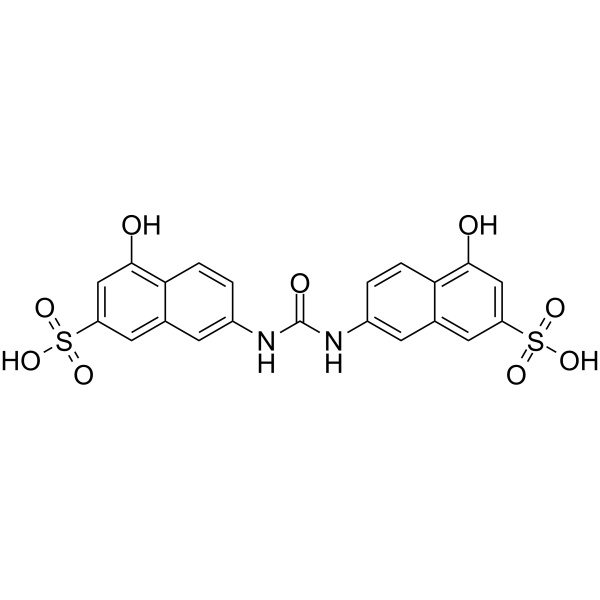
AMI-1 free acid
Based on 7 publication(s) in Google Scholar
AMI-1 free acid is a potent, cell-permeable and reversible inhibitor of protein arginine N-methyltransferases (PRMTs), with IC50s of 8.8 μM and 3.0 μM for human PRMT1 and yeast-Hmt1p, respectively. AMI-1 free acid exerts PRMTs inhibitory effects by blocking peptide-substrate binding.
For research use only. We do not sell to patients.
- Purity : 99.53%
- CAS No.: 134-47-4
- Formula: C21H16N2O9S2
- Molecular Weight:504.49
-
Storage:Powder -20°C, 3 years , 4°C, 2 years ; In solvent -80°C, 2 years , -20°C, 1 year

To place orders, for customer services and technical support, please contact: MedChemExpress USA
Tel: 609-228-6898 E-mail: [email protected] [email protected]


-
 Biological Activity
-
Chemical Information
-
Solvent & Solubility
- Purity & Documentation
- References
-
 Help & FAQs


-
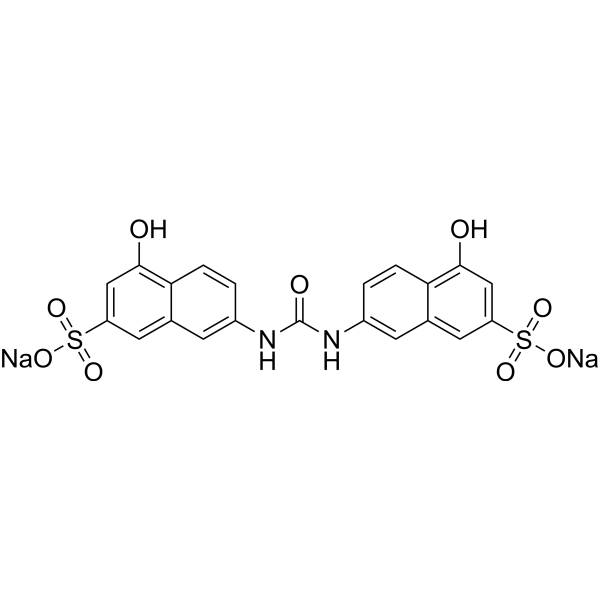
HY-18962
AMI-1PRMTs Inhibitor -
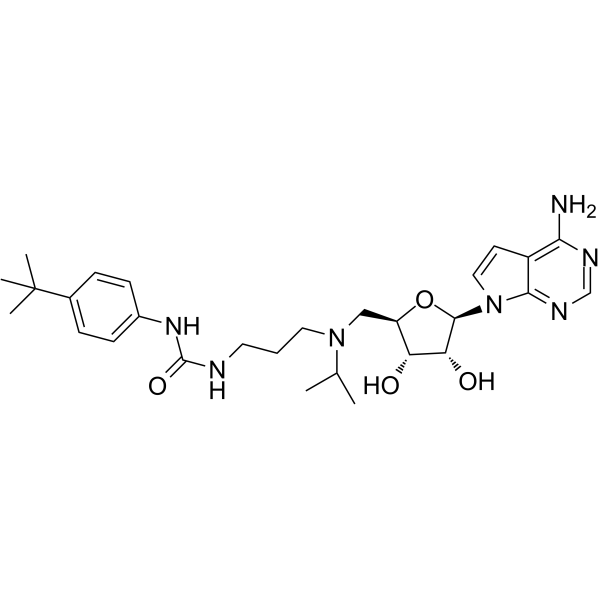
HY-15227
EPZ004777DOT1L Inhibitor -
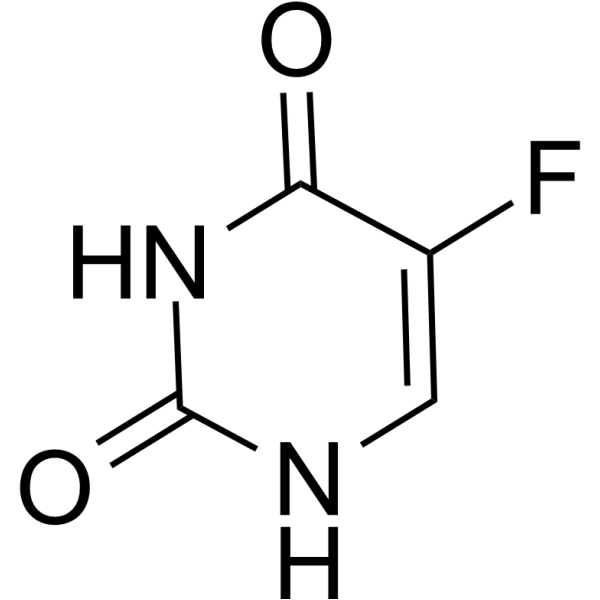
HY-90006
5-FluorouracilThymidylate Synthase Inhibitor -
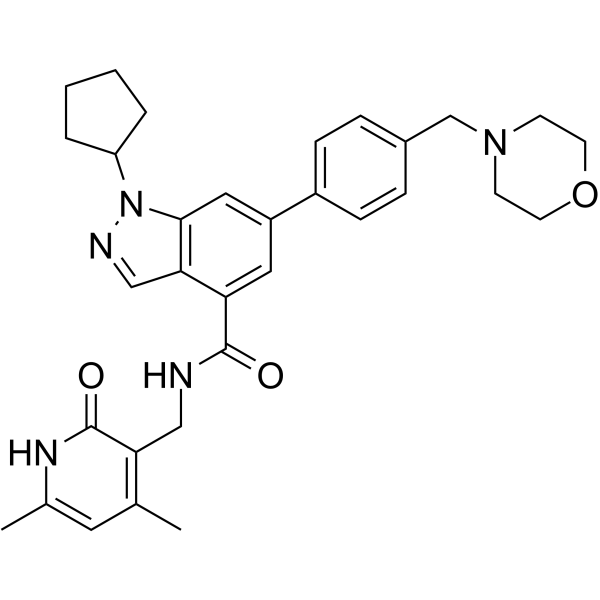
HY-15555
EPZ005687EZH2 Inhibitor -
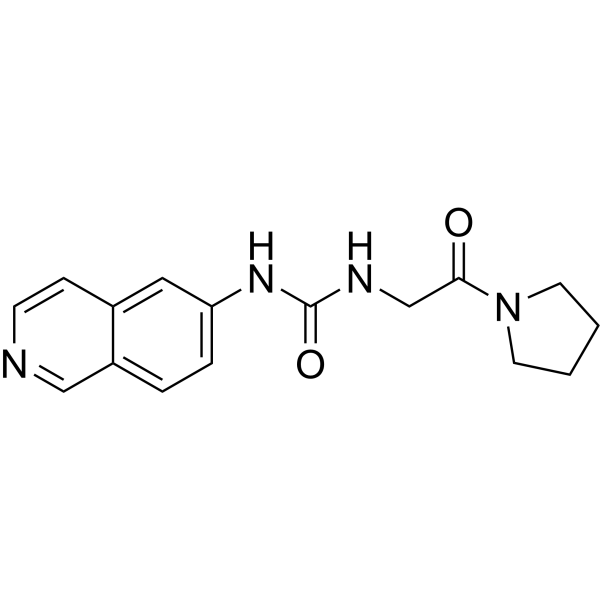
HY-19715
SGC707PRMT3 Inhibitor -
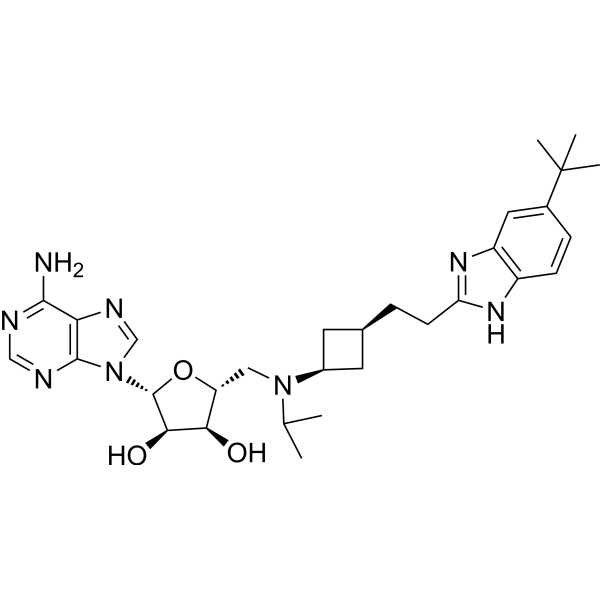
HY-15593
PinometostatDOT1L Inhibitor -

HY-18962AR
AMI-1 free acid (Standard)PRMTs Inhibitor -
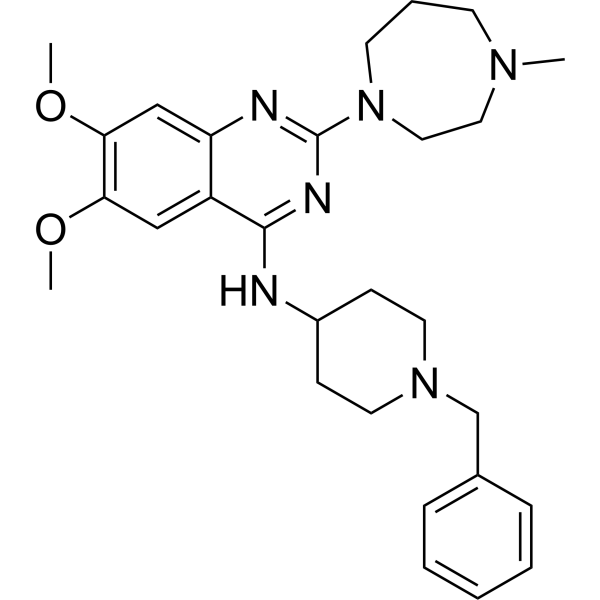
HY-10587
BIX-01294G9a/GLP Inhibitor -
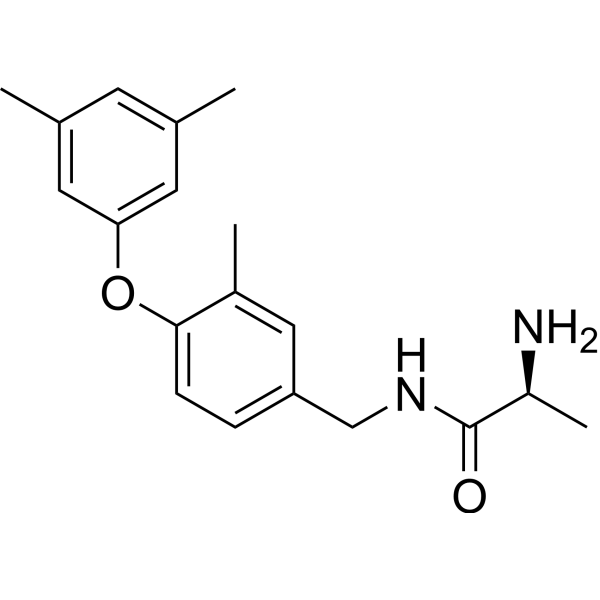
HY-100565
SGC2085CARM1 Inhibitor -
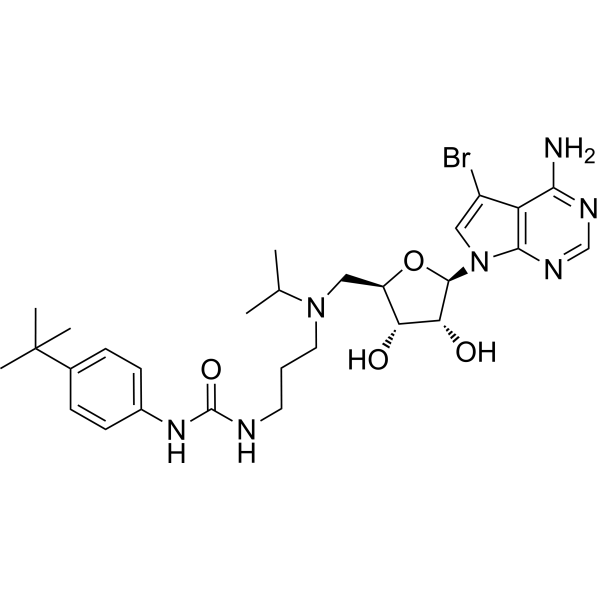
HY-15650
SGC0946DOT1L Inhibitor -
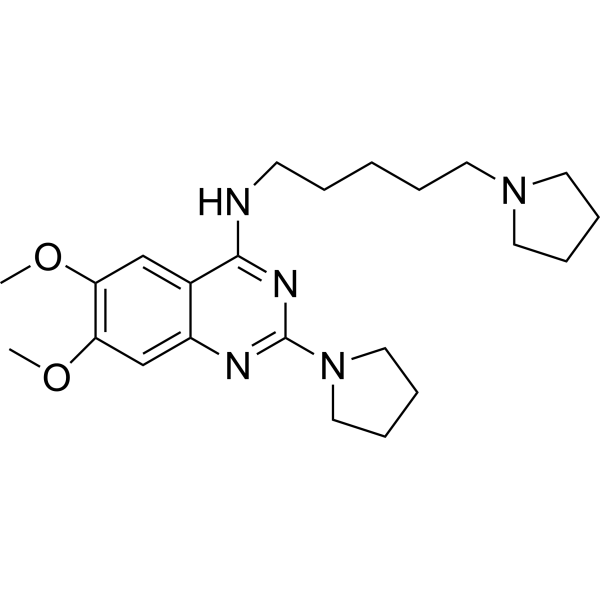
HY-12335
UNC0379SETD8 Inhibitor -
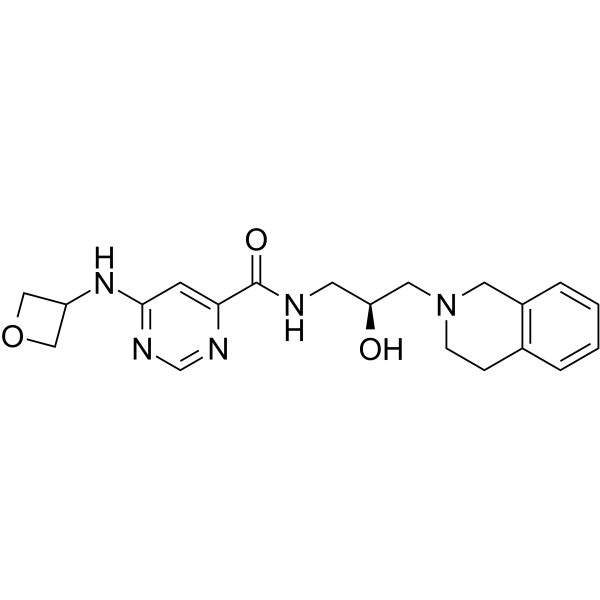
HY-12727
EPZ015666PRMT5 Inhibitor
Publications Citing Use of MedChemExpress (MCE) AMI-1 free acid
More- Clin Mol Hepatol. 2026 Apr;32(2):843-865. [Abstract]
- Nat Commun. 2023 Feb 23;14(1):1011. [Abstract]
- Genes Dis. 2023 Mar 28;10(6):2622-2638. [Abstract]
- Cell Death Dis. 2024 Nov 11;15(11):814. [Abstract]
- Cell Death Dis. 2023 Sep 22;14(9):624. [Abstract]
- Cell Rep. 2024 Aug 22;43(9):114662. [Abstract]
- Cell Rep. 2024 Jul 24;43(8):114537. [Abstract]
 Customer Validation & Images

-
WB
All Histone Methyltransferase Isoforms
More

Biological Activity
Description
IC50 & Target
IC50: 8.8 μM (PRMT1), 3.0 μM (yeast-Hmt1p)[1]
In Vitro
AMI-1 free acid can inhibit the in vitro methylation reactions performed by all five recombinantly active PRMTs (PRMT1, -3, -4, and -6 and Hmt1p)[2].
AMI-1 free acid not only inhibits type I PRMTs (PRMT1, 3, 4 and 6) but also type II PRMT5[2].
AMI-1 free acid specifically inhibits arginine, but not lysine, methyltransferase activity in vitro and does not compete for the AdoMet binding site[3].
AMI-1 free acid inhibits methylation of GFP-Npl3 and cellular proteins[3].
AMI-1 free acid (0.6-2.4 mM; 48-96 hours) inhibits the cell viability of sarcoma in S180 and U2OS cells in a time-dependent and dose-dependent manner in vitro[4].
AMI-1 free acid (1.2-2.4 mM; 48-72 hours) reduces S180 cell viability through the induction of cell apoptosis[4].
MedChemExpress (MCE) has not independently confirmed the accuracy of these methods. They are for reference only. .
-
Cell Line:S180 cells, U2OS cells
-
Concentration:0.6 mM, 1.2 mM, 2.4 mM
-
Incubation Time:48 hours, 72 hours, 96 hours
-
Result:Inhibited the cell viability.
-
Cell Line:S180 cells
-
Concentration:1.2 mM, 2.4 mM
-
Incubation Time:48 hours, 72 hours
-
Result:Increased the percentages of cells undergoing apoptosis.
In Vivo
AMI-1 free acid (0.5 mg; intratumorally; daily; for 7 days) downregulates PRMT5 but does not regulate the expression of PRMT7 in a tumor xenograft model[4].
AMI-1 free acid (0.5 mg; intratumorally; daily; for 7 days) decreases the levels of H4R3me2s and H3R8me2s in a tumor xenograft model[4].
MedChemExpress (MCE) has not independently confirmed the accuracy of these methods. They are for reference only.
-
Animal Model:6-7 weeks old male Kunming mice (18-22 g), with S180 cells xenograft[4]
-
Dosage:0.5 mg
-
Administration:Intratumorally, daily, for 7 days
-
Result:Decreased tumor weight.


Chemical Information
-
CAS No. 134-47-4
-
Appearance Solid
-
Molecular Weight 504.49
-
Formula C21H16N2O9S2
-
Color Light brown to brown
-
SMILES
O=C(NC1=CC2=CC(S(=O)(O)=O)=CC(O)=C2C=C1)NC3=CC4=CC(S(=O)(O)=O)=CC(O)=C4C=C3
-
Shipping
Room temperature in continental US; may vary elsewhere.
-
Storage
Powder -20°C 3 years 4°C 2 years In solvent -80°C 2 years -20°C 1 year


Publications (7)
-
Journal Impact Factor
-
Most Recent
-
Clin Mol Hepatol
PRMT1-mediated asymmetric dimethylation of arginine residue 602 in DDX1 promotes cholangiocarcinoma progression. [Abstract]2026 Apr;32(2):843-865. PMID: 41668296 -
Nat Commun
PHGDH arginine methylation by PRMT1 promotes serine synthesis and represents a therapeutic vulnerability in hepatocellular carcinoma. [Abstract]2023 Feb 23;14(1):1011. PMID: 36823188
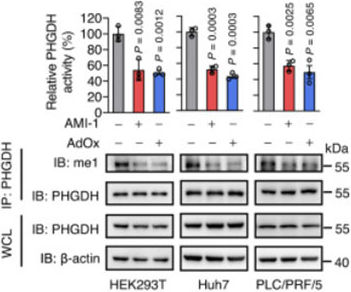
AMI-1 free acid purchased from MedChemExpress. Usage Cited in: Nat Commun. 2023 Feb 23;14(1):1011. [Abstract]
AMI-1 or adenosine dialdehyde (AdOx) markedly reduces the arginine methylation of PHGDH in HEK293T, Huh7, and PLC/PRF/5 cells.
-
Genes Dis
PRMT1 promotes the proliferation and metastasis of gastric cancer cells by recruiting MLXIP for the transcriptional activation of the β-catenin pathway. [Abstract]2023 Mar 28;10(6):2622-2638. PMID: 37554218 -
Cell Death Dis
PRMT1-mediated methylation of ME2 promotes hepatocellular carcinoma growth by inhibiting ubiquitination. [Abstract]2024 Nov 11;15(11):814. PMID: 39528487 -
Cell Death Dis
Methylation of BRD4 by PRMT1 regulates BRD4 phosphorylation and promotes ovarian cancer invasion. [Abstract]2023 Sep 22;14(9):624. PMID: 37737256 -
Cell Rep
CRISPR screening identifies PRMT1 as a key pro-ferroptotic gene via a two-layer regulatory mechanism. [Abstract]2024 Aug 22;43(9):114662. PMID: 39178116 -
Cell Rep
Arginine methylation-enabled FUS phase separation with SMN contributes to neuronal granule formation. [Abstract]2024 Jul 24;43(8):114537. PMID: 39052476


Solvent & Solubility
In Vitro:
DMSO : 83.33 mg/mL (165.18 mM; Need ultrasonic; Hygroscopic DMSO has a significant impact on the solubility of product, please use newly opened DMSO)
Please refer to the solubility information to select the appropriate solvent. Once prepared, please aliquot and store the solution to prevent product inactivation from repeated freeze-thaw cycles.
Storage method and period of stock solution: -80°C, 2 years; -20°C, 1 year. When stored at -80°C, please use it within 2 years. When stored at -20°C, please use it within 1 year.
Please refer to the solubility information to select the appropriate solvent. Once prepared, please aliquot and store the solution to prevent product inactivation from repeated freeze-thaw cycles.
Storage method and period of stock solution: -80°C, 2 years; -20°C, 1 year. When stored at -80°C, please use it within 2 years. When stored at -20°C, please use it within 1 year.
Concentration (start) × Volume (start) = Concentration (final) × Volume (final)
In Vivo:
Select the appropriate dissolution method based on your experimental animal and administration route.
- For the following dissolution methods, please ensure to first prepare a clear stock solution using an In Vitro approach and then sequentially add co-solvents:
- To ensure reliable experimental results, the clarified stock solution can be appropriately stored based on storage conditions. As for the working solution for In Vivo experiments, it is recommended to prepare freshly and use it on the same day.
- The percentages shown for the solvents indicate their volumetric ratio in the final prepared solution. If precipitation or phase separation occurs during preparation, heat and/or sonication can be used to aid dissolution.
Add each solvent one by one: 10% DMSO 40% PEG300 5% Tween-80 45% Saline
Solubility: ≥ 2.08 mg/mL (4.12 mM); Clear solution
This protocol yields a clear solution of ≥ 2.08 mg/mL (saturation unknown).
Taking 1 mL working solution as an example, add 100 μL DMSO stock solution (20.8 mg/mL) to 400 μL PEG300, and mix evenly; then add 50 μL Tween-80 and mix evenly; then add 450 μL Saline to adjust the volume to 1 mL.
Preparation of Saline: Dissolve 0.9 g sodium chloride in ddH₂O and dilute to 100 mL to obtain a clear Saline solution.
In Vivo Dissolution Calculator
Please enter the basic information of animal experiments:
-
-
-
-
Recommended: Prepare an additional quantity of animals to account for potential losses during experiments.
Please enter your animal formula composition:
-
%DMSO +
Recommended: Keep the proportion of DMSO in working solution below 2% if your animal is weak.
-
%+
-
+%Tween-80 + +
-
%Saline +
The co-solvents required include: DMSO, . All of co-solvents are available by MedChemExpress (MCE). , Tween 80. All of co-solvents are available by MedChemExpress (MCE).
Working solution concentration: 0.22 mg/mL
Method for preparing stock solution: mg drug dissolved in μL DMSO. Stock solution concentration: mg/mL.
1. Take μL DMSO stock solution;
2. Add μL .
μL , mix evenly;
3. Then add μL Tween 80, mix evenly;
4. Then add μL
Please ensure that the stock solution in the first step is dissolved to a clear state, and add co-solvents in sequence. You can use ultrasonic heating (ultrasonic cleaner, recommended frequency 20-40 kHz), vortexing, etc. to assist dissolution.


Purity & Documentation
-
Data Sheet (277 KB)
-
SDS (393 KB)
- English - EN (393 KB)
- Français - FR (393 KB)
- Deutsch - DE (393 KB)
- Norwegian - NO (393 KB)
- Español - ES (393 KB)
- Swedish - SV (393 KB)
- Italian - IT (393 KB)
- Korean - KR (393 KB)
- Portuguese - PT (393 KB)
-
Handling Instructions (2659 KB)
References
[1]. Zhang, B., et al. Targeting protein arginine methyltransferase 5 inhibits colorectal cancer growth by decreasing arginine methylation of eIF4E and FGFR3. Oncotarget. 2015 Sep 8;6(26):22799-811. [Content Brief]
[2]. Baolai Zhang, et al. Arginine Methyltransferase inhibitor-1 Inhibits Sarcoma Viability in vitro and in vivo. Oncol Lett. 2018 Aug;16(2):2161-2166. [Content Brief]
[3]. Donghang Cheng, et al. Small Molecule Regulators of Protein Arginine Methyltransferases. J Biol Chem. 2004 Jun 4;279(23):23892-9. [Content Brief]


Complete Stock Solution Preparation Table
Please refer to the solubility information to select the appropriate solvent. Once prepared, please aliquot and store the solution to prevent product inactivation from repeated freeze-thaw cycles.
Storage method and period of stock solution: -80°C, 2 years; -20°C, 1 year. When stored at -80°C, please use it within 2 years. When stored at -20°C, please use it within 1 year.
| Optional Solvent | Concentration Solvent Mass | 1 mg | 5 mg | 10 mg | 25 mg |
|---|---|---|---|---|---|
| DMSO | 1 mM | 1.9822 mL | 9.9110 mL | 19.8220 mL | 49.5550 mL |
| 5 mM | 0.3964 mL | 1.9822 mL | 3.9644 mL | 9.9110 mL | |
| 10 mM | 0.1982 mL | 0.9911 mL | 1.9822 mL | 4.9555 mL | |
| 15 mM | 0.1321 mL | 0.6607 mL | 1.3215 mL | 3.3037 mL | |
| 20 mM | 0.0991 mL | 0.4955 mL | 0.9911 mL | 2.4777 mL | |
| 25 mM | 0.0793 mL | 0.3964 mL | 0.7929 mL | 1.9822 mL | |
| 30 mM | 0.0661 mL | 0.3304 mL | 0.6607 mL | 1.6518 mL | |
| 40 mM | 0.0496 mL | 0.2478 mL | 0.4955 mL | 1.2389 mL | |
| 50 mM | 0.0396 mL | 0.1982 mL | 0.3964 mL | 0.9911 mL | |
| 60 mM | 0.0330 mL | 0.1652 mL | 0.3304 mL | 0.8259 mL | |
| 80 mM | 0.0248 mL | 0.1239 mL | 0.2478 mL | 0.6194 mL | |
| 100 mM | 0.0198 mL | 0.0991 mL | 0.1982 mL | 0.4955 mL |


AMI-1 free acid Related Classifications
HY-18962A Related Classifications
 Powered by Bioz