



Dabcyl-KTSAVLQSGFRKME-Edans TFA
Based on 3 publication(s) in Google Scholar
Dabcyl-KTSAVLQSGFRKME-Edans TFA is a fluorogenic peptide. Dabcyl-KTSAVLQSGFRKME-Edans TFA is used as the substrate to measure the enzymatic activities of protease forms. Dabcyl-KTSAVLQSGFRKME-Edans TFA has the potential for study 2019-nCoV (COVID-19) infection.
For research use only. We do not sell to patients.
- Purity : 99.75%
- Formula: C95H141N25O24S2.xC2HF3O2
- Molecular Weight:2081.43 (free base)
-
Storage:
Sealed storage, away from moisture and light, under nitrogen.
Powder -80°C, 2 years , -20°C, 1 year* In solvent : -80°C, 6 months; -20°C, 1 month (sealed storage, away from moisture and light, under nitrogen)


To place orders, for customer services and technical support, please contact: MedChemExpress USA
Tel: 609-228-6898 E-mail: [email protected] [email protected]


-
 Biological Activity
-
Chemical Information
-
Solvent & Solubility
- Protocols
- Purity & Documentation
- References
-
 Help & FAQs


-
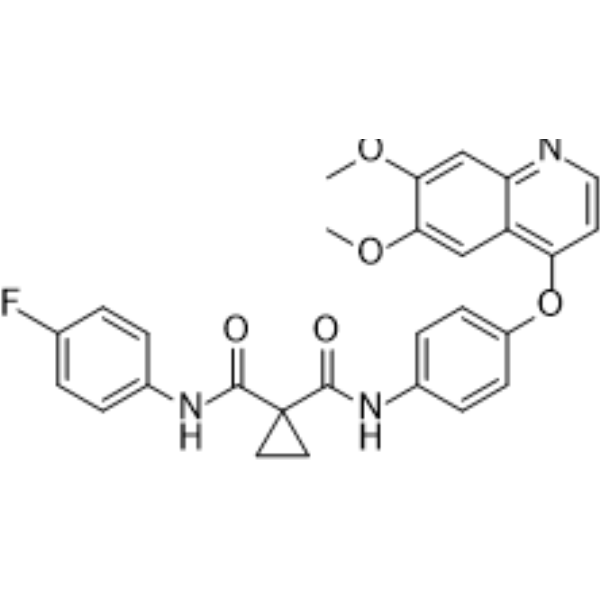
HY-13016
CabozantinibVEGFR2/MET Inhibitor -
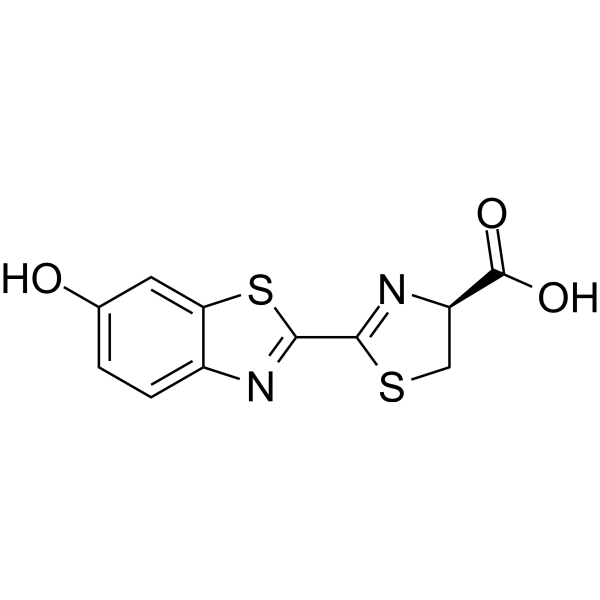
HY-12591A
D-LuciferinSubstrate for Luciferase -
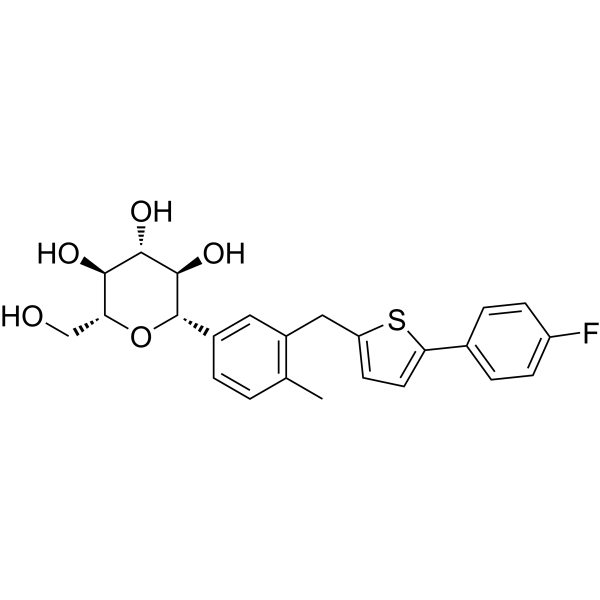
HY-10451
CanagliflozinSGLT2 Inhibitor -

HY-K0301
Cell Counting Kit-8 -
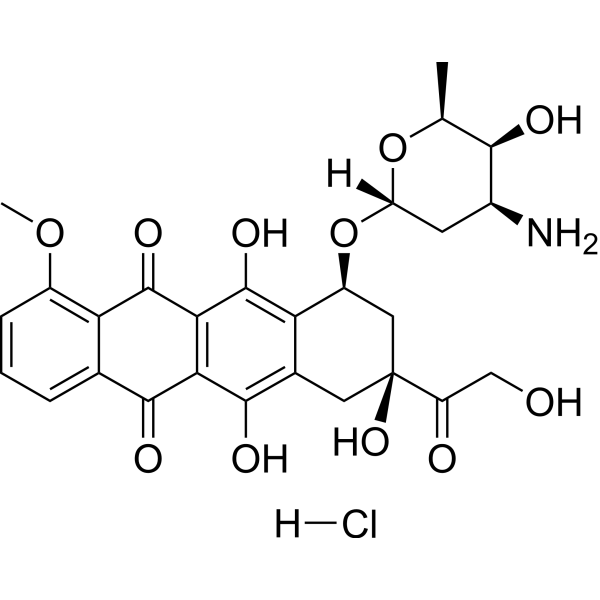
HY-15142
Doxorubicin hydrochlorideTopoisomerase Inhibitor -
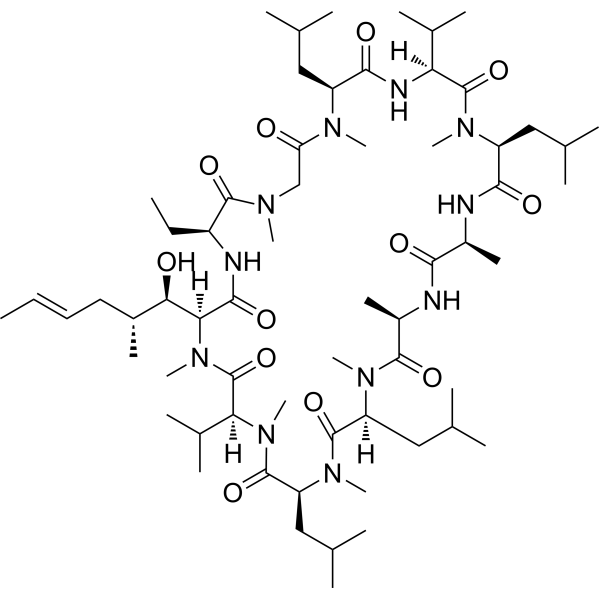
HY-B0579
Cyclosporin ACalcineurin Inhibitor -
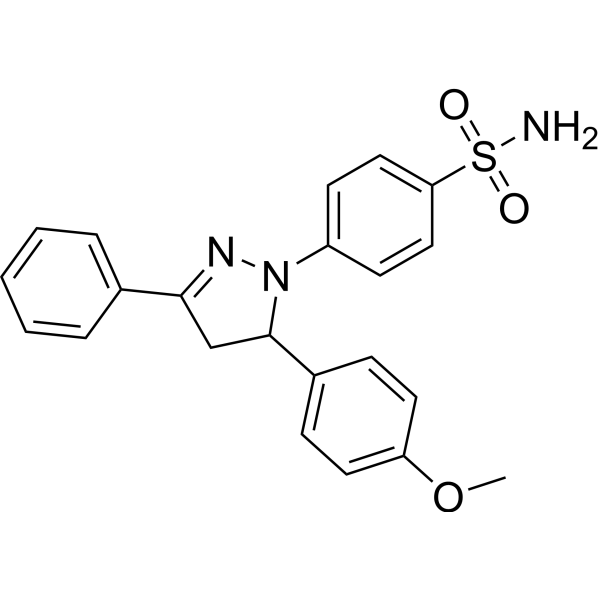
HY-12755
ML141Cdc42 GTPase Inhibitor -
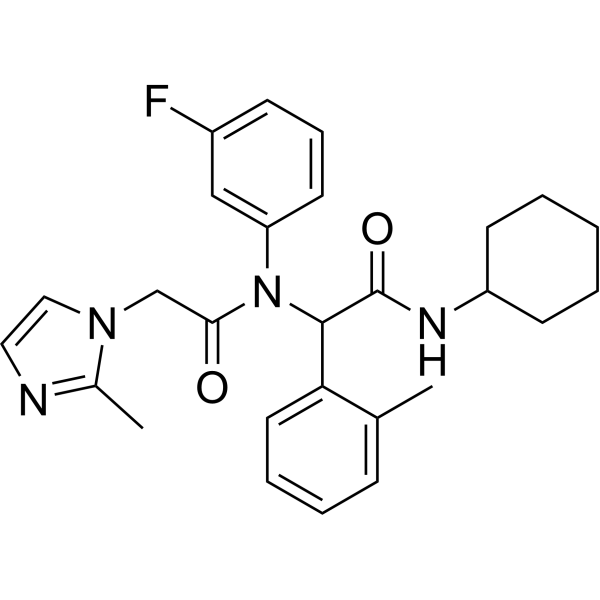
HY-18082
AGI-5198IDH1 Inhibitor -
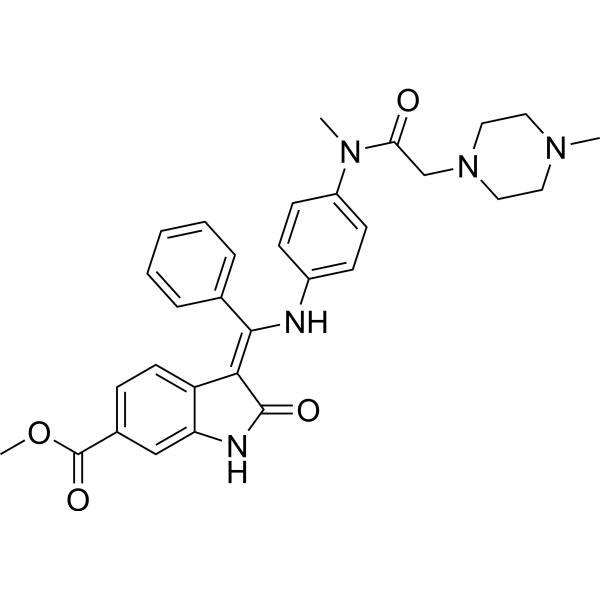
HY-50904
NintedanibPDGFR/VEGFR/FGFR Inhibitor -
HY-17026
GemcitabineDNA Synthesis Inhibitor -
HY-90006
5-FluorouracilThymidylate Synthase Inhibitor -
HY-10201
SorafenibMultikinase Inhibitor
Publications Citing Use of MedChemExpress (MCE) Dabcyl-KTSAVLQSGFRKME-Edans TFA
More

Biological Activity
Description
In Vitro
Recombinant 3CLpro is expressed in Pichia pastoris GS115 as a 42 kDa protein that displays a Km of 15 μM with Dabcyl-KTSAVLQSGFRKME-Edans TFA as substrate[1].
The Dabcyl-KTSAVLQSGFRKME-Edans TFA fluorogenic peptide is used as the substrate and the enhanced fluorescence due to cleavage of this substrate catalyzed by the protease is monitored at 538 nm with an excitation wavelength of 355 nm using a fluorescence plate reader[1].
MedChemExpress (MCE) has not independently confirmed the accuracy of these methods. They are for reference only. Further protocols information, click here.


Chemical Information
-
Appearance Solid
-
Molecular Weight 2081.43 (free base)
-
Formula C95H141N25O24S2.xC2HF3O2
-
Color Pink to red
-
Sequence
Dabcyl-Lys-Thr-Ser-Ala-Val-Leu-Gln-Ser-Gly-Phe-Arg-Lys-Met-Glu-Edans
-
Sequence Shortening
Dabcyl-KTSAVLQSGFRKME-Edans
-
Shipping
Room temperature in continental US; may vary elsewhere.
-
Storage
Sealed storage, away from moisture and light, under nitrogen
Powder -80°C 2 years -20°C 1 year * In solvent : -80°C, 6 months; -20°C, 1 month (sealed storage, away from moisture and light, under nitrogen)


Publications (3)
-
Journal Impact Factor
-
Most Recent
-
Int J Biol Macromol
Trapping SARS-CoV-2 main protease into transient artificial zymogens for high-yield expression and simplified purification. [Abstract]2026 Feb 12:349:150827. PMID: 41688001 -
-


Solvent & Solubility
In Vitro:
DMSO : 100 mg/mL (Need ultrasonic; Hygroscopic DMSO has a significant impact on the solubility of product, please use newly opened DMSO)
H2O : 6.67 mg/mL (Need ultrasonic)

Protocols
-
Research Protocol for Infectious Diseases
Infectious-disease experiments test how pathogens interact with host barriers, innate immune receptors, inflammatory signaling, pathogen replication, and tissue injury; pattern-recognition receptors such as TLRs, RIG-I-like receptors, NOD-like receptors, and inflammasomes detect microbial molecules and activate NF-κB, interferon, and cytokine responses. The central hypothesis is that infection severity reflects the balance between pathogen burden and host response: protective inflammation restricts pathogen growth, whereas excessive or mislocalized inflammation contributes to tissue damage and disease phenotype. Unresolved questions include which host pathways are protective versus pathogenic, why some infection models fail to translate to human disease, and which combined readouts best predict clinically relevant infection outcomes.


Purity & Documentation
-
Data Sheet (276 KB)
-
SDS (252 KB)
- English - EN (252 KB)
- Français - FR (252 KB)
- Deutsch - DE (252 KB)
- Norwegian - NO (252 KB)
- Español - ES (252 KB)
- Swedish - SV (252 KB)
- Italian - IT (252 KB)
- Korean - KR (252 KB)
- Portuguese - PT (252 KB)
-
Handling Instructions (2659 KB)
References
[1]. Thi Thanh Hanh Nguyen, et al.Flavonoid-mediated Inhibition of SARS Coronavirus 3C-like Protease Expressed in Pichia Pastoris. Biotechnol Lett. 2012 May;34(5):831-8. [Content Brief]
[2]. Chih-Jung Kuo, et al.Engineering a Novel Endopeptidase Based on SARS 3CL(pro). Biotechniques. 2009 Dec;47(6):1029-32. [Content Brief]
[3]. Cheng-Wei Yang, et al.Novel Small-Molecule Inhibitors of Transmissible Gastroenteritis Virus. Antimicrob Agents Chemother. 2007 Nov;51(11):3924-31. [Content Brief]

Calculators
Concentration (start) × Volume (start) = Concentration (final) × Volume (final)


Dabcyl-KTSAVLQSGFRKME-Edans TFA Related Classifications
HY-P2295 Related Classifications
 Powered by Bioz