

1. Search Result
Search Result
Results for "

T-L

" in MedChemExpress (MCE) Product Catalog:

37

Inhibitors & Agonists

1

Fluorescent Dyes

1

Biochemical Assay Reagents

3

Peptides

6

Inhibitory Antibodies

2

Natural
Products

32

Recombinant Proteins

1

Isotope-Labeled Compounds

4

Antibodies

1

GMP Molecules

Cat. No. Product Name Target Research Areas Chemical Structure
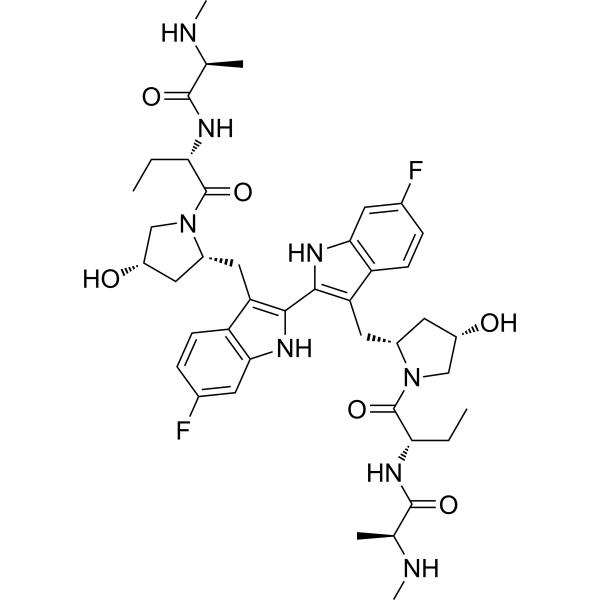
  • HY-16591
    Birinapant
    Maximum Cited Publications
    42 Publications Verification

    TL32711

    IAP Apoptosis HIV Cancer
    Birinapant (TL32711), a bivalent Smac mimetic, is a potent antagonist for XIAP and cIAP1 with Kds of 45 nM and less than 1 nM, respectively. Birinapant (TL32711) induces the autoubiquitylation and proteasomal degradation of cIAP1 and cIAP2 in intact cells, which results in formation of a RIPK1: caspase-8 complex, caspase-8 activation, and induction of tumor cell death. Birinapant (TL32711) targets TRAF2-associated cIAPs and abrogates TNF-induced NF-κB activation.
    Birinapant
  • HY-P990007

    PRA023

    TNF Receptor Inflammation/Immunology
    Tulisokibart (PRA023) is a humanized IgG1-κ monoclonal antibody. Tulisokibart targets to TNFSF15/TL1A. Tulisokibart can be used to study a variety of inflammatory/fibrotic diseases, such as Crohn's Disease (CD) and ulcerative colitis .
    Tulisokibart
  • HY-P990876

    PF-06480605; RVT-3101

    TNF Receptor NF-κB IFNAR Inflammation/Immunology
    Afimkibart (PF-06480605; RVT-3101) is a fully human monoclonal antibody that selectively inhibits trimeric tumor necrosis factor-like ligand 1A (TL1A). Afimkibart neutralizes active trimeric TL1A, blocks TL1A-induced signaling pathways. Afimkibart inhibits NF-κB activation and IFN-γ production. Afimkibart can be used for the research of inflammatory bowel disease .
    Afimkibart
  • HY-P990006

    TEV-48574; SAR-447189; TEV-574

    TNF Receptor Inflammation/Immunology
    Duvakitug (TEV-48574) is a humanized IgG1-λ2 monoclonal antibody targeting to TNFSF15/TL1A. Duvakitug' main expression system is CHOK1SV cells endogenously expressing glutamine synthetase (GS). Duvakitug can be used in the study of Crohn's Disease (CD) .
    Duvakitug
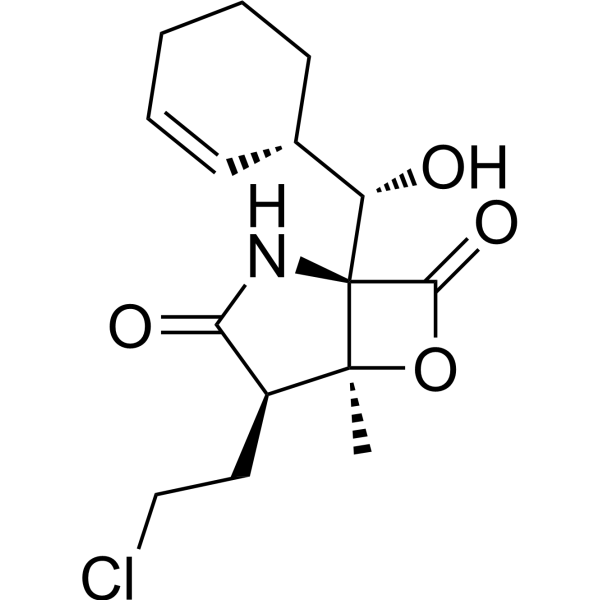
  • HY-10985
    Marizomib
    15+ Cited Publications

    Salinosporamide A; NPI-0052

    Proteasome Cancer
    Marizomib (Salinosporamide A) is a second-generation, irreversible, brain-penetrant, pan-proteasome inhibitor. Marizomib inhibits the CT-L (β5), CT-T-laspase-like (C-L, β1) and trypsin-like (T-L, β2) activities of the 20S proteasome (IC50=3.5, 28, and 430 nM, respectively) .
    Marizomib
  • HY-20457

    Toll-like Receptor (TLR) Bacterial Interleukin Related Inflammation/Immunology Cancer
    TL8-506 is a specific TLR8 agonist with an EC50 of 30?nM. TL8-506 has immunomodulatory effects and can be used in the study of tuberculosis and cancer immunotherapy .
    TL8-506
  • HY-112852
    TL02-59
    5+ Cited Publications

    Src Apoptosis Cancer
    TL02-59 is an orally active, selective Src-family kinase Fgr inhibitor with an IC50 of 0.03 nM. TL02-59 inhibits Lyn and Hck with IC50s of 0.1 nM and 160 nM, respectively. TL02-59 potently suppresses acute myelogenous leukemia (AML) cell growth .
    TL02-59
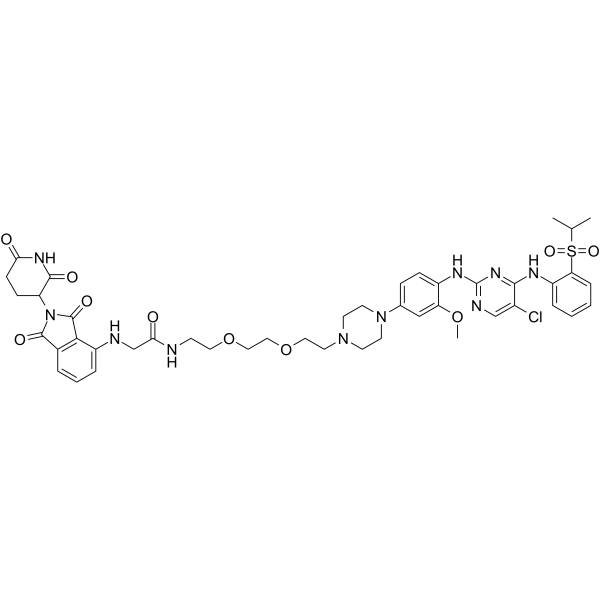
  • HY-130665
    TL12-186
    1 Publications Verification

    PROTACs CDK Cancer
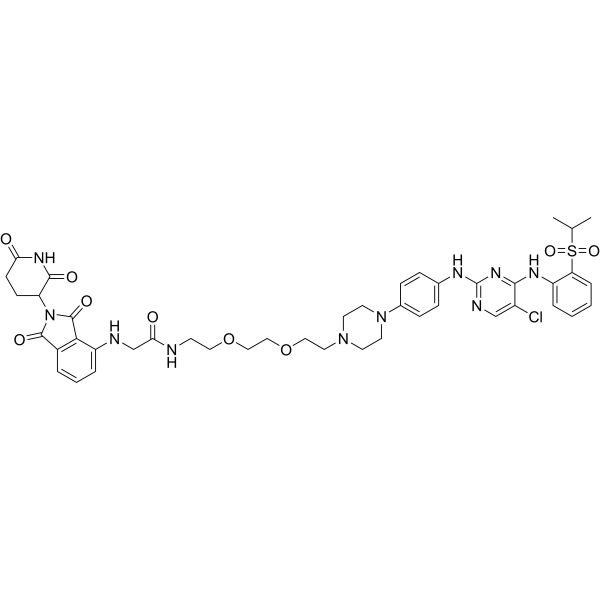
    TL12-186 is a Cereblon-dependent multi-kinase PROTAC degrader. Multi-kinases include CDK, BTK, FLT3, Aurora kinases, TEC, ULK, ITK, et al. TL12-186 inhibits CDK2/cyclin A (IC50=73 nM) and CDK9/cyclin T1 (IC50=55 nM) .
    TL12-186
  • HY-147340

    Tirumotecan

    Drug-Linker Conjugates for ADC Cancer
    TL033 is a drug-Linker conjugates for ADC. TL033 contains a linker and bioactive small molecule toxins. TL033 can conjugate with Sacituzumab antibody (anti Trop-2) for synthesizing BT001021. BT001021 has anti-cancer activities against various cancers, such as breast cancer, non-small cell lung cancer (NSCLC), gastric cancer .
    TL033
  • HY-147340A

    Tirumotecan TFA

    Drug-Linker Conjugates for ADC Cancer
    TL033 TFA is a drug-Linker conjugates for ADC. TL033 TFA contains a linker and bioactive small molecule toxins. TL033 TFA can conjugate with Sacituzumab antibody (anti Trop-2) for synthesizing BT001021. BT001021 has anti-cancer activities against various cancers, such as breast cancer, non-small cell lung cancer (NSCLC), gastric cancer .
    TL033 TFA
  • HY-P990151

    TNF Receptor Inflammation/Immunology
    Anti-Mouse TL1A/TNFSF15 Antibody (5G4.6) is an anti-mouse TL1A/TNFSF15 IgG monoclonal antibody. Anti-Mouse TL1A/TNFSF15 Antibody (5G4.6) can reduce TL1A levels and block TL1A-DR3 interactions. Anti-Mouse TL1A/TNFSF15 Antibody (5G4.6) can be used for research on inflammation conditions such as colitis and collagen-induced arthritis (CIA) .
    Anti-Mouse TL1A/TNFSF15 Antibody (5G4.6)
  • HY-P991440

    TNF Receptor Inflammation/Immunology
    AMG-966 is a human bispecific antibody (bsAb) targeting TNFSF15/TL1A & TNFα. AMG 966 restores the ability of the aglycosylated Fc domain to bind FcγRIa and FcγRIIa, leading to the formation of anti-drug antibodies (ADA). AMG 966 can be used in research on Crohn's disease and ulcerative colitis. Recommended isotype control: Human IgG1 kappa, Isotype Control (HY-P99001) .
    AMG-966
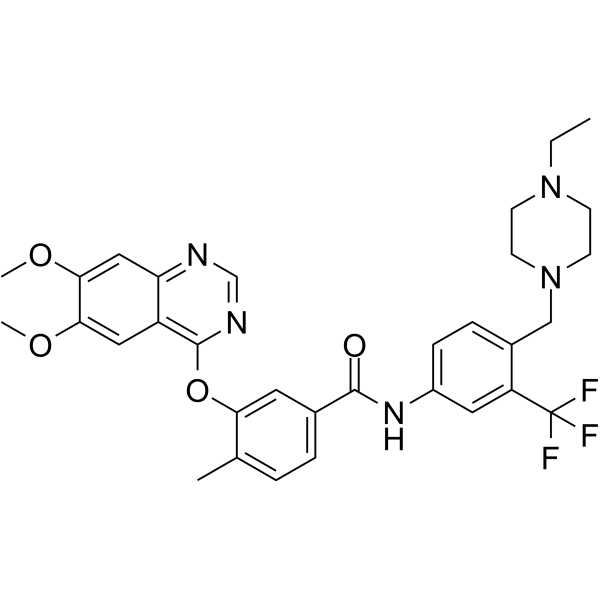
  • HY-139481
    TL-895
    1 Publications Verification

    Btk BMX Kinase Interleukin Related TNF Receptor Neurological Disease Inflammation/Immunology Cancer
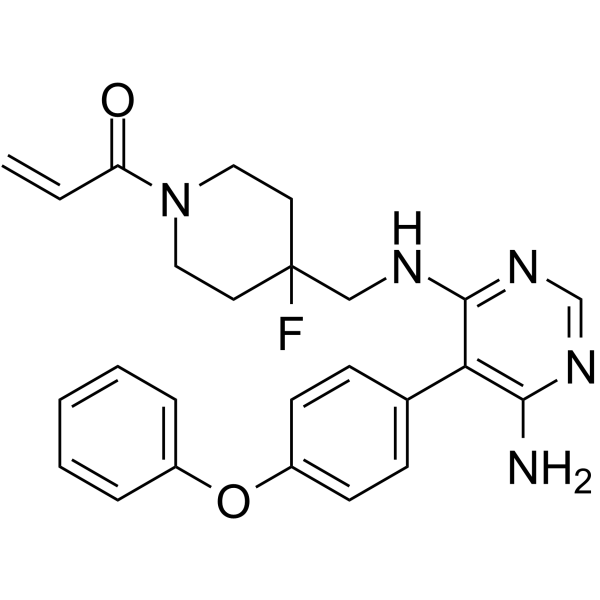
    TL-895 is a potent, orally active, ATP-competitive, and highly selective irreversible BTK inhibitor. TL-895 is active against recombinant BTK (average IC50: 1.5 nM) and inhibits only three additional kinases BLK, BMX (IC50 = 1.6 nM) and TXK with IC50 within tenfold of BTK activity. TL-895 inhibits BTK auto-phosphorylation at the Y223 phosphorylation site (IC50: 1-10 nM). The TL-895 effectively inhibits the production of inflammatory factors such as IL-8, IL-1β, MCP-1 and TNF-α by monocytes or macrophages, and reduces the chemotactic migration of MF cells towards SDF-1. TL-895 is used be for studies of chronic lymphocytic leukemia (CLL), myelofibrosis (MF), and B-cell malignancies .
    TL-895
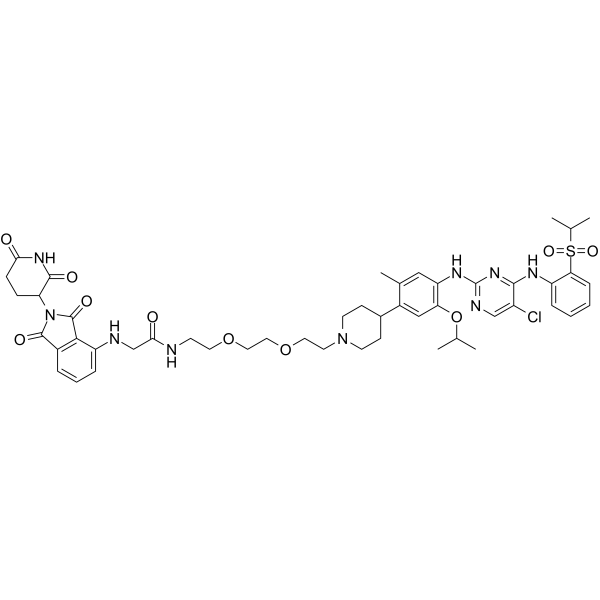
  • HY-123919
    TL13-112
    2 Publications Verification

    PROTACs Anaplastic lymphoma kinase (ALK) Cancer
    TL13-112 is a potent and selective ALK-PROTAC degrader and inhibits ALK activity with an IC50 value of 0.14 nM. TL13-112 also prompts the degradation of additional kinases including Aurora A, FER, PTK2 and RPS6KA1 with IC50 values of 8550 nM, 42.4 nM, 25.4 nM, and 677 nM, respectively. TL13-112 is comprised of the conjugation of Ceritinib?(HY-15656) and the Cereblon ligand of Pomalidomide (HY-10984) .
    TL13-112
  • HY-122582

    PROTACs Anaplastic lymphoma kinase (ALK) Cancer
    TL13-12 is a potent and selective ALK-PROTAC degrader and inhibits ALK activity with an IC50 value of 0.69 nM. TL13-12 also prompts the degradation of additional kinases including Aurora A, FER, PTK2, and RPS6KA1 with IC50 values of 13.5 nM, 5.74 nM, 18.4 nM, and 65 nM, respectively. TL13-12 is comprised of the conjugation of TAE684 (HY-10192) and the Cereblon ligand of Pomalidomide (HY-10984) .
    TL13-12
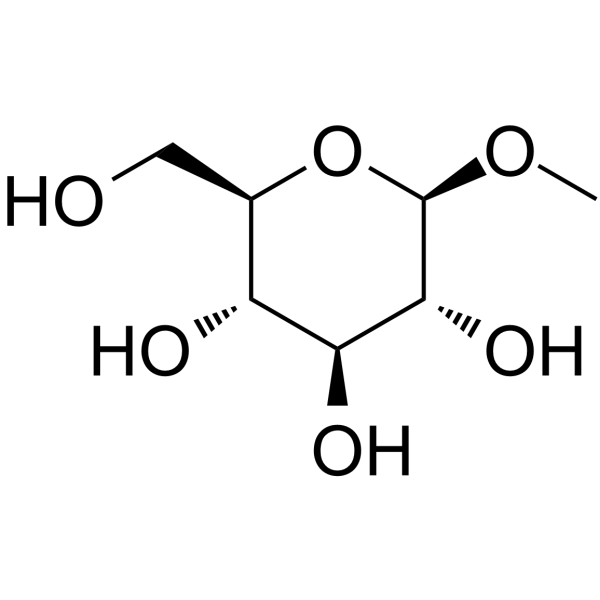
  • HY-116284

    Methyl β-D-glucoside

    Drug Intermediate Others
    Methyl β-D-glucopyranoside (Methyl β-D-glucoside) is a model glycosyl acceptor for enzymatic glycosylation reactions. Methyl β-D-glucopyranoside participates in glycoside synthesis and can react with acyl donors such as caffeic acid esters under the catalysis of specific enzymes (such as Lipozyme TL IM) to achieve acylation modification. Methyl β-D-glucopyranoside can generate biologically active derivatives (such as 6-O-caffeoyl glucoside). Methyl β-D-glucopyranoside can be used in organic synthesis and biocatalysis research, especially the efficient enzymatic preparation of medicinal glycosides (such as Robustaside B (HY-N2720), 6-O-caffeoyl salidroside) .
    Methyl β-D-glucopyranoside
  • HY-123714

    MAP4K Apoptosis Inflammation/Immunology Cancer
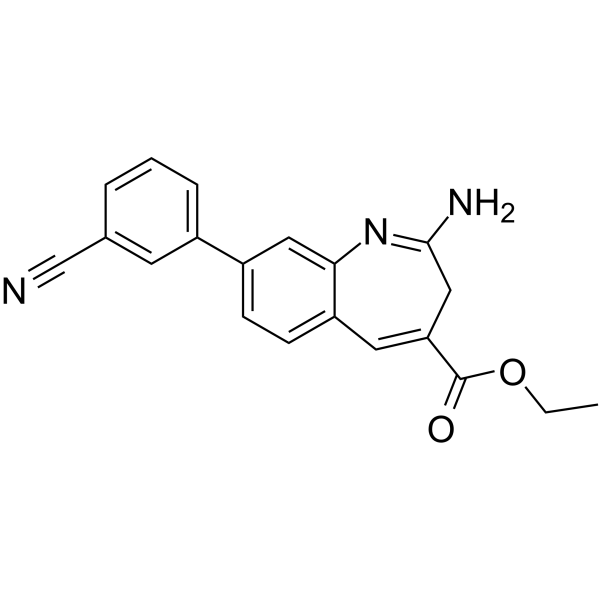
    TL4-12 is a selective MAP4K2/GCK inhibitor, dose-dependently downregulates IKZF1 and BCL-6 and leads to MM cell proliferation inhibition (IC50=37 nM) accompanied by induction of apoptosis. TL4-12 can be used to overcome immunomodulatory agent resistance in multiple myeloma (MM) .
    TL4-12
  • HY-150362

    Antibody-Drug Conjugates (ADCs) Cancer
    ADC Control Human IgG1-tirumotecan is an antibody-drug conjugate (ADC). The antibody portion is Human IgG1 kappa, Isotype Control (HY-P99001), and the drug-linker conjugate for ADC is TL033 TFA (HY-147340A). ADC Control Human IgG1-tirumotecan can be as a control of Sacituzumab tirumotecan (HY-164789).
    ADC Control Human IgG1-tirumotecan
  • HY-136849

    Src FGFR Ribosomal S6 Kinase (RSK) LIM Kinase (LIMK) MAP3K Others
    TL13-68 is a biotin-tagged version of SM1-71, and it can be used to research the mechanism of SM1-71 .
    TL13-68
  • HY-136194

    Anaplastic lymphoma kinase (ALK) Cancer
    TL13-22 is a negative control for TL13-12 (HY-122582) and a potent ALK inhibitor with an IC50 of 0.54 nM. TL13-22 does not degrade ALK in cells .
    TL13-22
  • HY-112852A

    Src Apoptosis Cancer
    TL02-59 dihydrochloride is an orally active, selective Src-family kinase Fgr inhibitor with an IC50 of 0.03 nM. TL02-59 dihydrochloride inhibits Lyn and Hck with IC50s of 0.1 nM and 160 nM, respectively. TL02-59 dihydrochloride potently suppresses acute myelogenous leukemia (AML) cell growth .
    TL02-59 dihydrochloride
  • HY-20457G

    Toll-like Receptor (TLR) Bacterial Interleukin Related Inflammation/Immunology Cancer
    TL8-506 (GMP) is TL8-506 (HY-20457) produced by using GMP guidelines. GMP small molecules work appropriately as an auxiliary reagent for cell therapy manufacture. TL8-506 is a specific TLR8 agonist with an EC50 of 30?nM. TL8-506 has immunomodulatory effects and can be used in the study of tuberculosis and cancer immunotherapy .
    TL8-506
  • HY-P11214

    H-TL1

    TNF Receptor Integrin NF-κB ERK p38 MAPK JNK Interleukin Related Inflammation/Immunology
    Hydrostatin-TL1 (H-TL1), a nine-amino-acid peptide, is a TNF-α antagonist. Hydrostatin-TL1 can be isolated from the venom gland of sea snake Hydrophis cyanocinctus. H-TL1 competitively inhibits the interaction between TNF-α/TNFR1 and attenuates the cytotoxicity and inflammation of TNF-α. Hydrostatin-TL1 can be used for TNF-α-associated inflammatory diseases, such as rheumatoid arthritis, osteoporosis and inflammatory bowel disease (IBD) research .
    Hydrostatin-TL1
  • HY-119214

    Drug Derivative Cancer
    TL-310 is a novel, orally active Taxane analogue. TL-310 can be used in the research of solid tumors .
    TL-310
  • HY-136195

    Anaplastic lymphoma kinase (ALK) Cancer
    TL13-110 is a negative control for TL13-112 (HY-123919) and a potent ALK inhibitor with an IC50 of 0.34 nM. TL13-110 does not degrade ALK in cells .
    TL13-110
  • HY-150041

    TAM Receptor Cancer
    TL4830031 (compound 8i), a quinolone antibiotic derivatives, is a potent Axl inhibitor with an IC50 value of 26 nM. TL4830031 inhibits the phosphorylation of Axl. TL4830031 inhibits cell invasion and migration. TL4830031 can be used for cancer research .
    TL4830031
  • HY-163861

    Cholinesterase (ChE) Neurological Disease
    Tl45b is an AChE inhibitor, with an IC50 of 0.71 μM. Tl45b can be used for the research of Alzheimer’s disease .
    Tl45b
  • HY-N14436

    Antibiotic Fungal Infection
    Pradimicin T1 is an antibiotic. Pradimicin Tl has activity against filamentous fungi and yeast-like fungi .
    Pradimicin Tl
  • HY-155445

    Hapten Cancer
    di-DTPA TL is a hydrophilic bivalent DTPA hapten that can be used for tumor research .
    di-DTPA TL
  • HY-137281

    Ser/Thr Protease Others
    HMB-Val-Ser-Leu-VE is a prototype vinyl ester inhibitor. HMB-Val-Ser-Leu-VE is against trypsin-like (T-L) proteasome activity with an IC50 of 0.033 μM .
    HMB-Val-Ser-Leu-VE
  • HY-113824

    Ridaifen-F

    Proteasome Cancer
    RID-F (Ridaifen-F), a Tamoxifen (HY-13757A) derivative, is a nonpeptidic proteasome inhibitor. RID-F inhibits human 20S proteasome activity, with IC50s of 0.64, 0.34, and 0.43 μM for CT-L, T-L, and PGPH, respectively .
    RID-F
  • HY-P11022

    A-3302-B

    Endogenous Metabolite HSV TRP Channel Infection Cancer
    TL-119 (A-3302-B) is a polypeptide. TL-119 can be isolated from the bacteria Micromonospora sp. MAG 9-7 and Saccharomonospora sp. CNQ-490. TL-119 inhibits TRPV-1. TL-119 exhibits antiviral activity against HSV-2. TL-119 possesses anticancer activity against gastric cancer and colorectal cancer .
    TL-119
  • HY-112852S

    Isotope-Labeled Compounds Src Apoptosis Cancer
    TL02-59-d5 is the deuterium labeled TL02-59 (HY-112852). TL02-59 is an orally active, selective Src-family kinase Fgr inhibitor with an ICC50 of 0.03 nM. TL02-59 inhibits Lyn and Hck with ICC50s of 0.1 nM and 160 nM, respectively. TL02-59 potently suppresses acute myelogenous leukemia (AML) cell growth.
    TL02-59-d5
  • HY-P992444

    TNF Receptor Cancer
    PR200 is an anti-Human TNFSF15/TL1A antibody.
    PR200
  • HY-183276

    Toll-like Receptor (TLR) NF-κB Inflammation/Immunology
    TLR8 antagonist-2 (Compound 35) is a selective TLR8 antagonist with an IC50 of 0.032 μM against hTLR8. TLR8 antagonist-2 potently inhibits TLR8-dependent NF-κB activity in cells stimulated with TL8-506 (HY-20457). TLR8 antagonist-2 can be used in research related to inflammatory and immune diseases .
    TLR8 antagonist-2
  • HY-116284A

    Methyl β-D-glucoside hemihydrate

    Drug Intermediate Others
    Methyl β-D-glucopyranoside (Methyl β-D-glucoside) hemihydrate is a model glycosyl acceptor for enzymatic glycosylation reactions. Methyl β-D-glucopyranoside hemihydrate participates in glycoside synthesis and can react with acyl donors such as caffeic acid esters under the catalysis of specific enzymes (such as Lipozyme TL IM) to achieve acylation modification. Methyl β-D-glucopyranoside hemihydrate can be used in organic synthesis and biocatalysis research, especially the efficient enzymatic preparation of medicinal glycosides (such as Robustaside B (HY-N2720), 6-O-caffeoyl salidroside) .
    Methyl β-D-glucopyranoside hemihydrate
  • HY-116284R

    Methyl β-D-glucoside (Standard)

    Reference Standards Drug Intermediate Others
    Methyl β-D-glucopyranoside (Methyl β-D-glucoside) (Standard) is the analytical standard of Methyl β-D-glucopyranoside. This product is intended for research and analytical applications. Methyl β-D-glucopyranoside is a model glycosyl acceptor for enzymatic glycosylation reactions. Methyl β-D-glucopyranoside participates in glycoside synthesis and can react with acyl donors such as caffeic acid esters under the catalysis of specific enzymes (such as Lipozyme TL IM) to achieve acylation modification. Methyl β-D-glucopyranoside can be used in organic synthesis and biocatalysis research, especially the efficient enzymatic preparation of medicinal glycosides (such as Robustaside B (HY-N2720), 6-O-caffeoyl salidroside).
    Methyl β-D-glucopyranoside (Standard)

Inquiry Online

Your information is safe with us. * Required Fields.

Salutation


Country or Region *

Applicant Name *


Organization Name *

Department *


Email Address *


Product Name *

Cat. No.


Requested quantity *

Phone Number *


Remarks

Inquiry Online

Inquiry Information

Product Name:
Cat. No.:
Quantity:
MCE Japan Authorized Agent:

