


1. Search Result
Search Result
Results for "

TAC

" in MedChemExpress (MCE) Product Catalog:

36

Inhibitors & Agonists

1

Peptides

4

Inhibitory Antibodies

2

Natural
Products

11

Recombinant Proteins

7

Antibodies

1

Click Chemistry

10

Oligonucleotides

Targets Recommended:
Cat. No. Product Name Target Research Areas Chemical Structure
  • HY-N0217
    Benzoylaconine
    1 Publications Verification

    Benzoylaconitine; Isaconitine; Pikraconitin

    Angiotensin-converting Enzyme (ACE) Reactive Oxygen Species (ROS) Toll-like Receptor (TLR) NF-κB COX NO Synthase p38 MAPK P-glycoprotein Cardiovascular Disease Inflammation/Immunology Cancer
    Benzoylaconine (Benzoylaconitine) is an orally active monoester alkaloid found in the traditional Chinese medicine Aconitum carmichaelii. Benzoylaconine is an ACE2 agonist (EC50: 1.5 μM) with antihypertensive and anti-heart failure effects. Benzoylaconine inhibits TLR-induced MAPK and NF-κB pathways to exert anti-inflammatory effects. Benzoylaconine upregulates the protein levels of P-gp, MRP2, and has anti-tumor effects .
    Benzoylaconine
  • HY-148130

    RG6091; RO7248824

    E1/E2/E3 Enzyme Others
    Rugonersen (RG6091; RO7248824) is a locked-nucleic acid (LNA)- modified antisense oligonucleotides (ASOs), and results in reduction of ubiquitin-protein ligase E3A (UBE3A) silencing. Angelman syndrome (AS) is a severe neurodevelopmental disorder caused by the loss of neuronal E3 ligase UBE3A, Rugonersen has been used for AS reasearch .
    Rugonersen
  • HY-139643
    CXCR7 antagonist-1
    2 Publications Verification

    CXCR Adrenergic Receptor Inflammation/Immunology Cancer
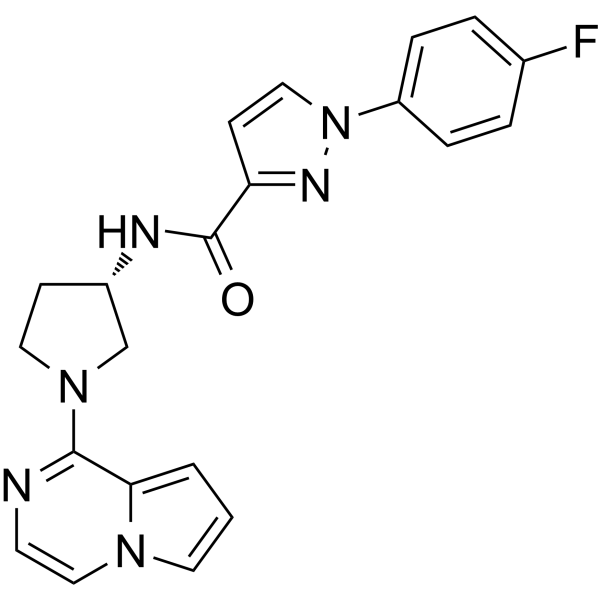
    CXCR7 antagonist-1 is a CXCR7 antagonist that inhibits the binding of the SDF-1 chemokine (also known as the CXCL12 chemokine) or I-TAC (also known as CXCL11) to the chemokine receptor CXCR7. CXCR7 antagonist-1 is useful in preventing tumor cell proliferation, tumor formation, inflammatory diseases, and many other diseases .
    CXCR7 antagonist-1
  • HY-N8698
    Picein
    1 Publications Verification

    SOD Ferroptosis Keap1-Nrf2 Heme Oxygenase (HO) Glutathione Peroxidase Neurological Disease Metabolic Disease Inflammation/Immunology
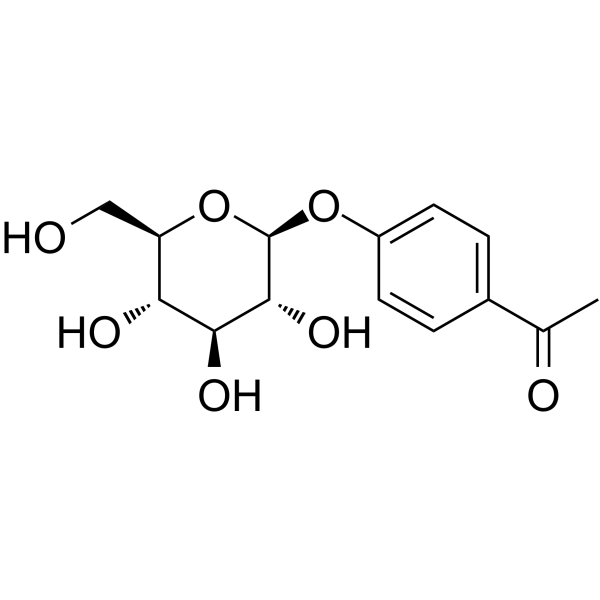
    Picein is an antioxidant and anti-inflammatory agent. Picein can be isolated from the leaves of Picrorhiza kurroa. Picein reduces MDA levels and increases the levels of SOD, GPX and TAC. Picein alleviates oxidative stress and promotes bone regeneration in osteoporotic bone defects by inhibiting Ferroptosis (via activation of the Nrf2/HO-1/GPX4 pathway). Picein prevents scopolamine (HY-N0296)-induced passive avoidance memory impairment in rats. Picein can be used in research related to osteoporotic bone defects and Alzheimer's disease .
    Picein
  • HY-P99233

    HuMax-TAC

    ADC Antibody Transmembrane Glycoprotein Interleukin Related Cancer
    Camidanlumab (HuMax-TAC) is a humanized IgG1 monoclonal antibody against CD25. Camidanlumab can be used to synthesize the ADC molecule Camidanlumab tesirine (HY-141599). Camidanlumab can be used in the research of tumors such as lymphoma and leukemia. Recommend Isotype Controls: Human IgG1 kappa, Isotype Control (HY-P99001) .
    Camidanlumab
  • HY-141552
    FC9402
    2 Publications Verification

    Mitochondrial Metabolism Cardiovascular Disease
    FC9402 is a potent and selective sulfide quinone oxidoreductase (SQOR) inhibitor extracted from patent WO 2020/146636 A1. FC9402 attenuates TAC-induced cardiomyocyte hypertrophy and left ventricle (LV) fibrosis. FC9402 can be used for cardiovascular regulation .
    FC9402
  • HY-174400

    SGLT SOD Na+/H+ Exchanger (NHE) Autophagy Cardiovascular Disease
    SGLT2-IN-2 (Compound E9) is an inhibitor of SGLT2. SGLT2-IN-2 significantly enhances the inhibition of SGLT2, NHE1, and SOD enzyme activity. SGLT2-IN-2 has protective effect on the glucose-free DMEM-induced injured cardiomyocytes. SGLT2-IN-2 significantly improves cardiac function in TAC-induced HF mice and inhibits cardiomyocyte hypertrophy as well as collagen deposition. SGLT2-IN-2 can ameliorate myocardial tissue damage and enhance mitochondrial autophagy in injured cardiomyocytes, thereby increasing survival rates in HF mice .
    SGLT2-IN-2
  • HY-146346

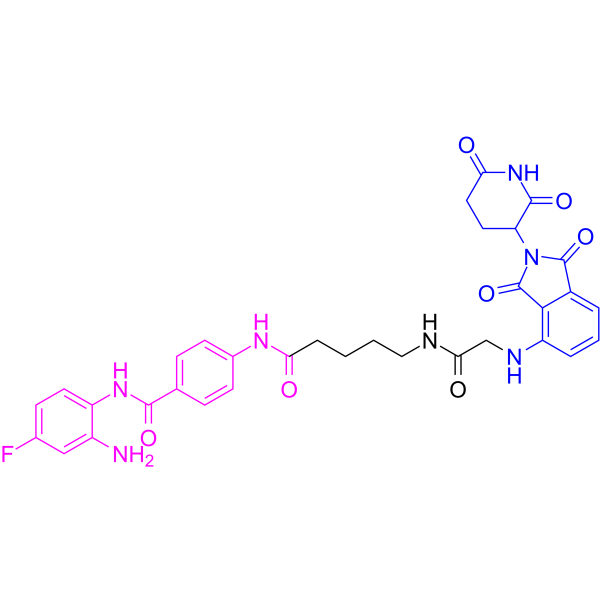
    PROTACs HDAC Inflammation/Immunology
    HD-TAC7 is a potent PROTAC HDAC degrader with IC50 values of 3.6 μM, 4.2 μM and 1.1 μM for HDAC1, HDAC2 and HDAC3, respectively. HD-TAC7 can decreases NF-κB p65 in RAW 264.7 macrophages. HD-TAC7 can be used for the research of inflammatory diseases like asthma and chronic obstructive pulmonary disease (COPD) .
    HD-TAC7
  • HY-14653

    TAC-101; Am 555S

    RAR/RXR Apoptosis Cancer
    Amsilarotene (TAC-101; Am 555S), an orally active synthetic retinoid, has selective affinity for retinoic acid receptor α (RAR-α) binding with Ki of 2.4, 400 nM for RAR-α and RAR-β. Amsilarotene induces the apoptotic of human gastric cancer, hepatocellular carcinoma and ovarian carcinoma cells. Amsilarotene can be used for the research of cancer .
    Amsilarotene
  • HY-139643A
    CXCR7 antagonist-1 hydrochloride
    2 Publications Verification

    CXCR Adrenergic Receptor Inflammation/Immunology Cancer
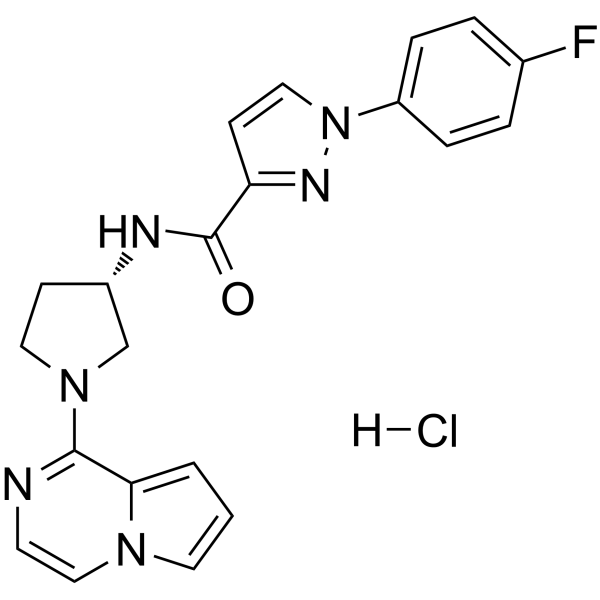
    CXCR7 antagonist-1 hydrochloride is a CXCR7 antagonist that inhibits the binding of the SDF-1 chemokine (also known as the CXCL12 chemokine) or I-TAC (also known as CXCL11) to the chemokine receptor CXCR7. CXCR7 antagonist-1 hydrochloride is useful in preventing tumor cell proliferation, tumor formation, inflammatory diseases, and many other diseases .
    CXCR7 antagonist-1 hydrochloride
  • HY-101460

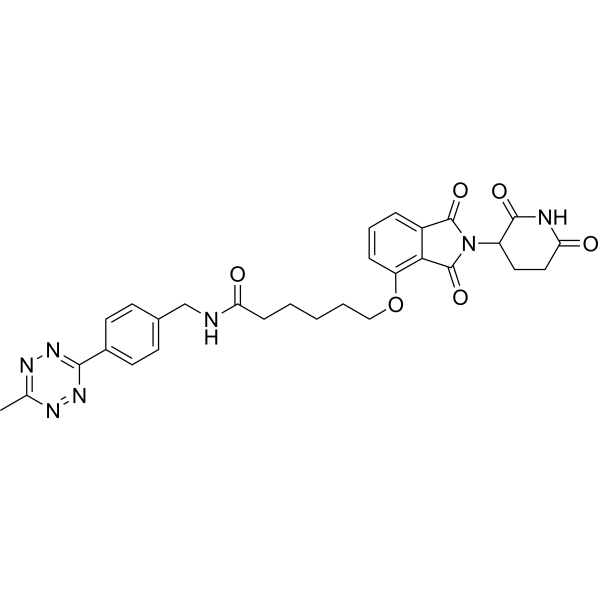
    E3 Ligase Ligand-Linker Conjugates Drug Derivative Cancer
    Tz-Thalidomide is a tetrazine-tagged Thalidomide (HY-14658), an E3 ligase ligand. Tz-Thalidomide self-assembles with TCO-labeled target protein inhibitors, forming a CLIP-TAC (targeted protein degradation chimera) via click chemistry. This chimera recruits the E3 ubiquitin ligase CRBN to the target protein, thereby inducing ubiquitination and subsequent degradation of the target protein. When used in combination with JQ1-TCO (HY-148864), Tz-Thalidomide induces concentration-dependent degradation of BRD4 in cells. When combined with ERK-targeting protein inhibitors, Tz-Thalidomide induces degradation of ERK1/2 in cells. Tz-Thalidomide can be used in cancer-related research .
    Tz-Thalidomide
  • HY-P990086

    RG-6292; RO-7296682

    Interleukin Related Cancer
    Vopikitug is an IgG1-kappa, anti-IL2RA (interleukin 2 receptor alpha subunit, IL-2RA, TAC, p55, CD25) homo sapiens monoclonal antibody. Vopikitug shows antineoplastic activity .
    Vopikitug
  • HY-175412

    Dodecylmercapto-S-(poly(tris(hydroxymethyl)acrylamidomethane); H12-TAC

    Biochemical Assay Reagents Others
    DDTAC (H12-TAC) is a detergent that can extract and solubilize membrane proteins. DDTAC has a thio dodecanoyl chain linked to a polar group made of Tris polyalcoholic moieties and can be utilized in extracting yeast ATP synthase from mitochondrial membranes .
    DDTAC
  • HY-RS25124

    Small Interfering RNA (siRNA) Others

    Tac1 Rat Pre-designed siRNA Set A contains three designed siRNAs for Tac1 gene (Rat), as well as a negative control, a positive control, and a FAM-labeled negative control.

    Tac1 Rat Pre-designed siRNA Set A
    Tac1 Rat Pre-designed siRNA Set A
  • HY-141599

    ADCT 301

    Antibody-Drug Conjugates (ADCs) Interleukin Related Cancer
    Camidanlumab tesirine (ADCT 301) is an ADC comprising HuMax-TAC, a human IgG1 mAb directed against human CD25, stochastically conjugated through a dipeptide cleavable linker to a pyrrolobenzodiazepine (PBD) dimer warhead. Camidanlumab tesirine has a drug–antibody ratio (DAR) of 2.3. Camidanlumab tesirine binds human CD25 with picomolar affinity. Camidanlumab tesirine has highly potent and selective cytotoxicity against a panel of CD25-expressing human lymphoma cell lines .
    Camidanlumab tesirine
  • HY-RS14138

    Small Interfering RNA (siRNA) Others

    TAC4 Human Pre-designed siRNA Set A contains three designed siRNAs for TAC4 gene (Human), as well as a negative control, a positive control, and a FAM-labeled negative control.

    TAC4 Human Pre-designed siRNA Set A
    TAC4 Human Pre-designed siRNA Set A
  • HY-RS14137

    Small Interfering RNA (siRNA) Others

    TAC3 Human Pre-designed siRNA Set A contains three designed siRNAs for TAC3 gene (Human), as well as a negative control, a positive control, and a FAM-labeled negative control.

    TAC3 Human Pre-designed siRNA Set A
    TAC3 Human Pre-designed siRNA Set A
  • HY-RS14136

    Small Interfering RNA (siRNA) Others

    TAC1 Human Pre-designed siRNA Set A contains three designed siRNAs for TAC1 gene (Human), as well as a negative control, a positive control, and a FAM-labeled negative control.

    TAC1 Human Pre-designed siRNA Set A
    TAC1 Human Pre-designed siRNA Set A
  • HY-RS26852

    Small Interfering RNA (siRNA) Others

    Tac3 Rat Pre-designed siRNA Set A contains three designed siRNAs for Tac3 gene (Rat), as well as a negative control, a positive control, and a FAM-labeled negative control.

    Tac3 Rat Pre-designed siRNA Set A
    Tac3 Rat Pre-designed siRNA Set A
  • HY-RS18639

    Small Interfering RNA (siRNA) Others

    Tac1 Mouse Pre-designed siRNA Set A contains three designed siRNAs for Tac1 gene (Mouse), as well as a negative control, a positive control, and a FAM-labeled negative control.

    Tac1 Mouse Pre-designed siRNA Set A
    Tac1 Mouse Pre-designed siRNA Set A
  • HY-P10544

    Interleukin Related Others
    Humanized anti-tac (HAT) binding peptide is a peptide that can specifically bind to the Fc region of HAT. HAT is a humanized monoclonal antibody against the low affinity p55 subunit of the interleukin IL-2 receptor. Humanized anti-tac (HAT) binding peptide can be used to develop affinity chromatography media to purify specific monoclonal antibodies .
    Humanized anti-tac (HAT) binding peptide
  • HY-21713

    DNA/RNA Synthesis Phosphoramidites Others
    DMT-2'O-Methyl-rC(tac) Phosphoramidite is a phosphoramidite that can be used in the synthesis of oligonucleotides.
    DMT-2'O-Methyl-rC(tac) phosphoramidite
  • HY-163859

    Histone Demethylase Cardiovascular Disease
    LSD1-IN-33 (7d), an orally active LSD1 inhibitor with an IC50 of 4.51 nM, alleviates Ang II-induced NRCFs activation in vitro and reducing pathological myocardial remodeling in TAC-induced cardiac remodeling and heart failure in vivo .
    LSD1-IN-33
  • HY-180376

    Neurokinin Receptor Inflammation/Immunology
    TAC 363 is a selective tachykinin NK-2 receptor antagonist. TAC 363 shows a rightward shift in the contractile response curve induced by Neurokinin A (HY-P0197) with a pA2 of 9.82. TAC 363 has a weak antagonistic effect on NK-1 receptors. TAC 363 can inhibit Neurokinin A-induced bronchoconstriction in guinea pigs with an ED50 of 0.3 mg/kg. TAC 363 can be used for the research of bronchial asthma .
    TAC 363
  • HY-182213

    DNA/RNA Synthesis Phosphoramidites Others
    TAC Trimer phosphoramidite is a phosphoramidite that can be used in the synthesis of oligonucleotides.
    TAC Trimer phosphoramidite
  • HY-182958

    Hsp-targeting Chimeras Epigenetic Reader Domain HSP Cancer
    Hsp70TAC BRD4 Degrader-1 is a PROTAC degrader targeting BRD4, with a KD value of 0.22 μM. Hsp70TAC BRD4 Degrader-1 forms a ternary complex with Hsp70 (KD: 5.13 μM), and specifically and efficiently degrades intracellular BRD4 via the ubiquitin-proteasome pathway. Hsp70TAC BRD4 Degrader-1 exhibits potent anti-tumor proliferative activity. Hsp70TAC BRD4 Degrader-1 can be used in studies related to triple-negative breast cancer and glioblastoma multiforme. (Pink: BRD4 ligand (HY-78695); Blue: HSP70 ligand (HY-182979); Black: linker (HY-B0236)) .
    Hsp70TAC BRD4 Degrader-1
  • HY-182959

    Hsp-targeting Chimeras LYTACs PD-1/PD-L1 HSP Cancer
    Hsp70TAC PD-1 Degrader-2 is a PD-L1 Hsp70TAC (Hsp70-targeting Chimeras) degrader with Kd values of 0.36 μM. Hsp70TAC PD-1 Degrader-2 forms a ternary complex with Hsp70 and PD-L1 to drive PD-L1 degradation. Hsp70TAC PD-1 Degrader-2 induces degradation of mature membrane-bound PD-L1 in an Hsp70-dependent manner and via caveolin-mediated endocytosis and lysosomal trafficking. Hsp70TAC PD-1 Degrader-2 accumulates preferentially in tumor cells with elevated Hsp70 expression for tumor-selective PD-L1 degradation. Hsp70TAC PD-1 Degrader-2 can be used for the research of cancer, such as breast invasive carcinoma, glioblastoma multiforme, diffuse large b-cell lymphoma . (Pink: PD-1/PD-L1 ligand (HY-19745A); Blue: Hsp70 ligand (HY-182979); Black: linker (HY-182982)).
    Hsp70TAC PD-1 Degrader-2
  • HY-181498

    Proteasome Cap Targeting Chimeras FKBP Proteasome Others
    RAFKBP12 is a FKBP12 CAP-TAC (proteinase complex cap-targeted chimera) degrader. RAFKBP12 demonstrates the feasibility of the CAP-TAC strategy, which enables proteasome-dependent degradation of FKBP12 that is independent of E3 ubiquitin ligases and protein ubiquitination .
    RAFKBP12
  • HY-182979

    HSP Cancer
    HSP70 ligand 2 is an HSP70 ligand and serves as a ligand for PROTAC target proteins. HSP70 ligand 2 can be used to synthesize Hsp70TAC BRD4 Degrader-1 (HY-182958) and Hsp70TAC PD-1 Degrader-2 (HY-182959) .
    HSP70 ligand 2
  • HY-181523

    Proteasome Cancer
    RA183 is a proteasome ligand that can be used to synthesize CAP-TAC (proteasome cap-targeted chimera), such as RAPRMT5 (HY-181521) .
    RA183
  • HY-181524

    Proteasome Cancer
    RA183-CO-C6-NHCO-NH-Boc is a proteasome ligand-linker conjugate that can be used for the synthesis of CAP-TAC (proteasome cap-targeted chimera), such as RAPRMT5 (HY-181521) .
    RA183-CO-C6-NHCO-NH-Boc
  • HY-181521

    Proteasome Cap Targeting Chimeras Histone Methyltransferase Proteasome Cancer
    RAPRMT5 is a PRMT5 CAP-TAC (proteinase complex-targeted chimeric agent) degrader. RAPRMT5 can induce PRMT5 to undergo proteasome-dependent, ubiquitin-independent degradation. RAPRMT5 can be used in the research of various cancers .
    RAPRMT5
  • HY-175413

    Biochemical Assay Reagents Others
    FTAC6 (C6F-TAC) is a lipophobic surfactant. FTAC6 does not solubilize biological membranes as a non-detergent and can substitute for detergents to keep membrane proteins soluble and improves stability after conventional solubilization. FTAC6 can be utilized in in vitro synthesis of membrane proteins .
    FTAC6
  • HY-181499

    Proteasome Cancer
    RA190-PEG1-NH2 (Compound S16), RA190 (HY-100739) derivative, is a Proteasome ligand. RA190-PEG1-NH2 can be used to synthesis FKBP12 CAP-TAC degrader RAFKBP12 (HY-181498) .
    RA190-PEG1-NH2
  • HY-P992458

    Toll-like Receptor (TLR) HBV Infection
    SBT8230 is an ASGR1-targeted TLR8 agonist and an ASGR1-TLR8 immune TAC conjugate. SBT8230 achieves liver enrichment via conjugation with an anti-ASGR1 antibody, activates myeloid cells and induces anti-HBV immune responses. SBT8230 is applicable to research on chronic hepatitis B infection. Isotype comparison: HY-P99001 .
    SBT8230
  • HY-181495

    Proteasome Cap Targeting Chimeras PROTACs Proteasome Epigenetic Reader Domain Cancer
    RAJQ14 is a BRD4 PROTAC-like CAP-TAC (Proteasome Cap Targeting Chimeras) degrader. RAJQ14 binds to 19S proteasome cap subunits RPN1, RPN10, RPN13, and USP14 to recruit target proteins to the proteasome for ubiquitination-independent, proteasome-dependent degradation. RAJQ14 can be used for the research of cancer (Pink: BRD4 Ligand (HY-181496); Blue: Proteasome Ligand (HY-128978); Black: Linker).
    RAJQ14

Inquiry Online

Your information is safe with us. * Required Fields.

Salutation


Country or Region *

Applicant Name *


Organization Name *

Department *


Email Address *


Product Name *

Cat. No.


Requested quantity *

Phone Number *


Remarks

Inquiry Online

Inquiry Information

Product Name:
Cat. No.:
Quantity:
MCE Japan Authorized Agent:

