



L-Prolylglycine

Based on 1 Customer Validation
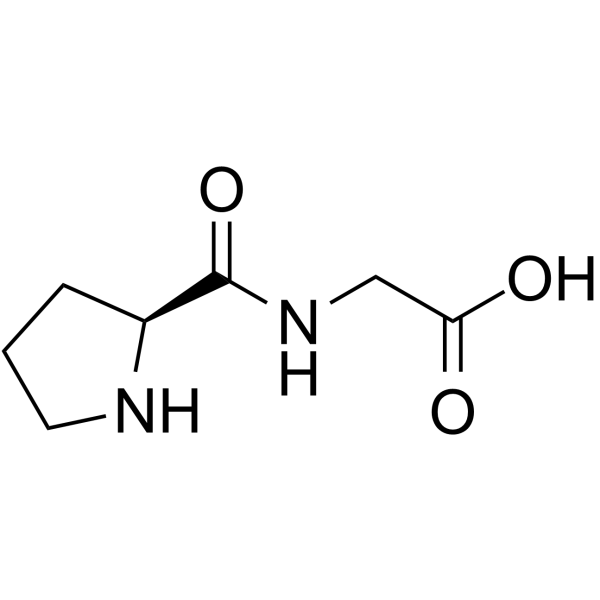
L-Prolylglycine is a proline-glycine dipeptide. L-Prolylglycine is absorbable through the jejunal and ileal mucosa. In streptozotocin (HY-13753)-induced diabetic mice, L-Prolylglycine reduces hepatic ALT activity and increases hepatic ALP activity. L-Prolylglycine prevents excessive elevation of blood glucose in diabetic mice. L-Prolylglycine is applicable to diabetes-related research.
For research use only. We do not sell to patients.
- Purity : 99.94%
- CAS No.: 2578-57-6
- Formula: C7H12N2O3
- Molecular Weight:172.18
-
Storage:Powder -20°C, 3 years , 4°C, 2 years ; In solvent -80°C, 6 months , -20°C, 1 month

To place orders, for customer services and technical support, please contact: MedChemExpress USA
Tel: 609-228-6898 E-mail: [email protected] [email protected]


-
 Biological Activity
-
Chemical Information
-
Solvent & Solubility
- Protocols
- Purity & Documentation
- References
-
 Help & FAQs




Biological Activity
Description
IC50 & Target
|
Human Endogenous Metabolite |
Cellular Effect
|
Cell Line

|
Type | Value | Description | References |
|---|---|---|---|---|
| MDCK | IC50 |
>16 mM
Compound: 60
|
Binding affinity to human PEPT1 assessed as inhibition of [14C]Gly-Sar uptake in MDCK cells
Binding affinity to human PEPT1 assessed as inhibition of [14C]Gly-Sar uptake in MDCK cells
|
[PMID: 16759105] |
In Vivo
L-Prolylglycine (20 mg/kg; i.p.; once daily for 12 consecutive days) reduces liver ALT activity and increases liver ALP activity in diabetic mice[2].
MedChemExpress (MCE) has not independently confirmed the accuracy of these methods. They are for reference only.
-
Animal Model:Wistar (male, 180-360 g body weight)[1]
-
Dosage:10 mM; 40 mM (co-infused with 10 mM glycyl-L-proline)
-
Administration:intestinal perfusion; single steady-state infusion
-
Result:Exhibited significantly slower glycine absorption rate (2.06 μmole 5 min-1·g wet wt-1) in jejunum compared to free amino acids (3.37 μmole 5 min-1·g wet wt-1, P < 0.05).
Exhibited significantly slower proline absorption rate (2.09 μmole 5 min-1·g wet wt-1) in jejunum compared to free amino acids (3.63 μmole 5 min-1·g wet wt-1, P < 0.05).
Exhibited significantly slower glycine absorption rate (1.89 μmole 5 min-1·g wet wt-1) in ileum compared to free amino acids (3.54 μmole 5 min-1·g wet wt-1, P < 0.02).
Exhibited significantly slower proline absorption rate (1.93 μmole 5 min-1·g wet wt-1) in ileum compared to free amino acids (3.46 μmole 5 min-1·g wet wt-1, P < 0.02).
Showed negligible free glycine (0.07 μmole mL-1) and proline (0.04 μmole mL-1) in jejunal luminal aspirates, with significantly higher concentrations detected in ileal aspirates (glycine: 0.28 μmole mL-1; proline: 0.23 μmole mL-1, P < 0.001 vs. jejunum).
Had a jejunal disappearance rate of 1.57 μmole 5 min-1·g wet wt-1, which was reduced to 0.88 μmole 5 min-1·g wet wt-1 (42.2% inhibition, P < 0.05) upon co-infusion with 40 mM glycyl-L-proline.
Exhibited slower disappearance rate than 10 mM glycyl-L-proline in jejunum (2.44 vs. 4.20 μmole 5 min-1·g wet wt-1, P < 0.02) and ileum (2.00 vs. 4.41 μmole 5 min-1·g wet wt-1, P < 0.001).


Chemical Information
-
CAS No. 2578-57-6
-
Appearance Solid
-
Molecular Weight 172.18
-
Formula C7H12N2O3
-
Color White to off-white
-
Sequence
Pro-Gly
-
Sequence Shortening
PG
-
Structure Classification
-
Initial Source
-
Shipping
Room temperature in continental US; may vary elsewhere.
-
Storage
Powder -20°C 3 years 4°C 2 years In solvent -80°C 6 months -20°C 1 month


Solvent & Solubility
In Vitro:
H2O : 50 mg/mL (290.39 mM; Need ultrasonic)
DMSO : < 1 mg/mL (insoluble or slightly soluble)
Please refer to the solubility information to select the appropriate solvent. Once prepared, please aliquot and store the solution to prevent product inactivation from repeated freeze-thaw cycles.
Storage method and period of stock solution: -80°C, 6 months; -20°C, 1 month. When stored at -80°C, please use it within 6 months. When stored at -20°C, please use it within 1 month.
* Note: If you choose water as the stock solution, please dilute it to the working solution, then filter and sterilize it with a 0.22 μm filter before use.
Please refer to the solubility information to select the appropriate solvent. Once prepared, please aliquot and store the solution to prevent product inactivation from repeated freeze-thaw cycles.
Storage method and period of stock solution: -80°C, 6 months; -20°C, 1 month. When stored at -80°C, please use it within 6 months. When stored at -20°C, please use it within 1 month.
* Note: If you choose water as the stock solution, please dilute it to the working solution, then filter and sterilize it with a 0.22 μm filter before use.
Concentration (start) × Volume (start) = Concentration (final) × Volume (final)
In Vivo:
For the following dissolution methods, please prepare the working solution directly:
It is recommended to prepare fresh solutions and use them promptly within a short period of time.
The percentages shown for the solvents indicate their volumetric ratio in the final prepared solution. If precipitation or phase separation occurs during preparation, heat and/or sonication can be used to aid dissolution.
Add each solvent one by one: PBS
Solubility: 100 mg/mL (580.79 mM); Clear solution; Need ultrasonic

Protocols
-
Mesenchymal stromal/stem cell osteogenic differentiation
Mesenchymal stromal/stem cells can be induced toward an osteoblast-like lineage in vitro by culture in osteogenic medium containing dexamethasone, ascorbic acid or ascorbate-2-phosphate, and β-glycerophosphate; the differentiation process is commonly evaluated by alkaline phosphatase activity, osteogenic marker expression, collagenous matrix formation, and calcium-rich matrix mineralization. The main readouts are alkaline phosphatase activity as an early osteogenic marker and Alizarin Red S staining as a calcium-deposit readout for mineralized extracellular matrix; Alizarin Red S can be inspected microscopically or extracted and measured colorimetrically at 405 nm.
-
Hepatotoxicity Study
This protocol evaluates hepatotoxicity using complementary in vivo mouse APAP acute liver injury and in vitro hepatocyte-based cytotoxicity readouts. In vivo APAP injury is assessed by serum ALT/AST, liver histology, hepatic glutathione, protein adducts, necrosis, inflammation, and regeneration-related endpoints. In vitro hepatotoxicity is assessed by loss of viability, leakage of ALT/AST/LDH, oxidative-stress markers, mitochondrial function, nuclear morphology, intracellular calcium, and high-content imaging endpoints.
-
Research Protocol for Metabolic Diseases
AMP-activated protein kinase, AMPK, is a conserved cellular energy sensor that responds to reduced cellular energy status and coordinates metabolism by increasing ATP-generating catabolic pathways while suppressing ATP-consuming anabolic processes. In metabolic disease research, the AMPK pathway is experimentally relevant because it regulates hepatic lipid synthesis, fatty acid oxidation, glucose production, skeletal-muscle glucose disposal, mTORC1-linked biosynthesis, autophagy, mitochondrial homeostasis, and whole-body energy balance. The central pathway logic is that energy stress, metformin, exercise-like stimulation, or direct AMPK activators increase AMPKα Thr172 phosphorylation and downstream substrate phosphorylation, including ACC and RAPTOR. Phosphorylation of ACC suppresses lipogenesis and supports fatty acid oxidation, whereas phosphorylation of RAPTOR suppresses mTORC1 signaling and links cellular energy status to growth and protein synthesis control. The pathway is linked


Purity & Documentation
-
Data Sheet (274 KB)
-
SDS (394 KB)
- English - EN (394 KB)
- Français - FR (394 KB)
- Deutsch - DE (394 KB)
- Norwegian - NO (394 KB)
- Español - ES (394 KB)
- Swedish - SV (394 KB)
- Italian - IT (394 KB)
- Korean - KR (394 KB)
- Portuguese - PT (394 KB)
-
Handling Instructions (2659 KB)
References
[1]. Lane AE, et al. Absorption of two proline containing peptides by rat small intestine in vivo. The Journal of physiology. 1975 Jun;248(1):143-9. [Content Brief]
[2]. Mesgari-Abbasi M, et al. Protective effects of di- and tri-peptides containing proline, glycine, and leucine on liver enzymology and histopathology of diabetic mice. Archives of physiology and biochemistry. 2022 Feb;128(1):59-68. [Content Brief]


Complete Stock Solution Preparation Table
Please refer to the solubility information to select the appropriate solvent. Once prepared, please aliquot and store the solution to prevent product inactivation from repeated freeze-thaw cycles.
Storage method and period of stock solution: -80°C, 6 months; -20°C, 1 month. When stored at -80°C, please use it within 6 months. When stored at -20°C, please use it within 1 month.
| Optional Solvent | Concentration Solvent Mass | 1 mg | 5 mg | 10 mg | 25 mg |
|---|---|---|---|---|---|
| H2O | 1 mM | 5.8079 mL | 29.0394 mL | 58.0788 mL | 145.1969 mL |
| 5 mM | 1.1616 mL | 5.8079 mL | 11.6158 mL | 29.0394 mL | |
| 10 mM | 0.5808 mL | 2.9039 mL | 5.8079 mL | 14.5197 mL | |
| 15 mM | 0.3872 mL | 1.9360 mL | 3.8719 mL | 9.6798 mL | |
| 20 mM | 0.2904 mL | 1.4520 mL | 2.9039 mL | 7.2598 mL | |
| 25 mM | 0.2323 mL | 1.1616 mL | 2.3232 mL | 5.8079 mL | |
| 30 mM | 0.1936 mL | 0.9680 mL | 1.9360 mL | 4.8399 mL | |
| 40 mM | 0.1452 mL | 0.7260 mL | 1.4520 mL | 3.6299 mL | |
| 50 mM | 0.1162 mL | 0.5808 mL | 1.1616 mL | 2.9039 mL | |
| 60 mM | 0.0968 mL | 0.4840 mL | 0.9680 mL | 2.4199 mL | |
| 80 mM | 0.0726 mL | 0.3630 mL | 0.7260 mL | 1.8150 mL | |
| 100 mM | 0.0581 mL | 0.2904 mL | 0.5808 mL | 1.4520 mL |
* Note: If you choose water as the stock solution, please dilute it to the working solution, then filter and sterilize it with a 0.22 μm filter before use.


L-Prolylglycine Related Classifications
HY-WAA0142 Related Classifications
 Powered by Bioz