



Amsilarotene

Based on 1 Customer Validation
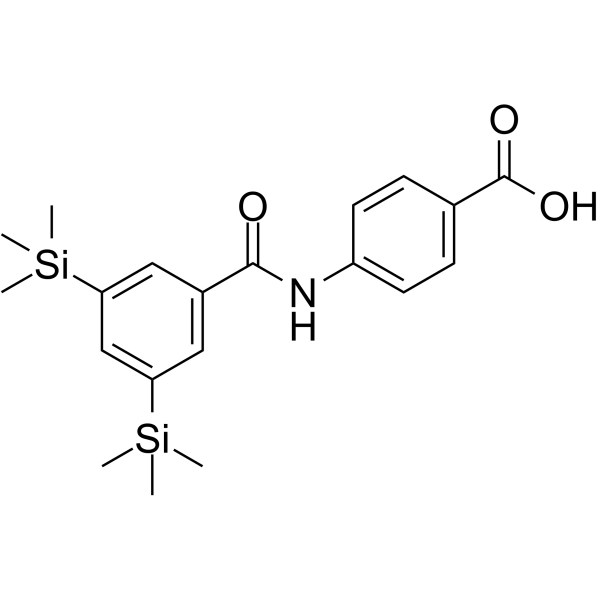
Amsilarotene (TAC-101; Am 555S), an orally active synthetic retinoid, has selective affinity for retinoic acid receptor α (RAR-α) binding with Ki of 2.4, 400 nM for RAR-α and RAR-β. Amsilarotene induces the apoptotic of human gastric cancer, hepatocellular carcinoma and ovarian carcinoma cells. Amsilarotene can be used for the research of cancer.
Nur für Forschungszwecke. Wir verkaufen nicht an Patienten.
- Reinheit : 99.67%
- CAS. Nr.: 125973-56-0
- Formel: C20H27NO3Si2
- Molecular Weight:385.60
-
Speicherung:Powder -20°C, 3 years , 4°C, 2 years ; In solvent -80°C, 6 months , -20°C, 1 month

To place orders, for customer services and technical support, please contact: MedChemExpress USA
Tel: 609-228-6898 E-mail: [email protected] [email protected]


-
 Biologische Aktivität
-
Chemical Information
-
Lösungsmittel & Löslichkeit
- Protokoll
- Reinheit & Dokumentation
- Verweise
-
 Help & FAQs


-
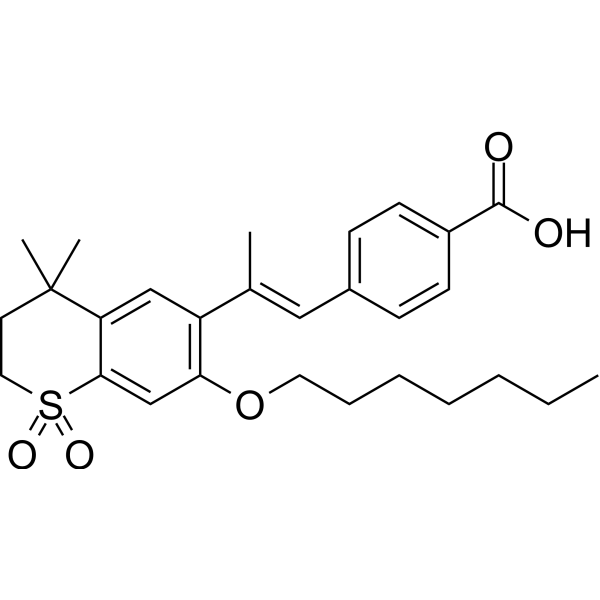
HY-116248
Ro 41-5253RARα Antagonist -
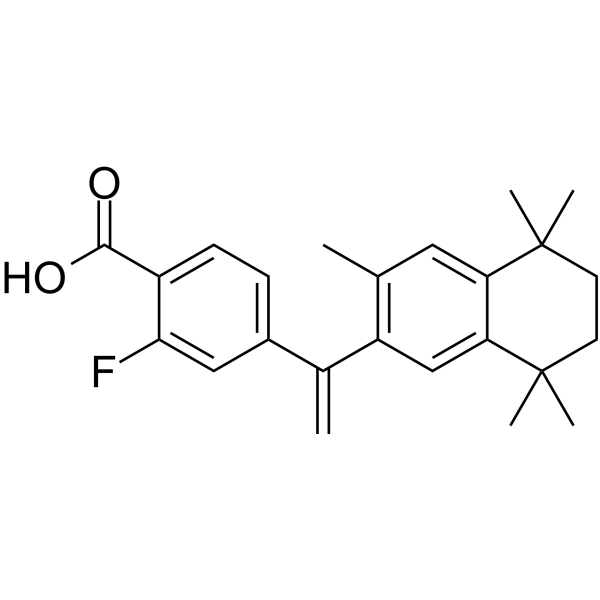
HY-108525
Fluorobexarotene -
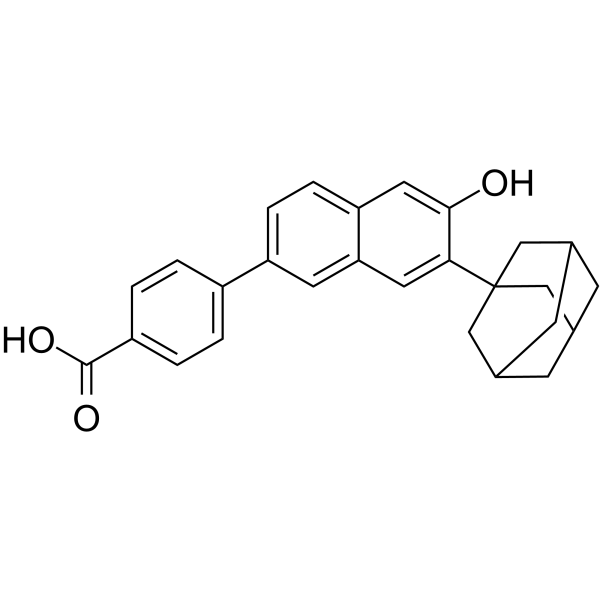
HY-108527
CD1530RARγ Agonist -
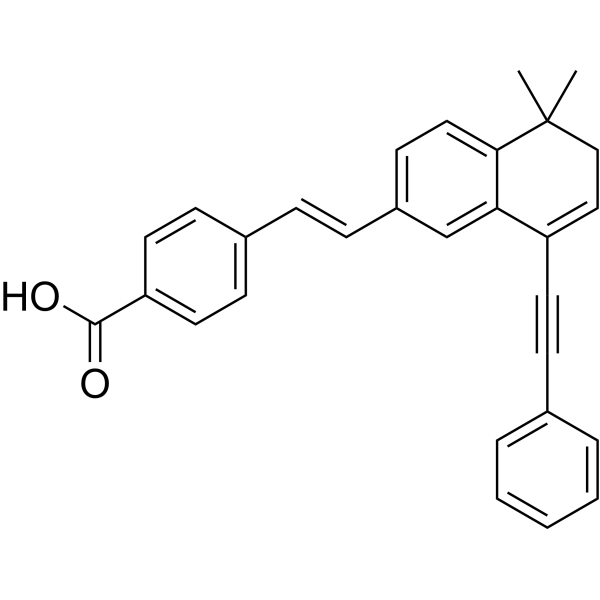
HY-108529
BMS493Inverse RAR Inhibitor -
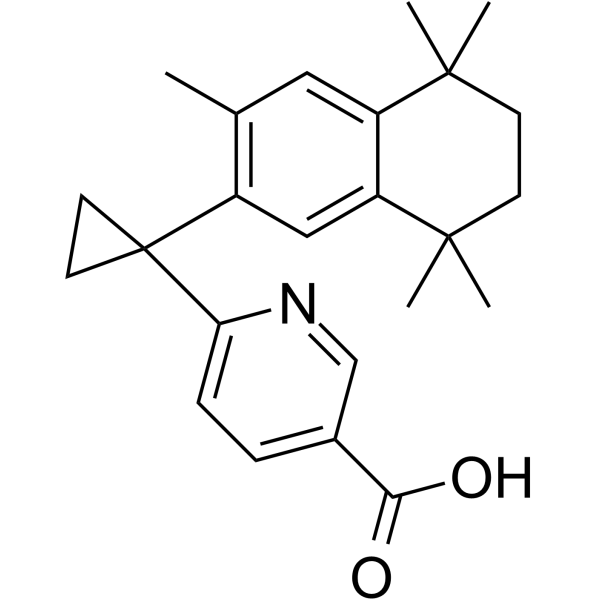
HY-15340
LG100268RXR Agonist -
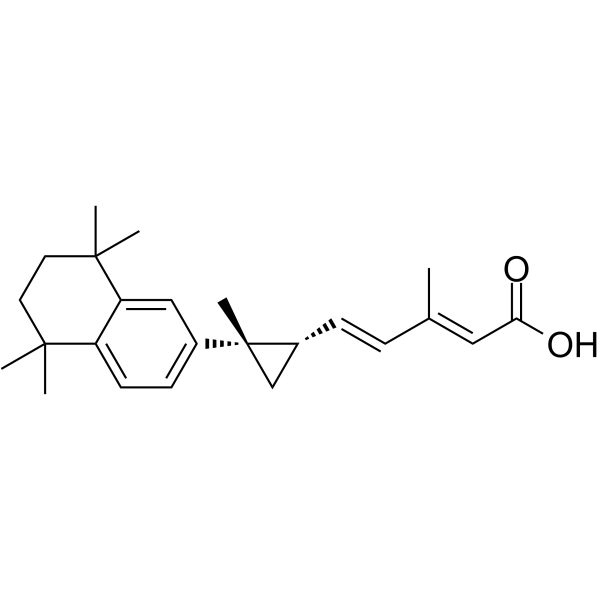
HY-13717
AGN194204Selective RXR Agonist -

HY-108527R
CD1530 (Standard)Reference Standard -

HY-114071
BMS270394Nuclear Retinoic Acid Receptor γ Inhibitor -
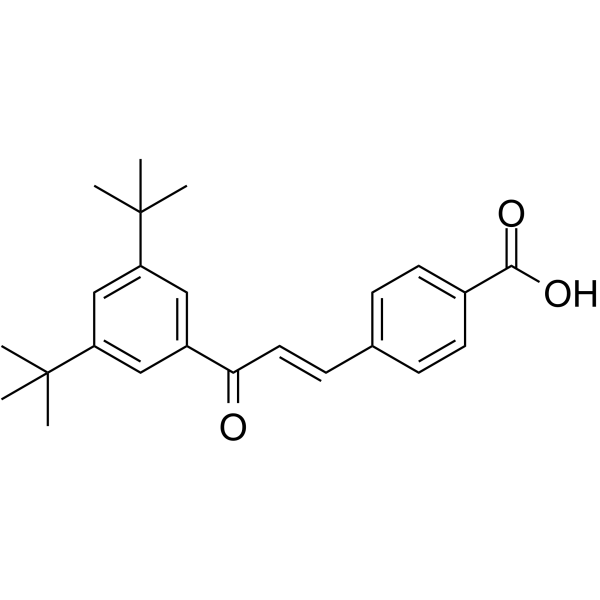
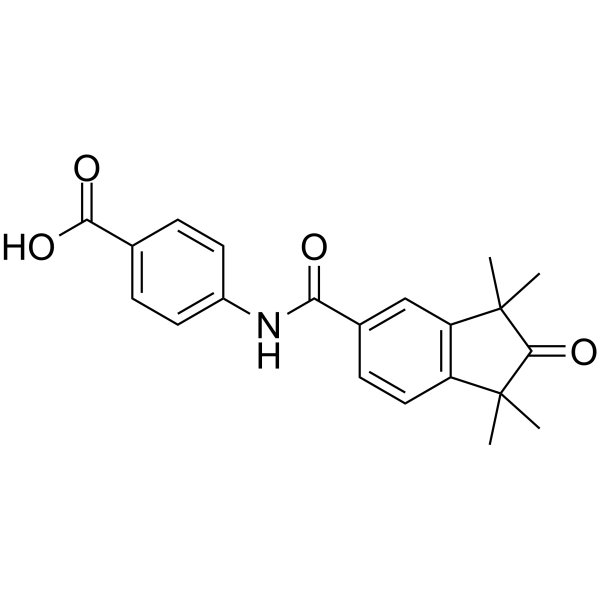
HY-107397
Ch55RAR-α/RAR-β Agonist -
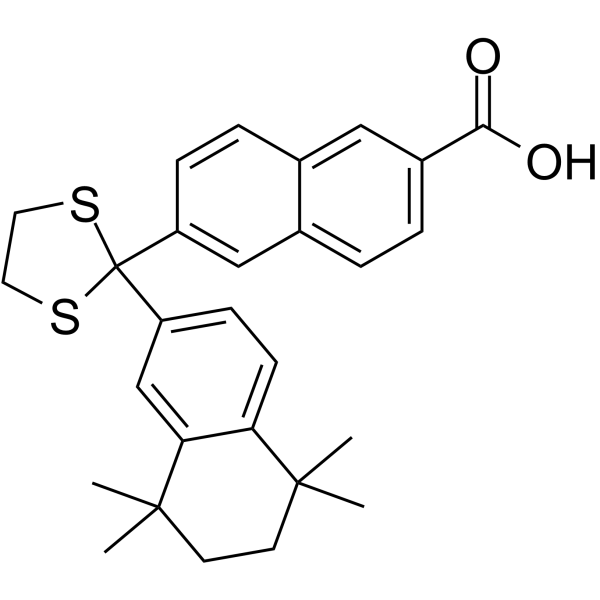
HY-107395
BMS 753RARα Agonist -
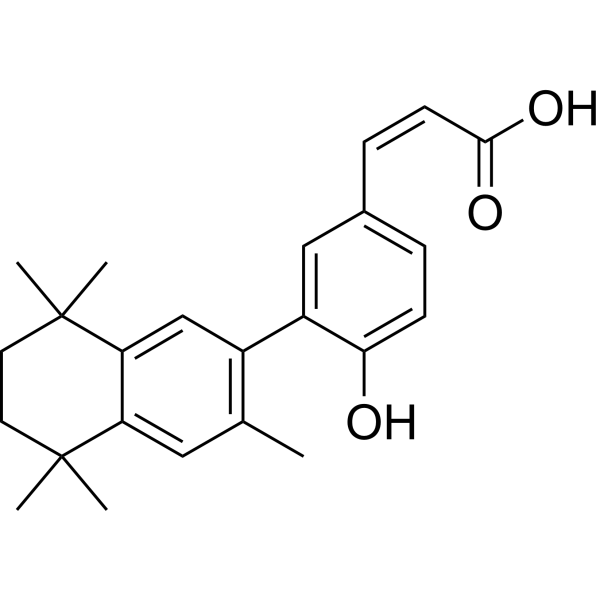
HY-108530
MM11253RARγ Antagonist -
HY-107399
CD3254RXR Agonist


Biologische Aktivität
Beschreibung
Cellular Effect
|
Cell Line

|
Type | Value | Description | References |
|---|---|---|---|---|
| HL-60 | ED50 |
9.2 x 10⁻⁹M
Compound: 19
|
Ability to induce differentiation of human promyelocytic leukemia cell line HL-60 to mature granulocytes.
Ability to induce differentiation of human promyelocytic leukemia cell line HL-60 to mature granulocytes.
|
[PMID: 2329565] |
In Vitro
Amsilarotene (0, 10, 25 μM; 24 hours) induces apoptosis of human epithelial ovarian carcinoma-derived cell lines in a concentration-dependent manner[2].
Amsilarotene (10, 20 μM; 0, 3, 6, and 9 days) inhibits the proliferation of BxPC-3 and MIAPaCa-2 cells[3].
Amsilarotene (10 μM; 48 hours) increases the proportion of sensitive BxPC-3 cells in the G1 phase[3].
Amsilarotene (10 μM; 0, 3, 6, 24, 48, 72 hours) inhibits the retinoblastoma-gene product (RB) phosphorylation in BxPC-3 cells between 24 and 72 hours[3].
MedChemExpress (MCE) has not independently confirmed the accuracy of these methods. They are for reference only. Further protocols information, click here.
-
Cell Line:RMG-I, RMG-II, RTSG, RMUG-S, RMUG-L, and KF cells
-
Concentration:0, 10, 25 μM
-
Incubation Time:24 hours
-
Result:Induced apoptosis in a concentration-dependent manner in all of the cell lines, except KF cells.
-
Cell Line:BxPC-3, MIAPaCa-2, AsPC-1 cells
-
Concentration:10 and 20 μM
-
Incubation Time:0, 3, 6, and 9 days.
-
Result:Inhibited the proliferation of BxPC-3 and MIAPaCa-2 cells, but not the proliferation of AsPC-1 cells.
-
Cell Line:Sensitive BxPC-3 cells
-
Concentration:10 μM
-
Incubation Time:48 hours
-
Result:The proportion of cells in the G1 phase increased from 43% of untreated control cells to 86%
In Vivo
MedChemExpress (MCE) has not independently confirmed the accuracy of these methods. They are for reference only.
-
Animal Model:6-week-old female BALB/c nu/nu mice with subcutaneous RMG-II tumors[2]
-
Dosage:8 mg/kg/day
-
Administration:Orally for 30 days
-
Result:The maximal tumor growth-inhibiting effect was seen on day 31 of administration, when there was a 45% reduction of relative tumor volume (RTV).
Clinical Trial
| NCT Number | Sponsor | Condition | Start Date |
Phase
|
|---|---|---|---|---|
| NCT01329991 | Plexxikon| | 2011-05 | PHASE1 |


Chemical Information
-
CAS. Nr. 125973-56-0
-
Appearance Solid
-
Molecular Weight 385.60
-
Formel C20H27NO3Si2
-
Color White to off-white
-
SMILES
C[Si](C)(C)C1=CC(C(NC2=CC=C(C(O)=O)C=C2)=O)=CC([Si](C)(C)C)=C1
-
Synonyms
TAC-101; Am 555S
-
Versand
Room temperature in continental US; may vary elsewhere.
-
Speicherung
Powder -20°C 3 years 4°C 2 years In solvent -80°C 6 months -20°C 1 month


Lösungsmittel & Löslichkeit
In Vitro:
DMSO : 100 mg/mL (259.34 mM; Need ultrasonic; Hygroscopic DMSO has a significant impact on the solubility of product, please use newly opened DMSO)
Please refer to the solubility information to select the appropriate solvent. Once prepared, please aliquot and store the solution to prevent product inactivation from repeated freeze-thaw cycles.
Storage method and period of stock solution: -80°C, 6 months; -20°C, 1 month. When stored at -80°C, please use it within 6 months. When stored at -20°C, please use it within 1 month.
Please refer to the solubility information to select the appropriate solvent. Once prepared, please aliquot and store the solution to prevent product inactivation from repeated freeze-thaw cycles.
Storage method and period of stock solution: -80°C, 6 months; -20°C, 1 month. When stored at -80°C, please use it within 6 months. When stored at -20°C, please use it within 1 month.
Konzentration (Stammlösung) × Volumen (Stammlösung) = Konzentration (Ziellösung) × Volumen (Ziellösung)
In Vivo:
Select the appropriate dissolution method based on your experimental animal and administration route.
- For the following dissolution methods, please ensure to first prepare a clear stock solution using an In Vitro approach and then sequentially add co-solvents:
- To ensure reliable experimental results, the clarified stock solution can be appropriately stored based on storage conditions. As for the working solution for In Vivo experiments, it is recommended to prepare freshly and use it on the same day.
- The percentages shown for the solvents indicate their volumetric ratio in the final prepared solution. If precipitation or phase separation occurs during preparation, heat and/or sonication can be used to aid dissolution.
Add each solvent one by one: 10% DMSO 40% PEG300 5% Tween-80 45% Saline
Solubility: ≥ 2.5 mg/mL (6.48 mM); Clear solution
This protocol yields a clear solution of ≥ 2.5 mg/mL (saturation unknown).
Taking 1 mL working solution as an example, add 100 μL DMSO stock solution (25.0 mg/mL) to 400 μL PEG300, and mix evenly; then add 50 μL Tween-80 and mix evenly; then add 450 μL Saline to adjust the volume to 1 mL.
Preparation of Saline: Dissolve 0.9 g sodium chloride in ddH₂O and dilute to 100 mL to obtain a clear Saline solution.
Add each solvent one by one: 10% DMSO 90% (20% SBE-β-CD in Saline)
Solubility: 2.5 mg/mL (6.48 mM); Suspended solution; Need ultrasonic
This protocol yields a suspended solution of 2.5 mg/mL. Suspended solution can be used for oral and intraperitoneal injection.
Taking 1 mL working solution as an example, add 100 μL DMSO stock solution (25.0 mg/mL) to 900 μL 20% SBE-β-CD in Saline, and mix evenly.
Preparation of 20% SBE-β-CD in Saline (4°C, storage for one week): 2 g SBE-β-CD powder is dissolved in 10 mL Saline, completely dissolve until clear.
In Vivo Dissolution Calculator
Please enter the basic information of animal experiments:
-
-
-
-
Recommended: Prepare an additional quantity of animals to account for potential losses during experiments.
Please enter your animal formula composition:
-
%DMSO +
Recommended: Keep the proportion of DMSO in working solution below 2% if your animal is weak.
-
%+
-
+%Tween-80 + +
-
%Saline +
The co-solvents required include: DMSO, . All of co-solvents are available by MedChemExpress (MCE). , Tween 80. All of co-solvents are available by MedChemExpress (MCE).
Working solution concentration: 0.22 mg/mL
Method for preparing stock solution: mg drug dissolved in μL DMSO. Stock solution concentration: mg/mL.
1. Take μL DMSO stock solution;
2. Add μL .
μL , mix evenly;
3. Then add μL Tween 80, mix evenly;
4. Then add μL
Please ensure that the stock solution in the first step is dissolved to a clear state, and add co-solvents in sequence. You can use ultrasonic heating (ultrasonic cleaner, recommended frequency 20-40 kHz), vortexing, etc. to assist dissolution.

Protokoll
-
Apoptosis
Apoptosis, also called programmed cell death, is generally characterized by distinct morphological characteristics.
-
Apoptosis Solutions
Apoptosis is a regulated, generally non-lytic cell-death pathway that removes unwanted, damaged, infected, or abnormal cells through coordinated morphological changes, caspase activation, DNA fragmentation, and membrane remodeling. The intrinsic apoptosis pathway is controlled mainly by mitochondrial outer membrane permeabilization, BCL-2 family proteins, cytochrome c release, apoptosome formation, caspase-9 activation, and downstream executioner caspase-3/7 activation. The extrinsic apoptosis pathway is initiated by death receptors such as Fas, TNFR, and TRAIL receptors, which recruit adaptor proteins and activate caspase-8 before engaging executioner caspases or mitochondrial amplification through BID cleavage. Apoptosis is linked to many phenotypes, including cancer cell killing, tissue homeostasis, immune regulation, neurodegeneration, infection response, and treatment-induced cytotoxicity; unresolved questions include how apoptosis interacts with necroptosis, pyroptosis, ferroptos
-
Liver Cancer Modeling
Liver cancer can be classified into primary liver cancer and secondary liver cancer. Secondary liver cancer is the metastatic liver cancer. Primary liver cancer includes hepatocellular carcinoma (HCC), intrahepatic cholangiocarcinoma (ICC) and fibrolamellar HCC, of which HCC is the most common form, accounting for approximately 90% of primary liver cancers[1]. HCC mouse models include chemical agent-induced models, transplanted tumor models, and genetic engineered models.


Reinheit & Dokumentation
-
Data Sheet (277 KB)
-
SDS (393 KB)
- English - EN (393 KB)
- Français - FR (393 KB)
- Deutsch - DE (393 KB)
- Norwegian - NO (393 KB)
- Español - ES (393 KB)
- Swedish - SV (393 KB)
- Italian - IT (393 KB)
- Korean - KR (393 KB)
- Portuguese - PT (393 KB)
-
Handling Instructions (2659 KB)
Verweise
[1]. Sun SY, et al. Differential effects of synthetic nuclear retinoid receptor-selective retinoids on the growth of human non-small cell lung carcinoma cells. Cancer Res. 1997 Nov 1;57(21):4931-9. [Content Brief]
[2]. Suzuki N, et al. A novel retinoid, 4-[3,5-bis (trimethylsilyl) benzamido] benzoic acid (TAC-101), induces apoptosis of human ovarian carcinoma cells and shows potential as a new antitumor agent for clear cell adenocarcinoma. Gynecol Oncol. 2004 Sep;94(3):643-9. [Content Brief]
[3]. Fujimoto K, et al. Induction of cell-cycle arrest and apoptosis by a novel retinobenzoic-acid derivative, TAC-101, in human pancreatic-cancer cells. Int J Cancer. 1999 May 17;81(4):637-44. [Content Brief]


Complete Stock Solution Preparation Table
Please refer to the solubility information to select the appropriate solvent. Once prepared, please aliquot and store the solution to prevent product inactivation from repeated freeze-thaw cycles.
Storage method and period of stock solution: -80°C, 6 months; -20°C, 1 month. When stored at -80°C, please use it within 6 months. When stored at -20°C, please use it within 1 month.
| Optional Solvent | Concentration Solvent Mass | 1 mg | 5 mg | 10 mg | 25 mg |
|---|---|---|---|---|---|
| DMSO | 1 mM | 2.5934 mL | 12.9668 mL | 25.9336 mL | 64.8340 mL |
| 5 mM | 0.5187 mL | 2.5934 mL | 5.1867 mL | 12.9668 mL | |
| 10 mM | 0.2593 mL | 1.2967 mL | 2.5934 mL | 6.4834 mL | |
| 15 mM | 0.1729 mL | 0.8645 mL | 1.7289 mL | 4.3223 mL | |
| 20 mM | 0.1297 mL | 0.6483 mL | 1.2967 mL | 3.2417 mL | |
| 25 mM | 0.1037 mL | 0.5187 mL | 1.0373 mL | 2.5934 mL | |
| 30 mM | 0.0864 mL | 0.4322 mL | 0.8645 mL | 2.1611 mL | |
| 40 mM | 0.0648 mL | 0.3242 mL | 0.6483 mL | 1.6209 mL | |
| 50 mM | 0.0519 mL | 0.2593 mL | 0.5187 mL | 1.2967 mL | |
| 60 mM | 0.0432 mL | 0.2161 mL | 0.4322 mL | 1.0806 mL | |
| 80 mM | 0.0324 mL | 0.1621 mL | 0.3242 mL | 0.8104 mL | |
| 100 mM | 0.0259 mL | 0.1297 mL | 0.2593 mL | 0.6483 mL |


Amsilarotene Related Classifications
HY-14653 Related Classifications
 Powered by Bioz