

1. Search Result
Search Result
Pathways Recommended: Stem Cell/Wnt Cell Cycle/DNA Damage
Results for "

TT cells

" in MedChemExpress (MCE) Product Catalog:

14

Inhibitors & Agonists

3

Peptides

2

Inhibitory Antibodies

Cat. No. Product Name Target Research Areas Chemical Structure
  • HY-P99160

    hMN14

    Transmembrane Glycoprotein Cancer
    Labetuzumab is a humanised anti-carcinoembryonic antigen (CEA) monoclonal antibody that inhibits tumour growth and sensitises human medullary thyroid cancer xenografts to Dacarbazine chemotherapy .
    Labetuzumab
  • HY-156483
    TT-012
    2 Publications Verification

    Microphthalmia Associated Transcription Factor (MITF) Cancer
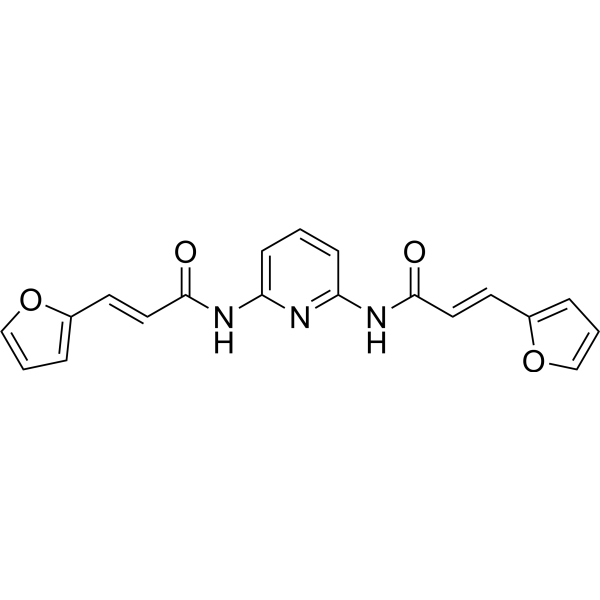
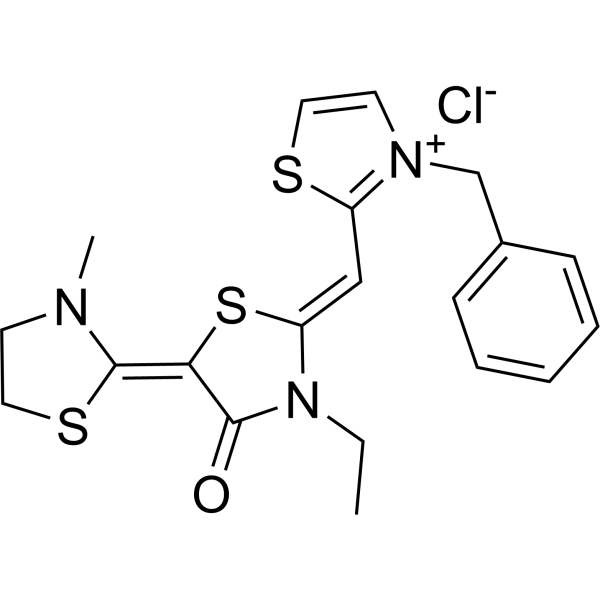
    TT-012 is a MITF inhibitor with a human MITF IC50 of 13.1 nM and a human MITF Kd value of 15.5 nM. TT-012 reduces mRNA levels of MITF downstream genes linked to melanosome biogenesis, cell survival, and proliferation, and upregulates cell cycle-inhibiting genes. TT-012 can be used for the research of melanoma[1][2][3].
    TT-012
  • HY-P99459
    Baminercept
    2 Publications Verification

    BG 9924; TT-47

    TNF Receptor CXCR Inflammation/Immunology
    Baminercept (BG 9924; TT-47) is an Ig fusion protein targeting the lymphotoxin β receptor (LTβR). Baminercept effectively regulates subsets of circulating immune cells by inhibiting LIGHT, LT-α1β2 and their receptors. Baminercept also increases blood lymphocyte counts and reduces plasma CXCL13 levels. Baminercept carries a high risk of hepatotoxicity. Baminercept can be used in research on rheumatoid arthritis and primary Sjögren's syndrome .
    Baminercept
  • HY-124611

    HSP Apoptosis Cancer
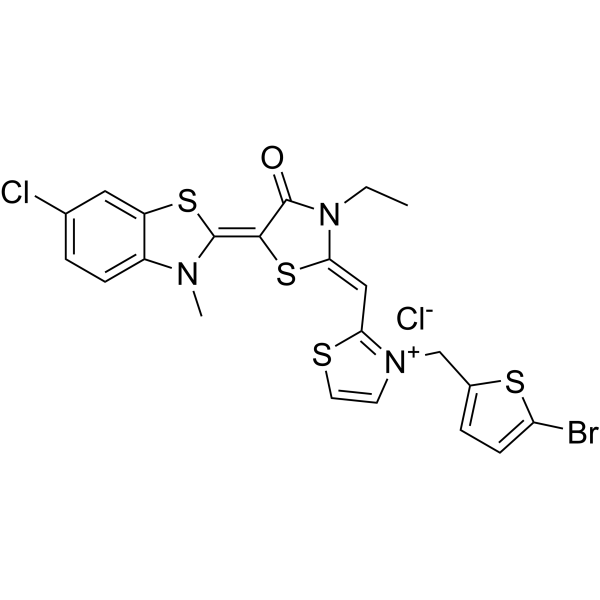
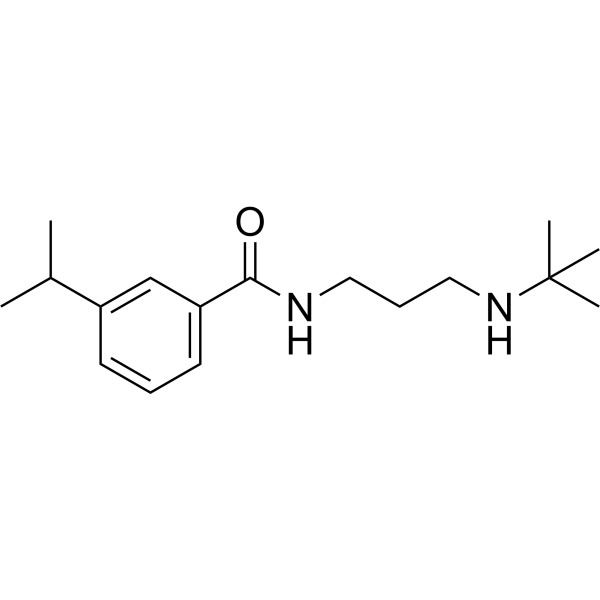
    JG-231 is an allosteric inhibitor of heat shock protein 70 (Hsp70). JG - 231 inhibits the binding of Hsp70 and BAG family proteins, including inhibition of Hsp70 and BAG1 with a Ki of 0.11 μM. JG-231 inhibits proliferation of tumor cells and induces apoptosis. JG-231 has antitumor activity .
    JG-231
  • HY-145601

    TT 00420

    Aurora Kinase FGFR VEGFR Cancer
    Tinengotinib (TT00420) is an orally active, spectrally selective small molecule kinase inhibitor targeting Aurora A/B (IC50=1.2-3.3 nM), FGFR1/2/3 (IC50=1.5-3.5 nM), VEGFRs, JAK1/2 and CSF1R. Tinengotinib blocks Aurora kinase-mediated cell cycle progression (inducing G2/M arrest), inhibits FGFR/JNK-JUN signaling pathway and activates MEK/ERK-dependent apoptotic pathway. Tinengotinib has the activity of anti-tumor proliferation, inducing apoptosis, inhibiting angiogenesis and regulating tumor microenvironment. Tinengotinib can be used in the study of triple-negative breast cancer (TNBC), gallbladder cancer and tumor immune microenvironment .
    Tinengotinib
  • HY-156135

    MDM-2/p53 RET DNA/RNA Synthesis Apoptosis Caspase Endocrinology Cancer
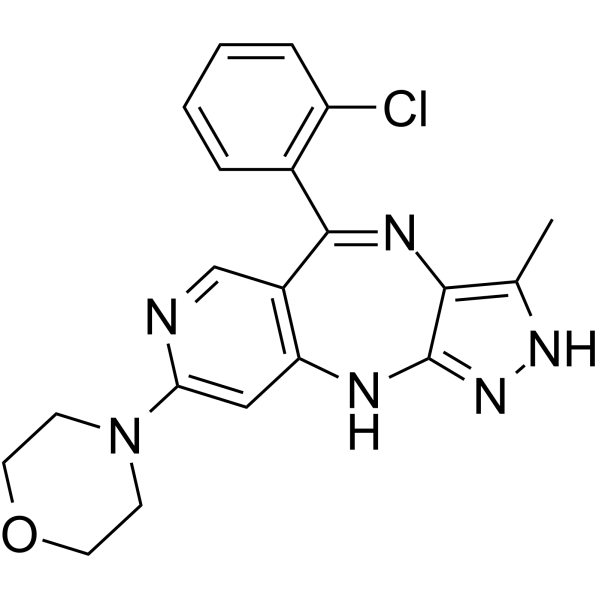
    NSC194598 is a p53 DNA-binding inhibitor with an IC50 value of 180 nM. NSC194598 inhibits p53 DNA binding and induction of target genesn when p53 is stabilized and activated by irradiation or chemotherapy. NSC194598 can interfere with transcriptional activation of mutated rearranged during transfection (RET) gene, induce apoptosis and G0/G1 phase arrest. NSC194598 can be used for the researches of acute radiation toxicity and medullary thyroid carcinoma .
    NSC194598
  • HY-101246

    RET Cancer
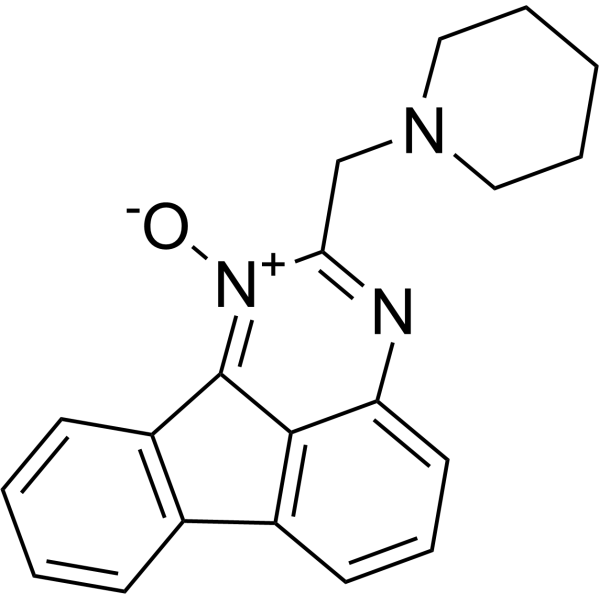
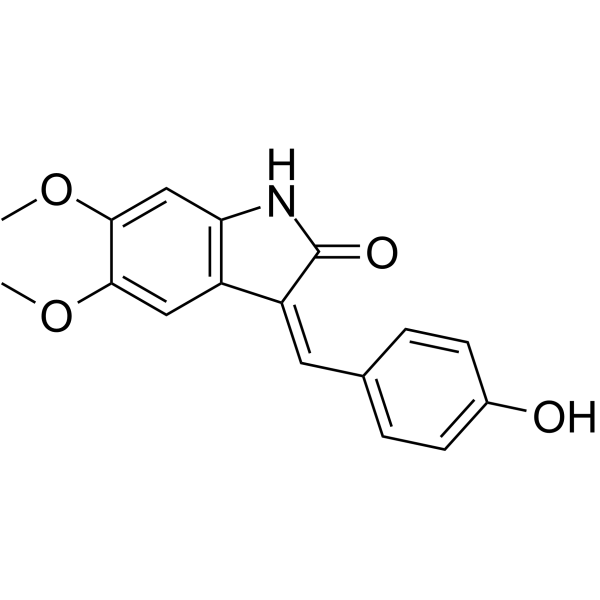
    RPI-1 is a specific, orally available 2-indolinone Ret tyrosine kinase inhibitor. RPI-1 inhibits proliferation, Ret tyrosine phosphorylation, Ret protein expression, and the activation of PLCgamma, ERKs and AKT in human medullary thyroid carcinoma TT cells. Antitumor activity .
    RPI-1
  • HY-105172

    CAP-232; TLN-232

    Somatostatin Receptor Inflammation/Immunology Cancer
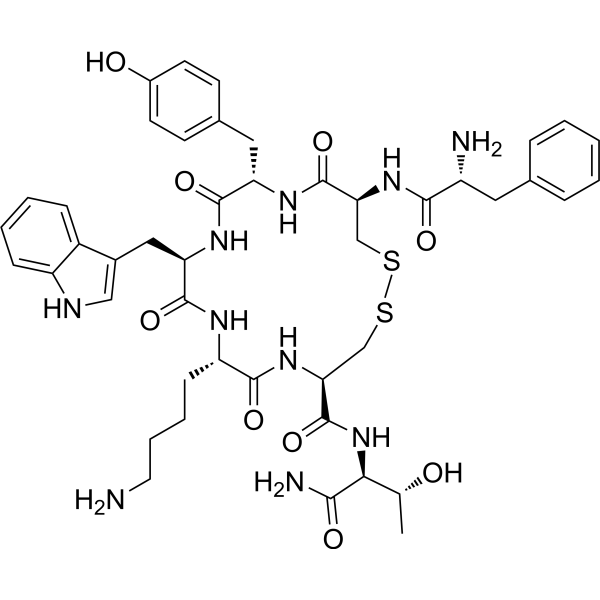
    TT-232 (CAP-232), a somatostatin derivative, is a peptide SSTR1/SSTR4 agonist. TT-232 inhibits cancer cell proliferation and induces apoptosis. TT-232 is also a broad-spectrum anti-inflammatory and analgesic agent .
    TT-232
  • HY-P5425A

    Transmembrane Glycoprotein Cancer
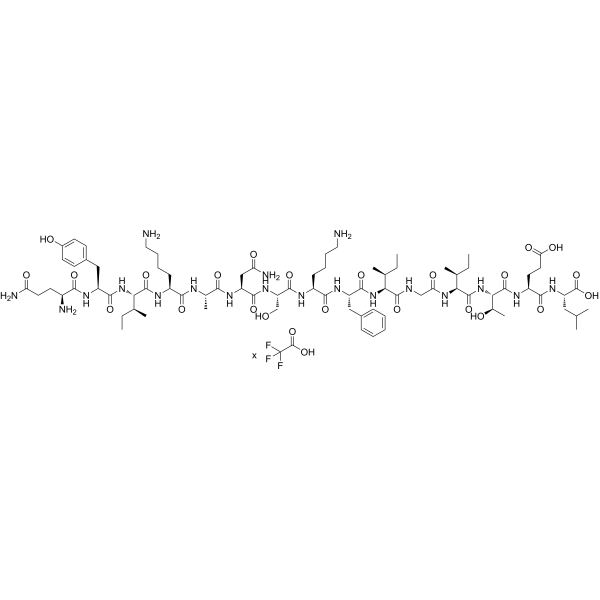
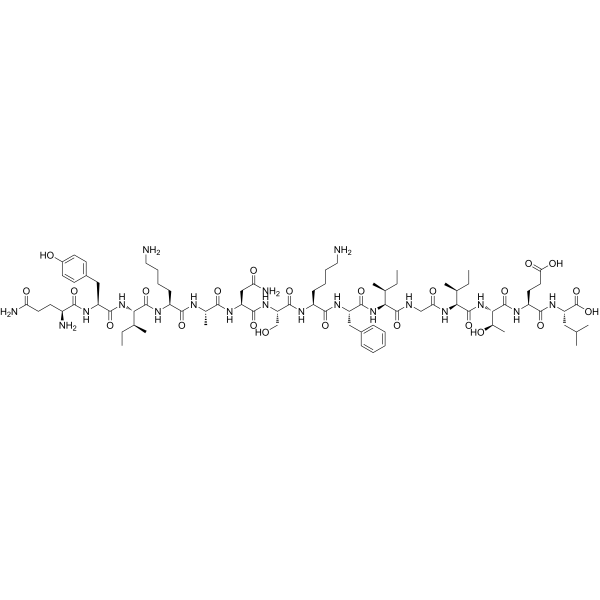
    Tetanus Toxin (830–844) TFA is a biological active peptide. (tetanus toxin-derived peptide TT830–844 CD4 + T-cell epitope. This promiscuous CD4 + T-cell epitope can bind to a wide range of HLA–DRB molecules and is thus expected to activate CD4 + T-cell responses in a large part of the human population) .
    Tetanus Toxin (830–844) TFA
  • HY-156906

    MDM-2/p53 Cancer
    UNC3474 is a small molecule ligand, binding with 53BP1. UNC3474 binds the aromatic methyl-lysine binding cage of 53BP1 TT, with a dissociation constant (Kd) of 1.0 ± 0.3 μM. UNC3474 inhibits the recruitment of 53BP1 to DSBs by stabilizing a pre-existing autoinhibited state of 53BP1 in cells .
    UNC3474
  • HY-105172A

    CAP-232 TFA; TLN-232 TFA

    Somatostatin Receptor Apoptosis Cancer
    TT-232 TFA (CAP-232 TFA) is an analogue of somatostatin. TT-232 TFA can induce apoptosis of pancreatic tumor cell lines, inhibit tyrosine kinase activity and stimulate tyrosine phosphatase activity in colon tumor cell lines. TT-232 TFA inhibits the proliferation of tumor cells, induces apoptosis of tumor cells and shows strong anti-tumor effects. TT-232 TFA can be used in the development of anti-tumor drugs and the study of apoptosis mechanism .
    TT-232 TFA
  • HY-183931

    RET VEGFR Trk Receptor c-Fms Cancer
    NPA101.3 is an orally active RET receptor tyrosine kinase and VEGFR2 inhibitor (RET IC50 = 0.001 μM, RET V804M IC50 = 0.008 μM, VEGFR2 IC50 = 0.003 μM). NPA101.3 inhibits purified TRKA (IC50 = 32 nM) and CSF1R (IC50 = 46 nM). NPA101.3 completely suppresses tumor formation in RET /C634Y-transformed cells and also attenuates tumor formation in HRAS /G12V-transformed cells. NPA101.3 can be used in the research of RET-driven cancers .
    NPA101.3
  • HY-183729

    Ligands for Target Protein for PROTAC RET Endocrinology Cancer
    RET-IN-34 (Compound EV1) is a RET inhibitor with an IC50 of 0.89 nM. RET-IN-34 serves as a target protein ligand for PROTAC synthesis (Ligand for Target Protein for PROTAC). RET-IN-34 is applicable for the synthesis of PROTAC RET Degrader 2 (HY-183783). RET-IN-34 exhibits anticancer activity against medullary thyroid carcinoma. RET-IN-34 can be used in studies related to medullary thyroid carcinoma .
    RET-IN-34
  • HY-183783

    PROTACs RET STAT ERK Apoptosis Endocrinology Cancer
    PROTAC RET Degrader 2 is a RET degrader with a target IC50 of 0.36 nM. PROTAC RET Degrader 2 is mainly composed of RET-IN-34 (HY-183729) and Thalidomide (HY-14658). PROTAC RET Degrader 2 mediates RET degradation via the ubiquitin-proteasome system. PROTAC RET Degrader 2 induces apoptosis, inhibits colony-forming ability, and exhibits antiproliferative activity in cancer cells. PROTAC RET Degrader 2 suppresses tumor growth in xenograft models. PROTAC RET Degrader 2 can be used in research related to medullary thyroid carcinoma, papillary thyroid carcinoma, and RET fusion-positive lung adenocarcinoma .
    PROTAC RET Degrader 2

Inquiry Online

Your information is safe with us. * Required Fields.

Salutation


Country or Region *

Applicant Name *


Organization Name *

Department *


Email Address *


Product Name *

Cat. No.


Requested quantity *

Phone Number *


Remarks

Inquiry Online

Inquiry Information

Product Name:
Cat. No.:
Quantity:
MCE Japan Authorized Agent:

