
1. Search Result
Search Result
Results for "

Ternary Complex Formation

" in MedChemExpress (MCE) Product Catalog:

38

Inhibitors & Agonists

1

Peptides

Cat. No. Product Name Target Research Areas Chemical Structure
  • HY-153356

    Molecular Glues Apoptosis Inflammation/Immunology Cancer
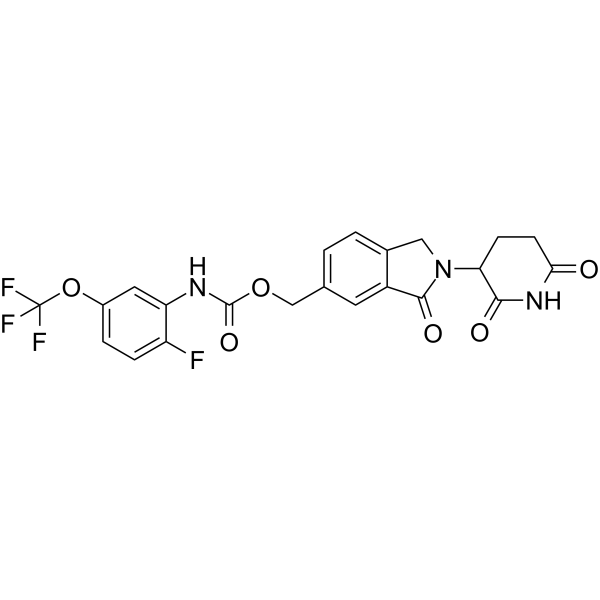
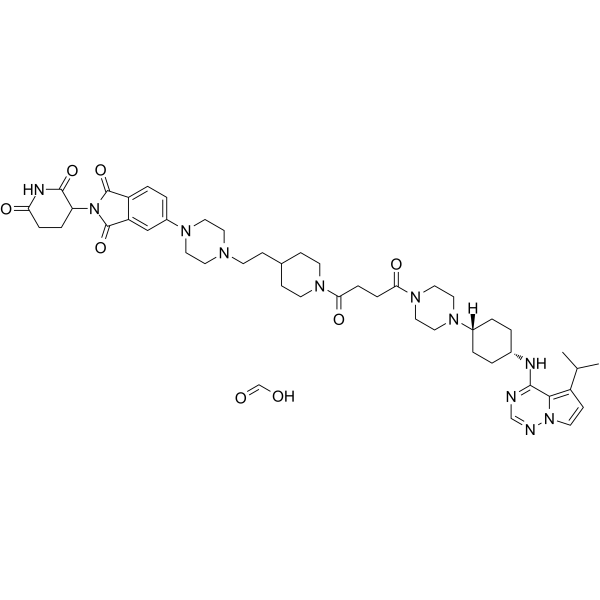
    MRT-2359 is an orally active and selective GSPT1 molecular glue degrader, with a DC50 of 5 nM. MRT-2359 induces CRBN/GSPT1 ternary complex formation to drive CRBN- and degron-dependent proteasomal GSPT1 degradation, with selectivity for wild-type GSPT1 over the GSPT1G575N mutant. MRT-2359 disrupts protein translation, induces ribosome stalling, downregulates MYC family proteins and their transcriptional output, reduces proliferation, and induces apoptosis in cancer cells. MRT-2359 can be used for the research of non-small cell lung cancer (NSCLC), small cell lung cancer (SCLC), neuroendocrine lung cancer, high grade neuroendocrine cancers, diffuse large B-cell lymphoma, prostate cancer, and MYC-driven solid tumors .
    MRT-2359
  • HY-158409

    Molecular Glues Ras Cyclophilin PERK Cancer
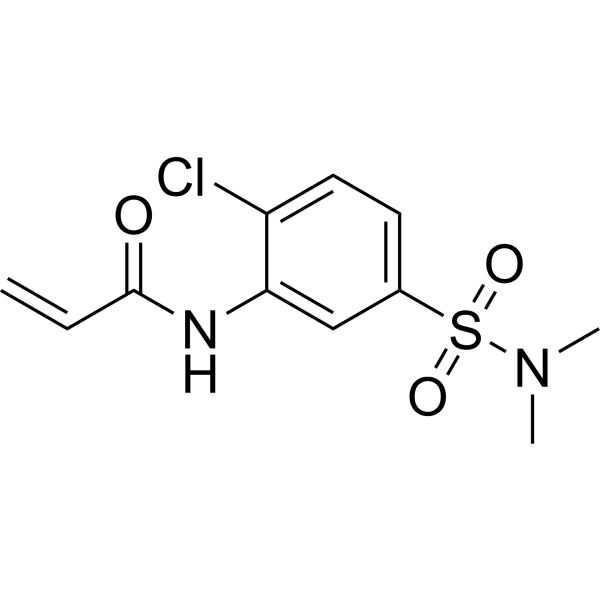
    Pan-rasin-2 (compound 6A) is an orally active molecular glues that targets RAS. Pan-RAS-IN-2 inhibits pERK (IC50 in AsPC-1 cells: 0.3 nM). Pan-rasin-2 has significant inhibitory activity on cell proliferation of RAS mutant cell lines. Pan-rasin-2 can form ternary complexes with cyclophilin A (CYPA) and RAS (ON) proteins and the formation of ternary complexes can block the binding of RAF downstream of RAS, which has anti-tumor (such as colorectal cancer, pancreatic cancer) effects .
    Pan-RAS-IN-2
  • HY-159607

    PROTACs SWI/SNF Complex Cancer
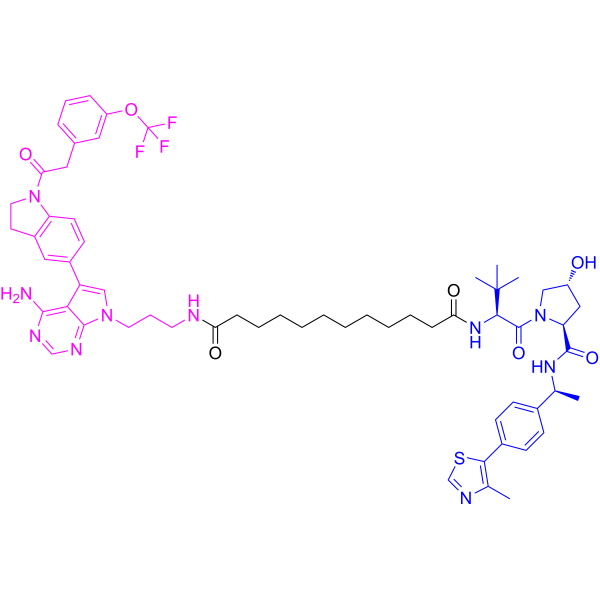
    PRT3789 is a selective SMARCA2 PROTAC degrader (DC50 in HeLa cell: 0.72 nM for SMARCA2, 14 nM for SMARCA4). PRT3789 forms a stable ternary complex with Von Hippel-Lindau (VHL) E3 ligase, induces polyubiquitination at SMARCA2-specific lysine residues, and drives proteasome-dependent SMARCA2 degradation. PRT3789 disrupts SWI/SNF chromatin remodeling complex integrity, induces dissociation of specific subunits, suppresses oncogenic gene expression, reduces chromatin accessibility, and upregulates antigen processing/presentation-related gene expression. PRT3789 induces synthetic lethality, inhibits proliferation and colony formation, and drives tumor growth inhibition and regression in SMARCA4-deficient contexts. PRT3789 can be used for the research of SMARCA4-mutated solid tumors, non-small cell lung cancer, endometrial cancer, colorectal cancer, bladder cancer, esophageal cancer, ovarian cancer, and gastric cancer .
    PRT3789
  • HY-176521

    Androgen Receptor Epigenetic Reader Domain Cancer
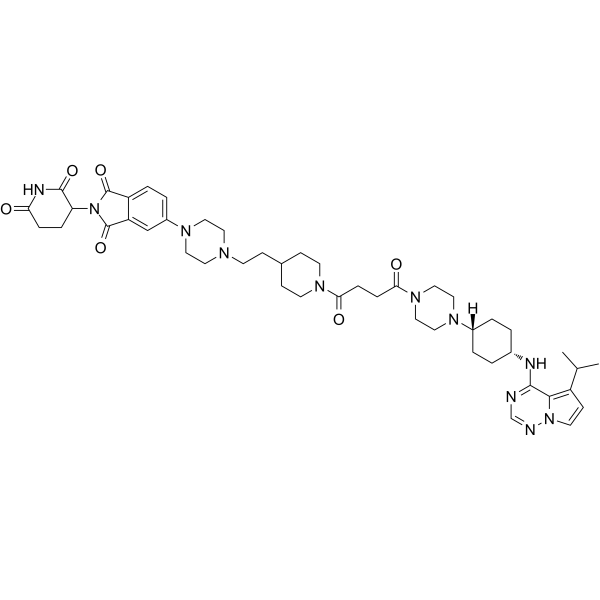
    AR/BRD4 RIPTAC-1 (Compound II-5) is an orally active Regulatory-inducible proximity-targeting chimera (RIPTAC). AR/BRD4 RIPTAC-1 induces the formation of a stable ternary complex between the androgen receptor (AR) and BRD4, thereby blocking BRD4 function. AR/BRD4 RIPTAC-1 inhibits the growth and proliferation of tumor cells. AR/BRD4 RIPTAC-1 holds promise for use in prostate cancer research .
    AR/BRD4 RIPTAC-1
  • HY-175452

    Molecular Glues Ligands for E3 Ligase NEKs Inflammation/Immunology
    MRT-3486 is a molecular glue degrader.MRT-3486 induces ternary complex formation between CRBN and predicted β-hairpin G-loop proteins.MRT-3486 is selected from an internal compound library for proximity-ligation experiments .
    MRT-3486
  • HY-P5133
    Synstatin (92-119)
    1 Publications Verification

    SSTN92-119

    Integrin Cancer
    Synstatin (92-119) is an inhibitor of αvβ3/αvβ5 integrins and IGF1R with anti-angiogenic, anti-proliferative, antioxidant and anti-tumor activities. Synstatin (92-119) competitively blocks the capture of αvβ3/αvβ5 integrins and IGF1R by syndecan-1, disrupts the formation of the syndecan-1 : integrin : IGF1R ternary complex, inhibits integrin activation and talin-mediated signaling pathways, and blocks VEGF-induced angiogenesis. Synstatin (92-119) is applicable to research related to cancer and hepatocellular carcinoma .
    Synstatin (92-119)
  • HY-49444

    NF-κB Molecular Glues E1/E2/E3 Enzyme Cancer
    EN450 is a cysteine-reactive covalent molecular glue degrader targeting NF-κB. EN450 interacts with allosteric C111 in the E2 ubiquitin ligase UBE2D. EN450 induces the ternary complex formation between UBE2D and NFKB1. EN450 exerts its anti-proliferative effects through a Cullin E3 ligase and proteasome-dependent mechanism .
    EN450
  • HY-152134

    HDAC PROTACs Cancer
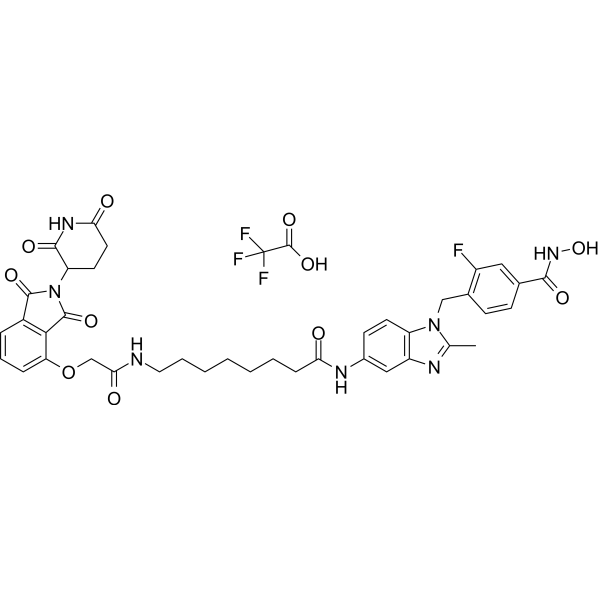
    HDAC6 degrader-3 is a potent and selective HDAC6 degrader via ternary complex formation and the ubiquitin-proteasome pathway with a DC50 value of 19.4 nM. HDAC6 degrader-3 has IC50s of 4.54 nM and 0.647 μM for HDAC6 and HDAC1, respectively. HDAC6 degrader-3 causes strong hyperacetylation of α-tubulin .
    HDAC6 degrader-3
  • HY-173351

    Epigenetic Reader Domain Cancer
    G-6599 is a monovalent molecular glue-like degrader of SMARCA2/SMARCA4. G-6599 covalently binds to a specific cysteine residue of the E3 ligase FBXO22 in a biotransformation-independent manner, promotes the formation of a ternary complex with SMARCA2/A4, and achieves efficient and specific degradation of the two proteins via the ubiquitin-proteasome pathway. G-6599 is applicable to the research of androgen-dependent prostate cancer and mutant non-small cell lung cancer .
    G-6599
  • HY-153598

    PROTACs RIP kinase Apoptosis Inflammation/Immunology Cancer
    LD4172 is a selective RIPK1 PROTAC degrader with a Ki of 4.8 nM. LD4172 induces RIPK1 protein degradation via ternary complex formation with RIPK1 and VHL E3 ligase, driving ubiquitination and proteasomal breakdown. LD4172 abrogates TNF-induced classical NF-κB signaling in TRAF2-deficient cells, impairing IκBα phosphorylation and degradation, and reducing IL-8 production. LD4172 induces apoptosis and immunogenic cell death in tumor cells, enhances tumor-infiltrating lymphocyte responses, and sensitizes tumors to anti-PD1 therapy. LD4172 acts as a chemical probe for investigating RIPK1 scaffolding functions. LD4172 can be used for the research of melanoma, colon cancer .
    LD4172
  • HY-173679

    PROTACs PARP Interleukin Related STAT Integrin HSV VSV Infection Cancer
    RBN012811 is a highly selective PROTAC-based PARP14 degrader. RBN012811 forms a ternary complex with cereblon by binding to the NAD + site of PARP14, and mediates the specific degradation of PARP14 via the ubiquitin-proteasome pathway (IC50=10 nM). RBN012811 effectively depletes endogenous PARP14 in various cell lines and primary human macrophages, thereby downregulating IL-10 production and IFN-β mRNA levels, increasing phosphorylated STAT1 levels to enhance inflammatory signaling, and inhibiting interferon-induced ADPr condensate formation. RBN012811 also modulates viral replication, exhibiting increased HSV1 replication while reducing VSV replication. RBN012811 has important application value in research related to cancer and viral infections .
    RBN012811
  • HY-172770

    Molecular Glues Cancer
    KMG-1068 (Compound 4a), a molecular glue, is a GSPT1/2 degrader. KMG-1068 effectively induces the CRBN-dependent degradation of GSPT1/2 by binding to the IMiD binding site on CRBN, facilitating the formation of a ternary complex with GSPT1/2. KMG-1068 is promising for research of cancers .
    KMG-1068
  • HY-163168

    CFT-4531

    PROTACs DNA/RNA Synthesis Cancer
    aTAG 4531 (CFT-4531) is a potent, selective, and onmechanism tool degrader of MTH1 with DC50 value of 0.28 nM and Ki value of 1.8 nM. The degradation activity is due to the intricate formation of the ternary complex between the MTH1 aTAG, CRBN E3 ligase, and aTAG tool degrader. Red: MTH1 aTAG inhibitor (HY-134725), Blue: CRBN ligand (HY-126457), Black: linker (HY-108374) .
    aTAG 4531
  • HY-178497

    PROTACs Ras p38 MAPK TNF Receptor Inflammation/Immunology Cancer
    ZJK-807 is a highly effective and selective PROTAC degrader targeting KRASG12D (DC50 = 79.5 nM in AsPC-1 cells). ZJK-807 shows minimal impact on wild-type KRAS or other mutants (G12C/S/V, G13D), inducing mutant-specific cytotoxicity. ZJK-807 suppresses RAS/MAPK signaling and uniquely modulates TNF signaling and eukaryotic ribosome biogenesis. ZJK-807 can be used for the study of KRAS-driven pancreatic cancer. Yellow: KRASG12D ligand (HY-W087383); Green: E3 ligase CRBN ligand (HY-178507); Black: Linker (HY-178506) .
    ZJK-807
  • HY-162536

    Molecular Glues Cyclophilin Ras Cancer
    Pan-RAS-IN-5 (compound 7A) is a molecular glues that can form a ternary complex with the proteins cyclophilin A (CYPA) and RAS (ON). The formation of the ternary complex can block the binding of RAS downstream of RAF and has anti-tumor effects .
    Pan-RAS-IN-5
  • HY-163639

    Molecular Glues Epigenetic Reader Domain E1/E2/E3 Enzyme Cancer
    BRD4 degrader-2 (Compound JP-2-197) is a covalent monovalent molecular glue BRD4degrader that induces a ternary complex formation between BRD4 and RNF126. BRD4 degrader-2 targets RNF126 (E3 ligase) and degrades both the long and short isoforms of BRD4 in cells .
    BRD4 degrader-2
  • HY-W854844B

    Molecular Glues E1/E2/E3 Enzyme Cancer
    JP-2-196 hydrochloride is a covalent molecular glue degrader targeting RNF126. JP-2-196 hydrochloride induces the formation of a ternary complex between RNF126 and target proteins (e.g., BRD4, AR-V7), promoting their ubiquitination and proteasomal degradation. JP-2-196 hydrochloride is promising for research of cancers (e.g., prostate cancer, leukemia) .
    JP-2-196 hydrochloride
  • HY-173274

    Molecular Glues Cancer
    CB039 is a selective a molecular glue degrader that targets RBM39 (RNA-binding protein 39). CB039 promotes the formation of a ternary complex between RBM39 and the E3 ubiquitin ligase CUL4-DCAF15, leading to proteasomal degradation of RBM39. CB039 is promising for research of cancers with RBM39 dependency, such as acute myeloid leukemia (AML) and ovarian cancer .
    CB039
  • HY-178321

    Molecular Glues Histone Methyltransferase Cancer
    UNC10088 is a molecular glue targeting NSD2. UNC10088 mediates the formation of a stable ternary complex between SCFFBXO22 and the NSD2 PWWP1 domain. UNC10088 promotes ubiquitination of the SCFFBXO22-dependent NSD2 PWWP1 domain through reversible covalent bonding with the C326 region of FBXO22. UNC10088 could be used in cancer research .
    UNC10088
  • HY-176521A

    Androgen Receptor Epigenetic Reader Domain Cancer
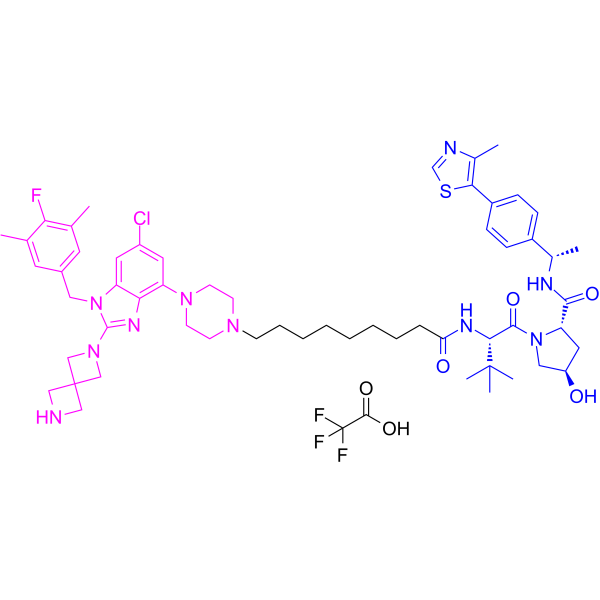
    AR/BRD4 RIPTAC-1 (Compound II-5) TFA is an orally active Regulatory-inducible proximity-targeting chimera (RIPTAC). AR/BRD4 RIPTAC-1 TFA induces the formation of a stable ternary complex between the androgen receptor (AR) and BRD4, thereby blocking BRD4 function. AR/BRD4 RIPTAC-1 TFA inhibits the growth and proliferation of tumor cells. AR/BRD4 RIPTAC-1 TFA holds promise for use in prostate cancer research .
    AR/BRD4 RIPTAC-1 TFA
  • HY-178510

    PROTACs Epigenetic Reader Domain Cancer
    JQ1-S(GlcNAc)Cq is a sugar-coated BRD4 PROTAC degrader. JQ1-S(GlcNAc)Cq can inhibit the formation of the ternary complex between CRBN and BRD4(BD1/BD2). JQ1-S(GlcNAc)Cq can be used for the research of cancer . (Structure Note: Pink: BRD4 ligand (HY-78695); Blue: CRBN ligand (HY-178514); Black: linker (HY-W105727); BRD4 ligand-Linker: (HY-178519))
    JQ1-S(GlcNAc)Cq
  • HY-179424

    PROTACs HIF/HIF Prolyl-Hydroxylase p38 MAPK Akt PI3K MEK Apoptosis Cancer
    PROTAC HIF-1α degrader-2 is a highly efficient and selective PROTAC degrader targeting HIF-1α. PROTAC HIF-1α degrader-2 promotes HIF-1α degradation via the ubiquitin-proteasome pathway by facilitating the formation of a HIF-1α/VHL ternary complex. PROTAC HIF-1α degrader-2 inhibits HeLa cell proliferation, migration, and colony formation, and induces apoptosis. PROTAC HIF-1α degrader-2 reduces p-MEK and p-AKT expression in the MAPK and PI3K/AKT pathways. PROTAC HIF-1α degrader-2 can be used for the study of cervical cancer .
    PROTAC HIF-1α degrader-2
  • HY-170820

    Molecular Glues Bcl-2 Family CDK EGFR HSP Androgen Receptor c-Myc Cancer
    XYD049 is a CRBN-based molecular glue degrader targeting GSPT1, with a DC50 of 19 nM. XYD049 mediates the formation of a ternary complex between CRBN and GSPT1, thereby triggering CRBN- and proteasome-dependent degradation of GSPT1. By degrading GSPT1, XYD049 downregulates castration-resistant prostate cancer (CRPC)-related oncogenes, including BCL2, CDK2, E2F3, EGFR, HSP90B1, TMPRSS2, AR, AR-V7, PSA and c-Myc. XYD049 inhibits cancer cell growth and suppresses tumor growth in mice. XYD049 can be used for research on castration-resistant prostate cancer. XYD049 consists of a linker (black part) NH2-C5-NH-Boc (HY-W004710), a CRBN-based E3 ligase ligand (blue part) Thalidomide 4-fluoride (HY-41547), and a target protein ligand (red part) GSPT1 ligand-1 (HY-170821), among which the E3 ligase ligand plus linker forms the conjugate E3 Ligase Ligand-linker Conjugate 158 (HY-170822) .
    XYD049
  • HY-168646

    Ligands for E3 Ligase Molecular Glues Cancer
    SJ46411-Br is one of CRL2 KLHDC2 targeting Ligands for E3 Ligase. SJ46411-Br can bind to KLHDC2 to form a complex to promote cooperative homologous selective ternary complex formation. SJ46411-Br can be coupled to BET ligand JQ1 (HY-13030) through PROTAC linker to synthesize corresponding PROTACs .
    SJ46411-Br
  • HY-161841

    FGFR Cancer
    Antitumor agent-177 (compound 57), a non-steroidal NSC12 derivative, shows potent FGF2 binding affinity with a Kd of 24 μM by SPR. Antitumor agent-177 significantly inhibits the formation of HSPG/FGF2/FGFR1 ternary complexes. Antitumor agent-177 inhibits FGFR activation and exerts a potent anti-tumor activity on multiple myeloma (MM) cell lines in vitro and in vivo .
    Antitumor agent-177
  • HY-186126

    CDK Cancer
    CDK2 modulator 1 is a CDK2 modulator with an EC50 < 100 nM and an Emax > 100% of positive control in a TR-FRET proximity assay. CDK2 modulator 1 induces ternary complex formation with CDK2/CCNE1 and CRBN. CDK2 modulator 1 can be used for the research of cancer .
    CDK2 modulator 1
  • HY-183755

    Molecular Glues Cancer
    YSA64 is an orally active RBM39-targeting molecular glue. YSA64 promotes degradation via formation of a DCAF15/DDB1 ternary complex, dependent on Cullin-RING E3 ligase and proteasome activity. YSA64 can be used for the research of acute myeloid leukemia and Ewing sarcoma .
    YSA64
  • HY-183718

    PROTACs Anaplastic lymphoma kinase (ALK) Neurological Disease Cancer
    M4K3250 is a selective ALK2 PROTAC degrader with a pDC50 of 7.9. M4K3250 induces the formation of a ternary complex between ALK2 and the E3 ubiquitin ligase CRBN, thereby causing ALK2 degradation and inhibiting ALK2 activity. M4K3250 exhibits cytotoxicity in glioblastoma cells. M4K3250 can be used in studies related to glioblastoma .
    M4K3250
  • HY-183833

    Autophagy Infection
    Autophagy-IN-9 is a ATG5 inhibitor with an IC50 of 21.29 μM against ATG5-TECAIR. Autophagy-IN-9 blocks the binding of ATG5 to the hot-spot amino acid residues of TECAIR protein, disrupts the assembly of ATG5-related ternary complexes, inhibits autophagosome formation, and thereby downregulates cellular autophagy levels. Autophagy-IN-9 can be used in autophagy-related research, such as studies on infection .
    Autophagy-IN-9
  • HY-206870

    Interleukin Related STAT Inflammation/Immunology
    BP79 is a potent TSLP receptor inhibitor. BP79 disrupts TSLP-mediated ternary complex formation, blocks TSLPR-IL7Rα co-localization, binds and stabilizes TSLPR, and inhibits phosphorylated STAT3/6. BP79 suppresses immune cell infiltration, secretion of IL-13, IL-4. BP79 can be used for the research of inflammation diseases, such as atopic dermatitis, allergic asthma, and allergic rhinitis .
    BP79
  • HY-181756

    PROTACs Epigenetic Reader Domain Cancer
    LGF308 is a PROTAC degrader of BRD4 that exhibits selective cytotoxicity toward cancer cells over normal cells. LGF308 mediates the formation of a ternary complex between BRD4 and DCAF11 to achieve BRD4 degradation. LGF308 induces tumor cell apoptosis by upregulating apoptosis-related proteins. LGF308 inhibits tumor cell proliferation and migration in breast cancer and triple-negative breast cancer cell lines. LGF308 can be used for the research of breast cancer .
    LGF308
  • HY-183115

    Molecular Glues Cancer
    TNG961 is a selective and orally active CRBN-mediated HBS1L molecular glue degrader. TNG961 induces formation of an HBS1L-TNG961-CRBN ternary complex, leading to potent degradation of HBS1L and secondary destabilization of its binding partner PELO. TNG961 can reduce HBS1L protein levels, thereby disrupting the PELO region involved in ribosome rescue. TNG961 can be used for the study of FOCAD-deficient cancers, such as pancreatic cancer .
    TNG961
  • HY-183077

    Epigenetic Reader Domain Molecular Glues Cancer
    BRD4 degrader-7 (Compound ZZ1) is a CTLH-dependent BRD4 degrader and c-Glue with a DC50 of 489 nM. BRD4 degrader-7 converts to a sulfinic acid derivative inside cells, interacts with the basic pocket of YPEL5, mediates the bridging of BRD4 BD1 to the YPEL5 subunit of the CTLH E3 ubiquitin ligase, and thereby promotes the formation of a ternary complex. BRD4 degrader-7 can be used in research on Ewing's sarcoma and leukemia .
    BRD4 degrader-7
  • HY-181568

    PROTACs Aurora Kinase DNA/RNA Synthesis Apoptosis Neurological Disease Cancer
    PROTAC Aurora A Degrader-1 (Compound 280) is a blood-brain barrier-permeable selective Aurora A PROTAC degrader, with DC50 values of 1 nM and 2 nM in LAN5 and SMS-SAN cells, respectively. PROTAC Aurora A Degrader-1 induces the formation of a ternary complex between AURKA and CRBN, degrades AURKA, reduces MYCN levels, induces DNA damage and apoptosis, exerts antiproliferative activity in cancer cells, and regulates the immune system. PROTAC Aurora A Degrader-1 is applicable to the research of neuroblastoma and small cell lung cancer .
    PROTAC Aurora A Degrader-1
  • HY-181883

    Ras Raf PI3K p38 MAPK Cancer
    KRAS-IN-55 is a pan-KRAS inhibitor with IC50 values of 4.3, 9.6 and 1.6 nM against KRAS G12C, KRAS G12D and KRAS G12V, respectively. KRAS-IN-55 induces the formation of a new binding pocket on KRAS, thereby forming a high-affinity ternary complex with cyclophilin A (CYPA), inhibiting the interactions of KRAS with downstream effectors RAF and PI3K, and blocking oncogenic MAPK and PI3K signaling pathways. KRAS-IN-55 is applicable to cancer research such as colorectal cancer and non-small cell lung cancer .
    KRAS-IN-55
  • HY-183575

    PROTACs Epigenetic Reader Domain Cancer
    JQ1-JX5 is a DCAF16-based BRD4 PROTAC degrader. JQ1-JX5 covalently modifies Cys58 of DCAF16, promotes ternary complex formation with BRD4, enables BRD4 ubiquitination and proteasomal degradation. JQ1-JX5 induces time-dependent degradation of BRD4 long and short isoforms in AGS cells with DC50 of 43.97 and 16.77 nM. JQ1-JX5 can be used for the research of cancer, such as acute myeloid leukemia .
    JQ1-JX5
  • HY-183007

    PROTACs SWI/SNF Complex Cancer
    LJM133 is a SMARCA2/PBRM1/SMARCA4 PROTAC degrader with DC50 values of 3.5 nM, 7 nM, and 6.4 nM. LJM133 induces ternary complex formation with VHL E3 ligase to drive proteasome-mediated degradation of target proteins. LJM133 suppresses cell proliferation and exhibits significant antitumor efficacy in a SMARCA4 mutant cancer xenograft model. LJM133 can be used for the research of cancer, such as SMARCA4 mutant non-small cell lung cancer . (Pink: SMARCA2/PBRM1/SMARCA4 ligand (HY-182987); E3 ubiquitin ligase ligand-linker conjugate (HY-183619)).
    LJM133
  • HY-181967

    PROTACs PARP DNA/RNA Synthesis PD-1/PD-L1 Cancer
    PROTAC PARP1 degrader-5 is a PARP1 PROTAC degrader with a DC50 of 0.12 μM. PROTAC PARP1 degrader-5 hijacks the ubiquitin-proteasome system via catalytic ternary complex formation to drive sustained PARP1 degradation. PROTAC PARP1 degrader-5 induces DNA damage, drives marginal cytosolic double-stranded DNA accumulation in tumor cells, and up-regulates PD-L1 surface expression in tumor cells. PROTAC PARP1 degrader-5 shows tumor growth inhibition activity in murine melanoma models when encapsulated in lipid nanoparticles. PROTAC PARP1 degrader-5 can be used for the research of cancer, such as melanoma .
    PROTAC PARP1 degrader-5

Inquiry Online

Your information is safe with us. * Required Fields.

Salutation


Country or Region *

Applicant Name *


Organization Name *

Department *


Email Address *


Product Name *

Cat. No.


Requested quantity *

Phone Number *


Remarks

Inquiry Online

Inquiry Information

Product Name:
Cat. No.:
Quantity:
MCE Japan Authorized Agent:

