1. Search Result
Search Result
Isoforms Recommended: VDAC1
Results for "

VDAC1

" in MedChemExpress (MCE) Product Catalog:

16

Inhibitors & Agonists

1

Fluorescent Dye

3

Antibodies

3

Oligonucleotides

Targets Recommended:
Cat. No. Product Name Target Research Areas Chemical Structure
  • HY-129122
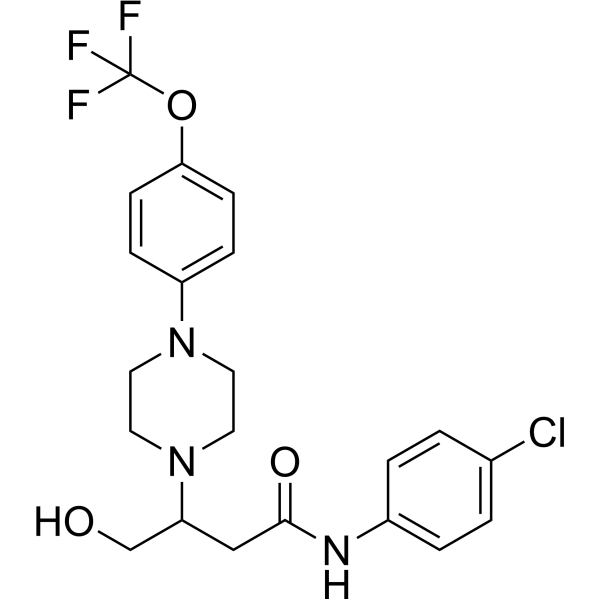
    VBIT-4
    15+ Cited Publications

    VDAC Cardiovascular Disease Neurological Disease
    VBIT-4 is an inhibitor of voltage-dependent anion channel 1 (VDAC1) oligomerization with a binding affinity (Kd) of 17 μM. VBIT-4, as an apoptosis inhibitor, can be used for therapeutic purposes in apoptosis-associated disorders, such as neurodegenerative and cardiovascular diseases [1].
    VBIT-4
  • HY-D0086
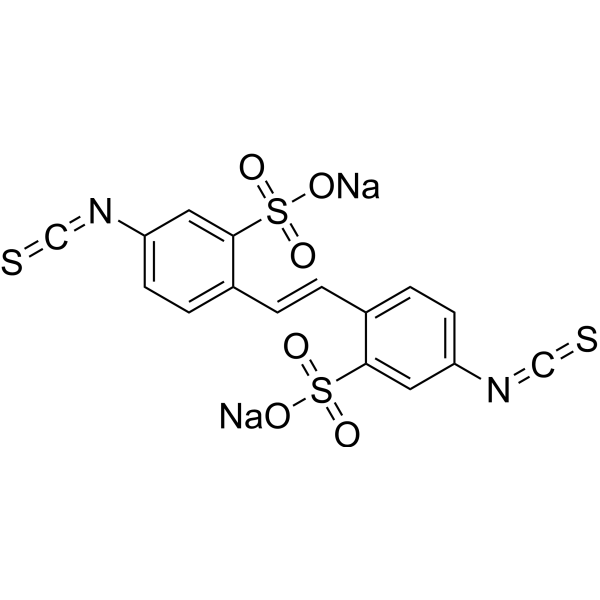
    DIDS sodium salt
    20+ Cited Publications

    MDL101114ZA

    VDAC RAD51 Cancer
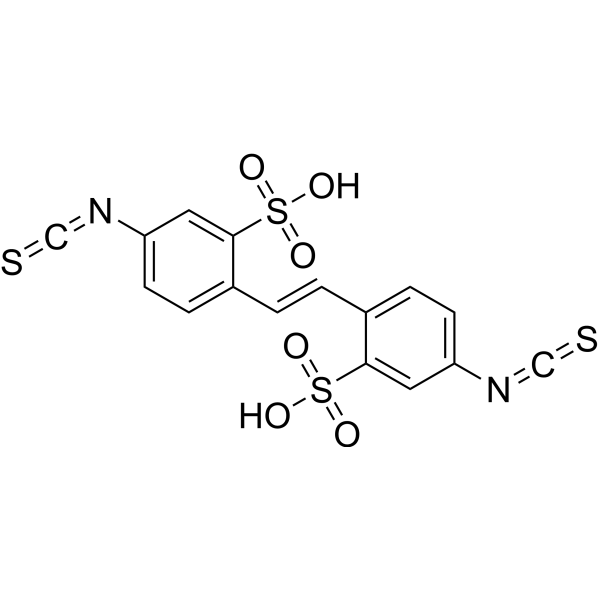
    DIDS sodium salt (MDL101114ZA) is a dual inhibitor of ABCA1 and VDAC1. DIDS also inhibits RAD51, inhibiting RAD51-mediated homologous pairing and strand exchange reactions. DIDS inhibits anion exchange and binding to red blood cell membranes, inhibits the activation of caspase-3 and -9, and can be used in cancer research [1] .
    DIDS sodium salt
  • HY-135885
    VBIT-12
    5+ Cited Publications

    VDAC Neurological Disease
    VBIT-12 is a potent VDAC1 inhibitor. VBIT-12 directly interacts with VDAC1 and prevents VDAC1 oligomerization, and thus inhibits apoptotic action of VDAC1 [1].
    VBIT-12
  • HY-108937
    NSC 15364
    5+ Cited Publications

    VDAC Apoptosis Cardiovascular Disease Neurological Disease
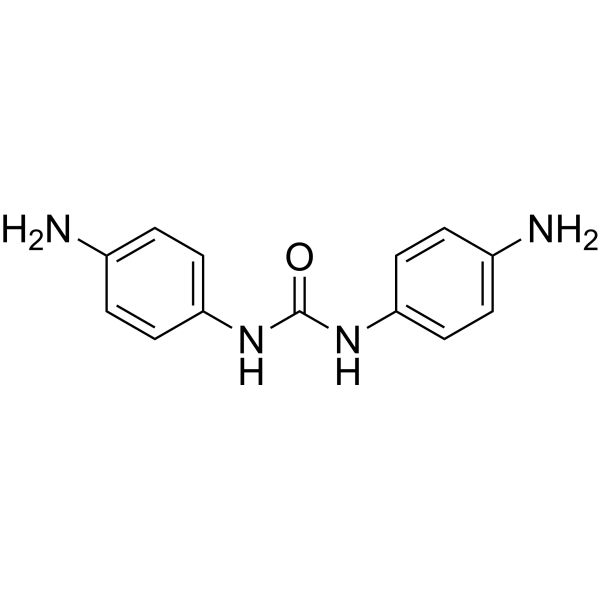
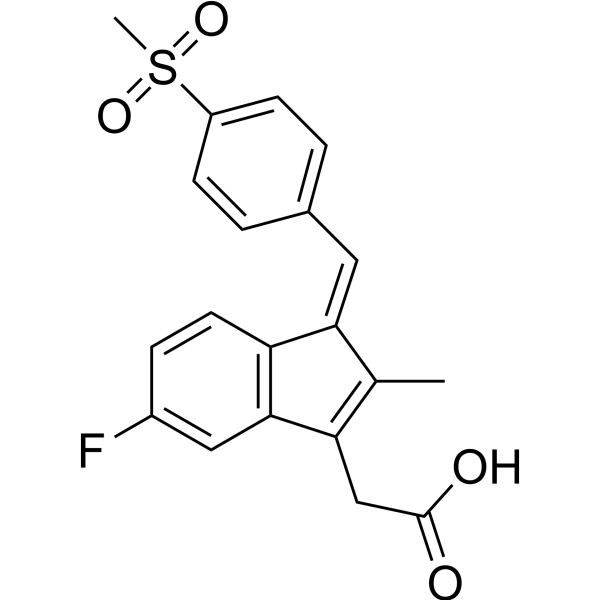
    NSC 15364 is an inhibitor of VDAC1 oligomerization and apoptosis [1].
    NSC 15364
  • HY-121693

    MDL101114ZA free base

    VDAC RAD51 Cancer
    DIDS is a dual inhibitor of ABCA1 and VDAC1. DIDS also inhibits RAD51, inhibiting RAD51-mediated homologous pairing and strand exchange reactions. DIDS inhibits anion exchange and binding to red blood cell membranes, inhibits the activation of caspase-3 and -9, and can be used in cancer research [1] .
    DIDS
  • HY-RS16872

    Small Interfering RNA (siRNA) Others

    Vdac1 Mouse Pre-designed siRNA Set A contains three designed siRNAs for Vdac1 gene (Mouse), as well as a negative control, a positive control, and a FAM-labeled negative control.

    Vdac1 Mouse Pre-designed siRNA Set A
    Vdac1 Mouse Pre-designed siRNA Set A
  • HY-111217

    VDAC Mitochondrial Metabolism Neurological Disease Cancer
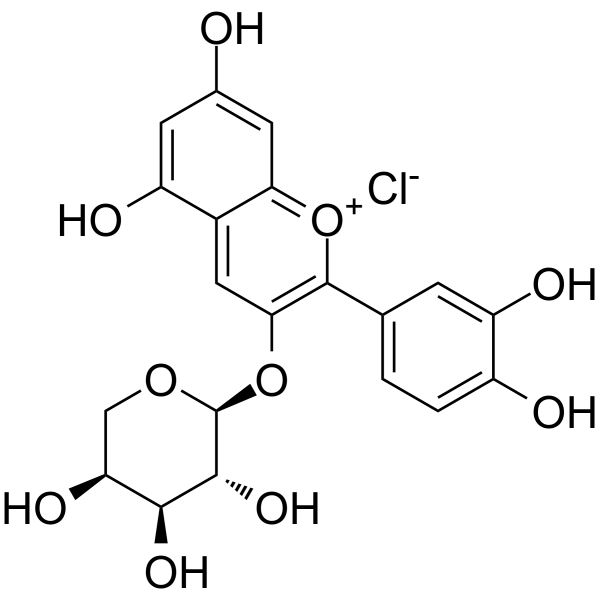
    AKOS-22 is a potent mitochondrial protein VDAC1 (voltage-dependent anion channel 1) inhibitor (Kd=15.4 μM). AKOS-22 interacts with VDAC1 and inhibiting both VDAC1 oligomerization and apoptosis. AKOS-22 protects against mitochondrial dysfunction [1].
    AKOS-22
  • HY-RS15629

    Small Interfering RNA (siRNA) Others

    VDAC1 Human Pre-designed siRNA Set A contains three designed siRNAs for VDAC1 gene (Human), as well as a negative control, a positive control, and a FAM-labeled negative control.

    VDAC1 Human Pre-designed siRNA Set A
    VDAC1 Human Pre-designed siRNA Set A
  • HY-161027

    Carnitine Palmitoyltransferase (CPT) Apoptosis Cancer
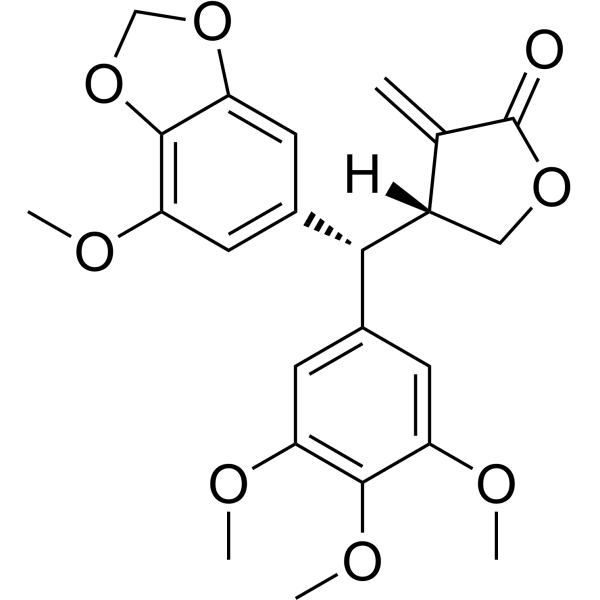
    DHP-B is an Ecolignan-type compound and covalent, selective CPT1A inhibitor with a Kd of 1.62 μM. DHP-B can be isolated from the plant Peperomia dindygulensis. DHP-B covalently binds to Cys96 of CPT1A, blocks FAO, and disrupts the mitochondrial CPT1A-VDAC1 interaction. DHP-B triggers Apoptosis. DHP-B exhibits anti-CRC activity [1].
    2,6-Didehydropeperomin B
  • HY-176745

    VDAC Metabolic Disease Endocrinology
    SW016789 is a hypersecretion-inducer targeting VDAC1. SW016789 can induce insulin hypersecretion and Ca 2+ influx in β-cells directly. SW016789 induces a transient endoplasmic reticulum stress response (ER stress), but does not cause beta cell death. SW016789 has reversible and non-apoptotic characteristics. SW016789 can be used for the study of Diabetes mellitus type 2 (T2DM) β-cell dysfunction [1] .
    SW016789
  • HY-RS23313

    Small Interfering RNA (siRNA) Others

    Vdac1 Rat Pre-designed siRNA Set A contains three designed siRNAs for Vdac1 gene (Rat), as well as a negative control, a positive control, and a FAM-labeled negative control.

    Vdac1 Rat Pre-designed siRNA Set A
    Vdac1 Rat Pre-designed siRNA Set A
  • HY-135571

    VDAC Cardiovascular Disease Neurological Disease
    VBIT-3 is an inhibitor of voltage-dependent anion channel 1 (VDAC1) oligomerization with a binding affinity (Kd) of 31.3 μM. VBIT-3, as an apoptosis inhibitor, can be used for therapeutic purposes in apoptosis-associated disorders, such as neurodegenerative and cardiovascular diseases [1].
    VBIT-3
  • HY-181529

    VDAC PERK Cancer
    NCATS-SM0225 is an endoplasmic reticulum-associated degradation (ERAD) inhibitor and a direct binder of VDAC1, VDAC2 and VDAC3. NCATS-SM0225 exhibits an IC50of 1.02 μM for ERAD and a Kd of 3.13 μM for human VDAC1 binding. NCATS-SM0225 disrupts cellular calcium homeostasis, enhances VDAC1-IP3R coupling and activating PERK. NCATS-SM0225 selectively kills cancer cells, exhibits tumor growth inhibitory effects in melanoma xenograft models. NCATS-SM0225 can be used for research on multiple cancers including melanoma, as well as the molecular mechanisms of ERAD and calcium homeostasis regulation [1].
    NCATS-SM0225
  • HY-108937R

    Reference Standards VDAC Apoptosis Cardiovascular Disease Neurological Disease
    NSC 15364 (Standard) is the analytical standard of NSC 15364 (HY-108937). This product is intended for research and analytical applications. NSC 15364 is an inhibitor of VDAC1 oligomerization and apoptosis [1].
    NSC 15364 (Standard)
  • HY-182243

    Hexokinase VDAC Apoptosis AMPK Bcl-2 Family Cancer
    HK2-IN-4 is a selective hexokinase 2 (HK2) inhibitor with an IC50 value of 0.79 μM and a Kd value of 0.41 μM. HK2-IN-4 blocks the interaction between HK2 and voltage-dependent anion channel 1 (VDAC1). HK2-IN-4 reduces lactate and ATP levels in cancer cells. HK2-IN-4 induces the production of apoptosis (apoptosis) markers in cancer cells, including increased p-AMPK/AMPK ratio and Bax levels, as well as decreased Bcl2 levels. HK2-IN-4 inhibits the proliferation of cancer cells with high HK2 expression. HK2-IN-4 can be used in research related to colorectal cancer and non-small cell lung cancer [1].
    HK2-IN-4
  • HY-182360

    PERK Eukaryotic Initiation Factor (eIF) Bcl-2 Family Apoptosis Reactive Oxygen Species (ROS) STING DNA/RNA Synthesis PD-1/PD-L1 Cancer
    Cytisine-Platinum(IV) Prodrug-1 is a Pt(IV) prodrug incorporating the natural compound Cytisine (HY-N0175) with antiproliferative activity against tumor cells. Cytisine-Platinum(IV) Prodrug-1 promotes calcium transfer across the IP3R1-GRP75-VDAC1 axis to drive mitochondrial calcium overload. Cytisine-Platinum(IV) Prodrug-1 initiates unfolded protein response via PERK, eIF2α, ATF4, and CHOP to modulate Bcl-2 and Bax, triggering apoptosis. Cytisine-Platinum(IV) Prodrug-1 induces mitochondrial dysfunction, ROS production, reduced ATP synthesis, DNA damage, and S-phase cell cycle arrest. Cytisine-Platinum(IV) Prodrug-1 activates the cGAS-STING pathway, reduces PD-L1 expression, drives immunogenic cell death. Cytisine-Platinum(IV) Prodrug-1 exhibits high physiological stability, efficient cellular accumulation, and enhanced platinum-DNA binding, and inhibits tumor growth in mouse models with reduced systemic toxicity. Cytisine-Platinum(IV) Prodrug-1 can be used for the research of lung cancer [1].
    Cytisine-platinum(IV) prodrug-1

Inquiry Online

Your information is safe with us. * Required Fields.

Salutation


Country or Region *

Applicant Name *


Organization Name *

Department *


Email Address *


Product Name *

Cat. No.


Requested quantity *

Phone Number *


Remarks

Inquiry Online

Inquiry Information

Product Name:
Cat. No.:
Quantity:
MCE Japan Authorized Agent:

