
1. Search Result
Search Result
Results for "

Xylose

" in MedChemExpress (MCE) Product Catalog:

48

Inhibitors & Agonists

3

Biochemical Assay Reagents

17

Natural
Products

4

Recombinant Proteins

14

Isotope-Labeled Compounds

1

Oligonucleotides

Cat. No. Product Name Target Research Areas Chemical Structure
  • HY-N11287A
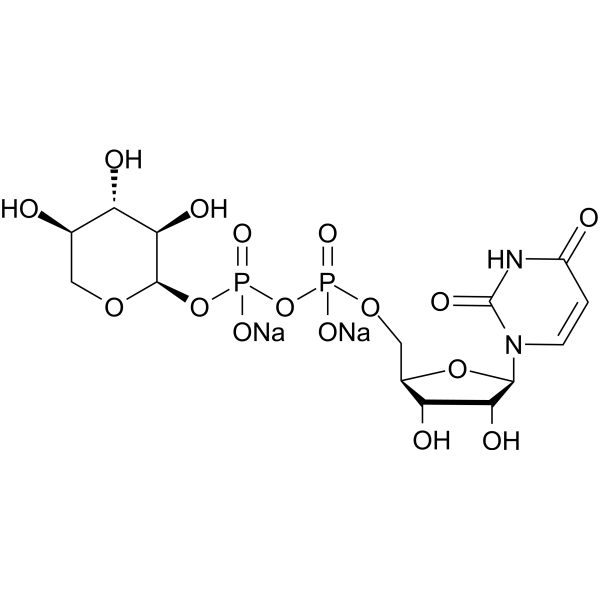
    UDP-xylose disodium
    2 Publications Verification

    Endogenous Metabolite Others
    UDP-xylose disodium is an endogenous sugar nucleotide and a catalytic substrate of UDP-xylose disodium synthase (UXS). UDP-xylose disodium is a sugar donor for the synthesis of glycoproteins, polysaccharides, various metabolites and oligosaccharides in plants, vertebrates and fungi, and participates in the synthesis of proteoglycans as a glycosyl donor. UDP-xylose disodium participates in the regulation of the synthesis of extracellular matrix components and can be used to study the mechanism of proteoglycan biosynthesis in glycobiology and related diseases (such as connective tissue diseases)[1][2].
    UDP-xylose disodium
  • HY-N0537
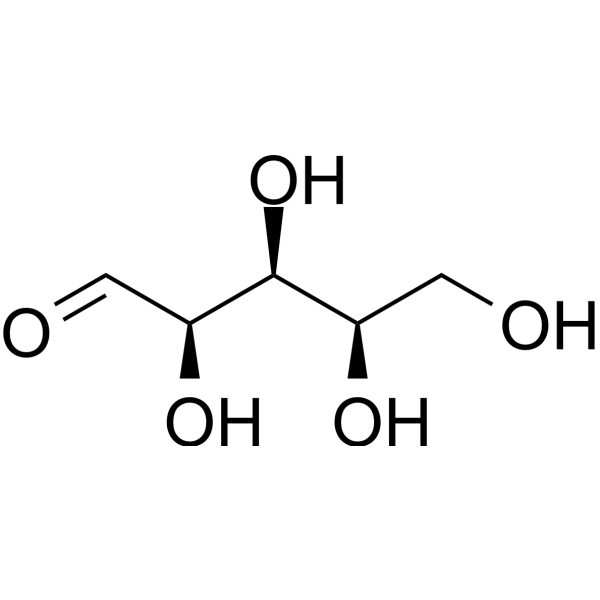
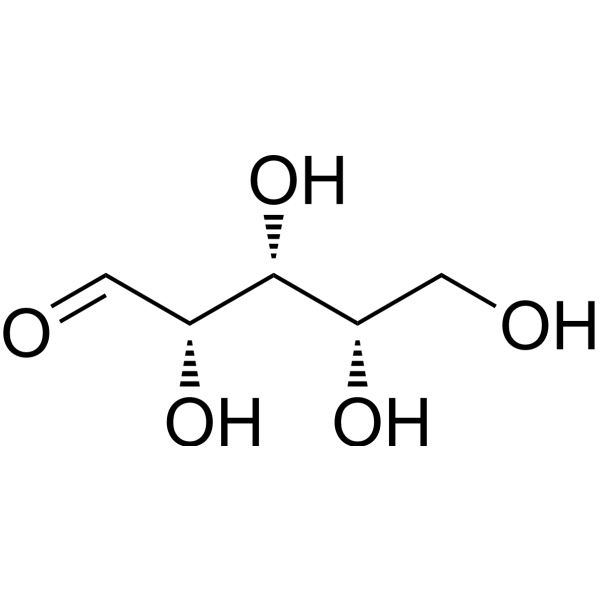
    Xylose
    5 Publications Verification

    D-(+)-Xylose; (+)-Xylose; Wood sugar

    Environmental Pollutants Endogenous Metabolite Metabolic Disease
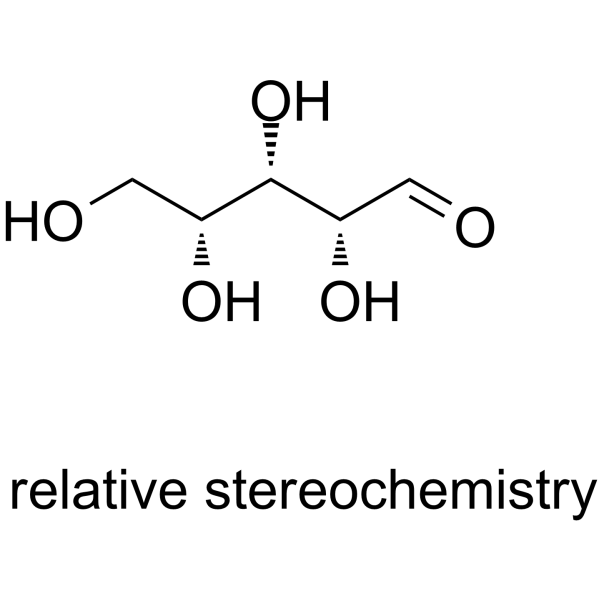
    Xylose (D-(+)-Xylose) is a natural pentose sugar that is catalyzed by xylose isomerase to form xylulose, which is a key step in the anaerobic ethanol fermentation of Xylose. Xylose can be used by microorganisms to produce fuels, chemicals, and bulk industrial enzymes. Xylose provides the substances and energy for cells, as a carbon source for the biosynthesis of high-value chemicals and biofuel. Xylose can be used to fully explore lignocellulose resources and provide a new direction for microbia fermentation .
    Xylose
  • HY-107846
    Xylan
    2 Publications Verification

    Endogenous Metabolite Others
    Xylan represents the main hemicellulose component in the secondary plant cell walls of flowering plants. Xylan is a polysaccharide made from units of xylose and contains predominantly β-D-xylose units linked as in cellulose .
    Xylan
  • HY-N6840

    Biochemical Assay Reagents Others
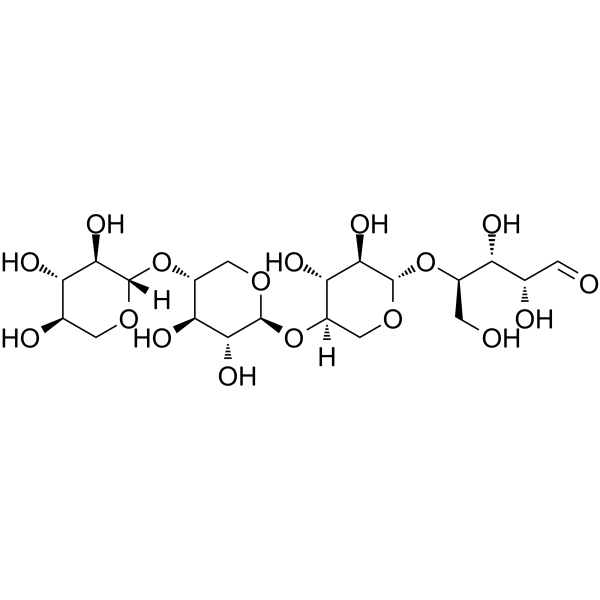
    Xylotetraose is a xylo-oligosaccharide and a substrate of Taxy11. Xylotetraose serves as a substrate for the endo-xylanase Taxy11, and is hydrolyzed by it into xylobiose and xylotriose .
    Xylotetraose
  • HY-78139

    L-(-)-Xylose

    Drug Intermediate Others
    L-Xylose (L-(-)-Xylose) is a rare sugar and the levorotatory form of Xylose (HY-N0537). L-Xylose can be used as a raw material for the synthesis of various drugs and bioactive molecules .
    L-Xylose
  • HY-N6831
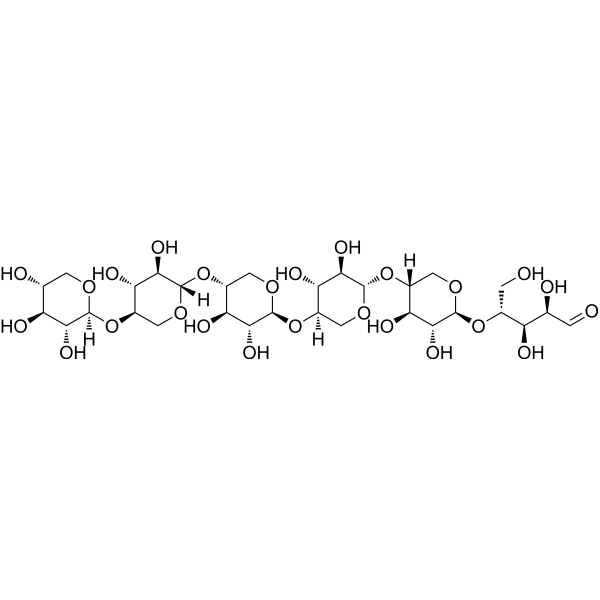
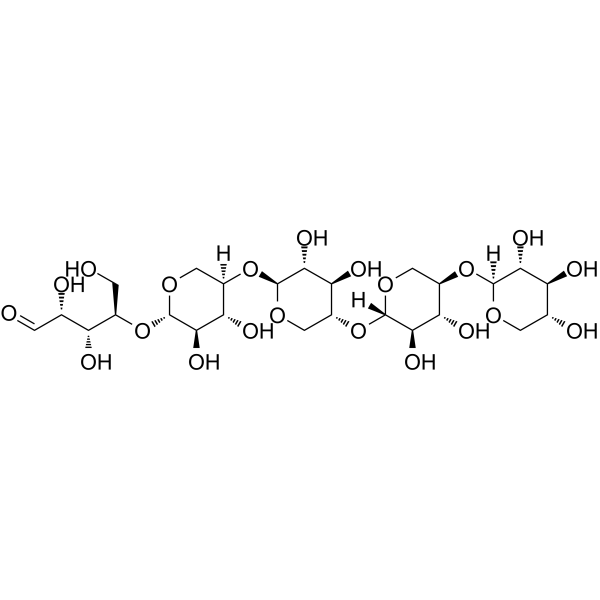
    Xylohexaose
    1 Publications Verification

    Biochemical Assay Reagents Others
    Xylohexaose is a xylooligosaccharide composed of six xylose residues. Xylohexaose can be produced by hydrolysis of beechwood xylan by AfXynA. Xylohexaose serves as a substrate for the determination of xylan hydrolysis activity .
    Xylohexaose
  • HY-N6839

    Glycosidase Others
    1,4-b-D-Xylopentaose is a linear pentasaccharide composed of 5 β-D-xylose units linked via 1,4-glycosidic bonds, and serves as a specific substrate for barley α-L-arabinofuranosidase .
    1,4-b-D-Xylopentaose
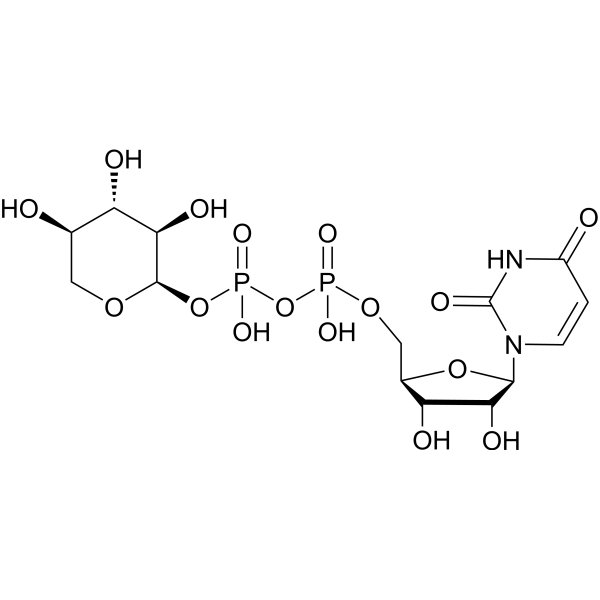
  • HY-N11287

    Endogenous Metabolite Others
    UDP-xylose is an endogenous sugar nucleotide and a catalytic substrate of UDP-xylose synthase (UXS). UDP-xylose is a sugar donor for the synthesis of glycoproteins, polysaccharides, various metabolites and oligosaccharides in plants, vertebrates and fungi, and participates in the synthesis of proteoglycans as a glycosyl donor. UDP-xylose participates in the regulation of the synthesis of extracellular matrix components and can be used to study the mechanism of proteoglycan biosynthesis in glycobiology and related diseases (such as connective tissue diseases)[1][2].
    UDP-xylose
  • HY-P3186A

    GDH-NAD

    Endogenous Metabolite Metabolic Disease
    NAD-dependent glucose dehydrogenase (GDH-NAD) is an oxidoreductase that uses NAD + as a coenzyme, specifically catalyzes the dehydrogenation of glucose to gluconolactone, and reduces NAD + to NADH. NAD-dependent glucose dehydrogenase exhibits favorable substrate selectivity and stability, and is not affected by oxygen .
    NAD-dependent Glucose dehydrogenase
  • HY-P3187

    DNA/RNA Synthesis Others
    Exo-1,4-β-xylosidase is an exonuclease that specifically acts on the β-1,4 glycosidic bonds at the non-reducing ends of xylan and xylooligosaccharides. Exo-1,4-β-xylosidase is Ca 2+-dependent and reversibly binds to metal ions to catalyze the hydrolysis of β-1,4 glycosidic bonds, thereby degrading xylan to produce xylose. Exo-1,4-β-xylosidase can be used in research fields such as lignocellulose bioconversion, bioethanol production, and optimization of xylan saccharification processes .
    exo-β-1,4-Xylosidase, Cellulosimicrobium cellulans sp. 21
  • HY-W779019

    D-(+)-Xylose-13C5; (+)-Xylose-13C5; Wood sugar-13C5

    Isotope-Labeled Compounds Endogenous Metabolite Metabolic Disease
    Xylose- 13C5 (D-(+)-Xylose- 13C5) is 13C labeled Xylose. Xylose (D-(+)-Xylose) is a natural pentose sugar that is catalyzed by xylose isomerase to form xylulose, which is a key step in the anaerobic ethanol fermentation of Xylose. Xylose can be used by microorganisms to produce fuels, chemicals, and bulk industrial enzymes. Xylose provides the substances and energy for cells, as a carbon source for the biosynthesis of high-value chemicals and biofuel. Xylose can be used to fully explore lignocellulose resources and provide a new direction for microbia fermentation .
    Xylose-13C5
  • HY-B1070

    (±)-Xylos

    Drug Intermediate Metabolic Disease
    DL-Xylose is an organic synthesis intermediate.
    DL-Xylose
  • HY-E70308

    Endogenous Metabolite Others
    Glucose isomerase (immobilized) is glucose isomerase, which catalyzes the reversible isomerization of D-glucose and D-xylose into D-fructose and D-xylulose, respectively. Glucose isomerase (immobilized) can be used to produce fructose syrup under high-temperature conditions above 90 ℃. Glucose isomerase (immobilized) is widely distributed in prokaryotes .
    Glucose isomerase (immobilized)
  • HY-N0537R

    D-(+)-Xylose (Standard); (+)-Xylose (Standard); Wood sugar (Standard)

    Reference Standards Endogenous Metabolite Metabolic Disease
    Xylose (Standard) (D-(+)-Xylose (Standard)) is the analytical standard of Xylose (HY-N0537). This product is intended for research and analytical applications. Xylose (D-(+)-Xylose) is a natural pentose sugar that is catalyzed by xylose isomerase to form xylulose, which is a key step in the anaerobic ethanol fermentation of Xylose. Xylose can be used by microorganisms to produce fuels, chemicals, and bulk industrial enzymes. Xylose provides the substances and energy for cells, as a carbon source for the biosynthesis of high-value chemicals and biofuel. Xylose can be used to fully explore lignocellulose resources and provide a new direction for microbia fermentation.
    Xylose (Standard)
  • HY-N0537S3

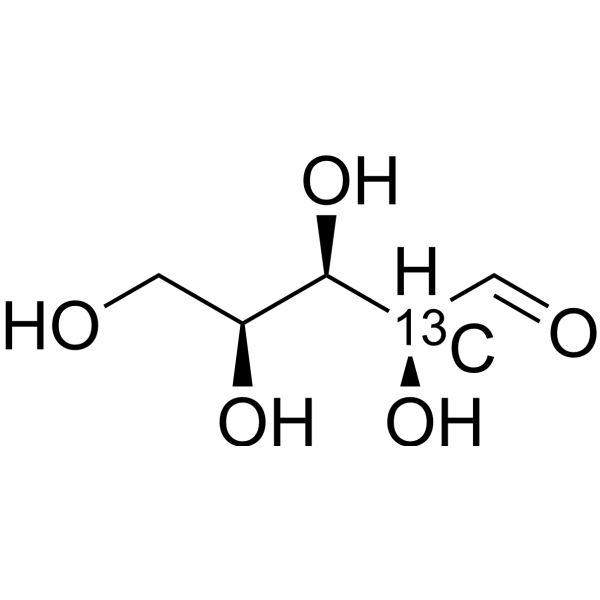
    D-(+)-Xylose-2-13C; (+)-Xylose-2-13C; Wood sugar-2-13C

    Isotope-Labeled Compounds Endogenous Metabolite Metabolic Disease
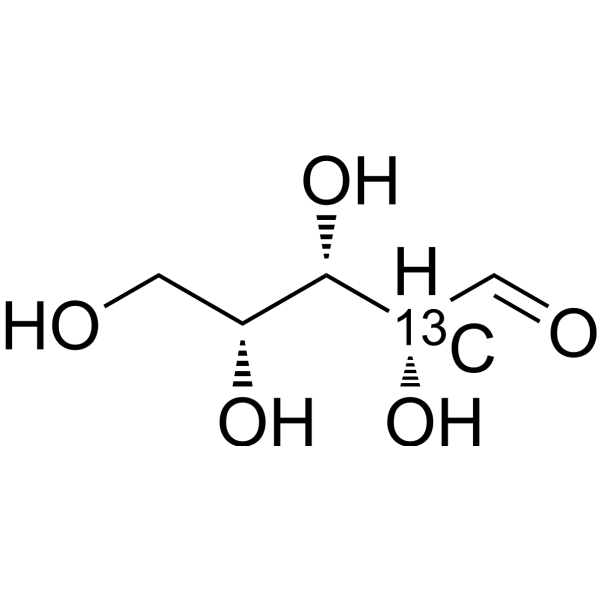
    Xylose-2- 13C (D-(+)-Xylose-2- 13C) is the 13C labeled Xylose (HY-N0537). Xylose (D-(+)-Xylose) is a natural pentose sugar that is catalyzed by xylose isomerase to form xylulose, which is a key step in the anaerobic ethanol fermentation of Xylose. Xylose can be used by microorganisms to produce fuels, chemicals, and bulk industrial enzymes. Xylose provides the substances and energy for cells, as a carbon source for the biosynthesis of high-value chemicals and biofuel. Xylose can be used to fully explore lignocellulose resources and provide a new direction for microbia fermentation .
    Xylose-2-13C
  • HY-N2018

    α-D-Xylopyranose

    Endogenous Metabolite Metabolic Disease
    α-D-Xylose (α-D-Xylopyranose) is a basic component of the five-carbon fraction of biomass and a precursor of hemicellulose. α-D-Xylose participates in a variety of enzyme-catalyzed reactions, which in turn participate in a variety of metabolic pathways. In addition, α-D-Xylose is also used in tanning, dyeing and as a diabetic food .
    α-D-Xylose
  • HY-W015179

    Monoacetone-D-Xylose

    Biochemical Assay Reagents Drug Derivative Others
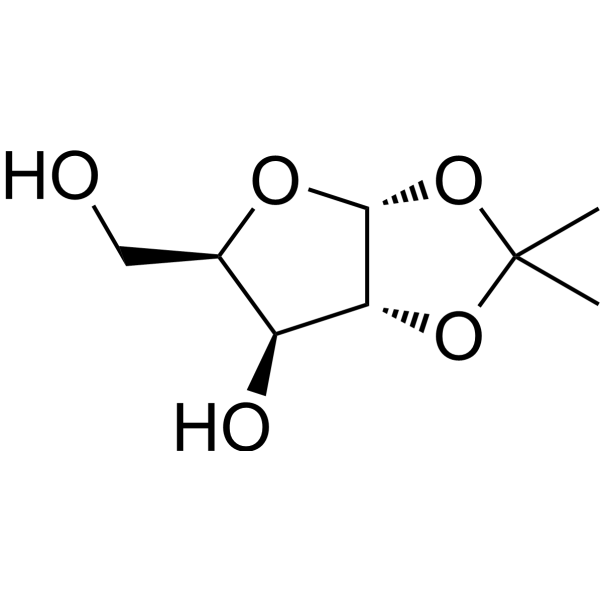
    1,2-O-Isopropylidene-alpha-D-xylofuranose is a derivative of D-xylose (HY-N0537). 1,2-O-isopropylidene-α-D-xylofuranose can be used in the asymmetric alkylation of Benzaldehyde with Diethylzinc .
    1,2-O-Isopropylidene-alpha-D-xylofuranose
  • HY-121597

    Others Others
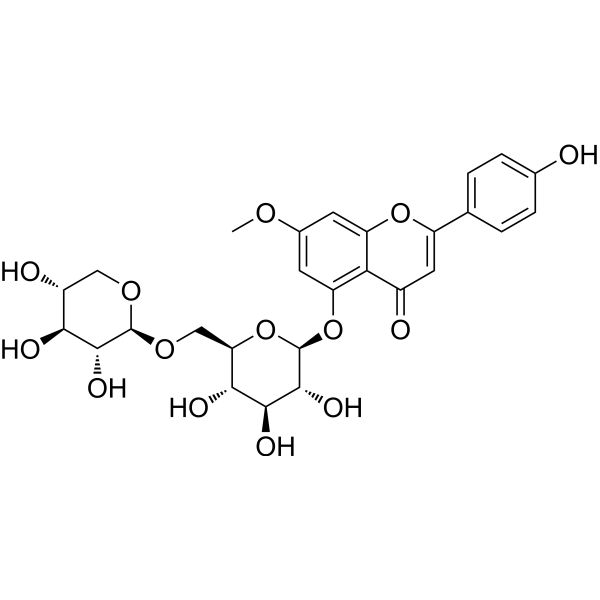
    Yuankanin is a genkwanin-5-bioside, the sugar moiety being composed of xylose and glucose. Yuankanin can be isolated from the methanol extract of the aerial parts of Gnidia involucrata (Thymelaeaceae) .
    Yuankanin
  • HY-78139S1

    L-(-)-Xylose-2-13C

    Isotope-Labeled Compounds Drug Intermediate Others
    L-Xylose-2- 13C ((L-(-)-Xylose-2- 13C)) is the 13C labeled L-Xylose (HY-78139). L-Xylose (L-(-)-Xylose) is a rare sugar and the levorotatory form of Xylose (HY-N0537). L-Xylose can be used as a raw material for the synthesis of various drugs and bioactive molecules .
    L-Xylose-2-13C
  • HY-N0537S2

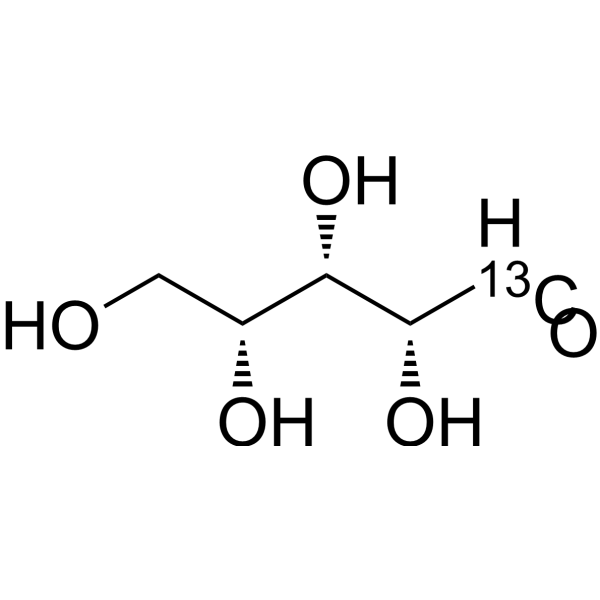
    D-(+)-Xylose-1-13C; (+)-Xylose-1-13C; Wood sugar-1-13C

    Isotope-Labeled Compounds Endogenous Metabolite Others
    Xylose-1- 13C is the 13C labeled Xylose.
    Xylose-1-13C
  • HY-E70428

    Biochemical Assay Reagents Others
    D-Xylose dehydrogenase is a peptidase. Enzymes have high catalytic efficiency, high specificity, and mild operating conditions. It can be applied in industries such as pharmaceuticals, industrial production, food manufacturing, and aquaculture .
    D-Xylose dehydrogenase
  • HY-P3187B

    DNA/RNA Synthesis Others
    exo-β-1,4-xylosidase, Bacteroides ovatus (EC.3.2.1.37) is an exonuclease that specifically acts on the β-1,4 glycosidic bonds at the non-reducing ends of xylan and xylooligosaccharides. exo-β-1,4-xylosidase is Ca 2+-dependent and reversibly binds to metal ions to catalyze the hydrolysis of β-1,4 glycosidic bonds, thereby degrading xylan to produce xylose. exo-β-1,4-xylosidase can be used in research fields such as lignocellulose bioconversion, bioethanol production, and optimization of xylan saccharification processes .
    exo-β-1,4-xylosidase, Bacteroides ovatus
  • HY-P3187A

    DNA/RNA Synthesis Others
    exo-β-1,4-xylosidase,Clostridium stercorarium (EC.3.2.1.37) is an exonuclease that specifically acts on the β-1,4 glycosidic bonds at the non-reducing ends of xylan and xylooligosaccharides. exo-β-1,4-xylosidase is Ca 2+-dependent and reversibly binds to metal ions to catalyze the hydrolysis of β-1,4 glycosidic bonds, thereby degrading xylan to produce xylose. exo-β-1,4-xylosidase can be used in research fields such as lignocellulose bioconversion, bioethanol production, and optimization of xylan saccharification processes .
    exo-β-1,4-xylosidase, Clostridium stercorarium
  • HY-N0537S4

    D-(+)-Xylose-5-13C; (+)-Xylose-5-13C; Wood sugar-5-13C

    Isotope-Labeled Compounds Endogenous Metabolite Others
    Xylose-5- 13C is the 13C labeled Xylose.
    Xylose-5-13C
  • HY-W802197

    Others Others
    D-Xylose 2,3,4,5-tetraacetate is a competitive substrate analog targeting acetyl xylan esterases (AXEs). D-Xylose 2,3,4,5-tetraacetate is promising for research of lignocellulosic biomass degradation .
    D-Xylose 2,3,4,5-tetraacetate
  • HY-78139R

    L-(-)-Xylose (Standard)

    Reference Standards Drug Intermediate Others
    L-Xylose (Standard) (L-(-)-Xylose (Standard)) is the analytical standard of L-Xylose (HY-78139). This product is intended for research and analytical applications. L-Xylose (L-(-)-Xylose) is a rare sugar and the levorotatory form of Xylose (HY-N0537). L-Xylose can be used as a raw material for the synthesis of various drugs and bioactive molecules .
    L-Xylose (Standard)
  • HY-W039937

    Bromo 2,3,4-Tri-O-acetyl-α-D-xylopyranoside, 95%

    Biochemical Assay Reagents Others
    α-Acetobromo-D-xylose, 95% is a biochemical reagent.
    α-Acetobromo-D-xylose, 95%
  • HY-W037980

    PROTAC Linkers Metabolic Disease Cancer
    Succinamic acid is a weak inhibitor for human LL-xylose reductase with an IC50 of 1.45 mM. Succinamic acid can be used as a linker for synthesis of CQ-16 (HY-169336) .
    Succinamic acid
  • HY-W145575

    Diacetone-D-Xylose

    Biochemical Assay Reagents Others
    1,2:3,5-Di-O-isopropylidene-alpha-D-xylofuranose is a biochemical reagent that can be used as a biological material or organic compound for life science related research.
    1,2:3,5-Di-O-isopropylidene-α-D-xylofuranose
  • HY-N0537S12

    D-(+)-Xylose-d-3; (+)-Xylose-d-3; Wood sugar-d1-3

    Isotope-Labeled Compounds Endogenous Metabolite Others
    Xylose-d-3 is the deuterium labeled Xylose.
    Xylose-d1-3
  • HY-N0537S13

    D-(+)-Xylose-d-4; (+)-Xylose-d-4; Wood sugar-d1-4

    Isotope-Labeled Compounds Endogenous Metabolite Others
    Xylose-d-4 is the deuterium labeled Xylose.
    Xylose-d1-4
  • HY-N0537S9

    D-(+)-Xylose-d6; (+)-Xylose-d6; Wood sugar-d6

    Isotope-Labeled Compounds Endogenous Metabolite Others
    Xylose-d6 is the deuterium labeled Xylose.
    Xylose-d6
  • HY-78139S2

    L-(-)-Xylose-5-13C

    Isotope-Labeled Compounds Drug Intermediate Others
    L-Xylose-5- 13C (L-(-)-Xylose-5- 13C) is the 13C labeled L-Xylose (HY-78139). L-Xylose (L-(-)-Xylose) is a rare sugar and the levorotatory form of Xylose (HY-N0537). L-Xylose can be used as a raw material for the synthesis of various drugs and bioactive molecules .
    L-Xylose-5-13C
  • HY-78139S

    L-(-)-Xylose-1-13C

    Isotope-Labeled Compounds Drug Intermediate Others
    L-Xylose-1- 13C (L-(-)-Xylose-1- 13C) is the 13C labeled L-Xylose (HY-78139). L-Xylose (L-(-)-Xylose) is a rare sugar and the levorotatory form of Xylose (HY-N0537). L-Xylose can be used as a raw material for the synthesis of various drugs and bioactive molecules .
    L-Xylose-1-13C
  • HY-N0537S5

    D-(+)-Xylose-3-13C; (+)-Xylose-3-13C; Wood sugar-3-13C

    Isotope-Labeled Compounds Endogenous Metabolite Others
    Xylose-3- 13C is the 13C labeled Xylose.
    Xylose-3-13C
  • HY-N0537S6

    D-(+)-Xylose-4-13C; (+)-Xylose-4-13C; Wood sugar-4-13C

    Isotope-Labeled Compounds Endogenous Metabolite Others
    Xylose-4- 13C is the 13C labeled Xylose.
    Xylose-4-13C
  • HY-N0537S

    D-(+)-Xylose-18O-18O; (+)-Xylose-18O-18O; Wood sugar-18O

    Isotope-Labeled Compounds Endogenous Metabolite Others
    Xylose- 18O is the 18O labeled Xylose.
    Xylose-18O
  • HY-E70179

    EC 2.4.1.149; B4GAT1; β3GNTI

    Glucosylceramide Synthase (GCS) Others
    beta-1,4-Glucuronyltransferase 1 is a glucosyltransferase. beta-1,4-Glucuronyltransferase 1 transfers glucuronic acid towards both α and β anomers of xylose .
    β-1,4-Glucuronyltransferase 1
  • HY-175835

    Bacterial Infection
    DXPS-IN-2 (compound 19) is a 1-deoxy-d-xylose 5-phosphate synthase (DXPS) inhibitor. DXPS-IN-2 has antibacterial activity and is useful for studying infections caused by Klebsiella pneumoniae .
    DXPS-IN-2
  • HY-137566

    Mitochondrial Metabolism Cancer
    Cucumarioside H is a novel triterpene glycoside isolated from the Far Eastern sea cucumber Eupentacta fraudatrix, including H2, H3 and H4. These glycosides have a branched pentasyl structure with a rare 3-O-methyl-D-xylose as the terminal monosaccharide. H2 contains 23,24,25,26,27-pentanolone sterols and has an 18(16)-lactone, which is not common in sea cucumbers. The glycoside portion of H3 contains an extremely rare ethoxyl radical at the 25 position, which may be an artifact formed during the long ethanol extraction process. Studies have shown that H1-3 are cytotoxic to mouse spleen lymphocytes, hemolytic to mouse erythrocytes, and cytotoxic to Ehrlich carcinoma cells. The presence of a 25-hydroxyl group in the glycoside portion significantly reduces these activities.
    Cucumarioside H
  • HY-W779018

    D-(+)-Xylose-13C2; (+)-Xylose-13C2; Wood sugar-13C2

    Isotope-Labeled Compounds Endogenous Metabolite Metabolic Disease
    Xylose- 13C2 (D-(+)-Xylose- 13C2) is the 13C-labeled Xylose. Xylose (D-(+)-Xylose) is a natural pentose sugar that is catalyzed by xylose isomerase to form xylulose, which is a key step in the anaerobic ethanol fermentation of Xylose. Xylose can be used by microorganisms to produce fuels, chemicals, and bulk industrial enzymes. Xylose provides the substances and energy for cells, as a carbon source for the biosynthesis of high-value chemicals and biofuel. Xylose can be used to fully explore lignocellulose resources and provide a new direction for microbia fermentation .
    Xylose-13C2
  • HY-N17786

    Drug Derivative Others
    2-O-Methyl-D-xylose is a derivative of Xylose (HY-N0537). 2-O-Methyl-D-xylose can be used as a biomarker for the cell wall polysaccharide RG-II, and changes in its content reveal the destructive effect of gene silencing on the cell wall structure .
    2-O-Methyl-D-xylose
  • HY-E71254

    Biochemical Assay Reagents Others
    α-Xylosidase 31A, Bacteroides ovatus (EC 3.2.1.177) is an enzyme. This enzyme catalyses the following chemical reaction: Hydrolysis of terminal, non-reducing alpha-D-xylose residues with release of alpha-D-xylose. The enzyme catalyses hydrolysis of a terminal, unsubstituted xyloside at the extreme reducing end of a xylogluco-oligosaccharide.
    α-Xylosidase 31A, Bacteroides ovatus
  • HY-N18217

    Others Others
    Esculentoside R (Compound 7) is a triterpenoid saponin (bisdesmoside). Acid hydrolysis of Esculentoside R yields esculentic acid, glucose, xylose and rhamnose .
    Esculentoside R
  • HY-P2816A

    Biochemical Assay Reagents Metabolic Disease
    Xylanase, Trichoderma viride (EC 3.2.1.8) is the name given to a class of enzymes which degrade the linear polysaccharide beta-1,4-xylan into xylose, thus breaking down hemicellulose, one of the major components of plant cell walls.
    Xylanase, Trichoderma viride
  • HY-E70897

    Biochemical Assay Reagents Metabolic Disease
    Xylanase 10A, Cellvibrio japonicus (EC 3.2.1.8) is the name given to a class of enzymes which degrade the linear polysaccharide beta-1,4-xylan into xylose, thus breaking down hemicellulose, one of the major components of plant cell walls.
    Xylanase 10A, Cellvibrio japonicus
  • HY-P3017A

    Biochemical Assay Reagents Others
    Endo-1,4-β-Xylanase, Trichoderma longibrachiatum (EC 3.2.1.8) is the name given to a class of enzymes which degrade the linear polysaccharide beta-1,4-xylan into xylose, thus breaking down hemicellulose, one of the major components of plant cell walls.
    Endo-1,4-β-Xylanase, Trichoderma longibrachiatum
  • HY-N17258

    Insecticide Infection
    Quercetin 3-O-(2G-β-D-xylopyranosylrutinoside) is an oviposition inhibitory factor. Quercetin 3-O-(2G-β-D-xylopyranosylrutinoside) can be isolated from the leaves of Orixa japonica. When presented together with the oviposition stimulant from Citrus unshiu (Satsuma mandarin), Quercetin 3-O-(2G-β-D-xylopyranosylrutinoside) inhibits oviposition by gravid female Papilio xuthus (Asian swallowtail) .
    Quercetin 3-O-(2G-β-D-xylopyranosylrutinoside)

Inquiry Online

Your information is safe with us. * Required Fields.

Salutation


Country or Region *

Applicant Name *


Organization Name *

Department *


Email Address *


Product Name *

Cat. No.


Requested quantity *

Phone Number *


Remarks

Inquiry Online

Inquiry Information

Product Name:
Cat. No.:
Quantity:
MCE Japan Authorized Agent:

