1. Search Result
Search Result
Results for "

acylation

" in MedChemExpress (MCE) Product Catalog:

31

Inhibitors & Agonists

4

Biochemical Assay Reagents

5

Natural
Products

1

Click Chemistry

1

Oligonucleotides

Cat. No. Product Name Target Research Areas Chemical Structure
  • HY-Y1703

    Biochemical Assay Reagents Others
    HATU is a third-generation uronium salt peptide coupling reagent. HATU increases the rate of peptide coupling reactions, activates amino acids, promotes peptide bond formation in both solution-phase and solid-phase synthesis, and also facilitates peptide assembly, fragment coupling, and linear peptide cyclization. HATU can promote the N-acylation of chitosan to generate amide-linked cationic derivatives with a controllable degree of substitution. HATU is commonly used in amine acylation reactions .
    HATU
  • HY-103006
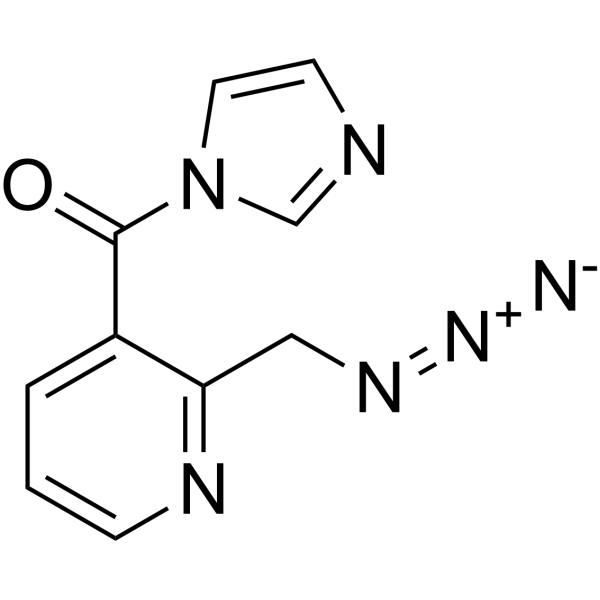
    NAI-N3
    5 Publications Verification

    Biochemical Assay Reagents Others
    NAI-N3 is a RNA acylation reagent that enables RNA purification. NAI-N3 is a dual-function SHAPE (selective 2-hydroxyl acylation and profiling experiment) probe (RNA structure probe and enrichment) . It contains an azide group and can undergo copper-catalyzed azide-alkyne cycloaddition (CuAAc) with molecules containing alkyne groups. It can also undergo ring strain-promoted alkyne-azide cycloaddition (SPAAC) with molecules containing DBCO or BCN groups.
    NAI-N3
  • HY-W020983

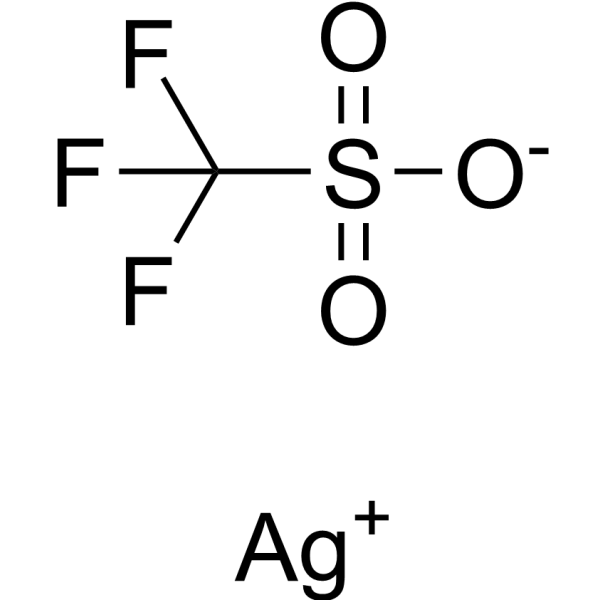
    Triflic acid silver; Perfluoromethanesulfonic acid silver; Fluorad FC 24 silver

    Biochemical Assay Reagents Others
    Silver trifluoromethanesulfonate, a perfluoroalkanesulfonic acid, is one of the superior catalysts for C- or O-acylation. Silver trifluoromethanesulfonate is widely used as a cationic catalyst in promoting Friedel-Crafts reactions and esterification reactions .
    Silver trifluoromethanesulfonate
  • HY-141570

    Phospholipase Others
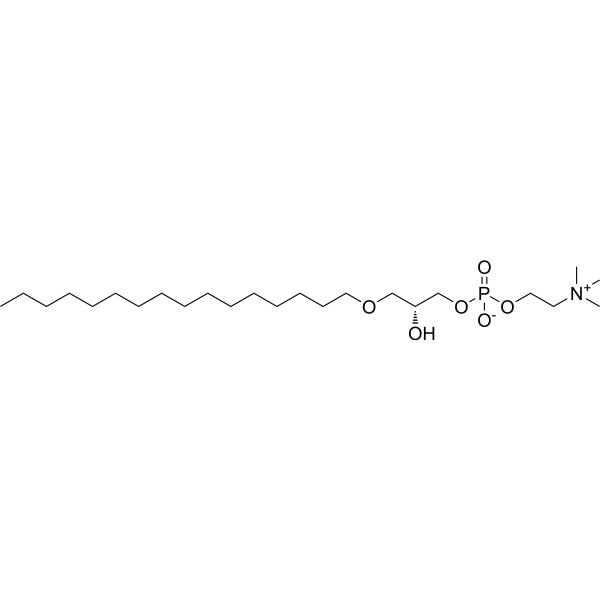
    Lyso-PAF C-16 is a precursor and metabolite of 1-O-hexadecyl-2-acetyl-sn-glycero-3-phosphocholine (PAF C-16). Lyso-PAF C-16 is a substrate for either PAF C-16 formation by the remodeling pathway or selective acylation with arachidonic acid by a CoA-independent transacylase .
    Lyso-PAF C-16
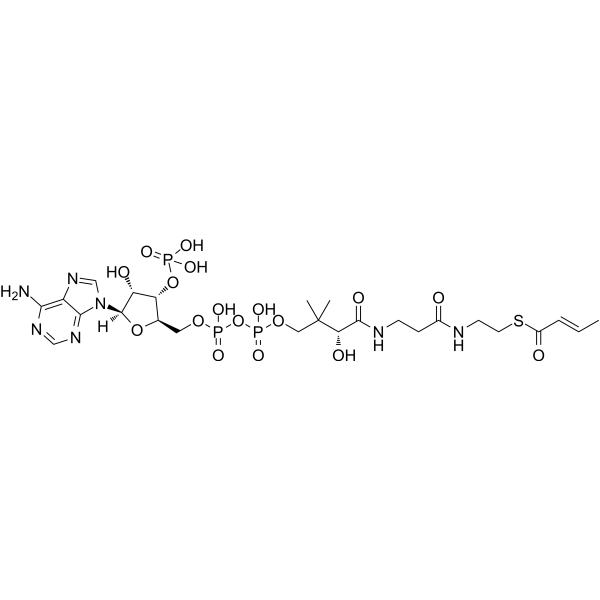
  • HY-141466

    Endogenous Metabolite Histone Acetyltransferase Infection Metabolic Disease Inflammation/Immunology
    Crotonyl-CoA, a high-energy acyl donor, is an intermediate in the fermentation of butyric acid, and in the metabolism of lysine and tryptophan. Crotonyl-CoA is important in the metabolism of fatty acids and amino acids. Crotonyl-CoA acts as a substrate for p300’s histone crotonyltransferase activity, competing with acetyl-CoA for p300-mediated histone acylation reactions. Crotonyl-CoA regulates global and gene-specific histone crotonylation levels in cells, with cellular concentration changes altering histone crotonylation at regulatory elements of activated genes. Crotonyl-CoA serves as the substrate for crotonyl-CoA reductase/carboxylase (CCRC)-catalyzed NADPH-mediated reduction and carbon dioxide trapping to form unusual alkylmalonyl-CoA polyketide synthase extender units. Crotonyl-CoA can be used for the research of LPS-induced inflammatory response .
    Crotonyl-CoA
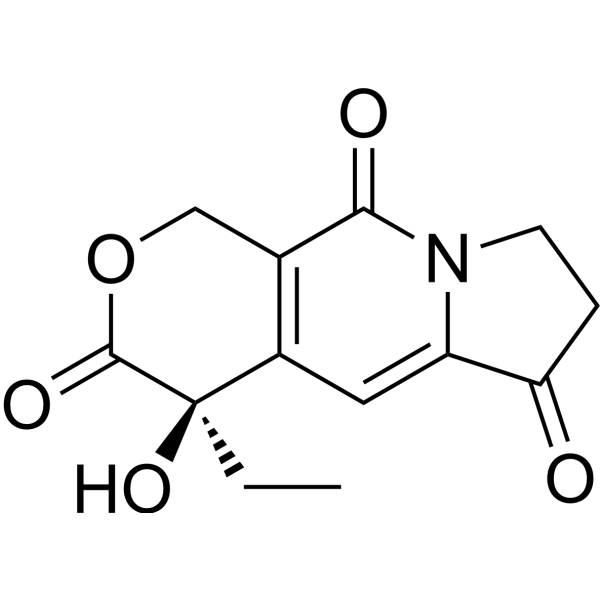
  • HY-42487B

    Drug Intermediate ADC Payload Topoisomerase Cancer
    (R)-Exatecan Intermediate 1 is a key intermediate in the synthesis of Camptothecin (HY-16560) derivatives, and can be used to prepare Exatecan mesylate (DX8951f) (HY-13631A). (R)-Exatecan Intermediate 1 enables the synthesis of Exatecan, which exhibits low sensitivity to multidrug resistance and has great value in anti-tumor research .
    (R)-Exatecan Intermediate 1
  • HY-141466A

    Endogenous Metabolite Histone Acetyltransferase Infection Metabolic Disease Inflammation/Immunology
    Crotonyl-CoA tetrasodium, a high-energy acyl donor, is an intermediate in the fermentation of butyric acid, and in the metabolism of lysine and tryptophan. Crotonyl-CoA tetrasodium is important in the metabolism of fatty acids and amino acids. Crotonyl-CoA tetrasodium acts as a substrate for p300’s histone crotonyltransferase activity, competing with acetyl-CoA for p300-mediated histone acylation reactions. Crotonyl-CoA tetrasodium regulates global and gene-specific histone crotonylation levels in cells, with cellular concentration changes altering histone crotonylation at regulatory elements of activated genes. Crotonyl-CoA tetrasodium serves as the substrate for crotonyl-CoA reductase/carboxylase (CCRC)-catalyzed NADPH-mediated reduction and carbon dioxide trapping to form unusual alkylmalonyl-CoA polyketide synthase extender units. Crotonyl-CoA tetrasodium can be used for the research of LPS-induced inflammatory response .
    Crotonyl-CoA tetrasodium
  • HY-W048838
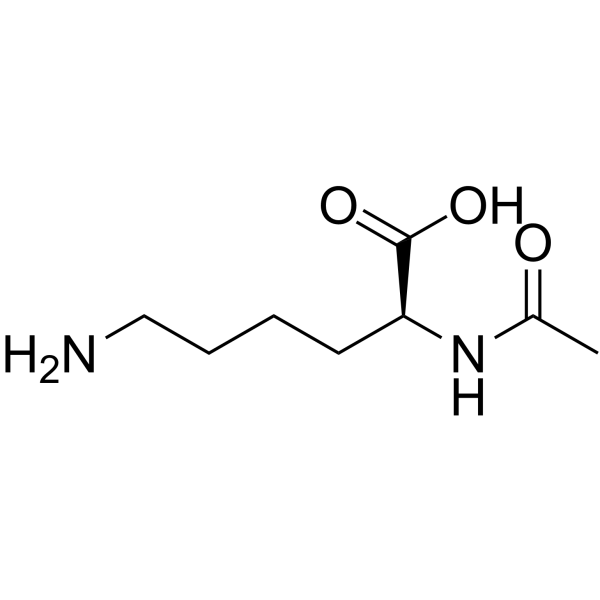
    Acetyl-L-lysine
    1 Publications Verification

    Endogenous Metabolite Metabolic Disease
    Acetyl-L-lysine is an acetylated form of the amino acid L-lysine. Acetyl-L-lysine can participate in protein acylation processes, affecting protein functions such as stability and enzyme activity .
    Acetyl-L-lysine
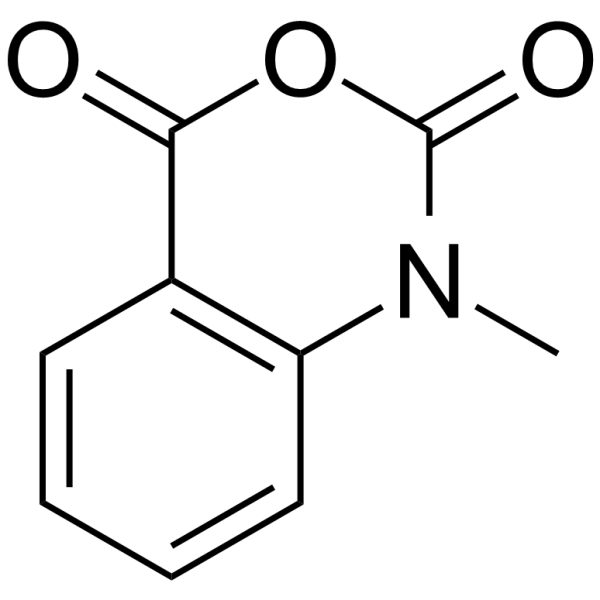
  • HY-18407

    Nucleoside Antimetabolite/Analog Others
    N-Methylisatoic anhydride is a heteronucleoside anhydride derivative conjugated with biotin and a disulfide linker for specific 2'-OH acylation of RNA. Biotin-conjugated N-Methylisatoic anhydride can selectively capture RNA from a mixture of biological RNA and DNA .
    N-Methylisatoic anhydride
  • HY-176542

    HDAC YAP Cancer
    TD034 is a selective, reversible and noncovalent HDAC11 inhibitor with an IC50 of 5.1 nM and a Ki of 1.5 nM. TD034 does not inhibit other HDACs or sirtuins. TD034 inhibits the defatty acylation of SHMT2 (HDAC11 substrate). TD034 decreases the YAP1 level via HDAC11 inhibition. TD034 can be used for the study of lung cancer .
    TD034
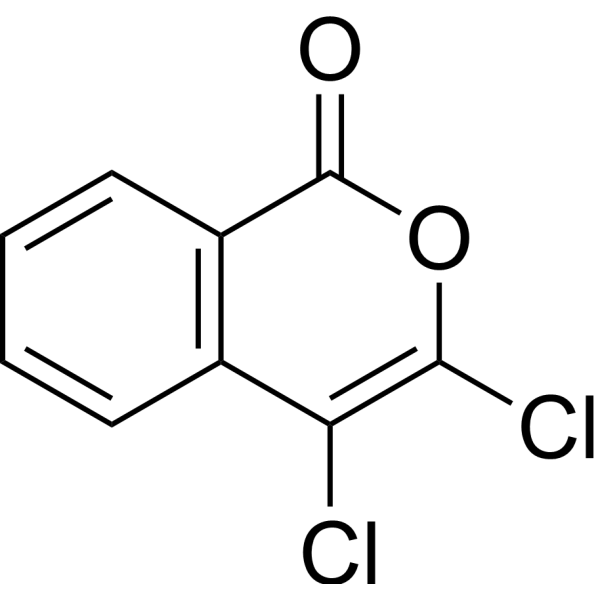
  • HY-126034

    Ser/Thr Protease Apoptosis Cardiovascular Disease Metabolic Disease Cancer
    3,4-Dichloroisocoumarin is a potent serine-protease and SrLip inhibitor (Ki for SrLip: 26.6 μM). 3,4-Dichloroisocoumarin is opened by serine proteases and then undergoes acylation with the enzyme, thereby inhibiting protease activity. 3,4-Dichloroisocoumarin can induce DNA fragmentation and Apoptosis. 3,4-Dichloroisocoumarin can be used in the research of multiple fields such as tumors, cardiovascular disease and enzyme catalytic mechanisms .
    3,4-Dichloroisocoumarin
  • HY-116284

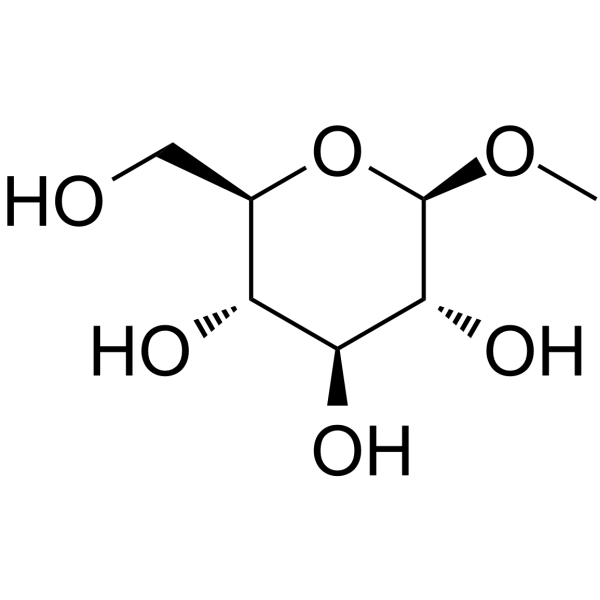
    Methyl β-D-glucoside

    Drug Intermediate Others
    Methyl β-D-glucopyranoside (Methyl β-D-glucoside) is a model glycosyl acceptor for enzymatic glycosylation reactions. Methyl β-D-glucopyranoside participates in glycoside synthesis and can react with acyl donors such as caffeic acid esters under the catalysis of specific enzymes (such as Lipozyme TL IM) to achieve acylation modification. Methyl β-D-glucopyranoside can generate biologically active derivatives (such as 6-O-caffeoyl glucoside). Methyl β-D-glucopyranoside can be used in organic synthesis and biocatalysis research, especially the efficient enzymatic preparation of medicinal glycosides (such as Robustaside B (HY-N2720), 6-O-caffeoyl salidroside) .
    Methyl β-D-glucopyranoside
  • HY-W015876

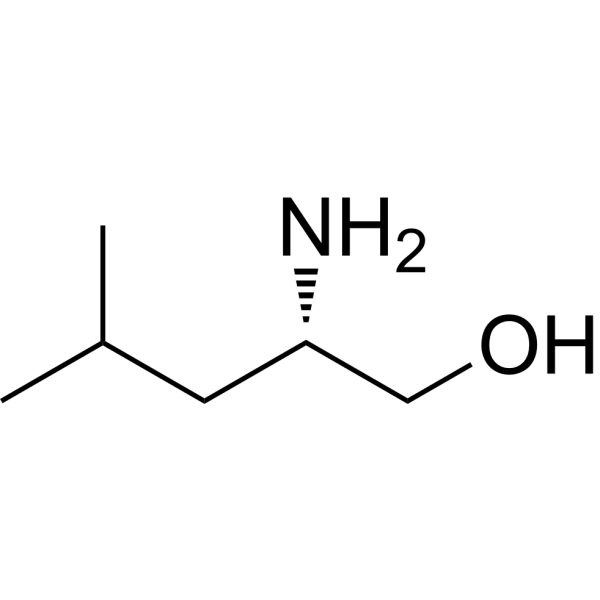
    (+)-Leucinol

    Aminopeptidase Others
    L-Leucinol ((+)-Leucinol) is a competitive aminopeptidase inhibitor with a Ki value of 17 μM. As a dietary intake inhibitor, L-Leucinol reduces the basal dietary leucine intake in rats via microinjection into the rat anterior piriform cortex .
    L-Leucinol
  • HY-41340

    Biochemical Assay Reagents Drug Intermediate Others
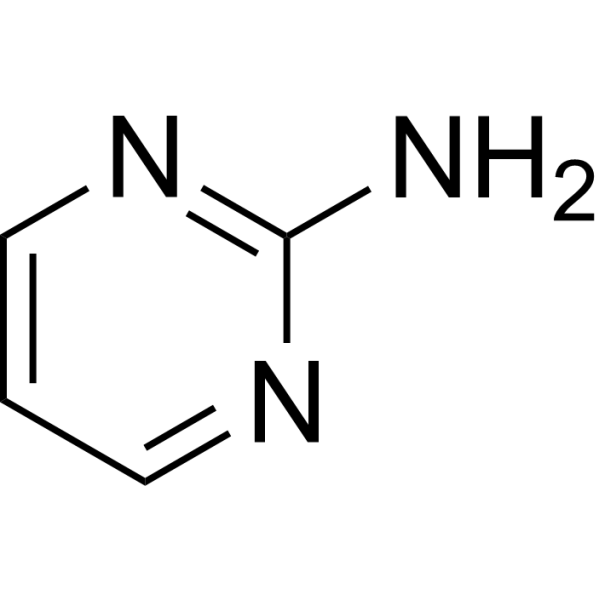
    2-Aminopyrimidine is an important heterocyclic intermediate. 2-Aminopyrimidine can undergo various reactions such as alkylation and acylation, and can be used for the synthesis of other active compounds .
    2-Aminopyrimidine
  • HY-155938
    Cyano-myracrylamide
    1 Publications Verification

    Acyltransferase Neurological Disease Inflammation/Immunology Cancer
    Cyano-myracrylamide is an inhibitor of zinc finger DHHC domain-containing palmitoyltransferase 20 (zDHHC20) with an IC50 value of 1.35 µM. Cyano-myracrylamide also inhibits the S-Acylation of EGFR and CD36. Cyano-myracrylamide also inhibits S-acylation of Legionella E3 ligase GobX, MyD88, and Ras, which are substrates of zDHHC20, zDHHC9, and zDHHC6, respectively, in HEK293T cells expressing recombinant Legionella GobX, recombinant human MyD88, or endogenous Ras .
    Cyano-myracrylamide
  • HY-W883690

    Endogenous Metabolite Others
    LacK (free acid) is a lysine derivative used in lactate acylation studies .
    LacK free acid
  • HY-W127410

    Biochemical Assay Reagents Others
    Hexanoic anhydride is used as a reactant for the synthesis of acremomannolipin A. For the green synthesis of acyclovir dipivoxil (acyclovir proagent), for the preparation of hexanoyl-modified chitosan nanoparticles, chitosan-based polymer surfactants by N-acylation of chitosan .
    Hexanoic anhydride
  • HY-166309

    Endogenous Metabolite Histone Acetyltransferase Infection Metabolic Disease Inflammation/Immunology
    Crotonyl-CoA tetralithium, a high-energy acyl donor, is an intermediate in the fermentation of butyric acid, and in the metabolism of lysine and tryptophan. Crotonyl-CoA tetralithium is important in the metabolism of fatty acids and amino acids. Crotonyl-CoA tetralithium acts as a substrate for p300’s histone crotonyltransferase activity, competing with acetyl-CoA for p300-mediated histone acylation reactions. Crotonyl-CoA tetralithium regulates global and gene-specific histone crotonylation levels in cells, with cellular concentration changes altering histone crotonylation at regulatory elements of activated genes. Crotonyl-CoA tetralithium serves as the substrate for crotonyl-CoA reductase/carboxylase (CCRC)-catalyzed NADPH-mediated reduction and carbon dioxide trapping to form unusual alkylmalonyl-CoA polyketide synthase extender units. Crotonyl-CoA tetralithium can be used for the research of LPS-induced inflammatory response .
    Crotonyl-CoA tetralithium
  • HY-121564

    Fluorescent Dye Others
    Radermachol is a red pigment that can be synthesized in four steps via a key ytterbium triflate-catalyzed furan cyclization and intramolecular nucleophilic acylation reaction .
    Radermachol
  • HY-W012890

    Valeric acid hydrazide

    Biochemical Assay Reagents Others
    Pentanehydrazide (Valeric acid hydrazide) is a biochemical reagent that can act as an effective alkylating agent in the copper-catalyzed oxidative cyclization of N-arylacrylamides and participate in the tandem acylation reaction .
    Pentanehydrazide
  • HY-W048838R

    Reference Standards Endogenous Metabolite Metabolic Disease
    Acetyl-L-lysine is an acetylated form of the amino acid L-lysine. Acetyl-L-lysine can participate in protein acylation processes, affecting protein functions such as stability and enzyme activity .
    Acetyl-L-lysine (Standard)
  • HY-18408

    FAI

    Biochemical Assay Reagents Others
    5S rRNA modificator is a suitable electrophile for 2’-hydroxyl acylation on structured RNA molecules, yielding accurate structural information comparable to that obtained with existing probes; 5S rRNA RNA modification.
    5S rRNA modificator
  • HY-41340R

    Biochemical Assay Reagents Reference Standards Drug Intermediate Others
    2-Aminopyrimidine (Standard) is the analytical standard of 2-Aminopyrimidine (HY-41340). This product is intended for research and analytical applications. 2-Aminopyrimidine is an important heterocyclic intermediate. 2-Aminopyrimidine can undergo various reactions such as alkylation and acylation, and can be used for the synthesis of other active compounds.
    2-Aminopyrimidine (Standard)
  • HY-117798

    Thrombin Cardiovascular Disease
    LY 806303 is a potent and selective inhibitor of human α-thrombin. LY 806303 specifically acylates Ser-205 within the catalytic triad of α-thrombin on the heavy chain and a key site involved in the enzymatic activity of thrombin. The mechanism of action of LY 806303 as an enzyme inhibitor is through the specific acylation of this catalytic serine residue .
    LY 806303
  • HY-124886

    N-Phenylacetylphenylalanine

    Amino Acid Derivatives Others
    N-(Phenylacetyl)-L-phenylalanine (N-Phenylacetylphenylalanine) is an amino acid analog. N-(Phenylacetyl)-L-phenylalanine is produced via the enantioselective acylation of L-phenylalanine catalyzed by penicillin G acylase from Alcaligenes faecalis. N-(Phenylacetyl)-L-phenylalanine undergoes hydrolysis in aqueous media .
    N-(Phenylacetyl)-L-phenylalanine
  • HY-103006R

    Biochemical Assay Reagents Reference Standards Others
    NAI-N3 (Standard) is the analytical standard of NAI-N3 (HY-103006). This product is intended for research and analytical applications. NAI-N3 is a RNA acylation reagent that enables RNA purification. NAI-N3 is a dual-function SHAPE (selective 2-hydroxyl acylation and profiling experiment) probe (RNA structure probe and enrichment) . It contains an azide group and can undergo copper-catalyzed azide-alkyne cycloaddition (CuAAc) with molecules containing alkyne groups. It can also undergo ring strain-promoted alkyne-azide cycloaddition (SPAAC) with molecules containing DBCO or BCN groups.
    NAI-N3 (Standard)
  • HY-182471

    Fungal Infection
    Aminopyrifen is a GWT-1 inhibitor. Aminopyrifen inhibits the inositol acylation of phosphatidylinositol, disrupting the maturation process of GPI-anchored proteins and the integrity of fungal cell walls. Aminopyrifen strongly inhibits germ tube elongation of Botrytis cinerea, delays spore germination, prevents appressorium formation, and blocks the infection of plant tissues by pathogenic fungi. Aminopyrifen is effective against field populations of eggplant gray mold and cucumber powdery mildew, and can be used for research on various plant fungal diseases such as gray mold and powdery mildew .
    Aminopyrifen
  • HY-116284A

    Methyl β-D-glucoside hemihydrate

    Drug Intermediate Others
    Methyl β-D-glucopyranoside (Methyl β-D-glucoside) hemihydrate is a model glycosyl acceptor for enzymatic glycosylation reactions. Methyl β-D-glucopyranoside hemihydrate participates in glycoside synthesis and can react with acyl donors such as caffeic acid esters under the catalysis of specific enzymes (such as Lipozyme TL IM) to achieve acylation modification. Methyl β-D-glucopyranoside hemihydrate can be used in organic synthesis and biocatalysis research, especially the efficient enzymatic preparation of medicinal glycosides (such as Robustaside B (HY-N2720), 6-O-caffeoyl salidroside) .
    Methyl β-D-glucopyranoside hemihydrate
  • HY-183806

    Others Cancer
    ANTXR1-IN-1 is a ANTXR1 inhibitor with a Ka of 2.88 μM for hANTXR1, and exhibits anti-tumor cell activity. ANTXR1-IN-1 undergoes acylation with Ser229 of ANTXR1, thereby inhibiting tumor cell proliferation. ANTXR1-IN-1 induces G2/M phase arrest and apoptosis in tumor cells. ANTXR1-IN-1 can be used for research on melanoma, non-small cell lung cancer, hepatocellular carcinoma, and colorectal cancer .
    ANTXR1-IN-1
  • HY-182019

    HDAC SHMT Apoptosis Reactive Oxygen Species (ROS) Ferroptosis Cancer
    HDAC11-IN-5 is a selective, potent and orally active HDAC11 inhibitor with an IC50 of 0.021 μM. HDAC11-IN-5 increases fatty acylation levels of substrate SHMT2 in AML cells. HDAC11-IN-5 induces apoptosis, G1 phase cell cycle arrest, ferroptosis, ROS production and terminal myeloid differentiation in AML cells. HDAC11-IN-5 demonstrates anti-tumor potency in an MLL-AF9-induced mouse AML model. HDAC11-IN-5 can be used for the research of cancer, such as acute myeloid leukemia .
    HDAC11-IN-5
  • HY-116284R

    Methyl β-D-glucoside (Standard)

    Reference Standards Drug Intermediate Others
    Methyl β-D-glucopyranoside (Methyl β-D-glucoside) (Standard) is the analytical standard of Methyl β-D-glucopyranoside. This product is intended for research and analytical applications. Methyl β-D-glucopyranoside is a model glycosyl acceptor for enzymatic glycosylation reactions. Methyl β-D-glucopyranoside participates in glycoside synthesis and can react with acyl donors such as caffeic acid esters under the catalysis of specific enzymes (such as Lipozyme TL IM) to achieve acylation modification. Methyl β-D-glucopyranoside can be used in organic synthesis and biocatalysis research, especially the efficient enzymatic preparation of medicinal glycosides (such as Robustaside B (HY-N2720), 6-O-caffeoyl salidroside).
    Methyl β-D-glucopyranoside (Standard)

Inquiry Online

Your information is safe with us. * Required Fields.

Salutation


Country or Region *

Applicant Name *


Organization Name *

Department *


Email Address *


Product Name *

Cat. No.


Requested quantity *

Phone Number *


Remarks

Inquiry Online

Inquiry Information

Product Name:
Cat. No.:
Quantity:
MCE Japan Authorized Agent:

