



Complement C3a Protein, Mouse
Based on 10 publication(s) in Google Scholar
Complement C3/C3a protein activates the complement system, playing a central role in both classical and alternative pathways. C3b binds covalently to cell surface carbohydrates or immune aggregates, while C3a acts as an inflammatory mediator, inducing neutrophil chemoattraction and promoting smooth muscle contraction, increased vascular permeability, and histamine release. The shorter isoform of C3a stimulates B-cells. Complement C3a Protein, Mouse is the recombinant mouse-derived Complement C3/C3a protein, expressed by E. coli , with tag free.
- Species: Mouse
- Source: E. coli
-
Storage:Stored at -20°C for 2 years from date of receipt. After reconstitution, it is stable at 4°C for 1 week or -20°C for longer (with carrier protein). It is recommended to freeze aliquots at -20°C or -80°C for extended storage.


To place orders, for customer services and technical support, please contact: MedChemExpress USA
Tel: 609-228-6898 E-mail: [email protected] [email protected]


-
 Biological Activity
-
Technical Parameters
-
Product Properties
- Documentation
- References
- Help & FAQs


-

HY-P7695
Complement C5a Protein, Mouse -
HY-101502A
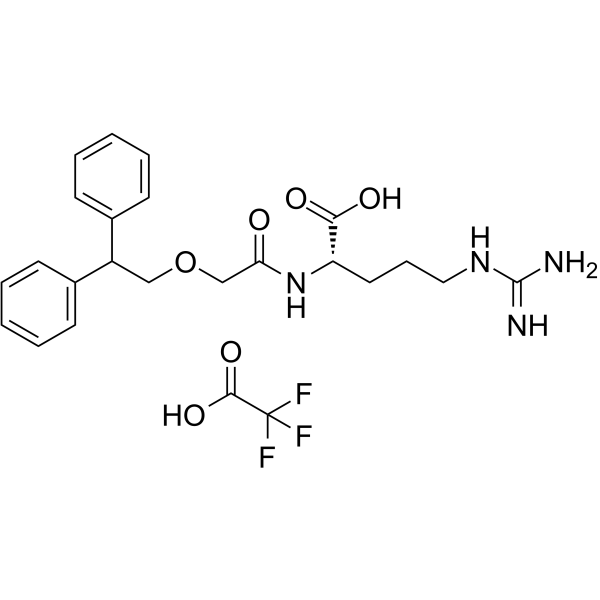
SB290157 trifluoroacetateC3aR Antagonist -
HY-P7862
Complement C3a Protein, Human -
HY-P78247
Complement C3 Protein, Mouse (HEK293, His) -
HY-P7085
M-CSF Protein, Mouse -
HY-17394
CisplatinDNA Alkylator -
HY-138161
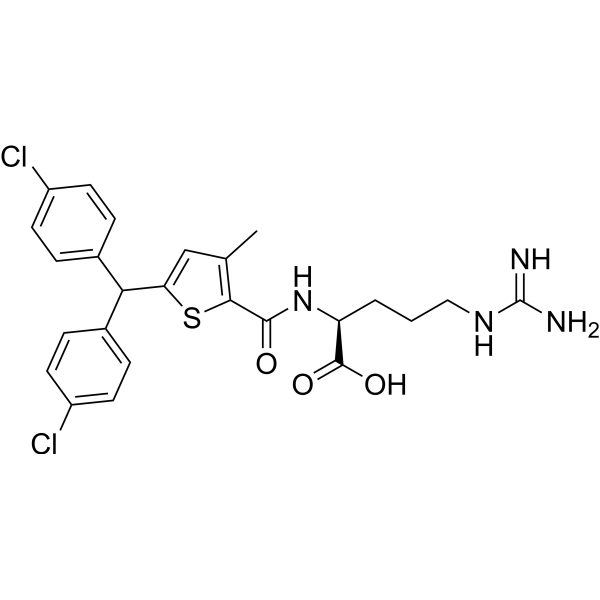
JR14aC3a Antagonist -
HY-P7119
TGF beta 2/TGFB2 Protein, Human (HEK293) -
HY-P702812
Granzyme K Protein, Mouse (His, Myc)


Biological Activity
Description
Complement C3/C3a protein activates the complement system, playing a central role in both classical and alternative pathways. C3b binds covalently to cell surface carbohydrates or immune aggregates, while C3a acts as an inflammatory mediator, inducing neutrophil chemoattraction and promoting smooth muscle contraction, increased vascular permeability, and histamine release. The shorter isoform of C3a stimulates B-cells. Complement C3a Protein, Mouse is the recombinant mouse-derived Complement C3/C3a protein, expressed by E. coli , with tag free.
Background
Complement C3/C3a protein plays a pivotal role in the activation of the complement system, being the central reaction in both classical and alternative pathways. Following activation, C3b can bind covalently to cell surface carbohydrates or immune aggregates through its reactive thioester. C3a, derived from the proteolytic degradation of complement C3, acts as a local inflammatory mediator, inducing neutrophil chemoattraction and promoting smooth muscle contraction, increased vascular permeability, and histamine release from mast cells and basophilic leukocytes. Additionally, the shorter isoform of C3a exhibits B-cell stimulatory activity.
In Vitro
Complement C3/C3a Protein, Mouse (0-500 ng/mL, 48 h) enhances the expression of C3aR in Panc-02 cell, induces the activation of C3a/C3aR signaling pathway, thereby promoting the proliferation and migration ability of Panc-02 cell, and reducing its sensitivity to Gemcitabine (HY-17026)[1].
Complement C3/C3a Protein, Mouse (10 µg/mL, 1 h) enhances the phagocytosis of mouse primary microglia cells[2].
Complement C3/C3a Protein, Mouse (100 nM, 24-72 h) upregulates the expression of LC3B, downregulates the expression of p62, promotes podocyte autophagy under high glucose conditions in MPC-5 cell[3].
Verified Bioactivity
Measured by its ability to enhance IL-6 secretion by THP-1 human acute monocytic leukemia cells. The ED50 for this effect is 0.4-3.0 μg/mL.
MCE Validation Data
-
Purity - SDS-PAGE
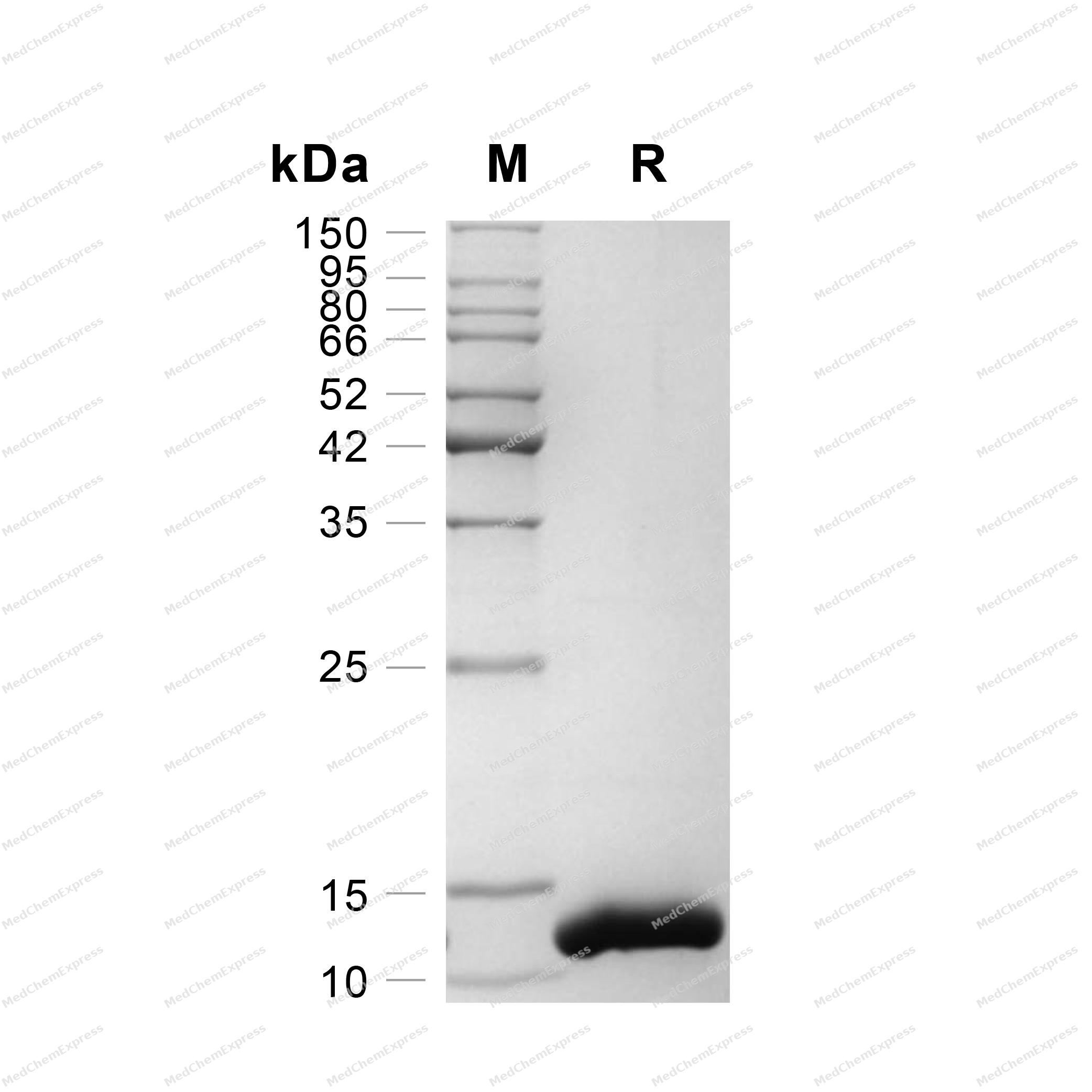
Purity - SDS-PAGE
-
Bioactivity - Cell-Based Assay
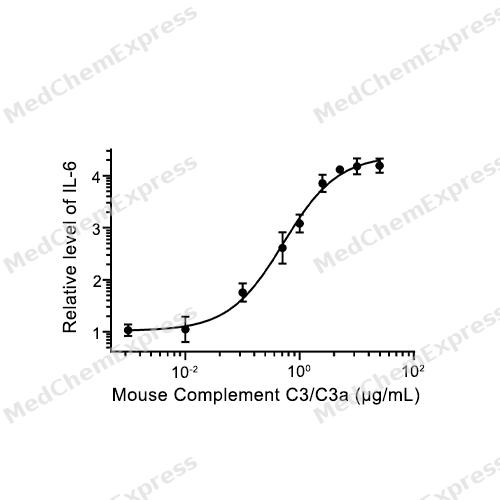
Bioactivity - Cell-Based Assay


Publications (10)
-
Journal Impact Factor
-
Most Recent
-
-
J Neuroinflammation
Dual inhibition of IRAK1/TAK1 signaling in astrocytes reduces accelerated mortality in human APOE4 knock-in APPswe/PSEN1dE9/P301S-Tau triple transgenic mouse model. [Abstract]2025 Oct 21;22(1):237. PMID: 41121315 -
J Neuroinflammation
Intravitreal delivery of NMO-IgG causes primary retinal damage in the absence of optic nerve injury. [Abstract]2025 Mar 7;22(1):69. PMID: 40055743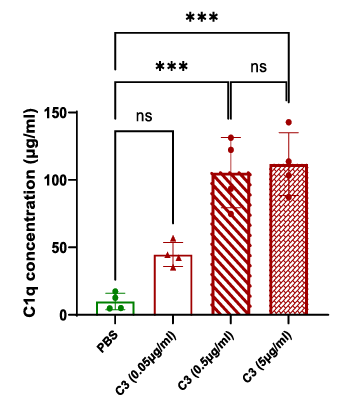
Complement C3a Protein, Mouse purchased from MedChemExpress. Usage Cited in: J Neuroinflammation. 2025 Mar 7;22(1):69. [Abstract]
Complement C3 (0.05, 0.5, and 5 µg/mL for 6 h) increased C1qa concentration in the medium of BV2 cells in a dose-dependent manner.
-
J Neuroinflammation
Microglia mediate memory dysfunction via excitatory synaptic elimination in a fracture surgery mouse model. [Abstract]2024 Sep 16;21(1):227. PMID: 39285282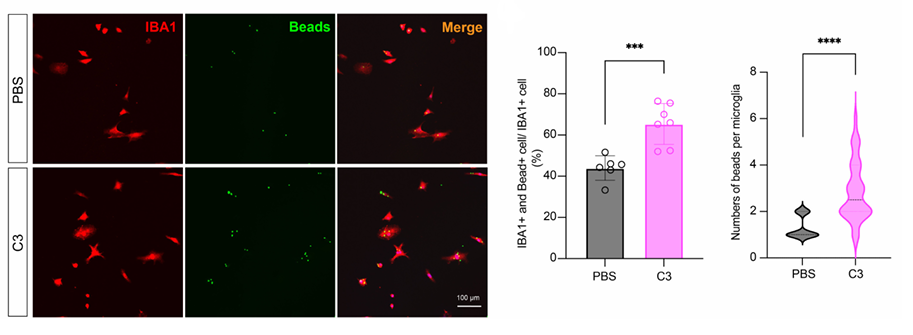
Complement C3a Protein, Mouse purchased from MedChemExpress. Usage Cited in: J Neuroinflammation. 2024 Sep 16;21(1):227. [Abstract]
Complement C3 treatment (10 µg/mL, 1 h) enhanced phagocytic capability, reflected by increased colocalization of fluorescent latex beads with microglia.
-
Cell Rep
Oral γδT17 cells induced by macrophage-derived extracellular vesicles in periodontitis exacerbate rheumatoid arthritis. [Abstract]2026 Jun 23;45(6):117372. PMID: 42225070 -
Biochem Pharmacol
Complement C3/C3a-CCL9 feedback loop orchestrates inflammatory crosstalk to accelerate aortic dissection. [Abstract]2025 Oct 13:117421. PMID: 41093012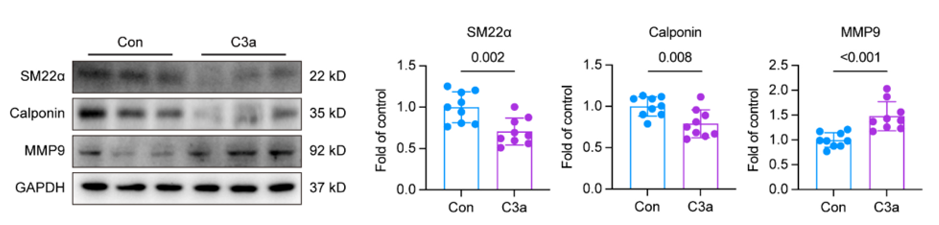
Complement C3a Protein, Mouse purchased from MedChemExpress. Usage Cited in: Biochem Pharmacol. 2025 Oct 13:117421. [Abstract]
Western blot analysis of VSMC phenotypic markers in MOVAS cells following 10 ng/mL C3a stimulation for 6 h, showing downregulation of contractile proteins SM22α and Calponin, and upregulation of the synthetic marker MMP9 (n = 9).
Complement C3a Protein, Mouse purchased from MedChemExpress. Usage Cited in: Biochem Pharmacol. 2025 Oct 13:117421. [Abstract]
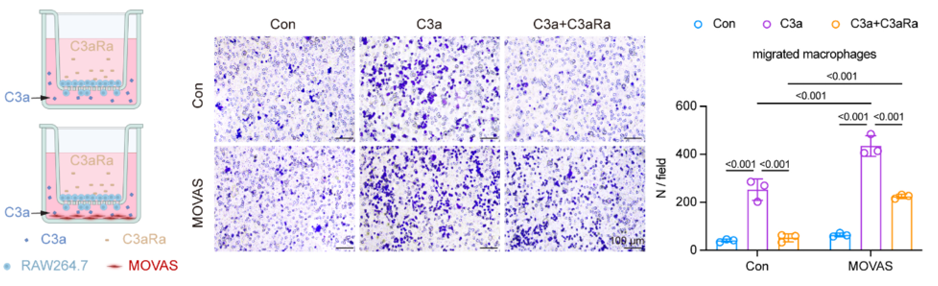
Schematic diagram, representative images, and quantitative analysis of Transwell migration assays. RAW 264.7 macrophages were seeded in the upper chamber, with or without the C3a receptor antagonist (C3aRa), while the lower chamber contained either MOVAS cells or medium alone supplemented with 10 ng/mL C3a. After 48 hours, migrated macrophages were fixed, stained, and quantified (n = 3).
Complement C3a Protein, Mouse purchased from MedChemExpress. Usage Cited in: Biochem Pharmacol. 2025 Oct 13:117421. [Abstract]
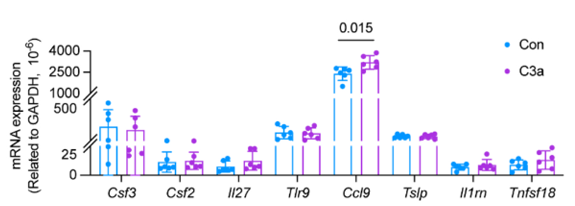
Quantitative RT-PCR validation of representative cytokine-related genes in MOVAS cells following C3a (10 ng/mL, 6 hours) treatment (n = 6).
-
-
Comput Struct Biotechnol J
The complement C3a/C3aR pathway is associated with treatment resistance to gemcitabine-based neoadjuvant therapy in pancreatic cancer. [Abstract]2024 Oct 5:23:3634-3650. PMID: 39469671 -
FASEB J
C-reactive protein inhibits C3a/C3aR-dependent podocyte autophagy in favor of diabetic kidney disease. [Abstract]2022 Jun;36(6):e22332. PMID: 35503088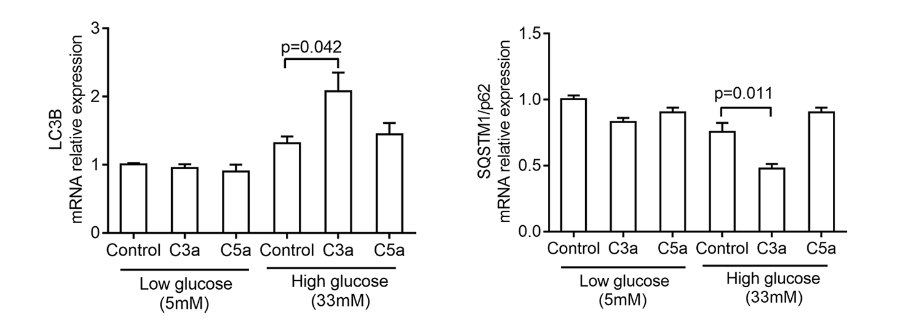
Complement C3a Protein, Mouse purchased from MedChemExpress. Usage Cited in: FASEB J. 2022 Jun;36(6):e22332. [Abstract]
Quantitative RT-PCR analysis of LC3B and p62 expression under low-glucose and high-glucose conditions with C3a and C5a treatment (both 100 nM, 24 h; n = 3).
Complement C3a Protein, Mouse purchased from MedChemExpress. Usage Cited in: FASEB J. 2022 Jun;36(6):e22332. [Abstract]
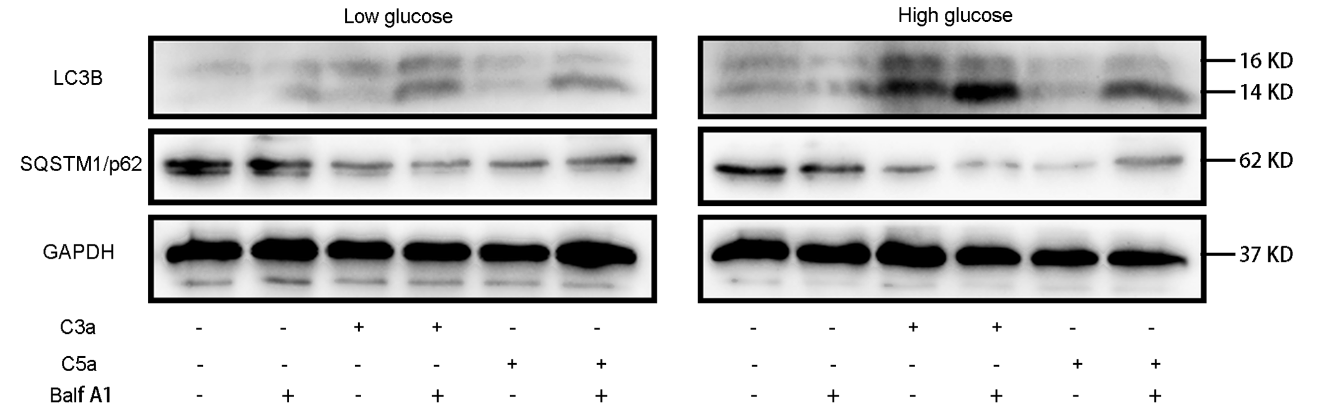
Western blot and quantitative analysis of LC3B and p62 expression under high-glucose conditions with C5a treatment (100 nM, 48 h; n = 4).
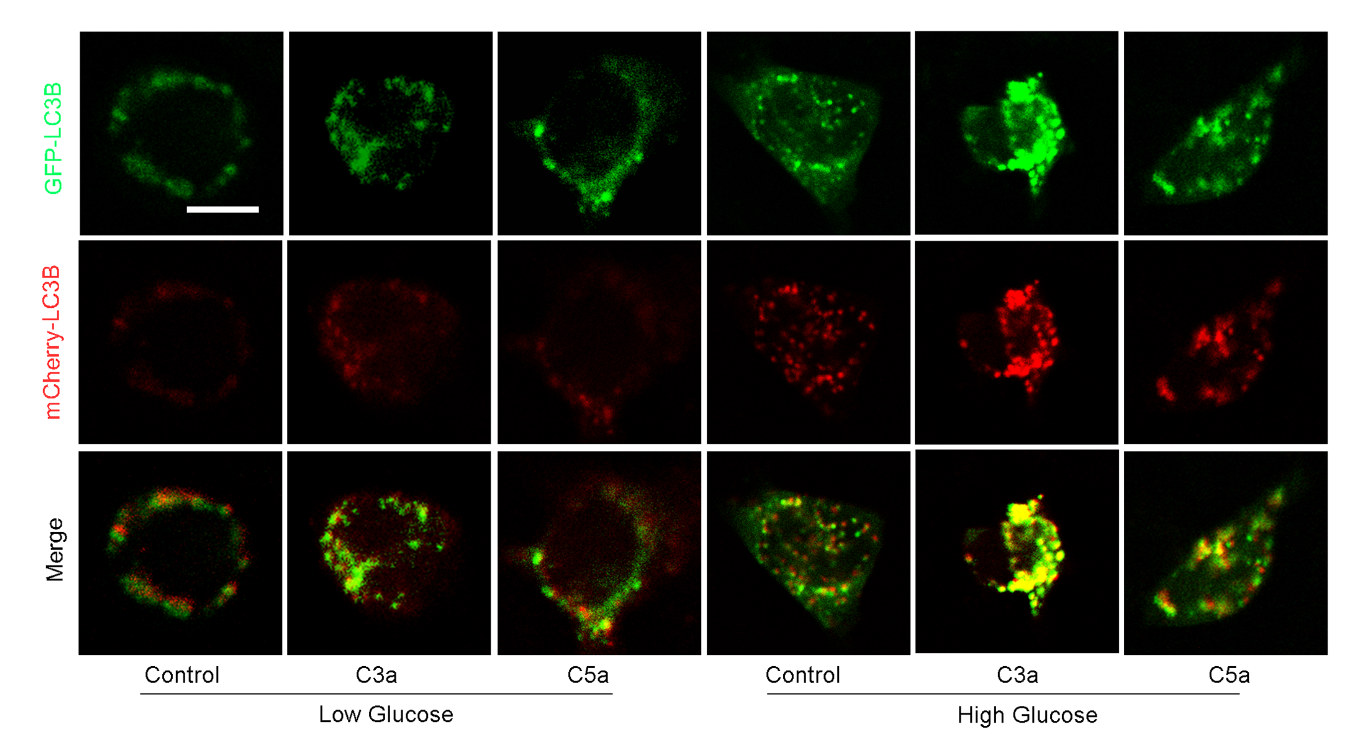
Complement C3a Protein, Mouse purchased from MedChemExpress. Usage Cited in: FASEB J. 2022 Jun;36(6):e22332. [Abstract]
Representative images of autophagy flux changes with C3a and C5a treatment (both 100 nM, 48 h; n = 3). 600× original magnification; scale bar, 10 µm. Data are presented as the means ± SEM, p < 0.05 was considered to be statistically significant.
-


Technical Parameters
-
Species Mouse
-
Source E. coli
-
Tag Tag Free
-
Accession
P01027-1 (S671-R748)
-
Molecular Construction
-
N-term
-
C3a (S671-R748)
Accession # P01027 -
C-term
-
-
Protein Length
Full Length of C3a anaphylatoxin Chain
-
Synonyms
C3; Complement Component 3; Complement C3; C3a Anaphylatoxin; CPAMD1; Prepro-C3; ARMD9; Epididymis Secretory Sperm Binding Protein Li 62p; C3a; Acylation-Stimulating Protein Cleavage Product; C3b; HEL-S-62p; C3 And PZP-Like Alpha-2-Macroglobulin Domain-Co
-
AA Sequence
SVQLMERRMDKAGQYTDKGLRKCCEDGMRDIPMRYSCQRRARLITQGENCIKAFIDCCNHITKLREQHRRDHVLGLAR
-
Predicted Molecular Mass
9.2 kDa
-
Molecular Weight
Approximately 9 kDa, based on SDS-PAGE under reducing conditions.
-
Purity
≥ 95%, as determined by reducing SDS-PAGE.


Product Properties
Lyophilized powder
1.Lyophilized from a 0.22 μm filtered solution of PBS, pH 7.4.
2.Lyophilized from a 0.22 μm filtered solution of 20 mM PB, 150 mM NaCl, pH 7.4.
3.Lyophilized from a 0.22 μm filtered solution of PBS, pH 7.4, 8% trehalose.
Please refer to the lot-specific COA for specific buffer information.
<1 EU/μg, determined by LAL method.
It is not recommended to reconstitute to a concentration less than 100 μg/mL in ddH2O. For long term storage it is recommended to add a carrier protein (0.1% BSA, 5% HSA, 10% FBS or 5% Trehalose).
Stored at -20°C for 2 years from date of receipt. After reconstitution, it is stable at 4°C for 1 week or -20°C for longer (with carrier protein). It is recommended to freeze aliquots at -20°C or -80°C for extended storage.
Room temperature in continental US; may vary elsewhere.


Documentation
-
Data Sheet (262 KB)
-
SDS (254 KB)
- English - EN (254 KB)
- Français - FR (254 KB)
- Deutsch - DE (254 KB)
- Norwegian - NO (254 KB)
- Español - ES (254 KB)
- Swedish - SV (254 KB)
- Italian - IT (254 KB)
- Korean - KR (254 KB)
- Portuguese - PT (254 KB)
-
Handling Instructions (2659 KB)


References
[1]. Shi S, et al., The complement C3a/C3aR pathway is associated with treatment resistance to gemcitabine-based neoadjuvant therapy in pancreatic cancer. Comput Struct Biotechnol J. 2024 Oct 5;23:3634-3650. [Content Brief]
[2]. Li S, et al., Microglia mediate memory dysfunction via excitatory synaptic elimination in a fracture surgery mouse model. J Neuroinflammation. 2024 Sep 16;21(1):227. [Content Brief]
[3]. Zhang L, et al., C-reactive protein inhibits C3a/C3aR-dependent podocyte autophagy in favor of diabetic kidney disease. FASEB J. 2022 Jun;36(6):e22332. [Content Brief]

Calculators
Concentration (start) × Volume (start) = Concentration (final) × Volume (final)


 Powered by Bioz

