Search Result
Results for "
azide functional group
" in MedChemExpress (MCE) Product Catalog:
14
Biochemical Assay Reagents
| Cat. No. |
Product Name |
Target |
Research Areas |
Chemical Structure |
-
- HY-137383
-
|
|
Biochemical Assay Reagents
Reactive Oxygen Species (ROS)
|
Others
|
|
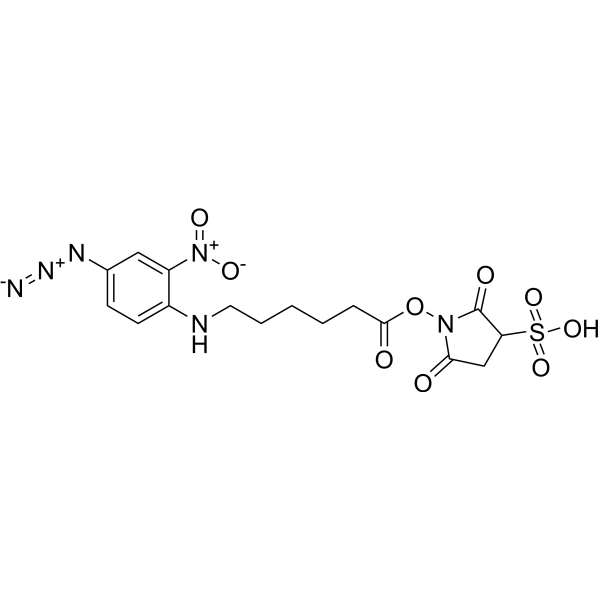
Sulfo-SANPAH is a primary amine-nitrobenzene azide cross-linker. Sulfo-SANPAH improves the functionalization process of PDMS surfaces, is covalently bound to the PAAm gel surface. Sulfo-SANPAH is widely used to crosslink ECM proteins to various substrates, including acrylic-based hydrogels, such as polyacrylamide hydrogels. Sulfo-SANPAH facilitates covalent binding through its negatively charged sulfonate group on its N-hydroxysuccinimide ester ring and a photoactivated phenyl azide group that is highly reactive with nucleophiles and free radicals .
|
-
-
- HY-D1314
-
|
6-FAM azide
|
Fluorescent Dye
|
Others
|
|
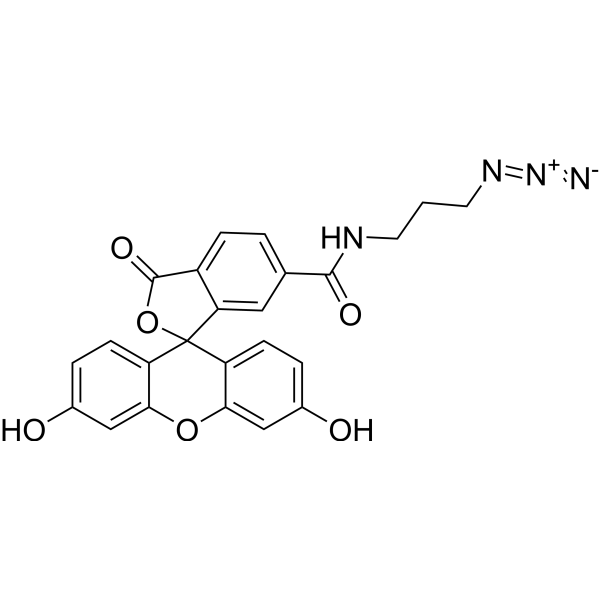
FAM azide, 6-isomer (6-FAM azide) is a 6-carboxyfluorescein derivative with an azide functional group and coupling partner in copper-catalyzed azide-alkyne cycloaddition. FAM azide, 6-isomer participates in synthesis of fluorescently tagged disparlure enantiomers for pheromone-binding protein binding assays. FAM azide, 6-isomer is widely used for labeling oligonucleotides (Ex/Em = 493/517 nm) .
|
-
-
- HY-133870
-
|
ITalk
|
Fluorescent Dye
|
Inflammation/Immunology
|
|
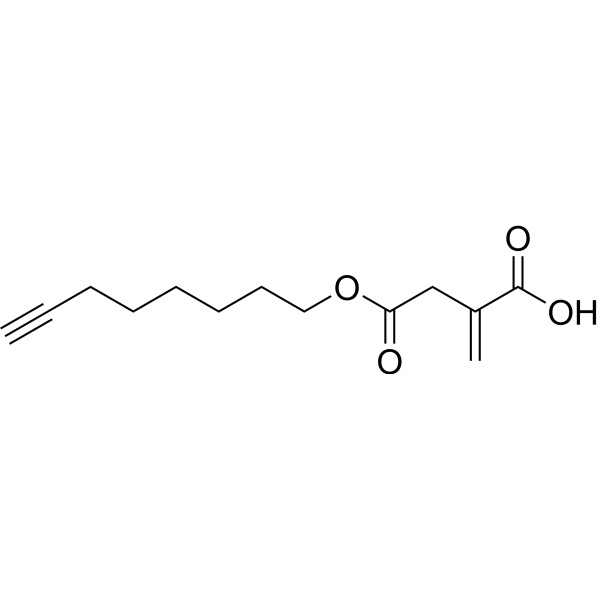
Itaconate-alkyne (ITalk) is a specific bioorthogonal probe for quantitative and site-specific chemoproteomic profiling of Itaconation in living cells. Itaconate-alkyne, a functional analogue of Itaconate, exhibits comparable antiinflammatory effect with Itaconate and enables the labeling of bona fide targets of Itaconate . Itaconate-alkyne is a click chemistry reagent, it contains an Alkyne group and can undergo copper-catalyzed azide-alkyne cycloaddition (CuAAc) with molecules containing Azide groups.
|
-
-
- HY-W336328
-
|
|
Biochemical Assay Reagents
|
Others
|
|
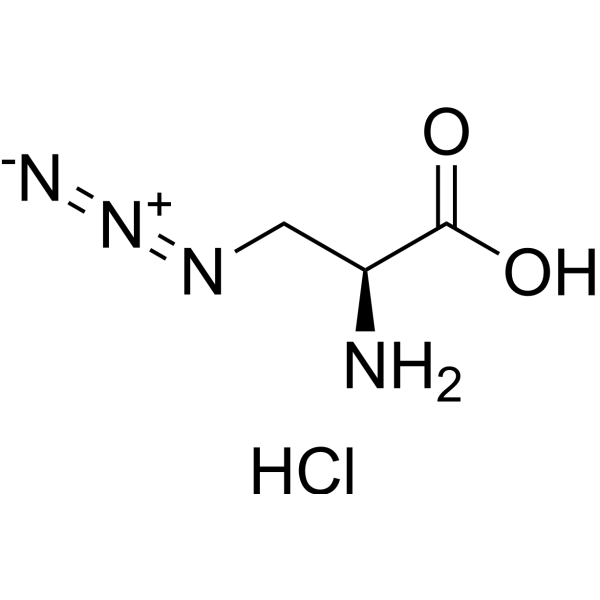
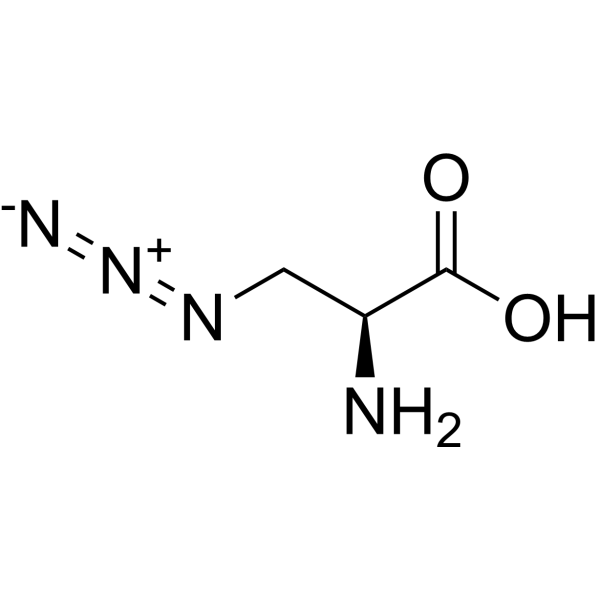
3-Azido-L-alanine hydrochloride is an aliphatic functionalized amino acid with side chain lengths of up to four carbons . 3-Azido-L-alanine (hydrochloride) is a click chemistry reagent, it contains an Azide group and can undergo copper-catalyzed azide-alkyne cycloaddition reaction (CuAAc) with molecules containing Alkyne groups. It can also undergo strain-promoted alkyne-azide cycloaddition (SPAAC) reactions with molecules containing DBCO or BCN groups.
|
-
-
- HY-B2091
-
|
|
Antibiotic
Bacterial
|
Infection
|
|
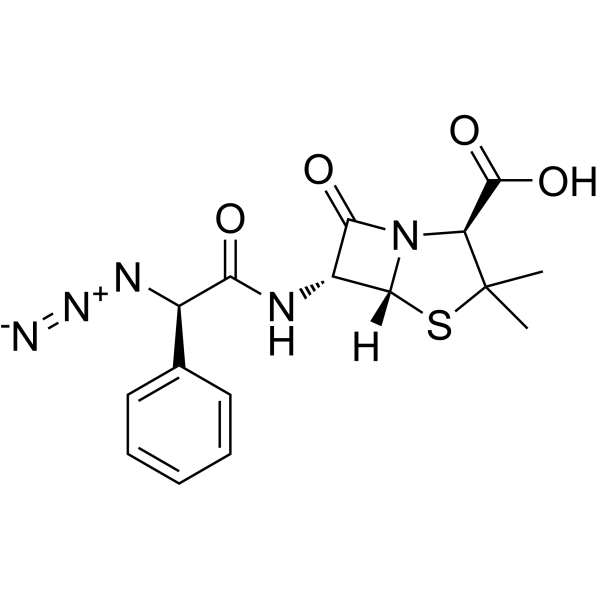
Azidocillin, a semi-synthetic Penicillin, is an orally active β-lactam antibiotic. Azidocillin bears an azide functionality and retains on-target activity within bacteria. Azidocillin can be used to research osteitis caused by dental surgery, otitis media, enterococcal septicemia and other bacterial infectious diseases . Azidocillin is a click chemistry reagent, it contains an Azide group and can undergo copper-catalyzed azide-alkyne cycloaddition reaction (CuAAc) with molecules containing Alkyne groups. It can also undergo strain-promoted alkyne-azide cycloaddition (SPAAC) reactions with molecules containing DBCO or BCN groups.
|
-
-
- HY-151646
-
|
Alkyne-PEG5-BG
|
ADC Linker
|
Others
|
|
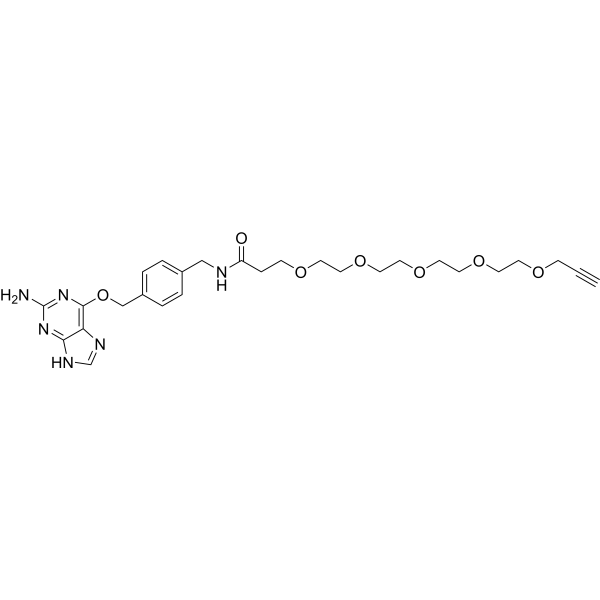
Alkyne-PEG5-SNAP is a click chemistry reagent containing an alkyne group. Alkyne-PEG5-SNAP can alkyne conjugated benzylguanine (BG), the BG moiety reacts specifically and rapidly with SNAP-tag, a polypeptide protein tag, allowing irreversible and covalent labeling of SNAP fusion proteins with an additional alkyne functionality suitable for further conjugation . Alkyne-PEG5-SNAP is a click chemistry reagent, it contains an Alkyne group and can undergo copper-catalyzed azide-alkyne cycloaddition (CuAAc) with molecules containing Azide groups.
|
-
-
- HY-152684
-
|
|
Nucleoside Antimetabolite/Analog
|
Others
|
|
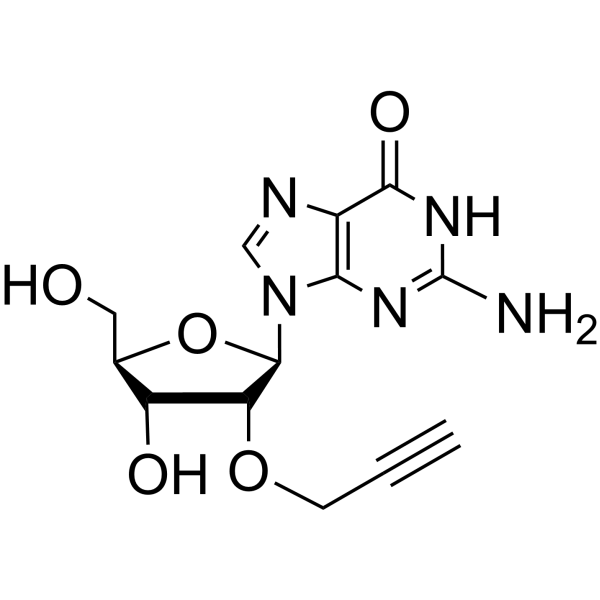
2′-O-2-Propyn-1-ylguanosine is a guanosine analogue. Some guanosine analogs have immunostimulatory activity. In some animal models, they also induce type I interferons, producing antiviral effects. Studies have shown that the functional activity of guanosine analogs is dependent on the activation of Toll-like receptor 7 (TLR7) . 2′-O-2-Propyn-1-ylguanosine is a click chemistry reagent, it contains an Alkyne group and can undergo copper-catalyzed azide-alkyne cycloaddition (CuAAc) with molecules containing Azide groups.
|
-
-
- HY-151727
-
|
|
ADC Linker
|
Others
|
|
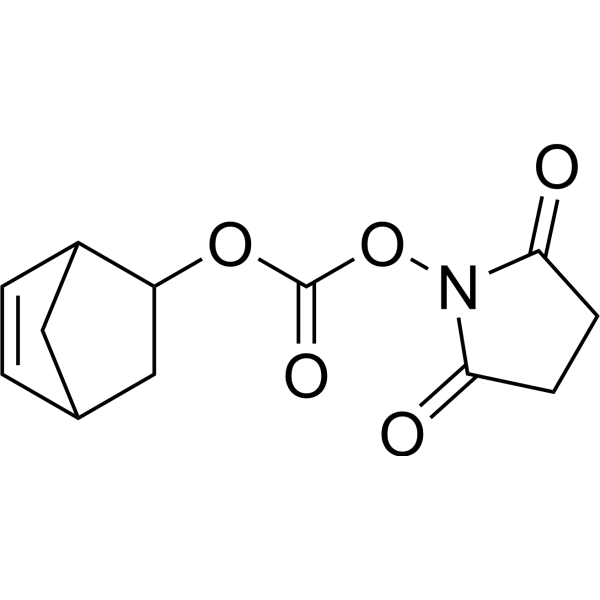
Norbornene-NHS is a norbornene-functionalized antibody-drug conjugate linker (ADC Linker) bearing an NHS ester, which is applicable for highly efficient and specific antibody conjugation reactions in ADC research and development. Norbornene-NHS also acts as an azide-group-containing click chemistry reagent, serving as a dienophile for copper-free click reaction conjugation .
|
-
-
- HY-151641
-
|
|
Biochemical Assay Reagents
|
Others
|
|
3-Azido-L-alanine is an aliphatic functionalized amino acid with side chain lengths of up to four carbons . 3-Azido-L-alanine is a click chemistry reagent, it contains an Azide group and can undergo copper-catalyzed azide-alkyne cycloaddition reaction (CuAAc) with molecules containing Alkyne groups. It can also undergo strain-promoted alkyne-azide cycloaddition (SPAAC) reactions with molecules containing DBCO or BCN groups.
|
-
-
- HY-176846
-
|
|
Biochemical Assay Reagents
|
Others
|
|
HIPS probe-1 (Compound 1) is a click chemistry reagent containing a alkyne group. HIPS probe-1 can undergo copper-catalyzed azide-alkyne cycloaddition (CuAAc) with molecules containing Azide groups. HIPS probe-1 can be used as a chemical probe to specifically recognize and label aldehyde functional groups in DNA, especially abasic sites (AP sites) for DNA damage research .
|
-
-
- HY-152478
-
|
|
Nucleoside Antimetabolite/Analog
|
Cancer
|
|
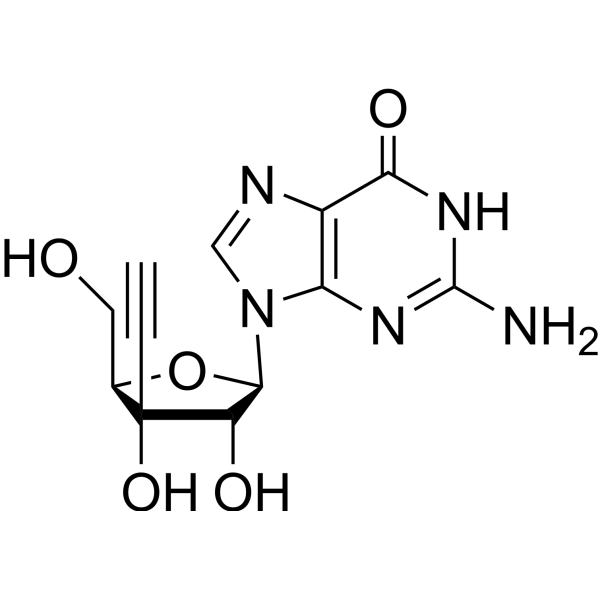
3’-β-C-Ethynylguanosine is a guanosine analog. Some guanosine analogs have immunostimulatory activity. In some animal models, they also induce type I interferons, producing antiviral effects. Studies have shown that the functional activity of guanosine analogs is dependent on the activation of Toll-like receptor 7 (TLR7) . 3’-β-C-Ethynylguanosine is a click chemistry reagent, it contains an Alkyne group and can undergo copper-catalyzed azide-alkyne cycloaddition (CuAAc) with molecules containing Azide groups.
|
-
-
- HY-151822
-
|
|
ADC Linker
|
Others
|
|
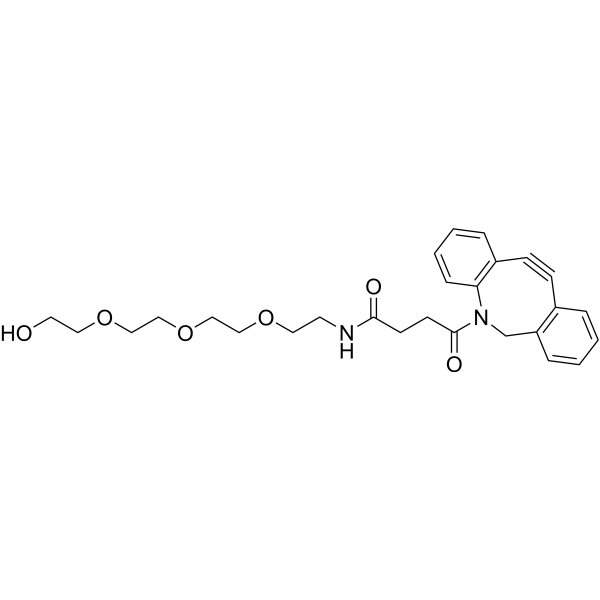
Hydroxy-PEG3-DBCO is a click chemistry reagent containing an azide group. Hydroxy-PEG3-DBCO is a PEG linker containing a DBCO moiety and a terminal primary hydroxyl group. The hydroxyl can react with a variety of functional groups and the hydrophilic PEG spacer arm can provide better solubility to labeled molecules. DBCO is commonly used for copper-free Click Chemistry reactions. Reagent grade, for research use only .
|
-
-
- HY-151826
-
|
|
ADC Linker
|
Others
|
|
Fmoc-D-Lys(pentynoyl)-OH is a click chemistry reagent containing an azide group. Used to introduce alkyne functionality into peptides that can be further modified using Click-chemistry .
|
-
-
- HY-D1860
-
|
|
Fluorescent Dye
|
Others
|
|
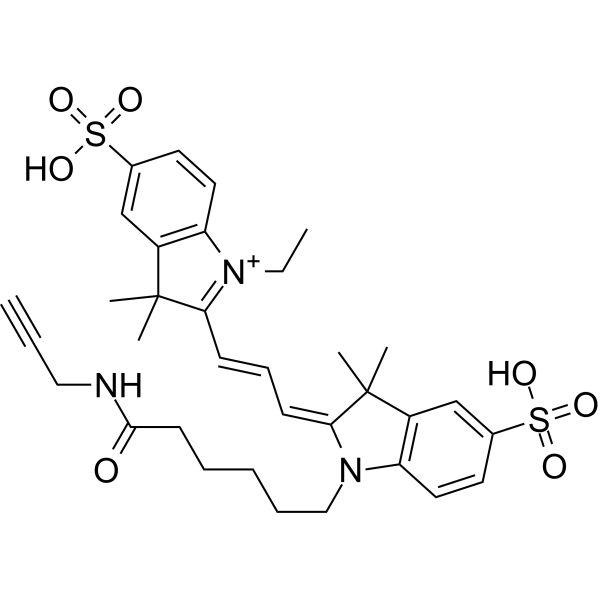
Cy3 alkyne chloride is a dye derivative of Cyanine 3 (Cy3) (HY-D0822) containing a sulfonate ion and an alkyne functional group. Cy3 is a fluorescent dye with a fluorescence spectrum typically in the green to orange wavelength range. The alkyne functional group of Cy3 alkyne chloride can react with molecules containing the azide functional group to form covalent bonds. Cy3 alkyne chloride can bind to biological molecules such as proteins and antibodies to track their location and dynamic changes in biological samples.
|
-
-
- HY-128930
-
|
|
ADC Linker
|
Cancer
|
|
6-O-2-Propyn-1-yl-D-galactose is a nonclaevable glycolinker for the functionalization of cytotoxic agents and applications in antibody-agent conjugation. 6-O-2-Propyn-1-yl-D-galactose is a click chemistry reagent, it contains an Alkyne group and can undergo copper-catalyzed azide-alkyne cycloaddition (CuAAc) with molecules containing Azide groups.
|
-
-
- HY-115715A
-
|
|
Fluorescent Dye
|
Cancer
|
|
EN219-alkyne is an alkyne-functionalized EN219 probe. EN219 (HY-P0287A) is a moderately selective synthetic covalent ligand against an N-terminal cysteine (C8) of RNF114 with an IC50 of 470 nM. EN219 inhibits RNF114-mediated autoubiquitination and p21 ubiquitination . EN219-alkyne is a click chemistry reagent, it contains an Alkyne group and can undergo copper-catalyzed azide-alkyne cycloaddition (CuAAc) with molecules containing Azide groups.
|
-
-
- HY-174359C
-
|
|
Biochemical Assay Reagents
|
Others
|
|
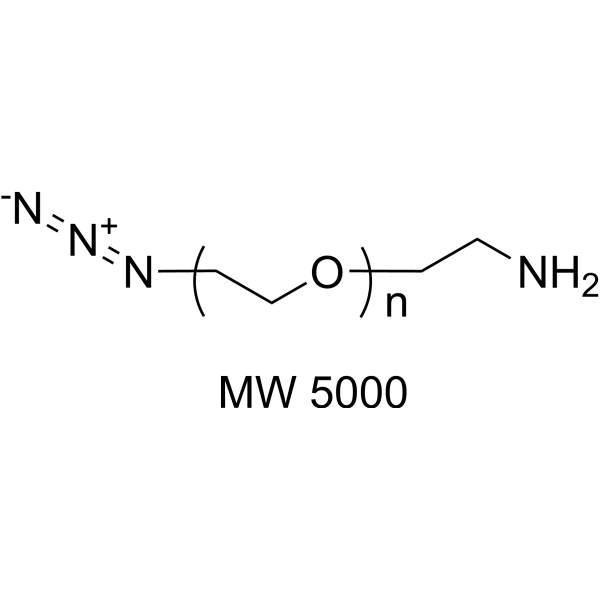
Alkyne-PEG5000-NH2 is an alkyne-functionalized bifunctional PEG derivative that can be used to modify proteins, peptides, and other materials. The alkyne group reacts with azides in aqueous solution in a copper-catalyzed manner. PEGylation can increase solubility and stability and reduce the immunogenicity of peptides and proteins .
|
-
-
- HY-151766
-
|
|
ADC Linker
|
Others
|
|
DACN(Tos,Suc-OH) is a click chemistry reagent containing a cycloalkyne group. The alkyne moiety within the ring has a unique bent structure and high reactivity toward cycloaddition reactions. Such strain-promoted azide-alkyne cycloadditions (SPAAC) using cycloalkynes have served for reliable molecular conjugation in a broad range of fields. The nitrogens are used as connection points for a variety of functional units. DACNs possess high thermal and chemical stability along with comparable click reactivity .
|
-
-
- HY-W749217A
-
|
|
Fluorescent Dye
|
Others
|
|
Cyanine 3.5 azide is a cyanine dye functionalized with an azide. Cyanine 3.5 azide is a click chemistry reagent, it contains an Azide group and can undergo copper-catalyzed azide-alkyne cycloaddition reaction (CuAAc) with molecules containing Alkyne groups. It can also undergo strain-promoted alkyne-azide cycloaddition (SPAAC) reactions with molecules containing DBCO or BCN groups (Ex/Em = 633/670 nm).
|
-
-
- HY-D1868
-
|
|
Fluorescent Dye
|
Others
|
|
Cy3 azide plus is a Cyanine 3 (Cy3) (HY-D0822) dye derivative with an azide functional group. Cy3 is a fluorescent dye with a fluorescence spectrum typically in the green to orange wavelength range. The azide group of Cy3 azide plus can react chemically with molecules containing alkyne functionality, such as alkyne or cyclooctyne, to form covalent bonds. Therefore, Cy3 azide plus can bind to biomolecules such as proteins and antibodies to track their location and dynamic changes in biological samples.
|
-
-
- HY-D1850
-
|
|
Fluorescent Dye
|
Others
|
|
Sulfo-Cy7.5 azide is a Cyanine 7.5 (Cy7.5) (HY-D0926) dye derivative with azide and sulfonate functional groups. The sulfonate ion increases the water solubility of the compound, making it suitable for use in aqueous solutions. Cy7.5 is a near-infrared fluorescent dye commonly used for biolabeling and cell imaging. The azide group of Sulfo-Cy7.5 azide can react chemically with molecules containing alkyne functionality, such as alkyne or cyclooctyne, to form covalent bonds. Therefore, Sulfo-Cy7.5 azide can bind to biomolecules such as proteins and antibodies to track their location and dynamic changes in biological samples. It contains an azide group and can undergo copper-catalyzed azide-alkyne cycloaddition (CuAAc) with molecules containing alkyne groups. It can also undergo ring strain-promoted alkyne-azide cycloaddition (SPAAC) with molecules containing DBCO or BCN groups.
|
-
-
- HY-D1318
-
|
|
Fluorescent Dye
|
Others
|
|
Cyanine7.5 azide chloride is a dye derivative of Cyanine 7.5 (Cy7.5) (HY-D0926) with an azide functional group. Cy7.5 is a near-infrared fluorescent dye commonly used for biolabeling and cell imaging. The azide group of Cyanine7.5 azide chloride can react chemically with molecules containing alkyne functionality, such as alkyne or cyclooctyne, to form covalent bonds. Therefore, Cyanine7.5 azide chloride can bind to biomolecules such as proteins and antibodies to track their location and dynamic changes in biological samples.
|
-
-
- HY-W591962
-
|
1-Pentanol, 5-azido-
|
Biochemical Assay Reagents
|
Others
|
|
5-Azidopentan-1-ol (1-Pentanol, 5-azido-) is a linker containing an azide group and a terminal hydroxyl group. The azide group can react with alkyne, BCN, DBCO via Click Chemistry to yield a stable triazole linkage. The hydroxyl group enables further derivatization or replacement with other reactive functional groups.
|
-
-
- HY-D1308
-
|
|
Fluorescent Dye
|
Others
|
|
Sulfo-Cyanine5.5 azide tripotassium, a near-infrared (NIR) fluorescent dye, is an azide-functionalized Sulfo-Cyanine5.5 (Ex=678 nm, Em=694 nm). Sulfo-Cyanine5.5 azide tripotassium can react with alkynes for Click Chemistry labeling . It contains an azide group and can undergo copper-catalyzed azide-alkyne cycloaddition (CuAAc) with molecules containing alkyne groups. It can also undergo ring strain-promoted alkyne-azide cycloaddition (SPAAC) with molecules containing DBCO or BCN groups.
|
-
-
- HY-139050
-
|
|
Biochemical Assay Reagents
|
Others
|
|
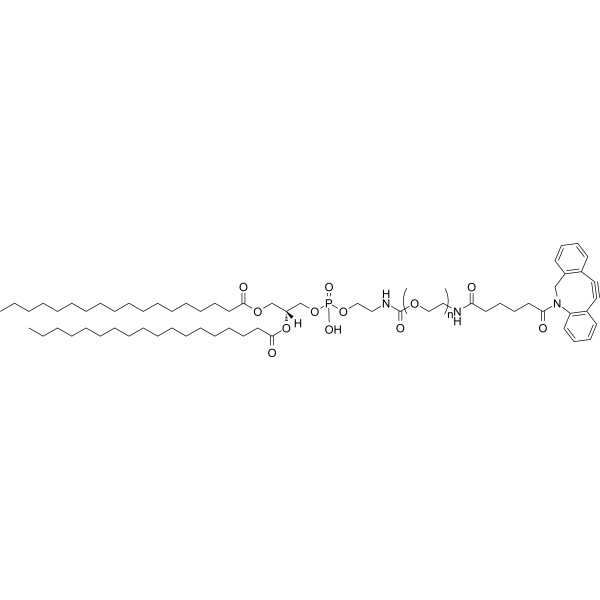
16:0 DBCO PE ammonium is a functionalized lipid that combines the biocompatible properties of phosphatidylethanolamine (PE) with the reactive dibenzocyclooctyne (DBCO) group. 16:0 DBCO PE ammonium is a click chemistry reagent, it contains a DBCO group that can undergo strain-promoted alkyne-azide cycloaddition (SPAAC) with molecules containing Azide groups .
|
-
-
- HY-N15963
-
|
|
Biochemical Assay Reagents
|
Others
|
|
18:1 DBCO PE ammonium is a functionalized lipid that combines the biocompatible properties of phosphatidylethanolamine (PE) with the reactive dibenzocyclooctyne (DBCO) group. 18:1 DBCO PE ammonium is a click chemistry reagent, it contains a DBCO group that can undergo strain-promoted alkyne-azide cycloaddition (SPAAC) with molecules containing Azide groups .
|
-
-
- HY-B2091A
-
|
|
Bacterial
Antibiotic
|
Infection
|
|
Azidocillin sodium, a semi-synthetic Penicillin, is an orally active β-lactam antibiotic. Azidocillin sodium bears an azide functionality and retains on-target activity within bacteria. Azidocillin sodium can be used to research osteitis caused by dental surgery, otitis media, enterococcal septicemia and other bacterial infectious diseases . Azidocillin sodium is a click chemistry reagent, it contains an Azide group and can undergo copper-catalyzed azide-alkyne cycloaddition reaction (CuAAc) with molecules containing Alkyne groups. It can also undergo strain-promoted alkyne-azide cycloaddition (SPAAC) reactions with molecules containing DBCO or BCN groups.
|
-
-
- HY-147206
-
|
|
Fluorescent Dye
|
Others
|
|
Biotin-PEG600-Alk is a Biotin-labeled Alkyne functionalized polyethylene glycol. Biotin-PEG600-Alk can be used to modify proteins, peptides, and oligonucleotides . Biotin-PEG600-Alk is a click chemistry reagent, it contains an Alkyne group and can undergo copper-catalyzed azide-alkyne cycloaddition (CuAAc) with molecules containing Azide groups.
|
-
-
- HY-154361
-
|
|
Nucleoside Antimetabolite/Analog
|
Cancer
|
|
TLR7 agonist 13 is a guanosine analog. Some guanosine analogs have immunostimulatory activity. In some animal models, they also induce type I interferons, producing antiviral effects. Studies have shown that the functional activity of guanosine analogs is dependent on the activation of Toll-like receptor 7 (TLR7) . TLR7 agonist 13 is a click chemistry reagent, it contains an Alkyne group and can undergo copper-catalyzed azide-alkyne cycloaddition (CuAAc) with molecules containing Azide groups.
|
-
-
- HY-D1862
-
|
|
Fluorescent Dye
|
Others
|
|
Cy7.5 alkyne chloride is a dye derivative of Cyanine 7.5 (Cy7.5) (HY-D0926) containing a sulfonate ion and an alkyne functional group. Cy7.5 is a near-infrared fluorescent dye commonly used for biolabeling and cell imaging. The alkyne functional group of Cy7.5 alkyne chloride can react with molecules containing the azide functional group to form covalent bonds. Cy7.5 alkyne chloride can bind to biological molecules such as proteins and antibodies to track their location and dynamic changes in biological samples.
|
-
-
- HY-154349
-
|
|
Nucleoside Antimetabolite/Analog
|
Cancer
|
|
N2-iso-Butyroyl-2’-O-propargylguanosine is a guanosine analog. Some guanosine analogs have immunostimulatory activity. In some animal models, they also induce type I interferons, producing antiviral effects. Studies have shown that the functional activity of guanosine analogs is dependent on the activation of Toll-like receptor 7 (TLR7) . N2-iso-Butyroyl-2’-O-propargylguanosine is a click chemistry reagent, it contains an Alkyne group and can undergo copper-catalyzed azide-alkyne cycloaddition (CuAAc) with molecules containing Azide groups.
|
-
-
- HY-151754
-
|
|
ADC Linker
|
Others
|
|
DACN(Tos2,6-OH) is a click chemistry reagent containing an Azide. The alkyne moiety within the ring has a unique bent structure and high reactivity toward cycloaddition reactions. The reactivity of an alkyne heavily depends on the electronic and steric characteristics of the substituents as well as structural strain. In comparison to nonbent acyclic alkynes, cyclononyne alkynes show remarkably high reactivity. Such strain-promoted azide-alkyne cycloadditions (SPAAC) using cycloalkynes have served for reliable molecular conjugation in a broad range of fields. The nitrogens are used as connection points for a variety of functional units. In comparison to cyclooctynes, DACNs possess high thermal and chemical stability along with comparable click reactivity . DACN(Tos2,6-OH) is a click chemistry reagent, it contains an Alkyne group and can undergo copper-catalyzed azide-alkyne cycloaddition (CuAAc) with molecules containing Azide groups.
|
-
-
- HY-174359H
-
|
|
Biochemical Assay Reagents
|
Others
|
|
Alkyne-PEG40000-NH2 is an alkyne-functionalized bifunctional PEG derivative that can be used to modify proteins, peptides, and other materials. The alkyne group reacts with azides in aqueous solution in a copper-catalyzed manner. PEGylation can increase solubility and stability and reduce the immunogenicity of peptides and proteins .
|
-
-
- HY-174359A
-
|
|
Biochemical Assay Reagents
|
Others
|
|
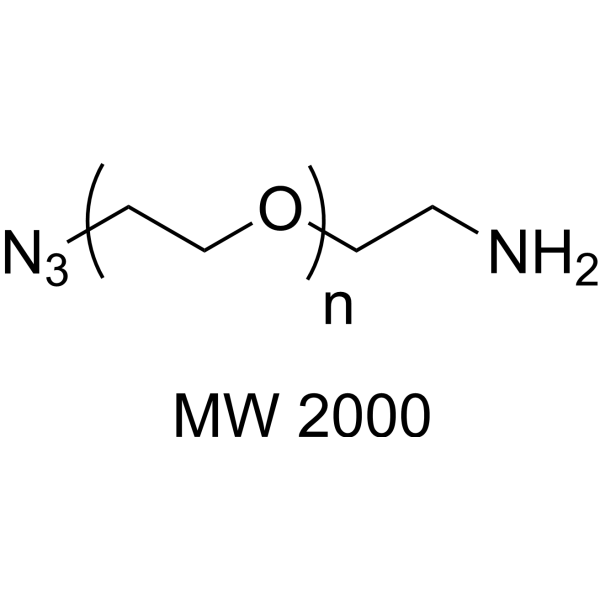
Alkyne-PEG2000-NH2 is an alkyne-functionalized bifunctional PEG derivative that can be used to modify proteins, peptides, and other materials. The alkyne group reacts with azides in aqueous solution in a copper-catalyzed manner. PEGylation can increase solubility and stability and reduce the immunogenicity of peptides and proteins .
|
-
-
- HY-D1859
-
|
|
Fluorescent Dye
|
Others
|
|
Sulfo-Cy7.5 alkyne is a dye derivative of Cyanine 7.5 (Cy7.5) (HY-D0926) containing a sulfonate ion and an alkyne functional group. The sulfonate ion increases the water solubility of the compound, making it suitable for use in aqueous solutions. Cy7.5 is a near-infrared fluorescent dye commonly used for biolabeling and cell imaging. The alkyne functionality of Sulfo-Cy7.5 alkyne can react with molecules containing the azide functionality to form covalent bonds. Sulfo-Cy7.5 alkyne can bind to biomolecules such as proteins and antibodies to track their location and dynamic changes in biological samples.
|
-
-
- HY-D1861
-
|
|
Fluorescent Dye
|
Others
|
|
Sulfo-Cy3 hydrazide is a Cyanine 3 (Cy3) (HY-D0822) dye derivative with hydrazine functionality. The sulfonate ion increases the water solubility of the compound, making it suitable for use in aqueous solutions. Cy3 is a fluorescent dye with a fluorescence spectrum typically in the green to orange wavelength range. The hydrazide group of Sulfo-Cy3 hydrazide can form hydrazinone coupling with molecules containing aldehydes or ketones to form covalent bonds. Therefore, Cy3 azide plus can bind to biomolecules such as proteins and antibodies to track their location and dynamic changes in biological samples.
|
-
-
- HY-N15824
-
|
|
Fluorescent Dye
|
Others
|
|
Cyanine 3.5 azide is a cyanine dye functionalized with an azide. Cyanine 3.5 azide is a click chemistry reagent, it contains an Azide group and can undergo copper-catalyzed azide-alkyne cycloaddition reaction (CuAAc) with molecules containing Alkyne groups. It can also undergo strain-promoted alkyne-azide cycloaddition (SPAAC) reactions with molecules containing DBCO or BCN groups (Ex/Em = 591/604 nm).
|
-
-
- HY-W598195
-
|
|
Biochemical Assay Reagents
|
Others
|
|
11-Azido-1-undecanol is a compound with an azide head and a undecanol tail. The azide (N3) group can react with alkyne, BCN, DBCO via Click Chemistry to yield a stable triazole linkage. The hydroxyl group enables further derivatization or replacement with other reactive functional groups.
|
-
-
- HY-134107
-
|
|
Biochemical Assay Reagents
|
Others
|
|
Azido-erythro-sphingosines is an intermidate for synthesis of lipid molecules with two hydroxyl groups and a terminal azide group. Azide (N3) group can react with alkyne, BCN, DBCO via Click Chemistry. The hydroxyl groups enable further derivatization or replacement with other reactive functional groups. Azido-erythro-sphingosine is a derivative of Sphingosine, which is a selective inhibitor of protein kinase C activity and phorbol dibutyrate binding in vitro in human platelets.
|
-
-
- HY-W800664
-
|
|
Biochemical Assay Reagents
|
Others
|
|
5-(Azido-PEG4)-pent-2-yn-1-Ol is a PEG linker containing an azide group and a terminal hydroxyl group. The hydrophilic PEG spacer increases solubility in aqueous media. The azide group can react with alkyne, BCN, DBCO via Click Chemistry to yield a stable triazole linkage. The hydroxyl group enables further derivatization or replacement with other reactive functional groups.
|
-
-
- HY-137073
-
|
|
Fluorescent Dye
|
Others
|
|
Cy7 alkyne chloride is a dye derivative of Cyanine 7 (Cy7) containing an alkyne functional group (Ex/Em = 740/770 nm). The alkyne functionality of Cy7 alkyne chloride can react with molecules containing the azide functionality to form covalent bonds .
|
-
-
- HY-W1051916C
-
|
|
Biochemical Assay Reagents
|
Others
|
|
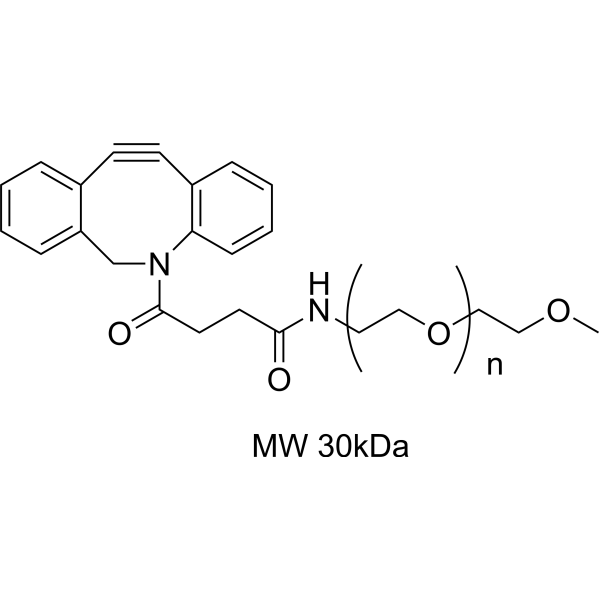
NH2-PEG5000-DBCO is a compound composed of an amino group, PEG, and DBCO, and can be used for drug delivery. NH2-PEG5000-DBCO contains clickable functional groups DBCO and PEG, and can undergo a ring-strain-driven acetylene-azide cycloaddition reaction (SPAAC) with molecules containing an azide group.
|
-
-
- HY-W1051916A
-
|
|
Biochemical Assay Reagents
|
Others
|
|
NH2-PEG2000-DBCO is a compound composed of an amino group, PEG, and DBCO, and can be used for drug delivery. NH2-PEG2000-DBCO contains clickable functional groups DBCO and PEG, and can undergo a ring-strain-driven acetylene-azide cycloaddition reaction (SPAAC) with molecules containing an azide group.
|
-
-
- HY-W1051916H
-
|
|
Biochemical Assay Reagents
|
Others
|
|
NH2-PEG400-DBCO is a compound composed of an amino group, PEG, and DBCO, and can be used for drug delivery. NH2-PEG400-DBCO contains clickable functional groups DBCO and PEG, and can undergo a ring-strain-driven acetylene-azide cycloaddition reaction (SPAAC) with molecules containing an azide group.
|
-
-
- HY-W1051916B
-
|
|
Biochemical Assay Reagents
|
Others
|
|
NH2-PEG3400-DBCO is a compound composed of an amino group, PEG, and DBCO, and can be used for drug delivery. NH2-PEG3400-DBCO contains clickable functional groups DBCO and PEG, and can undergo a ring-strain-driven acetylene-azide cycloaddition reaction (SPAAC) with molecules containing an azide group.
|
-
-
- HY-W1051916I
-
|
|
Biochemical Assay Reagents
|
Others
|
|
NH2-PEG600-DBCO is a compound composed of an amino group, PEG, and DBCO, and can be used for drug delivery. NH2-PEG600-DBCO contains clickable functional groups DBCO and PEG, and can undergo a ring-strain-driven acetylene-azide cycloaddition reaction (SPAAC) with molecules containing an azide group.
|
-
-
- HY-W1051916
-
|
|
Biochemical Assay Reagents
|
Others
|
|
NH2-PEG1000-DBCO is a compound composed of an amino group, PEG, and DBCO, and can be used for drug delivery. NH2-PEG1000-DBCO contains clickable functional groups DBCO and PEG, and can undergo a ring-strain-driven acetylene-azide cycloaddition reaction (SPAAC) with molecules containing an azide group.
|
-
-
- HY-W1051916D
-
|
|
Biochemical Assay Reagents
|
Others
|
|
NH2-PEG10000-DBCO is a compound composed of an amino group, PEG, and DBCO, and can be used for drug delivery. NH2-PEG10000-DBCO contains clickable functional groups DBCO and PEG, and can undergo a ring-strain-driven acetylene-azide cycloaddition reaction (SPAAC) with molecules containing an azide group.
|
-
-
- HY-183022
-
|
|
Biochemical Assay Reagents
|
Others
|
|
1-(3-Azidopropyl)-1H-pyrrole-2,5-dione is a maleimide derivative with a 3-azidopropyl substituent, used to introduce an azide functional group to bovine serum albumin (BSA). 1-(3-Azidopropyl)-1H-pyrrole-2,5-dione reacts with the free, solvent-accessible thiol group of BSA to produce azide-functionalized BSA, which is used in click chemistry to form a TLL-BSA hetero-dimer .
|
-
-
- HY-174359D
-
|
|
Biochemical Assay Reagents
|
Others
|
|
Alkyne-PEG10000-NH2 is an alkyne-functionalized bifunctional PEG derivative that can be used to modify proteins, peptides, and other materials. The alkyne group reacts with azides in aqueous solution in a copper-catalyzed manner. PEGylation can increase solubility and stability and reduce the immunogenicity of peptides and proteins .
|
-
- HY-174359
-
|
|
Biochemical Assay Reagents
|
Others
|
|
Alkyne-PEG1000-NH2 is an alkyne-functionalized bifunctional PEG derivative that can be used to modify proteins, peptides, and other materials. The alkyne group reacts with azides in aqueous solution in a copper-catalyzed manner. PEGylation can increase solubility and stability and reduce the immunogenicity of peptides and proteins .
|
-
- HY-174359B
-
|
|
Biochemical Assay Reagents
|
Others
|
|
Alkyne-PEG3400-NH2 is an alkyne-functionalized bifunctional PEG derivative that can be used to modify proteins, peptides, and other materials. The alkyne group reacts with azides in aqueous solution in a copper-catalyzed manner. PEGylation can increase solubility and stability and reduce the immunogenicity of peptides and proteins .
|
-
- HY-174359E
-
|
|
Biochemical Assay Reagents
|
Others
|
|
Alkyne-PEG20000-NH2 is an alkyne-functionalized bifunctional PEG derivative that can be used to modify proteins, peptides, and other materials. The alkyne group reacts with azides in aqueous solution in a copper-catalyzed manner. PEGylation can increase solubility and stability and reduce the immunogenicity of peptides and proteins .
|
-
- HY-183038
-
|
|
Biochemical Assay Reagents
|
Others
|
|
2-Phenyl-1-octen-7-yn-1-one is an alkyne-functionalized enone with site-selective reactivity toward the N-terminal α-amino group of peptides and proteins. 2-Phenyl-1-octen-7-yn-1-one can undergo click chemistry with azides via its alkyne moiety to enable further protein functionalization. 2-Phenyl-1-octen-7-yn-1-one modifies unprotected peptide libraries as well as proteins including insulin, lysozyme, RNaseA and BCArg .
|
-
| Cat. No. |
Product Name |
Type |
-
- HY-D1314
-
|
6-FAM azide
|
Fluorescent Dyes
|
|
FAM azide, 6-isomer (6-FAM azide) is a 6-carboxyfluorescein derivative with an azide functional group and coupling partner in copper-catalyzed azide-alkyne cycloaddition. FAM azide, 6-isomer participates in synthesis of fluorescently tagged disparlure enantiomers for pheromone-binding protein binding assays. FAM azide, 6-isomer is widely used for labeling oligonucleotides (Ex/Em = 493/517 nm) .
|
-
- HY-D1860
-
|
|
Fluorescent Dyes
|
|
Cy3 alkyne chloride is a dye derivative of Cyanine 3 (Cy3) (HY-D0822) containing a sulfonate ion and an alkyne functional group. Cy3 is a fluorescent dye with a fluorescence spectrum typically in the green to orange wavelength range. The alkyne functional group of Cy3 alkyne chloride can react with molecules containing the azide functional group to form covalent bonds. Cy3 alkyne chloride can bind to biological molecules such as proteins and antibodies to track their location and dynamic changes in biological samples.
|
-
- HY-D1868
-
|
|
Fluorescent Dyes
|
|
Cy3 azide plus is a Cyanine 3 (Cy3) (HY-D0822) dye derivative with an azide functional group. Cy3 is a fluorescent dye with a fluorescence spectrum typically in the green to orange wavelength range. The azide group of Cy3 azide plus can react chemically with molecules containing alkyne functionality, such as alkyne or cyclooctyne, to form covalent bonds. Therefore, Cy3 azide plus can bind to biomolecules such as proteins and antibodies to track their location and dynamic changes in biological samples.
|
-
- HY-D1850
-
|
|
Fluorescent Dyes
|
|
Sulfo-Cy7.5 azide is a Cyanine 7.5 (Cy7.5) (HY-D0926) dye derivative with azide and sulfonate functional groups. The sulfonate ion increases the water solubility of the compound, making it suitable for use in aqueous solutions. Cy7.5 is a near-infrared fluorescent dye commonly used for biolabeling and cell imaging. The azide group of Sulfo-Cy7.5 azide can react chemically with molecules containing alkyne functionality, such as alkyne or cyclooctyne, to form covalent bonds. Therefore, Sulfo-Cy7.5 azide can bind to biomolecules such as proteins and antibodies to track their location and dynamic changes in biological samples. It contains an azide group and can undergo copper-catalyzed azide-alkyne cycloaddition (CuAAc) with molecules containing alkyne groups. It can also undergo ring strain-promoted alkyne-azide cycloaddition (SPAAC) with molecules containing DBCO or BCN groups.
|
-
- HY-D1318
-
|
|
Fluorescent Dyes
|
|
Cyanine7.5 azide chloride is a dye derivative of Cyanine 7.5 (Cy7.5) (HY-D0926) with an azide functional group. Cy7.5 is a near-infrared fluorescent dye commonly used for biolabeling and cell imaging. The azide group of Cyanine7.5 azide chloride can react chemically with molecules containing alkyne functionality, such as alkyne or cyclooctyne, to form covalent bonds. Therefore, Cyanine7.5 azide chloride can bind to biomolecules such as proteins and antibodies to track their location and dynamic changes in biological samples.
|
-
- HY-D1308
-
|
|
Fluorescent Dyes
|
|
Sulfo-Cyanine5.5 azide tripotassium, a near-infrared (NIR) fluorescent dye, is an azide-functionalized Sulfo-Cyanine5.5 (Ex=678 nm, Em=694 nm). Sulfo-Cyanine5.5 azide tripotassium can react with alkynes for Click Chemistry labeling . It contains an azide group and can undergo copper-catalyzed azide-alkyne cycloaddition (CuAAc) with molecules containing alkyne groups. It can also undergo ring strain-promoted alkyne-azide cycloaddition (SPAAC) with molecules containing DBCO or BCN groups.
|
-
- HY-D1862
-
|
|
Fluorescent Dyes
|
|
Cy7.5 alkyne chloride is a dye derivative of Cyanine 7.5 (Cy7.5) (HY-D0926) containing a sulfonate ion and an alkyne functional group. Cy7.5 is a near-infrared fluorescent dye commonly used for biolabeling and cell imaging. The alkyne functional group of Cy7.5 alkyne chloride can react with molecules containing the azide functional group to form covalent bonds. Cy7.5 alkyne chloride can bind to biological molecules such as proteins and antibodies to track their location and dynamic changes in biological samples.
|
-
- HY-D1859
-
|
|
Fluorescent Dyes
|
|
Sulfo-Cy7.5 alkyne is a dye derivative of Cyanine 7.5 (Cy7.5) (HY-D0926) containing a sulfonate ion and an alkyne functional group. The sulfonate ion increases the water solubility of the compound, making it suitable for use in aqueous solutions. Cy7.5 is a near-infrared fluorescent dye commonly used for biolabeling and cell imaging. The alkyne functionality of Sulfo-Cy7.5 alkyne can react with molecules containing the azide functionality to form covalent bonds. Sulfo-Cy7.5 alkyne can bind to biomolecules such as proteins and antibodies to track their location and dynamic changes in biological samples.
|
-
- HY-D1861
-
|
|
Fluorescent Dyes
|
|
Sulfo-Cy3 hydrazide is a Cyanine 3 (Cy3) (HY-D0822) dye derivative with hydrazine functionality. The sulfonate ion increases the water solubility of the compound, making it suitable for use in aqueous solutions. Cy3 is a fluorescent dye with a fluorescence spectrum typically in the green to orange wavelength range. The hydrazide group of Sulfo-Cy3 hydrazide can form hydrazinone coupling with molecules containing aldehydes or ketones to form covalent bonds. Therefore, Cy3 azide plus can bind to biomolecules such as proteins and antibodies to track their location and dynamic changes in biological samples.
|
-
- HY-137073
-
|
|
Fluorescent Dyes
|
|
Cy7 alkyne chloride is a dye derivative of Cyanine 7 (Cy7) containing an alkyne functional group (Ex/Em = 740/770 nm). The alkyne functionality of Cy7 alkyne chloride can react with molecules containing the azide functionality to form covalent bonds .
|
| Cat. No. |
Product Name |
Type |
-
- HY-174359C
-
|
|
Biochemical Assay Reagents
|
|
Alkyne-PEG5000-NH2 is an alkyne-functionalized bifunctional PEG derivative that can be used to modify proteins, peptides, and other materials. The alkyne group reacts with azides in aqueous solution in a copper-catalyzed manner. PEGylation can increase solubility and stability and reduce the immunogenicity of peptides and proteins .
|
-
- HY-174359H
-
|
|
Biochemical Assay Reagents
|
|
Alkyne-PEG40000-NH2 is an alkyne-functionalized bifunctional PEG derivative that can be used to modify proteins, peptides, and other materials. The alkyne group reacts with azides in aqueous solution in a copper-catalyzed manner. PEGylation can increase solubility and stability and reduce the immunogenicity of peptides and proteins .
|
-
- HY-174359A
-
|
|
Biochemical Assay Reagents
|
|
Alkyne-PEG2000-NH2 is an alkyne-functionalized bifunctional PEG derivative that can be used to modify proteins, peptides, and other materials. The alkyne group reacts with azides in aqueous solution in a copper-catalyzed manner. PEGylation can increase solubility and stability and reduce the immunogenicity of peptides and proteins .
|
-
- HY-W1051916C
-
|
|
Biochemical Assay Reagents
|
|
NH2-PEG5000-DBCO is a compound composed of an amino group, PEG, and DBCO, and can be used for drug delivery. NH2-PEG5000-DBCO contains clickable functional groups DBCO and PEG, and can undergo a ring-strain-driven acetylene-azide cycloaddition reaction (SPAAC) with molecules containing an azide group.
|
-
- HY-W1051916A
-
|
|
Biochemical Assay Reagents
|
|
NH2-PEG2000-DBCO is a compound composed of an amino group, PEG, and DBCO, and can be used for drug delivery. NH2-PEG2000-DBCO contains clickable functional groups DBCO and PEG, and can undergo a ring-strain-driven acetylene-azide cycloaddition reaction (SPAAC) with molecules containing an azide group.
|
-
- HY-W1051916H
-
|
|
Biochemical Assay Reagents
|
|
NH2-PEG400-DBCO is a compound composed of an amino group, PEG, and DBCO, and can be used for drug delivery. NH2-PEG400-DBCO contains clickable functional groups DBCO and PEG, and can undergo a ring-strain-driven acetylene-azide cycloaddition reaction (SPAAC) with molecules containing an azide group.
|
-
- HY-W1051916B
-
|
|
Biochemical Assay Reagents
|
|
NH2-PEG3400-DBCO is a compound composed of an amino group, PEG, and DBCO, and can be used for drug delivery. NH2-PEG3400-DBCO contains clickable functional groups DBCO and PEG, and can undergo a ring-strain-driven acetylene-azide cycloaddition reaction (SPAAC) with molecules containing an azide group.
|
-
- HY-W1051916I
-
|
|
Biochemical Assay Reagents
|
|
NH2-PEG600-DBCO is a compound composed of an amino group, PEG, and DBCO, and can be used for drug delivery. NH2-PEG600-DBCO contains clickable functional groups DBCO and PEG, and can undergo a ring-strain-driven acetylene-azide cycloaddition reaction (SPAAC) with molecules containing an azide group.
|
-
- HY-W1051916
-
|
|
Biochemical Assay Reagents
|
|
NH2-PEG1000-DBCO is a compound composed of an amino group, PEG, and DBCO, and can be used for drug delivery. NH2-PEG1000-DBCO contains clickable functional groups DBCO and PEG, and can undergo a ring-strain-driven acetylene-azide cycloaddition reaction (SPAAC) with molecules containing an azide group.
|
-
- HY-W1051916D
-
|
|
Biochemical Assay Reagents
|
|
NH2-PEG10000-DBCO is a compound composed of an amino group, PEG, and DBCO, and can be used for drug delivery. NH2-PEG10000-DBCO contains clickable functional groups DBCO and PEG, and can undergo a ring-strain-driven acetylene-azide cycloaddition reaction (SPAAC) with molecules containing an azide group.
|
-
- HY-174359D
-
|
|
Biochemical Assay Reagents
|
|
Alkyne-PEG10000-NH2 is an alkyne-functionalized bifunctional PEG derivative that can be used to modify proteins, peptides, and other materials. The alkyne group reacts with azides in aqueous solution in a copper-catalyzed manner. PEGylation can increase solubility and stability and reduce the immunogenicity of peptides and proteins .
|
-
- HY-174359
-
|
|
Biochemical Assay Reagents
|
|
Alkyne-PEG1000-NH2 is an alkyne-functionalized bifunctional PEG derivative that can be used to modify proteins, peptides, and other materials. The alkyne group reacts with azides in aqueous solution in a copper-catalyzed manner. PEGylation can increase solubility and stability and reduce the immunogenicity of peptides and proteins .
|
-
- HY-174359B
-
|
|
Biochemical Assay Reagents
|
|
Alkyne-PEG3400-NH2 is an alkyne-functionalized bifunctional PEG derivative that can be used to modify proteins, peptides, and other materials. The alkyne group reacts with azides in aqueous solution in a copper-catalyzed manner. PEGylation can increase solubility and stability and reduce the immunogenicity of peptides and proteins .
|
-
- HY-174359E
-
|
|
Biochemical Assay Reagents
|
|
Alkyne-PEG20000-NH2 is an alkyne-functionalized bifunctional PEG derivative that can be used to modify proteins, peptides, and other materials. The alkyne group reacts with azides in aqueous solution in a copper-catalyzed manner. PEGylation can increase solubility and stability and reduce the immunogenicity of peptides and proteins .
|
| Cat. No. |
Product Name |
Target |
Research Area |
-
- HY-151641
-
|
|
Biochemical Assay Reagents
|
Others
|
|
3-Azido-L-alanine is an aliphatic functionalized amino acid with side chain lengths of up to four carbons . 3-Azido-L-alanine is a click chemistry reagent, it contains an Azide group and can undergo copper-catalyzed azide-alkyne cycloaddition reaction (CuAAc) with molecules containing Alkyne groups. It can also undergo strain-promoted alkyne-azide cycloaddition (SPAAC) reactions with molecules containing DBCO or BCN groups.
|
| Cat. No. |
Product Name |
Category |
Target |
Chemical Structure |
-
- HY-W749217A
-
|
|
Lipid
|
Fluorescent Dye
|
|
Cyanine 3.5 azide is a cyanine dye functionalized with an azide. Cyanine 3.5 azide is a click chemistry reagent, it contains an Azide group and can undergo copper-catalyzed azide-alkyne cycloaddition reaction (CuAAc) with molecules containing Alkyne groups. It can also undergo strain-promoted alkyne-azide cycloaddition (SPAAC) reactions with molecules containing DBCO or BCN groups (Ex/Em = 633/670 nm).
|
-
-
- HY-N15963
-
|
|
Lipid
|
Biochemical Assay Reagents
|
|
18:1 DBCO PE ammonium is a functionalized lipid that combines the biocompatible properties of phosphatidylethanolamine (PE) with the reactive dibenzocyclooctyne (DBCO) group. 18:1 DBCO PE ammonium is a click chemistry reagent, it contains a DBCO group that can undergo strain-promoted alkyne-azide cycloaddition (SPAAC) with molecules containing Azide groups .
|
-
-
- HY-N15824
-
|
|
Lipid
|
Fluorescent Dye
|
|
Cyanine 3.5 azide is a cyanine dye functionalized with an azide. Cyanine 3.5 azide is a click chemistry reagent, it contains an Azide group and can undergo copper-catalyzed azide-alkyne cycloaddition reaction (CuAAc) with molecules containing Alkyne groups. It can also undergo strain-promoted alkyne-azide cycloaddition (SPAAC) reactions with molecules containing DBCO or BCN groups (Ex/Em = 591/604 nm).
|
-
| Cat. No. |
Product Name |
|
Classification |
-
- HY-D1314
-
|
6-FAM azide
|
|
Labeling and Fluorescence Imaging
Azide
|
|
FAM azide, 6-isomer (6-FAM azide) is a 6-carboxyfluorescein derivative with an azide functional group and coupling partner in copper-catalyzed azide-alkyne cycloaddition. FAM azide, 6-isomer participates in synthesis of fluorescently tagged disparlure enantiomers for pheromone-binding protein binding assays. FAM azide, 6-isomer is widely used for labeling oligonucleotides (Ex/Em = 493/517 nm) .
|
-
- HY-133870
-
|
ITalk
|
|
Alkynes
|
|
Itaconate-alkyne (ITalk) is a specific bioorthogonal probe for quantitative and site-specific chemoproteomic profiling of Itaconation in living cells. Itaconate-alkyne, a functional analogue of Itaconate, exhibits comparable antiinflammatory effect with Itaconate and enables the labeling of bona fide targets of Itaconate . Itaconate-alkyne is a click chemistry reagent, it contains an Alkyne group and can undergo copper-catalyzed azide-alkyne cycloaddition (CuAAc) with molecules containing Azide groups.
|
-
- HY-W336328
-
|
|
|
Azide
|
|
3-Azido-L-alanine hydrochloride is an aliphatic functionalized amino acid with side chain lengths of up to four carbons . 3-Azido-L-alanine (hydrochloride) is a click chemistry reagent, it contains an Azide group and can undergo copper-catalyzed azide-alkyne cycloaddition reaction (CuAAc) with molecules containing Alkyne groups. It can also undergo strain-promoted alkyne-azide cycloaddition (SPAAC) reactions with molecules containing DBCO or BCN groups.
|
-
- HY-B2091
-
|
|
|
Azide
|
|
Azidocillin, a semi-synthetic Penicillin, is an orally active β-lactam antibiotic. Azidocillin bears an azide functionality and retains on-target activity within bacteria. Azidocillin can be used to research osteitis caused by dental surgery, otitis media, enterococcal septicemia and other bacterial infectious diseases . Azidocillin is a click chemistry reagent, it contains an Azide group and can undergo copper-catalyzed azide-alkyne cycloaddition reaction (CuAAc) with molecules containing Alkyne groups. It can also undergo strain-promoted alkyne-azide cycloaddition (SPAAC) reactions with molecules containing DBCO or BCN groups.
|
-
- HY-151646
-
|
Alkyne-PEG5-BG
|
|
Labeling and Fluorescence Imaging
Alkynes
|
|
Alkyne-PEG5-SNAP is a click chemistry reagent containing an alkyne group. Alkyne-PEG5-SNAP can alkyne conjugated benzylguanine (BG), the BG moiety reacts specifically and rapidly with SNAP-tag, a polypeptide protein tag, allowing irreversible and covalent labeling of SNAP fusion proteins with an additional alkyne functionality suitable for further conjugation . Alkyne-PEG5-SNAP is a click chemistry reagent, it contains an Alkyne group and can undergo copper-catalyzed azide-alkyne cycloaddition (CuAAc) with molecules containing Azide groups.
|
-
- HY-152684
-
|
|
|
Alkynes
|
|
2′-O-2-Propyn-1-ylguanosine is a guanosine analogue. Some guanosine analogs have immunostimulatory activity. In some animal models, they also induce type I interferons, producing antiviral effects. Studies have shown that the functional activity of guanosine analogs is dependent on the activation of Toll-like receptor 7 (TLR7) . 2′-O-2-Propyn-1-ylguanosine is a click chemistry reagent, it contains an Alkyne group and can undergo copper-catalyzed azide-alkyne cycloaddition (CuAAc) with molecules containing Azide groups.
|
-
- HY-151727
-
|
|
|
Tetrazine
|
|
Norbornene-NHS is a norbornene-functionalized antibody-drug conjugate linker (ADC Linker) bearing an NHS ester, which is applicable for highly efficient and specific antibody conjugation reactions in ADC research and development. Norbornene-NHS also acts as an azide-group-containing click chemistry reagent, serving as a dienophile for copper-free click reaction conjugation .
|
-
- HY-151641
-
|
|
|
Azide
|
|
3-Azido-L-alanine is an aliphatic functionalized amino acid with side chain lengths of up to four carbons . 3-Azido-L-alanine is a click chemistry reagent, it contains an Azide group and can undergo copper-catalyzed azide-alkyne cycloaddition reaction (CuAAc) with molecules containing Alkyne groups. It can also undergo strain-promoted alkyne-azide cycloaddition (SPAAC) reactions with molecules containing DBCO or BCN groups.
|
-
- HY-176846
-
|
|
|
Alkynes
|
|
HIPS probe-1 (Compound 1) is a click chemistry reagent containing a alkyne group. HIPS probe-1 can undergo copper-catalyzed azide-alkyne cycloaddition (CuAAc) with molecules containing Azide groups. HIPS probe-1 can be used as a chemical probe to specifically recognize and label aldehyde functional groups in DNA, especially abasic sites (AP sites) for DNA damage research .
|
-
- HY-152478
-
|
|
|
Alkynes
|
|
3’-β-C-Ethynylguanosine is a guanosine analog. Some guanosine analogs have immunostimulatory activity. In some animal models, they also induce type I interferons, producing antiviral effects. Studies have shown that the functional activity of guanosine analogs is dependent on the activation of Toll-like receptor 7 (TLR7) . 3’-β-C-Ethynylguanosine is a click chemistry reagent, it contains an Alkyne group and can undergo copper-catalyzed azide-alkyne cycloaddition (CuAAc) with molecules containing Azide groups.
|
-
- HY-151822
-
|
|
|
DBCO
|
|
Hydroxy-PEG3-DBCO is a click chemistry reagent containing an azide group. Hydroxy-PEG3-DBCO is a PEG linker containing a DBCO moiety and a terminal primary hydroxyl group. The hydroxyl can react with a variety of functional groups and the hydrophilic PEG spacer arm can provide better solubility to labeled molecules. DBCO is commonly used for copper-free Click Chemistry reactions. Reagent grade, for research use only .
|
-
- HY-151826
-
|
|
|
Alkynes
|
|
Fmoc-D-Lys(pentynoyl)-OH is a click chemistry reagent containing an azide group. Used to introduce alkyne functionality into peptides that can be further modified using Click-chemistry .
|
-
- HY-D1860
-
|
|
|
Alkynes
|
|
Cy3 alkyne chloride is a dye derivative of Cyanine 3 (Cy3) (HY-D0822) containing a sulfonate ion and an alkyne functional group. Cy3 is a fluorescent dye with a fluorescence spectrum typically in the green to orange wavelength range. The alkyne functional group of Cy3 alkyne chloride can react with molecules containing the azide functional group to form covalent bonds. Cy3 alkyne chloride can bind to biological molecules such as proteins and antibodies to track their location and dynamic changes in biological samples.
|
-
- HY-128930
-
|
|
|
ADC Synthesis
Alkynes
|
|
6-O-2-Propyn-1-yl-D-galactose is a nonclaevable glycolinker for the functionalization of cytotoxic agents and applications in antibody-agent conjugation. 6-O-2-Propyn-1-yl-D-galactose is a click chemistry reagent, it contains an Alkyne group and can undergo copper-catalyzed azide-alkyne cycloaddition (CuAAc) with molecules containing Azide groups.
|
-
- HY-115715A
-
|
|
|
Alkynes
|
|
EN219-alkyne is an alkyne-functionalized EN219 probe. EN219 (HY-P0287A) is a moderately selective synthetic covalent ligand against an N-terminal cysteine (C8) of RNF114 with an IC50 of 470 nM. EN219 inhibits RNF114-mediated autoubiquitination and p21 ubiquitination . EN219-alkyne is a click chemistry reagent, it contains an Alkyne group and can undergo copper-catalyzed azide-alkyne cycloaddition (CuAAc) with molecules containing Azide groups.
|
-
- HY-D1850
-
|
|
|
Azide
|
|
Sulfo-Cy7.5 azide is a Cyanine 7.5 (Cy7.5) (HY-D0926) dye derivative with azide and sulfonate functional groups. The sulfonate ion increases the water solubility of the compound, making it suitable for use in aqueous solutions. Cy7.5 is a near-infrared fluorescent dye commonly used for biolabeling and cell imaging. The azide group of Sulfo-Cy7.5 azide can react chemically with molecules containing alkyne functionality, such as alkyne or cyclooctyne, to form covalent bonds. Therefore, Sulfo-Cy7.5 azide can bind to biomolecules such as proteins and antibodies to track their location and dynamic changes in biological samples. It contains an azide group and can undergo copper-catalyzed azide-alkyne cycloaddition (CuAAc) with molecules containing alkyne groups. It can also undergo ring strain-promoted alkyne-azide cycloaddition (SPAAC) with molecules containing DBCO or BCN groups.
|
-
- HY-D1308
-
|
|
|
Azide
|
|
Sulfo-Cyanine5.5 azide tripotassium, a near-infrared (NIR) fluorescent dye, is an azide-functionalized Sulfo-Cyanine5.5 (Ex=678 nm, Em=694 nm). Sulfo-Cyanine5.5 azide tripotassium can react with alkynes for Click Chemistry labeling . It contains an azide group and can undergo copper-catalyzed azide-alkyne cycloaddition (CuAAc) with molecules containing alkyne groups. It can also undergo ring strain-promoted alkyne-azide cycloaddition (SPAAC) with molecules containing DBCO or BCN groups.
|
-
- HY-147206
-
|
|
|
Alkynes
|
|
Biotin-PEG600-Alk is a Biotin-labeled Alkyne functionalized polyethylene glycol. Biotin-PEG600-Alk can be used to modify proteins, peptides, and oligonucleotides . Biotin-PEG600-Alk is a click chemistry reagent, it contains an Alkyne group and can undergo copper-catalyzed azide-alkyne cycloaddition (CuAAc) with molecules containing Azide groups.
|
-
- HY-154361
-
|
|
|
Alkynes
|
|
TLR7 agonist 13 is a guanosine analog. Some guanosine analogs have immunostimulatory activity. In some animal models, they also induce type I interferons, producing antiviral effects. Studies have shown that the functional activity of guanosine analogs is dependent on the activation of Toll-like receptor 7 (TLR7) . TLR7 agonist 13 is a click chemistry reagent, it contains an Alkyne group and can undergo copper-catalyzed azide-alkyne cycloaddition (CuAAc) with molecules containing Azide groups.
|
-
- HY-D1862
-
|
|
|
Alkynes
|
|
Cy7.5 alkyne chloride is a dye derivative of Cyanine 7.5 (Cy7.5) (HY-D0926) containing a sulfonate ion and an alkyne functional group. Cy7.5 is a near-infrared fluorescent dye commonly used for biolabeling and cell imaging. The alkyne functional group of Cy7.5 alkyne chloride can react with molecules containing the azide functional group to form covalent bonds. Cy7.5 alkyne chloride can bind to biological molecules such as proteins and antibodies to track their location and dynamic changes in biological samples.
|
-
- HY-154349
-
|
|
|
Alkynes
|
|
N2-iso-Butyroyl-2’-O-propargylguanosine is a guanosine analog. Some guanosine analogs have immunostimulatory activity. In some animal models, they also induce type I interferons, producing antiviral effects. Studies have shown that the functional activity of guanosine analogs is dependent on the activation of Toll-like receptor 7 (TLR7) . N2-iso-Butyroyl-2’-O-propargylguanosine is a click chemistry reagent, it contains an Alkyne group and can undergo copper-catalyzed azide-alkyne cycloaddition (CuAAc) with molecules containing Azide groups.
|
-
- HY-D1859
-
|
|
|
Alkynes
|
|
Sulfo-Cy7.5 alkyne is a dye derivative of Cyanine 7.5 (Cy7.5) (HY-D0926) containing a sulfonate ion and an alkyne functional group. The sulfonate ion increases the water solubility of the compound, making it suitable for use in aqueous solutions. Cy7.5 is a near-infrared fluorescent dye commonly used for biolabeling and cell imaging. The alkyne functionality of Sulfo-Cy7.5 alkyne can react with molecules containing the azide functionality to form covalent bonds. Sulfo-Cy7.5 alkyne can bind to biomolecules such as proteins and antibodies to track their location and dynamic changes in biological samples.
|
-
- HY-W800664
-
|
|
|
Azide
|
|
5-(Azido-PEG4)-pent-2-yn-1-Ol is a PEG linker containing an azide group and a terminal hydroxyl group. The hydrophilic PEG spacer increases solubility in aqueous media. The azide group can react with alkyne, BCN, DBCO via Click Chemistry to yield a stable triazole linkage. The hydroxyl group enables further derivatization or replacement with other reactive functional groups.
|
-
- HY-183022
-
|
|
|
Azide
|
|
1-(3-Azidopropyl)-1H-pyrrole-2,5-dione is a maleimide derivative with a 3-azidopropyl substituent, used to introduce an azide functional group to bovine serum albumin (BSA). 1-(3-Azidopropyl)-1H-pyrrole-2,5-dione reacts with the free, solvent-accessible thiol group of BSA to produce azide-functionalized BSA, which is used in click chemistry to form a TLL-BSA hetero-dimer .
|
-
- HY-183038
-
|
|
|
Alkynes
|
|
2-Phenyl-1-octen-7-yn-1-one is an alkyne-functionalized enone with site-selective reactivity toward the N-terminal α-amino group of peptides and proteins. 2-Phenyl-1-octen-7-yn-1-one can undergo click chemistry with azides via its alkyne moiety to enable further protein functionalization. 2-Phenyl-1-octen-7-yn-1-one modifies unprotected peptide libraries as well as proteins including insulin, lysozyme, RNaseA and BCArg .
|
| Cat. No. |
Product Name |
|
Classification |
-
- HY-152684
-
|
|
|
Nucleoside Analogs
Guanosine
|
|
2′-O-2-Propyn-1-ylguanosine is a guanosine analogue. Some guanosine analogs have immunostimulatory activity. In some animal models, they also induce type I interferons, producing antiviral effects. Studies have shown that the functional activity of guanosine analogs is dependent on the activation of Toll-like receptor 7 (TLR7) . 2′-O-2-Propyn-1-ylguanosine is a click chemistry reagent, it contains an Alkyne group and can undergo copper-catalyzed azide-alkyne cycloaddition (CuAAc) with molecules containing Azide groups.
|
-
- HY-152478
-
|
|
|
Nucleoside Analogs
Guanosine
|
|
3’-β-C-Ethynylguanosine is a guanosine analog. Some guanosine analogs have immunostimulatory activity. In some animal models, they also induce type I interferons, producing antiviral effects. Studies have shown that the functional activity of guanosine analogs is dependent on the activation of Toll-like receptor 7 (TLR7) . 3’-β-C-Ethynylguanosine is a click chemistry reagent, it contains an Alkyne group and can undergo copper-catalyzed azide-alkyne cycloaddition (CuAAc) with molecules containing Azide groups.
|
-
- HY-154349
-
|
|
|
Nucleoside Analogs
Guanosine
|
|
N2-iso-Butyroyl-2’-O-propargylguanosine is a guanosine analog. Some guanosine analogs have immunostimulatory activity. In some animal models, they also induce type I interferons, producing antiviral effects. Studies have shown that the functional activity of guanosine analogs is dependent on the activation of Toll-like receptor 7 (TLR7) . N2-iso-Butyroyl-2’-O-propargylguanosine is a click chemistry reagent, it contains an Alkyne group and can undergo copper-catalyzed azide-alkyne cycloaddition (CuAAc) with molecules containing Azide groups.
|
Your information is safe with us. * Required Fields.
Inquiry Information
- Product Name:
- Cat. No.:
- Quantity:
- MCE Japan Authorized Agent:

