
62 Results for "

biological buffers

" in MedChemExpress (MCE) Product Catalog:
Products (62)

62 Results for "biological buffers" in MCE Product Catalog:

2
2 Cited Publications
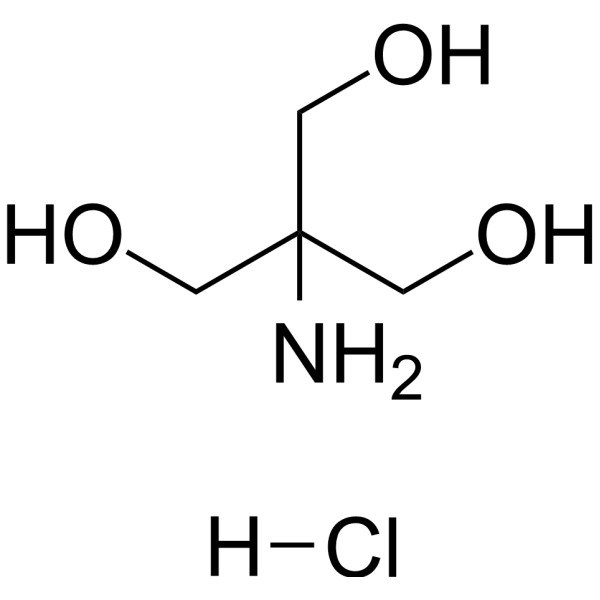
Cat. No.: HY-D0227F
CAS No.: 1185-53-1
Synonyms: Tris HCl (≥99%, reagent grade); Tris hydrochloride (≥99%, reagent grade)
THAM hydrochloride (≥99%, reagent grade), also known as Tris-HCl, is a buffer commonly used in various biochemical and molecular biology applications to maintain a stable pH environment. Tris-HCl has unique chemical properties that allow it to resist changes in pH when acidic or basic substances are added, which makes it useful for stabilizing biological samples or reagents. It is commonly used in electrophoresis and protein purification procedures.
loading...
    loading...
1
1 Cited Publications
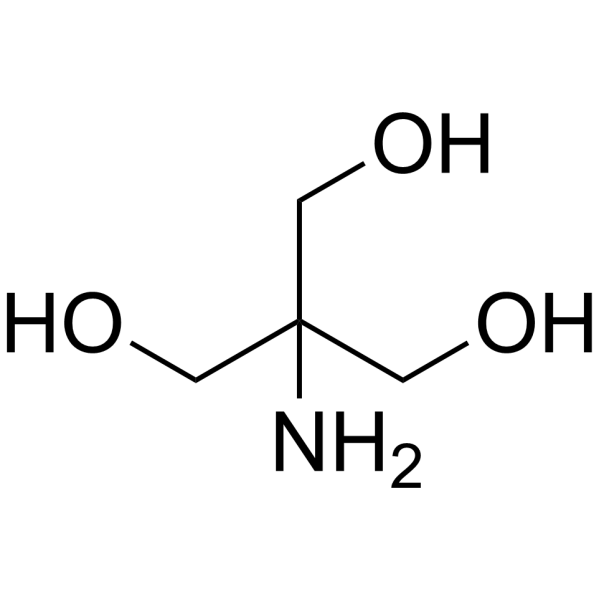
Cat. No.: HY-D0227
CAS No.: 77-86-1
Synonyms: Tris; Tris(hydroxymethyl)aminomethane
Research Areas:  

Metabolic Disease

THAM (Tris) is a low-toxicity amino alcohol buffer, a specific CO2-consuming proton acceptor that buffers carbon dioxide and acid both in vitro and in vivo. THAM binds protons to form bicarbonate, reduces PaCO2, and induces intracellular alkalization, thereby ameliorating hypercapnia-induced elevation of pulmonary blood vessels and pulmonary arterial pressure. THAM may cause PaCO2 rebound, hypoglycemia, and respiratory depression. THAM removes amniotic epithelium and preserves the basement membrane, but depletes extracellular matrix and reduces the adhesion rate of limbal epithelial cells. THAM can act as a CO2 carrier to enhance the productivity and carbon utilization rate of Scenedesmus obliquus. THAM is a key component of buffer solutions used in various biological, cell culture, biochemical, and molecular biology applications .
loading...
    loading...
1
1 Cited Publications
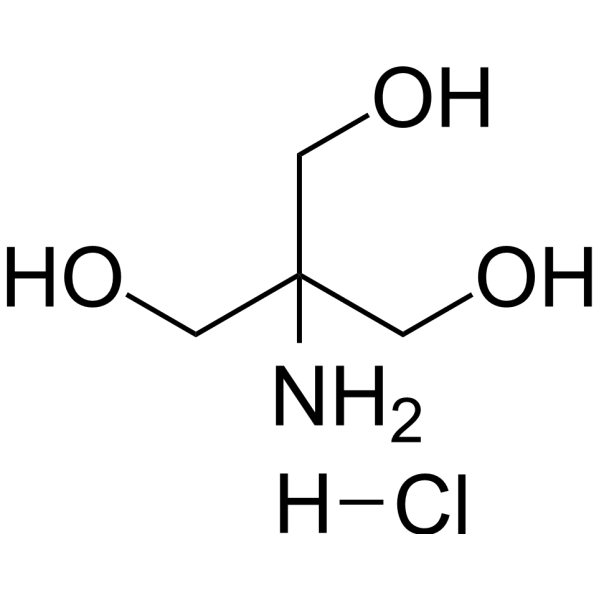
Cat. No.: HY-D0227A
CAS No.: 1185-53-1
Synonyms: Tris HCl; Tris(hydroxymethyl)aminomethane hydrochloride
Research Areas:  

Metabolic Disease Cancer

THAM hydrochloride (Tris HCl) is a biologically inert amino alcohol of low toxicity, which buffers carbon dioxide and acids in vitro and in vivo. THAM hydrochloride is an effective amine compound for pH control in the physiological range .
loading...
    loading...
1
1 Cited Publications
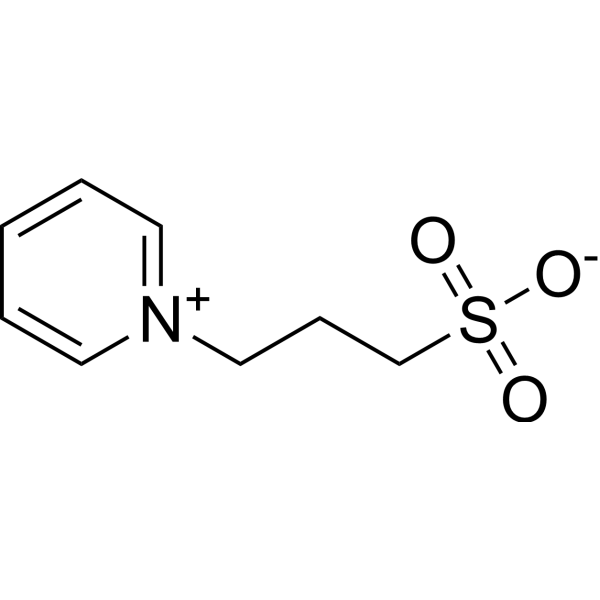
Cat. No.: HY-W014837
CAS No.: 15471-17-7
Synonyms: 3-(1-Pyridinio)-1-propanesulfonate
NDSB-201 consists of a pyridine group attached to a propane chain, which in turn is attached to a sulfonate group. This compound is commonly used as a buffer in biochemical and biological research, especially in electrophoretic applications. It maintains a stable pH in aqueous solutions and has low UV absorption, making it suitable for use in the UV spectrum. Furthermore, due to its ability to form stable complexes with DNA and other biomolecules, 3-(pyridin-1-ium-1-yl)propane-1-sulfonate has been investigated for its potential in drug delivery and genetic research.
loading...
    loading...
1
1 Cited Publications
Cat. No.: HY-W393372
CAS No.: 72200-76-1
Synonyms: Tris maleate; Tris(hydroxymethyl)aminomethane maleate
THAM (Tris) maleate is a biologically inert amino alcohol of low toxicity, which buffers carbon dioxide and acids in vitro and in vivo. THAM maleate is an effective amine compound for pH control in the physiological range .
loading...
    loading...
1
1 Cited Publications
Cat. No.: HY-D0227J
CAS No.: 1185-53-1
Synonyms: Tris HCl (≥99%, for cell culture); Tris hydrochloride (≥99%, for cell culture)
THAM hydrochloride (≥99%, for cell culture) is a low-toxicity amino alcohol buffer, a specific CO2-consuming proton acceptor that buffers carbon dioxide and acid both in vitro and in vivo. THAM hydrochloride (≥99%, for cell culture) binds protons to form bicarbonate, reduces PaCO2, and induces intracellular alkalization, thereby ameliorating hypercapnia-induced elevation of pulmonary blood vessels and pulmonary arterial pressure. THAM hydrochloride (≥99%, for cell culture) may cause PaCO2 rebound, hypoglycemia, and respiratory depression. THAM hydrochloride (≥99%, for cell culture) removes amniotic epithelium and preserves the basement membrane, but depletes extracellular matrix and reduces the adhesion rate of limbal epithelial cells. THAM hydrochloride (≥99%, for cell culture) can act as a CO2 carrier to enhance the productivity and carbon utilization rate of Scenedesmus obliquus. THAM hydrochloride (≥99%, for cell culture) is a key component of buffer solutions used in various biological, cell culture, biochemical, and molecular biology applications .
loading...
    loading...
1
1 Cited Publications
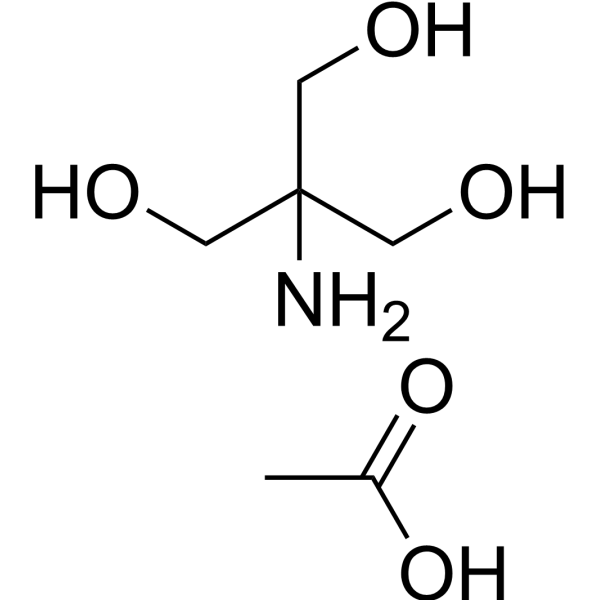
Cat. No.: HY-D0227B
CAS No.: 6850-28-8
Synonyms: Tris acetate; Tris(hydroxymethyl)aminomethane acetate
Research Areas:  

Metabolic Disease

THAM acetate is a low-toxicity amino alcohol buffer, a CO2-consuming proton acceptor that buffers carbon dioxide and acid both in vitro and in vivo. THAM acetate binds protons to form bicarbonate, reduces PaCO2, and induces intracellular alkalization, thereby ameliorating hypercapnia-induced elevation of pulmonary blood vessels and pulmonary arterial pressure. THAM acetate may cause PaCO2 rebound, hypoglycemia, and respiratory depression. THAM acetate removes amniotic epithelium and preserves the basement membrane, but depletes extracellular matrix and reduces the adhesion rate of limbal epithelial cells. THAM acetate can act as a CO2 carrier to enhance the productivity and carbon utilization rate of Scenedesmus obliquus. THAM acetate is a key component of buffer solutions used in various biological, cell culture, biochemical, and molecular biology applications .
loading...
    loading...
Cat. No.: HY-Y0649D
CAS No.: 7447-41-8
Lithium chloride, for molecular biology, 99% can be used in the preparation of wash buffers for chromatin immunoprecipitation. Lithium chloride, for molecular biology, 99% is a kind of biological materials or organic compounds that are widely used in life science research .
loading...
    loading...
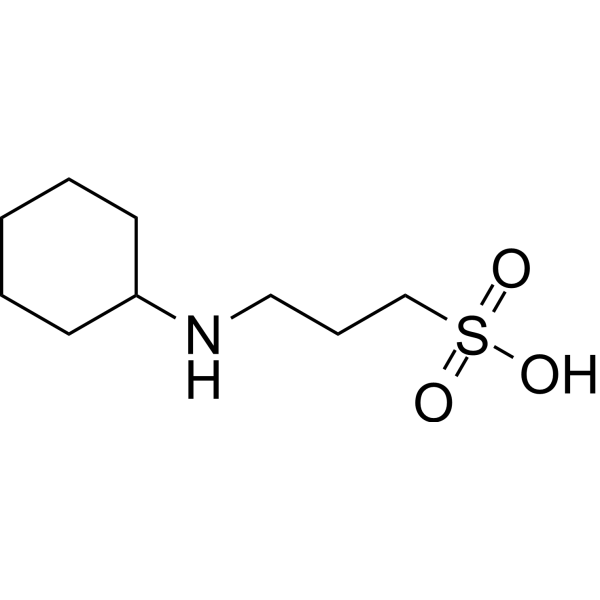
Cat. No.: HY-D0869
CAS No.: 1135-40-6
Synonyms: N-Cyclohexyl-3-aminopropanesulfonic acid
CAPS, cyclohexylaminopropane sulfonic acid, is a surfactant. CAPS can be used as biological buffer (0.05 M, pH 11) for dialysis .
loading...
    loading...
Cat. No.: HY-160113
Sodium phosphate buffer 0.02 M, pH 6.9 is a commonly used aqueous biological buffer that maintains a stable pH value. Sodium phosphate buffer 0.02 M, pH 6.9 is often used in enzyme activity assays, such as α-amylase assays. Sodium phosphate buffer 0.02 M, pH 6.9 is prepared by mixing disodium hydrogen phosphate (Na2HPO4) (HY-B2243) and sodium dihydrogen phosphate (NaH2PO4) (HY-Y0308) to a total concentration of 0.02 M .
loading...
    loading...
Cat. No.: HY-Y1083H
CAS No.: 7778-80-5
Synonyms: Salt of lemery, 99%
Potassium sulfate, 99% (Salt of lemery, 99%) can be used in biochemical tests for serum proteins, the determination of blood potassium and other potassium salts, and the preparation of protein capillary electrophoresis buffers. Potassium sulfate, 99% is a kind of biological materials or organic compounds that are widely used in life science research .
loading...
    loading...
Cat. No.: HY-Y0537B
CAS No.: 7447-40-7
Potassium chloride, for molecular biology is potassium chloride that can be used in molecular biology. Potassium chloride, for molecular biology affects the stability of biological membranes by disrupting the electrostatic interactions between proteins and lipids. Potassium chloride, for molecular biology affects the solubility of myofibrillar proteins and the integrity of mitochondria. Potassium chloride, for molecular biology is commonly used in homogenization buffers and protein extraction procedures .
loading...
    loading...
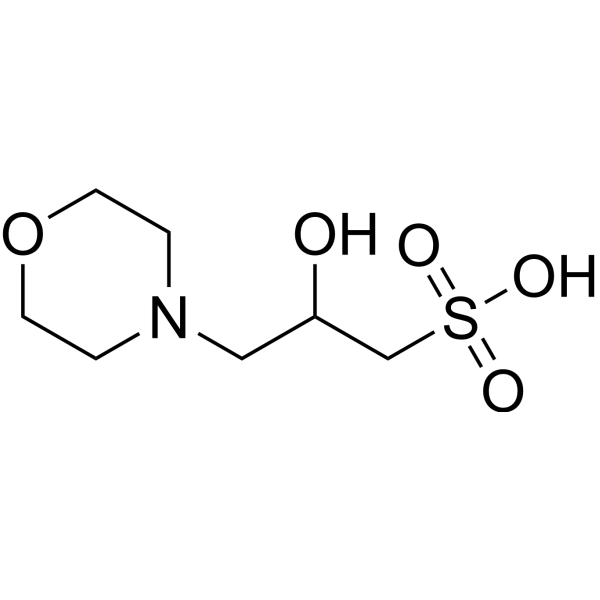
Cat. No.: HY-101850
CAS No.: 68399-77-9
Purity:  99.66%
MOPSO is a zwitterionic biological buffer with a functional pH range of 6.2 to 7.6. MOPSO serves as a component of buffered charcoal yeast extract medium; it can also be used to prepare a MOPSO-ethanol buffer system for the immobilization of urine-derived cells .
loading...
    loading...
Cat. No.: HY-W017054
CAS No.: 115-69-5
Category:  

Natural Products

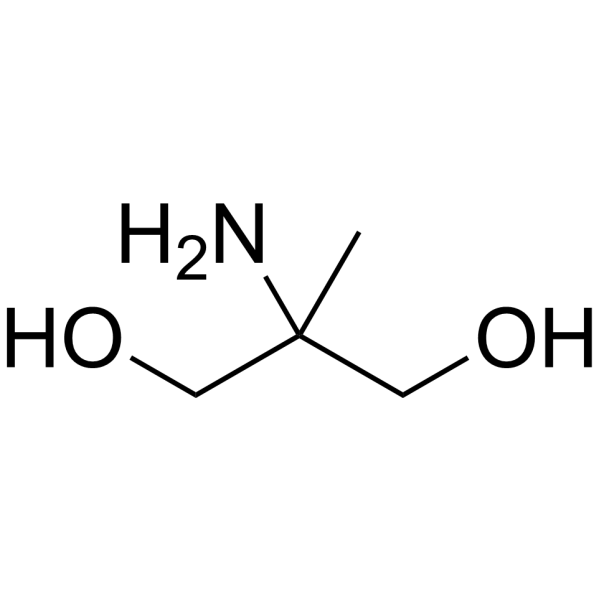
2-Amino-2-methyl-1,3-propanediol is a solid-solid phase change material with energy release and heat storage properties. 2-Amino-2-methyl-1,3-propanediol can crystallize from a supercooled solid state, release thermal energy during heating, and store thermal energy in the supercooled solid state. 2-Amino-2-methyl-1,3-propanediol can be used in the production of surfactants, vulcanization accelerators, and as a biological buffer .
loading...
    loading...
Cat. No.: HY-D0870
CAS No.: 73463-39-5
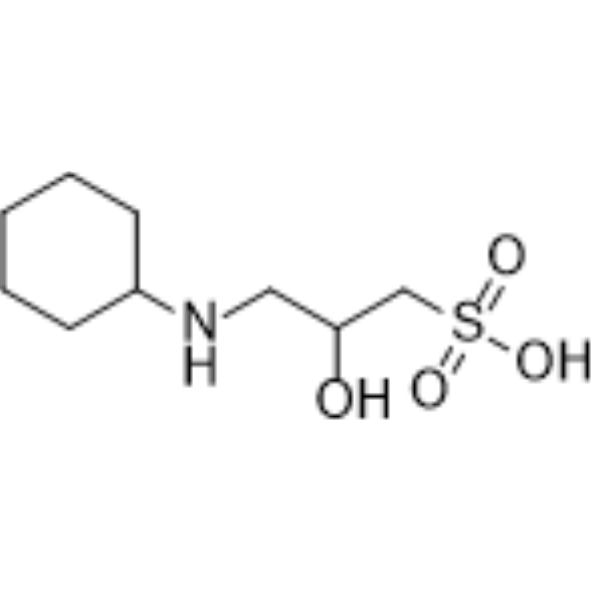
CAPSO is a biological zwitterionic buffer with the useful pH range from 8.9 to 10.3 .
loading...
    loading...
Cat. No.: HY-D0871
CAS No.: 103-47-9
Synonyms: N-Cyclohexyltaurine
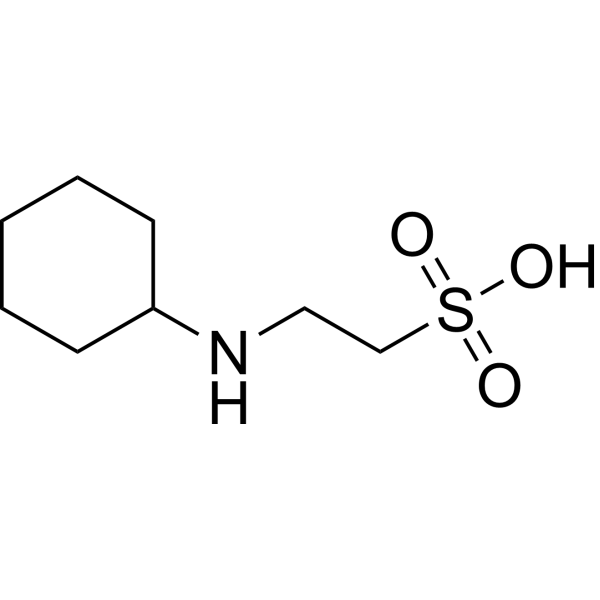
CHES (N-Cyclohexyltaurine) is a biological buffer reagent that binds to influenza virus hemagglutinin (HA). CHES mimics the binding mode of sialic acid to the HA receptor-binding site .
loading...
    loading...
Cat. No.: HY-W105704
CAS No.: 161308-36-7
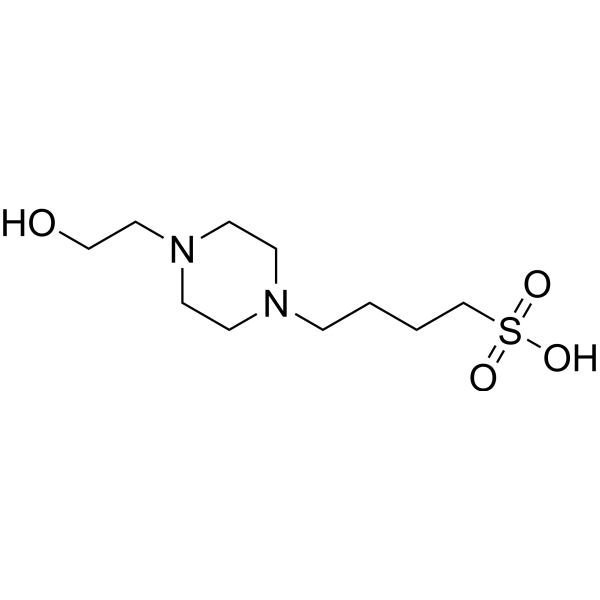
HEPBS is a zwitterionic buffer with a pH range (7.6-9.0) similar to that of biological systems. HEPBS can be used for cell culture. HEPBS also promotes mRNA delivery .
loading...
    loading...
Cat. No.: HY-W127629
CAS No.: 115724-21-5
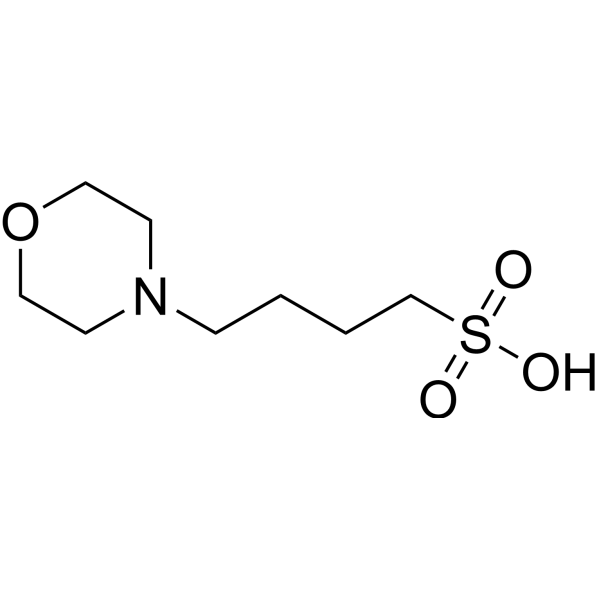
MOBS is a zwitterionic compound and biological buffer. MOBS is compatible with common biological media .
loading...
    loading...
Cat. No.: HY-D0855
CAS No.: 26239-55-4
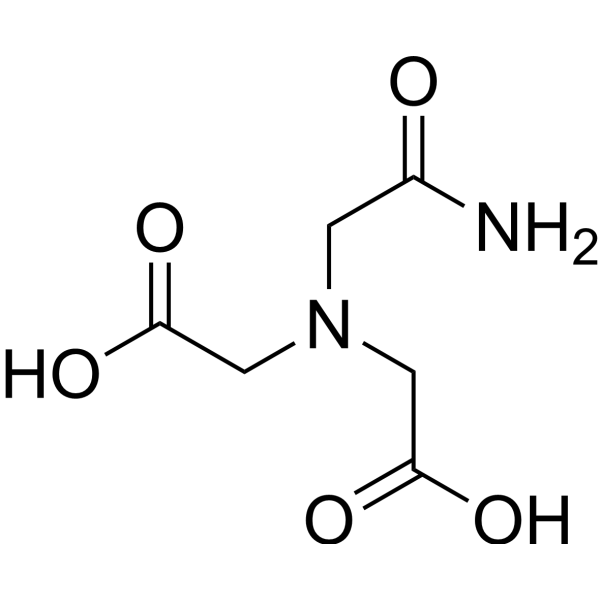
ADA is a biological buffer . ADA can serve as a chelator .
loading...
    loading...
Cat. No.: HY-D0872
CAS No.: 68399-80-4
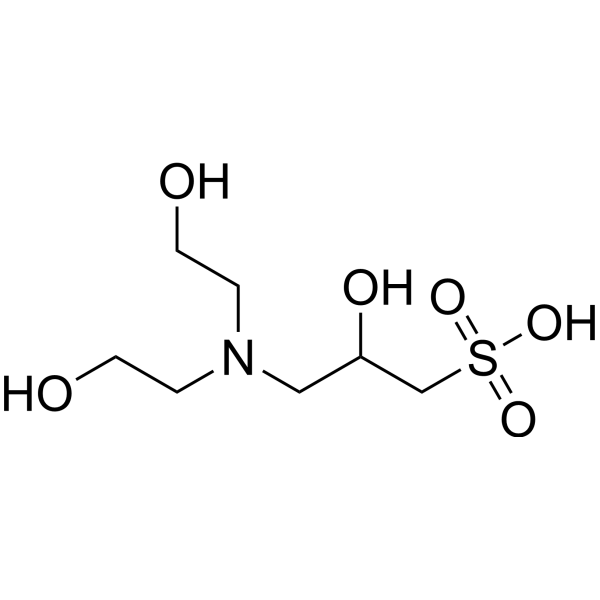
DIPSO is a biological zwitterionic buffer with the useful pH range from 7.0 to 8.2. DIPSO can interfere meiotic regulation in mouse oocytes. DIPSO also has surfactant activity at 10 mM .
loading...
    loading...

