12 Results for "

bone erosion

" in MedChemExpress (MCE) Product Catalog:
Products (12)

12 Results for "bone erosion" in MCE Product Catalog:

3
3 Cited Publications
Cat. No.: HY-11007
CAS No.: 778270-11-4
Purity:  99.82%
Research Areas:  

Cancer

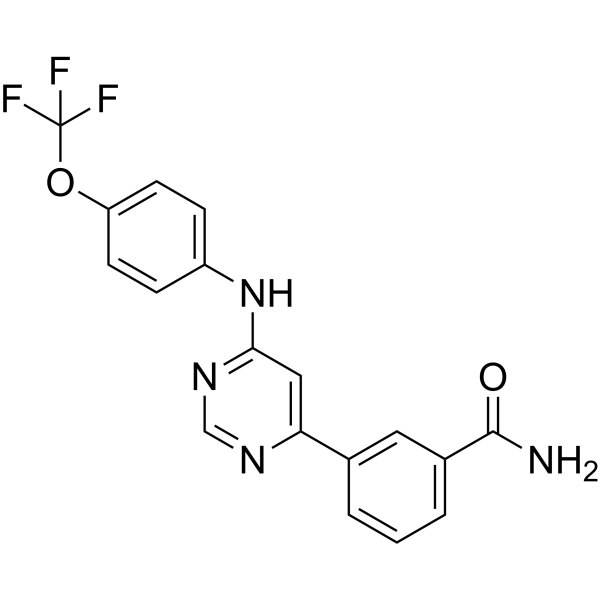
GNF-2 is a highly selective, allosteric, non-ATP competitive inhibitor of Bcr-Abl. GNF-2 inhibits Ba/F3.p210 proliferation with an IC50 of 138 nM .
loading...
    loading...
2
2 Cited Publications
Cat. No.: HY-N0656
CAS No.: 125-46-2
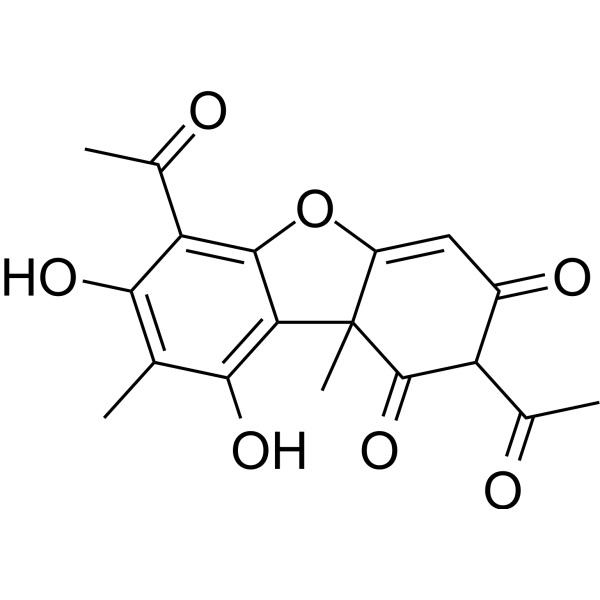
Usnic acid is a secondary metabolite of lichens with a unique dibenzofuran skeleton. Usnic acid inhibits DNA/RNA synthesis and has antibacterial activity. Usnic acid induces cell cycle arrest and apoptosis and has anticancer activity. Usnic acid inhibits RANKL-mediated osteoclast formation and function by reducing the transcriptional and translational expression of NFATc1. Usnic acid has antioxidant and anti-inflammatory activities by inhibiting lipid peroxidation and myeloperoxidase .
loading...
    loading...
Cat. No.: HY-W641445
CAS No.: 15533-81-0
Target:  

TRP Channel

Research Areas:  

Inflammation/Immunology

ELP-004 is a TRPC channel inhibitor and inhibtis TRPC channel-mediated Ca 2+ entry. ELP-004 is an osteoclast inhibitor and inhibits osteoclast differentiation. ELP-004 inhibits basal Ca 2+ and related NFATc1 translocation in inflammatory osteoclastogenesis. ELP-004 reduces bone erosion in a mouse model of rheumatoid arthritis .
loading...
    loading...
Cat. No.: HY-116640
CAS No.: 4208-09-7
Amorphigenin is a trothotenone compound. Amorphigenin inhibits osteoclast differentiation by suppressing the expression of c-Fos and NFATc1 in activated T cells. Amorphigenin degrades melanosome proteins by activating the AMPK-dependent autophagy pathway, but not in dependence of the mTOR pathway. Amorphigenin significantly protects bone mass and reduces bone erosion in a mouse model of inflammatory bone loss. Amorphigenin can be used to study inflammatory bone diseases, postmenopausal osteoporosis, and skin pigmentation disorders .
loading...
    loading...
Cat. No.: HY-N0656R
CAS No.: 125-46-2
Usnic acid is a secondary metabolite of lichens with a unique dibenzofuran skeleton. Usnic acid inhibits DNA/RNA synthesis and has antibacterial activity. Usnic acid induces cell cycle arrest and apoptosis and has anticancer activity. Usnic acid inhibits RANKL-mediated osteoclast formation and function by reducing the transcriptional and translational expression of NFATc1. Usnic acid has antioxidant and anti-inflammatory activities by inhibiting lipid peroxidation and myeloperoxidase .
loading...
    loading...
Cat. No.: HY-178465
CAS No.: 3068255-86-4
EP4 receptor antagonist 8 is an orally active EP4 antagonist (human EP4 IC50 = 6.40 nM). EP4 receptor antagonist 8 significantly reduced paw and joint swelling, inflammatory cell infiltration, cartilage damage, pannus formation, and joint bone erosion in arthritis (AIA) mice in a dose-dependent manner. EP4 receptor antagonist 8 can be used for the study of inflammatory pain .
loading...
    loading...
Cat. No.: HY-13075
CAS No.: 885704-21-2
Purity:  99.69%
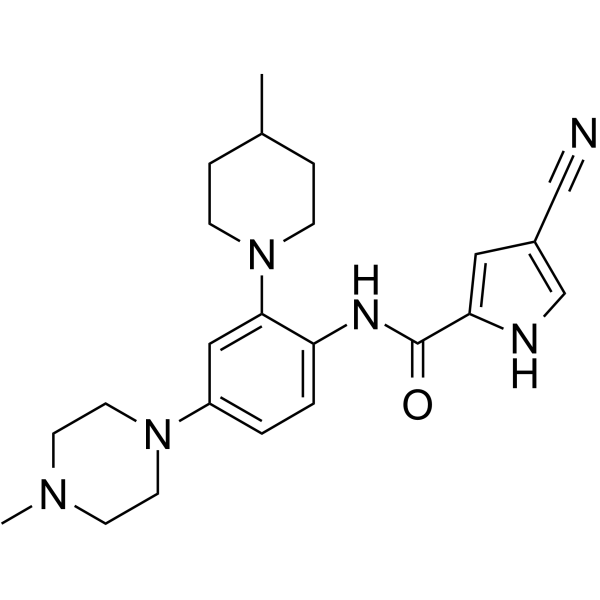
c-Fms-IN-3 is an orally active c-Fms (CSF1R) kinase inhibitor (IC50 = 0. 8 nM). c-Fms-IN-3 inhibits CSF1R kinase activity and reduces macrophage populations. c-Fms-IN-3 reduces bone erosion, pannus invasion, cartilage damage, and inflammation in collagen (HY-NP003)-induced arthritis mouse model. c-Fms-IN-3 is useful for arthritis research .
loading...
    loading...
Cat. No.: HY-P4800
CAS No.: 137348-10-8
Synonyms: Human PTHrP(107-139)
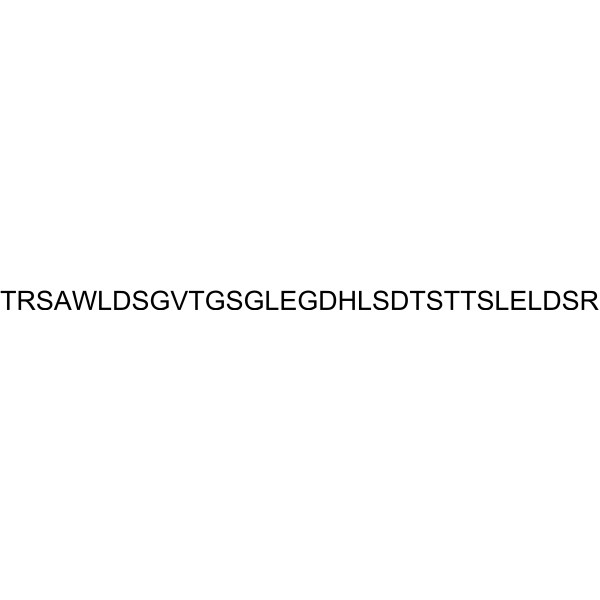
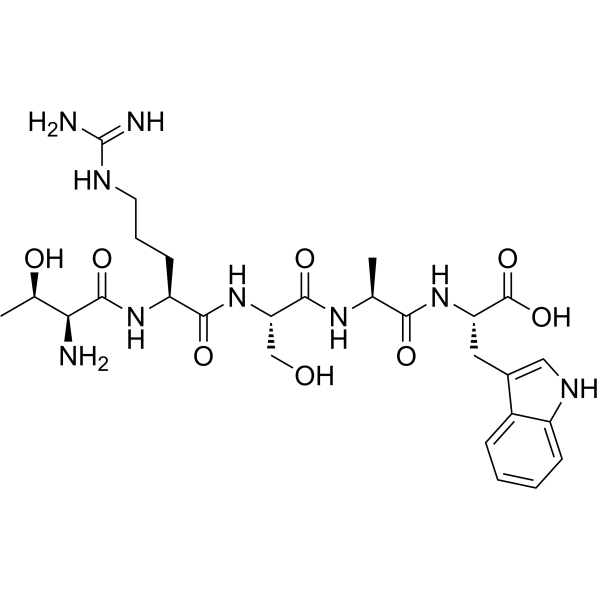
Osteostatin (human), a fragment of parathyroid hormone-related protein (PTHrP) 107-139, promotes bone repair in animal models of bone defects and prevents bone erosion in inflammatory arthritis .
loading...
    loading...
Cat. No.: HY-P4684
CAS No.: 138949-73-2
Synonyms: PTHrP (107–111)
Target:  

PTHR

Research Areas:  

Inflammation/Immunology

Osteostatin, a fragment of parathyroid hormone-related protein (PTHrP) 107-111, promotes bone repair in animal models of bone defects and prevents bone erosion in inflammatory arthritis, inhibits collagen-induced arthritis and inhibits osteoclastic bone resorption directly. Osteostatin can be used for inflammation and immunology research .
loading...
    loading...
Cat. No.: HY-17491
CAS No.: 22760-18-5
Synonyms: RU 43-715; Sandoz-43-715
Target:  

Others

Research Areas:  

Inflammation/Immunology

Proquazone (RU 43-715) is a chemically distinctive non-steroidal anti-inflammatory agent (NSAID). unlike most other NSAIDs, Proquazone does not have a free acid group in its structure. Proquazone may inhibit or arrest progression of bone erosions. Proquazone is an orally active anti-inflammatory, analgesic and anti-pyretic agent .
loading...
    loading...
Cat. No.: HY-11007R
CAS No.: 778270-11-4
Target:  

Bcr-Abl SARS-CoV

Research Areas:  

Cancer

GNF-2 (Standard) is the analytical standard of GNF-2. This product is intended for research and analytical applications. GNF-2 is a highly selective, allosteric, non-ATP competitive inhibitor of Bcr-Abl. GNF-2 inhibits Ba/F3.p210 proliferation with an IC50 of 138 nM .
loading...
    loading...
Cat. No.: HY-P11617
CLP-d2 is a multi-target anti-inflammatory agent, osteoclastogenesis inhibitor and immunomodulator with superior pharmacokinetic properties to Daptomycin (HY-B0108) and good safety profiles. CLP-d2 inhibits the NF-κB and MAPK signaling pathways by reducing the expression levels of c-Fos and NFATc1, and decreasing the phosphorylation levels of IκBα, p65, ERK and JNK, thereby reducing the secretion of pro-inflammatory cytokines such as IL-6, TNF-α and IL-1β to exert anti-inflammatory activity. CLP-d2 inhibits intra-articular osteoclastogenesis in mice, alleviates bone erosion and joint swelling, reduces synovial hyperplasia and inflammatory cell infiltration, and decreases serum rheumatoid factor (RF) levels. CLP-d2 is applicable to related research on rheumatoid arthritis .
loading...
    loading...
  • 1

