1. Search Result
Search Result
Results for "

brain synaptosomes

" in MedChemExpress (MCE) Product Catalog:

25

Inhibitors & Agonists

1

Biochemical Assay Reagents

1

Peptides

2

Isotope-Labeled Compounds

3

Oligonucleotides

Cat. No. Product Name Target Research Areas Chemical Structure
  • HY-B1287
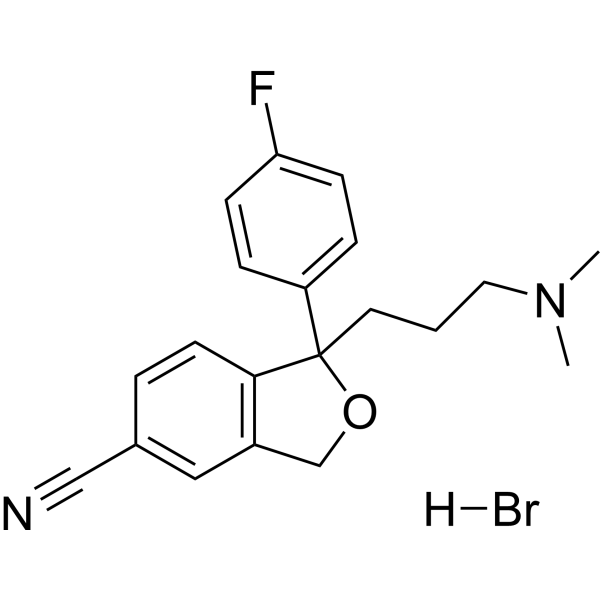
    Citalopram hydrobromide
    Maximum Cited Publications
    9 Publications Verification

    (±)-Citalopram hydrobromide; Lu 10-171

    Serotonin Transporter Autophagy Neurological Disease Cancer
    Citalopram hydrobromide is a selective serotonin reuptake inhibitor (SSRI), with blood-brain barrier permeability. Citalopram hydrobromide inhibits 5-HT uptake into synaptosomes with an IC50 of 1.8 nM. Citalopram hydrobromideinhibits the 5-HT uptake in rabbit blood platelets with an IC50 of 14 nM. Antidepressant effect .
    Citalopram hydrobromide
  • HY-B1110
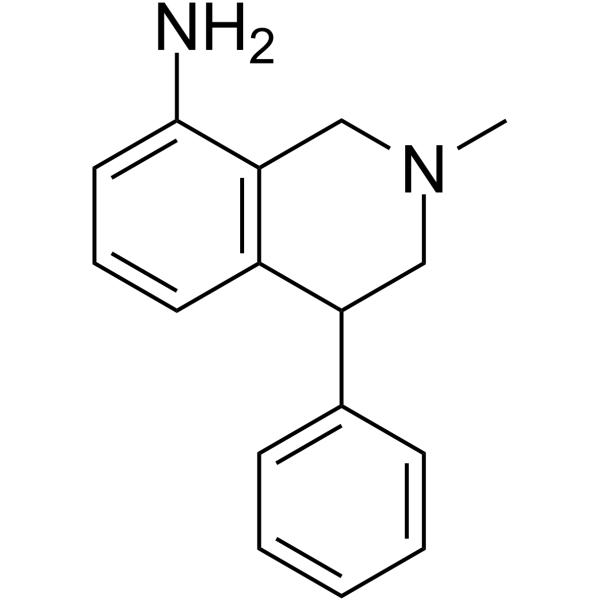
    Nomifensine
    5+ Cited Publications

    (±)-Nomifensine; Nomifensin

    Dopamine Receptor Adrenergic Receptor Neurological Disease
    Nomifensine ((±)-Nomifensine) is a potent norepinephrine (NE) and dopamine (DA) reuptake inhibitor. Nomifensine inhibits uptake of NE, DA and 5-HT in rat brain synaptosomes, with IC50 values of 6.6 nM, 48 nM and 830 nM, and Ki values of 4.7 nM, 26 nM and 4000 nM, respectively. Nomifensine has antidepressant and analgesic effects. Nomifensine is used in neurodegenerative diseases, compound addiction, and pain research .
    Nomifensine
  • HY-B1110A
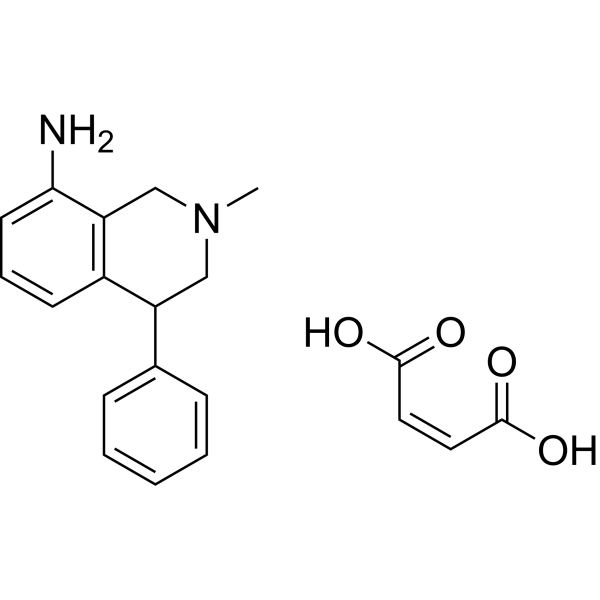
    Nomifensine maleate
    5+ Cited Publications

    (±)-Nomifensine maleate; Nomifensin maleate

    Dopamine Receptor Adrenergic Receptor Neurological Disease
    Nomifensine ((±)-Nomifensine) maleate is a potent norepinephrine (NE) and dopamine (DA) reuptake inhibitor. Nomifensine maleate inhibits uptake of NE, DA and 5-HT in rat brain synaptosomes, with IC50 values of 6.6 nM, 48 nM and 830 nM, and Ki values of 4.7 nM, 26 nM and 4000 nM, respectively. Nomifensine maleate has antidepressant and analgesic effects. Nomifensine maleate is used in neurodegenerative diseases, compound addiction, and pain research .
    Nomifensine maleate
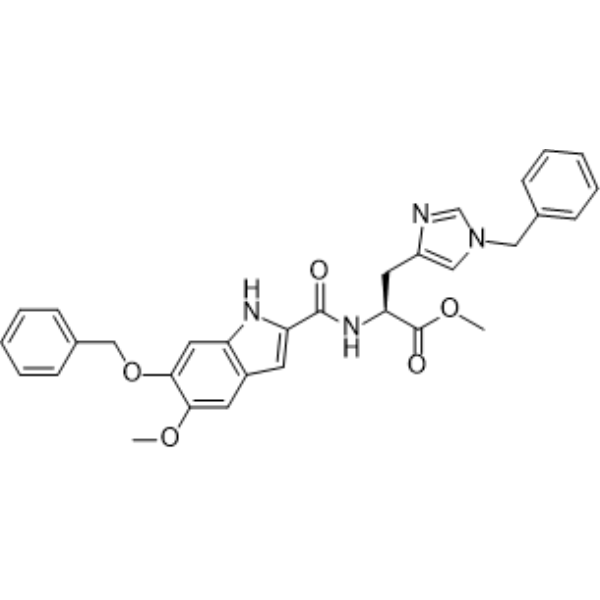
  • HY-113273A

    P2X Receptor Neurological Disease
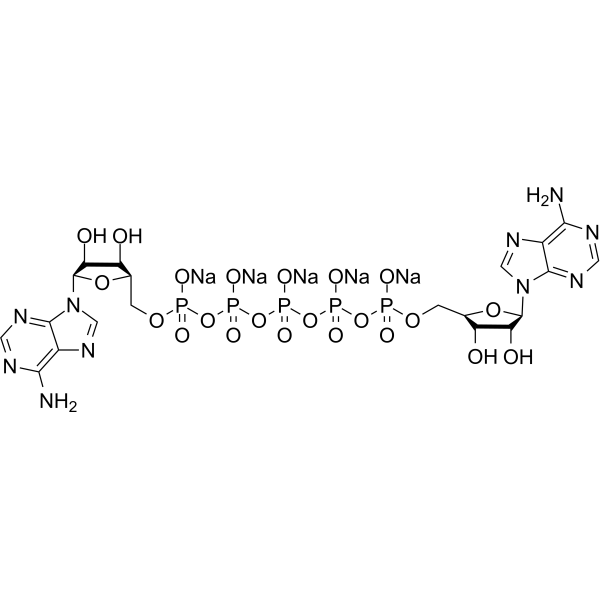
    Diadenosine pentaphosphate pentasodium is an agonist and negative modulator of the P2X1 receptor, an endogenous vasoactive purine dinucleotide that can be isolated from platelets. Diadenosine pentaphosphate pentasodium mediates negative regulation of dendrite growth and number by activating homologous and heterologous P2X1 receptors, which triggers a transient and moderate increase in intracellular calcium levels within dendritic growth cones. Diadenosine pentaphosphate pentasodium is widely present in secretory vesicles such as platelets, chromaffin cells and brain synaptosomes, and exhibits selective activity on dendrite growth of cultured hippocampal neurons, inhibiting only dendrite growth without affecting axon growth. Diadenosine pentaphosphate pentasodium has a weaker ability to compete with RcCHAD for binding to polyP than short-chain polyPs .
    Diadenosine pentaphosphate pentasodium
  • HY-120170
    BMS-466442
    1 Publications Verification

    ASCT Adrenergic Receptor Dopamine Transporter Neurological Disease
    BMS-466442 is a potent and selective inhibitor of asc-1 (alanine serine cysteine transporter-1), with an IC50 of 11 nM. BMS-466442 inhibits [ 3H] D-serine uptake into rat brain synaptosomes, with an IC50 of 400 nM. BMS-466442 can be used for schizophrenia research .
    BMS-466442
  • HY-NP180

    Calcium Channel Metabolic Disease
    Progesterone/BSA is a conjugate of Progesterone (HY-N0437) and bovine serum albumin (BSA). Progesterone/BSA cannot penetrate the plasma membrane of human sperm, but still rapidly elevates intracellular free calcium and induces the acrosome reaction. Progesterone/BSA can also act as a probe to specifically bind to progesterone-binding proteins on the membrane of rat brain synaptosomes .
    Progesterone/BSA
  • HY-160959

    nAChR Neurological Disease
    AN317 is a selective agonist for α6β2-containing nicotinic acetylcholine receptor (nAChR) with Ki of 6.2 nM and 4.1 nM, for α6/α3β2β3 receptor and α4β2 receptor, respectively. AN317 induces dopamine release in the synaptosomes of the rat striatum, enhances dopaminergic neuronal activity in substantia nigra, and exhibits protective efficacy to rat neurons against dopamine neurotoxin MPP +. AN317 exhibits good pharmacokinetic characteristics in rats. AN317 penetrates the blood-brain barrier (BB) .
    AN317
  • HY-N2326

    nAChR Neurological Disease Metabolic Disease
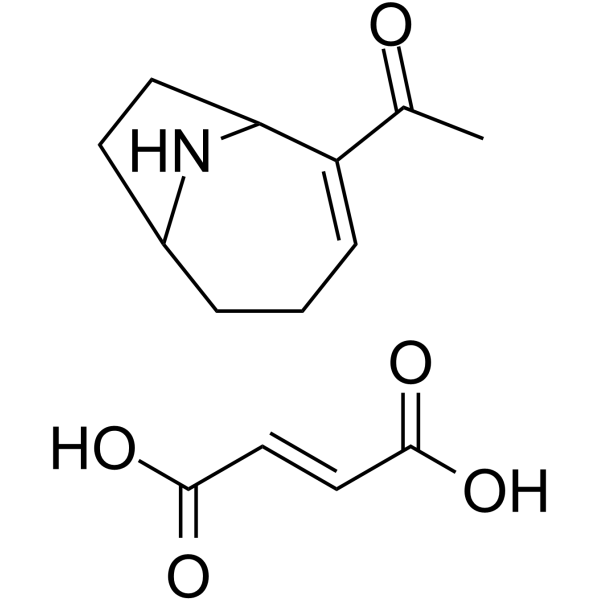
    (±)-Anatoxin A fumarate is a natural alkaloid isolated from freshwater cyanobacterium.(±)-Anatoxin A fumarate is a potent nicotinic receptor agonist and exhibits Ki values of 1.25 nM and 1.84 μM for binding to α4β2- and α7-type nicotinic receptors in rat brain membranes, respectively. (±)-Anatoxin A fumarate stimulates [ 3H]-dopamine release from rat striatal synaptosomes (EC50=134 nM). (±)-Anatoxin A fumarate has toxic effect on fish .
    (±)-Anatoxin A fumarate
  • HY-100928

    Calcium Channel Neurological Disease
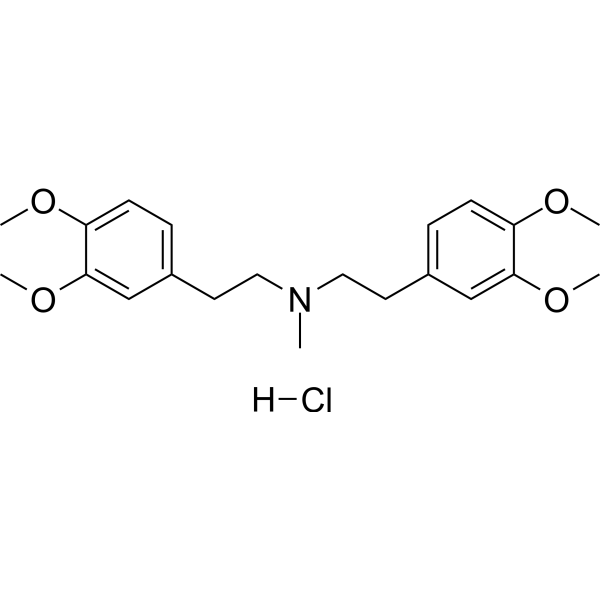
    YS 035 hydrochloride is a Ca 2+ antagonist on cellular uptake and mitochondrial efflux of calcium ions. YS 035 hydrochloride inhibits Ca 2+ uptake by muscle cells and inhibits Na +/Ca 2+ exchange (Ki=28 µM). YS 035 hydrochloride is a useful tool for research on the mitochondrial Ca 2+ transport .
    YS 035 hydrochloride
  • HY-108973A

    CGP-15210G

    5-HT Receptor Neurological Disease
    Ifoxetine (CGP 15210G) is an inhibitor of 5-HT reuptake. Ifoxetine specifically and selectively blocks the 5-HT reuptake in the brain without affecting the 5-HT uptake processes in the periphery (blood platelets). Ifoxetine inhibits the uptake of radiolabelled 5-HT into rat brain synaptosomes in vitro or ex vivo. Ifoxetine has antidepressant properties .
    Ifoxetine
  • HY-18610A

    Ro 8-4650

    Dopamine Transporter Adrenergic Receptor 5-HT Receptor Neurological Disease
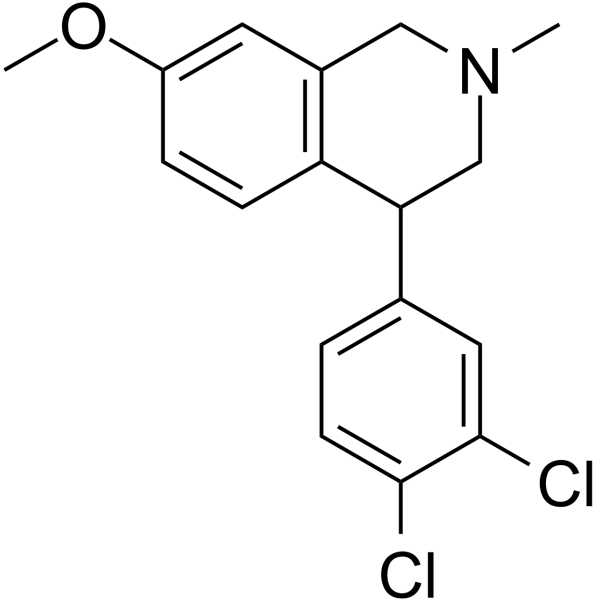
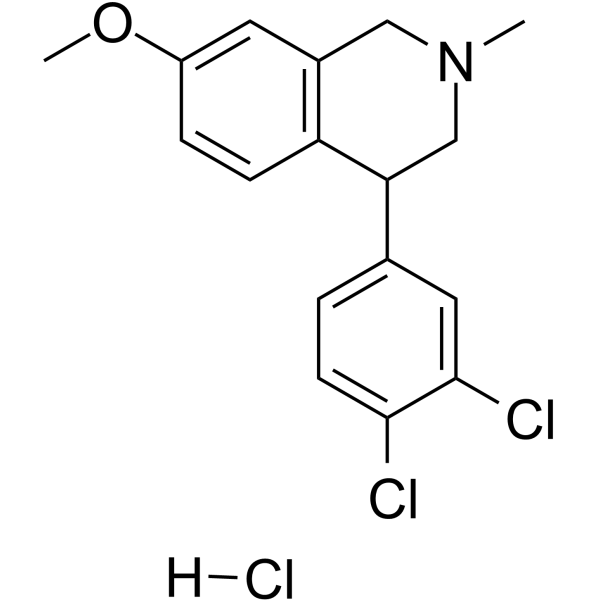
    Diclofensine (Ro 8-46500) is an orally active neuronal monoamine uptake inhibitor. Diclofensine blocks the uptake of dopamine, noradrenaline, and serotonin by rat brain synaptosomes with IC50 values of 0.74, 2.3 and 3.7 nM, respectively. Diclofensine potentiates norepinephrine-induced hypertension and attenuates Tyramine (HY-W007606)-induced hypertension. Diclofensine produces psychostimulant and mood-elevating effects without causing sudden disappearance or withdrawal reactions. Diclofensine can be used in the research of moderate to severe depression .
    Diclofensine
  • HY-117160

    4-trans-hydroxycyclohexyl Glyburide; 4-trans-hydroxy Glibenclamide

    Potassium Channel Neurological Disease
    rac-trans-4-hydroxy Glyburide is an active metabolite of the SUR1/Kir6.2 sulfonylurea inhibitor glyburide (HY-15206). It is formed from glyburide by the cytochrome P450 (CYP) isoforms CYP2C8 and CYP2C9. rac-trans-4-hydroxy Glyburide inhibits glyburide binding to rat brain synaptosomes at the high and low affinity sites of SUR1/Kir6.2 with IC50 values of 0.95 and 100 nM, respectively.
    4-trans-Hydroxy-glibenclamide
  • HY-16923

    BIII-890; BIII-890 CL free acid

    Sodium Channel Neurological Disease
    Crobenetine (BIII-890), a benzomorphan derivative, is a potent, selective, and highly use-dependent Na + channel blocker. Crobenetine displaces [3H]BTX from site 2 of the Na + channel (IC50=49 nM) in rat brain synaptosomes, yet exhibits only low binding affinity for other receptors and ion channels. Crobenetine protects brain tissue from the deleterious effects of focal cerebral ischemia in rodents .
    Crobenetine
  • HY-18610

    Ro 8-4650 hydrochloride

    Dopamine Transporter Adrenergic Receptor 5-HT Receptor Neurological Disease
    Diclofensine (Ro 8-46500) hydrochloride is an orally active neuronal monoamine uptake inhibitor. Diclofensine hydrochloride blocks the uptake of dopamine, noradrenaline, and serotonin by rat brain synaptosomes with IC50 values of 0.74, 2.3 and 3.7 nM, respectively. Diclofensine hydrochloride potentiates norepinephrine-induced hypertension and attenuates Tyramine (HY-W007606)-induced hypertension. Diclofensine hydrochloride produces psychostimulant and mood-elevating effects without causing sudden disappearance or withdrawal reactions. Diclofensine hydrochloride can be used in the research of moderate to severe depression .
    Diclofensine hydrochloride
  • HY-P1426

    Potassium Channel Neurological Disease
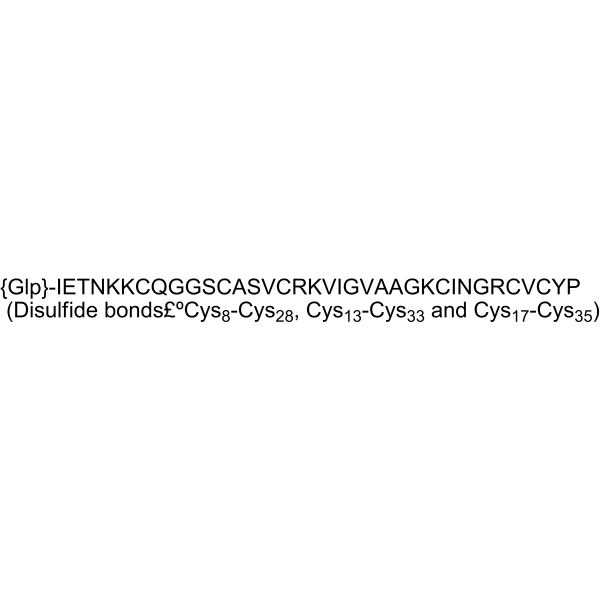
    AmmTX3 is a peptide toxin identified from the venom of the scorpion Androctonus mauretanicus. AmmTX3 is a highly specific blocker of Kv4 channels, which selectively and almost completely blocks transient A-type K + currents with a Ki of 131 nM. AmmTX3 induces epileptiform behaviors and causes death in mice receiving intracerebroventricular injection. AmmTX3 increases the excitability of dentate gyrus granule cells, reduces GABAergic inhibition, enhances and stabilizes the EPSP-spike component of long-term potentiation, and impairs reference memory. AmmTX3 can be used in research related to pain, epilepsy, and autism spectrum disorder .
    AmmTX3
  • HY-16923A

    BIII-890 hydrochloride; BIII-890 CL

    Sodium Channel Neurological Disease
    Crobenetine hydrochloride (BIII-890 hydrochloride) is the hydrochloride form of Crobenetine (HY-16923). Crobenetine hydrochloride is a selective inhibitor for Na + channel. Crobenetine hydrochloride displaces 3HBTX from site 2 of the Na + channel (IC50=49 nM) in rat brain synaptosomes, exhibits only low binding affinity for other receptors and ion channels. Crobenetine hydrochloride protects brain tissue from the deleterious effects of focal cerebral ischemia in rodents .
    Crobenetine hydrochloride
  • HY-131556

    p-Iodoamphetamine hydrochloride

    5-HT Receptor Neurological Disease
    4-Iodoamphetamine (p-Iodoamphetamine) hydrochloride is a halogenated amphetamine featuring an iodine atom at the para position of the phenyl group. 4-Iodoamphetamine hydrochloride selectively induces serotonin release and inhibits reuptake by rat brain synaptosomes.
    4-Iodoamphetamine hydrochloride
  • HY-113273B

    Endogenous Metabolite Metabolic Disease
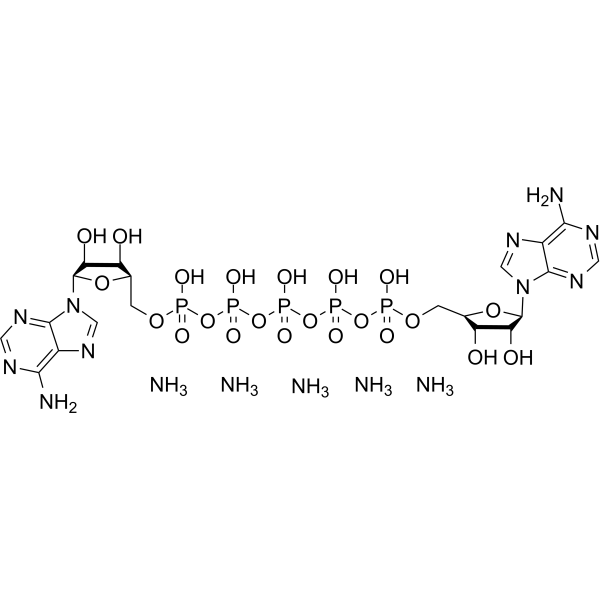
    Diadenosine pentaphosphate pentaammonium is an endogenous vasoactive purine dinucleotide which has been isolated from thrombocytes. Diadenosine polyphosphates (ApnA, n=2–7) have been identified as constituents of secretory vesicles such as in platelets, chromaffin cells, Torpedo synaptic terminals and brain synaptosomes .
    Diadenosine pentaphosphate pentaammonium
  • HY-113273C

    Endogenous Metabolite Metabolic Disease
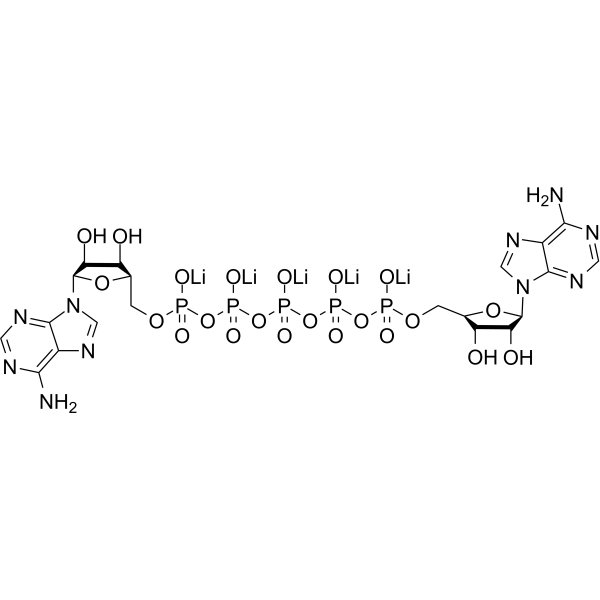
    Diadenosine pentaphosphate pentalithium is an endogenous vasoactive purine dinucleotide which has been isolated from thrombocytes. Diadenosine polyphosphates (ApnA, n=2–7) have been identified as constituents of secretory vesicles such as in platelets, chromaffin cells, Torpedo synaptic terminals and brain synaptosomes .
    Diadenosine pentaphosphate pentalithium
  • HY-108973

    CGP 15210G hemisulfate

    5-HT Receptor Neurological Disease
    Ifoxetine (CGP 15210G) hemisulfate is an inhibitor of 5-HT reuptake. Ifoxetine hemisulfate specifically and selectively blocks the 5-HT reuptake in the brain without affecting the 5-HT uptake processes in the periphery (blood platelets). Ifoxetine hemisulfate inhibits the uptake of radiolabelled 5-HT into rat brain synaptosomes in vitro or ex vivo. Ifoxetine hemisulfate has antidepressant properties .
    Ifoxetine hemisulfate
  • HY-B1110AR

    (±)-Nomifensine maleate (Standard); Nomifensin maleate (Standard)

    Dopamine Receptor Adrenergic Receptor Reference Standards Neurological Disease
    Nomifensine (maleate) (Standard) is the analytical standard of Nomifensine (maleate). This product is intended for research and analytical applications. Nomifensine ((±)-Nomifensine) maleate is a potent norepinephrine (NE) and dopamine (DA) reuptake inhibitor. Nomifensine maleate inhibits uptake of NE, DA and 5-HT in rat brain synaptosomes, with IC50 values of 6.6 nM, 48 nM and 830 nM, and Ki values of 4.7 nM, 26 nM and 4000 nM, respectively. Nomifensine maleate has antidepressant and analgesic effects. Nomifensine maleate is used in neurodegenerative diseases, compound addiction, and pain research .
    Nomifensine maleate (Standard)
  • HY-B1110R

    (±)-Nomifensine (Standard); Nomifensin (Standard)

    Dopamine Receptor Adrenergic Receptor Reference Standards Neurological Disease
    Nomifensine (Standard) is the analytical standard of Nomifensine. This product is intended for research and analytical applications. Nomifensine ((±)-Nomifensine) is a potent norepinephrine (NE) and dopamine (DA) reuptake inhibitor. Nomifensine inhibits uptake of NE, DA and 5-HT in rat brain synaptosomes, with IC50 values of 6.6 nM, 48 nM and 830 nM, and Ki values of 4.7 nM, 26 nM and 4000 nM, respectively. Nomifensine has antidepressant and analgesic effects. Nomifensine is used in neurodegenerative diseases, compound addiction, and pain research .
    Nomifensine (Standard)
  • HY-B1110S

    (±)-Nomifensine-d3 maleate; Nomifensin-d3 maleate

    Isotope-Labeled Compounds Dopamine Receptor Adrenergic Receptor Neurological Disease
    Nomifensine-d3 ((±)-Nomifensine-d3) maleate is the deuterium labeled Nomifensine maleate (HY-B1110A). Nomifensine ((±)-Nomifensine) maleate is a potent norepinephrine (NE) and dopamine (DA) reuptake inhibitor. Nomifensine maleate inhibits uptake of NE, DA and 5-HT in rat brain synaptosomes, with IC50 values of 6.6 nM, 48 nM and 830 nM, and Ki values of 4.7 nM, 26 nM and 4000 nM, respectively. Nomifensine maleate has antidepressant and analgesic effects. Nomifensine maleate is used in neurodegenerative diseases, compound addiction, and pain research .
    Nomifensine-d3 maleate
  • HY-18610R

    Ro 8-4650 hydrochloride (Standard)

    Reference Standards Dopamine Transporter Adrenergic Receptor 5-HT Receptor Neurological Disease
    Diclofensine (Ro 8-4650) hydrochloride (Standard) is the analytical standard of Diclofensine hydrochloride. This product is intended for research and analytical applications. Diclofensine hydrochloride is an orally active neuronal monoamine uptake inhibitor. Diclofensine hydrochloride blocks the uptake of dopamine, noradrenaline, and serotonin by rat brain synaptosomes with IC50 values of 0.74, 2.3 and 3.7 nM, respectively. Diclofensine hydrochloride potentiates norepinephrine-induced hypertension and attenuates Tyramine (HY-W007606)-induced hypertension. Diclofensine hydrochloride produces psychostimulant and mood-elevating effects without causing sudden disappearance or withdrawal reactions. Diclofensine hydrochloride can be used in the research of moderate to severe depression.
    Diclofensine hydrochloride (Standard)
  • HY-18610S

    Isotope-Labeled Compounds Dopamine Transporter Adrenergic Receptor 5-HT Receptor Neurological Disease
    Diclofensine-d3 (Ro-8-4650-d3) hydrochloride is the deuterium labeled Diclofensine hydrochloride. Diclofensine hydrochloride is an orally active neuronal monoamine uptake inhibitor. Diclofensine hydrochloride blocks the uptake of dopamine, noradrenaline, and serotonin by rat brain synaptosomes with IC50 values of 0.74, 2.3 and 3.7 nM, respectively. Diclofensine hydrochloride potentiates norepinephrine-induced hypertension and attenuates Tyramine (HY-W007606)-induced hypertension. Diclofensine hydrochloride produces psychostimulant and mood-elevating effects without causing sudden disappearance or withdrawal reactions. Diclofensine hydrochloride can be used in the research of moderate to severe depression.
    Diclofensine-d3 hydrochloride

Inquiry Online

Your information is safe with us. * Required Fields.

Salutation


Country or Region *

Applicant Name *


Organization Name *

Department *


Email Address *


Product Name *

Cat. No.


Requested quantity *

Phone Number *


Remarks

Inquiry Online

Inquiry Information

Product Name:
Cat. No.:
Quantity:
MCE Japan Authorized Agent:

