
12 Results for "

calves

" in MedChemExpress (MCE) Product Catalog:
Products (12)

12 Results for "calves" in MCE Product Catalog:

7
7 Publications Verification
Cat. No.: HY-109517
CAS No.: 91080-16-9
Synonyms: DNA from calf thymus, Thymonucleic acid
Calf thymus DNA (DNA from calf thymus) is high quality double-stranded template DNA isolated from the thymus of male and female calves. Calf thymus DNA can be used for the research of the interaction between DNA and agents .
loading...
    loading...
3
3 Cited Publications
Cat. No.: HY-W011527
CAS No.: 146-80-5
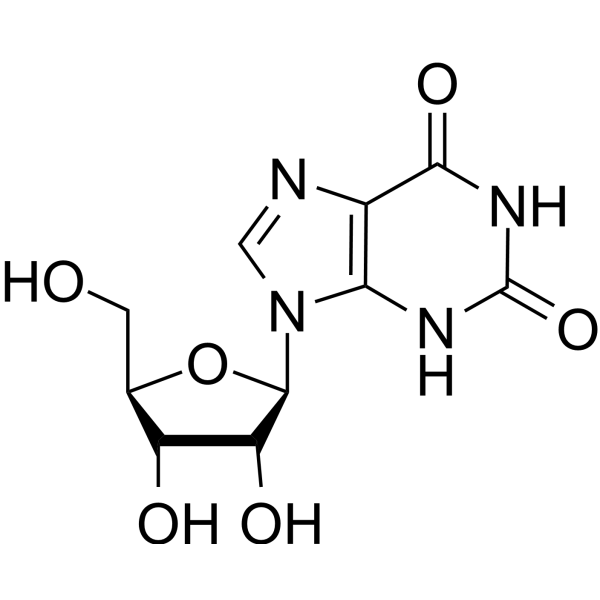
Xanthosine is a nucleoside derived from xanthine and ribose. Xanthosine activates the AMPK/FoxO1/AKT/GSK3β signaling cascade. Xanthosine promotes cell proliferation and regulates blood glucose metabolism. Xanthosine increases milk production in cows and goats. Xanthosine is used in mammary stem cell and type 2 diabetes research .
loading...
    loading...
1
1 Cited Publications
Cat. No.: HY-B0488
CAS No.: 60200-06-8
Synonyms: L631529; MK401
Target:  

Parasite

Research Areas:  

Infection

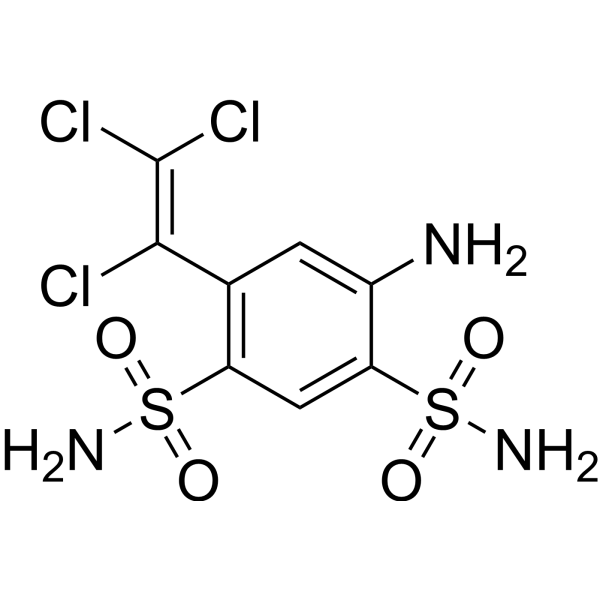
Clorsulon (L631529; MK401) is an orally active flukicidal agent. Clorsulon inhibits glycolysis, the primary energy production pathway in flukes. Clorsulon is also a competitive inhibitor of 3-phosphoglycolate and ATP, inhibiting glucose utilization and acetate and propionate formation by mature Fasciola hepatica in vitro. Clorsulon can be used in studies of liver fluke (Fasciola hepatica and Fasciola gigantica) infection in calves and sheep .
loading...
    loading...
Cat. No.: HY-111095B
CAS No.: 920-49-0
Purity:  ≥98.0%
Synonyms: (R)-2-Hydroxypropionic acid sodium
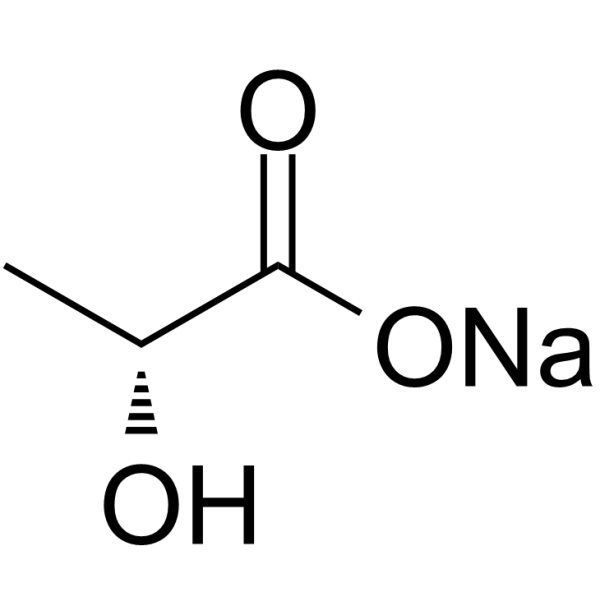
D-(-)-Lactic acid ((R)-2-Hydroxypropionic acid) sodium is an orally active, toxic optical isomer of Lactic acid (HY-B2227), mainly derived from overproduction by intestinal bacteria or exogenous intake. D-(-)-Lactic acid sodium can induce intoxication, characterized by severe metabolic acidosis accompanied by neurological symptoms .
loading...
    loading...
Cat. No.: HY-B1073
CAS No.: 26155-31-7
Target:  

Parasite

Research Areas:  

Infection

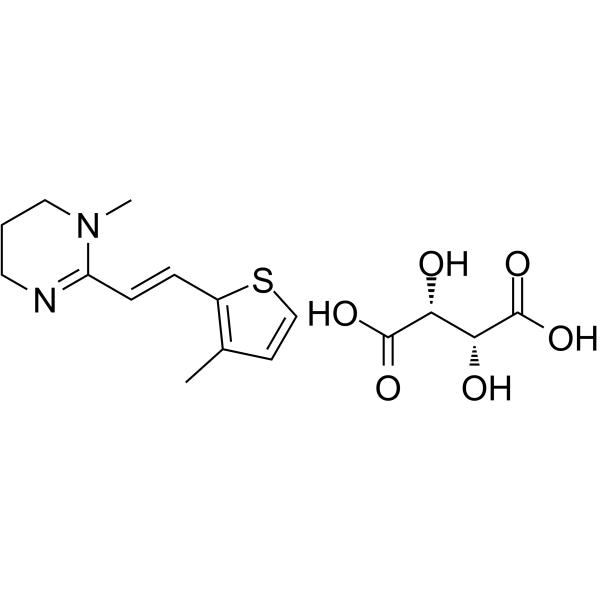
Morantel tartrate is an anthelmintic agent. Sustained-release three-layer composite tablets of Morantel tartrate are administered orally and release after exposure to rumen fluid. Morantel tartrate reduces the fecal egg output and worm burden of gastrointestinal nematodes in Hereford calves. Morantel tartrate is used in research related to gastrointestinal nematode infections .
loading...
    loading...
Cat. No.: HY-P0070
CAS No.: 316791-23-8
Target:  

Endogenous Metabolite

Research Areas:  

Inflammation/Immunology

Thymus peptide C is a hormonal agent derived from the thymus glands of young calves, which works as a substitute for the physiological functions of the thymus.
loading...
    loading...
Cat. No.: HY-W013803
CAS No.: 5968-90-1
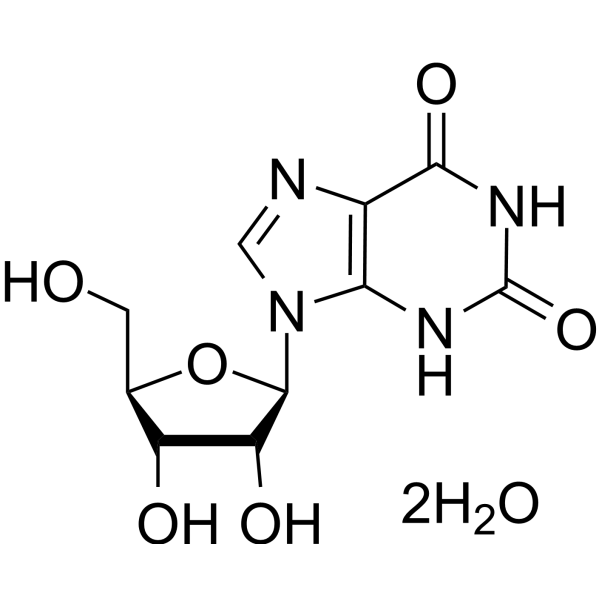
Xanthosine dihydrate is a nucleoside derived from xanthine and ribose. Xanthosine dihydrate activates the AMPK/FoxO1/AKT/GSK3β signaling cascade. Xanthosine dihydrate promotes cell proliferation and regulates blood glucose metabolism. Xanthosine dihydrate increases milk production in cows and goats. Xanthosine dihydrate is used in mammary stem cell and type 2 diabetes research .
loading...
    loading...
Cat. No.: HY-121495
CAS No.: 1951431-22-3
Purity:  98.77%
Target:  

Parasite

Research Areas:  

Infection

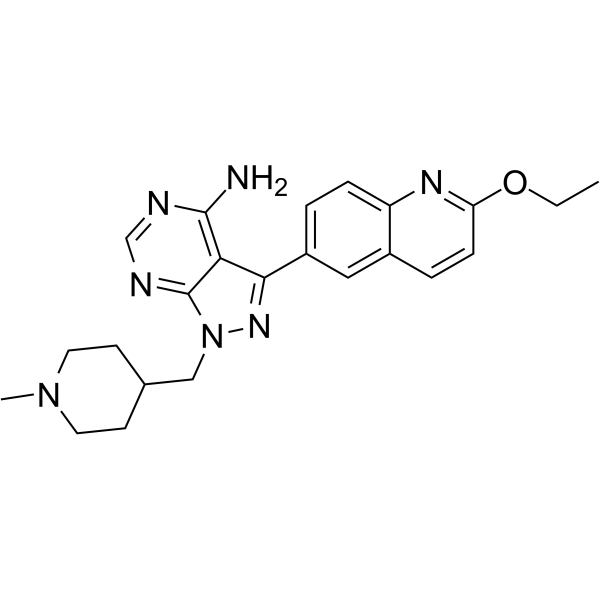
BKI-1369 is a bumped kinase inhibitor (BKI). BKI-1369 increases human Ether-a-go-go-related gene (hERG)-inhibitory activity with an IC50 of 1.52 μM. BKI-1369 reduces the parasite burden and diseases severity in the gnotobiotic pig model. BKI-1369 has been well characterized for potency, stability, metabolism, toxicity, pharmacokinetics and is potent against C. parvum in infected mice and calves .
loading...
    loading...
Cat. No.: HY-121311
CAS No.: 81043-56-3
Metrenperone is an inhibitor for 5-HT2 receptor. Metrenperone exhibits α1 and α2 antagonist activity as well as anti-H1 and anti-dopaminergic efficacy. Metrenperone can lower the blood pressure, enhances bradycardia in peripheral ischemia, inhibits serotonin-induced platelet aggregation, and antagonizes serotonin-mediated vasoconstriction. Metrenperone promotes the repair of acutely damaged collagen tissue .
loading...
    loading...
Cat. No.: HY-B0488R
CAS No.: 60200-06-8
Synonyms: L631529 (Standard); MK401 (Standard)
Research Areas:  

Infection

Clorsulon (Standard) is the analytical standard of Clorsulon (HY-B0488). This product is intended for research and analytical applications. Clorsulon (L631529; MK401) is an orally active flukicidal agent. Clorsulon inhibits glycolysis, the primary energy production pathway in flukes. Clorsulon is also a competitive inhibitor of 3-phosphoglycolate and ATP, inhibiting glucose utilization and acetate and propionate formation by mature Fasciola hepatica in vitro. Clorsulon can be used in studies of liver fluke (Fasciola hepatica and Fasciola gigantica) infection in calves and sheep .
loading...
    loading...
Cat. No.: HY-180418
CAS No.: 602-52-8
Target:  

Parasite

Research Areas:  

Infection

Homidium chloride is a potent antiparasitic agent exhibiting activity against Trypanosoma rhodesiense and Trypanosoma congolense. Homidium chloride can reduce parasitaemia in murine models of infection. Homidium chloride can be used for trypanosomiasis research .
loading...
    loading...
Cat. No.: HY-122431
CAS No.: 299-86-5
Target:  

Insecticide Parasite

Research Areas:  

Infection

Crufomate is an organophosphate insecticide. Crufomate is used to control warble fly maggot infections and botfly infestations in dairy cows, and accumulates in milk fat. Crufomate reduces mating responses, conception rates, pup survival rates, and post-weaning body weights of offspring in mice. Crufomate is used in studies related to botfly infestations and gastrointestinal parasitic infections .
loading...
    loading...
  • 1

