



Clorsulon
Based on 1 publication(s) in Google Scholar
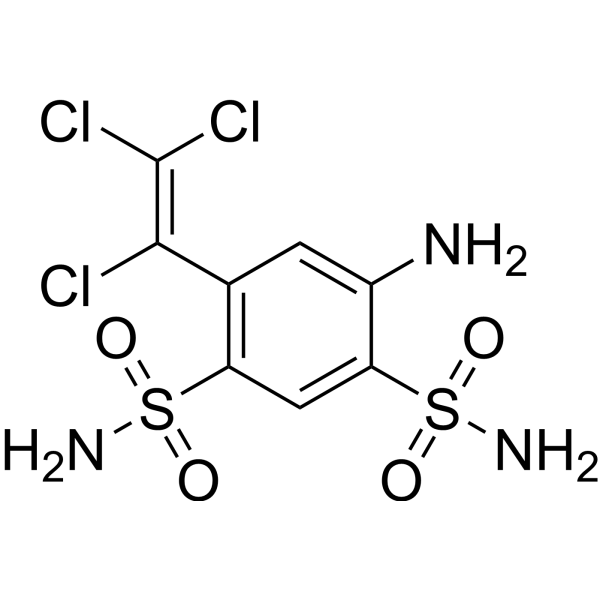
Clorsulon (L631529; MK401) is an orally active flukicidal agent. Clorsulon inhibits glycolysis, the primary energy production pathway in flukes. Clorsulon is also a competitive inhibitor of 3-phosphoglycolate and ATP, inhibiting glucose utilization and acetate and propionate formation by mature Fasciola hepatica in vitro. Clorsulon can be used in studies of liver fluke (Fasciola hepatica and Fasciola gigantica) infection in calves and sheep.
For research use only. We do not sell to patients.
- Purity : 99.99%
- CAS No.: 60200-06-8
- Formula: C8H8Cl3N3O4S2
- Molecular Weight:380.66
-
Storage:Powder -20°C, 3 years , 4°C, 2 years ; In solvent -80°C, 2 years , -20°C, 1 year

To place orders, for customer services and technical support, please contact: MedChemExpress USA
Tel: 609-228-6898 E-mail: [email protected] [email protected]


-
 Biological Activity
-
Chemical Information
-
Solvent & Solubility
- Protocols
- Purity & Documentation
- References
-
 Help & FAQs


-
HY-17035
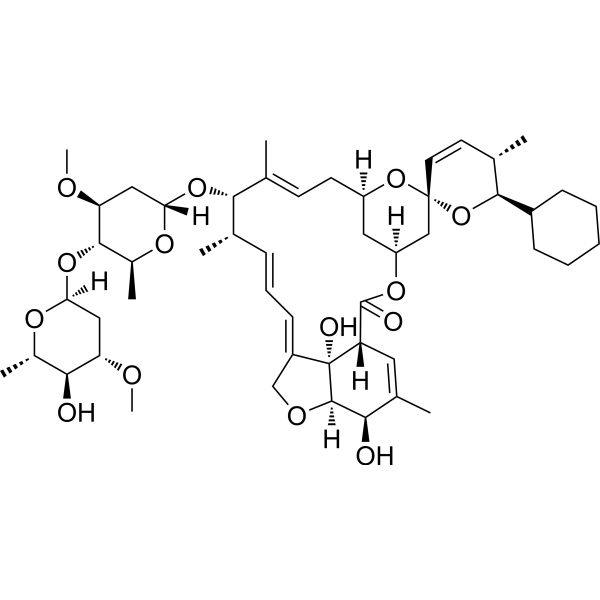
DoramectinAntibiotic -

HY-B0488R
Clorsulon (Standard)Standard Of Clorsulon -

HY-17035R
Doramectin (Standard)Antibiotic -
HY-101476
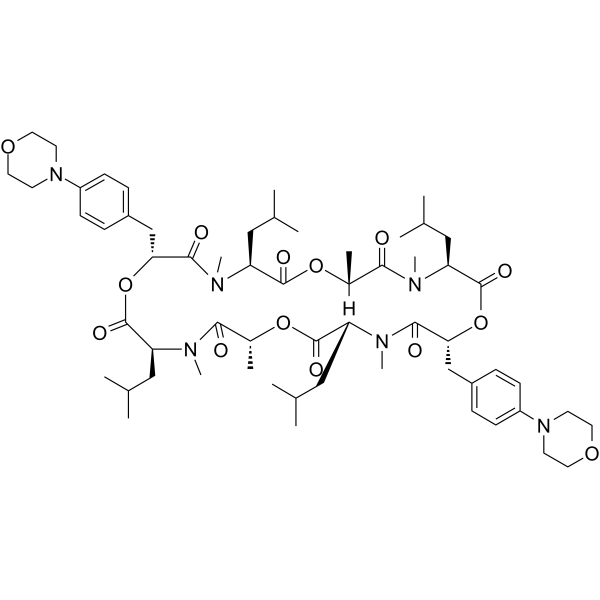
EmodepsideAnthelmintic Agent -
HY-B0357
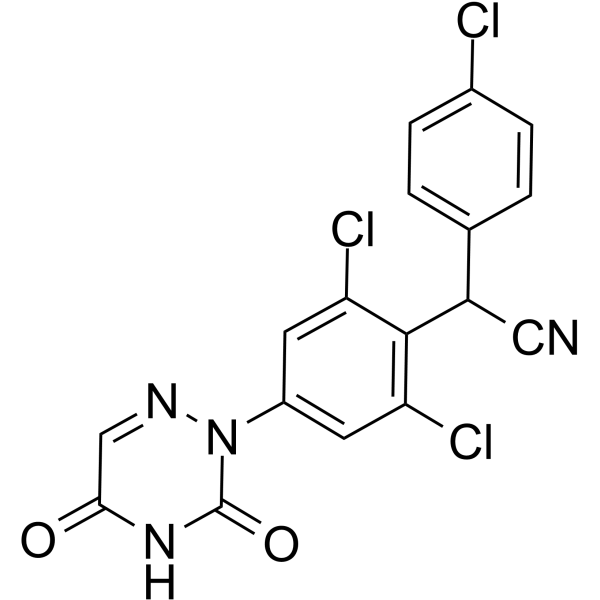
DiclazurilAnticoccidial Agent -
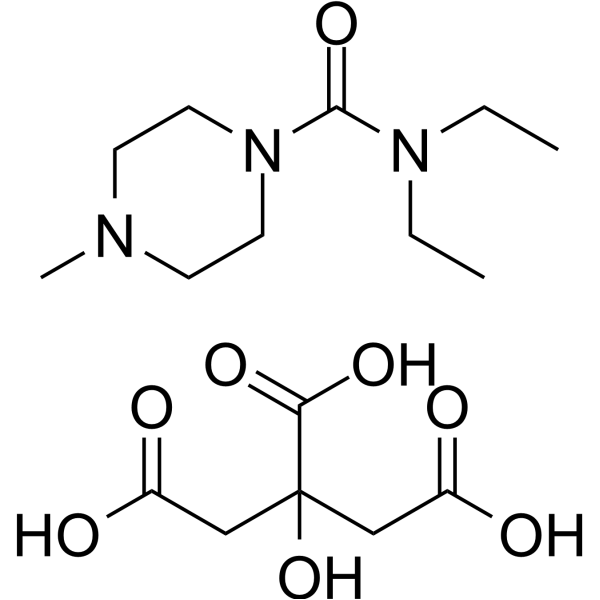
HY-12642
Diethylcarbamazine citrateMicrofilaricidal Agent -
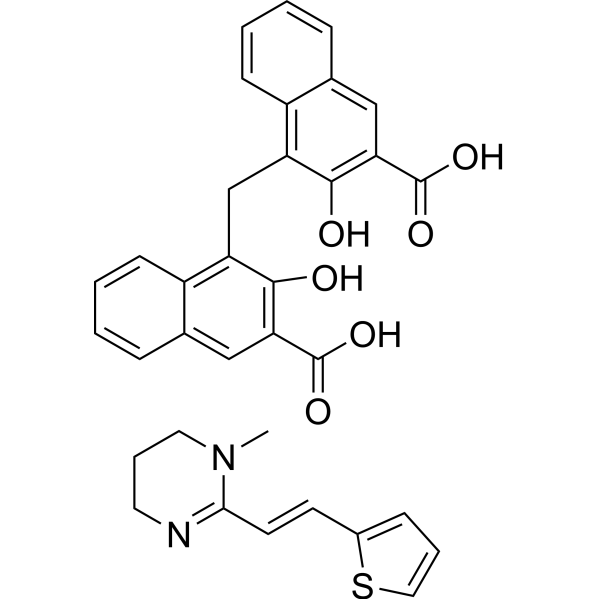
HY-12640
Pyrantel pamoateAntiparasitic Agent -
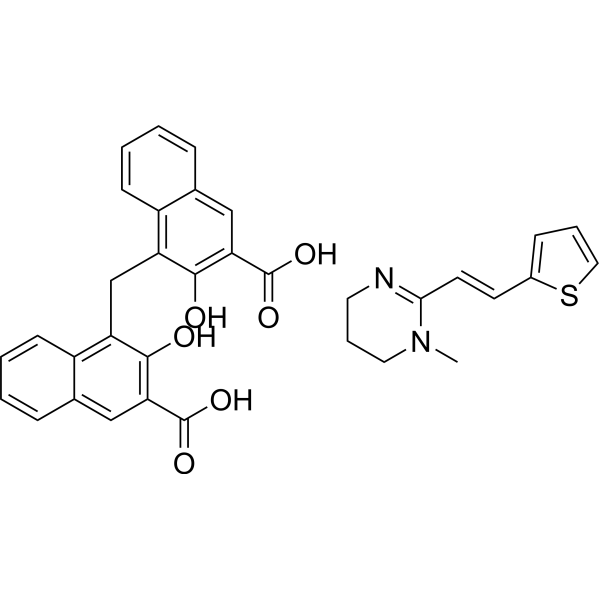
HY-12640R
Pyrantel pamoate (Standard)Reference Standard -
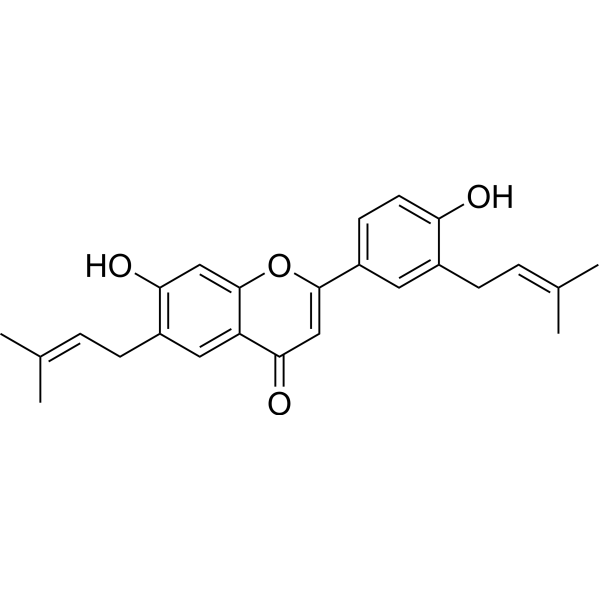
HY-N4184
Licoflavone BFlavonoid -
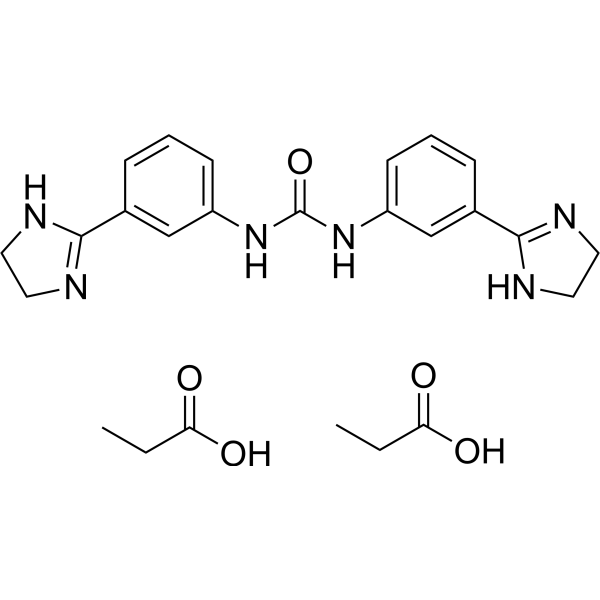
HY-107496
Imidocarb dipropionateAnti-protozoan agent -

HY-12642R
Diethylcarbamazine citrate (Standard)Arachidonic Acid Metabolism Inhibitor -

HY-101476R
Emodepside (Standard)Anthelmintic Agent
Publications Citing Use of MedChemExpress (MCE) Clorsulon
MoreAll Parasite Isoforms
More

Biological Activity
Description
IC50 & Target
|
Schistosome |
In Vitro
Clorsulon (10 μg/mL; 24 h) causes severe disruption to both tegument and gut of Fasciola hepatica when both absorption routes are available, with more severe damage to the gut[3].
MedChemExpress (MCE) has not independently confirmed the accuracy of these methods. They are for reference only. Further protocols information, click here.
In Vivo
Clorsulon (5 mg/kg; i.v.) is actively secreted into milk by Abcg2 in lactating wild-type mice, and co-administration with Ivermectin (HY-15310) reduces this secretion[4].
Clorsulon (30-300 mg/kg/day; p.o.) induces reversible urothelial hyperplasia in male CrI:CD(SD) BR rats[6].
MedChemExpress (MCE) has not independently confirmed the accuracy of these methods. They are for reference only.


Chemical Information
-
CAS No. 60200-06-8
-
Appearance Solid
-
Molecular Weight 380.66
-
Formula C8H8Cl3N3O4S2
-
Color White to off-white
-
SMILES
O=S(C1=C(/C(Cl)=C(Cl)\Cl)C=C(N)C(S(=O)(N)=O)=C1)(N)=O
-
Synonyms
L631529; MK401
-
Shipping
Room temperature in continental US; may vary elsewhere.
-
Storage
Powder -20°C 3 years 4°C 2 years In solvent -80°C 2 years -20°C 1 year


Publications (1)
-
Journal Impact Factor
-
Most Recent
-
Anal Chem
Exposome-Scale Investigation of Cl-/Br-Containing Chemicals Using High-Resolution Mass Spectrometry, Multistage Machine Learning, and Cloud Computing. [Abstract]2025 Jun 3;97(21):11099-11109. PMID: 40401576


Solvent & Solubility
In Vitro:
DMSO : 100 mg/mL (262.70 mM; Need ultrasonic; Hygroscopic DMSO has a significant impact on the solubility of product, please use newly opened DMSO)
Please refer to the solubility information to select the appropriate solvent. Once prepared, please aliquot and store the solution to prevent product inactivation from repeated freeze-thaw cycles.
Storage method and period of stock solution: -80°C, 2 years; -20°C, 1 year. When stored at -80°C, please use it within 2 years. When stored at -20°C, please use it within 1 year.
Please refer to the solubility information to select the appropriate solvent. Once prepared, please aliquot and store the solution to prevent product inactivation from repeated freeze-thaw cycles.
Storage method and period of stock solution: -80°C, 2 years; -20°C, 1 year. When stored at -80°C, please use it within 2 years. When stored at -20°C, please use it within 1 year.
Concentration (start) × Volume (start) = Concentration (final) × Volume (final)
In Vivo:
Select the appropriate dissolution method based on your experimental animal and administration route.
- For the following dissolution methods, please ensure to first prepare a clear stock solution using an In Vitro approach and then sequentially add co-solvents:
- To ensure reliable experimental results, the clarified stock solution can be appropriately stored based on storage conditions. As for the working solution for In Vivo experiments, it is recommended to prepare freshly and use it on the same day.
- The percentages shown for the solvents indicate their volumetric ratio in the final prepared solution. If precipitation or phase separation occurs during preparation, heat and/or sonication can be used to aid dissolution.
Add each solvent one by one: 10% DMSO 40% PEG300 5% Tween-80 45% Saline
Solubility: ≥ 2.5 mg/mL (6.57 mM); Clear solution
This protocol yields a clear solution of ≥ 2.5 mg/mL (saturation unknown).
Taking 1 mL working solution as an example, add 100 μL DMSO stock solution (25.0 mg/mL) to 400 μL PEG300, and mix evenly; then add 50 μL Tween-80 and mix evenly; then add 450 μL Saline to adjust the volume to 1 mL.
Preparation of Saline: Dissolve 0.9 g sodium chloride in ddH₂O and dilute to 100 mL to obtain a clear Saline solution.
Add each solvent one by one: 10% DMSO 90% (20% SBE-β-CD in Saline)
Solubility: ≥ 2.5 mg/mL (6.57 mM); Clear solution
This protocol yields a clear solution of ≥ 2.5 mg/mL (saturation unknown).
Taking 1 mL working solution as an example, add 100 μL DMSO stock solution (25.0 mg/mL) to 900 μL 20% SBE-β-CD in Saline, and mix evenly.
Preparation of 20% SBE-β-CD in Saline (4°C, storage for one week): 2 g SBE-β-CD powder is dissolved in 10 mL Saline, completely dissolve until clear.
In Vivo Dissolution Calculator
Please enter the basic information of animal experiments:
-
-
-
-
Recommended: Prepare an additional quantity of animals to account for potential losses during experiments.
Please enter your animal formula composition:
-
%DMSO +
Recommended: Keep the proportion of DMSO in working solution below 2% if your animal is weak.
-
%+
-
+%Tween-80 + +
-
%Saline +
The co-solvents required include: DMSO, . All of co-solvents are available by MedChemExpress (MCE). , Tween 80. All of co-solvents are available by MedChemExpress (MCE).
Working solution concentration: 0.22 mg/mL
Method for preparing stock solution: mg drug dissolved in μL DMSO. Stock solution concentration: mg/mL.
1. Take μL DMSO stock solution;
2. Add μL .
μL , mix evenly;
3. Then add μL Tween 80, mix evenly;
4. Then add μL
Please ensure that the stock solution in the first step is dissolved to a clear state, and add co-solvents in sequence. You can use ultrasonic heating (ultrasonic cleaner, recommended frequency 20-40 kHz), vortexing, etc. to assist dissolution.

Protocols
-
Research Protocol for Infectious Diseases
Infectious-disease experiments test how pathogens interact with host barriers, innate immune receptors, inflammatory signaling, pathogen replication, and tissue injury; pattern-recognition receptors such as TLRs, RIG-I-like receptors, NOD-like receptors, and inflammasomes detect microbial molecules and activate NF-κB, interferon, and cytokine responses. The central hypothesis is that infection severity reflects the balance between pathogen burden and host response: protective inflammation restricts pathogen growth, whereas excessive or mislocalized inflammation contributes to tissue damage and disease phenotype. Unresolved questions include which host pathways are protective versus pathogenic, why some infection models fail to translate to human disease, and which combined readouts best predict clinically relevant infection outcomes.


Purity & Documentation
-
Data Sheet (281 KB)
-
SDS (557 KB)
- English - EN (557 KB)
- Français - FR (557 KB)
- Deutsch - DE (557 KB)
- Norwegian - NO (557 KB)
- Español - ES (557 KB)
- Swedish - SV (557 KB)
- Italian - IT (557 KB)
- Korean - KR (557 KB)
- Portuguese - PT (557 KB)
-
Handling Instructions (2659 KB)
References
[1]. Mrozik, H., et al., 4-amino-6-(trichloroethenyl)-1,3-benzenedisulfonamide, a new, potent fasciolicide. J Med Chem, 1977. 20(9): p. 1225-7. [Content Brief]
[2]. Meaney, M., et al., Transmission electron microscope study of the ultrastructural changes induced in the tegument and gut of Fasciola hepatica following in vivo drug treatment with clorsulon. Parasitol Res, 2004. 92(3): p. 232-41. [Content Brief]
[3]. Meaney M, et al. A scanning electron microscope study on the route of entry of clorsulon into the liver fluke, Fasciola hepatica. Parasitol Res. 2005 Jan;95(2):117-28. [Content Brief]
[4]. Blanco-Paniagua E, et al. Role of the Abcg2 Transporter in Secretion into Milk of the Anthelmintic Clorsulon: Interaction with Ivermectin. Antimicrob Agents Chemother. 2023 May 17;67(5):e0009523. [Content Brief]
[5]. Rehbein S, et al. Plasma pharmacokinetics of clorsulon following administration of a single subcutaneous or intravenous injection to cattle. J Vet Pharmacol Ther. 2024 Mar;47(2):87-94. [Content Brief]
[6]. Lankas GR, et al. Induction of reversible urothelial cell hyperplasia in rats by clorsulon, a flukicide with weak carbonic anhydrase inhibitory activity. Food Chem Toxicol. 1992 Apr;30(4):297-306. [Content Brief]


Complete Stock Solution Preparation Table
Please refer to the solubility information to select the appropriate solvent. Once prepared, please aliquot and store the solution to prevent product inactivation from repeated freeze-thaw cycles.
Storage method and period of stock solution: -80°C, 2 years; -20°C, 1 year. When stored at -80°C, please use it within 2 years. When stored at -20°C, please use it within 1 year.
| Optional Solvent | Concentration Solvent Mass | 1 mg | 5 mg | 10 mg | 25 mg |
|---|---|---|---|---|---|
| DMSO | 1 mM | 2.6270 mL | 13.1351 mL | 26.2702 mL | 65.6754 mL |
| 5 mM | 0.5254 mL | 2.6270 mL | 5.2540 mL | 13.1351 mL | |
| 10 mM | 0.2627 mL | 1.3135 mL | 2.6270 mL | 6.5675 mL | |
| 15 mM | 0.1751 mL | 0.8757 mL | 1.7513 mL | 4.3784 mL | |
| 20 mM | 0.1314 mL | 0.6568 mL | 1.3135 mL | 3.2838 mL | |
| 25 mM | 0.1051 mL | 0.5254 mL | 1.0508 mL | 2.6270 mL | |
| 30 mM | 0.0876 mL | 0.4378 mL | 0.8757 mL | 2.1892 mL | |
| 40 mM | 0.0657 mL | 0.3284 mL | 0.6568 mL | 1.6419 mL | |
| 50 mM | 0.0525 mL | 0.2627 mL | 0.5254 mL | 1.3135 mL | |
| 60 mM | 0.0438 mL | 0.2189 mL | 0.4378 mL | 1.0946 mL | |
| 80 mM | 0.0328 mL | 0.1642 mL | 0.3284 mL | 0.8209 mL | |
| 100 mM | 0.0263 mL | 0.1314 mL | 0.2627 mL | 0.6568 mL |


Clorsulon Related Classifications
HY-B0488 Related Classifications
 Powered by Bioz