1. Search Result
Search Result
Pathways Recommended: Stem Cell/Wnt Cell Cycle/DNA Damage
Results for "

cell proliferative

" in MedChemExpress (MCE) Product Catalog:

535

Inhibitors & Agonists

2

Screening Libraries

10

Biochemical Assay Reagents

14

Peptides

12

Inhibitory Antibodies

68

Natural
Products

6

Isotope-Labeled Compounds

4

Click Chemistry

4

Oligonucleotides

Cat. No. Product Name Target Research Areas Chemical Structure
  • HY-W013032A
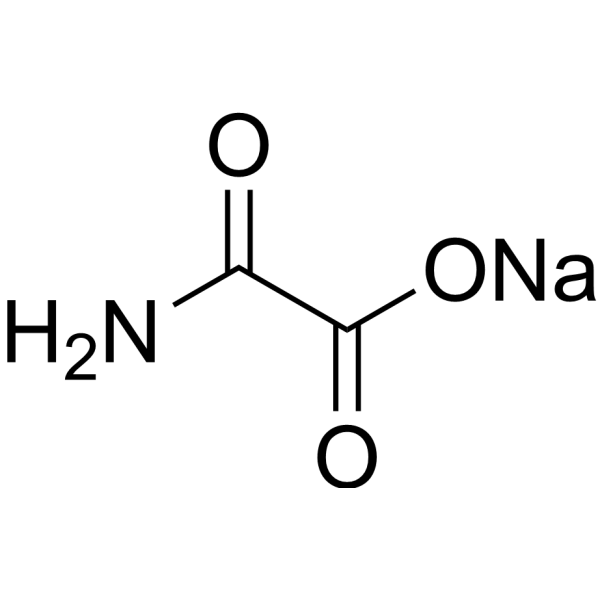
    Oxamic acid sodium
    55+ Cited Publications

    Sodium oxamate

    Lactate Dehydrogenase Apoptosis Cancer
    Oxamic acid (oxamate) sodium salt is a lactate dehydrogenase-A (LDH-A) inhibitor. Oxamic acid sodium salt shows anti-tumor activity, and anti-proliferative activity against cancer cells, and can induce apoptosis .
    Oxamic acid sodium
  • HY-15910
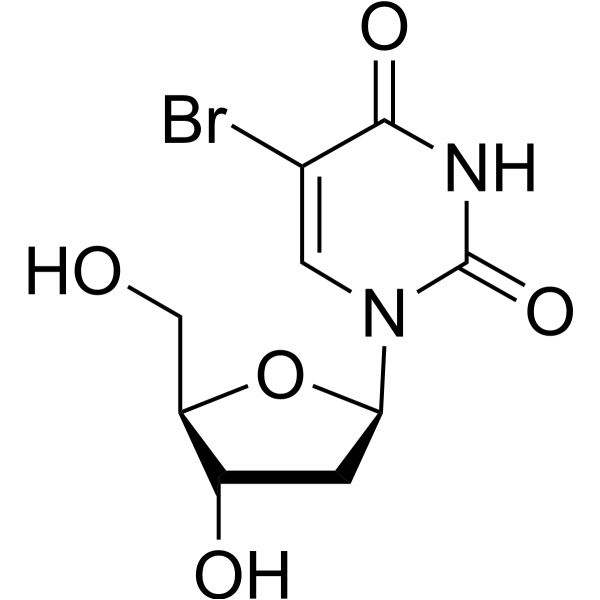
    5-BrdU
    Maximum Cited Publications
    77 Publications Verification

    BrdU; 5-Bromo-2'-deoxyuridine; BUdR

    Nucleoside Antimetabolite/Analog DNA/RNA Synthesis Cancer
    5-BrdU (BrdU) is a nucleoside analog that competes with thymidine for incorporation into DNA. 5-BrdU is commonly used in the detection of proliferating cells.
    5-BrdU
  • HY-15605
    Encorafenib
    40+ Cited Publications

    LGX818

    Raf Cancer
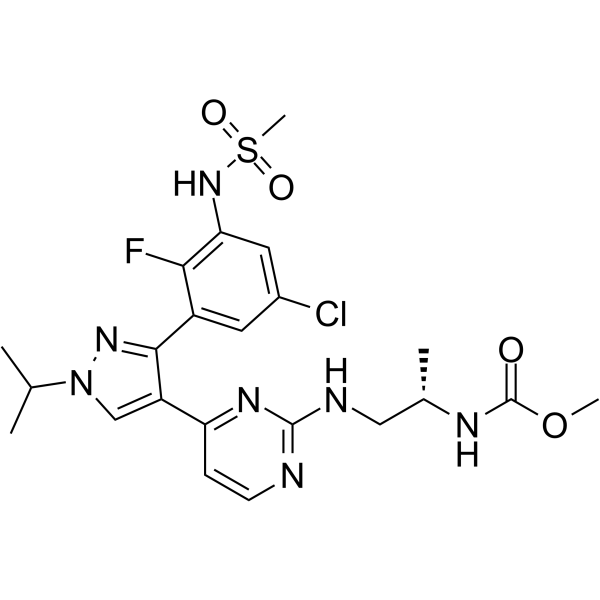
    Encorafenib (LGX818) is a highly potent BRAF inhibitor with selective anti-proliferative and apoptotic activity in cells expressing BRAF V600E (EC50=4 nM).
    Encorafenib
  • HY-12306
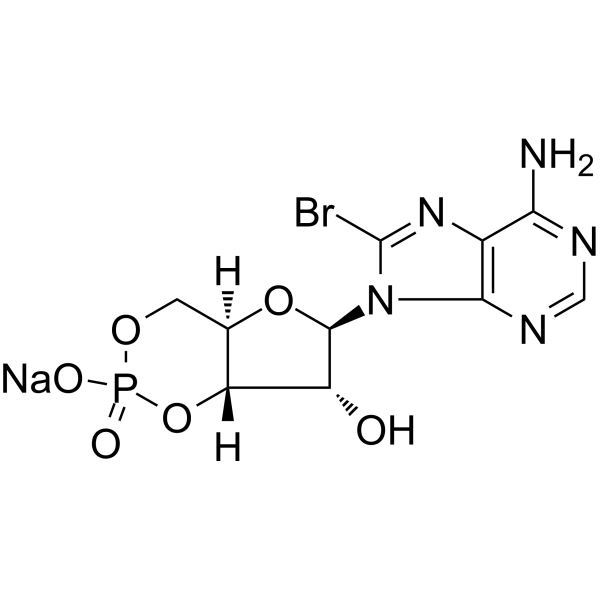
    8-Bromo-cAMP sodium salt
    35+ Cited Publications

    8-Br-Camp sodium salt

    PKA Apoptosis Cancer
    8-Bromo-cAMP sodium (8-Br-Camp) sodium salt, a cyclic AMP analog, is an activator of cyclic AMP-dependent protein kinase (PKA). 8-Bromo-cAMP sodium salt has anti-proliferative and apoptotic effects against cancer cells .
    8-Bromo-cAMP sodium salt
  • HY-12306A
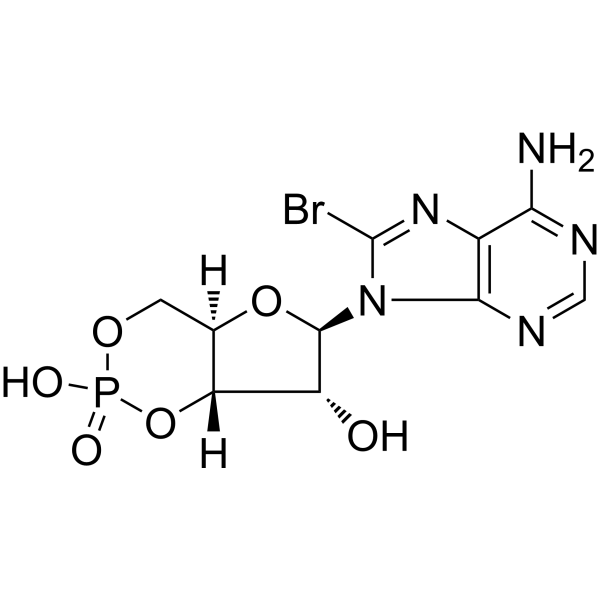
    8-Bromo-cAMP
    35+ Cited Publications

    8-Br-Camp

    PKA Apoptosis Cancer
    8-Bromo-cAMP (8-Br-Camp), a cyclic AMP analog, is an activator of cyclic AMP-dependent protein kinase (PKA). 8-Bromo-cAMP has anti-proliferative and apoptotic effects against cancer cells .
    8-Bromo-cAMP
  • HY-W010737

    5'-GTP disodium salt

    Exosomes Endogenous Metabolite MicroRNA Metabolic Disease
    Guanosine 5'-triphosphate (5'-GTP) trisodium salt is a G protein (G proteins) signaling activator and a high-energy precursor in the biosynthesis of nucleotide units in DNA and RNA. Guanosine 5'-triphosphate trisodium salt can promote myogenic cell differentiation by upregulating miRNA (miR133a, miR133b) and myogenic regulatory factor expression, and by inducing human myogenic precursor cells to release exosomes containing guanosine molecules. Guanosine-5'-triphosphate disodium salt holds promise for research in biosynthesis and skeletal muscle regeneration .
    Guanosine-5'-triphosphate disodium salt
  • HY-132167
    Saruparib
    15+ Cited Publications

    AZD5305

    PARP Cancer
    Saruparib (AZD5305) is a potent, orally active and selective PARP inhibitor and trapper with IC50 values of 3 nM and 1400 nM for PARP1 and PARP2, respectively. Saruparib has anti-proliferative activity and inhibits growth in cells with deficiencies in DNA repair .
    Saruparib
  • HY-W013032
    Oxamic acid
    Maximum Cited Publications
    58 Publications Verification

    Oxamidic acid

    Lactate Dehydrogenase Apoptosis Cancer
    Oxamic acid is a lactate dehydrogenase-A (LDH-A) inhibitor. Oxamic acid shows anti-tumor activity, and anti-proliferative activity against cancer cells, and can induce apoptosis .
    Oxamic acid
  • HY-15187
    Filanesib
    5+ Cited Publications

    ARRY-520

    Kinesin Apoptosis Cancer
    Filanesib (ARRY-520) is a selective and noncompetitive kinesin spindle protein (KSP) inhibitor, with an IC50 of 6 nM for human KSP. Filanesib induces cell death by apoptosis in vitro. Filanesib has potent anti-proliferative activity .
    Filanesib
  • HY-19937
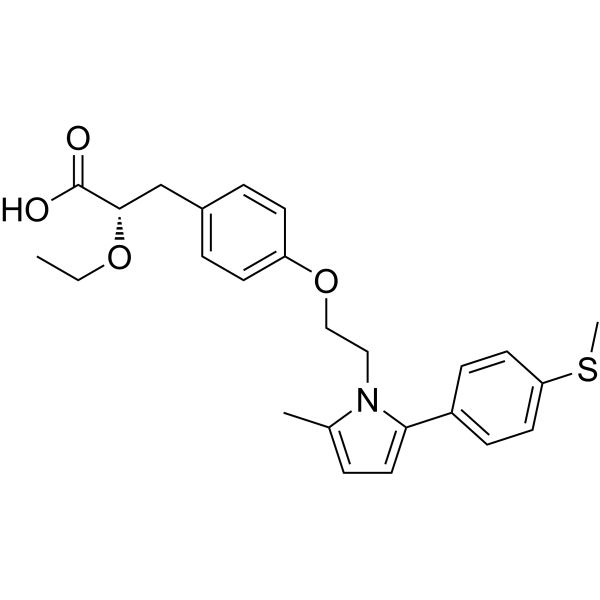
    Saroglitazar
    5+ Cited Publications

    PPAR Metabolic Disease
    Saroglitazar is a novel peroxisome proliferator-activated receptor (PPAR) agonist with predominant PPARα and moderate PPARγ activity with EC50 values of 0.65 pM and 3 nM in HepG2 cells, respectively.
    Saroglitazar
  • HY-110111
    T2AA
    2 Publications Verification

    DNA/RNA Synthesis Cancer
    T2AA is a monoubiquitinated proliferating cell nuclear antigen (PCNA) inhibitor that prevents DNA repair, increases double-strand break (DSB) formation and promotes necroptosis and cell cycle arrest in G1 phase .
    T2AA
  • HY-19937A
    Saroglitazar magnesium
    5+ Cited Publications

    PPAR Metabolic Disease
    Saroglitazar magnesium is a novel peroxisome proliferator-activated receptor (PPAR) agonist with predominant PPARα and moderate PPARγ activity with EC50 values of 0.65 pM and 3 nM in HepG2 cells, respectively.
    Saroglitazar magnesium
  • HY-15995
    Tubulysin A
    1 Publications Verification

    TubA

    Antibiotic Microtubule/Tubulin ADC Payload Mitosis Cancer
    Tubulysin A (TubA) is an anticancer and antiangiogenic agent with anti-microtubule, anti-mitosis and anti-proliferative activity against a variety of cancer cells with IC50 values in the pmol range. It can induce apoptosis of cancer cells and has no effect on normal cells. Tubulysins are a group of potent cytotoxins consisting of nine members (A-I). Tubulysin A can synthesize ADC as ADC Cytotoxin .
    Tubulysin A
  • HY-B0316

    Environmental Pollutants Apoptosis Estrogen Receptor/ERR Others
    Avobenzone, a dibenzoylmethane compound, is one of the most widely used filters in sunscreens for skin photoprotection in the UVA band. Avobenzone is an endocrine disruptor that directly binds to estrogen receptor β and acts as an estrogen agonist .
    Avobenzone
  • HY-147298
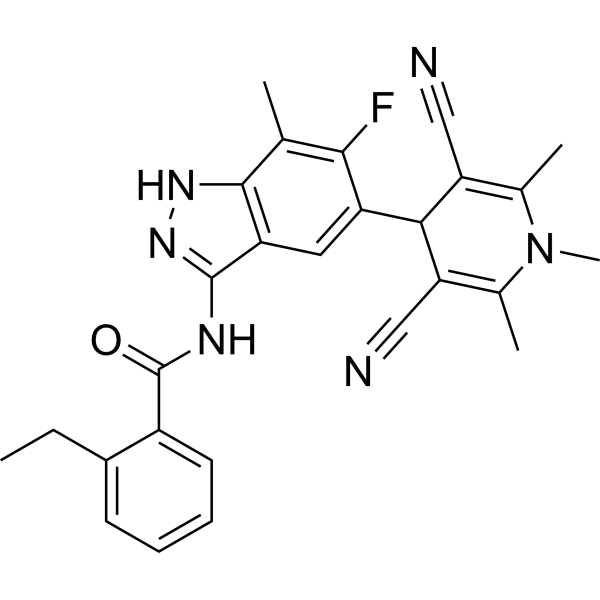
    Plogosertib
    1 Publications Verification

    CYC140

    Polo-like Kinase (PLK) Cancer
    Plogosertib (CYC140) is a selective, potent, and orally active ATP-competitive PLK1 inhibitor (IC50: 3 nM). Plogosertib is an anti-cancer agent with anti-proliferative activity. Plogosertib can be used in the research of several tumors, including esophageal, gastric, leukemia, non–small cell lung cancer, ovarian, and squamous cell cancers .
    Plogosertib
  • HY-W008469

    DNA/RNA Synthesis Cancer
    2-Fluoroadenine is a toxic purine bases. 2-Fluoroadenine has toxicity in nonproliferating and proliferating tumor cells. 2-Fluoroadenine can be used for researching anticancer .
    2-Fluoroadenine
  • HY-N6635

    Fungal Infection Cancer
    trans-Nerolidol improves the anti-proliferative effect of Doxorubicin (DOX) (HY-15142A) against intestinal cancer and breast cancer cells in vitro. trans-Nerolidol increases accumulation of DOX inside cells in vitro. trans-Nerolidol activates apoptosis in vivo .
    trans-Nerolidol
  • HY-175476

    IPK Superfamily Cancer
    UNC7437 is a inositol phosphate multikinase (IPMK) inhibitor, with an IC50 value of 26.2 nM. UNC7437 exhibits anti-proliferative activity against glioblastoma cells. UNC7437 decreases the accumulation of InsP4, InsP5, and InsP6 in cells. UNC7437 can be used for the study of TEN-negative glioblastoma models .
    UNC7437
  • HY-N3755

    Estrogen Receptor/ERR Cancer
    Dihydroresveratrol, a potent phytoestrogen, is a hormone receptor modulator. Dihydroresveratrol exhibits proliferative effects in androgen-independent prostate and breast cancer cells at picomolar and nanomolar concentrations .
    Dihydroresveratrol
  • HY-120836
    AOH1160
    1 Publications Verification

    DNA/RNA Synthesis Apoptosis Cancer
    AOH1160 is a potent oral small molecule proliferating cell nuclear antigen (PCNA) inhibitor that interferes with DNA replication, blocks homologous recombination-mediated DNA repair, leads to cell cycle arrest and induces apoptosis .
    AOH1160
  • HY-12462

    Keap1-Nrf2 Inflammation/Immunology
    WS3 is a novel proliferative molecule that promotes pancreatic β cell proliferation in rodent and human primary islets. WS3 can be used for the research of type 1 diabetes .
    WS3
  • HY-15587

    DNA/RNA Synthesis Cancer
    L82 is a selective and uncompetitive DNA ligase 1 (DNA Lig1) inhibitor (hLig1 IC50=12 μM). L82 shows anti-proliferative activity to breast cancer cells .
    L82
  • HY-N2198

    Topoisomerase Apoptosis Cancer
    Podocarpusflavone A is a DNA topoisomerase I inhibitor. Podocarpusflavone A has moderated anti-proliferative activity and induces cell apoptosis in MCF-7. Podocarpusflavone A is developing anti-tumor agents .
    Podocarpusflavone A
  • HY-N12503

    Apoptosis Caspase Cancer
    Patuletin is a flavonol, that can be isolated from the flowers of Tagetes patula. Patuletin shows anti-proliferative activity against cancer cells. Patuletin causes significant nuclear fragmentation and has a great capacity to induce caspase-3 activation .
    Patuletin
  • HY-114803

    Cholinesterase (ChE) Apoptosis Microtubule/Tubulin Neurological Disease Cancer
    Kokusaginine is a furoquinoline alkaloids, which exhibits inhibitory efficacy for acetylcholinesterase (AChE) with an IC50 of 28.2 μM. Kokusaginine exhibits anti-proliferative and apoptotic inducing effects in MCF-7/ADR cells .
    Kokusaginine
  • HY-W005130

    NF-κB Metabolic Disease Cancer
    2,4,6-Trihydroxybenzaldehyde is an orally active NF- B inhibitor. 2,4,6-Trihydroxybenzaldehyde shows anti-tumor activity, anti-cancer cell proliferative activity and anti-obesity activity .
    2,4,6-Trihydroxybenzaldehyde
  • HY-120069

    Apoptosis Cancer
    APX2009 is a specific APE1/REF-1 redox inhibitor with anticancer activities which decreases the proliferative, migratory, and invasive properties of breast cancer cell and induces apoptosis in breast cancer cell .
    APX2009
  • HY-139054

    Apoptosis Cancer
    4'-Methoxyflavone is a flavonoid with antioxidant properties and anti-proliferative activity against cancer cells. 4'-Methoxyflavone can inhibit cycle-dependent kinases leading to cell cycle arrest and regulate cell signaling pathways to influence cell proliferation and apoptosis. 4'-Methoxyflavone can be used in cancer chemoprevention research .
    4'-Methoxyflavone
  • HY-111538
    MAGL-IN-1
    1 Publications Verification

    MAGL Cancer
    MAGL-IN-1 is a potent, selective, reversible and competitive inhibitor of MAGL, with an IC50 of 80 nM. MAGL-IN-1 exhibits anti-proliferative effects against human breast, colorectal, and ovarian cancer cells. MAGL-IN-1 blocks MAGL in cell-based as well as in vivo assays .
    MAGL-IN-1
  • HY-B0316R

    Reference Standards Estrogen Receptor/ERR Apoptosis Others
    Avobenzone (Standard) is the analytical standard of Avobenzone. This product is intended for research and analytical applications. Avobenzone, a dibenzoylmethane compound, is one of the most widely used filters in sunscreens for skin photoprotection in the UVA band. Avobenzone is an endocrine disruptor that directly binds to estrogen receptor β and acts as an estrogen agonist .
    Avobenzone (Standard)
  • HY-16775

    BAY 1002670

    Progesterone Receptor Cancer
    Vilaprisan is a selective progesterone receptor modulator (SPRM), which targets progesterone receptors. Vilaprisan can inhibit cell proliferation and stimulate apoptosis. Vilaprisan has oral efficacy and anti-proliferative activity against uterine leiomyoma (UF ).
    Vilaprisan
  • HY-165245

    Transmembrane Glycoprotein Cancer
    SBI-183 is an orally active inhibitor of QSOX1 (Kd: 20 μM). SBI-183 suppresses the proliferative and invasive phenotype of renal cancer cell lines, including triple negative breast cancer cell line, lung adenocarcinoma cell line and pancreatic ductal adenocarcinoma. SBI-183 inhibits tumor growth in two human xenograft mouse models of renal cell carcinoma in vivo .
    SBI-183
  • HY-12564

    Aurora Kinase Apoptosis Mitosis Cancer
    Phthalazinone pyrazole is a potent, selective, and orally active inhibitor of Aurora-A kinase with an IC50 of 0.031 μM. Phthalazinone pyrazole can arrests mitosis and subsequently inhibit tumor growth via apoptosis of proliferating cells. Phthalazinone pyrazole suppresses the epithelial-mesenchymal transition (EMT) during the differentiation of hepatocyte-like cells (HLCs) from human embryonic stem cells .
    Phthalazinone pyrazole
  • HY-125612

    5'-Hydroxymorusin

    Apoptosis Cancer
    Artonin E (5'-Hydroxymorusin) is a known prenylated flavonoid that induces apoptosis and arrests the cell cycle in S phase. Artonin E can induce anti-proliferative effects through mitochondrial pathway dysregulation and can be used in cancer research .
    Artonin E
  • HY-129371

    ADC Linker Cancer
    SPDV is a cleavable ADC linker used for diagnosis and treatment of cancer or B cell proliferative diseas.
    SPDV
  • HY-168187

    Src Cancer
    Src Inhibitor 3 (Compound 7d) is a Src inhibitor with an IC50 of 285 nM. Src Inhibitor 3 inhibits HepG2 cells proliferative with an IC50 of 1.55 μM .
    Src Inhibitor 3
  • HY-149100

    Polo-like Kinase (PLK) Epigenetic Reader Domain Cancer
    PLK1-IN-6 is a potent and selective PLK1 inhibitor, with an IC50 of 0.45 nM. PLK1-IN-6 shows significant anti-proliferative activities against cancer cells .
    PLK1-IN-6
  • HY-126423

    Isorhamnetin 3-O-glucuronide

    Apoptosis Cancer
    Isorhamnetin 3-glucuronide is a potent anticancer agent. Isorhamnetin 3-glucuronide shows anti-proliferative activity. Isorhamnetin 3-glucuronide induces Apoptosis and cell cycle arrest at S-phase .
    Isorhamnetin 3-glucuronide
  • HY-156450

    ERK Cancer
    ERK5-IN-5 (compound 4a) is an ERK5 kinase inhibitor with anticancer activity. ERK5-IN-5 exhibits good anti-proliferative activity with the IC50 value of 6.23 µg/mL for A549 cells .
    ERK5-IN-5
  • HY-160543

    ADC Payload Topoisomerase Cancer
    Exatecan-amide-CH2-O-CH2-CH2-OH (Compound 4) is a derivative of Exatecan (HY-13631). Exatecan-amide-CH2-O-CH2-CH2-OH can be used for the research of cell proliferative diseases such as cancer .
    Exatecan-amide-CH2-O-CH2-CH2-OH
  • HY-162427

    Syk Endocrinology
    NMS-0963 (compound 1) is an inhibitor of spleen tyrosine kinase (SYK) with an oral activity and IC50 value of 3 nM. NMS-0963 inhibits BaF3-TEL/SYK cell line proliferative at 27 nM .
    NMS-0963
  • HY-151609

    PARP Cancer
    PARP7-IN-12 is a potent PARP7 Inhibitor with an IC50 value of 7.836 nM. PARP7-IN-12 can be used in research of cancer .
    PARP7-IN-12
  • HY-116938

    Apoptosis Cancer
    Farnesiferol C is a sesquiterpene coumarin with anti-cancer activity. Farnesiferol C inhibits the proliferative and apoptotic of AGS cells .
    Farnesiferol C
  • HY-108161

    Interleukin Related Others
    LF 1695 is an immunomodulator. LF 1695 enhances the proliferative response of T cells by increasing the production of IL2 (interleukin-2) or the expression of the IL2 receptor. LF 1695 also increases CONA-induced inhibitory activity in human lymphocytes. LF 1695 can be used to study the proliferative and inhibitory activity of T cell subpopulations, as well as their role in immune regulation .
    LF 1695
  • HY-N8477

    NO Synthase Inflammation/Immunology
    Isolupalbigenin is an inhibitor of NO. Isolupalbigenin has anti-proliferative activity on HL-60 cells with an IC50 of 5.1 μM .
    Isolupalbigenin
  • HY-N10699

    Others Cancer
    6-Methoxykaempferol is a flavone that can be found in brazilian propolis. 6-Methoxykaempferol shows anti-proliferative activity for cancer cells .
    6-Methoxykaempferol
  • HY-N5103

    Others Endocrinology
    Genistein 7,4'-di-O-β-D-glucoside is a natural product with significantly estrogenic proliferative effect in MCF-7 cells .
    Genistein 7,4'-di-O-β-D-glucoside
  • HY-P10635

    Biochemical Assay Reagents Inflammation/Immunology
    TKD (450-463) is a 14-mer peptide (TKDNNLLGRFELSG). TKD (450-463) is able to stimulate the cytolytic and proliferative activity of NK cells at concentrations equivalent to full-length Hsp70 protein .
    TKD (450-463)
  • HY-177501

    CDK Apoptosis Cancer
    Otviciclib (Compound 86) is a CDK inhibitor. Otviciclib has potent anti-proliferative activity against solid tumor cells (such as HCT116, NCIH82 and DU145 cells) with no significant toxicity to normal cells, and effectively induces the G2/M phase cells arrest and apoptosis. Otviciclib has a broad-spectrum anticancer activity, such as colon, pancreatic and lung cancer .
    Otviciclib
  • HY-15187C
    Filanesib hydrochloride
    5+ Cited Publications

    ARRY-520 hydrochloride

    Kinesin Apoptosis Neurological Disease Cancer
    Filanesib (ARRY-520) hydrochloride is a selective and noncompetitive kinesin spindle protein (KSP) inhibitor, with an IC50 of 6 nM for human KSP. Filanesib induces cell death by apoptosis in vitro. Filanesib has potent anti-proliferative activity .
    Filanesib hydrochloride

Inquiry Online

Your information is safe with us. * Required Fields.

Salutation


Country or Region *

Applicant Name *


Organization Name *

Department *


Email Address *


Product Name *

Cat. No.


Requested quantity *

Phone Number *


Remarks

Inquiry Online

Inquiry Information

Product Name:
Cat. No.:
Quantity:
MCE Japan Authorized Agent:

