Search Result
Results for "
cellular imaging
" in MedChemExpress (MCE) Product Catalog:
21
Biochemical Assay Reagents
| Cat. No. |
Product Name |
Target |
Research Areas |
Chemical Structure |
-
- HY-141511
-
|
|
Fluorescent Dye
|
Neurological Disease
Cancer
|
|
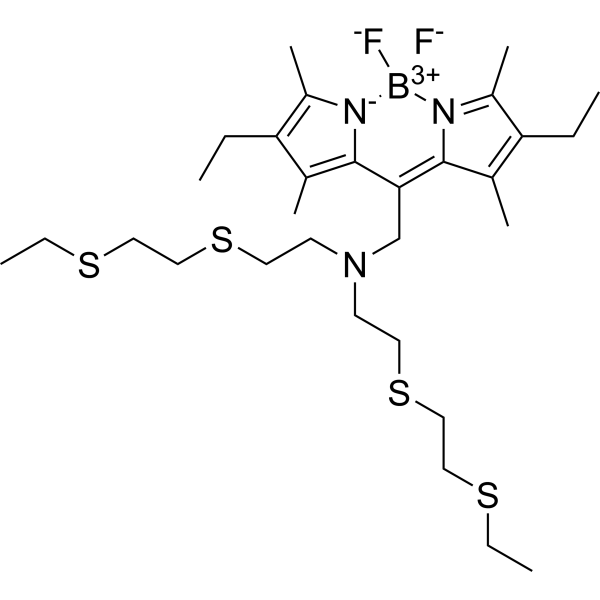
Coppersensor-1 (CS1) is a membrane-permeable fluorescent dye. Coppersensor-1 has a picomolar affinity for Cu + with high selectivity over competing cellular metalions. Coppersensor-1 as a probe, can selective and sensitive detection of copper(I) ions (Cu +) in biological samples, including live cells. Coppersensor-1 can be used for the research of imaging of severe diseases such as cancer, cardiovascular disorders and neurogenerative diseases .
|
-
-
- HY-145746
-
|
|
Fluorescent Dye
PD-1/PD-L1
|
Inflammation/Immunology
Cancer
|
|
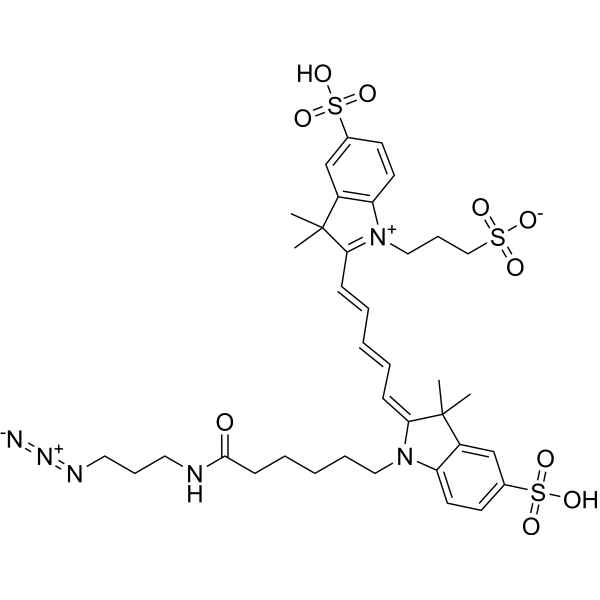
Sulfo-Cy5 azide is a near-infrared fluorescent probe with favorable click chemistry reactivity. Sulfo-Cy5 azide enables fluorescence imaging, tissue and cellular visualization of PD-L1 in tumors, and site-specific modification of anti-PD-L1 antibodies. Sulfo-Cy5 azide has been employed for RNA labeling and imaging. Sulfo-Cy5 azide can be conjugated to targeting agents for fluorescence imaging in atherosclerosis and breast cancer models (Ex/Em = 645/670 nm) .
|
-
-
- HY-130735
-
|
JF646, SE; JF646, NHS
|
Fluorescent Dye
|
Others
|
|
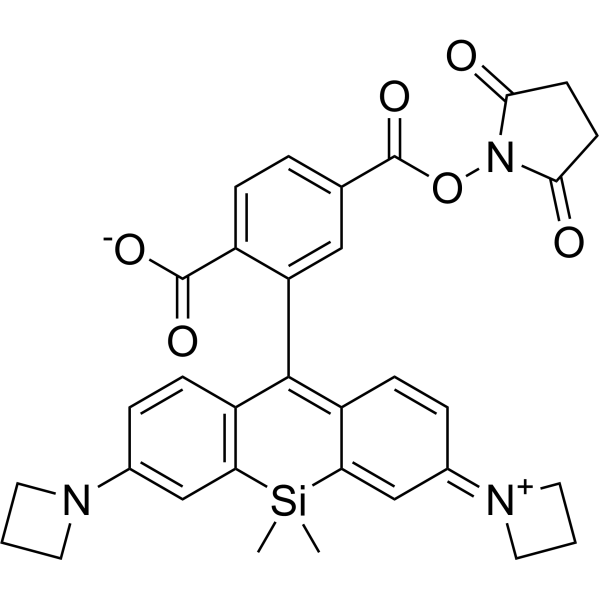
Janelia Fluor 646, SE (JF646, SE) is a red fluorescent dye can be used in cellular imaging . Janelia Fluor products are licensed under U.S. Pat. Nos. 9,933,417, 10,018,624 and 10,161,932 and other patents from Howard Hughes Medical Institute.
|
-
-
- HY-137006
-
|
|
Fluorescent Dye
|
Others
|
|
MTT Formazan is a purple water-insoluble product formed by the reduction of yellow soluble MTT by succinate dehydrogenase in the mitochondria of viable cells. The amount of MTT Formazan produced is proportional to cellular metabolic activity, and it can serve as an indicator for evaluating cell viability and proliferation. MTT Formazan exhibits solvent-dependent solubility properties, and its absorbance value can be measured by spectrophotometry to reflect cellular status. MTT Formazan also supports the assessment of cell viability in bacterial MTT assays. MTT Formazan can be used in photoacoustic microscopy to enhance the imaging effect of viable cells, especially in applications in the fields of three-dimensional cell culture and tissue engineering .
|
-
-
- HY-131029
-
|
JF646, Maleimide
|
Fluorescent Dye
|
Others
|
|
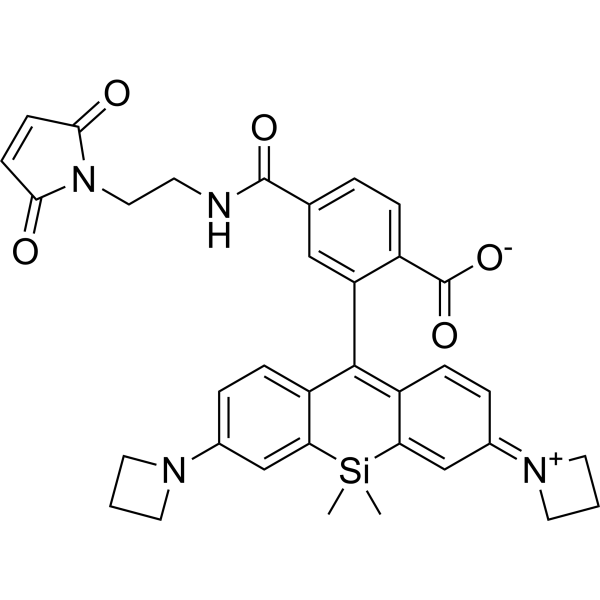
Janelia Fluor® 646, Maleimide (JF646, Maleimide) is a red fluorescent dye that contains a maleimide group. JF646, Maleimide can be used in cellular imaging . Janelia Fluor® products are licensed under U.S. Pat. Nos. 9,933,417, 10,018,624 and 10,161,932 and other patents from Howard Hughes Medical Institute.
|
-
-
- HY-D1321A
-
|
Cyanine5 amine TFA
|
Fluorescent Dye
|
Others
|
|
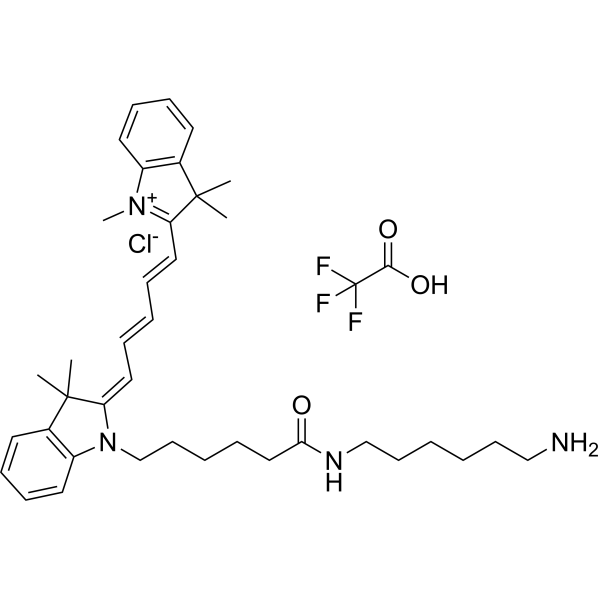
Cy 5 amine (Cyanine5 amine) TFA is a fluorescent dye. Cy 5 amine TFA can be used in the preparation of Cy5.5-labeled compound or polymers, which can be used for imaging cellular process and trafficking .
|
-
-
- HY-138659
-
|
JF646, Tetrazine
|
Fluorescent Dye
|
Others
|
|
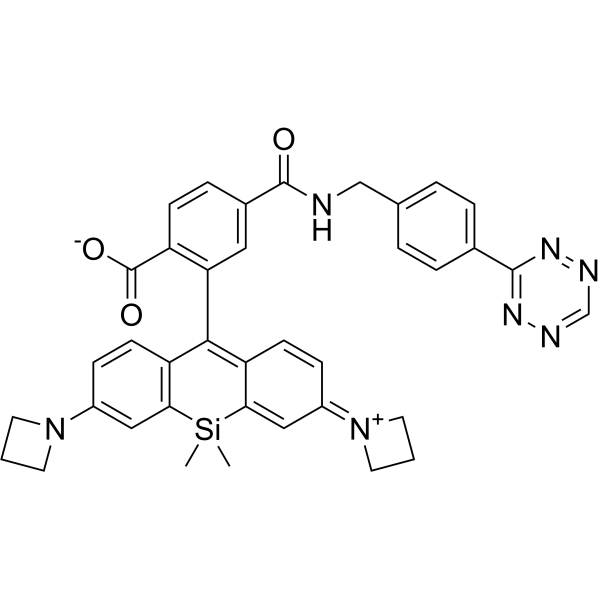
Janelia Fluor 646, Tetrazine (JF646, Tetrazine) a red fluorescent dye that contains a tetrazine group. JF646, Tetrazine can be used in cellular imaging . Janelia Fluor products are licensed under U.S. Pat. Nos. 9,933,417, 10,018,624 and 10,161,932 and other patents from Howard Hughes Medical Institute. Janelia Fluor? 646, Tetrazine is a click chemistry reagent, it contains a Tetrazine group that can undergo an inverse electron demand Diels-Alder reaction (iEDDA) with molecules containing TCO groups.
|
-
-
- HY-P5114A
-
|
|
Calcium Channel
|
Others
|
|
Maurocalcine TFA is an agonist of ryanodine receptor (RyR) channel types 1, 2 and 3 with cellular permeability. Maurocalcine TFA induces [ 3H]ryanodine binding on RyR1 with an EC50 value of 2558 nM. Maurocalcine TFA exhibits a apparent affinity of 14 nM for RyR2. Maurocalcine TFA can be applied to in vivo cell tracking or other cell imaging techniques .
|
-
-
- HY-150175
-
|
|
Fluorescent Dye
|
Inflammation/Immunology
|
|
HKSOX-1 and its derivatives (HKSOX-1r and HKSOX-1m) are novel fluorescent probes designed for highly sensitive and selective detection of the superoxide anion radical (O2 •−) in cellular environments. These probes utilize an aryl trifluoromethanesulfonate group that undergoes O2 •−-mediated cleavage, releasing a free phenol and emitting fluorescence. They demonstrate excellent specificity and sensitivity across various pH ranges, withstand interference from strong oxidants and reductants typical in cellular contexts. HKSOX-1r, optimized for cellular retention, has been effectively employed in diverse assays including confocal imaging, flow cytometry, and zebrafish embryo studies, highlighting its utility in investigating O2 •− roles in inflammation, mitochondrial stress, and other physiological processes .
|
-
-
- HY-148958
-
-
-
- HY-144013B
-
|
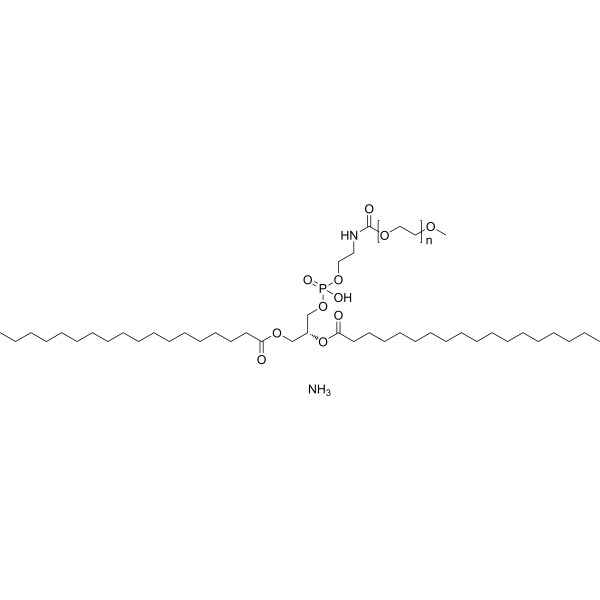
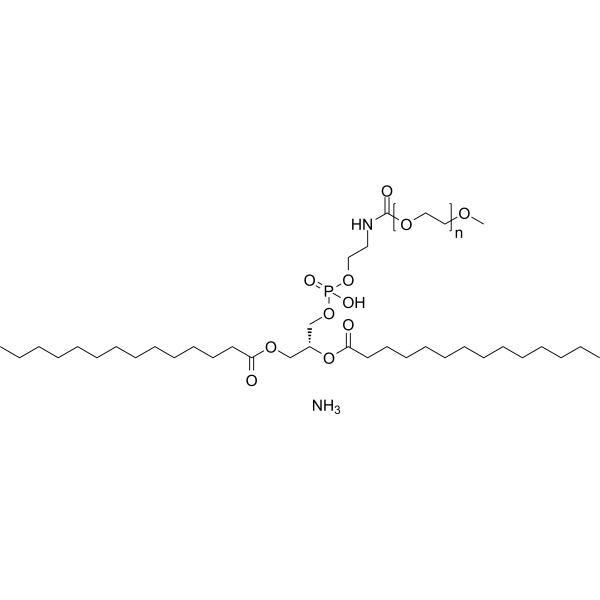
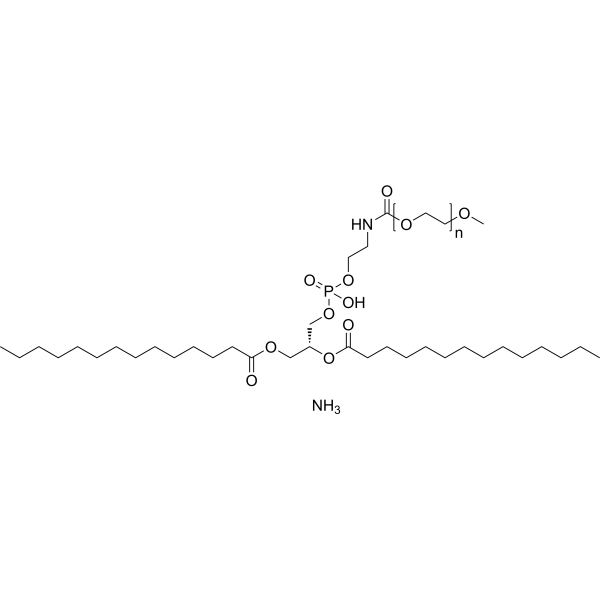
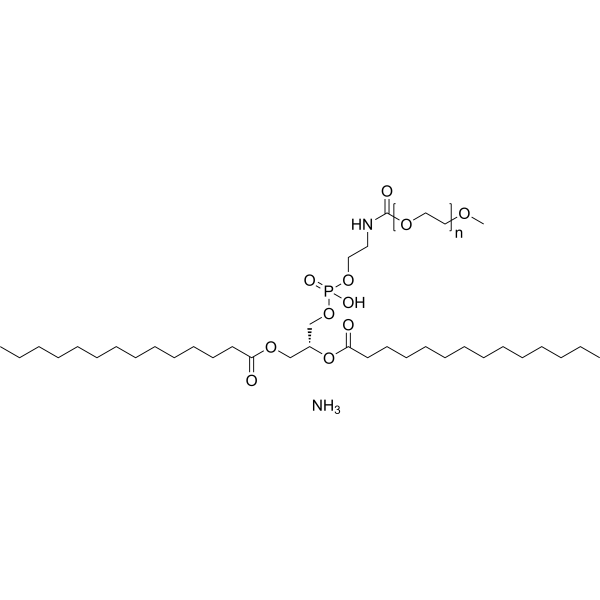
DSPE-mPEG550 ammonium; 1,2-Distearoyl-sn-glycero-3-phosphoethanolamine-N-[methoxy(polyethylene glycol)-550] ammonium
|
Biochemical Assay Reagents
Liposome
|
Others
|
|
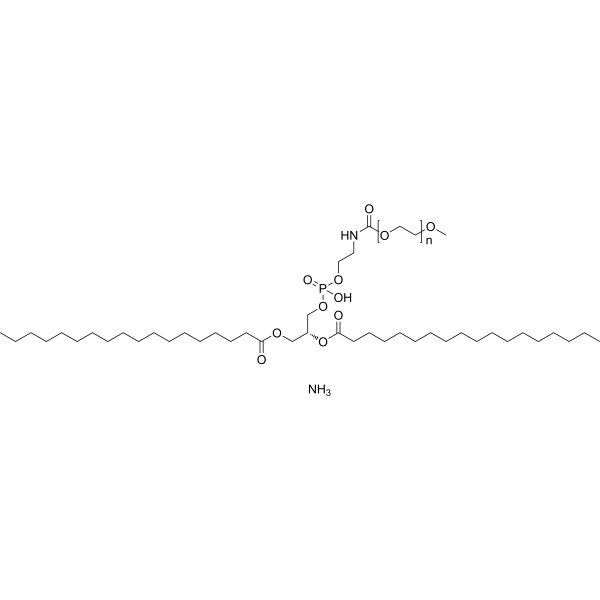
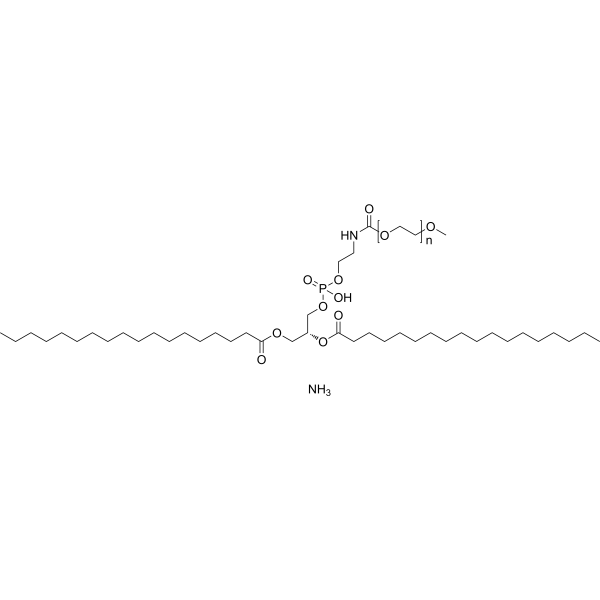
18:0 mPEG550 PE (ammonium) is a PEG lipid functional end group used in the synthesis of liposomes (LPs) for the design of conjugated polymeric nanoparticles. Through biotin modification and carboxyl terminus, lipid nanoparticles (LNPs) further coupling with other biomolecules can be achieved. Functionalized nanoparticles can be used for targeted labeling of specific cellular proteins. With streptavidin as a linker, biotinylated PEG lipid-conjugated polymer nanoparticles are able to bind to biotinylated antibodies on cell surface receptors, yielding the utility of fluorescence-based imaging and sensing.
|
-
-
- HY-144013A
-
|
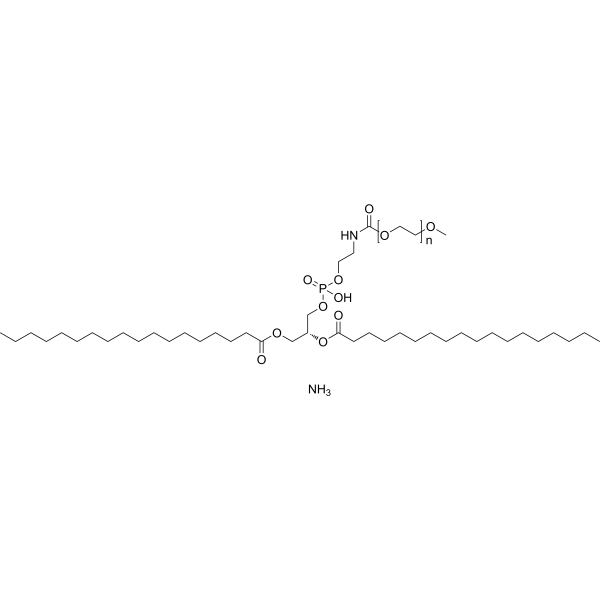
DSPE-mPEG350 ammonium; 1,2-Distearoyl-sn-glycero-3-phosphoethanolamine-N-[methoxy(polyethylene glycol)-350] ammonium
|
Liposome
|
Others
|
|
18:0 mPEG350 PE (ammonium) is a PEG lipid functional end group used in the synthesis of liposomes (LPs) for the design of conjugated polymer nanoparticles. Through biotin modification and carboxyl terminus, lipid nanoparticles (LNPs) further coupling with other biomolecules can be achieved. Functionalized nanoparticles can be used for targeted labeling of specific cellular proteins. With streptavidin as a linker, biotinylated PEG lipid-conjugated polymer nanoparticles are able to bind to biotinylated antibodies on cell surface receptors, yielding the utility of fluorescence-based imaging and sensing.
|
-
-
- HY-144013D
-
|
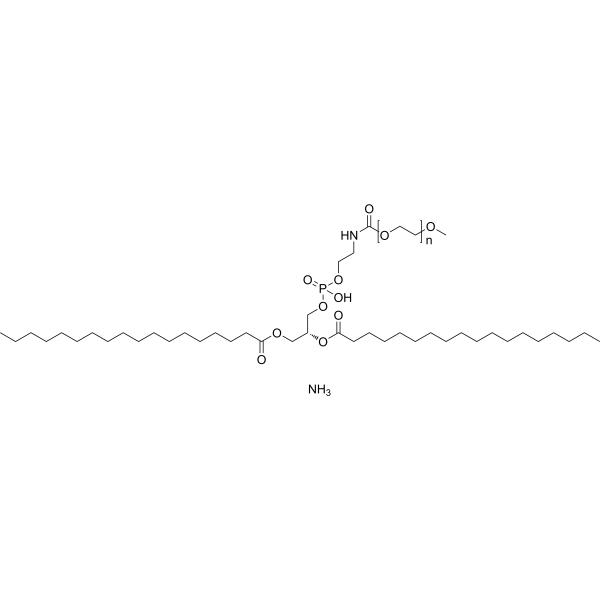
DSPE-mPEG1000 ammonium; 1,2-Distearoyl-sn-glycero-3-phosphoethanolamine-N-[methoxy(polyethylene glycol)-1000] ammonium
|
Liposome
|
Others
|
|
18:0 mPEG1000 PE (ammonium) is a PEG lipid functional end group used in the synthesis of liposomes (LPs) for the design of conjugated polymeric nanoparticles. Through biotin modification and carboxyl terminus, lipid nanoparticles (LNPs) further coupling with other biomolecules can be achieved. Functionalized nanoparticles can be used for targeted labeling of specific cellular proteins. With streptavidin as a linker, biotinylated PEG lipid-conjugated polymer nanoparticles are able to bind to biotinylated antibodies on cell surface receptors, yielding the utility of fluorescence-based imaging and sensing.
|
-
-
- HY-144013E
-
|
DSPE-mPEG3000 ammonium; 1,2-Distearoyl-sn-glycero-3-phosphoethanolamine-N-[methoxy(polyethylene glycol)-3000] ammonium
|
Liposome
|
Others
|
|
18:0 mPEG3000 PE (ammonium) is a PEG lipid functional end group used in the synthesis of liposomes (LPs) for the design of conjugated polymeric nanoparticles. Through biotin modification and carboxyl terminus, lipid nanoparticles (LNPs) further coupling with other biomolecules can be achieved. Functionalized nanoparticles can be used for targeted labeling of specific cellular proteins. With streptavidin as a linker, biotinylated PEG lipid-conjugated polymer nanoparticles are able to bind to biotinylated antibodies on cell surface receptors, yielding the utility of fluorescence-based imaging and sensing.
|
-
-
- HY-144013C
-
|
DSPE-mPEG750 ammonium; 1,2-Distearoyl-sn-glycero-3-phosphoethanolamine-N-[methoxy(polyethylene glycol)-750] ammonium
|
Biochemical Assay Reagents
Liposome
|
Others
|
|
18:0 mPEG750 PE (ammonium) is a PEG lipid functional end group used in the synthesis of liposomes (LPs) for the design of conjugated polymeric nanoparticles. Through biotin modification and carboxyl terminus, lipid nanoparticles (LNPs) further coupling with other biomolecules can be achieved. Functionalized nanoparticles can be used for targeted labeling of specific cellular proteins. With streptavidin as a linker, biotinylated PEG lipid-conjugated polymer nanoparticles are able to bind to biotinylated antibodies on cell surface receptors, yielding the utility of fluorescence-based imaging and sensing.
|
-
-
- HY-155934
-
|
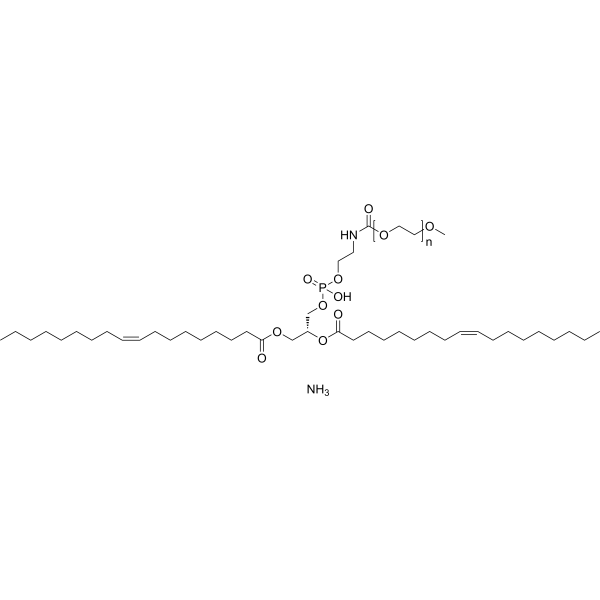
DOPE-PEG5000 ammonium; 1,2-Dioleoyl-sn-glycero-3-phosphoethanolamine-N-[methoxy(polyethylene glycol)-5000] ammonium
|
Liposome
|
Others
|
|
18:1 PEG5000 PE ammonium (DOPE-PEG5000 ammonium) is a PEG lipid functional end group used in the synthesis of liposomes (LPs) for the design of conjugated polymer nanoparticles. Through biotin modification and carboxyl terminus, lipid nanoparticles (LNPs) further coupling with other biomolecules can be achieved. Functionalized nanoparticles can be used for targeted labeling of specific cellular proteins. With streptavidin as a linker, biotinylated PEG lipid-conjugated polymer nanoparticles are able to bind to biotinylated antibodies on cell surface receptors, yielding the utility of fluorescence-based imaging and sensing.
|
-
-
- HY-155926
-
|
14:0 PEG750 PE ammonium; 1,2-Dimyristoyl-sn-glycero-3-phosphoethanolamine-N-[methoxy(polyethylene glycol)-750] ammonium
|
Liposome
|
Others
|
|
DMPE-PEG750 ammonium (14:0 PEG750 PE ammonium) is a PEG lipid functional end group used in the synthesis of liposomes (LPs) for the design of conjugated polymeric nanoparticles. Through biotin modification and carboxyl terminus, lipid nanoparticles (LNPs) further coupling with other biomolecules can be achieved. Functionalized nanoparticles can be used for targeted labeling of specific cellular proteins. With streptavidin as a linker, biotinylated PEG lipid-conjugated polymer nanoparticles are able to bind to biotinylated antibodies on cell surface receptors, yielding the utility of fluorescence-based imaging and sensing.
|
-
-
- HY-155924
-
|
14:0 PEG350 PE ammonium; 1,2-Dimyristoyl-sn-glycero-3-phosphoethanolamine-N-[methoxy(polyethylene glycol)-350] ammonium
|
Liposome
|
Others
|
|
DMPE-PEG350 ammonium (14:0 PEG350 PE ammonium) is a PEG lipid functional end group used in the synthesis of liposomes (LPs) for the design of conjugated polymer nanoparticles. Through biotin modification and carboxyl terminus, lipid nanoparticles (LNPs) further coupling with other biomolecules can be achieved. Functionalized nanoparticles can be used for targeted labeling of specific cellular proteins. With streptavidin as a linker, biotinylated PEG lipid-conjugated polymer nanoparticles are able to bind to biotinylated antibodies on cell surface receptors, yielding the utility of fluorescence-based imaging and sensing.
|
-
-
- HY-155927
-
|
14:0 PEG1000 PE ammonium; 1,2-Dimyristoyl-sn-glycero-3-phosphoethanolamine-N-[methoxy(polyethylene glycol)-1000] ammonium
|
Liposome
|
Others
|
|
DMPE-PEG1000 ammonium (14:0 PEG1000 PE ammonium) is a PEG lipid functional end group used in the synthesis of liposomes (LPs) for the design of conjugated polymer nanoparticles. Through biotin modification and carboxyl terminus, lipid nanoparticles (LNPs) further coupling with other biomolecules can be achieved. Functionalized nanoparticles can be used for targeted labeling of specific cellular proteins. With streptavidin as a linker, biotinylated PEG lipid-conjugated polymer nanoparticles are able to bind to biotinylated antibodies on cell surface receptors, yielding the utility of fluorescence-based imaging and sensing.
|
-
-
- HY-155925
-
|
14:0 PEG550 PE ammonium; 1,2-Dimyristoyl-sn-glycero-3-phosphoethanolamine-N-[methoxy(polyethylene glycol)-550] ammonium
|
Liposome
|
Others
|
|
DMPE-PEG550 ammonium (14:0 PEG550 PE ammonium) is a PEG lipid functional end group used in the synthesis of liposomes (LPs) for the design of conjugated polymeric nanoparticles. Through biotin modification and carboxyl terminus, lipid nanoparticles (LNPs) further coupling with other biomolecules can be achieved. Functionalized nanoparticles can be used for targeted labeling of specific cellular proteins. With streptavidin as a linker, biotinylated PEG lipid-conjugated polymer nanoparticles are able to bind to biotinylated antibodies on cell surface receptors, yielding the utility of fluorescence-based imaging and sensing.
|
-
-
- HY-155929
-
|
14:0 PEG5000 PE ammonium; 1,2-Dimyristoyl-sn-glycero-3-phosphoethanolamine-N-[methoxy(polyethylene glycol)-5000] ammonium
|
Liposome
|
Others
|
|
DMPE-PEG5000 ammonium (14:0 PEG5000 PE ammonium) is a PEG lipid functional end group used in the synthesis of liposomes (LPs) for the design of conjugated polymer nanoparticles. Through biotin modification and carboxyl terminus, lipid nanoparticles (LNPs) further coupling with other biomolecules can be achieved. Functionalized nanoparticles can be used for targeted labeling of specific cellular proteins. With streptavidin as a linker, biotinylated PEG lipid-conjugated polymer nanoparticles are able to bind to biotinylated antibodies on cell surface receptors, yielding the utility of fluorescence-based imaging and sensing.
|
-
-
- HY-155928
-
|
14:0 PEG3000 PE ammonium; 1,2-Dimyristoyl-sn-glycero-3-phosphoethanolamine-N-[methoxy(polyethylene glycol)-3000] ammonium
|
Liposome
|
Others
|
|
DMPE-PEG3000 ammonium (14:0 PEG3000 PE ammonium) is a PEG lipid functional end group used in the synthesis of liposomes (LPs) for the design of conjugated polymer nanoparticles. Through biotin modification and carboxyl terminus, lipid nanoparticles (LNPs) further coupling with other biomolecules can be achieved. Functionalized nanoparticles can be used for targeted labeling of specific cellular proteins. With streptavidin as a linker, biotinylated PEG lipid-conjugated polymer nanoparticles are able to bind to biotinylated antibodies on cell surface receptors, yielding the utility of fluorescence-based imaging and sensing.
|
-
-
- HY-D2971
-
|
|
Fluorescent Dye
Autophagy
|
Neurological Disease
|
|
NCIC-VIS is a lysosome-targeted, viscosity-sensitive two-photon near-infrared fluorescent probe. NCIC-VIS has a rigid structure that can restrict molecular torsion, thereby increasing the fluorescence quantum yield and two-photon absorption cross-section. NCIC-VIS enables real-time imaging of the autophagy process in cells .
|
-
-
- HY-P1388F
-
|
FITC-Ahx-Amyloid β-peptide (1-42) (rat/mouse) tris
|
Amyloid-β
|
Neurological Disease
|
|
FITC-Ahx-β-Amyloid (1-42), (rat/mouse) (tris) is a fluorescently labeled (FITC) form of β-Amyloid (1-42), (rat/mouse) (HY-P1388), which can be used in Alzheimer's disease-related research, such as aggregation, fiber formation, cellular uptake or imaging experiments. This product is provided in the form of Tris salt.
|
-
-
- HY-D2940
-
|
SiR650-BG
|
Fluorescent Dye
|
Others
|
SiR-SNAP (SiR650-BG) is a SiR-labeled SNAP tag near-infrared fluorescent probe (Ex/Em: 645 nm/661 nm). SiR-SNAP combines excellent optical properties, good cell membrane permeability, and environmentally sensitive fluorescence characteristics, providing a powerful tool for the dynamic study of proteins in living cells .
|
-
-
- HY-165424
-
|
|
Fluorescent Dye
Glycosidase
|
Cardiovascular Disease
Cancer
|
|
NIR-BG2 is a near-infrared fluorescent probe targeting senescence-associated β-galactosidase (SA-β-Gal). NIR-BG2 is activated by SA-β-Gal and undergoes hydrolysis to release electrophilic quinone methide that covalently binds to surrounding proteins for in situ labeling, with a 16-fold enhancement of fluorescence signal at 709 nm . NIR-BG2 is promising for research of vivo imaging of cellular senescence .
|
-
-
- HY-144012B
-
|
16:0 PEG550 PE; 1,2-Dipalmitoyl-sn-glycero-3-phosphoethanolamine-N-[methoxy(polyethylene glycol)-550] ammonium
|
Biochemical Assay Reagents
Liposome
|
Others
|
|
DPPE-PEG550 is a PEG lipid functional end group used in the synthesis of liposomes (LPs) for the design of conjugated polymer nanoparticles. Through biotin modification and carboxyl terminus, lipid nanoparticles (LNPs) further coupling with other biomolecules can be achieved. Functionalized nanoparticles can be used for targeted labeling of specific cellular proteins. With streptavidin as a linker, biotinylated PEG lipid-conjugated polymer nanoparticles are able to bind to biotinylated antibodies on cell surface receptors, yielding the utility of fluorescence-based imaging and sensing.
|
-
-
- HY-144012C
-
|
16:0 PEG750 PE; 1,2-Dipalmitoyl-sn-glycero-3-phosphoethanolamine-N-[methoxy(polyethylene glycol)-750] ammonium
|
Biochemical Assay Reagents
Liposome
|
Others
|
|
DPPE-PEG750 is a PEG lipid functional end group used in the synthesis of liposomes (LPs) for the design of conjugated polymer nanoparticles. Through biotin modification and carboxyl terminus, lipid nanoparticles (LNPs) further coupling with other biomolecules can be achieved. Functionalized nanoparticles can be used for targeted labeling of specific cellular proteins. With streptavidin as a linker, biotinylated PEG lipid-conjugated polymer nanoparticles are able to bind to biotinylated antibodies on cell surface receptors, yielding the utility of fluorescence-based imaging and sensing.
|
-
-
- HY-144012E
-
|
16:0 PEG3000 PE; 1,2-Dipalmitoyl-sn-glycero-3-phosphoethanolamine-N-[methoxy(polyethylene glycol)-3000] ammonium
|
Liposome
|
Others
|
|
DPPE-PEG3000 is a PEG lipid functional end group used in the synthesis of liposomes (LPs) for the design of conjugated polymer nanoparticles. Through biotin modification and carboxyl terminus, lipid nanoparticles (LNPs) further coupling with other biomolecules can be achieved. Functionalized nanoparticles can be used for targeted labeling of specific cellular proteins. With streptavidin as a linker, biotinylated PEG lipid-conjugated polymer nanoparticles are able to bind to biotinylated antibodies on cell surface receptors, yielding the utility of fluorescence-based imaging and sensing.
|
-
-
- HY-144012D
-
|
16:0 PEG1000 PE; 1,2-Dipalmitoyl-sn-glycero-3-phosphoethanolamine-N-[methoxy(polyethylene glycol)-1000] ammonium
|
Liposome
|
Others
|
|
DPPE-PEG1000 is a PEG lipid functional end group used in the synthesis of liposomes (LPs) for the design of conjugated polymer nanoparticles. Through biotin modification and carboxyl terminus, lipid nanoparticles (LNPs) further coupling with other biomolecules can be achieved. Functionalized nanoparticles can be used for targeted labeling of specific cellular proteins. With streptavidin as a linker, biotinylated PEG lipid-conjugated polymer nanoparticles are able to bind to biotinylated antibodies on cell surface receptors, yielding the utility of fluorescence-based imaging and sensing.
|
-
-
- HY-155931
-
|
DOPE-PEG550 ammonium; 1,2-Dioleoyl-sn-glycero-3-phosphoethanolamine-N-[methoxy(polyethylene glycol)-550] ammonium
|
Liposome
|
Others
|
|
18:1 PEG550 PE ammonium (DOPE-PEG550 ammonium) is a PEG lipid functional end group used in the synthesis of liposomes (LPs) for the design of conjugated polymer nanoparticles. Through biotin modification and carboxyl terminus, lipid nanoparticles (LNPs) further coupling with other biomolecules can be achieved. Functionalized nanoparticles can be used for targeted labeling of specific cellular proteins. With streptavidin as a linker, biotinylated PEG lipid-conjugated polymer nanoparticles are able to bind to biotinylated antibodies on cell surface receptors, yielding the utility of fluorescence-based imaging and sensing.
|
-
-
- HY-155933
-
|
DOPE-PEG3000 ammonium; 1,2-Dioleoyl-sn-glycero-3-phosphoethanolamine-N-[methoxy(polyethylene glycol)-3000] ammonium
|
Liposome
|
Others
|
|
18:1 PEG3000 PE ammonium (DOPE-PEG3000 ammonium) is a PEG lipid functional end group used in the synthesis of liposomes (LPs) for the design of conjugated polymer nanoparticles. Through biotin modification and carboxyl terminus, lipid nanoparticles (LNPs) further coupling with other biomolecules can be achieved. Functionalized nanoparticles can be used for targeted labeling of specific cellular proteins. With streptavidin as a linker, biotinylated PEG lipid-conjugated polymer nanoparticles are able to bind to biotinylated antibodies on cell surface receptors, yielding the utility of fluorescence-based imaging and sensing.
|
-
-
- HY-155932
-
|
DOPE-PEG1000 ammonium; 1,2-Dioleoyl-sn-glycero-3-phosphoethanolamine-N-[methoxy(polyethylene glycol)-1000] ammonium
|
Liposome
|
Others
|
|
18:1 PEG1000 PE ammonium (DOPE-PEG1000 ammonium) is a PEG lipid functional end group used in the synthesis of liposomes (LPs) for the design of conjugated polymer nanoparticles. Through biotin modification and carboxyl terminus, lipid nanoparticles (LNPs) further coupling with other biomolecules can be achieved. Functionalized nanoparticles can be used for targeted labeling of specific cellular proteins. With streptavidin as a linker, biotinylated PEG lipid-conjugated polymer nanoparticles are able to bind to biotinylated antibodies on cell surface receptors, yielding the utility of fluorescence-based imaging and sensing.
|
-
-
- HY-155930
-
|
DOPE-PEG350 ammonium; 1,2-Dioleoyl-sn-glycero-3-phosphoethanolamine-N-[methoxy(polyethylene glycol)-350] ammonium
|
Liposome
|
Others
|
|
18:1 PEG350 PE ammonium (DOPE-PEG350 ammonium) is a PEG lipid functional end group used in the synthesis of liposomes (LPs) for the design of conjugated polymer nanoparticles. Through biotin modification and carboxyl terminus, lipid nanoparticles (LNPs) further coupling with other biomolecules can be achieved. Functionalized nanoparticles can be used for targeted labeling of specific cellular proteins. With streptavidin as a linker, biotinylated PEG lipid-conjugated polymer nanoparticles are able to bind to biotinylated antibodies on cell surface receptors, yielding the utility of fluorescence-based imaging and sensing.
|
-
-
- HY-137128
-
|
|
Fluorescent Dye
|
Others
|
|
BTC tetrapotassium is a cell-impermeant calcium indicator (Kd approximately 7-26 µM) featuring many desirable properties for cellular calcium imaging, including long excitation wavelengths (400/485 nm), low sensitivity to Mg 2+, and accuracy of ratiometric measurement .
|
-
-
- HY-D3005
-
|
|
Fluorescent Dye
Autophagy
|
Inflammation/Immunology
|
|
NpCy-4 is a reliable reporter for monitoring lysosomal pH and viscosity changes in real time during Autophagy (λex = 650 nm; λem = 660-740 nm). NpCy-4 demonstrates a superior signal-to-background ratio (SBR) for cellular imaging. NpCy-4 facilitates real-time, noninvasive diagnostic imaging of acute gastritis model with high contrast .
|
-
-
- HY-D2204
-
|
|
Phosphatase
SHP1
Fluorescent Dye
|
Cancer
|
|
SHP1-IN-1 (compound 5p) is a fluorescent probe for the protein tyrosine phosphatase SHP1 containing the Src homology 2 domain. SHP1-IN-1 has SHP1 inhibitory activity, selectivity for Fe 3+ ions and good fluorescence properties. SHP1-IN-1 exhibits aggregation post-quenching (ACQ) effect, good interference immunity and low detection limit (5.55 μM) .
|
-
-
- HY-W777429
-
|
|
Biochemical Assay Reagents
|
|
|
Ceratamine B is a fluorescent substrate with significant biological activity and can be used for cell imaging and biolabeling. Ceratamine B can effectively penetrate cell membranes, facilitating the study of cellular processes. Ceratamine B also shows broad application potential in compound screening and biosensor development.
|
-
-
- HY-W019997
-
|
1-Pyrenyldiazomethane
|
Fluorescent Dye
Endogenous Metabolite
|
|
|
PDAM (1-Pyrenyldiazomethane) is a compound 1-Pyrenyldiazomethane with strong biomarker and fluorescence activity. PDAM is used as a stain for cell imaging in histological studies, which can clearly mark specific cell structures. PDAM is also used as a hematological stain to improve the visualization of cellular components and help make more accurate diagnoses.
|
-
-
- HY-P5114
-
|
|
Calcium Channel
|
Others
|
|
Maurocalcine is an agonist of ryanodine receptor (RyR) channel types 1, 2 and 3 with cellular permeability. Maurocalcine induces [ 3H]ryanodine binding on RyR1 with an EC50 value of 2558 nM. Maurocalcine exhibits a apparent affinity of 14 nM for RyR2. Maurocalcine can be applied to in vivo cell tracking or other cell imaging techniques .
|
-
-
- HY-D2514
-
|
|
Fluorescent Dye
|
Others
|
|
Cy3-PEG1000-DSPE is a compound for the labeling and visualization of nanoparticles or other materials. Cy3-PEG1000-DSPE has a variety of applications including drug delivery, cellular imaging, tracing of bioprocesses, and the study of interactions at the molecular level.
|
-
-
- HY-D2518
-
|
|
Fluorescent Dye
|
Others
|
|
Cy3-PEG10000-DSPE is a compound for the labeling and visualization of nanoparticles or other materials. Cy3-PEG10000-DSPE has a variety of applications including drug delivery, cellular imaging, tracing of bioprocesses, and the study of interactions at the molecular level.
|
-
-
- HY-D2941
-
|
SNAP-AF
|
Fluorescent Dye
|
Others
|
BGAF (SNAP-AF) is a fluorescent diacetyl fluorescein-labeled SNAP tag fluorescent probe, specifically designed for the covalent labeling of SNAP-tag fusion proteins in living cells. BGAF utilizes the specific reaction of the human DNA repair protein hAGT to achieve specific fluorescent labeling of the target protein in the living cell environment .
|
-
-
- HY-D2755
-
|
|
Fluorescent Dye
|
Others
|
|
BP Light 650 carboxylic acid is an vibrant far-red fluorochrome with comparable or improved performance over other dyes, including BP Fluor 647 and Cy5 dye, for fluorescent applications. It is used to label antibodies and other proteins as molecular probes for cellular imaging and other fluorescence detection methods application.
|
-
-
- HY-D3264
-
|
|
Fluorescent Dye
|
Others
|
|
SiR-PEG4-DBCO is a novel fluorescent labeling molecule that combines the superior fluorescent properties of silicon-rhodamine dyes with the functionalities of polyethylene glycol (PEG) and Click Chemistry. SiR dyes exhibit excellent photostability under identical excitation conditions, making them suitable for long-term cellular imaging (Ex = 640 nm, Em = 670–680 nm).
|
-
-
- HY-114118F4
-
|
Semaglutide-Lys(FITC)
|
Fluorescent Dye
GLP Receptor
|
Metabolic Disease
|
|
Semaglutide-FITC (Semaglutide-Lys(FITC)) is a FITC-labeled Semaglutide (a GLP-1R agonist) (HY-114118). Semaglutide-FITC can be used to directly track the distribution, cellular uptake, and transmembrane transport process of vesicles through techniques such as fluorescence imaging and flow cytometry. Semaglutide-FITC can be employed to study the movement and penetration ability of mixed vesicles in porcine intestinal mucus in vitro .
|
-
-
- HY-D3387
-
|
|
Fluorescent Dye
|
Others
|
|
TBI is a fluorescence enhancer with a Kd of 71 nM for the Broccoli fluorogenic RNA aptamer. TBI binds to the Broccoli fluorogenic RNA aptamer to activate its fluorescence.TBI undergoes photobleaching of its trans form, which dissociates rapidly, while cis-TBI from the media replaces the dissociated fluorophore to enable fluorophore recycling.TBI enables enhanced fluorescence of Broccoli during continuous cellular imaging (Ex/Em = 485/527 nm) .
|
-
-
- HY-DY1087
-
|
|
Fluorescent Dye
|
Cancer
|
Coppersensor 1 (solution) is a membrane-permeable fluorescent dye. Coppersensor-1 has a picomolar affinity for Cu + with high selectivity over competing cellular metalions. Coppersensor-1 as a probe, can selective and sensitive detection of copper(I) ions (Cu +) in biological samples, including live cells. Coppersensor-1 can be used for the research of imaging of severe diseases such as cancer, cardiovascular disorders and neurogenerative diseases . Solvent and concentration: DMSO: 2 mM
|
-
-
- HY-D3007
-
|
|
Fluorescent Dye
|
Others
|
|
LD-CK is a fluorescent probe based on a coumarin-chromone structure, specifically designed to visualize lipid droplet polarity changes and endowed with multimodal imaging capability. LD-CK contains a high-performance lipophilic coumarin moiety, which enables it to specifically target lipid droplets upon cellular entry while minimizing background fluorescence to the greatest extent. LD-CK has an excitation wavelength (Ex) of 488 nm and an emission wavelength (Em) of 540 nm (in low-polarity environments such as toluene) or 640 nm (in high-polarity environments such as glycerol), with its emission peak undergoing a redshift as solvent polarity increases .
|
-
| Cat. No. |
Product Name |
Type |
-
- HY-141511
-
|
|
Fluorescent Dye
|
|
Coppersensor-1 (CS1) is a membrane-permeable fluorescent dye. Coppersensor-1 has a picomolar affinity for Cu + with high selectivity over competing cellular metalions. Coppersensor-1 as a probe, can selective and sensitive detection of copper(I) ions (Cu +) in biological samples, including live cells. Coppersensor-1 can be used for the research of imaging of severe diseases such as cancer, cardiovascular disorders and neurogenerative diseases .
|
-
- HY-145746
-
|
|
Fluorescent Dye
|
|
Sulfo-Cy5 azide is a near-infrared fluorescent probe with favorable click chemistry reactivity. Sulfo-Cy5 azide enables fluorescence imaging, tissue and cellular visualization of PD-L1 in tumors, and site-specific modification of anti-PD-L1 antibodies. Sulfo-Cy5 azide has been employed for RNA labeling and imaging. Sulfo-Cy5 azide can be conjugated to targeting agents for fluorescence imaging in atherosclerosis and breast cancer models (Ex/Em = 645/670 nm) .
|
-
- HY-130735
-
|
JF646, SE; JF646, NHS
|
Fluorescent Dye
|
|
Janelia Fluor 646, SE (JF646, SE) is a red fluorescent dye can be used in cellular imaging . Janelia Fluor products are licensed under U.S. Pat. Nos. 9,933,417, 10,018,624 and 10,161,932 and other patents from Howard Hughes Medical Institute.
|
-
- HY-131029
-
|
JF646, Maleimide
|
Fluorescent Dye
|
|
Janelia Fluor® 646, Maleimide (JF646, Maleimide) is a red fluorescent dye that contains a maleimide group. JF646, Maleimide can be used in cellular imaging . Janelia Fluor® products are licensed under U.S. Pat. Nos. 9,933,417, 10,018,624 and 10,161,932 and other patents from Howard Hughes Medical Institute.
|
-
- HY-D1321A
-
|
Cyanine5 amine TFA
|
Fluorescent Dye
|
|
Cy 5 amine (Cyanine5 amine) TFA is a fluorescent dye. Cy 5 amine TFA can be used in the preparation of Cy5.5-labeled compound or polymers, which can be used for imaging cellular process and trafficking .
|
-
- HY-138659
-
|
JF646, Tetrazine
|
Fluorescent Dye
|
|
Janelia Fluor 646, Tetrazine (JF646, Tetrazine) a red fluorescent dye that contains a tetrazine group. JF646, Tetrazine can be used in cellular imaging . Janelia Fluor products are licensed under U.S. Pat. Nos. 9,933,417, 10,018,624 and 10,161,932 and other patents from Howard Hughes Medical Institute. Janelia Fluor? 646, Tetrazine is a click chemistry reagent, it contains a Tetrazine group that can undergo an inverse electron demand Diels-Alder reaction (iEDDA) with molecules containing TCO groups.
|
-
- HY-148958
-
|
|
Fluorescent Dye
|
SNAP-Biotin is a biotin-labeled SNAP tag probe. SNAP-Biotin can be used for protein biotinylation .
|
-
- HY-D2971
-
|
|
Fluorescent Dye
|
|
NCIC-VIS is a lysosome-targeted, viscosity-sensitive two-photon near-infrared fluorescent probe. NCIC-VIS has a rigid structure that can restrict molecular torsion, thereby increasing the fluorescence quantum yield and two-photon absorption cross-section. NCIC-VIS enables real-time imaging of the autophagy process in cells .
|
-
- HY-D2940
-
|
SiR650-BG
|
Fluorescent Dye
|
SiR-SNAP (SiR650-BG) is a SiR-labeled SNAP tag near-infrared fluorescent probe (Ex/Em: 645 nm/661 nm). SiR-SNAP combines excellent optical properties, good cell membrane permeability, and environmentally sensitive fluorescence characteristics, providing a powerful tool for the dynamic study of proteins in living cells .
|
-
- HY-D3005
-
|
|
Fluorescent Dye
|
|
NpCy-4 is a reliable reporter for monitoring lysosomal pH and viscosity changes in real time during Autophagy (λex = 650 nm; λem = 660-740 nm). NpCy-4 demonstrates a superior signal-to-background ratio (SBR) for cellular imaging. NpCy-4 facilitates real-time, noninvasive diagnostic imaging of acute gastritis model with high contrast .
|
-
- HY-D2204
-
|
|
Fluorescent Dye
|
|
SHP1-IN-1 (compound 5p) is a fluorescent probe for the protein tyrosine phosphatase SHP1 containing the Src homology 2 domain. SHP1-IN-1 has SHP1 inhibitory activity, selectivity for Fe 3+ ions and good fluorescence properties. SHP1-IN-1 exhibits aggregation post-quenching (ACQ) effect, good interference immunity and low detection limit (5.55 μM) .
|
-
- HY-D2514
-
|
|
Fluorescent Dye
|
|
Cy3-PEG1000-DSPE is a compound for the labeling and visualization of nanoparticles or other materials. Cy3-PEG1000-DSPE has a variety of applications including drug delivery, cellular imaging, tracing of bioprocesses, and the study of interactions at the molecular level.
|
-
- HY-D2518
-
|
|
Fluorescent Dye
|
|
Cy3-PEG10000-DSPE is a compound for the labeling and visualization of nanoparticles or other materials. Cy3-PEG10000-DSPE has a variety of applications including drug delivery, cellular imaging, tracing of bioprocesses, and the study of interactions at the molecular level.
|
-
- HY-D2941
-
|
SNAP-AF
|
Fluorescent Dye
|
BGAF (SNAP-AF) is a fluorescent diacetyl fluorescein-labeled SNAP tag fluorescent probe, specifically designed for the covalent labeling of SNAP-tag fusion proteins in living cells. BGAF utilizes the specific reaction of the human DNA repair protein hAGT to achieve specific fluorescent labeling of the target protein in the living cell environment .
|
-
- HY-D2755
-
|
|
Fluorescent Dye
|
|
BP Light 650 carboxylic acid is an vibrant far-red fluorochrome with comparable or improved performance over other dyes, including BP Fluor 647 and Cy5 dye, for fluorescent applications. It is used to label antibodies and other proteins as molecular probes for cellular imaging and other fluorescence detection methods application.
|
-
- HY-D3264
-
|
|
Fluorescent Dye
|
|
SiR-PEG4-DBCO is a novel fluorescent labeling molecule that combines the superior fluorescent properties of silicon-rhodamine dyes with the functionalities of polyethylene glycol (PEG) and Click Chemistry. SiR dyes exhibit excellent photostability under identical excitation conditions, making them suitable for long-term cellular imaging (Ex = 640 nm, Em = 670–680 nm).
|
-
- HY-D3387
-
|
|
Fluorescent Dye
|
|
TBI is a fluorescence enhancer with a Kd of 71 nM for the Broccoli fluorogenic RNA aptamer. TBI binds to the Broccoli fluorogenic RNA aptamer to activate its fluorescence.TBI undergoes photobleaching of its trans form, which dissociates rapidly, while cis-TBI from the media replaces the dissociated fluorophore to enable fluorophore recycling.TBI enables enhanced fluorescence of Broccoli during continuous cellular imaging (Ex/Em = 485/527 nm) .
|
-
- HY-DY1087
-
|
|
Fluorescent Dye
|
Coppersensor 1 (solution) is a membrane-permeable fluorescent dye. Coppersensor-1 has a picomolar affinity for Cu + with high selectivity over competing cellular metalions. Coppersensor-1 as a probe, can selective and sensitive detection of copper(I) ions (Cu +) in biological samples, including live cells. Coppersensor-1 can be used for the research of imaging of severe diseases such as cancer, cardiovascular disorders and neurogenerative diseases . Solvent and concentration: DMSO: 2 mM
|
-
- HY-D3007
-
|
|
Fluorescent Dye
|
|
LD-CK is a fluorescent probe based on a coumarin-chromone structure, specifically designed to visualize lipid droplet polarity changes and endowed with multimodal imaging capability. LD-CK contains a high-performance lipophilic coumarin moiety, which enables it to specifically target lipid droplets upon cellular entry while minimizing background fluorescence to the greatest extent. LD-CK has an excitation wavelength (Ex) of 488 nm and an emission wavelength (Em) of 540 nm (in low-polarity environments such as toluene) or 640 nm (in high-polarity environments such as glycerol), with its emission peak undergoing a redshift as solvent polarity increases .
|
| Cat. No. |
Product Name |
Type |
-
- HY-144013B
-
|
DSPE-mPEG550 ammonium; 1,2-Distearoyl-sn-glycero-3-phosphoethanolamine-N-[methoxy(polyethylene glycol)-550] ammonium
|
Biochemical Assay Reagents
|
|
18:0 mPEG550 PE (ammonium) is a PEG lipid functional end group used in the synthesis of liposomes (LPs) for the design of conjugated polymeric nanoparticles. Through biotin modification and carboxyl terminus, lipid nanoparticles (LNPs) further coupling with other biomolecules can be achieved. Functionalized nanoparticles can be used for targeted labeling of specific cellular proteins. With streptavidin as a linker, biotinylated PEG lipid-conjugated polymer nanoparticles are able to bind to biotinylated antibodies on cell surface receptors, yielding the utility of fluorescence-based imaging and sensing.
|
-
- HY-144013A
-
|
DSPE-mPEG350 ammonium; 1,2-Distearoyl-sn-glycero-3-phosphoethanolamine-N-[methoxy(polyethylene glycol)-350] ammonium
|
Biochemical Assay Reagents
|
|
18:0 mPEG350 PE (ammonium) is a PEG lipid functional end group used in the synthesis of liposomes (LPs) for the design of conjugated polymer nanoparticles. Through biotin modification and carboxyl terminus, lipid nanoparticles (LNPs) further coupling with other biomolecules can be achieved. Functionalized nanoparticles can be used for targeted labeling of specific cellular proteins. With streptavidin as a linker, biotinylated PEG lipid-conjugated polymer nanoparticles are able to bind to biotinylated antibodies on cell surface receptors, yielding the utility of fluorescence-based imaging and sensing.
|
-
- HY-144013D
-
|
DSPE-mPEG1000 ammonium; 1,2-Distearoyl-sn-glycero-3-phosphoethanolamine-N-[methoxy(polyethylene glycol)-1000] ammonium
|
Biochemical Assay Reagents
|
|
18:0 mPEG1000 PE (ammonium) is a PEG lipid functional end group used in the synthesis of liposomes (LPs) for the design of conjugated polymeric nanoparticles. Through biotin modification and carboxyl terminus, lipid nanoparticles (LNPs) further coupling with other biomolecules can be achieved. Functionalized nanoparticles can be used for targeted labeling of specific cellular proteins. With streptavidin as a linker, biotinylated PEG lipid-conjugated polymer nanoparticles are able to bind to biotinylated antibodies on cell surface receptors, yielding the utility of fluorescence-based imaging and sensing.
|
-
- HY-144013E
-
|
DSPE-mPEG3000 ammonium; 1,2-Distearoyl-sn-glycero-3-phosphoethanolamine-N-[methoxy(polyethylene glycol)-3000] ammonium
|
Biochemical Assay Reagents
|
|
18:0 mPEG3000 PE (ammonium) is a PEG lipid functional end group used in the synthesis of liposomes (LPs) for the design of conjugated polymeric nanoparticles. Through biotin modification and carboxyl terminus, lipid nanoparticles (LNPs) further coupling with other biomolecules can be achieved. Functionalized nanoparticles can be used for targeted labeling of specific cellular proteins. With streptavidin as a linker, biotinylated PEG lipid-conjugated polymer nanoparticles are able to bind to biotinylated antibodies on cell surface receptors, yielding the utility of fluorescence-based imaging and sensing.
|
-
- HY-144013C
-
|
DSPE-mPEG750 ammonium; 1,2-Distearoyl-sn-glycero-3-phosphoethanolamine-N-[methoxy(polyethylene glycol)-750] ammonium
|
Biochemical Assay Reagents
|
|
18:0 mPEG750 PE (ammonium) is a PEG lipid functional end group used in the synthesis of liposomes (LPs) for the design of conjugated polymeric nanoparticles. Through biotin modification and carboxyl terminus, lipid nanoparticles (LNPs) further coupling with other biomolecules can be achieved. Functionalized nanoparticles can be used for targeted labeling of specific cellular proteins. With streptavidin as a linker, biotinylated PEG lipid-conjugated polymer nanoparticles are able to bind to biotinylated antibodies on cell surface receptors, yielding the utility of fluorescence-based imaging and sensing.
|
-
- HY-155934
-
|
DOPE-PEG5000 ammonium; 1,2-Dioleoyl-sn-glycero-3-phosphoethanolamine-N-[methoxy(polyethylene glycol)-5000] ammonium
|
Biochemical Assay Reagents
|
|
18:1 PEG5000 PE ammonium (DOPE-PEG5000 ammonium) is a PEG lipid functional end group used in the synthesis of liposomes (LPs) for the design of conjugated polymer nanoparticles. Through biotin modification and carboxyl terminus, lipid nanoparticles (LNPs) further coupling with other biomolecules can be achieved. Functionalized nanoparticles can be used for targeted labeling of specific cellular proteins. With streptavidin as a linker, biotinylated PEG lipid-conjugated polymer nanoparticles are able to bind to biotinylated antibodies on cell surface receptors, yielding the utility of fluorescence-based imaging and sensing.
|
-
- HY-155926
-
|
14:0 PEG750 PE ammonium; 1,2-Dimyristoyl-sn-glycero-3-phosphoethanolamine-N-[methoxy(polyethylene glycol)-750] ammonium
|
Biochemical Assay Reagents
|
|
DMPE-PEG750 ammonium (14:0 PEG750 PE ammonium) is a PEG lipid functional end group used in the synthesis of liposomes (LPs) for the design of conjugated polymeric nanoparticles. Through biotin modification and carboxyl terminus, lipid nanoparticles (LNPs) further coupling with other biomolecules can be achieved. Functionalized nanoparticles can be used for targeted labeling of specific cellular proteins. With streptavidin as a linker, biotinylated PEG lipid-conjugated polymer nanoparticles are able to bind to biotinylated antibodies on cell surface receptors, yielding the utility of fluorescence-based imaging and sensing.
|
-
- HY-155924
-
|
14:0 PEG350 PE ammonium; 1,2-Dimyristoyl-sn-glycero-3-phosphoethanolamine-N-[methoxy(polyethylene glycol)-350] ammonium
|
Biochemical Assay Reagents
|
|
DMPE-PEG350 ammonium (14:0 PEG350 PE ammonium) is a PEG lipid functional end group used in the synthesis of liposomes (LPs) for the design of conjugated polymer nanoparticles. Through biotin modification and carboxyl terminus, lipid nanoparticles (LNPs) further coupling with other biomolecules can be achieved. Functionalized nanoparticles can be used for targeted labeling of specific cellular proteins. With streptavidin as a linker, biotinylated PEG lipid-conjugated polymer nanoparticles are able to bind to biotinylated antibodies on cell surface receptors, yielding the utility of fluorescence-based imaging and sensing.
|
-
- HY-155927
-
|
14:0 PEG1000 PE ammonium; 1,2-Dimyristoyl-sn-glycero-3-phosphoethanolamine-N-[methoxy(polyethylene glycol)-1000] ammonium
|
Biochemical Assay Reagents
|
|
DMPE-PEG1000 ammonium (14:0 PEG1000 PE ammonium) is a PEG lipid functional end group used in the synthesis of liposomes (LPs) for the design of conjugated polymer nanoparticles. Through biotin modification and carboxyl terminus, lipid nanoparticles (LNPs) further coupling with other biomolecules can be achieved. Functionalized nanoparticles can be used for targeted labeling of specific cellular proteins. With streptavidin as a linker, biotinylated PEG lipid-conjugated polymer nanoparticles are able to bind to biotinylated antibodies on cell surface receptors, yielding the utility of fluorescence-based imaging and sensing.
|
-
- HY-155925
-
|
14:0 PEG550 PE ammonium; 1,2-Dimyristoyl-sn-glycero-3-phosphoethanolamine-N-[methoxy(polyethylene glycol)-550] ammonium
|
Biochemical Assay Reagents
|
|
DMPE-PEG550 ammonium (14:0 PEG550 PE ammonium) is a PEG lipid functional end group used in the synthesis of liposomes (LPs) for the design of conjugated polymeric nanoparticles. Through biotin modification and carboxyl terminus, lipid nanoparticles (LNPs) further coupling with other biomolecules can be achieved. Functionalized nanoparticles can be used for targeted labeling of specific cellular proteins. With streptavidin as a linker, biotinylated PEG lipid-conjugated polymer nanoparticles are able to bind to biotinylated antibodies on cell surface receptors, yielding the utility of fluorescence-based imaging and sensing.
|
-
- HY-155929
-
|
14:0 PEG5000 PE ammonium; 1,2-Dimyristoyl-sn-glycero-3-phosphoethanolamine-N-[methoxy(polyethylene glycol)-5000] ammonium
|
Biochemical Assay Reagents
|
|
DMPE-PEG5000 ammonium (14:0 PEG5000 PE ammonium) is a PEG lipid functional end group used in the synthesis of liposomes (LPs) for the design of conjugated polymer nanoparticles. Through biotin modification and carboxyl terminus, lipid nanoparticles (LNPs) further coupling with other biomolecules can be achieved. Functionalized nanoparticles can be used for targeted labeling of specific cellular proteins. With streptavidin as a linker, biotinylated PEG lipid-conjugated polymer nanoparticles are able to bind to biotinylated antibodies on cell surface receptors, yielding the utility of fluorescence-based imaging and sensing.
|
-
- HY-155928
-
|
14:0 PEG3000 PE ammonium; 1,2-Dimyristoyl-sn-glycero-3-phosphoethanolamine-N-[methoxy(polyethylene glycol)-3000] ammonium
|
Biochemical Assay Reagents
|
|
DMPE-PEG3000 ammonium (14:0 PEG3000 PE ammonium) is a PEG lipid functional end group used in the synthesis of liposomes (LPs) for the design of conjugated polymer nanoparticles. Through biotin modification and carboxyl terminus, lipid nanoparticles (LNPs) further coupling with other biomolecules can be achieved. Functionalized nanoparticles can be used for targeted labeling of specific cellular proteins. With streptavidin as a linker, biotinylated PEG lipid-conjugated polymer nanoparticles are able to bind to biotinylated antibodies on cell surface receptors, yielding the utility of fluorescence-based imaging and sensing.
|
-
- HY-144012B
-
|
16:0 PEG550 PE; 1,2-Dipalmitoyl-sn-glycero-3-phosphoethanolamine-N-[methoxy(polyethylene glycol)-550] ammonium
|
Biochemical Assay Reagents
|
|
DPPE-PEG550 is a PEG lipid functional end group used in the synthesis of liposomes (LPs) for the design of conjugated polymer nanoparticles. Through biotin modification and carboxyl terminus, lipid nanoparticles (LNPs) further coupling with other biomolecules can be achieved. Functionalized nanoparticles can be used for targeted labeling of specific cellular proteins. With streptavidin as a linker, biotinylated PEG lipid-conjugated polymer nanoparticles are able to bind to biotinylated antibodies on cell surface receptors, yielding the utility of fluorescence-based imaging and sensing.
|
-
- HY-144012C
-
|
16:0 PEG750 PE; 1,2-Dipalmitoyl-sn-glycero-3-phosphoethanolamine-N-[methoxy(polyethylene glycol)-750] ammonium
|
Biochemical Assay Reagents
|
|
DPPE-PEG750 is a PEG lipid functional end group used in the synthesis of liposomes (LPs) for the design of conjugated polymer nanoparticles. Through biotin modification and carboxyl terminus, lipid nanoparticles (LNPs) further coupling with other biomolecules can be achieved. Functionalized nanoparticles can be used for targeted labeling of specific cellular proteins. With streptavidin as a linker, biotinylated PEG lipid-conjugated polymer nanoparticles are able to bind to biotinylated antibodies on cell surface receptors, yielding the utility of fluorescence-based imaging and sensing.
|
-
- HY-144012E
-
|
16:0 PEG3000 PE; 1,2-Dipalmitoyl-sn-glycero-3-phosphoethanolamine-N-[methoxy(polyethylene glycol)-3000] ammonium
|
Biochemical Assay Reagents
|
|
DPPE-PEG3000 is a PEG lipid functional end group used in the synthesis of liposomes (LPs) for the design of conjugated polymer nanoparticles. Through biotin modification and carboxyl terminus, lipid nanoparticles (LNPs) further coupling with other biomolecules can be achieved. Functionalized nanoparticles can be used for targeted labeling of specific cellular proteins. With streptavidin as a linker, biotinylated PEG lipid-conjugated polymer nanoparticles are able to bind to biotinylated antibodies on cell surface receptors, yielding the utility of fluorescence-based imaging and sensing.
|
-
- HY-144012D
-
|
16:0 PEG1000 PE; 1,2-Dipalmitoyl-sn-glycero-3-phosphoethanolamine-N-[methoxy(polyethylene glycol)-1000] ammonium
|
Biochemical Assay Reagents
|
|
DPPE-PEG1000 is a PEG lipid functional end group used in the synthesis of liposomes (LPs) for the design of conjugated polymer nanoparticles. Through biotin modification and carboxyl terminus, lipid nanoparticles (LNPs) further coupling with other biomolecules can be achieved. Functionalized nanoparticles can be used for targeted labeling of specific cellular proteins. With streptavidin as a linker, biotinylated PEG lipid-conjugated polymer nanoparticles are able to bind to biotinylated antibodies on cell surface receptors, yielding the utility of fluorescence-based imaging and sensing.
|
-
- HY-155931
-
|
DOPE-PEG550 ammonium; 1,2-Dioleoyl-sn-glycero-3-phosphoethanolamine-N-[methoxy(polyethylene glycol)-550] ammonium
|
Biochemical Assay Reagents
|
|
18:1 PEG550 PE ammonium (DOPE-PEG550 ammonium) is a PEG lipid functional end group used in the synthesis of liposomes (LPs) for the design of conjugated polymer nanoparticles. Through biotin modification and carboxyl terminus, lipid nanoparticles (LNPs) further coupling with other biomolecules can be achieved. Functionalized nanoparticles can be used for targeted labeling of specific cellular proteins. With streptavidin as a linker, biotinylated PEG lipid-conjugated polymer nanoparticles are able to bind to biotinylated antibodies on cell surface receptors, yielding the utility of fluorescence-based imaging and sensing.
|
-
- HY-155933
-
|
DOPE-PEG3000 ammonium; 1,2-Dioleoyl-sn-glycero-3-phosphoethanolamine-N-[methoxy(polyethylene glycol)-3000] ammonium
|
Biochemical Assay Reagents
|
|
18:1 PEG3000 PE ammonium (DOPE-PEG3000 ammonium) is a PEG lipid functional end group used in the synthesis of liposomes (LPs) for the design of conjugated polymer nanoparticles. Through biotin modification and carboxyl terminus, lipid nanoparticles (LNPs) further coupling with other biomolecules can be achieved. Functionalized nanoparticles can be used for targeted labeling of specific cellular proteins. With streptavidin as a linker, biotinylated PEG lipid-conjugated polymer nanoparticles are able to bind to biotinylated antibodies on cell surface receptors, yielding the utility of fluorescence-based imaging and sensing.
|
-
- HY-155932
-
|
DOPE-PEG1000 ammonium; 1,2-Dioleoyl-sn-glycero-3-phosphoethanolamine-N-[methoxy(polyethylene glycol)-1000] ammonium
|
Biochemical Assay Reagents
|
|
18:1 PEG1000 PE ammonium (DOPE-PEG1000 ammonium) is a PEG lipid functional end group used in the synthesis of liposomes (LPs) for the design of conjugated polymer nanoparticles. Through biotin modification and carboxyl terminus, lipid nanoparticles (LNPs) further coupling with other biomolecules can be achieved. Functionalized nanoparticles can be used for targeted labeling of specific cellular proteins. With streptavidin as a linker, biotinylated PEG lipid-conjugated polymer nanoparticles are able to bind to biotinylated antibodies on cell surface receptors, yielding the utility of fluorescence-based imaging and sensing.
|
-
- HY-155930
-
|
DOPE-PEG350 ammonium; 1,2-Dioleoyl-sn-glycero-3-phosphoethanolamine-N-[methoxy(polyethylene glycol)-350] ammonium
|
Biochemical Assay Reagents
|
|
18:1 PEG350 PE ammonium (DOPE-PEG350 ammonium) is a PEG lipid functional end group used in the synthesis of liposomes (LPs) for the design of conjugated polymer nanoparticles. Through biotin modification and carboxyl terminus, lipid nanoparticles (LNPs) further coupling with other biomolecules can be achieved. Functionalized nanoparticles can be used for targeted labeling of specific cellular proteins. With streptavidin as a linker, biotinylated PEG lipid-conjugated polymer nanoparticles are able to bind to biotinylated antibodies on cell surface receptors, yielding the utility of fluorescence-based imaging and sensing.
|
-
- HY-W777429
-
|
|
Biochemical Assay Reagents
|
|
Ceratamine B is a fluorescent substrate with significant biological activity and can be used for cell imaging and biolabeling. Ceratamine B can effectively penetrate cell membranes, facilitating the study of cellular processes. Ceratamine B also shows broad application potential in compound screening and biosensor development.
|
| Cat. No. |
Product Name |
Target |
Research Area |
-
- HY-P5114A
-
|
|
Calcium Channel
|
Others
|
|
Maurocalcine TFA is an agonist of ryanodine receptor (RyR) channel types 1, 2 and 3 with cellular permeability. Maurocalcine TFA induces [ 3H]ryanodine binding on RyR1 with an EC50 value of 2558 nM. Maurocalcine TFA exhibits a apparent affinity of 14 nM for RyR2. Maurocalcine TFA can be applied to in vivo cell tracking or other cell imaging techniques .
|
-
- HY-P1388F
-
|
FITC-Ahx-Amyloid β-peptide (1-42) (rat/mouse) tris
|
Amyloid-β
|
Neurological Disease
|
|
FITC-Ahx-β-Amyloid (1-42), (rat/mouse) (tris) is a fluorescently labeled (FITC) form of β-Amyloid (1-42), (rat/mouse) (HY-P1388), which can be used in Alzheimer's disease-related research, such as aggregation, fiber formation, cellular uptake or imaging experiments. This product is provided in the form of Tris salt.
|
-
- HY-P5114
-
|
|
Calcium Channel
|
Others
|
|
Maurocalcine is an agonist of ryanodine receptor (RyR) channel types 1, 2 and 3 with cellular permeability. Maurocalcine induces [ 3H]ryanodine binding on RyR1 with an EC50 value of 2558 nM. Maurocalcine exhibits a apparent affinity of 14 nM for RyR2. Maurocalcine can be applied to in vivo cell tracking or other cell imaging techniques .
|
-
- HY-P11744
-
|
|
Peptides
|
Others
|
|
Nuclear localizing sequence is a peptide sequence that functions as an inducer and exhibits membrane permeability in mammalian cells. Nuclear localizing sequence enhances cellular uptake and directs conjugated ruthenium (II) complexes to the nucleus for nuclear DNA imaging .
|
-
- HY-114118F4
-
|
Semaglutide-Lys(FITC)
|
Fluorescent Dye
GLP Receptor
|
Metabolic Disease
|
|
Semaglutide-FITC (Semaglutide-Lys(FITC)) is a FITC-labeled Semaglutide (a GLP-1R agonist) (HY-114118). Semaglutide-FITC can be used to directly track the distribution, cellular uptake, and transmembrane transport process of vesicles through techniques such as fluorescence imaging and flow cytometry. Semaglutide-FITC can be employed to study the movement and penetration ability of mixed vesicles in porcine intestinal mucus in vitro .
|
| Cat. No. |
Product Name |
Category |
Target |
Chemical Structure |
| Cat. No. |
Product Name |
|
Classification |
-
- HY-145746
-
|
|
|
Azide
Labeling and Fluorescence Imaging
|
|
Sulfo-Cy5 azide is a near-infrared fluorescent probe with favorable click chemistry reactivity. Sulfo-Cy5 azide enables fluorescence imaging, tissue and cellular visualization of PD-L1 in tumors, and site-specific modification of anti-PD-L1 antibodies. Sulfo-Cy5 azide has been employed for RNA labeling and imaging. Sulfo-Cy5 azide can be conjugated to targeting agents for fluorescence imaging in atherosclerosis and breast cancer models (Ex/Em = 645/670 nm) .
|
-
- HY-138659
-
|
JF646, Tetrazine
|
|
Labeling and Fluorescence Imaging
Tetrazine
|
|
Janelia Fluor 646, Tetrazine (JF646, Tetrazine) a red fluorescent dye that contains a tetrazine group. JF646, Tetrazine can be used in cellular imaging . Janelia Fluor products are licensed under U.S. Pat. Nos. 9,933,417, 10,018,624 and 10,161,932 and other patents from Howard Hughes Medical Institute. Janelia Fluor? 646, Tetrazine is a click chemistry reagent, it contains a Tetrazine group that can undergo an inverse electron demand Diels-Alder reaction (iEDDA) with molecules containing TCO groups.
|
-
- HY-D3264
-
|
|
|
DBCO
|
|
SiR-PEG4-DBCO is a novel fluorescent labeling molecule that combines the superior fluorescent properties of silicon-rhodamine dyes with the functionalities of polyethylene glycol (PEG) and Click Chemistry. SiR dyes exhibit excellent photostability under identical excitation conditions, making them suitable for long-term cellular imaging (Ex = 640 nm, Em = 670–680 nm).
|
| Cat. No. |
Product Name |
|
Classification |
-
- HY-144013B
-
|
DSPE-mPEG550 ammonium; 1,2-Distearoyl-sn-glycero-3-phosphoethanolamine-N-[methoxy(polyethylene glycol)-550] ammonium
|
|
Pegylated Lipids
|
|
18:0 mPEG550 PE (ammonium) is a PEG lipid functional end group used in the synthesis of liposomes (LPs) for the design of conjugated polymeric nanoparticles. Through biotin modification and carboxyl terminus, lipid nanoparticles (LNPs) further coupling with other biomolecules can be achieved. Functionalized nanoparticles can be used for targeted labeling of specific cellular proteins. With streptavidin as a linker, biotinylated PEG lipid-conjugated polymer nanoparticles are able to bind to biotinylated antibodies on cell surface receptors, yielding the utility of fluorescence-based imaging and sensing.
|
-
- HY-144013A
-
|
DSPE-mPEG350 ammonium; 1,2-Distearoyl-sn-glycero-3-phosphoethanolamine-N-[methoxy(polyethylene glycol)-350] ammonium
|
|
Pegylated Lipids
|
|
18:0 mPEG350 PE (ammonium) is a PEG lipid functional end group used in the synthesis of liposomes (LPs) for the design of conjugated polymer nanoparticles. Through biotin modification and carboxyl terminus, lipid nanoparticles (LNPs) further coupling with other biomolecules can be achieved. Functionalized nanoparticles can be used for targeted labeling of specific cellular proteins. With streptavidin as a linker, biotinylated PEG lipid-conjugated polymer nanoparticles are able to bind to biotinylated antibodies on cell surface receptors, yielding the utility of fluorescence-based imaging and sensing.
|
-
- HY-144013D
-
|
DSPE-mPEG1000 ammonium; 1,2-Distearoyl-sn-glycero-3-phosphoethanolamine-N-[methoxy(polyethylene glycol)-1000] ammonium
|
|
Pegylated Lipids
|
|
18:0 mPEG1000 PE (ammonium) is a PEG lipid functional end group used in the synthesis of liposomes (LPs) for the design of conjugated polymeric nanoparticles. Through biotin modification and carboxyl terminus, lipid nanoparticles (LNPs) further coupling with other biomolecules can be achieved. Functionalized nanoparticles can be used for targeted labeling of specific cellular proteins. With streptavidin as a linker, biotinylated PEG lipid-conjugated polymer nanoparticles are able to bind to biotinylated antibodies on cell surface receptors, yielding the utility of fluorescence-based imaging and sensing.
|
-
- HY-144013E
-
|
DSPE-mPEG3000 ammonium; 1,2-Distearoyl-sn-glycero-3-phosphoethanolamine-N-[methoxy(polyethylene glycol)-3000] ammonium
|
|
Pegylated Lipids
|
|
18:0 mPEG3000 PE (ammonium) is a PEG lipid functional end group used in the synthesis of liposomes (LPs) for the design of conjugated polymeric nanoparticles. Through biotin modification and carboxyl terminus, lipid nanoparticles (LNPs) further coupling with other biomolecules can be achieved. Functionalized nanoparticles can be used for targeted labeling of specific cellular proteins. With streptavidin as a linker, biotinylated PEG lipid-conjugated polymer nanoparticles are able to bind to biotinylated antibodies on cell surface receptors, yielding the utility of fluorescence-based imaging and sensing.
|
-
- HY-144013C
-
|
DSPE-mPEG750 ammonium; 1,2-Distearoyl-sn-glycero-3-phosphoethanolamine-N-[methoxy(polyethylene glycol)-750] ammonium
|
|
Pegylated Lipids
|
|
18:0 mPEG750 PE (ammonium) is a PEG lipid functional end group used in the synthesis of liposomes (LPs) for the design of conjugated polymeric nanoparticles. Through biotin modification and carboxyl terminus, lipid nanoparticles (LNPs) further coupling with other biomolecules can be achieved. Functionalized nanoparticles can be used for targeted labeling of specific cellular proteins. With streptavidin as a linker, biotinylated PEG lipid-conjugated polymer nanoparticles are able to bind to biotinylated antibodies on cell surface receptors, yielding the utility of fluorescence-based imaging and sensing.
|
-
- HY-155934
-
|
DOPE-PEG5000 ammonium; 1,2-Dioleoyl-sn-glycero-3-phosphoethanolamine-N-[methoxy(polyethylene glycol)-5000] ammonium
|
|
Pegylated Lipids
|
|
18:1 PEG5000 PE ammonium (DOPE-PEG5000 ammonium) is a PEG lipid functional end group used in the synthesis of liposomes (LPs) for the design of conjugated polymer nanoparticles. Through biotin modification and carboxyl terminus, lipid nanoparticles (LNPs) further coupling with other biomolecules can be achieved. Functionalized nanoparticles can be used for targeted labeling of specific cellular proteins. With streptavidin as a linker, biotinylated PEG lipid-conjugated polymer nanoparticles are able to bind to biotinylated antibodies on cell surface receptors, yielding the utility of fluorescence-based imaging and sensing.
|
-
- HY-155926
-
|
14:0 PEG750 PE ammonium; 1,2-Dimyristoyl-sn-glycero-3-phosphoethanolamine-N-[methoxy(polyethylene glycol)-750] ammonium
|
|
Pegylated Lipids
|
|
DMPE-PEG750 ammonium (14:0 PEG750 PE ammonium) is a PEG lipid functional end group used in the synthesis of liposomes (LPs) for the design of conjugated polymeric nanoparticles. Through biotin modification and carboxyl terminus, lipid nanoparticles (LNPs) further coupling with other biomolecules can be achieved. Functionalized nanoparticles can be used for targeted labeling of specific cellular proteins. With streptavidin as a linker, biotinylated PEG lipid-conjugated polymer nanoparticles are able to bind to biotinylated antibodies on cell surface receptors, yielding the utility of fluorescence-based imaging and sensing.
|
-
- HY-155924
-
|
14:0 PEG350 PE ammonium; 1,2-Dimyristoyl-sn-glycero-3-phosphoethanolamine-N-[methoxy(polyethylene glycol)-350] ammonium
|
|
Pegylated Lipids
|
|
DMPE-PEG350 ammonium (14:0 PEG350 PE ammonium) is a PEG lipid functional end group used in the synthesis of liposomes (LPs) for the design of conjugated polymer nanoparticles. Through biotin modification and carboxyl terminus, lipid nanoparticles (LNPs) further coupling with other biomolecules can be achieved. Functionalized nanoparticles can be used for targeted labeling of specific cellular proteins. With streptavidin as a linker, biotinylated PEG lipid-conjugated polymer nanoparticles are able to bind to biotinylated antibodies on cell surface receptors, yielding the utility of fluorescence-based imaging and sensing.
|
-
- HY-155927
-
|
14:0 PEG1000 PE ammonium; 1,2-Dimyristoyl-sn-glycero-3-phosphoethanolamine-N-[methoxy(polyethylene glycol)-1000] ammonium
|
|
Pegylated Lipids
|
|
DMPE-PEG1000 ammonium (14:0 PEG1000 PE ammonium) is a PEG lipid functional end group used in the synthesis of liposomes (LPs) for the design of conjugated polymer nanoparticles. Through biotin modification and carboxyl terminus, lipid nanoparticles (LNPs) further coupling with other biomolecules can be achieved. Functionalized nanoparticles can be used for targeted labeling of specific cellular proteins. With streptavidin as a linker, biotinylated PEG lipid-conjugated polymer nanoparticles are able to bind to biotinylated antibodies on cell surface receptors, yielding the utility of fluorescence-based imaging and sensing.
|
-
- HY-155925
-
|
14:0 PEG550 PE ammonium; 1,2-Dimyristoyl-sn-glycero-3-phosphoethanolamine-N-[methoxy(polyethylene glycol)-550] ammonium
|
|
Pegylated Lipids
|
|
DMPE-PEG550 ammonium (14:0 PEG550 PE ammonium) is a PEG lipid functional end group used in the synthesis of liposomes (LPs) for the design of conjugated polymeric nanoparticles. Through biotin modification and carboxyl terminus, lipid nanoparticles (LNPs) further coupling with other biomolecules can be achieved. Functionalized nanoparticles can be used for targeted labeling of specific cellular proteins. With streptavidin as a linker, biotinylated PEG lipid-conjugated polymer nanoparticles are able to bind to biotinylated antibodies on cell surface receptors, yielding the utility of fluorescence-based imaging and sensing.
|
-
- HY-155929
-
|
14:0 PEG5000 PE ammonium; 1,2-Dimyristoyl-sn-glycero-3-phosphoethanolamine-N-[methoxy(polyethylene glycol)-5000] ammonium
|
|
Pegylated Lipids
|
|
DMPE-PEG5000 ammonium (14:0 PEG5000 PE ammonium) is a PEG lipid functional end group used in the synthesis of liposomes (LPs) for the design of conjugated polymer nanoparticles. Through biotin modification and carboxyl terminus, lipid nanoparticles (LNPs) further coupling with other biomolecules can be achieved. Functionalized nanoparticles can be used for targeted labeling of specific cellular proteins. With streptavidin as a linker, biotinylated PEG lipid-conjugated polymer nanoparticles are able to bind to biotinylated antibodies on cell surface receptors, yielding the utility of fluorescence-based imaging and sensing.
|
-
- HY-155928
-
|
14:0 PEG3000 PE ammonium; 1,2-Dimyristoyl-sn-glycero-3-phosphoethanolamine-N-[methoxy(polyethylene glycol)-3000] ammonium
|
|
Pegylated Lipids
|
|
DMPE-PEG3000 ammonium (14:0 PEG3000 PE ammonium) is a PEG lipid functional end group used in the synthesis of liposomes (LPs) for the design of conjugated polymer nanoparticles. Through biotin modification and carboxyl terminus, lipid nanoparticles (LNPs) further coupling with other biomolecules can be achieved. Functionalized nanoparticles can be used for targeted labeling of specific cellular proteins. With streptavidin as a linker, biotinylated PEG lipid-conjugated polymer nanoparticles are able to bind to biotinylated antibodies on cell surface receptors, yielding the utility of fluorescence-based imaging and sensing.
|
-
- HY-144012B
-
|
16:0 PEG550 PE; 1,2-Dipalmitoyl-sn-glycero-3-phosphoethanolamine-N-[methoxy(polyethylene glycol)-550] ammonium
|
|
Pegylated Lipids
|
|
DPPE-PEG550 is a PEG lipid functional end group used in the synthesis of liposomes (LPs) for the design of conjugated polymer nanoparticles. Through biotin modification and carboxyl terminus, lipid nanoparticles (LNPs) further coupling with other biomolecules can be achieved. Functionalized nanoparticles can be used for targeted labeling of specific cellular proteins. With streptavidin as a linker, biotinylated PEG lipid-conjugated polymer nanoparticles are able to bind to biotinylated antibodies on cell surface receptors, yielding the utility of fluorescence-based imaging and sensing.
|
-
- HY-144012C
-
|
16:0 PEG750 PE; 1,2-Dipalmitoyl-sn-glycero-3-phosphoethanolamine-N-[methoxy(polyethylene glycol)-750] ammonium
|
|
Pegylated Lipids
|
|
DPPE-PEG750 is a PEG lipid functional end group used in the synthesis of liposomes (LPs) for the design of conjugated polymer nanoparticles. Through biotin modification and carboxyl terminus, lipid nanoparticles (LNPs) further coupling with other biomolecules can be achieved. Functionalized nanoparticles can be used for targeted labeling of specific cellular proteins. With streptavidin as a linker, biotinylated PEG lipid-conjugated polymer nanoparticles are able to bind to biotinylated antibodies on cell surface receptors, yielding the utility of fluorescence-based imaging and sensing.
|
-
- HY-144012E
-
|
16:0 PEG3000 PE; 1,2-Dipalmitoyl-sn-glycero-3-phosphoethanolamine-N-[methoxy(polyethylene glycol)-3000] ammonium
|
|
Pegylated Lipids
|
|
DPPE-PEG3000 is a PEG lipid functional end group used in the synthesis of liposomes (LPs) for the design of conjugated polymer nanoparticles. Through biotin modification and carboxyl terminus, lipid nanoparticles (LNPs) further coupling with other biomolecules can be achieved. Functionalized nanoparticles can be used for targeted labeling of specific cellular proteins. With streptavidin as a linker, biotinylated PEG lipid-conjugated polymer nanoparticles are able to bind to biotinylated antibodies on cell surface receptors, yielding the utility of fluorescence-based imaging and sensing.
|
-
- HY-144012D
-
|
16:0 PEG1000 PE; 1,2-Dipalmitoyl-sn-glycero-3-phosphoethanolamine-N-[methoxy(polyethylene glycol)-1000] ammonium
|
|
Pegylated Lipids
|
|
DPPE-PEG1000 is a PEG lipid functional end group used in the synthesis of liposomes (LPs) for the design of conjugated polymer nanoparticles. Through biotin modification and carboxyl terminus, lipid nanoparticles (LNPs) further coupling with other biomolecules can be achieved. Functionalized nanoparticles can be used for targeted labeling of specific cellular proteins. With streptavidin as a linker, biotinylated PEG lipid-conjugated polymer nanoparticles are able to bind to biotinylated antibodies on cell surface receptors, yielding the utility of fluorescence-based imaging and sensing.
|
-
- HY-155931
-
|
DOPE-PEG550 ammonium; 1,2-Dioleoyl-sn-glycero-3-phosphoethanolamine-N-[methoxy(polyethylene glycol)-550] ammonium
|
|
Pegylated Lipids
|
|
18:1 PEG550 PE ammonium (DOPE-PEG550 ammonium) is a PEG lipid functional end group used in the synthesis of liposomes (LPs) for the design of conjugated polymer nanoparticles. Through biotin modification and carboxyl terminus, lipid nanoparticles (LNPs) further coupling with other biomolecules can be achieved. Functionalized nanoparticles can be used for targeted labeling of specific cellular proteins. With streptavidin as a linker, biotinylated PEG lipid-conjugated polymer nanoparticles are able to bind to biotinylated antibodies on cell surface receptors, yielding the utility of fluorescence-based imaging and sensing.
|
-
- HY-155933
-
|
DOPE-PEG3000 ammonium; 1,2-Dioleoyl-sn-glycero-3-phosphoethanolamine-N-[methoxy(polyethylene glycol)-3000] ammonium
|
|
Pegylated Lipids
|
|
18:1 PEG3000 PE ammonium (DOPE-PEG3000 ammonium) is a PEG lipid functional end group used in the synthesis of liposomes (LPs) for the design of conjugated polymer nanoparticles. Through biotin modification and carboxyl terminus, lipid nanoparticles (LNPs) further coupling with other biomolecules can be achieved. Functionalized nanoparticles can be used for targeted labeling of specific cellular proteins. With streptavidin as a linker, biotinylated PEG lipid-conjugated polymer nanoparticles are able to bind to biotinylated antibodies on cell surface receptors, yielding the utility of fluorescence-based imaging and sensing.
|
-
- HY-155932
-
|
DOPE-PEG1000 ammonium; 1,2-Dioleoyl-sn-glycero-3-phosphoethanolamine-N-[methoxy(polyethylene glycol)-1000] ammonium
|
|
Pegylated Lipids
|
|
18:1 PEG1000 PE ammonium (DOPE-PEG1000 ammonium) is a PEG lipid functional end group used in the synthesis of liposomes (LPs) for the design of conjugated polymer nanoparticles. Through biotin modification and carboxyl terminus, lipid nanoparticles (LNPs) further coupling with other biomolecules can be achieved. Functionalized nanoparticles can be used for targeted labeling of specific cellular proteins. With streptavidin as a linker, biotinylated PEG lipid-conjugated polymer nanoparticles are able to bind to biotinylated antibodies on cell surface receptors, yielding the utility of fluorescence-based imaging and sensing.
|
-
- HY-155930
-
|
DOPE-PEG350 ammonium; 1,2-Dioleoyl-sn-glycero-3-phosphoethanolamine-N-[methoxy(polyethylene glycol)-350] ammonium
|
|
Pegylated Lipids
|
|
18:1 PEG350 PE ammonium (DOPE-PEG350 ammonium) is a PEG lipid functional end group used in the synthesis of liposomes (LPs) for the design of conjugated polymer nanoparticles. Through biotin modification and carboxyl terminus, lipid nanoparticles (LNPs) further coupling with other biomolecules can be achieved. Functionalized nanoparticles can be used for targeted labeling of specific cellular proteins. With streptavidin as a linker, biotinylated PEG lipid-conjugated polymer nanoparticles are able to bind to biotinylated antibodies on cell surface receptors, yielding the utility of fluorescence-based imaging and sensing.
|
Your information is safe with us. * Required Fields.
Inquiry Information
- Product Name:
- Cat. No.:
- Quantity:
- MCE Japan Authorized Agent:

