4 Results for "

cholesterol analogue

" in MedChemExpress (MCE) Product Catalog:
Products (4)

4 Results for "cholesterol analogue" in MCE Product Catalog:

Cat. No.: HY-D2263
CAS No.: 1638745-27-3
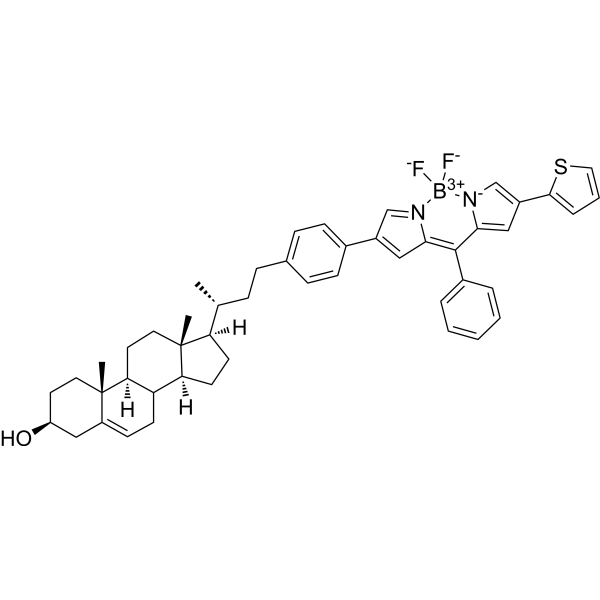
BODIPY-cholesterol conjugate-3 (compound 7) is a cholesterol analogue with a fluorescent BODIPY group. BODIPY-cholesterol conjugate-3 can be used to simultaneously visualize multiple cholesterol pools in cells, as it is primarily localized to the plasma membrane .
loading...
    loading...
Cat. No.: HY-123039
CAS No.: 261947-38-0
Target:  

CETP

Research Areas:  

Metabolic Disease

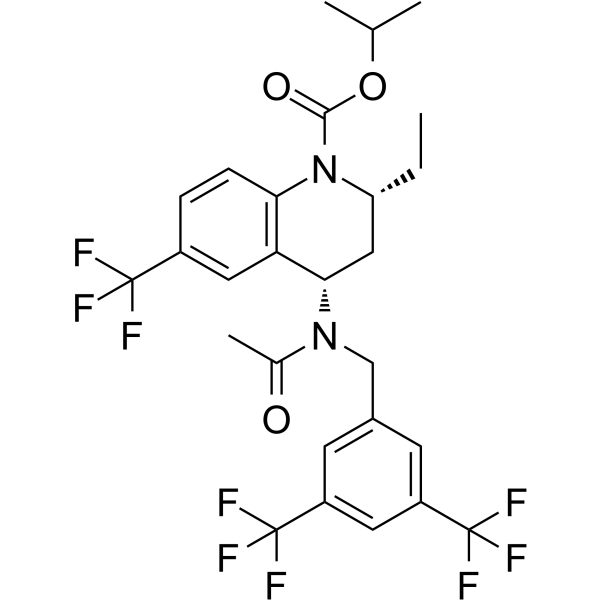
CP-532623 is a CETP inhibitor and elevates high-density lipoprotein cholesterolion. CP-532623 is a close structural analogue of Torcetrapib. CP-532623 has highly lipophilic properties .
loading...
    loading...
Cat. No.: HY-178088
CAS No.: 2232226-16-1
L-731120 is an alkyl citrate zargozaga acid A analogue, which is secondary metabolite produced by fungal fermentation. L-731120 shows inhibitory activity against squalene synthase (SQS) (IC50 = 260 nM). L-731120 can inhibit the synthesis of cholesterol in the liver. L-731120 can be used for the research of infection and metabolic disease, such as hypercholesterolemia .
loading...
    loading...
Cat. No.: HY-W343043
CAS No.: 60398-24-5
Synonyms: PZG
Target:  

Drug Derivative

Pyrazinoylguanidine (PZG) is an analogue of the potassium sparing diuretic, Amiloride (HY-B0285). Pyrazinoylguanidine can lower the systolic and diastolic blood pressure of patients with primary hypertension, has a certain effect on reducing heart rate, and does not affect the concentrations of electrolytes such as sodium, potassium, and chloride in the blood serum. Pyrazinoylguanidine can reduce the hyperglycemia and hyperinsulinemia in type 2 diabetes, reduce the levels of triglycerides, cholesterol, and free fatty acids, and reverse the hyperglycemia and hyperlipidemia induced by thiazide diuretics, such as Hydrochlorothiazide (HY-B0252). Pyrazinoylguanidine ican nhibit the reabsorption of urea by the renal tubules, thereby increasing the clearance rate and excretion volume of urea, reducing the serum urea concentration, and minimizing its toxic accumulation .
loading...
    loading...

