11 Results for "

coronary occlusion

" in MedChemExpress (MCE) Product Catalog:
Products (11)

11 Results for "coronary occlusion" in MCE Product Catalog:

1
1 Cited Publications
Cat. No.: HY-P2824
CAS No.: 9002-01-1
Target:  

Bacterial

Research Areas:  

Cardiovascular Disease

Streptokinase, β-hemolytic streptococcus (Lancefield Group C) is a bacteria-derived protein and a plasminogen activator. Streptokinase is widely used for the research of the blood-clotting disorders. Streptokinase improves reperfusion blood flow after coronary artery occlusion .
loading...
    loading...
Cat. No.: HY-P0003
CAS No.: 124584-08-3
Synonyms: Brain Natriuretic Peptide-32 human; BNP-32
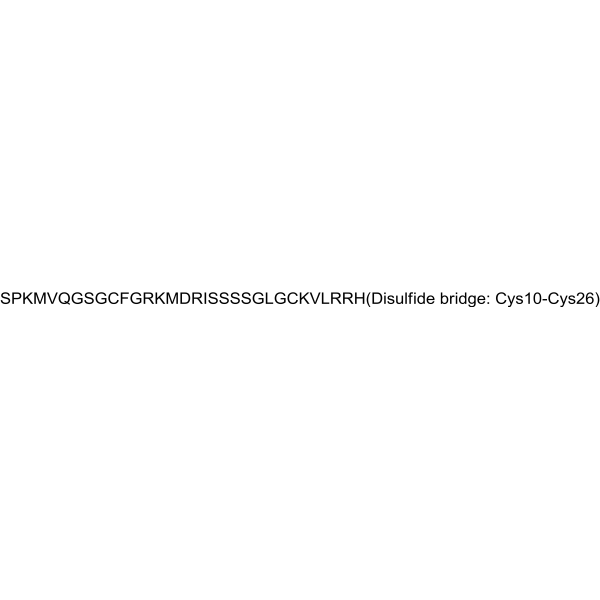
Nesiritide (Brain Natriuretic Peptide-32 human) is a recombinant human B-type natriuretic peptide. Nesiritide is a NPRs agonist, with Kd values of 7.3 and 13 pM for NPR-A and NPR-C, respectively. Nesiritide regulates V1/2 activation/inactivation of the L-type calcium channel. Nesiritide shows vasodilatory, diuretic, and natriuretic activities. Nesiritide is used in cardiovascular diseases such as heart failure and vascular remodeling after arterial injury .
loading...
    loading...
Cat. No.: HY-117200
CAS No.: 351062-08-3
Purity:  ≥98.0%
Synonyms: Nec-7
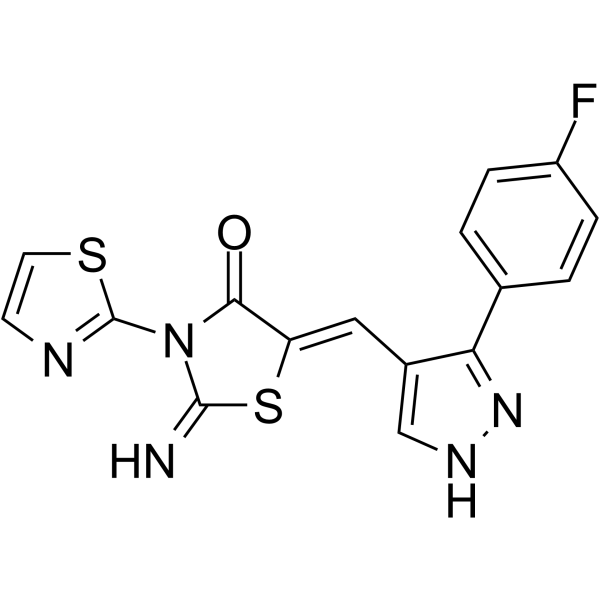
Necrostatin-7 (Nec-7) is a Necroptosis inhibitor with an EC50 of 10.6 μM. Necrostatin-7 inhibits signal transduction from RANK to NFATc1 without affecting the activation of MAPK or NF-κB. Necrostatin-7 suppresses the expression levels of Acp5, Atp6v0d2, Ctsk and Dcstamp. Necrostatin-7 reduces myocardial infarction size, ameliorates adverse left ventricular remodeling, decreases myocardial wall stress, reduces the amount and length of scar tissue, and improves left ventricular function. Necrostatin-7 exerts cardioprotective effects in a rat model of permanent coronary artery occlusion. Necrostatin-7 can be used in research related to osteolytic bone diseases and myocardial infarction .
loading...
    loading...
Cat. No.: HY-108564
CAS No.: 103253-15-2
Research Areas:  

Cardiovascular Disease

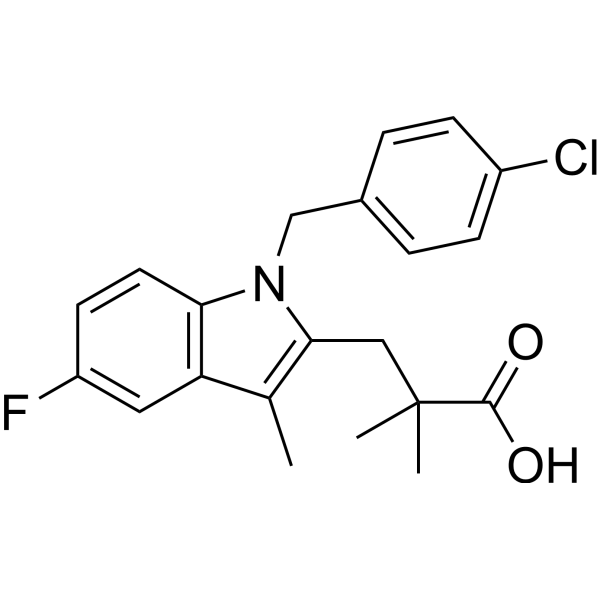
L 655240 is thromboxane antagonist. L 655240 attenuates early ischemia- and reperfusion-induced arrhythmias in a canine model of coronary artery occlusion. L 655240 also involves in cancer and autoimmune disorders .
loading...
    loading...
Cat. No.: HY-105209
CAS No.: 132722-74-8
Target:  

Endogenous Metabolite

Research Areas:  

Cardiovascular Disease

Pirsidomine is a nitric oxide donor. Pirsidomine is a sydnonimine compound. Pirsidomine can transform into a nitric oxide-releasing metabolite in vivo. Pirsidomine prevents occlusion-induced increase in flow in the non-occluded circumflex coronary artery and significantly reduces the blood flow in non-ischemic areas in myocardial infarction dog model. Pirsidomine can be studied in research on cardiovascular diseases .
loading...
    loading...
Cat. No.: HY-18209
CAS No.: 193420-09-6
Z-13752A is a mercaptopropanoyl amino acid. Z-13752A inhibits NEP and ACE, with Ki values of 1.8 and 3.2 nM, respectively. Z-13752A decreases the arterial blood pressure and increases coronary blood flow. Z-13752A can be used in the research of coronary artery occlusion .
loading...
    loading...
Cat. No.: HY-128511
CAS No.: 24340-35-0
Synonyms: Piridoxylate
Research Areas:  

Cardiovascular Disease

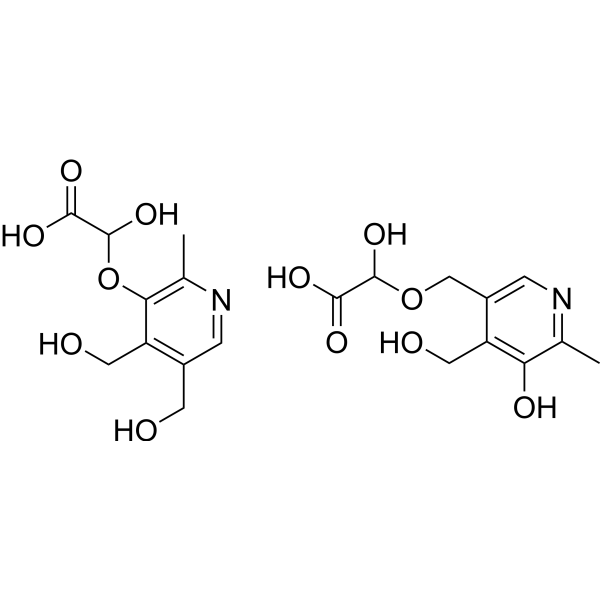
Piridoxilate (Piridoxylate), a glyoxylate derivative, is an anti-anoxic agent. Piridoxilate can be used in research on vascular diseases and coronary occlusion .
loading...
    loading...
Cat. No.: HY-101361
CAS No.: 1462-71-1
Synonyms: Methyllidocaine iodide
Target:  

Drug Derivative

Research Areas:  

Neurological Disease

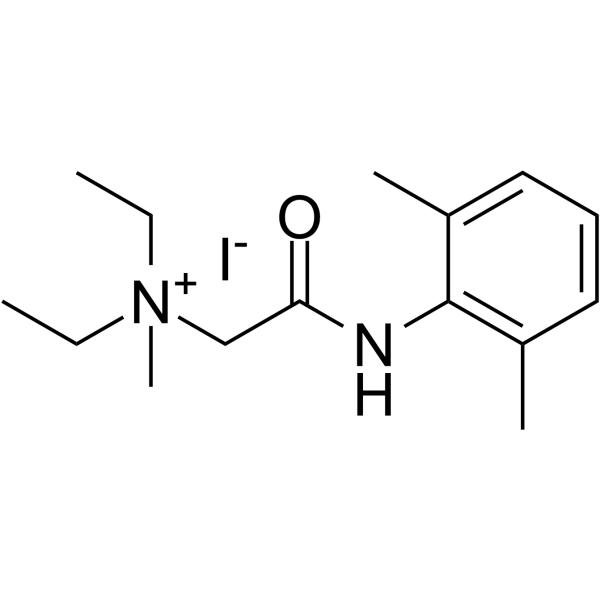
Lidocaine methiodide (Methyllidocaine iodide) is a potent antiarrythmic agent, and is a derivative of Lidocaine (HY-B0185). Lidocaine methiodide can be used for the research of ventricular arrhythmias produced by coronary occlusion .
loading...
    loading...
Cat. No.: HY-129680
CAS No.: 90-54-0
Target:  

Adrenergic Receptor

Research Areas:  

Cardiovascular Disease

Etafenone is an antiarrhythmic agent and vasodilator. Etafenone exerts β-adrenergic agonistic effects. Etafenone inhibits the automaticity of sinoatrial nodes, atrioventricular junctions and Purkinje fibers, prolongs action potential duration and refractory period, slows the rising rate of action potentials, and prolongs conduction time. Etafenone enhances collateral circulation after coronary occlusion and suppresses ventricular premature beats. Etafenone delays ischemic myocardial energy imbalance, improves the recovery of high-energy phosphates after ischemia, and reduces myocardial oxygen consumption. Etafenone can be used in research related to ischemic heart disease, arrhythmia and angina pectoris .
loading...
    loading...
Cat. No.: HY-182573
CAS No.: 315203-31-7
RWJ-58259 is a selective PAR-1 inhibitor with an IC50 value of 0.15 μM. RWJ-58259 binds selectively to PAR-1, blocks the binding of tethered ligands, interferes with calcium mobilization and PAR-1-related cellular functions, and exhibits no PAR-1 agonist activity or thrombin proteolytic inhibitory activity. RWJ-58259 inhibits thrombin-induced platelet aggregation, calcium signaling and vascular smooth muscle cell proliferation, reduces neointimal thickness and arterial stenosis, and alleviates vascular occlusion and platelet deposition. RWJ-58259 can be used in the research of thrombotic diseases and vascular injury associated with acute coronary intervention .
loading...
    loading...
Cat. No.: HY-181822
CAS No.: 2375684-52-7
BMS-986331 is an orally active selective N-Formyl Peptide Receptor 2 (FPR2) agonist with an EC50 of 0.5 nM in humans and 1 nM in rats. BMS-986331 activates Gαi2, GαoA, Gα12, Gα13 signaling pathways, recruits β-arrestin1 and β-arrestin2, and inhibits downstream cAMP. BMS-986331 induces the expression and release of the pro-resolution cytokine IL-10. BMS-986331 improves cardiac structure and function in a rat model of heart failure induced by permanent coronary artery occlusion. BMS-986331 can be used for the research of heart failure .
loading...
    loading...
  • 1

