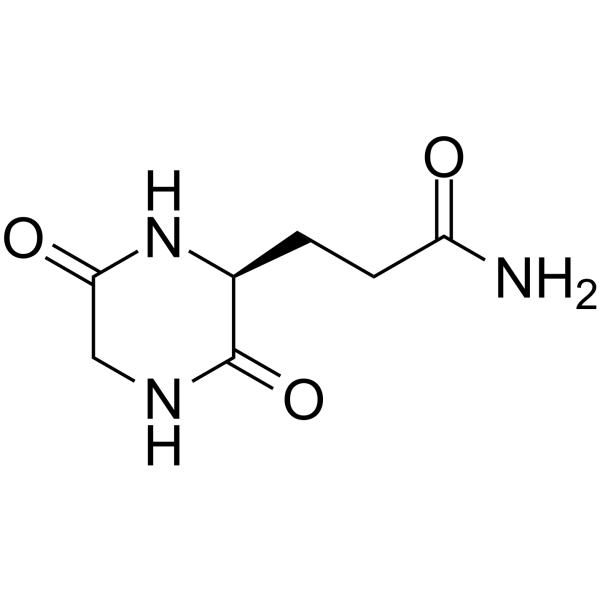
1. Search Result
Search Result
Results for "

cyclic dipeptide

" in MedChemExpress (MCE) Product Catalog:

27

Inhibitors & Agonists

19

Peptides

15

Natural
Products

1

Isotope-Labeled Compounds

Cat. No. Product Name Target Research Areas Chemical Structure
  • HY-P1934A

    Fungal Bacterial IFNAR Reactive Oxygen Species (ROS) Infection Inflammation/Immunology Cancer
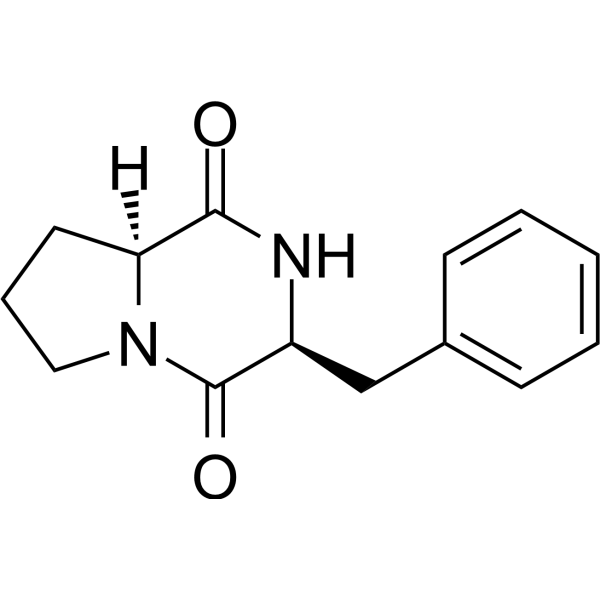
    Cyclo(L-Phe-L-Pro), isolated from Pseudomonas fluorescens and Pseudomonas alcaligenes cell-free culture supernatants is an antifungal cyclic dipeptide . Cyclo(L-Phe-L-Pro) inhibits IFN-β production by interfering with retinoic-acid-inducible gene-I (RIG-I) activation . Cyclo(L-Phe-L-Pro) exhibits free-radical scavenging activity with the IC50 of 24 µM in the DPPH assay .
    Cyclo(L-Phe-L-Pro)
  • HY-P1939

    Cyclo(L-prolyl-L-leucyl)

    Fungal Bacterial Influenza Virus Infection
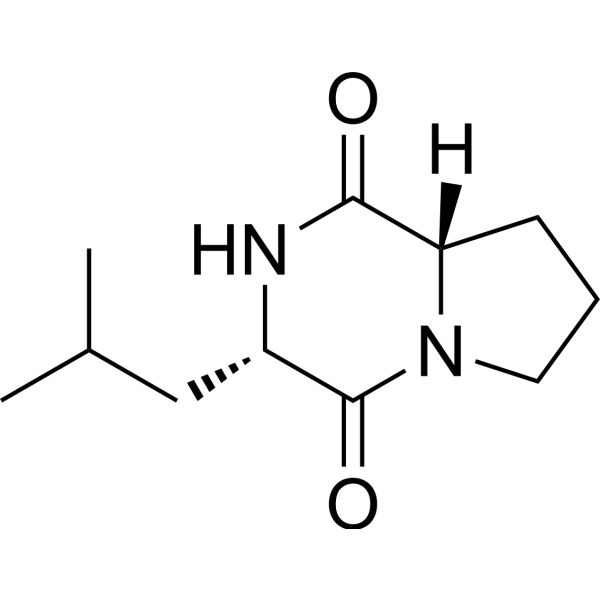
    Cyclo(L-Leu-L-Pro) is a cyclic dipeptide with broad-spectrum antibacterial, antiviral and antifungal activities. Its biological activity is highly dependent on the stereoconfiguration and is widely present in microbial metabolites. Cyclo(L-Leu-L-Pro) efficiently and specifically inhibits the production of aflatoxin by Aspergillus flavus. The cis configuration of Cyclo(L-Leu-L-Pro) (cis-cyclo(L-Leu-L-Pro)) has broad-spectrum antibacterial activity against multi-drug resistant bacteria and significantly inhibits the influenza A virus H3N2 .
    Cyclo(L-Leu-L-Pro)
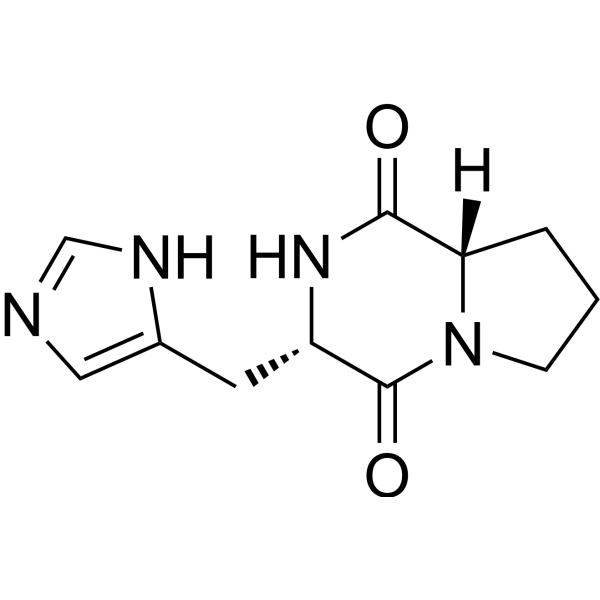
  • HY-101402

    Cyclohistidyl-proline; Histidylproline diketopiperazine

    NF-κB Endogenous Metabolite Neurological Disease Inflammation/Immunology
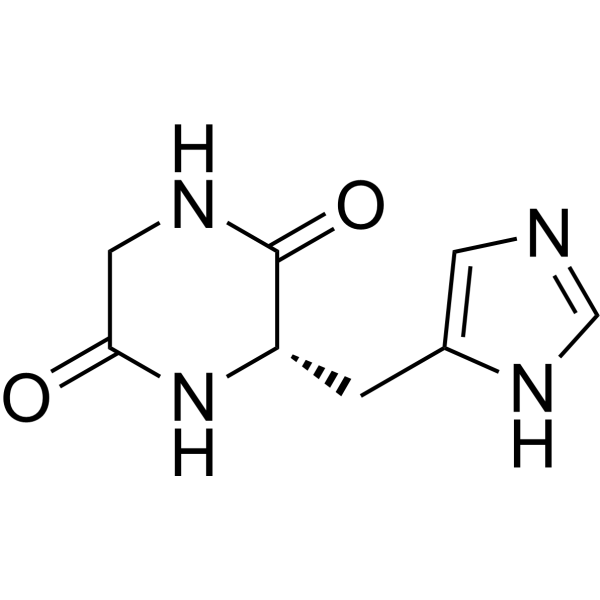
    Cyclo(his-pro) (Cyclo(histidyl-proline)) is an orally active cyclic dipeptide structurally related to tyreotropin-releasing hormone . Cyclo(his-pro) could inhibit NF-κB nuclear accumulation. Cyclo(his-pro) can cross the brain-blood-barrier and affect diverse inflammatory and stress responses .
    Cyclo(his-pro)
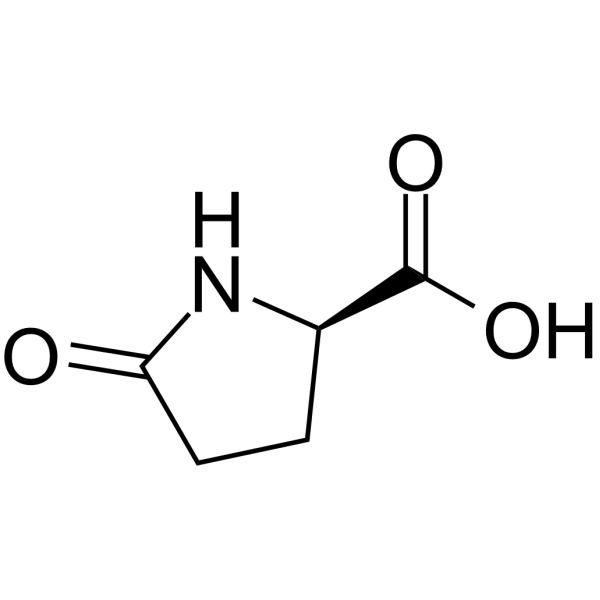
  • HY-N10473
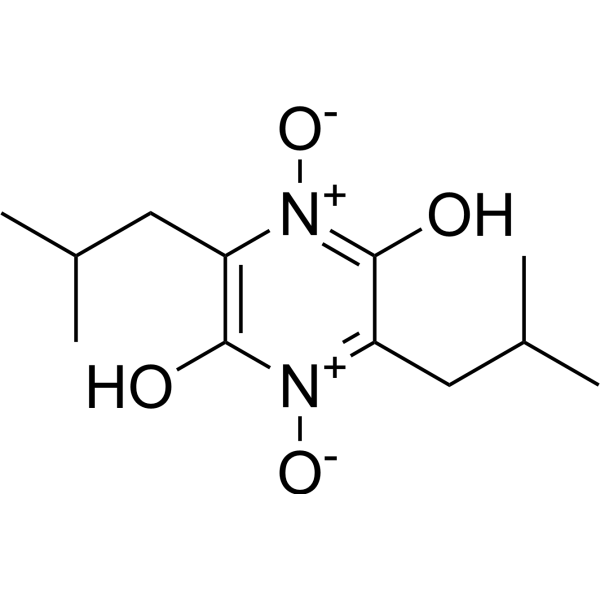
    Pulcherriminic acid
    3 Publications Verification

    Bacterial Fungal Infection
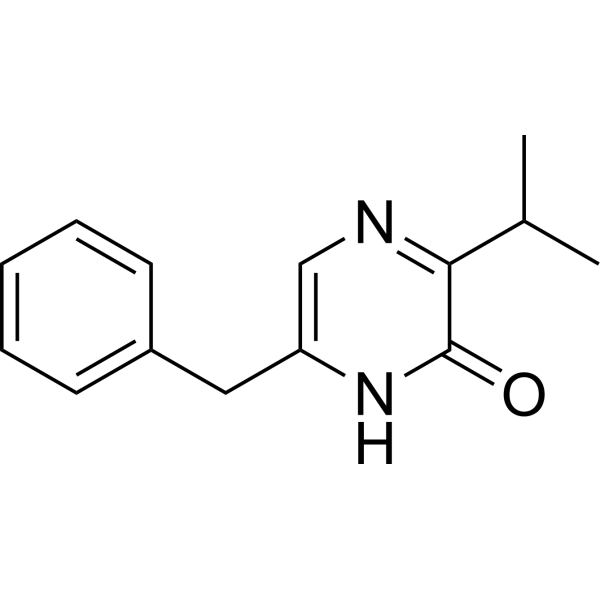
    Pulcherriminic acid is a cyclic dipeptide antimicrobial agent with high affinity for Fe 3+, found mainly in Bacillus and yeast. Pulcherriminic acid chelates iron ions through a non-enzymatic reaction to form the extracellular red pigment pulcherrimin, which competes for iron nutrition and thus achieves an antibacterial effect. Pulcherriminic acid has great applications in food, agriculture and medical industries .
    Pulcherriminic acid
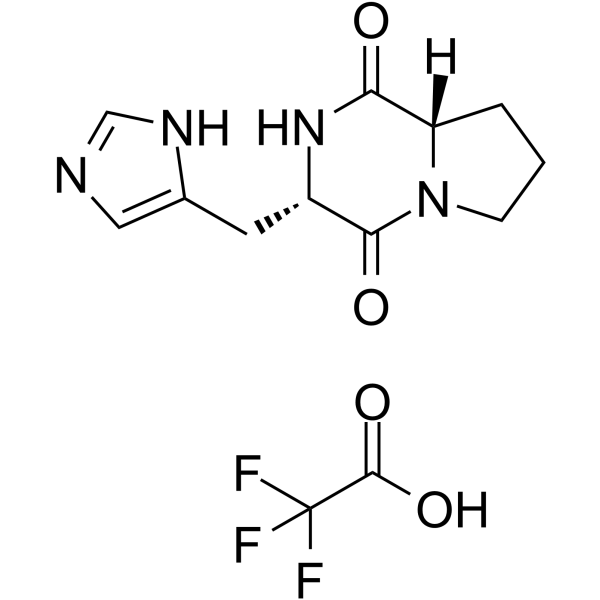
  • HY-101402A

    Cyclohistidyl-proline TFA; Histidylproline diketopiperazine TFA

    NF-κB Endogenous Metabolite Neurological Disease Inflammation/Immunology
    Cyclo(his-pro) TFA (Cyclo(histidyl-proline) TFA) is an orally active cyclic dipeptide structurally related to tyreotropin-releasing hormone . Cyclo(his-pro) TFA could inhibit NF-κB nuclear accumulation. Cyclo(his-pro) TFA can cross the brain-blood-barrier and affect diverse inflammatory and stress responses .
    Cyclo(his-pro) TFA
  • HY-P2092

    Cyclo(Leu-Trp)

    Bacterial Fungal Melatonin Receptor Infection Neurological Disease
    Cyclo(L-leucyl-L-tryptophyl) (Cyclo(-Leu-Trp)) is a cyclic dipeptide that inhibits a various of bacteria and fungi. Cyclo(L-leucyl-L-tryptophyl) is a melatonin receptor agonist and is also used as a bitter ligand .
    Cyclo(L-leucyl-L-tryptophyl)
  • HY-W967223

    Phe-Thr; H-Phe-Thr-OH

    Amino Acid Derivatives Others
    L-Phenylalanyl-L-threonine is a dipeptide containing Phenylalanine and threonine. L-Phenylalanyl-L-threonine can be used to synthesize the cyclic hexapeptide Banyascyclamide A .
    L-Phenylalanyl-L-threonine
  • HY-W701082

    Amino Acid Derivatives Others
    Cyclo(leucylleucine) is a cyclic dipeptide formed by the cyclization of two leucine molecules via peptide bonds, and it can be used in the preparation of nanomaterials .
    Cyclo(leucylleucine)
  • HY-W507009

    Endogenous Metabolite Cardiovascular Disease
    L-Arginyl-L-alanine is a dipeptide, is a vascular smooth muscle-derived relaxing factor. L-Arginyl-L-alanine increases the smooth muscle levels of cyclic GMP and nitrite in endothelium-denuded arterial rings .
    L-Arginyl-L-alanine
  • HY-P5033

    Bacterial Cancer
    Cyclo(Gly-His) is a liposome-encapsulated cyclic dipeptide with antimicrobial and anticancer activity. Cyclo(Gly-His) has cytotoxicity for HeLa and MCF-7 cell with IC50 values of 1.699 mM and 0.358 mM, respectively. Cyclo(Gly-His) can be used for the research of drug delivery systems .
    Cyclo(Gly-His)
  • HY-P11431

    IGF-1R Neurological Disease Inflammation/Immunology
    Cyclo(Gly-Pro) is a cyclic dipeptide. Cyclo(Gly-Pro) can be derived from the Nterminus of the IGF-1. Cyclo(Gly-Pro) attenuates nociceptive behaviour and inflammatory response in mice .
    Cyclo(Gly-Pro)
  • HY-P1937

    Influenza Virus Infection
    Cyclo(-Met-Pro) is a cyclic dipeptide consisting of the amino acids methionine and proline. Cyclo(-Met-Pro) exhibits weak inhibitory activity against the influenza A virus (H3N2) (5 mM, 2.1% inhibition), while cis-cyclo(Leu-Pro) and cis-cyclo(Phe-Pro) shows significant antiviral activity .
    Cyclo(-Met-Pro)
  • HY-141460

    Ile-Ala; L-Isoleucyl-L-alanine

    Biochemical Assay Reagents Others
    H-Ile-Ala-OH (Ile-Ala; L-Isoleucyl-L-alanine) is a linear aliphatic dipeptide and self-reactive cyclization reagent that self-assembles into amorphous films or spherical structures from specific solvents. H-Ile-Ala-OH also serves as a precursor for the synthesis of the cyclic peptide cyclo (L-isoleucyl-L-alanine) (HY-N9251). H-Ile-Ala-OH undergoes solid-state cyclization when heated above 206 °C, and its initiation temperature is closely related to the size of side-chain substituents .
    H-Ile-Ala-OH
  • HY-N3796

    Echinuline

    NF-κB Inflammation/Immunology
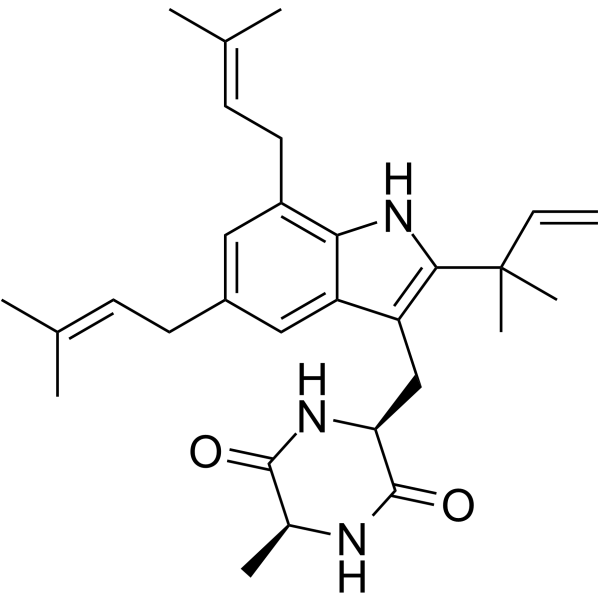
    Echinulin (Echinuline) is a cyclic dipeptide carrying a triprenylated indole moiety. Echinulin contributes to the activation of T cell subsets, which leads to NF-κB activation.Echinulin exerts its immune roles by the NF-κB pathway.Echinulin has the potential to serve as a immunotherapeutic agent .
    Echinulin
  • HY-101402AR

    Cyclohistidyl-proline TFA (Standard); Histidylproline diketopiperazine TFA (Standard)

    Reference Standards NF-κB Endogenous Metabolite Neurological Disease Inflammation/Immunology
    Cyclo(his-pro) (TFA) (Standard) is the analytical standard of Cyclo(his-pro) (TFA). This product is intended for research and analytical applications. Cyclo(his-pro) TFA (Cyclo(histidyl-proline) TFA) is an orally active cyclic dipeptide structurally related to tyreotropin-releasing hormone . Cyclo(his-pro) TFA could inhibit NF-κB nuclear accumulation. Cyclo(his-pro) TFA can cross the brain-blood-barrier and affect diverse inflammatory and stress responses .
    Cyclo(his-pro) TFA (Standard)
  • HY-P1934AR

    Reference Standards Fungal Bacterial IFNAR Reactive Oxygen Species (ROS) Infection Inflammation/Immunology Cancer
    Gallic acid (hydrate) (Standard) is the analytical standard of Gallic acid (hydrate). This product is intended for research and analytical applications. Cyclo(L-Phe-L-Pro), isolated from Pseudomonas fluorescens and Pseudomonas alcaligenes cell-free culture supernatants is an antifungal cyclic dipeptide . Cyclo(L-Phe-L-Pro) inhibits IFN-β production by interfering with retinoic-acid-inducible gene-I (RIG-I) activation . Cyclo(L-Phe-L-Pro) exhibits free-radical scavenging activity with the IC50 of 24 µM in the DPPH assay .
    Cyclo(L-Phe-L-Pro) (Standard)
  • HY-W554764

    TRP Channel Neurological Disease
    Cyclo(-asp-gly) is a cyclic dipeptide composed of amino acids and is a potential TRPV1 stimulator .
    Cyclo(-asp-gly)
  • HY-P2073

    Bacterial Infection
    Cyclo(Δ-Ala-L-Val) is a cyclic dipeptide and a putative quinolone signal (QS) molecule produced by Pseudomonas aeruginosa .
    Cyclo(δ-Ala-L-Val)
  • HY-W009592R

    Glycyltyrosine (Standard); Gly-Tyr (Standard); H-Gly-Tyr-OH (Standard)

    Amino Acid Derivatives Reference Standards Others
    Glycyl-L-tyrosine (Standard) is the analytical standard of Cyclic somatostatin. This product is intended for research and analytical applications. Glycyl-L-tyrosine is a synthetic dipeptide that can be used as a food additive for tyrosine supplementation .
    Glycyl-L-tyrosine (Standard)
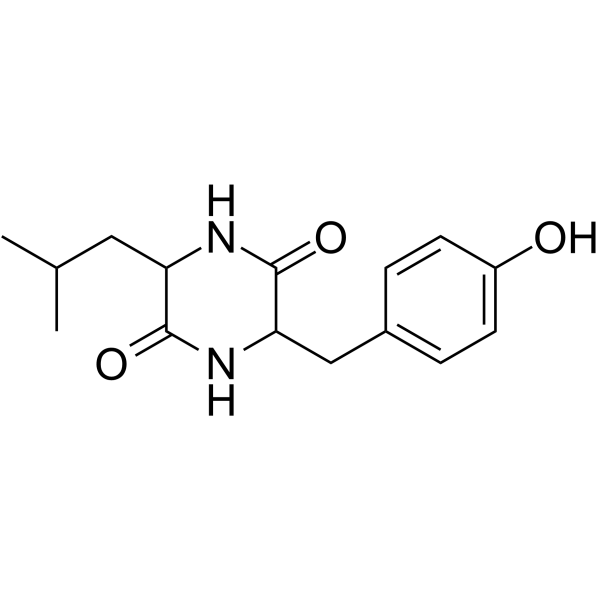
  • HY-W971376

    Others Others
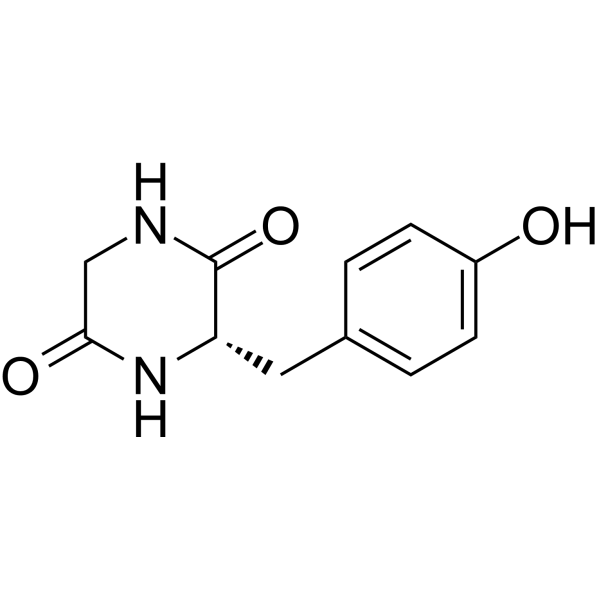
    Cyclo(Ala-Tyr) is a cyclic dipeptide that can be isolated from the fermentation broth of the marine microorganism Bacillus marinus B-9987 isolated from the rhizosphere tissue of Suaeda salsa in the intertidal zone of Bohai Bay, China .
    Cyclo(Ala-Tyr)
  • HY-P2033

    Elastase Ser/Thr Protease Inflammation/Immunology
    Nostopeptin B is a cyclic dipeptide that can be isolated from N. minutum (NIES-26). The structure of Nostopeptin B contains Ahp (3-amino-6-hydroxy-2-piperidone), which exhibits effective inhibition against elastase and chymotrypsin .
    Nostopeptin B
  • HY-N11615A

    Drug Derivative
    (R,R)-Cyclo(Pro-Val) is a trans (D-L) diastereoisomer of valyl-prolyl diketopiperazine (cyclic dipeptide) .
    (R,R)-Cyclo(Pro-Val)
  • HY-N18989A

    Biochemical Assay Reagents Others
    Cyclo(D-Ile-D-Leu) is a cyclic dipeptide found in the fermented mycelia of Flammulina velutipes .
    Cyclo(D-Ile-D-Leu)
  • HY-183971

    Drug Intermediate Others
    Cyclo(L-Ser-L-Val) is a cyclic dipeptide (diketopiperazine) that lacks growth-promoting activity for E. coli in SAPI-serum medium .Cyclo(L-Ser-L-Val) can be chemically synthesized as a precursor to cyclo(ΔAla-L-Val) .
    Cyclo(L-Ser-L-Val)
  • HY-P11627

    Endogenous Metabolite Others
    Cyclo(Pro-Hyp) is a collagen-derived cyclic dipeptide, and its related collagen breakdown product Gly-Pro-Hyp promotes the growth of skin fibroblasts and participates in tissue reconstruction, exhibiting biological activity.
    Cyclo(Pro-Hyp)
  • HY-P11626

    Collagen Metabolic Disease
    Cyclo(Ala-Hyp) is an orally effective collagen-derived hydroxyproline-containing cyclic dipeptide that can be isolated from the culture supernatant of Lactobacillus plantarum. Cyclo(Ala-Hyp) has an AUC0-6h of 2.350 μg/mL·h, significantly higher than traditional collagen oligopeptides. Cyclo(Ala-Hyp) can be used in research related to liver and kidney function protection, skin care, and joint health.
    Cyclo(Ala-Hyp)
  • HY-179735

    Ligands for E3 Ligase Cancer
    CRBN ligand-192 is an E3 ligand that can be used for the synthesis of PROTACs, such as PROTAC BRD4 Degrader-41 (HY-179734). PROTAC BRD4 Degrader-41 is a potent BRD4 PROTAC degrader with anti-cancer activity .
    CRBN ligand-192

Inquiry Online

Your information is safe with us. * Required Fields.

Salutation


Country or Region *

Applicant Name *


Organization Name *

Department *


Email Address *


Product Name *

Cat. No.


Requested quantity *

Phone Number *


Remarks

Inquiry Online

Inquiry Information

Product Name:
Cat. No.:
Quantity:
MCE Japan Authorized Agent:

