



Cyclo(his-pro) TFA (Standard)
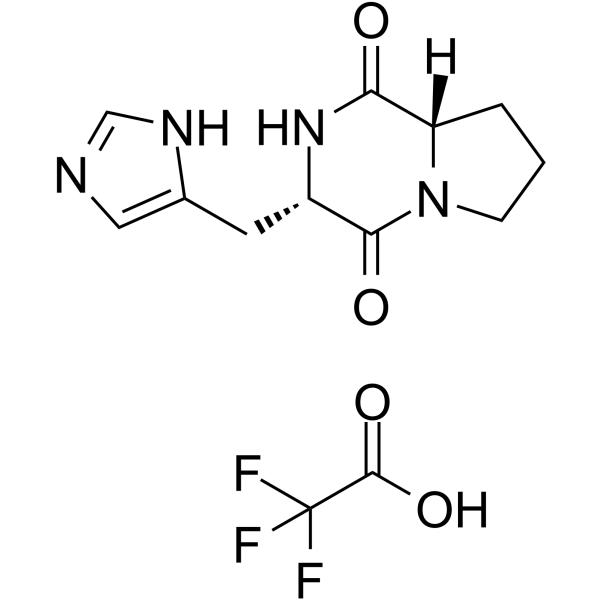
Cyclo(his-pro) (TFA) (Standard) is the analytical standard of Cyclo(his-pro) (TFA). This product is intended for research and analytical applications. Cyclo(his-pro) TFA (Cyclo(histidyl-proline) TFA) is an orally active cyclic dipeptide structurally related to tyreotropin-releasing hormone. Cyclo(his-pro) TFA could inhibit NF-κB nuclear accumulation. Cyclo(his-pro) TFA can cross the brain-blood-barrier and affect diverse inflammatory and stress responses.
For research use only. We do not sell to patients.
- CAS No.: 936749-56-3
- Formula: C13H15F3N4O4
- Molecular Weight:348.28
-
Storage:
Please store the product under the recommended conditions in the Certificate of Analysis.


To place orders, for customer services and technical support, please contact: MedChemExpress USA
Tel: 609-228-6898 E-mail: [email protected] [email protected]


-
 Product Information
-
Chemical Information
- Purity & Documentation
-
 Help & FAQs


-
HY-101402A
Cyclo(his-pro) TFANF-κB Nuclear Accumulation Inhibitor -
HY-32735
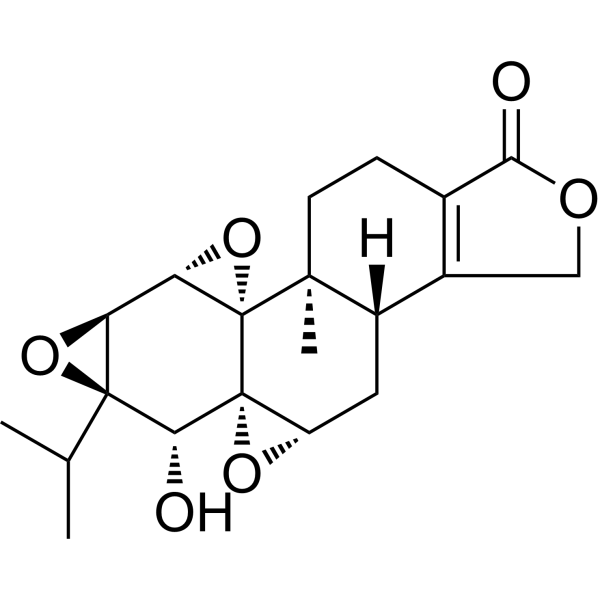
TriptolideImmunosuppressive Agent -
HY-N0191
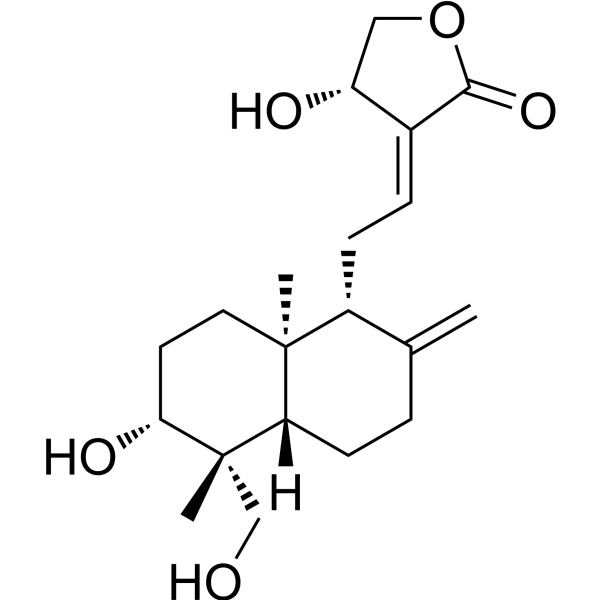
AndrographolideNF-κB Inhibitor -
HY-N0141
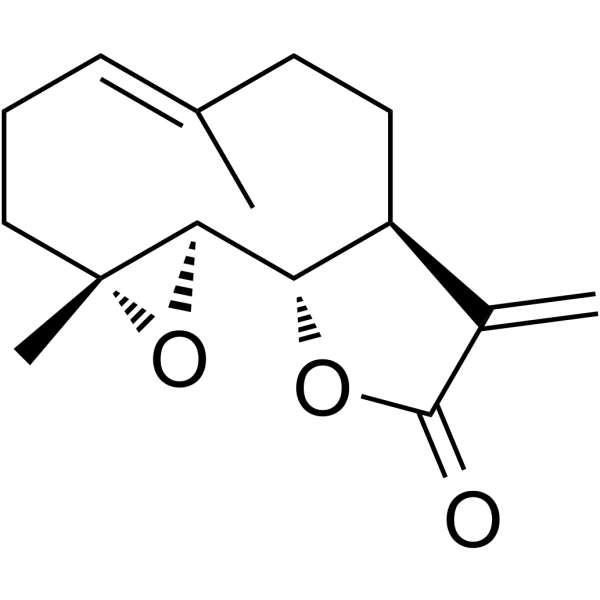
ParthenolideNF-κB Inhibitor -
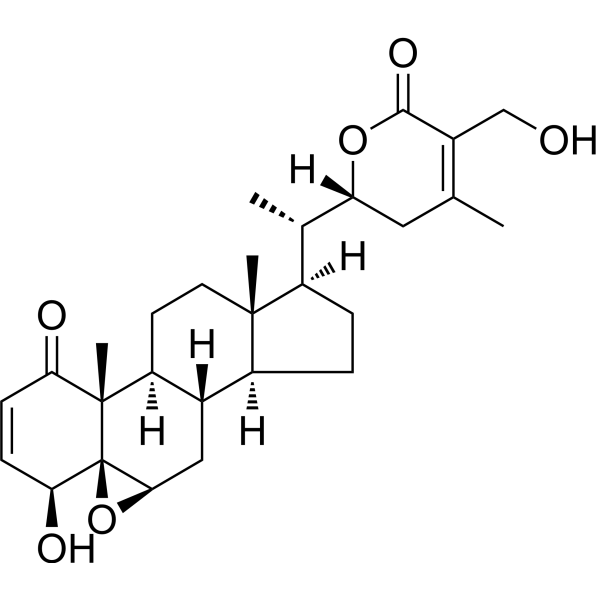
HY-N2065
Withaferin ANF-κB Inhibitor -
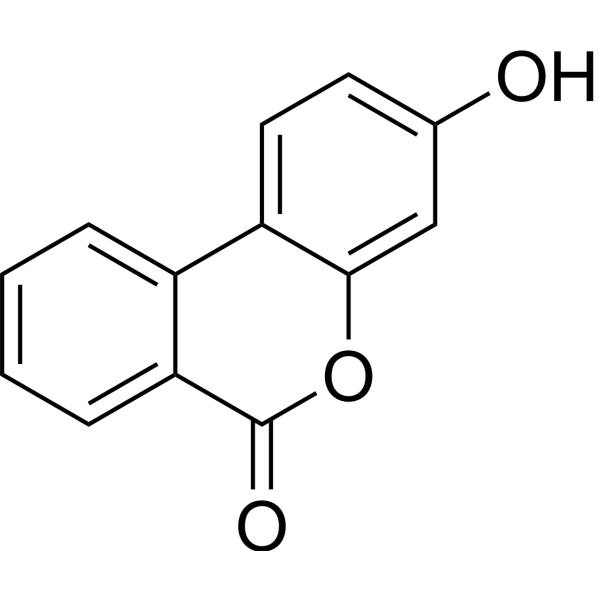
HY-126307
Urolithin BNF-κB Inhibitor -
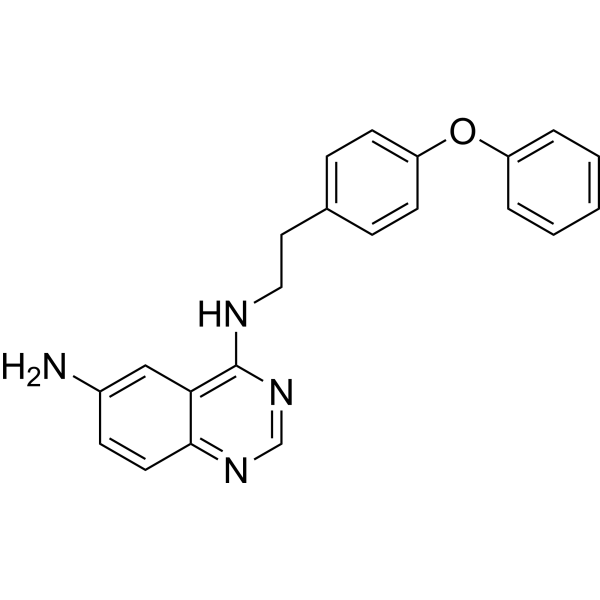
HY-13812
QNZTNF Receptor Inhibitor -
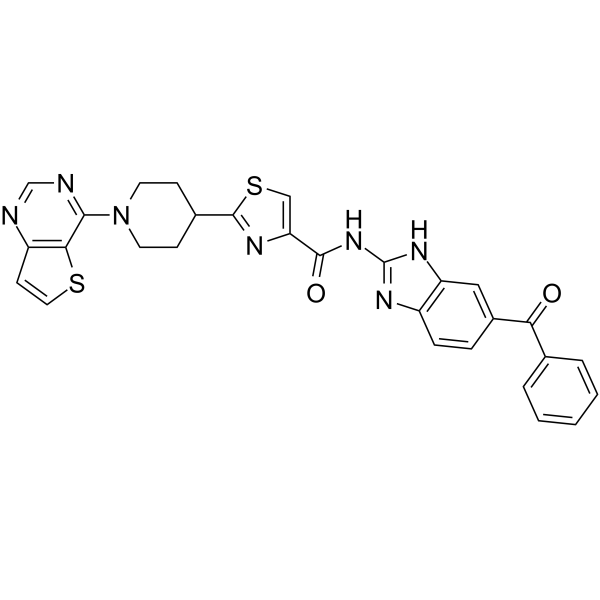
HY-10496
SC75741NF-κB Inhibitor -
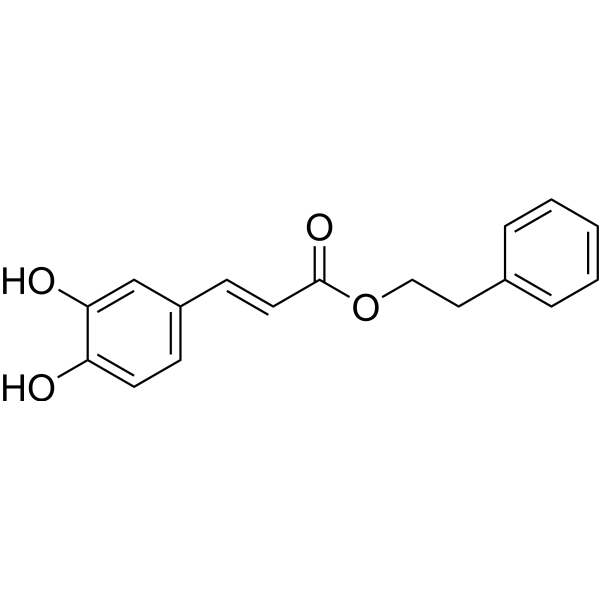
HY-N0274
Caffeic acid phenethyl esterApoptosis Inducer -
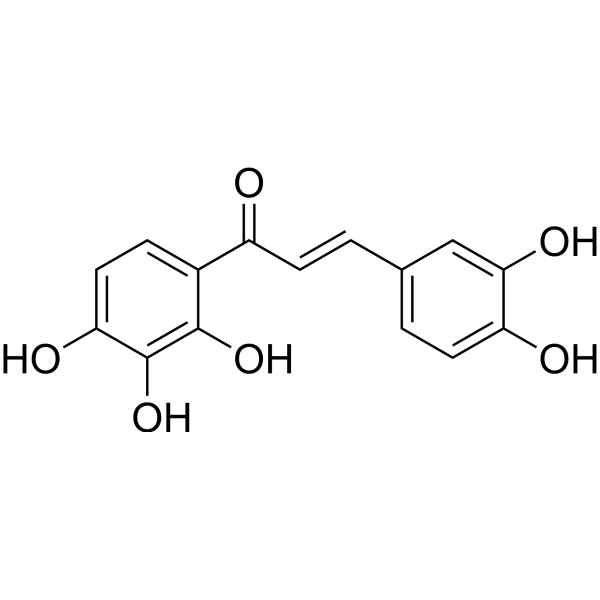
HY-N6673
OkaninToll-like Receptor (TLR) Inhibitor -

HY-P9958
DenosumabRANKL Inhibitor -
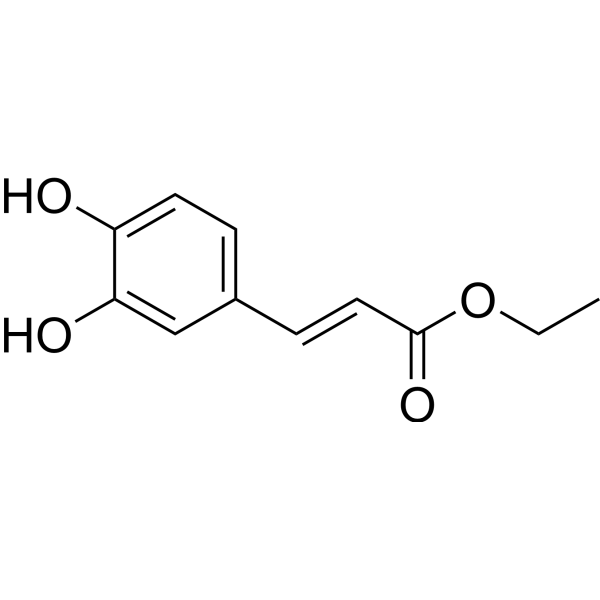
HY-N6966
Ethyl CaffeateCOX Inhibitor


Product Information
Information
Application
The compound is the grade of analytical standard, which is the reference standard supplied assay. It is commonly used in qualitative, quantitative and methodological research experiments in HPLC, GC and MS.


Chemical Information
-
CAS No. 936749-56-3
-
Molecular Weight 348.28
-
Formula C13H15F3N4O4
-
SMILES
OC(C(F)(F)F)=O.O=C(N[C@H]1CC2=CN=CN2)[C@@](CCC3)([H])N3C1=O
-
Synonyms
Cyclohistidyl-proline TFA (Standard); Histidylproline diketopiperazine TFA (Standard)
-
Structure Classification
-
Initial Source
-
Shipping
Room temperature in continental US; may vary elsewhere.
-
Storage
Please store the product under the recommended conditions in the Certificate of Analysis.


Purity & Documentation
References
[1]. Grottelli S, et al. The Role of Cyclo(His-Pro) in Neurodegeneration. Int J Mol Sci. 2016 Aug 12;17(8). pii: E1332. [Content Brief]
[2]. Minelli A, et al. Cyclo(His-Pro) exerts anti-inflammatory effects by modulating NF-κB and Nrf2 signalling. Int J Biochem Cell Biol. 2012 Mar;44(3):525-35. [Content Brief]
[3]. Bellezza I, et al. Neuroinflammation and endoplasmic reticulum stress are coregulated by cyclo(His-Pro) to prevent LPS neurotoxicity. Int J Biochem Cell Biol. 2014 Jun;51:159-69. [Content Brief]

Calculators
Concentration (start) × Volume (start) = Concentration (final) × Volume (final)


Cyclo(his-pro) TFA (Standard) Related Classifications
HY-101402AR Related Classifications
 Powered by Bioz
Keywords