






Search Result
Results for "
detect
" in MedChemExpress (MCE) Product Catalog:
87
Biochemical Assay Reagents
26
Isotope-Labeled Compounds
| Cat. No. |
Product Name |
Target |
Research Areas |
Chemical Structure |
-
- HY-N2327
-
|
|
Endogenous Metabolite
|
Others
|
|
Oleamide is an endogenous fatty acid amide which can be synthesized de novo in the mammalian nervous system, and has been detected in human plasma.
|
-
-
- HY-NP052
-
|
OVA-Biotin
|
Biochemical Assay Reagents
|
Others
|
|
Ovalbumin-Biotin is a biotinylated biochemical reagent. Ovalbumin-Biotin is used to label or detect specific antigens, molecules or cellular structures .
|
-
-
- HY-D0801
-
|
|
Fluorescent Dye
|
Others
|
|
Calmagite is a chromomeric reagent which can be used to detect calcium and magnesium in various samples .
|
-
-
- HY-15935B
-
|
|
β-glucuronidase
Fluorescent Dye
|
Others
|
|
X-Gluc cyclohexanamine is a dye reagent for the detection of β-glucuronidase (GUS), an enzyme produced by E. coli. X-Gluc cyclohexanamine can be used to detect E. coli contamination in food, water and the urinary tract (GUS as a specific detection indicator). X-Gluc cyclohexanamine is also widely used in molecular biology experiments to label and detect the expression of target genes (reacts with the GUS gene, appears blue) .
|
-
-
- HY-108712
-
|
Tris(1,3-dichloroisopropyl)phosphate
|
Biochemical Assay Reagents
|
Cancer
|
|
TDCPP is a chlorinated analog of tris(2,3-dibromopropyl)phosphate (Tris) which is one of the most detected organophosphorus flame retardants (OPFRs) in the environment.
|
-
-
- HY-N1387
-
-
-
- HY-15935C
-
|
|
β-glucuronidase
Fluorescent Dye
|
Others
|
|
X-Gluc sodium is a dye reagent for the detection of β-glucuronidase (GUS), an enzyme produced by E. coli. X-Gluc sodium can be used to detect E. coli contamination in food, water and the urinary tract (GUS as a specific detection indicator). X-Gluc sodium is also widely used in molecular biology experiments to label and detect the expression of target genes (reacts with the GUS gene, appears blue) .
|
-
-
- HY-W017604
-
|
m-Aminophenylboronic acid
|
Biochemical Assay Reagents
|
Others
|
|
3-Aminophenylboronic acid (m-Aminophenylboronic acid) functionalized copper nanoclusters can rapidly, selectively and sensitively detect glycoproteins .
|
-
-
- HY-P0239A
-
HA Peptide TFA
Maximum Cited Publications
15 Publications Verification
|
Influenza Virus
|
Inflammation/Immunology
|
|
HA Peptide (TFA) is a nine amino acids peptide derived from the human influenza hemagglutinin (HA). HA Peptide (TFA) is extensively used to isolate, purify, detect, and track the protein of interest in cell biology and biochemistry .
|
-
-
- HY-W015060
-
-
-
- HY-D0800
-
|
|
Biochemical Assay Reagents
|
Others
|
|
Chromeazurol S is a compound belonging to the class of azo dyes. It is often used as an indicator in analytical chemistry to detect metal ions such as copper, nickel, and cobalt. Chromeazurol S turns from yellow to blue in the presence of metal ions, allowing them to be detected and quantified. It can be applied to a test strip or added directly to a solution for analysis.
|
-
-
- HY-P4490
-
-
-
- HY-130025
-
HKOCl-3
2 Publications Verification
|
Fluorescent Dye
|
Others
|
|
HKOCl-3 is a highly sensitive and selective fluorescent probe for detecting hypochlorous acid.Ex: 490 nm; Em 527 nm .
|
-
-
- HY-148073
-
|
|
Fluorescent Dye
Ser/Thr Protease
|
Others
|
|
MeO-Succ-Arg-Pro-Tyr-AMC TFA is a fluorogenic peptide substrate for chymotrypsin-like proteases that detects protease activity . (measured at 460 nm)
|
-
-
- HY-W015466
-
|
|
Endogenous Metabolite
|
Metabolic Disease
|
|
Acetylvaline is an amino acid derivative belonging to the N-acetylated amino acid family. Acetylvaline can be detected in small quantities in the urine of healthy individuals but shows significantly abnormal excretion in the urine of patients with maple syrup urine disease (MSUD). Acetylvaline can be used to detect MSUD .
|
-
-
- HY-131618
-
|
Bz-Gly-Arg
|
Amino Acid Derivatives
|
Others
|
|
Hippuryl-Arg (Bz-Gly-Arg) is a substrate used for fluorescence detection and is commonly used in biochemical studies, especially in studying enzyme activity. The phenylalanine portion of Hippuryl-Arg is connected by an aromatic side chain, which allows it to be detected under ultraviolet light. Hippuryl-Arg is used to detect enzymes that recognize and cut peptide bonds containing arginine .
|
-
-
- HY-114713
-
-
-
- HY-D1530
-
|
|
Fluorescent Dye
|
Others
|
|
4-Methylumbelliferyl-N-acetyl-α-D-glucosaminide is a fluorogenic substrate for detecting α-N-acetylglucosaminidase .
|
-
-
- HY-D1261
-
|
Thiol-green 1
|
Fluorescent Dye
|
Others
|
|
Naph-EA-mal (Thiol-green 1) is a rapid detect and ultrafast turn-on thiol fluorescence probe for protein labeling and bioimaging. Naph-EA-mal (Thiol-green 1) can be used to detect thiols in living cells, label the protein thiols, quantify the concentration of total thiols in cell lysate, and determine the reversible protein thiols oxidation in fixed cells . Ex: 488 nM; Em: 540 nM.
|
-
-
- HY-52112
-
BCDA
1 Publications Verification
5-bromo-4-chloroindoxyl acetate
|
Fluorescent Dye
|
Others
|
|
BCDA (5-bromo-4-chloroindoxyl acetate) is a chromogenic substrate of esterase used to potently detect the activity of esterase .
|
-
-
- HY-137799
-
|
|
Biochemical Assay Reagents
|
Others
|
|
NOBA is a synthetic chromogenic substrate that can be used to detect the enzyme activity of AplTX-II. NOBA can be used in the research of phospholipid hydrolysis .
|
-
-
- HY-113239
-
-
-
- HY-113094
-
-
-
- HY-W442295
-
|
|
Fluorescent Dye
|
Others
|
|
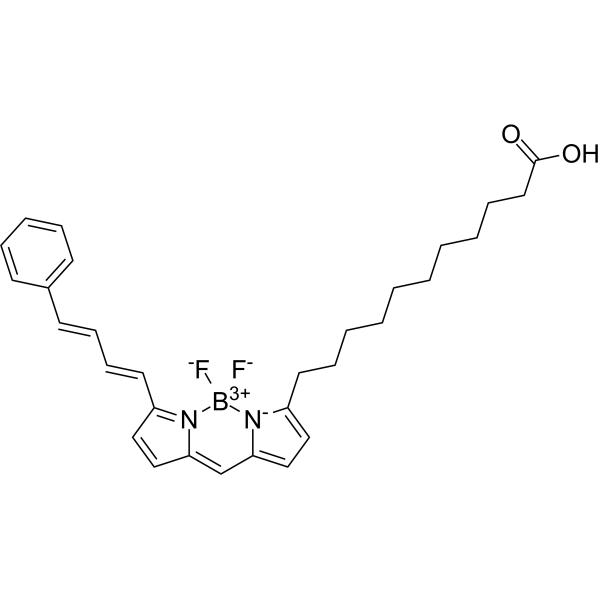
Dipyrrometheneboron difluoride is a green-fluorescent dye used for labeling nonpolar lipids and detecting calcium.
|
-
-
- HY-P4500
-
|
|
Cathepsin
|
Others
|
|
Z-Arg-Arg-pNA is a substrate for cathepsin B and can be used to detect this enzyme activity .
|
-
-
- HY-15935
-
|
|
β-glucuronidase
Fluorescent Dye
|
Others
|
|
X-Gluc Dicyclohexylamine is a dye reagent for the detection of β-glucuronidase, an enzyme produced by Escherichia coli. X-Gluc sodium can be used to detect E. coli contamination in food, water and the urinary tract. X-Gluc sodium is also widely used in molecular biology experiments to label and detect the expression of target genes (GUS reporter system) .
|
-
-
- HY-126172
-
|
|
Fluorescent Dye
|
Cancer
|
|
9-Anthryldiazomethane is a fluorescent labeling reagent, which can be used for detecting fatty acids and derivatives .
|
-
-
- HY-P10280
-
|
|
ATM/ATR
|
Cancer
|
|
ATR kinase substrate peptide (ASELPASQPQPFSAKKK) is a peptide substrate for ATR protein kinase and can be used to detect ATR kinase activity .
|
-
-
- HY-118262
-
-
-
- HY-100512
-
-
-
- HY-147169
-
|
|
Fluorescent Dye
|
Others
|
|
Biotin-X-NTA can be used for detecting histidine-tagged proteins immobilized on nitrocellulose membranes .
|
-
-
- HY-130767A
-
|
|
Biochemical Assay Reagents
|
Cancer
|
|
Naphthol AS-TR Phosphate disodium is a water-soluble dye commonly used as an enzymatic substrate in various biochemical assays to detect alkaline phosphatase activity. Naphthol AS-TR Phosphate disodium has unique chemical properties that allow it to be hydrolyzed by alkaline phosphatase, forming a colored product that can be detected spectrophotometrically. This makes it a useful tool for monitoring enzyme activity in biological samples such as serum or urine.
|
-
-
- HY-P10145
-
-
-
- HY-N2102
-
|
|
Others
|
Cancer
|
|
Tenacissoside I is a C21 steroid from the Marsdenia tenacissima, which is detected at relatively high level in M. tenacissima .
|
-
-
- HY-P5280
-
|
|
Ser/Thr Protease
|
Others
|
|
Ac-KQL-AMC is a fluorogenic substrate that can be used to quantify Trypsin-like activity, resulting in detectable fluorescence when cleaved by the proteasome .
|
-
-
- HY-W075353
-
-
-
- HY-D1395
-
-
-
- HY-W007894
-
|
|
Endogenous Metabolite
|
Others
|
|
Dimethylmalonic acid is a short-chain dicarboxylic acid in human serum. Dimethylmalonic acid is also a volatile organic compound detected in alveolar breath .
|
-
-
- HY-P3947
-
|
|
Ser/Thr Protease
|
Infection
|
|
Fluorescent Substrate for Subtillsin can be used to detect the enzyme activity of subtillsin. Subtilisin is a bacterial serine protease .
|
-
-
- HY-128466
-
|
|
Biochemical Assay Reagents
|
Others
|
|
N-Biotinyl-L-cysteine is a biotinylated biochemical assay reagent, which is used to detect avidin and biotin through a competitive binding reaction .
|
-
-
- HY-P4428
-
|
|
Fluorescent Dye
|
Others
|
|
Z-Val-Lys-Met-AMC is a fluorescent substrate that can be used to detect the β-secretase activity of cathepsin B .
|
-
-
- HY-D2377
-
|
|
Fluorescent Dye
|
Others
|
|
F8 is a small molecule GPR84 fluorescent probe that can visualize and detect GPR84 protein levels at the cellular and tissue levels .
|
-
-
- HY-145769
-
|
|
PD-1/PD-L1
|
Cancer
|
|
N2S2-CBMBC, an N2S2 bromo-benzyl ether derivative, acts as a ligand and use 99mTc-labelled complexes 99mTc-N2S2-CBMBC can be used as an imaging agent to be applied to the aspect of detecting PD-L1 expression, realize the real-time, comprehensive and convenient detection of the PD-L1 level of tumors, and overcome the defects of an immunohistochemical method .
|
-
-
- HY-W016415
-
-
-
- HY-P10098
-
|
|
PKA
|
Cancer
|
|
PKA Substrate is a potent and selective substrate peptide of PKA that can be used to detect PKA activity .
|
-
-
- HY-W588293
-
-
-
- HY-172560
-
-
-
- HY-D2115
-
|
|
Fluorescent Dye
|
Others
|
|
NBDT is sensitive and selective light-up fluorescent probe for monitoring gallium and chromium ionsin vitro and in vivo and can be detected at 574 nM .
|
-
-
- HY-W351759
-
|
|
Biochemical Assay Reagents
|
Others
|
|
3-Indoxyl caprylate is a chemiluminescent substrate used to detect bacterial activity, which can be used together with appropriate enzyme reactions.
|
-
-
- HY-180450
-
|
|
Biochemical Assay Reagents
|
Cancer
|
|
Gadoxetate disodium is a liver-specific magnetic resonance imaging (MRI) contrast agent, can be used for detecting and identifying liver tumors .
|
-
- HY-P4428A
-
|
|
Fluorescent Dye
|
Others
|
|
Z-Val-Lys-Met-AMC TFA is a fluorescent substrate that can be used to detect the β-secretase activity of cathepsin B .
|
-
- HY-137828
-
|
pNP-chitobiose
|
Biochemical Assay Reagents
|
Others
|
|
4-Nitrophenyl N,N′-diacetyl-β-D-chitobioside (pNP-chitobiose) is a fluorescent substrate that can be used to detect chitinase activity.
|
-
- HY-124050
-
|
(+)-Echimidine
|
Others
|
Others
|
|
Echimidine ((+)-Echimidine) is the major alkaloid detected in the honey used to produce the mead .
|
-
- HY-D1479
-
-
- HY-127017
-
|
HMeAL
|
Biochemical Assay Reagents
|
Others
|
|
Histidinomethylalanine (HMeAL) is a cross-link amino acid. Histidinomethylalanine can be detected in acid hydrolysates of milk products .
|
-
- HY-D0205
-
|
S-(Carboxymethyl)-DL-cysteine
|
Biochemical Assay Reagents
|
Others
|
|
(RS)-Carbocisteine is the S-carboxymethyl cysteine with no detectable inhibitory effect. (RS)-Carbocisteine is the inactive enantiomer of Carbocisteine.
|
-
- HY-D1268
-
|
|
Fluorescent Dye
|
Cancer
|
|
Seph-PAO is the modified PAO attached a sepharose fluorophore and is used to detect the thioredoxin reductase (TrxR) .
|
-
- HY-168343
-
-
- HY-157351
-
-
- HY-W604882
-
|
Orthonitrophenyl-beta-D-fucopyranoside, 98%
|
Biochemical Assay Reagents
|
Others
|
|
Orthonitrophenyl-β-D-fucopyranoside, 98% is a chromogenic substrate used in various enzyme assays to detect the presence of fucosidase.
|
-
- HY-137382
-
-
- HY-P4494
-
|
|
Cathepsin
|
Others
|
|
Suc-Val-Pro-Phe-pNA is a substrate for cathepsin G and can be used to detect the activity of this enzyme .
|
-
- HY-113239S
-
-
- HY-W015466S
-
|
|
Endogenous Metabolite
|
Metabolic Disease
|
|
Acetylvaline- 15N is the 15N-labeled Acetylvaline (HY-W015466). Acetylvaline is an amino acid derivative belonging to the N-acetylated amino acid family. Acetylvaline can be detected in small quantities in the urine of healthy individuals but shows significantly abnormal excretion in the urine of patients with maple syrup urine disease (MSUD). Acetylvaline can be used to detect MSUD.
|
-
- HY-W015466R
-
|
|
Reference Standards
Endogenous Metabolite
|
Metabolic Disease
|
|
Acetylvaline (Standard) is an analytical standard for acetylvaline (HY-W015466). This product is intended for research and analytical applications. Acetylvaline is an amino acid derivative that belongs to the N-acetylated amino acid family. Acetylvaline is detected in low levels in the urine of healthy individuals, but significant abnormal excretion is observed in the urine of individuals with maple syrup urine disease (MSUD). Acetylvaline can be used to detect MSUD.
|
-
- HY-130767
-
|
|
Biochemical Assay Reagents
|
Others
|
|
Naphthol AS-TR Phosphate is a water-soluble dye commonly used as an enzyme substrate in various biochemical assays to detect alkaline phosphatase activity. Naphthol AS-TR Phosphate has unique chemical properties that allow it to be hydrolyzed by alkaline phosphatase to form a colored product that can be detected spectrophotometrically. This makes it a useful tool for monitoring enzyme activity in biological samples such as serum or urine.
|
-
- HY-D1582
-
|
|
Fluorescent Dye
|
Others
|
|
C12 NBD Phytoceramide, a ceramide analogue, is a fluorescent substrate, can be used to detect ceramidase activity .
|
-
- HY-P10615
-
-
- HY-D1534
-
-
- HY-163863
-
|
|
Biochemical Assay Reagents
|
Others
|
|
Fast Red RC salt, 97% is used in plant science to detect aminotransferase activity and as a marker for phosphatase activity in diagnostic procedures.
|
-
- HY-172324
-
-
- HY-P6960
-
|
|
Biochemical Assay Reagents
|
Others
|
|
Biotin-EEENLYFQ-Abu-glycolate-R-amide is a specific subtiligase substrate used to potently detect the activity of subtiligase .
|
-
- HY-129903
-
|
|
Drug Metabolite
|
Others
|
|
N-Desethyl vardenafil is the major metabolite of Vardenafil (HY-B0442) and can be detected in human urine .
|
-
- HY-116791
-
|
|
Others
|
Others
|
|
Calanolide A is an antioxidant that was initially thought to be produced by neuroblastoma cells but was later detected as a contaminant in the cell culture medium with no clear biological activity.
|
-
- HY-W290273
-
|
2-Nitrophenyl-beta-D-thiogalactopyranoside
|
Biochemical Assay Reagents
|
Others
|
|
2-Nitrophenyl-β-D-thiogalactopyranoside is a chromogenic substrate used to detect the presence of galactosidase in various biological and biochemical assays.
|
-
- HY-P4353
-
|
|
Bacterial
|
Others
|
|
D-{Ala-Ala-Ala} is a tripeptide. D-{Ala-Ala-Ala} binds to ristocetin to detect bacteria at low concentrations .
|
-
- HY-W015466S1
-
|
|
Isotope-Labeled Compounds
Endogenous Metabolite
|
Metabolic Disease
|
|
Acetylvaline-13C2 is the 13C-labeled Acetylvaline (HY-W015466). Acetylvaline is an amino acid derivative belonging to the N-acetylated amino acid family. Acetylvaline can be detected in small quantities in the urine of healthy individuals but shows significantly abnormal excretion in the urine of patients with maple syrup urine disease (MSUD). Acetylvaline can be used to detect MSUD.
|
-
- HY-W167708
-
|
|
Drug Derivative
|
Others
|
|
2-Ethyl-5-methylphenol is an aromatic compound that can be detected in breakfast cereals, cereals and grain products .
|
-
- HY-157316
-
|
|
Fluorescent Dye
|
Others
|
|
TZ-NBD is a dual-channel sensitive fluorescence probe that exhibits fast response, and excellent selectivity to detect biothiols in vitro and in vivo .
|
-
- HY-W698574
-
|
|
Biochemical Assay Reagents
|
|
|
Dansylamidoethyl mercaptan is a molecule that reacts with -SH groups of proteins and other sulfhydryl-containing molecules and has activity for detecting SS bonds in proteins.
|
-
- HY-113239S1
-
-
- HY-P10084
-
|
|
Caspase
|
Others
|
|
Ac-VAD-pNA is a caspase-1 substrate. Ac-VAD-pNA can be used to detect caspase-1 activity .
|
-
- HY-138821
-
|
|
Biochemical Assay Reagents
|
Others
|
|
BCIP (potassium) is a chromogenic substrate commonly used to detect the enzymatic activity of alkaline phosphatase. When dephosphorylated by alkaline phosphatase, BCIP produces a blue precipitate.
|
-
- HY-P5993
-
|
|
Fluorescent Dye
|
Others
|
|
MeOSuc-Ala-Ala-Pro-Val-4-MNA is a elastase fluorogenic substrate that can be detected at 425 nm (with excitation at 340 nm) .
|
-
- HY-P10452
-
|
|
Caspase
|
Others
|
|
Ac-LEVDGWK(Dnp)-NH2 is a substrate for Caspase-3, and can be used to detect Caspase-3 activity .
|
-
- HY-16675
-
|
Docetaxel Impurity 2
|
Microtubule/Tubulin
|
Cancer
|
|
7-Epi-10-oxo-docetaxel (Docetaxel Impurity 2) is a impurity of docetaxel detected by high performance liquid chromatography (HPLC).
|
-
- HY-W283889
-
|
|
Biochemical Assay Reagents
|
Others
|
|
Blue caprate is a chromogenic enzyme substrate typically used to detect lipase activity. It is hydrolyzed by lipase to produce a blue-purple product (biosynth: EB04034).
|
-
- HY-W015060R
-
-
- HY-149903
-
-
- HY-12374
-
-
- HY-19503
-
|
Omocyanine
|
Fluorescent Dye
|
Cancer
|
|
Omocianine (Omocyanine) is a fluorescence imaging agent and has the potential to detect malignant breast lesions .
|
-
- HY-D2958
-
|
|
Fluorescent Dye
|
Others
|
|
ZP1BG is a SNAP tag fluorescent probe for detecting Zn 2+, which is formed by the covalent connection of the zinc sensor ZP1 from the Zinpyr family with the benzyl guanine group. ZP1BG can be used to detect the concentration of Zn 2+ in neuronal organelles such as the Golgi apparatus and mitochondria .
|
-
- HY-W740426
-
|
|
Drug Metabolite
|
Cancer
|
|
N-Desmethyltopotecan is a metabolite of Topotecan (HY-13768), and it can be detected in plasma, urine and feces .
|
-
- HY-175131
-
|
|
Fluorescent Dye
|
Others
|
|
Prostaglandin D2-biotin is a fluorescent probe that can be used for detecting PGD2.
|
-
- HY-164611
-
-
- HY-111211
-
|
|
Drug Metabolite
|
Others
|
|
CP-457493 is an Erlotinib (HY-50896) metabolite. CP-457493 can be detected in plasma .
|
-
- HY-E70607
-
|
|
DNA/RNA Synthesis
|
Others
|
|
MutS protein, thermophilic bacteria is a DNA mismatch-binding protein that can be used to detect mismatched double-stranded DNA (dsDNA) .
|
-
- HY-113239S2
-
-
- HY-172666F
-
|
Biotin ceramide (d18:0/6:0)
|
Fluorescent Dye
|
Neurological Disease
|
|
C6 Biotin dihydro ceramide is an affinity probe that allows C6 dihydro ceramide to be detected or immobilized through interaction with the biotin ligand.
|
-
- HY-W128592
-
|
|
Others
|
Others
|
|
3,4-Dimethylcyclopent-2-enone (Compound 29) is a ketone compound detected in the extract of Eucommia ulmoides twig vinegar .
|
-
- HY-D0232
-
-
- HY-114616
-
-
- HY-D3010
-
|
|
Fluorescent Dye
|
Others
|
|
VF dsDNA Green Dye is a fluorescent dye for detecting and quantifying double-stranded DNA (dsDNA). VF dsDNA Green Dye fluoresces only when bound to dsDNA, and the fluorescence intensity is proportional to the DNA concentration. VF dsDNA Green Dye does not fluoresce when bound to ssDNA, RNA, or free nucleotides. VF dsDNA Green Dye can detect dsDNA within the range of 25 pg/mL to 1000 ng/mL (Ex/Em = 480/520 nm).
|
-
- HY-158779
-
|
SSP4
|
Fluorescent Dye
|
Others
|
|
Sulfane sulfur probe 4 (SSP4) is a fluorescent probe used to detect sulfane sulfur species (Ex/Em=494/515 nm). Sulfane sulfur probe 4 exhibits high sensitivity in detecting sulfane sulfur, even in the presence of other substances such as homocysteine, methionine, cysteine, glutathione, N-acetyl-L-cysteine, glycine, tyrosine, tryptophan, arginine, and metal ions (Fe 2+, Fe 3+, Mg 2+, Ca 2+, and Zn 2+) .
|
-
- HY-126897
-
|
Lolinine
|
Others
|
Others
|
|
N-Acetylloline (Lolinine) is a lolinine-type alkaloid detected in horse urine. Its specific mechanism of activity and application details are not described in detail from the existing information.
|
-
- HY-135245
-
|
SCH 488128; Ezetimibe hydroxy β-D-Glucuronide
|
Drug Metabolite
|
Cardiovascular Disease
|
|
Ezetimibe hydroxy glucuronide (SCH 488128) is a trace metabolite detected in dog and human plasma samples after oral administration of Ezetimibe (HY-17376) .
|
-
- HY-115402
-
|
|
Fluorescent Dye
|
Others
|
|
DAz-1 is a sulfonic acid probe for living cells, which can directly detect sulfonic acid-modified proteins in living cells and is cell-permeable .
|
-
- HY-P4399
-
|
|
Bacterial
ClpP
|
Others
|
|
Z-Gly-Gly-Leu-AMC is the substrate of ClpP1 and ClpP2, to detect the enzymatic activity in the presence of the activating peptide Z-Leu-Leu .
|
-
- HY-P10027
-
|
|
Antibiotic
Bacterial
|
Infection
|
|
Clovibactin is an antibiotic for drug-resistant bacterial pathogens without detectable resistance. Clovibactin TFA inihibits cell wall synthesis by targeting pyrophosphate of peptidoglycan precursors .
|
-
- HY-135772
-
|
12-Ketolithocholic acid
|
Endogenous Metabolite
|
Metabolic Disease
|
|
12-Ketodeoxycholic acid (12-Ketolithocholic acid) is a bile acid, metabolite from kidney. 12-Ketodeoxycholic acid can be a detectable marker for evidence of kidney injury
|
-
- HY-137834
-
|
|
Fluorescent Dye
|
Others
|
|
Gly-Pro-AMC hydrobromide is a fluorescent dye, it can be used as a specific fluorescent substrate for detecting Dipeptidyl peptidase IV (DPP-IV) activity .
|
-
- HY-100512R
-
|
Pentacarboxybenzene (Standard)
|
Reactive Oxygen Species (ROS)
Reference Standards
|
Others
|
|
Benzenepentacarboxylic Acid (Standard) is the analytical standard of Benzenepentacarboxylic Acid (HY-100512). This product is intended for research and analytical applications. Benzenepentacarboxylic acid is a fluorescent dye that detects and scavenge HO radicals.
|
-
- HY-16710
-
GPDA
1 Publications Verification
GPN; Glycylproline p-nitroanilide tosylate
|
Fluorescent Dye
|
Others
|
|
GPDA (GPN; Glycylproline p-nitroanilide tosylate) is a chromogenic substrate of prolyl dipeptidyl aminopeptidase. GPDA is used to detect the activity of prolyl dipeptidyl aminopeptidase in human serum .
|
-
- HY-136456
-
|
|
Drug Metabolite
|
Others
|
|
2-NP-AMOZ is a 2-nitrophenyl derivative of AMOZ (a metabolite of antibiotic Furaltadone), can be used to detect protein bound AMOZ .
|
-
- HY-131307
-
|
Actinotetraose hexatiglate
|
Endogenous Metabolite
|
Others
|
|
Tigloside (Actinotetraose hexatiglate) is a symmetrical tetrasaccharide esterified with Tiglic acids (HY-W012999), which is detected as a secondary metabolite of an actinomycete strain Amycolatopsis .
|
-
- HY-D2312
-
|
|
Fluorescent Dye
Ferroptosis
|
Cancer
|
|
Mito-Rh-S is a ratiometric near-infrared (NIR) fluorescent probe that detects the fluctuation of mitochondrial HClO levels during ferroptosis in hepatocellular carcinoma (HCC) .
|
-
- HY-137785
-
|
|
Biochemical Assay Reagents
|
Others
|
|
2-Chloro-4-nitrophenyl-β-D-maltotrioside is a chromogenic substrate used in bioluminescent and fluorescent assays to detect α-amylase.
|
-
- HY-137855
-
|
|
Biochemical Assay Reagents
|
Others
|
|
4-Methylumbelliferyl sulfate (potassium), a fluorescent substrate, is commonly used to detect sulfatase activity in biochemical and biomedical research. It consists of a sulfate group attached to a fluorescent molecule, which can be cleaved by sulfatase enzymes. Upon cleavage, 4-Methylumbelliferyl sulfate releases a highly fluorescent product that can be detected using fluorescence microscopy or spectroscopy. The use of 4-Methylumbelliferyl sulfate as a substrate for sulfatase enzymes allows accurate detection and quantification of these enzymes in a variety of biological samples.
|
-
- HY-138538
-
|
|
Antibiotic
|
Others
|
|
2-Nitrobenzaldehyde Semicarbazone is a derivative of Semicarbazide. 2-Nitrobenzaldehyde Semicarbazone can be measured as a metabolite marker to detect the widely banned antibiotic Nitrofurazone .
|
-
- HY-D0940
-
H2DCFDA
Maximum Cited Publications
747 Publications Verification
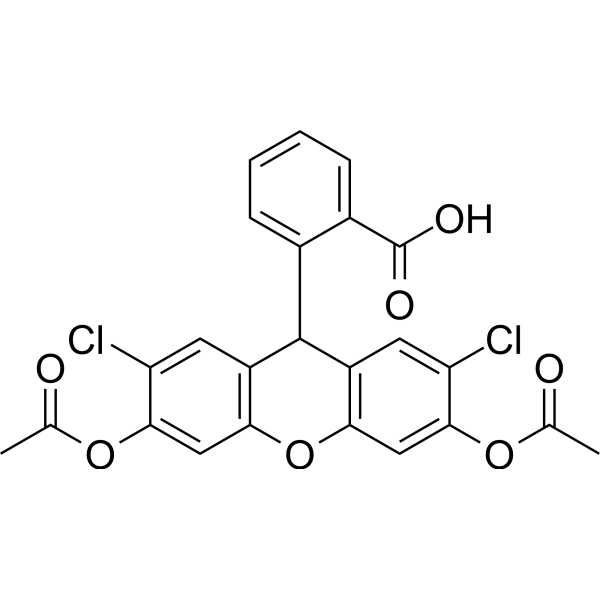
DCFH-DA; 2',7'-Dichlorodihydrofluorescein diacetate
|
Fluorescent Dye
Reactive Oxygen Species (ROS)
|
Others
|
|
H2DCFDA (DCFH-DA) is a cell-permeable probe used to detect intracellular reactive oxygen species (ROS) (Ex/Em=488/525 nm) .
|
-
- HY-100528AR
-
|
Nanchangmycin free acid (Standard)
|
Reference Standards
Bacterial
Antibiotic
Flavivirus
|
Infection
|
|
4-Methoxycinnamic acid (Standard) is the analytical standard of 4-Methoxycinnamic acid. This product is intended for research and analytical applications. 4-Methoxycinnamic acid is detected as natural phenylpropanoid in A. preissii.
|
-
- HY-P5990
-
|
|
PSMA
|
Cancer
|
|
Prostate Specific Antigen Substrate is a prostate specific antigen (PSA) fluorescent substrate. Prostate Specific Antigen Substrate can be used for detect enzymatic activity of PSA .
|
-
- HY-130013
-
|
|
Fluorescent Dye
|
Others
|
|
HKYellow-AM (6/12-mixture) is a yellow fluorescent probe that can detect ONOO- in living cells and tissues with high selectivity and sensitivity without cytotoxicity .
|
-
- HY-D1561
-
|
|
Fluorescent Dye
|
Others
|
|
FG 488 BAPTA-2 AM is a calcium-specific reporter dye. FG 488 BAPTA-2 AM can be used to detect calcium concentration.
|
-
- HY-114805
-
|
|
Insecticide
|
Others
|
|
Formothion is a compound used in agricultural production. Its residues can be detected in the environment after biomass burning, which is of great significance for studying the dynamic changes of pesticides in the environment.
|
-
- HY-W337201
-
|
|
Fluorescent Dye
|
Others
|
|
5-Bromo-4-chloro-3-indolyl β-D-cellobioside is a chromogenic compound used to detect cellobiohydrolases .
|
-
- HY-NP045
-
|
|
Biochemical Assay Reagents
|
Others
|
|
Protein A-RBITC is a biochemical reagent conjugated to fluorescein PE. Protein A-RBITC can be used to label or detect specific antigens, molecules or cellular structures .
|
-
- HY-W019781
-
|
Biotinyl-Sph
|
SphK
|
Metabolic Disease
|
|
Biotinylated sphingosine (Biotinyl-Sph) is a substrate of sphingosine kinase that can b used to detect the phosphorylation activity of sphingosine kinase 1 (SPHK1) and SPHK2 .
|
-
- HY-N1387R
-
-
- HY-153783
-
|
|
Fluorescent Dye
|
Others
Cancer
|
|
OBI is a Red Broccoli probe with red fluorescence. OBI enables Red Broccoli to be easily detected in living mammalian cells. OBI can be used to monitor intracellular metabolites .
|
-
- HY-W016188
-
|
|
Cholinesterase (ChE)
|
Others
|
|
1-Naphthyl acetate is an attractive chromogenic substrate for the detection of erythrocyte acetylcholinesterase (AChE) activity. 1-Naphthyl acetate has the potential to detect organophosphorus pesticide (OP) poisoning .
|
-
- HY-127049
-
|
|
Fluorescent Dye
|
Others
|
|
Arachidonic acid-Biotin is a biotin-labeled Arachidonic acid (HY-109590) that can be used to detect complexes of arachidonic acid with protein binding partners such as fatty acid binding proteins (FABPs) .
|
-
- HY-W248583
-
|
PM650
|
Fluorescent Dye
|
Others
|
|
Pyrromethene 650 (PM650) is a green-fluorescent polar tracer dye. It is used for investigations of membrane fusion, lysis, and gap-junctional communication and to detect volume changes in cells or liposomes.
|
-
- HY-W016188R
-
|
|
Reference Standards
Cholinesterase (ChE)
|
Others
|
|
1-Naphthyl acetate is an attractive chromogenic substrate for the detection of erythrocyte acetylcholinesterase (AChE) activity. 1-Naphthyl acetate has the potential to detect organophosphorus pesticide (OP) poisoning .
|
-
- HY-D1777
-
|
PM605
|
Fluorescent Dye
|
Others
|
|
Pyrromethene 605 (PM605) is a green-fluorescent polar tracer dye. It is used for investigations of membrane fusion, lysis, and gap-junctional communication and to detect volume changes in cells or liposomes.
|
-
- HY-126816
-
|
|
Endogenous Metabolite
|
Others
|
|
Atrazine mercapturate is a metabolite of herbicide Atrazine (HY-N7091), which is detectable in urinary excretion. Atrazine mercapturate serve as an unambiguous confirmation of human exposure to Atrazine .
|
-
- HY-151505
-
|
|
Fluorescent Dye
|
Others
|
|
CysOx2 is a reaction-based fluorogenic probe for sulfenic acid (Ex/Em: 394/535 nm). CysOx2 can be used for detecting protein cysteine oxidation in living cells .
|
-
- HY-W248118
-
|
PM556
|
Fluorescent Dye
|
Others
|
|
Pyrromethene 556 (PM556) is a green-fluorescent polar tracer dye. It is used for investigations of membrane fusion, lysis, and gap-junctional communication and to detect volume changes in cells or liposomes.
|
-
- HY-D1576
-
|
|
Fluorescent Dye
|
Others
|
|
C6 NBD L-threo-dihydroceramide is a dihydro-ceramide isomer labeled with a fluorescent group C6 nitrobenzoxadiazole (C6 NBD), can be used to detect ceramide.
|
-
- HY-W034953
-
|
|
Biochemical Assay Reagents
|
Others
|
|
Bathocuproine disulfonate disodium (BCS) is an organic compound used as a highly sensitive colorimetric reagent for copper ions in biochemical and analytical applications. It has a bright yellow color and absorbs light at specific wavelengths, so it can be used to detect and quantify trace copper. In biochemical applications, BCS is commonly used to study the role of copper ions in various biological processes. Copper is an essential nutrient for many organisms, but it can also be toxic in high concentrations, so accurate measurement of copper levels is important to understand its impact on living systems. In terms of analysis, BCS is often used in environmental monitoring and water quality testing to detect copper pollution. It can detect copper even at very low concentrations, making it an invaluable tool for identifying potential sources of pollution and assessing the impact of industrial activities on aquatic ecosystems.
|
-
- HY-168375
-
|
|
Fluorescent Dye
|
Metabolic Disease
|
|
BODIPY-Palmitate is a fluorescently labeled palmitic acid (HY-N0830), with excitation/emission maxima at 488/508 nm. BODIPY-Palmitate can be used to detect fatty acid uptake and metabolism .
|
-
- HY-130785
-
|
|
Fluorescent Dye
|
Others
|
|
LysoFP-NH2 is a lysosomal-targeted fluorescent probe with amino acid functionalized derivatives. LysoFP-NH2 can be used to detect lysosomal NO levels in living cells .
|
-
- HY-138653
-
|
DGGR; 1,2-o-Dilauryl-rac-glycero-3-glutaric acid (6′-methylresorufin) ester
|
Lipase
|
Metabolic Disease
|
|
Lipase Substrate is a chromogenic substrate of lipase to detect activity . It is used in colorimetric methods to measure lipase activity. It produces a red-purple compound, methylresorufin, upon digestion by the lipase enzyme.
|
-
- HY-175133
-
|
Biotin ceramide (t18:0/6:0)
|
Fluorescent Dye
|
Others
|
|
C6 Biotin phytoceramide (t18:0/6:0) is an affinity probe that allows C6 phytoceramide to be detected or immobilized through interaction with the biotin ligand .
|
-
- HY-W007708
-
|
|
Drug Derivative
|
Others
|
|
3-Furanmethanol, a volatile furan compound, can be detected in malt beverages fermented with Bifidobacterium breve. 3-Furanmethanol exhibits roasty, popcorn-like flavors .
|
-
- HY-W288676
-
|
|
Biochemical Assay Reagents
|
Others
|
|
6-Fluoro-3-indolyl-β-D-galactopyranoside is a chromogenic enzyme substrate commonly used in microbiology to detect the expression of β-galactosidase in bacterial colonies.
|
-
- HY-186102
-
|
|
Isocitrate Dehydrogenase (IDH)
|
Others
|
|
IDH1 ligand 1 (Compound 18) can serve as a negative control for the IDH1 target, with no detectable affinity for wild-type IDH1 and an IC50 >10,000 nM .
|
-
- HY-P2536
-
-
- HY-P3948
-
|
|
Fluorescent Dye
|
Others
|
|
Fluorescent Substrate for Pro-Specific Proteases is a fluorescent substrate of pro-specific proteases. Fluorescent Substrate for Pro-Specific Proteases can be used to detect the hydrolysis rate and activity of target enzyme .
|
-
- HY-W015060S1
-
|
|
Endogenous Metabolite
|
Others
|
|
2-(2-Methylbenzamido)acetic acid-d2 is the deuterium labeled 2-(2-Methylbenzamido)acetic acid. 2-(2-Methylbenzamido)acetic acid is a metabolite detected in urine.
|
-
- HY-131933
-
|
|
Fluorescent Dye
|
Others
|
|
DCP-Bio3 is a biotinylated probe that can detect labeled proteins in polyacrylamide gels. DCP-Bio3 can be used in research for the identification of oxidized and modified proteins .
|
-
- HY-149594
-
|
|
Pantetheinase
|
Metabolic Disease
|
|
CL-Pa is a chemiluminescent probe suitable for detection of urinary Vanin-1. CL-Pa can be used to detect drug-induced acute kidney injury (AKI) through urinalysis .
|
-
- HY-W015060S
-
|
|
Endogenous Metabolite
|
Others
|
|
2-(2-Methylbenzamido)acetic acid-d7 is the deuterium labeled 2-(2-Methylbenzamido)acetic acid. 2-(2-Methylbenzamido)acetic acid is a metabolite detected in urine.
|
-
- HY-112636
-
|
|
Amyloid-β
|
Others
|
|
Astrophloxine is a fluorescent imaging probe capable of targeting antiparallel dimers. Astrophloxine can be used to detect aggregated Aβ in brain tissue and cerebrospinal fluid samples of Alzheimer's disease (AD) mice .
|
-
- HY-W104868
-
|
|
Biochemical Assay Reagents
Ser/Thr Protease
|
Others
|
|
4-Iodobenzylamine hydrochloride ((4-Iodophenyl)methanamine hydrochloride) is a probe that can detect the binding patterns of serine proteases that are like trypsin, as well as urokinase-type plasminogen activator (uPA) .
|
-
- HY-133154
-
|
CAIR; 4-Carboxy-AIR
|
Endogenous Metabolite
|
Infection
|
|
Carboxyaminoimidazole ribotide (CAIR) is a metabolite of E. coli. Carboxyaminoimidazole ribotide can be used to detect distinctive features of E. coli PurE active site and synthesis fungal de novo purine .
|
-
- HY-N9573
-
|
|
Fungal
|
Infection
|
|
Zinniol is a penta-substituted benzene phytotoxin that can be produced by a variety of phytopathogenic fungi. Zinniol can be detected in sunflower tissues in the early stage of infection and may be involved in the occurrence of sunflower diseases .
|
-
- HY-106463
-
|
|
CXCR
|
Inflammation/Immunology
|
|
Hexaprofen is a 2-arylpropionic acid derivative. Hexaprofen inhibits CXCL8-induced chemotaxis, while no activity is detected against CXCL1-induced chemotaxis .
|
-
- HY-129109
-
|
|
Fluorescent Dye
|
Inflammation/Immunology
Cancer
|
|
NBD-Pen is the first fluorescence probe for lipid radicals with high selectivity and sensitivity (λex: 470 nm, λem: 530 nm). NBD-Pen specifically detects lipid derived radicals over other reactive species present in biological systems, including H2O2, ClO -, O2 -?, and ?OH. NBD-Pen directly detects lipid radicals in living cells by turn-on fluorescence. NBD-Pen decreases inflammation, apoptosis, and oxidative stress markers. NBD-Pen can be studied in various disease models such as hepatic carcinoma .
|
-
- HY-120972
-
|
|
Fluorescent Dye
|
Others
|
|
Pentafluorobenzenesulfonyl fluorescein is a H2O2-selective sensor that can be used to detect H2O2 levels in cells. Pentafluorobenzenesulfonyl fluorescein is generally non-fluorescent, but emits fluorescence when its sulfonyl bond undergoes perhydrolysis by H2O2 . Pentafluorobenzenesulfonyl fluorescein undergoes slight cleavage of its sulfonate ester bond by [Cu (phen)2] 2+, and can detect hydrogen peroxide around the ablation sites of fin tissues and keratinocytes in zebrafish larvae .
|
-
- HY-D0066
-
|
DCCH
|
Fluorescent Dye
|
Others
|
|
7-Diethylaminocoumarin-3-carbohydrazide is a coumarin. 7-Diethylaminocoumarin-3-carbohydrazide can be used to detect sugar chains and quantify biological carbonyl compounds .
|
-
- HY-136868
-
|
3-Phenoxazone 7-(β-D-glucopyranoside),98%
|
Biochemical Assay Reagents
|
Others
|
|
Resorufin-β-D-glucopyranoside, 98% (3-Phenoxazone 7-(β-D-glucopyranoside), 98%) can be used to detect and quantify β-glucosidase activity in various biological samples.
|
-
- HY-175147
-
-
- HY-179369
-
|
4-HTP
|
Drug Metabolite
|
Others
|
|
4-Hydroxytryptophol is an in vitro metabolite of psilocin, can be found in human liver microsomes and recombinant monoamine oxidase A systems. 4-Hydroxytryptophol is not detected in in vivo samples from mice or humans .
|
-
- HY-P5996
-
|
|
Fluorescent Dye
|
Others
|
|
MCA-Gly-Asp-Ala-Glu-pTyr-Ala-Ala-Lys(DNP)-Arg-NH2 is a protein tyrosine phosphatase fluorogenic substrate that can be detected at 393 nm (with excitation at 325 nm) .
|
-
- HY-123696
-
|
|
Fluorescent Dye
|
Others
|
|
CDy9 is a highly selective fluorescent probe. CDy9 can be used to detect mouse embryonic stem cells. ( λ exc. / λ em.:563 nm/578 nm) .
|
-
- HY-108537
-
|
|
Reactive Oxygen Species (ROS)
|
Inflammation/Immunology
|
|
L 012 sodium salt is a luminal-based chemiluminescent probe. L 012 sodium salt can detect NADPH oxidase (Nox)-derived superoxide and nitrogen species (reactive oxygen species (ROS) and reactive nitrogen species (RNS)) .
|
-
- HY-NP002E
-
|
|
Biochemical Assay Reagents
|
Others
|
|
Porcine Serum Albumin is a serum albumin protein that contains a flexible C-terminal region. Porcine Serum Albumin can serve both as a pork allergen and as a biomarker for detecting pork .
|
-
- HY-117871
-
|
C.I. 37530
|
β-glucuronidase
|
Metabolic Disease
|
|
Naphthol AS-OL (C.I. 37530) is a glucuronide taht can be used as a substrate of β-glucuronidase. Naphthol AS-OL can be used to detect β-glucuronidase activity .
|
-
- HY-W714180
-
|
|
Drug Metabolite
Drug Intermediate
|
Others
|
|
Desmethyl-formamido-pirimicarb is an intermediate metabolite of Pirimicarb (HY-119419). Desmethyl-formamido-pirimicarb is detected in both Pirimicarb-exposed soil environments and advanced oxidation water treatment processes .
|
-
- HY-156126
-
|
|
Others
|
Others
|
|
Lentztrehalose C (compound LTC) is a trehalose analogue with high stability in microbial and mammalian cells. It can be detected in the blood of mice and is ultimately excreted in feces and urine. It can induce autophagy in human cancer cells.
|
-
- HY-NP043
-
|
|
Fluorescent Dye
|
Others
|
|
Avidin-Cy3 is Cy3-labeled Avidin. Avidin has excellent affinity with biotin and is often used in combination with biotin for immunoassays to detect the location of antigens in tissues .
|
-
- HY-N17235
-
-
- HY-106567
-
|
|
Glucocorticoid Receptor
|
Inflammation/Immunology
|
|
Fluocortin butyl ester is a developed corticosteroid compound with no detectable systemic corticosteroid activity when it is used topically. Fluocortin butyl ester appears to be an effective well-tolerated topical steroid useful in the research of perennial rhinitis .
|
-
- HY-B1727
-
-
- HY-160240
-
|
|
Fluorescent Dye
|
Others
Cancer
|
|
HPI is a HS - fluorescent probe (Ex/Em=280/410 nm). HPI can be used to detect the HS - form of hydrogen sulfide (H2S) gas in environmental water samples .
|
-
- HY-121137
-
BMPO
1 Publications Verification
BocMPO
|
Reactive Oxygen Species (ROS)
|
Others
|
|
BMPO (BocMPO) is a cell-permeable superior spin trap with favorable chemical and spectroscopic features. BMPO (BocMPO) can be used for detecting thiyl radicals, hydroxyl radicals, superoxide anions and glutathiyl radicals .
|
-
- HY-122878
-
|
|
HSP
|
Cancer
|
HS-131, a near infrared dye tethered Hsp90 inhibitor, is able to detect oncogene-driven breast cancers, including multiple different molecular subtypes of human breast cancers .
|
-
- HY-115391
-
|
Boc-Leu-Arg-Arg-AMC
|
Biochemical Assay Reagents
|
Others
|
|
Boc-LRR-AMC (Boc-Leu-Arg-Arg-AMC) is a fluorogenic substrate, which can be utilized for detecting the trypsin-like activity of the 26S proteasome or the 20S proteasome core .
|
-
- HY-N15351
-
|
|
Fluorescent Dye
Endogenous Metabolite
|
Others
|
|
Flavokermesic acid is an anthraquinone dye that can be detected in extracts of insects from the family Diaspididae, and it is a minor pigment component thereof. Flavokermesic acid can be used to investigate the biosynthetic pathways of insect-derived anthraquinone pigments .
|
-
- HY-P10005
-
-
- HY-176085
-
|
|
Phospholipase
|
Others
|
|
Heptanoyl thio-PC is a sn-2 thiol-labeled Phospholipase A2 (HY-P3029) (PLA2) substrate that can be used to detect the activity of Phospholipase A2 .
|
-
- HY-139579
-
|
OTL 38
|
Fluorescent Dye
|
Cancer
|
|
Pafolacianine (OTL 38) is a fluorescent imaging agent made of near-infrared dye used in detecting tumor lesions during surgical procedures. Pafolacianine excites at 774 to 775 nm and emits at 794 to 796 nm .
|
-
- HY-W007894R
-
|
Dimethylpropanedioic acid (Standard)
|
Reference Standards
Endogenous Metabolite
|
Others
|
|
Dimethylmalonic acid (Standard) is the analytical standard of Dimethylmalonic acid. This product is intended for research and analytical applications. Dimethylmalonic acid is a short-chain dicarboxylic acid in human serum. Dimethylmalonic acid is also a volatile organic compound detected in alveolar breath[1].
|
-
- HY-N13079
-
|
|
Others
|
Others
|
|
3-Epicinobufagin (compound IX) can be used as an internal standard for the metabolism of Bufalin (HY-N0877), by detecting its content in serum and urine to provide feedback on the corresponding metabolic status .
|
-
- HY-N16309
-
|
|
Fluorescent Dye
|
Others
|
|
Cyanine 7 free acid bromide is a near-infrared fluorescent probe for labelling amine groups such as those on antibodies, nucleic acids, and proteins and can be detected using a variety of fluorescence detection techniques such as microscopy and flow cytometry.
|
-
- HY-P10005A
-
-
- HY-W140897
-
|
|
Bacterial
|
Infection
|
|
N6-Benzoyl-2'-deoxyadenosine monohydrate is a nucleoside analog that is used in the diagnosis of infections caused by bacteria by binding to DNA duplexes and altering their structure, which can be detected using electrophoresis.
|
-
- HY-121029
-
|
KRP-104
|
Histone Methyltransferase
|
Metabolic Disease
|
|
Bisegliptin (KRP-104) is a small molecule compound with antidiabetic activity. Bisegliptin is metabolized mainly by converting the cyano group to the carboxylic acid form, and DPP-4 plays a partial role in its metabolism. The carboxylic acid metabolite of bisegliptin can be detected both in vivo and in vitro. In rat experiments, the plasma concentration of the carboxylic acid metabolite of bisegliptin was affected by other DPP inhibitors, showing the complexity of its metabolic process. The amide intermediate of bisegliptin was detected both in vivo and in vitro, and its conversion rate was significantly faster than that of the parent compound when incubated with DPP-4 .
|
-
- HY-D0938
-
|
CFSE; 5(6)-Carboxyfluorescein diacetate succinimidyl ester; 5(6)-CFDA N-succinmidyl ester
|
Fluorescent Dye
|
Others
|
|
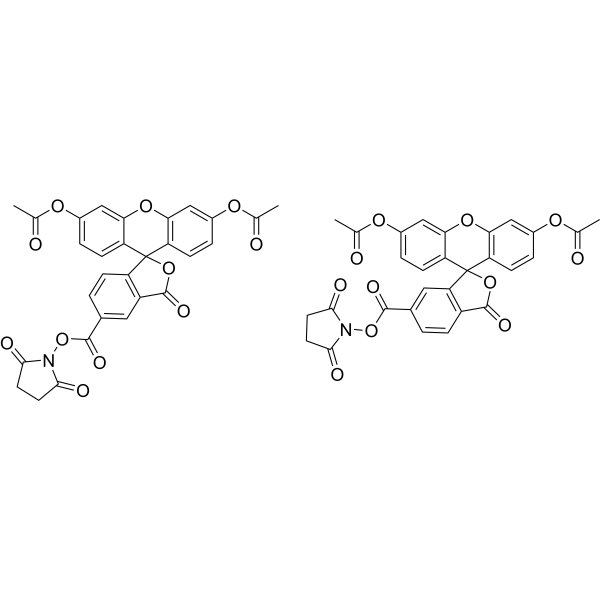
CFDA-SE is a fluorescent dye that can penetrate the cell membrane. It can react with the free amine group in the cytoskeleton protein inside the cell, and finally form a protein complex with fluorescence. After entering the cell, CFDA-SE locates in the cell membrane, cytoplasm and nucleus, and the fluorescence staining is strongest in the nucleus .
CFDA-SE dye can be uniformly inherited by the cells with cell division and proliferation, and its attenuation is proportional to the number of cell divisions. This phenomenon can be detected and analyzed by flow cytometry under the excitation light of 488 nm, and can be used to detect the proliferation of cells .
|
-
- HY-165127
-
|
(+)-Octopinic acid
|
Others
|
Others
|
|
Octopinic acid ((+)-Octopinic acid) is a biomarker (opine) for plant crown gall or hairy root disease detected by ultra-performance liquid chromatography-electrospray ionization quadrupole time-of-flight mass spectrometry with activity useful for disease diagnosis and analysis.
|
-
- HY-174962B
-
|
|
Biochemical Assay Reagents
|
Others
|
|
mPEG5000-Biotin is a biotin-conjugated PEG derivative used for biotinylation of biomolecules or other surfaces. Biotin can be detected by biotin/streptavidin binding assays and is widely used for molecular target detection .
|
-
- HY-174962A
-
|
|
Biochemical Assay Reagents
|
Others
|
|
mPEG2000-Biotin is a biotin-conjugated PEG derivative used for biotinylation of biomolecules or other surfaces. Biotin can be detected by biotin/streptavidin binding assays and is widely used for molecular target detection .
|
-
- HY-P2091
-
|
|
Caspase
|
Inflammation/Immunology
|
|
Ac-YVAD-pNA is a specific Caspase-1 substrate. Ac-YVAD-pNA can be used to detect Caspase-1 activity. Caspase-1 is a key mediator of inflammatory processes .
|
-
- HY-P0239
-
HA Peptide
Maximum Cited Publications
15 Publications Verification
|
Influenza Virus
|
Inflammation/Immunology
|
|
HA Peptide (HA tag) is a nine amino acids peptide derived from the human influenza hemagglutinin (HA). HA Peptide is extensively used to isolate, purify, detect, and track the protein of interest in cell biology and biochemistry.
|
-
- HY-P10606
-
|
|
Biochemical Assay Reagents
|
Others
|
|
CK1tide is a substrate for casein kinase 1 (CK1) and can be used to assess CK1's in vitro catalytic activity by detecting whether CK1 can phosphorylate it .
|
-
- HY-D0913
-
|
1M7
|
Fluorescent Dye
|
Others
|
|
1-Methyl-7-nitroisatoic anhydride (1M7) is a reagent that detects local nucleotide flexibility, for probing 2'-hydroxyl reactivity, can be used for RNA structure analysis .
|
-
- HY-E70559
-
|
|
PGE synthase
|
Cardiovascular Disease
Cancer
|
|
Prostaglandin D synthase is a biomarker for meningioma cells and coronary artery disease. Lipocalin-type Prostaglandin D synthase (L-PGDS) is present in the atherosclerotic plaque of the human coronary artery and can be detectable in human serum .
|
-
- HY-W550907
-
|
|
Biochemical Assay Reagents
|
Others
|
|
5-Bromo-4-chloro-3-indolyl-α-D-maltotrioside is an enzyme substrate with chemiluminescent properties. It is used in diagnostic assays to detect bacterial and fungal infections and other diseases.
|
-
- HY-165081
-
|
N-(2-Hydroxyethyl)-13Z-docosenamide
|
Biochemical Assay Reagents
|
Others
|
|
Docosaenoyl ethanolamide (N-(2-Hydroxyethyl)-13Z-docosenamide) is one of a fatty N-acyl ethanolamines. Ethanolamines can be detected at relatively high levels in rat cerebrospinal fluid .
|
-
- HY-W728163
-
-
- HY-W142402
-
|
|
Biochemical Assay Reagents
|
Others
|
|
cis-Aconitic anhydride, in the presence of acetic anhydride, can be used to detect and determine aliphatic tert-amines and alkaloids. Cis-aconitine anhydride reacts with aliphatic tertiary amines in alcoholic solution to form a yellow color .
|
-
- HY-P10454
-
|
(Z-Ile-Glu-Thr-Asp)2-R110
|
Caspase
|
Others
|
|
(Z-IETD)2-Rh 110 is a fluorescent substrate of caspase-8 (λex= 488 nm, λem= 523 nm), which can be used to detect the activity of caspase-8 and the process of apoptosis .
|
-
- HY-NP005
-
|
|
Biochemical Assay Reagents
|
Inflammation/Immunology
|
|
Avidin, chicken egg white is a glycoprotein derived from egg protein. Avidin, chicken egg white has excellent affinity with biotin and is often used in combination with biotin for immunoassays to detect the location of antigens in tissues .
|
-
- HY-N2327R
-
|
|
Reference Standards
Endogenous Metabolite
|
Others
|
|
Oleamide (Standard) is the analytical standard of Oleamide. This product is intended for research and analytical applications. Oleamide is an endogenous fatty acid amide which can be synthesized de novo in the mammalian nervous system, and has been detected in human plasma.
|
-
- HY-174962
-
|
|
Biochemical Assay Reagents
|
Others
|
|
mPEG1000-Biotin is a biotin-conjugated PEG derivative used for biotinylation of biomolecules or other surfaces. Biotin can be detected by biotin/streptavidin binding assays and is widely used for molecular target detection .
|
-
- HY-D1579
-
|
|
Fluorescent Dye
|
Others
|
|
C12 NBD galactosylceramide is a biologically active derivative of galactosylceramide that is tagged with a fluorescent C12 nitrobenzoxadiazole (C12 NBD) group. C12 NBD galactosylceramide has been used to detect ceramide trihexoside .
|
-
- HY-137845
-
|
|
Fluorescent Dye
|
Others
|
|
4-Methylumbelliferyl β-D-galactopyranoside is a fluorescent substrate for β-galactosidase which, when cleaved, produces a water-soluble blue fluorescent coumarin fluorophore that can be detected using a fluoroenzymeter or fluorometer .
|
-
- HY-113870
-
|
|
Fluorescent Dye
|
Others
|
|
6-NBDG is a fluorescent glucose analogue, it can be used for fluorescence imaging and monitoring glucose transport and uptake. 6-NBDG can be used as a fluorescent probe for detecting macrophage-rich atherosclerotic plaques .
|
-
- HY-D1627
-
|
CM-DiI
|
Fluorescent Dye
|
Others
|
|
CellTracker CM-DiI (CM-DiI) is a lipophilic fluorochrome that can be used for tracking the migration of lymphocytes. CellTracker CM-DiI is feasible to detect labeled cells in histological sections (excitation 553 nm; emission 570 nm) .
|
-
- HY-P3430
-
|
|
Biochemical Assay Reagents
|
Cancer
|
|
JM3A is a highly specific peptoid reagent that targets newly appears cell surface vimentin (CSV) on tumor-transformed early lung cancer cells. JM3A can detect and stain CSV by coupling with fluorophores .
|
-
- HY-W292085
-
|
|
Biochemical Assay Reagents
|
Others
|
|
6-Chloro-1H-indol-3-yl β-D-glucopyranoside can be used to detect chromogenic medium for studying yeast with β-glucosidase activity .
|
-
- HY-168322
-
|
|
Fluorescent Dye
|
Others
|
|
2-Hydroxy nile red trifluoromethanesulfonate is a fluorescent probe, that enters into oligodeoxyribonucleic acid as a nucleotide replacement. 2-Hydroxy nile red trifluoromethanesulfonate can be used as a DNA probe for detecting the polar changes in tumor microenvironments .
|
-
- HY-P3764
-
|
|
PKC
|
Others
|
|
Protein kinase C substrate is a substrate of Protein kinase C, can be used to detect protein. Protein kinase C is a key regulatory element in signal transduction and exerts its effects by catalysing specific substrate phosphorylation .
|
-
- HY-163290
-
|
|
Fluorescent Dye
Monoamine Oxidase
|
Cancer
|
|
HDAC-MB a probe that is activated by HDAC6 and can detect and eliminate glioma cells through activation by HDAC6. HDAC-MB reveals antimetastatic and antiproliferative properties, inhibits glioma invasion and induces cellular apoptosis .
|
-
- HY-136886
-
IR-820
2 Publications Verification
New Indocyanine Green
|
Fluorescent Dye
|
Cancer
|
|
IR-820 (New Indocyanine Green) is an infrared blood pool contrast agent. IR-820 also is normally used as a laser and near-infrared dye to detect and quantify diseased tissue in live animals .
|
-
- HY-W707394
-
-
- HY-P2528
-
|
|
Fluorescent Dye
|
Others
|
|
Enhanced Green Fluorescent Protein (EGFP) (200-208) is a marker gene product derived from the jellyfish Aequorea Victoria. Enhanced Green Fluorescent Protein (EGFP) (200-208) is a common reporter protein and is easy to detect .
|
-
- HY-D1265
-
|
HClO-green
|
Fluorescent Dye
|
Others
|
|
EtS-DMAB (HClO-green) is a fluorescent probe, which can selectively detect hypochlorous acid (HOCl) (λex=440 nm, λem=610 nm). EtS-DMAB is applied to image exogenous and endogenous HOCl in live cells .
|
-
- HY-162381
-
|
|
Topoisomerase
|
Cancer
|
|
Topoisomerase II inhibitor 19 (compound 5h) is a DNA intercalator and topoisomerase II inhibitor (IC50 value of 0.34 μM). Topoisomerase II inhibitor 19 would induce detectable potent damage in ctDNA .
|
-
- HY-DY1009
-
|
|
Fluorescent Dye
|
Others
|
CFDA-SE (solution) is a fluorescent dye that can penetrate the cell membrane. It can react with the free amine group in the cytoskeleton protein inside the cell, and finally form a protein complex with fluorescence. After entering the cell, CFDA-SE locates in the cell membrane, cytoplasm and nucleus, and the fluorescence staining is strongest in the nucleus . CFDA-SE dye can be uniformly inherited by the cells with cell division and proliferation, and its attenuation is proportional to the number of cell divisions. This phenomenon can be detected and analyzed by flow cytometry under the excitation light of 488 nm, and can be used to detect the proliferation of cells . Solvent and concentration: DMSO: 5 mM
|
-
- HY-15534
-
|
CBIC2
|
Fluorescent Dye
|
Others
|
|
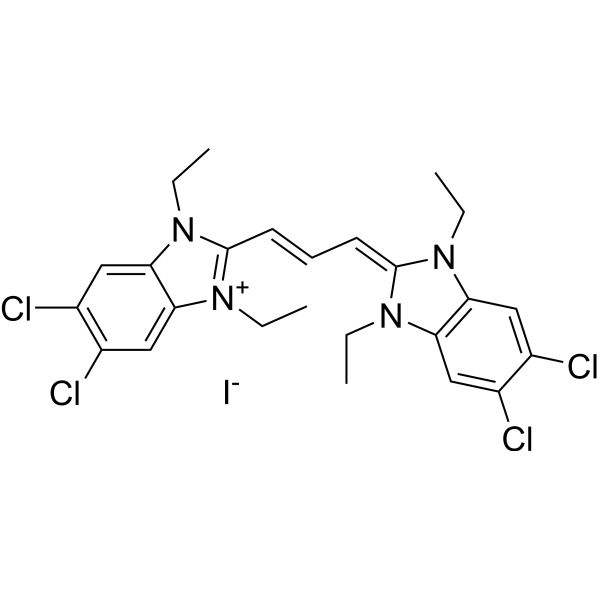
JC-1 (CBIC2) is an ideal fluorescent probe widely used to detect mitochondrial membrane potential. JC-1 accumulates in mitochondria in a potential dependent manner and can be used to detect the membrane potential of cells, tissues or purified mitochondria. In normal mitochondria, JC-1 aggregates in the mitochondrial matrix to form a polymer, which emits strong red fluorescence (Ex=585 nm, Em=590 nm); When the mitochondrial membrane potential is low, JC-1 cannot aggregate in the matrix of mitochondria and produce green fluorescence (ex=510 nm, em= 527 nm) .
|
-
- HY-145689
-
|
|
PI5P4K
|
Others
|
|
PI5P4Ks-IN-1 (compound 7) is an active compound with no detectable inhibition of the PI5P4K α or β isoforms .
|
-
- HY-P3364A
-
|
|
Fluorescent Dye
Sirtuin
HDAC
|
Others
|
|
Ac-QPKK(Ac)-AMC acetate is a p53-derived peptide conjugated with a fluorophore, which serves as a fluorescent peptide substrate for detecting the deacylase activity of zinc-dependent HDACs and sirtuins (Ex = 360 nm; Em = 460 nm) .
|
-
- HY-138933
-
|
|
Endogenous Metabolite
|
|
|
(±)-Geosmin is a natural organic compound with biological activity that causes earthy aroma. (±)-Geosmin plays an important role in microbial metabolism and is commonly used as a fragrance in food and air. (±)-Geosmin has also been studied for detecting soil and water pollution.
|
-
- HY-P0320B
-
|
|
Phosphatase
Biochemical Assay Reagents
|
Others
|
|
EGF Receptor Substrate 2 (Phospho-Tyr5) acetate, a biologically active peptide, is a tyrosine phosphate substrate. EGF Receptor Substrate 2 (Phospho-Tyr5) acetate can be used to detect protein tyrosine phosphatases activity .
|
-
- HY-108712R
-
|
Tris(1,3-dichloroisopropyl)phosphate (Standard)
|
Biochemical Assay Reagents
Reference Standards
|
Cancer
|
|
TDCPP (Standard) is the analytical standard of TDCPP. This product is intended for research and analytical applications. TDCPP is a chlorinated analog of tris(2,3-dibromopropyl)phosphate (Tris) which is one of the most detected organophosphorus flame retardants (OPFRs) in the environment.
|
-
- HY-W012278
-
|
Tetraphene
|
Environmental Pollutants
Aryl Hydrocarbon Receptor
|
Others
|
|
Benz[a]anthracene (Tetraphene) (Compound 92) is a ligand for the aryl hydrocarbon receptor (AhR) with a pIC50 of 7.319. Benz[a]anthracene is a polycyclic aromatic hydrocarbon (PAH) that can be detected in spruce needles near aluminum smelters .
|
-
- HY-D2996
-
|
|
Fluorescent Dye
NO Synthase
|
Others
|
|
BOD-NH-SC is a dual-response fluorescent reporter molecule exhibiting activatable NIR II fluorescence, with a primary absorption peak at 664 nm. BOD-NH-SC detects the dynamic alternation of NO and H2S in living cells .
|
-
- HY-D2965
-
|
SPG1
|
Fluorescent Dye
|
Others
|
|
SNAP-Peroxy-Green-1 (SPG1) a SNAP tag fluorescent probe. SNAP-Peroxy-Green-1 can be used for detecting H2O2 in the extracellular space or on the surface of the cell membrane .
|
-
- HY-P0320
-
|
|
Phosphatase
|
Others
|
|
EGF Receptor Substrate 2 (Phospho-Tyr5) acetate, a biologically active peptide, is a tyrosine phosphate substrate. EGF Receptor Substrate 2 (Phospho-Tyr5) acetate can be used to detect protein tyrosine phosphatases activity .
|
-
- HY-172605
-
|
|
Steroid Sulfatase
|
Cancer
|
|
Steroid sulfatase-IN-9 (compound 54E) is a steroid sulfatase (STS) inhibitor with the inhibition rates of 87.03% at 10 μM. Steroid sulfatase-IN-9 shows no detectable toxic effects in zebrafish larvae model .
|
-
- HY-113457
-
-
- HY-118315
-
L-012
2 Publications Verification
|
Fluorescent Dye
|
Inflammation/Immunology
|
|
L-012 is a luminal-based chemiluminescent probe. L-012 sodium salt can detect NADPH oxidase (Nox)-derived superoxide and nitrogen species (reactive oxygen species (ROS) and reactive nitrogen species (RNS)) .
|
-
- HY-P0320A
-
|
|
Phosphatase
Biochemical Assay Reagents
|
Others
|
|
EGF Receptor Substrate 2 (Phospho-Tyr5) acetate, a biologically active peptide, is a tyrosine phosphate substrate. EGF Receptor Substrate 2 (Phospho-Tyr5) acetate can be used to detect protein tyrosine phosphatases activity .
|
-
- HY-D0097
-
|
|
Fluorescent Dye
|
Others
|
|
7-Fluorobenzofurazan-4-sulfonic acid ammonium is a fluorescent label. 7-Fluorobenzofurazan-4-sulfonic acid ammonium can be used for detecting dissolved thiol-disulfide (e.g., Cys, GSH) .
|
-
- HY-118213
-
|
|
Fluorescent Dye
|
Others
|
|
N-(2-Hydroxyethyl)-1,8-naphthalimide is a fluorescent probe for detecting nucleic acids and their precursors. The fluorescence of N-(2-Hydroxyethyl)-1,8-naphthalimide will be quenched by these molecules.
|
-
- HY-161006
-
|
|
Biochemical Assay Reagents
|
Inflammation/Immunology
|
|
TETS-C4-acid (Compound 2d) is a hapten coupled directly to a carrier protein through a carboxylic acid functionality. TETS-C4-acid (Compound 2d) can be used to detect tetramethylenedisulfotetramine (TETS) .
|
-
- HY-NP058
-
|
OVA-AF594
|
Biochemical Assay Reagents
|
Others
|
|
Ovalbumin-AF594 is a biochemical reagent conjugated to fluorescein AF594 (Ex=590 nm; Em=617 nm). Ovalbumin-AF594 can be used to label or detect specific antigens, molecules or cellular structures .
|
-
- HY-D1435
-
|
|
Na+/K+ ATPase
Fluorescent Dye
|
Metabolic Disease
|
|
Oxonol VI is an optical indicator of membrane potential in lipid vesicles (excitation/emission wavelengths: 614/646 nm). Oxonol VI can be used to detect changes in membrane potential associated with (Na + + K +)-ATPase activity in reconstituted vesicles .
|
-
- HY-W013964
-
|
(4-Iodophenyl)methanamine
|
Biochemical Assay Reagents
|
Others
|
|
4-Iodobenzylamine ((4-Iodophenyl)methanamine) is a probe that can detect the binding patterns of serine proteases that are like trypsin, as well as urokinase-type plasminogen activator (uPA). 4-Iodobenzylamine is stable in aqueous solution .
|
-
- HY-D2985
-
|
|
Mitochondrial Metabolism
Fluorescent Dye
|
Others
|
|
MI-BP-CC is a mitochondrial-targeting near-infrared fluorescent probe. MI-BP-CC can specifically localize in the mitochondria of living cells. MI-BP-CC visualizes viscosity with an emission wavelength of 722 nm for detecting mitochondrial viscosity .
|
-
- HY-W1123937A
-
|
|
Biochemical Assay Reagents
|
Others
|
|
Biotin-PEG2000-CHO is a biotin-conjugated PEG derivative that can be used to biotinylate biomolecules or other surfaces. Biotin can be easily detected by biotin/streptavidin binding assay and is widely used in molecular targeted detection .
|
-
- HY-124013
-
|
4-(α-N-L-alanine)-NBD
|
Fluorescent Dye
|
Others
|
|
NBDA (4-(α-N-L-alanine)-NBD) is a structural and functional analogue of the 2,4-dinitrophenyl group (DNP). NBDA can be used to detect and characterize antinitroaromatic antibodies, even in crude preparations, and possibly on cell surfaces .
|
-
- HY-W1123937B
-
|
|
Biochemical Assay Reagents
|
Others
|
|
Biotin-PEG3400-CHO is a biotin-conjugated PEG derivative that can be used to biotinylate biomolecules or other surfaces. Biotin can be easily detected by biotin/streptavidin binding assay and is widely used in molecular targeted detection .
|
-
- HY-W293502
-
|
2-Chloro-4-nitrophenyl-beta-D-galactopyranoside
|
Biochemical Assay Reagents
|
Others
|
|
2-Chloro-4-nitrophenyl-β-D-galactopyranoside is a chromogenic substrate used for testing enzyme activity. It is commonly used in molecular biology research to detect and measure the activity of β-galactosidase (biosynth: EC03318).
|
-
- HY-139579A
-
|
OTL 38 tetrasodium
|
Fluorescent Dye
|
Cancer
|
|
Pafolacianine tetrasodium (OTL 38 tetrasodium) is a fluorescent imaging agent made of near-infrared dye used in detecting tumor lesions during surgical procedures. Pafolacianine tetrasodium excites at 774 to 775 nm and emits at 794 to 796 nm .
|
-
- HY-129903R
-
|
|
Drug Metabolite
Reference Standards
|
Others
|
|
N-Desethyl vardenafil (Standard) is the analytical standard of N-Desethyl vardenafil. This product is intended for research and analytical applications. N-Desethyl vardenafil is the major metabolite of Vardenafil (HY-B0442) and can be detected in human urine .
|
-
- HY-D2952
-
|
|
Fluorescent Dye
|
Others
|
|
BOCA-1-BG is a BODIPY-labeled SNAP tag fluorescence probe. BOCA-1-BG can be used to detect Ca 2+ concentration and serves as a highly sensitive Ca 2+ fluorescent indicator .
|
-
- HY-P1986
-
|
|
Caspase
|
Cancer
|
|
Z-DEVD-AFC is a cell-permeant substrate for caspase-3, which causes a shift in fluorescence uponcleavage of the AFC fluorophore. Z-DEVD-AFC can be used to detect caspase-3-like enzymes activity .
|
-
- HY-D1693
-
|
|
Fluorescent Dye
|
Inflammation/Immunology
Cancer
|
|
FBBBE is used to detect the production of H2O2 by cells. FBBBE can be triggered by intracellular H2O2 and converted to fluorescein, resulting in an increase in intracellular fluorescence (Ex=4480 nm, Em=512 nm) .
|
-
- HY-D2775
-
|
|
Fluorescent Dye
|
Others
|
|
Cobalt(II) ions probe 1 (Compound L) is a fluorescent sensor for Co 2+ detecting in biological environments. Cobalt(II) ions probe 1 can selectively bind with Co 2+ in the presence of other metal ions (Ex: 380 nm) .
|
-
- HY-P10027A
-
|
|
Antibiotic
Bacterial
|
Infection
|
|
Clovibactin TFA is the TFA salt form of Clovibactin (HY-P10027). Clovibactin TFA is an antibiotic for drug-resistant bacterial pathogens without detectable resistance. Clovibactin TFA inihibits cell wall synthesis by targeting pyrophosphate of peptidoglycan precursors .
|
-
- HY-P3364
-
|
|
Fluorescent Dye
Sirtuin
HDAC
|
Others
|
|
Ac-QPKK(Ac)-AMC is a p53-derived peptide conjugated with a fluorophore, which serves as a fluorescent peptide substrate for detecting the deacylase activity of zinc-dependent HDACs and sirtuins (Ex = 360 nm; Em = 460 nm) .
|
-
- HY-W1123937
-
|
|
Biochemical Assay Reagents
|
Others
|
|
Biotin-PEG1000-CHO is a biotin-conjugated PEG derivative that can be used to biotinylate biomolecules or other surfaces. Biotin can be easily detected by biotin/streptavidin binding assay and is widely used in molecular targeted detection .
|
-
- HY-DY1003
-
|
|
Fluorescent Dye
|
Others
|
JC-1 (CBIC2) (solution) is an ideal fluorescent probe widely used to detect mitochondrial membrane potential. JC-1 accumulates in mitochondria in a potential dependent manner and can be used to detect the membrane potential of cells, tissues or purified mitochondria. In normal mitochondria, JC-1 aggregates in the mitochondrial matrix to form a polymer, which emits strong red fluorescence (Ex=585 nm, Em=590 nm) ; When the mitochondrial membrane potential is low, JC-1 cannot aggregate in the matrix of mitochondria and produce green fluorescence (ex=510 nm, em= 527 nm) . Solvent and concentration: DMSO: 1.5 mM
|
-
- HY-D3000
-
|
|
Fluorescent Dye
|
Metabolic Disease
|
|
NIR-RED ROS-H2O2 Probe is a near-infrared fluorescent probe used for detecting hydrogen peroxide (H₂O₂) and featuring dual-modal fluorescence/photoacoustic imaging capabilities. NIR-RED ROS-H2O2 Probe successfully detects the upregulated fluorescence signal of H₂O₂ in HepG2 cells and a mouse liver injury model. NIR-RED ROS-H2O2 Probe can be used as a biomarker detection tool for drug-induced liver injury (DILI) .
|
-
- HY-NP041
-
|
BSA-PE
|
Biochemical Assay Reagents
|
Others
|
|
Bovine Serum Albumin-PE (BSA-PE) is a biochemical reagent conjugated to fluorescein PE (Ex=565 nm; Em=578 nm). Bovine Serum Albumin-PE can be used to label or detect specific antigens, molecules or cellular structures .
|
-
- HY-132250
-
|
|
Drug-Linker Conjugates for ADC
|
Cancer
|
|
MCC-DM1 is a agent-Linker Conjugates for ADC such as Anti-CD22-MCC-DM1. MCC-DM1 can be detected in rat and human plasma, feces, and other tissues .
|
-
- HY-P10468
-
|
|
ADAMTS
|
Others
|
|
5-FAM-TEGEARGSVILLK(5-TAMRA)K-NH2 is a substrate for ADAMTS-4/ADAMTS-5, and can be used to detect ADAMTS-4 or ADAMTS-5 activity .
|
-
- HY-W568087
-
|
|
Phospholipase
|
Others
|
|
5-Bromo-4-chloro-3-indoxyl myo-inositol-1-phosphate ammonium is a chromogenic substrate that can be used to detect the activity of phosphatidylinositol-specific phospholipase C (PI-PLC) .
|
-
- HY-NP051
-
|
|
Biochemical Assay Reagents
|
Others
|
|
Bovine Serum Albumin-FITC is a bovine Serum albumin conjugated to FITC (Ex=495 nm; Em=525 nm). Bovine Serum Albumin-FITC can be used as a fluorescent marker to label or detect specific antigens, molecules or cellular structures .
|
-
- HY-N15629
-
|
NSC 402921
|
Biochemical Assay Reagents
|
Others
|
|
Melicopicine (NSC 402921) (Compound 2) is an acridone alkaloid. Melicopicine is a 1,2,3,4-tetraoxygenated acridone precursor, which can be co-isolated from S. megistophylla and detected by GC-MS in the extract from S. follicularis .
|
-
- HY-164766
-
|
|
Fluorescent Dye
|
Infection
|
|
ICG-DBCO-1-Maltotriose is a specific imaging agent for detecting bacterial infections. ICG-DBCO-1-Maltotriose is composed of the fluorescent dye Indocyanine green (ICG) (HY-D0711) and a maltotriose sugar .
|
-
- HY-P4937
-
|
|
MMP
|
Cancer
|
|
NBD-Arg-Pro-Lys-Pro-Leu-Ala-Nva-Trp-Lys-(DMC)-NH2 is an substrate for hydrolysis of the matrix metalloproteinase stromelysin (MMP-3) and can be easily detected at Abs/Em=350/465 nm .
|
-
- HY-168280
-
|
|
Ligands for E3 Ligase
|
Cancer
|
|
AS1411-C4-VH032 (AS1411-VH032) promotes tumor-selective degradation of MDM2, leading to tumor shrinkage without detectable toxicity .
|
-
- HY-P2480
-
|
|
CDK
|
Others
|
|
Histone H1-derived Peptide is a phosphopeptide and the peptide substrates containes a sequence in accordance with the optimal recognition motif for CDK, can be used to detecting CDK1-cyclinB1 enzyme activity .
|
-
- HY-136456S
-
|
|
Isotope-Labeled Compounds
|
Others
|
|
2-NP-AMOZ-d5 is deuterium labeled 2-NP-AMOZ. 2-NP-AMOZ is a 2-nitrophenyl derivative of AMOZ (a metabolite of antibiotic Furaltadone), can be used to detect protein bound AMOZ .
|
-
- HY-W751672
-
|
hm5Cm
|
Nucleoside Antimetabolite/Analog
|
Others
|
|
2′-O-Methyl-5-hydromethylcytidine (hm5Cm) is a 5-hydroxymethylcytidine (HY-152854) derivative. 2′-O-Methyl-5-hydromethylcytidine has also been detected in tRNA .
|
-
- HY-126943
-
|
|
Fluorescent Dye
|
Others
|
|
SAHA-BPyne is an activity-based protein profiling (ABPP) probe for detecting HDAC activity, which covalently labels the proximal proteins through a photoactivation. SAHA-BPyne inhibits HDAC activity in HeLa nuclear lysate with an IC50 of less than 5 μM .
|
-
- HY-126793
-
|
DCFH2-DA
|
Fluorescent Dye
Reactive Oxygen Species (ROS)
|
Others
|
|
2′,7′-Dichlorofluorescein diacetate (DCFH2-DA) is a cell-permeable fluorescent probe. 2′,7′-Dichlorofluorescein diacetate can be used to detect the generation of reactive oxygen intermediates and for assessing the overall oxidative stress in toxicological phenomenon .
|
-
- HY-115358
-
|
Tetracosanoic acid monoethanolamide
|
Endogenous Metabolite
|
Metabolic Disease
|
|
Lignoceroyl ethanolamide is a member of the family of fatty N-acyl ethanolamines collectively called endocannabinoids. Whereas lignoceric acid has been detected at relatively high levels in rat cerebrospinal fluid, the specific role and relative importance of its ethanolamine metabolite have not been determined.
|
-
- HY-W013435
-
|
|
Fluorescent Dye
|
Others
|
|
1,2-Diaminoanthraquinone is a sensitivity, specificity and nontoxic nitric oxide (NO) fluorescent probe. 1,2-Diaminoanthraquinone can be used to detect NO productions in live cell and animals with a maximum of absorption at about 540 nm and a detection limit of 5 μM for NO .
|
-
- HY-P10398
-
|
|
ADAMTS
|
Others
|
|
5-FAM-TEGEARGSVILLK(5-TAMRA)K-NH2 TFA is a substrate for ADAMTS-4/ADAMTS-5, and can be used to detect ADAMTS-4 or ADAMTS-5 activity .
|
-
- HY-D1509
-
|
|
Fluorescent Dye
|
Others
|
|
Phenazine ethosulfate is a cationic dye (Ex=390 nm, Em=530 nm) and an electron acceptor that can be used in dye-linked enzyme assays. Phenazine ethosulfate is an intermediate for detecting nitric oxide reducatase (Nors) activity with the presence of ascorbic acid .
|
-
- HY-W1123937C
-
|
|
Biochemical Assay Reagents
|
Others
|
|
Biotin-PEG-CHO (with a molecular weight of 5000) is a biotin-attached PEG derivative that can be used for biotinylation of biological molecules or other material surfaces. Biotin can be easily detected through the biotin/streptavidin binding test, and is widely used in molecular targeted detection.
|
-
- HY-NP078A
-
|
PSA (FITC)
|
Biochemical Assay Reagents
CD3
|
Inflammation/Immunology
Endocrinology
|
|
Pisum sativum Agglutinin (PSA) FITC is a plant lectin conjugated with FITC (HY-66019). Pisum sativum Agglutinin FITC serves as an acrosome stain for detecting the acrosomal status of sperm. Pisum sativum Agglutinin exhibits lymphocyte mitogenic and immunomodulatory activities .
|
-
- HY-D0953
-
|
Solvent Blue 38
|
Environmental Pollutants
Fluorescent Dye
|
Neurological Disease
|
|
Direct Blue 86 (Solvent Blue 38) is a myelin-sheath stain, commonly utilized in microscopy to detect demyelination in the central nervous system. Direct Blue 86 also is a dye with various applications including as a commercial dye in the printing of cotton and mucilage glue fabrics .
|
-
- HY-W879228
-
|
|
Fluorescent Dye
|
Others
|
|
Disulfo-ICG-DBCO disodium is a double sulfonic acid-modified indocyanine green. Disulfo-ICG-DBCO disodium can react with d-AzAla modified bacteria to detect the bacteria by copper-free click chemistry-mediated photothermal lysis and measurement of ATP bioluminescence .
|
-
- HY-157257
-
|
|
Biochemical Assay Reagents
|
Others
|
|
Trimethoprim fumaric acid (Compound CDI) is a universal hapten for ASGs (Antibacterial synergists) and can be used to design broadly specific monoclonal antibodies (mAbs) against ASGs. The mAb developed by Trimethoprim fumaric acid can be applied in ELISA to detect the residues of ASGs in foods of animal origin .
|
-
- HY-18932
-
|
|
ERK
Apoptosis
|
Cancer
|
|
DEL-22379 is an ERK dimerization Inhibitor. DEL-22379 readily binds to ERK2 with a Kd estimated in the low micromolar range, though binding is detectable even at low nanomolar concentrations. ERK2 dimerization is progressively inhibited with an IC50 of ~0.5 μM.
|
-
- HY-D1629
-
|
|
Fluorescent Dye
|
Others
|
|
Calcium Orange AM is an intracellular calcium reporter. Specific fluorescence can be detected when free calcium binds to Calcium Orange AM (Ex/Em=549/576 nm). Calcium Orange AM does not enter the vacuoles and does not compartmentalize into acidic vesicles .
|
-
- HY-116022B
-
|
p-Nitrophenyl phosphate ditromethamine
|
Biochemical Assay Reagents
|
Others
|
|
4-Nitrophenyl phosphate ditromethamine is an enzyme substrate commonly used in biochemical assays to measure the activity of various phosphatases, including alkaline phosphatase. 4-Nitrophenylphosphate has unique chemical properties that allow it to be hydrolyzed by phosphatases, releasing a yellow product that can be detected spectrophotometrically.
|
-
- HY-P11367
-
|
|
Fluorescent Dye
Ser/Thr Protease
|
Infection
Metabolic Disease
|
|
Boc-Ala-Gly-Pro-Arg-AMC is a synthetic fluorescent substrate, widely used for the detection of protease activity. Boc-Ala-Gly-Pro-Arg-AMC can be used to detect the activity of serine proteases and the oligopeptide enzyme B of Trypanosoma brucei .
|
-
- HY-116992
-
|
Demosan; TERSAN SP(R)
|
Environmental Pollutants
Bacterial
|
Infection
|
|
Chloroneb (Demosan) is a pesticide with fungicidal and plant-protective activities. Chloroneb can be used to detect organochlorine pesticide residues, showing good selectivity, stability and reproducibility. Chloroneb has been applied to the detection of licorice, cucumber, river water and soil samples with satisfactory results .
|
-
- HY-W010488
-
|
|
Biochemical Assay Reagents
|
Others
|
|
Dithiooxamide (Rubeanic Acid) is a selective chelating agent and sulfur-containing analog of Oxamide. Dithiooxamide forms stable chelates with various metal ions (such as lead, iron, cadmium, manganese, and aluminum), which can be separated, enriched, and detected by adsorption on solid adsorbents or electrode surfaces .
|
-
- HY-N13388
-
|
UGT1A6
|
Biochemical Assay Reagents
|
Others
|
|
5-Hydroxytryptophol-O-glucuronide is an authentic glucuronide standard and probe metabolite. 5-Hydroxytryptophol-O-glucuronide is used to detect the activity of human UGT1A6 in in vitro systems including human liver microsomes and recombinant UGT1A6 .
|
-
- HY-177801
-
|
|
PD-1/PD-L1
|
Cancer
|
|
XQ-P3 sodium is an aptamer that binds to PD-L1. XQ-P3 can inhibit the PD-1/PD-L1 interaction and restore the function of T cells to detect and attack tumor cells.
|
-
- HY-NP153
-
|
LTL (Biotinylated)
|
Glycosidase
|
Others
|
|
Lotus Tetragonolobus Lectin (LTL) (Biotinylated) is a biotinylated derivative of Lotus Tetragonolobus Lectin (HY-NP070), with both sugar-binding specificity and biotin labeling. Lotus Tetragonolobus Lectin (Biotinylated) is used to detect proteins, glycoproteins and lectins on nitrocellulose membranes .
|
-
- HY-153102
-
|
|
Biochemical Assay Reagents
|
Others
|
|
G3-CNP is an α-amylase substrate. The absorbance of G3-CNP cleavage product 2-chloro-4-nitrophenol is measured at 405 nm, which can be used to detect enzyme activity .
|
-
- HY-158843
-
|
15(S)-Hydroxyeicosatetraenoic acid-biotin
|
Endogenous Metabolite
|
Others
|
|
15(S)-Hete-biotin (15(S)-Hydroxyeicosatetraenoic acid-biotin) can be used to detect 15(S)-HETE binding proteins and/or receptors. 15(S)-HETE is an arachidonic acid metabolite produced by the 15-lipoxygenase pathway .
|
-
- HY-D1343
-
|
|
Fluorescent Dye
|
|
|
DMNPE-caged D-luciferin is a heterocyclic luminescent compound that is a natural ligand for luciferase, an enzyme used to detect cell activity. Its reaction requires ATP and emits yellow-green light with a peak wavelength of about 530 nm. The luciferin in the DMNPE cage easily crosses the cell membrane.
|
-
- HY-NP059
-
|
OVA-AF647
|
Biochemical Assay Reagents
|
Others
|
|
Ovalbumin-AF647 is an ovalbumin conjugated with the far-red fluorescent dye AF647 (Ex=650 nm; Em=665 nm). Ovalbumin-AF647 can be used as a fluorescent label to label or detect specific antigens, molecules or cellular structures .
|
-
- HY-D0720
-
|
NSC-151912; L-6868
|
Fluorescent Dye
Reactive Oxygen Species (ROS)
|
Others
|
|
Lucigenin is a chemiluminescence probe. Lucigenin can be used to detect the production of endogenous superoxide anion radical (O 2-). Lucigenin is extremely sensitive to chloride ions, while it combined with chloride ions, the fluorescence will be quenched. Lucigenin also can be used as a chloride indicator. Ex/Em=455/505 nm .
|
-
- HY-119977
-
APF
1 Publications Verification
|
Fluorescent Dye
Reactive Oxygen Species (ROS)
|
Others
|
|
APF is a cell-permeable fluorogenic probe to measure hydroxyly radical of ROS. APF is nonfluorescent and produces bright green fluorescence upon reaction with hydroxyl radical. APF can be used to detect intracellular reactive oxygen species (ROS) (Ex/Em=490/525 nm) .
|
-
- HY-119244
-
|
|
Dipeptidyl Peptidase
|
Metabolic Disease
|
|
Gly-Pro-pNA hydrochloride is a chromogenic peptide substrate that can be cleaved by the circulating enzyme dipeptidyl peptidase IV (DPP IV). Gly-Pro-pNA hydrochloride is mainly used to detect the activity of aminopeptidases such as DPP IV. Gly-Pro-pNA hydrochloride can be investigated as an experimental antidiabetic agent .
|
-
- HY-N18530
-
|
|
Endogenous Metabolite
Bacterial
|
Infection
|
|
N-Myristoyl-D-asparagine is a key metabolic marker in the biosynthesis and maturation of colibactin. N-Myristoyl-D-asparagine acts as a biomarker for detecting colibactin. N-Myristoyl-D-asparagine exhibits mild growth inhibitory activity against Bacillus subtilis NCIB 3610 .
|
-
- HY-D0933
-
-
- HY-117445
-
|
|
Fluorescent Dye
|
Others
|
|
Oxazole yellow is a cyanine dye composed of benzoxazole and quinoline rings connected by a linker. It is almost non-luminescent in water, but its green fluorescence is significantly enhanced after intercalation in double-stranded DNA. Oxazole yellow can be used to detect cell apoptosis .
|
-
- HY-D0935A
-
|
MUG
|
β-glucuronidase
Fluorescent Dye
|
Others
|
|
4-Methylumbelliferyl-β-D-glucuronide hydrate is a fluorogenic substrat (λex=362 nm, λem=445 nm). 4-Methylumbelliferyl-β-D-glucuronide hydrate has potential applications in detecting the activity of β-glucuronidase and the number of Escherichia coli .
|
-
- HY-172346
-
|
N-OH MDMA hemioxalate; FLEA hemioxalate
|
Drug Derivative
|
Neurological Disease
Metabolic Disease
|
|
N-Hydroxy MDMA (N-OH MDMA) hemioxalate is an N-hydroxy analogue of 3,4-methylenedioxymethamphetamine (MDMA). N-Hydroxy MDMA hemioxalate can be rapidly metabolized to MDMA and MDA in rats, which are mainly excreted in urine, and can also be detected in hair .
|
-
- HY-135265
-
|
Ro 12-5637
|
Monoamine Oxidase
|
Neurological Disease
|
|
Moclobemide N-Oxide (Ro 12-5637) is N-oxide metabolite of Moclobemide. Moclobemide N-Oxide retains certain MAO-A (monoamine oxidase) inhibitory activity, but is generally present in low concentrations. Moclobemide N-Oxide can be detected by UV absorption at 240 nm .
|
-
- HY-D0935
-
|
|
β-glucuronidase
Fluorescent Dye
|
Others
|
|
4-Methylumbelliferyl-β-D-glucuronide is a fluorogenic substrat (λex=362 nm, λem=445 nm). 4-Methylumbelliferyl-β-D-glucuronide has potential applications in detecting the activity of β-glucuronidase and the number of Escherichia coli .
|
-
- HY-D2972
-
|
|
Fluorescent Dye
Apoptosis
Tim3
|
Cancer
|
|
Apotracker Red is a fluorogenic peptide (excitation/emission: 561/610 nm). Apotracker Red binds to PtdSer on the surface of cells. Apotracker Red rapidly and selectively stains Apoptotic cells but not viable cells. Apotracker Red can be used to detect cancer cell death in real time .
|
-
- HY-D2990
-
|
|
Fluorescent Dye
|
Others
|
|
KSA01 is a two-dimensional fluorescent probe. KSA01 can detect SA-β-gal activity and sense lysosomal pH. KSA01 can accurately distinguish cellular aging from other pathological states with high expression of β-gal .
|
-
- HY-P4425
-
|
|
Biochemical Assay Reagents
|
Others
|
|
Gly-Phe-AMC is a fluorogenic peptide substrate consisting of a peptide sequence composed of glycine and phenylalanine, linked to the fluorophore AMC. Gly-Phe-AMC also serves as a cathepsin C substrate. Gly-Phe-AMC is widely used to detect the activity of various proteases .
|
-
- HY-W110790
-
|
|
Biochemical Assay Reagents
|
Others
|
|
Bromocresol purple sodium is a pH indicator, whose color changes from yellow to purple when the pH increases from 5.2 to 6.8. Bromocresol purple sodium can be used for detecting yeast cells with plasma membrane damage and measuring serum albumin concentrations .
|
-
- HY-W087928
-
|
|
Biochemical Assay Reagents
|
Others
|
|
Bromocresol purple is a pH indicator, whose color changes from yellow to purple when the pH increases from 5.2 to 6.8. Bromocresol purple can be used for detecting yeast cells with plasma membrane damage and measuring serum albumin concentrations .
|
-
- HY-135772R
-
|
12-Ketolithocholic acid (Standard)
|
Reference Standards
Endogenous Metabolite
|
Metabolic Disease
|
|
12-Ketodeoxycholic acid (Standard) is the analytical standard of 12-Ketodeoxycholic acid. This product is intended for research and analytical applications. 12-Ketodeoxycholic acid (12-Ketolithocholic acid) is a bile acid, metabolite from kidney. 12-Ketodeoxycholic acid can be a detectable marker for evidence of kidney injury[1]
|
-
- HY-W088413A
-
|
|
Biochemical Assay Reagents
|
Cancer
|
|
DOTA-amide (dihydrate) is a Bifunctional Chelators (BFCs). DOTA-amide (dihydrate) binds to the Affibody molecule ZHER2:S1. Its complex binds specifically to HER2 and can be used to detect bone metastases, which are common in prostate cancer .
|
-
- HY-D0152
-
|
|
Fluorescent Dye
|
Others
|
|
Tetramethylrhodamine-6-maleimide is a fluorescent dye with a reactive sulfhydryl-specific moiety is covalently coupled to this cysteine. Tetramethylrhodamine-6-maleimide can be used as labels to detect local protein motions of the fully active Na+/K+-ATPase in real time .
|
-
- HY-B1727R
-
|
|
Reference Standards
Apoptosis
|
Inflammation/Immunology
Cancer
|
|
Phenanthrene (Standard) is the analytical standard of Phenanthrene. This product is intended for research and analytical applications. Phenanthrene is an orally active polycyclic aromatic hydrocarbon (PAH) that induces inflammation, oxidative stress, and apoptosis. Additionally, phenanthrene is commonly used to detect or assess PAH pollution in the environment .
|
-
- HY-B1567
-
|
SD 2774; ENT 23393; Alugan
|
Insecticide
|
Others
|
|
Bromocyclen is a pesticide found in the muscle tissue of rainbow trout from Danish fisheries and in three species of fish (grill, crucian carp and pike) from the River Stell in northern Germany. High concentrations were detected ranging from 0.09 to 1.23 mg/kg fat .
|
-
- HY-P2608
-
|
|
Fluorescent Dye
|
Others
|
|
DNP-Pro-Leu-Ala-Leu-Trp-Ala-Arg-OH is the substrate for matrix metalloproteinase MMP-1, with a Km of 26.61 μM. DNP-Pro-Leu-Ala-Leu-Trp-Ala-Arg-OH is utilized as fluorescence probe for detecting protein activity .
|
-
- HY-117109
-
|
|
Drug Derivative
|
Others
|
Amino Tadalafil is a phosphodiesterase type 5 (PDE5) inhibitor analog and tadalafil structural analog. Amino Tadalafil can be specifically detected by anti-tadalafil polyclonal antibodies, with a cross-reactivity of 105.2% with tadalafil. Amino Tadalafil can be incorporated into dietary supplements .
|
-
- HY-149751
-
|
|
Biochemical Assay Reagents
|
Others
|
|
Methylthiomcresol-C5-COOH (Compound F4) is a hapten that can be conjugated to carrier proteins for antigen design. Methylthiomcresol-C5-COOH designed antigen can be applied in ELISA to detect the residual amount of fenthion in white wine samples .
|
-
- HY-149749
-
|
|
Biochemical Assay Reagents
|
Others
|
|
Methylthiomcresol-C3-COOH (Compound F2) is a hapten that can be conjugated to carrier proteins for antigen design. Methylthiomcresol-C3-COOH designed antigen can be applied in ELISA to detect the residual amount of fenthion in white wine samples .
|
-
- HY-D1260
-
|
PSH-red
|
Fluorescent Dye
|
Neurological Disease
|
|
FM-red (PSH-red) is a red-emitting and environment-sensitive probe for selectively detecting and labeling protein thiols. FM-red can be used to image protein sulfhydryl groups in live cells and in vivo. FM-red also could be used to measure of the redox states of thioredoxin (Trx) .
|
-
- HY-D0023
-
|
HPTS; Solvent Green 7
|
Environmental Pollutants
Fluorescent Dye
|
Others
|
|
Pyranine (HPTS; Solvent Green 7) is a cell-impermeant pH-sensitive fluorescent indicator. Pyranine acts as a class of fluorescent chemosensor for the Cu + ion. Pyranine is used as a coloring agent, biological stain, optical detecting reagent, and pH indicator (Ex/Em = 450/510 nm) .
|
-
- HY-136456R
-
|
|
Drug Metabolite
Reference Standards
|
Others
|
|
2-NP-AMOZ (Standard) is the analytical standard of 2-NP-AMOZ. This product is intended for research and analytical applications. 2-NP-AMOZ is a 2-nitrophenyl derivative of AMOZ (a metabolite of antibiotic Furaltadone), can be used to detect protein bound AMOZ .
|
-
- HY-D3206
-
|
|
Fluorescent Dye
|
Cancer
|
|
CuFS is a reaction-based fluorescent sensor for detecting Cu 2+ with zero background fluorescence. CuFS acts as a fluorescence quencher in the absence of Cu 2+ and as a fluorescence enhancer in the presence of Cu 2+. CuFS can be fabricated into test strips and applied to the detection of Cu 2+ in human cancer cells .
|
-
- HY-113331F
-
|
|
Biochemical Assay Reagents
|
Others
|
|
Thromboxane B2-biotin is an affinity probe that allows detection of thromboxane B2 through an interaction with the biotin ligand. Thromboxane B2-biotin is designed to allow thromboxane B2 to be detected in complexes with protein binding partners .
|
-
- HY-D0943
-
|
Kernechtrot
|
Fluorescent Dye
Photosensitizer
|
Others
|
|
Nuclear Fast Red, an anthraquinone dye, is commonly used in conjunction with an excess of aluminum ions as a red nuclear counterstain. Nuclear fast red has been used as a histochemical and colorimetric reagent for calcium . Nuclear fast red as highly sensitive "off/on" fluorescent probe for detecting guanine .
|
-
- HY-137662
-
|
pGpG
|
STING
|
Metabolic Disease
|
|
5'-Phosphoguanylyl-(3',5')-guanosine (pGpG) is an intermediate molecule produced by the pathway for enzymatic cyclic diguanylate (c-di-GMP) degradation. 5'-Phosphoguanylyl-(3',5')-guanosine can be used to detect the metabolism of nucleic acids .
|
-
- HY-D0023A
-
|
HPTS hydrate; Solvent Green 7 hydrate
|
Fluorescent Dye
|
Others
|
|
Pyranine (HPTS; Solvent Green 7) hydrate is a cell-impermeant pH-sensitive fluorescent indicator. Pyranine hydrate acts as a class of fluorescent chemosensor for the Cu + ion. Pyranine hydrate is used as a coloring agent, biological stain, optical detecting reagent, and pH indicator (Ex/Em = 450/510 nm) .
|
-
- HY-131589
-
|
Atenolol acid
|
Endogenous Metabolite
|
Others
|
|
Metoprolol acid (Atenolol acid) is a urinary metabolite with no pharmacological activity. Metoprolol acid does not exert its pharmacological effects in vivo. Metoprolol acid can be detected by solid phase extraction and reversed phase high performance liquid chromatography. The analysis of metoprolol acid requires specific conditions, such as the use of fluorescence detection and specific eluents .
|
-
- HY-D1723
-
|
|
DNA Stain
|
Others
|
|
EthD-III is a nucleic acid probe. EthD-III is a red fluorescent stain that can be used to detect dead cells. EthD-III enters cells with damaged membranes and binds to nucleic acids, resulting in bright red fluorescence in dead cells (Ex/Em=530/645 nm) .
|
-
- HY-D1672
-
|
|
Fluorescent Dye
|
Neurological Disease
|
|
TMR Biocytin is a polar tracer used in the research of cell-cell and cell-liposome fusions, as well as membrane permeability and cellular uptake during pinocytosis. TMR Biocytin can be detected using streptavidin, and is an effective neuronal tracer in live tissue (Ex=544 nm, Em=571 nm) .
|
-
- HY-D1359
-
|
|
Fluorescent Dye
|
Others
|
|
Mito Red is a vital dye and mitochondrial stain that can be used to detect and evaluate mitochondrial function and status. Mito Red accumulates in mitochondria, and its fluorescence intensity is positively correlated with mitochondrial membrane potential. When the mitochondrial membrane potential increases, the fluorescence signal of Mito Red increases .
|
-
- HY-D0098
-
|
N-(5-Fluoresceinyl)maleimide
|
Fluorescent Dye
|
Others
|
Fluorescein-5-maleimide (N-(5-Fluoresceinyl)maleimide) is a fluorescent dye. Fluorescein-5-maleimide can be used to detect the redox state of thiols in eukaryotic cells. Fluorescein-5-maleimide can label peptides and is used to detect negatively charged nanoparticles. Fluorescein-5-maleimide can also label actin to explore its interaction with cardiac myosin-binding protein C (cMyBP-C), which helps in developing small molecule modulators for heart failure. Fluorescein-5-maleimide can screen mutant proteins that contain cysteine residues. The excitation wavelength of Fluorescein-5-maleimide is 494 nm, and the emission wavelength is 519 nm .
|
-
- HY-160049
-
|
|
Nucleoside Antimetabolite/Analog
Biochemical Assay Reagents
|
Cancer
|
|
BC15 aptamer sodium is an ssDNA aptamer targeting the intracellular protein hnRNP A1, which is highly expressed in cancerous liver tissue. BC15 aptamer sodium specifically recognizes breast cancer cells and can be used to detect cancer cells in other pathological types of breast cancer tissue .
|
-
- HY-N0437F
-
|
Pregn-4-ene-3,20-dione-biotin
|
Progesterone Receptor
Drug Derivative
|
Cardiovascular Disease
Cancer
|
|
Progesterone 3-biotin (Pregn-4-ene-3,20-dione-biotin) is a biotin-labeled probe that allows progesterone to be detected or immobilized using the biotin ligand. Progesterone 3-biotin is the biotinylated derivative of Progesterone (HY-N0437) .
|
-
- HY-NP026
-
|
C-phycocyaninfromporphyratenera
|
SOD
Integrin
|
Inflammation/Immunology
|
|
Spirulina C-phycocyanin, a component of the light-harvesting phycobilisome complex in photosystem II, is a highly dominant chromoprotein in Spirulina. Spirulina C-phycocyanin can be detected by Raman spectral measurement. Spirulina C-phycocyanin has antioxidant, anti-inflammatory, antiplatelet, liver-protective and cholesterol-lowering effects .
|
-
- HY-D0816
-
|
RH-123; R-22420
|
Fluorescent Dye
|
Cardiovascular Disease
|
|
Rhodamine dyes are membrane-permeable cationic fluorescent probes that specifically recognize mitochondrial membrane potentials, thereby attaching to mitochondria and producing bright fluorescence, and at certain concentrations, rhodamine dyes have low toxicity to cells, so they are commonly used to detect mitochondria in animal cells, plant cells, and microorganisms .
|
-
- HY-D0984
-
|
|
Fluorescent Dye
|
Inflammation/Immunology
|
|
Rhodamine dyes are membrane-permeable cationic fluorescent probes that specifically recognize mitochondrial membrane potentials, thereby attaching to mitochondria and producing bright fluorescence, and at certain concentrations, rhodamine dyes have low toxicity to cells, so they are commonly used to detect mitochondria in animal cells, plant cells, and microorganisms .
|
-
- HY-101876
-
|
|
Fluorescent Dye
|
Others
|
|
Rhodamine dyes are membrane-permeable cationic fluorescent probes that specifically recognize mitochondrial membrane potentials, thereby attaching to mitochondria and producing bright fluorescence, and at certain concentrations, rhodamine dyes have low toxicity to cells, so they are commonly used to detect mitochondria in animal cells, plant cells, and microorganisms .
|
-
- HY-W012982
-
-
- HY-185401
-
|
|
MOFs
|
Cancer
|
|
ATSM is a ligand that forms complexes with Cu 2+, Ni 2+, Zn 2+, and Fe 2+, with the highest affinity for Cu 2+. ATSM forms Cu-ATSM with copper, which is used for PET imaging to detect tumor hypoxia. ATSM is commonly used in coordination chemistry and radiopharmaceutical research .
|
-
- HY-W015882
-
|
Isocaproic acid
|
Drug Metabolite
|
Neurological Disease
Metabolic Disease
|
4-Methylpentanoic acid (Isocaproic Acid) is a short-chain fatty acid and a metabolite of 20 α-hydroxycholesterol (HY-12316) that can be detected in feces. The concentration of 4-Methylpentanoic acid is closely associated with several diseases, such as depression. 4-Methylpentanoic acid is also applicable to studies on cholesterol metabolism .
|
-
- HY-172567
-
|
|
Biochemical Assay Reagents
Phospholipase
|
Others
|
|
PLC thio-PIP2 trisodium is an analog of naturally occurring PIP2. PLC thio-PIP2 trisodium can simulate the process of PIP2 being hydrolyzed by PLC in in vitro experiments, and then quantitatively analyze the activity of PLC by detecting the free thiol produced by hydrolysis .
|
-
- HY-137854
-
|
|
Biochemical Assay Reagents
|
Others
|
|
Naphthol AS-BI N-acetyl-β-D-glucosaminide acts as a substrate and reacts directly with N-acetyl-β-glucosaminidase enzyme. Naphthol AS-BI N-acetyl-β-D-glucosaminide can detect and localize the active region of N-acetyl-β-glucosaminidase enzyme visually .
|
-
- HY-D0984A
-
|
T668
|
Fluorescent Dye
|
Others
|
|
Rhodamine dyes are membrane-permeable cationic fluorescent probes that specifically recognize mitochondrial membrane potentials, thereby attaching to mitochondria and producing bright fluorescence, and at certain concentrations, rhodamine dyes have low toxicity to cells, so they are commonly used to detect mitochondria in animal cells, plant cells, and microorganisms .
|
-
- HY-138538R
-
|
|
Antibiotic
Reference Standards
|
Others
|
|
2-Nitrobenzaldehyde Semicarbazone (Standard) is the analytical standard of 2-Nitrobenzaldehyde Semicarbazone. This product is intended for research and analytical applications. 2-Nitrobenzaldehyde Semicarbazone is a derivative of Semicarbazide. 2-Nitrobenzaldehyde Semicarbazone can be measured as a metabolite marker to detect the widely banned antibiotic Nitrofurazone .
|
-
- HY-D0116
-
|
HPTS free acid; Solvent Green 7 free acid
|
Fluorescent Dye
|
Others
|
|
Pyranine (HPTS; Solvent Green 7) free acid is a pH-sensitive fluorescent indicator. Pyranine free acid acts as a class of fluorescent chemosensor for the Cu + ion. Pyranine free acid is used as a coloring agent, biological stain, optical detecting reagent, and pH indicator (Ex/Em = 450/510 nm) .
|
-
- HY-D0985A
-
|
Tetramethylrhodamine ethyl ester perchlorate
|
Fluorescent Dye
|
Others
|
|
Rhodamine dyes are membrane-permeable cationic fluorescent probes that specifically recognize mitochondrial membrane potentials, thereby attaching to mitochondria and producing bright fluorescence, and at certain concentrations, rhodamine dyes have low toxicity to cells, so they are commonly used to detect mitochondria in animal cells, plant cells, and microorganisms .
|
-
- HY-D0715
-
|
Ro 20-7234
|
Fluorescent Dye
|
Others
|
|
Fluorescamine is a spirocyclic compound that is non-fluorescent. Fluorescamine reacts rapidly with primary amine groups in proteins under alkaline conditions to generate products with strong fluorescence (Ex/Em: 390/475 nm). Fluorescamine can be used to detect amine-containing compounds, including amino acids, peptides, and proteins .
|
-
- HY-W777456
-
|
|
Isotope-Labeled Compounds
|
Others
|
|
Phenanthrene- 13C6 is the 13C labeled Phenanthrene (HY-B1727). Phenanthrene is an orally active polycyclic aromatic hydrocarbon (PAH) that induces inflammation, oxidative stress, and apoptosis. Additionally, phenanthrene is commonly used to detect or assess PAH pollution in the environment .
|
-
- HY-D0309
-
|
Basic Red 1
|
Environmental Pollutants
Fluorescent Dye
|
Cancer
|
|
Rhodamine dyes are membrane-permeable cationic fluorescent probes that specifically recognize mitochondrial membrane potentials, thereby attaching to mitochondria and producing bright fluorescence, and at certain concentrations, rhodamine dyes have low toxicity to cells, so they are commonly used to detect mitochondria in animal cells, plant cells, and microorganisms .
|
-
- HY-114988
-
|
tetranor-PGEM
|
Drug Metabolite
|
Metabolic Disease
Inflammation/Immunology
Cancer
|
|
PGE-M (tetranor-PGEM) is a metabolite of Prostaglandin E2 (HY-101952) and also an inflammatory biomarker. Urinary PGE-M is a potential biomarker for detecting advanced colorectal tumors. PGE-M can be used in studies related to colorectal cancer, obesity, aging and breast cancer .
|
-
- HY-P11257
-
|
|
Radionuclide-Drug Conjugates (RDCs)
|
Cancer
|
|
DOTA-BP1 is a DOTA-modified BP1 (BCMA-targeting peptide). DOTA-BP1 can be radiolabeled with [ 68Ga]Ga to produce a BCMA-targeting PET tracer. DOTA-BP1 can be used in the research of detecting BCMA in multiple myeloma .
|
-
- HY-W399297
-
|
7α,12α-Dihydroxycholanoic acid
|
Endogenous Metabolite
|
Metabolic Disease
|
|
Isodeoxycholic acid (7α,12α-Dihydroxycholanoic acid) is a 3β-hydroxylated secondary bile acid. Isodeoxycholic acid is produced by epimerization of deoxycholic acid by intestinal bacteria. Isodeoxycholic acid is detectable in feces, mainly existing as saponifiable conjugates with long-chain fatty acids. Isodeoxycholic acid participates in the regulation of intestinal physiology .
|
-
- HY-W778162
-
|
|
Isotope-Labeled Compounds
Apoptosis
|
Cancer
|
|
Phenanthrene- 13C2 is the 13C-labeled Phenanthrene (HY-B1727). Phenanthrene is an orally active polycyclic aromatic hydrocarbon (PAH) that induces inflammation, oxidative stress, and apoptosis. Additionally, phenanthrene is commonly used to detect or assess PAH pollution in the environment .
|
-
- HY-108537R
-
|
|
Reactive Oxygen Species (ROS)
Reference Standards
|
Inflammation/Immunology
|
|
L 012 sodium salt (Standard) is the analytical standard of L 012 (sodium salt) (HY-108537). This product is intended for research and analytical applications. L 012 sodium salt is a luminal-based chemiluminescent probe. L 012 sodium salt can detect NADPH oxidase (Nox)-derived superoxide and nitrogen species (reactive oxygen species (ROS) and reactive nitrogen species (RNS)) .
|
-
- HY-W019151
-
|
|
Endogenous Metabolite
|
Metabolic Disease
|
|
Meconine is an endogenous metabolite of Noscapine (HY-13716). Meconine is the major metabolite in all three species, accounting for about 3, 8 and 2% of the dose in the first 24 h urines of rats, rabbits and humans, respectively. Meconine can be used as a marker to detect illicit opiate use .
|
-
- HY-D3449
-
|
|
Fluorescent Dye
Reactive Oxygen Species (ROS)
|
Others
|
|
8-(9-Bromoanthracene)-BODIPY 505/515 is a fluorescence turn-on probe with selective fluorescence turn-on response towards hydroxyl radical. 8-(9-Bromoanthracene)-BODIPY 505/515 can be used to detect reactive oxygen/nitrogen species (ROS/RNS) . (Ex/Em = 505/515 nm)
|
-
- HY-DY1002
-
|
|
Reactive Oxygen Species (ROS)
Fluorescent Dye
|
Others
|
H2DCFDA (DCFH-DA) (solution) is a cell-permeable probe used to detect intracellular reactive oxygen species (ROS) (Ex/Em=488/525 nm) . Solvent and concentration: DMSO: 10 mM. The 1 mL volume is defined as the base specification. All larger sizes correspond to incremental volumes of this base.
|
-
- HY-D0142
-
|
|
Environmental Pollutants
Fluorescent Dye
|
Others
|
|
Pyrene-1,3,6,8-tetrasulfonic acid tetrasodium is a fluorescent dye and pH indicator, also as a ligand of multifunctional metal-organic framework. Pyrene-1,3,6,8-tetrasulfonic acid tetrasodium has been used to detect CO2 release .
|
-
- HY-N12321
-
|
|
Others
|
Metabolic Disease
|
|
2',3'-Dihydroxy-4',6'-dimethoxychalcone (compound 1) can inhibit Amyloid β-protein (Aβ42) fibrillization and aggregation. 2',3'-Dihydroxy-4',6'-dimethoxychalcone has oral activity and can be detected in the brain .
|
-
- HY-N19290
-
|
|
Bacterial
|
Infection
|
|
Glenthmycin E is an antibacterial agent found in Australian sheep pasture-derived Streptomyces sp. CMB-PB041. Glenthmycin E inhibits growth of multiple bacterial and exhibits no detectable cytotoxicity to eukaryotic cells including fungal and human carcinoma cells. Glenthmycin E can be used for the research of bacterial infections .
|
-
- HY-D2279
-
|
|
Fluorescent Dye
|
Inflammation/Immunology
|
|
NFL-NH2 is a mitochondrial-targeted near-infrared ratiometric fluorescent probe. NFL-NH2 can rapidly detect NO levels associated with the inflammatory damage degree in rheumatoid arthritis (RA) mice models by ratiometric fluorescence imaging. The excitation wavelength and emission wavelength are 650 nm and 780 nm, respectively .
|
-
- HY-W753820A
-
|
Boc-Leu-Arg-Arg-AMC TFA
|
Biochemical Assay Reagents
|
Others
|
|
Boc-LRR-AMC TFA (Boc-Leu-Arg-Arg-AMC TFA) is the TFA salt form of Boc-LRR-AMC (HY-115391). Boc-LRR-AMC TFA is a fluorogenic substrate, which can be utilized for detecting the trypsin-like activity of the 26S proteasome or the 20S proteasome core .
|
-
- HY-W040705
-
|
N-Methylanthranilic acid
|
Drug Metabolite
|
Others
|
|
2-(Methylamino)benzoic acid is the main metabolite of methyl-N-methylanthranilates (MMA) (HY-76705) and is the compound in which the ester group is converted. MMA can be isolated from citrus fruits and has potential analgesic activity. 2-(Methylamino)benzoic acid was used to detect the metabolic levels of MMA in rat liver .
|
-
- HY-W039911
-
|
PNP-alpha-D-Gal; PNP-α-D-Gal
|
Biochemical Assay Reagents
|
Others
|
|
4-Nitrophenyl α-D-galactopyranoside (PNP-alpha-D-Gal) is an artificial substrate of 4-nitrophenyl (pNP) glycopyranoside for detecting α-galactosidase activity. The amount of released pNP is significantly increased when 4-Nitrophenyl α-D-galactopyranoside is used as substrates .
|
-
- HY-P2153
-
|
|
Integrin
|
Inflammation/Immunology
Cancer
|
|
Maraciclatide is a synthetic molecule that binds with high affinity to αvβ3 and αvβ5 integrins via the RGD peptide. Maraciclatide can be used to detect bone metastasis, breast tumors, vascular disease and rheumatoid arthritis in animal models. Maraciclatide can be studied in research on angiogenesis and inflammation .
|
-
- HY-18977
-
KML29
3 Publications Verification
|
MAGL
|
Metabolic Disease
Inflammation/Immunology
|
|
KML29 is an extremely selective, orally active and irreversible MAGL inhibitor, with IC50 values of 15 nM, 43 nM and 5.9 nM for mouse, rat and human MAGL, respectively. KML29 exhibits minimal cross-reactivity toward other central and peripheral serine hydrolases, including no detectable activity against FAAH .
|
-
- HY-D3165
-
|
|
Fluorescent Dye
|
Cancer
|
|
DCM-gal-CF is a fluorescent probe containing a DCM fluorophore scaffold and a D-galactose recognition moiety. DCM-gal-CF itself shows weak fluorescence, and its fluorescence is enhanced after cleavage by β-galactosidase. DCM-gal-CF can be used to detect β-galactosidase activity .
|
-
- HY-142974
-
|
1,2-Olein-3-Docosohexaenoin; 18:1/18:1/22:6-TG; C1OO
|
Endogenous Metabolite
|
Metabolic Disease
|
|
1,2-Dioleoyl-3-docosohexaenoyl-rac-glycerol is a triacylglycerol that contains oleic acid (HY-N1446) at the sn-1 and sn-2 positions and docosahexaenoic acid (HY-B2167) at the sn-3 position. It has been detected in human breast milk.
|
-
- HY-150978
-
|
|
Fluorescent Dye
|
Others
|
|
DDAO-C6 is a cridone ester derivative, highly specific fluorescence for detecting human serum albumin (HSA). DDAO-C6 acts as an enzymatic activatable near-infrared fluorescent probe in visually sensing endogenous lipase from gut microbes (Ex/Em=600/658 nm) .
|
-
- HY-181452
-
|
LPA 20:0 sodium; PA(20:0/0:0) sodium; 1-Arachidoyl LPA sodium
|
Endogenous Metabolite
|
Endocrinology
|
|
1-Arachidoyl-2-hydroxy-sn-glycero-3-PA sodium (LPA 20:0 sodium) (Compound LPA 20:0/lyso) is a lysophospholipid. 1-Arachidoyl-2-hydroxy-sn-glycero-3-PA sodium is detectable in urine .
|
-
- HY-151544
-
|
|
Fluorescent Dye
|
Others
|
|
PNE-Lyso is a activatable fluorescent probe. PNE-Lyso can be used to detect intracellular pH and hexosaminidases with two kinds of fluorescence signals. PNE-Lyso can be used to distinguish apoptosis from necrosis through visualizing lysosome morphology. PNE-Lyso is capable of investigating the agent-induced cell death process .
|
-
- HY-137662A
-
|
pGpG trisodium
|
STING
|
Metabolic Disease
|
|
5'-Phosphoguanylyl-(3',5')-guanosine trisodium (pGpG trisodium) is an intermediate molecule produced by the pathway for enzymatic cyclic diguanylate (c-di-GMP) degradation. 5'-Phosphoguanylyl-(3',5')-guanosine trisodium can be used to detect the metabolism of nucleic acids .
|
-
- HY-W704973
-
|
|
DNA/RNA Synthesis
|
Cancer
|
|
F-ara-EdU is a low-toxic, highly stable probe for DNA synthesis that is used as a marker for cell proliferation and DNA replication by binding to DNA or RNA in cells. F-ara-EdU can also be used to detect the rate of DNA synthesis within cells, as well as to study the mechanisms of DNA repair and damage .
|
-
- HY-W016414R
-
|
|
Endogenous Metabolite
Reference Standards
|
Others
|
|
Triethyl phosphate is a chemical compound with biological activity and uses as a solvent. Triethyl phosphate is widely used in chemical synthesis as a reaction medium to improve reaction efficiency. Triethyl phosphate is also commonly used as a plasticizer to improve the flexibility and durability of materials. The presence of triethyl phosphate can also be used as a biomarker to help detect and monitor the effects of certain pollutants in the environment .
|
-
- HY-DY1023
-
|
|
Fluorescent Dye
|
Others
|
Rhodamine dyes are membrane-permeable cationic fluorescent probes that specifically recognize mitochondrial membrane potentials, thereby attaching to mitochondria and producing bright fluorescence, and at certain concentrations, rhodamine dyes have low toxicity to cells, so they are commonly used to detect mitochondria in animal cells, plant cells, and microorganisms . Solvent and concentration: DMSO: 10 mM
|
-
- HY-P2628
-
|
|
Fluorescent Dye
|
Others
|
|
Dabcyl-YVADAPV-EDANS is a fluorogenic interleukin-1β converting enzyme (ICE) substrate for measuring ICE-like protease activity. Dabcyl-YVADAPV-EDANS detects fluorescence at 360 nm excitation and 480 nm emission wavelengths. ICE-like protease is a critical mediator of K + deprivation-induced apoptosis of cerebellar granule neurons .
|
-
- HY-15924
-
|
MTT; Thiazolyl Blue Tetrazolium bromide; Methylthiazolyldiphenyl-tetrazolium bromide
|
Fluorescent Dye
|
Others
|
|
Thiazolyl Blue (MTT) is a cell-permeable and positively charged tetrazolium dye that is used to detect reductive metabolism in cells. Thiazolyl Blue is taken up by cells through the plasma membrane and then reduced to formazan by intracellular NAD (P) H-oxidoreductases. Thiazolyl Blue is frequently used in colorimetric assays to measure cell proliferation, cytotoxicity, and apoptosis .
|
-
- HY-D1688
-
|
|
Fluorescent Dye
|
Others
|
|
Flubida-2 is a cell permeable dye which can be hydrolyzed to Fubi-2 by endoesterases in cells (after hydrolysis, Ex=492 nm, Em=517 nm). Flubida-2 can be used to detect pH at a specific site in a cell organelle by directing the probe to where avidin fusion proteins are located .
|
-
- HY-W039921
-
|
N-Azidoacetylgalactosamine; GalNAz
|
Biochemical Assay Reagents
|
Others
|
|
2-[(Azidoacety)amino]-2-deoxy-D-galactose targets O-GlcNAc-modified proteins. By detecting and targeting O-GlcNAc-modified proteins, 2-[(Azidoacety)amino]-2-deoxy-D-galactose can serve as a chemical tag for intracellular sugar chain metabolism .
|
-
- HY-D0146
-
|
BzRes; 7-Benzyloxyresorufin; 7-Benzyloxyphenoxazone
|
Fluorescent Dye
|
Others
|
|
Resorufin benzyl ether (BzRes), a fluorogenic enzyme substrate, can be used to detect CYP3A4 enzyme activity. Resorufin benzyl ether modified with a recognizing moiety boronate, can be used for ONOO - detection via a self-immolation mechanism. Ex/Em=530-570 nm/590 nm .
|
-
- HY-161672
-
|
|
IRE1
|
Cancer
|
|
G-5758 is a selective and orally effective IRE1α inhibitor with an IC50 of 38 nM (detected by the XBP1s luciferase reporter cell assay). G-5758 is still well tolerated in rats at oral doses up to 500 mg/kg. G-5758 can be used in the research of multiple myeloma .
|
-
- HY-122181
-
|
|
Histone Methyltransferase
|
Cancer
|
|
OTS186935 is a potent protein methyltransferase SUV39H2 inhibitor with an IC50 of 6.49 nM. OTS186935 shows significant inhibition of tumor growth in mouse xenograft models without any detectable toxicity. OTS193320 regulates the production of γ-H2AX in cancer cells .
|
-
- HY-DY1042
-
|
|
Fluorescent Dye
|
Others
|
Rhodamine dyes are membrane-permeable cationic fluorescent probes that specifically recognize mitochondrial membrane potentials, thereby attaching to mitochondria and producing bright fluorescence, and at certain concentrations, rhodamine dyes have low toxicity to cells, so they are commonly used to detect mitochondria in animal cells, plant cells, and microorganisms . Solvent and concentration: DMSO: 10 mM
|
-
- HY-DY1054
-
|
|
Fluorescent Dye
|
Cardiovascular Disease
|
Rhodamine dyes are membrane-permeable cationic fluorescent probes that specifically recognize mitochondrial membrane potentials, thereby attaching to mitochondria and producing bright fluorescence, and at certain concentrations, rhodamine dyes have low toxicity to cells, so they are commonly used to detect mitochondria in animal cells, plant cells, and microorganisms . Solvent and concentration: DMSO: 5 mM
|
-
- HY-D1913
-
|
|
Fluorescent Dye
|
Others
|
|
Fe2Orange is a Fe 2+ selective probe with an excitation wavelength of 543 nm and an emission wavelength of 580 nm. Fe2Orange emits fluorescence after binding to intracellular Fe 2+, thereby achieving specific labeling of Fe 2+. Fe2Orange is used to detect the content and distribution of Fe 2+ in cells .
|
-
- HY-D1739
-
|
|
Fluorescent Dye
Carboxylesterase (CES)
|
Others
|
|
DDAO phosphate diammonium is a fluorescent phosphatase substrate. DDAO phosphate diammonium has tunable excitation wavelength (600-650nm) and long emission wavelength (λem=656nm). DDAO phosphate diammonium can be used to detect the activity of different enzymes such as β-galactosidase, sulfatase, protein phosphatase 2A, carboxylesterase 2, human albumin and esterase.
|
-
- HY-P5380
-
|
Dabcyl-GABA-Pro-Gln-Gly-Leu-Glu(EDANS)-Ala-Lys-NH2
|
MMP
Fluorescent Dye
|
Others
|
|
TNO211 (Dabcyl-GABA-Pro-Gln-Gly-Leu-Glu(EDANS)-Ala-Lys-NH2) is a fluorogenic substrate, containing the MMP cleavable Gly-Leu bond and EDANS/Dabcyl as fluorophore/quencer combination. TNO211 can specifically detect MMP activity (Ex/Em = 340/485 nm) .
|
-
- HY-P2089
-
|
|
MMP
|
Others
|
|
Dnp-PYAYWMR is a peptide substrate that selectively targets MMP3. Dnp-PYAYWMR is cleaved by MMP3 to produce Dnp-PYA (nonfluorescent) and YWMR (fluorophore detectable at 360 nm). After incubation of MMP3 with Dnp-PYAYWMR for 2 h, MMP3 fluorescence intensity was measured. Ex/Em=328/350 nm .
|
-
- HY-P11774
-
|
|
Integrin
|
Cancer
|
|
HYNIC-3P-RGD2 is a dimeric cyclic RGD peptide with high binding affinity for integrin αvβ3 (IC50 = 33 nM). HYNIC-3P-RGD2 acts as a precursor molecule for radiotracers and is used to detect tumor angiogenesis .
|
-
- HY-138538S
-
|
|
Isotope-Labeled Compounds
|
Others
|
|
2-Nitrobenzaldehyde semicarbazone- 13C, 15N2-1 is the 13C, 15N labeled 2-Nitrobenzaldehyde semicarbazone. 2-Nitrobenzaldehyde Semicarbazone is a derivative of Semicarbazide. 2-Nitrobenzaldehyde Semicarbazone can be measured as a metabolite marker to detect the widely banned antibiotic Nitrofurazone.
|
-
- HY-N16316
-
|
|
Fluorescent Dye
|
Others
|
|
Meso-Cl cyanine 7 free acid chloride is a Meso-Cl cyanine fluorescent dye. Meso-Cl cyanine 7 free acid chloride can be used for labelling amine groups such as those on antibodies, nucleic acids, and proteins and can be detected using a variety of fluorescence detection techniques such as microscopy and flow cytometry (Ex/Em = 778/805 nm) .
|
-
- HY-P990245
-
|
|
FAP
|
Cancer
|
|
Anti-Mouse FAP Antibody (73.3) is an anti-mouse FAP IgG1 monoclonal antibody. Anti-Mouse FAP Antibody (73.3) can be used to accurately detect the expression and localization of FAP protein in mice. Anti-Mouse FAP Antibody (73.3) can be used for research on cancer .
|
-
- HY-131395
-
|
N-Acetyl-LTE4
|
Endogenous Metabolite
|
Cardiovascular Disease
|
|
N-Acetyl-Leukotriene E4 (N-Acetyl-LTE4) is a metabolite of Leukotriene E4 (LTE4) (HY-113465), which is detected in bile and urine . N-Acetyl-Leukotriene E4 produces a vasoconstriction in the mesenteric vessels which led to reduction of blood flow to the gut .
|
-
- HY-159051
-
|
|
Biochemical Assay Reagents
|
Others
|
|
Dragendorff reagent is used for detecting alkaloids and other nitrogen-containing compounds. Dragendorff reagent is a solution of potassium bismuth iodide composing of Basic bismuth nitrate (Bi(NO3)3), Tartaric acid (HY-N2436), and Potassium iodide (KI). When contact with alkaloids, Dragendorff reagent produces an orange or orange red precipitate .
|
-
- HY-D0113
-
|
|
Reactive Oxygen Species (ROS)
|
Others
|
|
7-Hydroxy-4-methyl-2(1H)-quinolone (compound 2b) is a fluorescent hydroxylated product. 7-Hydroxy-4-methyl-2(1H)-quinolone can be used for detecting hydroxyl radicals of DNA damage .
|
-
- HY-122181A
-
|
|
Histone Methyltransferase
|
Cancer
|
|
OTS186935 trihydrochloride is a protein methyltransferase SUV39H2 inhibitor with an IC50 of 6.49 nM. OTS186935 trihydrochloride shows significant inhibition of tumor growth in mouse xenograft models without any detectable toxicity. OTS186935 trihydrochloride regulates the production of γ-H2AX in cancer cells .
|
-
- HY-137858
-
|
Gly-Arg-4-NA hydrochloride; GR-pNA hydrochloride; GR p-itoailide hydrochloride
|
Fluorescent Dye
|
Others
|
|
H-Gly-Arg-pNA hydrochloride (GR-pNA hydrochloride) is a colorimetric substrate for thrombin. H-Gly-Arg-pNA is preferentially bound by thrombin and cleaves the Gly-Arg (GR) peptide sequence, releasing p-nitroaniline (pNA) that can be detected colorimetrically at 405 nm. H-Gly-Arg-pNA hydrochloride is used as a fluorescent dye to measure thrombin activity .
|
-
- HY-185550
-
|
|
Drug Intermediate
|
Neurological Disease
|
|
ACI-19626 precursor (Compound 20) is the precursor of the TDP-43 protein probe ACI-19626 (HY-163575). ACI-19626 is a TDP-43 aggregation inhibitor that can be used in imaging diagnostics such as positron emission tomography (PET) to detect and distinguish related neurodegenerative diseases .
|
-
- HY-133876
-
|
DiA
|
Fluorescent Dye
|
Others
|
|
4-Di-16-ASP is a green fluorescent membrane dye. 4-Di-16-ASP is a lipophilic aminostyryl probe with a broad emission spectrum (can be detected with green, orange or even red filters). It is commonly used for neuronal membrane tracing (it diffuses faster than DiO) .
|
-
- HY-W007708R
-
|
|
Others
Reference Standards
|
Others
|
|
3-Furanmethanol (Standard) is the analytical standard of 3-Furanmethanol (HY-W007708). This product is intended for research and analytical applications. 3-Furanmethanol, a volatile furan compound, can be detected in malt beverages fermented with Bifidobacterium breve. 3-Furanmethanol exhibits roasty, popcorn-like flavors .
|
-
- HY-122181B
-
|
|
Histone Methyltransferase
|
Cancer
|
|
OTS186935 hydrochloride is a potent protein methyltransferase SUV39H2 inhibitor with an IC50 of 6.49 nM. OTS186935 hydrochloride shows significant inhibition of tumor growth in mouse xenograft models without any detectable toxicity. OTS193320 hydrochloride regulates the production of γ-H2AX in cancer cells .
|
-
- HY-DY1088
-
|
N-(5-Fluoresceinyl)maleimide (solution)
|
Fluorescent Dye
|
Others
|
Fluorescein-5-maleimide (solution) (N-(5-Fluoresceinyl)maleimide (solution)) is a fluorescent dye. Fluorescein-5-maleimide can be used to detect the redox state of thiols in eukaryotic cells. Fluorescein-5-maleimide can label peptides and is used to detect negatively charged nanoparticles. Fluorescein-5-maleimide can also label actin to explore its interaction with cardiac myosin-binding protein C (cMyBP-C), which helps in developing small molecule modulators for heart failure. Fluorescein-5-maleimide can screen mutant proteins that contain cysteine residues. The excitation wavelength of Fluorescein-5-maleimide is 494 nm, and the emission wavelength is 519 nm .
Solvent and concentration: DMSO: 10 mM
|
-
- HY-18522
-
|
|
Phospholipase
|
Metabolic Disease
|
|
AA26-9 is a potent and broad spectrum serine hydrolase inhibitor. AA26-9 targets included serine peptidases, lipases, amidases, esterases, and thioesterases. AA26-9 shows inhibitory activity against approximately 1/3 of the 40+ serine hydrolases detected in immortalized T cell lines .
|
-
- HY-N16307
-
|
|
Fluorescent Dye
|
Others
|
|
Meso-Cl cyanine 7.5 free acid chloride is a Meso-Cl cyanine fluorescent dye. Meso-Cl cyanine 7.5 free acid chloride can be used for labelling amine groups such as those on antibodies, nucleic acids, and proteins and can be detected using a variety of fluorescence detection techniques such as microscopy and flow cytometry (Ex/Em = 815/825 nm) .
|
-
- HY-157916
-
|
Aldehyde reactive probe
|
Fluorescent Dye
|
Others
|
|
ARP (Aldehyde reactive probe) is an aldehyde-reactive probe . ARP specifically labels AP sites in DNA with biotin residues . ARP detects abasic sites induced by RNA oxidation . ARP is suitable for studies involving the quantification of AP sites, or the detection of other aldehyde-containing DNA damages and abasic sites induced by RNA oxidation .
|
-
- HY-113158
-
|
|
Drug Metabolite
|
Metabolic Disease
|
|
4-Hydroxyhippuric acid is a metabolite of polyphenols. 4-Hydroxyhippuric acid is generated via medium-chain acyl-CoA dehydrogenase (MCAD)-dependent β-oxidation of microbially-produced 3-(4-hydroxyphenyl)propionic acid, followed by host glycine conjugation. 4-Hydroxyhippuric acid can be simultaneously detected in urine as a biomarker of dietary polyphenol intake .
|
-
- HY-116992R
-
|
Demosan (Standard); TERSAN SP(R) (Standard)
|
Bacterial
Reference Standards
|
Infection
|
|
Chloroneb (Standard) is the analytical standard of Chloroneb. This product is intended for research and analytical applications. Chloroneb (Demosan) is a pesticide with fungicidal and plant-protective activities. Chloroneb can be used to detect organochlorine pesticide residues, showing good selectivity, stability and reproducibility. Chloroneb has been applied to the detection of licorice, cucumber, river water and soil samples with satisfactory results .
|
-
- HY-175086
-
|
DOPI-3,4,5-P3-fluorescein triethylammonium; PI(3,4,5)P3-fluorescein triethylammonium; PIP3[3',4',5']-fluorescein triethylammonium
|
Fluorescent Dye
|
Others
|
|
PtdIns-(3,4,5)-P3 is a second messenger. PtdIns-(3,4,5)-P3-fluorescein triethylammonium is a fluorescent probe that can detect any protein that has a high-affinity binding interaction with inositol-(3,4,5)-triphosphate phospholipids .
|
-
- HY-P5380A
-
|
Dabcyl-GABA-Pro-Gln-Gly-Leu-Glu(EDANS)-Ala-Lys-NH2 TFA
|
MMP
Fluorescent Dye
|
Cancer
|
|
TNO211 (Dabcyl-GABA-Pro-Gln-Gly-Leu-Glu(EDANS)-Ala-Lys-NH2) TFA is a fluorogenic substrate, containing the MMP cleavable Gly-Leu bond and EDANS/Dabcyl as fluorophore/quencer combination. TNO211 TFA can specifically detect MMP activity (Ex/Em = 340/485 nm) .
|
-
- HY-131490
-
|
Violet tetrazolium
|
Biochemical Assay Reagents
|
Others
|
|
Tetrazolium violet is a redox indicator commonly used in various biochemical assays to measure cell viability and metabolic activity. Tetrazolium Violet has unique chemical properties that allow it to be reduced by cellular enzymes such as dehydrogenases to form a purple formazan product that can be detected spectrophotometrically. This makes it a useful tool for assessing cell health and growth in culture or tissue samples.
|
-
- HY-W011577
-
|
Dibenz[a,c]anthracene
|
Photosensitizer
|
|
|
Benzo[f]tetraphene (Dibenz[a,c]anthracene) is a polycyclic aromatic hydrocarbon with significant antitumor activity. Benzo[f]tetraphene is used as a luminescent probe in cell biology research and can effectively detect reactive oxygen species in biological systems. Benzo[f]tetraphene can also be used as a potential photosensitizer and shows good application prospects in photodynamic inhibition.
|
-
- HY-W034674
-
|
Silver(1+) diethyldithiocarbamate
|
Biochemical Assay Reagents
|
Others
|
|
Silver diethyldithiocarbamate (SDDC) is an organic compound consisting of silver ions complexed with the ligand diethyldithiocarbamate. SDDC is mainly used as a reagent in analytical chemistry to detect the presence of copper, iron and other heavy metals in various materials. It acts as a chelating agent, binding to metal ions and forming stable complexes that can be easily analyzed using techniques such as UV-Vis spectroscopy.
|
-
- HY-D1526
-
|
|
Fluorescent Dye
|
Others
|
|
N-(4-Anilino-1-naphthyl)maleimide is a fluorescent probe that can be used to detect thiol groups in proteins. N-(4-Anilino-1-naphthyl)maleimide reacts with thiol groups and immediately produces a stable fluorescent compound with the λex=355 nm, λem=448 nm .
|
-
- HY-W416298
-
|
|
DNA/RNA Synthesis
|
Others
|
|
5-Vinyl-uridine (VU) is a uridine analog with a terminal alkene. 5-Vinyl-uridine is incorporated into new RNA by RNA polymerases, replacing endogenous uridine. Then, it can be detected rapidly and sensitively through an IEDDA reaction with a tetrazole probe, thereby enabling the monitoring of the transcription process using fluorescence techniques (such as monitoring through microscopes or flow cytometry).
|
-
- HY-116424
-
|
Anti-dynamin II
|
Biochemical Assay Reagents
|
Cancer
|
|
DYn-2 (Anti-dynamin II) is a chemoselective sulfenylated protein probe. DYn-2 binds to sulfenylated proteins with chemoselectivity, enabling the detection of such proteins. DYn-2 can detect differences in intracellular sulfenylation rates. DYn-2 can be used in human cancer research, including studies on breast cancer and lung cancer .
|
-
- HY-110334
-
|
|
Fluorescent Dye
|
Others
|
|
FFN 206 dihydrochloride, a fluorescent probe, is used as an excellent Vesicular Monoamine Transporter 2 (VMAT2) substrate with an apparent Km of 1.16 μM. FFN 206 dihydrochloride is capable of detecting VMAT2 activity in intact cells using fluorescence microscopy, with subcellular localization to VMAT2-expressing acidic compartments without apparent labeling of other organelles .
|
-
- HY-B1567R
-
|
SD 2774 (Standard); ENT 23393 (Standard); Alugan (Standard)
|
Insecticide
Reference Standards
|
Others
|
|
Bromocyclen (Standard) is the analytical standard of Bromocyclen. This product is intended for research and analytical applications. Bromocyclen is a pesticide found in the muscle tissue of rainbow trout from Danish fisheries and in three species of fish (grill, crucian carp and pike) from the River Stell in northern Germany. High concentrations were detected ranging from 0.09 to 1.23 mg/kg fat .
|
-
- HY-W040271
-
|
|
Bacterial
Antibiotic
|
Infection
|
|
N-3-Hydroxydecanoyl-DL-Homoserine lactone is a bacterial quorum-sensing molecule. N-3-Hydroxydecanoyl-DL-Homoserine lactone activates the transcription factor SdiA (EC50 = 0.6 µM), which detects N-acyl homoserine lactones (AHLs), and exerts its effect in Salmonella enterica (S. enterica) 1 2.
|
-
- HY-W097839
-
|
|
Drug Metabolite
Dopamine Transporter
|
Neurological Disease
|
|
2,4,5-Trimethoxycinnamic acid is a metabolite. 2,4,5-Trimethoxycinnamic acid is detectable in plasma and urine after administration of the aqueous extract of P. frutescens. 2,4,5-Trimethoxycinnamic acid induces a stress-like significant increase in basal Dopamine turnover in the hippocampus. 2,4,5-Trimethoxycinnamic acid is applicable to depression research .\n
|
-
- HY-P2651
-
|
|
Fluorescent Dye
|
Others
|
|
Dansyl-D-Ala-Gly-Phe(pNO2)-Gly is a synthetic peptide substrate. As a substrate of NEP, Dansyl-D-Ala-Gly-Phe(pNO2)-Gly can be specifically recognized and cleaved by the enzyme, thereby releasing the fluorophore dansyl, which can be quantitatively detected. Therefore, it is often used to determine the activity of NEP .
|
-
- HY-P4403
-
|
(Z-Asp-Glu-Val-Asp)₂-Rhodamine 110
|
Fluorescent Dye
Apoptosis
Caspase
|
Others
|
|
Z-DEVD-R110 ((Z-Asp-Glu-Val-Asp)2-Rhodamine 110) is a fluorogenic caspase-3/7 substrate. Z-DEVD-R110 can be used to detect apoptosis. Z-DEVD-R110 is a rhodamine derivative with two four–amino acid (DEVD) peptides linked to the fuorophore .
|
-
- HY-12649
-
|
|
Ras
|
Cancer
|
|
Y16 is a specific inhibitor of Leukemia-associated Rho guanine nucleotide exchange factor (LARG) with a Kd value of 76 nM. Y16 is active in blocking the interaction of LARG and related G-protein-coupled Rho GEFs with RhoA. Y16 shows no detectable effect on other diffuse B-cell lymphoma (Dbl) family Rho GEFs, Rho effectors, or a RhoGAP .
|
-
- HY-12679
-
|
|
Btk
|
Cancer
|
|
PF-06658607 is an alkynylated irreversible Brutons tyrosine kinase (BTK) inhibitor that covalently reacts with active site cysteines in the ATP-binding pocket. PF-06658607 can be used to detect "off "-targets for covalent kinase inhibitors in cancer cells. The alkyne moiety allows for azide-based detection probe via copper-catalyzed click chemistry .
|
-
- HY-101897
-
|
Fura-2 Acetoxymethyl ester
|
Fluorescent Dye
|
Others
|
|
Fura-2 AM is a membrane permeable, intracellular, UV light-excitable and ratiometric fluorescent Ca 2+ (calcium ion) indicator. Fura-2 AM crosses cell membranes and is converted to Fura-2 (HY-D0110A) via cellular esterases. Fura-2 AM can be used to detect calcium in cells.
|
-
- HY-18743
-
|
|
Reactive Oxygen Species (ROS)
|
Cancer
|
|
Coelenterazine is a luminescent enzyme substrate for apoaequorin and Renilla luciferase. Renilla luciferase and substrate coelenterazine has been used as the bioluminescence donor in bioluminescence resonance energy transfer (BRET) to detect protein-protein interactions. Coelenterazine is a superoxide anion-sensitive chemiluminescent probe and it can also be used in chemiluminescent detection of peroxynitrite (Ex/Em = 429/466 nm) .
|
-
- HY-W283888
-
|
|
Biochemical Assay Reagents
β-glucuronidase
|
Others
|
|
5-Bromo-4-chloro-1H-indol-3-yl nonanoate is a fluorescent substrate used to detect enzymes. The substrate reacts with various enzymes to produce a fluorescent product, which has been shown to be active against β-galactosidase, α-chymotrypsin, and β-glucuronidase.
|
-
- HY-165095
-
|
1,2-Palmitolein-3-palmitin; TG(16:1/16:1/16:0)
|
Others
|
Others
|
|
1,2-Dipalmitoleoyl-3-palmitoyl-rac-glycerol (1,2-Palmitolein-3-palmitin) is a triglyceride used for serum lipidomics analysis by liquid chromatography-mass spectrometry. This method can effectively separate and detect lipids in positive and negative ionization modes and has certain performance in the identification and characterization of serum triglycerides.
|
-
- HY-W002105
-
|
|
Endogenous Metabolite
Biochemical Assay Reagents
|
Others
|
|
2,5-Furandicarboxylic acid, detected in human urine, is an important renewable biotechnological building block because it serves as an environmentally friendly substitute for terephthalic acid in the production of polyesters. 2,5-Furandicarboxylic acid can be used as the raw material for various chemical intermediates to synthesize polymers, polyurethanes, thermosetting resins, plasticizers, fungicides, macrocyclic ligands and other products .
|
-
- HY-P5830A
-
|
|
Caspase
Orexin Receptor (OX Receptor)
|
Others
|
|
Biotin-DEVD-CHO (TFA) is a biotin-conjugated form of the caspase-3 and -7 inhibitor – Ac-DEVD-CHO. Biotin-DEVD-CHO (TFA) can be used for affinity purification of the active caspase-3, -6, -7, and -8. Biotin-DEVD-CHO (TFA) can detect the active caspase-3 in vitro .
|
-
- HY-163324A
-
|
|
Cytochrome P450
|
Others
|
|
2-Me PeER is a rhodamine dye-based fluorescent probe that detects CYP3A4 activity. In fluorescence-activated cell sorting (FACS) based on CYP3A4 activity, homogeneous and functional human induced pluripotent stem cell (hiPSC)-derived hepatocytes and intestinal epithelial cells can be obtained with the aid of 2-Me PeER .
|
-
- HY-D0996
-
|
|
DNA Stain
|
Others
|
|
Lds-751 is a nucleic acid stain that mainly detects DNA. Lds-751 is a nucleic acid stain that mainly detects DNA. Lds-751 has a high affinity for DNA and fluorescence is enhanced after binding, but the maximum emission wavelength is 670nm. Lds-751 and Thiazole orange can be used for the differentiation of red blood cells, platelets, reticulocytes, and nucleated cells and can be stimulated at 488nm. Studies have shown that LDS-751 binds almost exclusively to mitochondria when incubated with nucleated living cells. After nucleated Acridine Orange (HY-101879) staining and LDS-751 treatment of cells, confocal microscopy revealed almost no co-location of the cells. Staining with Rhodamine 123 (HY-D0816), a dye known to bind polarized mitochondria, was almost identical to the pattern observed with LDS-751 .
|
-
- HY-D2342
-
|
|
Fluorescent Dye
|
Infection
|
|
SARS-CoV-2 3CLpro probe-1 (Compound probe 3) is a selective and activity-based probe for the SARS-CoV-2 3CL protease. SARS-CoV-2 3CLpro probe-1 can detect endogenously expressed 3CLpro in SARS-CoV-2-infected cells .
|
-
- HY-160043
-
|
|
Biochemical Assay Reagents
|
Cancer
|
|
AL6 aptamer sodium is a short-chain nucleic acid aptamer chemically synthesized in vitro. AL6 aptamer sodium specifically targets Angiopoietin (Ang) for the specific detection of Ang. The AL6 aptamer binds to Ang, causing the rotational motion of the fluorophore on the AL6 aptamer to become slower. The concentration of Ang in the test solution can be quantified by detecting the anisotropy of AL6 aptamer/Ang .
|
-
- HY-D0053
-
|
6-Carboxy-X-rhodamine
|
Fluorescent Dye
|
Others
|
|
6-ROX is a selective fluorescent probe and potential inhibitor of COX-2. 6-ROX binds to the active site of COX-2 and inhibits its conversion of arachidonic acid into prostaglandins. 6-ROX is often used in the field of optical imaging related to tumors and inflammation, and helps detect diseased tissues with high expression of COX-2 .
|
-
- HY-W998679
-
|
N-(Fluorescein-5-carbamidoethyl)biotinamide
|
Fluorescent Dye
Endogenous Metabolite
|
|
|
Biotin (5-fluorescein) conjugate (N-(Fluorescein-5-carbamidoethyl)biotinamide) is a fluorescently labeled biotin derivative with high cell labeling activity. Biotin (5-fluorescein) conjugate can be used to detect and locate target molecules in biomedical research. Biotin (5-fluorescein) conjugate is widely used in immunofluorescence staining experiments to improve the sensitivity and specificity of the experiment.
|
-
- HY-P10597
-
|
|
Angiotensin Receptor
|
Others
|
|
Angiotensin II type 1 receptor (181-187) is a 9-amino acid sequence of the second extracellular loop of angiotensin II (Ang II) in the renin-angiotensin system. Angiotensin II type 1 receptor (181-187) serves as the localization epitope of angiotensin II receptor autoantibodies (AT1RaAb) and is used to detect and quantify AT1RaAb levels in serum .
|
-
- HY-W247098
-
|
DHR 6G
|
Reactive Oxygen Species (ROS)
|
Cancer
|
|
Dihydrorhodamine 6G (DHR 6G) is the reduced form of Rhodamine 6G, which is used as fluorescent mitochondrial dye. It is nonfluorescent, but it readily enters most of the cells and is oxidized by oxidative species or by cellular redox systems to the fluorescent rhodamine 6G that accumulates in mitochondrial membranes. Dihydrorhodamine 6G is useful for detecting reactive oxygen species (ROS) including superoxide .
|
-
- HY-E70584
-
|
|
DNA/RNA Synthesis
|
Infection
|
|
Recombinant APOBEC3A (A3A) Protein is a single-domain cytosine deaminase with antiviral activity that deaminates cytosine to uracil, thereby specifically detecting DNA methylation levels. Recombinant APOBEC3A (A3A) Protein is recombinantly expressed in E.coli and is suitable for bisulfite-free 5-hydroxymethylcytosine whole-genome sequencing (such as ACE-Seq), cytosine deamination, etc .
|
-
- HY-W019151S
-
|
|
Isotope-Labeled Compounds
Endogenous Metabolite
|
Metabolic Disease
|
|
Meconin-d3 is the deuterium labeled Meconine (HY-W019151). Meconine is an endogenous metabolite of Noscapine (HY-13716). Meconine is the major metabolite in all three species, accounting for about 3, 8 and 2% of the dose in the first 24 h urines of rats, rabbits and humans, respectively. Meconine can be used as a marker to detect illicit opiate use.
|
-
- HY-E70375
-
|
Fructosyl-peptide: oxygen oxidoreductase
|
Others
|
Others
|
|
Fructosyl-peptide oxidase (FPOX-CE) (Fructosyl-peptide: oxygen oxidoreductase) is an enzyme that catalyzes the oxidation of glycopeptides. Fructosyl-peptide oxidase (FPOX-CE) shows high activity against small molecule glycated peptides, but no activity is detected against the glycated hexapeptide standard fVHLTPE used in the study. Fructosyl-peptide oxidase (FPOX-CE) can be used in the study of diabetes monitoring .
|
-
- HY-W415798
-
|
|
Endogenous Metabolite
|
Others
|
|
Ac4GalNAlk is a weakly alkyne-labeled reagent for metabolic oligosaccharide engineering (MOE) that can be used to detect protein glycosylation. MOE reagents can be activated by cellular biosynthetic machinery into nucleotide sugars, which can be further traced through the introduction of glycoproteins in bioorthogonal chemistry. Ac4GalNAlk promotes nucleotide-sugar biosynthesis and increases bioorthogonal cell surface markers .
|
-
- HY-W019724R
-
|
|
Reference Standards
Drug Intermediate
Reactive Oxygen Species (ROS)
|
Others
|
|
2,2-Dihydroxyacetic acid (Standard) is the analytical standard of 2,2-Dihydroxyacetic acid (HY-W019724). This product is intended for research and analytical applications. 2,2-Dihydroxyacetic acid is a key intermediate used in the synthesis of 3-aminocoumarone derivatives, which exhibit significant activity in chemiluminescence reactions and can be used for detecting hydrogen peroxide and evaluating urease activity .
|
-
- HY-D1425
-
|
9-(2,2-Dicyanovinyl)julolidine
|
Fluorescent Dye
|
Others
|
|
DCVJ (9-(2,2-Dicyanovinyl)julolidine), a molecular rotor and unique fluorescent dye, binds to tubulin and actin, and increases its fluorescence intensity drastically upon polymerization. DCVJ also binds to phospholipid bilayers and increases its fluorescence intensity. DCVJ can detect the kinetic process of degranulation of mast cells (Absorption/emission=489/505 nm) .
|
-
- HY-D1421
-
|
|
Fluorescent Dye
|
Others
|
|
PKH67 is a fluorescent cell binding dye with green fluorescence. PKH67 can stain the cell membrane and the Ex/Em is 490/502 nm. PKH67 is often used in combination with the non-specific red fluorescent dye PKH26 (Ex/Em=551/567 nm) to label cells, detect cell proliferation in vitro, and trace cells in vitro and in vivo .
|
-
- HY-131589R
-
|
Atenolol acid (Standard)
|
Endogenous Metabolite
Reference Standards
|
Others
|
|
Metoprolol acid (Standard) is the analytical standard of Metoprolol acid. This product is intended for research and analytical applications. Metoprolol acid (Atenolol acid) is a urinary metabolite with no pharmacological activity. Metoprolol acid does not exert its pharmacological effects in vivo. Metoprolol acid can be detected by solid phase extraction and reversed phase high performance liquid chromatography. The analysis of metoprolol acid requires specific conditions, such as the use of fluorescence detection and specific eluents .
|
-
- HY-W040821R
-
|
|
Reference Standards
Endogenous Metabolite
|
Neurological Disease
|
|
Metoprolol acid (Standard) is the analytical standard of Metoprolol acid. This product is intended for research and analytical applications. Metoprolol acid (Atenolol acid) is a urinary metabolite with no pharmacological activity. Metoprolol acid does not exert its pharmacological effects in vivo. Metoprolol acid can be detected by solid phase extraction and reversed phase high performance liquid chromatography. The analysis of metoprolol acid requires specific conditions, such as the use of fluorescence detection and specific eluents .
|
-
- HY-158160
-
|
|
Sodium Channel
|
Metabolic Disease
|
|
LBA-3 is a selective, orally active inhibitor for sodium-coupled citrate transporter SLC13A5, with an IC50 of 67 nM. LBA-3 decreases levels of triglyceride and total cholesterol in oleic and palmitic acid (OPA)-stimulated AML12 cells, PCN-stimulated primary mouse hepatocytes and in mouse models, without detectable toxicity. LBA-3 is blood-brain barrier permeable .
|
-
- HY-D2338
-
|
|
Fluorescent Dye
|
Others
|
|
PMBD is a lysosome (Lyso)-targeting fluorescent probe. PMBD selectively and sensitively detects endogenous N-acylethanolamine amidase (NAAA), allowing real-time visual monitoring of endogenous NAAA in living cells. PMBD has a maximum absorption peak at 350 nm. After the metabolism of NAAA, the maximum absorption peak of the product AMBD shifts red to 450 nm, and a significant fluorescence emission signal appears at 550 nm .
|
-
- HY-W010417
-
|
|
Reactive Oxygen Species (ROS)
|
Others
|
|
4-Thiouracil is a thionucleobase with cytostatic properties. 4-Thiouracil can be used as biological photoprobes to detect RNA structures and nucleic acid-nucleic acid contacts. 4-Thiouracil can also act as a strong ultraviolet A (UVA) photosensitizer, providing a source of the reactive oxygen species of O2. 4-Thiouracil is promising for research of photocross linking, photodamage, as well as photodynamic therapy .
|
-
- HY-W019151R
-
|
|
Reference Standards
Endogenous Metabolite
|
Metabolic Disease
|
|
Meconine (Standard) is the analytical standard of Meconine (HY-W019151). This product is intended for research and analytical applications. Meconine is an endogenous metabolite of Noscapine (HY-13716). Meconine is the major metabolite in all three species, accounting for about 3, 8 and 2% of the dose in the first 24 h urines of rats, rabbits and humans, respectively. Meconine can be used as a marker to detect illicit opiate use.
|
-
- HY-Y1134
-
|
D-(-)-Tartaric acid
|
Biochemical Assay Reagents
Bacterial
|
Infection
|
|
D-Tartaric acid (D-(-)-Tartaric acid) serves as an additive in beverages and other food products. When combined with pyrrole, D-Tartaric acid is used to construct a D-TA/polypyrrole-based bacterial imprinted polymer sensor for the detection of Vibrio parahaemolyticus. D-Tartaric acid enhances the sensitivity of polypyrrole-based bacterial imprinted polymer sensors for detecting Vibrio parahaemolyticus. D-Tartaric acid is applicable to research on Vibrio parahaemolyticus infection .
|
-
- HY-90009R
-
|
Demethyl Tadalafil (Standard)
|
Reference Standards
Phosphodiesterase (PDE)
|
Cardiovascular Disease
|
|
Nortadalafil (Standard) is the analytical standard of Nortadalafil. This product is intended for research and analytical applications. Nortadalafil , a new tadalafil (HY-90009A) analogue detected in health foods, is a PDE5 inhibitor. Nortadalafil is used in the research of erectile dysfunction (ED). Nortadalafil can be formed by closing the diketopiperazine ring in high yield. Nortadalafil is promising for research of pulmonary arterial hypertension [4] .
|
-
- HY-D1168
-
|
|
Environmental Pollutants
Fluorescent Dye
|
Metabolic Disease
|
|
Oil Red O is a fat-soluble diazol dye, with a maximum absorption at 518 nm. Oil Red O stains neutral lipids and cholesteryl esters but not biological membranes. Oil Red O can be used for detecting and quantifying hepatic steatosis in mouse liver biopsies. Oil Red O staining efficiently helps to visualize the radical changes that occur in tissues as metabolic disease occurs and progresses .
|
-
- HY-153232
-
|
|
Fluorescent Dye
Liposome
|
Others
|
|
eGFP circRNA-LNP is a lipid nanoparticle (LNP) containing eGFP circRNA, suitable for assays of RNA delivery, translation efficiency, cell viability, etc. eGFP circRNA carries Enhanced Green Fluorescent Protein (Enhanced Green Fluorescent Protein) eGFP, which will express green fluorescent protein after entering the cell. eGFP is commonly used as a reporter gene detectable by fluorescence microscopy or flow cytometry .
|
-
- HY-175055
-
|
C12 NBD phytosphingosine (t18:0/12:0); NBD cer (t18:0/12:0); NBD ceramide (t18:0/12:0)
|
Fluorescent Dye
Drug Derivative
|
Others
|
|
C12 NBD Phytoceramide (t18:0/12:0) is a ceramide analogue composed of a phytoceramide and green fluorescent C12 NBD. C12 NBD Phytoceramide (t18:0/12:0) is a fluorescent substrate (Ex=485 nM, Em=525 nM) and can be used to detect ceramidase (such as diacylglycerol acyltransfereases Lro1p) activity .
|
-
- HY-W713925
-
|
|
Endogenous Metabolite
|
Metabolic Disease
|
|
Diheptanoyl Thio-PC is a substrate for all phospholipase A2s (PLA2s) with the exception of cPLA2 and PAF-acetyl hydrolase (PAF-AH).1 Interaction of this compound with a PLA2 results in cleavage of the sn-2 fatty acid generating a free thiol on the lysophospholipid. This free thiol can be detected using chromogenic substrates such as DTNB (Ellman’s reagent) and DTP.
|
-
- HY-D0073
-
|
|
Fluorescent Dye
|
Others
|
|
2,3-Diaminonaphthalene is a fluorescent reagent used to detect selenium and nitric oxide (NO). 2,3-Diaminonaphthalene binds to selenium to form pyrazolene selenol, with excitation/emission maxima at 365 nm and 525 nm, respectively. 2,3-Diaminonaphthalene binds to NO2− to form the fluorescent product, 1-(H)-napthotriazole, with excitation/emission maxima at 360 nm and 440 nm, respectively .
|
-
- HY-D0016
-
|
CTC
|
Fluorescent Dye
|
Cancer
|
|
5-Cyano-2,3-di-(p-tolyl)tetrazolium chloride (CTC) is a redox-sensitive red fluorescent dye. 5-Cyano-2,3-di-(p-tolyl)tetrazolium chloride can be used for detecting metabolic activity in microorganisms. The emission maximum of 5-Cyano-2,3-di-(p-tolyl)tetrazolium chloride is 602 nm .
|
-
- HY-DY1058
-
|
|
Fluorescent Dye
Reactive Oxygen Species (ROS)
|
Others
|
2′,7′-Dichlorofluorescein diacetate (DCFH2-DA) (solution) is a cell-permeable fluorescent probe. 2′,7′-Dichlorofluorescein diacetate can be used to detect the generation of reactive oxygen intermediates and for assessing the overall oxidative stress in toxicological phenomenon . Solvent and concentration: DMSO: 10 mM The 1 mL volume is defined as the base specification. All larger sizes correspond to incremental volumes of this base.
|
-
- HY-D1258
-
|
VDP-green
|
Fluorescent Dye
|
Others
|
AC-green (VDP-green) is a β-allyl carbamate fluorescent probe for specifically imaging vicinal dithiol proteins (VDPs) in living systems (λex/λem=400/475 nm). AC-green can detect the reduced bovine serum albumin (rBSA) with high sensitivity. AC-green displays low toxicity and features high sensitivity, and is suitable for sensing VDPs in living cells and zebrafishes .
|
-
- HY-P1169A
-
|
|
Caspase
|
Others
|
|
Ac-IETD-AFC TFA is a synthetic fluorogenic substrate that can be used to specifically detect caspase-8 activity. INDO 1 pentasodium is imbued with the fluorophore AFC (7-amino-4-trifluoromethylcoumarin). When caspase-8 recognizes and cleaves the amide bond following the IETD sequence in this substrate, AFC is released and emits fluorescence (Ex = ~400 nm; Em = ~505 nm) .
|
-
- HY-177790
-
|
|
Orexin Receptor (OX Receptor)
|
Neurological Disease
|
|
Orexin receptor antagonist 7 (Compound 34) is an antagonist of the orexin receptor (OX1R), with a Ki value of 4.05 nM. Orexin receptor antagonist 7 shows no detectable activity towards OX2R and has very low affinities for the three opioid receptors (μ, δ, κ) (Ki > 1,000 nM). Orexin receptor antagonist 7 can be used for research on opioid addiction .
|
-
- HY-D2999
-
|
|
Fluorescent Dye
|
Metabolic Disease
|
|
NIR-RED ATP Probe is a NIR-II fluorescent probe. NIR-RED ATP Probe exhibits high affinity and selectivity for ATP and can non-invasively and with high contrast detect changes in ATP concentration at the cellular level, with minimal interference to the abundant biomolecules within the cells. NIR-RED ATP Probe can be used as a biomarker detection tool for drug-induced liver injury (DILI) .
|
-
- HY-137872
-
|
|
Biochemical Assay Reagents
|
Others
|
|
L-Leucyl-4-nitroanilide hydrochloride is a commonly used substrate in various biochemical assays to measure the activity of enzymes that cleave peptide bonds, such as proteases. L-Leucine p-nitroanilide hydrochloride has unique chemical properties that allow it to be cleaved by these enzymes to form a yellow product called p-nitroaniline. This makes it a useful tool for detecting and quantifying protease activity in biological samples such as blood or tissue extracts.
|
-
- HY-P1188
-
|
|
Integrin
|
Cancer
|
|
LDV-FITC, a fluorescent peptide, is a FITC-conjugated LDV peptide (HY-P2267). LDV-FITC binds to the α4β1 integrin with high affinity (Kd: 0.3 nM and 12 nM for binding to U937 cells in the presence and absence of Mn 2+ respectively). LDV-FITC can be used to detect α4β1 integrin affinity .
|
-
- HY-P2742B
-
|
|
Endogenous Metabolite
|
Metabolic Disease
|
Ascorbate oxidase, acremonium sp is a member of the multicopper blue oxidase family and primarily exists in plants as a free enzyme in the cytoplasm or bound to the cell wall. Ascorbate oxidase, acremonium sp has a high activity in catalyzing the oxidation of ascorbic acid to dehydroascorbic acid, regulating various cellular processes related to plant growth, protection, and development. Ascorbate oxidase, acremonium sp can be used to detect hydrogen peroxide .
|
-
- HY-14778
-
|
GSK 221149; GSK 221149A
|
Oxytocin Receptor
|
Neurological Disease
Endocrinology
|
|
Retosiban (GSK221149A) is a potent, selective, and orally active oxytocin receptor antagonist (Ki (hOT) = 0.65 nM, Ki (rOT) = 4.1 nM) with no detectable agonist activity. Retosiban has nanomolar affinity for the oxytocin receptor with >1400-fold selectivity over the closely related vasopressin receptors. Retosiban inhibits spontaneous and induces uterine contractions. Retosiban can be studied in research for preterm labour .
|
-
- HY-DY1086
-
|
MTT (solution); Thiazolyl Blue Tetrazolium bromide (solution); Methylthiazolyldiphenyl-tetrazolium bromide (solution)
|
Fluorescent Dye
|
Others
|
Thiazolyl Blue (solution) (MTT (solution)) is a cell-permeable and positively charged tetrazolium dye that is used to detect reductive metabolism in cells. Thiazolyl Blue is taken up by cells through the plasma membrane and then reduced to formazan by intracellular NAD (P) H-oxidoreductases. Thiazolyl Blue is frequently used in colorimetric assays to measure cell proliferation, cytotoxicity, and apoptosis . Solvent and concentration: PBS: 5 mg/mL
|
-
- HY-116870
-
|
|
Parasite
|
Infection
|
|
Vamidothion is a polar organophosphorus insecticide and acaricide with biological activity against insects and mites. Vamidothion is degraded by human serum albumin (HSA) and promotes adduct formation with tyrosine residues. The phosphate amino acid adducts formed after the reaction of vamidothion with HSA are detected by liquid chromatography quadrupole-Orbitrap mass spectrometry. The metabolites of vamidothion can be used in forensic toxicology to help determine deaths caused by organophosphorus poisoning .
|
-
- HY-D0221
-
|
NSC 112125; 2,4,6-Tipyidyl-s-tiazie
|
MOFs
Fluorescent Dye
|
Others
|
|
2,4,6-Tri-2-pyridinyl-1,3,5-triazine (NSC 112125) is a colorimetric reagent for detecting iron. 2,4,6-Tri-2-pyridinyl-1,3,5-triazine forms a complex with Fe (II) and can be quantified as a measure of iron concentration by colorimetric detection at 594 nm .
|
-
- HY-B0882
-
|
|
Cholinesterase (ChE)
|
Neurological Disease
Inflammation/Immunology
|
|
Edrophonium chloride is a short-acting acetylcholinesterase (AChE) inhibitor. Edrophonium chloride has Ki values of 0.2, 0.2, and 0.4 μM and IC50 values of 0.2, 0.05, and 0.5 μM for AChE in human erythrocytes, purified calf forebrain, and purified octopus brain, respectively. Edrophonium chloride can be used to detect early digitalis toxicity and in the study of myasthenia gravis .
|
-
- HY-D0055
-
|
|
Cytochrome P450
|
Others
|
|
3-Cyano-7-ethoxycoumarin is a fluorescent cytochrome P-450 substrate that generates a blue fluorescent product upon enzymatic cleavage. 3-Cyano-7-ethoxycoumarin is used to detect the activity of mixed-function oxidases in isolated rat hepatocytes. 3-Cyano-7-ethoxycoumarin serves as a biological dye and indicator for research .
|
-
- HY-169491
-
|
|
Fluorescent Dye
|
Metabolic Disease
|
|
Pantothenate-AMC is a fluorogenic substrate used for detecting the enzymatic activity of vanin-1, an enzyme involved in the recycling of L-pantothenic acid. Upon enzymatic cleavage by vanin-1, 7-amino-7-methylcoumarin (AMC) is released, and its fluorescence can be used to quantify vanin-1 activity. The excitation/emission maxima of AMC are 340-360 nm and 440-460 nm, respectively .
|
-
- HY-D0309R
-
|
Basic Red 1 (Standard)
|
Fluorescent Dye
Reference Standards
|
Cancer
|
|
Rhodamine 6G (Standard) is the analytical standard of Rhodamine 6G. This product is intended for research and analytical applications. Rhodamine dyes are membrane-permeable cationic fluorescent probes that specifically recognize mitochondrial membrane potentials, thereby attaching to mitochondria and producing bright fluorescence, and at certain concentrations, rhodamine dyes have low toxicity to cells, so they are commonly used to detect mitochondria in animal cells, plant cells, and microorganisms .
|
-
- HY-W105135
-
|
|
Biochemical Assay Reagents
|
Others
|
|
2,6-Dichloroquinone-4-chloroimide is a spray reagent for organic compounds. 2,6-Dichloroquinone-4-chloroimide can be used in thin-layer chromatograms and detecting phenol and its derivatives. 2,6-Dichloroquinone-4-chloroimide can be used as an optical sensor for rapid detection of permethrin in treated wood .
|
-
- HY-D2836E
-
|
FITC-Hyaluronate (MW 10000)
|
Fluorescent Dye
|
Others
|
|
FITC-HA (MW 10000) is hyaluronic acid (HA) (HY-B0633A) labeled with FITC (HY-66019). FITC-HA retains the ability of HA to bind to receptors (such as CD44) and form extracellular matrices, while it can be detected by fluorescence microscopy or flow cytometry for tracing the localization, binding, internalization and metabolic pathways of HA in cells, tissues or living organisms (Ex/Em ≈ 490/520 nM) .
|
-
- HY-D3377
-
|
LysoRhoNox
|
Fluorescent Dye
|
Others
|
|
HMRhoNox-M (LysoRhoNox) is a selective fluorescent probe for labile Fe 2+ with an orange fluorescence, and its excitation/emission wavelength is λₑₓ/λₑₘ = 555/575 nm. HMRhoNox-M undergoes N-oxide deoxygenation mediated by Fe 2+, converting from a non-fluorescent spirocyclic closed form to a fluorescent quinone open form. HMRhoNox-M is used to detect labile Fe 2+ in living cells .
|
-
- HY-134321
-
|
|
Fluorescent Dye
|
Others
|
|
8-Azido-cAMP is a fluorescent cAMP analog, acting as the model target of detecting cAMP . 8-Azido-cAMP is a click chemistry reagent, it contains an Azide group and can undergo copper-catalyzed azide-alkyne cycloaddition reaction (CuAAc) with molecules containing Alkyne groups. It can also undergo strain-promoted alkyne-azide cycloaddition (SPAAC) reactions with molecules containing DBCO or BCN groups.
|
-
- HY-W740363
-
|
5-AF hydrochloride
|
Fluorescent Dye
|
|
|
5-Aminofluorescein hydrochloride (5-AF hydrochloride) is a protein fluorescent labeling reagent with excellent fluorescence activity. It is widely used in cell imaging and molecular probes in biomedical research. 5-Aminofluorescein hydrochloride can be used to observe the location of proteins and their dynamic changes, providing in-depth biological understanding. 5-Aminofluorescein hydrochloride is also used to detect interactions between biomolecules and help analyze complex biological processes.
|
-
- HY-15934
-
X-GAL
5 Publications Verification
BCIG
|
Fluorescent Dye
Glycosidase
|
Others
|
|
X-GAL (BCIG) is a widely used chromogenic β-galactosidase substrate. X-GAL is a colorless compound until cleaved by β-galactosidase, at which point X-GAL turns to an insoluble and detectable blue compound, making X-GAL particularly useful in techniques such as blue-white screening for cloning in bacteria. X-GAL can also be used for detection of β-galactosidase activity .
|
-
- HY-N17385
-
|
|
Bacterial
Fungal
|
Infection
|
|
Chrysophanol dimethyl ether is an anthraquinone-type natural product. Chrysophanol dimethyl ether acts as a bioavailability enhancer for antibacterial and antifungal antibiotics. Chrysophanol dimethyl ether serves as a chemical marker for differentiating raw and processed medicinal Rheum palmatum, with lower signal intensity detected in raw samples and higher signal intensity in processed samples. Chrysophanol dimethyl ether is applicable to research related to bacterial and fungal infections .
|
-
- HY-113457S
-
|
11-Ketoetiocholanolone-d5
|
Isotope-Labeled Compounds
Endogenous Metabolite
Biochemical Assay Reagents
|
Metabolic Disease
|
|
11-Oxo etiocholanolone-d5 (11-Ketoetiocholanolone-d5) is the deuterium labeled 11-Oxo etiocholanolone (HY-113457). 11-Oxo etiocholanolone (11-Ketoetiocholanolone) is a steroid. 11-Oxo etiocholanolone is a key indicator for detecting cortisol metabolites in feces and urine. 11-Oxo etiocholanolone has the potential to be a pheromone .
|
-
- HY-W750190
-
|
|
Fluorescent Dye
Biochemical Assay Reagents
|
|
|
L-Arginine 7-amido-4-methylcoumarin dihydrochloride is a special fluorescent substrate with the potential to be used for detecting cathepsin H activity. L-Arginine 7-amido-4-methylcoumarin dihydrochloride can be used to provide highly sensitive fluorescent signals for biological research. L-Arginine 7-amido-4-methylcoumarin dihydrochloride has important applications in enzyme activity analysis.
|
-
- HY-D2836B
-
|
FITC-Hyaluronate (MW 200000)
|
Fluorescent Dye
|
Others
|
|
FITC-HA (MW 200000) is hyaluronic acid (HA) (HY-B0633A) labeled with FITC (HY-66019). FITC-HA retains the ability of HA to bind to receptors (such as CD44) and form extracellular matrices, while it can be detected by fluorescence microscopy or flow cytometry for tracing the localization, binding, internalization and metabolic pathways of HA in cells, tissues or living organisms (Ex/Em ≈ 490/520 nM) .
|
-
- HY-W015882S
-
|
Isocaproic acid-d12
|
Isotope-Labeled Compounds
Drug Metabolite
|
Neurological Disease
Metabolic Disease
|
4-Methylpentanoic acid-d12 (Isocaproic Acid-d12) is the deuterium labeled 4-Methylpentanoic acid. 4-Methylpentanoic acid is a short-chain fatty acid and a metabolite of 20 α-hydroxycholesterol (HY-12316) that can be detected in feces. The concentration of 4-Methylpentanoic acid is closely associated with several diseases, such as depression. 4-Methylpentanoic acid is also applicable to studies on cholesterol metabolism.
|
-
- HY-163696A
-
|
|
Proton Pump
|
Others
Neurological Disease
Cancer
|
|
HV1-IN-1 hydrochloride is an inhibitor of the human voltage-gated proton channel (hHV1). HV1-IN-1 hydrochloride works by binding to the VSD of the HV1 channel. The VSD is a component of the HV1 channel that is responsible for detecting changes in membrane potential and triggering the opening of the channel. HV1-IN-1 hydrochloride can be used in the study of cancer, neuroinflammation and immune response .
|
-
- HY-137815
-
|
|
Biochemical Assay Reagents
|
Metabolic Disease
|
|
4-Nitrophenyl α-L-rhamnopyranoside is a commonly used substrate in various biochemical assays to measure the activity of enzymes that hydrolyze rhamnose, such as α-L-rhamnosidase. 4-Nitrophenyl α-L-rhamnopyranoside has unique chemical properties that allow it to be hydrolyzed by these enzymes to form a yellow product called p-nitrophenol. This makes it a useful tool for detecting and quantifying rhamnohydrolase activity in biological samples or microbial cultures.
|
-
- HY-173643
-
|
Biotin-C6:0-gm3 ammonium; N-Hexanoyl-biotin-monosialoganglioside gm3 ammonium
|
Drug Derivative
|
Metabolic Disease
|
|
C6 Biotin ganglioside gm3 (d18:1/6:0) (Biotin-C6:0-gm3) ammonium is a derivative of ganglioside GM3. C6 Biotin ganglioside gm3 (d18:1/6:0) ammonium can be used to detect or immobilize ganglioside GM3 through interaction with the biotin ligand .
|
-
- HY-W927376
-
|
|
Fluorescent Dye
|
Others
|
|
Boc-Val-Arg-AMC is a synthetic peptide compound. As a specific fluorescent substrate, Boc-Val-Arg-AMC can be specifically cleaved by specific enzymes, especially thrombin, to release a fluorescent molecule AMC (7-amino-4-methylcoumarin), which can be used to monitor thrombin activity. Boc-Val-Arg-AMC can be used to detect thrombin activity in plasma samples .
|
-
- HY-137522A
-
|
3'-Azido-3'-deoxythymidine β-D-glucuronide
|
Drug Metabolite
|
Others
|
|
Zidovudine O-β-D-glucuronide (3'-Azido-3'-deoxythymidine β-D-glucuronide) is the glucuronide conjugate and metabolite of Zidovudine (HY-17413), which can be used to detect UGT2B7 activity. As a substrate, Zidovudine O-β-D-glucuronide undergoes deconjugation via hydrolysis by immobilized β-glucuronidase to produce Zidovudine .
|
-
- HY-D2836J
-
|
FITC-Hyaluronate (MW 3000)
|
Fluorescent Dye
|
Others
|
|
FITC-HA (MW 3000) is hyaluronic acid (HA) (HY-B0633A) labeled with FITC (HY-66019). FITC-HA retains the ability of HA to bind to receptors (such as CD44) and form extracellular matrices, while it can be detected by fluorescence microscopy or flow cytometry for tracing the localization, binding, internalization and metabolic pathways of HA in cells, tissues or living organisms (Ex/Em ≈ 490/520 nM) .
|
-
- HY-P11026
-
|
DOTA-PEG4-TMVP1446
|
VEGFR
|
Cancer
|
|
DOTA-TMVP1446 is a VEGFR-3 targeting peptide. DOTA-TMVP1446 labeled with 68Ga accurately detectes the status of lymph node metastasis, even in micrometastatic tumors, in the B16-F10 tumor mice model. DOTA-TMVP1446 can be used as a radiotracer for cancer-metastatic sentinel lymph nodes (m-SLN) imaging .
|
-
- HY-137522
-
|
3'-Azido-3'-deoxythymidine β-D-glucuronide sodium
|
Drug Metabolite
|
Others
|
|
Zidovudine O-β-D-glucuronide (3'-Azido-3'-deoxythymidine β-D-glucuronide) sodium is the glucuronide conjugate and metabolite of Zidovudine (HY-17413), which can be used to detect UGT2B7 activity. As a substrate, Zidovudine O-β-D-glucuronide sodium undergoes deconjugation via hydrolysis by immobilized β-glucuronidase to produce Zidovudine .
|
-
- HY-D2836D
-
|
FITC-Hyaluronate (MW 50000)
|
Fluorescent Dye
|
Others
|
|
FITC-HA (MW 50000) is hyaluronic acid (HA) (HY-B0633A) labeled with FITC (HY-66019). FITC-HA retains the ability of HA to bind to receptors (such as CD44) and form extracellular matrices, while it can be detected by fluorescence microscopy or flow cytometry for tracing the localization, binding, internalization and metabolic pathways of HA in cells, tissues or living organisms (Ex/Em ≈ 490/520 nM) .
|
-
- HY-D2836C
-
|
FITC-Hyaluronate (MW 100000)
|
Fluorescent Dye
|
Others
|
|
FITC-HA (MW 100000) is hyaluronic acid (HA) (HY-B0633A) labeled with FITC (HY-66019). FITC-HA retains the ability of HA to bind to receptors (such as CD44) and form extracellular matrices, while it can be detected by fluorescence microscopy or flow cytometry for tracing the localization, binding, internalization and metabolic pathways of HA in cells, tissues or living organisms (Ex/Em ≈ 490/520 nM) .
|
-
- HY-I0169
-
|
|
Drug Metabolite
|
Neurological Disease
|
|
(R)-Amino-N-benzyl-3-methoxypropionamide is a key intermediate for the synthesis of the antiepileptic agent (R)-Lacosamide. To improve its chiral purity and chemical stability, (R)-Amino-N-benzyl-3-methoxypropionamide can react with phosphoric acid to form a phosphate salt. Detected by high performance liquid chromatography (HPLC), this phosphate salt exhibits extremely high chiral purity, with the content of the R-enantiomer reaching up to 99.37% .
|
-
- HY-D2836A
-
|
FITC-Hyaluronate (MW 500000)
|
Fluorescent Dye
|
Others
|
|
FITC-HA (MW 500000) is hyaluronic acid (HA) (HY-B0633A) labeled with FITC (HY-66019). FITC-HA retains the ability of HA to bind to receptors (such as CD44) and form extracellular matrices, while it can be detected by fluorescence microscopy or flow cytometry for tracing the localization, binding, internalization and metabolic pathways of HA in cells, tissues or living organisms (Ex/Em ≈ 490/520 nM) .
|
-
- HY-D0715R
-
|
Ro 20-7234 (Standard)
|
Fluorescent Dye
Reference Standards
|
Others
|
|
Fluorescamine (Standard) is the analytical standard of Fluorescamine (HY-D0715). This product is intended for research and analytical applications. Fluorescamine is a spirocyclic compound that is non-fluorescent. Fluorescamine reacts rapidly with primary amine groups in proteins under alkaline conditions to generate products with strong fluorescence (Ex/Em : 390/475 nm). Fluorescamine can be used to detect amine-containing compounds, including amino acids, peptides, and proteins .
|
-
- HY-D2836I
-
|
FITC-Hyaluronate (MW 5000)
|
Fluorescent Dye
|
Others
|
|
FITC-HA (MW 5000) is hyaluronic acid (HA) (HY-B0633A) labeled with FITC (HY-66019). FITC-HA retains the ability of HA to bind to receptors (such as CD44) and form extracellular matrices, while it can be detected by fluorescence microscopy or flow cytometry for tracing the localization, binding, internalization and metabolic pathways of HA in cells, tissues or living organisms (Ex/Em ≈ 490/520 nM) .
|
-
- HY-D2836H
-
|
FITC-Hyaluronate (MW 7000)
|
Fluorescent Dye
|
Others
|
|
FITC-HA (MW 7000) is hyaluronic acid (HA) (HY-B0633A) labeled with FITC (HY-66019). FITC-HA retains the ability of HA to bind to receptors (such as CD44) and form extracellular matrices, while it can be detected by fluorescence microscopy or flow cytometry for tracing the localization, binding, internalization and metabolic pathways of HA in cells, tissues or living organisms (Ex/Em ≈ 490/520 nM) .
|
-
- HY-D2836
-
|
FITC-Hyaluronate (MW 1000000)
|
Fluorescent Dye
|
Others
|
|
FITC-HA (MW 1000000) is hyaluronic acid (HA) (HY-B0633A) labeled with FITC (HY-66019). FITC-HA retains the ability of HA to bind to receptors (such as CD44) and form extracellular matrices, while it can be detected by fluorescence microscopy or flow cytometry for tracing the localization, binding, internalization and metabolic pathways of HA in cells, tissues or living organisms (Ex/Em ≈ 490/520 nM) .
|
-
- HY-W015882S1
-
|
|
Isotope-Labeled Compounds
Drug Metabolite
|
Neurological Disease
Metabolic Disease
|
4-Methylpentanoic acid-d11 (Isocaproic Acid-d11) is the deuterium labeled 4-Methylpentanoic acid. 4-Methylpentanoic acid is a short-chain fatty acid and a metabolite of 20 α-hydroxycholesterol (HY-12316) that can be detected in feces. The concentration of 4-Methylpentanoic acid is closely associated with several diseases, such as depression. 4-Methylpentanoic acid is also applicable to studies on cholesterol metabolism.
|
-
- HY-W039953
-
|
N-azidoacetylglucosamine-tetraacylated
|
Biochemical Assay Reagents
|
Others
|
|
Ac4GlcNAz (N-azidoacetylglucosamine-tetraacylated) is an azido-tagged analogue of N-acetylglucosamine (GlcNAC). It features azide functionality on the N-acyl side chain and is acetylated to aid in cell membrane permeation. Once in the cell, the acetylated compound is deprotected and takes part in the hexosamine biosynthetic pathway by action of GlcNAc kinase. The resulting modified proteins are detected by the addition of fluorescent tags under Cu(I)-catalyzed azide-alkyne cycloaddition conditions.
|
-
- HY-129953F
-
|
PGF2α-biotin
|
Biochemical Assay Reagents
Prostaglandin Receptor
|
Others
|
|
Prostaglandin F2α-biotin (PGF2α-biotin) is a biotinylated form of Prostaglandin F2α (HY-12956). Prostaglandin F2α-biotin can be used in the study of the mechanism of action of prostaglandins. In addition, Prostaglandin F2α-biotin can be detected in the ethanolic extract of Hawm Gra Dang Ngah rice .
|
-
- HY-D0034
-
|
ABMDMA
|
Fluorescent Dye
MOFs
|
Cancer
|
|
9,10-Anthracenediyl-bis(methylene)dimalonic acid (ABMDMA) is a biological dye and indicator used to detect singlet oxygen generation (SOG). 9,10-Anthracenediyl-bis(methylene)dimalonic acid is water-soluble derivative of anthracene. 9,10-Anthracenediyl-bis(methylene)dimalonic acid can be photobleached by singlet oxygen to its corresponding endoperoxide. This reaction can be monitored spectrophotometrically by recording the decrease of absorbance at 400 nm .
|
-
- HY-P5413
-
|
|
Cholecystokinin Receptor
|
Others
|
|
[Lys3]-Bombesin is a biological active peptide. (PET (Positron Emission Tomography) imaging of [Lys3]-bombesin is able to detect gastrin-releasing peptide receptor (GRPR) positive prostate cancer. An immunoconjugate of [Lys3]-bombesin and corresponding monoclonal antibody can specifically induce (CD64)-dependent monocyte and neutrophil-mediated lysis of small cell carcinoma.)
|
-
- HY-131576A
-
|
dTDP sodium
|
Endogenous Metabolite
|
Metabolic Disease
|
|
Thymidine 5′-diphosphate (dTDP) sodium is the key product of pyrimidine synthesis in organisms. Thymidine 5′-diphosphate sodium is produced by thymidylate kinase (TMPK) catalyzed phosphorylation of 5′-thymidine monophosphate (dTMP), which requires ATP and Mg 2+. Thymidine 5′-diphosphate sodium is further catalyzed by TMPK to thymidine 5′-triphosphate (dTTP). TMPK activity can be detected by measuring the level of Thymidine 5′-diphosphate .
|
-
- HY-D2132
-
|
|
Fluorescent Dye
|
Cancer
|
|
Sulfo-Cy5.5-ALN is a fluorescent labeled alendronate, which targets bone. Sulfo-Cy5.5-ALN binds to hydroxyapatite and differentiated osteoblasts in vitro. Sulfo-Cy5.5-ALN selectively binds to the mineralized areas of the tumor. Sulfo-Cy5.5-ALN can be used to detect bone overgrowth in prostate bone metastasis .
|
-
- HY-W110896
-
|
Phthalein Purple
|
Biochemical Assay Reagents
|
Others
|
|
Phthalate complexing agent [Chelation indicator] is a class of organic compounds belonging to the category of chelation indicators. It is commonly used in analytical chemistry to detect and quantify metal ions in aqueous solutions, especially in complexometric titration. Phthalate complexing agent [Chelation indicator] works by forming stable complexes with metal ions, which can then be measured using various spectroscopic or electrochemical techniques. In addition, it also has potential applications in wastewater treatment and environmental monitoring.
|
-
- HY-D2339
-
|
|
Fluorescent Dye
|
Others
|
|
H-FluNox is a selective fluorescent probe that senses labile heme using biomimetic N-oxide deoxygenation to trigger fluorescence. H-FluNox is more than 100-fold selective for labile heme over Fe(II), enabling the discrimination of labile heme from labile Fe(II) pools in living cells. H-FluNox is sensitive enough to detect the subcellular labile heme. (λex=490 nm, λem=535 nm)
|
-
- HY-P11110
-
|
|
PD-1/PD-L1
|
Cancer
|
|
RK-10 is a PD-L1 binding peptide. RK-10 conjugated with Cy5 (HY-D0821) or Biotin (HY-B0511) can used to detect PD-L1 expressing tumors with flow cytometry or immunohistochemistry. RK-10 can be used for cancers like NSCLC, breast cancer, squamous cell carcinoma and melanoma detection research .
|
-
- HY-114522
-
|
|
Biochemical Assay Reagents
|
Others
|
|
X-alpha-Gal is a chromogenic substrate that is used to screen colonies with high activity of β-galactopyranoside. X-alpha-Gal also detects α-galactosidase activity. X-alpha-Gal can be used in yeast two hybrid screening for MEL1 gene activation. X-alpha-Gal can be used with Matchmaker GAL4-based products to confirm protein interactions .
|
-
- HY-103242
-
|
|
Amyloid-β
|
Neurological Disease
|
|
CRANAD-2 is a specific near-infrared (NIR) fluorescent probe for detecting Aβ plaques (unbound to Aβ: Ex=640 nm; Em=805 nm; after binding: Em=715 nm). CRANAD-2 penetrates the blood-brain barrier and has high affinity for Aβ aggregates, with a Kd value of 38 nM. CRANAD-2 is applicable to research related to Alzheimer's disease and neurodegenerative diseases .
|
-
- HY-161476
-
|
|
Fluorescent Dye
|
Cancer
|
|
Ir-ImNO is a mitochondria-targeted two-photon probe with excellent cell membrane permeability, capable of detecting both endogenous and exogenous cell membrane permeability. Ir-ImNO can monitor different immune response states of macrophages through various imaging techniques, including one-photon and two-photon phosphorescence imaging as well as phosphorescence lifetime imaging. Ir-ImNO can be utilized in the research to assist in the clinical monitoring of immunotherapy .
|
-
- HY-115369
-
|
|
Biochemical Assay Reagents
|
Others
|
|
cis-13,16,19-Docosatrienoic acid methyl ester is an ester form of docosatrienoic acid, a rare omega-3 fatty acid not found in the normal phospholipid polyunsaturated fatty acid pool Easily detectable, it inhibits the binding of [3H]-LTB4 to porcine neutrophils at a concentration of 5 μM. Methyl docosatrienoate is more fat-soluble than the free acid and may be more desirable than the free acid in some formulations.
|
-
- HY-D2476
-
|
|
Fluorescent Dye
|
Others
|
|
H2S Fluorescent probe 1 (Compound 2) is a fluorescent probe that detects hydrogen sulfide (H2S) with almost no cytotoxicity. Upon the addition of increasing amounts of HS - to DMSO solution of H2S Fluorescent probe 1, a new absorption peak appears gradually at 485 nm. H2S Fluorescent probe 1, the fluorescence intensity notes at 434 nm increasing rapidly by titration of HS - .
|
-
- HY-P1188A
-
|
|
Integrin
|
Cancer
|
|
LDV-FITC TFA, a fluorescent peptide, is a FITC-conjugated LDV peptide (HY-P2267). LDV-FITC TFA binds to the α4β1 integrin with high affinity (Kd: 0.3 nM and 12 nM for binding to U937 cells in the presence and absence of Mn 2+ respectively). LDV-FITC TFA can be used to detect α4β1 integrin affinity .
|
-
- HY-W154341
-
|
|
Biochemical Assay Reagents
|
Others
|
|
3-Indolyl-β-D-glucuronide cyclohexanamine is the glucose component of X-Gluc staining buffer. 3-Indolyl-β-D-glucuronide cyclohexanamine can be used to detect gene expression. The active ingredient of the stain, β-Glucuronidase (GUS), reacts with the enzyme, causing the target gene to appear blue-purple in tissues or cells, so that the expression level and tissue distribution of the gene can be visually observed .
|
-
- HY-D3282
-
|
|
Fluorescent Dye
|
Metabolic Disease
|
|
CCF1 is a carbon-rhodol-based turn-on fluorescent copper sensor with high selectivity for Cu + over other biologically relevant metal ions. CCF1 detects changes in labile copper pools in living cells upon copper supplementation and/or depletion. CCF1 identifies elevations in labile copper pools in Atp7a -/ - fibroblast cell models. CCF1 can be used for the research of Menkes disease .
|
-
- HY-43322
-
|
|
17β-HSD
|
Cancer
|
|
7-Coumaryl triflate is a type 17β-HSD1 inhibitor of 17β-hydroxysteroid dehydrogenase. Its IC50 is 360 nM and Ki is 173 nM. 7-Coumaryl triflate shows selectivity for 17β-HSD2 and has no detectable affinity for ERα or ERβ. 7-Coumaryl triflate can be used in related research on hormone-dependent breast cancer .
|
-
- HY-136675
-
|
|
Fluorescent Dye
|
Others
|
|
ASMI is a ratiometric, two-photon excited fluorescent probe, composed of a highly two-photon active and biocompatible merocyanine fluorophore and an acrylate moiety as a thiol reactive site. ASMI is able to selectively detect and monitor mitochondrial Cys with rapid responsiveness, imaging living cells and intact tissues with high contrast and brightness at a depth of 150 μm. The two-photon action cross section (Φσmax) of ASMI is 65.2 GM, corresponding to an excitation wavelength (λex) of 740 nm.
|
-
- HY-154171
-
|
|
Nucleoside Antimetabolite/Analog
|
Others
|
|
Deoxyribosyl dihydropyrimido[4,5-c][1,2]oxazin-7-one (Compound dP) exhibits mutagenicity for Escherichia coli and Salmonella typhimurium, that induces the conversion between GC and AT through replication error. eoxyribosyl dihydropyrimido[4,5-c][1,2]oxazin-7-one is stable in Escherichia coli, and can be detected at wavelength >300 nM .
|
-
- HY-114346A
-
|
|
Fluorescent Dye
|
Others
|
|
ODIPY FL EDA free base is an amine-based, green fluorescent probe. The R-NH2 of ODIPY FL EDA free base can be coupled with aldehydes or ketones to form reversible Schiff base products. Convert to stable amine derivatives using reducing agents such as sodium borohydride or sodium cyanoborohydride. ODIPY FL EDA free base can be used to detect modified or normal deoxynucleotides and demonstrate DNA damage and genomic DNA methylation.
|
-
- HY-P1883
-
|
|
Fluorescent Dye
|
Infection
|
|
Bacterial Sortase Substrate III, Abz/DNP is a fluorescent peptide substrate. Bacterial Sortase Substrate III, Abz/DNP undergoes cleavage catalyzed by Staphylococcus aureus sortase A (SrtAΔN24) and Streptococcus pyogenes sortase A (SrtAΔN81), and catalyzes the formation of an amide bond between the carboxyl group of threonine and the amino group of the cell wall cross-bridge. Cleavage of this substrate can be detected at Ex/Em=320 nm/420 nm .
|
-
- HY-W585926
-
|
|
Reactive Oxygen Species (ROS)
|
Others
|
|
Disperse Polyester Dark Blue is a chemical compound extensively employed in scientific research. It serves as a redox-active agent and functions as a probe for identifying reactive oxygen species (ROS) in cells and tissues. By accepting electrons from ROS and undergoing oxidation, Disperse Polyester Dark Blue demonstrates its redox activity. Consequently, a chemiluminescent signal is generated, which can be measured using a luminometer. The intensity of the signal directly correlates with the quantity of ROS detected within the sample.
|
-
- HY-W090065
-
|
1-Pyrenemethylamine hydrochloride
|
Biochemical Assay Reagents
|
Others
|
|
Pyren-1-ylmethanamine hydrochloride, Pyren-1-ylmethanamine hydrochloride is commonly used as a fluorescent probe in biochemistry and molecular biology to detect and study nucleic acids, proteins and other biomolecules, moreover, it has been used in analytical chemistry Among them, for the detection of heavy metals and other pollutants in environmental samples, the pyrene group in the molecule exhibits strong fluorescence properties, which makes it useful as a sensitive and selective detector in various applications.
|
-
- HY-123645
-
|
|
Fluorescent Dye
|
Others
|
Rhodamine B hydrazide is a fluorescent derivative based on rhodamine B, containing the spirocyclic structure of Rhodamine B (HY-Y0016), which can be used to detect copper ions (Cu 2+), mercury ions, peroxynitrite, hydroxyl radicals and nitric oxide (NO) .
Excitation/emission wavelength:
Conventional detection: 510/578 nm.
Sulfite detection: 554 nm absorption, 574 nm emission (due to the formation of Rhodamine B fluorescent product).
|
-
- HY-176513
-
|
|
Fluorescent Dye
|
Others
|
|
Cy-OH-LP is a turn-on fluorescent and photoacoustic probe that can detect lipid-associated hydroxyl radicals. Cy-OH-LP can be oxidized to Cy7 in the presence of hydroxyl radicals, which displays weak fluorescent and photoacoustic signals in water-soluble environments and strong fluorescent and photoacoustic signals in lipid-rich environments due to its lipid solubility. Cy-OH-LP can be used for in vivo photoacoustic imaging of hydroxyl radicals .
|
-
- HY-P2185
-
|
|
MMP
|
Others
|
|
NFF-3, the peptide, is a selective MMP substrate. NFF-3 selectively binds to MMP-3 and MMP-10 to be hydrolyzed. NFF-3 is also cleaved by trypsin, hepatocyte growth factor activator, and factor Xa. Label NFF-3 with a CyDye pair, Cy3/Cy5Q, can produce fluorescence in cell assays to detect cell activity .
|
-
- HY-D1590
-
|
|
Fluorescent Dye
|
Others
|
|
ODIPY Green 8-P2M is a novel thiol-reactive fluorescence probe based on the BODIPY fluorophore, the fluorescence is strongly quenched by d-PeT and then can be restored after reaction with thiol, resulting in an extremely high signal-to-noise ratio. ODIPY Green 8-P2M can be useful for detecting extremely low concentrations of protein in the gel after SDS-PAGE .
|
-
- HY-P10322
-
|
|
Fluorescent Dye
|
Cancer
|
|
Z-IETD-R110 is a fluorescent substrate of caspases. Z-IETD-R110 acts as a substrate for caspase-8. When caspase-8 is activated, it can recognize and cut Z-IETD-R110, releasing fluorophore, which can be detected by fluorescence microscopy. Z-IETD-R110 can be used to study oxidative stress-induced apoptosis, particularly in pancreatic acinar cells .
|
-
- HY-131131
-
|
|
Fluorescent Dye
|
Others
|
|
5-CFDA-AM is a cell-permeable esterase substrate that can be used as an active probe to measure enzyme activity and cell membrane integrity. 5-CFDA-AM is electroneutral and can enter the cell at a lower concentration than CFDA, where it is hydrolysed by intracellular esterases to produce carboxyfluorescein, which contains an additional negative charge and can be better retained in the cell. 5-CFDA-AM can be used to detect cell viability .
|
-
- HY-DY1101
-
|
Fura-2 Acetoxymethyl ester (solution)
|
Fluorescent Dye
|
Others
|
Fura-2 AM (solution) (Fura-2 Acetoxymethyl ester (solution)) is a membrane permeable, intracellular, UV light-excitable and ratiometric fluorescent Ca 2+ (calcium ion) indicator. Fura-2 AM crosses cell membranes and is converted to Fura-2 (HY-D0110A) via cellular esterases. Fura-2 AM can be used to detect calcium in cells. Solvent and concentration: DMSO: 1 mM
|
-
- HY-W111999
-
|
|
Endogenous Metabolite
|
Neurological Disease
|
|
1-Benzyl-3-phenylthiourea is a sensor material for detecting nerve agents and related simulants, and has biosensor activity. 1-Benzyl-3-phenylthiourea can be used to increase the sensitivity of sensors to nerve agents and enhance detection capabilities. The reaction characteristics of 1-Benzyl-3-phenylthiourea are similar to those of nerve agents and their simulants, making it show good results in detection .
|
-
- HY-181558
-
|
|
Others
|
Cancer
|
|
Anticancer agent 303 is a selective, orally active anticancer agent belonging to the pyrazolopyridine derivatives. Anticancer agent 303 exhibits low cytotoxicity to healthy cells, with a selective window of approximately 2-fold between cancer cells and healthy cells. Anticancer agent 303 produces detectable systemic exposure in mice following intraperitoneal or oral administration. Anticancer agent 303 effectively inhibits the proliferation of prostate cancer and breast cancer cells .
|
-
- HY-15930
-
|
BM blue; Sure Blue TMB
|
Fluorescent Dye
MOFs
Reactive Oxygen Species (ROS)
|
Others
|
|
TMB is a non-toxic, non-mutagenic, colorless dye that is also used as a chromogenic agent in enzyme detection systems based on horseradish peroxidase (HRP). TMB can function as a photoacoustic probe for reactive oxygen and nitrogen species (ROS/RNS), reacting with hypochlorite, hydrogen peroxide, singlet oxygen, and nitrogen dioxide to produce blue oxidation products. TMB can detect the singlet oxygen produced by the outer membrane of Escherichia coli ATCC 25922 .
|
-
- HY-164475
-
|
|
PARP
|
Cancer
|
|
PARP1-IN-29 is an orally active PARP-1 inhibitor with an IC50 value of 6.3 nM. PARP1-IN-29, after being labeled with [18F], can be used for positron emission tomography (PET) imaging, specifically targeting PARP-1 in tumors. PARP1-IN-29 is applicable in the fields of oncology and imaging research, particularly for detecting PARP-1 activity in cancer .
|
-
- HY-120601A
-
|
ARS
|
Fluorescent Dye
|
Others
|
|
Alizarin Red S (ARS) is an anthraquinone derivative dye. When combined with cations such as calcium ions, the functional group of Alizarin Red S can form a coordination bond with the cation through the oxygen atom to show orange-red fluorescence. Alizarin Red S can be used for screening of calcium compounds in synovial fluid and detecting osteoblast differentiation, and can also be used for bone staining in mice. Excitation/emission wavelength: 500/570 nm .
|
-
- HY-149422
-
|
|
Fluorescent Dye
|
Neurological Disease
|
|
NIR-FP is a near-infrared fluorescent probe with high sensitivity and selectivity for superoxide anion O 2-. O 2- is the main precursor of ROS, and ferroptosis-mediated epilepsy models can be dynamically tracked by detecting O 2-. Ferroptosis-mediated epilepsy models include: kainic acid (HY-N2309)-induced chronic epilepsy model, Pentylenetetrazole-induced acute epilepsy model, and pilocarpine (HY-B0726A)-induced epilepsy model .
|
-
- HY-143218
-
|
Tetraphenylethene maleimide
|
Huntingtin
Parasite
|
Infection
Neurological Disease
|
|
TPE-MI (Tetraphenylethene maleimide) is a thiol probe for measuring unfolded protein load and proteostasis in cells (the excitation wavelength is 350 nm and the emission wavelength is 470 nm). TPE-MI can report imbalances in proteostasis in induced pluripotent stem cell models of Huntington disease, as well as cells transfected with mutant Huntington exon 1 before the formation of visible aggregates. TPE-MI also detects protein damage following dihydroartemisinin research of the malaria parasites Plasmodium falciparum .
|
-
- HY-P2661A
-
|
|
Biochemical Assay Reagents
Bacterial
|
Infection
|
|
FA-Leu-Gly-Pro-Ala-OH TFA is a furylacryloyl-terminal tetrapeptide that serves as a substrate for bacterial collagenase and spirochete metalloendopeptidase. FA-Leu-Gly-Pro-Ala-OH TFA is specifically hydrolyzed by spirochete collagenase only at the Leu-Gly bond. FA-Leu-Gly-Pro-Ala-OH TFA can be used to determine the equilibrium constant of peptide bond hydrolysis, and also to detect collagenase-mediated cleavage reactions via turbidimetry based on absorbance reduction .
|
-
- HY-W777640
-
|
|
Biochemical Assay Reagents
|
|
|
6-Hexadecanoylamino-4-methylumbelliferyl β-D-galactopyranoside is a specific fluorescent substrate with the function of detecting galactosidase activity. 6-Hexadecanoylamino-4-methylumbelliferyl β-D-galactopyranoside can be used in biomedical research to observe the efficiency of enzyme-catalyzed reactions. 6-Hexadecanoylamino-4-methylumbelliferyl β-D-galactopyranoside is also widely used in the analysis of polysaccharides and carbohydrate enzymology.
|
-
- HY-120601
-
|
ARS sodium
|
Fluorescent Dye
|
Others
|
|
Alizarin Red S sodium is an anthraquinone derivative dye. When combined with cations such as calcium ions, the functional group of Alizarin Red S sodium can form a coordination bond with the cation through the oxygen atom to show orange-red fluorescence. Alizarin Red S sodium can be used for screening of calcium compounds in synovial fluid and detecting osteoblast differentiation, and can also be used for bone staining in mice. Excitation/emission wavelength: 500/570 nm .
|
-
- HY-DY2002
-
|
|
Fluorescent Dye
Glycosidase
|
Others
|
X-GAL (BCIG) (solution) is a widely used chromogenic β-galactosidase substrate. X-GAL is a colorless compound until cleaved by β-galactosidase, at which point X-GAL turns to an insoluble and detectable blue compound, making X-GAL particularly useful in techniques such as blue-white screening for cloning in bacteria. X-GAL can also be used for detection of β-galactosidase activity . Solvent and Concentration: DMF: 20 mg/mL
|
-
- HY-147507
-
|
|
Fluorescent Dye
|
Others
|
|
SBP-1 is a sulfite bioluminescent probe (SBP). SBP-1 exhibits the excellent responsivity, selectivity and sensitivity towards sulfite. The recognition of SBP-1 towards sulfite is based on the mechanism of a sulfite-mediated intramolecular cleavage reaction. SBP-1 can be used for detection of exogenous and endogenous sulfite in living animal. SBP-1 also possesses a capability for quantitatively detecting sulfite within a certain concentration range in solution .
|
-
- HY-B0882R
-
|
|
Reference Standards
Cholinesterase (ChE)
|
Neurological Disease
Inflammation/Immunology
|
|
Edrophonium chloride (Standard) is the analytical standard of Edrophonium chloride (HY-B0882). This product is intended for research and analytical applications. Edrophonium chloride is a short-acting acetylcholinesterase (AChE) inhibitor. Edrophonium chloride has Ki values of 0.2, 0.2, and 0.4 μM and IC50 values of 0.2, 0.05, and 0.5 μM for AChE in human erythrocytes, purified calf forebrain, and purified octopus brain, respectively. Edrophonium chloride can be used to detect early digitalis toxicity and in the study of myasthenia gravis.
|
-
- HY-158742
-
|
GL13; SBB-A-B
|
Tyrosinase
|
Others
|
|
SBB-Analogue (GL13) Biotin (GL13; SBB-A-B) consists of a Sudan Black B (SBB) (HY-D0213) derivative conjugated with biotin. SBB-Analogue (GL13) Biotin potently detects senescent cells and eliminates the drawback of false-positive staining caused by serum starvation and cell fusion in SA-β-gal assays. SBB-Analogue (GL13) Biotin can be used in flow cytometry, immunofluorescence analysis, and other applications .
|
-
- HY-168378A
-
|
S-2251 acetate
|
Fluorescent Dye
|
Others
|
|
D-Val-Leu-Lys-pNA acetate (S-2251 acetate) is a chromogenic peptide substrate that serves as a characteristic substrate for plasmin and plasminogen. D-Val-Leu-Lys-pNA acetate acts as a sensitive substrate for the DFE27 serine protease derived from Bacillus subtilis DC27. Catalyzed by plasmin, D-Val-Leu-Lys-pNA acetate binds and hydrolyzes to release p-nitroaniline (pNA), which can be detected colorimetrically at 405 nm as a measure of fibrinolytic activity .
|
-
- HY-D1055
-
|
|
Fluorescent Dye
Reactive Oxygen Species (ROS)
Mitochondrial Metabolism
|
Cancer
|
MitoSOX Red is a live cell fluorescent probe that specifically targets mitochondria and is cell membrane permeable. MitoSOX Red enters mitochondria and is oxidized by superoxide but not by other ROS or RNS generating systems. The oxidized MitoSOX Red then binds to nucleic acids in mitochondria/nucleus, producing strong red fluorescence. MitoSOX Red can be used as a fluorescent indicator to specifically detect superoxide. In addition, superoxide dismutase (SOD) can prevent the oxidation of MitoSOX Red. Excitation/emission wavelength: 510/580 nm.
|
-
- HY-137249
-
|
|
Biochemical Assay Reagents
|
Others
|
|
Resorufin-β-D-galactopyranoside is a commonly used substrate in various biochemical assays to measure the activity of β-galactosidase, an important enzyme involved in lactose metabolism and regulation of gene expression. Resorufin-β-D-galactopyranoside has unique chemical properties and can be hydrolyzed by β-galactosidase to form a red fluorescent product called resorufin. This makes it a useful tool for detecting and quantifying β-galactosidase activity in biological samples such as bacteria or mammalian cells.
|
-
- HY-P2661
-
|
|
Biochemical Assay Reagents
Bacterial
|
Infection
|
|
FA-Leu-Gly-Pro-Ala-OH is a furylacryloyl-terminal tetrapeptide that serves as a substrate for bacterial collagenase and spirochete metalloendopeptidase. FA-Leu-Gly-Pro-Ala-OH is specifically hydrolyzed by spirochete collagenase only at the Leu-Gly bond. FA-Leu-Gly-Pro-Ala-OH can be used to determine the equilibrium constant of peptide bond hydrolysis, and also to detect collagenase-mediated cleavage reactions via turbidimetry based on absorbance reduction .
|
-
- HY-B0882S
-
|
|
Isotope-Labeled Compounds
Cholinesterase (ChE)
|
Neurological Disease
Inflammation/Immunology
|
|
Edrophonium-d5 chloride is the deuterium labeled Edrophonium chloride (HY-B0882). Edrophonium chloride is a short-acting acetylcholinesterase (AChE) inhibitor. Edrophonium chloride has Ki values of 0.2, 0.2, and 0.4 μM and IC50 values of 0.2, 0.05, and 0.5 μM for AChE in human erythrocytes, purified calf forebrain, and purified octopus brain, respectively. Edrophonium chloride can be used to detect early digitalis toxicity and in the study of myasthenia gravis .
|
-
- HY-14521
-
|
DDATHF
|
Antifolate
Apoptosis
Caspase
Bcl-2 Family
|
Cancer
|
|
Lometrexol (DDATHF), an antipurine antifolate, can inhibit the activity of glycinamide ribonucleotide formyltransferase (GARFT) but do not induce detectable levels of DNA strand breaks. Lometrexol can further inhibit de novo purine synthesis, causing abnormal cell proliferation and apoptosis, even cell cycle arrest. Lometrexol has anticancer activity. Lometrexol also is a potent human Serine hydroxymethyltransferase1/2 (hSHMT1/2) inhibitor .
|
-
- HY-131150
-
|
|
Antibiotic
Bacterial
|
Cardiovascular Disease
Infection
|
|
Ristomycin sulfate is an antibacterial antibiotic and platelet aggregation inducer. Ristomycin sulfate interacts with the D-alanyl-D-alanine terminus of bacterial cell wall precursors to regulate bacterial cell wall synthesis. Ristomycin sulfate induces platelet aggregation in vitro and inhibits the growth of Gram-positive bacteria. Ristomycin sulfate serves as an in vitro diagnostic compound for detecting von Willebrand factor activity. Ristomycin sulfate is applicable to research related to von Willebrand disease and Bernard-Soulier syndrome .
|
-
- HY-14521B
-
|
DDATHF hydrate
|
Antifolate
Apoptosis
Caspase
Bcl-2 Family
|
Cancer
|
|
Lometrexol (DDATHF) hydrate, an antipurine antifolate, can inhibit the activity of glycinamide ribonucleotide formyltransferase (GARFT) but do not induce detectable levels of DNA strand breaks. Lometrexol hydrate can further inhibit de novo purine synthesis, causing abnormal cell proliferation and apoptosis, even cell cycle arrest. Lometrexol hydrate has anticancer activity. Lometrexol hydrate also is a potent human Serine hydroxymethyltransferase1/2 (hSHMT1/2) inhibitor .
|
-
- HY-P1883A
-
|
|
Fluorescent Dye
|
Infection
|
|
Bacterial Sortase Substrate III, Abz/DNP TFA is a fluorescent peptide substrate. Bacterial Sortase Substrate III, Abz/DNP TFA undergoes cleavage catalyzed by Staphylococcus aureus sortase A (SrtAΔN24) and Streptococcus pyogenes sortase A (SrtAΔN81), and catalyzes the formation of an amide bond between the carboxyl group of threonine and the amino group of the cell wall cross-bridge. Cleavage of this substrate can be detected at Ex/Em=320 nm/420 nm .
|
-
- HY-P3722
-
|
|
Fluorescent Dye
MMP
|
Others
|
|
Mca-PLAQAV-Dpa-RSSSR-NH2 is a fluorescent substrate peptide that can be used to detect ADAM9, ADAM10, and tumor necrosis factor-α converting enzyme (TACE/ADAM17). Mca-PLAQAV-Dpa-RSSSR-NH2 is a fluorescence resonance energy transfer-based substrate, and its activity can be determined by changes in fluorescence intensity upon cleavage (Ex = 320 nm
; Em = 405 nm) .
|
-
- HY-153231A
-
|
|
Fluorescent Dye
Liposome
|
Others
|
|
eGFP mRNA-LNP (500 ng/μL) is a lipid nanoparticle (LNP) containing eGFP mRNA. eGFP mRNA-LNP carries Enhanced Green Fluorescent Protein (eGFP), which will express green fluorescent protein after entering the cell. eGFP is commonly used as a reporter gene detectable by fluorescence microscopy or flow cytometry (excitation wavelength = 488 nm; emission wavelength = 535/40 bandpass). eGFP mRNA-LNP can be used for RNA delivery, translation efficiency and cell viability .
|
-
- HY-D2992
-
|
|
Fluorescent Dye
|
Cancer
|
|
KSA02 is a two-dimensional intelligent fluorescent probe. KSA02 not only detects the activity of the aging-related β-galactosidase (SA-β-gal), but also can simultaneously sense the pH value changes of the lysosomal microenvironment where SA-β-gal is located. KSA02 can distinguish between aging and cancer, track the aging process, and evaluate the efficacy of anti-aging agents. KSA02 can be used for the study of aging biology .
|
-
- HY-P11122
-
|
|
IFNAR
Interleukin Related
|
Inflammation/Immunology
|
MSP-1 P2 is a synthetic peptide of merozoite surface protein-1 (MSP-1). MSP-1 P2 stimulates umbilical cord blood lymphocytes to produce IFN-γ and IL-13, and this immune response is primarily mediated by CD4+ T cells. MSP-1 P2 can be used as a specific antigen stimulus to detect T cell responses and cytokine levels .
|
-
- HY-W040705R
-
|
N-Methylanthranilic acid (Standard)
|
Drug Metabolite
Reference Standards
|
Others
|
|
2-(Methylamino)benzoic acid (Standard) is the analytical standard of 2-(Methylamino)benzoic acid. This product is intended for research and analytical applications. 2-(Methylamino)benzoic acid is the main metabolite of methyl-N-methylanthranilates (MMA) (HY-76705) and is the compound in which the ester group is converted. MMA can be isolated from citrus fruits and has potential analgesic activity. 2-(Methylamino)benzoic acid was used to detect the metabolic levels of MMA in rat liver[1].
|
-
- HY-P3722A
-
|
|
Fluorescent Dye
MMP
|
Others
|
|
Mca-PLAQAV-Dpa-RSSSR-NH2 TFA is a fluorescent substrate peptide that can be used to detect ADAM9, ADAM10, and tumor necrosis factor-α converting enzyme (TACE/ADAM17). Mca-PLAQAV-Dpa-RSSSR-NH2 TFA is a fluorescence resonance energy transfer-based substrate, and its activity can be determined by changes in fluorescence intensity upon cleavage (Ex = 320 nm
; Em = 405 nm) .
|
-
- HY-138143
-
|
Chromozym-TH
|
Fluorescent Dye
|
Others
|
|
N-(p-Tosyl)-GPR-pNA acetate (Chromozym-TH) is a chromogenic substrate targeting the synthetic peptides Hirunorm IV and Hirunorm V and can be used to detect the dissociation constants (KI) of both peptides. Hirunorm IV and Hirunorm V are reversible inhibitors of amidolytic thrombin activity. By varying the peptide concentration at a fixed concentration of the chromogenic substrate N-(p-Tosyl)-GPR-pNA acetate, the dissociation constants determined were 0.134 nM (Hirunorm IV) and 0.245 nM (Hirunorm V) .
|
-
- HY-168378
-
|
S-2251
|
Fluorescent Dye
|
Others
|
|
D-Val-Leu-Lys-pNA (S-2251) is a chromogenic peptide substrate that serves as a characteristic substrate for plasmin and plasminogen. D-Val-Leu-Lys-pNA acts as a sensitive substrate for the DFE27 serine protease derived from Bacillus subtilis DC27. Catalyzed by plasmin, D-Val-Leu-Lys-pNA binds and hydrolyzes to release p-nitroaniline (pNA), which can be detected colorimetrically at 405 nm as a measure of fibrinolytic activity .
|
-
- HY-D1301
-
|
|
Fluorescent Dye
Ferroptosis
|
Metabolic Disease
Inflammation/Immunology
Cancer
|
|
BODIPY 581/591 C11 is a BODIPY borofluoroprene derivative with good light stability and low fluorescence artifacts. BODIPY 581/591 C11 can be used for study lipid peroxidation and antioxidant properties in living cells, or detect ferroptosis by reaction with hydroxyl radicals. BODIPY 581/591 C11 is emitted at 591 nm (reduced prototype), or redshifted to 510 nm (oxidized type). The excitation wavelengths were 581 nm (reduced prototype) and 500 nm (oxidized type) .
|
-
- HY-P2185A
-
|
|
MMP
|
Others
|
|
NFF-3 TFA, the peptide, is a selective MMP substrate. NFF-3 TFA selectively binds to MMP-3 and MMP-10 to be hydrolyzed. NFF-3 TFA is also cleaved by trypsin, hepatocyte growth factor activator, and factor Xa. Label NFF-3 TFA with a CyDye pair, Cy3/Cy5Q, can produce fluorescence in cell assays to detect cell activity .
|
-
- HY-P990853
-
|
|
Transmembrane Glycoprotein
|
Cancer
|
|
Anti-CEACAM5 Antibody (4H11-8) is a kind of mouse IgG1 κ chimeric antibody, targeting to human CEACAM5. Anti-CEACAM5 Antibody (4H11-8) reacts with human CEACAM5 (carcinoembryonic antigen-related cell adhesion molecule 5). Anti-CEACAM5 Antibody (4H11-8) can be used for detecting CEACAM5 in cancer.
|
-
- HY-D1361
-
|
|
Fluorescent Dye
|
Others
|
|
Alkyne cyanine dye 718 is a multifunctional dye. Dyes are important tools in biological experiments. They can help researchers observe and analyze cell structures, track biomolecules, evaluate cell functions, distinguish cell types, detect biomolecules, study tissue pathology and monitor microorganisms. Their applications range from basic scientific research to clinical A wide range of diagnostics. Dyes are also widely used in traditional fields such as textile dyeing, as well as in emerging fields such as functional textile processing, food pigments and dye-sensitized solar cells.
|
-
- HY-100978
-
|
DL-Hexanoylcarnitine chloride
|
Endogenous Metabolite
|
Metabolic Disease
|
|
(±)-Hexanoylcarnitine chloride is a fatty acid metabolite that breaks down fatty acids into energy that can be used by the body. (±)-Hexanoylcarnitine chloride also serves as a specific and easily detectable biomarker for rat skeletal muscle toxicity. Cerivastatin (HY-129458) and TMPD (HY-W012145) induce an increase in Hexanoylcarnitine in rats in a metabolomic analysis of the rectus femoris muscle. In type 2 diabetes, Hexanoylcarnitine is also significantly associated with and improves prediction of all-cause mortality. Hexanoylcarnitine is a biomarker for the identification of novel pathogenic pathways .
|
-
- HY-I0501
-
|
o-aminoacetophenone
|
Bacterial
Apoptosis
Atg8/LC3
p62
Autophagy
|
Infection
Inflammation/Immunology
|
|
2'-Aminoacetophenone is an orally active inducer of apoptosis and respiratory biomarker. 2'-Aminoacetophenone can be used to detect Pseudomonas aeruginosa infections in the lungs of cystic fibrosis patients. 2'-Aminoacetophenone can inhibit the protein levels of LC3BII and p62 in macrophages infected with pqsA or mvfR and regulate autophagy. 2'-Aminoacetophenone can disrupt mitochondrial function by inducing oxidative stress and apoptosis signaling, leading to dysfunction in mouse skeletal muscle .
|
-
- HY-D1162
-
|
|
Fluorescent Dye
|
Others
|
|
Solvent orange 62 is a multifunctional dye. Dyes are important tools in biological experiments. They can help researchers observe and analyze cell structures, track biomolecules, evaluate cell functions, distinguish cell types, detect biomolecules, study tissue pathology and monitor microorganisms. Their applications range from basic scientific research to clinical A wide range of diagnostics. Dyes are also widely used in traditional fields such as textile dyeing, as well as in emerging fields such as functional textile processing, food pigments and dye-sensitized solar cells.
|
-
- HY-D0230
-
|
|
Fluorescent Dye
|
Others
|
|
Tetrabromo-o-sulfobenzoic anhydride is a multifunctional dye. Dyes are important tools in biological experiments. They can help researchers observe and analyze cell structures, track biomolecules, evaluate cell functions, distinguish cell types, detect biomolecules, study tissue pathology and monitor microorganisms. Their applications range from basic scientific research to clinical A wide range of diagnostics. Dyes are also widely used in traditional fields such as textile dyeing, as well as in emerging fields such as functional textile processing, food pigments and dye-sensitized solar cells.
|
-
- HY-D0362
-
|
|
Fluorescent Dye
|
Others
|
|
Olive GB is a multifunctional dye. Dyes are important tools in biological experiments. They can help researchers observe and analyze cell structures, track biomolecules, evaluate cell functions, distinguish cell types, detect biomolecules, study tissue pathology and monitor microorganisms. Their applications range from basic scientific research to clinical A wide range of diagnostics. Dyes are also widely used in traditional fields such as textile dyeing, as well as in emerging fields such as functional textile processing, food pigments and dye-sensitized solar cells.
|
-
- HY-W750459
-
|
|
Fluorescent Dye
|
Others
|
|
Fluorescent brightener 28 (Technical Grade) is a fluorescent whitening agent commonly used in the padding process of the textile industry. Fluorescent brightener 28 is capable of staining polysaccharides such as cellulose, and when the plasma membrane ruptures, it also weakly stains the cytoplasm and strongly stains the cell nucleus. Additionally, Fluorescent brightener 28 can be utilized to detect intracellular chitin in living cells. Fluorescent Brightener 28 also is a visible light emitting diode (LED)-light sensitive photoinitiator for free radical photopolymerizations .
|
-
- HY-D1675
-
|
|
Fluorescent Dye
|
Others
|
|
6-HoeHESIR is a multifunctional dye. Dyes are important tools in biological experiments. They can help researchers observe and analyze cell structures, track biomolecules, evaluate cell functions, distinguish cell types, detect biomolecules, study tissue pathology and monitor microorganisms. Their applications range from basic scientific research to clinical A wide range of diagnostics. Dyes are also widely used in traditional fields such as textile dyeing, as well as in emerging fields such as functional textile processing, food pigments and dye-sensitized solar cells.
|
-
- HY-D3303
-
|
8-iso PGA2-biotin
|
Biochemical Assay Reagents
|
Metabolic Disease
|
|
8-iso Prostaglandin A2-biotin (8-iso PGA2-biotin) is an affinity probe conjugated with biotin, consisting of 8-iso Prostaglandin A2 (8-iso PGA2). 8-iso PGA2 is an isoprostaglandane produced by the radical-catalyzed peroxidation of arachidonic acid. 8-iso Prostaglandin A2-biotin can be detected by its interaction with a biotin ligand .
|
-
- HY-D1108
-
|
|
Fluorescent Dye
|
Others
|
|
6 TMR Tre is a multifunctional dye. Dyes are important tools in biological experiments. They can help researchers observe and analyze cell structures, track biomolecules, evaluate cell functions, distinguish cell types, detect biomolecules, study tissue pathology and monitor microorganisms. Their applications range from basic scientific research to clinical A wide range of diagnostics. Dyes are also widely used in traditional fields such as textile dyeing, as well as in emerging fields such as functional textile processing, food pigments and dye-sensitized solar cells.
|
-
- HY-D1206
-
|
|
Fluorescent Dye
|
Others
|
|
Hide powder Azure is a multifunctional dye. Dyes are important tools in biological experiments. They can help researchers observe and analyze cell structures, track biomolecules, evaluate cell functions, distinguish cell types, detect biomolecules, study tissue pathology and monitor microorganisms. Their applications range from basic scientific research to clinical A wide range of diagnostics. Dyes are also widely used in traditional fields such as textile dyeing, as well as in emerging fields such as functional textile processing, food pigments and dye-sensitized solar cells.
|
-
- HY-D1382
-
|
|
Fluorescent Dye
|
Others
|
|
BrIR2 is a multifunctional dye. Dyes are important tools in biological experiments. They can help researchers observe and analyze cell structures, track biomolecules, evaluate cell functions, distinguish cell types, detect biomolecules, study tissue pathology and monitor microorganisms. Their applications range from basic scientific research to clinical A wide range of diagnostics. Dyes are also widely used in traditional fields such as textile dyeing, as well as in emerging fields such as functional textile processing, food pigments and dye-sensitized solar cells.
|
-
- HY-D0592
-
|
|
Fluorescent Dye
|
Others
|
|
Yellow brown XF is a multifunctional dye. Dyes are important tools in biological experiments. They can help researchers observe and analyze cell structures, track biomolecules, evaluate cell functions, distinguish cell types, detect biomolecules, study tissue pathology and monitor microorganisms. Their applications range from basic scientific research to clinical A wide range of diagnostics. Dyes are also widely used in traditional fields such as textile dyeing, as well as in emerging fields such as functional textile processing, food pigments and dye-sensitized solar cells.
|
-
- HY-D1212
-
|
|
Fluorescent Dye
|
Others
|
|
BCIP (dipotassium) is a multifunctional dye. Dyes are important tools in biological experiments. They can help researchers observe and analyze cell structures, track biomolecules, evaluate cell functions, distinguish cell types, detect biomolecules, study tissue pathology and monitor microorganisms. Their applications range from basic scientific research to clinical A wide range of diagnostics. Dyes are also widely used in traditional fields such as textile dyeing, as well as in emerging fields such as functional textile processing, food pigments and dye-sensitized solar cells.
|
-
- HY-D0578
-
|
|
Fluorescent Dye
|
Others
|
|
Basic yellow 28 is a multifunctional dye. Dyes are important tools in biological experiments. They can help researchers observe and analyze cell structures, track biomolecules, evaluate cell functions, distinguish cell types, detect biomolecules, study tissue pathology and monitor microorganisms. Their applications range from basic scientific research to clinical A wide range of diagnostics. Dyes are also widely used in traditional fields such as textile dyeing, as well as in emerging fields such as functional textile processing, food pigments and dye-sensitized solar cells.
|
-
- HY-161492
-
|
|
Fluorescent Dye
|
Others
|
|
Estradiol/OVA is a multifunctional dye. Dyes are important tools in biological experiments. They can help researchers observe and analyze cell structures, track biomolecules, evaluate cell functions, distinguish cell types, detect biomolecules, study tissue pathology and monitor microorganisms. Their applications range from basic scientific research to clinical A wide range of diagnostics. Dyes are also widely used in traditional fields such as textile dyeing, as well as in emerging fields such as functional textile processing, food pigments and dye-sensitized solar cells.
|
-
- HY-D1354
-
|
|
Fluorescent Dye
|
Others
|
|
Azide MegaStokes dye 673 is a multifunctional dye. Dyes are important tools in biological experiments. They can help researchers observe and analyze cell structures, track biomolecules, evaluate cell functions, distinguish cell types, detect biomolecules, study tissue pathology and monitor microorganisms. Their applications range from basic scientific research to clinical A wide range of diagnostics. Dyes are also widely used in traditional fields such as textile dyeing, as well as in emerging fields such as functional textile processing, food pigments and dye-sensitized solar cells.
|
-
- HY-D0370
-
|
|
Environmental Pollutants
Biochemical Assay Reagents
|
Others
|
|
Solvent Yellow 16 is a disperse dye. Dyes are important tools in biological experiments. They can help researchers observe and analyze cell structures, track biomolecules, evaluate cell functions, distinguish cell types, detect biomolecules, study tissue pathology and monitor microorganisms. Their applications range from basic scientific research to clinical A wide range of diagnostics. Dyes are also widely used in traditional fields such as textile dyeing, as well as in emerging fields such as functional textile processing, food pigments and dye-sensitized solar cells .
|
-
- HY-D0712
-
|
|
Fluorescent Dye
|
Others
|
|
α-CN-TO is a multifunctional dye. Dyes are important tools in biological experiments. They can help researchers observe and analyze cell structures, track biomolecules, evaluate cell functions, distinguish cell types, detect biomolecules, study tissue pathology and monitor microorganisms. Their applications range from basic scientific research to clinical A wide range of diagnostics. Dyes are also widely used in traditional fields such as textile dyeing, as well as in emerging fields such as functional textile processing, food pigments and dye-sensitized solar cells.
|
-
- HY-D0563
-
|
|
Fluorescent Dye
|
Others
|
|
Direct yellow 86 is a multifunctional dye. Dyes are important tools in biological experiments. They can help researchers observe and analyze cell structures, track biomolecules, evaluate cell functions, distinguish cell types, detect biomolecules, study tissue pathology and monitor microorganisms. Their applications range from basic scientific research to clinical A wide range of diagnostics. Dyes are also widely used in traditional fields such as textile dyeing, as well as in emerging fields such as functional textile processing, food pigments and dye-sensitized solar cells.
|
-
- HY-D0461
-
|
|
Fluorescent Dye
|
Others
|
|
beta-Naphthol violet is a multifunctional dye. Dyes are important tools in biological experiments. They can help researchers observe and analyze cell structures, track biomolecules, evaluate cell functions, distinguish cell types, detect biomolecules, study tissue pathology and monitor microorganisms. Their applications range from basic scientific research to clinical A wide range of diagnostics. Dyes are also widely used in traditional fields such as textile dyeing, as well as in emerging fields such as functional textile processing, food pigments and dye-sensitized solar cells.
|
-
- HY-D1454
-
|
|
Fluorescent Dye
|
Others
|
|
Nitro Blue Diformazan is a multifunctional dye. Dyes are important tools in biological experiments. They can help researchers observe and analyze cell structures, track biomolecules, evaluate cell functions, distinguish cell types, detect biomolecules, study tissue pathology and monitor microorganisms. Their applications range from basic scientific research to clinical A wide range of diagnostics. Dyes are also widely used in traditional fields such as textile dyeing, as well as in emerging fields such as functional textile processing, food pigments and dye-sensitized solar cells.
|
-
- HY-D1150
-
|
|
Fluorescent Dye
|
Others
|
|
Mito-PN is a multifunctional dye. Dyes are important tools in biological experiments. They can help researchers observe and analyze cell structures, track biomolecules, evaluate cell functions, distinguish cell types, detect biomolecules, study tissue pathology and monitor microorganisms. Their applications range from basic scientific research to clinical A wide range of diagnostics. Dyes are also widely used in traditional fields such as textile dyeing, as well as in emerging fields such as functional textile processing, food pigments and dye-sensitized solar cells.
|
-
- HY-D0796
-
|
|
Fluorescent Dye
|
Others
|
|
Propyl red is a multifunctional dye. Dyes are important tools in biological experiments. They can help researchers observe and analyze cell structures, track biomolecules, evaluate cell functions, distinguish cell types, detect biomolecules, study tissue pathology and monitor microorganisms. Their applications range from basic scientific research to clinical A wide range of diagnostics. Dyes are also widely used in traditional fields such as textile dyeing, as well as in emerging fields such as functional textile processing, food pigments and dye-sensitized solar cells.
|
-
- HY-D0951
-
|
|
Fluorescent Dye
|
Others
|
|
Methyl violet dye is a multifunctional dye. Dyes are important tools in biological experiments. They can help researchers observe and analyze cell structures, track biomolecules, evaluate cell functions, distinguish cell types, detect biomolecules, study tissue pathology and monitor microorganisms. Their applications range from basic scientific research to clinical A wide range of diagnostics. Dyes are also widely used in traditional fields such as textile dyeing, as well as in emerging fields such as functional textile processing, food pigments and dye-sensitized solar cells.
|
-
- HY-D0355
-
|
|
Fluorescent Dye
|
Others
|
|
Flazo Orange is a multifunctional dye. Dyes are important tools in biological experiments. They can help researchers observe and analyze cell structures, track biomolecules, evaluate cell functions, distinguish cell types, detect biomolecules, study tissue pathology and monitor microorganisms. Their applications range from basic scientific research to clinical A wide range of diagnostics. Dyes are also widely used in traditional fields such as textile dyeing, as well as in emerging fields such as functional textile processing, food pigments and dye-sensitized solar cells.
|
-
- HY-D0095
-
|
|
Fluorescent Dye
|
Others
|
|
B261 is a multifunctional dye. Dyes are important tools in biological experiments. They can help researchers observe and analyze cell structures, track biomolecules, evaluate cell functions, distinguish cell types, detect biomolecules, study tissue pathology and monitor microorganisms. Their applications range from basic scientific research to clinical A wide range of diagnostics. Dyes are also widely used in traditional fields such as textile dyeing, as well as in emerging fields such as functional textile processing, food pigments and dye-sensitized solar cells.
|
-
- HY-137115
-
|
|
Smo
|
Cancer
|
|
BODIPY-Cyclopamine is a fluorescently labeled ligand for the Smoothened (SMO) receptor. The activation of SMO is regulated by Patch protein, and over-activated SMO signaling pathways are associated with tumorigenesis. The NanoBRET (Nanofluorescein bioluminescence resonance energy transfer) technique used in the study can sensitively detect the resonance energy transfer between SMO and BODIPY-Cyclopamine, which can be used for high-throughput screening and kinetic analysis. Studying the binding site of BODIPY-Cyclopamine on SMO can also further explore SMO-targeted drugs .
|
-
- HY-D0117
-
|
|
Fluorescent Dye
|
Others
|
|
BHHCT is a multifunctional dye. Dyes are important tools in biological experiments. They can help researchers observe and analyze cell structures, track biomolecules, evaluate cell functions, distinguish cell types, detect biomolecules, study tissue pathology and monitor microorganisms. Their applications range from basic scientific research to clinical A wide range of diagnostics. Dyes are also widely used in traditional fields such as textile dyeing, as well as in emerging fields such as functional textile processing, food pigments and dye-sensitized solar cells.
|
-
- HY-D1303
-
|
|
Fluorescent Dye
|
Others
|
|
Marina blue is a multifunctional dye. Dyes are important tools in biological experiments. They can help researchers observe and analyze cell structures, track biomolecules, evaluate cell functions, distinguish cell types, detect biomolecules, study tissue pathology and monitor microorganisms. Their applications range from basic scientific research to clinical A wide range of diagnostics. Dyes are also widely used in traditional fields such as textile dyeing, as well as in emerging fields such as functional textile processing, food pigments and dye-sensitized solar cells.
|
-
- HY-DY1024
-
|
|
Huntingtin
Parasite
|
Infection
Neurological Disease
|
TPE-MI (Tetraphenylethene maleimide) (solution) is a thiol probe for measuring unfolded protein load and proteostasis in cells (the excitation wavelength is 350 nm and the emission wavelength is 470 nm). TPE-MI can report imbalances in proteostasis in induced pluripotent stem cell models of Huntington disease, as well as cells transfected with mutant Huntington exon 1 before the formation of visible aggregates. TPE-MI also detects protein damage following dihydroartemisinin research of the malaria parasitesPlasmodium falciparum . Solvent and concentration: DMSO: 10 mM
|
-
- HY-D0652
-
|
|
Fluorescent Dye
|
Others
|
|
Disperse orange 80 is a multifunctional dye. Dyes are important tools in biological experiments. They can help researchers observe and analyze cell structures, track biomolecules, evaluate cell functions, distinguish cell types, detect biomolecules, study tissue pathology and monitor microorganisms. Their applications range from basic scientific research to clinical A wide range of diagnostics. Dyes are also widely used in traditional fields such as textile dyeing, as well as in emerging fields such as functional textile processing, food pigments and dye-sensitized solar cells.
|
-
- HY-D1358
-
|
|
Fluorescent Dye
|
Others
|
|
Alkyne MegaStokes dye 608 is a multifunctional dye. Dyes are important tools in biological experiments. They can help researchers observe and analyze cell structures, track biomolecules, evaluate cell functions, distinguish cell types, detect biomolecules, study tissue pathology and monitor microorganisms. Their applications range from basic scientific research to clinical A wide range of diagnostics. Dyes are also widely used in traditional fields such as textile dyeing, as well as in emerging fields such as functional textile processing, food pigments and dye-sensitized solar cells.
|
-
- HY-D0214A
-
|
|
Fluorescent Dye
|
Others
|
|
Acid Red 94 lactone is a multifunctional dye. Dyes are important tools in biological experiments. They can help researchers observe and analyze cell structures, track biomolecules, evaluate cell functions, distinguish cell types, detect biomolecules, study tissue pathology and monitor microorganisms. Their applications range from basic scientific research to clinical A wide range of diagnostics. Dyes are also widely used in traditional fields such as textile dyeing, as well as in emerging fields such as functional textile processing, food pigments and dye-sensitized solar cells.
|
-
- HY-D2982
-
|
|
Fluorescent Dye
|
Infection
|
|
BTP9-Neu5Ac is a fluorescent imaging probe specifically designed for detecting the neuraminidase (NA) sialidase activity of influenza viruses. BTP9-Neu5Ac can visualize the intracellular Golgi localization of the viral NA activity. BTP9-Neu5Ac can be used for precise and temporal monitoring of the key enzyme activities during the viral life cycle .
|
-
- HY-D1357
-
|
|
Fluorescent Dye
|
Others
|
|
Alkyne MegaStokes dye 735 is a multifunctional dye. Dyes are important tools in biological experiments. They can help researchers observe and analyze cell structures, track biomolecules, evaluate cell functions, distinguish cell types, detect biomolecules, study tissue pathology and monitor microorganisms. Their applications range from basic scientific research to clinical A wide range of diagnostics. Dyes are also widely used in traditional fields such as textile dyeing, as well as in emerging fields such as functional textile processing, food pigments and dye-sensitized solar cells.
|
-
- HY-D0783
-
|
|
Fluorescent Dye
|
Others
|
|
5-Maleimido-eosin is a multifunctional dye. Dyes are important tools in biological experiments. They can help researchers observe and analyze cell structures, track biomolecules, evaluate cell functions, distinguish cell types, detect biomolecules, study tissue pathology and monitor microorganisms. Their applications range from basic scientific research to clinical A wide range of diagnostics. Dyes are also widely used in traditional fields such as textile dyeing, as well as in emerging fields such as functional textile processing, food pigments and dye-sensitized solar cells.
|
-
- HY-D0006A
-
|
|
Fluorescent Dye
|
Others
|
|
Bathophenanthroline disulfonic acid sodium is a multifunctional dye. Dyes are important tools in biological experiments. They can help researchers observe and analyze cell structures, track biomolecules, evaluate cell functions, distinguish cell types, detect biomolecules, study tissue pathology and monitor microorganisms. Their applications range from basic scientific research to clinical A wide range of diagnostics. Dyes are also widely used in traditional fields such as textile dyeing, as well as in emerging fields such as functional textile processing, food pigments and dye-sensitized solar cells.
|
-
- HY-D0250
-
|
|
Fluorescent Dye
|
Others
|
|
o-Cresolphthalein complexone is a multifunctional dye. Dyes are important tools in biological experiments. They can help researchers observe and analyze cell structures, track biomolecules, evaluate cell functions, distinguish cell types, detect biomolecules, study tissue pathology and monitor microorganisms. Their applications range from basic scientific research to clinical A wide range of diagnostics. Dyes are also widely used in traditional fields such as textile dyeing, as well as in emerging fields such as functional textile processing, food pigments and dye-sensitized solar cells.
|
-
- HY-D1235
-
|
|
Fluorescent Dye
|
Others
|
|
Fluorescent brightener 210 is a multifunctional dye. Dyes are important tools in biological experiments. They can help researchers observe and analyze cell structures, track biomolecules, evaluate cell functions, distinguish cell types, detect biomolecules, study tissue pathology and monitor microorganisms. Their applications range from basic scientific research to clinical A wide range of diagnostics. Dyes are also widely used in traditional fields such as textile dyeing, as well as in emerging fields such as functional textile processing, food pigments and dye-sensitized solar cells.
|
-
- HY-W399297R
-
|
7α,12α-Dihydroxycholanoic acid (Standard)
|
Endogenous Metabolite
Reference Standards
|
Infection
Metabolic Disease
|
|
Isodeoxycholic acid (7α,12α-Dihydroxycholanoic acid) Standard is the analytical standard of Isodeoxycholic acid (HY-W399297). This product is intended for research and analytical applications. Isodeoxycholic acid (7α,12α-Dihydroxycholanoic acid) is a 3β-hydroxylated secondary bile acid. Isodeoxycholic acid is produced by epimerization of deoxycholic acid by intestinal bacteria. Isodeoxycholic acid is detectable in feces, mainly existing as saponifiable conjugates with long-chain fatty acids. Isodeoxycholic acid participates in the regulation of intestinal physiology .
|
-
- HY-D0407
-
|
|
Fluorescent Dye
|
Others
|
|
C.I. Acid black 94 is a multifunctional dye. Dyes are important tools in biological experiments. They can help researchers observe and analyze cell structures, track biomolecules, evaluate cell functions, distinguish cell types, detect biomolecules, study tissue pathology and monitor microorganisms. Their applications range from basic scientific research to clinical A wide range of diagnostics. Dyes are also widely used in traditional fields such as textile dyeing, as well as in emerging fields such as functional textile processing, food pigments and dye-sensitized solar cells.
|
-
- HY-D0118
-
|
|
Fluorescent Dye
|
Others
|
|
A-205 is a multifunctional dye. Dyes are important tools in biological experiments. They can help researchers observe and analyze cell structures, track biomolecules, evaluate cell functions, distinguish cell types, detect biomolecules, study tissue pathology and monitor microorganisms. Their applications range from basic scientific research to clinical A wide range of diagnostics. Dyes are also widely used in traditional fields such as textile dyeing, as well as in emerging fields such as functional textile processing, food pigments and dye-sensitized solar cells.
|
-
- HY-D0010
-
|
Dibromopyrogallolsulfonphthaleine
|
Fluorescent Dye
|
Others
|
|
Bromopyrogallol red (Dibromopyrogallolsulfonphthaleine) is a multifunctional dye. Dyes are important tools in biological experiments. They can help researchers observe and analyze cell structures, track biomolecules, evaluate cell functions, distinguish cell types, detect biomolecules, study tissue pathology and monitor microorganisms. Their applications range from basic scientific research to clinical A wide range of diagnostics. Dyes are also widely used in traditional fields such as textile dyeing, as well as in emerging fields such as functional textile processing, food pigments and dye-sensitized solar cells.
|
-
- HY-D0124
-
|
|
Fluorescent Dye
|
Others
|
|
Phthalimidylbenzenesulfonyl chloride is a multifunctional dye. Dyes are important tools in biological experiments. They can help researchers observe and analyze cell structures, track biomolecules, evaluate cell functions, distinguish cell types, detect biomolecules, study tissue pathology and monitor microorganisms. Their applications range from basic scientific research to clinical A wide range of diagnostics. Dyes are also widely used in traditional fields such as textile dyeing, as well as in emerging fields such as functional textile processing, food pigments and dye-sensitized solar cells.
|
-
- HY-D0558
-
|
|
Fluorescent Dye
|
Others
|
|
Disperse blue 165 is a multifunctional dye. Dyes are important tools in biological experiments. They can help researchers observe and analyze cell structures, track biomolecules, evaluate cell functions, distinguish cell types, detect biomolecules, study tissue pathology and monitor microorganisms. Their applications range from basic scientific research to clinical A wide range of diagnostics. Dyes are also widely used in traditional fields such as textile dyeing, as well as in emerging fields such as functional textile processing, food pigments and dye-sensitized solar cells.
|
-
- HY-D0464
-
|
|
Fluorescent Dye
|
Others
|
|
Pigment red 48:1 is a multifunctional dye. Dyes are important tools in biological experiments. They can help researchers observe and analyze cell structures, track biomolecules, evaluate cell functions, distinguish cell types, detect biomolecules, study tissue pathology and monitor microorganisms. Their applications range from basic scientific research to clinical A wide range of diagnostics. Dyes are also widely used in traditional fields such as textile dyeing, as well as in emerging fields such as functional textile processing, food pigments and dye-sensitized solar cells.
|
-
- HY-P6023B
-
|
|
Factor Xa
|
Cardiovascular Disease
|
|
D-Leu-Pro-Arg-Rh110-D-Pro acetate is a substrate for Factor Xa I (FXIa) with binding affinity. D-Leu-Pro-Arg-Rh110-D-Pro acetate consists of Rhodamine 110 (HY-D0817) linked to a peptide chain through a cleavable bond. Cleavable bond cleavage enhances fluorophore intensity. D-Leu-Pro-Arg-Rh110-D-Pro acetate can be used to detect FXIa activity .
|
-
- HY-D1298
-
|
|
Fluorescent Dye
|
Others
|
|
Dye 40 is a multifunctional dye. Dyes are important tools in biological experiments. They can help researchers observe and analyze cell structures, track biomolecules, evaluate cell functions, distinguish cell types, detect biomolecules, study tissue pathology and monitor microorganisms. Their applications range from basic scientific research to clinical A wide range of diagnostics. Dyes are also widely used in traditional fields such as textile dyeing, as well as in emerging fields such as functional textile processing, food pigments and dye-sensitized solar cells.
|
-
- HY-D2306
-
|
|
Fluorescent Dye
|
Others
|
|
DBCO-PEG-SH is a multifunctional dye. Dyes are important tools in biological experiments. They can help researchers observe and analyze cell structures, track biomolecules, evaluate cell functions, distinguish cell types, detect biomolecules, study tissue pathology and monitor microorganisms. Their applications range from basic scientific research to clinical A wide range of diagnostics. Dyes are also widely used in traditional fields such as textile dyeing, as well as in emerging fields such as functional textile processing, food pigments and dye-sensitized solar cells.
|
-
- HY-D0052
-
|
|
Fluorescent Dye
|
Others
|
|
5(6)-Carboxyeosin-diacetate is a multifunctional dye. Dyes are important tools in biological experiments. They can help researchers observe and analyze cell structures, track biomolecules, evaluate cell functions, distinguish cell types, detect biomolecules, study tissue pathology and monitor microorganisms. Their applications range from basic scientific research to clinical A wide range of diagnostics. Dyes are also widely used in traditional fields such as textile dyeing, as well as in emerging fields such as functional textile processing, food pigments and dye-sensitized solar cells.
|
-
- HY-D1218
-
|
|
Fluorescent Dye
|
Others
|
|
Fast Red TR (napadisylate) is a multifunctional dye. Dyes are important tools in biological experiments. They can help researchers observe and analyze cell structures, track biomolecules, evaluate cell functions, distinguish cell types, detect biomolecules, study tissue pathology and monitor microorganisms. Their applications range from basic scientific research to clinical A wide range of diagnostics. Dyes are also widely used in traditional fields such as textile dyeing, as well as in emerging fields such as functional textile processing, food pigments and dye-sensitized solar cells.
|
-
- HY-D0956
-
|
|
Fluorescent Dye
|
Others
|
|
Acridine yellow G is a multifunctional dye. Dyes are important tools in biological experiments. They can help researchers observe and analyze cell structures, track biomolecules, evaluate cell functions, distinguish cell types, detect biomolecules, study tissue pathology and monitor microorganisms. Their applications range from basic scientific research to clinical A wide range of diagnostics. Dyes are also widely used in traditional fields such as textile dyeing, as well as in emerging fields such as functional textile processing, food pigments and dye-sensitized solar cells.
|
-
- HY-164144
-
|
|
Histone Methyltransferase
|
Cancer
|
|
EPZ033294 is an inhibitor of SYMD2 (IC50 is 3.9 nM). SYMD2 itself has catalytic activity and can methylate the lysine residue of BTF3 to BTF3me1, which was experimentally demonstrated by detecting an IC50 of 2.9 nM for inhibition of BTF3ME1 by SYMD2, indicating an active inhibition of SYMD2 by EPZ033294. EPZ033294 (0-50 µM) has an inhibitory effect on SYMD2 and a concentration-dependent inhibitory effect in 293T .
|
-
- HY-D0453
-
|
|
Fluorescent Dye
|
Others
|
|
Disperse orange A is a multifunctional dye. Dyes are important tools in biological experiments. They can help researchers observe and analyze cell structures, track biomolecules, evaluate cell functions, distinguish cell types, detect biomolecules, study tissue pathology and monitor microorganisms. Their applications range from basic scientific research to clinical A wide range of diagnostics. Dyes are also widely used in traditional fields such as textile dyeing, as well as in emerging fields such as functional textile processing, food pigments and dye-sensitized solar cells.
|
-
- HY-182386
-
|
|
NKCC
|
Metabolic Disease
Endocrinology
|
|
Triflocin is an orally active diuretic and Na +-K +-2Cl − cotransporter inhibitor with an IC50 of 3×10 -5 M. Triflocin inhibits the outward basolateral electrogenic Na-(HCO3) n>1 cotransport in the proximal tubule. Triflocin has no tendency to induce hyperglycemia, and its blood glucose-elevating effect is extremely weak, such that an increase in blood glucose levels can only be detected under special conditions such as glucose loading. Triflocin is more prone to induce hypoglycemia .
|
-
- HY-181919
-
|
|
CD73
Radionuclide-Drug Conjugates (RDCs)
|
Cancer
|
|
CD73-IN-22 (Compound HX-6) is a non-nucleoside CD73 inhibitor with an IC50 of 0.07 μM. When radiolabeled with 68Ga, CD73-IN-22 acts as a PET radiotracer for detecting CD73 expression. When radiolabeled with 177Lu, CD73-IN-22 exhibits anticancer activity against colorectal adenocarcinoma. CD73-IN-22 is applicable to research related to colon adenocarcinoma and breast cancer .
|
-
- HY-D0264
-
|
|
Fluorescent Dye
|
Others
|
|
1,8-Dinitroanthraquinone is a multifunctional dye. Dyes are important tools in biological experiments. They can help researchers observe and analyze cell structures, track biomolecules, evaluate cell functions, distinguish cell types, detect biomolecules, study tissue pathology and monitor microorganisms. Their applications range from basic scientific research to clinical A wide range of diagnostics. Dyes are also widely used in traditional fields such as textile dyeing, as well as in emerging fields such as functional textile processing, food pigments and dye-sensitized solar cells.
|
-
- HY-D0367
-
|
Calcofluor White M2R
|
Fluorescent Dye
|
Others
|
|
Fluorescent brightener 28 is a fluorescent whitening agent commonly used in the padding process of the textile industry. Fluorescent brightener 28 is capable of staining polysaccharides such as cellulose, and when the plasma membrane ruptures, it also weakly stains the cytoplasm and strongly stains the cell nucleus. Additionally, Fluorescent brightener 28 can be utilized to detect intracellular chitin in living cells. Fluorescent Brightener 28 also is a visible light emitting diode (LED)-light sensitive photoinitiator for free radical photopolymerizations .
|
-
- HY-D1332
-
|
|
Fluorescent Dye
|
Others
|
|
BODIPY FL hydrazide hydrochloride is a multifunctional dye. Dyes are important tools in biological experiments. They can help researchers observe and analyze cell structures, track biomolecules, evaluate cell functions, distinguish cell types, detect biomolecules, study tissue pathology and monitor microorganisms. Their applications range from basic scientific research to clinical A wide range of diagnostics. Dyes are also widely used in traditional fields such as textile dyeing, as well as in emerging fields such as functional textile processing, food pigments and dye-sensitized solar cells.
|
-
- HY-D0206
-
|
|
Fluorescent Dye
|
Others
|
|
Chromotropic acid disodium is a multifunctional dye. Dyes are important tools in biological experiments. They can help researchers observe and analyze cell structures, track biomolecules, evaluate cell functions, distinguish cell types, detect biomolecules, study tissue pathology and monitor microorganisms. Their applications range from basic scientific research to clinical A wide range of diagnostics. Dyes are also widely used in traditional fields such as textile dyeing, as well as in emerging fields such as functional textile processing, food pigments and dye-sensitized solar cells.
|
-
- HY-D0589
-
|
|
Fluorescent Dye
|
Others
|
|
Disperse green 9 is a multifunctional dye. Dyes are important tools in biological experiments. They can help researchers observe and analyze cell structures, track biomolecules, evaluate cell functions, distinguish cell types, detect biomolecules, study tissue pathology and monitor microorganisms. Their applications range from basic scientific research to clinical A wide range of diagnostics. Dyes are also widely used in traditional fields such as textile dyeing, as well as in emerging fields such as functional textile processing, food pigments and dye-sensitized solar cells.
|
-
- HY-D0576
-
|
|
Fluorescent Dye
|
Others
|
|
Pigment orange 62 is a multifunctional dye. Dyes are important tools in biological experiments. They can help researchers observe and analyze cell structures, track biomolecules, evaluate cell functions, distinguish cell types, detect biomolecules, study tissue pathology and monitor microorganisms. Their applications range from basic scientific research to clinical A wide range of diagnostics. Dyes are also widely used in traditional fields such as textile dyeing, as well as in emerging fields such as functional textile processing, food pigments and dye-sensitized solar cells.
|
-
- HY-D0634
-
|
|
Fluorescent Dye
|
Others
|
|
Reactive Black 39 is a multifunctional dye. Dyes are important tools in biological experiments. They can help researchers observe and analyze cell structures, track biomolecules, evaluate cell functions, distinguish cell types, detect biomolecules, study tissue pathology and monitor microorganisms. Their applications range from basic scientific research to clinical A wide range of diagnostics. Dyes are also widely used in traditional fields such as textile dyeing, as well as in emerging fields such as functional textile processing, food pigments and dye-sensitized solar cells.
|
-
- HY-D1245
-
|
|
Fluorescent Dye
|
Others
|
|
Oxazole blue is a multifunctional dye. Dyes are important tools in biological experiments. They can help researchers observe and analyze cell structures, track biomolecules, evaluate cell functions, distinguish cell types, detect biomolecules, study tissue pathology and monitor microorganisms. Their applications range from basic scientific research to clinical A wide range of diagnostics. Dyes are also widely used in traditional fields such as textile dyeing, as well as in emerging fields such as functional textile processing, food pigments and dye-sensitized solar cells.
|
-
- HY-D0787
-
|
|
Fluorescent Dye
|
Others
|
|
NBD-undecanoic acid is a multifunctional dye. Dyes are important tools in biological experiments. They can help researchers observe and analyze cell structures, track biomolecules, evaluate cell functions, distinguish cell types, detect biomolecules, study tissue pathology and monitor microorganisms. Their applications range from basic scientific research to clinical A wide range of diagnostics. Dyes are also widely used in traditional fields such as textile dyeing, as well as in emerging fields such as functional textile processing, food pigments and dye-sensitized solar cells.
|
-
- HY-D0754
-
|
|
Fluorescent Dye
|
Others
|
|
Marine blue is a multifunctional dye. Dyes are important tools in biological experiments. They can help researchers observe and analyze cell structures, track biomolecules, evaluate cell functions, distinguish cell types, detect biomolecules, study tissue pathology and monitor microorganisms. Their applications range from basic scientific research to clinical A wide range of diagnostics. Dyes are also widely used in traditional fields such as textile dyeing, as well as in emerging fields such as functional textile processing, food pigments and dye-sensitized solar cells.
|
-
- HY-D0805
-
|
|
Fluorescent Dye
|
Others
|
|
Eosin 5-isothiocyanate is a multifunctional dye. Dyes are important tools in biological experiments. They can help researchers observe and analyze cell structures, track biomolecules, evaluate cell functions, distinguish cell types, detect biomolecules, study tissue pathology and monitor microorganisms. Their applications range from basic scientific research to clinical A wide range of diagnostics. Dyes are also widely used in traditional fields such as textile dyeing, as well as in emerging fields such as functional textile processing, food pigments and dye-sensitized solar cells.
|
-
- HY-D0399
-
|
|
Fluorescent Dye
|
Others
|
|
C.I. Acid blue 40 is a multifunctional dye. Dyes are important tools in biological experiments. They can help researchers observe and analyze cell structures, track biomolecules, evaluate cell functions, distinguish cell types, detect biomolecules, study tissue pathology and monitor microorganisms. Their applications range from basic scientific research to clinical A wide range of diagnostics. Dyes are also widely used in traditional fields such as textile dyeing, as well as in emerging fields such as functional textile processing, food pigments and dye-sensitized solar cells.
|
-
- HY-D0162
-
|
MCCK1
|
Fungal
IKK
NF-κB
Apoptosis
|
Infection
Cancer
|
|
Malachite green hemioxalate (MCCK1) is a triphenylmethane dye which can be used to detect the release of phosphate in enzymatic reactions. Malachite green hemioxalate has antibacterial activity, which is attributed to inhibition of intracellular enzymes, insertion into DNA and/or interaction with cell membranes. Malachite green hemioxalate is also a potent and selective inhibitor of IKBKE, and inhibits its downstream targets such as IκBα, p65 and IRF3. Malachite green hemioxalate exhibits antitumor activity in vitro and in vivo .
|
-
- HY-D1679
-
|
|
Fluorescent Dye
|
Others
|
|
Phalloidin-f-HM-SiR is a multifunctional dye. Dyes are important tools in biological experiments. They can help researchers observe and analyze cell structures, track biomolecules, evaluate cell functions, distinguish cell types, detect biomolecules, study tissue pathology and monitor microorganisms. Their applications range from basic scientific research to clinical A wide range of diagnostics. Dyes are also widely used in traditional fields such as textile dyeing, as well as in emerging fields such as functional textile processing, food pigments and dye-sensitized solar cells.
|
-
- HY-W019823
-
|
|
Fluorescent Dye
|
Infection
Neurological Disease
|
|
4-MUNANA is a substrate of influenza virus neuraminidase (NA) with high selectivity and irreversible reaction. In the enzymatic reaction, 4-MUNANA is hydrolyzed by NA to generate fluorescent 4-methylumbelliferone (4-MU). By detecting the fluorescence intensity of 4-MU, quantitative analysis of NA activity can be achieved. 4-MUNANA can be used in influenza-related research, such as screening NA inhibitors, developing new anti-influenza drugs, and studying the infection mechanism of influenza viruses .
|
-
- HY-138889
-
|
|
Endogenous Metabolite
|
Metabolic Disease
|
|
8(Z),14(Z)-Eicosadienoic Acid is an ω-8 C20:2 fatty acid. The presence of 8(Z),14(Z)-eicosadienoic acid has been detected in human milk at a level of 0.19% (weight % total fatty acids).1 Eicosadienoic acids are converted by desaturases, in vivo, to eicosatrienoic acids, which are potent vasodilators. The physiological effects of 8(Z),14(Z)-eicosadienoic acid are unstudied.
|
-
- HY-14521A
-
|
DDATHF disodium
|
Antifolate
Apoptosis
Caspase
Bcl-2 Family
|
Cancer
|
|
Lometrexol (DDATHF) disodium, an antipurine antifolate, can inhibit the activity of glycinamide ribonucleotide formyltransferase (GARFT) but do not induce detectable levels of DNA strand breaks. Lometrexol disodium can further inhibit de novo purine synthesis, causing abnormal cell proliferation and apoptosis, even cell cycle arrest. Lometrexol disodium has anticancer activity. Lometrexol disodium also is a potent human Serine hydroxymethyltransferase1/2 (hSHMT1/2) inhibitor .
|
-
- HY-D2869
-
|
|
Fluorescent Dye
Drug Intermediate
|
Others
|
|
Ac-H-FluNox is an acetylated cell-compatible prodrug of H-FluNox (HY-D2339). Ac-H-FluNox undergoes intracellular hydrolysis of its acetyl group by esterases to generate H-FluNox, which then undergoes a deoxygenation reaction with labile heme to form a fluorescent product. Ac-H-FluNox detects fluctuations of labile heme in living cells, acute labile heme release upon nitric oxide stimulation, and accumulation of labile heme following inhibition of heme export proteins .
|
-
- HY-D0214R
-
|
|
Reference Standards
Influenza Virus
|
Others
|
|
Acid Red 94 sodium (Standard) is the analytical standard of Acid Red 94 sodium. This product is intended for research and analytical applications. Acid Red 94 sodium, a synthetic fluorescein derivative, and is a crimson-coloured dye with the principal component being 4,5,6,7-tetrachloro-2,4,5,7-tetraiodo fluorescein. Acid Red 94 sodium has been widely used as an ophthalmic diagnostic agents, and can detect desiccated or damaged cells on the ocular surface. Acid Red 94 sodium exhibits antiviral activities .
|
-
- HY-15906
-
AMPPD
1 Publications Verification
Lumi-Phos Plus; Lumigen PPD; PPD
|
Phosphatase
|
Others
|
|
AMPPD (Lumi-Phos Plus; Lumigen PPD) is a chemiluminescent substrate for alkaline phosphatase (APase). AMPPD is hydrolyzed by APase to generate an unstable dioxetane intermediate, and the intermediate releases a chemiluminescent signal when it decomposes. The luminescent signal of AMPPD can be detected by highly sensitive equipment, thereby achieving quantitative analysis of the target molecule. AMPPD can be used in ultrasensitive enzyme-linked immunosorbent assays (such as quantitative detection of human tissue kininogen), chemiluminescent detection of proteins and nucleic acids, and other fields .
|
-
- HY-P4919
-
|
|
Beta-secretase
|
Others
|
|
Mca-SEVNLDAEFK(Dnp) is a Beta-secretase 1 (BACE-1) peptide FRET substrate, containing the 'Swedish' Lys-Met/Asn-Leu mutation of the amyloid precursor protein (APP) β-secretase cleavage site. Cleavage at -Leu-Asp- of Mca-SEVNLDAEFK(Dnp) liberates the highly fluorescent 7-methoxycoumarin (Mca) fragment from the proximity quenching effect of the 2,4-dinitrophenyl (Dnp) internal quencher resulting in a large and easily detectable increase in fluorescence intensity.
|
-
- HY-D1198
-
|
Acid Red 91
|
Fluorescent Dye
|
Others
|
|
Eosin B (Acid Red 91) is a multifunctional dye. Dyes are important tools in biological experiments. They can help researchers observe and analyze cell structures, track biomolecules, evaluate cell functions, distinguish cell types, detect biomolecules, study tissue pathology and monitor microorganisms. Their applications range from basic scientific research to clinical A wide range of diagnostics. Dyes are also widely used in traditional fields such as textile dyeing, as well as in emerging fields such as functional textile processing, food pigments and dye-sensitized solar cells.
|
-
- HY-P990852
-
|
|
Transmembrane Glycoprotein
|
Cancer
|
|
Anti-CEACAM7 Antibody (P3-7B) is a kind of mouse IgG1 κ chimeric antibody, targeting to human CEACAM7. Anti-CEACAM7 Antibody (P3-7B) reacts with human carcinoembryonic antigen-related cell adhesion molecule 7 (CEACAM7). Anti-CEACAM7 Antibody (P3-7B) can be used for detecting CEACAM7 in cancer.
|
-
- HY-D0311
-
|
|
Fluorescent Dye
|
Others
|
|
Brown Y is a multifunctional dye. Dyes are important tools in biological experiments. They can help researchers observe and analyze cell structures, track biomolecules, evaluate cell functions, distinguish cell types, detect biomolecules, study tissue pathology and monitor microorganisms. Their applications range from basic scientific research to clinical A wide range of diagnostics. Dyes are also widely used in traditional fields such as textile dyeing, as well as in emerging fields such as functional textile processing, food pigments and dye-sensitized solar cells.
|
-
- HY-D0101A
-
|
|
Fluorescent Dye
|
Others
|
|
Fluorescein-diphosphat (ammonium) is a multifunctional dye. Dyes are important tools in biological experiments. They can help researchers observe and analyze cell structures, track biomolecules, evaluate cell functions, distinguish cell types, detect biomolecules, study tissue pathology and monitor microorganisms. Their applications range from basic scientific research to clinical A wide range of diagnostics. Dyes are also widely used in traditional fields such as textile dyeing, as well as in emerging fields such as functional textile processing, food pigments and dye-sensitized solar cells.
|
-
- HY-DY1022
-
|
|
Ferroptosis
Fluorescent Dye
|
Metabolic Disease
Inflammation/Immunology
Cancer
|
BODIPY 581/591 C11 (solution) is a BODIPY borofluoroprene derivative with good light stability and low fluorescence artifacts. BODIPY 581/591 C11 can be used for study lipid peroxidation and antioxidant properties in living cells, or detect ferroptosis by reaction with hydroxyl radicals. BODIPY 581/591 C11 is emitted at 591 nm (reduced prototype) , or redshifted to 510 nm (oxidized type). The excitation wavelengths were 581 nm (reduced prototype) and 500 nm (oxidized type) . Solvent and concentration: DMSO: 2 mM
|
-
- HY-D0377
-
|
|
Fluorescent Dye
|
Others
|
|
Solvaperm Green G is a multifunctional dye. Dyes are important tools in biological experiments. They can help researchers observe and analyze cell structures, track biomolecules, evaluate cell functions, distinguish cell types, detect biomolecules, study tissue pathology and monitor microorganisms. Their applications range from basic scientific research to clinical A wide range of diagnostics. Dyes are also widely used in traditional fields such as textile dyeing, as well as in emerging fields such as functional textile processing, food pigments and dye-sensitized solar cells.
|
-
- HY-113407
-
|
|
Endogenous Metabolite
FBPase
|
Neurological Disease
Metabolic Disease
|
|
D-Fructose 6-phosphate is an endogenous metabolite. D-Fructose 6-phosphate can be obtained by hydrolysis of Fructose-1,6-bisphosphatase (FBPase). D-Fructose-6-phosphate is a sugar intermediate in the glycolysis pathway and the pentose phosphate pathway. D-Fructose-6-phosphate can be used to detect glucosamine-6-phosphate synthase and TAL activities. D-Fructose 6-phosphate can be used to study Lewy body dementia .
|
-
- HY-D0655
-
|
|
Fluorescent Dye
|
Others
|
|
Reactive red 24 is a multifunctional dye. Dyes are important tools in biological experiments. They can help researchers observe and analyze cell structures, track biomolecules, evaluate cell functions, distinguish cell types, detect biomolecules, study tissue pathology and monitor microorganisms. Their applications range from basic scientific research to clinical A wide range of diagnostics. Dyes are also widely used in traditional fields such as textile dyeing, as well as in emerging fields such as functional textile processing, food pigments and dye-sensitized solar cells.
|
-
- HY-D0501
-
|
|
Fluorescent Dye
|
Others
|
|
Cationic red GTL is a multifunctional dye. Dyes are important tools in biological experiments. They can help researchers observe and analyze cell structures, track biomolecules, evaluate cell functions, distinguish cell types, detect biomolecules, study tissue pathology and monitor microorganisms. Their applications range from basic scientific research to clinical A wide range of diagnostics. Dyes are also widely used in traditional fields such as textile dyeing, as well as in emerging fields such as functional textile processing, food pigments and dye-sensitized solar cells.
|
-
- HY-D0373
-
|
|
Fluorescent Dye
|
Others
|
|
Indanthren Brown LMG is a multifunctional dye. Dyes are important tools in biological experiments. They can help researchers observe and analyze cell structures, track biomolecules, evaluate cell functions, distinguish cell types, detect biomolecules, study tissue pathology and monitor microorganisms. Their applications range from basic scientific research to clinical A wide range of diagnostics. Dyes are also widely used in traditional fields such as textile dyeing, as well as in emerging fields such as functional textile processing, food pigments and dye-sensitized solar cells.
|
-
- HY-D0210
-
|
|
Fluorescent Dye
|
Others
|
|
N-Ethyl-o-toluidine is a multifunctional dye. Dyes are important tools in biological experiments. They can help researchers observe and analyze cell structures, track biomolecules, evaluate cell functions, distinguish cell types, detect biomolecules, study tissue pathology and monitor microorganisms. Their applications range from basic scientific research to clinical A wide range of diagnostics. Dyes are also widely used in traditional fields such as textile dyeing, as well as in emerging fields such as functional textile processing, food pigments and dye-sensitized solar cells.
|
-
- HY-113158R
-
|
|
Reference Standards
Drug Metabolite
|
Metabolic Disease
|
|
4-Hydroxyhippuric acid (Standard) is the analytical standard of 4-Hydroxyhippuric acid (HY-113158). This product is intended for research and analytical applications. 4-Hydroxyhippuric acid is a metabolite of polyphenols. 4-Hydroxyhippuric acid is generated via medium-chain acyl-CoA dehydrogenase (MCAD)-dependent β-oxidation of microbially-produced 3-(4-hydroxyphenyl)propionic acid, followed by host glycine conjugation. 4-Hydroxyhippuric acid can be simultaneously detected in urine as a biomarker of dietary polyphenol intake .
|
-
- HY-D0258
-
|
|
Fluorescent Dye
|
Others
|
|
Alizarin Yellow R sodium is a multifunctional dye. Dyes are important tools in biological experiments. They can help researchers observe and analyze cell structures, track biomolecules, evaluate cell functions, distinguish cell types, detect biomolecules, study tissue pathology and monitor microorganisms. Their applications range from basic scientific research to clinical A wide range of diagnostics. Dyes are also widely used in traditional fields such as textile dyeing, as well as in emerging fields such as functional textile processing, food pigments and dye-sensitized solar cells.
|
-
- HY-D0013
-
|
Dichlorophenolsulphonephthalein
|
Fluorescent Dye
|
Others
|
|
Chlorophenol red (Dichlorophenolsulphonephthalein) is a multifunctional dye. Dyes are important tools in biological experiments. They can help researchers observe and analyze cell structures, track biomolecules, evaluate cell functions, distinguish cell types, detect biomolecules, study tissue pathology and monitor microorganisms. Their applications range from basic scientific research to clinical A wide range of diagnostics. Dyes are also widely used in traditional fields such as textile dyeing, as well as in emerging fields such as functional textile processing, food pigments and dye-sensitized solar cells.
|
-
- HY-D0588
-
|
|
Fluorescent Dye
|
Others
|
|
Acid red 266 is a multifunctional dye. Dyes are important tools in biological experiments. They can help researchers observe and analyze cell structures, track biomolecules, evaluate cell functions, distinguish cell types, detect biomolecules, study tissue pathology and monitor microorganisms. Their applications range from basic scientific research to clinical A wide range of diagnostics. Dyes are also widely used in traditional fields such as textile dyeing, as well as in emerging fields such as functional textile processing, food pigments and dye-sensitized solar cells.
|
-
- HY-D0472
-
|
|
Fluorescent Dye
|
Others
|
|
C.I. Acid red 97 is a multifunctional dye. Dyes are important tools in biological experiments. They can help researchers observe and analyze cell structures, track biomolecules, evaluate cell functions, distinguish cell types, detect biomolecules, study tissue pathology and monitor microorganisms. Their applications range from basic scientific research to clinical A wide range of diagnostics. Dyes are also widely used in traditional fields such as textile dyeing, as well as in emerging fields such as functional textile processing, food pigments and dye-sensitized solar cells.
|
-
- HY-D0962
-
|
|
Fluorescent Dye
|
Others
|
|
Azure B eosinate is a multifunctional dye. Dyes are important tools in biological experiments. They can help researchers observe and analyze cell structures, track biomolecules, evaluate cell functions, distinguish cell types, detect biomolecules, study tissue pathology and monitor microorganisms. Their applications range from basic scientific research to clinical A wide range of diagnostics. Dyes are also widely used in traditional fields such as textile dyeing, as well as in emerging fields such as functional textile processing, food pigments and dye-sensitized solar cells.
|
-
- HY-D1356
-
|
|
Fluorescent Dye
|
Others
|
|
Azide MegaStokes dye 735 is a multifunctional dye. Dyes are important tools in biological experiments. They can help researchers observe and analyze cell structures, track biomolecules, evaluate cell functions, distinguish cell types, detect biomolecules, study tissue pathology and monitor microorganisms. Their applications range from basic scientific research to clinical A wide range of diagnostics. Dyes are also widely used in traditional fields such as textile dyeing, as well as in emerging fields such as functional textile processing, food pigments and dye-sensitized solar cells.
|
-
- HY-D1465
-
|
|
Fluorescent Dye
|
Others
|
|
Alexa 532 is a multifunctional dye. Dyes are important tools in biological experiments. They can help researchers observe and analyze cell structures, track biomolecules, evaluate cell functions, distinguish cell types, detect biomolecules, study tissue pathology and monitor microorganisms. Their applications range from basic scientific research to clinical A wide range of diagnostics. Dyes are also widely used in traditional fields such as textile dyeing, as well as in emerging fields such as functional textile processing, food pigments and dye-sensitized solar cells.
|
-
- HY-D1277
-
|
|
Fluorescent Dye
|
Others
|
|
Pigment red 21 is a multifunctional dye. Dyes are important tools in biological experiments. They can help researchers observe and analyze cell structures, track biomolecules, evaluate cell functions, distinguish cell types, detect biomolecules, study tissue pathology and monitor microorganisms. Their applications range from basic scientific research to clinical A wide range of diagnostics. Dyes are also widely used in traditional fields such as textile dyeing, as well as in emerging fields such as functional textile processing, food pigments and dye-sensitized solar cells.
|
-
- HY-W011577S1
-
|
2,3-Benzotriphenylene-13C6
|
Isotope-Labeled Compounds
Photosensitizer
|
Cancer
|
|
Dibenzo[a,c]anthracene- 13C6 (2,3-Benzotriphenylene- 13C6) is 13C labeled Benzo[f]tetraphene. Benzo[f]tetraphene (Dibenz[a,c]anthracene) is a polycyclic aromatic hydrocarbon with significant antitumor activity. Benzo[f]tetraphene is used as a luminescent probe in cell biology research and can effectively detect reactive oxygen species in biological systems. Benzo[f]tetraphene can also be used as a potential photosensitizer and shows good application prospects in photodynamic inhibition.
|
-
- HY-D0037
-
|
|
Fluorescent Dye
|
Others
|
|
5-Bromomethyl-fluorescein is a multifunctional dye. Dyes are important tools in biological experiments. They can help researchers observe and analyze cell structures, track biomolecules, evaluate cell functions, distinguish cell types, detect biomolecules, study tissue pathology and monitor microorganisms. Their applications range from basic scientific research to clinical A wide range of diagnostics. Dyes are also widely used in traditional fields such as textile dyeing, as well as in emerging fields such as functional textile processing, food pigments and dye-sensitized solar cells.
|
-
- HY-118431
-
|
|
Biochemical Assay Reagents
|
Others
|
|
DMABA NHS ester can chemically react with the primary amine groups of the major phospholipid component of the cell membrane, Phosphatidylethanolamine (PE). Through precursor ion scanning, all PE subclasses labeled with DMABA can be detected. DMABA NHS ester can be used in combination with isotope-labeled compounds such as DMABA-d6 NHS ester, DMABA-d10 NHS ester, and DMABA-d4 NHS ester to observe changes in the distribution of PE lipids and the formation of novel PE lipid products .
|
-
- HY-D1032
-
|
|
Fluorescent Dye
|
Others
|
|
DiZHSeC is a multifunctional dye. Dyes are important tools in biological experiments. They can help researchers observe and analyze cell structures, track biomolecules, evaluate cell functions, distinguish cell types, detect biomolecules, study tissue pathology and monitor microorganisms. Their applications range from basic scientific research to clinical A wide range of diagnostics. Dyes are also widely used in traditional fields such as textile dyeing, as well as in emerging fields such as functional textile processing, food pigments and dye-sensitized solar cells.
|
-
- HY-D0290
-
|
|
Fluorescent Dye
|
Others
|
|
Quinoline yellow 2SF is a multifunctional dye. Dyes are important tools in biological experiments. They can help researchers observe and analyze cell structures, track biomolecules, evaluate cell functions, distinguish cell types, detect biomolecules, study tissue pathology and monitor microorganisms. Their applications range from basic scientific research to clinical A wide range of diagnostics. Dyes are also widely used in traditional fields such as textile dyeing, as well as in emerging fields such as functional textile processing, food pigments and dye-sensitized solar cells.
|
-
- HY-D1313
-
|
|
Fluorescent Dye
|
Others
|
|
PEP azide is a multifunctional dye. Dyes are important tools in biological experiments. They can help researchers observe and analyze cell structures, track biomolecules, evaluate cell functions, distinguish cell types, detect biomolecules, study tissue pathology and monitor microorganisms. Their applications range from basic scientific research to clinical A wide range of diagnostics. Dyes are also widely used in traditional fields such as textile dyeing, as well as in emerging fields such as functional textile processing, food pigments and dye-sensitized solar cells.
|
-
- HY-D0089
-
|
|
Fluorescent Dye
|
Others
|
|
O'-(carboxymethyl)fluoresceinamide is a multifunctional dye. Dyes are important tools in biological experiments. They can help researchers observe and analyze cell structures, track biomolecules, evaluate cell functions, distinguish cell types, detect biomolecules, study tissue pathology and monitor microorganisms. Their applications range from basic scientific research to clinical A wide range of diagnostics. Dyes are also widely used in traditional fields such as textile dyeing, as well as in emerging fields such as functional textile processing, food pigments and dye-sensitized solar cells.
|
-
- HY-D0991
-
|
|
Fluorescent Dye
|
Others
|
|
Pro-AMC is a multifunctional dye. Dyes are important tools in biological experiments. They can help researchers observe and analyze cell structures, track biomolecules, evaluate cell functions, distinguish cell types, detect biomolecules, study tissue pathology and monitor microorganisms. Their applications range from basic scientific research to clinical A wide range of diagnostics. Dyes are also widely used in traditional fields such as textile dyeing, as well as in emerging fields such as functional textile processing, food pigments and dye-sensitized solar cells.
|
-
- HY-D0741
-
|
|
Fluorescent Dye
|
Others
|
|
Pigment black 32 is a multifunctional dye. Dyes are important tools in biological experiments. They can help researchers observe and analyze cell structures, track biomolecules, evaluate cell functions, distinguish cell types, detect biomolecules, study tissue pathology and monitor microorganisms. Their applications range from basic scientific research to clinical A wide range of diagnostics. Dyes are also widely used in traditional fields such as textile dyeing, as well as in emerging fields such as functional textile processing, food pigments and dye-sensitized solar cells.
|
-
- HY-D0139
-
|
|
Fluorescent Dye
|
Others
|
|
Octadecyl Rhodamine B (perchlorate) is a multifunctional dye. Dyes are important tools in biological experiments. They can help researchers observe and analyze cell structures, track biomolecules, evaluate cell functions, distinguish cell types, detect biomolecules, study tissue pathology and monitor microorganisms. Their applications range from basic scientific research to clinical A wide range of diagnostics. Dyes are also widely used in traditional fields such as textile dyeing, as well as in emerging fields such as functional textile processing, food pigments and dye-sensitized solar cells.
|
-
- HY-D0463
-
|
|
Fluorescent Dye
|
Others
|
|
Disperse yellow 54 is a multifunctional dye. Dyes are important tools in biological experiments. They can help researchers observe and analyze cell structures, track biomolecules, evaluate cell functions, distinguish cell types, detect biomolecules, study tissue pathology and monitor microorganisms. Their applications range from basic scientific research to clinical A wide range of diagnostics. Dyes are also widely used in traditional fields such as textile dyeing, as well as in emerging fields such as functional textile processing, food pigments and dye-sensitized solar cells.
|
-
- HY-D1192
-
|
|
Fluorescent Dye
|
Others
|
|
3-Nitrotetrazolium blue (chloride) is a multifunctional dye. Dyes are important tools in biological experiments. They can help researchers observe and analyze cell structures, track biomolecules, evaluate cell functions, distinguish cell types, detect biomolecules, study tissue pathology and monitor microorganisms. Their applications range from basic scientific research to clinical A wide range of diagnostics. Dyes are also widely used in traditional fields such as textile dyeing, as well as in emerging fields such as functional textile processing, food pigments and dye-sensitized solar cells.
|
-
- HY-W800831
-
|
|
Fluorescent Dye
|
Others
|
|
Tetra-sulfo-Cy7 DBCO is a bright and photostable near-IR probe. The Cy7 DBCO is water-soluble, hydrophilic dye often a reagent of choice for assay where minimal non-specific binding and exceptional brightness is required. The fluorescence of Cy7 DBCO is pH insensitive from pH 4 to pH 10 and produces minimal autofluorescence of biological specimens in this region of the spectrum. Fluorescence of this long-wavelength Cyanine dye is not visible to the human eye but is readily detected by most imaging systems.
|
-
- HY-D0296
-
|
|
Fluorescent Dye
|
Others
|
|
Isoviolanthrone is a multifunctional dye. Dyes are important tools in biological experiments. They can help researchers observe and analyze cell structures, track biomolecules, evaluate cell functions, distinguish cell types, detect biomolecules, study tissue pathology and monitor microorganisms. Their applications range from basic scientific research to clinical A wide range of diagnostics. Dyes are also widely used in traditional fields such as textile dyeing, as well as in emerging fields such as functional textile processing, food pigments and dye-sensitized solar cells.
|
-
- HY-15930A
-
|
BM blue dihydrochloride; Sure Blue TMB dihydrochloride
|
Fluorescent Dye
Reactive Oxygen Species (ROS)
|
Others
|
|
TMB dihydrochloride is the dihydrochloride form of TMB (HY-15930). TMB dihydrochloride is a non-toxic, non-mutagenic, colorless dye that is also used as a chromogenic agent in enzyme detection systems based on horseradish peroxidase (HRP). TMB dihydrochloride can function as a photoacoustic probe for reactive oxygen and nitrogen species (ROS/RNS), reacting with hypochlorite, hydrogen peroxide, singlet oxygen, and nitrogen dioxide to produce blue oxidation products. TMB dihydrochloride can detect the singlet oxygen produced by the outer membrane of Escherichia coli ATCC 25922 .
|
-
- HY-D0462
-
|
|
Fluorescent Dye
|
Others
|
|
Direct Yellow 44 is a multifunctional dye. Dyes are important tools in biological experiments. They can help researchers observe and analyze cell structures, track biomolecules, evaluate cell functions, distinguish cell types, detect biomolecules, study tissue pathology and monitor microorganisms. Their applications range from basic scientific research to clinical A wide range of diagnostics. Dyes are also widely used in traditional fields such as textile dyeing, as well as in emerging fields such as functional textile processing, food pigments and dye-sensitized solar cells.
|
-
- HY-D1603
-
|
|
Fluorescent Dye
|
Others
|
|
BODIPY FL-EDA is a widely used fluorescent dye for quantitative analysis of nucleotides. BODIPY FL-EDA is an aliphatic amine analog that can react with aldehydes and ketones. BODIPY FL-EDA can be used to detect both modified and unmodified deoxynucleotides and to determine DNA damage and genomic DNA methylation through capillary electrophoresis with laser-induced fluorescence (CE-LIF). Additionally, it can be used for quantifying intracellular ATP levels. The excitation wavelength is 500 nm, and the emission wavelength is 510 nm .
|
-
- HY-D0572
-
|
|
Fluorescent Dye
|
Others
|
|
Acid red 260 is a multifunctional dye. Dyes are important tools in biological experiments. They can help researchers observe and analyze cell structures, track biomolecules, evaluate cell functions, distinguish cell types, detect biomolecules, study tissue pathology and monitor microorganisms. Their applications range from basic scientific research to clinical A wide range of diagnostics. Dyes are also widely used in traditional fields such as textile dyeing, as well as in emerging fields such as functional textile processing, food pigments and dye-sensitized solar cells.
|
-
- HY-D0414
-
|
|
Fluorescent Dye
|
Others
|
|
C.I. Acid blue 158 is a multifunctional dye. Dyes are important tools in biological experiments. They can help researchers observe and analyze cell structures, track biomolecules, evaluate cell functions, distinguish cell types, detect biomolecules, study tissue pathology and monitor microorganisms. Their applications range from basic scientific research to clinical A wide range of diagnostics. Dyes are also widely used in traditional fields such as textile dyeing, as well as in emerging fields such as functional textile processing, food pigments and dye-sensitized solar cells.
|
-
- HY-D1680
-
|
|
Fluorescent Dye
|
Others
|
|
LysoSR-549 is a multifunctional dye. Dyes are important tools in biological experiments. They can help researchers observe and analyze cell structures, track biomolecules, evaluate cell functions, distinguish cell types, detect biomolecules, study tissue pathology and monitor microorganisms. Their applications range from basic scientific research to clinical A wide range of diagnostics. Dyes are also widely used in traditional fields such as textile dyeing, as well as in emerging fields such as functional textile processing, food pigments and dye-sensitized solar cells.
|
-
- HY-W011151
-
|
|
Phytohormone
|
Others
|
|
trans-Zeatinriboside is a zeatin-type cytokinin and plant growth regulator. trans-Zeatinriboside is produced by the terrestrial filamentous cyanobacterium Nostoc sp. HK-01 and Agrobacterium tumefaciens (including Ti plasmid-dependent and Ti plasmid-independent strains). trans-Zeatinriboside is detectable as a cytokinin component in growing crown galls, and accumulates in large amounts in CHRK1-silenced transgenic tobacco accompanied by pleiotropic developmental abnormalities. trans-Zeatinriboside can be used in studies related to crown galls .
|
-
- HY-D0554
-
|
|
Fluorescent Dye
|
Others
|
|
Sumitone fast red b is a multifunctional dye. Dyes are important tools in biological experiments. They can help researchers observe and analyze cell structures, track biomolecules, evaluate cell functions, distinguish cell types, detect biomolecules, study tissue pathology and monitor microorganisms. Their applications range from basic scientific research to clinical A wide range of diagnostics. Dyes are also widely used in traditional fields such as textile dyeing, as well as in emerging fields such as functional textile processing, food pigments and dye-sensitized solar cells.
|
-
- HY-D0474
-
|
|
Fluorescent Dye
|
Others
|
|
Acid green 12 is a multifunctional dye. Dyes are important tools in biological experiments. They can help researchers observe and analyze cell structures, track biomolecules, evaluate cell functions, distinguish cell types, detect biomolecules, study tissue pathology and monitor microorganisms. Their applications range from basic scientific research to clinical A wide range of diagnostics. Dyes are also widely used in traditional fields such as textile dyeing, as well as in emerging fields such as functional textile processing, food pigments and dye-sensitized solar cells.
|
-
- HY-D0403
-
|
|
Fluorescent Dye
|
Others
|
|
Chlorantine yellow is a multifunctional dye. Dyes are important tools in biological experiments. They can help researchers observe and analyze cell structures, track biomolecules, evaluate cell functions, distinguish cell types, detect biomolecules, study tissue pathology and monitor microorganisms. Their applications range from basic scientific research to clinical A wide range of diagnostics. Dyes are also widely used in traditional fields such as textile dyeing, as well as in emerging fields such as functional textile processing, food pigments and dye-sensitized solar cells.
|
-
- HY-P6023
-
|
|
Factor Xa
|
Cardiovascular Disease
|
|
D-Leu-Pro-Arg-Rh110-D-Pro is a substrate for Factor Xa I (FXIa) with binding affinity. D-Leu-Pro-Arg-Rh110-D-Pro consists of Rhodamine 110 (HY-D0817) linked to a peptide chain through a cleavable bond. Cleavable bond cleavage enhances fluorophore intensity. D-Leu-Pro-Arg-Rh110-D-Pro can be used to detect FXIa activity .
|
-
- HY-D0087
-
|
|
Fluorescent Dye
|
Others
|
|
MDCC is a multifunctional dye. Dyes are important tools in biological experiments. They can help researchers observe and analyze cell structures, track biomolecules, evaluate cell functions, distinguish cell types, detect biomolecules, study tissue pathology and monitor microorganisms. Their applications range from basic scientific research to clinical A wide range of diagnostics. Dyes are also widely used in traditional fields such as textile dyeing, as well as in emerging fields such as functional textile processing, food pigments and dye-sensitized solar cells.
|
-
- HY-D0665
-
|
|
Fluorescent Dye
|
Others
|
|
Lana yellow 4G is a multifunctional dye. Dyes are important tools in biological experiments. They can help researchers observe and analyze cell structures, track biomolecules, evaluate cell functions, distinguish cell types, detect biomolecules, study tissue pathology and monitor microorganisms. Their applications range from basic scientific research to clinical A wide range of diagnostics. Dyes are also widely used in traditional fields such as textile dyeing, as well as in emerging fields such as functional textile processing, food pigments and dye-sensitized solar cells.
|
-
- HY-D0583
-
|
|
Fluorescent Dye
|
Others
|
|
Disperse blue 291 is a multifunctional dye. Dyes are important tools in biological experiments. They can help researchers observe and analyze cell structures, track biomolecules, evaluate cell functions, distinguish cell types, detect biomolecules, study tissue pathology and monitor microorganisms. Their applications range from basic scientific research to clinical A wide range of diagnostics. Dyes are also widely used in traditional fields such as textile dyeing, as well as in emerging fields such as functional textile processing, food pigments and dye-sensitized solar cells.
|
-
- HY-D0119
-
|
|
Fluorescent Dye
|
Others
|
|
IPB is a multifunctional dye. Dyes are important tools in biological experiments. They can help researchers observe and analyze cell structures, track biomolecules, evaluate cell functions, distinguish cell types, detect biomolecules, study tissue pathology and monitor microorganisms. Their applications range from basic scientific research to clinical A wide range of diagnostics. Dyes are also widely used in traditional fields such as textile dyeing, as well as in emerging fields such as functional textile processing, food pigments and dye-sensitized solar cells.
|
-
- HY-D0130
-
|
|
Fluorescent Dye
|
Others
|
|
Xanthamide 8 is a multifunctional dye. Dyes are important tools in biological experiments. They can help researchers observe and analyze cell structures, track biomolecules, evaluate cell functions, distinguish cell types, detect biomolecules, study tissue pathology and monitor microorganisms. Their applications range from basic scientific research to clinical A wide range of diagnostics. Dyes are also widely used in traditional fields such as textile dyeing, as well as in emerging fields such as functional textile processing, food pigments and dye-sensitized solar cells.
|
-
- HY-D1284
-
|
|
Fluorescent Dye
|
Others
|
|
BOP-JF646 is a multifunctional dye. Dyes are important tools in biological experiments. They can help researchers observe and analyze cell structures, track biomolecules, evaluate cell functions, distinguish cell types, detect biomolecules, study tissue pathology and monitor microorganisms. Their applications range from basic scientific research to clinical A wide range of diagnostics. Dyes are also widely used in traditional fields such as textile dyeing, as well as in emerging fields such as functional textile processing, food pigments and dye-sensitized solar cells.
|
-
- HY-116156
-
|
|
Biochemical Assay Reagents
|
Cancer
|
|
SR-4554 is a probe for the measurement of tumor hypoxia. SR-4554 undergoes enzymatic single-electron reduction reactions within hypoxic cells. SR-4554 determines the 19F retention index for four commonly used mouse tumors (EMT6, SCCVII, KILT and RIF-I) through 19F MRS technique. SR-4554 can used to detect tumor Hypoxia noninvasively by 19F magnetic resonance spectroscopy ( 19F MRS) .
|
-
- HY-D1355
-
|
|
Fluorescent Dye
|
Others
|
|
Azide cyanine dye 728 is a multifunctional dye. Dyes are important tools in biological experiments. They can help researchers observe and analyze cell structures, track biomolecules, evaluate cell functions, distinguish cell types, detect biomolecules, study tissue pathology and monitor microorganisms. Their applications range from basic scientific research to clinical A wide range of diagnostics. Dyes are also widely used in traditional fields such as textile dyeing, as well as in emerging fields such as functional textile processing, food pigments and dye-sensitized solar cells.
|
-
- HY-131409
-
|
D-Val-Leu-Lys-p-itoailide dihydrochloride; D-VLK-pNA dihydrochloride; S 2251 dihydrochloride
|
Fluorescent Dye
|
Others
|
|
D-Val-Leu-Lys-pNA (D-Val-Leu-Lys-p-nitroanilide) dihydrochloride is a chromogenic peptide substrate that serves as a characteristic substrate for plasmin and plasminogen. D-Val-Leu-Lys-pNA dihydrochloride acts as a sensitive substrate for the DFE27 serine protease derived from Bacillus subtilis DC27. Catalyzed by plasmin, D-Val-Leu-Lys-pNA dihydrochloride binds and hydrolyzes to release p-nitroaniline (pNA), which can be detected colorimetrically at 405 nm as a measure of fibrinolytic activity .
|
-
- HY-D0030
-
|
|
Fluorescent Dye
|
Others
|
|
2-Anthracenylsulfonyl chloride is a multifunctional dye. Dyes are important tools in biological experiments. They can help researchers observe and analyze cell structures, track biomolecules, evaluate cell functions, distinguish cell types, detect biomolecules, study tissue pathology and monitor microorganisms. Their applications range from basic scientific research to clinical A wide range of diagnostics. Dyes are also widely used in traditional fields such as textile dyeing, as well as in emerging fields such as functional textile processing, food pigments and dye-sensitized solar cells.
|
-
- HY-D0239
-
|
|
Fluorescent Dye
|
Others
|
|
4-Nitro-m-phenylenediamine is a multifunctional dye. Dyes are important tools in biological experiments. They can help researchers observe and analyze cell structures, track biomolecules, evaluate cell functions, distinguish cell types, detect biomolecules, study tissue pathology and monitor microorganisms. Their applications range from basic scientific research to clinical A wide range of diagnostics. Dyes are also widely used in traditional fields such as textile dyeing, as well as in emerging fields such as functional textile processing, food pigments and dye-sensitized solar cells.
|
-
- HY-W012982S
-
-
- HY-137827
-
|
p-Nitrophenyl β-D-Cellobioside
|
Glycosidase
|
Others
|
|
4-Nitrophenyl β-D-Cellobioside (p-Nitrophenyl β-D-cellobioside) is a cellotriose analog. 4-Nitrophenyl β-D-Cellobioside is hydrolyzed by β-glucosidases such as TxGH116 and ThCel7B. 4-Nitrophenyl β-D-Cellobioside can also be hydrolyzed by exoglucanases and endoglucanases to produce p-nitrophenol (PNP). 4-Nitrophenyl β-D-Cellobioside can be used to detect cellulase activity .
|
-
- HY-D1292
-
|
|
Fluorescent Dye
|
Others
|
|
Photoacoustic contrast agent-2 is a multifunctional dye. Dyes are important tools in biological experiments. They can help researchers observe and analyze cell structures, track biomolecules, evaluate cell functions, distinguish cell types, detect biomolecules, study tissue pathology and monitor microorganisms. Their applications range from basic scientific research to clinical A wide range of diagnostics. Dyes are also widely used in traditional fields such as textile dyeing, as well as in emerging fields such as functional textile processing, food pigments and dye-sensitized solar cells.
|
-
- HY-D1292C
-
|
|
Fluorescent Dye
|
Others
|
|
Photoacoustic contrast agent-2 (acetate) is a multifunctional dye. Dyes are important tools in biological experiments. They can help researchers observe and analyze cell structures, track biomolecules, evaluate cell functions, distinguish cell types, detect biomolecules, study tissue pathology and monitor microorganisms. Their applications range from basic scientific research to clinical A wide range of diagnostics. Dyes are also widely used in traditional fields such as textile dyeing, as well as in emerging fields such as functional textile processing, food pigments and dye-sensitized solar cells.
|
-
- HY-D1187
-
|
|
Fluorescent Dye
|
Others
|
|
2-Aza-ε-cAMP is a multifunctional dye. Dyes are important tools in biological experiments. They can help researchers observe and analyze cell structures, track biomolecules, evaluate cell functions, distinguish cell types, detect biomolecules, study tissue pathology and monitor microorganisms. Their applications range from basic scientific research to clinical A wide range of diagnostics. Dyes are also widely used in traditional fields such as textile dyeing, as well as in emerging fields such as functional textile processing, food pigments and dye-sensitized solar cells.
|
-
- HY-E70005I
-
|
Type VI collagenase
|
MMP
|
Cancer
|
|
Collagenase, Type VI (EC 3.4.24.3) is a collagenase that can degrade type VI collagen. Type VI collagen is a component of cell membranes in various tissues (such as skin, heart, blood vessels, cartilage, and synovial fluid). Excessive collagenase can cause extracellular matrix lesions. Collagenase is also a biomarker for tumor invasion and metastasis. Collagenase, Type VI can specifically act on the peptide bond between proline and glycine. This feature can be used to quickly and sensitively detect its concentration level in experiments using corresponding modified electrodes .
|
-
- HY-D0317
-
|
Sunchromine Pure Blue BX
|
Fluorescent Dye
|
Others
|
|
Chrome Pure Blue BX (Sunchromine Pure Blue BX) is a multifunctional dye. Dyes are important tools in biological experiments. They can help researchers observe and analyze cell structures, track biomolecules, evaluate cell functions, distinguish cell types, detect biomolecules, study tissue pathology and monitor microorganisms. Their applications range from basic scientific research to clinical A wide range of diagnostics. Dyes are also widely used in traditional fields such as textile dyeing, as well as in emerging fields such as functional textile processing, food pigments and dye-sensitized solar cells.
|
-
- HY-D1187A
-
|
|
Fluorescent Dye
|
Others
|
|
2-Aza-ε-cAMP (sodium) is a multifunctional dye. Dyes are important tools in biological experiments. They can help researchers observe and analyze cell structures, track biomolecules, evaluate cell functions, distinguish cell types, detect biomolecules, study tissue pathology and monitor microorganisms. Their applications range from basic scientific research to clinical A wide range of diagnostics. Dyes are also widely used in traditional fields such as textile dyeing, as well as in emerging fields such as functional textile processing, food pigments and dye-sensitized solar cells.
|
-
- HY-D0963
-
|
|
Fluorescent Dye
|
Others
|
|
16,17-Bis(decyloxy)violanthrone is a multifunctional dye. Dyes are important tools in biological experiments. They can help researchers observe and analyze cell structures, track biomolecules, evaluate cell functions, distinguish cell types, detect biomolecules, study tissue pathology and monitor microorganisms. Their applications range from basic scientific research to clinical A wide range of diagnostics. Dyes are also widely used in traditional fields such as textile dyeing, as well as in emerging fields such as functional textile processing, food pigments and dye-sensitized solar cells.
|
-
- HY-D0161
-
|
|
Fluorescent Dye
|
Others
|
|
ZnAF-2F DA is a multifunctional dye. Dyes are important tools in biological experiments. They can help researchers observe and analyze cell structures, track biomolecules, evaluate cell functions, distinguish cell types, detect biomolecules, study tissue pathology and monitor microorganisms. Their applications range from basic scientific research to clinical A wide range of diagnostics. Dyes are also widely used in traditional fields such as textile dyeing, as well as in emerging fields such as functional textile processing, food pigments and dye-sensitized solar cells.
|
-
- HY-D0559
-
|
|
Fluorescent Dye
|
Others
|
|
C.I. Disperse blue 284 is a multifunctional dye. Dyes are important tools in biological experiments. They can help researchers observe and analyze cell structures, track biomolecules, evaluate cell functions, distinguish cell types, detect biomolecules, study tissue pathology and monitor microorganisms. Their applications range from basic scientific research to clinical A wide range of diagnostics. Dyes are also widely used in traditional fields such as textile dyeing, as well as in emerging fields such as functional textile processing, food pigments and dye-sensitized solar cells.
|
-
- HY-D0136
-
|
|
Fluorescent Dye
|
Others
|
|
4-Nitro-7-piperazinobenzofurazan is a multifunctional dye. Dyes are important tools in biological experiments. They can help researchers observe and analyze cell structures, track biomolecules, evaluate cell functions, distinguish cell types, detect biomolecules, study tissue pathology and monitor microorganisms. Their applications range from basic scientific research to clinical A wide range of diagnostics. Dyes are also widely used in traditional fields such as textile dyeing, as well as in emerging fields such as functional textile processing, food pigments and dye-sensitized solar cells.
|
-
- HY-D1033
-
|
|
Fluorescent Dye
|
Others
|
|
Biotin-tagged KR-33493 is a multifunctional dye. Dyes are important tools in biological experiments. They can help researchers observe and analyze cell structures, track biomolecules, evaluate cell functions, distinguish cell types, detect biomolecules, study tissue pathology and monitor microorganisms. Their applications range from basic scientific research to clinical A wide range of diagnostics. Dyes are also widely used in traditional fields such as textile dyeing, as well as in emerging fields such as functional textile processing, food pigments and dye-sensitized solar cells.
|
-
- HY-D3185
-
|
|
Fluorescent Dye
Aldehyde Dehydrogenase (ALDH)
|
Cancer
|
|
AlDeSense AM is a cell-permeable ALDH1A1-selective fluorescent reporter. AlDeSense AM is oxidized by ALDH1A1, which eliminates photoinduced electron transfer quenching and enhances the fluorescent signal. AlDeSense AM can be used to detect cells with cancer stem cell properties, as well as to monitor the plasticity of cancer stem cells in cell culture systems and animal models. AlDeSense AM is applicable to the study of cancers associated with cancer stem cells, including chronic myeloid leukemia, melanoma, and breast cancer .
|
-
- HY-D0253
-
|
Basic Blue 11
|
Fluorescent Dye
|
Others
|
|
Victoria Blue R (Basic Blue 11) is a multifunctional dye. Dyes are important tools in biological experiments. They can help researchers observe and analyze cell structures, track biomolecules, evaluate cell functions, distinguish cell types, detect biomolecules, study tissue pathology and monitor microorganisms. Their applications range from basic scientific research to clinical A wide range of diagnostics. Dyes are also widely used in traditional fields such as textile dyeing, as well as in emerging fields such as functional textile processing, food pigments and dye-sensitized solar cells.
|
-
- HY-D0473
-
|
|
Fluorescent Dye
|
Others
|
|
C.I. Direct yellow 27 is a multifunctional dye. Dyes are important tools in biological experiments. They can help researchers observe and analyze cell structures, track biomolecules, evaluate cell functions, distinguish cell types, detect biomolecules, study tissue pathology and monitor microorganisms. Their applications range from basic scientific research to clinical A wide range of diagnostics. Dyes are also widely used in traditional fields such as textile dyeing, as well as in emerging fields such as functional textile processing, food pigments and dye-sensitized solar cells.
|
-
- HY-15930C
-
|
BM blue monosulfate; Sure Blue TMB monosulfate
|
Fluorescent Dye
Reactive Oxygen Species (ROS)
|
Others
|
|
TMB monosulfate is the monosulfate form of TMB (HY-15930). TMB monosulfate is a non-toxic, non-mutagenic, colorless dye that is also used as a chromogenic agent in enzyme detection systems based on horseradish peroxidase (HRP). TMB monosulfate can function as a photoacoustic probe for reactive oxygen and nitrogen species (ROS/RNS), reacting with hypochlorite, hydrogen peroxide, singlet oxygen, and nitrogen dioxide to produce blue oxidation products. TMB monosulfate can detect the singlet oxygen produced by the outer membrane of Escherichia coli ATCC 25922 .
|
-
- HY-W800700
-
|
|
Fluorescent Dye
|
Others
|
|
BP Fluor 488 Azide is a multifunctional dye. Dyes are important tools in biological experiments, helping researchers observe and analyze cell structures, track biomolecules, evaluate cell functions, distinguish cell types, detect biomolecules, study tissue pathology, and monitor microorganisms. Their applications cover a wide range of fields from basic scientific research to clinical diagnosis. Dyes are also widely used in traditional fields such as textile dyeing, as well as emerging fields such as functional textile processing, food pigments, and dye-sensitized solar cells .
|
-
- HY-141637
-
|
2-Fluoro-2-deoxy-D-glucose; 2-Deoxy-2-fluoro-D-glucopyranose; Fluorodeoxyglucose
|
Biochemical Assay Reagents
|
Cancer
|
|
2-Deoxy-2-fluoro-D-glucose (2-Fluoro-2-deoxy-D-glucose) is a glucose analog that can be absorbed by cells. 2-Deoxy-2-fluoro-D-glucose is capable of being labelled with 18F for positron emission tomography (PET) imaging. 18F-2-Deoxy-2-fluoro-D-glucose can be used to detect breast cancer and gastric cancer .
|
-
- HY-D0292
-
|
|
Fluorescent Dye
|
Others
|
|
1,4-Bis(mesitylamino)anthraquinone is a multifunctional dye. Dyes are important tools in biological experiments. They can help researchers observe and analyze cell structures, track biomolecules, evaluate cell functions, distinguish cell types, detect biomolecules, study tissue pathology and monitor microorganisms. Their applications range from basic scientific research to clinical A wide range of diagnostics. Dyes are also widely used in traditional fields such as textile dyeing, as well as in emerging fields such as functional textile processing, food pigments and dye-sensitized solar cells.
|
-
- HY-D1211
-
|
|
Fluorescent Dye
|
Others
|
|
10-Dodecylacridine Orange Bromide is a multifunctional dye. Dyes are important tools in biological experiments. They can help researchers observe and analyze cell structures, track biomolecules, evaluate cell functions, distinguish cell types, detect biomolecules, study tissue pathology and monitor microorganisms. Their applications range from basic scientific research to clinical A wide range of diagnostics. Dyes are also widely used in traditional fields such as textile dyeing, as well as in emerging fields such as functional textile processing, food pigments and dye-sensitized solar cells.
|
-
- HY-D0051
-
|
|
Fluorescent Dye
|
Others
|
|
5(6)-Carboxy-eosin is a multifunctional dye. Dyes are important tools in biological experiments. They can help researchers observe and analyze cell structures, track biomolecules, evaluate cell functions, distinguish cell types, detect biomolecules, study tissue pathology and monitor microorganisms. Their applications range from basic scientific research to clinical A wide range of diagnostics. Dyes are also widely used in traditional fields such as textile dyeing, as well as in emerging fields such as functional textile processing, food pigments and dye-sensitized solar cells.
|
-
- HY-D1506
-
|
|
Fluorescent Dye
|
Others
|
|
Fl-DIBO (fluorogenic dibenzocyclooctyne) is a selective and high sensitivity fluorescent probe to azide compounds. Fl-DIBO can react rapidly with azide compounds to form new highly fluorescent products with a maximum emission wavelength of 469 nm and excitation wavelength of 363 nm. Fl-DIBO can be used to label diazo-tagged proteins without detectable background signal interference . Fl-DIBO is a click chemistry reagent, it contains an Alkyne group and can undergo copper-catalyzed azide-alkyne cycloaddition (CuAAc) with molecules containing Azide groups.
|
-
- HY-N15364
-
|
|
Endogenous Metabolite
|
Metabolic Disease
|
|
Imidazoleacetic acid riboside is a metabolite of histamine, belonging to the riboside conjugates of imidazoleacetic acid. Imidazoleacetic acid riboside is generated by dephosphorylation of imidazoleacetic acid ribonucleotide in rats. Imidazoleacetic acid riboside can be detected in the kidney and brain tissue after administration of labeled histamine or histidine, and exists as a urinary metabolite of histamine in both rats and humans. Imidazoleacetic acid riboside is not only excreted in urine, but also can be used to capture and isolate ribose for studying the metabolic pathways of ribose synthesis from glucose or glucuronolactone via the pentose phosphate pathway or the C-6 oxidation pathway in vivo .
|
-
- HY-W654272
-
|
4-MU-α-idoa 2-sulfate sodium
|
Fluorescent Dye
|
Metabolic Disease
|
|
4-Methylumbelliferyl-α-L-iduronide 2-sulfate (4-MU-α-idoa 2-sulfate) sodium is a fluorogenic substrate of iduronate-2-sulfatase (I2S). 4-Methylumbelliferyl-α-L-iduronide 2-sulfate sodium can be hydrolyzed by lysosomal enzyme α-l-iduronidase (IDUA) and release the fluorophore 4-Methylumbelliferone (HY-N0187). 4-Methylumbelliferyl-α-L-iduronide 2-sulfate sodium can be used to detect Hurler syndrome .
|
-
- HY-D0273
-
|
|
Fluorescent Dye
|
Others
|
|
4'-Aminoazobenzene-4-sulphonic acid is a multifunctional dye. Dyes are important tools in biological experiments. They can help researchers observe and analyze cell structures, track biomolecules, evaluate cell functions, distinguish cell types, detect biomolecules, study tissue pathology and monitor microorganisms. Their applications range from basic scientific research to clinical A wide range of diagnostics. Dyes are also widely used in traditional fields such as textile dyeing, as well as in emerging fields such as functional textile processing, food pigments and dye-sensitized solar cells.
|
-
- HY-D1381
-
|
|
Fluorescent Dye
|
Others
|
|
CH1055-PEG is a multifunctional dye. Dyes are important tools in biological experiments. They can help researchers observe and analyze cell structures, track biomolecules, evaluate cell functions, distinguish cell types, detect biomolecules, study tissue pathology and monitor microorganisms. Their applications range from basic scientific research to clinical A wide range of diagnostics. Dyes are also widely used in traditional fields such as textile dyeing, as well as in emerging fields such as functional textile processing, food pigments and dye-sensitized solar cells.
|
-
- HY-D0487
-
|
|
Fluorescent Dye
|
Others
|
|
C.I. Pigment yellow 97 is a multifunctional dye. Dyes are important tools in biological experiments. They can help researchers observe and analyze cell structures, track biomolecules, evaluate cell functions, distinguish cell types, detect biomolecules, study tissue pathology and monitor microorganisms. Their applications range from basic scientific research to clinical A wide range of diagnostics. Dyes are also widely used in traditional fields such as textile dyeing, as well as in emerging fields such as functional textile processing, food pigments and dye-sensitized solar cells.
|
-
- HY-113407B
-
|
|
Endogenous Metabolite
FBPase
|
Neurological Disease
Metabolic Disease
|
|
D-Fructose 6-phosphate disodium hydrate is an endogenous metabolite. D-Fructose 6-phosphate disodium hydrate can be obtained by hydrolysis of Fructose-1,6-bisphosphatase (FBPase). D-Fructose-6-phosphate disodium hydrate is a sugar intermediate in the glycolysis pathway and the pentose phosphate pathway. D-Fructose-6-phosphate disodium hydrate can be used to detect glucosamine-6-phosphate synthase and TAL activities. D-Fructose 6-phosphate disodium hydrate can be used to study Lewy body dementia .
|
-
- HY-Y1134R
-
|
D-(-)-Tartaric acid (Standard)
|
Biochemical Assay Reagents
Reference Standards
Bacterial
|
Infection
|
|
D-Tartaric acid (Standard) is the analytical standard of D-Tartaric acid (HY-Y1134). This product is intended for research and analytical applications. D-Tartaric acid (D-(-)-Tartaric acid) serves as an additive in beverages and other food products. When combined with pyrrole, D-Tartaric acid is used to construct a D-TA/polypyrrole-based bacterial imprinted polymer sensor for the detection of Vibrio parahaemolyticus. D-Tartaric acid enhances the sensitivity of polypyrrole-based bacterial imprinted polymer sensors for detecting Vibrio parahaemolyticus. D-Tartaric acid is applicable to research on Vibrio parahaemolyticus infection .
|
-
- HY-D0397
-
|
|
Fluorescent Dye
|
Others
|
|
C.I. Direct Violet 9 is a multifunctional dye. Dyes are important tools in biological experiments. They can help researchers observe and analyze cell structures, track biomolecules, evaluate cell functions, distinguish cell types, detect biomolecules, study tissue pathology and monitor microorganisms. Their applications range from basic scientific research to clinical A wide range of diagnostics. Dyes are also widely used in traditional fields such as textile dyeing, as well as in emerging fields such as functional textile processing, food pigments and dye-sensitized solar cells.
|
-
- HY-W012982R
-
|
AOZ (Standard)
|
Reference Standards
Monoamine Oxidase
Drug Metabolite
|
Cardiovascular Disease
Metabolic Disease
|
|
3-Amino-2-oxazolidinone (Standard) (AOZ (Standard)) is the analytical standard of 3-Amino-2-oxazolidinone (HY-W012982). This product is intended for research and analytical applications. 3-Amino-2-oxazolidinone (AOZ) is the metabolite of Furazolidone (HY-B1336). 3-Amino-2-oxazolidinone is always be detected as a indicator of furazolidone residues in vivo. 3-Amino-2-oxazolidinone is orally active .
|
-
- HY-113407A
-
|
|
Endogenous Metabolite
FBPase
|
Neurological Disease
Metabolic Disease
|
|
D-Fructose 6-phosphate disodium is an endogenous metabolite. D-Fructose 6-phosphate disodium can be obtained by hydrolysis of Fructose-1,6-bisphosphatase (FBPase). D-Fructose-6-phosphate disodium is a sugar intermediate in the glycolysis pathway and the pentose phosphate pathway. D-Fructose-6-phosphate disodium can be used to detect glucosamine-6-phosphate synthase and TAL activities. D-Fructose 6-phosphate disodium can be used to study Lewy body dementia .
|
-
- HY-D0920
-
|
TOTO 3
|
Fluorescent Dye
|
Others
|
|
TOTO-3 (TOTO 3) is a multifunctional dye. Dyes are important tools in biological experiments. They can help researchers observe and analyze cell structures, track biomolecules, evaluate cell functions, distinguish cell types, detect biomolecules, study tissue pathology and monitor microorganisms. Their applications range from basic scientific research to clinical A wide range of diagnostics. Dyes are also widely used in traditional fields such as textile dyeing, as well as in emerging fields such as functional textile processing, food pigments and dye-sensitized solar cells.
|
-
- HY-15930R
-
|
BM blue (Standard); Sure Blue TMB (Standard)
|
Fluorescent Dye
Reactive Oxygen Species (ROS)
Reference Standards
|
Others
|
|
TMB (Standard) is the analytical standard of TMB. This product is intended for research and analytical applications. TMB is a non-toxic, non-mutagenic, colorless dye that is also used as a chromogenic agent in enzyme detection systems based on horseradish peroxidase (HRP). TMB can function as a photoacoustic probe for reactive oxygen and nitrogen species (ROS/RNS), reacting with hypochlorite, hydrogen peroxide, singlet oxygen, and nitrogen dioxide to produce blue oxidation products. TMB can detect the singlet oxygen produced by the outer membrane of Escherichia coli ATCC 25922 .
|
-
- HY-D1224A
-
|
CPRG sodium
|
Biochemical Assay Reagents
|
Others
|
|
Chlorophenol red-β-D-galactopyranoside (CPRG) sodium is an efficient and sensitive chromogenic substrate for β-galactosidase (HY-P2869), widely used in colorimetric assays. Chlorophenol red-β-D-galactopyranoside sodium itself appears pale yellow. When it is specifically hydrolyzed by β-galactosidase, it releases chlorophenol red. The released chlorophenol red turns purple-red under alkaline or neutral pH conditions. This color change from yellow to red can be quantitatively detected at wavelengths of 540-572 nm using visible spectrophotometry .
|
-
- HY-112697
-
|
|
Biochemical Assay Reagents
|
Others
|
|
Rhodamine B isothiocyanate (RBITC) is a fluorescent dye commonly used in biological imaging and labeling applications. It has an isothiocyanate functional group that can be covalently attached to amino groups on proteins and other biomolecules, making it useful for fluorescent labeling of cells and tissues. RBITC fluoresces bright orange-red under green light excitation, which makes it easy to detect and track labeled molecules in complex samples. Due to its stability and sensitivity, RBITC has been widely used in various research fields, including cell biology, immunology, and neurobiology.
|
-
- HY-113404
-
|
|
Tyrosinase
Dopamine Receptor
|
Neurological Disease
|
|
DL-Dopa is a dopamine precursor. It serves as a substrate for Mushroom Tyrosinase, which oxidizes it to dopaquinone, an intermediate in the DOPA-melanin polymerization process, and this reaction can be detected at 475 nm. DL-Dopa also forms synergistic hydrophobic and π-π stacking interactions with cationic surfactants. Its binding to cetylpyridinium chloride (HY-B1464) is stronger and exhibits better thermodynamic stability than its binding to benzalkonium chloride (HY-B2232). DL-Dopa can compensate for dopamine depletion in the brain and is applicable to research related to Parkinson's disease .
|
-
- HY-15930B
-
|
Sure Blue TMB dihydrochloride x.hydrate
|
Fluorescent Dye
Reactive Oxygen Species (ROS)
|
Others
|
|
TMB (dihydrochloride x.hydrate) is the dihydrochloride x hydrate form of TMB (HY-15930). TMB (dihydrochloride x.hydrate) is a non-toxic, non-mutagenic, colorless dye that is also used as a chromogenic agent in enzyme detection systems based on horseradish peroxidase (HRP). TMB (dihydrochloride x.hydrate) can function as a photoacoustic probe for reactive oxygen and nitrogen species (ROS/RNS), reacting with hypochlorite, hydrogen peroxide, singlet oxygen, and nitrogen dioxide to produce blue oxidation products. TMB (dihydrochloride x.hydrate) can detect the singlet oxygen produced by the outer membrane of Escherichia coli ATCC 25922 .
|
-
- HY-D0125
-
|
|
Fluorescent Dye
|
Others
|
|
4-(1-Methylhydrazino)-7-nitrobenzofurazan is a multifunctional dye. Dyes are important tools in biological experiments. They can help researchers observe and analyze cell structures, track biomolecules, evaluate cell functions, distinguish cell types, detect biomolecules, study tissue pathology and monitor microorganisms. Their applications range from basic scientific research to clinical A wide range of diagnostics. Dyes are also widely used in traditional fields such as textile dyeing, as well as in emerging fields such as functional textile processing, food pigments and dye-sensitized solar cells.
|
-
- HY-W250727
-
|
6-(p-Tolylamino)naphthalene-2-sulfonate sodium
|
Fluorescent Dye
|
Others
|
|
TNS (6-(p-Tolylamino) naphthalene-2-sulfonate) sodium is a fluorescent probe used to detect the conformational state of proteins. TNS sodium binds to the central hydrophobic calyx of β-lactoglobulin (β-LG) to form a 1:1 complex, which stabilizes the folded conformation of β-LG. TNS sodium shows weak fluorescent signals in aqueous solution, but its fluorescence intensity increases significantly upon binding to the hydrophobic domains of proteins, with the maximum excitation wavelength and maximum emission wavelength located at 321 nm and 446 nm, respectively .
|
-
- HY-D0070
-
|
Diaminofluorescein 2T
|
Fluorescent Dye
|
Others
|
|
DAF-2T (Diaminofluorescein 2T) is a multifunctional dye. Dyes are important tools in biological experiments. They can help researchers observe and analyze cell structures, track biomolecules, evaluate cell functions, distinguish cell types, detect biomolecules, study tissue pathology and monitor microorganisms. Their applications range from basic scientific research to clinical A wide range of diagnostics. Dyes are also widely used in traditional fields such as textile dyeing, as well as in emerging fields such as functional textile processing, food pigments and dye-sensitized solar cells.
|
-
- HY-D0678
-
|
|
Fluorescent Dye
|
Others
|
|
C.I. Reactive yellow 86 is a multifunctional dye. Dyes are important tools in biological experiments. They can help researchers observe and analyze cell structures, track biomolecules, evaluate cell functions, distinguish cell types, detect biomolecules, study tissue pathology and monitor microorganisms. Their applications range from basic scientific research to clinical A wide range of diagnostics. Dyes are also widely used in traditional fields such as textile dyeing, as well as in emerging fields such as functional textile processing, food pigments and dye-sensitized solar cells.
|
-
- HY-D0058
-
|
|
Fluorescent Dye
|
Others
|
|
3,3'-Dipropylthiacarbocyanine (iodide) is a multifunctional dye. Dyes are important tools in biological experiments. They can help researchers observe and analyze cell structures, track biomolecules, evaluate cell functions, distinguish cell types, detect biomolecules, study tissue pathology and monitor microorganisms. Their applications range from basic scientific research to clinical A wide range of diagnostics. Dyes are also widely used in traditional fields such as textile dyeing, as well as in emerging fields such as functional textile processing, food pigments and dye-sensitized solar cells.
|
-
- HY-D0241
-
|
Variamine Blue RT sulfate
|
Fluorescent Dye
|
Others
|
|
4-Aminodiphenylamine sulfate (Variamine Blue RT sulfate) is a multifunctional dye. Dyes are important tools in biological experiments. They can help researchers observe and analyze cell structures, track biomolecules, evaluate cell functions, distinguish cell types, detect biomolecules, study tissue pathology and monitor microorganisms. Their applications range from basic scientific research to clinical A wide range of diagnostics. Dyes are also widely used in traditional fields such as textile dyeing, as well as in emerging fields such as functional textile processing, food pigments and dye-sensitized solar cells.
|
-
- HY-D0532
-
|
|
Fluorescent Dye
|
Others
|
|
N-[5-2-[Azo]phenyl]acetamide is a multifunctional dye. Dyes are important tools in biological experiments. They can help researchers observe and analyze cell structures, track biomolecules, evaluate cell functions, distinguish cell types, detect biomolecules, study tissue pathology and monitor microorganisms. Their applications range from basic scientific research to clinical A wide range of diagnostics. Dyes are also widely used in traditional fields such as textile dyeing, as well as in emerging fields such as functional textile processing, food pigments and dye-sensitized solar cells.
|
-
- HY-D1446
-
|
|
Fluorescent Dye
|
Others
|
|
3′,6′-Bis(allyloxy)-Fluoran is a multifunctional dye. Dyes are important tools in biological experiments. They can help researchers observe and analyze cell structures, track biomolecules, evaluate cell functions, distinguish cell types, detect biomolecules, study tissue pathology and monitor microorganisms. Their applications range from basic scientific research to clinical A wide range of diagnostics. Dyes are also widely used in traditional fields such as textile dyeing, as well as in emerging fields such as functional textile processing, food pigments and dye-sensitized solar cells.
|
-
- HY-D1302
-
|
|
Fluorescent Dye
|
Others
|
|
Near-IR fluorescent probe-1 is a multifunctional dye. Dyes are important tools in biological experiments. They can help researchers observe and analyze cell structures, track biomolecules, evaluate cell functions, distinguish cell types, detect biomolecules, study tissue pathology and monitor microorganisms. Their applications range from basic scientific research to clinical A wide range of diagnostics. Dyes are also widely used in traditional fields such as textile dyeing, as well as in emerging fields such as functional textile processing, food pigments and dye-sensitized solar cells.
|
-
- HY-D0790
-
|
|
Fluorescent Dye
|
Others
|
|
10-Octadecylacridine orange (bromide) is a multifunctional dye. Dyes are important tools in biological experiments. They can help researchers observe and analyze cell structures, track biomolecules, evaluate cell functions, distinguish cell types, detect biomolecules, study tissue pathology and monitor microorganisms. Their applications range from basic scientific research to clinical A wide range of diagnostics. Dyes are also widely used in traditional fields such as textile dyeing, as well as in emerging fields such as functional textile processing, food pigments and dye-sensitized solar cells.
|
-
- HY-D0793
-
|
|
Fluorescent Dye
|
Others
|
|
Oenthacid-4-(trifluormethyl)-umbelliferone is a multifunctional dye. Dyes are important tools in biological experiments. They can help researchers observe and analyze cell structures, track biomolecules, evaluate cell functions, distinguish cell types, detect biomolecules, study tissue pathology and monitor microorganisms. Their applications range from basic scientific research to clinical A wide range of diagnostics. Dyes are also widely used in traditional fields such as textile dyeing, as well as in emerging fields such as functional textile processing, food pigments and dye-sensitized solar cells.
|
-
- HY-15927
-
|
|
Biochemical Assay Reagents
|
Metabolic Disease
|
|
4-Nitrophenyl β-D-glucopyranoside is a chromogenic substrate for β-glucosidase. 4-Nitrophenyl β-D-glucopyranoside is converted to a colored product, p-nitrophenol that is easily detected spectrophotometrically at 405 nm when used in a β-glycosidase assay. 4-Nitrophenyl β-D-glucopyranoside is hydrolysed through intramolecular nucleophilic catalysis by the phosphate group in the 2-position. 4-Nitrophenyl β-D-glucopyranoside is promising for research of postmenopausal osteoporosis .
|
-
- HY-D1292A
-
|
|
Fluorescent Dye
|
Others
|
|
Photoacoustic contrast agent-2 (perchlorate) is a multifunctional dye. Dyes are important tools in biological experiments. They can help researchers observe and analyze cell structures, track biomolecules, evaluate cell functions, distinguish cell types, detect biomolecules, study tissue pathology and monitor microorganisms. Their applications range from basic scientific research to clinical A wide range of diagnostics. Dyes are also widely used in traditional fields such as textile dyeing, as well as in emerging fields such as functional textile processing, food pigments and dye-sensitized solar cells.
|
-
- HY-D0294
-
|
|
Fluorescent Dye
|
Others
|
|
4-(2,4-Dinitroanilino)phenol is a multifunctional dye. Dyes are important tools in biological experiments. They can help researchers observe and analyze cell structures, track biomolecules, evaluate cell functions, distinguish cell types, detect biomolecules, study tissue pathology and monitor microorganisms. Their applications range from basic scientific research to clinical A wide range of diagnostics. Dyes are also widely used in traditional fields such as textile dyeing, as well as in emerging fields such as functional textile processing, food pigments and dye-sensitized solar cells.
|
-
- HY-D0044
-
|
|
Fluorescent Dye
|
Others
|
|
5(6)-Carboxy-X-rhodamin N-succinimidyl ester is a multifunctional dye. Dyes are important tools in biological experiments. They can help researchers observe and analyze cell structures, track biomolecules, evaluate cell functions, distinguish cell types, detect biomolecules, study tissue pathology and monitor microorganisms. Their applications range from basic scientific research to clinical A wide range of diagnostics. Dyes are also widely used in traditional fields such as textile dyeing, as well as in emerging fields such as functional textile processing, food pigments and dye-sensitized solar cells.
|
-
- HY-D0919
-
|
|
Fluorescent Dye
|
Others
|
|
NIR-Red Dead Cell-3 Dye is a multifunctional dye. Dyes are important tools in biological experiments. They can help researchers observe and analyze cell structures, track biomolecules, evaluate cell functions, distinguish cell types, detect biomolecules, study tissue pathology and monitor microorganisms. Their applications range from basic scientific research to clinical A wide range of diagnostics. Dyes are also widely used in traditional fields such as textile dyeing, as well as in emerging fields such as functional textile processing, food pigments and dye-sensitized solar cells.
|
-
- HY-D0553
-
|
|
Fluorescent Dye
|
Others
|
|
Cationic golden yellow 2K is a multifunctional dye. Dyes are important tools in biological experiments. They can help researchers observe and analyze cell structures, track biomolecules, evaluate cell functions, distinguish cell types, detect biomolecules, study tissue pathology and monitor microorganisms. Their applications range from basic scientific research to clinical A wide range of diagnostics. Dyes are also widely used in traditional fields such as textile dyeing, as well as in emerging fields such as functional textile processing, food pigments and dye-sensitized solar cells.
|
-
- HY-D1304
-
|
|
Fluorescent Dye
|
Others
|
|
Alexa fluor 488 azide ditriethylamine is a multifunctional dye. Dyes are important tools in biological experiments. They can help researchers observe and analyze cell structures, track biomolecules, evaluate cell functions, distinguish cell types, detect biomolecules, study tissue pathology and monitor microorganisms. Their applications range from basic scientific research to clinical A wide range of diagnostics. Dyes are also widely used in traditional fields such as textile dyeing, as well as in emerging fields such as functional textile processing, food pigments and dye-sensitized solar cells.
|
-
- HY-D0590
-
|
|
Fluorescent Dye
|
Others
|
|
C.I. Pigment red 187 is a multifunctional dye. Dyes are important tools in biological experiments. They can help researchers observe and analyze cell structures, track biomolecules, evaluate cell functions, distinguish cell types, detect biomolecules, study tissue pathology and monitor microorganisms. Their applications range from basic scientific research to clinical A wide range of diagnostics. Dyes are also widely used in traditional fields such as textile dyeing, as well as in emerging fields such as functional textile processing, food pigments and dye-sensitized solar cells.
|
-
- HY-116862
-
|
DBF
|
Cytochrome P450
Fluorescent Dye
|
Others
|
|
Dibenzylfluorescein (DBF) is a fluorogenic probe (Fluoresecent dye) that acts as a substrate for specific cytochrome P450 (CYP) isoforms, including CYP3A4, CYP2C8, CYP2C9, CYP2C19, and aromatase (CYP19). Dibenzylfluorescein is typically used near its Km value of 0.87-1.9 μM (Ex=485 nm,Em=535 nm). Dibenzylfluorescein is used to detect changes in CYP catalytic activity caused by drugs or disease .
|
-
- HY-D0062
-
|
|
Fluorescent Dye
|
Others
|
|
(-)-8,8-Dichlorocampherylsulfonyl-oxaziridine is a multifunctional dye. Dyes are important tools in biological experiments. They can help researchers observe and analyze cell structures, track biomolecules, evaluate cell functions, distinguish cell types, detect biomolecules, study tissue pathology and monitor microorganisms. Their applications range from basic scientific research to clinical A wide range of diagnostics. Dyes are also widely used in traditional fields such as textile dyeing, as well as in emerging fields such as functional textile processing, food pigments and dye-sensitized solar cells.
|
-
- HY-D1278
-
|
|
Fluorescent Dye
|
Others
|
|
4-(5)-(((4-ChloroMethyl)Benzoyl)AMino)TetraMethylrhodaMine is a multifunctional dye. Dyes are important tools in biological experiments. They can help researchers observe and analyze cell structures, track biomolecules, evaluate cell functions, distinguish cell types, detect biomolecules, study tissue pathology and monitor microorganisms. Their applications range from basic scientific research to clinical A wide range of diagnostics. Dyes are also widely used in traditional fields such as textile dyeing, as well as in emerging fields such as functional textile processing, food pigments and dye-sensitized solar cells.
|
-
- HY-D0560
-
|
|
Fluorescent Dye
|
Others
|
|
C.I. Pigment red 247 is a multifunctional dye. Dyes are important tools in biological experiments. They can help researchers observe and analyze cell structures, track biomolecules, evaluate cell functions, distinguish cell types, detect biomolecules, study tissue pathology and monitor microorganisms. Their applications range from basic scientific research to clinical A wide range of diagnostics. Dyes are also widely used in traditional fields such as textile dyeing, as well as in emerging fields such as functional textile processing, food pigments and dye-sensitized solar cells.
|
-
- HY-D0624
-
|
|
Fluorescent Dye
|
Others
|
|
Procion Yellow H-E 4R is a multifunctional dye. Dyes are important tools in biological experiments. They can help researchers observe and analyze cell structures, track biomolecules, evaluate cell functions, distinguish cell types, detect biomolecules, study tissue pathology and monitor microorganisms. Their applications range from basic scientific research to clinical A wide range of diagnostics. Dyes are also widely used in traditional fields such as textile dyeing, as well as in emerging fields such as functional textile processing, food pigments and dye-sensitized solar cells.
|
-
- HY-D0134
-
|
|
Fluorescent Dye
|
Others
|
|
NIR-797-isothiocyanate is a multifunctional dye. Dyes are important tools in biological experiments. They can help researchers observe and analyze cell structures, track biomolecules, evaluate cell functions, distinguish cell types, detect biomolecules, study tissue pathology and monitor microorganisms. Their applications range from basic scientific research to clinical A wide range of diagnostics. Dyes are also widely used in traditional fields such as textile dyeing, as well as in emerging fields such as functional textile processing, food pigments and dye-sensitized solar cells.
|
-
- HY-D0523
-
|
|
Fluorescent Dye
|
Others
|
|
C.I. Food Blue 5:2 is a multifunctional dye. Dyes are important tools in biological experiments. They can help researchers observe and analyze cell structures, track biomolecules, evaluate cell functions, distinguish cell types, detect biomolecules, study tissue pathology and monitor microorganisms. Their applications range from basic scientific research to clinical A wide range of diagnostics. Dyes are also widely used in traditional fields such as textile dyeing, as well as in emerging fields such as functional textile processing, food pigments and dye-sensitized solar cells.
|
-
- HY-D0912
-
|
|
Fluorescent Dye
|
Others
|
|
3,3',5,5'-Tetraethylbenzidine is a multifunctional dye. Dyes are important tools in biological experiments. They can help researchers observe and analyze cell structures, track biomolecules, evaluate cell functions, distinguish cell types, detect biomolecules, study tissue pathology and monitor microorganisms. Their applications range from basic scientific research to clinical A wide range of diagnostics. Dyes are also widely used in traditional fields such as textile dyeing, as well as in emerging fields such as functional textile processing, food pigments and dye-sensitized solar cells.
|
-
- HY-D1205
-
|
|
Fluorescent Dye
|
Others
|
|
4-Carboxy-pennsylvania green is a multifunctional dye. Dyes are important tools in biological experiments. They can help researchers observe and analyze cell structures, track biomolecules, evaluate cell functions, distinguish cell types, detect biomolecules, study tissue pathology and monitor microorganisms. Their applications range from basic scientific research to clinical A wide range of diagnostics. Dyes are also widely used in traditional fields such as textile dyeing, as well as in emerging fields such as functional textile processing, food pigments and dye-sensitized solar cells.
|
-
- HY-W150770
-
|
Isophthalic acid diamide
|
Drug Intermediate
|
Others
|
|
Isophthalamide (Isophthalic acid diamide) is a widely used chemical scaffold for the design of high-performance fluorescent chemosensors.Isophthalamide, with its inherent hydrogen-bond-donating properties and tunable chelating cavity, enables highly selective recognition and detection of various analytes ranging from inorganic ions to complex organic molecules.Isophthalamide can be incorporated with various fluorophores to develop sensors displaying “turn-on” or “turn-off” signal responses.Isophthalamide-based sensors are thus capable of detecting diverse analytes including metal ions, anions, neutral molecules, pharmaceuticals, and explosives .
|
-
- HY-D0395
-
|
|
Fluorescent Dye
|
Others
|
|
C.I. Mordant Orange 29 is a multifunctional dye. Dyes are important tools in biological experiments. They can help researchers observe and analyze cell structures, track biomolecules, evaluate cell functions, distinguish cell types, detect biomolecules, study tissue pathology and monitor microorganisms. Their applications range from basic scientific research to clinical A wide range of diagnostics. Dyes are also widely used in traditional fields such as textile dyeing, as well as in emerging fields such as functional textile processing, food pigments and dye-sensitized solar cells.
|
-
- HY-D0585
-
|
|
Fluorescent Dye
|
Others
|
|
Procion red MX 8B is a multifunctional dye. Dyes are important tools in biological experiments. They can help researchers observe and analyze cell structures, track biomolecules, evaluate cell functions, distinguish cell types, detect biomolecules, study tissue pathology and monitor microorganisms. Their applications range from basic scientific research to clinical A wide range of diagnostics. Dyes are also widely used in traditional fields such as textile dyeing, as well as in emerging fields such as functional textile processing, food pigments and dye-sensitized solar cells.
|
-
- HY-P6023A
-
|
|
Factor Xa
|
Cardiovascular Disease
|
|
D-Leu-Pro-Arg-Rh110-D-Pro TFA is a substrate for Factor Xa I (FXIa) with binding affinity. D-Leu-Pro-Arg-Rh110-D-Pro TFA consists of Rhodamine 110 (HY-D0817) linked to a peptide chain through a cleavable bond. Cleavable bond cleavage enhances fluorophore intensity. D-Leu-Pro-Arg-Rh110-D-Pro TFA can be used to detect FXIa activity .
|
-
- HY-D0456
-
|
|
Fluorescent Dye
|
Others
|
|
C.I. Direct violet 66 is a multifunctional dye. Dyes are important tools in biological experiments. They can help researchers observe and analyze cell structures, track biomolecules, evaluate cell functions, distinguish cell types, detect biomolecules, study tissue pathology and monitor microorganisms. Their applications range from basic scientific research to clinical A wide range of diagnostics. Dyes are also widely used in traditional fields such as textile dyeing, as well as in emerging fields such as functional textile processing, food pigments and dye-sensitized solar cells.
|
-
- HY-D1224
-
|
CPRG
|
Biochemical Assay Reagents
|
Others
|
|
Chlorophenol red-β-D-galactopyranoside (CPRG) is an efficient and sensitive chromogenic substrate for β-galactosidase (HY-P2869), widely used in colorimetric assays. Chlorophenol red-β-D-galactopyranoside itself appears pale yellow. When it is specifically hydrolyzed by β-galactosidase, it releases chlorophenol red. The released chlorophenol red turns purple-red under alkaline or neutral pH conditions. This color change from yellow to red can be quantitatively detected at wavelengths of 540-572 nm using visible spectrophotometry .
|
-
- HY-D0132
-
|
|
Fluorescent Dye
|
Others
|
|
N-(4-Methylumbelliferyl)-maleinimid is a multifunctional dye. Dyes are important tools in biological experiments. They can help researchers observe and analyze cell structures, track biomolecules, evaluate cell functions, distinguish cell types, detect biomolecules, study tissue pathology and monitor microorganisms. Their applications range from basic scientific research to clinical A wide range of diagnostics. Dyes are also widely used in traditional fields such as textile dyeing, as well as in emerging fields such as functional textile processing, food pigments and dye-sensitized solar cells.
|
-
- HY-D2963
-
|
|
Fluorescent Dye
Amyloid-β
|
Neurological Disease
|
|
R-MA-SLM is an Aβ-targeted and blood-brain barrier-permeable ratiometric H2O2-responsive fluorescent probe. When excited at 490 nm, the fluorescence intensity of the R-MA-SLM gradually decreases at 574 nm, while the emission intensity gradually increases at 661 nm. R-MA-SLM can detect and exhibits a ratiometric response to Aβ-induced endogenous H2O2. R-MA-SLM can be used in the research of Alzheimer's disease .
|
-
- HY-D1551
-
|
|
Fluorescent Dye
|
Others
|
|
10-(4-(Bis(2-hydroxyethyl)amino)phenyl)-5,5-difluoro-1,3,7,9-tetramethyl-5H-dipyrrolo[1,2-c:2',1'-f][1,3,2]diazaborinin-4-ium-5-uide, a BODIPY derivative, is a fluorescent indicator for detecting Pb 2+ (Ex=504 nM, Em=510 nM) .
|
-
- HY-P991770
-
|
|
Flavivirus
|
Infection
|
|
Anti-Zika virus E protein DIII-LR Antibody (ZV-67) reacts with Zika virus envelope (E) protein at the lateral ridge of domain III (DIII-LR). Anti-Zika virus E protein DIII-LR Antibody (ZV-67) specifically detects the recombinant ZIKV E protein DIII and ZIKV E protein reporter virus particles (RVPs) in transfected cells. Recommend Isotype Controls: Mouse IgG2c kappa, Isotype Control (HY-P99981) .
|
-
- HY-W012168
-
|
|
Carbonic Anhydrase
|
Metabolic Disease
|
|
4-Chloro-3-sulfamoylbenzoic acid is a weak inhibitor of human carbonic anhydrase isoforms hCA I, hCA II, hCA IV, and hCA IX, and a synthesis intermediate for carbonic anhydrase inhibitors. 4-Chloro-3-sulfamoylbenzoic acid is the major metabolite of tripamide detected in tissues, urine, and feces of rats and rabbits following Tripamide (HY-106570) administration. 4-Chloro-3-sulfamoylbenzoic acid can be used for the study of carbonic anhydrase inhibition and species differences in drug metabolism .
|
-
- HY-176758
-
|
|
Glutathione Peroxidase
|
Cancer
|
|
GPX4-IN-17 (Compound 9i) is an inhibitor of GPX4 with potent cytotoxicity (IC50 = 0.3 nM). GPX4-IN-17 shows strong binding affinity against GPX4 (KD = 20.4 nM). GPX4-IN-17 inhibits tumor growth in the xenograft tumor mouse model without detectable cytotoxicity. GPX4-IN-17 can enhance cancer chemotherapy and overcome tumor resistance. GPX4-IN-17 can be studied in antitumor reseach .
|
-
- HY-D0298
-
|
|
Fluorescent Dye
|
Others
|
|
4,4'-Diamino-1,1'-iminodianthraquinone is a multifunctional dye. Dyes are important tools in biological experiments. They can help researchers observe and analyze cell structures, track biomolecules, evaluate cell functions, distinguish cell types, detect biomolecules, study tissue pathology and monitor microorganisms. Their applications range from basic scientific research to clinical A wide range of diagnostics. Dyes are also widely used in traditional fields such as textile dyeing, as well as in emerging fields such as functional textile processing, food pigments and dye-sensitized solar cells.
|
-
- HY-D0028
-
|
|
Fluorescent Dye
|
Others
|
|
6-(4-Acetamido-1,8-naphthalamido)hexanoic acid is a multifunctional dye. Dyes are important tools in biological experiments. They can help researchers observe and analyze cell structures, track biomolecules, evaluate cell functions, distinguish cell types, detect biomolecules, study tissue pathology and monitor microorganisms. Their applications range from basic scientific research to clinical A wide range of diagnostics. Dyes are also widely used in traditional fields such as textile dyeing, as well as in emerging fields such as functional textile processing, food pigments and dye-sensitized solar cells.
|
-
- HY-D0978
-
|
|
Fluorescent Dye
|
Others
|
|
γ-(6-Aminohexyl)-ATP-biotin is a multifunctional dye. Dyes are important tools in biological experiments. They can help researchers observe and analyze cell structures, track biomolecules, evaluate cell functions, distinguish cell types, detect biomolecules, study tissue pathology and monitor microorganisms. Their applications range from basic scientific research to clinical A wide range of diagnostics. Dyes are also widely used in traditional fields such as textile dyeing, as well as in emerging fields such as functional textile processing, food pigments and dye-sensitized solar cells.
|
-
- HY-W142206
-
|
|
Fungal
|
Infection
|
|
Cyclopent-4-ene-1,3-dione is a potent antifungal inhibitor of chitin synthesis. Cyclopent-4-ene-1,3-dione is potently antifungal against human pathogenic Candida species (IC50 = 1-2 μM). Cyclopent-4-ene-1,3-dione is detected in feijoa cultivars with high antifungal bioactivity. Cyclopent-4-ene-1,3-dione can be used for the research of fungal infections .
|
-
- HY-D0303
-
|
Solvent Orange 3; Chrysoidine Y base
|
Fluorescent Dye
|
Others
|
|
Chrysoidine G (free base) (Solvent Orange 3; Chrysoidine Y base) is a multifunctional dye. Dyes are important tools in biological experiments. They can help researchers observe and analyze cell structures, track biomolecules, evaluate cell functions, distinguish cell types, detect biomolecules, study tissue pathology and monitor microorganisms. Their applications range from basic scientific research to clinical A wide range of diagnostics. Dyes are also widely used in traditional fields such as textile dyeing, as well as in emerging fields such as functional textile processing, food pigments and dye-sensitized solar cells.
|
-
- HY-D0061
-
|
DACB-CN
|
Fluorescent Dye
|
Others
|
|
4-(7-Diethylaminocoumarin-3-yl)benzoyl cyanide (DACB-CN) is a multifunctional dye. Dyes are important tools in biological experiments. They can help researchers observe and analyze cell structures, track biomolecules, evaluate cell functions, distinguish cell types, detect biomolecules, study tissue pathology and monitor microorganisms. Their applications range from basic scientific research to clinical A wide range of diagnostics. Dyes are also widely used in traditional fields such as textile dyeing, as well as in emerging fields such as functional textile processing, food pigments and dye-sensitized solar cells.
|
-
- HY-D0313
-
|
|
Fluorescent Dye
|
Others
|
|
Ethyl 8'-apo-caroten-8'-oate is a multifunctional dye. Dyes are important tools in biological experiments. They can help researchers observe and analyze cell structures, track biomolecules, evaluate cell functions, distinguish cell types, detect biomolecules, study tissue pathology and monitor microorganisms. Their applications range from basic scientific research to clinical A wide range of diagnostics. Dyes are also widely used in traditional fields such as textile dyeing, as well as in emerging fields such as functional textile processing, food pigments and dye-sensitized solar cells.
|
-
- HY-131146
-
AMOZ
1 Publications Verification
3-Amino-5-morpholinomethyl-2-oxazolidone
|
Drug Metabolite
|
Infection
|
|
AMOZ is a carcinogenic metabolite of Furaltadone (HY-B1148A), which forms stable tissue residues by covalently binding to proteins as a hapten. AMOZ can be coupled with carrier proteins (such as BSA/OVA) to induce immune response and is released after acid hydrolysis. AMOZ residues can be detected by competitive ELISA method, and the detection limit in the monoclonal antibody 2E5.1 test is as low as 0.16 μg/kg (shrimp sample). AMOZ can be used as a typical marker to monitor drug residues in animal-derived foods in the field of food safety[1][2].
|
-
- HY-D0291
-
|
|
Fluorescent Dye
|
Others
|
|
4-(9H-Carbazol-3-ylamino)phenol is a multifunctional dye. Dyes are important tools in biological experiments. They can help researchers observe and analyze cell structures, track biomolecules, evaluate cell functions, distinguish cell types, detect biomolecules, study tissue pathology and monitor microorganisms. Their applications range from basic scientific research to clinical A wide range of diagnostics. Dyes are also widely used in traditional fields such as textile dyeing, as well as in emerging fields such as functional textile processing, food pigments and dye-sensitized solar cells.
|
-
- HY-D0096
-
|
|
Fluorescent Dye
|
Others
|
|
3-(2-Furoyl)quinoline-2-carboxaldehyde is a multifunctional dye. Dyes are important tools in biological experiments. They can help researchers observe and analyze cell structures, track biomolecules, evaluate cell functions, distinguish cell types, detect biomolecules, study tissue pathology and monitor microorganisms. Their applications range from basic scientific research to clinical A wide range of diagnostics. Dyes are also widely used in traditional fields such as textile dyeing, as well as in emerging fields such as functional textile processing, food pigments and dye-sensitized solar cells.
|
-
- HY-D0138
-
|
|
Fluorescent Dye
|
Others
|
|
2-(Naphthalen-2-yl)-2-(pentyloxy)acetonitrile is a multifunctional dye. Dyes are important tools in biological experiments. They can help researchers observe and analyze cell structures, track biomolecules, evaluate cell functions, distinguish cell types, detect biomolecules, study tissue pathology and monitor microorganisms. Their applications range from basic scientific research to clinical A wide range of diagnostics. Dyes are also widely used in traditional fields such as textile dyeing, as well as in emerging fields such as functional textile processing, food pigments and dye-sensitized solar cells.
|
-
- HY-145923
-
|
ABBV-CLS-484
|
Phosphatase
STAT
JAK
|
Cancer
|
|
Osunprotafib (ABBV-CLS-484) is an orally active and selective active site PTPN1 (IC50: 2.5 nM) and PTPN2(IC50: 1.8 nM) inhibitor. Osunprotafib has 6-8-fold weaker activity on PTPN9 and no detectable activity on SHP-1 or SHP-2. Osunprotafib increases the sensitivity of human cancer cell lines to IFNγ. Osunprotafib generates robust anti-tumor immunity by enhancing JAK-STAT signalling and reducing T cell dysfunction .
|
-
- HY-D0148
-
|
|
Fluorescent Dye
|
Others
|
|
Ru(bpy)2(phen-ITC)(PF6)2 is a multifunctional dye. Dyes are important tools in biological experiments. They can help researchers observe and analyze cell structures, track biomolecules, evaluate cell functions, distinguish cell types, detect biomolecules, study tissue pathology and monitor microorganisms. Their applications range from basic scientific research to clinical A wide range of diagnostics. Dyes are also widely used in traditional fields such as textile dyeing, as well as in emerging fields such as functional textile processing, food pigments and dye-sensitized solar cells.
|
-
- HY-DY1034
-
|
|
Fluorescent Dye
|
Infection
Neurological Disease
|
4-MUNANA (solution) is a substrate of influenza virus neuraminidase (NA) with high selectivity and irreversible reaction. In the enzymatic reaction, 4-MUNANA is hydrolyzed by NA to generate fluorescent 4-methylumbelliferone (4-MU). By detecting the fluorescence intensity of 4-MU, quantitative analysis of NA activity can be achieved. 4-MUNANA can be used in influenza-related research, such as screening NA inhibitors, developing new anti-influenza drugs, and studying the infection mechanism of influenza viruses . Solvent and Concentration: Sterile water: 10 mM
|
-
- HY-149203
-
|
|
Fluorescent Dye
|
Others
|
|
MQA-P is a multifunctional near-infrared (NIR) fluorescent probe for simultaneously detecting ONOO -, viscosity, and polarity within mitochondria. MQA-P exhibits a remarkable turn-on response to ONOO - (λem=645 nm) and is highly sensitive to viscosity/polarity in the NIR channel with λem>704 nm. MQA-P exhibits excited-state intramolecular charge transfer (ESICT) feature that is highly polarity-sensitive by engineering N,N-dimethylamino as the electron donor and a quinoline cationic unit as the electron acceptor. MQA-P is used for ferroptosis or cancer diagnosis in vitro and in vivo via dual-channel images .
|
-
- HY-120993
-
|
1,N6-Etheno-AMP sodium; 1,N6-ε-AMP sodium
|
Fluorescent Dye
|
Others
|
|
1,N6-Ethenoadenosine 5'-monophosphate (1,N6-Etheno-AMP) sodium is a highly fluorescent analog of adenosine 5'-monophosphate (AMP). 1,N6-Ethenoadenosine 5'-monophosphate sodium is a powerful probe for systems involving adenosine 5'-monophosphate and can be detected at low concentration. 1,N6-Ethenoadenosine 5'-monophosphate sodium has long wavelength of excitation (250-300 nm), and emission at 415 nm .
|
-
- HY-D0299
-
|
|
Fluorescent Dye
|
Others
|
|
1,8-Diamino-4,5-dihydroxyanthraquinone is a multifunctional dye. Dyes are important tools in biological experiments. They can help researchers observe and analyze cell structures, track biomolecules, evaluate cell functions, distinguish cell types, detect biomolecules, study tissue pathology and monitor microorganisms. Their applications range from basic scientific research to clinical A wide range of diagnostics. Dyes are also widely used in traditional fields such as textile dyeing, as well as in emerging fields such as functional textile processing, food pigments and dye-sensitized solar cells.
|
-
- HY-N2464
-
|
Amylotetraose; Fujioligo 450; α-1,4-Tetraglucose
|
TNF Receptor
Endogenous Metabolite
Bacterial
Integrin
NF-κB
|
Cardiovascular Disease
Inflammation/Immunology
|
|
Maltotetraose can serve as a substrate for enzyme-linked assays to measure amylase activity in biological fluids. Maltotetraose has oral active, and reduces TNF-α-induced inflammatory responses by inhibiting NF-κB activity and decreasing ICAM-1 expression. Maltotetraose also inhibits PDGF-induced vascular smooth muscle cell migration and neovascularization. Additionally, Maltotetraose derivatives can function as probes for detecting bacterial infections by targeting the maltodextrin transporter. With good long-term safety, Maltotetraose holds promise for research in atherosclerosis-related diseases .
|
-
- HY-D0088
-
|
|
Fluorescent Dye
|
Others
|
|
7-Diethylamino-3-N-(4-maleimidopropyl)carbamoylcoumarin is a multifunctional dye. Dyes are important tools in biological experiments. They can help researchers observe and analyze cell structures, track biomolecules, evaluate cell functions, distinguish cell types, detect biomolecules, study tissue pathology and monitor microorganisms. Their applications range from basic scientific research to clinical A wide range of diagnostics. Dyes are also widely used in traditional fields such as textile dyeing, as well as in emerging fields such as functional textile processing, food pigments and dye-sensitized solar cells.
|
-
- HY-W928283
-
|
|
Biochemical Assay Reagents
|
|
|
L-Hydroxyproline 7-amido-4-methylcoumarin hydrochloride is a fluorescent substrate with biological activity for enzyme activity detection. L-Hydroxyproline 7-amido-4-methylcoumarin hydrochloride is often used in biochemical research to detect reactions associated with specific enzymes. L-Hydroxyproline 7-amido-4-methylcoumarin hydrochloride helps scientists monitor the progress of reactions through its fluorescent properties. L-Hydroxyproline 7-amido-4-methylcoumarin hydrochloride has important application value in compound development and basic biological research.
|
-
- HY-145923B
-
|
ABBV-CLS-484 hydrochloride
|
Phosphatase
|
Inflammation/Immunology
Cancer
|
|
Osunprotafib (ABBV-CLS-484) hydrochloride is an orally active and selective active site PTPN1 (IC50: 2.5 nM) and PTPN2(IC50: 1.8 nM) inhibitor. Osunprotafib hydrochloride has 6-8-fold weaker activity on PTPN9 and no detectable activity on SHP-1 or SHP-2. Osunprotafib hydrochloride increases the sensitivity of human cancer cell lines to IFNγ. Osunprotafib hydrochloride generates robust anti-tumor immunity by enhancing JAK-STAT signalling and reducing T cell dysfunction .
|
-
- HY-D0094
-
|
|
Fluorescent Dye
|
Others
|
|
2-Ethoxy-2-(2-naphthyl)ethanenitril is a multifunctional dye. Dyes are important tools in biological experiments. They can help researchers observe and analyze cell structures, track biomolecules, evaluate cell functions, distinguish cell types, detect biomolecules, study tissue pathology and monitor microorganisms. Their applications range from basic scientific research to clinical A wide range of diagnostics. Dyes are also widely used in traditional fields such as textile dyeing, as well as in emerging fields such as functional textile processing, food pigments and dye-sensitized solar cells.
|
-
- HY-D0081
-
|
|
Fluorescent Dye
|
Others
|
|
4,5-Diamino-N,N,N',N'-tetraethyl-rhodamin is a multifunctional dye. Dyes are important tools in biological experiments. They can help researchers observe and analyze cell structures, track biomolecules, evaluate cell functions, distinguish cell types, detect biomolecules, study tissue pathology and monitor microorganisms. Their applications range from basic scientific research to clinical A wide range of diagnostics. Dyes are also widely used in traditional fields such as textile dyeing, as well as in emerging fields such as functional textile processing, food pigments and dye-sensitized solar cells.
|
-
- HY-P990169
-
|
|
PD-1/PD-L1
|
Inflammation/Immunology
Cancer
|
|
Anti-Mouse/Human phosphorylated PD-1/CD279 Antibody (407.6G12) is a mouse-derived IgG2a κ type antibody inhibitor, targeting to mouse/human phosphorylated PD-1/CD279. Anti-Mouse/Human phosphorylated PD-1/CD279 Antibody (407.6G12) can detect the phosphorylated form of the PD-1 ITSM by both western blot and flow cytometry .
|
-
- HY-D0979
-
|
|
Fluorescent Dye
|
Others
|
|
γ-[(6-Aminohexyl)-imido]-ATP-biotin is a multifunctional dye. Dyes are important tools in biological experiments. They can help researchers observe and analyze cell structures, track biomolecules, evaluate cell functions, distinguish cell types, detect biomolecules, study tissue pathology and monitor microorganisms. Their applications range from basic scientific research to clinical A wide range of diagnostics. Dyes are also widely used in traditional fields such as textile dyeing, as well as in emerging fields such as functional textile processing, food pigments and dye-sensitized solar cells.
|
-
- HY-D0131
-
|
|
Fluorescent Dye
|
Others
|
|
2-Methoxy-2-(naphthalen-2-yl)acetonitrile is a multifunctional dye. Dyes are important tools in biological experiments. They can help researchers observe and analyze cell structures, track biomolecules, evaluate cell functions, distinguish cell types, detect biomolecules, study tissue pathology and monitor microorganisms. Their applications range from basic scientific research to clinical A wide range of diagnostics. Dyes are also widely used in traditional fields such as textile dyeing, as well as in emerging fields such as functional textile processing, food pigments and dye-sensitized solar cells.
|
-
- HY-D2004
-
|
|
Fluorescent Dye
|
Inflammation/Immunology
|
|
ATTO 488 streptavidin is a fluorescent reagent that specifically targets and binds to biotin (biotin), formed by the conjugation of ATTO 488 with streptavidin (HY-P3152). ATTO 488 streptavidin enables visualization of the activity of streptavidin immobilized on the surface of polymeric nanoparticles, or acts as a fluorescent probe to detect the selective binding and internalization process of anti-HB-EGF/NA with cells expressing HB-EGF (with no such effect on cells that do not express this receptor). ATTO 488 streptavidin effectively verifies the function of streptavidin conjugated to the surface of nanoparticles and is suitable for research related to atherosclerotic cardiovascular diseases .
|
-
- HY-D0137
-
|
|
Fluorescent Dye
|
Others
|
|
2-(Benzyloxy)-2-(naphthalen-2-yl)acetonitrile is a multifunctional dye. Dyes are important tools in biological experiments. They can help researchers observe and analyze cell structures, track biomolecules, evaluate cell functions, distinguish cell types, detect biomolecules, study tissue pathology and monitor microorganisms. Their applications range from basic scientific research to clinical A wide range of diagnostics. Dyes are also widely used in traditional fields such as textile dyeing, as well as in emerging fields such as functional textile processing, food pigments and dye-sensitized solar cells.
|
-
- HY-D0120
-
|
7-(Isobutyloxycarbonyloxy)-3H-phenoxazin-3-on
|
Fluorescent Dye
|
Others
|
|
CytoRed (7-(Isobutyloxycarbonyloxy)-3H-phenoxazin-3-on) is a multifunctional dye. Dyes are important tools in biological experiments. They can help researchers observe and analyze cell structures, track biomolecules, evaluate cell functions, distinguish cell types, detect biomolecules, study tissue pathology and monitor microorganisms. Their applications range from basic scientific research to clinical A wide range of diagnostics. Dyes are also widely used in traditional fields such as textile dyeing, as well as in emerging fields such as functional textile processing, food pigments and dye-sensitized solar cells.
|
-
- HY-D1223
-
|
|
Fluorescent Dye
|
Others
|
|
AF488 NHS ester diTEA is a multifunctional dye. Dyes are important tools in biological experiments. They can help researchers observe and analyze cell structures, track biomolecules, evaluate cell functions, distinguish cell types, detect biomolecules, study tissue pathology and monitor microorganisms. Their applications range from basic scientific research to clinical A wide range of diagnostics. Dyes are also widely used in traditional fields such as textile dyeing, as well as in emerging fields such as functional textile processing, food pigments and dye-sensitized solar cells. AF488 exhibits the λem and λex wavelength of 520 nm and 470 nm, respectively .
|
-
- HY-D1524A
-
|
1,8-EDNAS sodium
|
Fluorescent Dye
|
Others
|
|
N-(Aminoethyl)-8-naphthylamine-1-sulfonic acid sodium (1,8-EDNAS sodium) is a multifunctional dye. Dyes are important tools in biological experiments. They can help researchers observe and analyze cell structures, track biomolecules, evaluate cell functions, distinguish cell types, detect biomolecules, study tissue pathology and monitor microorganisms. Their applications range from basic scientific research to clinical A wide range of diagnostics. Dyes are also widely used in traditional fields such as textile dyeing, as well as in emerging fields such as functional textile processing, food pigments and dye-sensitized solar cells.
|
-
- HY-D0498
-
|
|
Fluorescent Dye
|
Others
|
|
2-N-Ethyl-p-(6-methoxybenzothiazol-2-yl)azoanilinoethanol is a multifunctional dye. Dyes are important tools in biological experiments. They can help researchers observe and analyze cell structures, track biomolecules, evaluate cell functions, distinguish cell types, detect biomolecules, study tissue pathology and monitor microorganisms. Their applications range from basic scientific research to clinical A wide range of diagnostics. Dyes are also widely used in traditional fields such as textile dyeing, as well as in emerging fields such as functional textile processing, food pigments and dye-sensitized solar cells.
|
-
- HY-163545
-
|
|
Drug Derivative
|
Cancer
|
|
Tc-Me2P is a 99MTC-labeled acrylamide (PnAO) derivative that contains two 4-methyl-2-nitroimidazole groups. The primary activity of Tc-Me2P is as an imaging agent for tumor hypoxia. By specifically binding to hypoxic regions in tumor tissue, it can be used for single photon emission computed tomography (SPECT) and positron emission tomography (PET) imaging to detect hypoxia in tumors. Tc-Me2P can be used to study the targeting of different chemical structures in tumors and normal tissues .
|
-
- HY-I0501R
-
|
o-aminoacetophenone (Standard)
|
Reference Standards
Bacterial
Apoptosis
Atg8/LC3
p62
Autophagy
|
Infection
Inflammation/Immunology
|
|
2'-Aminoacetophenone (Standard) is the analytical standard of 2'-Aminoacetophenone. This product is intended for research and analytical applications. 2'-Aminoacetophenone is an orally active inducer of apoptosis and respiratory biomarker. 2'-Aminoacetophenone can be used to detect Pseudomonas aeruginosa infections in the lungs of cystic fibrosis patients. 2'-Aminoacetophenone can inhibit the protein levels of LC3BII and p62 in macrophages infected with pqsA or mvfR and regulate autophagy. 2'-Aminoacetophenone can disrupt mitochondrial function by inducing oxidative stress and apoptosis signaling, leading to dysfunction in mouse skeletal muscle .
|
-
- HY-161491
-
|
|
Fluorescent Dye
|
Others
|
|
1-(2-Aminoethyl)-1H-pyrazol-4-ylphosphonic acid-linker/OVA is a multifunctional dye. Dyes are important tools in biological experiments. They can help researchers observe and analyze cell structures, track biomolecules, evaluate cell functions, distinguish cell types, detect biomolecules, study tissue pathology and monitor microorganisms. Their applications range from basic scientific research to clinical A wide range of diagnostics. Dyes are also widely used in traditional fields such as textile dyeing, as well as in emerging fields such as functional textile processing, food pigments and dye-sensitized solar cells.
|
-
- HY-P5292
-
|
|
Radionuclide-Drug Conjugates (RDCs)
PSMA
|
Cancer
|
|
HYNIC-iPSMA is a ligand for molecular imaging of tumors. Hynic-ipsma consists of two components: HYNIC (6-hydrazinonicotinamide) and iPSMA (Inhibitor of Prostate-Specific Membrane Antigen). HYNIC is a compound used to attach radioactive isotopes to targeted molecules. iPSMA is a specific inhibitor used to inhibit prostate-specific membrane antigen (PSMA). 68GA-labeled iPSMA has been used to detect prostate cancer by PET imaging. The further 99mTc-EDDA/HYNIC-iPSMA has excellent specificity and sensitivity . HYNIC-iPSMA can be used for the synthesis/research of Radionuclide-Drug Conjugates (RDCs).
|
-
- HY-D0002
-
|
Coumarin 120 hydrogensulfate; AMC hydrogensulfate
|
Fluorescent Dye
|
Others
|
|
7-Amino-4-methylcoumarin hydrogensulfate (Coumarin 120 hydrogensulfate; AMC hydrogensulfate) is a multifunctional dye. Dyes are important tools in biological experiments. They can help researchers observe and analyze cell structures, track biomolecules, evaluate cell functions, distinguish cell types, detect biomolecules, study tissue pathology and monitor microorganisms. Their applications range from basic scientific research to clinical A wide range of diagnostics. Dyes are also widely used in traditional fields such as textile dyeing, as well as in emerging fields such as functional textile processing, food pigments and dye-sensitized solar cells.
|
-
- HY-W040144
-
|
|
Fluorescent Dye
|
Others
|
|
Bromocresol green is a pH-sensitive triphenylmethane dye commonly used for the determination of protein and albumin in serum. Bromocresol green is a bio-based dye with a yellow-green to blue-green color. Bromocresol green turns yellow (λmax=435 nm, protonated form) when placed in acidic solution (e.g. pH=4.15), and turns blue in basic solution (λmax=615 nm, deprotonated form). Bromocresol green is widely used as a pH indicator in the field of biochemical analysis. In addition, Bromocresol green is also used to detect the concentration of molecules such as creatinine, and to judge the viability of cells .
|
-
- HY-D1186
-
|
2-Aza-1,N6-ethenoadenosine
|
Fluorescent Dye
|
Others
|
|
2-Aza-ε-adenosine (2-Aza-1,N6-ethenoadenosine) is a multifunctional dye. Dyes are important tools in biological experiments. They can help researchers observe and analyze cell structures, track biomolecules, evaluate cell functions, distinguish cell types, detect biomolecules, study tissue pathology and monitor microorganisms. Their applications range from basic scientific research to clinical A wide range of diagnostics. Dyes are also widely used in traditional fields such as textile dyeing, as well as in emerging fields such as functional textile processing, food pigments and dye-sensitized solar cells.
|
-
- HY-149203A
-
|
|
Fluorescent Dye
|
Others
|
|
MQA-P is a multifunctional near-infrared (NIR) fluorescent probe that simultaneously detects ONOO -, viscosity, and polarity within mitochondria. MQA-P exhibits significant response to ONOO -, λem=645 nm; and NIR channel at λem>704 nm Medium is highly sensitive to viscosity/polarity. MQA-P possesses excited-state intramolecular charge transfer (ESICT) properties that are highly sensitive to polarity by designing the N,N-dimethylamino group as the electron donor and the quinoline cation unit as the electron acceptor. MQA-P is used for ferroptosis or cancer diagnosis in vitro and in vivo via dual-channel images .
|
-
- HY-D0307
-
|
Acid Red 27 free acid; Azorubin S free acid; FD & C Red Dye No. 2 free acid
|
Fluorescent Dye
|
Others
|
|
Amaranth free acid (Acid Red 27 free acid; Azorubin S free acid; FD & C Red Dye No. 2 free acid) is a multifunctional dye. Dyes are important tools in biological experiments. They can help researchers observe and analyze cell structures, track biomolecules, evaluate cell functions, distinguish cell types, detect biomolecules, study tissue pathology and monitor microorganisms. Their applications range from basic scientific research to clinical A wide range of diagnostics. Dyes are also widely used in traditional fields such as textile dyeing, as well as in emerging fields such as functional textile processing, food pigments and dye-sensitized solar cells.
|
-
- HY-P11486
-
-
- HY-D0162R
-
|
MCCK1 (Standard)
|
Reference Standards
Fungal
IKK
NF-κB
Apoptosis
|
Infection
Cancer
|
|
Malachite green hemioxalate (Standard) is the analytical standard of Malachite green hemioxalate (HY-D0162). This product is intended for research and analytical applications. Malachite green hemioxalate is a triphenylmethane dye which can be used to detect the release of phosphate in enzymatic reactions. Malachite green hemioxalate has antimicrobial activity, which is attributed to inhibition of intracellular enzymes, intercalation into DNA, and/or interaction with cellular membranes. Malachite green hemioxalate is also a potent and selective inhibitor of IKBKE, and inhibits its downstream targets such as IκBα, p65 and IRF3. Malachite green hemioxalate exhibits antitumor activity in vitro and in vivo.
|
-
- HY-179554
-
|
PI(4,5)P2-fluorescein triethylammonium
|
Fluorescent Dye
|
Others
|
|
PtdIns-(4,5)-P2-fluorescein (PI(4,5)P2-fluorescein) triethylammonium is a fluorescently labeled phosphatidylinositol-4,5-bisphosphate, which is a marked form of an important phospholipid signaling molecule (PIP2) on the cell membrane. PtdIns-(4,5)-P2-fluorescein triethylammonium can be used to detect proteins that interact with phosphatidylinositol-4,5-bisphosphate, such as PI3K, PTEN, and PH domain proteins, etc .
|
-
- HY-P5292A
-
|
|
Radionuclide-Drug Conjugates (RDCs)
PSMA
|
Cancer
|
|
HYNIC-iPSMA TFA is a ligand for molecular imaging of tumors. Hynic-ipsma consists of two components: HYNIC (6-hydrazinonicotinamide) and iPSMA (Inhibitor of Prostate-Specific Membrane Antigen). HYNIC is a compound used to attach radioactive isotopes to targeted molecules. iPSMA is a specific inhibitor used to inhibit prostate-specific membrane antigen (PSMA). 68GA-labeled iPSMA has been used to detect prostate cancer by PET imaging. The further 99mTc-EDDA/HYNIC-iPSMA TFA has excellent specificity and sensitivity . HYNIC-iPSMA TFA can be used for the synthesis/research of Radionuclide-Drug Conjugates (RDCs).
|
-
- HY-W002004
-
|
4-Amino-2,2,6,6-tetramethylpiperidine-1-oxyl
|
Biochemical Assay Reagents
|
Inflammation/Immunology
|
|
4-Amino-TEMPO (4-Amino-2,2,6,6-tetramethylpiperidine-1-oxyl) is a stable nitroxide radical and N-nucleophile based on TEMPO. 4-Amino-TEMPO has superoxide dismutase-mimetic activity, can protect cells from oxidative damage, and has radioprotective effects. 4-Amino-TEMPO is widely used in fields such as biomedicine, materials science, and industrial production. 4-Amino-TEMPO can be used as a spin label to detect free radicals, an oxidation catalyst in industrial production, and an antioxidant stabilizer for polymers, among others .
|
-
- HY-W011654
-
|
4-Aminophenyl-beta-D-galactopyranoside, 98%
|
Glycosidase
|
Inflammation/Immunology
Cancer
|
|
4-Aminophenyl-β-D-galactopyranoside, 98% is a highly efficient substrate for β-galactosidase. It is specifically hydrolyzed by this enzyme to release galactose and electroactive p-aminophenol. 4-Aminophenyl-β-D-galactopyranoside, 98% is widely used in colorimetric and electrochemical assays for detecting β-galactosidase activity and determining enzyme kinetics, such as in biosensing fields including cellular senescence, pathogen and contaminant detection. In addition, since β-galactosidase is often overexpressed in primary ovarian cancer, 4-Aminophenyl-β-D-galactopyranoside, 98% can also be applied to related research on primary ovarian cancer .
|
-
- HY-D0714
-
|
2,3,5-Triphenyltetrazolium chloride; TPTZ; TTC
|
Biochemical Assay Reagents
|
Cardiovascular Disease
|
|
Tetrazolium Red (2,3,5-Triphenyltetrazolium chloride; TTC) is a not brain-penetrant, colorless, water-soluble dye that is reduced by mitochondrial enzymes to a deep red, water-insoluble compound (formazan) mainly in the mitochondria of living cells. Tetrazolium Red is used to observe the activity of dehydrogenase, and it turns colorless to red when exposed to hydrogen. Tetrazolium Red distinguishes between surviving and infarcted brain tissue after stroke. Tetrazolium Red has been used to stain heart tissue to measure the extent of acute lesions and also used to stain brain tissue to detect the size of the infarcted area. The absorption wavelength of Tetrazolium Red is 570 nm .
|
-
- HY-160250
-
|
|
Fluorescent Dye
UGT
|
Metabolic Disease
|
|
UGT1A1-IN-1 is a UGT1A1 inhibitor and fluorescent probe (Ex=370 nm, Em=520 nm), with an IC50 of 1.33 μM and a Ki of 5.02 μM. UGT1A1-IN-1 is selectively glucuronidated by UGT1A1 at the bilirubin homologous binding site, and its PET effect is blocked along with this reaction, triggering fluorescence changes. UGT1A1-IN-1 can serve as a substitute for bilirubin to detect UGT1A1 activity and perform high-throughput screening of UGT1A1 modulators .
|
-
- HY-D2449
-
|
|
Fluorescent Dye
|
Others
|
|
DQ-BSA-Red is a bovine serum albumin labeled with a red fluorescent dye that can be used to detect lysosomal activity. The excitation wavelength and emission wavelength of DQ-BSA-Red are 590 nm and 620 nm, respectively. The BSA molecule in DQ-BSA-Red is labeled with high concentration of red fluorescent dye in multiple sites, which shows high fluorescence self-inhibition. Once DQ-BSA-RED enters the lysosome, DQ-BSA is cleaved by lysosomal proteases, resulting in unquenched and released fluorescent fragments, emitting bright fluorescence. Inactivated lysosomes are unable to degrade the BSA protein and thus have a lower or even no fluorescent signal .
|
-
- HY-W747597
-
|
Disialoganglioside GD1b; Ganglioside C1; Ganglioside G2
|
Endogenous Metabolite
|
Cancer
|
|
Ganglioside GD1b Disodium Salt (Bovine Brain) (Disialoganglioside GD1b; Ganglioside C1) is an acidic glycosphingolipid containing two sialic acid residues linked to an internal galactose unit. Ganglioside GD1b Disodium Salt tightly packs with cholesterol to form lipid microdomains that modulate intracellular and intercellular signaling events. Concentrations of Ganglioside GD1b Disodium Salt (Bovine Brain) in the human brain increase with age and are positively correlated with pilocytic astrocytoma tumor grade. Ganglioside GD1b Disodium Salt has been detected in various other gliomas, including primitive neuroectodermal tumors, glioblastomas, and anaplastic astrocytomas.
|
-
- HY-D3179
-
|
|
Fluorescent Dye
BCRP
|
Neurological Disease
|
|
CDg13 is a fluorescent probe that specifically detects living neural stem/progenitor cells. CDg13 localizes to the endoplasmic reticulum via its dihexyl moiety, with no interaction with endoplasmic reticulum biomolecules. CDg13 undergoes selective efflux by active ABCG2 transporters, with increased intracellular accumulation following ABCG2 inhibition or knockdown. CDg13 isolates and enriches self-renewable neural stem/progenitor cells from embryonic mouse brain tissue, stains neural stem/progenitor cells brightly, and sorts ABCG2low cell populations from heterogeneous populations . (Ex/Em = 520/553 nm)
|
-
- HY-D0214
-
|
|
Influenza Virus
Photosensitizer
Amyloid-β
|
Infection
Neurological Disease
Cancer
|
|
Acid Red 94 sodium, a synthetic fluorescein derivative, is a deep red dye primarily composed of 4,5,6,7-tetrachloro-2,4,5,7-tetraiodo fluorescein. It is widely used as an ophthalmic diagnostic agent to detect dry or damaged cells on the ocular surface. Acid Red 94 sodium exhibits antitumor activity and can inhibit Friend Leukemia Virus (FLV) infection through photodynamic action. Additionally, Acid Red 94 sodium can inhibit Aβ aggregation through light irradiation. Acid Red 94 sodium holds potential for use in cancer, viral infections, and neurodegenerative disease research .
|
-
- HY-D1327
-
|
|
Fluorescent Dye
|
Others
|
|
Cyanine3 azide chloride, an analog of Cy3 azide, is a potent green fluorescent dye. Cyanine3 azide chloride uses click chemistry coupled with Alkyne-labeled proteins. Cyanine3 azide chloride can be detected by fluorometers, imagers, and microscopes. (λex=684 nm, λem=710 nm) [1]. Cyanine3 azide (chloride) is a click chemistry reagent, it contains an Azide group and can undergo copper-catalyzed azide-alkyne cycloaddition reaction (CuAAc) with molecules containing Alkyne groups. It can also undergo strain-promoted alkyne-azide cycloaddition (SPAAC) reactions with molecules containing DBCO or BCN groups.
|
-
- HY-N13838
-
|
|
Bacterial
|
Infection
|
|
8,9-Dehydro-7,9-diisobutyryloxythymol is a Thymol (HY-N6810) derivative, as well as an antibacterial agent. 8,9-Dehydro-7,9-diisobutyryloxythymol can be found in the aerial parts of Ageratina adenophora, with selective activity against Gram-positive bacterial strains including Bacillus cereus. 8,9-Dehydro-7,9-diisobutyryloxythymol does not exhibit detectable in vitro cytotoxic activity against human cancer cell lines. 8,9-Dehydro-7,9-diisobutyryloxythymol can be used for the research of bacterial infection .
|
-
- HY-179568
-
|
|
Monoamine Transporter
|
Neurological Disease
|
|
F3288-0031 is a brain-penetrant norepinephrine transporter (NET) allosteric inhibitor with inhibitory rates of 73.5% at 20 μM. F3288-0031 binds within the inner vestibule of NET, stabilizing the inward-open state and has a preferential NET/SERT inhibition with pIC50 = 5.9. F3288-0031 shows no detectable off-target functional activity in vitro. F3288-0031 demonstrates robust antidepressant-like efficacy in vivo without confounding locomotor effects, F3288-0031 can be used for depressive disorder and related neuropsychiatric conditions .
|
-
- HY-D3221
-
|
|
Fluorescent Dye
Monoamine Oxidase
Amyloid-β
|
Neurological Disease
|
|
MAO Probe 1 is a reactive two-photon fluorescent probe capable of crossing the blood-brain barrier, which is used to detect the activity of monoamine oxidases (MAO-A/MAO-B), with Km values of 70 μM (MAO-A) and 75 μM (MAO-B), respectively. IBC 2 (benzo[g]imino-coumarin 2), the enzymatic product of MAO Probe 1, can further specifically bind to and image Aβ plaques, enabling in vivo two-photon co-monitoring of MAO activity and Aβ plaques. MAO Probe 1 can be used in Alzheimer's disease research (IBC 2: Ex/Em = 850 nm/570-620 nm) .
|
-
- HY-D3334
-
|
|
Fluorescent Dye
CD74
|
Others
|
|
PE-CF594 is a labeled monoclonal antibody conjugate that specifically binds to HLA-DR on the surface of monocytes and B cells, while acting as a signal attenuator. Through steric hindrance and a possible fluorescence resonance energy transfer mechanism, PE-CF594 specifically reduces the fluorescence intensity of PE-CD124 staining, but does not interfere with the staining of other PE-labeled antibodies such as CD40, CD4 or CD14. PE-CF594 can also be used to detect the emission signal of mt-Keima after excitation with a 561-nm laser, thereby effectively evaluating mitophagy activity .
|
-
- HY-W073013
-
|
|
MOFs
|
Others
|
|
5,10,15,20-Tetraphenyl-21H,23H-porphine cobalt(II), commonly known as CoTPP or cobalt porphyrin, is a coordination compound. 5,10,15,20-Tetraphenyl-21H,23H-porphine cobalt(II) is widely used in various fields such as catalysis, sensing, and organic electronics because of its unique electronic and optical properties. An efficient catalyst for reactions including oxidation, reduction, and CH bond activation, moreover, it has been used as a fluorescent probe for detecting oxygen content in biological systems and as an active material in organic solar cells.
|
-
- HY-173390
-
|
|
Drug Intermediate
Biochemical Assay Reagents
|
Others
|
|
BCN-E-BCN is a strained cycloalkyne-based probe designed for detecting protein sulfenylation, the primary intermediate in protein oxidation. This structurally constrained cycloalkyne compound specifically recognizes sulfenic acid groups formed during thiol oxidation, while remaining completely unreactive toward other oxidative states (such as free thiols, sulfinic, or sulfonic acid groups). Researchers can leverage its efficient conjugation with azide-bearing tags through copper-free click chemistry to amplify detection signals. Compared to conventional detection methods, BCN-E-BCN demonstrates superior reaction kinetics and enhanced sensitivity. With these advantages, BCN-E-BCN shows great promise as an effective tool for protein oxidation research .
|
-
- HY-137522S
-
|
3'-Azido-3'-deoxythymidine β-D-glucuronide-d3 sodium
|
Isotope-Labeled Compounds
Drug Metabolite
|
Others
|
|
Zidovudine O-β-D-glucuronide-d3 sodium (3'-Azido-3'-deoxythymidine β-D-glucuronide-d3 sodium) is a deuterium labeled Zidovudine O-β-D-glucuronide sodium (HY-137522). Zidovudine O-β-D-glucuronide (3'-Azido-3'-deoxythymidine β-D-glucuronide) sodium is the glucuronide conjugate and metabolite of Zidovudine (HY-17413), which can be used to detect UGT2B7 activity. As a substrate, Zidovudine O-β-D-glucuronide sodium undergoes deconjugation via hydrolysis by immobilized β-glucuronidase to produce Zidovudine .
|
-
- HY-151728
-
|
|
Fluorescent Dye
|
Others
|
|
Trisulfo-Cy3-Alkyne is a water soluble cyanine linker containing an alkyne group, which enables Click Chemistry to attach trisulfo-Cy3 to various azide-bearing molecules. Trisulfo-Cyanine3 is a fluorophore which is compatible with a wide range of fluorescent scanners, imagers, microscopes, etc. It is a bright and photostable dye and can be easily detected in gels by naked eye in low amounts (nmol). Reagent grade, for research use only . Trisulfo-Cy3-Alkyne is a click chemistry reagent, it contains an Alkyne group and can undergo copper-catalyzed azide-alkyne cycloaddition (CuAAc) with molecules containing Azide groups.
|
-
- HY-182382
-
|
|
Apoptosis
MDM-2/p53
Caspase
|
Cancer
|
|
Anticancer agent 311 is an apoptosis inducer and p53 modulator. Anticancer agent 311 increases p53 levels, activates cleaved caspase-3, reduces p-Cdc25C levels, and disrupts p-p44/42 MAPK phosphorylation. Anticancer agent 311 induces G2/M phase arrest, inhibits cancer cell viability in a concentration- and time-dependent manner, and exhibits low toxicity to non-cancer cells. Anticancer agent 311 prevents tumor growth and angiogenesis in mouse xenograft models without detectable toxicity. Anticancer agent 311 can be used for the research of lung cancer .
|
-
- HY-125623
-
|
|
Fluorescent Dye
|
Others
|
|
MitoPerOx is a mitochondrial-targeted, lipid peroxidation-indicating fluorescent probe with BODIPY581/591 fluorophores. The triphenylphosphine cation (TPP+) of MitoPerOx can be selectively enriched in mitochondria (depending on membrane potential) and can be used to detect lipid peroxidation in the inner mitochondrial membrane. Under the action of lipid peroxides, the BODIPY581/591 fluorophores of MitoPerOx shift their emission wavelength from 590 nm (reduced state) to 520 nm (oxidized state), and ratiometric detection can be performed at an excitation wavelength of 488 nm. MitoPerOx can specifically monitor the peroxidation of mitochondrial phospholipids (especially cardiolipin) and is used in the study of oxidative stress-related diseases (such as aging, neurodegenerative diseases, and mitochondrial dysfunction)[1][2].
|
-
- HY-D0072
-
|
1-(4,6-Dichloro-1,3,5-triazin-2-yl)pyrene
|
Fluorescent Dye
|
Others
|
|
1-(Dichloro-1,3,5-triazinyl)-pyrene (1-(4,6-Dichloro-1,3,5-triazin-2-yl)pyrene) is a multifunctional dye. Dyes are important tools in biological experiments. They can help researchers observe and analyze cell structures, track biomolecules, evaluate cell functions, distinguish cell types, detect biomolecules, study tissue pathology and monitor microorganisms. Their applications range from basic scientific research to clinical A wide range of diagnostics. Dyes are also widely used in traditional fields such as textile dyeing, as well as in emerging fields such as functional textile processing, food pigments and dye-sensitized solar cells.
|
-
- HY-D0065
-
|
2-(6,7-Dimethoxy-2-oxo-2H-chromen-4-yl)acetic acid
|
Fluorescent Dye
|
Others
|
|
6,7-Dimethoxy-4-coumarinylacetic acid (2-(6,7-Dimethoxy-2-oxo-2H-chromen-4-yl)acetic acid) is a multifunctional dye. Dyes are important tools in biological experiments. They can help researchers observe and analyze cell structures, track biomolecules, evaluate cell functions, distinguish cell types, detect biomolecules, study tissue pathology and monitor microorganisms. Their applications range from basic scientific research to clinical A wide range of diagnostics. Dyes are also widely used in traditional fields such as textile dyeing, as well as in emerging fields such as functional textile processing, food pigments and dye-sensitized solar cells.
|
-
- HY-D0093
-
|
EthD-1
|
DNA Stain
|
Others
|
|
Ethidium homodimer (EthD-1) is a high-affinity fluorescent nucleic acid dye commonly used to stain mammals, bacteria, yeast, and fungi. Ethidium homodimer binds to DNA or RNA, enhancing fluorescence more than 30 times. The Ethidium homodimer has a strong positive charge, so it cannot cross cell membranes and stain living cells; But the Ethidium homodimer can cross the disordered region of the dead cell membrane to reach the nucleus and embed the DNA double strand to produce red fluorescence. Therefore, Ethidium homodimer is a relatively sensitive nucleic acid stain that can accurately detect nucleic acids in solution or in decomposing cells. Ethidium homodimer binds DNA, Ex/Em=528/617 nm .
|
-
- HY-D0214E
-
|
|
Influenza Virus
Photosensitizer
Amyloid-β
|
Infection
Neurological Disease
Cancer
|
|
Acid Red 94 sodium (80%), a synthetic fluorescein derivative, is a deep red dye primarily composed of 4,5,6,7-tetrachloro-2,4,5,7-tetraiodo fluorescein. Acid Red 94 sodium (80%) is widely used as an ophthalmic diagnostic agent to detect dry or damaged cells on the ocular surface. Acid Red 94 sodium (80%) exhibits antitumor activity and can inhibit Friend Leukemia Virus (FLV) infection through photodynamic action. Additionally, Acid Red 94 sodium (80%) can inhibit Aβ aggregation through light irradiation. Acid Red 94 sodium (80%) holds potential for use in cancer, viral infections, and neurodegenerative disease research .
|
-
- HY-D1078
-
|
|
Fluorescent Dye
Reactive Oxygen Species (ROS)
P-glycoprotein
|
Others
|
|
5 (6)-Carboxy-2',7'-dichlorofluorescein diacetate is a fluorescein-based reactive oxygen species (ROS) probe and also a MRP2 substrate. 5 (6)-Carboxy-2',7'-dichlorofluorescein diacetate serves as a substrate for intracellular esterases, which cleave its acetate groups to generate a fluorescent product capable of detecting intracellular ROS. 5 (6)-Carboxy-2',7'-dichlorofluorescein diacetate is ATP-dependent and is transported via a single MRP2 binding site; it competes with LTC4 for MRP2 binding sites and inhibits MRP2-mediated LTC4 transport (Ex/Em = 496/525 nm) .
|
-
- HY-D0150
-
|
|
Fluorescent Dye
|
Others
|
|
Thiazole Orange is an asymmetric anthocyanin dye that can be coupled with oligonucleotides (ONs) to prepare fluorescent hybridization probes. Thiazole Orange has been widely used in biomolecular detection and staining of DNA/ RNA in gels and can be used for reticulocyte analysis. Thiazole orange generates a significant fluorescence enhancement and high quantum yield when it binds with nucleic acids, especially RNA. Thiazole orange can permeate living cell membranes. Thiazole orange can use UV light for detection, but can also be detected with blue light. The excitation and emission of Thiazole orange are λex = 510 nm (488 nm and 470 nm also show strong excitation) and λem = 527 nm, respectively .
|
-
- HY-W250148
-
|
Spirit nigrosine
|
Biochemical Assay Reagents
|
Others
|
|
Solvent black 5 (Spirit nigrosine) is a synthetic dye belonging to the family of azo dyes. Also known as oil black or naphthol black, it is dark blue-black and has excellent solubility in organic solvents. Solvent black 5 is commonly used as a colorant in various industrial applications such as printing inks, coatings and plastics. It can also be used as an indicator dye to detect the presence of metals in solution. Furthermore, due to its high absorption and emission properties in the near-infrared region, it has been used in scientific research as a fluorescent biomarker for tissues and cells. However, Solvent black 5 has been reported to have potentially toxic effects on human health and the environment and its use is therefore regulated in some countries.
|
-
- HY-P990143
-
|
|
LDLR
|
Others
|
|
Anti-Mouse/Rat/Bovine VLDL-R Antibody (IgG-6A6) is an anti-mouse/rat/bovine VLDL-R IgG1 monoclonal antibody. Anti-Mouse/Rat/Bovine VLDL-R Antibody (IgG-6A6) can specifically recognize VLDLR type-I and type-II expressed in CHO cells. Anti-Mouse/Rat/Bovine VLDL-R Antibody (IgG-6A6) can be used to detect the expression of VLDLR in different cells and tissues. Anti-Mouse/Rat/Bovine VLDL-R Antibody (IgG-6A6) often used in western blot experiments .
|
-
- HY-DY1073
-
|
|
Fluorescent Dye
|
Others
|
MitoPerOx (solution) is a mitochondrial-targeted, lipid peroxidation-indicating fluorescent probe with BODIPY581/591 fluorophores. The triphenylphosphine cation (TPP+) of MitoPerOx can be selectively enriched in mitochondria (depending on membrane potential) and can be used to detect lipid peroxidation in the inner mitochondrial membrane. Under the action of lipid peroxides, the BODIPY581/591 fluorophores of MitoPerOx shift their emission wavelength from 590 nm (reduced state) to 520 nm (oxidized state) , and ratiometric detection can be performed at an excitation wavelength of 488 nm. MitoPerOx can specifically monitor the peroxidation of mitochondrial phospholipids (especially cardiolipin) and is used in the study of oxidative stress-related diseases (such as aging, neurodegenerative diseases, and mitochondrial dysfunction) . Solvent and concentration: DMSO: 2 mM
|
-
- HY-Y0678
-
|
TRIMETHYL PHLOROGLUCINOL
|
Biochemical Assay Reagents
|
Others
|
|
1,3,5-Trimethoxybenzene (TRIMETHYL PHLOROGLUCINOL) is an electrophilic substitution reaction substrate targeting free chlorine (Cl +) and free bromine (Br +). 1,3,5-Trimethoxybenzene has highly selective electrophilic addition characteristics. By capturing halogens, it undergoes specific substitution reactions to generate stable halogenated products. 1,3,5-Trimethoxybenzene can not only quench residual oxidants, but also quantify the halogen concentration by detecting the product without affecting the stability of redox-sensitive disinfection byproducts (DBPs). 1,3,5-Trimethoxybenzene is mainly used in water quality testing and quantitative analysis of free chlorine/bromine in water. At the same time, in phytochemistry, it is a key component of rose fragrance and participates in the study of pollination attraction mechanism .
|
-
- HY-153169
-
|
6PPD-Quinone
|
α-synuclein
Environmental Pollutants
|
Others
|
|
6PPD-Q (6PPD-Quinone) is an environmental pollutant that can be detected in human urine and is widely present in the environment. 6PPD-Q targets and binds to CNR2, CNR1, AA2AR, LCAT, and TRPA1, with CNR2 exhibiting the highest binding affinity, potentially acting as a CNR2 receptor agonist to activate cannabinoid receptors. 6PPD-Q induces intestinal inflammation and barrier damage by disrupting mitochondrial function, reducing neuronal glycolysis metabolites and TCA cycle intermediates, and exacerbating α-synuclein (α-syn) aggregation.
6PPD-Q is applicable in research on environmental toxicology, neurodegenerative diseases, and inflammation-related disorders .
|
-
- HY-Y0678R
-
|
|
Reference Standards
Biochemical Assay Reagents
|
Others
|
|
1,3,5-Trimethoxybenzene (TRIMETHYL PHLOROGLUCINOL) is an electrophilic substitution reaction substrate targeting free chlorine (Cl+) and free bromine (Br+). 1,3,5-Trimethoxybenzene has highly selective electrophilic addition characteristics. By capturing halogens, it undergoes specific substitution reactions to generate stable halogenated products. 1,3,5-Trimethoxybenzene can not only quench residual oxidants, but also quantify the halogen concentration by detecting the product without affecting the stability of redox-sensitive disinfection byproducts (DBPs). 1,3,5-Trimethoxybenzene is mainly used in water quality testing and quantitative analysis of free chlorine/bromine in water. At the same time, in phytochemistry, it is a key component of rose fragrance and participates in the study of pollination attraction mechanism .
|
-
- HY-141637S
-
|
|
Isotope-Labeled Compounds
Biochemical Assay Reagents
|
Cancer
|
|
2-Deoxy-2-fluoro-D-glucose- 13C is the 13C labeled 2-Deoxy-2-fluoro-D-glucose (HY-141637). 2-Deoxy-2-fluoro-D-glucose (2-Fluoro-2-deoxy-D-glucose) is a glucose analog that can be absorbed by cells. 2-Deoxy-2-fluoro-D-glucose is capable of being labelled with 18F for positron emission tomography (PET) imaging. 18F-2-Deoxy-2-fluoro-D-glucose can be used to detect breast cancer and gastric cancer .
|
-
- HY-150087
-
|
|
Fluorescent Dye
|
Others
|
|
Ctrl-CF4-S2 is a chemically modified control probe of the copper probe Copper Fluor-4 (CF4, HY-150086), in which two of the four thioether ligands in CF4 (HY-150086) are replaced with methylene groups. CF4 (HY-150086) is a fluorescent probe used for detecting the presence and distribution of copper ions, whereas Ctrl-CF4-S2 does not respond to copper ions. This allows it to eliminate background signals from copper, thereby helping to determine whether the signals from CF4 (HY-150086) accurately reflect the dynamic changes of copper ions in biological systems
|
-
- HY-D3189
-
|
|
Fluorescent Dye
PSMA
|
Cancer
|
|
5GluAF-2MeTG is an activatable fluorescent probe targeting the glutamate carboxypeptidase (CP) activity of PSMA (Ex/Em=490/500-600 nm). After being hydrolyzed by PSMA, 5GluAF-2MeTG releases a cell membrane-permeable fluorescent product, and achieves fluorescence activation by disrupting donor-excited photoinduced electron transfer (d-PeT). 5GluAF-2MeTG enables fluorescence imaging of live PSMA-expressing prostate cancer cells in vitro and visualizes the carboxypeptidase activity of PSMA. 5GluAF-2MeTG can be used to detect prostate cancer regions in preclinical excised tissue specimens .
|
-
- HY-113621B
-
|
|
Fluorescent Dye
MMP
|
Cancer
|
|
Ageladine A dihydrochloride is an inhibitor of matrix metalloproteinase (MMP) isolated from the marine sponge Agelas nakamurai, possessing anti-angiogenic activity. Ageladine A dihydrochloride not only inhibits MMP-2 but also MMP-1, MMP-8, MMP-9, MMP-12, and MMP-13, with IC50 values of 4.65 μM, 2.79 μM, 907.12 nM, 1.83 μM, 767.57 nM, and 1.09 μM, respectively. Additionally, Ageladine A dihydrochloride is a pH-sensitive membrane-permeable dye that emits fluorescence in the blue-green range upon UV excitation, featuring a maximum absorption peak at 370 nm. Furthermore, Ageladine A dihydrochloride serves as a reliable and stable fluorescent pH sensor for detecting changes in intracellular pH values .
|
-
- HY-153006
-
|
DCFH2
|
Biochemical Assay Reagents
|
Others
|
|
2,7-Dichlorodihydrofluorescein (DCFH2) is a non-fluorescent reactive oxygen species (ROS) probe with an excitation wavelength of 485-500 nm and an emission wavelength of 515-530 nm. 2,7-Dichlorodihydrofluorescein is first hydrolyzed by intracellular esterases and then oxidized by ROS to generate non-biomembrane-permeable, highly fluorescent 2,7-dichlorofluorescein (DCF). The fluorescence intensity of DCF is positively correlated with the ROS concentration. 2,7-Dichlorodihydrofluorescein can undergo oxidation reactions with a variety of ROS (such as ·OH, H2O2, ONOO -, etc.) and is used to quantitatively detect the level of oxidative stress inside and outside cells. It is suitable for oxidative stress analysis in in vitro cell models and in vivo targeted delivery (such as liver-targeted liposomes) .
|
-
- HY-15558
-
|
bisBenzimide H 33258; H 33258
|
Fluorescent Dye
DNA Stain
DNA Alkylator/Crosslinker
|
Others
|
|
Hoechst 33258 is a blue to blue-green fluorescent live cell dye that can label DNA. Hoechst 33258 can specifically bind to the minor groove of DNA (and tends to bind to A/T-rich DNA), resulting in a significant increase in fluorescence intensity. Hoechst 33258 can cross the cell membrane and cause changes in DNA structure, such as G2/M phase arrest. Hoechst 33258 can bind to live or fixed cells, and the fluorescence intensity increases with increasing solution pH. As a DNA-specific probe, Hoechst 33258 can be used to detect DNA content, analyze cell cycle, etc. The excitation wavelength of Hoechst 33258 is 350-365 nm, and the emission wavelength is 460-490 nm .
|
-
- HY-DY1097
-
|
|
Fluorescent Dye
|
Others
|
Thiazole Orange (solution) is an asymmetric anthocyanin dye that can be coupled with oligonucleotides (ONs) to prepare fluorescent hybridization probes. Thiazole Orange has been widely used in biomolecular detection and staining of DNA/ RNA in gels and can be used for reticulocyte analysis. Thiazole orange generates a significant fluorescence enhancement and high quantum yield when it binds with nucleic acids, especially RNA. Thiazole orange can permeate living cell membranes. Thiazole orange can use UV light for detection, but can also be detected with blue light. The excitation and emission of Thiazole orange are λex = 510 nm (488 nm and 470 nm also show strong excitation) and λem = 527 nm, respectively . Solvent and concentration: DMSO: 10 mM The 1 mL volume is defined as the base specification. All larger sizes correspond to incremental volumes of this base.
|
-
- HY-D1291A
-
|
|
Fluorescent Dye
|
Cancer
|
|
Photoacoustic contrast agent-1 perchlorate (Compound F-1) is a photo/sono-sensitizer that can produce a significant cell killing effect under illuminated conditions. Photoacoustic contrast agent-1 perchlorate can be used in the research of tumor diagnosis and treatment. Photoacoustic contrast agent-1 perchlorate is a multifunctional dye. Dyes are important tools in biological experiments. They can help researchers observe and analyze cell structures, track biomolecules, evaluate cell functions, distinguish cell types, detect biomolecules, study tissue pathology and monitor microorganisms. Their applications range from basic scientific research to clinical A wide range of diagnostics. Dyes are also widely used in traditional fields such as textile dyeing, as well as in emerging fields such as functional textile processing, food pigments and dye-sensitized solar cells .
|
-
- HY-P991980
-
|
H2Mab-141, H2Mab-19
|
EGFR
|
Cancer
|
|
H2Mab-139 (H2Mab-141;H2Mab-19) is an anti-HER2 monoclonal antibody. H2Mab-139 specifically binds to HER2 on various cancer cells. H2Mab-139 can detect HER2 overexpression in colorectal cancer via flow cytometry and immunohistochemical analysis. H2Mab-139 exhibits anti-tumor activity in mouse oral cancer and breast cancer xenografts. H2Mab-139 is applicable to research related to multiple cancers including colon cancer, oral cancer, and breast cancer .
|
-
- HY-169478
-
|
|
Liposome
|
Cancer
|
|
Lipid N2-3L is an ionizable cationic lipid (pKa = 8.99) that can be used to generate supramolecular lipid nanoparticles (SMLNPs) for mRNA delivery. Lipid nanoparticles formed by encapsulating a luciferase reporter gene with Lipid N2-3L were detected to accumulate in the lymph nodes of mice, indicating that they can effectively enter the mouse immune system. Lipid nanoparticles formed by encapsulating ovalbumin mRNA and the TLR7/8 agonist Resiquimod (HY-13740) with Lipid N2-3L were able to reduce tumor volume and increase survival in the MC-38-OVA mouse colon cancer model. Lipid N2-3L can be used in the research of drug delivery for cancer-related therapies .
|
-
- HY-D1291
-
|
|
Fluorescent Dye
|
Cancer
|
|
Photoacoustic contrast agent-1 (Compound F-1) is a photo/sono-sensitizer that can produce a significant cell killing effect under illuminated conditions. Photoacoustic contrast agent-1 can be used in the research of tumor diagnosis and treatment. Photoacoustic contrast agent-1 is a multifunctional dye. Dyes are important tools in biological experiments. They can help researchers observe and analyze cell structures, track biomolecules, evaluate cell functions, distinguish cell types, detect biomolecules, study tissue pathology and monitor microorganisms. Their applications range from basic scientific research to clinical A wide range of diagnostics. Dyes are also widely used in traditional fields such as textile dyeing, as well as in emerging fields such as functional textile processing, food pigments and dye-sensitized solar cells .
|
-
- HY-B1306
-
|
p-Aminohippuric acid
|
Others
|
Neurological Disease
Metabolic Disease
|
|
4-Aminohippuric acid (p-Aminohippuric acid) is a coordination ligand for metal ions (such as Cu 2+, Fe 3+, Hg 2+) and a functionalization reagent for nanomaterials. 4-Aminohippuric acid can coordinate with metal ions or modify the surface of materials such as carbon nanotubes and gold nanoparticles through amino and carboxyl groups. 4-Aminohippuric acid can form stable complexes with metal ions or participate in the synthesis of nanomaterials as a reducing agent/stabilizer, enriching metal ions or giving nanoparticles peroxidase-mimicking activity. 4-Aminohippuric acid can be used to construct highly sensitive electrochemical sensors or colorimetric sensors to detect and quantitatively analyze heavy metal ions such as copper, iron, and mercury in environmental water samples and biological samples. 4-Aminohippuric acid may also be a biomarker for attention-deficit/hyperactivity disorder (ADHD) .
|
-
- HY-141637S1
-
|
|
Isotope-Labeled Compounds
Biochemical Assay Reagents
|
Cancer
|
|
2-Deoxy-2-fluoro-D-glucose- 13C6,d7 is the 13C-labeled and deuterium labeled 2-Deoxy-2-fluoro-D-glucose (HY-141637). 2-Deoxy-2-fluoro-D-glucose (2-Fluoro-2-deoxy-D-glucose) is a glucose analog that can be absorbed by cells. 2-Deoxy-2-fluoro-D-glucose is capable of being labelled with 18F for positron emission tomography (PET) imaging. 18F-2-Deoxy-2-fluoro-D-glucose can be used to detect breast cancer and gastric cancer .
|
-
- HY-W002004S1
-
|
4-Amino-2,2,6,6-tetramethylpiperidine-1-oxyl-d17
|
Isotope-Labeled Compounds
Biochemical Assay Reagents
|
Inflammation/Immunology
|
|
4-Amino-TEMPO-d17 (4-Amino-2,2,6,6-tetramethylpiperidine-1-oxyl-d17) is the deuterium labeled 4-Amino-TEMPO (HY-W002004). 4-Amino-TEMPO (4-Amino-2,2,6,6-tetramethylpiperidine-1-oxyl) is a stable nitroxide radical and N-nucleophile based on TEMPO. 4-Amino-TEMPO has superoxide dismutase-mimetic activity, can protect cells from oxidative damage, and has radioprotective effects. 4-Amino-TEMPO is widely used in fields such as biomedicine, materials science, and industrial production. 4-Amino-TEMPO can be used as a spin label to detect free radicals, an oxidation catalyst in industrial production, and an antioxidant stabilizer for polymers, among others .
|
-
- HY-12591B
-
|
D-(-)-Luciferin potassium; Firefly luciferin potassium; Beetle Luciferin potassium
|
Fluorescent Dye
|
Others
|
|
D-luciferin potassium is the natural substrate of the enzyme luciferase (Luc) that catalyzes the production of the typical yellowgreen light of fireflies. The 560 nm chemiluminescence from this reaction peaks within seconds, with light output that is proportional to luciferase concentration when the substrate luciferin is present in excess. The luciferase (luc) gene is a popular reporter gene for research and agent screening. Chemiluminescent techniques are virtually background-free, making the luc reporter gene ideal for detecting low-level gene expression. As little as 0.02 pg of luciferase can be reliably measured in a standard scintillation counter. In addition to its role as a reporter of gene expression, luciferase is commonly used in an extremely sensitive assay for ATP . We offer the firefly luciferase (HY-P1004A), luciferin free acid (HY-12591A), as well as its water-soluble sodium salts (HY-12591) and potassium salts (HY-12591B) .
|
-
- HY-12591
-
|
D-(-)-Luciferin sodium; Firefly luciferin sodium; Beetle Luciferin sodium
|
Fluorescent Dye
|
Others
|
|
D-luciferin sodium is the natural substrate of the enzyme luciferase (Luc) that catalyzes the production of the typical yellowgreen light of fireflies. The 560 nm chemiluminescence from this reaction peaks within seconds, with light output that is proportional to luciferase concentration when the substrate luciferin is present in excess. The luciferase (luc) gene is a popular reporter gene for research and agent screening. Chemiluminescent techniques are virtually background-free, making the luc reporter gene ideal for detecting low-level gene expression. As little as 0.02 pg of luciferase can be reliably measured in a standard scintillation counter. In addition to its role as a reporter of gene expression, luciferase is commonly used in an extremely sensitive assay for ATP . We of er the firefly luciferase (HY-P1004A), luciferin free acid (HY-12591A), as well as its water-soluble sodium salts (HY-12591) and potassium salts (HY-12591B) .
|
-
- HY-12591A
-
|
D-(-)-Luciferin; Firefly luciferin; Beetle Luciferin
|
Fluorescent Dye
|
Others
|
|
D-luciferin is the natural substrate of the enzyme luciferase (Luc) that catalyzes the production of the typical yellowgreen light of fireflies. The 560 nm chemiluminescence from this reaction peaks within seconds, with light output that is proportional to luciferase concentration when the substrate luciferin is present in excess. The luciferase (luc) gene is a popular reporter gene for research and agent screening. Chemiluminescent techniques are virtually background-free, making the luc reporter gene ideal for detecting low-level gene expression. As little as 0.02 pg of luciferase can be reliably measured in a standard scintillation counter. In addition to its role as a reporter of gene expression, luciferase is commonly used in an extremely sensitive assay for ATP . We of er the firefly luciferase (HY-P1004A), luciferin free acid (HY-12591A), as well as its water-soluble sodium salts (HY-12591) and potassium salts (HY-12591B) .
|
-
- HY-108910
-
|
EC 3.4.21.1; Chymotrypsin A
|
Toll-like Receptor (TLR)
NF-κB
MMP
|
Others
Inflammation/Immunology
|
|
Chymotrypsin (EC 3.4.21.1; Chymotrypsin A) is an orally effective inhibitor targeting molecules such as TLR4, NF-κB, MMP-1, TNF-α, IL-1β, and IL-6. Chymotrypsin downregulates the TLR4/NF-κB signaling pathway, inhibiting the release of inflammatory factors, reducing cell infiltration and tissue damage. It also reduces the expression of tumor cell adhesion molecules (such as CD44 and CD54) and can be specifically detected by fluorescent probes (such as NBD-3). Chymotrypsin has anti-inflammatory, hepatoprotective, joint damage-reducing, liver protection against lipotoxicity, and anti-tumor metastasis functions. It can be used in research on diseases such as rheumatoid arthritis, non-alcoholic fatty liver disease, and melanoma metastasis. Chymotrypsin can be used in studies of inflammation, edema, and expectoration .
|
-
- HY-108910A
-
|
EC 3.4.21.1 (MS grade); Chymotrypsin A (MS grade)
|
Toll-like Receptor (TLR)
NF-κB
MMP
|
Others
Inflammation/Immunology
|
|
Chymotrypsin (EC 3.4.21.1; Chymotrypsin A) (MS grade) is an orally effective inhibitor targeting molecules such as TLR4, NF-κB, MMP-1, TNF-α, IL-1β, and IL-6. Chymotrypsin (MS grade) downregulates the TLR4/NF-κB signaling pathway, inhibits the release of inflammatory factors, reduces cell infiltration and tissue damage, and also reduces the expression of tumor cell adhesion molecules (such as CD44 and CD54). It can also be specifically detected by fluorescent probes (such as NBD-3). Chymotrypsin (MS grade) has anti-inflammatory, hepatoprotective, joint damage-reducing, liver protection against lipotoxicity, and anti-tumor metastasis functions, and can be used in the research of diseases such as rheumatoid arthritis, non-alcoholic fatty liver disease, and melanoma metastasis. Chymotrypsin (MS grade) can be used in studies of inflammation, edema, and expectoration .
|
-
- HY-W587839
-
|
|
Pregnane X Receptor (PXR)
|
Endocrinology
|
|
4,8-Dioxa-3H-perfluorononanoic acid is an ether-substituted polyfluoroalkyl compound and also a ligand of human pregnane X receptor (hPXR), which binds to the ligand-binding domain of hPXR. 4,8-Dioxa-3H-perfluorononanoic acid targets Arg-410, Lys-210, Lys-226, Met-323 and His-327 residues. Its binding process relies on long-range electrostatic interactions, and no significant hydrogen bonds form with hPXR residues. 4,8-Dioxa-3H-perfluorononanoic acid is used as a substitute for PFOA in Germany. 4,8-Dioxa-3H-perfluorononanoic acid is detectable in environmental matrices such as river water near fluoride production plants, accumulates in organisms including grass, deer liver and locusts, and is present in plasma samples of populations in southern Germany .
|
-
- HY-P992061
-
|
|
CD3
Calcium Channel
|
Inflammation/Immunology
|
|
Anti-Mouse CD3E Antibody (500A2) is an antibody targeting mouse CD3ε, which specifically binds to the region on CD3ε adjacent to the T cell receptor binding site. Anti-Mouse CD3E Antibody (500A2) triggers functional signal transduction in immature T cells and activates naive T cells. When cross-linked, Anti-Mouse CD3E Antibody (500A2) induces a rapid, robust and transient increase in cytoplasmic calcium concentration, acting as a potent calcium flux inducer. Anti-Mouse CD3E Antibody (500A2) is suitable for multiple experimental techniques such as flow cytometry, immunoprecipitation and EMARS reactions. It can be used to detect CD3E expression on thymocytes, mature T lymphocytes and NK-T cells from different mouse strains, or to identify membrane cluster components of the TCR complex, and shows no cross-reactivity with rat leukocytes .
|
-
- HY-B1306R
-
|
p-Aminohippuric acid (Standard)
|
Reference Standards
Biochemical Assay Reagents
|
Neurological Disease
Metabolic Disease
|
|
4-Aminohippuric acid (p-Aminohippuric acid) (Standard) is the analytical standard of 4-Aminohippuric acid (HY-B1306). This product is intended for research and analytical applications. 4-Aminohippuric acid (p-Aminohippuric acid) is a coordination ligand for metal ions (such as Cu 2+, Fe 3+, Hg 2+) and a functionalization reagent for nanomaterials. 4-Aminohippuric acid can coordinate with metal ions or modify the surface of materials such as carbon nanotubes and gold nanoparticles through amino and carboxyl groups. 4-Aminohippuric acid can form stable complexes with metal ions or participate in the synthesis of nanomaterials as a reducing agent/stabilizer, enriching metal ions or giving nanoparticles peroxidase-mimicking activity. 4-Aminohippuric acid can be used to construct highly sensitive electrochemical sensors or colorimetric sensors to detect and quantitatively analyze heavy metal ions such as copper, iron, and mercury in environmental water samples and biological samples. 4-Aminohippuric acid may also be a biomarker for attention-deficit/hyperactivity disorder (ADHD) .
|
-
- HY-B1306S
-
|
p-Aminohippuric acid-d4
|
Biochemical Assay Reagents
|
Neurological Disease
Metabolic Disease
|
|
4-Aminohippuric acid-d4 (p-Aminohippuric acid-d4) is the deuterium labeled 4-Aminohippuric acid (HY-B1306). 4-Aminohippuric acid (p-Aminohippuric acid) is a coordination ligand for metal ions (such as Cu 2+, Fe 3+, Hg 2+) and a functionalization reagent for nanomaterials. 4-Aminohippuric acid can coordinate with metal ions or modify the surface of materials such as carbon nanotubes and gold nanoparticles through amino and carboxyl groups. 4-Aminohippuric acid can form stable complexes with metal ions or participate in the synthesis of nanomaterials as a reducing agent/stabilizer, enriching metal ions or giving nanoparticles peroxidase-mimicking activity. 4-Aminohippuric acid can be used to construct highly sensitive electrochemical sensors or colorimetric sensors to detect and quantitatively analyze heavy metal ions such as copper, iron, and mercury in environmental water samples and biological samples. 4-Aminohippuric acid may also be a biomarker for attention-deficit/hyperactivity disorder (ADHD) .
|
-
- HY-146248A
-
|
|
Poly(ADP-ribose) Glycohydrolase (PARG)
SARS-CoV
Protease Activated Receptor (PAR)
|
Others
|
|
TFMU-ADPr triethylamine is a selective reporter substrate of SARS-CoV-2 Macro1 (IC50=0.59 μM), with an excitation wavelength (λEx) of 385 nm, and an emission wavelength (λEm) of 502 nm (or 495 nm). TFMU-ADPr triethylamine can also undergo enzymatic hydrolysis with Poly(ADP-ribose) Glycohydrolase (PARG) sourced from human, Tetrahymena thermophila and ADP-ribosylhydrolase 3 from human to release fluorophores, thereby directly reporting total poly (ADP-ribose) hydrolase activity. TFMU-ADPr triethylamine binds to the ADPr-binding site of SARS-CoV-2 Macro1, and its TFMU moiety inserts into the narrow hydrophobic groove of this protein. TFMU-ADPr triethylamine can thus be used to evaluate small-molecule inhibitors targeting PAR hydrolases under in vitro conditions, to investigate the regulatory mechanisms of ADP-ribosyl catabolic enzymes, or to detect PAR hydrolase activity in whole-cell lysate assays. TFMU-ADPr triethylamine is also applicable to COVID-19-related research .
|
-
- HY-D3187
-
|
|
Fluorescent Dye
Glycosidase
|
Infection
Cancer
|
|
HMRef-αMan is a substrate-based green fluorescent probe (Ex/Em=465 nm/515 nm) targeting MAN2C1 (α-mannosidase). HMRef-αMan can be specifically cleaved by MAN2C1 to generate a highly fluorescent product, which thus gets activated to produce green fluorescence in malignant breast tissues, benign lesions and living cancer cells. The signal intensity of HMRef-αMan is directly correlated with MAN2C1 activity, and it can effectively detect tiny breast cancer lesions with a diameter of less than 1 mm. When used in combination with the red-emitting γ-glutamyl transpeptidase (GGT) probe gGlu-2OMe SiR600 (HY-D3188), HMRef-αMan enables precise optical differentiation of breast tissue types via a dual-color imaging strategy. HMRef-αMan has been widely used in the research of breast diseases such as breast cancer, fibroadenoma, phyllodes tumor and various types of papilloma .
|
-
- HY-146248B
-
|
|
Poly(ADP-ribose) Glycohydrolase (PARG)
SARS-CoV
Protease Activated Receptor (PAR)
|
Metabolic Disease
|
|
TFMU-ADPr diammonium is a selective reporter substrate of SARS-CoV-2 Macro1 (IC50=0.59 μM), with an excitation wavelength (λEx) of 385 nm, and an emission wavelength (λEm) of 502 nm (or 495 nm). TFMU-ADPr diammonium can also undergo enzymatic hydrolysis with Poly(ADP-ribose) Glycohydrolase (PARG) sourced from human, Tetrahymena thermophila and ADP-ribosylhydrolase 3 from human to release fluorophores, thereby directly reporting total poly (ADP-ribose) hydrolase activity. TFMU-ADPr diammonium binds to the ADPr-binding site of SARS-CoV-2 Macro1, and its TFMU moiety inserts into the narrow hydrophobic groove of this protein. TFMU-ADPr diammonium can thus be used to evaluate small-molecule inhibitors targeting PAR hydrolases under in vitro conditions, to investigate the regulatory mechanisms of ADP-ribosyl catabolic enzymes, or to detect PAR hydrolase activity in whole-cell lysate assays. TFMU-ADPr diammonium is also applicable to COVID-19-related research .
|
-
- HY-W011168
-
|
|
Nucleoside Antimetabolite/Analog
DNA/RNA Synthesis
|
Inflammation/Immunology
Cancer
|
|
8-Bromo-2'-deoxyguanosine is an inflammation-related DNA halogenated adduct and an early biomarker of inflammation-induced oxidative tissue damage. The formation of 8-Bromo-2'-deoxyguanosine precedes that of oxidative and nitrative products, and it can be generated via the MPO-H2O2-Cl --Br - system. 8-Bromo-2'-deoxyguanosine serves as the immunogen for preparing the monoclonal antibody mAb8B3, which can be used to detect early DNA modifications in preclinical models; its urinary level also increases significantly in inflammatory disease models. 8-Bromo-2'-deoxyguanosine can also be produced in the dermis of UV-B irradiated mice, and the extract of Coprinus comatus significantly reduces its level. 8-Bromo-2'-deoxyguanosine finds applications in studies related to inflammatory diseases, diabetes, hepatocellular carcinoma, and UV-B induced skin inflammation .
|
-
- HY-146248
-
|
|
SARS-CoV
Poly(ADP-ribose) Glycohydrolase (PARG)
Protease Activated Receptor (PAR)
|
Infection
|
|
TFMU-ADPr is a selective reporter substrate of SARS-CoV-2 Macro1 (IC50=0.59 μM), with an excitation wavelength (λEx) of 385 nm, and an emission wavelength (λEm) of 502 nm (or 495 nm). TFMU-ADPr can also undergo enzymatic hydrolysis with Poly(ADP-ribose) Glycohydrolase (PARG) sourced from human, Tetrahymena thermophila and ADP-ribosylhydrolase 3 from human to release fluorophores, thereby directly reporting total poly (ADP-ribose) hydrolase activity. TFMU-ADPr binds to the ADPr-binding site of SARS-CoV-2 Macro1, and its TFMU moiety inserts into the narrow hydrophobic groove of this protein. TFMU-ADPr can thus be used to evaluate small-molecule inhibitors targeting PAR hydrolases under in vitro conditions, to investigate the regulatory mechanisms of ADP-ribosyl catabolic enzymes, or to detect PAR hydrolase activity in whole-cell lysate assays. TFMU-ADPr is also applicable to COVID-19-related research .
|
-
- HY-W002004S
-
|
4-Amino-2,2,6,6-tetramethylpiperidine-1-oxyl-d17,15N
|
Isotope-Labeled Compounds
Biochemical Assay Reagents
|
Inflammation/Immunology
|
|
4-Amino-TEMPO-d17, 15N (4-Amino-2,2,6,6-tetramethylpiperidine-1-oxyl-d17, 15N) is the deuterium labeled 4-Amino-TEMPO-d17 (HY-W002004S1). 4-Amino-TEMPO (4-Amino-2,2,6,6-tetramethylpiperidine-1-oxyl) is a stable nitroxide radical and N-nucleophile based on TEMPO. 4-Amino-TEMPO has superoxide dismutase-mimetic activity, can protect cells from oxidative damage, and has radioprotective effects. 4-Amino-TEMPO is widely used in fields such as biomedicine, materials science, and industrial production. 4-Amino-TEMPO can be used as a spin label to detect free radicals, an oxidation catalyst in industrial production, and an antioxidant stabilizer for polymers, among others .
|
-
- HY-W154247
-
|
|
Bacterial
|
Infection
|
IP6C is a specific inhibitor and phage sensitizer targeting type II Thoeris systems. IP6C competitively binds to histidine in the catalytic pocket of ThsB, blocks the production of the His-ADPR alarm signal and inhibits ThsA activation, thereby relieving bacterial stasis of phage replication. IP6C selectively resensitizes drug-resistant bacteria carrying type II Thoeris systems (such as Pseudomonas aeruginosa) to phage lysis, without affecting other bacteria, and shows no toxicity to mice and human cell lines. IP6C significantly improves the survival rate of infected mice, and can be used to overcome bacterial phage defense mechanisms and study Pseudomonas aeruginosa infections . Thoeris system: (named after the Egyptian goddess of fertility and protection), is a widespread anti-phage immune defense system in bacteria and archaea. Thoeris system belongs to the "Abortion Infection (Abi)" mechanism of bacteria: when an individual bacterium detects phage invasion, it initiates a suicide program and dies, thereby blocking phage replication and spread, and protecting the surrounding bacterial population from infection.
|
-
- HY-D1056E
-
|
LPS, from Pseudomonas aeruginosa (10)
|
Toll-like Receptor (TLR)
|
Inflammation/Immunology
|
Lipopolysaccharides from P. aeruginosa (Pseudomonas aeruginosa) 10 are lipopolysaccharide endotoxins and TLR4 activators derived from Pseudomonas aeruginosa 10, and are classified as S-type LPS. Lipopolysaccharides from P. aeruginosa 10 exhibit a typical three-part structure: O-antigen, core oligosaccharide, and lipid A. The lipopolysaccharides of P. aeruginosa 10 have a fatty acid composition distinct from common enterobacteria, an exceptionally high degree of phosphorylation (triphosphate residues have been detected), and a unique outer region of the core oligosaccharide. Additionally, their O-specific side chains are typically rich in novel aminosugars. Lipopolysaccharides from P. aeruginosa 10 demonstrate susceptibility to viruses, with the level of susceptibility determined by the content of high molecular weight polysaccharides in their composition. The absence of high molecular weight polysaccharides increases their sensitivity to bacteriophages .
It is recommended to prepare a solution with concentration ≥2 mg/mL. Vortex thoroughly for more than 10 minutes. Due to the adsorption characteristics of LPS, silanized container or low adsorption centrifuge tubes should be used for aliquoting and storage, and mix thoroughly before use.
|
-
- HY-W767399
-
|
|
Isotope-Labeled Compounds
DNA/RNA Synthesis
Nucleoside Antimetabolite/Analog
|
Cancer
|
|
8-Bromo-2'-deoxyguanosine- 13C, 15N2 is the 13C- and 15N-labeled 8-Bromo-2'-deoxyguanosine (HY-W011168). 8-Bromo-2'-deoxyguanosine is an inflammation-related DNA halogenated adduct and an early biomarker of inflammation-induced oxidative tissue damage. The formation of 8-Bromo-2'-deoxyguanosine precedes that of oxidative and nitrative products, and it can be generated via the MPO-H2O2-Cl --Br - system. 8-Bromo-2'-deoxyguanosine serves as the immunogen for preparing the monoclonal antibody mAb8B3, which can be used to detect early DNA modifications in preclinical models; its urinary level also increases significantly in inflammatory disease models. 8-Bromo-2'-deoxyguanosine can also be produced in the dermis of UV-B irradiated mice, and the extract of Coprinus comatus significantly reduces its level. 8-Bromo-2'-deoxyguanosine finds applications in studies related to inflammatory diseases, diabetes, hepatocellular carcinoma, and UV-B induced skin inflammation .
|
-
-
-
HY-L207
-
|
|
657 compounds
|
|
Metabolomics is the large-scale study of cellular metabolic complement, with proven utility in both basic and applied studies of plants, microorganisms, and mammals. As an important tool for the study of complex biological systems, metabolomics monitors the complex molecular networks that exist in the natural flow of information from genes to mRNA and proteins to organisms. The metabolome is composed of biomolecules that most closely resemble the phenotype of an organism, and changes in its composition can easily lead to the production of diseases. Therefore, metabolomics has received much attention in drug target discovery, drug response and translational research of disease mechanisms. Mass spectrometry-based metabolomics methods can simultaneously detect and quantify thousands of metabolite signatures, thereby characterizing the pathophysiological mechanisms of various biomedical symptoms.
MCE can provide 657 mass spectrometry human endogenous metabolites that can be used for metabolite identification and quantification, functional cell detection and phenotypic screening of mass spectrometry.
|
-
-
HY-L007
-
|
|
7,742 compounds
|
|
The immune system is a host defense system comprising many biological structures and processes within an organism that protects against disease. To function properly, an immune system must detect a wide variety of agents, known as pathogens, from viruses to parasitic worms, and distinguish them from the organism's own healthy tissue. Inflammation is also the body's attempt at self-protection to remove harmful stimuli and begin the healing process. It’s part of the body's immune response. The immune system recognizes damaged cells, irritants, and pathogens, and inflammation begins the healing process. Inflammatory abnormalities are a large group of disorders that underlie a vast variety of human diseases. The immune system is often involved with inflammatory disorders, demonstrated in both allergic reactions and some myopathies, with many immune system disorders resulting in abnormal inflammation.
MCE designs a unique collection of 7,742 compounds that are useful tool for Immunology/Inflammation research or autoimmune inflammatory diseases drug discovery.
|
| Cat. No. |
Product Name |
Type |
-
- HY-D0940
-
H2DCFDA
Maximum Cited Publications
747 Publications Verification
DCFH-DA; 2',7'-Dichlorodihydrofluorescein diacetate
|
Fluorescent Dye
|
|
H2DCFDA (DCFH-DA) is a cell-permeable probe used to detect intracellular reactive oxygen species (ROS) (Ex/Em=488/525 nm) .
|
-
- HY-15534
-
|
CBIC2
|
Fluorescent Dye
|
|
JC-1 (CBIC2) is an ideal fluorescent probe widely used to detect mitochondrial membrane potential. JC-1 accumulates in mitochondria in a potential dependent manner and can be used to detect the membrane potential of cells, tissues or purified mitochondria. In normal mitochondria, JC-1 aggregates in the mitochondrial matrix to form a polymer, which emits strong red fluorescence (Ex=585 nm, Em=590 nm); When the mitochondrial membrane potential is low, JC-1 cannot aggregate in the matrix of mitochondria and produce green fluorescence (ex=510 nm, em= 527 nm) .
|
-
- HY-D0938
-
|
CFSE; 5(6)-Carboxyfluorescein diacetate succinimidyl ester; 5(6)-CFDA N-succinmidyl ester
|
Fluorescent Dye
|
|
CFDA-SE is a fluorescent dye that can penetrate the cell membrane. It can react with the free amine group in the cytoskeleton protein inside the cell, and finally form a protein complex with fluorescence. After entering the cell, CFDA-SE locates in the cell membrane, cytoplasm and nucleus, and the fluorescence staining is strongest in the nucleus .
CFDA-SE dye can be uniformly inherited by the cells with cell division and proliferation, and its attenuation is proportional to the number of cell divisions. This phenomenon can be detected and analyzed by flow cytometry under the excitation light of 488 nm, and can be used to detect the proliferation of cells .
|
-
- HY-D0985A
-
|
Tetramethylrhodamine ethyl ester perchlorate
|
Fluorescent Dye
|
|
Rhodamine dyes are membrane-permeable cationic fluorescent probes that specifically recognize mitochondrial membrane potentials, thereby attaching to mitochondria and producing bright fluorescence, and at certain concentrations, rhodamine dyes have low toxicity to cells, so they are commonly used to detect mitochondria in animal cells, plant cells, and microorganisms .
|
-
- HY-D0984A
-
|
T668
|
Fluorescent Dye
|
|
Rhodamine dyes are membrane-permeable cationic fluorescent probes that specifically recognize mitochondrial membrane potentials, thereby attaching to mitochondria and producing bright fluorescence, and at certain concentrations, rhodamine dyes have low toxicity to cells, so they are commonly used to detect mitochondria in animal cells, plant cells, and microorganisms .
|
-
- HY-108537
-
|
|
Fluorescent Dye
|
|
L 012 sodium salt is a luminal-based chemiluminescent probe. L 012 sodium salt can detect NADPH oxidase (Nox)-derived superoxide and nitrogen species (reactive oxygen species (ROS) and reactive nitrogen species (RNS)) .
|
-
- HY-D0816
-
|
RH-123; R-22420
|
Fluorescent Dye
|
|
Rhodamine dyes are membrane-permeable cationic fluorescent probes that specifically recognize mitochondrial membrane potentials, thereby attaching to mitochondria and producing bright fluorescence, and at certain concentrations, rhodamine dyes have low toxicity to cells, so they are commonly used to detect mitochondria in animal cells, plant cells, and microorganisms .
|
-
- HY-D1627
-
|
CM-DiI
|
Fluorescent Dye
|
|
CellTracker CM-DiI (CM-DiI) is a lipophilic fluorochrome that can be used for tracking the migration of lymphocytes. CellTracker CM-DiI is feasible to detect labeled cells in histological sections (excitation 553 nm; emission 570 nm) .
|
-
- HY-136886
-
IR-820
2 Publications Verification
New Indocyanine Green
|
Fluorescent Dye
|
|
IR-820 (New Indocyanine Green) is an infrared blood pool contrast agent. IR-820 also is normally used as a laser and near-infrared dye to detect and quantify diseased tissue in live animals .
|
-
- HY-126793
-
|
DCFH2-DA
|
Fluorescent Dye
|
|
2′,7′-Dichlorofluorescein diacetate (DCFH2-DA) is a cell-permeable fluorescent probe. 2′,7′-Dichlorofluorescein diacetate can be used to detect the generation of reactive oxygen intermediates and for assessing the overall oxidative stress in toxicological phenomenon .
|
-
- HY-D0098
-
|
N-(5-Fluoresceinyl)maleimide
|
Fluorescent Dye
|
Fluorescein-5-maleimide (N-(5-Fluoresceinyl)maleimide) is a fluorescent dye. Fluorescein-5-maleimide can be used to detect the redox state of thiols in eukaryotic cells. Fluorescein-5-maleimide can label peptides and is used to detect negatively charged nanoparticles. Fluorescein-5-maleimide can also label actin to explore its interaction with cardiac myosin-binding protein C (cMyBP-C), which helps in developing small molecule modulators for heart failure. Fluorescein-5-maleimide can screen mutant proteins that contain cysteine residues. The excitation wavelength of Fluorescein-5-maleimide is 494 nm, and the emission wavelength is 519 nm .
|
-
- HY-D0715
-
|
Ro 20-7234
|
Fluorescent Dye
|
|
Fluorescamine is a spirocyclic compound that is non-fluorescent. Fluorescamine reacts rapidly with primary amine groups in proteins under alkaline conditions to generate products with strong fluorescence (Ex/Em: 390/475 nm). Fluorescamine can be used to detect amine-containing compounds, including amino acids, peptides, and proteins .
|
-
- HY-139579
-
|
OTL 38
|
Fluorescent Dye
|
|
Pafolacianine (OTL 38) is a fluorescent imaging agent made of near-infrared dye used in detecting tumor lesions during surgical procedures. Pafolacianine excites at 774 to 775 nm and emits at 794 to 796 nm .
|
-
- HY-D0720
-
|
NSC-151912; L-6868
|
Fluorescent Dye
|
|
Lucigenin is a chemiluminescence probe. Lucigenin can be used to detect the production of endogenous superoxide anion radical (O 2-). Lucigenin is extremely sensitive to chloride ions, while it combined with chloride ions, the fluorescence will be quenched. Lucigenin also can be used as a chloride indicator. Ex/Em=455/505 nm .
|
-
- HY-D0935A
-
|
MUG
|
Fluorescent Dye
|
|
4-Methylumbelliferyl-β-D-glucuronide hydrate is a fluorogenic substrat (λex=362 nm, λem=445 nm). 4-Methylumbelliferyl-β-D-glucuronide hydrate has potential applications in detecting the activity of β-glucuronidase and the number of Escherichia coli .
|
-
- HY-D0309
-
|
Basic Red 1
|
Fluorescent Dye
|
|
Rhodamine dyes are membrane-permeable cationic fluorescent probes that specifically recognize mitochondrial membrane potentials, thereby attaching to mitochondria and producing bright fluorescence, and at certain concentrations, rhodamine dyes have low toxicity to cells, so they are commonly used to detect mitochondria in animal cells, plant cells, and microorganisms .
|
-
- HY-D0232
-
|
Brilliant Blue R
|
Fluorescent Dye
|
|
Brilliant blue R250 (Brilliant Blue R), an anionic dye, is the most popular stain to detect proteins resolved in SDS-PAGE gels .
|
-
- HY-D0023
-
|
HPTS; Solvent Green 7
|
Fluorescent Dye
|
|
Pyranine (HPTS; Solvent Green 7) is a cell-impermeant pH-sensitive fluorescent indicator. Pyranine acts as a class of fluorescent chemosensor for the Cu + ion. Pyranine is used as a coloring agent, biological stain, optical detecting reagent, and pH indicator (Ex/Em = 450/510 nm) .
|
-
- HY-137834
-
|
|
Fluorescent Dye
|
|
Gly-Pro-AMC hydrobromide is a fluorescent dye, it can be used as a specific fluorescent substrate for detecting Dipeptidyl peptidase IV (DPP-IV) activity .
|
-
- HY-129109
-
|
|
Fluorescent Dye
|
|
NBD-Pen is the first fluorescence probe for lipid radicals with high selectivity and sensitivity (λex: 470 nm, λem: 530 nm). NBD-Pen specifically detects lipid derived radicals over other reactive species present in biological systems, including H2O2, ClO -, O2 -?, and ?OH. NBD-Pen directly detects lipid radicals in living cells by turn-on fluorescence. NBD-Pen decreases inflammation, apoptosis, and oxidative stress markers. NBD-Pen can be studied in various disease models such as hepatic carcinoma .
|
-
- HY-D0913
-
|
1M7
|
Fluorescent Dye
|
|
1-Methyl-7-nitroisatoic anhydride (1M7) is a reagent that detects local nucleotide flexibility, for probing 2'-hydroxyl reactivity, can be used for RNA structure analysis .
|
-
- HY-DY1003
-
|
|
Fluorescent Dye
|
JC-1 (CBIC2) (solution) is an ideal fluorescent probe widely used to detect mitochondrial membrane potential. JC-1 accumulates in mitochondria in a potential dependent manner and can be used to detect the membrane potential of cells, tissues or purified mitochondria. In normal mitochondria, JC-1 aggregates in the mitochondrial matrix to form a polymer, which emits strong red fluorescence (Ex=585 nm, Em=590 nm) ; When the mitochondrial membrane potential is low, JC-1 cannot aggregate in the matrix of mitochondria and produce green fluorescence (ex=510 nm, em= 527 nm) . Solvent and concentration: DMSO: 1.5 mM
|
-
- HY-D0984
-
|
|
Fluorescent Dye
|
|
Rhodamine dyes are membrane-permeable cationic fluorescent probes that specifically recognize mitochondrial membrane potentials, thereby attaching to mitochondria and producing bright fluorescence, and at certain concentrations, rhodamine dyes have low toxicity to cells, so they are commonly used to detect mitochondria in animal cells, plant cells, and microorganisms .
|
-
- HY-15935C
-
|
|
Fluorescent Dye
|
|
X-Gluc sodium is a dye reagent for the detection of β-glucuronidase (GUS), an enzyme produced by E. coli. X-Gluc sodium can be used to detect E. coli contamination in food, water and the urinary tract (GUS as a specific detection indicator). X-Gluc sodium is also widely used in molecular biology experiments to label and detect the expression of target genes (reacts with the GUS gene, appears blue) .
|
-
- HY-P1986
-
|
|
Fluorescent Dye
|
|
Z-DEVD-AFC is a cell-permeant substrate for caspase-3, which causes a shift in fluorescence uponcleavage of the AFC fluorophore. Z-DEVD-AFC can be used to detect caspase-3-like enzymes activity .
|
-
- HY-D0933
-
|
|
Fluorescent Dye
|
|
Auramine O is a yellow fluorescent dye. Auramine O is used to detect amyloid fibrils. Auramine O promotes lung malignancy. Auramine O is also used to determine algal cell viability and stain acid-fast bacteria .
|
-
- HY-D1359
-
|
|
Fluorescent Dye
|
|
Mito Red is a vital dye and mitochondrial stain that can be used to detect and evaluate mitochondrial function and status. Mito Red accumulates in mitochondria, and its fluorescence intensity is positively correlated with mitochondrial membrane potential. When the mitochondrial membrane potential increases, the fluorescence signal of Mito Red increases .
|
-
- HY-D0800
-
|
|
Fluorescent Dye
|
|
Chromeazurol S is a compound belonging to the class of azo dyes. It is often used as an indicator in analytical chemistry to detect metal ions such as copper, nickel, and cobalt. Chromeazurol S turns from yellow to blue in the presence of metal ions, allowing them to be detected and quantified. It can be applied to a test strip or added directly to a solution for analysis.
|
-
- HY-130025
-
HKOCl-3
2 Publications Verification
|
Fluorescent Dye
|
|
HKOCl-3 is a highly sensitive and selective fluorescent probe for detecting hypochlorous acid.Ex: 490 nm; Em 527 nm .
|
-
- HY-148073
-
|
|
Fluorescent Dye
|
|
MeO-Succ-Arg-Pro-Tyr-AMC TFA is a fluorogenic peptide substrate for chymotrypsin-like proteases that detects protease activity . (measured at 460 nm)
|
-
- HY-16710
-
GPDA
1 Publications Verification
GPN; Glycylproline p-nitroanilide tosylate
|
Fluorescent Dye
|
|
GPDA (GPN; Glycylproline p-nitroanilide tosylate) is a chromogenic substrate of prolyl dipeptidyl aminopeptidase. GPDA is used to detect the activity of prolyl dipeptidyl aminopeptidase in human serum .
|
-
- HY-137845
-
|
|
Fluorescent Dye
|
|
4-Methylumbelliferyl β-D-galactopyranoside is a fluorescent substrate for β-galactosidase which, when cleaved, produces a water-soluble blue fluorescent coumarin fluorophore that can be detected using a fluoroenzymeter or fluorometer .
|
-
- HY-113870
-
|
|
Fluorescent Dye
|
|
6-NBDG is a fluorescent glucose analogue, it can be used for fluorescence imaging and monitoring glucose transport and uptake. 6-NBDG can be used as a fluorescent probe for detecting macrophage-rich atherosclerotic plaques .
|
-
- HY-D1435
-
|
|
Fluorescent Dye
|
|
Oxonol VI is an optical indicator of membrane potential in lipid vesicles (excitation/emission wavelengths: 614/646 nm). Oxonol VI can be used to detect changes in membrane potential associated with (Na + + K +)-ATPase activity in reconstituted vesicles .
|
-
- HY-W013435
-
|
|
Fluorescent Dye
|
|
1,2-Diaminoanthraquinone is a sensitivity, specificity and nontoxic nitric oxide (NO) fluorescent probe. 1,2-Diaminoanthraquinone can be used to detect NO productions in live cell and animals with a maximum of absorption at about 540 nm and a detection limit of 5 μM for NO .
|
-
- HY-D1509
-
|
|
Fluorescent Dye
|
|
Phenazine ethosulfate is a cationic dye (Ex=390 nm, Em=530 nm) and an electron acceptor that can be used in dye-linked enzyme assays. Phenazine ethosulfate is an intermediate for detecting nitric oxide reducatase (Nors) activity with the presence of ascorbic acid .
|
-
- HY-D0943
-
|
Kernechtrot
|
Fluorescent Dye
|
|
Nuclear Fast Red, an anthraquinone dye, is commonly used in conjunction with an excess of aluminum ions as a red nuclear counterstain. Nuclear fast red has been used as a histochemical and colorimetric reagent for calcium . Nuclear fast red as highly sensitive "off/on" fluorescent probe for detecting guanine .
|
-
- HY-101876
-
|
|
Fluorescent Dye
|
|
Rhodamine dyes are membrane-permeable cationic fluorescent probes that specifically recognize mitochondrial membrane potentials, thereby attaching to mitochondria and producing bright fluorescence, and at certain concentrations, rhodamine dyes have low toxicity to cells, so they are commonly used to detect mitochondria in animal cells, plant cells, and microorganisms .
|
-
- HY-DY1002
-
|
|
Fluorescent Dye
|
H2DCFDA (DCFH-DA) (solution) is a cell-permeable probe used to detect intracellular reactive oxygen species (ROS) (Ex/Em=488/525 nm) . Solvent and concentration: DMSO: 10 mM. The 1 mL volume is defined as the base specification. All larger sizes correspond to incremental volumes of this base.
|
-
- HY-D1530
-
|
|
Fluorescent Dye
|
|
4-Methylumbelliferyl-N-acetyl-α-D-glucosaminide is a fluorogenic substrate for detecting α-N-acetylglucosaminidase .
|
-
- HY-D1261
-
|
Thiol-green 1
|
Fluorescent Dye
|
|
Naph-EA-mal (Thiol-green 1) is a rapid detect and ultrafast turn-on thiol fluorescence probe for protein labeling and bioimaging. Naph-EA-mal (Thiol-green 1) can be used to detect thiols in living cells, label the protein thiols, quantify the concentration of total thiols in cell lysate, and determine the reversible protein thiols oxidation in fixed cells . Ex: 488 nM; Em: 540 nM.
|
-
- HY-52112
-
BCDA
1 Publications Verification
5-bromo-4-chloroindoxyl acetate
|
Fluorescent Dye
|
|
BCDA (5-bromo-4-chloroindoxyl acetate) is a chromogenic substrate of esterase used to potently detect the activity of esterase .
|
-
- HY-D2312
-
|
|
Fluorescent Dye
|
|
Mito-Rh-S is a ratiometric near-infrared (NIR) fluorescent probe that detects the fluctuation of mitochondrial HClO levels during ferroptosis in hepatocellular carcinoma (HCC) .
|
-
- HY-P2536
-
|
|
Fluorescent Dye
|
|
Mca-Ala-Pro-Lys(Dnp)-OH, a specific ACE2 quenched fluorogenic substrate, can be used to detect ACE2 activity, such as urinary, heart and lung .
|
-
- HY-DY1009
-
|
|
Fluorescent Dye
|
CFDA-SE (solution) is a fluorescent dye that can penetrate the cell membrane. It can react with the free amine group in the cytoskeleton protein inside the cell, and finally form a protein complex with fluorescence. After entering the cell, CFDA-SE locates in the cell membrane, cytoplasm and nucleus, and the fluorescence staining is strongest in the nucleus . CFDA-SE dye can be uniformly inherited by the cells with cell division and proliferation, and its attenuation is proportional to the number of cell divisions. This phenomenon can be detected and analyzed by flow cytometry under the excitation light of 488 nm, and can be used to detect the proliferation of cells . Solvent and concentration: DMSO: 5 mM
|
-
- HY-D2775
-
|
|
Fluorescent Dye
|
|
Cobalt(II) ions probe 1 (Compound L) is a fluorescent sensor for Co 2+ detecting in biological environments. Cobalt(II) ions probe 1 can selectively bind with Co 2+ in the presence of other metal ions (Ex: 380 nm) .
|
-
- HY-D1629
-
|
|
Fluorescent Dye
|
|
Calcium Orange AM is an intracellular calcium reporter. Specific fluorescence can be detected when free calcium binds to Calcium Orange AM (Ex/Em=549/576 nm). Calcium Orange AM does not enter the vacuoles and does not compartmentalize into acidic vesicles .
|
-
- HY-D0142
-
|
|
Fluorescent Dye
|
|
Pyrene-1,3,6,8-tetrasulfonic acid tetrasodium is a fluorescent dye and pH indicator, also as a ligand of multifunctional metal-organic framework. Pyrene-1,3,6,8-tetrasulfonic acid tetrasodium has been used to detect CO2 release .
|
-
- HY-W442295
-
|
|
Fluorescent Dye
|
|
Dipyrrometheneboron difluoride is a green-fluorescent dye used for labeling nonpolar lipids and detecting calcium.
|
-
- HY-15935
-
|
|
Fluorescent Dye
|
|
X-Gluc Dicyclohexylamine is a dye reagent for the detection of β-glucuronidase, an enzyme produced by Escherichia coli. X-Gluc sodium can be used to detect E. coli contamination in food, water and the urinary tract. X-Gluc sodium is also widely used in molecular biology experiments to label and detect the expression of target genes (GUS reporter system) .
|
- HY-126172
-
|
|
Fluorescent Dye
|
|
9-Anthryldiazomethane is a fluorescent labeling reagent, which can be used for detecting fatty acids and derivatives .
|
- HY-158779
-
|
SSP4
|
Fluorescent Dye
|
|
Sulfane sulfur probe 4 (SSP4) is a fluorescent probe used to detect sulfane sulfur species (Ex/Em=494/515 nm). Sulfane sulfur probe 4 exhibits high sensitivity in detecting sulfane sulfur, even in the presence of other substances such as homocysteine, methionine, cysteine, glutathione, N-acetyl-L-cysteine, glycine, tyrosine, tryptophan, arginine, and metal ions (Fe 2+, Fe 3+, Mg 2+, Ca 2+, and Zn 2+) .
|
- HY-W248583
-
|
PM650
|
Fluorescent Dye
|
|
Pyrromethene 650 (PM650) is a green-fluorescent polar tracer dye. It is used for investigations of membrane fusion, lysis, and gap-junctional communication and to detect volume changes in cells or liposomes.
|
- HY-D1265
-
|
HClO-green
|
Fluorescent Dye
|
|
EtS-DMAB (HClO-green) is a fluorescent probe, which can selectively detect hypochlorous acid (HOCl) (λex=440 nm, λem=610 nm). EtS-DMAB is applied to image exogenous and endogenous HOCl in live cells .
|
- HY-118262
-
|
|
Fluorescent Dye
|
|
Resorufin acetate is a fluorescent dye that selectively detects hydrazine .
|
- HY-100512
-
|
Pentacarboxybenzene
|
Fluorescent Dye
|
|
Benzenepentacarboxylic acid is a fluorescent dye that detects and scavenge HO radicals.
|
- HY-D3010
-
|
|
Fluorescent Dye
|
|
VF dsDNA Green Dye is a fluorescent dye for detecting and quantifying double-stranded DNA (dsDNA). VF dsDNA Green Dye fluoresces only when bound to dsDNA, and the fluorescence intensity is proportional to the DNA concentration. VF dsDNA Green Dye does not fluoresce when bound to ssDNA, RNA, or free nucleotides. VF dsDNA Green Dye can detect dsDNA within the range of 25 pg/mL to 1000 ng/mL (Ex/Em = 480/520 nm).
|
- HY-130013
-
|
|
Fluorescent Dye
|
|
HKYellow-AM (6/12-mixture) is a yellow fluorescent probe that can detect ONOO- in living cells and tissues with high selectivity and sensitivity without cytotoxicity .
|
- HY-D1777
-
|
PM605
|
Fluorescent Dye
|
|
Pyrromethene 605 (PM605) is a green-fluorescent polar tracer dye. It is used for investigations of membrane fusion, lysis, and gap-junctional communication and to detect volume changes in cells or liposomes.
|
- HY-D1693
-
|
|
Fluorescent Dye
|
|
FBBBE is used to detect the production of H2O2 by cells. FBBBE can be triggered by intracellular H2O2 and converted to fluorescein, resulting in an increase in intracellular fluorescence (Ex=4480 nm, Em=512 nm) .
|
- HY-D1260
-
|
PSH-red
|
Fluorescent Dye
|
|
FM-red (PSH-red) is a red-emitting and environment-sensitive probe for selectively detecting and labeling protein thiols. FM-red can be used to image protein sulfhydryl groups in live cells and in vivo. FM-red also could be used to measure of the redox states of thioredoxin (Trx) .
|
- HY-D1672
-
|
|
Fluorescent Dye
|
|
TMR Biocytin is a polar tracer used in the research of cell-cell and cell-liposome fusions, as well as membrane permeability and cellular uptake during pinocytosis. TMR Biocytin can be detected using streptavidin, and is an effective neuronal tracer in live tissue (Ex=544 nm, Em=571 nm) .
|
- HY-D2377
-
|
|
Fluorescent Dye
|
|
F8 is a small molecule GPR84 fluorescent probe that can visualize and detect GPR84 protein levels at the cellular and tissue levels .
|
- HY-W248118
-
|
PM556
|
Fluorescent Dye
|
|
Pyrromethene 556 (PM556) is a green-fluorescent polar tracer dye. It is used for investigations of membrane fusion, lysis, and gap-junctional communication and to detect volume changes in cells or liposomes.
|
- HY-D0066
-
|
DCCH
|
Fluorescent Dye
|
|
7-Diethylaminocoumarin-3-carbohydrazide is a coumarin. 7-Diethylaminocoumarin-3-carbohydrazide can be used to detect sugar chains and quantify biological carbonyl compounds .
|
- HY-122878
-
|
|
Fluorescent Dye
|
HS-131, a near infrared dye tethered Hsp90 inhibitor, is able to detect oncogene-driven breast cancers, including multiple different molecular subtypes of human breast cancers .
|
- HY-D0097
-
|
|
Fluorescent Dye
|
|
7-Fluorobenzofurazan-4-sulfonic acid ammonium is a fluorescent label. 7-Fluorobenzofurazan-4-sulfonic acid ammonium can be used for detecting dissolved thiol-disulfide (e.g., Cys, GSH) .
|
- HY-D2965
-
|
SPG1
|
Fluorescent Dye
|
|
SNAP-Peroxy-Green-1 (SPG1) a SNAP tag fluorescent probe. SNAP-Peroxy-Green-1 can be used for detecting H2O2 in the extracellular space or on the surface of the cell membrane .
|
- HY-D1343
-
|
|
Fluorescent Dye
|
|
DMNPE-caged D-luciferin is a heterocyclic luminescent compound that is a natural ligand for luciferase, an enzyme used to detect cell activity. Its reaction requires ATP and emits yellow-green light with a peak wavelength of about 530 nm. The luciferin in the DMNPE cage easily crosses the cell membrane.
|
- HY-D2115
-
|
|
Fluorescent Dye
|
|
NBDT is sensitive and selective light-up fluorescent probe for monitoring gallium and chromium ionsin vitro and in vivo and can be detected at 574 nM .
|
- HY-D2952
-
|
|
Fluorescent Dye
|
|
BOCA-1-BG is a BODIPY-labeled SNAP tag fluorescence probe. BOCA-1-BG can be used to detect Ca 2+ concentration and serves as a highly sensitive Ca 2+ fluorescent indicator .
|
- HY-D3000
-
|
|
Fluorescent Dye
|
|
NIR-RED ROS-H2O2 Probe is a near-infrared fluorescent probe used for detecting hydrogen peroxide (H₂O₂) and featuring dual-modal fluorescence/photoacoustic imaging capabilities. NIR-RED ROS-H2O2 Probe successfully detects the upregulated fluorescence signal of H₂O₂ in HepG2 cells and a mouse liver injury model. NIR-RED ROS-H2O2 Probe can be used as a biomarker detection tool for drug-induced liver injury (DILI) .
|
- HY-W879228
-
|
|
Fluorescent Dye
|
|
Disulfo-ICG-DBCO disodium is a double sulfonic acid-modified indocyanine green. Disulfo-ICG-DBCO disodium can react with d-AzAla modified bacteria to detect the bacteria by copper-free click chemistry-mediated photothermal lysis and measurement of ATP bioluminescence .
|
- HY-D0152
-
|
|
Fluorescent Dye
|
|
Tetramethylrhodamine-6-maleimide is a fluorescent dye with a reactive sulfhydryl-specific moiety is covalently coupled to this cysteine. Tetramethylrhodamine-6-maleimide can be used as labels to detect local protein motions of the fully active Na+/K+-ATPase in real time .
|
- HY-D1268
-
|
|
Fluorescent Dye
|
|
Seph-PAO is the modified PAO attached a sepharose fluorophore and is used to detect the thioredoxin reductase (TrxR) .
|
- HY-D1582
-
|
|
Fluorescent Dye
|
|
C12 NBD Phytoceramide, a ceramide analogue, is a fluorescent substrate, can be used to detect ceramidase activity .
|
- HY-115402
-
|
|
Fluorescent Dye
|
|
DAz-1 is a sulfonic acid probe for living cells, which can directly detect sulfonic acid-modified proteins in living cells and is cell-permeable .
|
- HY-D1561
-
|
|
Fluorescent Dye
|
|
FG 488 BAPTA-2 AM is a calcium-specific reporter dye. FG 488 BAPTA-2 AM can be used to detect calcium concentration.
|
- HY-W337201
-
|
|
Fluorescent Dye
|
|
5-Bromo-4-chloro-3-indolyl β-D-cellobioside is a chromogenic compound used to detect cellobiohydrolases .
|
- HY-D1579
-
|
|
Fluorescent Dye
|
|
C12 NBD galactosylceramide is a biologically active derivative of galactosylceramide that is tagged with a fluorescent C12 nitrobenzoxadiazole (C12 NBD) group. C12 NBD galactosylceramide has been used to detect ceramide trihexoside .
|
- HY-118213
-
|
|
Fluorescent Dye
|
|
N-(2-Hydroxyethyl)-1,8-naphthalimide is a fluorescent probe for detecting nucleic acids and their precursors. The fluorescence of N-(2-Hydroxyethyl)-1,8-naphthalimide will be quenched by these molecules.
|
- HY-124013
-
|
4-(α-N-L-alanine)-NBD
|
Fluorescent Dye
|
|
NBDA (4-(α-N-L-alanine)-NBD) is a structural and functional analogue of the 2,4-dinitrophenyl group (DNP). NBDA can be used to detect and characterize antinitroaromatic antibodies, even in crude preparations, and possibly on cell surfaces .
|
- HY-D2990
-
|
|
Fluorescent Dye
|
|
KSA01 is a two-dimensional fluorescent probe. KSA01 can detect SA-β-gal activity and sense lysosomal pH. KSA01 can accurately distinguish cellular aging from other pathological states with high expression of β-gal .
|
- HY-D0023A
-
|
HPTS hydrate; Solvent Green 7 hydrate
|
Fluorescent Dye
|
|
Pyranine (HPTS; Solvent Green 7) hydrate is a cell-impermeant pH-sensitive fluorescent indicator. Pyranine hydrate acts as a class of fluorescent chemosensor for the Cu + ion. Pyranine hydrate is used as a coloring agent, biological stain, optical detecting reagent, and pH indicator (Ex/Em = 450/510 nm) .
|
- HY-D0116
-
|
HPTS free acid; Solvent Green 7 free acid
|
Fluorescent Dye
|
|
Pyranine (HPTS; Solvent Green 7) free acid is a pH-sensitive fluorescent indicator. Pyranine free acid acts as a class of fluorescent chemosensor for the Cu + ion. Pyranine free acid is used as a coloring agent, biological stain, optical detecting reagent, and pH indicator (Ex/Em = 450/510 nm) .
|
- HY-D2279
-
|
|
Fluorescent Dye
|
|
NFL-NH2 is a mitochondrial-targeted near-infrared ratiometric fluorescent probe. NFL-NH2 can rapidly detect NO levels associated with the inflammatory damage degree in rheumatoid arthritis (RA) mice models by ratiometric fluorescence imaging. The excitation wavelength and emission wavelength are 650 nm and 780 nm, respectively .
|
- HY-150978
-
|
|
Fluorescent Dye
|
|
DDAO-C6 is a cridone ester derivative, highly specific fluorescence for detecting human serum albumin (HSA). DDAO-C6 acts as an enzymatic activatable near-infrared fluorescent probe in visually sensing endogenous lipase from gut microbes (Ex/Em=600/658 nm) .
|
- HY-D2958
-
|
|
Fluorescent Dye
|
|
ZP1BG is a SNAP tag fluorescent probe for detecting Zn 2+, which is formed by the covalent connection of the zinc sensor ZP1 from the Zinpyr family with the benzyl guanine group. ZP1BG can be used to detect the concentration of Zn 2+ in neuronal organelles such as the Golgi apparatus and mitochondria .
|
- HY-175131
-
|
|
Fluorescent Dye
|
|
Prostaglandin D2-biotin is a fluorescent probe that can be used for detecting PGD2.
|
- HY-172666F
-
|
Biotin ceramide (d18:0/6:0)
|
Fluorescent Dye
|
|
C6 Biotin dihydro ceramide is an affinity probe that allows C6 dihydro ceramide to be detected or immobilized through interaction with the biotin ligand.
|
- HY-100512R
-
|
Pentacarboxybenzene (Standard)
|
Fluorescent Dye
|
|
Benzenepentacarboxylic Acid (Standard) is the analytical standard of Benzenepentacarboxylic Acid (HY-100512). This product is intended for research and analytical applications. Benzenepentacarboxylic acid is a fluorescent dye that detects and scavenge HO radicals.
|
- HY-175133
-
|
Biotin ceramide (t18:0/6:0)
|
Fluorescent Dye
|
|
C6 Biotin phytoceramide (t18:0/6:0) is an affinity probe that allows C6 phytoceramide to be detected or immobilized through interaction with the biotin ligand .
|
- HY-175147
-
|
|
Fluorescent Dye
|
|
Progesterone 3-PEG11-biotin is an affinity probe. Progesterone 3-PEG11-biotin allows progesterone to be detected or immobilized using the biotin ligand.
|
- HY-D2996
-
|
|
Fluorescent Dye
|
|
BOD-NH-SC is a dual-response fluorescent reporter molecule exhibiting activatable NIR II fluorescence, with a primary absorption peak at 664 nm. BOD-NH-SC detects the dynamic alternation of NO and H2S in living cells .
|
- HY-D2985
-
|
|
Fluorescent Dye
|
|
MI-BP-CC is a mitochondrial-targeting near-infrared fluorescent probe. MI-BP-CC can specifically localize in the mitochondria of living cells. MI-BP-CC visualizes viscosity with an emission wavelength of 722 nm for detecting mitochondrial viscosity .
|
- HY-D2972
-
|
|
Fluorescent Dye
|
|
Apotracker Red is a fluorogenic peptide (excitation/emission: 561/610 nm). Apotracker Red binds to PtdSer on the surface of cells. Apotracker Red rapidly and selectively stains Apoptotic cells but not viable cells. Apotracker Red can be used to detect cancer cell death in real time .
|
- HY-D3206
-
|
|
Fluorescent Dye
|
|
CuFS is a reaction-based fluorescent sensor for detecting Cu 2+ with zero background fluorescence. CuFS acts as a fluorescence quencher in the absence of Cu 2+ and as a fluorescence enhancer in the presence of Cu 2+. CuFS can be fabricated into test strips and applied to the detection of Cu 2+ in human cancer cells .
|
- HY-108537R
-
|
|
Fluorescent Dye
|
|
L 012 sodium salt (Standard) is the analytical standard of L 012 (sodium salt) (HY-108537). This product is intended for research and analytical applications. L 012 sodium salt is a luminal-based chemiluminescent probe. L 012 sodium salt can detect NADPH oxidase (Nox)-derived superoxide and nitrogen species (reactive oxygen species (ROS) and reactive nitrogen species (RNS)) .
|
- HY-D3449
-
|
|
Fluorescent Dye
|
|
8-(9-Bromoanthracene)-BODIPY 505/515 is a fluorescence turn-on probe with selective fluorescence turn-on response towards hydroxyl radical. 8-(9-Bromoanthracene)-BODIPY 505/515 can be used to detect reactive oxygen/nitrogen species (ROS/RNS) . (Ex/Em = 505/515 nm)
|
- HY-D3165
-
|
|
Fluorescent Dye
|
|
DCM-gal-CF is a fluorescent probe containing a DCM fluorophore scaffold and a D-galactose recognition moiety. DCM-gal-CF itself shows weak fluorescence, and its fluorescence is enhanced after cleavage by β-galactosidase. DCM-gal-CF can be used to detect β-galactosidase activity .
|
- HY-151544
-
|
|
Fluorescent Dye
|
|
PNE-Lyso is a activatable fluorescent probe. PNE-Lyso can be used to detect intracellular pH and hexosaminidases with two kinds of fluorescence signals. PNE-Lyso can be used to distinguish apoptosis from necrosis through visualizing lysosome morphology. PNE-Lyso is capable of investigating the agent-induced cell death process .
|
- HY-DY1023
-
|
|
Fluorescent Dye
|
Rhodamine dyes are membrane-permeable cationic fluorescent probes that specifically recognize mitochondrial membrane potentials, thereby attaching to mitochondria and producing bright fluorescence, and at certain concentrations, rhodamine dyes have low toxicity to cells, so they are commonly used to detect mitochondria in animal cells, plant cells, and microorganisms . Solvent and concentration: DMSO: 10 mM
|
- HY-P2628
-
|
|
Fluorescent Dye
|
|
Dabcyl-YVADAPV-EDANS is a fluorogenic interleukin-1β converting enzyme (ICE) substrate for measuring ICE-like protease activity. Dabcyl-YVADAPV-EDANS detects fluorescence at 360 nm excitation and 480 nm emission wavelengths. ICE-like protease is a critical mediator of K + deprivation-induced apoptosis of cerebellar granule neurons .
|
- HY-15924
-
|
MTT; Thiazolyl Blue Tetrazolium bromide; Methylthiazolyldiphenyl-tetrazolium bromide
|
Fluorescent Dye
|
|
Thiazolyl Blue (MTT) is a cell-permeable and positively charged tetrazolium dye that is used to detect reductive metabolism in cells. Thiazolyl Blue is taken up by cells through the plasma membrane and then reduced to formazan by intracellular NAD (P) H-oxidoreductases. Thiazolyl Blue is frequently used in colorimetric assays to measure cell proliferation, cytotoxicity, and apoptosis .
|
- HY-D1688
-
|
|
Fluorescent Dye
|
|
Flubida-2 is a cell permeable dye which can be hydrolyzed to Fubi-2 by endoesterases in cells (after hydrolysis, Ex=492 nm, Em=517 nm). Flubida-2 can be used to detect pH at a specific site in a cell organelle by directing the probe to where avidin fusion proteins are located .
|
- HY-D0146
-
|
BzRes; 7-Benzyloxyresorufin; 7-Benzyloxyphenoxazone
|
Fluorescent Dye
|
|
Resorufin benzyl ether (BzRes), a fluorogenic enzyme substrate, can be used to detect CYP3A4 enzyme activity. Resorufin benzyl ether modified with a recognizing moiety boronate, can be used for ONOO - detection via a self-immolation mechanism. Ex/Em=530-570 nm/590 nm .
|
- HY-DY1042
-
|
|
Fluorescent Dye
|
Rhodamine dyes are membrane-permeable cationic fluorescent probes that specifically recognize mitochondrial membrane potentials, thereby attaching to mitochondria and producing bright fluorescence, and at certain concentrations, rhodamine dyes have low toxicity to cells, so they are commonly used to detect mitochondria in animal cells, plant cells, and microorganisms . Solvent and concentration: DMSO: 10 mM
|
- HY-DY1054
-
|
|
Fluorescent Dye
|
Rhodamine dyes are membrane-permeable cationic fluorescent probes that specifically recognize mitochondrial membrane potentials, thereby attaching to mitochondria and producing bright fluorescence, and at certain concentrations, rhodamine dyes have low toxicity to cells, so they are commonly used to detect mitochondria in animal cells, plant cells, and microorganisms . Solvent and concentration: DMSO: 5 mM
|
- HY-D1913
-
|
|
Fluorescent Dye
|
|
Fe2Orange is a Fe 2+ selective probe with an excitation wavelength of 543 nm and an emission wavelength of 580 nm. Fe2Orange emits fluorescence after binding to intracellular Fe 2+, thereby achieving specific labeling of Fe 2+. Fe2Orange is used to detect the content and distribution of Fe 2+ in cells .
|
- HY-D1739
-
|
|
Fluorescent Dye
|
|
DDAO phosphate diammonium is a fluorescent phosphatase substrate. DDAO phosphate diammonium has tunable excitation wavelength (600-650nm) and long emission wavelength (λem=656nm). DDAO phosphate diammonium can be used to detect the activity of different enzymes such as β-galactosidase, sulfatase, protein phosphatase 2A, carboxylesterase 2, human albumin and esterase.
|
- HY-D0113
-
|
|
Fluorescent Dye
|
|
7-Hydroxy-4-methyl-2(1H)-quinolone (compound 2b) is a fluorescent hydroxylated product. 7-Hydroxy-4-methyl-2(1H)-quinolone can be used for detecting hydroxyl radicals of DNA damage .
|
- HY-137858
-
|
Gly-Arg-4-NA hydrochloride; GR-pNA hydrochloride; GR p-itoailide hydrochloride
|
Fluorescent Dye
|
|
H-Gly-Arg-pNA hydrochloride (GR-pNA hydrochloride) is a colorimetric substrate for thrombin. H-Gly-Arg-pNA is preferentially bound by thrombin and cleaves the Gly-Arg (GR) peptide sequence, releasing p-nitroaniline (pNA) that can be detected colorimetrically at 405 nm. H-Gly-Arg-pNA hydrochloride is used as a fluorescent dye to measure thrombin activity .
|
- HY-133876
-
|
DiA
|
Fluorescent Dye
|
|
4-Di-16-ASP is a green fluorescent membrane dye. 4-Di-16-ASP is a lipophilic aminostyryl probe with a broad emission spectrum (can be detected with green, orange or even red filters). It is commonly used for neuronal membrane tracing (it diffuses faster than DiO) .
|
- HY-DY1088
-
|
N-(5-Fluoresceinyl)maleimide (solution)
|
Fluorescent Dye
|
Fluorescein-5-maleimide (solution) (N-(5-Fluoresceinyl)maleimide (solution)) is a fluorescent dye. Fluorescein-5-maleimide can be used to detect the redox state of thiols in eukaryotic cells. Fluorescein-5-maleimide can label peptides and is used to detect negatively charged nanoparticles. Fluorescein-5-maleimide can also label actin to explore its interaction with cardiac myosin-binding protein C (cMyBP-C), which helps in developing small molecule modulators for heart failure. Fluorescein-5-maleimide can screen mutant proteins that contain cysteine residues. The excitation wavelength of Fluorescein-5-maleimide is 494 nm, and the emission wavelength is 519 nm .
Solvent and concentration: DMSO: 10 mM
|
- HY-D1526
-
|
|
Fluorescent Dye
|
|
N-(4-Anilino-1-naphthyl)maleimide is a fluorescent probe that can be used to detect thiol groups in proteins. N-(4-Anilino-1-naphthyl)maleimide reacts with thiol groups and immediately produces a stable fluorescent compound with the λex=355 nm, λem=448 nm .
|
- HY-101897
-
|
Fura-2 Acetoxymethyl ester
|
Fluorescent Dye
|
|
Fura-2 AM is a membrane permeable, intracellular, UV light-excitable and ratiometric fluorescent Ca 2+ (calcium ion) indicator. Fura-2 AM crosses cell membranes and is converted to Fura-2 (HY-D0110A) via cellular esterases. Fura-2 AM can be used to detect calcium in cells.
|
- HY-18743
-
|
|
Fluorescent Dye
|
|
Coelenterazine is a luminescent enzyme substrate for apoaequorin and Renilla luciferase. Renilla luciferase and substrate coelenterazine has been used as the bioluminescence donor in bioluminescence resonance energy transfer (BRET) to detect protein-protein interactions. Coelenterazine is a superoxide anion-sensitive chemiluminescent probe and it can also be used in chemiluminescent detection of peroxynitrite (Ex/Em = 429/466 nm) .
|
- HY-D0996
-
|
|
Fluorescent Dye
|
|
Lds-751 is a nucleic acid stain that mainly detects DNA. Lds-751 is a nucleic acid stain that mainly detects DNA. Lds-751 has a high affinity for DNA and fluorescence is enhanced after binding, but the maximum emission wavelength is 670nm. Lds-751 and Thiazole orange can be used for the differentiation of red blood cells, platelets, reticulocytes, and nucleated cells and can be stimulated at 488nm. Studies have shown that LDS-751 binds almost exclusively to mitochondria when incubated with nucleated living cells. After nucleated Acridine Orange (HY-101879) staining and LDS-751 treatment of cells, confocal microscopy revealed almost no co-location of the cells. Staining with Rhodamine 123 (HY-D0816), a dye known to bind polarized mitochondria, was almost identical to the pattern observed with LDS-751 .
|
- HY-D2342
-
|
|
Fluorescent Dye
|
|
SARS-CoV-2 3CLpro probe-1 (Compound probe 3) is a selective and activity-based probe for the SARS-CoV-2 3CL protease. SARS-CoV-2 3CLpro probe-1 can detect endogenously expressed 3CLpro in SARS-CoV-2-infected cells .
|
- HY-D0053
-
|
6-Carboxy-X-rhodamine
|
Fluorescent Dye
|
|
6-ROX is a selective fluorescent probe and potential inhibitor of COX-2. 6-ROX binds to the active site of COX-2 and inhibits its conversion of arachidonic acid into prostaglandins. 6-ROX is often used in the field of optical imaging related to tumors and inflammation, and helps detect diseased tissues with high expression of COX-2 .
|
- HY-D1421
-
|
|
Fluorescent Dye
|
|
PKH67 is a fluorescent cell binding dye with green fluorescence. PKH67 can stain the cell membrane and the Ex/Em is 490/502 nm. PKH67 is often used in combination with the non-specific red fluorescent dye PKH26 (Ex/Em=551/567 nm) to label cells, detect cell proliferation in vitro, and trace cells in vitro and in vivo .
|
- HY-D2338
-
|
|
Fluorescent Dye
|
|
PMBD is a lysosome (Lyso)-targeting fluorescent probe. PMBD selectively and sensitively detects endogenous N-acylethanolamine amidase (NAAA), allowing real-time visual monitoring of endogenous NAAA in living cells. PMBD has a maximum absorption peak at 350 nm. After the metabolism of NAAA, the maximum absorption peak of the product AMBD shifts red to 450 nm, and a significant fluorescence emission signal appears at 550 nm .
|
- HY-D1168
-
|
|
Fluorescent Dye
|
|
Oil Red O is a fat-soluble diazol dye, with a maximum absorption at 518 nm. Oil Red O stains neutral lipids and cholesteryl esters but not biological membranes. Oil Red O can be used for detecting and quantifying hepatic steatosis in mouse liver biopsies. Oil Red O staining efficiently helps to visualize the radical changes that occur in tissues as metabolic disease occurs and progresses .
|
- HY-W713925
-
|
|
Fluorescent Dye
|
|
Diheptanoyl Thio-PC is a substrate for all phospholipase A2s (PLA2s) with the exception of cPLA2 and PAF-acetyl hydrolase (PAF-AH).1 Interaction of this compound with a PLA2 results in cleavage of the sn-2 fatty acid generating a free thiol on the lysophospholipid. This free thiol can be detected using chromogenic substrates such as DTNB (Ellman’s reagent) and DTP.
|
- HY-D0073
-
|
|
Fluorescent Dye
|
|
2,3-Diaminonaphthalene is a fluorescent reagent used to detect selenium and nitric oxide (NO). 2,3-Diaminonaphthalene binds to selenium to form pyrazolene selenol, with excitation/emission maxima at 365 nm and 525 nm, respectively. 2,3-Diaminonaphthalene binds to NO2− to form the fluorescent product, 1-(H)-napthotriazole, with excitation/emission maxima at 360 nm and 440 nm, respectively .
|
- HY-D0016
-
|
CTC
|
Fluorescent Dye
|
|
5-Cyano-2,3-di-(p-tolyl)tetrazolium chloride (CTC) is a redox-sensitive red fluorescent dye. 5-Cyano-2,3-di-(p-tolyl)tetrazolium chloride can be used for detecting metabolic activity in microorganisms. The emission maximum of 5-Cyano-2,3-di-(p-tolyl)tetrazolium chloride is 602 nm .
|
- HY-DY1058
-
|
|
Fluorescent Dye
|
2′,7′-Dichlorofluorescein diacetate (DCFH2-DA) (solution) is a cell-permeable fluorescent probe. 2′,7′-Dichlorofluorescein diacetate can be used to detect the generation of reactive oxygen intermediates and for assessing the overall oxidative stress in toxicological phenomenon . Solvent and concentration: DMSO: 10 mM The 1 mL volume is defined as the base specification. All larger sizes correspond to incremental volumes of this base.
|
- HY-D1258
-
|
VDP-green
|
Fluorescent Dye
|
AC-green (VDP-green) is a β-allyl carbamate fluorescent probe for specifically imaging vicinal dithiol proteins (VDPs) in living systems (λex/λem=400/475 nm). AC-green can detect the reduced bovine serum albumin (rBSA) with high sensitivity. AC-green displays low toxicity and features high sensitivity, and is suitable for sensing VDPs in living cells and zebrafishes .
|
- HY-D2999
-
|
|
Fluorescent Dye
|
|
NIR-RED ATP Probe is a NIR-II fluorescent probe. NIR-RED ATP Probe exhibits high affinity and selectivity for ATP and can non-invasively and with high contrast detect changes in ATP concentration at the cellular level, with minimal interference to the abundant biomolecules within the cells. NIR-RED ATP Probe can be used as a biomarker detection tool for drug-induced liver injury (DILI) .
|
- HY-DY1086
-
|
MTT (solution); Thiazolyl Blue Tetrazolium bromide (solution); Methylthiazolyldiphenyl-tetrazolium bromide (solution)
|
Fluorescent Dye
|
Thiazolyl Blue (solution) (MTT (solution)) is a cell-permeable and positively charged tetrazolium dye that is used to detect reductive metabolism in cells. Thiazolyl Blue is taken up by cells through the plasma membrane and then reduced to formazan by intracellular NAD (P) H-oxidoreductases. Thiazolyl Blue is frequently used in colorimetric assays to measure cell proliferation, cytotoxicity, and apoptosis . Solvent and concentration: PBS: 5 mg/mL
|
- HY-D0221
-
|
NSC 112125; 2,4,6-Tipyidyl-s-tiazie
|
Fluorescent Dye
|
|
2,4,6-Tri-2-pyridinyl-1,3,5-triazine (NSC 112125) is a colorimetric reagent for detecting iron. 2,4,6-Tri-2-pyridinyl-1,3,5-triazine forms a complex with Fe (II) and can be quantified as a measure of iron concentration by colorimetric detection at 594 nm .
|
- HY-D0055
-
|
|
Fluorescent Dye
|
|
3-Cyano-7-ethoxycoumarin is a fluorescent cytochrome P-450 substrate that generates a blue fluorescent product upon enzymatic cleavage. 3-Cyano-7-ethoxycoumarin is used to detect the activity of mixed-function oxidases in isolated rat hepatocytes. 3-Cyano-7-ethoxycoumarin serves as a biological dye and indicator for research .
|
- HY-D0309R
-
|
Basic Red 1 (Standard)
|
Fluorescent Dye
|
|
Rhodamine 6G (Standard) is the analytical standard of Rhodamine 6G. This product is intended for research and analytical applications. Rhodamine dyes are membrane-permeable cationic fluorescent probes that specifically recognize mitochondrial membrane potentials, thereby attaching to mitochondria and producing bright fluorescence, and at certain concentrations, rhodamine dyes have low toxicity to cells, so they are commonly used to detect mitochondria in animal cells, plant cells, and microorganisms .
|
- HY-D2836E
-
|
FITC-Hyaluronate (MW 10000)
|
Fluorescent Dye
|
|
FITC-HA (MW 10000) is hyaluronic acid (HA) (HY-B0633A) labeled with FITC (HY-66019). FITC-HA retains the ability of HA to bind to receptors (such as CD44) and form extracellular matrices, while it can be detected by fluorescence microscopy or flow cytometry for tracing the localization, binding, internalization and metabolic pathways of HA in cells, tissues or living organisms (Ex/Em ≈ 490/520 nM) .
|
- HY-D3377
-
|
LysoRhoNox
|
Fluorescent Dye
|
|
HMRhoNox-M (LysoRhoNox) is a selective fluorescent probe for labile Fe 2+ with an orange fluorescence, and its excitation/emission wavelength is λₑₓ/λₑₘ = 555/575 nm. HMRhoNox-M undergoes N-oxide deoxygenation mediated by Fe 2+, converting from a non-fluorescent spirocyclic closed form to a fluorescent quinone open form. HMRhoNox-M is used to detect labile Fe 2+ in living cells .
|
- HY-15934
-
X-GAL
5 Publications Verification
BCIG
|
Fluorescent Dye
|
|
X-GAL (BCIG) is a widely used chromogenic β-galactosidase substrate. X-GAL is a colorless compound until cleaved by β-galactosidase, at which point X-GAL turns to an insoluble and detectable blue compound, making X-GAL particularly useful in techniques such as blue-white screening for cloning in bacteria. X-GAL can also be used for detection of β-galactosidase activity .
|
- HY-D2836B
-
|
FITC-Hyaluronate (MW 200000)
|
Fluorescent Dye
|
|
FITC-HA (MW 200000) is hyaluronic acid (HA) (HY-B0633A) labeled with FITC (HY-66019). FITC-HA retains the ability of HA to bind to receptors (such as CD44) and form extracellular matrices, while it can be detected by fluorescence microscopy or flow cytometry for tracing the localization, binding, internalization and metabolic pathways of HA in cells, tissues or living organisms (Ex/Em ≈ 490/520 nM) .
|
- HY-173643
-
|
Biotin-C6:0-gm3 ammonium; N-Hexanoyl-biotin-monosialoganglioside gm3 ammonium
|
Fluorescent Dye
|
|
C6 Biotin ganglioside gm3 (d18:1/6:0) (Biotin-C6:0-gm3) ammonium is a derivative of ganglioside GM3. C6 Biotin ganglioside gm3 (d18:1/6:0) ammonium can be used to detect or immobilize ganglioside GM3 through interaction with the biotin ligand .
|
- HY-D2836J
-
|
FITC-Hyaluronate (MW 3000)
|
Fluorescent Dye
|
|
FITC-HA (MW 3000) is hyaluronic acid (HA) (HY-B0633A) labeled with FITC (HY-66019). FITC-HA retains the ability of HA to bind to receptors (such as CD44) and form extracellular matrices, while it can be detected by fluorescence microscopy or flow cytometry for tracing the localization, binding, internalization and metabolic pathways of HA in cells, tissues or living organisms (Ex/Em ≈ 490/520 nM) .
|
- HY-D2836D
-
|
FITC-Hyaluronate (MW 50000)
|
Fluorescent Dye
|
|
FITC-HA (MW 50000) is hyaluronic acid (HA) (HY-B0633A) labeled with FITC (HY-66019). FITC-HA retains the ability of HA to bind to receptors (such as CD44) and form extracellular matrices, while it can be detected by fluorescence microscopy or flow cytometry for tracing the localization, binding, internalization and metabolic pathways of HA in cells, tissues or living organisms (Ex/Em ≈ 490/520 nM) .
|
- HY-D2836C
-
|
FITC-Hyaluronate (MW 100000)
|
Fluorescent Dye
|
|
FITC-HA (MW 100000) is hyaluronic acid (HA) (HY-B0633A) labeled with FITC (HY-66019). FITC-HA retains the ability of HA to bind to receptors (such as CD44) and form extracellular matrices, while it can be detected by fluorescence microscopy or flow cytometry for tracing the localization, binding, internalization and metabolic pathways of HA in cells, tissues or living organisms (Ex/Em ≈ 490/520 nM) .
|
- HY-D2836A
-
|
FITC-Hyaluronate (MW 500000)
|
Fluorescent Dye
|
|
FITC-HA (MW 500000) is hyaluronic acid (HA) (HY-B0633A) labeled with FITC (HY-66019). FITC-HA retains the ability of HA to bind to receptors (such as CD44) and form extracellular matrices, while it can be detected by fluorescence microscopy or flow cytometry for tracing the localization, binding, internalization and metabolic pathways of HA in cells, tissues or living organisms (Ex/Em ≈ 490/520 nM) .
|
- HY-D0715R
-
|
Ro 20-7234 (Standard)
|
Fluorescent Dye
|
|
Fluorescamine (Standard) is the analytical standard of Fluorescamine (HY-D0715). This product is intended for research and analytical applications. Fluorescamine is a spirocyclic compound that is non-fluorescent. Fluorescamine reacts rapidly with primary amine groups in proteins under alkaline conditions to generate products with strong fluorescence (Ex/Em : 390/475 nm). Fluorescamine can be used to detect amine-containing compounds, including amino acids, peptides, and proteins .
|
- HY-D2836I
-
|
FITC-Hyaluronate (MW 5000)
|
Fluorescent Dye
|
|
FITC-HA (MW 5000) is hyaluronic acid (HA) (HY-B0633A) labeled with FITC (HY-66019). FITC-HA retains the ability of HA to bind to receptors (such as CD44) and form extracellular matrices, while it can be detected by fluorescence microscopy or flow cytometry for tracing the localization, binding, internalization and metabolic pathways of HA in cells, tissues or living organisms (Ex/Em ≈ 490/520 nM) .
|
- HY-D2836H
-
|
FITC-Hyaluronate (MW 7000)
|
Fluorescent Dye
|
|
FITC-HA (MW 7000) is hyaluronic acid (HA) (HY-B0633A) labeled with FITC (HY-66019). FITC-HA retains the ability of HA to bind to receptors (such as CD44) and form extracellular matrices, while it can be detected by fluorescence microscopy or flow cytometry for tracing the localization, binding, internalization and metabolic pathways of HA in cells, tissues or living organisms (Ex/Em ≈ 490/520 nM) .
|
- HY-D2836
-
|
FITC-Hyaluronate (MW 1000000)
|
Fluorescent Dye
|
|
FITC-HA (MW 1000000) is hyaluronic acid (HA) (HY-B0633A) labeled with FITC (HY-66019). FITC-HA retains the ability of HA to bind to receptors (such as CD44) and form extracellular matrices, while it can be detected by fluorescence microscopy or flow cytometry for tracing the localization, binding, internalization and metabolic pathways of HA in cells, tissues or living organisms (Ex/Em ≈ 490/520 nM) .
|
- HY-129953F
-
|
PGF2α-biotin
|
Fluorescent Dye
|
|
Prostaglandin F2α-biotin (PGF2α-biotin) is a biotinylated form of Prostaglandin F2α (HY-12956). Prostaglandin F2α-biotin can be used in the study of the mechanism of action of prostaglandins. In addition, Prostaglandin F2α-biotin can be detected in the ethanolic extract of Hawm Gra Dang Ngah rice .
|
- HY-D0034
-
|
ABMDMA
|
Fluorescent Dye
|
|
9,10-Anthracenediyl-bis(methylene)dimalonic acid (ABMDMA) is a biological dye and indicator used to detect singlet oxygen generation (SOG). 9,10-Anthracenediyl-bis(methylene)dimalonic acid is water-soluble derivative of anthracene. 9,10-Anthracenediyl-bis(methylene)dimalonic acid can be photobleached by singlet oxygen to its corresponding endoperoxide. This reaction can be monitored spectrophotometrically by recording the decrease of absorbance at 400 nm .
|
- HY-D2132
-
|
|
Fluorescent Dye
|
|
Sulfo-Cy5.5-ALN is a fluorescent labeled alendronate, which targets bone. Sulfo-Cy5.5-ALN binds to hydroxyapatite and differentiated osteoblasts in vitro. Sulfo-Cy5.5-ALN selectively binds to the mineralized areas of the tumor. Sulfo-Cy5.5-ALN can be used to detect bone overgrowth in prostate bone metastasis .
|
- HY-D2339
-
|
|
Fluorescent Dye
|
|
H-FluNox is a selective fluorescent probe that senses labile heme using biomimetic N-oxide deoxygenation to trigger fluorescence. H-FluNox is more than 100-fold selective for labile heme over Fe(II), enabling the discrimination of labile heme from labile Fe(II) pools in living cells. H-FluNox is sensitive enough to detect the subcellular labile heme. (λex=490 nm, λem=535 nm)
|
- HY-D2476
-
|
|
Fluorescent Dye
|
|
H2S Fluorescent probe 1 (Compound 2) is a fluorescent probe that detects hydrogen sulfide (H2S) with almost no cytotoxicity. Upon the addition of increasing amounts of HS - to DMSO solution of H2S Fluorescent probe 1, a new absorption peak appears gradually at 485 nm. H2S Fluorescent probe 1, the fluorescence intensity notes at 434 nm increasing rapidly by titration of HS - .
|
- HY-D3282
-
|
|
Fluorescent Dye
|
|
CCF1 is a carbon-rhodol-based turn-on fluorescent copper sensor with high selectivity for Cu + over other biologically relevant metal ions. CCF1 detects changes in labile copper pools in living cells upon copper supplementation and/or depletion. CCF1 identifies elevations in labile copper pools in Atp7a -/ - fibroblast cell models. CCF1 can be used for the research of Menkes disease .
|
- HY-114346A
-
|
|
Fluorescent Dye
|
|
ODIPY FL EDA free base is an amine-based, green fluorescent probe. The R-NH2 of ODIPY FL EDA free base can be coupled with aldehydes or ketones to form reversible Schiff base products. Convert to stable amine derivatives using reducing agents such as sodium borohydride or sodium cyanoborohydride. ODIPY FL EDA free base can be used to detect modified or normal deoxynucleotides and demonstrate DNA damage and genomic DNA methylation.
|
- HY-W585926
-
|
|
Fluorescent Dye
|
|
Disperse Polyester Dark Blue is a chemical compound extensively employed in scientific research. It serves as a redox-active agent and functions as a probe for identifying reactive oxygen species (ROS) in cells and tissues. By accepting electrons from ROS and undergoing oxidation, Disperse Polyester Dark Blue demonstrates its redox activity. Consequently, a chemiluminescent signal is generated, which can be measured using a luminometer. The intensity of the signal directly correlates with the quantity of ROS detected within the sample.
|
- HY-123645
-
|
|
Fluorescent Dye
|
Rhodamine B hydrazide is a fluorescent derivative based on rhodamine B, containing the spirocyclic structure of Rhodamine B (HY-Y0016), which can be used to detect copper ions (Cu 2+), mercury ions, peroxynitrite, hydroxyl radicals and nitric oxide (NO) .
Excitation/emission wavelength:
Conventional detection: 510/578 nm.
Sulfite detection: 554 nm absorption, 574 nm emission (due to the formation of Rhodamine B fluorescent product).
|
- HY-P2185
-
|
|
Fluorescent Dye
|
|
NFF-3, the peptide, is a selective MMP substrate. NFF-3 selectively binds to MMP-3 and MMP-10 to be hydrolyzed. NFF-3 is also cleaved by trypsin, hepatocyte growth factor activator, and factor Xa. Label NFF-3 with a CyDye pair, Cy3/Cy5Q, can produce fluorescence in cell assays to detect cell activity .
|
- HY-131131
-
|
|
Fluorescent Dye
|
|
5-CFDA-AM is a cell-permeable esterase substrate that can be used as an active probe to measure enzyme activity and cell membrane integrity. 5-CFDA-AM is electroneutral and can enter the cell at a lower concentration than CFDA, where it is hydrolysed by intracellular esterases to produce carboxyfluorescein, which contains an additional negative charge and can be better retained in the cell. 5-CFDA-AM can be used to detect cell viability .
|
- HY-DY1101
-
|
Fura-2 Acetoxymethyl ester (solution)
|
Fluorescent Dye
|
Fura-2 AM (solution) (Fura-2 Acetoxymethyl ester (solution)) is a membrane permeable, intracellular, UV light-excitable and ratiometric fluorescent Ca 2+ (calcium ion) indicator. Fura-2 AM crosses cell membranes and is converted to Fura-2 (HY-D0110A) via cellular esterases. Fura-2 AM can be used to detect calcium in cells. Solvent and concentration: DMSO: 1 mM
|
- HY-15930
-
|
BM blue; Sure Blue TMB
|
Fluorescent Dye
|
|
TMB is a non-toxic, non-mutagenic, colorless dye that is also used as a chromogenic agent in enzyme detection systems based on horseradish peroxidase (HRP). TMB can function as a photoacoustic probe for reactive oxygen and nitrogen species (ROS/RNS), reacting with hypochlorite, hydrogen peroxide, singlet oxygen, and nitrogen dioxide to produce blue oxidation products. TMB can detect the singlet oxygen produced by the outer membrane of Escherichia coli ATCC 25922 .
|
- HY-143218
-
|
Tetraphenylethene maleimide
|
Fluorescent Dye
|
|
TPE-MI (Tetraphenylethene maleimide) is a thiol probe for measuring unfolded protein load and proteostasis in cells (the excitation wavelength is 350 nm and the emission wavelength is 470 nm). TPE-MI can report imbalances in proteostasis in induced pluripotent stem cell models of Huntington disease, as well as cells transfected with mutant Huntington exon 1 before the formation of visible aggregates. TPE-MI also detects protein damage following dihydroartemisinin research of the malaria parasites Plasmodium falciparum .
|
- HY-DY2002
-
|
|
Fluorescent Dye
|
X-GAL (BCIG) (solution) is a widely used chromogenic β-galactosidase substrate. X-GAL is a colorless compound until cleaved by β-galactosidase, at which point X-GAL turns to an insoluble and detectable blue compound, making X-GAL particularly useful in techniques such as blue-white screening for cloning in bacteria. X-GAL can also be used for detection of β-galactosidase activity . Solvent and Concentration: DMF: 20 mg/mL
|
- HY-D1055
-
|
|
Fluorescent Dye
|
MitoSOX Red is a live cell fluorescent probe that specifically targets mitochondria and is cell membrane permeable. MitoSOX Red enters mitochondria and is oxidized by superoxide but not by other ROS or RNS generating systems. The oxidized MitoSOX Red then binds to nucleic acids in mitochondria/nucleus, producing strong red fluorescence. MitoSOX Red can be used as a fluorescent indicator to specifically detect superoxide. In addition, superoxide dismutase (SOD) can prevent the oxidation of MitoSOX Red. Excitation/emission wavelength: 510/580 nm.
|
- HY-D2992
-
|
|
Fluorescent Dye
|
|
KSA02 is a two-dimensional intelligent fluorescent probe. KSA02 not only detects the activity of the aging-related β-galactosidase (SA-β-gal), but also can simultaneously sense the pH value changes of the lysosomal microenvironment where SA-β-gal is located. KSA02 can distinguish between aging and cancer, track the aging process, and evaluate the efficacy of anti-aging agents. KSA02 can be used for the study of aging biology .
|
- HY-D1301
-
|
|
Fluorescent Dye
|
|
BODIPY 581/591 C11 is a BODIPY borofluoroprene derivative with good light stability and low fluorescence artifacts. BODIPY 581/591 C11 can be used for study lipid peroxidation and antioxidant properties in living cells, or detect ferroptosis by reaction with hydroxyl radicals. BODIPY 581/591 C11 is emitted at 591 nm (reduced prototype), or redshifted to 510 nm (oxidized type). The excitation wavelengths were 581 nm (reduced prototype) and 500 nm (oxidized type) .
|
- HY-D1361
-
|
|
Fluorescent Dye
|
|
Alkyne cyanine dye 718 is a multifunctional dye. Dyes are important tools in biological experiments. They can help researchers observe and analyze cell structures, track biomolecules, evaluate cell functions, distinguish cell types, detect biomolecules, study tissue pathology and monitor microorganisms. Their applications range from basic scientific research to clinical A wide range of diagnostics. Dyes are also widely used in traditional fields such as textile dyeing, as well as in emerging fields such as functional textile processing, food pigments and dye-sensitized solar cells.
|
- HY-D1162
-
|
|
Fluorescent Dye
|
|
Solvent orange 62 is a multifunctional dye. Dyes are important tools in biological experiments. They can help researchers observe and analyze cell structures, track biomolecules, evaluate cell functions, distinguish cell types, detect biomolecules, study tissue pathology and monitor microorganisms. Their applications range from basic scientific research to clinical A wide range of diagnostics. Dyes are also widely used in traditional fields such as textile dyeing, as well as in emerging fields such as functional textile processing, food pigments and dye-sensitized solar cells.
|
- HY-D0230
-
|
|
Fluorescent Dye
|
|
Tetrabromo-o-sulfobenzoic anhydride is a multifunctional dye. Dyes are important tools in biological experiments. They can help researchers observe and analyze cell structures, track biomolecules, evaluate cell functions, distinguish cell types, detect biomolecules, study tissue pathology and monitor microorganisms. Their applications range from basic scientific research to clinical A wide range of diagnostics. Dyes are also widely used in traditional fields such as textile dyeing, as well as in emerging fields such as functional textile processing, food pigments and dye-sensitized solar cells.
|
- HY-D0362
-
|
|
Fluorescent Dye
|
|
Olive GB is a multifunctional dye. Dyes are important tools in biological experiments. They can help researchers observe and analyze cell structures, track biomolecules, evaluate cell functions, distinguish cell types, detect biomolecules, study tissue pathology and monitor microorganisms. Their applications range from basic scientific research to clinical A wide range of diagnostics. Dyes are also widely used in traditional fields such as textile dyeing, as well as in emerging fields such as functional textile processing, food pigments and dye-sensitized solar cells.
|
- HY-D1675
-
|
|
Fluorescent Dye
|
|
6-HoeHESIR is a multifunctional dye. Dyes are important tools in biological experiments. They can help researchers observe and analyze cell structures, track biomolecules, evaluate cell functions, distinguish cell types, detect biomolecules, study tissue pathology and monitor microorganisms. Their applications range from basic scientific research to clinical A wide range of diagnostics. Dyes are also widely used in traditional fields such as textile dyeing, as well as in emerging fields such as functional textile processing, food pigments and dye-sensitized solar cells.
|
- HY-D3303
-
|
8-iso PGA2-biotin
|
Fluorescent Dye
|
|
8-iso Prostaglandin A2-biotin (8-iso PGA2-biotin) is an affinity probe conjugated with biotin, consisting of 8-iso Prostaglandin A2 (8-iso PGA2). 8-iso PGA2 is an isoprostaglandane produced by the radical-catalyzed peroxidation of arachidonic acid. 8-iso Prostaglandin A2-biotin can be detected by its interaction with a biotin ligand .
|
- HY-D1108
-
|
|
Fluorescent Dye
|
|
6 TMR Tre is a multifunctional dye. Dyes are important tools in biological experiments. They can help researchers observe and analyze cell structures, track biomolecules, evaluate cell functions, distinguish cell types, detect biomolecules, study tissue pathology and monitor microorganisms. Their applications range from basic scientific research to clinical A wide range of diagnostics. Dyes are also widely used in traditional fields such as textile dyeing, as well as in emerging fields such as functional textile processing, food pigments and dye-sensitized solar cells.
|
- HY-D1206
-
|
|
Fluorescent Dye
|
|
Hide powder Azure is a multifunctional dye. Dyes are important tools in biological experiments. They can help researchers observe and analyze cell structures, track biomolecules, evaluate cell functions, distinguish cell types, detect biomolecules, study tissue pathology and monitor microorganisms. Their applications range from basic scientific research to clinical A wide range of diagnostics. Dyes are also widely used in traditional fields such as textile dyeing, as well as in emerging fields such as functional textile processing, food pigments and dye-sensitized solar cells.
|
- HY-D1382
-
|
|
Fluorescent Dye
|
|
BrIR2 is a multifunctional dye. Dyes are important tools in biological experiments. They can help researchers observe and analyze cell structures, track biomolecules, evaluate cell functions, distinguish cell types, detect biomolecules, study tissue pathology and monitor microorganisms. Their applications range from basic scientific research to clinical A wide range of diagnostics. Dyes are also widely used in traditional fields such as textile dyeing, as well as in emerging fields such as functional textile processing, food pigments and dye-sensitized solar cells.
|
- HY-D0592
-
|
|
Fluorescent Dye
|
|
Yellow brown XF is a multifunctional dye. Dyes are important tools in biological experiments. They can help researchers observe and analyze cell structures, track biomolecules, evaluate cell functions, distinguish cell types, detect biomolecules, study tissue pathology and monitor microorganisms. Their applications range from basic scientific research to clinical A wide range of diagnostics. Dyes are also widely used in traditional fields such as textile dyeing, as well as in emerging fields such as functional textile processing, food pigments and dye-sensitized solar cells.
|
- HY-D1212
-
|
|
Fluorescent Dye
|
|
BCIP (dipotassium) is a multifunctional dye. Dyes are important tools in biological experiments. They can help researchers observe and analyze cell structures, track biomolecules, evaluate cell functions, distinguish cell types, detect biomolecules, study tissue pathology and monitor microorganisms. Their applications range from basic scientific research to clinical A wide range of diagnostics. Dyes are also widely used in traditional fields such as textile dyeing, as well as in emerging fields such as functional textile processing, food pigments and dye-sensitized solar cells.
|
- HY-D0578
-
|
|
Fluorescent Dye
|
|
Basic yellow 28 is a multifunctional dye. Dyes are important tools in biological experiments. They can help researchers observe and analyze cell structures, track biomolecules, evaluate cell functions, distinguish cell types, detect biomolecules, study tissue pathology and monitor microorganisms. Their applications range from basic scientific research to clinical A wide range of diagnostics. Dyes are also widely used in traditional fields such as textile dyeing, as well as in emerging fields such as functional textile processing, food pigments and dye-sensitized solar cells.
|
- HY-D1354
-
|
|
Fluorescent Dye
|
|
Azide MegaStokes dye 673 is a multifunctional dye. Dyes are important tools in biological experiments. They can help researchers observe and analyze cell structures, track biomolecules, evaluate cell functions, distinguish cell types, detect biomolecules, study tissue pathology and monitor microorganisms. Their applications range from basic scientific research to clinical A wide range of diagnostics. Dyes are also widely used in traditional fields such as textile dyeing, as well as in emerging fields such as functional textile processing, food pigments and dye-sensitized solar cells.
|
- HY-D0370
-
|
|
Fluorescent Dye
|
|
Solvent Yellow 16 is a disperse dye. Dyes are important tools in biological experiments. They can help researchers observe and analyze cell structures, track biomolecules, evaluate cell functions, distinguish cell types, detect biomolecules, study tissue pathology and monitor microorganisms. Their applications range from basic scientific research to clinical A wide range of diagnostics. Dyes are also widely used in traditional fields such as textile dyeing, as well as in emerging fields such as functional textile processing, food pigments and dye-sensitized solar cells .
|
- HY-D0712
-
|
|
Fluorescent Dye
|
|
α-CN-TO is a multifunctional dye. Dyes are important tools in biological experiments. They can help researchers observe and analyze cell structures, track biomolecules, evaluate cell functions, distinguish cell types, detect biomolecules, study tissue pathology and monitor microorganisms. Their applications range from basic scientific research to clinical A wide range of diagnostics. Dyes are also widely used in traditional fields such as textile dyeing, as well as in emerging fields such as functional textile processing, food pigments and dye-sensitized solar cells.
|
- HY-D0563
-
|
|
Fluorescent Dye
|
|
Direct yellow 86 is a multifunctional dye. Dyes are important tools in biological experiments. They can help researchers observe and analyze cell structures, track biomolecules, evaluate cell functions, distinguish cell types, detect biomolecules, study tissue pathology and monitor microorganisms. Their applications range from basic scientific research to clinical A wide range of diagnostics. Dyes are also widely used in traditional fields such as textile dyeing, as well as in emerging fields such as functional textile processing, food pigments and dye-sensitized solar cells.
|
- HY-D0461
-
|
|
Fluorescent Dye
|
|
beta-Naphthol violet is a multifunctional dye. Dyes are important tools in biological experiments. They can help researchers observe and analyze cell structures, track biomolecules, evaluate cell functions, distinguish cell types, detect biomolecules, study tissue pathology and monitor microorganisms. Their applications range from basic scientific research to clinical A wide range of diagnostics. Dyes are also widely used in traditional fields such as textile dyeing, as well as in emerging fields such as functional textile processing, food pigments and dye-sensitized solar cells.
|
- HY-D1454
-
|
|
Fluorescent Dye
|
|
Nitro Blue Diformazan is a multifunctional dye. Dyes are important tools in biological experiments. They can help researchers observe and analyze cell structures, track biomolecules, evaluate cell functions, distinguish cell types, detect biomolecules, study tissue pathology and monitor microorganisms. Their applications range from basic scientific research to clinical A wide range of diagnostics. Dyes are also widely used in traditional fields such as textile dyeing, as well as in emerging fields such as functional textile processing, food pigments and dye-sensitized solar cells.
|
- HY-D1150
-
|
|
Fluorescent Dye
|
|
Mito-PN is a multifunctional dye. Dyes are important tools in biological experiments. They can help researchers observe and analyze cell structures, track biomolecules, evaluate cell functions, distinguish cell types, detect biomolecules, study tissue pathology and monitor microorganisms. Their applications range from basic scientific research to clinical A wide range of diagnostics. Dyes are also widely used in traditional fields such as textile dyeing, as well as in emerging fields such as functional textile processing, food pigments and dye-sensitized solar cells.
|
- HY-D0796
-
|
|
Fluorescent Dye
|
|
Propyl red is a multifunctional dye. Dyes are important tools in biological experiments. They can help researchers observe and analyze cell structures, track biomolecules, evaluate cell functions, distinguish cell types, detect biomolecules, study tissue pathology and monitor microorganisms. Their applications range from basic scientific research to clinical A wide range of diagnostics. Dyes are also widely used in traditional fields such as textile dyeing, as well as in emerging fields such as functional textile processing, food pigments and dye-sensitized solar cells.
|
- HY-D0951
-
|
|
Fluorescent Dye
|
|
Methyl violet dye is a multifunctional dye. Dyes are important tools in biological experiments. They can help researchers observe and analyze cell structures, track biomolecules, evaluate cell functions, distinguish cell types, detect biomolecules, study tissue pathology and monitor microorganisms. Their applications range from basic scientific research to clinical A wide range of diagnostics. Dyes are also widely used in traditional fields such as textile dyeing, as well as in emerging fields such as functional textile processing, food pigments and dye-sensitized solar cells.
|
- HY-D0355
-
|
|
Fluorescent Dye
|
|
Flazo Orange is a multifunctional dye. Dyes are important tools in biological experiments. They can help researchers observe and analyze cell structures, track biomolecules, evaluate cell functions, distinguish cell types, detect biomolecules, study tissue pathology and monitor microorganisms. Their applications range from basic scientific research to clinical A wide range of diagnostics. Dyes are also widely used in traditional fields such as textile dyeing, as well as in emerging fields such as functional textile processing, food pigments and dye-sensitized solar cells.
|
- HY-D0095
-
|
|
Fluorescent Dye
|
|
B261 is a multifunctional dye. Dyes are important tools in biological experiments. They can help researchers observe and analyze cell structures, track biomolecules, evaluate cell functions, distinguish cell types, detect biomolecules, study tissue pathology and monitor microorganisms. Their applications range from basic scientific research to clinical A wide range of diagnostics. Dyes are also widely used in traditional fields such as textile dyeing, as well as in emerging fields such as functional textile processing, food pigments and dye-sensitized solar cells.
|
- HY-D0117
-
|
|
Fluorescent Dye
|
|
BHHCT is a multifunctional dye. Dyes are important tools in biological experiments. They can help researchers observe and analyze cell structures, track biomolecules, evaluate cell functions, distinguish cell types, detect biomolecules, study tissue pathology and monitor microorganisms. Their applications range from basic scientific research to clinical A wide range of diagnostics. Dyes are also widely used in traditional fields such as textile dyeing, as well as in emerging fields such as functional textile processing, food pigments and dye-sensitized solar cells.
|
- HY-D1303
-
|
|
Fluorescent Dye
|
|
Marina blue is a multifunctional dye. Dyes are important tools in biological experiments. They can help researchers observe and analyze cell structures, track biomolecules, evaluate cell functions, distinguish cell types, detect biomolecules, study tissue pathology and monitor microorganisms. Their applications range from basic scientific research to clinical A wide range of diagnostics. Dyes are also widely used in traditional fields such as textile dyeing, as well as in emerging fields such as functional textile processing, food pigments and dye-sensitized solar cells.
|
- HY-DY1024
-
|
|
Fluorescent Dye
|
TPE-MI (Tetraphenylethene maleimide) (solution) is a thiol probe for measuring unfolded protein load and proteostasis in cells (the excitation wavelength is 350 nm and the emission wavelength is 470 nm). TPE-MI can report imbalances in proteostasis in induced pluripotent stem cell models of Huntington disease, as well as cells transfected with mutant Huntington exon 1 before the formation of visible aggregates. TPE-MI also detects protein damage following dihydroartemisinin research of the malaria parasitesPlasmodium falciparum . Solvent and concentration: DMSO: 10 mM
|
- HY-D0652
-
|
|
Fluorescent Dye
|
|
Disperse orange 80 is a multifunctional dye. Dyes are important tools in biological experiments. They can help researchers observe and analyze cell structures, track biomolecules, evaluate cell functions, distinguish cell types, detect biomolecules, study tissue pathology and monitor microorganisms. Their applications range from basic scientific research to clinical A wide range of diagnostics. Dyes are also widely used in traditional fields such as textile dyeing, as well as in emerging fields such as functional textile processing, food pigments and dye-sensitized solar cells.
|
- HY-D1358
-
|
|
Fluorescent Dye
|
|
Alkyne MegaStokes dye 608 is a multifunctional dye. Dyes are important tools in biological experiments. They can help researchers observe and analyze cell structures, track biomolecules, evaluate cell functions, distinguish cell types, detect biomolecules, study tissue pathology and monitor microorganisms. Their applications range from basic scientific research to clinical A wide range of diagnostics. Dyes are also widely used in traditional fields such as textile dyeing, as well as in emerging fields such as functional textile processing, food pigments and dye-sensitized solar cells.
|
- HY-D0214A
-
|
|
Fluorescent Dye
|
|
Acid Red 94 lactone is a multifunctional dye. Dyes are important tools in biological experiments. They can help researchers observe and analyze cell structures, track biomolecules, evaluate cell functions, distinguish cell types, detect biomolecules, study tissue pathology and monitor microorganisms. Their applications range from basic scientific research to clinical A wide range of diagnostics. Dyes are also widely used in traditional fields such as textile dyeing, as well as in emerging fields such as functional textile processing, food pigments and dye-sensitized solar cells.
|
- HY-D2982
-
|
|
Fluorescent Dye
|
|
BTP9-Neu5Ac is a fluorescent imaging probe specifically designed for detecting the neuraminidase (NA) sialidase activity of influenza viruses. BTP9-Neu5Ac can visualize the intracellular Golgi localization of the viral NA activity. BTP9-Neu5Ac can be used for precise and temporal monitoring of the key enzyme activities during the viral life cycle .
|
- HY-D1357
-
|
|
Fluorescent Dye
|
|
Alkyne MegaStokes dye 735 is a multifunctional dye. Dyes are important tools in biological experiments. They can help researchers observe and analyze cell structures, track biomolecules, evaluate cell functions, distinguish cell types, detect biomolecules, study tissue pathology and monitor microorganisms. Their applications range from basic scientific research to clinical A wide range of diagnostics. Dyes are also widely used in traditional fields such as textile dyeing, as well as in emerging fields such as functional textile processing, food pigments and dye-sensitized solar cells.
|
- HY-D0783
-
|
|
Fluorescent Dye
|
|
5-Maleimido-eosin is a multifunctional dye. Dyes are important tools in biological experiments. They can help researchers observe and analyze cell structures, track biomolecules, evaluate cell functions, distinguish cell types, detect biomolecules, study tissue pathology and monitor microorganisms. Their applications range from basic scientific research to clinical A wide range of diagnostics. Dyes are also widely used in traditional fields such as textile dyeing, as well as in emerging fields such as functional textile processing, food pigments and dye-sensitized solar cells.
|
- HY-D0006A
-
|
|
Fluorescent Dye
|
|
Bathophenanthroline disulfonic acid sodium is a multifunctional dye. Dyes are important tools in biological experiments. They can help researchers observe and analyze cell structures, track biomolecules, evaluate cell functions, distinguish cell types, detect biomolecules, study tissue pathology and monitor microorganisms. Their applications range from basic scientific research to clinical A wide range of diagnostics. Dyes are also widely used in traditional fields such as textile dyeing, as well as in emerging fields such as functional textile processing, food pigments and dye-sensitized solar cells.
|
- HY-D0250
-
|
|
Fluorescent Dye
|
|
o-Cresolphthalein complexone is a multifunctional dye. Dyes are important tools in biological experiments. They can help researchers observe and analyze cell structures, track biomolecules, evaluate cell functions, distinguish cell types, detect biomolecules, study tissue pathology and monitor microorganisms. Their applications range from basic scientific research to clinical A wide range of diagnostics. Dyes are also widely used in traditional fields such as textile dyeing, as well as in emerging fields such as functional textile processing, food pigments and dye-sensitized solar cells.
|
- HY-D1235
-
|
|
Fluorescent Dye
|
|
Fluorescent brightener 210 is a multifunctional dye. Dyes are important tools in biological experiments. They can help researchers observe and analyze cell structures, track biomolecules, evaluate cell functions, distinguish cell types, detect biomolecules, study tissue pathology and monitor microorganisms. Their applications range from basic scientific research to clinical A wide range of diagnostics. Dyes are also widely used in traditional fields such as textile dyeing, as well as in emerging fields such as functional textile processing, food pigments and dye-sensitized solar cells.
|
- HY-D0407
-
|
|
Fluorescent Dye
|
|
C.I. Acid black 94 is a multifunctional dye. Dyes are important tools in biological experiments. They can help researchers observe and analyze cell structures, track biomolecules, evaluate cell functions, distinguish cell types, detect biomolecules, study tissue pathology and monitor microorganisms. Their applications range from basic scientific research to clinical A wide range of diagnostics. Dyes are also widely used in traditional fields such as textile dyeing, as well as in emerging fields such as functional textile processing, food pigments and dye-sensitized solar cells.
|
- HY-D0118
-
|
|
Fluorescent Dye
|
|
A-205 is a multifunctional dye. Dyes are important tools in biological experiments. They can help researchers observe and analyze cell structures, track biomolecules, evaluate cell functions, distinguish cell types, detect biomolecules, study tissue pathology and monitor microorganisms. Their applications range from basic scientific research to clinical A wide range of diagnostics. Dyes are also widely used in traditional fields such as textile dyeing, as well as in emerging fields such as functional textile processing, food pigments and dye-sensitized solar cells.
|
- HY-D0010
-
|
Dibromopyrogallolsulfonphthaleine
|
Fluorescent Dye
|
|
Bromopyrogallol red (Dibromopyrogallolsulfonphthaleine) is a multifunctional dye. Dyes are important tools in biological experiments. They can help researchers observe and analyze cell structures, track biomolecules, evaluate cell functions, distinguish cell types, detect biomolecules, study tissue pathology and monitor microorganisms. Their applications range from basic scientific research to clinical A wide range of diagnostics. Dyes are also widely used in traditional fields such as textile dyeing, as well as in emerging fields such as functional textile processing, food pigments and dye-sensitized solar cells.
|
- HY-D0124
-
|
|
Fluorescent Dye
|
|
Phthalimidylbenzenesulfonyl chloride is a multifunctional dye. Dyes are important tools in biological experiments. They can help researchers observe and analyze cell structures, track biomolecules, evaluate cell functions, distinguish cell types, detect biomolecules, study tissue pathology and monitor microorganisms. Their applications range from basic scientific research to clinical A wide range of diagnostics. Dyes are also widely used in traditional fields such as textile dyeing, as well as in emerging fields such as functional textile processing, food pigments and dye-sensitized solar cells.
|
- HY-D0558
-
|
|
Fluorescent Dye
|
|
Disperse blue 165 is a multifunctional dye. Dyes are important tools in biological experiments. They can help researchers observe and analyze cell structures, track biomolecules, evaluate cell functions, distinguish cell types, detect biomolecules, study tissue pathology and monitor microorganisms. Their applications range from basic scientific research to clinical A wide range of diagnostics. Dyes are also widely used in traditional fields such as textile dyeing, as well as in emerging fields such as functional textile processing, food pigments and dye-sensitized solar cells.
|
- HY-D0464
-
|
|
Fluorescent Dye
|
|
Pigment red 48:1 is a multifunctional dye. Dyes are important tools in biological experiments. They can help researchers observe and analyze cell structures, track biomolecules, evaluate cell functions, distinguish cell types, detect biomolecules, study tissue pathology and monitor microorganisms. Their applications range from basic scientific research to clinical A wide range of diagnostics. Dyes are also widely used in traditional fields such as textile dyeing, as well as in emerging fields such as functional textile processing, food pigments and dye-sensitized solar cells.
|
- HY-D1298
-
|
|
Fluorescent Dye
|
|
Dye 40 is a multifunctional dye. Dyes are important tools in biological experiments. They can help researchers observe and analyze cell structures, track biomolecules, evaluate cell functions, distinguish cell types, detect biomolecules, study tissue pathology and monitor microorganisms. Their applications range from basic scientific research to clinical A wide range of diagnostics. Dyes are also widely used in traditional fields such as textile dyeing, as well as in emerging fields such as functional textile processing, food pigments and dye-sensitized solar cells.
|
- HY-D2306
-
|
|
Fluorescent Dye
|
|
DBCO-PEG-SH is a multifunctional dye. Dyes are important tools in biological experiments. They can help researchers observe and analyze cell structures, track biomolecules, evaluate cell functions, distinguish cell types, detect biomolecules, study tissue pathology and monitor microorganisms. Their applications range from basic scientific research to clinical A wide range of diagnostics. Dyes are also widely used in traditional fields such as textile dyeing, as well as in emerging fields such as functional textile processing, food pigments and dye-sensitized solar cells.
|
- HY-D0052
-
|
|
Fluorescent Dye
|
|
5(6)-Carboxyeosin-diacetate is a multifunctional dye. Dyes are important tools in biological experiments. They can help researchers observe and analyze cell structures, track biomolecules, evaluate cell functions, distinguish cell types, detect biomolecules, study tissue pathology and monitor microorganisms. Their applications range from basic scientific research to clinical A wide range of diagnostics. Dyes are also widely used in traditional fields such as textile dyeing, as well as in emerging fields such as functional textile processing, food pigments and dye-sensitized solar cells.
|
- HY-D1218
-
|
|
Fluorescent Dye
|
|
Fast Red TR (napadisylate) is a multifunctional dye. Dyes are important tools in biological experiments. They can help researchers observe and analyze cell structures, track biomolecules, evaluate cell functions, distinguish cell types, detect biomolecules, study tissue pathology and monitor microorganisms. Their applications range from basic scientific research to clinical A wide range of diagnostics. Dyes are also widely used in traditional fields such as textile dyeing, as well as in emerging fields such as functional textile processing, food pigments and dye-sensitized solar cells.
|
- HY-D0956
-
|
|
Fluorescent Dye
|
|
Acridine yellow G is a multifunctional dye. Dyes are important tools in biological experiments. They can help researchers observe and analyze cell structures, track biomolecules, evaluate cell functions, distinguish cell types, detect biomolecules, study tissue pathology and monitor microorganisms. Their applications range from basic scientific research to clinical A wide range of diagnostics. Dyes are also widely used in traditional fields such as textile dyeing, as well as in emerging fields such as functional textile processing, food pigments and dye-sensitized solar cells.
|
- HY-D0453
-
|
|
Fluorescent Dye
|
|
Disperse orange A is a multifunctional dye. Dyes are important tools in biological experiments. They can help researchers observe and analyze cell structures, track biomolecules, evaluate cell functions, distinguish cell types, detect biomolecules, study tissue pathology and monitor microorganisms. Their applications range from basic scientific research to clinical A wide range of diagnostics. Dyes are also widely used in traditional fields such as textile dyeing, as well as in emerging fields such as functional textile processing, food pigments and dye-sensitized solar cells.
|
- HY-D0264
-
|
|
Fluorescent Dye
|
|
1,8-Dinitroanthraquinone is a multifunctional dye. Dyes are important tools in biological experiments. They can help researchers observe and analyze cell structures, track biomolecules, evaluate cell functions, distinguish cell types, detect biomolecules, study tissue pathology and monitor microorganisms. Their applications range from basic scientific research to clinical A wide range of diagnostics. Dyes are also widely used in traditional fields such as textile dyeing, as well as in emerging fields such as functional textile processing, food pigments and dye-sensitized solar cells.
|
- HY-D0367
-
|
Calcofluor White M2R
|
Fluorescent Dye
|
|
Fluorescent brightener 28 is a fluorescent whitening agent commonly used in the padding process of the textile industry. Fluorescent brightener 28 is capable of staining polysaccharides such as cellulose, and when the plasma membrane ruptures, it also weakly stains the cytoplasm and strongly stains the cell nucleus. Additionally, Fluorescent brightener 28 can be utilized to detect intracellular chitin in living cells. Fluorescent Brightener 28 also is a visible light emitting diode (LED)-light sensitive photoinitiator for free radical photopolymerizations .
|
- HY-D1332
-
|
|
Fluorescent Dye
|
|
BODIPY FL hydrazide hydrochloride is a multifunctional dye. Dyes are important tools in biological experiments. They can help researchers observe and analyze cell structures, track biomolecules, evaluate cell functions, distinguish cell types, detect biomolecules, study tissue pathology and monitor microorganisms. Their applications range from basic scientific research to clinical A wide range of diagnostics. Dyes are also widely used in traditional fields such as textile dyeing, as well as in emerging fields such as functional textile processing, food pigments and dye-sensitized solar cells.
|
- HY-D0206
-
|
|
Fluorescent Dye
|
|
Chromotropic acid disodium is a multifunctional dye. Dyes are important tools in biological experiments. They can help researchers observe and analyze cell structures, track biomolecules, evaluate cell functions, distinguish cell types, detect biomolecules, study tissue pathology and monitor microorganisms. Their applications range from basic scientific research to clinical A wide range of diagnostics. Dyes are also widely used in traditional fields such as textile dyeing, as well as in emerging fields such as functional textile processing, food pigments and dye-sensitized solar cells.
|
- HY-D0589
-
|
|
Fluorescent Dye
|
|
Disperse green 9 is a multifunctional dye. Dyes are important tools in biological experiments. They can help researchers observe and analyze cell structures, track biomolecules, evaluate cell functions, distinguish cell types, detect biomolecules, study tissue pathology and monitor microorganisms. Their applications range from basic scientific research to clinical A wide range of diagnostics. Dyes are also widely used in traditional fields such as textile dyeing, as well as in emerging fields such as functional textile processing, food pigments and dye-sensitized solar cells.
|
- HY-D0576
-
|
|
Fluorescent Dye
|
|
Pigment orange 62 is a multifunctional dye. Dyes are important tools in biological experiments. They can help researchers observe and analyze cell structures, track biomolecules, evaluate cell functions, distinguish cell types, detect biomolecules, study tissue pathology and monitor microorganisms. Their applications range from basic scientific research to clinical A wide range of diagnostics. Dyes are also widely used in traditional fields such as textile dyeing, as well as in emerging fields such as functional textile processing, food pigments and dye-sensitized solar cells.
|
- HY-D0634
-
|
|
Fluorescent Dye
|
|
Reactive Black 39 is a multifunctional dye. Dyes are important tools in biological experiments. They can help researchers observe and analyze cell structures, track biomolecules, evaluate cell functions, distinguish cell types, detect biomolecules, study tissue pathology and monitor microorganisms. Their applications range from basic scientific research to clinical A wide range of diagnostics. Dyes are also widely used in traditional fields such as textile dyeing, as well as in emerging fields such as functional textile processing, food pigments and dye-sensitized solar cells.
|
- HY-D1245
-
|
|
Fluorescent Dye
|
|
Oxazole blue is a multifunctional dye. Dyes are important tools in biological experiments. They can help researchers observe and analyze cell structures, track biomolecules, evaluate cell functions, distinguish cell types, detect biomolecules, study tissue pathology and monitor microorganisms. Their applications range from basic scientific research to clinical A wide range of diagnostics. Dyes are also widely used in traditional fields such as textile dyeing, as well as in emerging fields such as functional textile processing, food pigments and dye-sensitized solar cells.
|
- HY-D0787
-
|
|
Fluorescent Dye
|
|
NBD-undecanoic acid is a multifunctional dye. Dyes are important tools in biological experiments. They can help researchers observe and analyze cell structures, track biomolecules, evaluate cell functions, distinguish cell types, detect biomolecules, study tissue pathology and monitor microorganisms. Their applications range from basic scientific research to clinical A wide range of diagnostics. Dyes are also widely used in traditional fields such as textile dyeing, as well as in emerging fields such as functional textile processing, food pigments and dye-sensitized solar cells.
|
- HY-D0754
-
|
|
Fluorescent Dye
|
|
Marine blue is a multifunctional dye. Dyes are important tools in biological experiments. They can help researchers observe and analyze cell structures, track biomolecules, evaluate cell functions, distinguish cell types, detect biomolecules, study tissue pathology and monitor microorganisms. Their applications range from basic scientific research to clinical A wide range of diagnostics. Dyes are also widely used in traditional fields such as textile dyeing, as well as in emerging fields such as functional textile processing, food pigments and dye-sensitized solar cells.
|
- HY-D0805
-
|
|
Fluorescent Dye
|
|
Eosin 5-isothiocyanate is a multifunctional dye. Dyes are important tools in biological experiments. They can help researchers observe and analyze cell structures, track biomolecules, evaluate cell functions, distinguish cell types, detect biomolecules, study tissue pathology and monitor microorganisms. Their applications range from basic scientific research to clinical A wide range of diagnostics. Dyes are also widely used in traditional fields such as textile dyeing, as well as in emerging fields such as functional textile processing, food pigments and dye-sensitized solar cells.
|
- HY-D0399
-
|
|
Fluorescent Dye
|
|
C.I. Acid blue 40 is a multifunctional dye. Dyes are important tools in biological experiments. They can help researchers observe and analyze cell structures, track biomolecules, evaluate cell functions, distinguish cell types, detect biomolecules, study tissue pathology and monitor microorganisms. Their applications range from basic scientific research to clinical A wide range of diagnostics. Dyes are also widely used in traditional fields such as textile dyeing, as well as in emerging fields such as functional textile processing, food pigments and dye-sensitized solar cells.
|
- HY-D0162
-
|
MCCK1
|
Fluorescent Dye
|
|
Malachite green hemioxalate (MCCK1) is a triphenylmethane dye which can be used to detect the release of phosphate in enzymatic reactions. Malachite green hemioxalate has antibacterial activity, which is attributed to inhibition of intracellular enzymes, insertion into DNA and/or interaction with cell membranes. Malachite green hemioxalate is also a potent and selective inhibitor of IKBKE, and inhibits its downstream targets such as IκBα, p65 and IRF3. Malachite green hemioxalate exhibits antitumor activity in vitro and in vivo .
|
- HY-D1679
-
|
|
Fluorescent Dye
|
|
Phalloidin-f-HM-SiR is a multifunctional dye. Dyes are important tools in biological experiments. They can help researchers observe and analyze cell structures, track biomolecules, evaluate cell functions, distinguish cell types, detect biomolecules, study tissue pathology and monitor microorganisms. Their applications range from basic scientific research to clinical A wide range of diagnostics. Dyes are also widely used in traditional fields such as textile dyeing, as well as in emerging fields such as functional textile processing, food pigments and dye-sensitized solar cells.
|
- HY-W019823
-
|
|
Fluorescent Dye
|
|
4-MUNANA is a substrate of influenza virus neuraminidase (NA) with high selectivity and irreversible reaction. In the enzymatic reaction, 4-MUNANA is hydrolyzed by NA to generate fluorescent 4-methylumbelliferone (4-MU). By detecting the fluorescence intensity of 4-MU, quantitative analysis of NA activity can be achieved. 4-MUNANA can be used in influenza-related research, such as screening NA inhibitors, developing new anti-influenza drugs, and studying the infection mechanism of influenza viruses .
|
- HY-D2869
-
|
|
Fluorescent Dye
|
|
Ac-H-FluNox is an acetylated cell-compatible prodrug of H-FluNox (HY-D2339). Ac-H-FluNox undergoes intracellular hydrolysis of its acetyl group by esterases to generate H-FluNox, which then undergoes a deoxygenation reaction with labile heme to form a fluorescent product. Ac-H-FluNox detects fluctuations of labile heme in living cells, acute labile heme release upon nitric oxide stimulation, and accumulation of labile heme following inhibition of heme export proteins .
|
- HY-D0214R
-
|
|
Fluorescent Dye
|
|
Acid Red 94 sodium (Standard) is the analytical standard of Acid Red 94 sodium. This product is intended for research and analytical applications. Acid Red 94 sodium, a synthetic fluorescein derivative, and is a crimson-coloured dye with the principal component being 4,5,6,7-tetrachloro-2,4,5,7-tetraiodo fluorescein. Acid Red 94 sodium has been widely used as an ophthalmic diagnostic agents, and can detect desiccated or damaged cells on the ocular surface. Acid Red 94 sodium exhibits antiviral activities .
|
- HY-D1198
-
|
Acid Red 91
|
Fluorescent Dye
|
|
Eosin B (Acid Red 91) is a multifunctional dye. Dyes are important tools in biological experiments. They can help researchers observe and analyze cell structures, track biomolecules, evaluate cell functions, distinguish cell types, detect biomolecules, study tissue pathology and monitor microorganisms. Their applications range from basic scientific research to clinical A wide range of diagnostics. Dyes are also widely used in traditional fields such as textile dyeing, as well as in emerging fields such as functional textile processing, food pigments and dye-sensitized solar cells.
|
- HY-D0311
-
|
|
Fluorescent Dye
|
|
Brown Y is a multifunctional dye. Dyes are important tools in biological experiments. They can help researchers observe and analyze cell structures, track biomolecules, evaluate cell functions, distinguish cell types, detect biomolecules, study tissue pathology and monitor microorganisms. Their applications range from basic scientific research to clinical A wide range of diagnostics. Dyes are also widely used in traditional fields such as textile dyeing, as well as in emerging fields such as functional textile processing, food pigments and dye-sensitized solar cells.
|
- HY-D0101A
-
|
|
Fluorescent Dye
|
|
Fluorescein-diphosphat (ammonium) is a multifunctional dye. Dyes are important tools in biological experiments. They can help researchers observe and analyze cell structures, track biomolecules, evaluate cell functions, distinguish cell types, detect biomolecules, study tissue pathology and monitor microorganisms. Their applications range from basic scientific research to clinical A wide range of diagnostics. Dyes are also widely used in traditional fields such as textile dyeing, as well as in emerging fields such as functional textile processing, food pigments and dye-sensitized solar cells.
|
- HY-DY1022
-
|
|
Fluorescent Dye
|
BODIPY 581/591 C11 (solution) is a BODIPY borofluoroprene derivative with good light stability and low fluorescence artifacts. BODIPY 581/591 C11 can be used for study lipid peroxidation and antioxidant properties in living cells, or detect ferroptosis by reaction with hydroxyl radicals. BODIPY 581/591 C11 is emitted at 591 nm (reduced prototype) , or redshifted to 510 nm (oxidized type). The excitation wavelengths were 581 nm (reduced prototype) and 500 nm (oxidized type) . Solvent and concentration: DMSO: 2 mM
|
- HY-D0377
-
|
|
Fluorescent Dye
|
|
Solvaperm Green G is a multifunctional dye. Dyes are important tools in biological experiments. They can help researchers observe and analyze cell structures, track biomolecules, evaluate cell functions, distinguish cell types, detect biomolecules, study tissue pathology and monitor microorganisms. Their applications range from basic scientific research to clinical A wide range of diagnostics. Dyes are also widely used in traditional fields such as textile dyeing, as well as in emerging fields such as functional textile processing, food pigments and dye-sensitized solar cells.
|
- HY-D0655
-
|
|
Fluorescent Dye
|
|
Reactive red 24 is a multifunctional dye. Dyes are important tools in biological experiments. They can help researchers observe and analyze cell structures, track biomolecules, evaluate cell functions, distinguish cell types, detect biomolecules, study tissue pathology and monitor microorganisms. Their applications range from basic scientific research to clinical A wide range of diagnostics. Dyes are also widely used in traditional fields such as textile dyeing, as well as in emerging fields such as functional textile processing, food pigments and dye-sensitized solar cells.
|
- HY-D0501
-
|
|
Fluorescent Dye
|
|
Cationic red GTL is a multifunctional dye. Dyes are important tools in biological experiments. They can help researchers observe and analyze cell structures, track biomolecules, evaluate cell functions, distinguish cell types, detect biomolecules, study tissue pathology and monitor microorganisms. Their applications range from basic scientific research to clinical A wide range of diagnostics. Dyes are also widely used in traditional fields such as textile dyeing, as well as in emerging fields such as functional textile processing, food pigments and dye-sensitized solar cells.
|
- HY-D0373
-
|
|
Fluorescent Dye
|
|
Indanthren Brown LMG is a multifunctional dye. Dyes are important tools in biological experiments. They can help researchers observe and analyze cell structures, track biomolecules, evaluate cell functions, distinguish cell types, detect biomolecules, study tissue pathology and monitor microorganisms. Their applications range from basic scientific research to clinical A wide range of diagnostics. Dyes are also widely used in traditional fields such as textile dyeing, as well as in emerging fields such as functional textile processing, food pigments and dye-sensitized solar cells.
|
- HY-D0210
-
|
|
Fluorescent Dye
|
|
N-Ethyl-o-toluidine is a multifunctional dye. Dyes are important tools in biological experiments. They can help researchers observe and analyze cell structures, track biomolecules, evaluate cell functions, distinguish cell types, detect biomolecules, study tissue pathology and monitor microorganisms. Their applications range from basic scientific research to clinical A wide range of diagnostics. Dyes are also widely used in traditional fields such as textile dyeing, as well as in emerging fields such as functional textile processing, food pigments and dye-sensitized solar cells.
|
- HY-D0258
-
|
|
Fluorescent Dye
|
|
Alizarin Yellow R sodium is a multifunctional dye. Dyes are important tools in biological experiments. They can help researchers observe and analyze cell structures, track biomolecules, evaluate cell functions, distinguish cell types, detect biomolecules, study tissue pathology and monitor microorganisms. Their applications range from basic scientific research to clinical A wide range of diagnostics. Dyes are also widely used in traditional fields such as textile dyeing, as well as in emerging fields such as functional textile processing, food pigments and dye-sensitized solar cells.
|
- HY-D0013
-
|
Dichlorophenolsulphonephthalein
|
Fluorescent Dye
|
|
Chlorophenol red (Dichlorophenolsulphonephthalein) is a multifunctional dye. Dyes are important tools in biological experiments. They can help researchers observe and analyze cell structures, track biomolecules, evaluate cell functions, distinguish cell types, detect biomolecules, study tissue pathology and monitor microorganisms. Their applications range from basic scientific research to clinical A wide range of diagnostics. Dyes are also widely used in traditional fields such as textile dyeing, as well as in emerging fields such as functional textile processing, food pigments and dye-sensitized solar cells.
|
- HY-D0588
-
|
|
Fluorescent Dye
|
|
Acid red 266 is a multifunctional dye. Dyes are important tools in biological experiments. They can help researchers observe and analyze cell structures, track biomolecules, evaluate cell functions, distinguish cell types, detect biomolecules, study tissue pathology and monitor microorganisms. Their applications range from basic scientific research to clinical A wide range of diagnostics. Dyes are also widely used in traditional fields such as textile dyeing, as well as in emerging fields such as functional textile processing, food pigments and dye-sensitized solar cells.
|
- HY-D0472
-
|
|
Fluorescent Dye
|
|
C.I. Acid red 97 is a multifunctional dye. Dyes are important tools in biological experiments. They can help researchers observe and analyze cell structures, track biomolecules, evaluate cell functions, distinguish cell types, detect biomolecules, study tissue pathology and monitor microorganisms. Their applications range from basic scientific research to clinical A wide range of diagnostics. Dyes are also widely used in traditional fields such as textile dyeing, as well as in emerging fields such as functional textile processing, food pigments and dye-sensitized solar cells.
|
- HY-D0962
-
|
|
Fluorescent Dye
|
|
Azure B eosinate is a multifunctional dye. Dyes are important tools in biological experiments. They can help researchers observe and analyze cell structures, track biomolecules, evaluate cell functions, distinguish cell types, detect biomolecules, study tissue pathology and monitor microorganisms. Their applications range from basic scientific research to clinical A wide range of diagnostics. Dyes are also widely used in traditional fields such as textile dyeing, as well as in emerging fields such as functional textile processing, food pigments and dye-sensitized solar cells.
|
- HY-D1356
-
|
|
Fluorescent Dye
|
|
Azide MegaStokes dye 735 is a multifunctional dye. Dyes are important tools in biological experiments. They can help researchers observe and analyze cell structures, track biomolecules, evaluate cell functions, distinguish cell types, detect biomolecules, study tissue pathology and monitor microorganisms. Their applications range from basic scientific research to clinical A wide range of diagnostics. Dyes are also widely used in traditional fields such as textile dyeing, as well as in emerging fields such as functional textile processing, food pigments and dye-sensitized solar cells.
|
- HY-D1465
-
|
|
Fluorescent Dye
|
|
Alexa 532 is a multifunctional dye. Dyes are important tools in biological experiments. They can help researchers observe and analyze cell structures, track biomolecules, evaluate cell functions, distinguish cell types, detect biomolecules, study tissue pathology and monitor microorganisms. Their applications range from basic scientific research to clinical A wide range of diagnostics. Dyes are also widely used in traditional fields such as textile dyeing, as well as in emerging fields such as functional textile processing, food pigments and dye-sensitized solar cells.
|
- HY-D1277
-
|
|
Fluorescent Dye
|
|
Pigment red 21 is a multifunctional dye. Dyes are important tools in biological experiments. They can help researchers observe and analyze cell structures, track biomolecules, evaluate cell functions, distinguish cell types, detect biomolecules, study tissue pathology and monitor microorganisms. Their applications range from basic scientific research to clinical A wide range of diagnostics. Dyes are also widely used in traditional fields such as textile dyeing, as well as in emerging fields such as functional textile processing, food pigments and dye-sensitized solar cells.
|
- HY-D0037
-
|
|
Fluorescent Dye
|
|
5-Bromomethyl-fluorescein is a multifunctional dye. Dyes are important tools in biological experiments. They can help researchers observe and analyze cell structures, track biomolecules, evaluate cell functions, distinguish cell types, detect biomolecules, study tissue pathology and monitor microorganisms. Their applications range from basic scientific research to clinical A wide range of diagnostics. Dyes are also widely used in traditional fields such as textile dyeing, as well as in emerging fields such as functional textile processing, food pigments and dye-sensitized solar cells.
|
- HY-D1032
-
|
|
Fluorescent Dye
|
|
DiZHSeC is a multifunctional dye. Dyes are important tools in biological experiments. They can help researchers observe and analyze cell structures, track biomolecules, evaluate cell functions, distinguish cell types, detect biomolecules, study tissue pathology and monitor microorganisms. Their applications range from basic scientific research to clinical A wide range of diagnostics. Dyes are also widely used in traditional fields such as textile dyeing, as well as in emerging fields such as functional textile processing, food pigments and dye-sensitized solar cells.
|
- HY-D0290
-
|
|
Fluorescent Dye
|
|
Quinoline yellow 2SF is a multifunctional dye. Dyes are important tools in biological experiments. They can help researchers observe and analyze cell structures, track biomolecules, evaluate cell functions, distinguish cell types, detect biomolecules, study tissue pathology and monitor microorganisms. Their applications range from basic scientific research to clinical A wide range of diagnostics. Dyes are also widely used in traditional fields such as textile dyeing, as well as in emerging fields such as functional textile processing, food pigments and dye-sensitized solar cells.
|
- HY-D1313
-
|
|
Fluorescent Dye
|
|
PEP azide is a multifunctional dye. Dyes are important tools in biological experiments. They can help researchers observe and analyze cell structures, track biomolecules, evaluate cell functions, distinguish cell types, detect biomolecules, study tissue pathology and monitor microorganisms. Their applications range from basic scientific research to clinical A wide range of diagnostics. Dyes are also widely used in traditional fields such as textile dyeing, as well as in emerging fields such as functional textile processing, food pigments and dye-sensitized solar cells.
|
- HY-D0089
-
|
|
Fluorescent Dye
|
|
O'-(carboxymethyl)fluoresceinamide is a multifunctional dye. Dyes are important tools in biological experiments. They can help researchers observe and analyze cell structures, track biomolecules, evaluate cell functions, distinguish cell types, detect biomolecules, study tissue pathology and monitor microorganisms. Their applications range from basic scientific research to clinical A wide range of diagnostics. Dyes are also widely used in traditional fields such as textile dyeing, as well as in emerging fields such as functional textile processing, food pigments and dye-sensitized solar cells.
|
- HY-D0991
-
|
|
Fluorescent Dye
|
|
Pro-AMC is a multifunctional dye. Dyes are important tools in biological experiments. They can help researchers observe and analyze cell structures, track biomolecules, evaluate cell functions, distinguish cell types, detect biomolecules, study tissue pathology and monitor microorganisms. Their applications range from basic scientific research to clinical A wide range of diagnostics. Dyes are also widely used in traditional fields such as textile dyeing, as well as in emerging fields such as functional textile processing, food pigments and dye-sensitized solar cells.
|
- HY-D0741
-
|
|
Fluorescent Dye
|
|
Pigment black 32 is a multifunctional dye. Dyes are important tools in biological experiments. They can help researchers observe and analyze cell structures, track biomolecules, evaluate cell functions, distinguish cell types, detect biomolecules, study tissue pathology and monitor microorganisms. Their applications range from basic scientific research to clinical A wide range of diagnostics. Dyes are also widely used in traditional fields such as textile dyeing, as well as in emerging fields such as functional textile processing, food pigments and dye-sensitized solar cells.
|
- HY-D0139
-
|
|
Fluorescent Dye
|
|
Octadecyl Rhodamine B (perchlorate) is a multifunctional dye. Dyes are important tools in biological experiments. They can help researchers observe and analyze cell structures, track biomolecules, evaluate cell functions, distinguish cell types, detect biomolecules, study tissue pathology and monitor microorganisms. Their applications range from basic scientific research to clinical A wide range of diagnostics. Dyes are also widely used in traditional fields such as textile dyeing, as well as in emerging fields such as functional textile processing, food pigments and dye-sensitized solar cells.
|
- HY-D0463
-
|
|
Fluorescent Dye
|
|
Disperse yellow 54 is a multifunctional dye. Dyes are important tools in biological experiments. They can help researchers observe and analyze cell structures, track biomolecules, evaluate cell functions, distinguish cell types, detect biomolecules, study tissue pathology and monitor microorganisms. Their applications range from basic scientific research to clinical A wide range of diagnostics. Dyes are also widely used in traditional fields such as textile dyeing, as well as in emerging fields such as functional textile processing, food pigments and dye-sensitized solar cells.
|
- HY-D1192
-
|
|
Fluorescent Dye
|
|
3-Nitrotetrazolium blue (chloride) is a multifunctional dye. Dyes are important tools in biological experiments. They can help researchers observe and analyze cell structures, track biomolecules, evaluate cell functions, distinguish cell types, detect biomolecules, study tissue pathology and monitor microorganisms. Their applications range from basic scientific research to clinical A wide range of diagnostics. Dyes are also widely used in traditional fields such as textile dyeing, as well as in emerging fields such as functional textile processing, food pigments and dye-sensitized solar cells.
|
- HY-W800831
-
|
|
Fluorescent Dye
|
|
Tetra-sulfo-Cy7 DBCO is a bright and photostable near-IR probe. The Cy7 DBCO is water-soluble, hydrophilic dye often a reagent of choice for assay where minimal non-specific binding and exceptional brightness is required. The fluorescence of Cy7 DBCO is pH insensitive from pH 4 to pH 10 and produces minimal autofluorescence of biological specimens in this region of the spectrum. Fluorescence of this long-wavelength Cyanine dye is not visible to the human eye but is readily detected by most imaging systems.
|
- HY-D0296
-
|
|
Fluorescent Dye
|
|
Isoviolanthrone is a multifunctional dye. Dyes are important tools in biological experiments. They can help researchers observe and analyze cell structures, track biomolecules, evaluate cell functions, distinguish cell types, detect biomolecules, study tissue pathology and monitor microorganisms. Their applications range from basic scientific research to clinical A wide range of diagnostics. Dyes are also widely used in traditional fields such as textile dyeing, as well as in emerging fields such as functional textile processing, food pigments and dye-sensitized solar cells.
|
- HY-15930A
-
|
BM blue dihydrochloride; Sure Blue TMB dihydrochloride
|
Fluorescent Dye
|
|
TMB dihydrochloride is the dihydrochloride form of TMB (HY-15930). TMB dihydrochloride is a non-toxic, non-mutagenic, colorless dye that is also used as a chromogenic agent in enzyme detection systems based on horseradish peroxidase (HRP). TMB dihydrochloride can function as a photoacoustic probe for reactive oxygen and nitrogen species (ROS/RNS), reacting with hypochlorite, hydrogen peroxide, singlet oxygen, and nitrogen dioxide to produce blue oxidation products. TMB dihydrochloride can detect the singlet oxygen produced by the outer membrane of Escherichia coli ATCC 25922 .
|
- HY-D0462
-
|
|
Fluorescent Dye
|
|
Direct Yellow 44 is a multifunctional dye. Dyes are important tools in biological experiments. They can help researchers observe and analyze cell structures, track biomolecules, evaluate cell functions, distinguish cell types, detect biomolecules, study tissue pathology and monitor microorganisms. Their applications range from basic scientific research to clinical A wide range of diagnostics. Dyes are also widely used in traditional fields such as textile dyeing, as well as in emerging fields such as functional textile processing, food pigments and dye-sensitized solar cells.
|
- HY-D1603
-
|
|
Fluorescent Dye
|
|
BODIPY FL-EDA is a widely used fluorescent dye for quantitative analysis of nucleotides. BODIPY FL-EDA is an aliphatic amine analog that can react with aldehydes and ketones. BODIPY FL-EDA can be used to detect both modified and unmodified deoxynucleotides and to determine DNA damage and genomic DNA methylation through capillary electrophoresis with laser-induced fluorescence (CE-LIF). Additionally, it can be used for quantifying intracellular ATP levels. The excitation wavelength is 500 nm, and the emission wavelength is 510 nm .
|
- HY-D0572
-
|
|
Fluorescent Dye
|
|
Acid red 260 is a multifunctional dye. Dyes are important tools in biological experiments. They can help researchers observe and analyze cell structures, track biomolecules, evaluate cell functions, distinguish cell types, detect biomolecules, study tissue pathology and monitor microorganisms. Their applications range from basic scientific research to clinical A wide range of diagnostics. Dyes are also widely used in traditional fields such as textile dyeing, as well as in emerging fields such as functional textile processing, food pigments and dye-sensitized solar cells.
|
- HY-D0414
-
|
|
Fluorescent Dye
|
|
C.I. Acid blue 158 is a multifunctional dye. Dyes are important tools in biological experiments. They can help researchers observe and analyze cell structures, track biomolecules, evaluate cell functions, distinguish cell types, detect biomolecules, study tissue pathology and monitor microorganisms. Their applications range from basic scientific research to clinical A wide range of diagnostics. Dyes are also widely used in traditional fields such as textile dyeing, as well as in emerging fields such as functional textile processing, food pigments and dye-sensitized solar cells.
|
- HY-D1680
-
|
|
Fluorescent Dye
|
|
LysoSR-549 is a multifunctional dye. Dyes are important tools in biological experiments. They can help researchers observe and analyze cell structures, track biomolecules, evaluate cell functions, distinguish cell types, detect biomolecules, study tissue pathology and monitor microorganisms. Their applications range from basic scientific research to clinical A wide range of diagnostics. Dyes are also widely used in traditional fields such as textile dyeing, as well as in emerging fields such as functional textile processing, food pigments and dye-sensitized solar cells.
|
- HY-D0554
-
|
|
Fluorescent Dye
|
|
Sumitone fast red b is a multifunctional dye. Dyes are important tools in biological experiments. They can help researchers observe and analyze cell structures, track biomolecules, evaluate cell functions, distinguish cell types, detect biomolecules, study tissue pathology and monitor microorganisms. Their applications range from basic scientific research to clinical A wide range of diagnostics. Dyes are also widely used in traditional fields such as textile dyeing, as well as in emerging fields such as functional textile processing, food pigments and dye-sensitized solar cells.
|
- HY-D0474
-
|
|
Fluorescent Dye
|
|
Acid green 12 is a multifunctional dye. Dyes are important tools in biological experiments. They can help researchers observe and analyze cell structures, track biomolecules, evaluate cell functions, distinguish cell types, detect biomolecules, study tissue pathology and monitor microorganisms. Their applications range from basic scientific research to clinical A wide range of diagnostics. Dyes are also widely used in traditional fields such as textile dyeing, as well as in emerging fields such as functional textile processing, food pigments and dye-sensitized solar cells.
|
- HY-D0403
-
|
|
Fluorescent Dye
|
|
Chlorantine yellow is a multifunctional dye. Dyes are important tools in biological experiments. They can help researchers observe and analyze cell structures, track biomolecules, evaluate cell functions, distinguish cell types, detect biomolecules, study tissue pathology and monitor microorganisms. Their applications range from basic scientific research to clinical A wide range of diagnostics. Dyes are also widely used in traditional fields such as textile dyeing, as well as in emerging fields such as functional textile processing, food pigments and dye-sensitized solar cells.
|
- HY-D0087
-
|
|
Fluorescent Dye
|
|
MDCC is a multifunctional dye. Dyes are important tools in biological experiments. They can help researchers observe and analyze cell structures, track biomolecules, evaluate cell functions, distinguish cell types, detect biomolecules, study tissue pathology and monitor microorganisms. Their applications range from basic scientific research to clinical A wide range of diagnostics. Dyes are also widely used in traditional fields such as textile dyeing, as well as in emerging fields such as functional textile processing, food pigments and dye-sensitized solar cells.
|
- HY-D0665
-
|
|
Fluorescent Dye
|
|
Lana yellow 4G is a multifunctional dye. Dyes are important tools in biological experiments. They can help researchers observe and analyze cell structures, track biomolecules, evaluate cell functions, distinguish cell types, detect biomolecules, study tissue pathology and monitor microorganisms. Their applications range from basic scientific research to clinical A wide range of diagnostics. Dyes are also widely used in traditional fields such as textile dyeing, as well as in emerging fields such as functional textile processing, food pigments and dye-sensitized solar cells.
|
- HY-D0583
-
|
|
Fluorescent Dye
|
|
Disperse blue 291 is a multifunctional dye. Dyes are important tools in biological experiments. They can help researchers observe and analyze cell structures, track biomolecules, evaluate cell functions, distinguish cell types, detect biomolecules, study tissue pathology and monitor microorganisms. Their applications range from basic scientific research to clinical A wide range of diagnostics. Dyes are also widely used in traditional fields such as textile dyeing, as well as in emerging fields such as functional textile processing, food pigments and dye-sensitized solar cells.
|
- HY-D0119
-
|
|
Fluorescent Dye
|
|
IPB is a multifunctional dye. Dyes are important tools in biological experiments. They can help researchers observe and analyze cell structures, track biomolecules, evaluate cell functions, distinguish cell types, detect biomolecules, study tissue pathology and monitor microorganisms. Their applications range from basic scientific research to clinical A wide range of diagnostics. Dyes are also widely used in traditional fields such as textile dyeing, as well as in emerging fields such as functional textile processing, food pigments and dye-sensitized solar cells.
|
- HY-D0130
-
|
|
Fluorescent Dye
|
|
Xanthamide 8 is a multifunctional dye. Dyes are important tools in biological experiments. They can help researchers observe and analyze cell structures, track biomolecules, evaluate cell functions, distinguish cell types, detect biomolecules, study tissue pathology and monitor microorganisms. Their applications range from basic scientific research to clinical A wide range of diagnostics. Dyes are also widely used in traditional fields such as textile dyeing, as well as in emerging fields such as functional textile processing, food pigments and dye-sensitized solar cells.
|
- HY-D1284
-
|
|
Fluorescent Dye
|
|
BOP-JF646 is a multifunctional dye. Dyes are important tools in biological experiments. They can help researchers observe and analyze cell structures, track biomolecules, evaluate cell functions, distinguish cell types, detect biomolecules, study tissue pathology and monitor microorganisms. Their applications range from basic scientific research to clinical A wide range of diagnostics. Dyes are also widely used in traditional fields such as textile dyeing, as well as in emerging fields such as functional textile processing, food pigments and dye-sensitized solar cells.
|
- HY-D1355
-
|
|
Fluorescent Dye
|
|
Azide cyanine dye 728 is a multifunctional dye. Dyes are important tools in biological experiments. They can help researchers observe and analyze cell structures, track biomolecules, evaluate cell functions, distinguish cell types, detect biomolecules, study tissue pathology and monitor microorganisms. Their applications range from basic scientific research to clinical A wide range of diagnostics. Dyes are also widely used in traditional fields such as textile dyeing, as well as in emerging fields such as functional textile processing, food pigments and dye-sensitized solar cells.
|
- HY-131409
-
|
D-Val-Leu-Lys-p-itoailide dihydrochloride; D-VLK-pNA dihydrochloride; S 2251 dihydrochloride
|
Fluorescent Dye
|
|
D-Val-Leu-Lys-pNA (D-Val-Leu-Lys-p-nitroanilide) dihydrochloride is a chromogenic peptide substrate that serves as a characteristic substrate for plasmin and plasminogen. D-Val-Leu-Lys-pNA dihydrochloride acts as a sensitive substrate for the DFE27 serine protease derived from Bacillus subtilis DC27. Catalyzed by plasmin, D-Val-Leu-Lys-pNA dihydrochloride binds and hydrolyzes to release p-nitroaniline (pNA), which can be detected colorimetrically at 405 nm as a measure of fibrinolytic activity .
|
- HY-D0030
-
|
|
Fluorescent Dye
|
|
2-Anthracenylsulfonyl chloride is a multifunctional dye. Dyes are important tools in biological experiments. They can help researchers observe and analyze cell structures, track biomolecules, evaluate cell functions, distinguish cell types, detect biomolecules, study tissue pathology and monitor microorganisms. Their applications range from basic scientific research to clinical A wide range of diagnostics. Dyes are also widely used in traditional fields such as textile dyeing, as well as in emerging fields such as functional textile processing, food pigments and dye-sensitized solar cells.
|
- HY-D0239
-
|
|
Fluorescent Dye
|
|
4-Nitro-m-phenylenediamine is a multifunctional dye. Dyes are important tools in biological experiments. They can help researchers observe and analyze cell structures, track biomolecules, evaluate cell functions, distinguish cell types, detect biomolecules, study tissue pathology and monitor microorganisms. Their applications range from basic scientific research to clinical A wide range of diagnostics. Dyes are also widely used in traditional fields such as textile dyeing, as well as in emerging fields such as functional textile processing, food pigments and dye-sensitized solar cells.
|
- HY-D1292
-
|
|
Fluorescent Dye
|
|
Photoacoustic contrast agent-2 is a multifunctional dye. Dyes are important tools in biological experiments. They can help researchers observe and analyze cell structures, track biomolecules, evaluate cell functions, distinguish cell types, detect biomolecules, study tissue pathology and monitor microorganisms. Their applications range from basic scientific research to clinical A wide range of diagnostics. Dyes are also widely used in traditional fields such as textile dyeing, as well as in emerging fields such as functional textile processing, food pigments and dye-sensitized solar cells.
|
- HY-D1292C
-
|
|
Fluorescent Dye
|
|
Photoacoustic contrast agent-2 (acetate) is a multifunctional dye. Dyes are important tools in biological experiments. They can help researchers observe and analyze cell structures, track biomolecules, evaluate cell functions, distinguish cell types, detect biomolecules, study tissue pathology and monitor microorganisms. Their applications range from basic scientific research to clinical A wide range of diagnostics. Dyes are also widely used in traditional fields such as textile dyeing, as well as in emerging fields such as functional textile processing, food pigments and dye-sensitized solar cells.
|
- HY-D1187
-
|
|
Fluorescent Dye
|
|
2-Aza-ε-cAMP is a multifunctional dye. Dyes are important tools in biological experiments. They can help researchers observe and analyze cell structures, track biomolecules, evaluate cell functions, distinguish cell types, detect biomolecules, study tissue pathology and monitor microorganisms. Their applications range from basic scientific research to clinical A wide range of diagnostics. Dyes are also widely used in traditional fields such as textile dyeing, as well as in emerging fields such as functional textile processing, food pigments and dye-sensitized solar cells.
|
- HY-D0317
-
|
Sunchromine Pure Blue BX
|
Fluorescent Dye
|
|
Chrome Pure Blue BX (Sunchromine Pure Blue BX) is a multifunctional dye. Dyes are important tools in biological experiments. They can help researchers observe and analyze cell structures, track biomolecules, evaluate cell functions, distinguish cell types, detect biomolecules, study tissue pathology and monitor microorganisms. Their applications range from basic scientific research to clinical A wide range of diagnostics. Dyes are also widely used in traditional fields such as textile dyeing, as well as in emerging fields such as functional textile processing, food pigments and dye-sensitized solar cells.
|
- HY-D1187A
-
|
|
Fluorescent Dye
|
|
2-Aza-ε-cAMP (sodium) is a multifunctional dye. Dyes are important tools in biological experiments. They can help researchers observe and analyze cell structures, track biomolecules, evaluate cell functions, distinguish cell types, detect biomolecules, study tissue pathology and monitor microorganisms. Their applications range from basic scientific research to clinical A wide range of diagnostics. Dyes are also widely used in traditional fields such as textile dyeing, as well as in emerging fields such as functional textile processing, food pigments and dye-sensitized solar cells.
|
- HY-D0963
-
|
|
Fluorescent Dye
|
|
16,17-Bis(decyloxy)violanthrone is a multifunctional dye. Dyes are important tools in biological experiments. They can help researchers observe and analyze cell structures, track biomolecules, evaluate cell functions, distinguish cell types, detect biomolecules, study tissue pathology and monitor microorganisms. Their applications range from basic scientific research to clinical A wide range of diagnostics. Dyes are also widely used in traditional fields such as textile dyeing, as well as in emerging fields such as functional textile processing, food pigments and dye-sensitized solar cells.
|
- HY-D0161
-
|
|
Fluorescent Dye
|
|
ZnAF-2F DA is a multifunctional dye. Dyes are important tools in biological experiments. They can help researchers observe and analyze cell structures, track biomolecules, evaluate cell functions, distinguish cell types, detect biomolecules, study tissue pathology and monitor microorganisms. Their applications range from basic scientific research to clinical A wide range of diagnostics. Dyes are also widely used in traditional fields such as textile dyeing, as well as in emerging fields such as functional textile processing, food pigments and dye-sensitized solar cells.
|
- HY-D0559
-
|
|
Fluorescent Dye
|
|
C.I. Disperse blue 284 is a multifunctional dye. Dyes are important tools in biological experiments. They can help researchers observe and analyze cell structures, track biomolecules, evaluate cell functions, distinguish cell types, detect biomolecules, study tissue pathology and monitor microorganisms. Their applications range from basic scientific research to clinical A wide range of diagnostics. Dyes are also widely used in traditional fields such as textile dyeing, as well as in emerging fields such as functional textile processing, food pigments and dye-sensitized solar cells.
|
- HY-D0136
-
|
|
Fluorescent Dye
|
|
4-Nitro-7-piperazinobenzofurazan is a multifunctional dye. Dyes are important tools in biological experiments. They can help researchers observe and analyze cell structures, track biomolecules, evaluate cell functions, distinguish cell types, detect biomolecules, study tissue pathology and monitor microorganisms. Their applications range from basic scientific research to clinical A wide range of diagnostics. Dyes are also widely used in traditional fields such as textile dyeing, as well as in emerging fields such as functional textile processing, food pigments and dye-sensitized solar cells.
|
- HY-D1033
-
|
|
Fluorescent Dye
|
|
Biotin-tagged KR-33493 is a multifunctional dye. Dyes are important tools in biological experiments. They can help researchers observe and analyze cell structures, track biomolecules, evaluate cell functions, distinguish cell types, detect biomolecules, study tissue pathology and monitor microorganisms. Their applications range from basic scientific research to clinical A wide range of diagnostics. Dyes are also widely used in traditional fields such as textile dyeing, as well as in emerging fields such as functional textile processing, food pigments and dye-sensitized solar cells.
|
- HY-D3185
-
|
|
Fluorescent Dye
|
|
AlDeSense AM is a cell-permeable ALDH1A1-selective fluorescent reporter. AlDeSense AM is oxidized by ALDH1A1, which eliminates photoinduced electron transfer quenching and enhances the fluorescent signal. AlDeSense AM can be used to detect cells with cancer stem cell properties, as well as to monitor the plasticity of cancer stem cells in cell culture systems and animal models. AlDeSense AM is applicable to the study of cancers associated with cancer stem cells, including chronic myeloid leukemia, melanoma, and breast cancer .
|
- HY-D0253
-
|
Basic Blue 11
|
Fluorescent Dye
|
|
Victoria Blue R (Basic Blue 11) is a multifunctional dye. Dyes are important tools in biological experiments. They can help researchers observe and analyze cell structures, track biomolecules, evaluate cell functions, distinguish cell types, detect biomolecules, study tissue pathology and monitor microorganisms. Their applications range from basic scientific research to clinical A wide range of diagnostics. Dyes are also widely used in traditional fields such as textile dyeing, as well as in emerging fields such as functional textile processing, food pigments and dye-sensitized solar cells.
|
- HY-D0473
-
|
|
Fluorescent Dye
|
|
C.I. Direct yellow 27 is a multifunctional dye. Dyes are important tools in biological experiments. They can help researchers observe and analyze cell structures, track biomolecules, evaluate cell functions, distinguish cell types, detect biomolecules, study tissue pathology and monitor microorganisms. Their applications range from basic scientific research to clinical A wide range of diagnostics. Dyes are also widely used in traditional fields such as textile dyeing, as well as in emerging fields such as functional textile processing, food pigments and dye-sensitized solar cells.
|
- HY-15930C
-
|
BM blue monosulfate; Sure Blue TMB monosulfate
|
Fluorescent Dye
|
|
TMB monosulfate is the monosulfate form of TMB (HY-15930). TMB monosulfate is a non-toxic, non-mutagenic, colorless dye that is also used as a chromogenic agent in enzyme detection systems based on horseradish peroxidase (HRP). TMB monosulfate can function as a photoacoustic probe for reactive oxygen and nitrogen species (ROS/RNS), reacting with hypochlorite, hydrogen peroxide, singlet oxygen, and nitrogen dioxide to produce blue oxidation products. TMB monosulfate can detect the singlet oxygen produced by the outer membrane of Escherichia coli ATCC 25922 .
|
- HY-D0292
-
|
|
Fluorescent Dye
|
|
1,4-Bis(mesitylamino)anthraquinone is a multifunctional dye. Dyes are important tools in biological experiments. They can help researchers observe and analyze cell structures, track biomolecules, evaluate cell functions, distinguish cell types, detect biomolecules, study tissue pathology and monitor microorganisms. Their applications range from basic scientific research to clinical A wide range of diagnostics. Dyes are also widely used in traditional fields such as textile dyeing, as well as in emerging fields such as functional textile processing, food pigments and dye-sensitized solar cells.
|
- HY-D1211
-
|
|
Fluorescent Dye
|
|
10-Dodecylacridine Orange Bromide is a multifunctional dye. Dyes are important tools in biological experiments. They can help researchers observe and analyze cell structures, track biomolecules, evaluate cell functions, distinguish cell types, detect biomolecules, study tissue pathology and monitor microorganisms. Their applications range from basic scientific research to clinical A wide range of diagnostics. Dyes are also widely used in traditional fields such as textile dyeing, as well as in emerging fields such as functional textile processing, food pigments and dye-sensitized solar cells.
|
- HY-D0051
-
|
|
Fluorescent Dye
|
|
5(6)-Carboxy-eosin is a multifunctional dye. Dyes are important tools in biological experiments. They can help researchers observe and analyze cell structures, track biomolecules, evaluate cell functions, distinguish cell types, detect biomolecules, study tissue pathology and monitor microorganisms. Their applications range from basic scientific research to clinical A wide range of diagnostics. Dyes are also widely used in traditional fields such as textile dyeing, as well as in emerging fields such as functional textile processing, food pigments and dye-sensitized solar cells.
|
- HY-D1506
-
|
|
Fluorescent Dye
|
|
Fl-DIBO (fluorogenic dibenzocyclooctyne) is a selective and high sensitivity fluorescent probe to azide compounds. Fl-DIBO can react rapidly with azide compounds to form new highly fluorescent products with a maximum emission wavelength of 469 nm and excitation wavelength of 363 nm. Fl-DIBO can be used to label diazo-tagged proteins without detectable background signal interference . Fl-DIBO is a click chemistry reagent, it contains an Alkyne group and can undergo copper-catalyzed azide-alkyne cycloaddition (CuAAc) with molecules containing Azide groups.
|
- HY-D0273
-
|
|
Fluorescent Dye
|
|
4'-Aminoazobenzene-4-sulphonic acid is a multifunctional dye. Dyes are important tools in biological experiments. They can help researchers observe and analyze cell structures, track biomolecules, evaluate cell functions, distinguish cell types, detect biomolecules, study tissue pathology and monitor microorganisms. Their applications range from basic scientific research to clinical A wide range of diagnostics. Dyes are also widely used in traditional fields such as textile dyeing, as well as in emerging fields such as functional textile processing, food pigments and dye-sensitized solar cells.
|
- HY-D1381
-
|
|
Fluorescent Dye
|
|
CH1055-PEG is a multifunctional dye. Dyes are important tools in biological experiments. They can help researchers observe and analyze cell structures, track biomolecules, evaluate cell functions, distinguish cell types, detect biomolecules, study tissue pathology and monitor microorganisms. Their applications range from basic scientific research to clinical A wide range of diagnostics. Dyes are also widely used in traditional fields such as textile dyeing, as well as in emerging fields such as functional textile processing, food pigments and dye-sensitized solar cells.
|
- HY-D0487
-
|
|
Fluorescent Dye
|
|
C.I. Pigment yellow 97 is a multifunctional dye. Dyes are important tools in biological experiments. They can help researchers observe and analyze cell structures, track biomolecules, evaluate cell functions, distinguish cell types, detect biomolecules, study tissue pathology and monitor microorganisms. Their applications range from basic scientific research to clinical A wide range of diagnostics. Dyes are also widely used in traditional fields such as textile dyeing, as well as in emerging fields such as functional textile processing, food pigments and dye-sensitized solar cells.
|
- HY-D0397
-
|
|
Fluorescent Dye
|
|
C.I. Direct Violet 9 is a multifunctional dye. Dyes are important tools in biological experiments. They can help researchers observe and analyze cell structures, track biomolecules, evaluate cell functions, distinguish cell types, detect biomolecules, study tissue pathology and monitor microorganisms. Their applications range from basic scientific research to clinical A wide range of diagnostics. Dyes are also widely used in traditional fields such as textile dyeing, as well as in emerging fields such as functional textile processing, food pigments and dye-sensitized solar cells.
|
- HY-D0920
-
|
TOTO 3
|
Fluorescent Dye
|
|
TOTO-3 (TOTO 3) is a multifunctional dye. Dyes are important tools in biological experiments. They can help researchers observe and analyze cell structures, track biomolecules, evaluate cell functions, distinguish cell types, detect biomolecules, study tissue pathology and monitor microorganisms. Their applications range from basic scientific research to clinical A wide range of diagnostics. Dyes are also widely used in traditional fields such as textile dyeing, as well as in emerging fields such as functional textile processing, food pigments and dye-sensitized solar cells.
|
- HY-15930R
-
|
BM blue (Standard); Sure Blue TMB (Standard)
|
Fluorescent Dye
|
|
TMB (Standard) is the analytical standard of TMB. This product is intended for research and analytical applications. TMB is a non-toxic, non-mutagenic, colorless dye that is also used as a chromogenic agent in enzyme detection systems based on horseradish peroxidase (HRP). TMB can function as a photoacoustic probe for reactive oxygen and nitrogen species (ROS/RNS), reacting with hypochlorite, hydrogen peroxide, singlet oxygen, and nitrogen dioxide to produce blue oxidation products. TMB can detect the singlet oxygen produced by the outer membrane of Escherichia coli ATCC 25922 .
|
- HY-112697
-
|
|
Fluorescent Dye
|
|
Rhodamine B isothiocyanate (RBITC) is a fluorescent dye commonly used in biological imaging and labeling applications. It has an isothiocyanate functional group that can be covalently attached to amino groups on proteins and other biomolecules, making it useful for fluorescent labeling of cells and tissues. RBITC fluoresces bright orange-red under green light excitation, which makes it easy to detect and track labeled molecules in complex samples. Due to its stability and sensitivity, RBITC has been widely used in various research fields, including cell biology, immunology, and neurobiology.
|
- HY-D0125
-
|
|
Fluorescent Dye
|
|
4-(1-Methylhydrazino)-7-nitrobenzofurazan is a multifunctional dye. Dyes are important tools in biological experiments. They can help researchers observe and analyze cell structures, track biomolecules, evaluate cell functions, distinguish cell types, detect biomolecules, study tissue pathology and monitor microorganisms. Their applications range from basic scientific research to clinical A wide range of diagnostics. Dyes are also widely used in traditional fields such as textile dyeing, as well as in emerging fields such as functional textile processing, food pigments and dye-sensitized solar cells.
|
- HY-D0070
-
|
Diaminofluorescein 2T
|
Fluorescent Dye
|
|
DAF-2T (Diaminofluorescein 2T) is a multifunctional dye. Dyes are important tools in biological experiments. They can help researchers observe and analyze cell structures, track biomolecules, evaluate cell functions, distinguish cell types, detect biomolecules, study tissue pathology and monitor microorganisms. Their applications range from basic scientific research to clinical A wide range of diagnostics. Dyes are also widely used in traditional fields such as textile dyeing, as well as in emerging fields such as functional textile processing, food pigments and dye-sensitized solar cells.
|
- HY-D0678
-
|
|
Fluorescent Dye
|
|
C.I. Reactive yellow 86 is a multifunctional dye. Dyes are important tools in biological experiments. They can help researchers observe and analyze cell structures, track biomolecules, evaluate cell functions, distinguish cell types, detect biomolecules, study tissue pathology and monitor microorganisms. Their applications range from basic scientific research to clinical A wide range of diagnostics. Dyes are also widely used in traditional fields such as textile dyeing, as well as in emerging fields such as functional textile processing, food pigments and dye-sensitized solar cells.
|
- HY-D0058
-
|
|
Fluorescent Dye
|
|
3,3'-Dipropylthiacarbocyanine (iodide) is a multifunctional dye. Dyes are important tools in biological experiments. They can help researchers observe and analyze cell structures, track biomolecules, evaluate cell functions, distinguish cell types, detect biomolecules, study tissue pathology and monitor microorganisms. Their applications range from basic scientific research to clinical A wide range of diagnostics. Dyes are also widely used in traditional fields such as textile dyeing, as well as in emerging fields such as functional textile processing, food pigments and dye-sensitized solar cells.
|
- HY-D0241
-
|
Variamine Blue RT sulfate
|
Fluorescent Dye
|
|
4-Aminodiphenylamine sulfate (Variamine Blue RT sulfate) is a multifunctional dye. Dyes are important tools in biological experiments. They can help researchers observe and analyze cell structures, track biomolecules, evaluate cell functions, distinguish cell types, detect biomolecules, study tissue pathology and monitor microorganisms. Their applications range from basic scientific research to clinical A wide range of diagnostics. Dyes are also widely used in traditional fields such as textile dyeing, as well as in emerging fields such as functional textile processing, food pigments and dye-sensitized solar cells.
|
- HY-D0532
-
|
|
Fluorescent Dye
|
|
N-[5-2-[Azo]phenyl]acetamide is a multifunctional dye. Dyes are important tools in biological experiments. They can help researchers observe and analyze cell structures, track biomolecules, evaluate cell functions, distinguish cell types, detect biomolecules, study tissue pathology and monitor microorganisms. Their applications range from basic scientific research to clinical A wide range of diagnostics. Dyes are also widely used in traditional fields such as textile dyeing, as well as in emerging fields such as functional textile processing, food pigments and dye-sensitized solar cells.
|
- HY-D1446
-
|
|
Fluorescent Dye
|
|
3′,6′-Bis(allyloxy)-Fluoran is a multifunctional dye. Dyes are important tools in biological experiments. They can help researchers observe and analyze cell structures, track biomolecules, evaluate cell functions, distinguish cell types, detect biomolecules, study tissue pathology and monitor microorganisms. Their applications range from basic scientific research to clinical A wide range of diagnostics. Dyes are also widely used in traditional fields such as textile dyeing, as well as in emerging fields such as functional textile processing, food pigments and dye-sensitized solar cells.
|
- HY-D1302
-
|
|
Fluorescent Dye
|
|
Near-IR fluorescent probe-1 is a multifunctional dye. Dyes are important tools in biological experiments. They can help researchers observe and analyze cell structures, track biomolecules, evaluate cell functions, distinguish cell types, detect biomolecules, study tissue pathology and monitor microorganisms. Their applications range from basic scientific research to clinical A wide range of diagnostics. Dyes are also widely used in traditional fields such as textile dyeing, as well as in emerging fields such as functional textile processing, food pigments and dye-sensitized solar cells.
|
- HY-D0790
-
|
|
Fluorescent Dye
|
|
10-Octadecylacridine orange (bromide) is a multifunctional dye. Dyes are important tools in biological experiments. They can help researchers observe and analyze cell structures, track biomolecules, evaluate cell functions, distinguish cell types, detect biomolecules, study tissue pathology and monitor microorganisms. Their applications range from basic scientific research to clinical A wide range of diagnostics. Dyes are also widely used in traditional fields such as textile dyeing, as well as in emerging fields such as functional textile processing, food pigments and dye-sensitized solar cells.
|
- HY-D0793
-
|
|
Fluorescent Dye
|
|
Oenthacid-4-(trifluormethyl)-umbelliferone is a multifunctional dye. Dyes are important tools in biological experiments. They can help researchers observe and analyze cell structures, track biomolecules, evaluate cell functions, distinguish cell types, detect biomolecules, study tissue pathology and monitor microorganisms. Their applications range from basic scientific research to clinical A wide range of diagnostics. Dyes are also widely used in traditional fields such as textile dyeing, as well as in emerging fields such as functional textile processing, food pigments and dye-sensitized solar cells.
|
- HY-D1292A
-
|
|
Fluorescent Dye
|
|
Photoacoustic contrast agent-2 (perchlorate) is a multifunctional dye. Dyes are important tools in biological experiments. They can help researchers observe and analyze cell structures, track biomolecules, evaluate cell functions, distinguish cell types, detect biomolecules, study tissue pathology and monitor microorganisms. Their applications range from basic scientific research to clinical A wide range of diagnostics. Dyes are also widely used in traditional fields such as textile dyeing, as well as in emerging fields such as functional textile processing, food pigments and dye-sensitized solar cells.
|
- HY-D0294
-
|
|
Fluorescent Dye
|
|
4-(2,4-Dinitroanilino)phenol is a multifunctional dye. Dyes are important tools in biological experiments. They can help researchers observe and analyze cell structures, track biomolecules, evaluate cell functions, distinguish cell types, detect biomolecules, study tissue pathology and monitor microorganisms. Their applications range from basic scientific research to clinical A wide range of diagnostics. Dyes are also widely used in traditional fields such as textile dyeing, as well as in emerging fields such as functional textile processing, food pigments and dye-sensitized solar cells.
|
- HY-D0044
-
|
|
Fluorescent Dye
|
|
5(6)-Carboxy-X-rhodamin N-succinimidyl ester is a multifunctional dye. Dyes are important tools in biological experiments. They can help researchers observe and analyze cell structures, track biomolecules, evaluate cell functions, distinguish cell types, detect biomolecules, study tissue pathology and monitor microorganisms. Their applications range from basic scientific research to clinical A wide range of diagnostics. Dyes are also widely used in traditional fields such as textile dyeing, as well as in emerging fields such as functional textile processing, food pigments and dye-sensitized solar cells.
|
- HY-D0919
-
|
|
Fluorescent Dye
|
|
NIR-Red Dead Cell-3 Dye is a multifunctional dye. Dyes are important tools in biological experiments. They can help researchers observe and analyze cell structures, track biomolecules, evaluate cell functions, distinguish cell types, detect biomolecules, study tissue pathology and monitor microorganisms. Their applications range from basic scientific research to clinical A wide range of diagnostics. Dyes are also widely used in traditional fields such as textile dyeing, as well as in emerging fields such as functional textile processing, food pigments and dye-sensitized solar cells.
|
- HY-D0553
-
|
|
Fluorescent Dye
|
|
Cationic golden yellow 2K is a multifunctional dye. Dyes are important tools in biological experiments. They can help researchers observe and analyze cell structures, track biomolecules, evaluate cell functions, distinguish cell types, detect biomolecules, study tissue pathology and monitor microorganisms. Their applications range from basic scientific research to clinical A wide range of diagnostics. Dyes are also widely used in traditional fields such as textile dyeing, as well as in emerging fields such as functional textile processing, food pigments and dye-sensitized solar cells.
|
- HY-D1304
-
|
|
Fluorescent Dye
|
|
Alexa fluor 488 azide ditriethylamine is a multifunctional dye. Dyes are important tools in biological experiments. They can help researchers observe and analyze cell structures, track biomolecules, evaluate cell functions, distinguish cell types, detect biomolecules, study tissue pathology and monitor microorganisms. Their applications range from basic scientific research to clinical A wide range of diagnostics. Dyes are also widely used in traditional fields such as textile dyeing, as well as in emerging fields such as functional textile processing, food pigments and dye-sensitized solar cells.
|
- HY-D0590
-
|
|
Fluorescent Dye
|
|
C.I. Pigment red 187 is a multifunctional dye. Dyes are important tools in biological experiments. They can help researchers observe and analyze cell structures, track biomolecules, evaluate cell functions, distinguish cell types, detect biomolecules, study tissue pathology and monitor microorganisms. Their applications range from basic scientific research to clinical A wide range of diagnostics. Dyes are also widely used in traditional fields such as textile dyeing, as well as in emerging fields such as functional textile processing, food pigments and dye-sensitized solar cells.
|
- HY-116862
-
|
DBF
|
Fluorescent Dye
|
|
Dibenzylfluorescein (DBF) is a fluorogenic probe (Fluoresecent dye) that acts as a substrate for specific cytochrome P450 (CYP) isoforms, including CYP3A4, CYP2C8, CYP2C9, CYP2C19, and aromatase (CYP19). Dibenzylfluorescein is typically used near its Km value of 0.87-1.9 μM (Ex=485 nm,Em=535 nm). Dibenzylfluorescein is used to detect changes in CYP catalytic activity caused by drugs or disease .
|
- HY-D0062
-
|
|
Fluorescent Dye
|
|
(-)-8,8-Dichlorocampherylsulfonyl-oxaziridine is a multifunctional dye. Dyes are important tools in biological experiments. They can help researchers observe and analyze cell structures, track biomolecules, evaluate cell functions, distinguish cell types, detect biomolecules, study tissue pathology and monitor microorganisms. Their applications range from basic scientific research to clinical A wide range of diagnostics. Dyes are also widely used in traditional fields such as textile dyeing, as well as in emerging fields such as functional textile processing, food pigments and dye-sensitized solar cells.
|
- HY-D1278
-
|
|
Fluorescent Dye
|
|
4-(5)-(((4-ChloroMethyl)Benzoyl)AMino)TetraMethylrhodaMine is a multifunctional dye. Dyes are important tools in biological experiments. They can help researchers observe and analyze cell structures, track biomolecules, evaluate cell functions, distinguish cell types, detect biomolecules, study tissue pathology and monitor microorganisms. Their applications range from basic scientific research to clinical A wide range of diagnostics. Dyes are also widely used in traditional fields such as textile dyeing, as well as in emerging fields such as functional textile processing, food pigments and dye-sensitized solar cells.
|
- HY-D0560
-
|
|
Fluorescent Dye
|
|
C.I. Pigment red 247 is a multifunctional dye. Dyes are important tools in biological experiments. They can help researchers observe and analyze cell structures, track biomolecules, evaluate cell functions, distinguish cell types, detect biomolecules, study tissue pathology and monitor microorganisms. Their applications range from basic scientific research to clinical A wide range of diagnostics. Dyes are also widely used in traditional fields such as textile dyeing, as well as in emerging fields such as functional textile processing, food pigments and dye-sensitized solar cells.
|
- HY-D0624
-
|
|
Fluorescent Dye
|
|
Procion Yellow H-E 4R is a multifunctional dye. Dyes are important tools in biological experiments. They can help researchers observe and analyze cell structures, track biomolecules, evaluate cell functions, distinguish cell types, detect biomolecules, study tissue pathology and monitor microorganisms. Their applications range from basic scientific research to clinical A wide range of diagnostics. Dyes are also widely used in traditional fields such as textile dyeing, as well as in emerging fields such as functional textile processing, food pigments and dye-sensitized solar cells.
|
- HY-D0134
-
|
|
Fluorescent Dye
|
|
NIR-797-isothiocyanate is a multifunctional dye. Dyes are important tools in biological experiments. They can help researchers observe and analyze cell structures, track biomolecules, evaluate cell functions, distinguish cell types, detect biomolecules, study tissue pathology and monitor microorganisms. Their applications range from basic scientific research to clinical A wide range of diagnostics. Dyes are also widely used in traditional fields such as textile dyeing, as well as in emerging fields such as functional textile processing, food pigments and dye-sensitized solar cells.
|
- HY-D0523
-
|
|
Fluorescent Dye
|
|
C.I. Food Blue 5:2 is a multifunctional dye. Dyes are important tools in biological experiments. They can help researchers observe and analyze cell structures, track biomolecules, evaluate cell functions, distinguish cell types, detect biomolecules, study tissue pathology and monitor microorganisms. Their applications range from basic scientific research to clinical A wide range of diagnostics. Dyes are also widely used in traditional fields such as textile dyeing, as well as in emerging fields such as functional textile processing, food pigments and dye-sensitized solar cells.
|
- HY-D0912
-
|
|
Fluorescent Dye
|
|
3,3',5,5'-Tetraethylbenzidine is a multifunctional dye. Dyes are important tools in biological experiments. They can help researchers observe and analyze cell structures, track biomolecules, evaluate cell functions, distinguish cell types, detect biomolecules, study tissue pathology and monitor microorganisms. Their applications range from basic scientific research to clinical A wide range of diagnostics. Dyes are also widely used in traditional fields such as textile dyeing, as well as in emerging fields such as functional textile processing, food pigments and dye-sensitized solar cells.
|
- HY-D1205
-
|
|
Fluorescent Dye
|
|
4-Carboxy-pennsylvania green is a multifunctional dye. Dyes are important tools in biological experiments. They can help researchers observe and analyze cell structures, track biomolecules, evaluate cell functions, distinguish cell types, detect biomolecules, study tissue pathology and monitor microorganisms. Their applications range from basic scientific research to clinical A wide range of diagnostics. Dyes are also widely used in traditional fields such as textile dyeing, as well as in emerging fields such as functional textile processing, food pigments and dye-sensitized solar cells.
|
- HY-D0395
-
|
|
Fluorescent Dye
|
|
C.I. Mordant Orange 29 is a multifunctional dye. Dyes are important tools in biological experiments. They can help researchers observe and analyze cell structures, track biomolecules, evaluate cell functions, distinguish cell types, detect biomolecules, study tissue pathology and monitor microorganisms. Their applications range from basic scientific research to clinical A wide range of diagnostics. Dyes are also widely used in traditional fields such as textile dyeing, as well as in emerging fields such as functional textile processing, food pigments and dye-sensitized solar cells.
|
- HY-D0585
-
|
|
Fluorescent Dye
|
|
Procion red MX 8B is a multifunctional dye. Dyes are important tools in biological experiments. They can help researchers observe and analyze cell structures, track biomolecules, evaluate cell functions, distinguish cell types, detect biomolecules, study tissue pathology and monitor microorganisms. Their applications range from basic scientific research to clinical A wide range of diagnostics. Dyes are also widely used in traditional fields such as textile dyeing, as well as in emerging fields such as functional textile processing, food pigments and dye-sensitized solar cells.
|
- HY-D0456
-
|
|
Fluorescent Dye
|
|
C.I. Direct violet 66 is a multifunctional dye. Dyes are important tools in biological experiments. They can help researchers observe and analyze cell structures, track biomolecules, evaluate cell functions, distinguish cell types, detect biomolecules, study tissue pathology and monitor microorganisms. Their applications range from basic scientific research to clinical A wide range of diagnostics. Dyes are also widely used in traditional fields such as textile dyeing, as well as in emerging fields such as functional textile processing, food pigments and dye-sensitized solar cells.
|
- HY-D1224
-
|
CPRG
|
Fluorescent Dye
|
|
Chlorophenol red-β-D-galactopyranoside (CPRG) is an efficient and sensitive chromogenic substrate for β-galactosidase (HY-P2869), widely used in colorimetric assays. Chlorophenol red-β-D-galactopyranoside itself appears pale yellow. When it is specifically hydrolyzed by β-galactosidase, it releases chlorophenol red. The released chlorophenol red turns purple-red under alkaline or neutral pH conditions. This color change from yellow to red can be quantitatively detected at wavelengths of 540-572 nm using visible spectrophotometry .
|
- HY-D0132
-
|
|
Fluorescent Dye
|
|
N-(4-Methylumbelliferyl)-maleinimid is a multifunctional dye. Dyes are important tools in biological experiments. They can help researchers observe and analyze cell structures, track biomolecules, evaluate cell functions, distinguish cell types, detect biomolecules, study tissue pathology and monitor microorganisms. Their applications range from basic scientific research to clinical A wide range of diagnostics. Dyes are also widely used in traditional fields such as textile dyeing, as well as in emerging fields such as functional textile processing, food pigments and dye-sensitized solar cells.
|
- HY-D2963
-
|
|
Fluorescent Dye
|
|
R-MA-SLM is an Aβ-targeted and blood-brain barrier-permeable ratiometric H2O2-responsive fluorescent probe. When excited at 490 nm, the fluorescence intensity of the R-MA-SLM gradually decreases at 574 nm, while the emission intensity gradually increases at 661 nm. R-MA-SLM can detect and exhibits a ratiometric response to Aβ-induced endogenous H2O2. R-MA-SLM can be used in the research of Alzheimer's disease .
|
- HY-D0298
-
|
|
Fluorescent Dye
|
|
4,4'-Diamino-1,1'-iminodianthraquinone is a multifunctional dye. Dyes are important tools in biological experiments. They can help researchers observe and analyze cell structures, track biomolecules, evaluate cell functions, distinguish cell types, detect biomolecules, study tissue pathology and monitor microorganisms. Their applications range from basic scientific research to clinical A wide range of diagnostics. Dyes are also widely used in traditional fields such as textile dyeing, as well as in emerging fields such as functional textile processing, food pigments and dye-sensitized solar cells.
|
- HY-D0028
-
|
|
Fluorescent Dye
|
|
6-(4-Acetamido-1,8-naphthalamido)hexanoic acid is a multifunctional dye. Dyes are important tools in biological experiments. They can help researchers observe and analyze cell structures, track biomolecules, evaluate cell functions, distinguish cell types, detect biomolecules, study tissue pathology and monitor microorganisms. Their applications range from basic scientific research to clinical A wide range of diagnostics. Dyes are also widely used in traditional fields such as textile dyeing, as well as in emerging fields such as functional textile processing, food pigments and dye-sensitized solar cells.
|
- HY-D0978
-
|
|
Fluorescent Dye
|
|
γ-(6-Aminohexyl)-ATP-biotin is a multifunctional dye. Dyes are important tools in biological experiments. They can help researchers observe and analyze cell structures, track biomolecules, evaluate cell functions, distinguish cell types, detect biomolecules, study tissue pathology and monitor microorganisms. Their applications range from basic scientific research to clinical A wide range of diagnostics. Dyes are also widely used in traditional fields such as textile dyeing, as well as in emerging fields such as functional textile processing, food pigments and dye-sensitized solar cells.
|
- HY-D0303
-
|
Solvent Orange 3; Chrysoidine Y base
|
Fluorescent Dye
|
|
Chrysoidine G (free base) (Solvent Orange 3; Chrysoidine Y base) is a multifunctional dye. Dyes are important tools in biological experiments. They can help researchers observe and analyze cell structures, track biomolecules, evaluate cell functions, distinguish cell types, detect biomolecules, study tissue pathology and monitor microorganisms. Their applications range from basic scientific research to clinical A wide range of diagnostics. Dyes are also widely used in traditional fields such as textile dyeing, as well as in emerging fields such as functional textile processing, food pigments and dye-sensitized solar cells.
|
- HY-D0061
-
|
DACB-CN
|
Fluorescent Dye
|
|
4-(7-Diethylaminocoumarin-3-yl)benzoyl cyanide (DACB-CN) is a multifunctional dye. Dyes are important tools in biological experiments. They can help researchers observe and analyze cell structures, track biomolecules, evaluate cell functions, distinguish cell types, detect biomolecules, study tissue pathology and monitor microorganisms. Their applications range from basic scientific research to clinical A wide range of diagnostics. Dyes are also widely used in traditional fields such as textile dyeing, as well as in emerging fields such as functional textile processing, food pigments and dye-sensitized solar cells.
|
- HY-D0313
-
|
|
Fluorescent Dye
|
|
Ethyl 8'-apo-caroten-8'-oate is a multifunctional dye. Dyes are important tools in biological experiments. They can help researchers observe and analyze cell structures, track biomolecules, evaluate cell functions, distinguish cell types, detect biomolecules, study tissue pathology and monitor microorganisms. Their applications range from basic scientific research to clinical A wide range of diagnostics. Dyes are also widely used in traditional fields such as textile dyeing, as well as in emerging fields such as functional textile processing, food pigments and dye-sensitized solar cells.
|
- HY-D0291
-
|
|
Fluorescent Dye
|
|
4-(9H-Carbazol-3-ylamino)phenol is a multifunctional dye. Dyes are important tools in biological experiments. They can help researchers observe and analyze cell structures, track biomolecules, evaluate cell functions, distinguish cell types, detect biomolecules, study tissue pathology and monitor microorganisms. Their applications range from basic scientific research to clinical A wide range of diagnostics. Dyes are also widely used in traditional fields such as textile dyeing, as well as in emerging fields such as functional textile processing, food pigments and dye-sensitized solar cells.
|
- HY-D0096
-
|
|
Fluorescent Dye
|
|
3-(2-Furoyl)quinoline-2-carboxaldehyde is a multifunctional dye. Dyes are important tools in biological experiments. They can help researchers observe and analyze cell structures, track biomolecules, evaluate cell functions, distinguish cell types, detect biomolecules, study tissue pathology and monitor microorganisms. Their applications range from basic scientific research to clinical A wide range of diagnostics. Dyes are also widely used in traditional fields such as textile dyeing, as well as in emerging fields such as functional textile processing, food pigments and dye-sensitized solar cells.
|
- HY-D0138
-
|
|
Fluorescent Dye
|
|
2-(Naphthalen-2-yl)-2-(pentyloxy)acetonitrile is a multifunctional dye. Dyes are important tools in biological experiments. They can help researchers observe and analyze cell structures, track biomolecules, evaluate cell functions, distinguish cell types, detect biomolecules, study tissue pathology and monitor microorganisms. Their applications range from basic scientific research to clinical A wide range of diagnostics. Dyes are also widely used in traditional fields such as textile dyeing, as well as in emerging fields such as functional textile processing, food pigments and dye-sensitized solar cells.
|
- HY-DY1034
-
|
|
Fluorescent Dye
|
4-MUNANA (solution) is a substrate of influenza virus neuraminidase (NA) with high selectivity and irreversible reaction. In the enzymatic reaction, 4-MUNANA is hydrolyzed by NA to generate fluorescent 4-methylumbelliferone (4-MU). By detecting the fluorescence intensity of 4-MU, quantitative analysis of NA activity can be achieved. 4-MUNANA can be used in influenza-related research, such as screening NA inhibitors, developing new anti-influenza drugs, and studying the infection mechanism of influenza viruses . Solvent and Concentration: Sterile water: 10 mM
|
- HY-149203
-
|
|
Fluorescent Dye
|
|
MQA-P is a multifunctional near-infrared (NIR) fluorescent probe for simultaneously detecting ONOO -, viscosity, and polarity within mitochondria. MQA-P exhibits a remarkable turn-on response to ONOO - (λem=645 nm) and is highly sensitive to viscosity/polarity in the NIR channel with λem>704 nm. MQA-P exhibits excited-state intramolecular charge transfer (ESICT) feature that is highly polarity-sensitive by engineering N,N-dimethylamino as the electron donor and a quinoline cationic unit as the electron acceptor. MQA-P is used for ferroptosis or cancer diagnosis in vitro and in vivo via dual-channel images .
|
- HY-120993
-
|
1,N6-Etheno-AMP sodium; 1,N6-ε-AMP sodium
|
Fluorescent Dye
|
|
1,N6-Ethenoadenosine 5'-monophosphate (1,N6-Etheno-AMP) sodium is a highly fluorescent analog of adenosine 5'-monophosphate (AMP). 1,N6-Ethenoadenosine 5'-monophosphate sodium is a powerful probe for systems involving adenosine 5'-monophosphate and can be detected at low concentration. 1,N6-Ethenoadenosine 5'-monophosphate sodium has long wavelength of excitation (250-300 nm), and emission at 415 nm .
|
- HY-D0299
-
|
|
Fluorescent Dye
|
|
1,8-Diamino-4,5-dihydroxyanthraquinone is a multifunctional dye. Dyes are important tools in biological experiments. They can help researchers observe and analyze cell structures, track biomolecules, evaluate cell functions, distinguish cell types, detect biomolecules, study tissue pathology and monitor microorganisms. Their applications range from basic scientific research to clinical A wide range of diagnostics. Dyes are also widely used in traditional fields such as textile dyeing, as well as in emerging fields such as functional textile processing, food pigments and dye-sensitized solar cells.
|
- HY-D0088
-
|
|
Fluorescent Dye
|
|
7-Diethylamino-3-N-(4-maleimidopropyl)carbamoylcoumarin is a multifunctional dye. Dyes are important tools in biological experiments. They can help researchers observe and analyze cell structures, track biomolecules, evaluate cell functions, distinguish cell types, detect biomolecules, study tissue pathology and monitor microorganisms. Their applications range from basic scientific research to clinical A wide range of diagnostics. Dyes are also widely used in traditional fields such as textile dyeing, as well as in emerging fields such as functional textile processing, food pigments and dye-sensitized solar cells.
|
- HY-D0094
-
|
|
Fluorescent Dye
|
|
2-Ethoxy-2-(2-naphthyl)ethanenitril is a multifunctional dye. Dyes are important tools in biological experiments. They can help researchers observe and analyze cell structures, track biomolecules, evaluate cell functions, distinguish cell types, detect biomolecules, study tissue pathology and monitor microorganisms. Their applications range from basic scientific research to clinical A wide range of diagnostics. Dyes are also widely used in traditional fields such as textile dyeing, as well as in emerging fields such as functional textile processing, food pigments and dye-sensitized solar cells.
|
- HY-D0081
-
|
|
Fluorescent Dye
|
|
4,5-Diamino-N,N,N',N'-tetraethyl-rhodamin is a multifunctional dye. Dyes are important tools in biological experiments. They can help researchers observe and analyze cell structures, track biomolecules, evaluate cell functions, distinguish cell types, detect biomolecules, study tissue pathology and monitor microorganisms. Their applications range from basic scientific research to clinical A wide range of diagnostics. Dyes are also widely used in traditional fields such as textile dyeing, as well as in emerging fields such as functional textile processing, food pigments and dye-sensitized solar cells.
|
- HY-D0979
-
|
|
Fluorescent Dye
|
|
γ-[(6-Aminohexyl)-imido]-ATP-biotin is a multifunctional dye. Dyes are important tools in biological experiments. They can help researchers observe and analyze cell structures, track biomolecules, evaluate cell functions, distinguish cell types, detect biomolecules, study tissue pathology and monitor microorganisms. Their applications range from basic scientific research to clinical A wide range of diagnostics. Dyes are also widely used in traditional fields such as textile dyeing, as well as in emerging fields such as functional textile processing, food pigments and dye-sensitized solar cells.
|
- HY-D0131
-
|
|
Fluorescent Dye
|
|
2-Methoxy-2-(naphthalen-2-yl)acetonitrile is a multifunctional dye. Dyes are important tools in biological experiments. They can help researchers observe and analyze cell structures, track biomolecules, evaluate cell functions, distinguish cell types, detect biomolecules, study tissue pathology and monitor microorganisms. Their applications range from basic scientific research to clinical A wide range of diagnostics. Dyes are also widely used in traditional fields such as textile dyeing, as well as in emerging fields such as functional textile processing, food pigments and dye-sensitized solar cells.
|
- HY-D2004
-
|
|
Fluorescent Dye
|
|
ATTO 488 streptavidin is a fluorescent reagent that specifically targets and binds to biotin (biotin), formed by the conjugation of ATTO 488 with streptavidin (HY-P3152). ATTO 488 streptavidin enables visualization of the activity of streptavidin immobilized on the surface of polymeric nanoparticles, or acts as a fluorescent probe to detect the selective binding and internalization process of anti-HB-EGF/NA with cells expressing HB-EGF (with no such effect on cells that do not express this receptor). ATTO 488 streptavidin effectively verifies the function of streptavidin conjugated to the surface of nanoparticles and is suitable for research related to atherosclerotic cardiovascular diseases .
|
- HY-D0137
-
|
|
Fluorescent Dye
|
|
2-(Benzyloxy)-2-(naphthalen-2-yl)acetonitrile is a multifunctional dye. Dyes are important tools in biological experiments. They can help researchers observe and analyze cell structures, track biomolecules, evaluate cell functions, distinguish cell types, detect biomolecules, study tissue pathology and monitor microorganisms. Their applications range from basic scientific research to clinical A wide range of diagnostics. Dyes are also widely used in traditional fields such as textile dyeing, as well as in emerging fields such as functional textile processing, food pigments and dye-sensitized solar cells.
|
- HY-D0120
-
|
7-(Isobutyloxycarbonyloxy)-3H-phenoxazin-3-on
|
Fluorescent Dye
|
|
CytoRed (7-(Isobutyloxycarbonyloxy)-3H-phenoxazin-3-on) is a multifunctional dye. Dyes are important tools in biological experiments. They can help researchers observe and analyze cell structures, track biomolecules, evaluate cell functions, distinguish cell types, detect biomolecules, study tissue pathology and monitor microorganisms. Their applications range from basic scientific research to clinical A wide range of diagnostics. Dyes are also widely used in traditional fields such as textile dyeing, as well as in emerging fields such as functional textile processing, food pigments and dye-sensitized solar cells.
|
- HY-D1223
-
|
|
Fluorescent Dye
|
|
AF488 NHS ester diTEA is a multifunctional dye. Dyes are important tools in biological experiments. They can help researchers observe and analyze cell structures, track biomolecules, evaluate cell functions, distinguish cell types, detect biomolecules, study tissue pathology and monitor microorganisms. Their applications range from basic scientific research to clinical A wide range of diagnostics. Dyes are also widely used in traditional fields such as textile dyeing, as well as in emerging fields such as functional textile processing, food pigments and dye-sensitized solar cells. AF488 exhibits the λem and λex wavelength of 520 nm and 470 nm, respectively .
|
- HY-D1524A
-
|
1,8-EDNAS sodium
|
Fluorescent Dye
|
|
N-(Aminoethyl)-8-naphthylamine-1-sulfonic acid sodium (1,8-EDNAS sodium) is a multifunctional dye. Dyes are important tools in biological experiments. They can help researchers observe and analyze cell structures, track biomolecules, evaluate cell functions, distinguish cell types, detect biomolecules, study tissue pathology and monitor microorganisms. Their applications range from basic scientific research to clinical A wide range of diagnostics. Dyes are also widely used in traditional fields such as textile dyeing, as well as in emerging fields such as functional textile processing, food pigments and dye-sensitized solar cells.
|
- HY-D0498
-
|
|
Fluorescent Dye
|
|
2-N-Ethyl-p-(6-methoxybenzothiazol-2-yl)azoanilinoethanol is a multifunctional dye. Dyes are important tools in biological experiments. They can help researchers observe and analyze cell structures, track biomolecules, evaluate cell functions, distinguish cell types, detect biomolecules, study tissue pathology and monitor microorganisms. Their applications range from basic scientific research to clinical A wide range of diagnostics. Dyes are also widely used in traditional fields such as textile dyeing, as well as in emerging fields such as functional textile processing, food pigments and dye-sensitized solar cells.
|
- HY-D0002
-
|
Coumarin 120 hydrogensulfate; AMC hydrogensulfate
|
Fluorescent Dye
|
|
7-Amino-4-methylcoumarin hydrogensulfate (Coumarin 120 hydrogensulfate; AMC hydrogensulfate) is a multifunctional dye. Dyes are important tools in biological experiments. They can help researchers observe and analyze cell structures, track biomolecules, evaluate cell functions, distinguish cell types, detect biomolecules, study tissue pathology and monitor microorganisms. Their applications range from basic scientific research to clinical A wide range of diagnostics. Dyes are also widely used in traditional fields such as textile dyeing, as well as in emerging fields such as functional textile processing, food pigments and dye-sensitized solar cells.
|
- HY-D1186
-
|
2-Aza-1,N6-ethenoadenosine
|
Fluorescent Dye
|
|
2-Aza-ε-adenosine (2-Aza-1,N6-ethenoadenosine) is a multifunctional dye. Dyes are important tools in biological experiments. They can help researchers observe and analyze cell structures, track biomolecules, evaluate cell functions, distinguish cell types, detect biomolecules, study tissue pathology and monitor microorganisms. Their applications range from basic scientific research to clinical A wide range of diagnostics. Dyes are also widely used in traditional fields such as textile dyeing, as well as in emerging fields such as functional textile processing, food pigments and dye-sensitized solar cells.
|
- HY-D0307
-
|
Acid Red 27 free acid; Azorubin S free acid; FD & C Red Dye No. 2 free acid
|
Fluorescent Dye
|
|
Amaranth free acid (Acid Red 27 free acid; Azorubin S free acid; FD & C Red Dye No. 2 free acid) is a multifunctional dye. Dyes are important tools in biological experiments. They can help researchers observe and analyze cell structures, track biomolecules, evaluate cell functions, distinguish cell types, detect biomolecules, study tissue pathology and monitor microorganisms. Their applications range from basic scientific research to clinical A wide range of diagnostics. Dyes are also widely used in traditional fields such as textile dyeing, as well as in emerging fields such as functional textile processing, food pigments and dye-sensitized solar cells.
|
- HY-D0162R
-
|
MCCK1 (Standard)
|
Fluorescent Dye
|
|
Malachite green hemioxalate (Standard) is the analytical standard of Malachite green hemioxalate (HY-D0162). This product is intended for research and analytical applications. Malachite green hemioxalate is a triphenylmethane dye which can be used to detect the release of phosphate in enzymatic reactions. Malachite green hemioxalate has antimicrobial activity, which is attributed to inhibition of intracellular enzymes, intercalation into DNA, and/or interaction with cellular membranes. Malachite green hemioxalate is also a potent and selective inhibitor of IKBKE, and inhibits its downstream targets such as IκBα, p65 and IRF3. Malachite green hemioxalate exhibits antitumor activity in vitro and in vivo.
|
- HY-D2449
-
|
|
Fluorescent Dye
|
|
DQ-BSA-Red is a bovine serum albumin labeled with a red fluorescent dye that can be used to detect lysosomal activity. The excitation wavelength and emission wavelength of DQ-BSA-Red are 590 nm and 620 nm, respectively. The BSA molecule in DQ-BSA-Red is labeled with high concentration of red fluorescent dye in multiple sites, which shows high fluorescence self-inhibition. Once DQ-BSA-RED enters the lysosome, DQ-BSA is cleaved by lysosomal proteases, resulting in unquenched and released fluorescent fragments, emitting bright fluorescence. Inactivated lysosomes are unable to degrade the BSA protein and thus have a lower or even no fluorescent signal .
|
- HY-D3179
-
|
|
Fluorescent Dye
|
|
CDg13 is a fluorescent probe that specifically detects living neural stem/progenitor cells. CDg13 localizes to the endoplasmic reticulum via its dihexyl moiety, with no interaction with endoplasmic reticulum biomolecules. CDg13 undergoes selective efflux by active ABCG2 transporters, with increased intracellular accumulation following ABCG2 inhibition or knockdown. CDg13 isolates and enriches self-renewable neural stem/progenitor cells from embryonic mouse brain tissue, stains neural stem/progenitor cells brightly, and sorts ABCG2low cell populations from heterogeneous populations . (Ex/Em = 520/553 nm)
|
- HY-D0214
-
|
|
Fluorescent Dye
|
|
Acid Red 94 sodium, a synthetic fluorescein derivative, is a deep red dye primarily composed of 4,5,6,7-tetrachloro-2,4,5,7-tetraiodo fluorescein. It is widely used as an ophthalmic diagnostic agent to detect dry or damaged cells on the ocular surface. Acid Red 94 sodium exhibits antitumor activity and can inhibit Friend Leukemia Virus (FLV) infection through photodynamic action. Additionally, Acid Red 94 sodium can inhibit Aβ aggregation through light irradiation. Acid Red 94 sodium holds potential for use in cancer, viral infections, and neurodegenerative disease research .
|
- HY-D1327
-
|
|
Fluorescent Dye
|
|
Cyanine3 azide chloride, an analog of Cy3 azide, is a potent green fluorescent dye. Cyanine3 azide chloride uses click chemistry coupled with Alkyne-labeled proteins. Cyanine3 azide chloride can be detected by fluorometers, imagers, and microscopes. (λex=684 nm, λem=710 nm) [1]. Cyanine3 azide (chloride) is a click chemistry reagent, it contains an Azide group and can undergo copper-catalyzed azide-alkyne cycloaddition reaction (CuAAc) with molecules containing Alkyne groups. It can also undergo strain-promoted alkyne-azide cycloaddition (SPAAC) reactions with molecules containing DBCO or BCN groups.
|
- HY-D3221
-
|
|
Fluorescent Dye
|
|
MAO Probe 1 is a reactive two-photon fluorescent probe capable of crossing the blood-brain barrier, which is used to detect the activity of monoamine oxidases (MAO-A/MAO-B), with Km values of 70 μM (MAO-A) and 75 μM (MAO-B), respectively. IBC 2 (benzo[g]imino-coumarin 2), the enzymatic product of MAO Probe 1, can further specifically bind to and image Aβ plaques, enabling in vivo two-photon co-monitoring of MAO activity and Aβ plaques. MAO Probe 1 can be used in Alzheimer's disease research (IBC 2: Ex/Em = 850 nm/570-620 nm) .
|
- HY-D3334
-
|
|
Fluorescent Dye
|
|
PE-CF594 is a labeled monoclonal antibody conjugate that specifically binds to HLA-DR on the surface of monocytes and B cells, while acting as a signal attenuator. Through steric hindrance and a possible fluorescence resonance energy transfer mechanism, PE-CF594 specifically reduces the fluorescence intensity of PE-CD124 staining, but does not interfere with the staining of other PE-labeled antibodies such as CD40, CD4 or CD14. PE-CF594 can also be used to detect the emission signal of mt-Keima after excitation with a 561-nm laser, thereby effectively evaluating mitophagy activity .
|
- HY-125623
-
|
|
Fluorescent Dye
|
|
MitoPerOx is a mitochondrial-targeted, lipid peroxidation-indicating fluorescent probe with BODIPY581/591 fluorophores. The triphenylphosphine cation (TPP+) of MitoPerOx can be selectively enriched in mitochondria (depending on membrane potential) and can be used to detect lipid peroxidation in the inner mitochondrial membrane. Under the action of lipid peroxides, the BODIPY581/591 fluorophores of MitoPerOx shift their emission wavelength from 590 nm (reduced state) to 520 nm (oxidized state), and ratiometric detection can be performed at an excitation wavelength of 488 nm. MitoPerOx can specifically monitor the peroxidation of mitochondrial phospholipids (especially cardiolipin) and is used in the study of oxidative stress-related diseases (such as aging, neurodegenerative diseases, and mitochondrial dysfunction)[1][2].
|
- HY-D0072
-
|
1-(4,6-Dichloro-1,3,5-triazin-2-yl)pyrene
|
Fluorescent Dye
|
|
1-(Dichloro-1,3,5-triazinyl)-pyrene (1-(4,6-Dichloro-1,3,5-triazin-2-yl)pyrene) is a multifunctional dye. Dyes are important tools in biological experiments. They can help researchers observe and analyze cell structures, track biomolecules, evaluate cell functions, distinguish cell types, detect biomolecules, study tissue pathology and monitor microorganisms. Their applications range from basic scientific research to clinical A wide range of diagnostics. Dyes are also widely used in traditional fields such as textile dyeing, as well as in emerging fields such as functional textile processing, food pigments and dye-sensitized solar cells.
|
- HY-D0065
-
|
2-(6,7-Dimethoxy-2-oxo-2H-chromen-4-yl)acetic acid
|
Fluorescent Dye
|
|
6,7-Dimethoxy-4-coumarinylacetic acid (2-(6,7-Dimethoxy-2-oxo-2H-chromen-4-yl)acetic acid) is a multifunctional dye. Dyes are important tools in biological experiments. They can help researchers observe and analyze cell structures, track biomolecules, evaluate cell functions, distinguish cell types, detect biomolecules, study tissue pathology and monitor microorganisms. Their applications range from basic scientific research to clinical A wide range of diagnostics. Dyes are also widely used in traditional fields such as textile dyeing, as well as in emerging fields such as functional textile processing, food pigments and dye-sensitized solar cells.
|
- HY-D0093
-
|
EthD-1
|
Fluorescent Dye
|
|
Ethidium homodimer (EthD-1) is a high-affinity fluorescent nucleic acid dye commonly used to stain mammals, bacteria, yeast, and fungi. Ethidium homodimer binds to DNA or RNA, enhancing fluorescence more than 30 times. The Ethidium homodimer has a strong positive charge, so it cannot cross cell membranes and stain living cells; But the Ethidium homodimer can cross the disordered region of the dead cell membrane to reach the nucleus and embed the DNA double strand to produce red fluorescence. Therefore, Ethidium homodimer is a relatively sensitive nucleic acid stain that can accurately detect nucleic acids in solution or in decomposing cells. Ethidium homodimer binds DNA, Ex/Em=528/617 nm .
|
- HY-D0214E
-
|
|
Fluorescent Dye
|
|
Acid Red 94 sodium (80%), a synthetic fluorescein derivative, is a deep red dye primarily composed of 4,5,6,7-tetrachloro-2,4,5,7-tetraiodo fluorescein. Acid Red 94 sodium (80%) is widely used as an ophthalmic diagnostic agent to detect dry or damaged cells on the ocular surface. Acid Red 94 sodium (80%) exhibits antitumor activity and can inhibit Friend Leukemia Virus (FLV) infection through photodynamic action. Additionally, Acid Red 94 sodium (80%) can inhibit Aβ aggregation through light irradiation. Acid Red 94 sodium (80%) holds potential for use in cancer, viral infections, and neurodegenerative disease research .
|
- HY-D1078
-
|
|
Fluorescent Dye
|
|
5 (6)-Carboxy-2',7'-dichlorofluorescein diacetate is a fluorescein-based reactive oxygen species (ROS) probe and also a MRP2 substrate. 5 (6)-Carboxy-2',7'-dichlorofluorescein diacetate serves as a substrate for intracellular esterases, which cleave its acetate groups to generate a fluorescent product capable of detecting intracellular ROS. 5 (6)-Carboxy-2',7'-dichlorofluorescein diacetate is ATP-dependent and is transported via a single MRP2 binding site; it competes with LTC4 for MRP2 binding sites and inhibits MRP2-mediated LTC4 transport (Ex/Em = 496/525 nm) .
|
- HY-D0150
-
|
|
Fluorescent Dye
|
|
Thiazole Orange is an asymmetric anthocyanin dye that can be coupled with oligonucleotides (ONs) to prepare fluorescent hybridization probes. Thiazole Orange has been widely used in biomolecular detection and staining of DNA/ RNA in gels and can be used for reticulocyte analysis. Thiazole orange generates a significant fluorescence enhancement and high quantum yield when it binds with nucleic acids, especially RNA. Thiazole orange can permeate living cell membranes. Thiazole orange can use UV light for detection, but can also be detected with blue light. The excitation and emission of Thiazole orange are λex = 510 nm (488 nm and 470 nm also show strong excitation) and λem = 527 nm, respectively .
|
- HY-W250148
-
|
Spirit nigrosine
|
Fluorescent Dye
|
|
Solvent black 5 (Spirit nigrosine) is a synthetic dye belonging to the family of azo dyes. Also known as oil black or naphthol black, it is dark blue-black and has excellent solubility in organic solvents. Solvent black 5 is commonly used as a colorant in various industrial applications such as printing inks, coatings and plastics. It can also be used as an indicator dye to detect the presence of metals in solution. Furthermore, due to its high absorption and emission properties in the near-infrared region, it has been used in scientific research as a fluorescent biomarker for tissues and cells. However, Solvent black 5 has been reported to have potentially toxic effects on human health and the environment and its use is therefore regulated in some countries.
|
- HY-DY1073
-
|
|
Fluorescent Dye
|
MitoPerOx (solution) is a mitochondrial-targeted, lipid peroxidation-indicating fluorescent probe with BODIPY581/591 fluorophores. The triphenylphosphine cation (TPP+) of MitoPerOx can be selectively enriched in mitochondria (depending on membrane potential) and can be used to detect lipid peroxidation in the inner mitochondrial membrane. Under the action of lipid peroxides, the BODIPY581/591 fluorophores of MitoPerOx shift their emission wavelength from 590 nm (reduced state) to 520 nm (oxidized state) , and ratiometric detection can be performed at an excitation wavelength of 488 nm. MitoPerOx can specifically monitor the peroxidation of mitochondrial phospholipids (especially cardiolipin) and is used in the study of oxidative stress-related diseases (such as aging, neurodegenerative diseases, and mitochondrial dysfunction) . Solvent and concentration: DMSO: 2 mM
|
- HY-150087
-
|
|
Fluorescent Dye
|
|
Ctrl-CF4-S2 is a chemically modified control probe of the copper probe Copper Fluor-4 (CF4, HY-150086), in which two of the four thioether ligands in CF4 (HY-150086) are replaced with methylene groups. CF4 (HY-150086) is a fluorescent probe used for detecting the presence and distribution of copper ions, whereas Ctrl-CF4-S2 does not respond to copper ions. This allows it to eliminate background signals from copper, thereby helping to determine whether the signals from CF4 (HY-150086) accurately reflect the dynamic changes of copper ions in biological systems
|
- HY-D3189
-
|
|
Fluorescent Dye
|
|
5GluAF-2MeTG is an activatable fluorescent probe targeting the glutamate carboxypeptidase (CP) activity of PSMA (Ex/Em=490/500-600 nm). After being hydrolyzed by PSMA, 5GluAF-2MeTG releases a cell membrane-permeable fluorescent product, and achieves fluorescence activation by disrupting donor-excited photoinduced electron transfer (d-PeT). 5GluAF-2MeTG enables fluorescence imaging of live PSMA-expressing prostate cancer cells in vitro and visualizes the carboxypeptidase activity of PSMA. 5GluAF-2MeTG can be used to detect prostate cancer regions in preclinical excised tissue specimens .
|
- HY-15558
-
|
bisBenzimide H 33258; H 33258
|
Fluorescent Dye
|
|
Hoechst 33258 is a blue to blue-green fluorescent live cell dye that can label DNA. Hoechst 33258 can specifically bind to the minor groove of DNA (and tends to bind to A/T-rich DNA), resulting in a significant increase in fluorescence intensity. Hoechst 33258 can cross the cell membrane and cause changes in DNA structure, such as G2/M phase arrest. Hoechst 33258 can bind to live or fixed cells, and the fluorescence intensity increases with increasing solution pH. As a DNA-specific probe, Hoechst 33258 can be used to detect DNA content, analyze cell cycle, etc. The excitation wavelength of Hoechst 33258 is 350-365 nm, and the emission wavelength is 460-490 nm .
|
- HY-DY1097
-
|
|
Fluorescent Dye
|
Thiazole Orange (solution) is an asymmetric anthocyanin dye that can be coupled with oligonucleotides (ONs) to prepare fluorescent hybridization probes. Thiazole Orange has been widely used in biomolecular detection and staining of DNA/ RNA in gels and can be used for reticulocyte analysis. Thiazole orange generates a significant fluorescence enhancement and high quantum yield when it binds with nucleic acids, especially RNA. Thiazole orange can permeate living cell membranes. Thiazole orange can use UV light for detection, but can also be detected with blue light. The excitation and emission of Thiazole orange are λex = 510 nm (488 nm and 470 nm also show strong excitation) and λem = 527 nm, respectively . Solvent and concentration: DMSO: 10 mM The 1 mL volume is defined as the base specification. All larger sizes correspond to incremental volumes of this base.
|
- HY-D1291A
-
|
|
Fluorescent Dye
|
|
Photoacoustic contrast agent-1 perchlorate (Compound F-1) is a photo/sono-sensitizer that can produce a significant cell killing effect under illuminated conditions. Photoacoustic contrast agent-1 perchlorate can be used in the research of tumor diagnosis and treatment. Photoacoustic contrast agent-1 perchlorate is a multifunctional dye. Dyes are important tools in biological experiments. They can help researchers observe and analyze cell structures, track biomolecules, evaluate cell functions, distinguish cell types, detect biomolecules, study tissue pathology and monitor microorganisms. Their applications range from basic scientific research to clinical A wide range of diagnostics. Dyes are also widely used in traditional fields such as textile dyeing, as well as in emerging fields such as functional textile processing, food pigments and dye-sensitized solar cells .
|
- HY-D1291
-
|
|
Fluorescent Dye
|
|
Photoacoustic contrast agent-1 (Compound F-1) is a photo/sono-sensitizer that can produce a significant cell killing effect under illuminated conditions. Photoacoustic contrast agent-1 can be used in the research of tumor diagnosis and treatment. Photoacoustic contrast agent-1 is a multifunctional dye. Dyes are important tools in biological experiments. They can help researchers observe and analyze cell structures, track biomolecules, evaluate cell functions, distinguish cell types, detect biomolecules, study tissue pathology and monitor microorganisms. Their applications range from basic scientific research to clinical A wide range of diagnostics. Dyes are also widely used in traditional fields such as textile dyeing, as well as in emerging fields such as functional textile processing, food pigments and dye-sensitized solar cells .
|
- HY-12591B
-
|
D-(-)-Luciferin potassium; Firefly luciferin potassium; Beetle Luciferin potassium
|
Fluorescent Dye
|
|
D-luciferin potassium is the natural substrate of the enzyme luciferase (Luc) that catalyzes the production of the typical yellowgreen light of fireflies. The 560 nm chemiluminescence from this reaction peaks within seconds, with light output that is proportional to luciferase concentration when the substrate luciferin is present in excess. The luciferase (luc) gene is a popular reporter gene for research and agent screening. Chemiluminescent techniques are virtually background-free, making the luc reporter gene ideal for detecting low-level gene expression. As little as 0.02 pg of luciferase can be reliably measured in a standard scintillation counter. In addition to its role as a reporter of gene expression, luciferase is commonly used in an extremely sensitive assay for ATP . We offer the firefly luciferase (HY-P1004A), luciferin free acid (HY-12591A), as well as its water-soluble sodium salts (HY-12591) and potassium salts (HY-12591B) .
|
- HY-12591
-
|
D-(-)-Luciferin sodium; Firefly luciferin sodium; Beetle Luciferin sodium
|
Fluorescent Dye
|
|
D-luciferin sodium is the natural substrate of the enzyme luciferase (Luc) that catalyzes the production of the typical yellowgreen light of fireflies. The 560 nm chemiluminescence from this reaction peaks within seconds, with light output that is proportional to luciferase concentration when the substrate luciferin is present in excess. The luciferase (luc) gene is a popular reporter gene for research and agent screening. Chemiluminescent techniques are virtually background-free, making the luc reporter gene ideal for detecting low-level gene expression. As little as 0.02 pg of luciferase can be reliably measured in a standard scintillation counter. In addition to its role as a reporter of gene expression, luciferase is commonly used in an extremely sensitive assay for ATP . We of er the firefly luciferase (HY-P1004A), luciferin free acid (HY-12591A), as well as its water-soluble sodium salts (HY-12591) and potassium salts (HY-12591B) .
|
- HY-12591A
-
|
D-(-)-Luciferin; Firefly luciferin; Beetle Luciferin
|
Fluorescent Dye
|
|
D-luciferin is the natural substrate of the enzyme luciferase (Luc) that catalyzes the production of the typical yellowgreen light of fireflies. The 560 nm chemiluminescence from this reaction peaks within seconds, with light output that is proportional to luciferase concentration when the substrate luciferin is present in excess. The luciferase (luc) gene is a popular reporter gene for research and agent screening. Chemiluminescent techniques are virtually background-free, making the luc reporter gene ideal for detecting low-level gene expression. As little as 0.02 pg of luciferase can be reliably measured in a standard scintillation counter. In addition to its role as a reporter of gene expression, luciferase is commonly used in an extremely sensitive assay for ATP . We of er the firefly luciferase (HY-P1004A), luciferin free acid (HY-12591A), as well as its water-soluble sodium salts (HY-12591) and potassium salts (HY-12591B) .
|
- HY-D3187
-
|
|
Fluorescent Dye
|
|
HMRef-αMan is a substrate-based green fluorescent probe (Ex/Em=465 nm/515 nm) targeting MAN2C1 (α-mannosidase). HMRef-αMan can be specifically cleaved by MAN2C1 to generate a highly fluorescent product, which thus gets activated to produce green fluorescence in malignant breast tissues, benign lesions and living cancer cells. The signal intensity of HMRef-αMan is directly correlated with MAN2C1 activity, and it can effectively detect tiny breast cancer lesions with a diameter of less than 1 mm. When used in combination with the red-emitting γ-glutamyl transpeptidase (GGT) probe gGlu-2OMe SiR600 (HY-D3188), HMRef-αMan enables precise optical differentiation of breast tissue types via a dual-color imaging strategy. HMRef-αMan has been widely used in the research of breast diseases such as breast cancer, fibroadenoma, phyllodes tumor and various types of papilloma .
|
- HY-146248
-
|
|
Fluorescent Dye
|
|
TFMU-ADPr is a selective reporter substrate of SARS-CoV-2 Macro1 (IC50=0.59 μM), with an excitation wavelength (λEx) of 385 nm, and an emission wavelength (λEm) of 502 nm (or 495 nm). TFMU-ADPr can also undergo enzymatic hydrolysis with Poly(ADP-ribose) Glycohydrolase (PARG) sourced from human, Tetrahymena thermophila and ADP-ribosylhydrolase 3 from human to release fluorophores, thereby directly reporting total poly (ADP-ribose) hydrolase activity. TFMU-ADPr binds to the ADPr-binding site of SARS-CoV-2 Macro1, and its TFMU moiety inserts into the narrow hydrophobic groove of this protein. TFMU-ADPr can thus be used to evaluate small-molecule inhibitors targeting PAR hydrolases under in vitro conditions, to investigate the regulatory mechanisms of ADP-ribosyl catabolic enzymes, or to detect PAR hydrolase activity in whole-cell lysate assays. TFMU-ADPr is also applicable to COVID-19-related research .
|
| Cat. No. |
Product Name |
Type |
-
- HY-D0714
-
|
2,3,5-Triphenyltetrazolium chloride; TPTZ; TTC
|
Biochemical Assay Reagents
|
|
Tetrazolium Red (2,3,5-Triphenyltetrazolium chloride; TTC) is a not brain-penetrant, colorless, water-soluble dye that is reduced by mitochondrial enzymes to a deep red, water-insoluble compound (formazan) mainly in the mitochondria of living cells. Tetrazolium Red is used to observe the activity of dehydrogenase, and it turns colorless to red when exposed to hydrogen. Tetrazolium Red distinguishes between surviving and infarcted brain tissue after stroke. Tetrazolium Red has been used to stain heart tissue to measure the extent of acute lesions and also used to stain brain tissue to detect the size of the infarcted area. The absorption wavelength of Tetrazolium Red is 570 nm .
|
-
- HY-W034953
-
|
|
Biochemical Assay Reagents
|
|
Bathocuproine disulfonate disodium (BCS) is an organic compound used as a highly sensitive colorimetric reagent for copper ions in biochemical and analytical applications. It has a bright yellow color and absorbs light at specific wavelengths, so it can be used to detect and quantify trace copper. In biochemical applications, BCS is commonly used to study the role of copper ions in various biological processes. Copper is an essential nutrient for many organisms, but it can also be toxic in high concentrations, so accurate measurement of copper levels is important to understand its impact on living systems. In terms of analysis, BCS is often used in environmental monitoring and water quality testing to detect copper pollution. It can detect copper even at very low concentrations, making it an invaluable tool for identifying potential sources of pollution and assessing the impact of industrial activities on aquatic ecosystems.
|
-
- HY-108910
-
|
EC 3.4.21.1; Chymotrypsin A
|
Biochemical Assay Reagents
|
|
Chymotrypsin (EC 3.4.21.1; Chymotrypsin A) is an orally effective inhibitor targeting molecules such as TLR4, NF-κB, MMP-1, TNF-α, IL-1β, and IL-6. Chymotrypsin downregulates the TLR4/NF-κB signaling pathway, inhibiting the release of inflammatory factors, reducing cell infiltration and tissue damage. It also reduces the expression of tumor cell adhesion molecules (such as CD44 and CD54) and can be specifically detected by fluorescent probes (such as NBD-3). Chymotrypsin has anti-inflammatory, hepatoprotective, joint damage-reducing, liver protection against lipotoxicity, and anti-tumor metastasis functions. It can be used in research on diseases such as rheumatoid arthritis, non-alcoholic fatty liver disease, and melanoma metastasis. Chymotrypsin can be used in studies of inflammation, edema, and expectoration .
|
-
- HY-15906
-
AMPPD
1 Publications Verification
Lumi-Phos Plus; Lumigen PPD; PPD
|
Biochemical Assay Reagents
|
|
AMPPD (Lumi-Phos Plus; Lumigen PPD) is a chemiluminescent substrate for alkaline phosphatase (APase). AMPPD is hydrolyzed by APase to generate an unstable dioxetane intermediate, and the intermediate releases a chemiluminescent signal when it decomposes. The luminescent signal of AMPPD can be detected by highly sensitive equipment, thereby achieving quantitative analysis of the target molecule. AMPPD can be used in ultrasensitive enzyme-linked immunosorbent assays (such as quantitative detection of human tissue kininogen), chemiluminescent detection of proteins and nucleic acids, and other fields .
|
-
- HY-15927
-
|
|
Biochemical Assay Reagents
|
|
4-Nitrophenyl β-D-glucopyranoside is a chromogenic substrate for β-glucosidase. 4-Nitrophenyl β-D-glucopyranoside is converted to a colored product, p-nitrophenol that is easily detected spectrophotometrically at 405 nm when used in a β-glycosidase assay. 4-Nitrophenyl β-D-glucopyranoside is hydrolysed through intramolecular nucleophilic catalysis by the phosphate group in the 2-position. 4-Nitrophenyl β-D-glucopyranoside is promising for research of postmenopausal osteoporosis .
|
-
- HY-D0232
-
|
Brilliant Blue R
|
Biochemical Assay Reagents
|
|
Brilliant blue R250 (Brilliant Blue R), an anionic dye, is the most popular stain to detect proteins resolved in SDS-PAGE gels .
|
-
- HY-NP052
-
|
OVA-Biotin
|
Biochemical Assay Reagents
|
|
Ovalbumin-Biotin is a biotinylated biochemical reagent. Ovalbumin-Biotin is used to label or detect specific antigens, molecules or cellular structures .
|
-
- HY-153102
-
|
|
Biochemical Assay Reagents
|
|
G3-CNP is an α-amylase substrate. The absorbance of G3-CNP cleavage product 2-chloro-4-nitrophenol is measured at 405 nm, which can be used to detect enzyme activity .
|
-
- HY-Y1134
-
|
D-(-)-Tartaric acid
|
Biochemical Assay Reagents
|
|
D-Tartaric acid (D-(-)-Tartaric acid) serves as an additive in beverages and other food products. When combined with pyrrole, D-Tartaric acid is used to construct a D-TA/polypyrrole-based bacterial imprinted polymer sensor for the detection of Vibrio parahaemolyticus. D-Tartaric acid enhances the sensitivity of polypyrrole-based bacterial imprinted polymer sensors for detecting Vibrio parahaemolyticus. D-Tartaric acid is applicable to research on Vibrio parahaemolyticus infection .
|
-
- HY-141637
-
|
2-Fluoro-2-deoxy-D-glucose; 2-Deoxy-2-fluoro-D-glucopyranose; Fluorodeoxyglucose
|
Biochemical Assay Reagents
|
|
2-Deoxy-2-fluoro-D-glucose (2-Fluoro-2-deoxy-D-glucose) is a glucose analog that can be absorbed by cells. 2-Deoxy-2-fluoro-D-glucose is capable of being labelled with 18F for positron emission tomography (PET) imaging. 18F-2-Deoxy-2-fluoro-D-glucose can be used to detect breast cancer and gastric cancer .
|
-
- HY-W002004
-
|
4-Amino-2,2,6,6-tetramethylpiperidine-1-oxyl
|
Biochemical Assay Reagents
|
|
4-Amino-TEMPO (4-Amino-2,2,6,6-tetramethylpiperidine-1-oxyl) is a stable nitroxide radical and N-nucleophile based on TEMPO. 4-Amino-TEMPO has superoxide dismutase-mimetic activity, can protect cells from oxidative damage, and has radioprotective effects. 4-Amino-TEMPO is widely used in fields such as biomedicine, materials science, and industrial production. 4-Amino-TEMPO can be used as a spin label to detect free radicals, an oxidation catalyst in industrial production, and an antioxidant stabilizer for polymers, among others .
|
-
- HY-W039911
-
|
PNP-alpha-D-Gal; PNP-α-D-Gal
|
Biochemical Assay Reagents
|
|
4-Nitrophenyl α-D-galactopyranoside (PNP-alpha-D-Gal) is an artificial substrate of 4-nitrophenyl (pNP) glycopyranoside for detecting α-galactosidase activity. The amount of released pNP is significantly increased when 4-Nitrophenyl α-D-galactopyranoside is used as substrates .
|
-
- HY-W250727
-
|
6-(p-Tolylamino)naphthalene-2-sulfonate sodium
|
Biochemical Assay Reagents
|
|
TNS (6-(p-Tolylamino) naphthalene-2-sulfonate) sodium is a fluorescent probe used to detect the conformational state of proteins. TNS sodium binds to the central hydrophobic calyx of β-lactoglobulin (β-LG) to form a 1:1 complex, which stabilizes the folded conformation of β-LG. TNS sodium shows weak fluorescent signals in aqueous solution, but its fluorescence intensity increases significantly upon binding to the hydrophobic domains of proteins, with the maximum excitation wavelength and maximum emission wavelength located at 321 nm and 446 nm, respectively .
|
-
- HY-W040144
-
|
|
Biochemical Assay Reagents
|
|
Bromocresol green is a pH-sensitive triphenylmethane dye commonly used for the determination of protein and albumin in serum. Bromocresol green is a bio-based dye with a yellow-green to blue-green color. Bromocresol green turns yellow (λmax=435 nm, protonated form) when placed in acidic solution (e.g. pH=4.15), and turns blue in basic solution (λmax=615 nm, deprotonated form). Bromocresol green is widely used as a pH indicator in the field of biochemical analysis. In addition, Bromocresol green is also used to detect the concentration of molecules such as creatinine, and to judge the viability of cells .
|
-
- HY-NP002E
-
|
|
Biochemical Assay Reagents
|
|
Porcine Serum Albumin is a serum albumin protein that contains a flexible C-terminal region. Porcine Serum Albumin can serve both as a pork allergen and as a biomarker for detecting pork .
|
-
- HY-W011654
-
|
4-Aminophenyl-beta-D-galactopyranoside, 98%
|
Biochemical Assay Reagents
|
|
4-Aminophenyl-β-D-galactopyranoside, 98% is a highly efficient substrate for β-galactosidase. It is specifically hydrolyzed by this enzyme to release galactose and electroactive p-aminophenol. 4-Aminophenyl-β-D-galactopyranoside, 98% is widely used in colorimetric and electrochemical assays for detecting β-galactosidase activity and determining enzyme kinetics, such as in biosensing fields including cellular senescence, pathogen and contaminant detection. In addition, since β-galactosidase is often overexpressed in primary ovarian cancer, 4-Aminophenyl-β-D-galactopyranoside, 98% can also be applied to related research on primary ovarian cancer .
|
-
- HY-D1078
-
|
|
Biochemical Assay Reagents
|
|
5 (6)-Carboxy-2',7'-dichlorofluorescein diacetate is a fluorescein-based reactive oxygen species (ROS) probe and also a MRP2 substrate. 5 (6)-Carboxy-2',7'-dichlorofluorescein diacetate serves as a substrate for intracellular esterases, which cleave its acetate groups to generate a fluorescent product capable of detecting intracellular ROS. 5 (6)-Carboxy-2',7'-dichlorofluorescein diacetate is ATP-dependent and is transported via a single MRP2 binding site; it competes with LTC4 for MRP2 binding sites and inhibits MRP2-mediated LTC4 transport (Ex/Em = 496/525 nm) .
|
-
- HY-D0800
-
|
|
Biochemical Assay Reagents
|
|
Chromeazurol S is a compound belonging to the class of azo dyes. It is often used as an indicator in analytical chemistry to detect metal ions such as copper, nickel, and cobalt. Chromeazurol S turns from yellow to blue in the presence of metal ions, allowing them to be detected and quantified. It can be applied to a test strip or added directly to a solution for analysis.
|
-
- HY-137855
-
|
|
Biochemical Assay Reagents
|
|
4-Methylumbelliferyl sulfate (potassium), a fluorescent substrate, is commonly used to detect sulfatase activity in biochemical and biomedical research. It consists of a sulfate group attached to a fluorescent molecule, which can be cleaved by sulfatase enzymes. Upon cleavage, 4-Methylumbelliferyl sulfate releases a highly fluorescent product that can be detected using fluorescence microscopy or spectroscopy. The use of 4-Methylumbelliferyl sulfate as a substrate for sulfatase enzymes allows accurate detection and quantification of these enzymes in a variety of biological samples.
|
-
- HY-NP005
-
|
|
Biochemical Assay Reagents
|
|
Avidin, chicken egg white is a glycoprotein derived from egg protein. Avidin, chicken egg white has excellent affinity with biotin and is often used in combination with biotin for immunoassays to detect the location of antigens in tissues .
|
-
- HY-NP051
-
|
|
Biochemical Assay Reagents
|
|
Bovine Serum Albumin-FITC is a bovine Serum albumin conjugated to FITC (Ex=495 nm; Em=525 nm). Bovine Serum Albumin-FITC can be used as a fluorescent marker to label or detect specific antigens, molecules or cellular structures .
|
-
- HY-W087928
-
|
|
Biochemical Assay Reagents
|
|
Bromocresol purple is a pH indicator, whose color changes from yellow to purple when the pH increases from 5.2 to 6.8. Bromocresol purple can be used for detecting yeast cells with plasma membrane damage and measuring serum albumin concentrations .
|
-
- HY-W034674
-
|
Silver(1+) diethyldithiocarbamate
|
Biochemical Assay Reagents
|
|
Silver diethyldithiocarbamate (SDDC) is an organic compound consisting of silver ions complexed with the ligand diethyldithiocarbamate. SDDC is mainly used as a reagent in analytical chemistry to detect the presence of copper, iron and other heavy metals in various materials. It acts as a chelating agent, binding to metal ions and forming stable complexes that can be easily analyzed using techniques such as UV-Vis spectroscopy.
|
-
- HY-153232
-
|
|
Biochemical Assay Reagents
|
|
eGFP circRNA-LNP is a lipid nanoparticle (LNP) containing eGFP circRNA, suitable for assays of RNA delivery, translation efficiency, cell viability, etc. eGFP circRNA carries Enhanced Green Fluorescent Protein (Enhanced Green Fluorescent Protein) eGFP, which will express green fluorescent protein after entering the cell. eGFP is commonly used as a reporter gene detectable by fluorescence microscopy or flow cytometry .
|
-
- HY-W073013
-
|
|
Biochemical Assay Reagents
|
|
5,10,15,20-Tetraphenyl-21H,23H-porphine cobalt(II), commonly known as CoTPP or cobalt porphyrin, is a coordination compound. 5,10,15,20-Tetraphenyl-21H,23H-porphine cobalt(II) is widely used in various fields such as catalysis, sensing, and organic electronics because of its unique electronic and optical properties. An efficient catalyst for reactions including oxidation, reduction, and CH bond activation, moreover, it has been used as a fluorescent probe for detecting oxygen content in biological systems and as an active material in organic solar cells.
|
-
- HY-D1056E
-
|
LPS, from Pseudomonas aeruginosa (10)
|
Biochemical Assay Reagents
|
Lipopolysaccharides from P. aeruginosa (Pseudomonas aeruginosa) 10 are lipopolysaccharide endotoxins and TLR4 activators derived from Pseudomonas aeruginosa 10, and are classified as S-type LPS. Lipopolysaccharides from P. aeruginosa 10 exhibit a typical three-part structure: O-antigen, core oligosaccharide, and lipid A. The lipopolysaccharides of P. aeruginosa 10 have a fatty acid composition distinct from common enterobacteria, an exceptionally high degree of phosphorylation (triphosphate residues have been detected), and a unique outer region of the core oligosaccharide. Additionally, their O-specific side chains are typically rich in novel aminosugars. Lipopolysaccharides from P. aeruginosa 10 demonstrate susceptibility to viruses, with the level of susceptibility determined by the content of high molecular weight polysaccharides in their composition. The absence of high molecular weight polysaccharides increases their sensitivity to bacteriophages .
It is recommended to prepare a solution with concentration ≥2 mg/mL. Vortex thoroughly for more than 10 minutes. Due to the adsorption characteristics of LPS, silanized container or low adsorption centrifuge tubes should be used for aliquoting and storage, and mix thoroughly before use.
|
-
- HY-NP041
-
|
BSA-PE
|
Biochemical Assay Reagents
|
|
Bovine Serum Albumin-PE (BSA-PE) is a biochemical reagent conjugated to fluorescein PE (Ex=565 nm; Em=578 nm). Bovine Serum Albumin-PE can be used to label or detect specific antigens, molecules or cellular structures .
|
-
- HY-NP059
-
|
OVA-AF647
|
Biochemical Assay Reagents
|
|
Ovalbumin-AF647 is an ovalbumin conjugated with the far-red fluorescent dye AF647 (Ex=650 nm; Em=665 nm). Ovalbumin-AF647 can be used as a fluorescent label to label or detect specific antigens, molecules or cellular structures .
|
-
- HY-159051
-
|
|
Biochemical Assay Reagents
|
|
Dragendorff reagent is used for detecting alkaloids and other nitrogen-containing compounds. Dragendorff reagent is a solution of potassium bismuth iodide composing of Basic bismuth nitrate (Bi(NO3)3), Tartaric acid (HY-N2436), and Potassium iodide (KI). When contact with alkaloids, Dragendorff reagent produces an orange or orange red precipitate .
|
-
- HY-137249
-
|
|
Biochemical Assay Reagents
|
|
Resorufin-β-D-galactopyranoside is a commonly used substrate in various biochemical assays to measure the activity of β-galactosidase, an important enzyme involved in lactose metabolism and regulation of gene expression. Resorufin-β-D-galactopyranoside has unique chemical properties and can be hydrolyzed by β-galactosidase to form a red fluorescent product called resorufin. This makes it a useful tool for detecting and quantifying β-galactosidase activity in biological samples such as bacteria or mammalian cells.
|
-
- HY-15930B
-
|
Sure Blue TMB dihydrochloride x.hydrate
|
Biochemical Assay Reagents
|
|
TMB (dihydrochloride x.hydrate) is the dihydrochloride x hydrate form of TMB (HY-15930). TMB (dihydrochloride x.hydrate) is a non-toxic, non-mutagenic, colorless dye that is also used as a chromogenic agent in enzyme detection systems based on horseradish peroxidase (HRP). TMB (dihydrochloride x.hydrate) can function as a photoacoustic probe for reactive oxygen and nitrogen species (ROS/RNS), reacting with hypochlorite, hydrogen peroxide, singlet oxygen, and nitrogen dioxide to produce blue oxidation products. TMB (dihydrochloride x.hydrate) can detect the singlet oxygen produced by the outer membrane of Escherichia coli ATCC 25922 .
|
-
- HY-NP037
-
|
|
Biochemical Assay Reagents
|
|
Avidin-HRP is Horseradish Peroxidase (HRP) Avidin. Avidin has excellent affinity with biotin and is often used in combination with biotin for immunoassays to detect the location of antigens in tissues .
|
-
- HY-174962A
-
|
|
Biochemical Assay Reagents
|
|
mPEG2000-Biotin is a biotin-conjugated PEG derivative used for biotinylation of biomolecules or other surfaces. Biotin can be detected by biotin/streptavidin binding assays and is widely used for molecular target detection .
|
-
- HY-W010488
-
|
|
Biochemical Assay Reagents
|
|
Dithiooxamide (Rubeanic Acid) is a selective chelating agent and sulfur-containing analog of Oxamide. Dithiooxamide forms stable chelates with various metal ions (such as lead, iron, cadmium, manganese, and aluminum), which can be separated, enriched, and detected by adsorption on solid adsorbents or electrode surfaces .
|
-
- HY-D0935
-
|
|
Biochemical Assay Reagents
|
|
4-Methylumbelliferyl-β-D-glucuronide is a fluorogenic substrat (λex=362 nm, λem=445 nm). 4-Methylumbelliferyl-β-D-glucuronide has potential applications in detecting the activity of β-glucuronidase and the number of Escherichia coli .
|
-
- HY-NP026
-
|
C-phycocyaninfromporphyratenera
|
Biochemical Assay Reagents
|
|
Spirulina C-phycocyanin, a component of the light-harvesting phycobilisome complex in photosystem II, is a highly dominant chromoprotein in Spirulina. Spirulina C-phycocyanin can be detected by Raman spectral measurement. Spirulina C-phycocyanin has antioxidant, anti-inflammatory, antiplatelet, liver-protective and cholesterol-lowering effects .
|
-
- HY-W039921
-
|
N-Azidoacetylgalactosamine; GalNAz
|
Biochemical Assay Reagents
|
|
2-[(Azidoacety)amino]-2-deoxy-D-galactose targets O-GlcNAc-modified proteins. By detecting and targeting O-GlcNAc-modified proteins, 2-[(Azidoacety)amino]-2-deoxy-D-galactose can serve as a chemical tag for intracellular sugar chain metabolism .
|
-
- HY-131490
-
|
Violet tetrazolium
|
Biochemical Assay Reagents
|
|
Tetrazolium violet is a redox indicator commonly used in various biochemical assays to measure cell viability and metabolic activity. Tetrazolium Violet has unique chemical properties that allow it to be reduced by cellular enzymes such as dehydrogenases to form a purple formazan product that can be detected spectrophotometrically. This makes it a useful tool for assessing cell health and growth in culture or tissue samples.
|
-
- HY-157916
-
|
Aldehyde reactive probe
|
Biochemical Assay Reagents
|
|
ARP (Aldehyde reactive probe) is an aldehyde-reactive probe . ARP specifically labels AP sites in DNA with biotin residues . ARP detects abasic sites induced by RNA oxidation . ARP is suitable for studies involving the quantification of AP sites, or the detection of other aldehyde-containing DNA damages and abasic sites induced by RNA oxidation .
|
-
- HY-153231A
-
|
|
Biochemical Assay Reagents
|
|
eGFP mRNA-LNP (500 ng/μL) is a lipid nanoparticle (LNP) containing eGFP mRNA. eGFP mRNA-LNP carries Enhanced Green Fluorescent Protein (eGFP), which will express green fluorescent protein after entering the cell. eGFP is commonly used as a reporter gene detectable by fluorescence microscopy or flow cytometry (excitation wavelength = 488 nm; emission wavelength = 535/40 bandpass). eGFP mRNA-LNP can be used for RNA delivery, translation efficiency and cell viability .
|
-
- HY-136868
-
|
3-Phenoxazone 7-(β-D-glucopyranoside),98%
|
Biochemical Assay Reagents
|
|
Resorufin-β-D-glucopyranoside, 98% (3-Phenoxazone 7-(β-D-glucopyranoside), 98%) can be used to detect and quantify β-glucosidase activity in various biological samples.
|
-
- HY-NP043
-
|
|
Biochemical Assay Reagents
|
|
Avidin-Cy3 is Cy3-labeled Avidin. Avidin has excellent affinity with biotin and is often used in combination with biotin for immunoassays to detect the location of antigens in tissues .
|
-
- HY-137872
-
|
|
Biochemical Assay Reagents
|
|
L-Leucyl-4-nitroanilide hydrochloride is a commonly used substrate in various biochemical assays to measure the activity of enzymes that cleave peptide bonds, such as proteases. L-Leucine p-nitroanilide hydrochloride has unique chemical properties that allow it to be cleaved by these enzymes to form a yellow product called p-nitroaniline. This makes it a useful tool for detecting and quantifying protease activity in biological samples such as blood or tissue extracts.
|
-
- HY-137815
-
|
|
Biochemical Assay Reagents
|
|
4-Nitrophenyl α-L-rhamnopyranoside is a commonly used substrate in various biochemical assays to measure the activity of enzymes that hydrolyze rhamnose, such as α-L-rhamnosidase. 4-Nitrophenyl α-L-rhamnopyranoside has unique chemical properties that allow it to be hydrolyzed by these enzymes to form a yellow product called p-nitrophenol. This makes it a useful tool for detecting and quantifying rhamnohydrolase activity in biological samples or microbial cultures.
|
-
- HY-115369
-
|
|
Biochemical Assay Reagents
|
|
cis-13,16,19-Docosatrienoic acid methyl ester is an ester form of docosatrienoic acid, a rare omega-3 fatty acid not found in the normal phospholipid polyunsaturated fatty acid pool Easily detectable, it inhibits the binding of [3H]-LTB4 to porcine neutrophils at a concentration of 5 μM. Methyl docosatrienoate is more fat-soluble than the free acid and may be more desirable than the free acid in some formulations.
|
-
- HY-W090065
-
|
1-Pyrenemethylamine hydrochloride
|
Biochemical Assay Reagents
|
|
Pyren-1-ylmethanamine hydrochloride, Pyren-1-ylmethanamine hydrochloride is commonly used as a fluorescent probe in biochemistry and molecular biology to detect and study nucleic acids, proteins and other biomolecules, moreover, it has been used in analytical chemistry Among them, for the detection of heavy metals and other pollutants in environmental samples, the pyrene group in the molecule exhibits strong fluorescence properties, which makes it useful as a sensitive and selective detector in various applications.
|
-
- HY-128466
-
|
|
Biochemical Assay Reagents
|
|
N-Biotinyl-L-cysteine is a biotinylated biochemical assay reagent, which is used to detect avidin and biotin through a competitive binding reaction .
|
-
- HY-NP153
-
|
LTL (Biotinylated)
|
Biochemical Assay Reagents
|
|
Lotus Tetragonolobus Lectin (LTL) (Biotinylated) is a biotinylated derivative of Lotus Tetragonolobus Lectin (HY-NP070), with both sugar-binding specificity and biotin labeling. Lotus Tetragonolobus Lectin (Biotinylated) is used to detect proteins, glycoproteins and lectins on nitrocellulose membranes .
|
-
- HY-NP078A
-
|
PSA (FITC)
|
Biochemical Assay Reagents
|
|
Pisum sativum Agglutinin (PSA) FITC is a plant lectin conjugated with FITC (HY-66019). Pisum sativum Agglutinin FITC serves as an acrosome stain for detecting the acrosomal status of sperm. Pisum sativum Agglutinin exhibits lymphocyte mitogenic and immunomodulatory activities .
|
-
- HY-W351759
-
|
|
Biochemical Assay Reagents
|
|
3-Indoxyl caprylate is a chemiluminescent substrate used to detect bacterial activity, which can be used together with appropriate enzyme reactions.
|
- HY-137828
-
|
pNP-chitobiose
|
Biochemical Assay Reagents
|
|
4-Nitrophenyl N,N′-diacetyl-β-D-chitobioside (pNP-chitobiose) is a fluorescent substrate that can be used to detect chitinase activity.
|
- HY-W110790
-
|
|
Biochemical Assay Reagents
|
|
Bromocresol purple sodium is a pH indicator, whose color changes from yellow to purple when the pH increases from 5.2 to 6.8. Bromocresol purple sodium can be used for detecting yeast cells with plasma membrane damage and measuring serum albumin concentrations .
|
- HY-W110896
-
|
Phthalein Purple
|
Biochemical Assay Reagents
|
|
Phthalate complexing agent [Chelation indicator] is a class of organic compounds belonging to the category of chelation indicators. It is commonly used in analytical chemistry to detect and quantify metal ions in aqueous solutions, especially in complexometric titration. Phthalate complexing agent [Chelation indicator] works by forming stable complexes with metal ions, which can then be measured using various spectroscopic or electrochemical techniques. In addition, it also has potential applications in wastewater treatment and environmental monitoring.
|
- HY-D1224A
-
|
CPRG sodium
|
Biochemical Assay Reagents
|
|
Chlorophenol red-β-D-galactopyranoside (CPRG) sodium is an efficient and sensitive chromogenic substrate for β-galactosidase (HY-P2869), widely used in colorimetric assays. Chlorophenol red-β-D-galactopyranoside sodium itself appears pale yellow. When it is specifically hydrolyzed by β-galactosidase, it releases chlorophenol red. The released chlorophenol red turns purple-red under alkaline or neutral pH conditions. This color change from yellow to red can be quantitatively detected at wavelengths of 540-572 nm using visible spectrophotometry .
|
- HY-Y1134R
-
|
D-(-)-Tartaric acid (Standard)
|
Biochemical Assay Reagents
|
|
D-Tartaric acid (Standard) is the analytical standard of D-Tartaric acid (HY-Y1134). This product is intended for research and analytical applications. D-Tartaric acid (D-(-)-Tartaric acid) serves as an additive in beverages and other food products. When combined with pyrrole, D-Tartaric acid is used to construct a D-TA/polypyrrole-based bacterial imprinted polymer sensor for the detection of Vibrio parahaemolyticus. D-Tartaric acid enhances the sensitivity of polypyrrole-based bacterial imprinted polymer sensors for detecting Vibrio parahaemolyticus. D-Tartaric acid is applicable to research on Vibrio parahaemolyticus infection .
|
- HY-157351
-
|
|
Biochemical Assay Reagents
|
|
E.Coli Broth is a selectively concentrated broth that can be used to isolate, detect or culture E. coli.
|
- HY-137382
-
|
|
Biochemical Assay Reagents
|
|
4-Methylumbelliferyl-N-acetyl-β-D-galactosaminide is a substrate for detecting β-galactosidase activity.
|
- HY-130767
-
|
|
Biochemical Assay Reagents
|
|
Naphthol AS-TR Phosphate is a water-soluble dye commonly used as an enzyme substrate in various biochemical assays to detect alkaline phosphatase activity. Naphthol AS-TR Phosphate has unique chemical properties that allow it to be hydrolyzed by alkaline phosphatase to form a colored product that can be detected spectrophotometrically. This makes it a useful tool for monitoring enzyme activity in biological samples such as serum or urine.
|
- HY-163863
-
|
|
Biochemical Assay Reagents
|
|
Fast Red RC salt, 97% is used in plant science to detect aminotransferase activity and as a marker for phosphatase activity in diagnostic procedures.
|
- HY-W290273
-
|
2-Nitrophenyl-beta-D-thiogalactopyranoside
|
Biochemical Assay Reagents
|
|
2-Nitrophenyl-β-D-thiogalactopyranoside is a chromogenic substrate used to detect the presence of galactosidase in various biological and biochemical assays.
|
- HY-W698574
-
|
|
Biochemical Assay Reagents
|
|
Dansylamidoethyl mercaptan is a molecule that reacts with -SH groups of proteins and other sulfhydryl-containing molecules and has activity for detecting SS bonds in proteins.
|
- HY-138821
-
|
|
Biochemical Assay Reagents
|
|
BCIP (potassium) is a chromogenic substrate commonly used to detect the enzymatic activity of alkaline phosphatase. When dephosphorylated by alkaline phosphatase, BCIP produces a blue precipitate.
|
- HY-W283889
-
|
|
Biochemical Assay Reagents
|
|
Blue caprate is a chromogenic enzyme substrate typically used to detect lipase activity. It is hydrolyzed by lipase to produce a blue-purple product (biosynth: EB04034).
|
- HY-137785
-
|
|
Biochemical Assay Reagents
|
|
2-Chloro-4-nitrophenyl-β-D-maltotrioside is a chromogenic substrate used in bioluminescent and fluorescent assays to detect α-amylase.
|
- HY-W288676
-
|
|
Biochemical Assay Reagents
|
|
6-Fluoro-3-indolyl-β-D-galactopyranoside is a chromogenic enzyme substrate commonly used in microbiology to detect the expression of β-galactosidase in bacterial colonies.
|
- HY-174962B
-
|
|
Biochemical Assay Reagents
|
|
mPEG5000-Biotin is a biotin-conjugated PEG derivative used for biotinylation of biomolecules or other surfaces. Biotin can be detected by biotin/streptavidin binding assays and is widely used for molecular target detection .
|
- HY-W550907
-
|
|
Biochemical Assay Reagents
|
|
5-Bromo-4-chloro-3-indolyl-α-D-maltotrioside is an enzyme substrate with chemiluminescent properties. It is used in diagnostic assays to detect bacterial and fungal infections and other diseases.
|
- HY-174962
-
|
|
Biochemical Assay Reagents
|
|
mPEG1000-Biotin is a biotin-conjugated PEG derivative used for biotinylation of biomolecules or other surfaces. Biotin can be detected by biotin/streptavidin binding assays and is widely used for molecular target detection .
|
- HY-NP058
-
|
OVA-AF594
|
Biochemical Assay Reagents
|
|
Ovalbumin-AF594 is a biochemical reagent conjugated to fluorescein AF594 (Ex=590 nm; Em=617 nm). Ovalbumin-AF594 can be used to label or detect specific antigens, molecules or cellular structures .
|
- HY-W293502
-
|
2-Chloro-4-nitrophenyl-beta-D-galactopyranoside
|
Biochemical Assay Reagents
|
|
2-Chloro-4-nitrophenyl-β-D-galactopyranoside is a chromogenic substrate used for testing enzyme activity. It is commonly used in molecular biology research to detect and measure the activity of β-galactosidase (biosynth: EC03318).
|
- HY-116022B
-
|
p-Nitrophenyl phosphate ditromethamine
|
Biochemical Assay Reagents
|
|
4-Nitrophenyl phosphate ditromethamine is an enzyme substrate commonly used in biochemical assays to measure the activity of various phosphatases, including alkaline phosphatase. 4-Nitrophenylphosphate has unique chemical properties that allow it to be hydrolyzed by phosphatases, releasing a yellow product that can be detected spectrophotometrically.
|
- HY-W088413A
-
|
|
Biochemical Assay Reagents
|
|
DOTA-amide (dihydrate) is a Bifunctional Chelators (BFCs). DOTA-amide (dihydrate) binds to the Affibody molecule ZHER2:S1. Its complex binds specifically to HER2 and can be used to detect bone metastases, which are common in prostate cancer .
|
- HY-137854
-
|
|
Biochemical Assay Reagents
|
|
Naphthol AS-BI N-acetyl-β-D-glucosaminide acts as a substrate and reacts directly with N-acetyl-β-glucosaminidase enzyme. Naphthol AS-BI N-acetyl-β-D-glucosaminide can detect and localize the active region of N-acetyl-β-glucosaminidase enzyme visually .
|
- HY-W283888
-
|
|
Biochemical Assay Reagents
|
|
5-Bromo-4-chloro-1H-indol-3-yl nonanoate is a fluorescent substrate used to detect enzymes. The substrate reacts with various enzymes to produce a fluorescent product, which has been shown to be active against β-galactosidase, α-chymotrypsin, and β-glucuronidase.
|
- HY-W740363
-
|
5-AF hydrochloride
|
Biochemical Assay Reagents
|
|
5-Aminofluorescein hydrochloride (5-AF hydrochloride) is a protein fluorescent labeling reagent with excellent fluorescence activity. It is widely used in cell imaging and molecular probes in biomedical research. 5-Aminofluorescein hydrochloride can be used to observe the location of proteins and their dynamic changes, providing in-depth biological understanding. 5-Aminofluorescein hydrochloride is also used to detect interactions between biomolecules and help analyze complex biological processes.
|
- HY-W750190
-
|
|
Biochemical Assay Reagents
|
|
L-Arginine 7-amido-4-methylcoumarin dihydrochloride is a special fluorescent substrate with the potential to be used for detecting cathepsin H activity. L-Arginine 7-amido-4-methylcoumarin dihydrochloride can be used to provide highly sensitive fluorescent signals for biological research. L-Arginine 7-amido-4-methylcoumarin dihydrochloride has important applications in enzyme activity analysis.
|
- HY-W777640
-
|
|
Biochemical Assay Reagents
|
|
6-Hexadecanoylamino-4-methylumbelliferyl β-D-galactopyranoside is a specific fluorescent substrate with the function of detecting galactosidase activity. 6-Hexadecanoylamino-4-methylumbelliferyl β-D-galactopyranoside can be used in biomedical research to observe the efficiency of enzyme-catalyzed reactions. 6-Hexadecanoylamino-4-methylumbelliferyl β-D-galactopyranoside is also widely used in the analysis of polysaccharides and carbohydrate enzymology.
|
- HY-161492
-
|
|
Biochemical Assay Reagents
|
|
Estradiol/OVA is a multifunctional dye. Dyes are important tools in biological experiments. They can help researchers observe and analyze cell structures, track biomolecules, evaluate cell functions, distinguish cell types, detect biomolecules, study tissue pathology and monitor microorganisms. Their applications range from basic scientific research to clinical A wide range of diagnostics. Dyes are also widely used in traditional fields such as textile dyeing, as well as in emerging fields such as functional textile processing, food pigments and dye-sensitized solar cells.
|
- HY-W928283
-
|
|
Biochemical Assay Reagents
|
|
L-Hydroxyproline 7-amido-4-methylcoumarin hydrochloride is a fluorescent substrate with biological activity for enzyme activity detection. L-Hydroxyproline 7-amido-4-methylcoumarin hydrochloride is often used in biochemical research to detect reactions associated with specific enzymes. L-Hydroxyproline 7-amido-4-methylcoumarin hydrochloride helps scientists monitor the progress of reactions through its fluorescent properties. L-Hydroxyproline 7-amido-4-methylcoumarin hydrochloride has important application value in compound development and basic biological research.
|
- HY-161491
-
|
|
Biochemical Assay Reagents
|
|
1-(2-Aminoethyl)-1H-pyrazol-4-ylphosphonic acid-linker/OVA is a multifunctional dye. Dyes are important tools in biological experiments. They can help researchers observe and analyze cell structures, track biomolecules, evaluate cell functions, distinguish cell types, detect biomolecules, study tissue pathology and monitor microorganisms. Their applications range from basic scientific research to clinical A wide range of diagnostics. Dyes are also widely used in traditional fields such as textile dyeing, as well as in emerging fields such as functional textile processing, food pigments and dye-sensitized solar cells.
|
- HY-NP045
-
|
|
Biochemical Assay Reagents
|
|
Protein A-RBITC is a biochemical reagent conjugated to fluorescein PE. Protein A-RBITC can be used to label or detect specific antigens, molecules or cellular structures .
|
- HY-W142402
-
|
|
Biochemical Assay Reagents
|
|
cis-Aconitic anhydride, in the presence of acetic anhydride, can be used to detect and determine aliphatic tert-amines and alkaloids. Cis-aconitine anhydride reacts with aliphatic tertiary amines in alcoholic solution to form a yellow color .
|
- HY-W292085
-
|
|
Biochemical Assay Reagents
|
|
6-Chloro-1H-indol-3-yl β-D-glucopyranoside can be used to detect chromogenic medium for studying yeast with β-glucosidase activity .
|
- HY-W1123937A
-
|
|
Biochemical Assay Reagents
|
|
Biotin-PEG2000-CHO is a biotin-conjugated PEG derivative that can be used to biotinylate biomolecules or other surfaces. Biotin can be easily detected by biotin/streptavidin binding assay and is widely used in molecular targeted detection .
|
- HY-W1123937B
-
|
|
Biochemical Assay Reagents
|
|
Biotin-PEG3400-CHO is a biotin-conjugated PEG derivative that can be used to biotinylate biomolecules or other surfaces. Biotin can be easily detected by biotin/streptavidin binding assay and is widely used in molecular targeted detection .
|
- HY-W1123937
-
|
|
Biochemical Assay Reagents
|
|
Biotin-PEG1000-CHO is a biotin-conjugated PEG derivative that can be used to biotinylate biomolecules or other surfaces. Biotin can be easily detected by biotin/streptavidin binding assay and is widely used in molecular targeted detection .
|
- HY-W1123937C
-
|
|
Biochemical Assay Reagents
|
|
Biotin-PEG-CHO (with a molecular weight of 5000) is a biotin-attached PEG derivative that can be used for biotinylation of biological molecules or other material surfaces. Biotin can be easily detected through the biotin/streptavidin binding test, and is widely used in molecular targeted detection.
|
| Cat. No. |
Product Name |
Target |
Research Area |
-
- HY-P0239
-
HA Peptide
Maximum Cited Publications
15 Publications Verification
|
Influenza Virus
|
Inflammation/Immunology
|
|
HA Peptide (HA tag) is a nine amino acids peptide derived from the human influenza hemagglutinin (HA). HA Peptide is extensively used to isolate, purify, detect, and track the protein of interest in cell biology and biochemistry.
|
-
- HY-P2661
-
|
|
Biochemical Assay Reagents
Bacterial
|
Infection
|
|
FA-Leu-Gly-Pro-Ala-OH is a furylacryloyl-terminal tetrapeptide that serves as a substrate for bacterial collagenase and spirochete metalloendopeptidase. FA-Leu-Gly-Pro-Ala-OH is specifically hydrolyzed by spirochete collagenase only at the Leu-Gly bond. FA-Leu-Gly-Pro-Ala-OH can be used to determine the equilibrium constant of peptide bond hydrolysis, and also to detect collagenase-mediated cleavage reactions via turbidimetry based on absorbance reduction .
|
-
- HY-P2528
-
|
|
Fluorescent Dye
|
Others
|
|
Enhanced Green Fluorescent Protein (EGFP) (200-208) is a marker gene product derived from the jellyfish Aequorea Victoria. Enhanced Green Fluorescent Protein (EGFP) (200-208) is a common reporter protein and is easy to detect .
|
-
- HY-P1883A
-
|
|
Fluorescent Dye
|
Infection
|
|
Bacterial Sortase Substrate III, Abz/DNP TFA is a fluorescent peptide substrate. Bacterial Sortase Substrate III, Abz/DNP TFA undergoes cleavage catalyzed by Staphylococcus aureus sortase A (SrtAΔN24) and Streptococcus pyogenes sortase A (SrtAΔN81), and catalyzes the formation of an amide bond between the carboxyl group of threonine and the amino group of the cell wall cross-bridge. Cleavage of this substrate can be detected at Ex/Em=320 nm/420 nm .
|
-
- HY-131409
-
|
D-Val-Leu-Lys-p-itoailide dihydrochloride; D-VLK-pNA dihydrochloride; S 2251 dihydrochloride
|
Fluorescent Dye
|
Others
|
|
D-Val-Leu-Lys-pNA (D-Val-Leu-Lys-p-nitroanilide) dihydrochloride is a chromogenic peptide substrate that serves as a characteristic substrate for plasmin and plasminogen. D-Val-Leu-Lys-pNA dihydrochloride acts as a sensitive substrate for the DFE27 serine protease derived from Bacillus subtilis DC27. Catalyzed by plasmin, D-Val-Leu-Lys-pNA dihydrochloride binds and hydrolyzes to release p-nitroaniline (pNA), which can be detected colorimetrically at 405 nm as a measure of fibrinolytic activity .
|
-
- HY-P5491
-
|
|
Peptides
|
Others
|
|
3X HA Tag is a biological active peptide. (This tag peptide may be used to detect proteins and peptides, and to facilitate functional analysis of proteins of interest.)
|
-
- HY-115391
-
|
Boc-Leu-Arg-Arg-AMC
|
Biochemical Assay Reagents
|
Others
|
|
Boc-LRR-AMC (Boc-Leu-Arg-Arg-AMC) is a fluorogenic substrate, which can be utilized for detecting the trypsin-like activity of the 26S proteasome or the 20S proteasome core .
|
-
- HY-P1986
-
|
|
Caspase
|
Cancer
|
|
Z-DEVD-AFC is a cell-permeant substrate for caspase-3, which causes a shift in fluorescence uponcleavage of the AFC fluorophore. Z-DEVD-AFC can be used to detect caspase-3-like enzymes activity .
|
-
- HY-P0239A
-
HA Peptide TFA
Maximum Cited Publications
15 Publications Verification
|
Influenza Virus
|
Inflammation/Immunology
|
|
HA Peptide (TFA) is a nine amino acids peptide derived from the human influenza hemagglutinin (HA). HA Peptide (TFA) is extensively used to isolate, purify, detect, and track the protein of interest in cell biology and biochemistry .
|
-
- HY-P4490
-
-
- HY-148073
-
|
|
Fluorescent Dye
Ser/Thr Protease
|
Others
|
|
MeO-Succ-Arg-Pro-Tyr-AMC TFA is a fluorogenic peptide substrate for chymotrypsin-like proteases that detects protease activity . (measured at 460 nm)
|
-
- HY-P5990
-
|
|
PSMA
|
Cancer
|
|
Prostate Specific Antigen Substrate is a prostate specific antigen (PSA) fluorescent substrate. Prostate Specific Antigen Substrate can be used for detect enzymatic activity of PSA .
|
-
- HY-P2171A
-
|
|
Peptides
|
Inflammation/Immunology
|
|
CCP peptide TFA is a synthetic cyclic citrullinated peptide (CCP) and used as the substrate for detecting anti-CCP antibodies serologically. CCP peptide TFA functions as a target for autoantibodies with a very high specificity for rheumatoid arthritis (RA) .
|
-
- HY-P4474
-
|
|
Peptides
|
Others
|
|
Pz-Pro-Leu-Gly-Pro-d-Arg is a synthetic polypeptide substrate. Pz-Pro-Leu-Gly-Pro-d-Arg can be used to detect the collagenase-like activity of enzymes from various sources, such as Bacillus sp. AH-101 .
|
-
- HY-P4425
-
|
|
Biochemical Assay Reagents
|
Others
|
|
Gly-Phe-AMC is a fluorogenic peptide substrate consisting of a peptide sequence composed of glycine and phenylalanine, linked to the fluorophore AMC. Gly-Phe-AMC also serves as a cathepsin C substrate. Gly-Phe-AMC is widely used to detect the activity of various proteases .
|
-
- HY-P3722
-
|
|
Fluorescent Dye
MMP
|
Others
|
|
Mca-PLAQAV-Dpa-RSSSR-NH2 is a fluorescent substrate peptide that can be used to detect ADAM9, ADAM10, and tumor necrosis factor-α converting enzyme (TACE/ADAM17). Mca-PLAQAV-Dpa-RSSSR-NH2 is a fluorescence resonance energy transfer-based substrate, and its activity can be determined by changes in fluorescence intensity upon cleavage (Ex = 320 nm
; Em = 405 nm) .
|
-
- HY-P2536
-
-
- HY-P10398
-
|
|
ADAMTS
|
Others
|
|
5-FAM-TEGEARGSVILLK(5-TAMRA)K-NH2 TFA is a substrate for ADAMTS-4/ADAMTS-5, and can be used to detect ADAMTS-4 or ADAMTS-5 activity .
|
-
- HY-P3722A
-
|
|
Fluorescent Dye
MMP
|
Others
|
|
Mca-PLAQAV-Dpa-RSSSR-NH2 TFA is a fluorescent substrate peptide that can be used to detect ADAM9, ADAM10, and tumor necrosis factor-α converting enzyme (TACE/ADAM17). Mca-PLAQAV-Dpa-RSSSR-NH2 TFA is a fluorescence resonance energy transfer-based substrate, and its activity can be determined by changes in fluorescence intensity upon cleavage (Ex = 320 nm
; Em = 405 nm) .
|
-
- HY-P2185A
-
|
|
MMP
|
Others
|
|
NFF-3 TFA, the peptide, is a selective MMP substrate. NFF-3 TFA selectively binds to MMP-3 and MMP-10 to be hydrolyzed. NFF-3 TFA is also cleaved by trypsin, hepatocyte growth factor activator, and factor Xa. Label NFF-3 TFA with a CyDye pair, Cy3/Cy5Q, can produce fluorescence in cell assays to detect cell activity .
|
-
- HY-P4500
-
|
|
Cathepsin
|
Others
|
|
Z-Arg-Arg-pNA is a substrate for cathepsin B and can be used to detect this enzyme activity .
|
-
- HY-P10280
-
|
|
ATM/ATR
|
Cancer
|
|
ATR kinase substrate peptide (ASELPASQPQPFSAKKK) is a peptide substrate for ATR protein kinase and can be used to detect ATR kinase activity .
|
-
- HY-P4429
-
|
|
Peptides
|
Others
|
|
Z-YVAD-AFC is a fluorescent substrate for Caspase-1, which can be used to detect and measure the activity of Caspase-1 .
|
-
- HY-P4517
-
|
|
Peptides
|
Others
|
|
Z-Tyr-Lys-Arg-pNA is a chromogenic substrate. Z-Tyr-Lys-Arg-pNA can be used to detect the activity of subtilisin-type and yapsin-like proteases .
|
-
- HY-P10940A
-
|
|
Peptides
|
Others
|
|
Ac-RFAAKAA-COOH TFA is a heptapeptide with one reactive Lys residue. Ac-RFAAKAA-COOH TFA can be used for detecting skin sensitizing components in cosmetics and other substances .
|
-
- HY-P2091
-
|
|
Caspase
|
Inflammation/Immunology
|
|
Ac-YVAD-pNA is a specific Caspase-1 substrate. Ac-YVAD-pNA can be used to detect Caspase-1 activity. Caspase-1 is a key mediator of inflammatory processes .
|
-
- HY-W040705
-
|
N-Methylanthranilic acid
|
Drug Metabolite
|
Others
|
|
2-(Methylamino)benzoic acid is the main metabolite of methyl-N-methylanthranilates (MMA) (HY-76705) and is the compound in which the ester group is converted. MMA can be isolated from citrus fruits and has potential analgesic activity. 2-(Methylamino)benzoic acid was used to detect the metabolic levels of MMA in rat liver .
|
-
- HY-P1188
-
|
|
Integrin
|
Cancer
|
|
LDV-FITC, a fluorescent peptide, is a FITC-conjugated LDV peptide (HY-P2267). LDV-FITC binds to the α4β1 integrin with high affinity (Kd: 0.3 nM and 12 nM for binding to U937 cells in the presence and absence of Mn 2+ respectively). LDV-FITC can be used to detect α4β1 integrin affinity .
|
-
- HY-P6023
-
|
|
Factor Xa
|
Cardiovascular Disease
|
|
D-Leu-Pro-Arg-Rh110-D-Pro is a substrate for Factor Xa I (FXIa) with binding affinity. D-Leu-Pro-Arg-Rh110-D-Pro consists of Rhodamine 110 (HY-D0817) linked to a peptide chain through a cleavable bond. Cleavable bond cleavage enhances fluorophore intensity. D-Leu-Pro-Arg-Rh110-D-Pro can be used to detect FXIa activity .
|
-
- HY-P10145
-
-
- HY-P5280
-
|
|
Ser/Thr Protease
|
Others
|
|
Ac-KQL-AMC is a fluorogenic substrate that can be used to quantify Trypsin-like activity, resulting in detectable fluorescence when cleaved by the proteasome .
|
-
- HY-P4511
-
|
H-Ser-Leu-OH; Ser-Leu
|
Peptides
|
Infection
|
|
Serylleucine (H-Ser-Leu-OH) is a dipeptide. Serylleucine's core 1 o-glycosylated peptide (SLC1G) can be detected in urine as a metabolite and is a biomarker in TB studies .
|
-
- HY-P2171
-
|
|
Peptides
|
Inflammation/Immunology
|
|
CCP peptide is a synthetic cyclic citrullinated peptide (CCP) and used as the substrate for detecting anti-CCP antibodies serologically. CCP peptide functions as a target for autoantibodies with a very high specificity for rheumatoid arthritis (RA) .
|
-
- HY-P0320
-
|
|
Phosphatase
|
Others
|
|
EGF Receptor Substrate 2 (Phospho-Tyr5) acetate, a biologically active peptide, is a tyrosine phosphate substrate. EGF Receptor Substrate 2 (Phospho-Tyr5) acetate can be used to detect protein tyrosine phosphatases activity .
|
-
- HY-P2480
-
|
|
CDK
|
Others
|
|
Histone H1-derived Peptide is a phosphopeptide and the peptide substrates containes a sequence in accordance with the optimal recognition motif for CDK, can be used to detecting CDK1-cyclinB1 enzyme activity .
|
-
- HY-P5380
-
|
Dabcyl-GABA-Pro-Gln-Gly-Leu-Glu(EDANS)-Ala-Lys-NH2
|
MMP
Fluorescent Dye
|
Others
|
|
TNO211 (Dabcyl-GABA-Pro-Gln-Gly-Leu-Glu(EDANS)-Ala-Lys-NH2) is a fluorogenic substrate, containing the MMP cleavable Gly-Leu bond and EDANS/Dabcyl as fluorophore/quencer combination. TNO211 can specifically detect MMP activity (Ex/Em = 340/485 nm) .
|
-
- HY-P5413
-
|
|
Cholecystokinin Receptor
|
Others
|
|
[Lys3]-Bombesin is a biological active peptide. (PET (Positron Emission Tomography) imaging of [Lys3]-bombesin is able to detect gastrin-releasing peptide receptor (GRPR) positive prostate cancer. An immunoconjugate of [Lys3]-bombesin and corresponding monoclonal antibody can specifically induce (CD64)-dependent monocyte and neutrophil-mediated lysis of small cell carcinoma.)
|
-
- HY-P3947
-
|
|
Ser/Thr Protease
|
Infection
|
|
Fluorescent Substrate for Subtillsin can be used to detect the enzyme activity of subtillsin. Subtilisin is a bacterial serine protease .
|
-
- HY-P4428
-
|
|
Fluorescent Dye
|
Others
|
|
Z-Val-Lys-Met-AMC is a fluorescent substrate that can be used to detect the β-secretase activity of cathepsin B .
|
-
- HY-P10027
-
|
|
Antibiotic
Bacterial
|
Infection
|
|
Clovibactin is an antibiotic for drug-resistant bacterial pathogens without detectable resistance. Clovibactin TFA inihibits cell wall synthesis by targeting pyrophosphate of peptidoglycan precursors .
|
-
- HY-P3948
-
|
|
Fluorescent Dye
|
Others
|
|
Fluorescent Substrate for Pro-Specific Proteases is a fluorescent substrate of pro-specific proteases. Fluorescent Substrate for Pro-Specific Proteases can be used to detect the hydrolysis rate and activity of target enzyme .
|
-
- HY-P3430
-
|
|
Biochemical Assay Reagents
|
Cancer
|
|
JM3A is a highly specific peptoid reagent that targets newly appears cell surface vimentin (CSV) on tumor-transformed early lung cancer cells. JM3A can detect and stain CSV by coupling with fluorophores .
|
-
- HY-P10027A
-
|
|
Antibiotic
Bacterial
|
Infection
|
|
Clovibactin TFA is the TFA salt form of Clovibactin (HY-P10027). Clovibactin TFA is an antibiotic for drug-resistant bacterial pathogens without detectable resistance. Clovibactin TFA inihibits cell wall synthesis by targeting pyrophosphate of peptidoglycan precursors .
|
-
- HY-P3364
-
|
|
Fluorescent Dye
Sirtuin
HDAC
|
Others
|
|
Ac-QPKK(Ac)-AMC is a p53-derived peptide conjugated with a fluorophore, which serves as a fluorescent peptide substrate for detecting the deacylase activity of zinc-dependent HDACs and sirtuins (Ex = 360 nm; Em = 460 nm) .
|
-
- HY-P4474A
-
|
|
Peptides
|
Others
|
|
Pz-Pro-Leu-Gly-Pro-d-Arg TFA is a synthetic polypeptide substrate. Pz-Pro-Leu-Gly-Pro-d-Arg TFA can be used to detect the collagenase-like activity of enzymes from various sources, such as Bacillus sp. AH-101 .
|
-
- HY-P2153
-
|
|
Integrin
|
Inflammation/Immunology
Cancer
|
|
Maraciclatide is a synthetic molecule that binds with high affinity to αvβ3 and αvβ5 integrins via the RGD peptide. Maraciclatide can be used to detect bone metastasis, breast tumors, vascular disease and rheumatoid arthritis in animal models. Maraciclatide can be studied in research on angiogenesis and inflammation .
|
-
- HY-P11026
-
|
DOTA-PEG4-TMVP1446
|
VEGFR
|
Cancer
|
|
DOTA-TMVP1446 is a VEGFR-3 targeting peptide. DOTA-TMVP1446 labeled with 68Ga accurately detectes the status of lymph node metastasis, even in micrometastatic tumors, in the B16-F10 tumor mice model. DOTA-TMVP1446 can be used as a radiotracer for cancer-metastatic sentinel lymph nodes (m-SLN) imaging .
|
-
- HY-P11110
-
|
|
PD-1/PD-L1
|
Cancer
|
|
RK-10 is a PD-L1 binding peptide. RK-10 conjugated with Cy5 (HY-D0821) or Biotin (HY-B0511) can used to detect PD-L1 expressing tumors with flow cytometry or immunohistochemistry. RK-10 can be used for cancers like NSCLC, breast cancer, squamous cell carcinoma and melanoma detection research .
|
-
- HY-P1883
-
|
|
Fluorescent Dye
|
Infection
|
|
Bacterial Sortase Substrate III, Abz/DNP is a fluorescent peptide substrate. Bacterial Sortase Substrate III, Abz/DNP undergoes cleavage catalyzed by Staphylococcus aureus sortase A (SrtAΔN24) and Streptococcus pyogenes sortase A (SrtAΔN81), and catalyzes the formation of an amide bond between the carboxyl group of threonine and the amino group of the cell wall cross-bridge. Cleavage of this substrate can be detected at Ex/Em=320 nm/420 nm .
|
-
- HY-P2185
-
|
|
MMP
|
Others
|
|
NFF-3, the peptide, is a selective MMP substrate. NFF-3 selectively binds to MMP-3 and MMP-10 to be hydrolyzed. NFF-3 is also cleaved by trypsin, hepatocyte growth factor activator, and factor Xa. Label NFF-3 with a CyDye pair, Cy3/Cy5Q, can produce fluorescence in cell assays to detect cell activity .
|
- HY-P6023A
-
|
|
Factor Xa
|
Cardiovascular Disease
|
|
D-Leu-Pro-Arg-Rh110-D-Pro TFA is a substrate for Factor Xa I (FXIa) with binding affinity. D-Leu-Pro-Arg-Rh110-D-Pro TFA consists of Rhodamine 110 (HY-D0817) linked to a peptide chain through a cleavable bond. Cleavable bond cleavage enhances fluorophore intensity. D-Leu-Pro-Arg-Rh110-D-Pro TFA can be used to detect FXIa activity .
|
- HY-P10098
-
|
|
PKA
|
Cancer
|
|
PKA Substrate is a potent and selective substrate peptide of PKA that can be used to detect PKA activity .
|
- HY-P4428A
-
|
|
Fluorescent Dye
|
Others
|
|
Z-Val-Lys-Met-AMC TFA is a fluorescent substrate that can be used to detect the β-secretase activity of cathepsin B .
|
- HY-P4399
-
|
|
Bacterial
ClpP
|
Others
|
|
Z-Gly-Gly-Leu-AMC is the substrate of ClpP1 and ClpP2, to detect the enzymatic activity in the presence of the activating peptide Z-Leu-Leu .
|
- HY-P4283
-
|
|
Peptides
|
Others
|
|
Glycylhistidylglycine is composed of two glycines and one histidine, which can detect and remove the concentration of Cu2+ ions in wastewater by forming a tripeptide complex with copper and nickel ions.
|
- HY-P11049
-
|
|
Peptides
|
Neurological Disease
|
|
Stroke-homing peptide is a homing peptide. Stroke-homing peptide can home to ischemic stroke brain tissue and detect the apoptotic neuronal cells. Stroke-homing peptide can be used for the research of molecular imaging and selective drug delivery to stroke tissue .
|
- HY-P11257
-
|
|
Radionuclide-Drug Conjugates (RDCs)
|
Cancer
|
|
DOTA-BP1 is a DOTA-modified BP1 (BCMA-targeting peptide). DOTA-BP1 can be radiolabeled with [ 68Ga]Ga to produce a BCMA-targeting PET tracer. DOTA-BP1 can be used in the research of detecting BCMA in multiple myeloma .
|
- HY-P5380A
-
|
Dabcyl-GABA-Pro-Gln-Gly-Leu-Glu(EDANS)-Ala-Lys-NH2 TFA
|
MMP
Fluorescent Dye
|
Cancer
|
|
TNO211 (Dabcyl-GABA-Pro-Gln-Gly-Leu-Glu(EDANS)-Ala-Lys-NH2) TFA is a fluorogenic substrate, containing the MMP cleavable Gly-Leu bond and EDANS/Dabcyl as fluorophore/quencer combination. TNO211 TFA can specifically detect MMP activity (Ex/Em = 340/485 nm) .
|
- HY-P4403
-
|
(Z-Asp-Glu-Val-Asp)₂-Rhodamine 110
|
Fluorescent Dye
Apoptosis
Caspase
|
Others
|
|
Z-DEVD-R110 ((Z-Asp-Glu-Val-Asp)2-Rhodamine 110) is a fluorogenic caspase-3/7 substrate. Z-DEVD-R110 can be used to detect apoptosis. Z-DEVD-R110 is a rhodamine derivative with two four–amino acid (DEVD) peptides linked to the fuorophore .
|
- HY-P5830A
-
|
|
Caspase
Orexin Receptor (OX Receptor)
|
Others
|
|
Biotin-DEVD-CHO (TFA) is a biotin-conjugated form of the caspase-3 and -7 inhibitor – Ac-DEVD-CHO. Biotin-DEVD-CHO (TFA) can be used for affinity purification of the active caspase-3, -6, -7, and -8. Biotin-DEVD-CHO (TFA) can detect the active caspase-3 in vitro .
|
- HY-P10322
-
|
|
Fluorescent Dye
|
Cancer
|
|
Z-IETD-R110 is a fluorescent substrate of caspases. Z-IETD-R110 acts as a substrate for caspase-8. When caspase-8 is activated, it can recognize and cut Z-IETD-R110, releasing fluorophore, which can be detected by fluorescence microscopy. Z-IETD-R110 can be used to study oxidative stress-induced apoptosis, particularly in pancreatic acinar cells .
|
- HY-P11122
-
|
|
IFNAR
Interleukin Related
|
Inflammation/Immunology
|
MSP-1 P2 is a synthetic peptide of merozoite surface protein-1 (MSP-1). MSP-1 P2 stimulates umbilical cord blood lymphocytes to produce IFN-γ and IL-13, and this immune response is primarily mediated by CD4+ T cells. MSP-1 P2 can be used as a specific antigen stimulus to detect T cell responses and cytokine levels .
|
- HY-P4498
-
|
|
Peptides
|
Others
|
|
Z-Ala-Pro-pNA is an endopeptidase substrate and can be used to detect the activity of this enzyme .
|
- HY-P4494
-
|
|
Cathepsin
|
Others
|
|
Suc-Val-Pro-Phe-pNA is a substrate for cathepsin G and can be used to detect the activity of this enzyme .
|
- HY-P10615
-
- HY-P6960
-
|
|
Biochemical Assay Reagents
|
Others
|
|
Biotin-EEENLYFQ-Abu-glycolate-R-amide is a specific subtiligase substrate used to potently detect the activity of subtiligase .
|
- HY-P4353
-
|
|
Bacterial
|
Others
|
|
D-{Ala-Ala-Ala} is a tripeptide. D-{Ala-Ala-Ala} binds to ristocetin to detect bacteria at low concentrations .
|
- HY-P4491
-
|
|
Peptides
|
Others
|
|
Suc-Leu-Leu-Val-Tyr-pNA is a chymotrypsin-like chromogenic substrate that can be used to detect chymotrypsin enzymatic activity .
|
- HY-P10084
-
|
|
Caspase
|
Others
|
|
Ac-VAD-pNA is a caspase-1 substrate. Ac-VAD-pNA can be used to detect caspase-1 activity .
|
- HY-P5993
-
|
|
Fluorescent Dye
|
Others
|
|
MeOSuc-Ala-Ala-Pro-Val-4-MNA is a elastase fluorogenic substrate that can be detected at 425 nm (with excitation at 340 nm) .
|
- HY-P10452
-
|
|
Caspase
|
Others
|
|
Ac-LEVDGWK(Dnp)-NH2 is a substrate for Caspase-3, and can be used to detect Caspase-3 activity .
|
- HY-P5996
-
|
|
Fluorescent Dye
|
Others
|
|
MCA-Gly-Asp-Ala-Glu-pTyr-Ala-Ala-Lys(DNP)-Arg-NH2 is a protein tyrosine phosphatase fluorogenic substrate that can be detected at 393 nm (with excitation at 325 nm) .
|
- HY-P10005
-
- HY-P10454
-
|
(Z-Ile-Glu-Thr-Asp)2-R110
|
Caspase
|
Others
|
|
(Z-IETD)2-Rh 110 is a fluorescent substrate of caspase-8 (λex= 488 nm, λem= 523 nm), which can be used to detect the activity of caspase-8 and the process of apoptosis .
|
- HY-P3764
-
|
|
PKC
|
Others
|
|
Protein kinase C substrate is a substrate of Protein kinase C, can be used to detect protein. Protein kinase C is a key regulatory element in signal transduction and exerts its effects by catalysing specific substrate phosphorylation .
|
- HY-P0320B
-
|
|
Phosphatase
Biochemical Assay Reagents
|
Others
|
|
EGF Receptor Substrate 2 (Phospho-Tyr5) acetate, a biologically active peptide, is a tyrosine phosphate substrate. EGF Receptor Substrate 2 (Phospho-Tyr5) acetate can be used to detect protein tyrosine phosphatases activity .
|
- HY-P0320A
-
|
|
Phosphatase
Biochemical Assay Reagents
|
Others
|
|
EGF Receptor Substrate 2 (Phospho-Tyr5) acetate, a biologically active peptide, is a tyrosine phosphate substrate. EGF Receptor Substrate 2 (Phospho-Tyr5) acetate can be used to detect protein tyrosine phosphatases activity .
|
- HY-P10468
-
|
|
ADAMTS
|
Others
|
|
5-FAM-TEGEARGSVILLK(5-TAMRA)K-NH2 is a substrate for ADAMTS-4/ADAMTS-5, and can be used to detect ADAMTS-4 or ADAMTS-5 activity .
|
- HY-P4937
-
|
|
MMP
|
Cancer
|
|
NBD-Arg-Pro-Lys-Pro-Leu-Ala-Nva-Trp-Lys-(DMC)-NH2 is an substrate for hydrolysis of the matrix metalloproteinase stromelysin (MMP-3) and can be easily detected at Abs/Em=350/465 nm .
|
- HY-P2608
-
|
|
Fluorescent Dye
|
Others
|
|
DNP-Pro-Leu-Ala-Leu-Trp-Ala-Arg-OH is the substrate for matrix metalloproteinase MMP-1, with a Km of 26.61 μM. DNP-Pro-Leu-Ala-Leu-Trp-Ala-Arg-OH is utilized as fluorescence probe for detecting protein activity .
|
- HY-W753820A
-
|
Boc-Leu-Arg-Arg-AMC TFA
|
Biochemical Assay Reagents
|
Others
|
|
Boc-LRR-AMC TFA (Boc-Leu-Arg-Arg-AMC TFA) is the TFA salt form of Boc-LRR-AMC (HY-115391). Boc-LRR-AMC TFA is a fluorogenic substrate, which can be utilized for detecting the trypsin-like activity of the 26S proteasome or the 20S proteasome core .
|
- HY-P2628
-
|
|
Fluorescent Dye
|
Others
|
|
Dabcyl-YVADAPV-EDANS is a fluorogenic interleukin-1β converting enzyme (ICE) substrate for measuring ICE-like protease activity. Dabcyl-YVADAPV-EDANS detects fluorescence at 360 nm excitation and 480 nm emission wavelengths. ICE-like protease is a critical mediator of K + deprivation-induced apoptosis of cerebellar granule neurons .
|
- HY-P2089
-
|
|
MMP
|
Others
|
|
Dnp-PYAYWMR is a peptide substrate that selectively targets MMP3. Dnp-PYAYWMR is cleaved by MMP3 to produce Dnp-PYA (nonfluorescent) and YWMR (fluorophore detectable at 360 nm). After incubation of MMP3 with Dnp-PYAYWMR for 2 h, MMP3 fluorescence intensity was measured. Ex/Em=328/350 nm .
|
- HY-P2651
-
|
|
Fluorescent Dye
|
Others
|
|
Dansyl-D-Ala-Gly-Phe(pNO2)-Gly is a synthetic peptide substrate. As a substrate of NEP, Dansyl-D-Ala-Gly-Phe(pNO2)-Gly can be specifically recognized and cleaved by the enzyme, thereby releasing the fluorophore dansyl, which can be quantitatively detected. Therefore, it is often used to determine the activity of NEP .
|
- HY-P10597
-
|
|
Angiotensin Receptor
|
Others
|
|
Angiotensin II type 1 receptor (181-187) is a 9-amino acid sequence of the second extracellular loop of angiotensin II (Ang II) in the renin-angiotensin system. Angiotensin II type 1 receptor (181-187) serves as the localization epitope of angiotensin II receptor autoantibodies (AT1RaAb) and is used to detect and quantify AT1RaAb levels in serum .
|
- HY-P1169A
-
|
|
Caspase
|
Others
|
|
Ac-IETD-AFC TFA is a synthetic fluorogenic substrate that can be used to specifically detect caspase-8 activity. INDO 1 pentasodium is imbued with the fluorophore AFC (7-amino-4-trifluoromethylcoumarin). When caspase-8 recognizes and cleaves the amide bond following the IETD sequence in this substrate, AFC is released and emits fluorescence (Ex = ~400 nm; Em = ~505 nm) .
|
- HY-P1188A
-
|
|
Integrin
|
Cancer
|
|
LDV-FITC TFA, a fluorescent peptide, is a FITC-conjugated LDV peptide (HY-P2267). LDV-FITC TFA binds to the α4β1 integrin with high affinity (Kd: 0.3 nM and 12 nM for binding to U937 cells in the presence and absence of Mn 2+ respectively). LDV-FITC TFA can be used to detect α4β1 integrin affinity .
|
- HY-P6023B
-
|
|
Factor Xa
|
Cardiovascular Disease
|
|
D-Leu-Pro-Arg-Rh110-D-Pro acetate is a substrate for Factor Xa I (FXIa) with binding affinity. D-Leu-Pro-Arg-Rh110-D-Pro acetate consists of Rhodamine 110 (HY-D0817) linked to a peptide chain through a cleavable bond. Cleavable bond cleavage enhances fluorophore intensity. D-Leu-Pro-Arg-Rh110-D-Pro acetate can be used to detect FXIa activity .
|
- HY-P4919
-
|
|
Beta-secretase
|
Others
|
|
Mca-SEVNLDAEFK(Dnp) is a Beta-secretase 1 (BACE-1) peptide FRET substrate, containing the 'Swedish' Lys-Met/Asn-Leu mutation of the amyloid precursor protein (APP) β-secretase cleavage site. Cleavage at -Leu-Asp- of Mca-SEVNLDAEFK(Dnp) liberates the highly fluorescent 7-methoxycoumarin (Mca) fragment from the proximity quenching effect of the 2,4-dinitrophenyl (Dnp) internal quencher resulting in a large and easily detectable increase in fluorescence intensity.
|
- HY-P4378
-
|
|
Peptides
|
Metabolic Disease
|
|
H-Leu-Gly-βNA can be used as a substrate to detect the presence or absence of N-acetyl-BD-galactosaminidase .
|
- HY-P10005A
-
- HY-P10606
-
|
|
Biochemical Assay Reagents
|
Others
|
|
CK1tide is a substrate for casein kinase 1 (CK1) and can be used to assess CK1's in vitro catalytic activity by detecting whether CK1 can phosphorylate it .
|
- HY-P3364A
-
|
|
Fluorescent Dye
Sirtuin
HDAC
|
Others
|
|
Ac-QPKK(Ac)-AMC acetate is a p53-derived peptide conjugated with a fluorophore, which serves as a fluorescent peptide substrate for detecting the deacylase activity of zinc-dependent HDACs and sirtuins (Ex = 360 nm; Em = 460 nm) .
|
- HY-P11367
-
|
|
Fluorescent Dye
Ser/Thr Protease
|
Infection
Metabolic Disease
|
|
Boc-Ala-Gly-Pro-Arg-AMC is a synthetic fluorescent substrate, widely used for the detection of protease activity. Boc-Ala-Gly-Pro-Arg-AMC can be used to detect the activity of serine proteases and the oligopeptide enzyme B of Trypanosoma brucei .
|
- HY-P11710
-
|
|
Peptides
|
Others
|
|
Phos-FLAG is a phosphorylated FLAG peptide. Phos-FLAG can undergo a Staudinger-like linkage reaction with azide groups metabolized into cell surface glycans and organ glycoproteins, enabling quantitative analysis of the presence of cell surface azides. Phos-FLAG can detect azide-labeled glycans in isolated cell and organ lysates .
|
- HY-P5495
-
|
|
Peptides
|
Others
|
|
Uroguanylin-15 (Rat) is a biological active peptide. (Uroguanylin is a natriuretic peptide, a hormone that regulates sodium excretion by the kidney when excess NaCl is consumed. Uroguanylin and guanylin are related peptides that activate common guanylate cyclase signaling molecules in the intestine and kidney. Uroguanylin was isolated from urine and duodenum but was not detected in extracts from the colon of rats.)
|
- HY-P11774
-
|
|
Integrin
|
Cancer
|
|
HYNIC-3P-RGD2 is a dimeric cyclic RGD peptide with high binding affinity for integrin αvβ3 (IC50 = 33 nM). HYNIC-3P-RGD2 acts as a precursor molecule for radiotracers and is used to detect tumor angiogenesis .
|
- HY-P2661A
-
|
|
Biochemical Assay Reagents
Bacterial
|
Infection
|
|
FA-Leu-Gly-Pro-Ala-OH TFA is a furylacryloyl-terminal tetrapeptide that serves as a substrate for bacterial collagenase and spirochete metalloendopeptidase. FA-Leu-Gly-Pro-Ala-OH TFA is specifically hydrolyzed by spirochete collagenase only at the Leu-Gly bond. FA-Leu-Gly-Pro-Ala-OH TFA can be used to determine the equilibrium constant of peptide bond hydrolysis, and also to detect collagenase-mediated cleavage reactions via turbidimetry based on absorbance reduction .
|
- HY-168378A
-
|
S-2251 acetate
|
Fluorescent Dye
|
Others
|
|
D-Val-Leu-Lys-pNA acetate (S-2251 acetate) is a chromogenic peptide substrate that serves as a characteristic substrate for plasmin and plasminogen. D-Val-Leu-Lys-pNA acetate acts as a sensitive substrate for the DFE27 serine protease derived from Bacillus subtilis DC27. Catalyzed by plasmin, D-Val-Leu-Lys-pNA acetate binds and hydrolyzes to release p-nitroaniline (pNA), which can be detected colorimetrically at 405 nm as a measure of fibrinolytic activity .
|
- HY-W040705R
-
|
N-Methylanthranilic acid (Standard)
|
Drug Metabolite
Reference Standards
|
Others
|
|
2-(Methylamino)benzoic acid (Standard) is the analytical standard of 2-(Methylamino)benzoic acid. This product is intended for research and analytical applications. 2-(Methylamino)benzoic acid is the main metabolite of methyl-N-methylanthranilates (MMA) (HY-76705) and is the compound in which the ester group is converted. MMA can be isolated from citrus fruits and has potential analgesic activity. 2-(Methylamino)benzoic acid was used to detect the metabolic levels of MMA in rat liver[1].
|
- HY-P11129
-
|
|
Peptides
|
Cancer
|
MAGE-A4 (286-294) is a polypeptide derived from the 286th to 294th amino acids of the MAGE-A4 protein. MAGE-A4 (286-294) binds HLA-A*02 with an affinity of 560.08 nM and an IC50 of 8.52 nM. MAGE-A4 (286-294) can be detected in various types of cancers (such as esophageal cancer, lung squamous cell carcinoma, bladder cancer). MAGE-A4 (286-294) can be used to produce CAR-T cells and to develop CAR-T cell therapy .
|
- HY-P5292
-
|
|
Radionuclide-Drug Conjugates (RDCs)
PSMA
|
Cancer
|
|
HYNIC-iPSMA is a ligand for molecular imaging of tumors. Hynic-ipsma consists of two components: HYNIC (6-hydrazinonicotinamide) and iPSMA (Inhibitor of Prostate-Specific Membrane Antigen). HYNIC is a compound used to attach radioactive isotopes to targeted molecules. iPSMA is a specific inhibitor used to inhibit prostate-specific membrane antigen (PSMA). 68GA-labeled iPSMA has been used to detect prostate cancer by PET imaging. The further 99mTc-EDDA/HYNIC-iPSMA has excellent specificity and sensitivity . HYNIC-iPSMA can be used for the synthesis/research of Radionuclide-Drug Conjugates (RDCs).
|
- HY-P11486
-
- HY-P5292A
-
|
|
Radionuclide-Drug Conjugates (RDCs)
PSMA
|
Cancer
|
|
HYNIC-iPSMA TFA is a ligand for molecular imaging of tumors. Hynic-ipsma consists of two components: HYNIC (6-hydrazinonicotinamide) and iPSMA (Inhibitor of Prostate-Specific Membrane Antigen). HYNIC is a compound used to attach radioactive isotopes to targeted molecules. iPSMA is a specific inhibitor used to inhibit prostate-specific membrane antigen (PSMA). 68GA-labeled iPSMA has been used to detect prostate cancer by PET imaging. The further 99mTc-EDDA/HYNIC-iPSMA TFA has excellent specificity and sensitivity . HYNIC-iPSMA TFA can be used for the synthesis/research of Radionuclide-Drug Conjugates (RDCs).
|
-
- HY-K1090
-
|
|
|
MCE Cytotoxicity LDH Assay Kit can detect LDH activity in the culture supernatant, which is indicative of cytotoxicity. Meanwhile viable cell number can be detected by CCK8 Kit (HY-K0301).
|
-
- HY-K0320
-
|
|
|
MCE ROS Assay Kit utilizes the fluorescent probe DCFH-DA to detect ROS.
|
-
- HY-K1070
-
4 Publications Verification
|
|
MCE Apoptosis and Necrosis Assay Kit provides a rapid and convenient method to detect cell apoptosis and necrosis.
|
-
- HY-K1072
-
2 Publications Verification
|
|
MCE Cell Apoptosis Analysis Kit (Hoechst staining) provides a rapid and convenient method to detect cell apoptosis.
|
-
- HY-K0318
-
|
|
|
MCE Nitric Oxide Detection Kit employs a modified Griess method to detect the content of Nitric Oxide in various samples.
|
-
- HY-K1068
-
|
|
|
MCE Exosome Protein Detection Kit (CD81) can specifically detect the exosome marker protein CD81.
|
-
- HY-K1071
-
|
|
|
MCE Cell Cycle and Apoptosis Analysis Kit (PI staining) provides a convenient method to detect cell cycle and cell apoptosis.
|
-
- HY-K1093
-
1 Publications Verification
|
|
MCE VF 647A-Annexin V/PI Apoptosis Detection Kit can be utilized to detect the level of cell apoptosis.
|
-
- HY-K2001
-
1 Publications Verification
|
|
MCE Bradford Protein Assay Kit is suitable for detecting the total protein content in samples such as serum, plasma, animal tissues, and cells.
|
-
- HY-K1091A
-
|
|
|
MCE Biotin Apoptosis Detection Kit (TUNEL) can be used to detect apoptosis in cultured cells, as well as in frozen or paraffin sections.
|
-
- HY-K0552
-
4 Publications Verification
|
|
MCE Mycoplasma Detection Kit (PCR) is a diagnostic kit that utilizes the PCR method to detect mycoplasma contamination in biological materials such as cultured cells.
|
-
- HY-K0551
-
1 Publications Verification
|
|
MCE Mycoplasma Detection Kit (Luminescence) utilizes chemiluminescence technology to detect the activity of specific enzymes in the sample, determining the presence of mycoplasma contamination.
|
-
- HY-K1096
-
|
|
|
MCE Annexin V-FITC/7-AAD Apoptosis Detection Kit can be utilized to detect the occurrence of early apoptosis.
|
-
- HY-K2611
-
4 Publications Verification
|
|
MCE Caspase 3 Activity Assay Kit provides a simple and convenient way for detecting the activity of detection of Caspase 3 activity that based on the spectrophotometric.
|
-
- HY-K2610
-
1 Publications Verification
|
|
MCE Caspase 1 Activity Assay Kit provides a simple and convenient way for detecting the activity of detection of Caspase 1 activity that based on the spectrophotometric.
|
-
- HY-K1004
-
|
|
|
MCE SYBR Green I Nucleic Acid Gel Stain is one of the most sensitive stains available for detecting double-stranded DNA (dsDNA) in agarose and polyacrylamide gels.
|
-
- HY-K1088
-
|
|
|
MCE VF 488 Caspase 3 Assay Kit for Live Cells uses a fluorescent substrate with cell membrane permeability to detect Caspase 3 activity in live cells.
|
-
- HY-K0553
-
|
|
|
MCE Mycoplasma Detection Kit (qPCR) is a diagnostic kit that utilizes the real-time quantitative PCR (qPCR) method to detect mycoplasma contamination in biological materials such as cultured cells.
|
-
- HY-K1501
-
2 Publications Verification
|
|
MCE NADP+/NADPH Assay Kit (WST-8) is a colorimetric assay that conveniently detects the oxidized (NADP+) and reduced (NADPH) forms of coenzyme II within cells, tissues, and other samples.
|
-
- HY-K0313
-
2 Publications Verification
|
|
MCE NAD+/NADH Assay Kit (WST-8) is a colorimetric assay that conveniently detects the oxidized (NAD+) and reduced (NADH) forms of coenzyme Ⅰ within cells, tissues, and other samples.
|
-
- HY-K0231
-
|
|
|
MCE Anti-c-Myc Affinity Gel can be used for the detection and purification of c-Myc fusion expressed proteins, and immunoprecipitation (IP) experiments to detect the expression of recombinant proteins in target cells.
|
-
- HY-K0601
-
|
|
|
MCE JC-1 Mitochondrial Membrane Potential Assay Kit uses JC-1 to detect the mitochondrial membrane potential in variety of cell types, as well as intact tissues and isolated mitochondria.
|
-
- HY-K1007
-
4 Publications Verification
|
|
MCE Red Nucleic Acid Gel Stain (10,000×) is a nucleic acid stain that can be used as a safer alternative to the traditional ethidium bromide (EB) stain for detecting nucleic acids in agarose gels or polyacrylamide gels.
|
-
- HY-K0232
-
|
|
|
MCE Anti-HA Affinity Gel can be employed for the detection and purification of HA fusion expressed proteins, and can also be used in immunoprecipitation (IP) experiments to detect the expression of recombinant proteins in target cells.
|
-
- HY-K6017
-
|
|
|
MCE 3D Cell-ATP Viability Detection kit is based on high-sensitivity bioluminescence detection technology (luciferase system) that quantitatively measures ATP to detect the number and viability of 3D cells in culture.
|
-
- HY-K1078
-
|
|
|
MCE One Step TUNEL Apoptosis Detection Kit (FITC) provides a rapid and convenient method to detect cell apoptosis. After staining cells with this kit, live cells have no fluorescence, apoptosis cells show green fluorescence.
|
-
- HY-K0302
-
|
|
|
MCE Cell-ATP Viability Detection Kit is used for detecting the number and viability of living cells in culture based on high-sensitivity bioluminescence detection technology of the ATP present.Product specifications: Large sizes are based on 100 mL increments.
|
-
- HY-K1076
-
|
|
|
Annexin V-mCherry Apoptosis Detection Kit provides a rapid and convenient method to detect cell apoptosis and necrosis. After staining, live cells show little or no fluorescence, apoptosis cells and necrosis cells show red fluorescence.
|
-
- HY-K1064
-
|
|
|
MCE Exosome Protein Detection Kit (CD63&TSG101) can specifically detect exosome proteins CD63 and TSG101. This product is suitable for the detection of human, rat and mouse exosomes.
|
-
- HY-K1079
-
|
|
|
MCE One Step TUNEL Apoptosis Detection Kit (Cyanine 3) provides a rapid and convenient method to detect cell apoptosis. After staining cells with this kit, live cells have no fluorescence, apoptosis cells show red fluorescence.
|
-
- HY-K1075
-
1 Publications Verification
|
|
MCE Annexin V-PE Apoptosis Detection Kit provides a rapid and convenient method to detect cell apoptosis and necrosis. After staining, live cells show little or no fluorescence, apoptosis cells and necrosis cells show red fluorescence.
|
-
- HY-K1005
-
Maximum Cited Publications
165 Publications Verification
|
|
MCE Ultra High Sensitivity ECL Kit is an ultra-sensitive, luminol-based enhanced chemiluminescent substrate for detecting horseradish peroxidase (HRP) labeled antibodies on western blots. The 100 mL is defined as the base specification. All larger sizes correspond to incremental volumes of this base.
|
-
- HY-K1077
-
2 Publications Verification
|
|
Annexin V-mCherry/SYTOX Green Apoptosis Detection Kit provides a rapid and convenient method to detect cell apoptosis and necrosis. After staining, live cells show little or no fluorescence, apoptosis cells show red fluorescence, necrosis cells show red and green fluorescence.
|
-
- HY-K1092
-
|
|
|
MCE YO-PRO-1/PI Apoptosis and Necrosis Detection Kit is a dual-fluorescence method based on the green fluorescent dye YO-PRO-1 (YP1) and the red fluorescent dye Propidium Iodide (PI) for detecting cell apoptosis and necrosis.
|
-
- HY-K1073
-
|
|
|
MCE Annexin V-FITC/PI Apoptosis Detection Kit provides a rapid and convenient method to detect cell apoptosis and necrosis. After staining, live cells show little or no fluorescence (Annexin V-/PI-), early apoptosis cells show green fluorescence(Annexin V+/PI-), late apoptosis cells and necrosis cells show red and green fluorescence (Annexin V+/PI+).
|
-
- HY-E0209
-
|
|
|
MCE 384-well storage plate can be used for the storage of compound, and the V-shaped bottom design can improve the sample recovery rate and reduce the dead volume. This plate is made of polypropylene material with high heat resistance and free of detectable DNase, RNase, human DNA. ANSI/SBS compliant and suitable for automated pipette workstations and high-throughput screening platforms.
|
-
- HY-K1080
-
1 Publications Verification
|
|
MCE Annexin V-iFluor 488/PI Apoptosis Detection Kit provides a rapid and convenient method to detect cell apoptosis and necrosis. After staining, live cells show little or no fluorescence (Annexin V-/PI-),, early apoptosis cells show green fluorescence (Annexin V+/PI-), late apoptosis cells and necrosis cells show red and green fluorescence (Annexin V+/PI+).
|
-
- HY-K1103
-
1 Publications Verification
|
|
MCE Coomassie Blue Fast Staining Solution (No Heating, 10×) uses Coomassie Brilliant Blue G250 as the dye. It can be used for rapid, sensitive staining of protein gels in SDS-PAGE or Native-PAGE without contamination, or for detecting residual proteins on PAGE gels after Western Blot transfer. The 25 mL is defined as the base specification. All larger sizes correspond to incremental volumes of this base.
|
| Cat. No. |
Product Name |
Target |
Research Area |
Image |
-
- HY-P990245
-
|
|
FAP
|
Cancer
|
|
Anti-Mouse FAP Antibody (73.3) is an anti-mouse FAP IgG1 monoclonal antibody. Anti-Mouse FAP Antibody (73.3) can be used to accurately detect the expression and localization of FAP protein in mice. Anti-Mouse FAP Antibody (73.3) can be used for research on cancer .
|
-
(5)
-
- HY-P990169
-
|
|
PD-1/PD-L1
|
Inflammation/Immunology
Cancer
|
|
Anti-Mouse/Human phosphorylated PD-1/CD279 Antibody (407.6G12) is a mouse-derived IgG2a κ type antibody inhibitor, targeting to mouse/human phosphorylated PD-1/CD279. Anti-Mouse/Human phosphorylated PD-1/CD279 Antibody (407.6G12) can detect the phosphorylated form of the PD-1 ITSM by both western blot and flow cytometry .
|
-
(5)
-
- HY-P990143
-
|
|
LDLR
|
Others
|
|
Anti-Mouse/Rat/Bovine VLDL-R Antibody (IgG-6A6) is an anti-mouse/rat/bovine VLDL-R IgG1 monoclonal antibody. Anti-Mouse/Rat/Bovine VLDL-R Antibody (IgG-6A6) can specifically recognize VLDLR type-I and type-II expressed in CHO cells. Anti-Mouse/Rat/Bovine VLDL-R Antibody (IgG-6A6) can be used to detect the expression of VLDLR in different cells and tissues. Anti-Mouse/Rat/Bovine VLDL-R Antibody (IgG-6A6) often used in western blot experiments .
|
-
(5)
-
- HY-P990853
-
|
|
Transmembrane Glycoprotein
|
Cancer
|
|
Anti-CEACAM5 Antibody (4H11-8) is a kind of mouse IgG1 κ chimeric antibody, targeting to human CEACAM5. Anti-CEACAM5 Antibody (4H11-8) reacts with human CEACAM5 (carcinoembryonic antigen-related cell adhesion molecule 5). Anti-CEACAM5 Antibody (4H11-8) can be used for detecting CEACAM5 in cancer.
|
-
(5)
-
- HY-P990852
-
|
|
Transmembrane Glycoprotein
|
Cancer
|
|
Anti-CEACAM7 Antibody (P3-7B) is a kind of mouse IgG1 κ chimeric antibody, targeting to human CEACAM7. Anti-CEACAM7 Antibody (P3-7B) reacts with human carcinoembryonic antigen-related cell adhesion molecule 7 (CEACAM7). Anti-CEACAM7 Antibody (P3-7B) can be used for detecting CEACAM7 in cancer.
|
-
(5)
-
- HY-P991770
-
|
|
Flavivirus
|
Infection
|
|
Anti-Zika virus E protein DIII-LR Antibody (ZV-67) reacts with Zika virus envelope (E) protein at the lateral ridge of domain III (DIII-LR). Anti-Zika virus E protein DIII-LR Antibody (ZV-67) specifically detects the recombinant ZIKV E protein DIII and ZIKV E protein reporter virus particles (RVPs) in transfected cells. Recommend Isotype Controls: Mouse IgG2c kappa, Isotype Control (HY-P99981) .
|
-
(5)
-
- HY-P991980
-
|
H2Mab-141, H2Mab-19
|
EGFR
|
Cancer
|
|
H2Mab-139 (H2Mab-141;H2Mab-19) is an anti-HER2 monoclonal antibody. H2Mab-139 specifically binds to HER2 on various cancer cells. H2Mab-139 can detect HER2 overexpression in colorectal cancer via flow cytometry and immunohistochemical analysis. H2Mab-139 exhibits anti-tumor activity in mouse oral cancer and breast cancer xenografts. H2Mab-139 is applicable to research related to multiple cancers including colon cancer, oral cancer, and breast cancer .
|
-
(5)
-
- HY-P992061
-
|
|
CD3
Calcium Channel
|
Inflammation/Immunology
|
|
Anti-Mouse CD3E Antibody (500A2) is an antibody targeting mouse CD3ε, which specifically binds to the region on CD3ε adjacent to the T cell receptor binding site. Anti-Mouse CD3E Antibody (500A2) triggers functional signal transduction in immature T cells and activates naive T cells. When cross-linked, Anti-Mouse CD3E Antibody (500A2) induces a rapid, robust and transient increase in cytoplasmic calcium concentration, acting as a potent calcium flux inducer. Anti-Mouse CD3E Antibody (500A2) is suitable for multiple experimental techniques such as flow cytometry, immunoprecipitation and EMARS reactions. It can be used to detect CD3E expression on thymocytes, mature T lymphocytes and NK-T cells from different mouse strains, or to identify membrane cluster components of the TCR complex, and shows no cross-reactivity with rat leukocytes .
|
-
(5)
| Cat. No. |
Product Name |
Category |
Target |
Chemical Structure |
-
- HY-12591A
-
|
D-(-)-Luciferin; Firefly luciferin; Beetle Luciferin
|
Natural Products
Animals
Other Diseases
Disease Research Fields
Source Classification
|
Fluorescent Dye
|
|
D-luciferin is the natural substrate of the enzyme luciferase (Luc) that catalyzes the production of the typical yellowgreen light of fireflies. The 560 nm chemiluminescence from this reaction peaks within seconds, with light output that is proportional to luciferase concentration when the substrate luciferin is present in excess. The luciferase (luc) gene is a popular reporter gene for research and agent screening. Chemiluminescent techniques are virtually background-free, making the luc reporter gene ideal for detecting low-level gene expression. As little as 0.02 pg of luciferase can be reliably measured in a standard scintillation counter. In addition to its role as a reporter of gene expression, luciferase is commonly used in an extremely sensitive assay for ATP . We of er the firefly luciferase (HY-P1004A), luciferin free acid (HY-12591A), as well as its water-soluble sodium salts (HY-12591) and potassium salts (HY-12591B) .
|
-
-
- HY-P0239
-
-
-
- HY-18743
-
-
-
- HY-153169
-
|
6PPD-Quinone
|
Quinones
Structural Classification
Alkaloids
Classification of Application Fields
Other Alkaloids
Other Diseases
Benzene Quinones
Endogenous metabolite
Disease Research Fields
Source Classification
|
α-synuclein
Environmental Pollutants
|
|
6PPD-Q (6PPD-Quinone) is an environmental pollutant that can be detected in human urine and is widely present in the environment. 6PPD-Q targets and binds to CNR2, CNR1, AA2AR, LCAT, and TRPA1, with CNR2 exhibiting the highest binding affinity, potentially acting as a CNR2 receptor agonist to activate cannabinoid receptors. 6PPD-Q induces intestinal inflammation and barrier damage by disrupting mitochondrial function, reducing neuronal glycolysis metabolites and TCA cycle intermediates, and exacerbating α-synuclein (α-syn) aggregation.
6PPD-Q is applicable in research on environmental toxicology, neurodegenerative diseases, and inflammation-related disorders .
|
-
-
- HY-N2327
-
-
-
- HY-135772
-
-
-
- HY-113407A
-
-
-
- HY-N2464
-
-
-
- HY-B1306
-
|
p-Aminohippuric acid
|
Classification of Application Fields
Ketones, Aldehydes, Acids
Other Diseases
Endogenous metabolite
Disease Research Fields
Source Classification
|
Others
|
|
4-Aminohippuric acid (p-Aminohippuric acid) is a coordination ligand for metal ions (such as Cu 2+, Fe 3+, Hg 2+) and a functionalization reagent for nanomaterials. 4-Aminohippuric acid can coordinate with metal ions or modify the surface of materials such as carbon nanotubes and gold nanoparticles through amino and carboxyl groups. 4-Aminohippuric acid can form stable complexes with metal ions or participate in the synthesis of nanomaterials as a reducing agent/stabilizer, enriching metal ions or giving nanoparticles peroxidase-mimicking activity. 4-Aminohippuric acid can be used to construct highly sensitive electrochemical sensors or colorimetric sensors to detect and quantitatively analyze heavy metal ions such as copper, iron, and mercury in environmental water samples and biological samples. 4-Aminohippuric acid may also be a biomarker for attention-deficit/hyperactivity disorder (ADHD) .
|
-
-
- HY-Y0678
-
|
TRIMETHYL PHLOROGLUCINOL
|
Structural Classification
Natural Products
Rosaceae
Plants
Rosa rugosa Thunb.
Source Classification
|
Biochemical Assay Reagents
|
|
1,3,5-Trimethoxybenzene (TRIMETHYL PHLOROGLUCINOL) is an electrophilic substitution reaction substrate targeting free chlorine (Cl +) and free bromine (Br +). 1,3,5-Trimethoxybenzene has highly selective electrophilic addition characteristics. By capturing halogens, it undergoes specific substitution reactions to generate stable halogenated products. 1,3,5-Trimethoxybenzene can not only quench residual oxidants, but also quantify the halogen concentration by detecting the product without affecting the stability of redox-sensitive disinfection byproducts (DBPs). 1,3,5-Trimethoxybenzene is mainly used in water quality testing and quantitative analysis of free chlorine/bromine in water. At the same time, in phytochemistry, it is a key component of rose fragrance and participates in the study of pollination attraction mechanism .
|
-
-
- HY-W002105
-
|
|
Structural Classification
Classification of Application Fields
Ketones, Aldehydes, Acids
Other Diseases
Endogenous metabolite
Disease Research Fields
Source Classification
|
Endogenous Metabolite
Biochemical Assay Reagents
|
|
2,5-Furandicarboxylic acid, detected in human urine, is an important renewable biotechnological building block because it serves as an environmentally friendly substitute for terephthalic acid in the production of polyesters. 2,5-Furandicarboxylic acid can be used as the raw material for various chemical intermediates to synthesize polymers, polyurethanes, thermosetting resins, plasticizers, fungicides, macrocyclic ligands and other products .
|
-
-
- HY-131150
-
-
-
- HY-N1387
-
-
-
- HY-N15351
-
-
-
- HY-W015882
-
-
-
- HY-114988
-
-
-
- HY-113407
-
-
-
- HY-113404
-
-
-
- HY-P0239A
-
-
-
- HY-W015060
-
-
-
- HY-W399297
-
-
-
- HY-W019151
-
-
-
- HY-113158
-
|
|
Immune System Disorder
Disease markers
Endogenous metabolite
|
Drug Metabolite
|
|
4-Hydroxyhippuric acid is a metabolite of polyphenols. 4-Hydroxyhippuric acid is generated via medium-chain acyl-CoA dehydrogenase (MCAD)-dependent β-oxidation of microbially-produced 3-(4-hydroxyphenyl)propionic acid, followed by host glycine conjugation. 4-Hydroxyhippuric acid can be simultaneously detected in urine as a biomarker of dietary polyphenol intake .
|
-
-
- HY-131576A
-
-
-
- HY-W011151
-
-
-
- HY-I0501
-
-
-
- HY-W015466
-
-
-
- HY-133154
-
-
-
- HY-113239
-
-
-
- HY-113094
-
-
-
- HY-W007708
-
-
-
- HY-W040705
-
|
N-Methylanthranilic acid
|
Ketones, Aldehydes, Acids
Endogenous metabolite
Source Classification
|
Drug Metabolite
|
|
2-(Methylamino)benzoic acid is the main metabolite of methyl-N-methylanthranilates (MMA) (HY-76705) and is the compound in which the ester group is converted. MMA can be isolated from citrus fruits and has potential analgesic activity. 2-(Methylamino)benzoic acid was used to detect the metabolic levels of MMA in rat liver .
|
-
-
- HY-W019151R
-
-
-
- HY-100978
-
-
-
- HY-N2102
-
-
-
- HY-I0501R
-
|
o-aminoacetophenone (Standard)
|
Microorganisms
Ketones, Aldehydes, Acids
Source Classification
|
Reference Standards
Bacterial
Apoptosis
Atg8/LC3
p62
Autophagy
|
|
2'-Aminoacetophenone (Standard) is the analytical standard of 2'-Aminoacetophenone. This product is intended for research and analytical applications. 2'-Aminoacetophenone is an orally active inducer of apoptosis and respiratory biomarker. 2'-Aminoacetophenone can be used to detect Pseudomonas aeruginosa infections in the lungs of cystic fibrosis patients. 2'-Aminoacetophenone can inhibit the protein levels of LC3BII and p62 in macrophages infected with pqsA or mvfR and regulate autophagy. 2'-Aminoacetophenone can disrupt mitochondrial function by inducing oxidative stress and apoptosis signaling, leading to dysfunction in mouse skeletal muscle .
|
-
-
- HY-B1306R
-
|
p-Aminohippuric acid (Standard)
|
Structural Classification
Ketones, Aldehydes, Acids
Endogenous metabolite
Source Classification
|
Reference Standards
Biochemical Assay Reagents
|
|
4-Aminohippuric acid (p-Aminohippuric acid) (Standard) is the analytical standard of 4-Aminohippuric acid (HY-B1306). This product is intended for research and analytical applications. 4-Aminohippuric acid (p-Aminohippuric acid) is a coordination ligand for metal ions (such as Cu 2+, Fe 3+, Hg 2+) and a functionalization reagent for nanomaterials. 4-Aminohippuric acid can coordinate with metal ions or modify the surface of materials such as carbon nanotubes and gold nanoparticles through amino and carboxyl groups. 4-Aminohippuric acid can form stable complexes with metal ions or participate in the synthesis of nanomaterials as a reducing agent/stabilizer, enriching metal ions or giving nanoparticles peroxidase-mimicking activity. 4-Aminohippuric acid can be used to construct highly sensitive electrochemical sensors or colorimetric sensors to detect and quantitatively analyze heavy metal ions such as copper, iron, and mercury in environmental water samples and biological samples. 4-Aminohippuric acid may also be a biomarker for attention-deficit/hyperactivity disorder (ADHD) .
|
-
-
- HY-W007894
-
-
-
- HY-131307
-
-
-
- HY-N16309
-
|
|
Lipid
|
Fluorescent Dye
|
|
Cyanine 7 free acid bromide is a near-infrared fluorescent probe for labelling amine groups such as those on antibodies, nucleic acids, and proteins and can be detected using a variety of fluorescence detection techniques such as microscopy and flow cytometry.
|
-
-
- HY-113457
-
-
-
- HY-135772R
-
-
-
- HY-W415798
-
-
-
- HY-Y0678R
-
|
|
Structural Classification
Natural Products
Rosaceae
Plants
Rosa rugosa Thunb.
Source Classification
|
Reference Standards
Biochemical Assay Reagents
|
|
1,3,5-Trimethoxybenzene (TRIMETHYL PHLOROGLUCINOL) is an electrophilic substitution reaction substrate targeting free chlorine (Cl+) and free bromine (Br+). 1,3,5-Trimethoxybenzene has highly selective electrophilic addition characteristics. By capturing halogens, it undergoes specific substitution reactions to generate stable halogenated products. 1,3,5-Trimethoxybenzene can not only quench residual oxidants, but also quantify the halogen concentration by detecting the product without affecting the stability of redox-sensitive disinfection byproducts (DBPs). 1,3,5-Trimethoxybenzene is mainly used in water quality testing and quantitative analysis of free chlorine/bromine in water. At the same time, in phytochemistry, it is a key component of rose fragrance and participates in the study of pollination attraction mechanism .
|
-
-
- HY-W016415
-
-
-
- HY-N9573
-
-
-
- HY-N17235
-
-
-
- HY-N15629
-
-
-
- HY-N13388
-
-
-
- HY-N15364
-
|
|
Structural Classification
Ketones, Aldehydes, Acids
Endogenous metabolite
Source Classification
|
Endogenous Metabolite
|
|
Imidazoleacetic acid riboside is a metabolite of histamine, belonging to the riboside conjugates of imidazoleacetic acid. Imidazoleacetic acid riboside is generated by dephosphorylation of imidazoleacetic acid ribonucleotide in rats. Imidazoleacetic acid riboside can be detected in the kidney and brain tissue after administration of labeled histamine or histidine, and exists as a urinary metabolite of histamine in both rats and humans. Imidazoleacetic acid riboside is not only excreted in urine, but also can be used to capture and isolate ribose for studying the metabolic pathways of ribose synthesis from glucose or glucuronolactone via the pentose phosphate pathway or the C-6 oxidation pathway in vivo .
|
-
- HY-W015466R
-
-
- HY-116791
-
-
- HY-126897
-
-
- HY-100528AR
-
-
- HY-N1387R
-
-
- HY-W007894R
-
-
- HY-N2327R
-
-
- HY-N12321
-
-
- HY-N16316
-
|
|
Lipid
|
Fluorescent Dye
|
|
Meso-Cl cyanine 7 free acid chloride is a Meso-Cl cyanine fluorescent dye. Meso-Cl cyanine 7 free acid chloride can be used for labelling amine groups such as those on antibodies, nucleic acids, and proteins and can be detected using a variety of fluorescence detection techniques such as microscopy and flow cytometry (Ex/Em = 778/805 nm) .
|
-
- HY-W040821R
-
-
- HY-113158R
-
|
|
Immune System Disorder
Disease markers
Endogenous metabolite
|
Reference Standards
Drug Metabolite
|
|
4-Hydroxyhippuric acid (Standard) is the analytical standard of 4-Hydroxyhippuric acid (HY-113158). This product is intended for research and analytical applications. 4-Hydroxyhippuric acid is a metabolite of polyphenols. 4-Hydroxyhippuric acid is generated via medium-chain acyl-CoA dehydrogenase (MCAD)-dependent β-oxidation of microbially-produced 3-(4-hydroxyphenyl)propionic acid, followed by host glycine conjugation. 4-Hydroxyhippuric acid can be simultaneously detected in urine as a biomarker of dietary polyphenol intake .
|
-
- HY-W399297R
-
|
7α,12α-Dihydroxycholanoic acid (Standard)
|
Structural Classification
Endogenous metabolite
Steroids
Source Classification
|
Endogenous Metabolite
Reference Standards
|
|
Isodeoxycholic acid (7α,12α-Dihydroxycholanoic acid) Standard is the analytical standard of Isodeoxycholic acid (HY-W399297). This product is intended for research and analytical applications. Isodeoxycholic acid (7α,12α-Dihydroxycholanoic acid) is a 3β-hydroxylated secondary bile acid. Isodeoxycholic acid is produced by epimerization of deoxycholic acid by intestinal bacteria. Isodeoxycholic acid is detectable in feces, mainly existing as saponifiable conjugates with long-chain fatty acids. Isodeoxycholic acid participates in the regulation of intestinal physiology .
|
-
- HY-W015060R
-
-
- HY-W128592
-
-
- HY-156126
-
|
|
Natural Products
Microorganisms
Source Classification
|
Others
|
|
Lentztrehalose C (compound LTC) is a trehalose analogue with high stability in microbial and mammalian cells. It can be detected in the blood of mice and is ultimately excreted in feces and urine. It can induce autophagy in human cancer cells.
|
-
- HY-N13079
-
|
|
Animals
Steroids
Source Classification
|
Others
|
|
3-Epicinobufagin (compound IX) can be used as an internal standard for the metabolism of Bufalin (HY-N0877), by detecting its content in serum and urine to provide feedback on the corresponding metabolic status .
|
-
- HY-N18530
-
-
- HY-N19290
-
-
- HY-W007708R
-
-
- HY-N16307
-
|
|
Lipid
|
Fluorescent Dye
|
|
Meso-Cl cyanine 7.5 free acid chloride is a Meso-Cl cyanine fluorescent dye. Meso-Cl cyanine 7.5 free acid chloride can be used for labelling amine groups such as those on antibodies, nucleic acids, and proteins and can be detected using a variety of fluorescence detection techniques such as microscopy and flow cytometry (Ex/Em = 815/825 nm) .
|
-
- HY-W019724R
-
-
- HY-N17385
-
|
|
Quinones
Structural Classification
Anthraquinones
Senna occidentalis (L.) Link
Plants
Fabaceae
Source Classification
|
Bacterial
Fungal
|
|
Chrysophanol dimethyl ether is an anthraquinone-type natural product. Chrysophanol dimethyl ether acts as a bioavailability enhancer for antibacterial and antifungal antibiotics. Chrysophanol dimethyl ether serves as a chemical marker for differentiating raw and processed medicinal Rheum palmatum, with lower signal intensity detected in raw samples and higher signal intensity in processed samples. Chrysophanol dimethyl ether is applicable to research related to bacterial and fungal infections .
|
-
- HY-W040705R
-
|
N-Methylanthranilic acid (Standard)
|
Structural Classification
Ketones, Aldehydes, Acids
Endogenous metabolite
Source Classification
|
Drug Metabolite
Reference Standards
|
|
2-(Methylamino)benzoic acid (Standard) is the analytical standard of 2-(Methylamino)benzoic acid. This product is intended for research and analytical applications. 2-(Methylamino)benzoic acid is the main metabolite of methyl-N-methylanthranilates (MMA) (HY-76705) and is the compound in which the ester group is converted. MMA can be isolated from citrus fruits and has potential analgesic activity. 2-(Methylamino)benzoic acid was used to detect the metabolic levels of MMA in rat liver[1].
|
-
- HY-W142206
-
-
- HY-N13838
-
|
|
Triterpenes
Structural Classification
Pongamia pinnata (L.) Pierre
Terpenoids
Plants
Compositae
Source Classification
|
Bacterial
|
|
8,9-Dehydro-7,9-diisobutyryloxythymol is a Thymol (HY-N6810) derivative, as well as an antibacterial agent. 8,9-Dehydro-7,9-diisobutyryloxythymol can be found in the aerial parts of Ageratina adenophora, with selective activity against Gram-positive bacterial strains including Bacillus cereus. 8,9-Dehydro-7,9-diisobutyryloxythymol does not exhibit detectable in vitro cytotoxic activity against human cancer cell lines. 8,9-Dehydro-7,9-diisobutyryloxythymol can be used for the research of bacterial infection .
|
-
| Cat. No. |
Product Name |
Chemical Structure |
-
- HY-W012982S
-
|
|
|
3-Amino-2-oxazolidinone-d4 (AOZ-d4) is a deuterium labeled 3-Amino-2-oxazolidinone (HY-W012982). 3-Amino-2-oxazolidinone (AOZ) is the metabolite of Furazolidone (HY-B1336). 3-Amino-2-oxazolidinone is always be detected as a indicator of furazolidone residues in vivo. 3-Amino-2-oxazolidinone is orally active .
|
-
-
- HY-138538S
-
|
|
|
2-Nitrobenzaldehyde semicarbazone- 13C, 15N2-1 is the 13C, 15N labeled 2-Nitrobenzaldehyde semicarbazone. 2-Nitrobenzaldehyde Semicarbazone is a derivative of Semicarbazide. 2-Nitrobenzaldehyde Semicarbazone can be measured as a metabolite marker to detect the widely banned antibiotic Nitrofurazone.
|
-
-
- HY-W015882S
-
|
|
4-Methylpentanoic acid-d12 (Isocaproic Acid-d12) is the deuterium labeled 4-Methylpentanoic acid. 4-Methylpentanoic acid is a short-chain fatty acid and a metabolite of 20 α-hydroxycholesterol (HY-12316) that can be detected in feces. The concentration of 4-Methylpentanoic acid is closely associated with several diseases, such as depression. 4-Methylpentanoic acid is also applicable to studies on cholesterol metabolism.
|
-
-
- HY-113457S
-
|
|
|
11-Oxo etiocholanolone-d5 (11-Ketoetiocholanolone-d5) is the deuterium labeled 11-Oxo etiocholanolone (HY-113457). 11-Oxo etiocholanolone (11-Ketoetiocholanolone) is a steroid. 11-Oxo etiocholanolone is a key indicator for detecting cortisol metabolites in feces and urine. 11-Oxo etiocholanolone has the potential to be a pheromone .
|
-
-
- HY-W019151S
-
|
|
|
Meconin-d3 is the deuterium labeled Meconine (HY-W019151). Meconine is an endogenous metabolite of Noscapine (HY-13716). Meconine is the major metabolite in all three species, accounting for about 3, 8 and 2% of the dose in the first 24 h urines of rats, rabbits and humans, respectively. Meconine can be used as a marker to detect illicit opiate use.
|
-
-
- HY-W015882S1
-
|
|
4-Methylpentanoic acid-d11 (Isocaproic Acid-d11) is the deuterium labeled 4-Methylpentanoic acid. 4-Methylpentanoic acid is a short-chain fatty acid and a metabolite of 20 α-hydroxycholesterol (HY-12316) that can be detected in feces. The concentration of 4-Methylpentanoic acid is closely associated with several diseases, such as depression. 4-Methylpentanoic acid is also applicable to studies on cholesterol metabolism.
|
-
-
- HY-B1306S
-
|
|
|
4-Aminohippuric acid-d4 (p-Aminohippuric acid-d4) is the deuterium labeled 4-Aminohippuric acid (HY-B1306). 4-Aminohippuric acid (p-Aminohippuric acid) is a coordination ligand for metal ions (such as Cu 2+, Fe 3+, Hg 2+) and a functionalization reagent for nanomaterials. 4-Aminohippuric acid can coordinate with metal ions or modify the surface of materials such as carbon nanotubes and gold nanoparticles through amino and carboxyl groups. 4-Aminohippuric acid can form stable complexes with metal ions or participate in the synthesis of nanomaterials as a reducing agent/stabilizer, enriching metal ions or giving nanoparticles peroxidase-mimicking activity. 4-Aminohippuric acid can be used to construct highly sensitive electrochemical sensors or colorimetric sensors to detect and quantitatively analyze heavy metal ions such as copper, iron, and mercury in environmental water samples and biological samples. 4-Aminohippuric acid may also be a biomarker for attention-deficit/hyperactivity disorder (ADHD) .
|
-
-
- HY-W777456
-
|
|
|
Phenanthrene- 13C6 is the 13C labeled Phenanthrene (HY-B1727). Phenanthrene is an orally active polycyclic aromatic hydrocarbon (PAH) that induces inflammation, oxidative stress, and apoptosis. Additionally, phenanthrene is commonly used to detect or assess PAH pollution in the environment .
|
-
-
- HY-B0882S
-
|
|
|
Edrophonium-d5 chloride is the deuterium labeled Edrophonium chloride (HY-B0882). Edrophonium chloride is a short-acting acetylcholinesterase (AChE) inhibitor. Edrophonium chloride has Ki values of 0.2, 0.2, and 0.4 μM and IC50 values of 0.2, 0.05, and 0.5 μM for AChE in human erythrocytes, purified calf forebrain, and purified octopus brain, respectively. Edrophonium chloride can be used to detect early digitalis toxicity and in the study of myasthenia gravis .
|
-
-
- HY-137522S
-
|
|
|
Zidovudine O-β-D-glucuronide-d3 sodium (3'-Azido-3'-deoxythymidine β-D-glucuronide-d3 sodium) is a deuterium labeled Zidovudine O-β-D-glucuronide sodium (HY-137522). Zidovudine O-β-D-glucuronide (3'-Azido-3'-deoxythymidine β-D-glucuronide) sodium is the glucuronide conjugate and metabolite of Zidovudine (HY-17413), which can be used to detect UGT2B7 activity. As a substrate, Zidovudine O-β-D-glucuronide sodium undergoes deconjugation via hydrolysis by immobilized β-glucuronidase to produce Zidovudine .
|
-
-
- HY-W002004S1
-
|
|
|
4-Amino-TEMPO-d17 (4-Amino-2,2,6,6-tetramethylpiperidine-1-oxyl-d17) is the deuterium labeled 4-Amino-TEMPO (HY-W002004). 4-Amino-TEMPO (4-Amino-2,2,6,6-tetramethylpiperidine-1-oxyl) is a stable nitroxide radical and N-nucleophile based on TEMPO. 4-Amino-TEMPO has superoxide dismutase-mimetic activity, can protect cells from oxidative damage, and has radioprotective effects. 4-Amino-TEMPO is widely used in fields such as biomedicine, materials science, and industrial production. 4-Amino-TEMPO can be used as a spin label to detect free radicals, an oxidation catalyst in industrial production, and an antioxidant stabilizer for polymers, among others .
|
-
-
- HY-113239S
-
|
|
|
Hydroxycotinine-d3 is deuterium labeled Hydroxycotinine. Hydroxycotinine is the main nicotine metabolite detected in smokers urine.
|
-
-
- HY-W015466S
-
|
|
|
Acetylvaline- 15N is the 15N-labeled Acetylvaline (HY-W015466). Acetylvaline is an amino acid derivative belonging to the N-acetylated amino acid family. Acetylvaline can be detected in small quantities in the urine of healthy individuals but shows significantly abnormal excretion in the urine of patients with maple syrup urine disease (MSUD). Acetylvaline can be used to detect MSUD.
|
-
-
- HY-W015466S1
-
|
|
|
Acetylvaline-13C2 is the 13C-labeled Acetylvaline (HY-W015466). Acetylvaline is an amino acid derivative belonging to the N-acetylated amino acid family. Acetylvaline can be detected in small quantities in the urine of healthy individuals but shows significantly abnormal excretion in the urine of patients with maple syrup urine disease (MSUD). Acetylvaline can be used to detect MSUD.
|
-
-
- HY-113239S1
-
|
|
|
rel-Hydroxycotinine-d3 is deuterated labeled Hydroxycotinine (HY-113239). Hydroxycotinine is the main nicotine metabolite detected in smokers urine.
|
-
-
- HY-W015060S1
-
|
|
|
2-(2-Methylbenzamido)acetic acid-d2 is the deuterium labeled 2-(2-Methylbenzamido)acetic acid. 2-(2-Methylbenzamido)acetic acid is a metabolite detected in urine.
|
-
-
- HY-W778162
-
|
|
|
Phenanthrene- 13C2 is the 13C-labeled Phenanthrene (HY-B1727). Phenanthrene is an orally active polycyclic aromatic hydrocarbon (PAH) that induces inflammation, oxidative stress, and apoptosis. Additionally, phenanthrene is commonly used to detect or assess PAH pollution in the environment .
|
-
-
- HY-W011577S1
-
|
|
|
Dibenzo[a,c]anthracene- 13C6 (2,3-Benzotriphenylene- 13C6) is 13C labeled Benzo[f]tetraphene. Benzo[f]tetraphene (Dibenz[a,c]anthracene) is a polycyclic aromatic hydrocarbon with significant antitumor activity. Benzo[f]tetraphene is used as a luminescent probe in cell biology research and can effectively detect reactive oxygen species in biological systems. Benzo[f]tetraphene can also be used as a potential photosensitizer and shows good application prospects in photodynamic inhibition.
|
-
-
- HY-141637S
-
|
|
|
2-Deoxy-2-fluoro-D-glucose- 13C is the 13C labeled 2-Deoxy-2-fluoro-D-glucose (HY-141637). 2-Deoxy-2-fluoro-D-glucose (2-Fluoro-2-deoxy-D-glucose) is a glucose analog that can be absorbed by cells. 2-Deoxy-2-fluoro-D-glucose is capable of being labelled with 18F for positron emission tomography (PET) imaging. 18F-2-Deoxy-2-fluoro-D-glucose can be used to detect breast cancer and gastric cancer .
|
-
-
- HY-141637S1
-
|
|
|
2-Deoxy-2-fluoro-D-glucose- 13C6,d7 is the 13C-labeled and deuterium labeled 2-Deoxy-2-fluoro-D-glucose (HY-141637). 2-Deoxy-2-fluoro-D-glucose (2-Fluoro-2-deoxy-D-glucose) is a glucose analog that can be absorbed by cells. 2-Deoxy-2-fluoro-D-glucose is capable of being labelled with 18F for positron emission tomography (PET) imaging. 18F-2-Deoxy-2-fluoro-D-glucose can be used to detect breast cancer and gastric cancer .
|
-
-
- HY-W002004S
-
|
|
|
4-Amino-TEMPO-d17, 15N (4-Amino-2,2,6,6-tetramethylpiperidine-1-oxyl-d17, 15N) is the deuterium labeled 4-Amino-TEMPO-d17 (HY-W002004S1). 4-Amino-TEMPO (4-Amino-2,2,6,6-tetramethylpiperidine-1-oxyl) is a stable nitroxide radical and N-nucleophile based on TEMPO. 4-Amino-TEMPO has superoxide dismutase-mimetic activity, can protect cells from oxidative damage, and has radioprotective effects. 4-Amino-TEMPO is widely used in fields such as biomedicine, materials science, and industrial production. 4-Amino-TEMPO can be used as a spin label to detect free radicals, an oxidation catalyst in industrial production, and an antioxidant stabilizer for polymers, among others .
|
-
-
- HY-W767399
-
|
|
|
8-Bromo-2'-deoxyguanosine- 13C, 15N2 is the 13C- and 15N-labeled 8-Bromo-2'-deoxyguanosine (HY-W011168). 8-Bromo-2'-deoxyguanosine is an inflammation-related DNA halogenated adduct and an early biomarker of inflammation-induced oxidative tissue damage. The formation of 8-Bromo-2'-deoxyguanosine precedes that of oxidative and nitrative products, and it can be generated via the MPO-H2O2-Cl --Br - system. 8-Bromo-2'-deoxyguanosine serves as the immunogen for preparing the monoclonal antibody mAb8B3, which can be used to detect early DNA modifications in preclinical models; its urinary level also increases significantly in inflammatory disease models. 8-Bromo-2'-deoxyguanosine can also be produced in the dermis of UV-B irradiated mice, and the extract of Coprinus comatus significantly reduces its level. 8-Bromo-2'-deoxyguanosine finds applications in studies related to inflammatory diseases, diabetes, hepatocellular carcinoma, and UV-B induced skin inflammation .
|
-
-
- HY-113239S2
-
|
|
|
(Rac)-Hydroxycotinine-d3 is deuterated labeled Hydroxycotinine (HY-113239). Hydroxycotinine is the main nicotine metabolite detected in smokers urine.
|
-
-
- HY-W015060S
-
|
|
|
2-(2-Methylbenzamido)acetic acid-d7 is the deuterium labeled 2-(2-Methylbenzamido)acetic acid. 2-(2-Methylbenzamido)acetic acid is a metabolite detected in urine.
|
-
-
- HY-W707394
-
|
|
|
NOBA-d15 is the deuterium labeled NOBA (HY-137799). NOBA is a synthetic chromogenic substrate that can be used to detect the enzyme activity of AplTX-II. NOBA can be used in the research of phospholipid hydrolysis .
|
-
-
- HY-136456S
-
|
|
|
2-NP-AMOZ-d5 is deuterium labeled 2-NP-AMOZ. 2-NP-AMOZ is a 2-nitrophenyl derivative of AMOZ (a metabolite of antibiotic Furaltadone), can be used to detect protein bound AMOZ .
|
-
| Cat. No. |
Product Name |
|
Classification |
-
- HY-137522
-
|
3'-Azido-3'-deoxythymidine β-D-glucuronide sodium
|
|
Azide
|
|
Zidovudine O-β-D-glucuronide (3'-Azido-3'-deoxythymidine β-D-glucuronide) sodium is the glucuronide conjugate and metabolite of Zidovudine (HY-17413), which can be used to detect UGT2B7 activity. As a substrate, Zidovudine O-β-D-glucuronide sodium undergoes deconjugation via hydrolysis by immobilized β-glucuronidase to produce Zidovudine .
|
-
- HY-D1506
-
|
|
|
Labeling and Fluorescence Imaging
|
|
Fl-DIBO (fluorogenic dibenzocyclooctyne) is a selective and high sensitivity fluorescent probe to azide compounds. Fl-DIBO can react rapidly with azide compounds to form new highly fluorescent products with a maximum emission wavelength of 469 nm and excitation wavelength of 363 nm. Fl-DIBO can be used to label diazo-tagged proteins without detectable background signal interference . Fl-DIBO is a click chemistry reagent, it contains an Alkyne group and can undergo copper-catalyzed azide-alkyne cycloaddition (CuAAc) with molecules containing Azide groups.
|
-
- HY-W039953
-
|
N-azidoacetylglucosamine-tetraacylated
|
|
Azide
|
|
Ac4GlcNAz (N-azidoacetylglucosamine-tetraacylated) is an azido-tagged analogue of N-acetylglucosamine (GlcNAC). It features azide functionality on the N-acyl side chain and is acetylated to aid in cell membrane permeation. Once in the cell, the acetylated compound is deprotected and takes part in the hexosamine biosynthetic pathway by action of GlcNAc kinase. The resulting modified proteins are detected by the addition of fluorescent tags under Cu(I)-catalyzed azide-alkyne cycloaddition conditions.
|
-
- HY-D1304
-
|
|
|
Azide
|
|
Alexa fluor 488 azide ditriethylamine is a multifunctional dye. Dyes are important tools in biological experiments. They can help researchers observe and analyze cell structures, track biomolecules, evaluate cell functions, distinguish cell types, detect biomolecules, study tissue pathology and monitor microorganisms. Their applications range from basic scientific research to clinical A wide range of diagnostics. Dyes are also widely used in traditional fields such as textile dyeing, as well as in emerging fields such as functional textile processing, food pigments and dye-sensitized solar cells.
|
-
- HY-132278
-
|
|
|
Azide
|
|
DAz-2 is a sulfonic acid probe for living cells, which can directly detect sulfonic acid-modified proteins in living cells and is cell-permeable .
|
-
- HY-W039921
-
|
N-Azidoacetylgalactosamine; GalNAz
|
|
Azide
|
|
2-[(Azidoacety)amino]-2-deoxy-D-galactose targets O-GlcNAc-modified proteins. By detecting and targeting O-GlcNAc-modified proteins, 2-[(Azidoacety)amino]-2-deoxy-D-galactose can serve as a chemical tag for intracellular sugar chain metabolism .
|
-
- HY-D2306
-
|
|
|
DBCO
|
|
DBCO-PEG-SH is a multifunctional dye. Dyes are important tools in biological experiments. They can help researchers observe and analyze cell structures, track biomolecules, evaluate cell functions, distinguish cell types, detect biomolecules, study tissue pathology and monitor microorganisms. Their applications range from basic scientific research to clinical A wide range of diagnostics. Dyes are also widely used in traditional fields such as textile dyeing, as well as in emerging fields such as functional textile processing, food pigments and dye-sensitized solar cells.
|
-
- HY-D1327
-
|
|
|
Labeling and Fluorescence Imaging
Azide
|
|
Cyanine3 azide chloride, an analog of Cy3 azide, is a potent green fluorescent dye. Cyanine3 azide chloride uses click chemistry coupled with Alkyne-labeled proteins. Cyanine3 azide chloride can be detected by fluorometers, imagers, and microscopes. (λex=684 nm, λem=710 nm) [1]. Cyanine3 azide (chloride) is a click chemistry reagent, it contains an Azide group and can undergo copper-catalyzed azide-alkyne cycloaddition reaction (CuAAc) with molecules containing Alkyne groups. It can also undergo strain-promoted alkyne-azide cycloaddition (SPAAC) reactions with molecules containing DBCO or BCN groups.
|
-
- HY-126943
-
|
|
|
Alkynes
|
|
SAHA-BPyne is an activity-based protein profiling (ABPP) probe for detecting HDAC activity, which covalently labels the proximal proteins through a photoactivation. SAHA-BPyne inhibits HDAC activity in HeLa nuclear lysate with an IC50 of less than 5 μM .
|
-
- HY-W704973
-
|
|
|
Alkynes
|
|
F-ara-EdU is a low-toxic, highly stable probe for DNA synthesis that is used as a marker for cell proliferation and DNA replication by binding to DNA or RNA in cells. F-ara-EdU can also be used to detect the rate of DNA synthesis within cells, as well as to study the mechanisms of DNA repair and damage .
|
-
- HY-W415798
-
|
|
|
Alkynes
|
|
Ac4GalNAlk is a weakly alkyne-labeled reagent for metabolic oligosaccharide engineering (MOE) that can be used to detect protein glycosylation. MOE reagents can be activated by cellular biosynthetic machinery into nucleotide sugars, which can be further traced through the introduction of glycoproteins in bioorthogonal chemistry. Ac4GalNAlk promotes nucleotide-sugar biosynthesis and increases bioorthogonal cell surface markers .
|
-
- HY-151728
-
|
|
|
Labeling and Fluorescence Imaging
Alkynes
|
|
Trisulfo-Cy3-Alkyne is a water soluble cyanine linker containing an alkyne group, which enables Click Chemistry to attach trisulfo-Cy3 to various azide-bearing molecules. Trisulfo-Cyanine3 is a fluorophore which is compatible with a wide range of fluorescent scanners, imagers, microscopes, etc. It is a bright and photostable dye and can be easily detected in gels by naked eye in low amounts (nmol). Reagent grade, for research use only . Trisulfo-Cy3-Alkyne is a click chemistry reagent, it contains an Alkyne group and can undergo copper-catalyzed azide-alkyne cycloaddition (CuAAc) with molecules containing Azide groups.
|
-
- HY-W879228
-
|
|
|
DBCO
|
|
Disulfo-ICG-DBCO disodium is a double sulfonic acid-modified indocyanine green. Disulfo-ICG-DBCO disodium can react with d-AzAla modified bacteria to detect the bacteria by copper-free click chemistry-mediated photothermal lysis and measurement of ATP bioluminescence .
|
-
- HY-D1354
-
|
|
|
Azide
|
|
Azide MegaStokes dye 673 is a multifunctional dye. Dyes are important tools in biological experiments. They can help researchers observe and analyze cell structures, track biomolecules, evaluate cell functions, distinguish cell types, detect biomolecules, study tissue pathology and monitor microorganisms. Their applications range from basic scientific research to clinical A wide range of diagnostics. Dyes are also widely used in traditional fields such as textile dyeing, as well as in emerging fields such as functional textile processing, food pigments and dye-sensitized solar cells.
|
-
- HY-115402
-
|
|
|
Azide
|
|
DAz-1 is a sulfonic acid probe for living cells, which can directly detect sulfonic acid-modified proteins in living cells and is cell-permeable .
|
-
- HY-164766
-
|
|
|
DBCO
|
|
ICG-DBCO-1-Maltotriose is a specific imaging agent for detecting bacterial infections. ICG-DBCO-1-Maltotriose is composed of the fluorescent dye Indocyanine green (ICG) (HY-D0711) and a maltotriose sugar .
|
-
- HY-D2342
-
|
|
|
Alkynes
|
|
SARS-CoV-2 3CLpro probe-1 (Compound probe 3) is a selective and activity-based probe for the SARS-CoV-2 3CL protease. SARS-CoV-2 3CLpro probe-1 can detect endogenously expressed 3CLpro in SARS-CoV-2-infected cells .
|
-
- HY-134321
-
|
|
|
Azide
|
|
8-Azido-cAMP is a fluorescent cAMP analog, acting as the model target of detecting cAMP . 8-Azido-cAMP is a click chemistry reagent, it contains an Azide group and can undergo copper-catalyzed azide-alkyne cycloaddition reaction (CuAAc) with molecules containing Alkyne groups. It can also undergo strain-promoted alkyne-azide cycloaddition (SPAAC) reactions with molecules containing DBCO or BCN groups.
|
-
- HY-D1361
-
|
|
|
Alkynes
|
|
Alkyne cyanine dye 718 is a multifunctional dye. Dyes are important tools in biological experiments. They can help researchers observe and analyze cell structures, track biomolecules, evaluate cell functions, distinguish cell types, detect biomolecules, study tissue pathology and monitor microorganisms. Their applications range from basic scientific research to clinical A wide range of diagnostics. Dyes are also widely used in traditional fields such as textile dyeing, as well as in emerging fields such as functional textile processing, food pigments and dye-sensitized solar cells.
|
-
- HY-D1358
-
|
|
|
Alkynes
|
|
Alkyne MegaStokes dye 608 is a multifunctional dye. Dyes are important tools in biological experiments. They can help researchers observe and analyze cell structures, track biomolecules, evaluate cell functions, distinguish cell types, detect biomolecules, study tissue pathology and monitor microorganisms. Their applications range from basic scientific research to clinical A wide range of diagnostics. Dyes are also widely used in traditional fields such as textile dyeing, as well as in emerging fields such as functional textile processing, food pigments and dye-sensitized solar cells.
|
-
- HY-D1357
-
|
|
|
Alkynes
|
|
Alkyne MegaStokes dye 735 is a multifunctional dye. Dyes are important tools in biological experiments. They can help researchers observe and analyze cell structures, track biomolecules, evaluate cell functions, distinguish cell types, detect biomolecules, study tissue pathology and monitor microorganisms. Their applications range from basic scientific research to clinical A wide range of diagnostics. Dyes are also widely used in traditional fields such as textile dyeing, as well as in emerging fields such as functional textile processing, food pigments and dye-sensitized solar cells.
|
-
- HY-D1356
-
|
|
|
Azide
|
|
Azide MegaStokes dye 735 is a multifunctional dye. Dyes are important tools in biological experiments. They can help researchers observe and analyze cell structures, track biomolecules, evaluate cell functions, distinguish cell types, detect biomolecules, study tissue pathology and monitor microorganisms. Their applications range from basic scientific research to clinical A wide range of diagnostics. Dyes are also widely used in traditional fields such as textile dyeing, as well as in emerging fields such as functional textile processing, food pigments and dye-sensitized solar cells.
|
-
- HY-D1313
-
|
|
|
Azide
|
|
PEP azide is a multifunctional dye. Dyes are important tools in biological experiments. They can help researchers observe and analyze cell structures, track biomolecules, evaluate cell functions, distinguish cell types, detect biomolecules, study tissue pathology and monitor microorganisms. Their applications range from basic scientific research to clinical A wide range of diagnostics. Dyes are also widely used in traditional fields such as textile dyeing, as well as in emerging fields such as functional textile processing, food pigments and dye-sensitized solar cells.
|
-
- HY-D1355
-
|
|
|
Azide
|
|
Azide cyanine dye 728 is a multifunctional dye. Dyes are important tools in biological experiments. They can help researchers observe and analyze cell structures, track biomolecules, evaluate cell functions, distinguish cell types, detect biomolecules, study tissue pathology and monitor microorganisms. Their applications range from basic scientific research to clinical A wide range of diagnostics. Dyes are also widely used in traditional fields such as textile dyeing, as well as in emerging fields such as functional textile processing, food pigments and dye-sensitized solar cells.
|
| Cat. No. |
Product Name |
|
Classification |
-
- HY-153232
-
|
|
|
Liposome
|
|
eGFP circRNA-LNP is a lipid nanoparticle (LNP) containing eGFP circRNA, suitable for assays of RNA delivery, translation efficiency, cell viability, etc. eGFP circRNA carries Enhanced Green Fluorescent Protein (Enhanced Green Fluorescent Protein) eGFP, which will express green fluorescent protein after entering the cell. eGFP is commonly used as a reporter gene detectable by fluorescence microscopy or flow cytometry .
|
-
- HY-W011168
-
|
|
|
Nucleoside Analogs
Guanosine
|
|
8-Bromo-2'-deoxyguanosine is an inflammation-related DNA halogenated adduct and an early biomarker of inflammation-induced oxidative tissue damage. The formation of 8-Bromo-2'-deoxyguanosine precedes that of oxidative and nitrative products, and it can be generated via the MPO-H2O2-Cl --Br - system. 8-Bromo-2'-deoxyguanosine serves as the immunogen for preparing the monoclonal antibody mAb8B3, which can be used to detect early DNA modifications in preclinical models; its urinary level also increases significantly in inflammatory disease models. 8-Bromo-2'-deoxyguanosine can also be produced in the dermis of UV-B irradiated mice, and the extract of Coprinus comatus significantly reduces its level. 8-Bromo-2'-deoxyguanosine finds applications in studies related to inflammatory diseases, diabetes, hepatocellular carcinoma, and UV-B induced skin inflammation .
|
-
- HY-153231A
-
|
|
|
Liposome
|
|
eGFP mRNA-LNP (500 ng/μL) is a lipid nanoparticle (LNP) containing eGFP mRNA. eGFP mRNA-LNP carries Enhanced Green Fluorescent Protein (eGFP), which will express green fluorescent protein after entering the cell. eGFP is commonly used as a reporter gene detectable by fluorescence microscopy or flow cytometry (excitation wavelength = 488 nm; emission wavelength = 535/40 bandpass). eGFP mRNA-LNP can be used for RNA delivery, translation efficiency and cell viability .
|
-
- HY-177801
-
|
|
|
Aptamers
|
|
XQ-P3 sodium is an aptamer that binds to PD-L1. XQ-P3 can inhibit the PD-1/PD-L1 interaction and restore the function of T cells to detect and attack tumor cells.
|
-
- HY-120993
-
|
1,N6-Etheno-AMP sodium; 1,N6-ε-AMP sodium
|
|
Nucleotide Analogs
Adenine Nucleotide
|
|
1,N6-Ethenoadenosine 5'-monophosphate (1,N6-Etheno-AMP) sodium is a highly fluorescent analog of adenosine 5'-monophosphate (AMP). 1,N6-Ethenoadenosine 5'-monophosphate sodium is a powerful probe for systems involving adenosine 5'-monophosphate and can be detected at low concentration. 1,N6-Ethenoadenosine 5'-monophosphate sodium has long wavelength of excitation (250-300 nm), and emission at 415 nm .
|
-
- HY-160049
-
|
|
|
Aptamers
|
|
BC15 aptamer sodium is an ssDNA aptamer targeting the intracellular protein hnRNP A1, which is highly expressed in cancerous liver tissue. BC15 aptamer sodium specifically recognizes breast cancer cells and can be used to detect cancer cells in other pathological types of breast cancer tissue .
|
-
- HY-160043
-
|
|
|
Aptamers
|
|
AL6 aptamer sodium is a short-chain nucleic acid aptamer chemically synthesized in vitro. AL6 aptamer sodium specifically targets Angiopoietin (Ang) for the specific detection of Ang. The AL6 aptamer binds to Ang, causing the rotational motion of the fluorophore on the AL6 aptamer to become slower. The concentration of Ang in the test solution can be quantified by detecting the anisotropy of AL6 aptamer/Ang .
|
-
- HY-D1186
-
|
2-Aza-1,N6-ethenoadenosine
|
|
Nucleoside Analogs
Adenosine
|
|
2-Aza-ε-adenosine (2-Aza-1,N6-ethenoadenosine) is a multifunctional dye. Dyes are important tools in biological experiments. They can help researchers observe and analyze cell structures, track biomolecules, evaluate cell functions, distinguish cell types, detect biomolecules, study tissue pathology and monitor microorganisms. Their applications range from basic scientific research to clinical A wide range of diagnostics. Dyes are also widely used in traditional fields such as textile dyeing, as well as in emerging fields such as functional textile processing, food pigments and dye-sensitized solar cells.
|
-
- HY-W140897
-
|
|
|
Nucleoside Analogs
Adenosine
|
|
N6-Benzoyl-2'-deoxyadenosine monohydrate is a nucleoside analog that is used in the diagnosis of infections caused by bacteria by binding to DNA duplexes and altering their structure, which can be detected using electrophoresis.
|
-
- HY-W416298
-
|
|
|
Nucleoside Analogs
Uridine
|
|
5-Vinyl-uridine (VU) is a uridine analog with a terminal alkene. 5-Vinyl-uridine is incorporated into new RNA by RNA polymerases, replacing endogenous uridine. Then, it can be detected rapidly and sensitively through an IEDDA reaction with a tetrazole probe, thereby enabling the monitoring of the transcription process using fluorescence techniques (such as monitoring through microscopes or flow cytometry).
|
-
- HY-169478
-
|
|
|
Cationic Lipids
|
|
Lipid N2-3L is an ionizable cationic lipid (pKa = 8.99) that can be used to generate supramolecular lipid nanoparticles (SMLNPs) for mRNA delivery. Lipid nanoparticles formed by encapsulating a luciferase reporter gene with Lipid N2-3L were detected to accumulate in the lymph nodes of mice, indicating that they can effectively enter the mouse immune system. Lipid nanoparticles formed by encapsulating ovalbumin mRNA and the TLR7/8 agonist Resiquimod (HY-13740) with Lipid N2-3L were able to reduce tumor volume and increase survival in the MC-38-OVA mouse colon cancer model. Lipid N2-3L can be used in the research of drug delivery for cancer-related therapies .
|
Your information is safe with us. * Required Fields.
Inquiry Information
- Product Name:
- Cat. No.:
- Quantity:
- MCE Japan Authorized Agent:

