Search Result
Results for "
dopamine reuptake
" in MedChemExpress (MCE) Product Catalog:
10
Isotope-Labeled Compounds
| Cat. No. |
Product Name |
Target |
Research Areas |
Chemical Structure |
-
- HY-13217
-
|
GBR-12909 dihydrochloride; I893 dihydrochloride
|
Dopamine Transporter
|
Neurological Disease
|
|
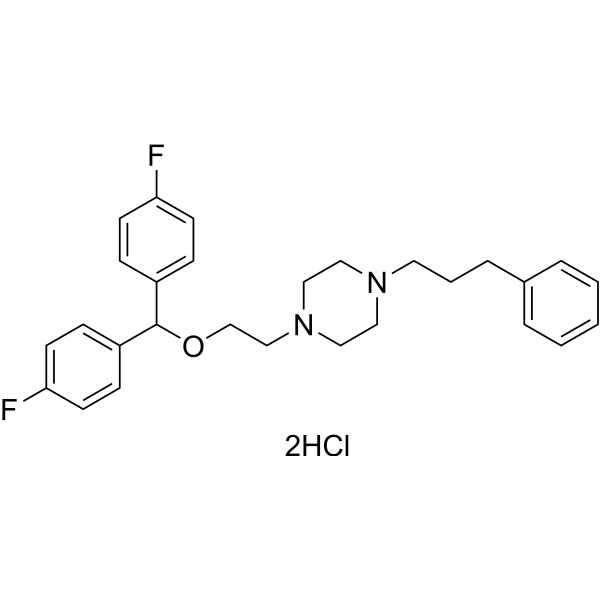
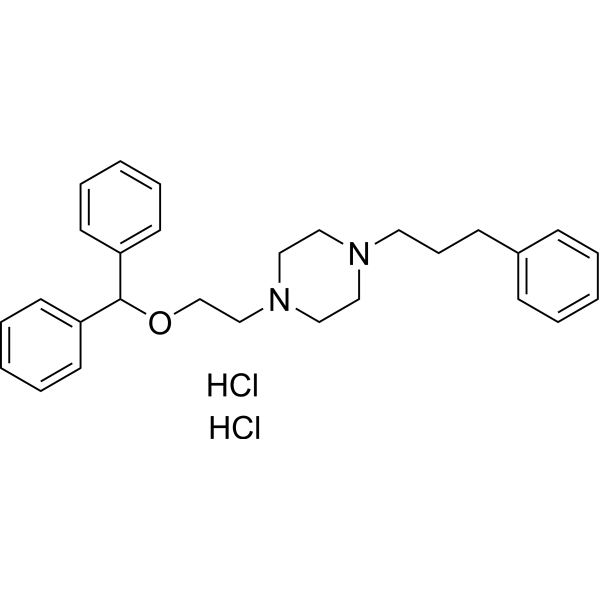
Vanoxerine dihydrochloride (GBR-12909 dihydrochloride) is a competitive, potent, and highly selective dopamine reuptake inhibitor (Ki=1 nM). Vanoxerine dihydrochloride (GBR-12909 dihydrochloride) binds to the target site on the dopamine transporter (DAT) .
|
-
-
- HY-14258
-
|
(S)-Citalopram; (S)-(+)-Citalopram
|
Serotonin Transporter
|
Neurological Disease
|
|
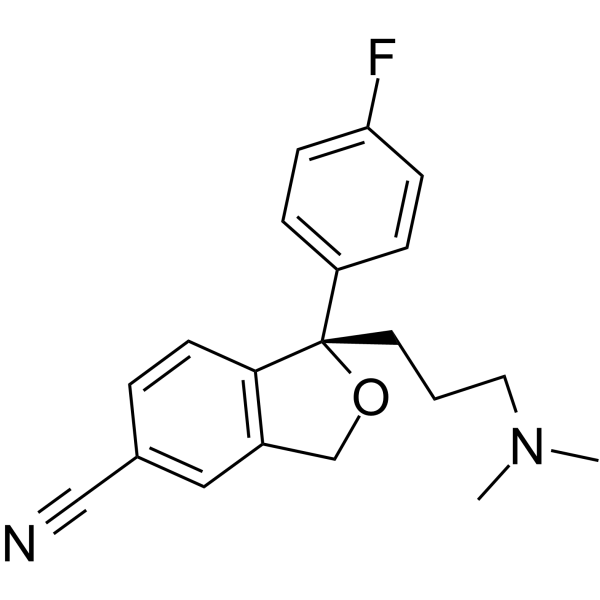
Escitalopram ((S)-Citalopram), the S-enantiomer of racemic Citalopram, is a selective serotonin reuptake inhibitor (SSRI) with a Ki of 0.89 nM. Escitalopram has ∼30 fold higher binding affinity than its R(-)-enantiomer and shows selectivity over both dopamine transporter (DAT) and norepinephrine transporter (NET). Escitalopram is an antidepressant for the research of major depression .
|
-
-
- HY-17385
-
|
Tomoxetine hydrochloride; (R)-Tomoxetine hydrochloride; LY 139603
|
Adrenergic Receptor
Serotonin Transporter
Sodium Channel
|
Neurological Disease
Cancer
|
|
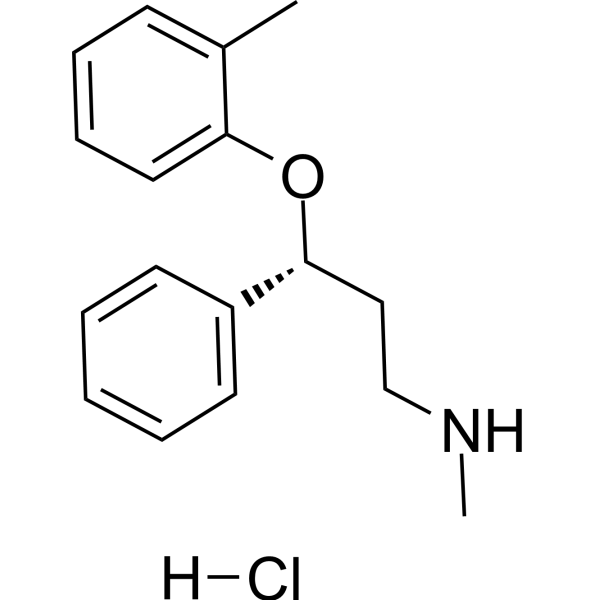
Atomoxetine (Tomoxetine) hydrochloride is a selective noradrenaline reuptake inhibitor with Ki values of 5 nM, 77 nM and 1451 nM for norepinephrine (NE), serotonin (5-HT) and dopamine (DA) transporters, respectively. Atomoxetine hydrochloride is a potent Na + channels (VGSCs) blocker. Atomoxetine hydrochloride can be used for attention-deficit hyperactivity disorder (ADHD) research .
|
-
-
- HY-14258A
-
|
(S)-Citalopram oxalate; (S)-(+)-Citalopram oxalate
|
Serotonin Transporter
|
Neurological Disease
Cancer
|
|
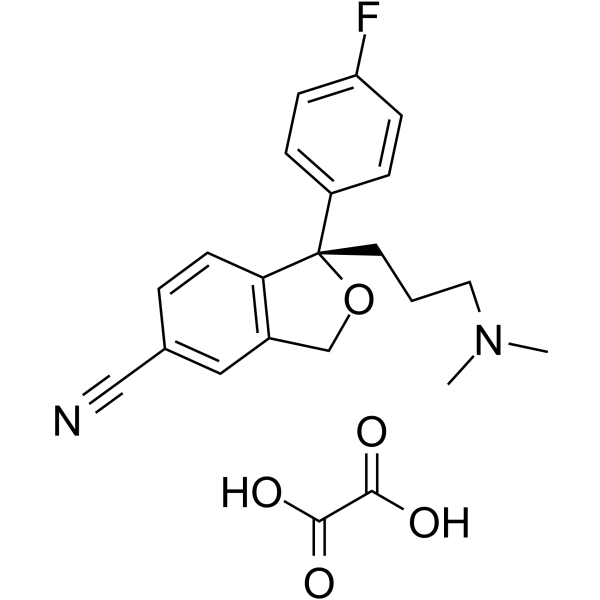
Escitalopram ((S)-Citalopram) oxalate, the S-enantiomer of racemic Citalopram, is a selective serotonin reuptake inhibitor (SSRI) with a Ki of 0.89 nM. Escitalopram oxalate has ∼30 fold higher binding affinity than its R(-)-enantiomer and shows selectivity over both dopamine transporter (DAT) and norepinephrine transporter (NET). Escitalopram oxalate is an antidepressant for the research of major depression .
|
-
-
- HY-B0520A
-
|
Benzatropine mesylate; Benzotropine mesylate; Benztropine methanesulfonate
|
Dopamine Receptor
mAChR
Histamine Receptor
|
Infection
Neurological Disease
Metabolic Disease
Cancer
|
|
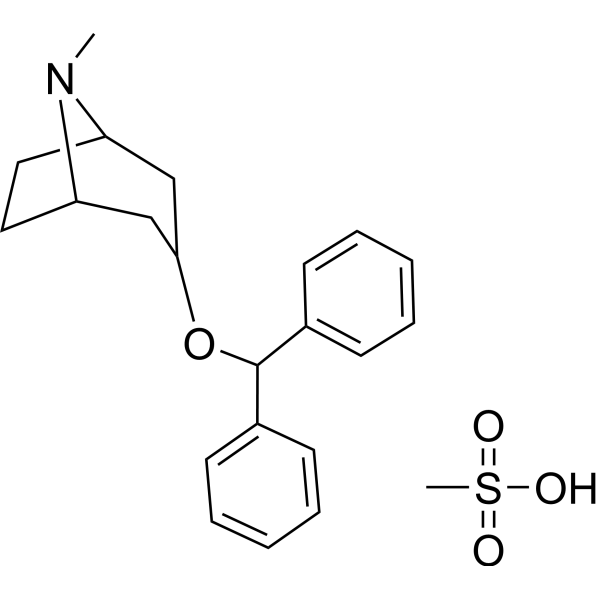
Benztropine mesylate (Benzatropine mesylate) is an orally active and BBB-permeable centrally acting anticholinergic agent that can be used for Parkinson's disease research. Benztropine mesylate is an anti-histamine agent and a dopamine re-uptake inhibitor. Benztropine mesylate is also a human D2 dopamine receptor allosteric antagonist. Benztropine mesylate also has anti-CSCs (cancer stem cells) effects .
|
-
-
- HY-14472
-
|
NS-2330
|
Dopamine Transporter
Serotonin Transporter
|
Metabolic Disease
|
|
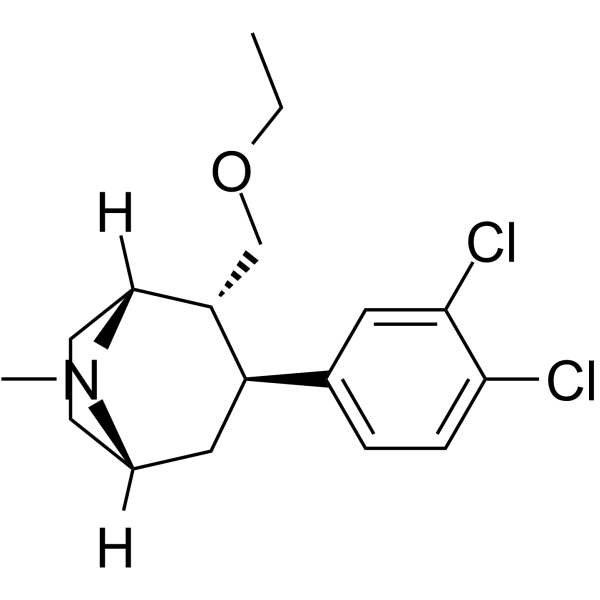
Tesofensine (NS-2330) is a triple monoamine reuptake inhibitor inducing a potent inhibition of the re-uptake process in the synaptic cleft of the neurotransmitters dopamine (DA; IC50=6.5 nM), norepinephrine (NE;IC50=1.7 nM), and serotonin (5-HT;IC50=11 nM), and with potentials as an anti-obesity agent . Tesofensine is a CNS acting anti-obesity agent .
|
-
-
- HY-B0602
-
|
O-Desmethylvenlafaxine
|
Environmental Pollutants
Serotonin Transporter
|
Neurological Disease
|
|
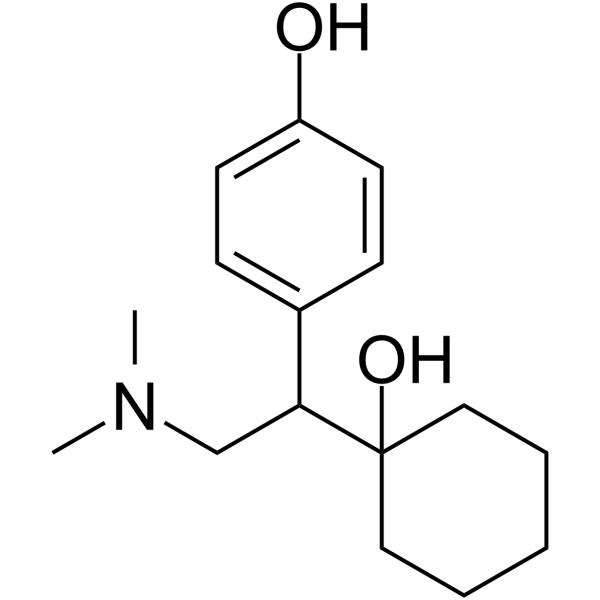
Desvenlafaxine, the succinate salt form of the isolated major active metabolite of Venlafaxine (HY-B0196), is an orally active and BBB penetrated 5-HT and norepinephrine reuptake inhibitor, with IC50 values of 47.3 nM and 531.3 nM for hSERT and hNET, respectively. Desvenlafaxine shows weak binding affinity (62% inhibition at 100 μM) at the human dopamine (DA) transporter .
|
-
-
- HY-U00096
-
-
-
- HY-B0602A
-
|
O-Desmethylvenlafaxine succinate hydrate
|
Serotonin Transporter
|
Neurological Disease
|
|
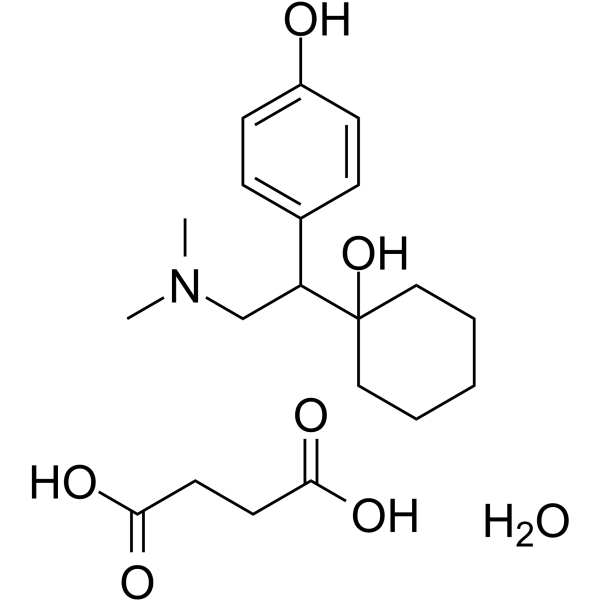
Desvenlafaxine succinate hydrate, the succinate salt form of the isolated major active metabolite of Venlafaxine (HY-B0196), is an orally active and BBB penetrated 5-HT and norepinephrine reuptake inhibitor, with IC50 values of 47.3 nM and 531.3 nM for hSERT and hNET, respectively. Desvenlafaxine succinate hydrate shows weak binding affinity (62% inhibition at 100 μM) at the human dopamine (DA) transporter .
|
-
-
- HY-B1110
-
|
(±)-Nomifensine; Nomifensin
|
Dopamine Receptor
Adrenergic Receptor
|
Neurological Disease
|
|
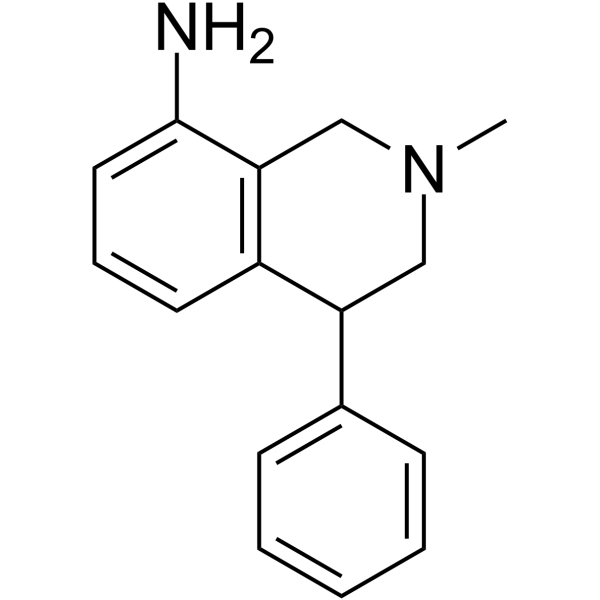
Nomifensine ((±)-Nomifensine) is a potent norepinephrine (NE) and dopamine (DA) reuptake inhibitor. Nomifensine inhibits uptake of NE, DA and 5-HT in rat brain synaptosomes, with IC50 values of 6.6 nM, 48 nM and 830 nM, and Ki values of 4.7 nM, 26 nM and 4000 nM, respectively. Nomifensine has antidepressant and analgesic effects. Nomifensine is used in neurodegenerative diseases, compound addiction, and pain research .
|
-
-
- HY-B1110A
-
|
(±)-Nomifensine maleate; Nomifensin maleate
|
Dopamine Receptor
Adrenergic Receptor
|
Neurological Disease
|
|
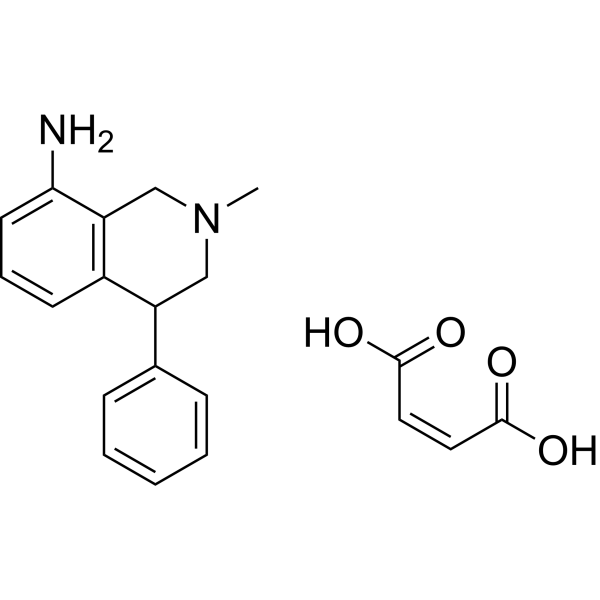
Nomifensine ((±)-Nomifensine) maleate is a potent norepinephrine (NE) and dopamine (DA) reuptake inhibitor. Nomifensine maleate inhibits uptake of NE, DA and 5-HT in rat brain synaptosomes, with IC50 values of 6.6 nM, 48 nM and 830 nM, and Ki values of 4.7 nM, 26 nM and 4000 nM, respectively. Nomifensine maleate has antidepressant and analgesic effects. Nomifensine maleate is used in neurodegenerative diseases, compound addiction, and pain research .
|
-
-
- HY-19907
-
|
BMS-820836
|
Dopamine Transporter
Monoamine Transporter
Serotonin Transporter
|
Neurological Disease
|
|
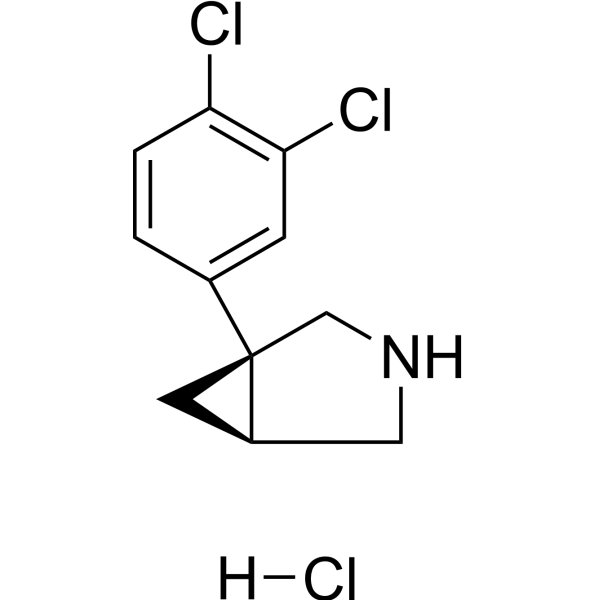
Liafensine (BMS-820836) is an orally active, blood-brain barrier-permeable monoamine reuptake inhibitor, with an IC50 of 5.67 nM against DAT, 1.08 nM against SERT, and 7.99 nM against NET. Liafensine binds to DAT to block dopamine reuptake. Liafensine binds to SERT to block serotonin reuptake. Liafensine binds to NET to block norepinephrine reuptake. Liafensine can be used in studies related to depression .
|
-
-
- HY-12850A
-
-
-
- HY-12242
-
|
|
Dopamine Transporter
|
Neurological Disease
|
|
GBR 12935 dihydrochloride is a potent, and selective dopamine reuptake inhibitor, with the binding constant (Kd) of 1.08 nM in COS-7 cells. GBR 12935 dihydrochloride stimulates the locomotion activity in different mice strains but fails to induce stereotypy. Thus, GBR 12935 dihydrochloride also prevents the d-Fenfluramine-induced head-twitch response in mice .
|
-
-
- HY-B0520
-
|
Benzatropine; Benzotropine
|
Dopamine Receptor
mAChR
Histamine Receptor
|
Cancer
|
|
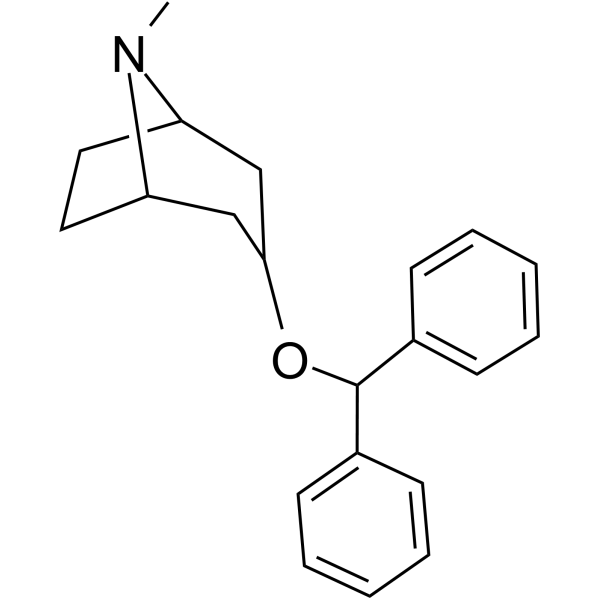
Benztropine (Benzatropine; Benzotropine) is an orally active and BBB-permeable centrally acting anticholinergic agent that can be used for Parkinson's disease research . Benztropine is an anti-histamine agent and a dopamine re-uptake inhibitor. Benztropine is also a human D2 dopamine receptor allosteric antagonist. Benztropine mesylate also has anti-CSCs (cancer stem cells) effects .
|
-
-
- HY-110019
-
|
Lu 19-005
|
Serotonin Transporter
Dopamine Transporter
|
Neurological Disease
|
|
Indatraline hydrochloride (Lu 19-005) is a non-selective monoamine transporter inhibitor that blocks the reuptake of neurotransmitters (dopamine, serotonin, and norepinephrine). Indatraline hydrochloride can be used for the research of antidepressive. Indatraline hydrochloride induces autophagy while simultaneously inhibiting cell proliferation. Indatraline hydrochloride may also serve to direct the development of new agents for autophagy-related diseases such as atherosclerosis or restenosis .
|
-
-
- HY-13217A
-
|
GBR 12909; I893
|
Dopamine Transporter
|
Neurological Disease
|
|
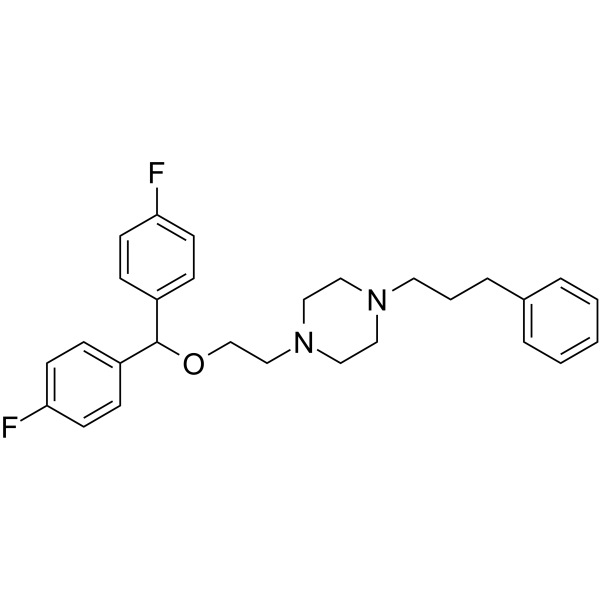
Vanoxerine (GBR-12909) is a competitive, potent, and highly selective dopamine reuptake inhibitor (Ki=1 nM). Vanoxerine (GBR-12909) binds to the target site on the dopamine transporter (DAT) .
|
-
-
- HY-107370
-
|
Tomoxetine; (R)-Tomoxetine
|
Serotonin Transporter
Sodium Channel
|
Neurological Disease
Cancer
|
|
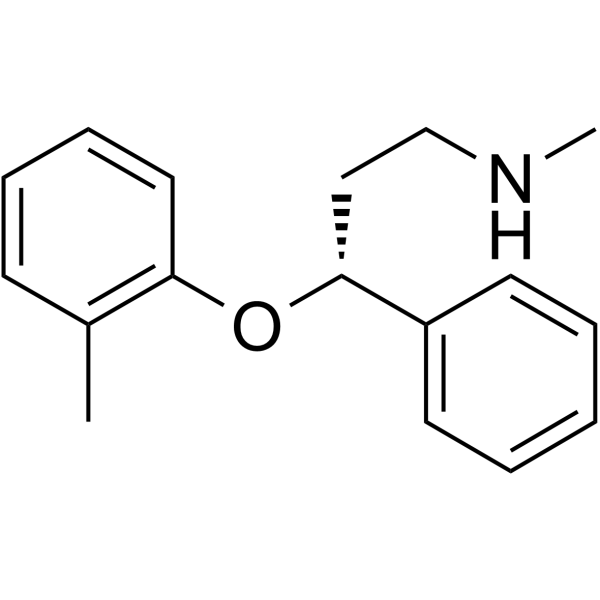
Atomoxetine (Tomoxetine) is a selective noradrenaline reuptake inhibitor with Ki values of 5, 77 and 1451 nM for norepinephrine (NE), serotonin (5-HT) and dopamine (DA) transporters, respectively. Atomoxetine (Tomoxetine) increases of DAEX and NEEX in the PFC and enhances catecholaminergic neurotransmission. Atomoxetine (Tomoxetine) is a potent Na + channels (VGSCs) blocker. Atomoxetine (Tomoxetine) can be used for attention-deficit hyperactivity disorder (ADHD) research .
|
-
-
- HY-14258AR
-
|
(S)-Citalopram oxalate (Standard); (S)-(+)-Citalopram oxalate (Standard)
|
Reference Standards
Serotonin Transporter
|
Neurological Disease
Cancer
|
|
Escitalopram (oxalate) (Standard) is the analytical standard of Escitalopram (oxalate). This product is intended for research and analytical applications. Escitalopram ((S)-Citalopram) oxalate, the S-enantiomer of racemic Citalopram, is a selective serotonin reuptake inhibitor (SSRI) with a Ki of 0.89 nM. Escitalopram oxalate has ∼30 fold higher binding affinity than its R(-)-enantiomer and shows selectivity over both dopamine transporter (DAT) and norepinephrine transporter (NET). Escitalopram oxalate is an antidepressant for the research of major depression .
|
-
-
- HY-18332A
-
-
-
- HY-119468
-
|
|
Dopamine Transporter
|
Neurological Disease
|
|
Medifoxamine is an orally active monoamine reuptake inhibitor and antidepressant. Medifoxamine preferentially inhibits presynaptic dopamine reuptake. Medifoxamine acts as an intraocular pressure-lowering agent to reduce intraocular pressure, and also functions as a miotic agent to decrease pupil diameter. Medifoxamine exhibits characteristic properties of antidepressant compounds, including preventing hypothermia induced by Reserpine (HY-N0480) or Apomorphine (HY-12723), potentiating the toxic effects of Yohimbine (HY-N0127) in mice, and reducing immobility behavior in mice and rats in the "behavioral despair" model. Medifoxamine has no anticholinergic activity. Medifoxamine can be used in research related to depression .
|
-
-
- HY-116548
-
|
|
Dopamine Receptor
|
Neurological Disease
|
|
Nitracaine is a structural analog of Dimethocaine (HY-121870), a local anesthetic that inhibits dopamine reuptake through the dopamine transporter .
|
-
-
- HY-116211
-
|
WIN-25978
|
Biochemical Assay Reagents
|
Neurological Disease
|
|
Amfonelic acid (WIN-25978) is a highly selective dopamine reuptake inhibitor. Amfonelic acid interferes with the in vitro neuronal uptake of norepinephrine in the iris of rats, but does not alter the concentrations of norepinephrine or dopamine in the whole mouse brain. Amfonelic acid can be used as a pharmacological tool to study the brain reward system, dopamine pathway and dopamine transporter .
|
-
-
- HY-135096
-
|
|
Serotonin Transporter
5-HT Receptor
Histamine Receptor
mAChR
Adrenergic Receptor
Sodium Channel
Trk Receptor
|
Neurological Disease
|
|
Amitriptyline-d3 hydrochloride is the deuterium labeled Amitriptyline (hydrochloride). Amitriptyline hydrochloride is an inhibitor of serotonin reuptake transporter (SERT) and noradrenaline reuptake transporter (NET), with Kis of 3.45 nM and 13.3 nM for human SERT and NET, respectively. Amitriptyline hydrochloride also weakly binds to dopamine reuptake transporter (DAT) with a Ki of 2.58 μM. Amitriptyline hydrochloride also inhibits adrenergic, muscarinic, histamine and 5-HT receptors. Amitriptyline hydrochloride is a TrkA and TrkB receptors agonist with potent neurotrophic activity. Amitriptyline hydrochloride has antidepressant activity .
|
-
-
- HY-14472R
-
|
NS-2330 (Standard)
|
Dopamine Transporter
Serotonin Transporter
Reference Standards
|
Metabolic Disease
|
|
Tesofensine (Standard) is the analytical standard of Tesofensine. This product is intended for research and analytical applications. Tesofensine (NS-2330) is a triple monoamine reuptake inhibitor inducing a potent inhibition of the re-uptake process in the synaptic cleft of the neurotransmitters dopamine (DA; IC50=6.5 nM), norepinephrine (NE;IC50=1.7 nM), and serotonin (5-HT;IC50=11 nM), and with potentials as an anti-obesity agent . Tesofensine is a CNS acting anti-obesity agent .
|
-
-
- HY-18332C
-
|
|
Serotonin Transporter
Dopamine Transporter
|
Neurological Disease
|
|
DOV-216,303 (Free Base) is a potent triple serotonin, norepinephrine, and dopamine reuptake inhibitor, with IC50 values of 14 nM, 20 nM and 78 nM for hSERT, hNET and hDAT, respectively. Has antidepressant-like effects and increases monoamine release in the prefrontal cortex of olfactory bulbectomized (OBX) rats .
|
-
-
- HY-14258AS
-
|
|
Serotonin Transporter
|
Neurological Disease
|
|
Escitalopram-d6 (oxalate) is the deuterium labeled Escitalopram oxalate. Escitalopram ((S)-Citalopram) oxalate, the S-enantiomer of racemic Citalopram, is a selective serotonin reuptake inhibitor (SSRI) with a Ki of 0.89 nM. Escitalopram oxalate has ~30 fold higher binding affinity than its R(-)-enantiomer and shows selectivity over both dopamine transporter (DAT) and norepinephrine transporter (NET). Escitalopram oxalate is an antidepressant for the research of major depression .
|
-
-
- HY-18332B
-
|
|
Dopamine Transporter
Adrenergic Receptor
5-HT Receptor
|
Neurological Disease
|
|
DOV-102,677 is an orally sctive triple monoamine neurotransmitter reuptake inhibitor that simultaneously inhibits the dopamine (DAT) (IC50 = 129 nM; Ki = 222 nM), norepinephrine (NET) (IC50 = 103 nM; Ki = 1030 nM), and serotonin (SERT) (IC50 = 133 nM; Ki = 740 nM) transporters. DOV-102,677 demonstrated significant antidepressant-like activity and sensory-motor gating regulatory effects in mouse experiments. DOV-102,677 can be used for research on depression .
|
-
-
- HY-172421
-
-
-
- HY-W344115
-
-
-
- HY-12242A
-
|
|
Dopamine Transporter
|
Neurological Disease
|
|
GBR 12935 is a potent, and selective dopamine reuptake inhibitor, with the binding constant (Kd) of 1.08 nM in COS-7 cells. GBR 12935 stimulates the locomotion activity in different mice strains but fails to induce stereotypy. Thus, GBR 12935 also prevents the d-Fenfluramine-induced head-twitch response in mice .
|
-
-
- HY-178249
-
|
|
Adrenergic Receptor
Dopamine Receptor
|
Neurological Disease
|
|
(1R,2S)-Dihydrobupropion is a norepinephrine-dopamine reuptake inhibitor. (1R,2S)-Dihydrobupropion is one of the active metabolites of Bupropion (HY-B0403). (1R,2S)-Dihydrobupropion can be used for the researches of neurological disease and inflammation .
|
-
-
- HY-B0602S2
-
|
|
Isotope-Labeled Compounds
Serotonin Transporter
|
Neurological Disease
|
|
Desvenlafaxine-d6 is deuterium labeled Desvenlafaxine. Desvenlafaxine, the succinate salt form of the isolated major active metabolite of Venlafaxine (HY-B0196), is an orally active and BBB penetrated 5-HT and norepinephrine reuptake inhibitor, with IC50 values of 47.3 nM and 531.3 nM for hSERT and hNET, respectively. Desvenlafaxine shows weak binding affinity (62% inhibition at 100 μM) at the human dopamine (DA) transporter .
|
-
-
- HY-14258AS1
-
|
(S)-Citalopram-d4 oxalate; (S)-(+)-Citalopram-d4 oxalate
|
Isotope-Labeled Compounds
Serotonin Transporter
|
Neurological Disease
|
|
Escitalopram-d4 (oxalate) is deuterium labeled Escitalopram (oxalate). Escitalopram ((S)-Citalopram) oxalate, the S-enantiomer of racemic Citalopram, is a selective serotonin reuptake inhibitor (SSRI) with a Ki of 0.89 nM. Escitalopram oxalate has ~30 fold higher binding affinity than its R(-)-enantiomer and shows selectivity over both dopamine transporter (DAT) and norepinephrine transporter (NET). Escitalopram oxalate is an antidepressant for the research of major depression .
|
-
-
- HY-107370A
-
|
(Rac)-Tomoxetine hydrochloride; (Rac)-LY 139603
|
Serotonin Transporter
Sodium Channel
|
Metabolic Disease
Cancer
|
|
(Rac)-Atomoxetine hydrochloride ((Rac)-Tomoxetine (hydrochloride); (Rac)-LY 139603) is the racemic mixture of Atomoxetine hydrochloride (HY-17385). Atomoxetine hydrochloride is a selective noradrenaline reuptake inhibitor with Ki values of 5, 77 and 1451 nM for norepinephrine (NE), serotonin (5-HT) and dopamine (DA) transporters, respectively. Atomoxetine hydrochloride increases of DAEX and NEEX in the PFC and enhances catecholaminergic neurotransmission. Atomoxetine hydrochloride is a potent Na + channels (VGSCs) blocker. Atomoxetine hydrochloride can be used for attention-deficit hyperactivity disorder (ADHD) research .
|
-
-
- HY-18332
-
-
-
- HY-W714117
-
-
-
- HY-101612
-
-
-
- HY-162511
-
|
|
Dopamine Transporter
Serotonin Transporter
|
Others
|
|
IP2015 is an inhibitor for monoamine reuptake, that inhibits the reuptake of dopamine, serotonin (5-HT), and noradrenaline. IP2015 increases release of central dopamine and peripheral nitric oxide (NO), causes the NO-mediated relaxation of erectile tissue, and thus induces erection in rat model .
|
-
-
- HY-119468R
-
|
|
Dopamine Receptor
|
Neurological Disease
|
|
Medifoxamine (Standard) is the analytical standard of Medifoxamine. This product is intended for research and analytical applications. Medifoxamine is a monoamine re-uptake inhibiting antidepressive agent which preferentially inhibits dopamine reuptake .
|
-
-
- HY-158556
-
|
|
Drug Derivative
|
Neurological Disease
|
|
2,3-Dimethylethcathinone (2,3-Dmec) hydrochloride is a drug derivative. Ethcathinone increases the peak dopamine efflux after electrical stimulation and slows dopamine reuptake in rats .
|
-
-
- HY-12850
-
-
-
- HY-164009
-
|
|
Adrenergic Receptor
Dopamine Receptor
5-HT Receptor
|
Neurological Disease
|
|
Teniloxazine is an inhibitor for norepinephrine neuronal reuptake and an weak inhibitor for reuptake of Serotonin (HY-B1473A) and Dopamine (HY-B0451). Teniloxazine exhibits antidepressant, antihypoxic and anti-amnestic properties without anticholinergic, sedative, and cardiovascular adverse effects .
|
-
-
- HY-10427
-
|
NRI-022
|
Histone Methyltransferase
|
Neurological Disease
|
|
WAY-260022 is a selective norepinephrine reuptake inhibitor with potent inhibitory activity on norepinephrine reuptake. WAY-260022 exhibits excellent selectivity in inhibiting serotonin and dopamine transporters. WAY-260022 also showed oral efficacy in a rat model of thermoregulatory dysfunction .
|
-
-
- HY-107031
-
|
19560 RP
|
iGluR
|
Others
|
|
Metapramine (19560 RP) is an antidepressant agent, belonging to the class of tricyclic compounds . Metapramine inhibits norepinephrine reuptake, without affecting the reuptake of serotonin or dopamine . Metapramine is a low-affinity antagonist of the N-methyl-D-aspartic acid (NMDA) receptor complex channel .
|
-
-
- HY-114859
-
|
|
5-HT Receptor
|
Neurological Disease
|
|
4-CAB hydrochloride is an analog of p-chloroamphetamine, a psychoactive compound which inhibits the reuptake of serotonin (IC50 = 330 nM) and dopamine (IC50 = 2.3 μM) .
|
-
-
- HY-13217R
-
|
GBR-12909 dihydrochloride (Standard); I893 dihydrochloride (Standard)
|
Dopamine Transporter
Reference Standards
|
Neurological Disease
|
|
Vanoxerine (dihydrochloride) (Standard) is the analytical standard of Vanoxerine (dihydrochloride). This product is intended for research and analytical applications. Vanoxerine dihydrochloride (GBR-12909 dihydrochloride) is a competitive, potent, and highly selective dopamine reuptake inhibitor (Ki=1 nM). Vanoxerine dihydrochloride (GBR-12909 dihydrochloride) binds to the target site on the dopamine transporter (DAT) .
|
-
-
- HY-118406B
-
|
Ponalid hydrobromide; UK 738 hydrobromide
|
mAChR
|
Neurological Disease
|
|
Ethybenztropine hydrobromide (Ponalid hydrobromide) is an anticholinergic drug with antiparkinsonian activity. Ethybenztropine hydrobromide may also act as a dopamine reuptake inhibitor. Ethybenztropine hydrobromide is commonly used to suppress Parkinson's disease .
|
-
-
- HY-14793
-
|
|
Dopamine Receptor
|
Neurological Disease
|
|
Lensiprazine is a potent dopamine D2 receptor (D2R) antagonist that acts as a serotonin reuptake inhibitor. Lensiprazine can be used to study bipolar disorder and schizophrenia .
|
-
-
- HY-106838A
-
|
|
Adrenergic Receptor
|
Neurological Disease
|
|
Org 6906 is a monoamine reuptake inhibitor that promotes monoaminergic neurotransmission by inhibiting the reuptake of noradrenaline, dopamine, and serotonin. Org 6906 is also an α2 Adrenergic Receptor antagonist, with a pKi value of 6.3 (using the selective α2 adrenergic receptor ligand [ 3H]rauwolscine as a ligand). Org 6906 exhibits antidepressant activity and can be used in research related to neurological disorders .
|
-
- HY-118406A
-
|
Ponalid hydrochloride; UK 738 hydrochloride
|
mAChR
|
Neurological Disease
|
|
Ethybenztropine hydrochloride (Ponalid hydrochloride) is an anticholinergic drug with antiparkinsonian activity. Ethybenztropine hydrochloride may also have dopamine reuptake inhibitory effects. Ethybenztropine hydrochloride is used to improve motor symptoms in patients with Parkinson's disease. Ethybenztropine hydrochloride exerts its inhibitory effects by regulating the balance of neurotransmitters .
|
-
- HY-B0520AS1
-
|
|
Dopamine Receptor
Histamine Receptor
mAChR
|
Cancer
|
|
Benztropine-d3 (mesylate) is the deuterium labeled Benztropine mesylate . Benztropine mesylate (Benzatropine mesylate) is an orally active centrally acting anticholinergic agent that can be used for Parkinson's disease research. Benztropine mesylate is an anti-histamine agent and a dopamine re-uptake inhibitor. Benztropine mesylate is also a human D2 dopamine receptor allosteric antagonist. Benztropine mesylate also has anti-CSCs (cancer stem cells) effects .
|
-
- HY-B0520AR
-
|
Benzatropine mesylate (Standard); Benzotropine mesylate (Standard); Benztropine methanesulfonate (Standard)
|
Reference Standards
Dopamine Receptor
mAChR
Histamine Receptor
|
Neurological Disease
Cancer
|
|
Benztropine (mesylate) (Standard) is the analytical standard of Benztropine (mesylate). This product is intended for research and analytical applications. Benztropine mesylate (Benzatropine mesylate) is an orally active centrally acting anticholinergic agent that can be used for Parkinson's disease research. Benztropine mesylate is an anti-histamine agent and a dopamine re-uptake inhibitor. Benztropine mesylate is also a human D2 dopamine receptor allosteric antagonist. Benztropine mesylate also has anti-CSCs (cancer stem cells) effects .
|
-
- HY-B0520AS
-
|
|
Isotope-Labeled Compounds
Dopamine Receptor
mAChR
Histamine Receptor
|
Neurological Disease
Cancer
|
|
Benztropine- 13C,d3 (mesylate) is the 13C- and deuterium labeled Benztropine (mesylate). Benztropine mesylate (Benzatropine mesylate) is an orally active centrally acting anticholinergic agent that can be used for Parkinson's disease research. Benztropine mesylate is an anti-histamine agent and a dopamine re-uptake inhibitor. Benztropine mesylate is also a human D2 dopamine receptor allosteric antagonist. Benztropine mesylate also has anti-CSCs (cancer stem cells) effects .
|
-
- HY-12242B
-
|
|
Dopamine Transporter
|
Neurological Disease
|
|
GBR 12935 fumarate is a potent, and selective dopamine reuptake inhibitor, with the binding constant (Kd) of 1.08 nM in COS-7 cells. GBR 12935 fumarate stimulates the locomotion activity in different mice strains but fails to induce stereotypy. Thus, GBR 12935 fumarate also prevents the d-Fenfluramine-induced head-twitch response in mice .
|
-
- HY-W061043
-
|
|
Serotonin Transporter
Dopamine Transporter
|
Neurological Disease
|
|
DOV-216,303 is an antidepressant compound. DOV-216,303 inhibits the reuptake of norepinephrine (NE), serotonin (5‐HT), and dopamine (DA), with IC50 values of 14 nM, 20 nM and 78 nM for hSERT, hNET and hDAT, respectively. DOV-216,303 increases monoamine release in the prefrontal cortex of olfactory bulbectomized (OBX) rats .
|
-
- HY-17385R
-
|
Tomoxetine hydrochloride (Standard); (R)-Tomoxetine hydrochloride (Standard); LY 139603 (Standard)
|
Reference Standards
Adrenergic Receptor
Serotonin Transporter
Sodium Channel
|
Neurological Disease
Cancer
|
|
Atomoxetine (hydrochloride) (Standard) is the analytical standard of Atomoxetine (hydrochloride). This product is intended for research and analytical applications. Atomoxetine (Tomoxetine) hydrochloride is a selective noradrenaline reuptake inhibitor with Ki values of 5 nM, 77 nM and 1451 nM for norepinephrine (NE), serotonin (5-HT) and dopamine (DA) transporters, respectively. Atomoxetine hydrochloride is a potent Na+ channels (VGSCs) blocker. Atomoxetine hydrochloride can be used for attention-deficit hyperactivity disorder (ADHD) research .
|
-
- HY-16170
-
|
O-Desmethylvenlafaxine succinate; Wy-45233 succinate
|
Serotonin Transporter
|
Neurological Disease
Metabolic Disease
|
|
Desvenlafaxine succinate, the succinate salt form of the isolated major active metabolite of Venlafaxine (HY-B0196), is an orally active and BBB penetrated 5-HT and norepinephrine reuptake inhibitor, with IC50 values of 47.3 nM and 531.3 nM for hSERT and hNET, respectively. Desvenlafaxine succinate (DVS) shows weak binding affinity (62% inhibition at 100 μM) at the human dopamine (DA) transporter .
|
-
- HY-14258R
-
|
(S)-Citalopram (Standard); (S)-(+)-Citalopram (Standard)
|
Serotonin Transporter
Reference Standards
|
Neurological Disease
Cancer
|
|
Escitalopram (Standard) is the analytical standard of Escitalopram. This product is intended for research and analytical applications. Escitalopram ((S)-Citalopram), the S-enantiomer of racemic Citalopram, is a selective serotonin reuptake inhibitor (SSRI) with a Ki of 0.89 nM. Escitalopram has ~30 fold higher binding affinity than its R(-)-enantiomer and shows selectivity over both dopamine transporter (DAT) and norepinephrine transporter (NET). Escitalopram is an antidepressant for the research of major depression .
|
-
- HY-B0602S3
-
|
|
Isotope-Labeled Compounds
Serotonin Transporter
|
Neurological Disease
|
|
Desvenlafaxine-d10 is deuterium labeled Desvenlafaxine. Desvenlafaxine, the succinate salt form of the isolated major active metabolite of Venlafaxine (HY-B0196), is an orally active and BBB penetrated 5-HT and norepinephrine reuptake inhibitor, with IC50 values of 47.3 nM and 531.3 nM for hSERT and hNET, respectively. Desvenlafaxine shows weak binding affinity (62% inhibition at 100 μM) at the human dopamine (DA) transporter .
|
-
- HY-106194
-
|
|
Dopamine Receptor
Serotonin Transporter
|
Neurological Disease
|
|
SLV310 is an orally active dopamine D2 receptor antagonist (Ki: 5 nM) and serotonin reuptake receptor inhibitor. SLV310 antagonizes Apomorphine (HY-12723) induced climbing behaviour and 5-HTP (HY-N0122) induced serotonin syndrome like behaviour in mice (ED50: 5.6 and 5.9 mg/kg, p.o.). SLV310 is an antipsychotic compound and can be used for schizophrenia research .
|
-
- HY-12242R
-
|
|
Dopamine Transporter
|
Neurological Disease
|
|
GBR 12935 (dihydrochloride) (Standard) is the analytical standard of GBR 12935 (dihydrochloride). This product is intended for research and analytical applications. GBR 12935 dihydrochloride is a potent, and selective dopamine reuptake inhibitor, with the binding constant (Kd) of 1.08 nM in COS-7 cells. GBR 12935 dihydrochloride stimulates the locomotion activity in different mice strains but fails to induce stereotypy. Thus, GBR 12935 dihydrochloride also prevents the d-Fenfluramine-induced head-twitch response in mice .
|
-
- HY-124357
-
|
S-Norfluoxetine hydrochloride; LY 215229 hydrochloride
|
Dopamine Receptor
|
Neurological Disease
|
|
Seproxetine (S-Norfluoxetine) hydrochloride is a selective serotonin reuptake inhibitor (SSRI) that enhances serotonin levels in the brain by specifically inhibiting the serotonin uptake carrier. Seproxetine hydrochloride exhibits strong charge transfer interactions with π-electron acceptors, forming stable complexes that enhance its binding affinity to multiple receptors, including serotonin and dopamine receptors. Seproxetine hydrochloride demonstrates improved biological activity when interacting with charge transfer complexes, leading to increased stability and efficacy in therapeutic applications.
|
-
- HY-B0602R
-
|
O-Desmethylvenlafaxine (Standard)
|
Reference Standards
Serotonin Transporter
|
Neurological Disease
|
|
Desvenlafaxine (Standard) is the analytical standard of Desvenlafaxine. This product is intended for research and analytical applications. Desvenlafaxine, the succinate salt form of the isolated major active metabolite of Venlafaxine (HY-B0196), is an orally active and BBB penetrated 5-HT and norepinephrine reuptake inhibitor, with IC50 values of 47.3 nM and 531.3 nM for hSERT and hNET, respectively. Desvenlafaxine shows weak binding affinity (62% inhibition at 100 μM) at the human dopamine (DA) transporter .
|
-
- HY-N2426R
-
|
|
Reference Standards
Interleukin Related
|
Inflammation/Immunology
|
|
Desvenlafaxine (Standard) is the analytical standard of Desvenlafaxine. This product is intended for research and analytical applications. Desvenlafaxine, the succinate salt form of the isolated major active metabolite of Venlafaxine (HY-B0196), is an orally active and BBB penetrated 5-HT and norepinephrine reuptake inhibitor, with IC50 values of 47.3 nM and 531.3 nM for hSERT and hNET, respectively. Desvenlafaxine shows weak binding affinity (62% inhibition at 100 μM) at the human dopamine (DA) transporter .
|
-
- HY-107370S
-
|
Tomoxetine-d7; (R)-Tomoxetine-d7
|
Isotope-Labeled Compounds
Serotonin Transporter
Sodium Channel
|
Neurological Disease
Cancer
|
|
Atomoxetine-d7 (Tomoxetine-d7) is deuterium labeled Atomoxetine. Atomoxetine (Tomoxetine) is a selective noradrenaline reuptake inhibitor with Ki values of 5, 77 and 1451 nM for norepinephrine (NE), serotonin (5-HT) and dopamine (DA) transporters, respectively. Atomoxetine (Tomoxetine) increases of DAEX and NEEX in the PFC and enhances catecholaminergic neurotransmission. Atomoxetine (Tomoxetine) is a potent Na + channels (VGSCs) blocker. Atomoxetine (Tomoxetine) can be used for attention-deficit hyperactivity disorder (ADHD) research .
|
-
- HY-10427A
-
|
iso-NRI-022
|
Serotonin Transporter
Dopamine Transporter
|
Cardiovascular Disease
|
|
iso-WAY-260022 (Compound 13R) is an orally active, brain-penetrant and selective norepinephrine transporter (hNET) inhibitor with an IC50 value of 140 nM. iso-WAY-260022 also shows inhibitory effects on human serotonin (hSERT) and dopamine transporters (hDAT). iso-WAY-260022 inhibits norepinephrine reuptake and increases hypothalamic norepinephrine levels to regulate thermoregulatory center function. iso-WAY-260022 is promising for research of vasomotor symptoms, such as menopausal hot flushes, night sweats .
|
-
- HY-B1110AR
-
|
(±)-Nomifensine maleate (Standard); Nomifensin maleate (Standard)
|
Dopamine Receptor
Adrenergic Receptor
Reference Standards
|
Neurological Disease
|
|
Nomifensine (maleate) (Standard) is the analytical standard of Nomifensine (maleate). This product is intended for research and analytical applications. Nomifensine ((±)-Nomifensine) maleate is a potent norepinephrine (NE) and dopamine (DA) reuptake inhibitor. Nomifensine maleate inhibits uptake of NE, DA and 5-HT in rat brain synaptosomes, with IC50 values of 6.6 nM, 48 nM and 830 nM, and Ki values of 4.7 nM, 26 nM and 4000 nM, respectively. Nomifensine maleate has antidepressant and analgesic effects. Nomifensine maleate is used in neurodegenerative diseases, compound addiction, and pain research .
|
-
- HY-107370S1
-
|
Tomoxetine-d5; (R)-Tomoxetine-d5
|
Isotope-Labeled Compounds
|
Neurological Disease
Cancer
|
|
Atomoxetine-d5 (Tomoxetine-d5) is deuterium labeled Atomoxetine. Atomoxetine (Tomoxetine) is a selective noradrenaline reuptake inhibitor with Ki values of 5, 77 and 1451 nM for norepinephrine (NE), serotonin (5-HT) and dopamine (DA) transporters, respectively. Atomoxetine (Tomoxetine) increases of DAEX and NEEX in the PFC and enhances catecholaminergic neurotransmission. Atomoxetine (Tomoxetine) is a potent Na + channels (VGSCs) blocker. Atomoxetine (Tomoxetine) can be used for attention-deficit hyperactivity disorder (ADHD) research .
|
-
- HY-B1110R
-
|
(±)-Nomifensine (Standard); Nomifensin (Standard)
|
Dopamine Receptor
Adrenergic Receptor
Reference Standards
|
Neurological Disease
|
|
Nomifensine (Standard) is the analytical standard of Nomifensine. This product is intended for research and analytical applications. Nomifensine ((±)-Nomifensine) is a potent norepinephrine (NE) and dopamine (DA) reuptake inhibitor. Nomifensine inhibits uptake of NE, DA and 5-HT in rat brain synaptosomes, with IC50 values of 6.6 nM, 48 nM and 830 nM, and Ki values of 4.7 nM, 26 nM and 4000 nM, respectively. Nomifensine has antidepressant and analgesic effects. Nomifensine is used in neurodegenerative diseases, compound addiction, and pain research .
|
-
- HY-B1110S
-
|
(±)-Nomifensine-d3 maleate; Nomifensin-d3 maleate
|
Isotope-Labeled Compounds
Dopamine Receptor
Adrenergic Receptor
|
Neurological Disease
|
|
Nomifensine-d3 ((±)-Nomifensine-d3) maleate is the deuterium labeled Nomifensine maleate (HY-B1110A). Nomifensine ((±)-Nomifensine) maleate is a potent norepinephrine (NE) and dopamine (DA) reuptake inhibitor. Nomifensine maleate inhibits uptake of NE, DA and 5-HT in rat brain synaptosomes, with IC50 values of 6.6 nM, 48 nM and 830 nM, and Ki values of 4.7 nM, 26 nM and 4000 nM, respectively. Nomifensine maleate has antidepressant and analgesic effects. Nomifensine maleate is used in neurodegenerative diseases, compound addiction, and pain research .
|
-
- HY-116062A
-
|
|
Histone Methyltransferase
|
Neurological Disease
|
|
JNJ-7925476 is a triple reuptake inhibitor that selectively and potently inhibits the activity of the serotonin transporter (SERT), norepinephrine transporter (NET), and dopamine transporter (DAT). JNJ-7925476 is rapidly absorbed into the blood and its concentration in the brain is 7-fold higher than that in plasma. The occupancy ED(50) values of JNJ-7925476 for SERT, NET, and DAT in the rat brain are 0.18, 0.09, and 2.4 mg/kg, respectively. JNJ-7925476 rapidly induces a significant increase in the levels of extracellular serotonin, dopamine, and norepinephrine in the rat cerebral cortex in a dose-dependent manner. JNJ-7925476 exhibits potent antidepressant-like activity in the mouse tail suspension test. These results suggest that JNJ-7925476 has in vivo efficacy in biochemical and behavioral models of depression .
|
-
- HY-124186
-
|
|
Dopamine Receptor
5-HT Receptor
|
Neurological Disease
|
|
LR1143 is a dopamine transporter (DAT) and 5-HT uptake inhibitor, with IC50 values of 3.4 nM and 112 nM in rats, respectively. LR1143 binds to DAT labeled with the dopamine reuptake inhibitor GBR 12935 (HY-12242A), with an IC50 of 4.4 nM. LR1143 shows lower selectivity for DAT than for serotonin reuptake sites. LR1143 can be used in studies related to cocaine abuse .
|
-
- HY-181828
-
|
|
iGluR
Dopamine Receptor
|
Neurological Disease
|
|
SePP is a blood-brain barrier-permeable NMDAR antagonist and dopamine/norepinephrine reuptake inhibitor, with a Ki of 28.7 nM for rat NMDAR. SePP exerts anticonvulsant effects. SePP can be used in research related to fragile X syndrome .
|
-
- HY-182247
-
|
|
Serotonin Transporter
Dopamine Transporter
|
Neurological Disease
|
|
D-473 is an orally active, blood-brain barrier penetrant and serotonin-preferring reuptake inhibitor. D-473 inhibits serotonin, dopamine and norepinephrine transporters, and significantly elevates the extracellular levels of these three neurotransmitters in rat brain regions. D-473 exhibits definite antidepressant-like activity without inducing motor activation. D-473 is widely used in studies related to major depressive disorder .
|
-
- HY-17385S1
-
|
Tomoxetine-d7 hydrochloride; (R)-Tomoxetine-d7 hydrochloride
|
Isotope-Labeled Compounds
Serotonin Transporter
Adrenergic Receptor
Sodium Channel
|
Neurological Disease
Cancer
|
|
Atomoxetine-d7 hydrochloride (Tomoxetine-d7 hydrochloride) is the deuterium labeled Atomoxetine hydrochloride (HY-17385). Atomoxetine (Tomoxetine) hydrochloride is a selective noradrenaline reuptake inhibitor with Ki values of 5 nM, 77 nM and 1451 nM for norepinephrine (NE), serotonin (5-HT) and dopamine (DA) transporters, respectively. Atomoxetine hydrochloride is a potent Na+ channels (VGSCs) blocker. Atomoxetine hydrochloride can be used for attention-deficit hyperactivity disorder (ADHD) research .
|
-
- HY-183665
-
|
|
Dopamine Receptor
|
Neurological Disease
|
|
GBR-13119 is a blood-brain barrier-permeable inhibitor of the presynaptic dopamine uptake system. GBR-13119 binds to dopamine uptake sites with high selectivity, without being affected by other neurotransmitter reuptake inhibitors. GBR-13119 exhibits a lipophilic systemic distribution profile with extremely low defluorination in rats, while it shows a differential characteristic of slow striatal washout in the brain of primates. GBR-13119 can serve as a PET tracer to achieve visualized imaging of the striatum in primates, and can reflect MPTP-induced dopaminergic neuron degeneration through reduced uptake. GBR-13119 can be widely applied to studies related to Parkinson's disease and dopaminergic neuron degeneration .
|
-
- HY-186094
-
|
|
Drug Derivative
Drug Intermediate
|
Neurological Disease
|
|
(S,S)-Demethyl-reboxetine is a key phenolic precursor for the preparation of the PET tracer (S,S)-[ 11C]-MeNER. (S,S)-Demethyl-reboxetine is also the demethylated derivative of Reboxetine (HY-14560). Efficient synthesis of the norepinephrine transporter (NET)-targeted tracer is achieved through 11C methylation of (S,S)-Demethyl-reboxetine. (S,S)-Demethyl-reboxetine serves as a core raw material for the synthesis of radiopharmaceuticals related to NET imaging .
|
-
| Cat. No. |
Product Name |
Category |
Target |
Chemical Structure |
-
- HY-14258
-
|
(S)-Citalopram; (S)-(+)-Citalopram
|
Natural Products
Endogenous metabolite
Source Classification
|
Serotonin Transporter
|
|
Escitalopram ((S)-Citalopram), the S-enantiomer of racemic Citalopram, is a selective serotonin reuptake inhibitor (SSRI) with a Ki of 0.89 nM. Escitalopram has ∼30 fold higher binding affinity than its R(-)-enantiomer and shows selectivity over both dopamine transporter (DAT) and norepinephrine transporter (NET). Escitalopram is an antidepressant for the research of major depression .
|
-
-
- HY-14258R
-
|
(S)-Citalopram (Standard); (S)-(+)-Citalopram (Standard)
|
Structural Classification
Natural Products
Endogenous metabolite
Source Classification
|
Serotonin Transporter
Reference Standards
|
|
Escitalopram (Standard) is the analytical standard of Escitalopram. This product is intended for research and analytical applications. Escitalopram ((S)-Citalopram), the S-enantiomer of racemic Citalopram, is a selective serotonin reuptake inhibitor (SSRI) with a Ki of 0.89 nM. Escitalopram has ~30 fold higher binding affinity than its R(-)-enantiomer and shows selectivity over both dopamine transporter (DAT) and norepinephrine transporter (NET). Escitalopram is an antidepressant for the research of major depression .
|
-
-
- HY-N2426R
-
|
|
Clerodendrum trichotomum Thunb.
Flavonoids
Verbenaceae
Plants
Isoflavones
|
Reference Standards
Interleukin Related
|
|
Desvenlafaxine (Standard) is the analytical standard of Desvenlafaxine. This product is intended for research and analytical applications. Desvenlafaxine, the succinate salt form of the isolated major active metabolite of Venlafaxine (HY-B0196), is an orally active and BBB penetrated 5-HT and norepinephrine reuptake inhibitor, with IC50 values of 47.3 nM and 531.3 nM for hSERT and hNET, respectively. Desvenlafaxine shows weak binding affinity (62% inhibition at 100 μM) at the human dopamine (DA) transporter .
|
-
| Cat. No. |
Product Name |
Chemical Structure |
-
- HY-14258AS
-
|
|
|
Escitalopram-d6 (oxalate) is the deuterium labeled Escitalopram oxalate. Escitalopram ((S)-Citalopram) oxalate, the S-enantiomer of racemic Citalopram, is a selective serotonin reuptake inhibitor (SSRI) with a Ki of 0.89 nM. Escitalopram oxalate has ~30 fold higher binding affinity than its R(-)-enantiomer and shows selectivity over both dopamine transporter (DAT) and norepinephrine transporter (NET). Escitalopram oxalate is an antidepressant for the research of major depression .
|
-
-
- HY-B0602S2
-
|
|
|
Desvenlafaxine-d6 is deuterium labeled Desvenlafaxine. Desvenlafaxine, the succinate salt form of the isolated major active metabolite of Venlafaxine (HY-B0196), is an orally active and BBB penetrated 5-HT and norepinephrine reuptake inhibitor, with IC50 values of 47.3 nM and 531.3 nM for hSERT and hNET, respectively. Desvenlafaxine shows weak binding affinity (62% inhibition at 100 μM) at the human dopamine (DA) transporter .
|
-
-
- HY-14258AS1
-
|
|
|
Escitalopram-d4 (oxalate) is deuterium labeled Escitalopram (oxalate). Escitalopram ((S)-Citalopram) oxalate, the S-enantiomer of racemic Citalopram, is a selective serotonin reuptake inhibitor (SSRI) with a Ki of 0.89 nM. Escitalopram oxalate has ~30 fold higher binding affinity than its R(-)-enantiomer and shows selectivity over both dopamine transporter (DAT) and norepinephrine transporter (NET). Escitalopram oxalate is an antidepressant for the research of major depression .
|
-
-
- HY-B0520AS1
-
|
|
|
Benztropine-d3 (mesylate) is the deuterium labeled Benztropine mesylate . Benztropine mesylate (Benzatropine mesylate) is an orally active centrally acting anticholinergic agent that can be used for Parkinson's disease research. Benztropine mesylate is an anti-histamine agent and a dopamine re-uptake inhibitor. Benztropine mesylate is also a human D2 dopamine receptor allosteric antagonist. Benztropine mesylate also has anti-CSCs (cancer stem cells) effects .
|
-
-
- HY-B0520AS
-
|
|
|
Benztropine- 13C,d3 (mesylate) is the 13C- and deuterium labeled Benztropine (mesylate). Benztropine mesylate (Benzatropine mesylate) is an orally active centrally acting anticholinergic agent that can be used for Parkinson's disease research. Benztropine mesylate is an anti-histamine agent and a dopamine re-uptake inhibitor. Benztropine mesylate is also a human D2 dopamine receptor allosteric antagonist. Benztropine mesylate also has anti-CSCs (cancer stem cells) effects .
|
-
-
- HY-B0602S3
-
|
|
|
Desvenlafaxine-d10 is deuterium labeled Desvenlafaxine. Desvenlafaxine, the succinate salt form of the isolated major active metabolite of Venlafaxine (HY-B0196), is an orally active and BBB penetrated 5-HT and norepinephrine reuptake inhibitor, with IC50 values of 47.3 nM and 531.3 nM for hSERT and hNET, respectively. Desvenlafaxine shows weak binding affinity (62% inhibition at 100 μM) at the human dopamine (DA) transporter .
|
-
-
- HY-107370S
-
|
|
|
Atomoxetine-d7 (Tomoxetine-d7) is deuterium labeled Atomoxetine. Atomoxetine (Tomoxetine) is a selective noradrenaline reuptake inhibitor with Ki values of 5, 77 and 1451 nM for norepinephrine (NE), serotonin (5-HT) and dopamine (DA) transporters, respectively. Atomoxetine (Tomoxetine) increases of DAEX and NEEX in the PFC and enhances catecholaminergic neurotransmission. Atomoxetine (Tomoxetine) is a potent Na + channels (VGSCs) blocker. Atomoxetine (Tomoxetine) can be used for attention-deficit hyperactivity disorder (ADHD) research .
|
-
-
- HY-107370S1
-
|
|
|
Atomoxetine-d5 (Tomoxetine-d5) is deuterium labeled Atomoxetine. Atomoxetine (Tomoxetine) is a selective noradrenaline reuptake inhibitor with Ki values of 5, 77 and 1451 nM for norepinephrine (NE), serotonin (5-HT) and dopamine (DA) transporters, respectively. Atomoxetine (Tomoxetine) increases of DAEX and NEEX in the PFC and enhances catecholaminergic neurotransmission. Atomoxetine (Tomoxetine) is a potent Na + channels (VGSCs) blocker. Atomoxetine (Tomoxetine) can be used for attention-deficit hyperactivity disorder (ADHD) research .
|
-
-
- HY-B1110S
-
|
|
|
Nomifensine-d3 ((±)-Nomifensine-d3) maleate is the deuterium labeled Nomifensine maleate (HY-B1110A). Nomifensine ((±)-Nomifensine) maleate is a potent norepinephrine (NE) and dopamine (DA) reuptake inhibitor. Nomifensine maleate inhibits uptake of NE, DA and 5-HT in rat brain synaptosomes, with IC50 values of 6.6 nM, 48 nM and 830 nM, and Ki values of 4.7 nM, 26 nM and 4000 nM, respectively. Nomifensine maleate has antidepressant and analgesic effects. Nomifensine maleate is used in neurodegenerative diseases, compound addiction, and pain research .
|
-
-
- HY-17385S1
-
|
|
|
Atomoxetine-d7 hydrochloride (Tomoxetine-d7 hydrochloride) is the deuterium labeled Atomoxetine hydrochloride (HY-17385). Atomoxetine (Tomoxetine) hydrochloride is a selective noradrenaline reuptake inhibitor with Ki values of 5 nM, 77 nM and 1451 nM for norepinephrine (NE), serotonin (5-HT) and dopamine (DA) transporters, respectively. Atomoxetine hydrochloride is a potent Na+ channels (VGSCs) blocker. Atomoxetine hydrochloride can be used for attention-deficit hyperactivity disorder (ADHD) research .
|
-
Your information is safe with us. * Required Fields.
Inquiry Information
- Product Name:
- Cat. No.:
- Quantity:
- MCE Japan Authorized Agent:

