6 Results for "

downstream biomarkers

" in MedChemExpress (MCE) Product Catalog:
Products (6)

6 Results for "downstream biomarkers" in MCE Product Catalog:

2
2 Cited Publications
Cat. No.: HY-Y1139
CAS No.: 111-16-0
Synonyms: Heptanedioic acid; 1,5-Pentanedicarboxylic acid; 1,7-Heptanedioic acid
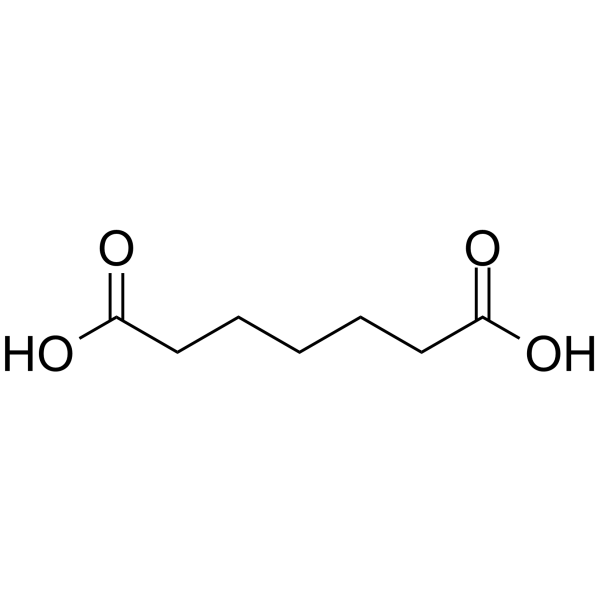
Pimelic acid (Heptanedioic acid; 1,5-Pentanedicarboxylic acid) is a seven-carbon α,ω-dicarboxylic acid and a downstream product of fatty acid synthesis. Pimelic acid is a key precursor in biotin biosynthesis. Pimelic acid can be converted to pimelic acid-CoA by the BioW enzyme, thereby bypassing exogenous biotin requirements to support growth in various biotinytrophic bacteria and fungi, and reversing antibiotic-induced inhibition of biotin synthesis. Furthermore, Pimelic acid has been proposed as a highly specific biomarker for oxygen-induced retinopathy in mice. Pimelic acid can be used to study retinopathy of preterm infants, oxygen-induced retinopathy, and microbial biotin metabolism .
loading...
    loading...
2
2 Cited Publications
Cat. No.: HY-122542B
CAS No.: 157379-44-7
Purity:  99.28%
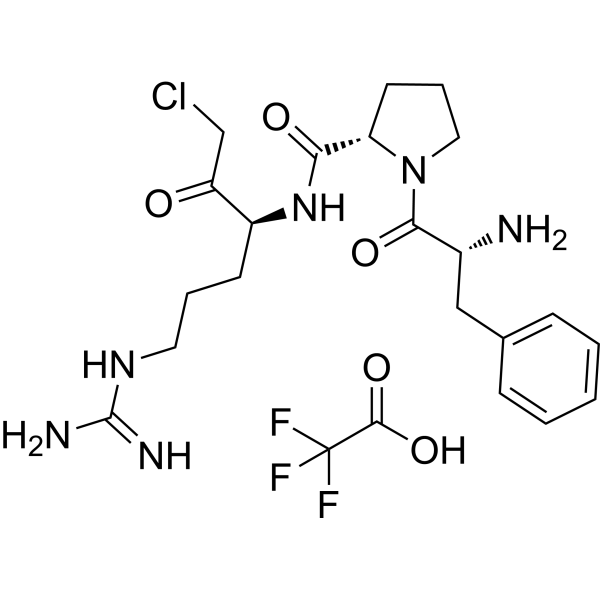
PPACK TFA is a potent, peptidic inhibitor targeting thrombin and granzyme GZMK. PPACK TFA specifically blocks the activities of thrombin and GZMK, thereby inhibiting thrombin-mediated PAR-1 cleavage, as well as downstream inflammatory and procoagulant signaling pathways. Through stabilizing IκB proteins, blocking NF-κB activation and reducing systemic levels of proinflammatory/procoagulant biomarkers, PPACK TFA exerts multiple effects including anti-inflammatory, antithrombotic, barrier repair, and inhibition of atherosclerotic plaque progression. PPACK TFA binds to platelets without interference from kininogen, effectively limiting acute thrombus growth and reducing eosinophil infiltration and goblet cell hyperplasia in asthma models. PPACK TFA is an important tool molecule for investigating the mechanisms of atherosclerosis, asthma and related thromboinflammatory diseases .
loading...
    loading...
2
2 Cited Publications
Cat. No.: HY-122542A
CAS No.: 82188-90-7
Synonyms: Pebac; D-Phenylalanyl-prolyl-arginyl Chloromethyl Ketone; D-Phe-Pro-Arg-CH2Cl
PPACK dihydrochloride is a potent, peptidic inhibitor targeting thrombin and granzyme GZMK. PPACK dihydrochloride specifically blocks the activities of thrombin and GZMK, thereby inhibiting thrombin-mediated PAR-1 cleavage, as well as downstream inflammatory and procoagulant signaling pathways. Through stabilizing IκB proteins, blocking NF-κB activation and reducing systemic levels of proinflammatory/procoagulant biomarkers, PPACK dihydrochloride exerts multiple effects including anti-inflammatory, antithrombotic, barrier repair, and inhibition of atherosclerotic plaque progression. PPACK dihydrochloride binds to platelets without interference from kininogen, effectively limiting acute thrombus growth and reducing eosinophil infiltration and goblet cell hyperplasia in asthma models. PPACK dihydrochloride is an important tool molecule for investigating the mechanisms of atherosclerosis, asthma and related thromboinflammatory diseases .
loading...
    loading...
Cat. No.: HY-122542
CAS No.: 71142-71-7
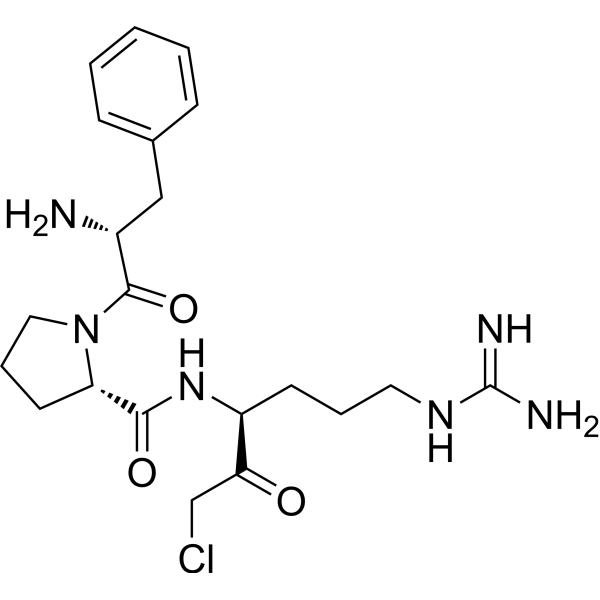
PPACK is a potent, peptidic inhibitor targeting thrombin and granzyme GZMK. PPACK specifically blocks the activities of thrombin and GZMK, thereby inhibiting thrombin-mediated PAR-1 cleavage, as well as downstream inflammatory and procoagulant signaling pathways. Through stabilizing IκB proteins, blocking NF-κB activation and reducing systemic levels of proinflammatory/procoagulant biomarkers, PPACK exerts multiple effects including anti-inflammatory, antithrombotic, barrier repair, and inhibition of atherosclerotic plaque progression. PPACK binds to platelets without interference from kininogen, effectively limiting acute thrombus growth and reducing eosinophil infiltration and goblet cell hyperplasia in asthma models. PPACK is an important tool molecule for investigating the mechanisms of atherosclerosis, asthma and related thromboinflammatory diseases .
loading...
    loading...
Cat. No.: HY-108292R
CAS No.: 66532-86-3
연구분야:  

Cancer

Propacetamol (hydrochloride) (Standard) is the analytical standard of Propacetamol (hydrochloride). This product is intended for research and analytical applications. Propacetamol hydrochloride is a potent, peptidic inhibitor targeting thrombin and granzyme GZMK. Propacetamol hydrochloride specifically blocks the activities of thrombin and GZMK, thereby inhibiting thrombin-mediated PAR-1 cleavage, as well as downstream inflammatory and procoagulant signaling pathways. Through stabilizing IκB proteins, blocking NF-κB activation and reducing systemic levels of proinflammatory/procoagulant biomarkers, Propacetamol hydrochloride exerts multiple effects including anti-inflammatory, antithrombotic, barrier repair, and inhibition of atherosclerotic plaque progression. Propacetamol hydrochloride binds to platelets without interference from kininogen, effectively limiting acute thrombus growth and reducing eosinophil infiltration and goblet cell hyperplasia in asthma models. Propacetamol hydrochloride is an important tool molecule for investigating the mechanisms of atherosclerosis, asthma and related thromboinflammatory diseases .
loading...
    loading...
Cat. No.: HY-179617
연구분야:  

Cancer

Cbl-b-IN-30 is an orally active Casitas B-lineage lymphoma-b (CBLB) inhibitor. Cbl-b-IN-30 specifically binds to CBLB and inhibits its E3 ubiquitin ligase activity with an IC50 of 9.1 nM. Cbl-b-IN-30 can promote IL-2 secretion (EC50 = 187.5 nM) and enhance T cell activation. Cbl-b-IN-30 exerts antitumor activity and can induce immune memory. Cbl-b-IN-30 can be used for the research of colon cancer .
loading...
    loading...

