1. Search Result
Search Result
Results for "

eIF4A Inhibitor

" in MedChemExpress (MCE) Product Catalog:

23

Inhibitors & Agonists

3

Natural
Products

Cat. No. Product Name Target Research Areas Chemical Structure
  • HY-19356
    Rocaglamide
    25+ Cited Publications

    Roc-A

    NF-κB HSP Eukaryotic Initiation Factor (eIF) Inflammation/Immunology Cancer
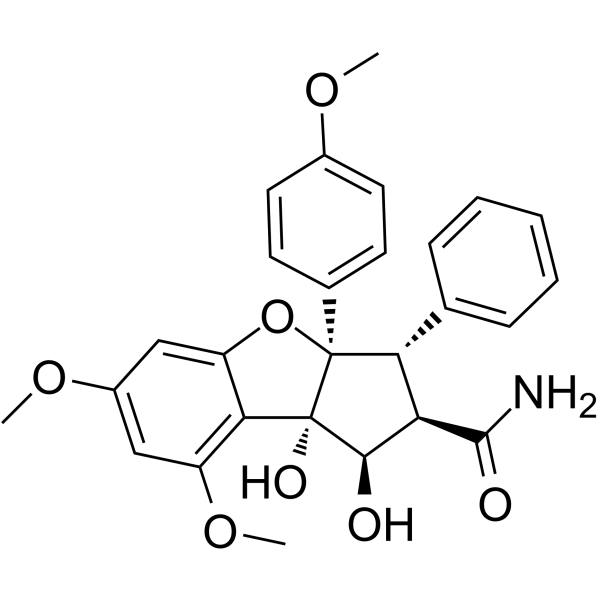
    Rocaglamide (Roc-A) is isolated from the genus Aglaia and can be used for coughs, injuries, asthma and inflammatory skin diseases. Rocaglamide is a potent inhibitor of NF-κB activation in T-cells. Rocaglamide is a potent and selective heat shock factor 1 (HSF1) activation inhibitor with an IC50 of ~50 nM. Rocaglamide inhibits the function of the translation initiation factor eIF4A. Rocaglamide also has anticancer properties in leukemia .
    Rocaglamide
  • HY-112163
    Zotatifin
    5+ Cited Publications

    eFT226

    Eukaryotic Initiation Factor (eIF) SARS-CoV Apoptosis Infection Cancer
    Zotatifin (eFT226) is a potent, selective, and well-tolerated eIF4A inhibitor. Zotatifin promotes eIF4A binding to specific mRNA sequences with recognition motifs in the 5’-UTRs (IC50=2 nM) and interferes with the assembly of the eIF4F initiation complex . Zotatifin shows robust antiviral effects, it effectively reduces viral infectivity by inhibiting SARS-CoV-2 NP protein biogenesis (IC90=37 nM) . Zotatifin induces cell apoptosis .
    Zotatifin
  • HY-13251
    Silvestrol
    Maximum Cited Publications
    52 Publications Verification

    (-)-Silvestrol

    Eukaryotic Initiation Factor (eIF) Apoptosis Autophagy Cancer
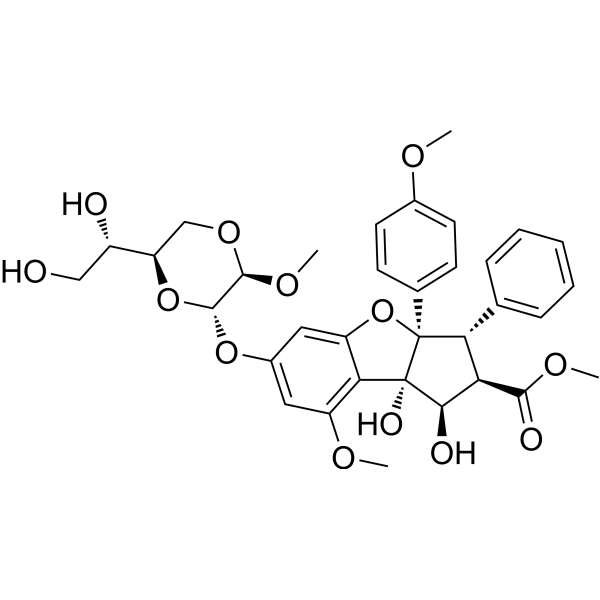
    Silvestrol is a eukaryotic translation initiation factor 4A (eIF4A) inhibitor isolated from Agave americana Linn.. Silvestrol induces autophagy and caspase-mediated apoptosis .
    Silvestrol
  • HY-136453
    CR-1-31-B
    10+ Cited Publications

    Eukaryotic Initiation Factor (eIF) Apoptosis Cancer
    CR-1-31-B is a synthetic rocaglate and a potent eIF4A inhibitor. CR-1-31-B exhibits powerful inhibitory effects over eIF4A by perturbing the interaction between eIF4A and RNA, sequentially impeding initiation during protein synthesis. CR-1-31-B perturbs association of Plasmodium falciparum eIF4A (PfeIF4A) with RNA. CR-1-31-B induces apoptosis of neuroblastoma and gallbladder cancer cells .
    CR-1-31-B
  • HY-19356A

    Eukaryotic Initiation Factor (eIF) Apoptosis Cancer
    Didesmethylrocaglamide, a derivative of Rocaglamide, is a potent eukaryotic initiation factor 4A (eIF4A) inhibitor. Didesmethylrocaglamide has potent growth-inhibitory activity with an IC50 of 5 nM. Didesmethylrocaglamide suppresses multiple growth-promoting signaling pathways and induces apoptosis in tumor cells. Antitumor activity .
    Didesmethylrocaglamide
  • HY-176842

    Eukaryotic Initiation Factor (eIF) Cancer
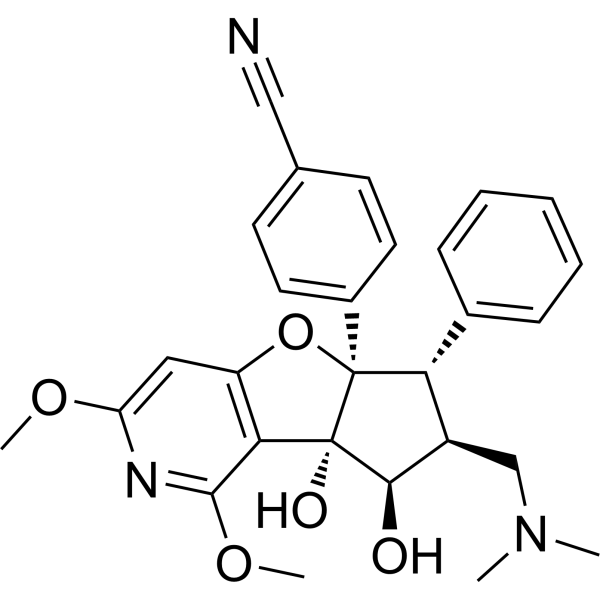
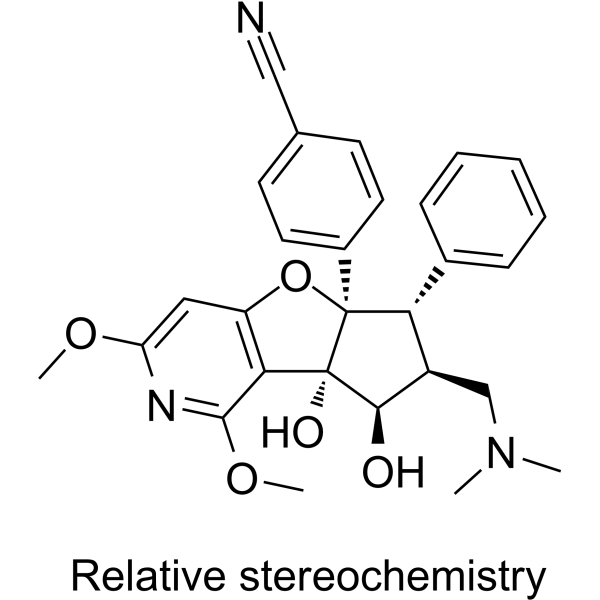
    eIF4A-IN-1 (Compound 79) is an eIF4A inhibitor that inhibits protein translation. eIF4A-IN-1 canb be used in gastric cancer research .
    eIF4A-IN-1
  • HY-148447

    Eukaryotic Initiation Factor (eIF) Cancer
    eIF4A-IN-3, Silvestrol (HY-13251) analogue, is an eIF4A inhibitor. eIF4A-IN-3 blocks protein translation initiation by interfering with eIF4F complex assembly, preferentially inhibiting translation of mRNAs with long, highly structured 5'-untranslated regions. eIF4A-IN-3 inhibits proliferation of human breast cancer cells. eIF4A-IN-3 has moderate apical to basolateral permeability in intestinal cell monolayers and a low efflux ratio .
    eIF4A-IN-3
  • HY-112163A

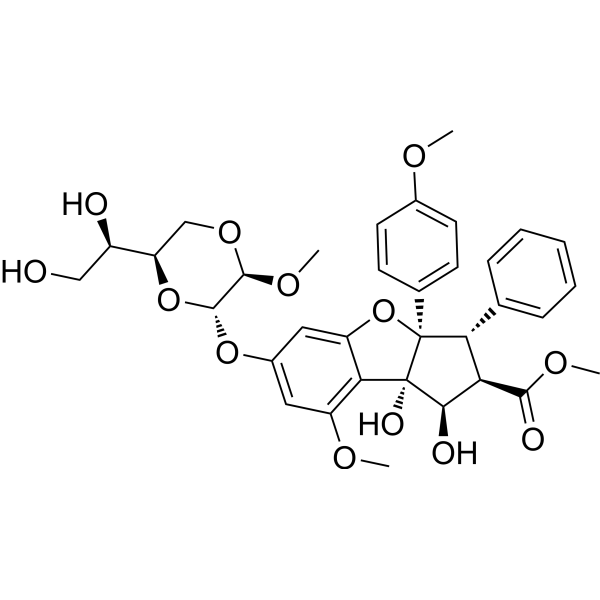
    rel-eFT226

    Eukaryotic Initiation Factor (eIF) SARS-CoV Apoptosis Infection Cancer
    rel-Zotatifin is the racemic isomer of Zotatifin, acts as an eIF4A inhibitor with activity less than Zotatifin. Zotatifin (eFT226) is a potent, selective, and well-tolerated eIF4A inhibitor. Zotatifin promotes eIF4A binding to specific mRNA sequences with recognition motifs in the 5’-UTRs (IC50=2 nM) and interferes with the assembly of the eIF4F initiation complex .
    rel-Zotatifin
  • HY-148448

    Eukaryotic Initiation Factor (eIF) Cancer
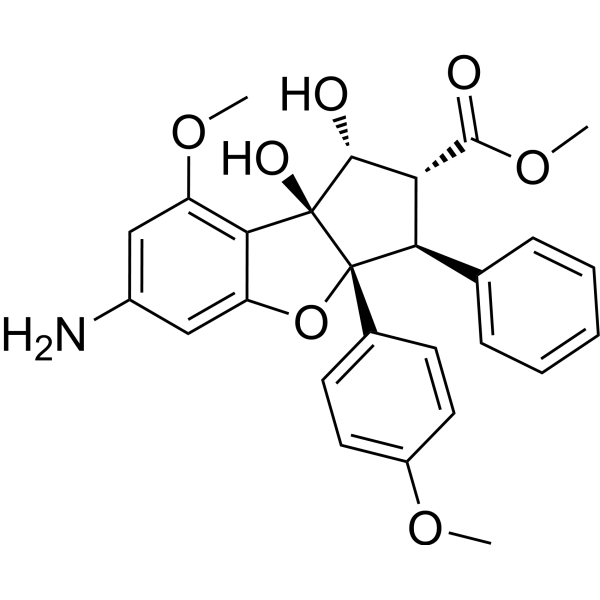
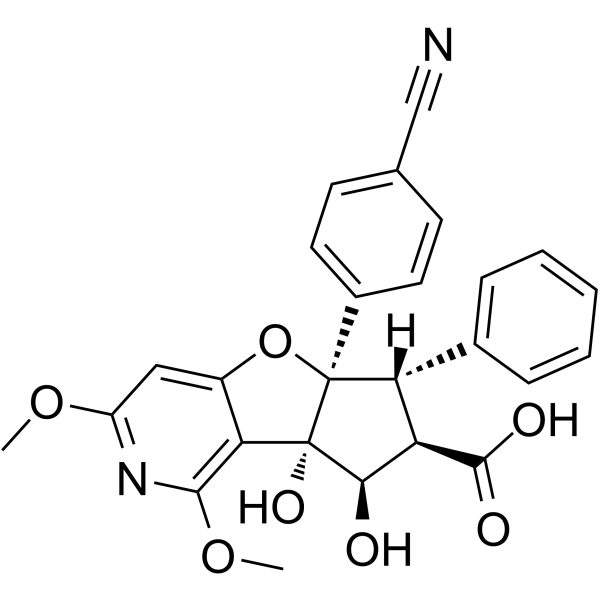
    eIF4A3-IN-9 is a Rocaglate analog. eIF4A3-IN-9 interferes with the assembly of the eIF4F translation complex, with EC50 values of 40 nM and > 2000 nM against myc-LUC and tub-LUC, respectively. eIF4A3-IN-9 can be used for the research of tumor pathogenesis .
    eIF4A3-IN-14
  • HY-148422
    Rohinitib
    1 Publications Verification

    Eukaryotic Initiation Factor (eIF) Apoptosis Cancer
    Rohinitib is a potent and specific eIF4A inhibitor. Rohinitib induces cell apoptosis of acute myeloid leukemia (AML) cell lines and reduces the leukemia burden of AML xenograft model. Rohinitib can be used for the research of AML .
    Rohinitib
  • HY-176844

    ADC Payload Drug Intermediate Cancer
    eIF4A-IN-1 intermediate (Compound 71E) is an intermediate of Eukaryotic translation initiation factor 4A (eIF4A) inhibitor. eIF4A-IN-1 intermediate can be used as a cytotoxic payload for synthesis of antibody-drug conjugates (ADCs) .
    eIF4A-IN-1 intermediate
  • HY-15359
    Episilvestrol
    1 Publications Verification

    Eukaryotic Initiation Factor (eIF) Autophagy Cancer
    Episilvestrol is a derivative of silvestrol, isolated from the fruits and twigs of Aglaia perviridis, and is a specific eIF4A-targeting translation inhibitor, with antitumor activity.
    Episilvestrol
  • HY-176843

    Eukaryotic Initiation Factor (eIF) ADC Payload Cancer
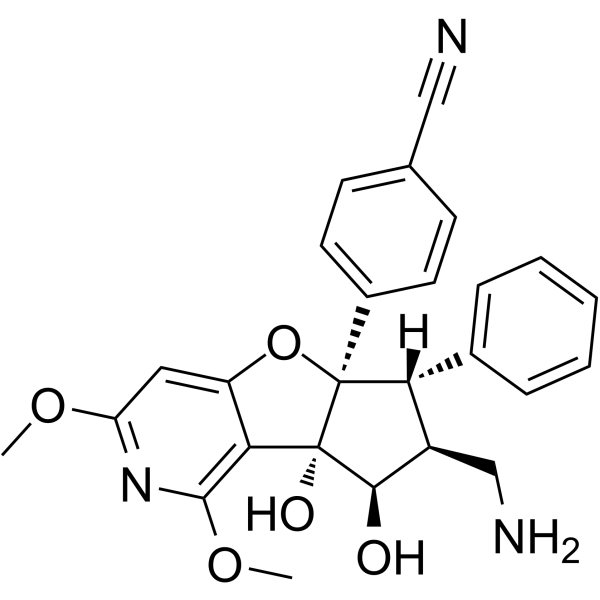
    eIF4A-IN-2 (Compound 93) is an Eukaryotic translation initiation factor 4A (eIF4A) inhibitor. eIF4A-IN-2 can be used as a cytotoxic payload for synthesis of antibody-drug conjugates (ADCs) .
    eIF4A-IN-2
  • HY-145360

    Eukaryotic Initiation Factor (eIF) Cancer
    eIF4A3-IN-6 is a potent inhibitor of eukaryotic initiation factor 4A (eIF4A), such as eIF4AI and eIF4AII. eIF4A3-IN-6 has the potential for the research of eIF4A dependent diseases, including the research of cancer (extracted from patent US20170145026A1) .
    eIF4A3-IN-6
  • HY-139872

    Eukaryotic Initiation Factor (eIF) Cancer
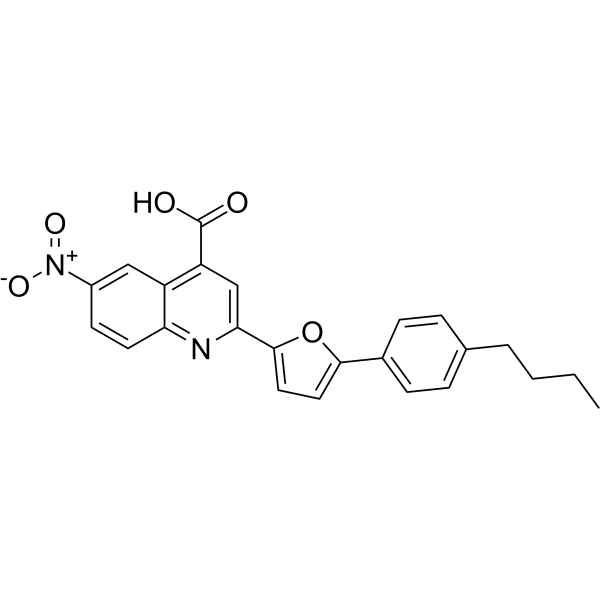
    eIF4A3-IN-4 is a novel eIF4A inhibitor with an IC50 value of 8.6 μM.
    eIF4A3-IN-4
  • HY-129767

    Eukaryotic Initiation Factor (eIF) Cancer
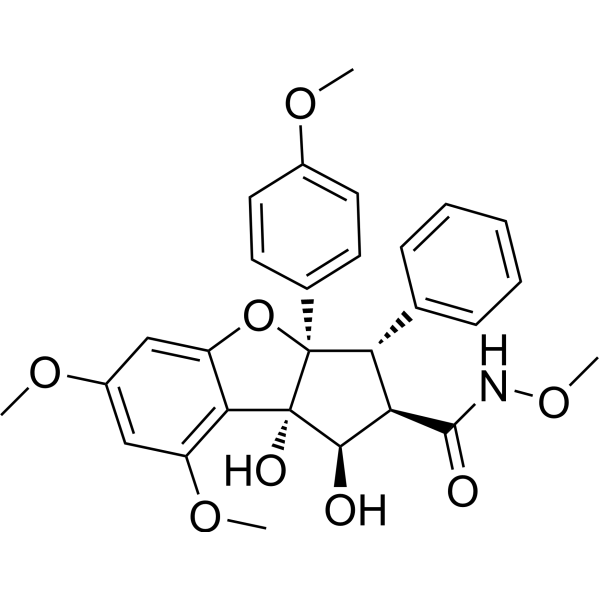
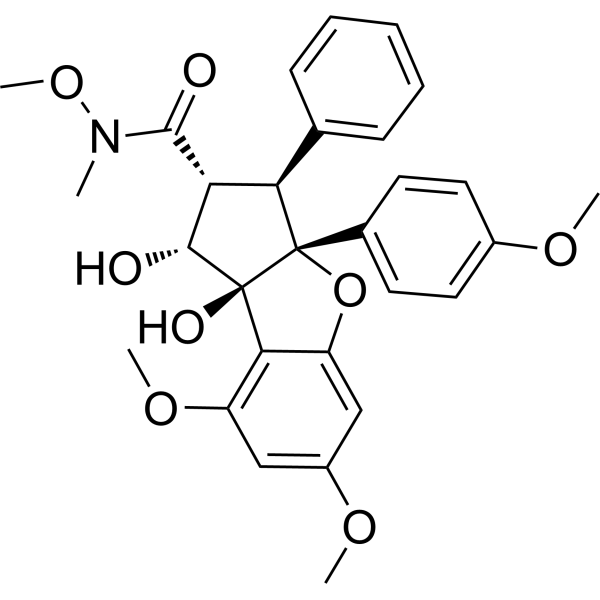
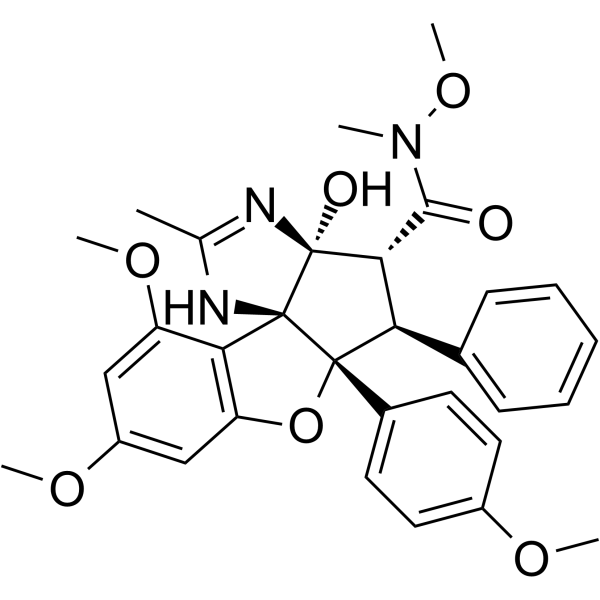
    CMLD012612 is an amidino-rocaglate containing a hydroxamate group and is a potent eukaryotic initiation factor 4A (eIF4A) inhibitor. CMLD012612 inhibits cell translation and is cytotoxic to NIH/3T3 cells with an IC50 value of 2 nM. CMLD012612 inhibits eukaryotic translation initiation by modifying the behavior of the RNA helicase (eIF4A) and possesses potent anti-neoplastic activity .
    CMLD012612
  • HY-129768

    Eukaryotic Initiation Factor (eIF) Cancer
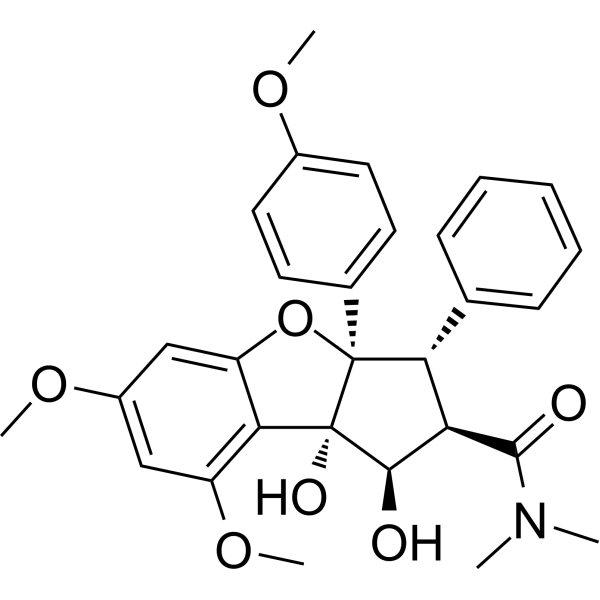
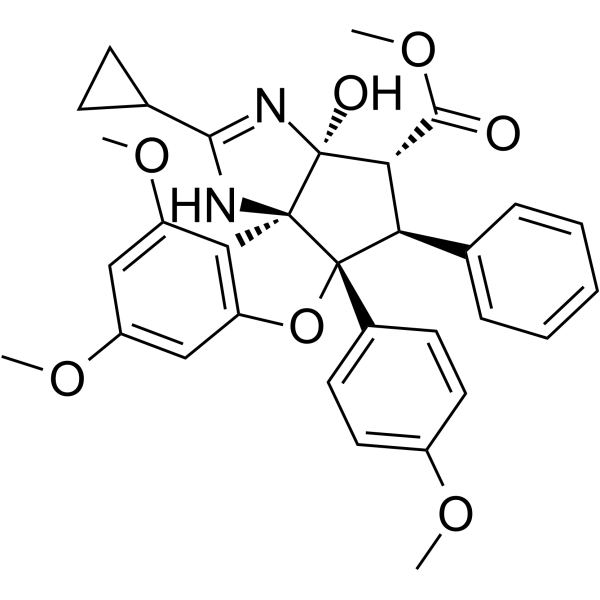
    CMLD012072 is an amidino-rocaglates and is a potent eukaryotic initiation factor 4A (eIF4A) inhibitor. CMLD012072 can induce RNA clamping of eIF4A1 and eIF4A2 and possess potent anti-neoplastic activity .
    CMLD012072
  • HY-19356B

    Drug Derivative NF-κB HSP Eukaryotic Initiation Factor (eIF) Inflammation/Immunology Cancer
    (+)-Rocaglamide is the dextrorotatory enantiomer of Rocaglamide (HY-19356). Rocaglamide (Roc-A) is isolated from the genus Aglaia and can be used for coughs, injuries, asthma and inflammatory skin diseases. Rocaglamide is a potent inhibitor of NF-κB activation in T-cells. Rocaglamide is a potent and selective heat shock factor 1 (HSF1) activation inhibitor with an IC50 of 50 nM. Rocaglamide inhibits the function of the translation initiation factor eIF4A. Rocaglamide also has anticancer properties in leukemia .
    (+)-Rocaglamide
  • HY-129769

    Eukaryotic Initiation Factor (eIF) Cancer
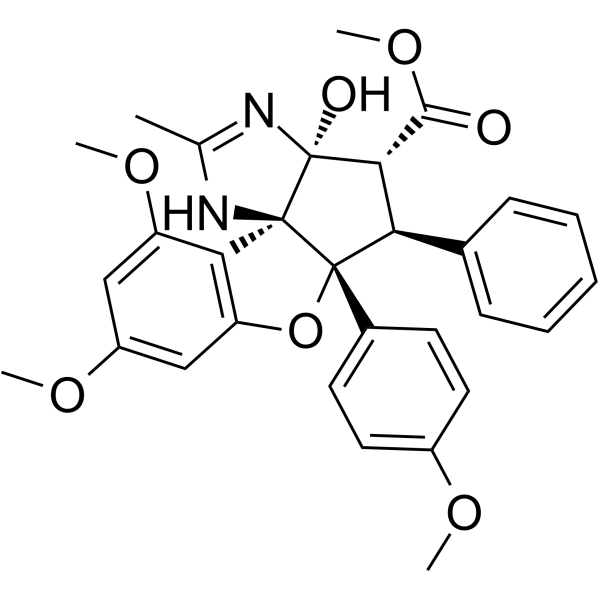
    CMLD012073 is an amidino-rocaglates and is a potent eukaryotic initiation factor 4A (eIF4A) inhibitor. CMLD012073 inhibits the growth of NIH/3T3 cells with an IC50 of 10 nM. CMLD012073 inhibits eukaryotic translation initiation by modifying the behavior of the RNA helicase (eIF4A) .
    CMLD012073
  • HY-145359

    Eukaryotic Initiation Factor (eIF) Cancer
    eIF4A3-IN-5 is a potent inhibitor of eukaryotic initiation factor 4A (eIF4A), such as eIF4AI and eIF4AII. eIF4A3-IN-5 has the potential for the research of eIF4A dependent diseases, including the research of cancer (extracted from patent US20170145026A1) .
    eIF4A3-IN-5
  • HY-186186

    ADC Payload Eukaryotic Initiation Factor (eIF) Cancer
    FD236, an eIF4A inhibitor, is the payload of DL149 (HY-183253).
    FD236
  • HY-173172

    Eukaryotic Initiation Factor (eIF) Apoptosis c-Myc CDK Cancer
    MG-002 is an orally active eIF4A inhibitor. MG-002 non-productively traps the eukaryotic translation initiation factor 4A (eIF4A) onto RNA, hindering the recruitment and scanning of ribosomes, thereby inhibiting mRNA translation. MG-002 selectively inhibits the growth and metastasis formation of triple-negative breast cancer (TNBC) tumors and induces cell apoptosis. MG-002 significantly inhibits the protein expression of c-MYC and cyclin D1. MG-002 can be used for research on TNBC .
    MG-002
  • HY-183253

    Drug-Linker Conjugates for ADC Eukaryotic Initiation Factor (eIF) EGFR Cancer
    DL149 is a component of an antibody-drug conjugate (ADC) formed by conjugating the eIF4A inhibitor FD236 (HY-186186) with an ADC linker, and exhibits potential antitumor activity. DL149 can bind to an anti-HER2 antibody to form a complete ADC molecule, which precisely binds to the HER2 receptor on the surface of tumor cells. After internalization into cells, it releases the eIF4A inhibitor payload. DL149 irreversibly blocks the mRNA translation process in tumor cells, thereby inhibiting tumor cell proliferation and inducing their death. DL149 exhibits in vivo antitumor activity in the SK-OV-3 xenograft tumor model, and can be used for the research of HER2-positive solid tumors .
    DL149

Inquiry Online

Your information is safe with us. * Required Fields.

Salutation


Country or Region *

Applicant Name *


Organization Name *

Department *


Email Address *


Product Name *

Cat. No.


Requested quantity *

Phone Number *


Remarks

Inquiry Online

Inquiry Information

Product Name:
Cat. No.:
Quantity:
MCE Japan Authorized Agent:

