20 Results for "

endogenous ceramide

" in MedChemExpress (MCE) Product Catalog:
Products (20)

20 Results for "endogenous ceramide" in MCE Product Catalog:

2
2 Cited Publications
Cat. No.: HY-113679
CAS No.: 100403-19-8
Target:  

Telomerase

Research Areas:  

Metabolic Disease Endocrinology

Ceramides Mixture is an endogenous ceramide and consists of hydroxy and non-hydroxy fatty acid-containing ceramides. Ceramides Mixture is a main lipid component of the permeability barrier in epidermis. Ceramides Mixture is involved in the regulation of growth inhibition, cell cycle arrest, and modulation of telomerase activity .
loading...
    loading...
1
1 Cited Publications
Cat. No.: HY-126015
CAS No.: 2748196-63-4
Purity:  ≥97.0%
Target:  

Acyltransferase

Research Areas:  

Metabolic Disease

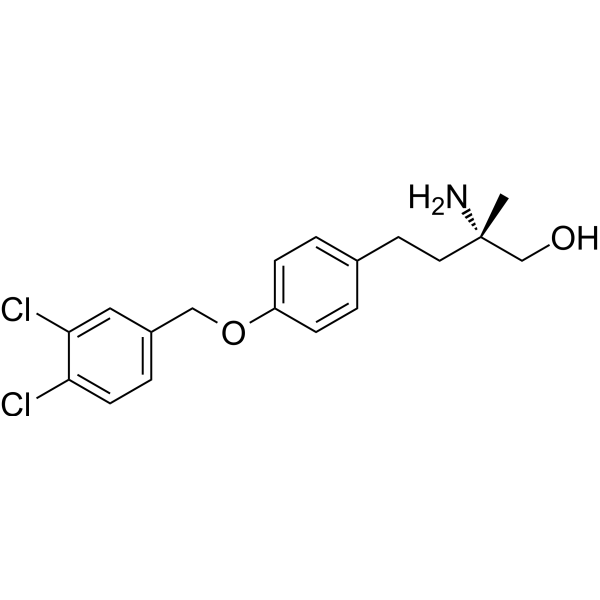
P053 is a potent, non-competitive and selective ceramide synthase 1 (CerS1) inhibitor wirh an IC50 of 0.5 μM. P053 acts as an endogenous inhibitor of mitochondrial fatty acid oxidation in muscle. Whole-body adiposity regulator .
loading...
    loading...
1
1 Cited Publications
Cat. No.: HY-124962
CAS No.: 35922-06-6
Purity:  99.74%
Synonyms: (1R,2R)-B13
Target:  

iGluR

Research Areas:  

Neurological Disease Cancer

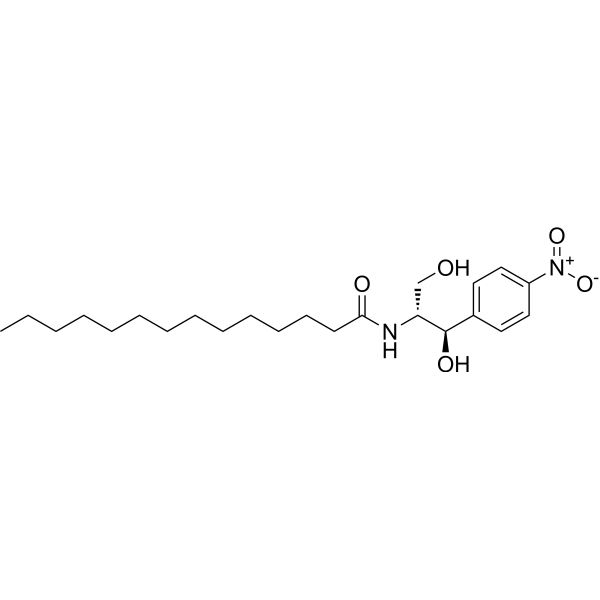
D-NMAPPD ((1R,2R)-B13) is an acid ceramidase inhibitor. D-NMAPPD regulates NMDA receptor properties by enhancing endogenous production of ceramides. D-NMAPPD has anticancer effecs .
loading...
    loading...
Cat. No.: HY-154831
CAS No.: 27888-44-4
Purity:  ≥98.0%
Synonyms: N-Behenoyl-D-erythro-sphingosine; C22-ceramide; Cer d18:1/22:0
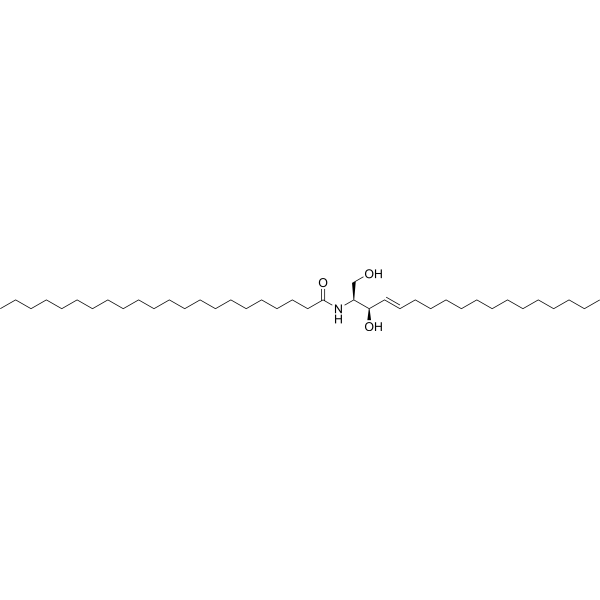
C22-Ceramide (d18:1/22:0) (Cer d18:1/22:0) is an endogenous bioactive sphingolipid. C22-Ceramide (d18:1/22:0) reduces the propensity of C16-ceramide channel formation in isolated rat liver mitochondria and in liposomes .
loading...
    loading...
Cat. No.: HY-N10634
CAS No.: 74365-77-8
Synonyms: C16 Glucosyl(β) ceramide (d18:1/16:0)
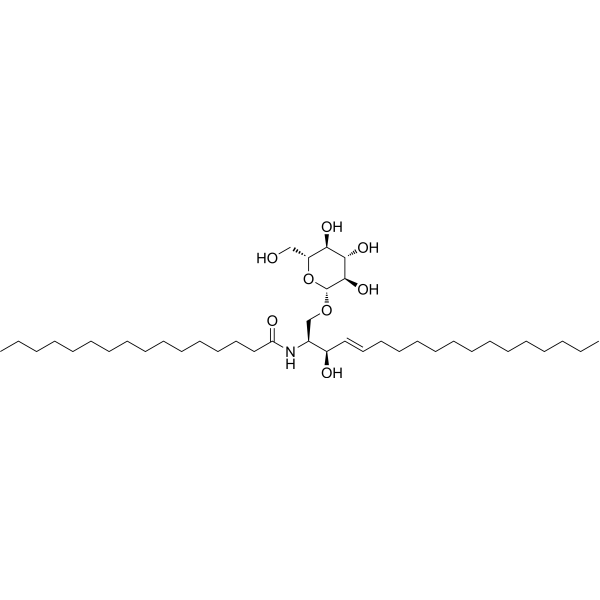
D-Glucosyl-β-1,1′-N-palmitoylsphingosine (C16 Glucosyl (β) Ceramide (d18:1/16:0)) is an endogenous Mincle ligand with immunostimulatory activity. D-Glucosyl-β-1,1′-N-palmitoylsphingosine binds to and activates macrophage-inducible C-type lectin (Mincle). D-Glucosyl-β-1,1′-N-palmitoylsphingosine is applicable to the research of immune system diseases .
loading...
    loading...
Cat. No.: HY-124177A
CAS No.: 123408-74-2
C14 Ceramide (d18:1/14:0) is an endogenous ceramide produced by ceramide synthetase 6, which can be used for Parkinson's and diabetes research .
loading...
    loading...
Cat. No.: HY-N15841
CAS No.: 67492-18-6
Category:  

Lipids

Target:  

Ceramidase

C25 Ceramide (d18:1/25:0) is an endogenous ultra-long-chain ceramide that antagonizes the detrimental effects of long-chain ceramides on insulin sensitivity. C25 Ceramide (d18:1/25:0) is specifically enriched in oxidative skeletal muscle fibers, where it serves dual roles in providing structural support to cell membranes and regulating cellular signaling. By participating in the regulation of lipid homeostasis within muscle fibers, C25 Ceramide (d18:1/25:0) helps maintain normal insulin signaling. C25 Ceramide (d18:1/25:0) is primarily utilized in research concerning metabolic diseases—particularly in mechanistic studies investigating the muscle fiber type-specific aspects of insulin resistance .
loading...
    loading...
Cat. No.: HY-D1574
CAS No.: 94885-04-8
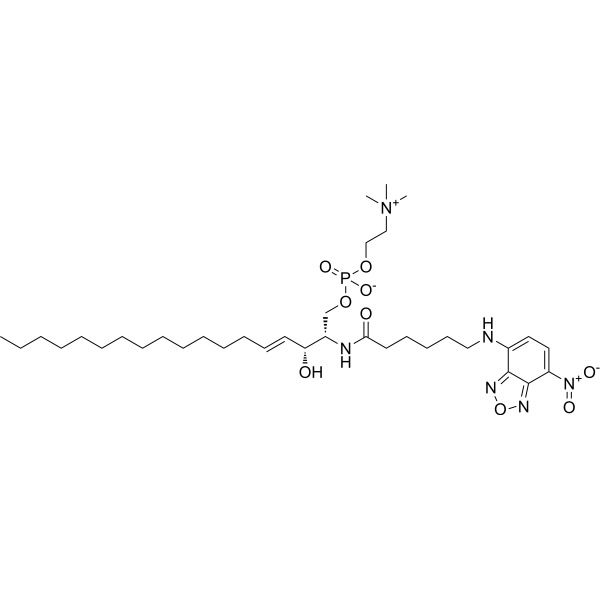
C6 NBD Sphingomyelin is a fluorescent short-chain analogue of Sphingomyelin (HY-113498). Chlamydia trachomatis acquires C6 NBD Sphingomyelin endogenously synthesizes from C6-NBD-ceramide and transportes to the chlamydial inclusion. C6 NBD Sphingomyelin can incorporate into the plasma membrane .
loading...
    loading...
Cat. No.: HY-176568
LCL768 is a ceramide analog. LCL768 attenuates PARKIN succination to promote PARKIN activation and mitophagy. LCL768 induces CerS1-mediated endogenous C18-ceramide accumulation in mitochondria to mediate mitophagy, which is dependent on DRP1 activation via nitrosylation at C644. LCL768 alters mitochondrial metabolism, resulting in fumarate depletion and leading to tumor suppression. LCL768 improves sensorimotor defects in neurodegenerative diseases like ALS .
loading...
    loading...
Cat. No.: HY-116017
CAS No.: 111122-57-7
Target:  

Endogenous Metabolite

Research Areas:  

Metabolic Disease

C10 ceramide is an endogenous, bioactive sphingolipid,
loading...
    loading...
Cat. No.: HY-124177AS
C14 Ceramide (d18:1/14:0)-d7 is the deuterium labeled C14 Ceramide (d18:1/14:0) (HY-124177A). C14 Ceramide (d18:1/14:0) is an endogenous ceramide produced by ceramide synthetase 6, which can be used for Parkinson's and diabetes research .
loading...
    loading...
Cat. No.: HY-128753S6
CAS No.: 288846-88-8
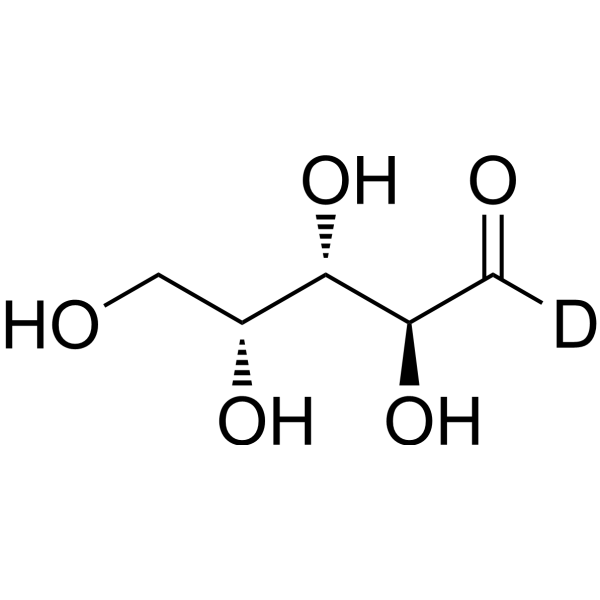
D-Lyxose-d is the deuterium labeled D-Lyxose. D-Lyxose is an endogenous metabolite. D-Lyxose is a rare pentose sugar with significant potential for drug synthesis. D-Lyxose can be used as a starting material for anti-tumor drugs such as alpha galactose ceramide immunostimulants. D-Lyxose can be used as a precursor for L-nucleoside analogs for the development of antiviral drugs. D-Lyxose can be used as a synthetic intermediate for other rare sugars such as L-ribose .
loading...
    loading...
Cat. No.: HY-124134
CAS No.: 366487-89-0
Synonyms: LCL102
Target:  

Ceramidase Caspase PARP

Research Areas:  

Cancer

AD-2646 (LCL102), a ceramide analog, can kill leukemic T cells (EC50: 40 μM). AD-2646 triggers the cleavage of caspase-8, -9 and -3, as well as the caspase substrate PARP. AD-2646 is a ceramidase inhibitor. AD-2646 induces an accumulation of endogenous ceramide owing to perturbed ceramide metabolism .
loading...
    loading...
Cat. No.: HY-128753S7
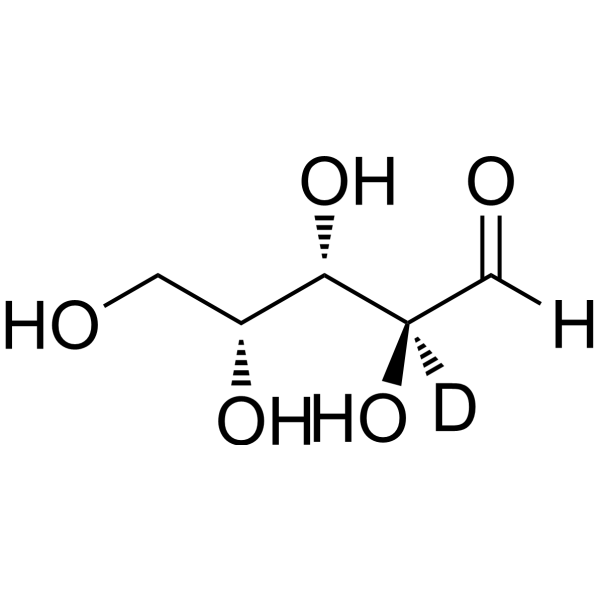
D-Lyxose-d-1 is the deuterium labeled D-Lyxose. D-Lyxose is an endogenous metabolite. D-Lyxose is a rare pentose sugar with significant potential for drug synthesis. D-Lyxose can be used as a starting material for anti-tumor drugs such as alpha galactose ceramide immunostimulants. D-Lyxose can be used as a precursor for L-nucleoside analogs for the development of antiviral drugs. D-Lyxose can be used as a synthetic intermediate for other rare sugars such as L-ribose .
loading...
    loading...
Cat. No.: HY-128753R
CAS No.: 1114-34-7
D-Lyxose (Standard) is the analytical standard of D-Lyxose. This product is intended for research and analytical applications. D-Lyxose is an endogenous metabolite. D-Lyxose is a rare pentose sugar with significant potential for drug synthesis. D-Lyxose can be used as a starting material for anti-tumor drugs such as alpha galactose ceramide immunostimulants. D-Lyxose can be used as a precursor for L-nucleoside analogs for the development of antiviral drugs. D-Lyxose can be used as a synthetic intermediate for other rare sugars such as L-ribose .
loading...
    loading...
Cat. No.: HY-128753S3
CAS No.: 70849-22-8
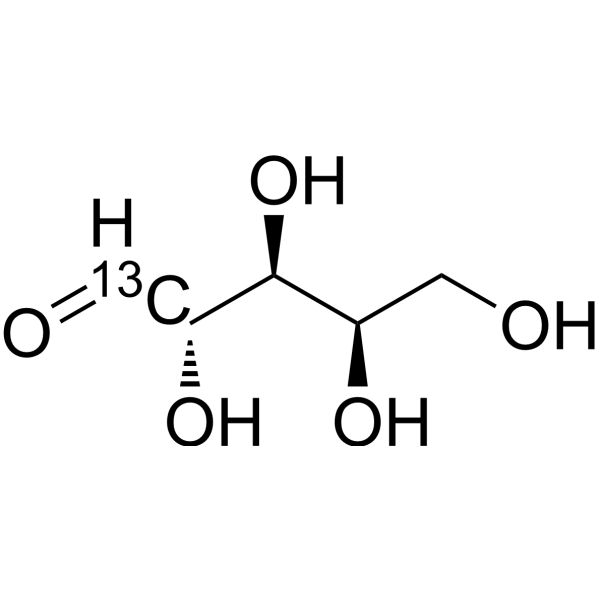
D-Lyxose- 13C-2 is the 13C labeled D-Lyxose. D-Lyxose is an endogenous metabolite. D-Lyxose is a rare pentose sugar with significant potential for drug synthesis. D-Lyxose can be used as a starting material for anti-tumor drugs such as alpha galactose ceramide immunostimulants. D-Lyxose can be used as a precursor for L-nucleoside analogs for the development of antiviral drugs. D-Lyxose can be used as a synthetic intermediate for other rare sugars such as L-ribose .
loading...
    loading...
Cat. No.: HY-128753S4
CAS No.: 83379-39-9
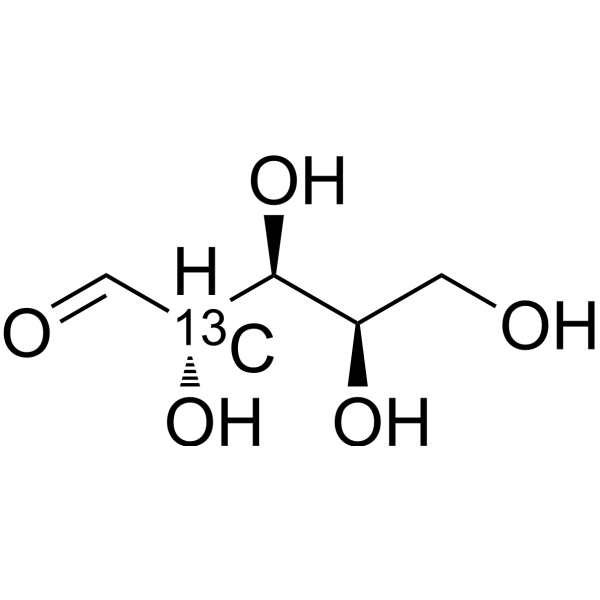
D-Lyxose- 13C-3 is the 13C labeled D-Lyxose. D-Lyxose is an endogenous metabolite. D-Lyxose is a rare pentose sugar with significant potential for drug synthesis. D-Lyxose can be used as a starting material for anti-tumor drugs such as alpha galactose ceramide immunostimulants. D-Lyxose can be used as a precursor for L-nucleoside analogs for the development of antiviral drugs. D-Lyxose can be used as a synthetic intermediate for other rare sugars such as L-ribose .
loading...
    loading...
Cat. No.: HY-128753S5
CAS No.: 139657-61-7
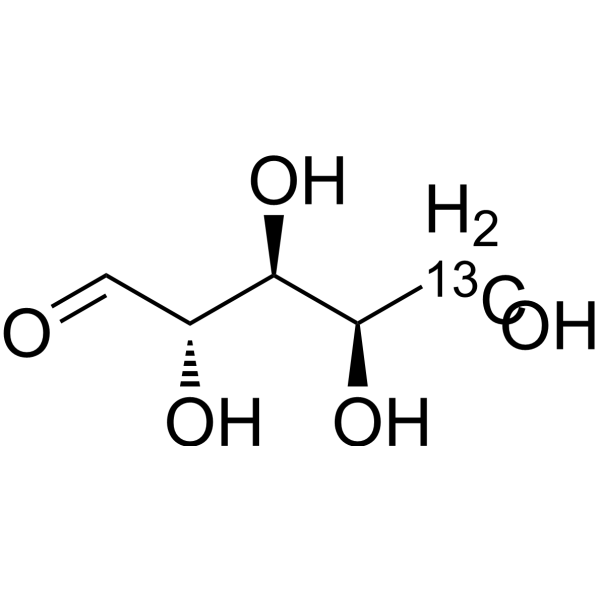
D-Lyxose- 13C-4 is the 13C labeled D-Lyxose. D-Lyxose is an endogenous metabolite. D-Lyxose is a rare pentose sugar with significant potential for drug synthesis. D-Lyxose can be used as a starting material for anti-tumor drugs such as alpha galactose ceramide immunostimulants. D-Lyxose can be used as a precursor for L-nucleoside analogs for the development of antiviral drugs. D-Lyxose can be used as a synthetic intermediate for other rare sugars such as L-ribose .
loading...
    loading...
Cat. No.: HY-172668
Target:  

Endogenous Metabolite

Research Areas:  

Others

C22 Ceramide (d18:1(14Z)/22:0) is an endogenous bioactive sphingolipid. C22 Ceramide (d18:1(14Z)/22:0) has the effects of promoting cell cycle arrest and inducing apoptosis .
loading...
    loading...
Cat. No.: HY-N10634S
CAS No.: 71924-12-4
Synonyms: N-ω-CD3-Hexadecaoyl-glucopsychosie; GluCe(d18:1/16:0-d3); Glucosylceamide-d3 (d18:1/16:0-d3)
D-Glucosyl-β-N-palmitoylsphingosine-d3 (N-ω-CD3-Hexadecaoyl-glucopsychosie) is deuterium labeled D-Glucosyl-β-1,1′-N-palmitoylsphingosine (HY-N10634). D-Glucosyl-β-1,1′-N-palmitoylsphingosine (C16 Glucosyl(β) Ceramide (d18:1/16:0)) is an endogenous Mincle ligand possessing immunostimulatory activity .
loading...
    loading...
  • 1

