
1. Search Result
Search Result
Results for "

endogenous proteins

" in MedChemExpress (MCE) Product Catalog:

173

Inhibitors & Agonists

3

Screening Libraries

4

Fluorescent Dyes

5

Biochemical Assay Reagents

36

Peptides

2

MCE Kits

2

Inhibitory Antibodies

26

Natural
Products

31

Isotope-Labeled Compounds

8

Oligonucleotides

1

GMP Molecules

Cat. No. Product Name Target Research Areas Chemical Structure
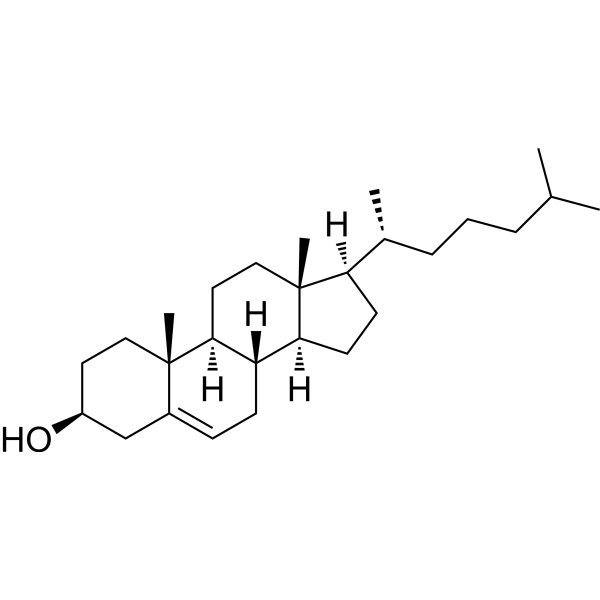
  • HY-N0322
    Cholesterol (from animal)
    80+ Cited Publications

    Environmental Pollutants Endogenous Metabolite Estrogen Receptor/ERR Bacterial Liposome Infection Metabolic Disease Cancer
    Cholesterol (from animal) is the major sterol in mammals. It is making up 20-25% of structural component of the plasma membrane. Plasma membranes are highly permeable to water but relatively impermeable to ions and protons. Cholesterol (from animal) plays an important role in determining the fluidity and permeability characteristics of the membrane as well as the function of both the transporters and signaling proteins . Cholesterol (from animal) is also an endogenous estrogen-related receptor α (ERRα) agonist .
    Cholesterol (from animal)
  • HY-B0228
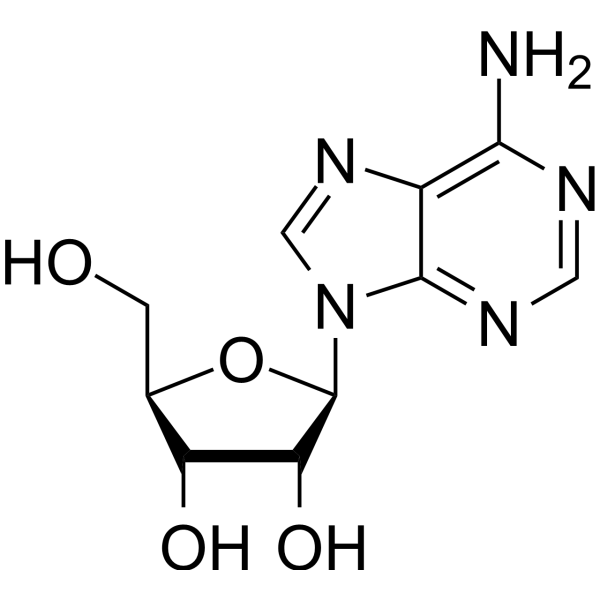
    Adenosine
    15+ Cited Publications

    Adenine riboside; D-Adenosine

    Environmental Pollutants Autophagy Nucleoside Antimetabolite/Analog Endogenous Metabolite Apoptosis Metabolic Disease Cancer
    Adenosine (Adenine riboside), a ubiquitous and BBB-permeable endogenous autacoid, acts through the enrollment of four G protein-coupled receptors: A1, A2A, A2B, and A3. Adenosine affects almost all aspects of cellular physiology, including neuronal activity, vascular function, platelet aggregation, and blood cell regulation .
    Adenosine
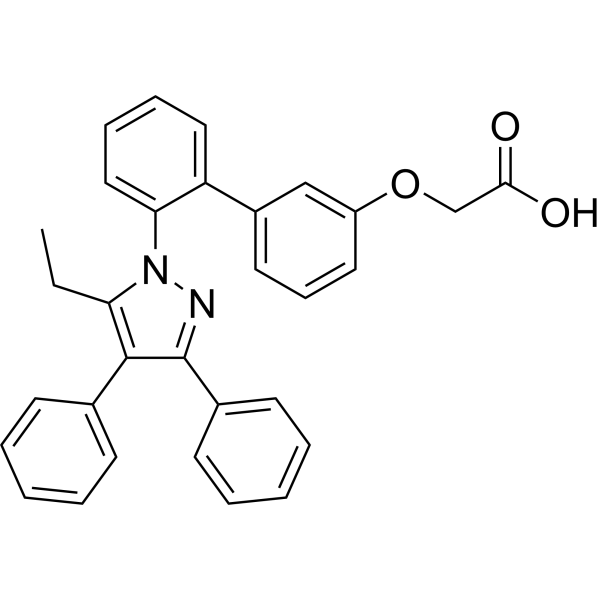
  • HY-101903
    BMS-309403
    20+ Cited Publications

    FABP Cardiovascular Disease Metabolic Disease
    BMS-309403 is a potent, orally active and selective adipocyte fatty acid binding protein (also known as FABP4, aP2) inhibitor with Kis of <2, 250, and 350 nM for FABP4, FABP3, and FABP5, respectively. BMS-309403 interacts with the fatty-acid-binding pocket within the interior of the protein and competitively inhibits the binding of endogenous fatty acids. BMS-309403 improves endothelial function in apolipoprotein E-deficient mice and in cultured human endothelial cells .
    BMS-309403
  • HY-134956
    VT104
    3 Publications Verification

    YAP Cancer
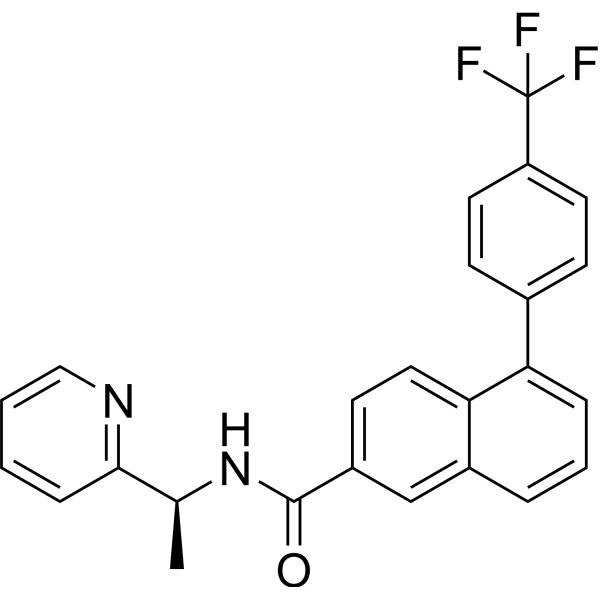
    VT104 is a potent and orally active YAP/TAZ inhibitor. VT104 prevents palmitoylation of endogenous TEAD1 and TEAD3 proteins. VT104 can be used in research of cancer .
    VT104
  • HY-P1944
    Apelin-13
    Maximum Cited Publications
    10 Publications Verification

    Apelin Receptor (APJ) Cardiovascular Disease Metabolic Disease
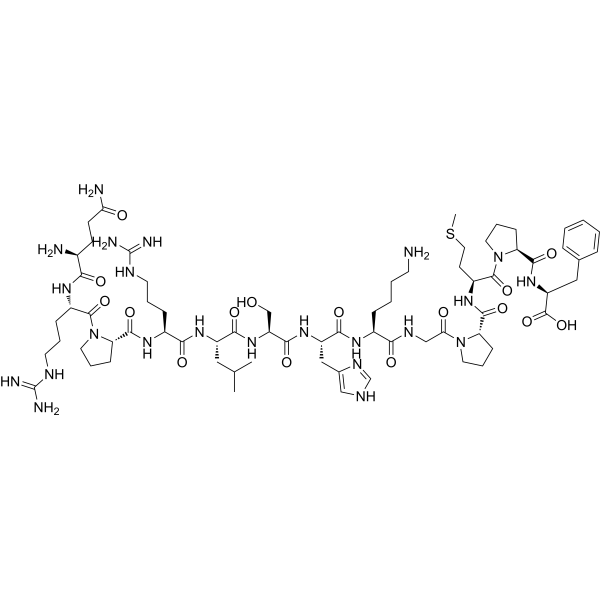
    Apelin-13 is an endogenous ligand for the G-protein coupled receptor angiotensin II protein J (APJ), activating this G protein-coupled receptor with an EC 50 value of 0.37 nM. Apelin-13 is widely distributed in the central and peripheral nervous systems. Apelin-13 has vasodilatory and antihypertensive effects. Apelin-13 also can be used for researching type 2 diabetes and metabolic syndrome .
    Apelin-13
  • HY-P1944A
    Apelin-13 TFA
    Maximum Cited Publications
    10 Publications Verification

    Apelin Receptor (APJ) Cardiovascular Disease Metabolic Disease
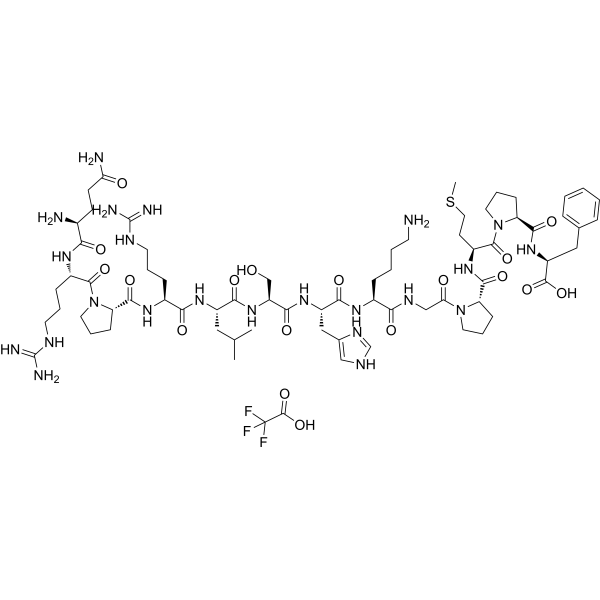
    Apelin-13 TFA is an endogenous ligand for the G-protein coupled receptor angiotensin II protein J (APJ), activating this G protein-coupled receptor with an EC 50 value of 0.37 nM. Apelin-13 TFA has vasodilatory and antihypertensive effects. Apelin-13 TFA also can be used for researching type 2 diabetes and metabolic syndrome .
    Apelin-13 TFA
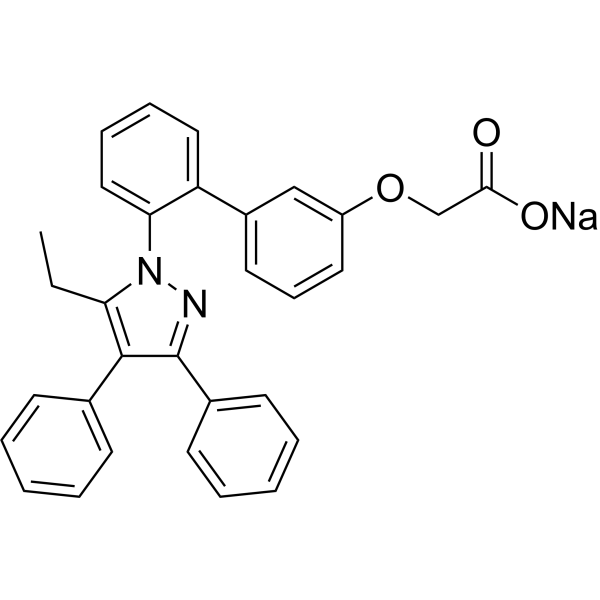
  • HY-101903A
    BMS-309403 sodium
    20+ Cited Publications

    FABP Cardiovascular Disease Metabolic Disease
    BMS-309403 sodium is a potent, orally active, and selective adipocyte fatty acid binding protein (also known as FABP4, aP2) inhibitor, with Kis of <2, 250, and 350 nM for FABP4, FABP3, and FABP5, respectively. BMS-309403 sodium interacts with the fatty-acid-binding pocket within the interior of the protein and competitively inhibits the binding of endogenous fatty acids. BMS-309403 sodium improves endothelial function in apolipoprotein E-deficient mice and in cultured human endothelial cells .
    BMS-309403 sodium
  • HY-145752
    HaloPROTAC-E
    1 Publications Verification

    PROTACs SGK Autophagy Cancer
    HaloPROTAC-E is a potent Halo PROTAC degrader that reversibly induces degradation of two Halo-tagged endoplasmic reticulum-localized proteins, SGK3 and VPS34, with a DC50 of 3-10 nM. HaloPROTAC-E significantly and selectively induces degradation of endogenous VPS34 complexes (VPS34, VPS15, Beclin1, and ATG14) labeled with Halo and inhibits autophagy.
    HaloPROTAC-E
  • HY-P3108
    Alamandine
    2 Publications Verification

    Angiotensin Receptor Angiotensin-converting Enzyme (ACE) Cardiovascular Disease
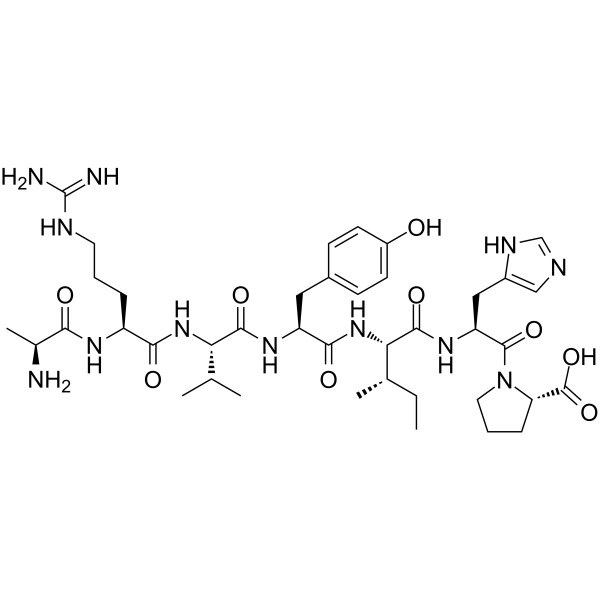
    Alamandine, a member of the renin-angiotensin system (RAS), a vasoactive peptide, is an endogenous ligand of the G protein-coupled receptor MrgD. Alamandine targets to protect the kidney and heart through anti-hypertensive actions .
    Alamandine
  • HY-P990685

    Cyclin G-associated Kinase (GAK) Cardiovascular Disease
    Romiplostim is an Fc-peptide fusion protein mimetic of TPO (thrombopoietin protein) and also a c-Mpl agonist. Romiplostim binds to c-Mpl, stimulates megakaryocyte-mediated thrombopoiesis, and activates the same downstream signaling pathways as endogenous TPO. Romiplostim is applicable to research related to hematopoietic acute radiation syndrome and chronic immune thrombocytopenia .
    Romiplostim
  • HY-128746

    Endogenous Metabolite Metabolic Disease
    2,6-Diaminopimelic acid is a endogenous metabolite produced in bacteria and is a component of cell wall. 2,6-Diaminopimelic acid is essential for microbial metabolism and is a potential marker for quantification of microbial proteins .
    2,6-Diaminoheptanedioic acid
  • HY-10858
    WAY 316606
    4 Publications Verification

    sFRP-1 Wnt Cancer
    WAY 316606 is an inhibitor of the secreted protein sFRP-1, an endogenous antagonist of the secreted glycoprotein Wnt. The affinity of WAY-316606 for sFRP-1 is determined using the FP binding assay with IC50 of 0.5 μM .
    WAY 316606
  • HY-110098
    Ro 5212773
    1 Publications Verification

    EPPTB

    Trace Amine-associated Receptor (TAAR) Neurological Disease
    Ro 5212773 (EPPTB) is a potent and selective trace amine-associated receptor 1 (TAAR1) antagonist (Ki=0.9 nM for mouse TAAR1), with no significant effects on other TAARs. TAAR1 is a G protein-coupled receptor (GPCR) that is nonselectively activated by endogenous metabolites of amino acids .
    Ro 5212773
  • HY-108355
    R59949
    1 Publications Verification

    PKC Cancer
    R59949 is a pan diacylglycerol kinase (DGK) inhibitor with an IC50 of 300 nM. R59949 strongly inhibits the activity of type I DGK α and γ and moderately attenuates the activity of type II DGK θ and κ. R59949 activates protein kinase C (PKC) by enhancing the levels of the endogenous ligand diacyl glycerol .
    R59949
  • HY-W074890
    Palmitoylglycine
    1 Publications Verification

    N-palmitoyl glycine

    Calcium Channel NO Synthase Neurological Disease Inflammation/Immunology
    Palmitoylglycine (N-palmitoyl glycine), an endogenous lipid that acts as a modulator of calcium influx and nitric oxide () production in sensory neurons. Palmitoylglycine is linked to an increased risk of Background Brugada syndrome (BrS) and interacts with BrS-associated proteins, demonstrating moderate binding affinities for DCC, CR1, CTSB, NAAA, DEFB1, EPHA1, IGF1/IGFBP3/ALS, and LTA .
    Palmitoylglycine
  • HY-N0322R
    Cholesterol (Standard)
    70+ Cited Publications

    Liposome Reference Standards Estrogen Receptor/ERR Endogenous Metabolite Bacterial Metabolic Disease Cancer
    Cholesterol (Standard) is the analytical standard of Cholesterol. This product is intended for research and analytical applications. Cholesterol is the major sterol in mammals. It is making up 20-25% of structural component of the plasma membrane. Plasma membranes are highly permeable to water but relatively impermeable to ions and protons. Cholesterol plays an important role in determining the fluidity and permeability characteristics of the membrane as well as the function of both the transporters and signaling proteins . Cholesterol is also an endogenous estrogen-related receptor α (ERRα) agonist .
    Cholesterol (Standard)
  • HY-100197
    Synaptamide
    1 Publications Verification

    N-Docosahexaenoyl ethanolamine (DHEA); Docosahexaenoyl ethanolamide

    Cannabinoid Receptor Neurological Disease
    Synaptamide (Dehydroepiandrosteron; DHEA) is an endogenous metabolite and structural analogue of Anandamide. Synaptamide binds to both the cannabinoid-1 and 2 (CB1 and CB2) cannabinoid receptors and has anti-inflammatory properties. Synaptamide is the first small-molecule endogenous ligand of an adhesion G protein-coupled receptor (aGPCR) .
    Synaptamide
  • HY-P4373A
    Hepcidin-1 (mouse) TFA
    1 Publications Verification

    Cathepsin MMP Inflammation/Immunology
    Hepcidin-1 (mouse) TFA is an endogenous peptide hormone involved in the regulation of iron homeostasis. Hepcidin-1 (mouse) TFA upregulates mRNA levels of TRAP, cathepsin K, and MMP-9 and increases TRAP-5b protein secretion. Hepcidin-1 (mouse) TFA downregulates the level of FPN1 protein and increases intracellular iron. Hepcidin-1 (mouse) TFA facilitates osteoclast differentiation .
    Hepcidin-1 (mouse) TFA
  • HY-D2919

    Fluorescent Dye Infection
    DMN-Tre is a conjugate of a solvatochromic fluorescent dye and trehalose. DMN-Tre takes advantage of the substrate promiscuity of the endogenous antigen 85 protein complex in mycobacteria to be metabolically integrated into the hydrophobic mycobacterial membrane. Once entering this hydrophobic environment, the linked DMN dye fluorescence is "turned on", enabling specific labeling . DMN-Tre can be used to reflect bacterial metabolic activity and support physiological studies of Mycobacterium tuberculosis .
    DMN-Tre
  • HY-B0228S1

    Adenine riboside-13C5; D-Adenosine-13C5

    Apoptosis Nucleoside Antimetabolite/Analog Autophagy Endogenous Metabolite Cancer
    Adenosine- 13C5 is the 13C labeled Adenosine . Adenosine (Adenine riboside), a ubiquitous endogenous autacoid, acts through the enrollment of four G protein-coupled receptors: A1, A2A, A2B, and A3. Adenosine affects almost all aspects of cellular physiology, including neuronal activity, vascular function, platelet aggregation, and blood cell regulation .
    Adenosine-13C5
  • HY-W019724

    Drug Intermediate Reactive Oxygen Species (ROS) Neurological Disease Metabolic Disease Cancer
    2,2-Dihydroxyacetic acid is an endogenous metabolite, which is the monohydrate of Glyoxylic Acid. 2,2-Dihydroxyacetic acid may participate in the microbial glyoxylate cycle, induce an increase in reactive oxygen species, promote cell differentiation, and modify proteins to form advanced glycation end products (AGEs) (HY-NP165). 2,2-Dihydroxyacetic acid is associated with metabolic diseases such as primary hyperoxaluria .
    2,2-Dihydroxyacetic acid
  • HY-124675
    MYCMI-6
    1 Publications Verification

    NSC354961

    c-Myc Apoptosis Cancer
    MYCMI-6 (NSC354961) is a potent and selective endogenous MYC:MAX protein interactions inhibitor. MYCMI-6 blocks MYC-driven transcription and binds selectively to the MYC bHLHZip domain with a Kd of 1.6 μM. MYCMI-6 inhibits tumor cell growth in a MYC-dependent manner (IC50<0.5 μM). MYCMI-6 is not cytotoxic to normal human cells. MYCMI-6 induces apoptosis .
    MYCMI-6
  • HY-N0322S1

    Estrogen Receptor/ERR Endogenous Metabolite Metabolic Disease
    Cholesterol-d6 is the deuterium labeled Cholesterol. Cholesterol is the major sterol in mammals. It is making up 20-25% of structural component of the plasma membrane. Plasma membranes are highly permeable to water but relatively impermeable to ions and protons. Cholesterol plays an important role in determining the fluidity and permeability characteristics of the membrane as well as the function of both the transporters and signaling proteins . Cholesterol is also an endogenous estrogen-related receptor α (ERRα) agonist .
    Cholesterol-d6
  • HY-P4193

    MHC Inflammation/Immunology Cancer
    AH1 is an immunodominant MHC class I-restricted nonamer peptide recognized by CD8 + cytotoxic T lymphocytes. AH1 derives from the envelope protein (gp70) of an endogenous ecotropic murine leukemia virus and is presented by the MHC class I L d molecule. AH1 can be used for the research of colorectal carcinoma .
    AH1
  • HY-114189
    GW284543
    1 Publications Verification

    UNC10225170

    MEK Cancer
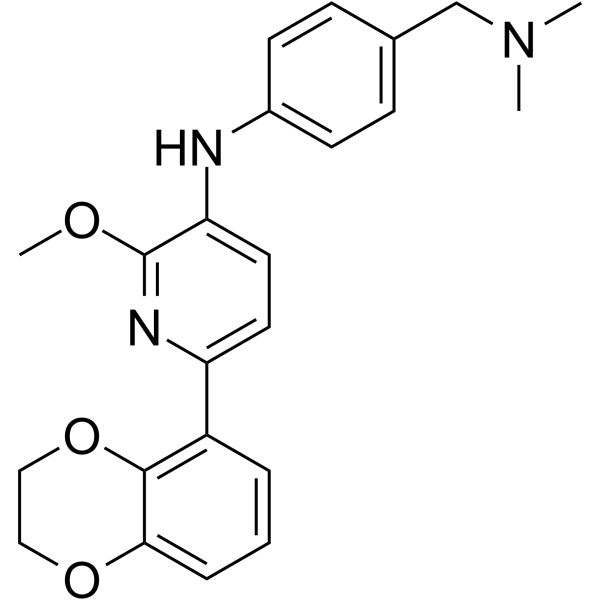
    GW284543 (UNC10225170) is a selective MEK5 inhibitor. GW284543 reduces pERK5, and decreases endogenous MYC protein .
    GW284543
  • HY-113335

    Coprocholic acid

    Endogenous Metabolite Inflammation/Immunology
    Trihydroxycholestanoic acid is an endogenous metabolite present in Blood that can be used for the research of Zellweger Syndrome, Refsum Disease, D Bifunctional Protein Deficiency and Infantile Refsum Disease .
    Trihydroxycholestanoic acid
  • HY-128744
    Phosphonoacetic acid
    2 Publications Verification

    Endogenous Metabolite Orthopoxvirus HSV DNA/RNA Synthesis Infection
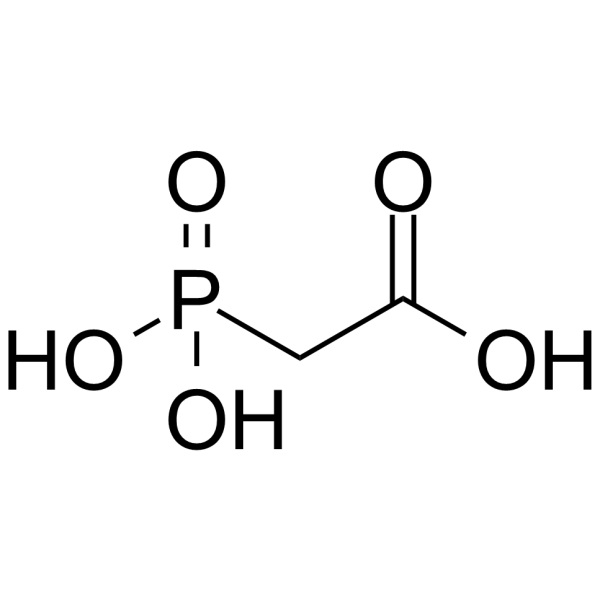
    Phosphonoacetic acid is an endogenous metabolite and antiviral agent. Phosphonoacetic acid is active against orthopoxviruses and herpes viruses. Phosphonoacetic acid can inhibit HSV DNA synthesis and virus-specific DNA polymerase activity, and affect the synthesis of late viral proteins .
    Phosphonoacetic acid
  • HY-103080

    Apelin Receptor (APJ) Cardiovascular Disease
    CMF019 is an orally active, potent and small molecule agonist at Apelin receptor (APJ) with G protein bias. CMF019 binds to APJ with pKi values of 8.58, 8.49 and 8.71 for human, rat, and mouse, respectively. CMF019 mimics the beneficial cardiovascular actions of apelin in rodents . Apelin receptor (APJ) is a G protein-coupled receptor (GPCR) activated by the endogenous peptide apelin. CMF019 is promising for research of chronic diseases, such as, pulmonary arterial hypertension .
    CMF019
  • HY-137243

    Endogenous Metabolite Nucleoside Antimetabolite/Analog Others
    Adenosine 3',5'-diphosphate disodium is an endogenous purine nucleotide. Adenosine 3',5'-diphosphate disodium acts as an inhibitor of bovine adrenal estrogen sulfotransferase (EST) with a Ki value of 7.0 μM. It also serves as an indispensable specific cofactor for the pregnenolone-binding protein (PBP) steroid-binding complex, with an EC50 value of 1.5 μM in guinea pigs .
    Adenosine 3',5'-diphosphate disodium
  • HY-B0228R

    Adenine riboside (Standard); D-Adenosine (Standard)

    Reference Standards Nucleoside Antimetabolite/Analog Autophagy Apoptosis Endogenous Metabolite Metabolic Disease Cancer
    Adenosine (Standard) is the analytical standard of Adenosine. This product is intended for research and analytical applications. Adenosine (Adenine riboside), a ubiquitous endogenous autacoid, acts through the enrollment of four G protein-coupled receptors: A1, A2A, A2B, and A3. Adenosine affects almost all aspects of cellular physiology, including neuronal activity, vascular function, platelet aggregation, and blood cell regulation .
    Adenosine (Standard)
  • HY-W784030

    Amino Acid Derivatives Biochemical Assay Reagents Fluorescent Dye Others
    N-TCO-L-lysine is a non-canonical amino acid. N-TCO-L-lysine contains a trans-cyclooctene (TCO) bioorthogonal reactive linker. N-TCO-L-lysine undergoes a bioorthogonal click reaction with SiR-Tz to enable fluorescent labeling of endogenously expressed proteins with site-specific incorporation. When used in combination with SiR-Tz, N-TCO-L-lysine allows super-resolution and live-cell imaging of endogenous proteins .
    N-TCO-L-lysine
  • HY-122862
    RAS inhibitor Abd-7
    3 Publications Verification

    Ras Cancer
    RAS inhibitor Abd-7, a potent RAS-binding compound (Kd=51 nM), is a RAS-effector protein-protein interaction (PPI) inhibitor. RAS inhibitor Abd-7 interacts with RAS inside the cells, prevents RAS-effector interactions and inhibits endogenous RAS-dependent signaling. RAS inhibitor Abd-7 impairs the PPI of various mutant KRAS proteins with PI3K, CRAF and RALGDS as well as NRAS Q61H and HRAS G12V .
    RAS inhibitor Abd-7
  • HY-B0228S6

    Adenine riboside-d2; D-Adenosine-d2

    Apoptosis Autophagy Endogenous Metabolite Nucleoside Antimetabolite/Analog Metabolic Disease Cancer
    Adenosine-d2 is the deuterium labeled Adenosine. Adenosine (Adenine riboside), a ubiquitous endogenous autacoid, acts through the enrollment of four G protein-coupled receptors: A1, A2A, A2B, and A3. Adenosine affects almost all aspects of cellular physio
    Adenosine-d2
  • HY-N0322S4
    Cholesterol-13C3
    1 Publications Verification

    Estrogen Receptor/ERR Endogenous Metabolite Metabolic Disease
    Cholesterol- 13C3 is the 13C-labeled Cholesterol. Cholesterol is the major sterol in mammals. It is making up 20-25% of structural component of the plasma membrane. Plasma membranes are highly permeable to water but relatively impermeable to ions and protons. Cholesterol plays an important role in determining the fluidity and permeability characteristics of the membrane as well as the function of both the transporters and signaling proteins . Cholesterol is also an endogenous estrogen-related receptor α (ERRα) agonist .
    Cholesterol-13C3
  • HY-N0322S7

    Isotope-Labeled Compounds Estrogen Receptor/ERR Endogenous Metabolite Endocrinology
    Cholesterol-d1 is the deuterium labeled Cholesterol. Cholesterol is the major sterol in mammals. It is making up 20-25% of structural component of the plasma membrane. Plasma membranes are highly permeable to water but relatively impermeable to ions and protons. Cholesterol plays an important role in determining the fluidity and permeability characteristics of the membrane as well as the function of both the transporters and signaling proteins . Cholesterol is also an endogenous estrogen-related receptor α (ERRα) agonist .
    Cholesterol-d1
  • HY-150737

    SARS-CoV Infection
    MI-1851 is a potent furin inhibitor. MI-1851 prevents the proteolytic processing of the S protein of SARS-CoV-2 by endogenous flavoprotease in HEK293 cells. MI-185 has antiviral activity .
    MI-1851
  • HY-B0228S4

    Adenine riboside-1′-13C; D-Adenosine-1′-13C

    Isotope-Labeled Compounds Apoptosis Autophagy Endogenous Metabolite Nucleoside Antimetabolite/Analog Metabolic Disease Cancer
    Adenosine-1′- 13C is the 13C labeled Adenosine. Adenosine (Adenine riboside), a ubiquitous endogenous autacoid, acts through the enrollment of four G protein-coupled receptors: A1, A2A, A2B, and A3. Adenosine affects almost all aspects of cellular physiolo
    Adenosine-1′-13C
  • HY-B0228S

    Adenine riboside-d1; D-Adenosine-d

    Isotope-Labeled Compounds Nucleoside Antimetabolite/Analog Autophagy Apoptosis Endogenous Metabolite Metabolic Disease Cancer
    Adenosine-d is the deuterium labeled Adenosine. Adenosine (Adenine riboside), a ubiquitous endogenous autacoid, acts through the enrollment of four G protein-coupled receptors: A1, A2A, A2B, and A3. Adenosine affects almost all aspects of cellular physiology, including neuronal activity, vascular function, platelet aggregation, and blood cell regulation .
    Adenosine-d1
  • HY-P10489

    Kisspeptin Receptor Cancer
    Kisspeptin-14 human is a peptide hormone encoded by the KiSS-1 gene. Kisspeptin-14 human, along with several other similar peptide hormones, is produced from a common precursor protein by cleavage by different proteases. Kisspeptin-14 human is an endogenous ligand of KISS1R. Kisspeptin-14 human has the same receptor binding efficiency and potency as full-length kisspeptin. Kisspeptin-14 human binds to its receptor GPR54 and is able to activate this G protein-coupled receptor and activate multiple intracellular signaling pathways. Kisspeptin-14 human can be used to study reproductive development and tumor metastasis .
    Kisspeptin-14 human
  • HY-10858A
    WAY 316606 hydrochloride
    4 Publications Verification

    sFRP-1 Wnt Cancer
    WAY 316606 hydrochloride is an inhibitor of the secreted protein sFRP-1, an endogenous antagonist of the secreted glycoprotein Wnt. The affinity of WAY-316606 for sFRP-1 is determined using the FP binding assay with IC50 of 0.5 μM .
    WAY 316606 hydrochloride
  • HY-P4373

    Cathepsin MMP Metabolic Disease
    Hepcidin-1 (mouse) is an endogenous peptide hormone involved in the regulation of iron homeostasis. Hepcidin-1 (mouse) upregulates mRNA levels of TRAP, cathepsin K, and MMP-9 and increases TRAP-5b protein secretion. Hepcidin-1 (mouse) downregulates the level of FPN1 protein and increases intracellular iron. Hepcidin-1 (mouse) facilitates osteoclast differentiation .
    Hepcidin-1 (mouse)
  • HY-B0228S5

    Adenine riboside-13C; D-Adenosine-13C

    Apoptosis Autophagy Endogenous Metabolite Nucleoside Antimetabolite/Analog Metabolic Disease Cancer
    Adenosine- 13C is the 13C labeled Adenosine. Adenosine (Adenine riboside), a ubiquitous endogenous autacoid, acts through the enrollment of four G protein-coupled receptors: A1, A2A, A2B, and A3. Adenosine affects almost all aspects of cellular physiology,
    Adenosine-13C
  • HY-135065

    Trace Amine-associated Receptor (TAAR) Metabolic Disease
    3-Iodothyronamine (hydrochloride) is an endogenous and rapid-acting derivative of thyroid hormone. 3-Iodothyronamine potently activates an orphan G protein-coupled receptor in vitro (TAAR1) and induced hypothermia in vivo on a rapid time scale. 3-Iodothyronamine can be used for the research of congestive heart failure .
    3-Iodothyronamine hydrochloride
  • HY-175397

    DFHBI-thalidomide

    PROTACs NF-κB Early 2 Factor (E2F) Bcl-2 Family VEGFR Cancer
    Dth (DFHBI-thalidomide) is an RNA aptamer-based PROTAC degrader. Dth can degrade a variety of endogenous proteins (such as mCherry, p50, p65 and E2F1) by replacing the 3′ module on the RNA scaffold with the RNA aptamer corresponding to the target protein. Dth upregulates IκB-α and Bax, and downregulates Bcl-2 and VEGF. Dth generates green fluorescence upon binding to the Broccoli RNA aptamer, enabling the tracing of RNA scaffolds. Dth can be used in cancer-related research .
    Dth
  • HY-D2353

    DNA/RNA Synthesis Cancer
    Biotin-PEG3-benzophenone is biotin-labeled Benzophenone (HY-Y0546). Benzophenone is an endogenous metabolite and a photosensitizer that has been implicated in photosensitive damage to DNA. Benzophenone causes nucleobase oxidation, formation of cyclobutane-pyrimidine dimers, single-strand breaks, DNA-protein cross-links or abasic sites, different pathologies that may occur in nucleosides, oligonucleotides or DNA .
    Biotin-PEG3-benzophenone
  • HY-169133

    PROTACs Glutathione Peroxidase Ferroptosis Cancer
    GDCNF-11 is a HIM-PROTAC GPX4 degrader based on the chaperone protein HSP90. GDCNF-11 promotes the ubiquitination and degradation of GPX4 through the HSP 90 chaperone complex, reduces endogenous GPX4 expression to induce ferroptosis in HT-1080 cells, and the DC50 value is 0.08 μM (Pink: Target protein ligand (HY-153748); Blue: HSP90 ligand (HY-10212); Black: Linker (HY-W169526)) .
    GDCNF-11
  • HY-N6576

    p38 MAPK ERK JNK IAP PARP Apoptosis Caspase Cancer
    Hellebrigenin is an inhibitor that selectively targets the MAPK signaling pathway (ERK, p38, JNK) and XIAP, and can inhibit Akt expression and phosphorylation. Hellebrigenin can activate endogenous apoptosis pathways (such as mitochondrial membrane potential disruption, Caspase family activation, PARP cleavage), downregulate anti-apoptotic proteins (Bcl-2, Bcl-xL) and upregulate pro-apoptotic proteins (Bax, Bak). Hellebrigenin can also induce DNA double-strand breaks to activate the ATM pathway. Hellebrigenin can inhibit tumor cell proliferation and clone formation, and is mainly used in the study of oral squamous cell carcinoma, liver cancer and other cancers .
    Hellebrigenin
  • HY-175417

    PROTACs Cancer
    VHL-SNAP2-5C is a SNAP-fusion protein PROTAC degrader basing on a self-labeling protein SNAP tag. VHL-SNAP2-5C by endogenous tagging enables the visualization and the selective depletion of a SNAP-fusion protein, such as CLCa andEGFP . Pink: SNAP-fusion protein ligand (HY-W128709); Blue: VHL ligase ligand (HY-112078); Black: linker (HY-Y1139)
    VHL-SNAP2-5C
  • HY-P1483A

    Urotensin Receptor Cardiovascular Disease Neurological Disease
    Urotensin II, mouse TFA is an endogenous ligand for the orphan G-protein-coupled receptor GPR14 or SENR. Urotensin II, mouse TFA is a potent vasoconstrictor. Urotensin II, mouse TFA plays a physiological role in the central nervous system .
    Urotensin II, mouse TFA
  • HY-P11219

    YAP Cancer
    TAT-PDHPS1 is a YAP inhibitor composed of the endogenous peptide PDHPS1 and the cell-penetrating peptide sequence TAT. PDHPS1 binds to protein phosphatase 2 phosphatase activator (PTPA), an essential activator of protein phosphatase 2A (PP2A), leading to increased YAP phosphorylation, which inactivates YAP and suppresses the expression of its downstream target genes. TAT-PDHPS1 is potentially useful in ovarian cancer research .
    TAT-PDHPS1

Inquiry Online

Your information is safe with us. * Required Fields.

Salutation


Country or Region *

Applicant Name *


Organization Name *

Department *


Email Address *


Product Name *

Cat. No.


Requested quantity *

Phone Number *


Remarks

Inquiry Online

Inquiry Information

Product Name:
Cat. No.:
Quantity:
MCE Japan Authorized Agent:

