Search Result
Results for "
fluorescent imaging
" in MedChemExpress (MCE) Product Catalog:
13
Biochemical Assay Reagents
1
Isotope-Labeled Compounds
| Cat. No. |
Product Name |
Target |
Research Areas |
Chemical Structure |
-
- HY-141511
-
Coppersensor 1
Maximum Cited Publications
29 Publications Verification
|
Fluorescent Dye
|
Neurological Disease
Cancer
|
|
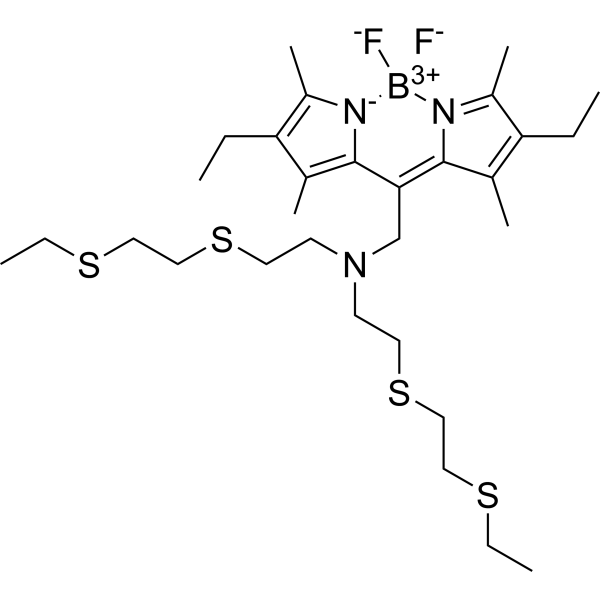
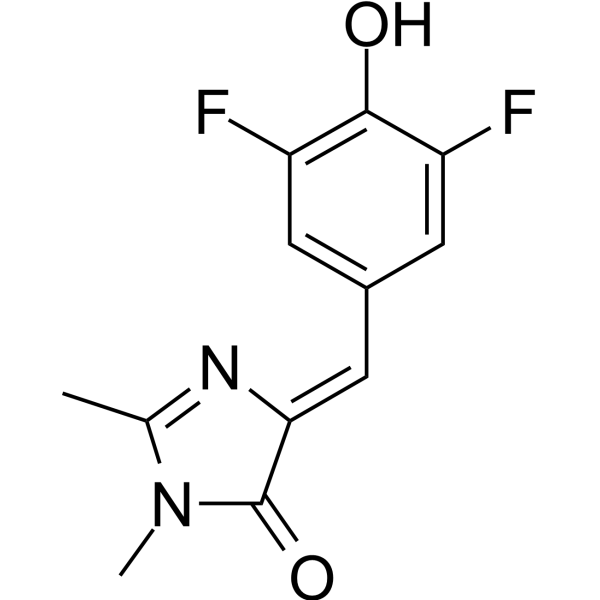
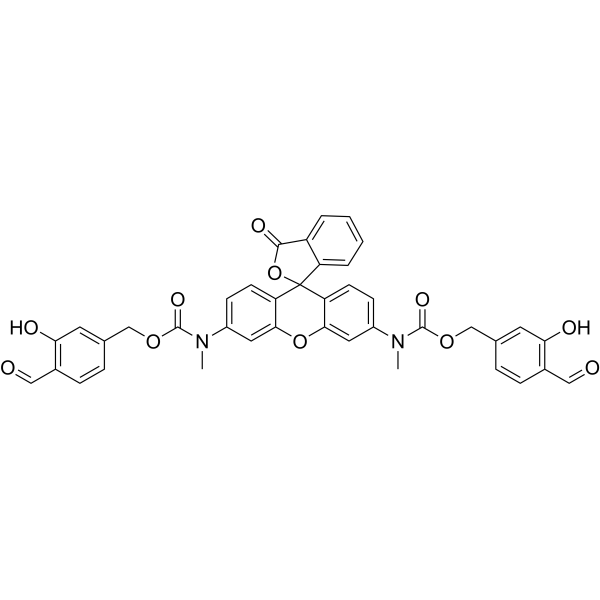
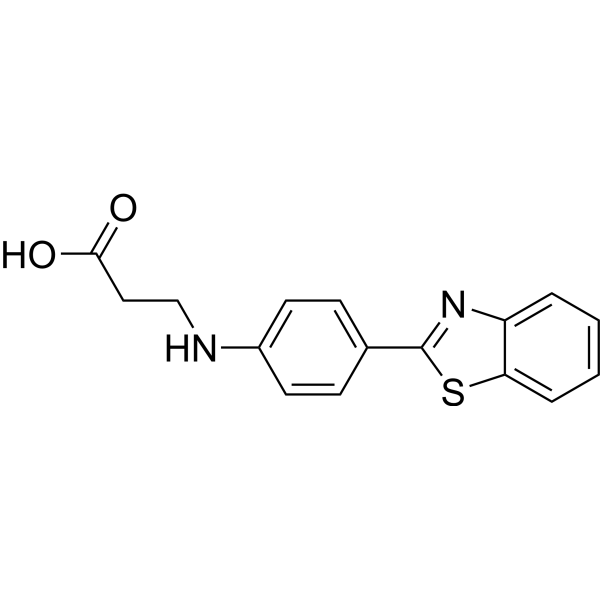
Coppersensor-1 (CS1) is a membrane-permeable fluorescent dye. Coppersensor-1 has a picomolar affinity for Cu + with high selectivity over competing cellular metalions. Coppersensor-1 as a probe, can selective and sensitive detection of copper(I) ions (Cu +) in biological samples, including live cells. Coppersensor-1 can be used for the research of imaging of severe diseases such as cancer, cardiovascular disorders and neurogenerative diseases .
|
-
-
- HY-D1041
-
|
ICG-OSu
|
Fluorescent Dye
|
Cancer
|
|
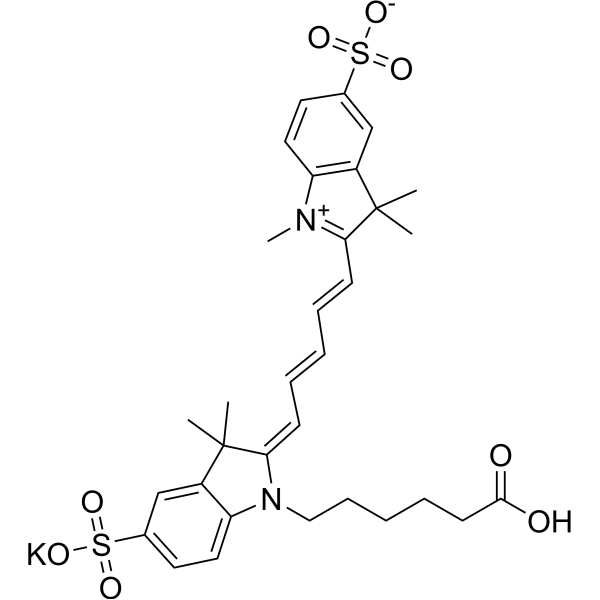
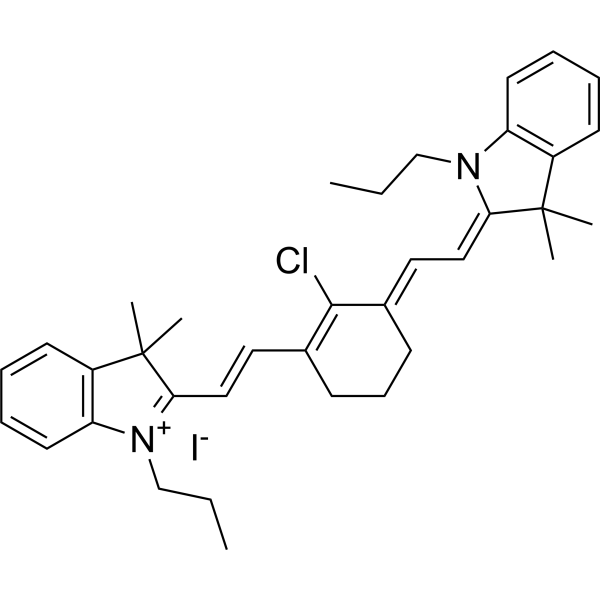
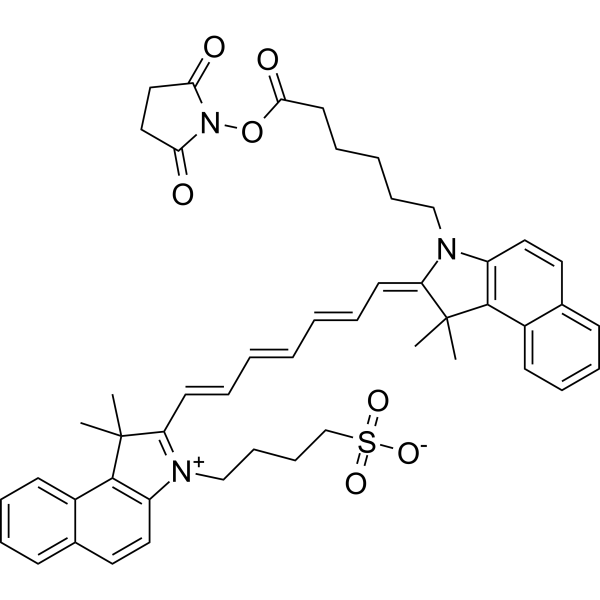
ICG NHS ester (ICG-OSu) is a near-infrared fluorescent agent ICG derivative. ICG NHS ester is amine-reactive and has been widely used to design in vivo imaging probes .
|
-
-
- HY-110210
-
|
BODIPY FL,SE
|
Fluorescent Dye
|
Others
|
|
BODIPY FL NHS ester (BODIPY FL, SE) is a cell membranes-penatrable amine-reactive fluorescent probe. The maximum excitation/emission wavelength of the BODIPY-FL NHS ester are 502/511 nm, respectively. BODIPY-FL NHS ester has high stability and is insensitive to the polarity, pH and type of solvent, and can maintain stable fluorescence properties under different environmental conditions. BODIPY-FL NHS ester can be used for the synthesis of protease substrates, live cell imaging, protein labeling and immunoassay .
|
-
-
- HY-139579
-
|
OTL 38
|
Fluorescent Dye
|
Cancer
|
|
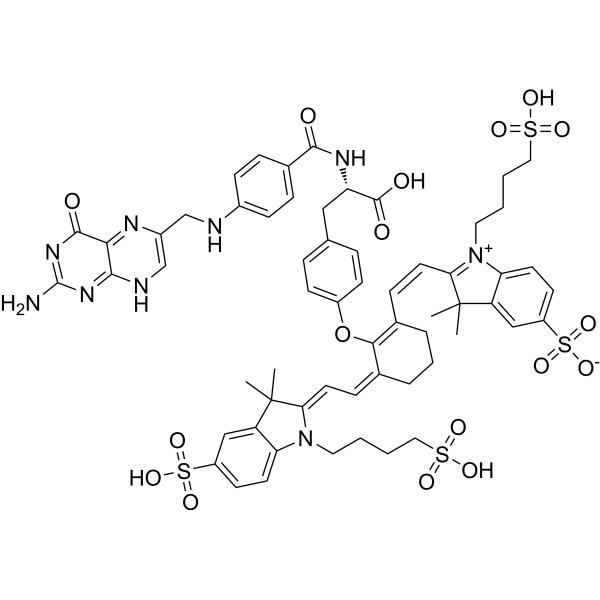
Pafolacianine (OTL 38) is a fluorescent imaging agent made of near-infrared dye used in detecting tumor lesions during surgical procedures. Pafolacianine excites at 774 to 775 nm and emits at 794 to 796 nm .
|
-
-
- HY-D1464
-
CH1055
1 Publications Verification
|
Fluorescent Dye
|
Cancer
|
|
CH1055 is a near-infrared II (NIR-II) fluorescent dye that can be used as a fluorescent probe for in vivo imaging. CH1055 can be conjugated with antibodies or ligands for specific imaging (for example the tumor imaging) .
|
-
-
- HY-172286
-
|
|
Fluorescent Dye
|
Others
|
|
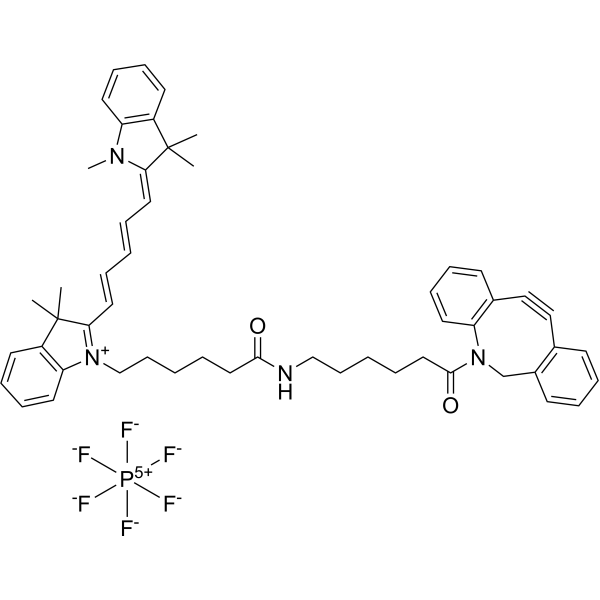
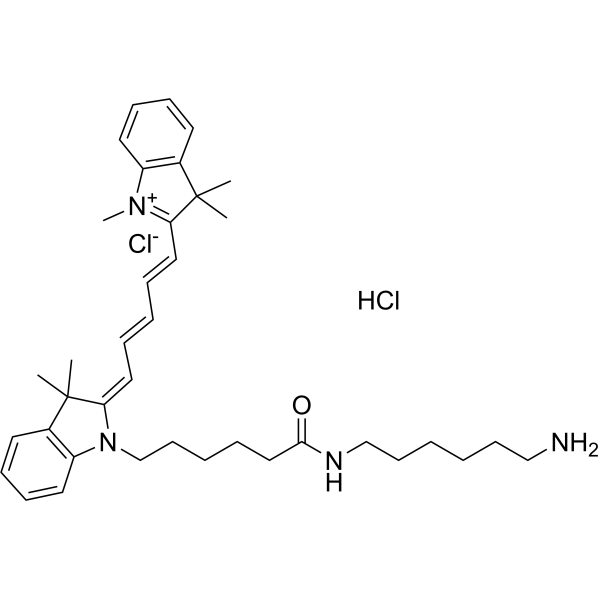
Cy7 NHS ester is a fluorescent dye that can be used for fluorescent imaging study.
|
-
-
- HY-D1872
-
|
|
Fluorescent Dye
|
Others
|
|
800CW NHS ester is a near-infrared fluorescent dye active ester that can conjugate with amine-containing small molecules, antibodies, peptides, and other substances to form fluorescent conjugates. 800CW NHS ester exhibits high fluorescence quantum yield and low non-specific binding properties. 800CW NHS ester can be used in biomedical research such as microbial infection imaging, tumor imaging, and biochemical detection .
|
-
-
- HY-159529
-
|
DBCO-PEG4-Eosin Y
|
Fluorescent Dye
|
Others
|
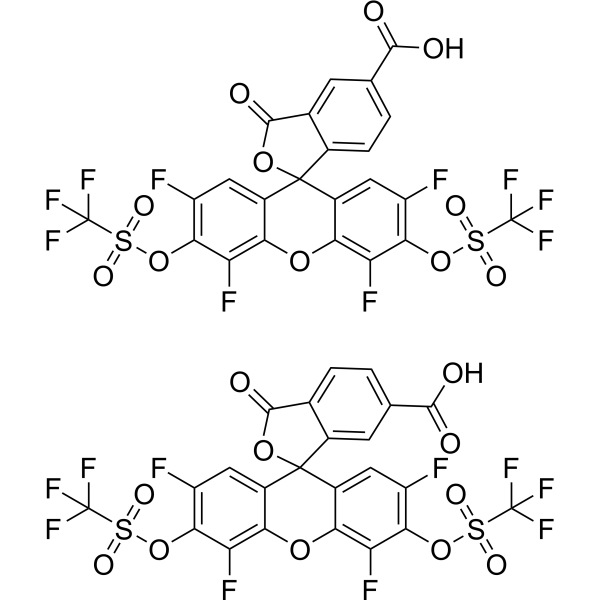
DBCO-PEG4-Eosin 5-isothiocyanate (DBCO-PEG4-Eosin Y) is a fluorescent probe. DBCO-PEG4-Eosin 5-isothiocyanate contains a clickable functional group, DBCO, and four PEG units. DBCO-PEG4-Eosin 5-isothiocyanate can be used for various imaging detections.
|
-
-
- HY-D1581
-
|
|
Fluorescent Dye
|
Others
|
|
BODIPY 505/515-8-C3-COOH is a green fluorescing derivative, as a fluorescent dye for imaging lipid droplets in nannochloropsis. BODIPY 505/515-8-C3-COOH can be used for the research of flow cytometric high-throughput screening and cell sorting .
|
-
-
- HY-131027
-
|
JF646, Azide
|
Fluorescent Dye
|
Others
|
|
Janelia Fluor 646, Azide (JF646, Azide) is a red fluorogenic fluorescent dye containing a click chemistry group Azide. Janelia Fluor 646, Azide can be used for live-cell imaging experiments . Janelia Fluor products are licensed under U.S. Pat. Nos. 9,933,417, 10,018,624 and 10,161,932 and other patents from Howard Hughes Medical Institute. Janelia Fluor? 646, Azide is a click chemistry reagent, it contains an Azide group and can undergo copper-catalyzed azide-alkyne cycloaddition reaction (CuAAc) with molecules containing Alkyne groups. It can also undergo strain-promoted alkyne-azide cycloaddition (SPAAC) reactions with molecules containing DBCO or BCN groups.
|
-
-
- HY-D1449
-
-
-
- HY-D1567
-
|
|
Fluorescent Dye
|
Others
|
|
Cy7.5 NHS ester is a fluorescent dye. Cy7.5 NHS ester can be conjugated to mPEG-b-PDPA to form a mPEG-b-PDPA-Cy7.5 fluorescent copolymer. Cy7.5 NHS ester can be used for fluorescent imaging study (Ex/Em = 780/820 nm) .
|
-
-
- HY-D0077
-
|
Oregon green 488
|
Fluorescent Dye
|
Others
|
|
2',7'-Difluorofluorescein (Oregon green 488) is a fluorescein derivative and a pH-sensitive fluorescent probe (pKa ~4.7). Upon excitation at 488 nm, 2',7'-Difluorofluorescein exhibits pH-sensitive fluorescence intensity through the formation of dianions, while its pH sensitivity decreases under excitation at 450 nm, allowing its use in ratiometric pH analysis. 2',7'-Difluorofluorescein can be used for the quantitative analysis of pH values in the range of 2-7 in submicron aerosol particles. 2',7'-Difluorofluorescein undergoes buffer-mediated and buffer-free excited-state proton transfer between different protonated forms, and its cationic form undergoes rapid excited-state deprotonation. 2',7'-Difluorofluorescein is resistant to photodegradation, maintains stable absorption and fluorescence properties within the physiological pH range, and serves as a fluorescent protein label, a component of Ca 2+ indicators, a fluorescent imaging agent, and an anisotropy probe .
|
-
-
- HY-113870
-
|
|
Fluorescent Dye
|
Others
|
|
6-NBDG is a fluorescent glucose analogue, it can be used for fluorescence imaging and monitoring glucose transport and uptake. 6-NBDG can be used as a fluorescent probe for detecting macrophage-rich atherosclerotic plaques .
|
-
-
- HY-131029
-
|
JF646, Maleimide
|
Fluorescent Dye
|
Others
|
|
Janelia Fluor® 646, Maleimide (JF646, Maleimide) is a red fluorescent dye that contains a maleimide group. JF646, Maleimide can be used in cellular imaging . Janelia Fluor® products are licensed under U.S. Pat. Nos. 9,933,417, 10,018,624 and 10,161,932 and other patents from Howard Hughes Medical Institute.
|
-
-
- HY-131028
-
|
JF646 TFA
|
Fluorescent Dye
|
Others
|
|
Janelia Fluor 646 TFA (JF646 TFA), a red fluorogenic fluorescent dye, can be used in the synthesis of Janelia Fluor 646 HaloTag and SNAP-Tag ligands. JF646 TFA is used in live cell imaging experiments . Janelia Fluor products are licensed under U.S. Pat. Nos. 9,933,417, 10,018,624 and 10,161,932 and other patents from Howard Hughes Medical Institute.
|
-
-
- HY-100335
-
|
|
Fluorescent Dye
Btk
|
Cancer
|
|
PCI-33380 is a fluorescent probe ( (Ex=532 nm, Em=555 nm). PCI-33380 consists of a (BTK) inhibitor PCI-32765 (HY-10997) attaching with a Bodipy-FL fluorophore via a piperazine linker. PCI-33380 binds predominantly to Btk in B cell lysates with cell permeable activity. PCI-33380 can be used for imaging live cancer cells such as non-Hodgkin lymphoma research
|
-
-
- HY-D1719
-
Cypate
1 Publications Verification
|
Fluorescent Dye
|
Others
|
|
Cypate, a cyanine dye, is a near infrared (NIR) fluorescent probe for in vivo tumor imaging .
|
-
-
- HY-D1569
-
|
|
Fluorescent Dye
|
Others
|
|
CellTracker Orange CMRA Dye is a fluorescent dye. CellTracker Orange CMRA Dye can be used for cell imaging and monitoring the movement and location of cells .
|
-
-
- HY-120115
-
|
Olaparib-bodipy FL
|
PARP
Fluorescent Dye
|
Cancer
|
|
PARPi-FL (Olaparib-bodipy FL) is a small-molecule fluorescent inhibitor of PARP1 that can specifically bind to PARP1. PARPi-FL can be used as a fluorescent imaging agent for tumor detection, diagnosis, and surgical guidance .
|
-
-
- HY-D1707
-
|
|
Fluorescent Dye
|
Others
|
|
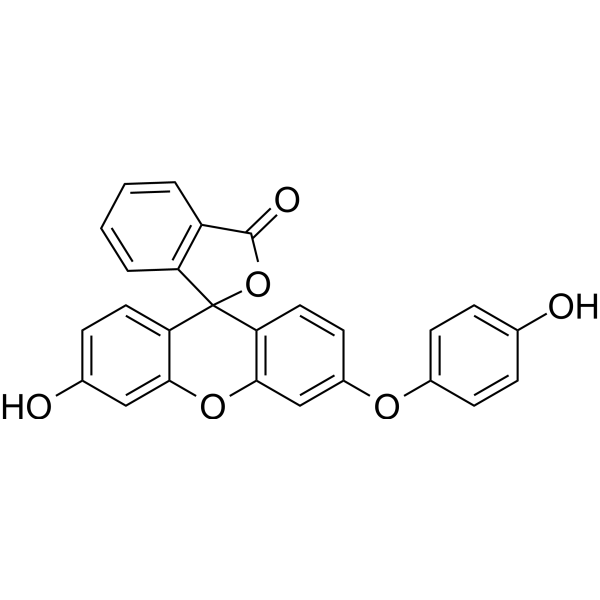
FDGlcU can be used as a fluorescent probe for non-invasively image with a high level of fluorescent activity. FDGlcU is non-fluorescent when the fluorescein is conjugated with two mono-glucuronides (Ex/Em=480/514 nm) .
|
-
-
- HY-131026
-
|
JF635, SE; JF635, NHS
|
Fluorescent Dye
|
Others
|
|
Janelia Fluor 635, SE (JF635, SE) is a red fluorogenic fluorescent dye containing an NHS ester that can be conjugated with primary amine groups. JF635, SE can be used for live cell imaging . Janelia Fluor products are licensed under U.S. Pat. Nos. 9,933,417, 10,018,624 and 10,161,932 and other patents from Howard Hughes Medical Institute.
|
-
-
- HY-D1539
-
|
CY 5.5 azide; Lumiprobe CY 5.5 azide
|
Fluorescent Dye
|
Others
|
|
Cyanine 5.5 azide (CY 5.5 azide) is a potent fluorescent dye. Cyanine 5.5 azide can label DNA. Cyanine 5.5 azide can be used for NIR live organism imaging. (λex=684 nm, λem=710 nm) . Cyanine 5.5 azide is a click chemistry reagent, it contains an Azide group and can undergo copper-catalyzed azide-alkyne cycloaddition reaction (CuAAc) with molecules containing Alkyne groups. It can also undergo strain-promoted alkyne-azide cycloaddition (SPAAC) reactions with molecules containing DBCO or BCN groups.
|
-
-
- HY-W008048
-
|
|
Nucleoside Antimetabolite/Analog
|
Others
|
|
2',3'-O-Isopropylideneadenosine is a nucleoside compound and also a Golgi-targeting moiety. 2',3'-O-Isopropylideneadenosine constitutes a furanose ribose group that undergoes cyclization at the O (2') and O (3') atoms. As a component of the fluorescent probe TPE-Ade, 2',3'-O-Isopropylideneadenosine enables specific Golgi localization for fluorescence imaging. 2',3'-O-Isopropylideneadenosine participates in the synthesis of aggregation-induced emission (AIE) fluorescent probes .
|
-
-
- HY-D2795
-
|
|
Fluorescent Dye
|
Others
|
|
FITC-PEG400-COOH is a fluorescent dye composed of polyethylene glycol (PEG), FITC (HY-66019) and a COOH. FITC-PEG400-COOH can be used for fluorescent labeling and imaging .
|
-
-
- HY-D1537
-
|
DBCO-Cy5.5; Cyanine5.5 DBCO
|
Fluorescent Dye
|
Others
|
|
Dibenzocyclooctyne-Cy5.5 (DBCO-Cy5.5) is a fluorescent dye. Dibenzocyclooctyne-Cy5.5 can be used to syntheses calcium-binding near-infrared fluorescent nanoprobe for bone tissue imaging .
|
-
-
- HY-DY1072
-
|
ICG-OSu (solution)
|
Fluorescent Dye
|
Cancer
|
ICG NHS ester (ICG-OSu) (solution) is a near-infrared fluorescent agent ICG derivative. ICG NHS ester is amine-reactive and has been widely used to design in vivo imaging probes . Solvent and concentration: DMSO: 10 mM
|
-
-
- HY-D2840D
-
|
|
Fluorescent Dye
|
Others
|
|
FITC-mPEG2000 is a fluorescent dye composed of methoxypolyethylene glycol (mPEG) and FITC (HY-66019). FITC-mPEG2000 can be used for fluorescent labeling and imaging .
|
-
-
- HY-D1255
-
|
|
Fluorescent Dye
|
Cancer
|
|
Sel-green, a selective selenol fluorescent probe, is applied to quantify the Sec content in the selenoenzyme thioredoxin reductase and image endogenous Sec in live HepG2 cells .
|
-
-
- HY-D1072
-
|
3,3′-Dipentyloxacarbocyanine iodide
|
Fluorescent Dye
|
Others
|
|
DiOC5(3) is the membrane potential (MP)-modifying fluorochrome. DiOC5(3) is an anti-LSC compound available for diagnostic imaging. DiOC5(3) has the advantage of being a single fluorescent chemical .
|
-
-
- HY-139579A
-
|
OTL 38 tetrasodium
|
Fluorescent Dye
|
Cancer
|
|
Pafolacianine tetrasodium (OTL 38 tetrasodium) is a fluorescent imaging agent made of near-infrared dye used in detecting tumor lesions during surgical procedures. Pafolacianine tetrasodium excites at 774 to 775 nm and emits at 794 to 796 nm .
|
-
-
- HY-D1464A
-
|
|
Fluorescent Dye
|
Cancer
|
|
CH1055 triethylamine is a near-infrared II (NIR-II) fluorescent dye that can be used as a fluorescent probe for in vivo imaging. CH1055 triethylamine can be conjugated with antibodies or ligands for specific imaging (for example the tumor imaging) .
|
-
-
- HY-D1423
-
|
|
Fluorescent Dye
|
Others
|
|
Dibromobimane is a thiol-selective fluorescent imaging agent. Dibromobimane is used to crosslink cysteine- and homocysteine-containing peptides .
|
-
-
- HY-D2840E
-
|
|
Fluorescent Dye
|
Others
|
|
FITC-mPEG5000 is a fluorescent dye composed of methoxypolyethylene glycol (mPEG) and FITC (HY-66019). FITC-mPEG5000 can be used for fluorescent labeling and imaging .
|
-
-
- HY-D2892J
-
|
|
Fluorescent Dye
|
Others
|
|
Rhodamine-PEG20000 a fluorescent PEG derivative composed of Rhodamine B (HY-Y0016) and PEG. Rhodamine-PEG20000 can be used for fluorescent labeling and imaging (Ex/Em=546/610 nm) .
|
-
-
- HY-D2798
-
|
|
Fluorescent Dye
|
Others
|
|
FITC-PEG400-SH is a fluorescent dye composed of polyethylene glycol (PEG), FITC (HY-66019) and a sulfhydryl (SH). FITC-PEG400-SH can be used for fluorescent labeling and imaging .
|
-
-
- HY-D2444
-
|
|
Fluorescent Dye
|
Cancer
|
|
AF555 NHS is a red fluorescent dye with excellent fluorescence properties and light stability. The excitation wavelength is 556 nm and the emission wavelength is 571 nm, which can be used for protein labeling, antibody labeling, and cell imaging .
|
-
-
- HY-145385
-
|
|
Fluorescent Dye
|
Others
|
|
Coelenteramide is a oxidative product of Coelenterazine (HY-18743). Coelenteramide can form a complex with apoAequorin/Ca 2+, which is known as blue fluorescent protein (BFP) and shows continuous weak luminescence with Coelenterazine like a luciferase. Coelenteramide can be used as an imaging agent .
|
-
-
- HY-D1376A
-
|
|
Fluorescent Dye
|
Others
|
|
Sulfo-Cyanine5.5 amine consists of four sulfonate groups and has highly hydrophilic. Sulfo-Cyanine5.5 amine is an amine-containing fluorescent dye, the aliphatic primary amine group can be coupled with various electrophiles (activated esters, epoxides, etc). Sulfo-Cyanine5.5 amine can be used for the research of far red/NIR applications (such as in vivo imaging) and also can be used for enzymatic transamination labeling .
|
-
-
- HY-D2798B
-
|
|
Fluorescent Dye
|
Others
|
|
FITC-PEG5000-SH is a fluorescent dye composed of polyethylene glycol (PEG), FITC (HY-66019) and a sulfhydryl (SH). FITC-PEG5000-SH can be used for fluorescent labeling and imaging .
|
-
-
- HY-D2826E
-
|
|
Fluorescent Dye
|
Others
|
|
FITC-Chitosan (MW 2000) is a Chitosan labeled with FITC (HY-66019). FITC-Chitosan (MW 2000) can be used for fluorescent labeling and imaging .
|
-
-
- HY-D1391
-
|
PbS/CdSe QD
|
Fluorescent Dye
|
Others
|
|
PbS/CdS QDs (PbS/CdSe QD) is a fluorescent probe that can be used for in vivo fluorescence imaging in the second near-infrared window .
|
-
-
- HY-D1637
-
|
|
Fluorescent Dye
|
Others
|
|
5-Nitro BAPTA tetramethyl ester is a calcium chelator. 5-Nitro BAPTA tetramethyl ester involves in the two-photon probe synthesis, and is used for real-time imaging of intracellular calcium ions, calcium waves monitoring at a depth of 100-300 μm in liver tissues for 1100-4000 s. 5-Nitro BAPTA tetramethyl ester, together with fluorescent compound 2-Me-substituted TM, can be used to form a red fluorescent probe (CaTM-2 AM) .
|
-
-
- HY-112636
-
|
|
Amyloid-β
|
Others
|
|
Astrophloxine is a fluorescent imaging probe capable of targeting antiparallel dimers. Astrophloxine can be used to detect aggregated Aβ in brain tissue and cerebrospinal fluid samples of Alzheimer's disease (AD) mice .
|
-
-
- HY-D1591
-
|
|
Fluorescent Dye
|
Others
|
|
BODIPY R6G methyl ester (compound 5′-1) is a BODIPY-like fluorescent dye with good light stability and insensitive to pH value. BODIPY R6G methyl ester shows good photostability, high sensitivity and insensitive to pH value. BODIPY R6G methyl ester can be used in research areas such as photodynamic research, PH probes, ion recognition, photocatalysis, protein labeling, cell imaging, and proteomic analysis .
|
-
-
- HY-168947
-
|
|
Fluorescent Dye
|
Others
|
|
Green Fluorescent PLGA nanoparticles, 100nm is a PLGA nanoparticle labeled with a green fluorescent dye and is commonly used in imaging and diagnostic applications.
|
-
-
- HY-D2840H
-
|
|
Fluorescent Dye
|
Others
|
|
FITC-mPEG10000 is a fluorescent dye composed of methoxypolyethylene glycol (mPEG) and FITC (HY-66019). FITC-mPEG10000 can be used for fluorescent labeling and imaging .
|
-
-
- HY-D2840I
-
|
|
Fluorescent Dye
|
Others
|
|
FITC-mPEG20000 is a fluorescent dye composed of methoxypolyethylene glycol (mPEG) and FITC (HY-66019). FITC-mPEG20000 can be used for fluorescent labeling and imaging .
|
-
-
- HY-D2840A
-
|
|
Fluorescent Dye
|
Others
|
|
FITC-mPEG550 is a fluorescent dye composed of methoxypolyethylene glycol (mPEG) and FITC (HY-66019). FITC-mPEG550 can be used for fluorescent labeling and imaging .
|
-
-
- HY-D2795A
-
|
|
Fluorescent Dye
|
Others
|
|
FITC-PEG1000-COOH is a fluorescent dye composed of polyethylene glycol (PEG), FITC (HY-66019) and a COOH. FITC-PEG1000-COOH can be used for fluorescent labeling and imaging .
|
-
- HY-141646
-
|
|
Fluorescent Dye
|
Others
|
|
MIT-PZR is a mitochondria-targeted,? low cytotoxicity fluorescent probe that can be used in live cells and in vivo imaging. Ex / Em = 485 / 705 nm
|
-
- HY-D2931
-
|
|
Fluorescent Dye
|
Others
|
|
SNAP-FAM is a FAM-labeled SNAP tag fluorescent probe, specifically designed for live-cell protein labeling and real-time imaging applications .
|
-
- HY-D1394
-
|
AgAuSe
|
Fluorescent Dye
|
Others
|
|
AgAuSe QDs (AgAuSe) is a near infrared (NIR) fluorescent quantum dots (QDs), with a bright emission from 820 to 1170 nm. AgAuSe QDs can be used for the research in biomedical imaging and NIR devices .
|
-
- HY-D2639
-
|
|
Fluorescent Dye
|
Metabolic Disease
|
|
TPE-PY is a fluorescent dye targeting mitochondria, which has cationic and lipophilic characteristics, enabling specific targeting of mitochondria. TPE-PY functions through the aggregation-induced emission (AIE) mechanism. TPE-PY mechanism of action is based on the restriction of intramolecular rotation (RIR), which enhances fluorescence in the aggregated state. TPE-PY is mainly used in the field of biological imaging, especially for the specific staining of mitochondria in living cells, facilitating the observation of the location, morphology, and quantity of mitochondria .
|
-
- HY-168947A
-
|
|
Fluorescent Dye
|
Others
|
|
Green Fluorescent PLGA nanoparticles, 200nm is a PLGA nanoparticle labeled with a green fluorescent dye and is commonly used in imaging and diagnostic applications.
|
-
- HY-168947B
-
|
|
Fluorescent Dye
|
Others
|
|
Green Fluorescent PLGA nanoparticles, 500nm is a PLGA nanoparticle labeled with a green fluorescent dye and is commonly used in imaging and diagnostic applications.
|
-
- HY-W998675
-
|
|
Fluorescent Dye
|
Others
|
|
5-FITC-Tetrazine is an fluorescent dye composed of FITC (HY-66019) and Tetrazine. 5-FITC-Tetrazine can be used for fluorescent labeling and imaging .
|
-
- HY-164900
-
|
|
Fluorescent Dye
|
Others
|
|
Se-NADA is a fluorescent dye that can be used to image bacteria (Ex/Em = 470/590 nm) .
|
-
- HY-D2840C
-
|
|
Fluorescent Dye
|
Others
|
|
FITC-mPEG1000 is a fluorescent dye composed of methoxypolyethylene glycol (mPEG) and FITC (HY-66019). FITC-mPEG1000 can be used for fluorescent labeling and imaging .
|
-
- HY-D2840
-
|
|
Fluorescent Dye
|
Others
|
|
FITC-mPEG350 is a fluorescent dye composed of methoxypolyethylene glycol (mPEG) and FITC (HY-66019). FITC-mPEG350 can be used for fluorescent labeling and imaging .
|
-
- HY-145882
-
|
|
Fluorescent Dye
|
Others
|
|
BOD-NH-NP is an activatable fluorescent probe for imaging endogenous nitric oxide via the eNOS enzymatic pathway .
|
-
- HY-P991650
-
|
|
PSMA
|
Cancer
|
|
MDX1201 is a humanized monoclonal antibody targeting PSMA1/7. MDX1201 conjugated with a fluorescent dye AlexaTM488 can be used as a probe for near-infrared fluorescence imaging (NIRF) imaging of prostate cancer .
|
-
- HY-145493
-
|
|
Fluorescent Dye
|
Others
|
|
C12 NBD galactosylceramide, fluorescent dye, is a biologically active derivative of galactosylceramide that is tagged with a fluorescent C12 nitrobenzoxadiazole (C12 NBD) group. C12 NBD galactosylceramide can be used for the research of imaging .
|
-
- HY-D2795C
-
|
|
Fluorescent Dye
|
Others
|
|
FITC-PEG10000-COOH is a fluorescent dye composed of polyethylene glycol (PEG), FITC (HY-66019) and a COOH. FITC-PEG10000-COOH can be used for fluorescent labeling and imaging .
|
-
- HY-D2795B
-
|
|
Fluorescent Dye
|
Others
|
|
FITC-PEG5000-COOH is a fluorescent dye composed of polyethylene glycol (PEG), FITC (HY-66019) and a COOH. FITC-PEG5000-COOH can be used for fluorescent labeling and imaging .
|
-
- HY-109153
-
|
|
Biochemical Assay Reagents
|
Others
|
|
Nerindocianine is a fluorescent diagnostic contrast agent. Nerindocianine is highly hydrophilic and is primarily metabolized by the kidneys, allowing for a non-invasive intraoperative ureteral imaging .
|
-
- HY-D2892D
-
|
|
Fluorescent Dye
|
Others
|
|
Rhodamine-PEG2000 a fluorescent PEG derivative composed of Rhodamine B (HY-Y0016) and PEG. Rhodamine-PEG2000 can be used for fluorescent labeling and imaging (Ex/Em=546/610 nm) .
|
-
- HY-D2796B
-
|
|
Fluorescent Dye
|
Others
|
|
FITC-PEG5000-OH is a fluorescent dye composed of polyethylene glycol (PEG), FITC (HY-66019) and a Hydroxyl group. FITC-PEG5000-OH can be used for fluorescent labeling and imaging .
|
-
- HY-D2892E
-
|
|
Fluorescent Dye
|
Others
|
|
Rhodamine-PEG5000 a fluorescent PEG derivative composed of Rhodamine B (HY-Y0016) and PEG. Rhodamine-PEG5000 can be used for fluorescent labeling and imaging (Ex/Em=546/610 nm) .
|
-
- HY-D2892B
-
|
|
Fluorescent Dye
|
Others
|
|
Rhodamine-PEG750 a fluorescent PEG derivative composed of Rhodamine B (HY-Y0016) and PEG. Rhodamine-PEG750 can be used for fluorescent labeling and imaging (Ex/Em=546/610 nm) .
|
-
- HY-D2796C
-
|
|
Fluorescent Dye
|
Others
|
|
FITC-PEG10000-OH is a fluorescent dye composed of polyethylene glycol (PEG), FITC (HY-66019) and a Hydroxyl group. FITC-PEG10000-OH can be used for fluorescent labeling and imaging .
|
-
- HY-D2796
-
|
|
Fluorescent Dye
|
Others
|
|
FITC-PEG400-OH is a fluorescent dye composed of polyethylene glycol (PEG), FITC (HY-66019) and a Hydroxyl group. FITC-PEG400-OH can be used for fluorescent labeling and imaging .
|
-
- HY-D2892C
-
|
|
Fluorescent Dye
|
Others
|
|
Rhodamine-PEG1000 a fluorescent PEG derivative composed of Rhodamine B (HY-Y0016) and PEG. Rhodamine-PEG1000 can be used for fluorescent labeling and imaging (Ex/Em=546/610 nm) .
|
-
- HY-D2798A
-
|
|
Fluorescent Dye
|
Others
|
|
FITC-PEG1000-SH is a fluorescent dye composed of polyethylene glycol (PEG), FITC (HY-66019) and a sulfhydryl (SH). FITC-PEG1000-SH can be used for fluorescent labeling and imaging .
|
-
- HY-D2826C
-
|
|
Fluorescent Dye
|
Others
|
|
FITC-Chitosan (MW 10000) is a Chitosan labeled with FITC (HY-66019). FITC-Chitosan (MW 10000) can be used for fluorescent labeling and imaging .
|
-
- HY-D2826D
-
|
|
Fluorescent Dye
|
Others
|
|
FITC-Chitosan (MW 5000) is a Chitosan labeled with FITC (HY-66019). FITC-Chitosan (MW 5000) can be used for fluorescent labeling and imaging .
|
-
- HY-D2826B
-
|
|
Fluorescent Dye
|
Others
|
|
FITC-Chitosan (MW 20000) is a Chitosan labeled with FITC (HY-66019). FITC-Chitosan (MW 20000) can be used for fluorescent labeling and imaging .
|
-
- HY-D3214
-
|
|
Fluorescent Dye
|
Others
|
|
NIR-Cu (Ⅱ) is a near-infrared fluorescent Cu 2+ probe. NIR-Cu (Ⅱ) enables fluorescence imaging of Cu 2+ in living mice. NIR-Cu (Ⅱ) reduces self-absorption and exhibits minimal photobleaching, thus supporting in vivo imaging applications .
|
-
- HY-D3152
-
|
|
Fluorescent Dye
|
Others
|
|
NRh-Cu is a highly sensitive near-infrared fluorescence turn-on indicator and Cu 2+-selective probe (λex=680 nm, λem=740 nm). When NRh-Cu interacts with Cu 2+, it undergoes a structural transition from a non-fluorescent spirocyclic state to a fluorescent ring-opened state, which drives the enhancement of fluorescence emission. NRh-Cu can be used for Cu 2+ imaging in live cells and in vivo .
|
-
- HY-D2942
-
|
|
Fluorescent Dye
|
Others
|
|
BDP-V BG-BODIPY is a SNAP tag fluorescent probe labeled with a BODIPY molecular motor. BDP-V BG-BODIPY contains a BODIPY molecular rotor that functions as a viscosity-sensitive fluorophore, which is highly responsive to local viscosity changes and enables the specific monitoring of the local microviscosity of proteins. BDP-V BG-BODIPY supports one-photon and two-photon imaging, with an excitation wavelength (Ex) of 488 nm (for one-photon excitation) and 850 nm (for two-photon excitation), and an emission wavelength (Em) of 500-600 nm .
|
-
- HY-100335R
-
|
|
Fluorescent Dye
Reference Standards
Btk
|
Cancer
|
|
PCI-33380 (Standard) is the analytical standard of PCI-33380 (HY-100335). This product is intended for research and analytical applications. PCI-33380 is a fluorescent probe ( (Ex=532 nm, Em=555 nm). PCI-33380 consists of a (BTK) inhibitor PCI-32765 (HY-10997) attaching with a Bodipy-FL fluorophore via a piperazine linker. PCI-33380 binds predominantly to Btk in B cell lysates with cell permeable activity. PCI-33380 can be used for imaging live cancer cells such as non-Hodgkin lymphoma research
|
-
- HY-DY1087
-
|
|
Fluorescent Dye
|
Cancer
|
Coppersensor 1 (solution) is a membrane-permeable fluorescent dye. Coppersensor-1 has a picomolar affinity for Cu + with high selectivity over competing cellular metalions. Coppersensor-1 as a probe, can selective and sensitive detection of copper(I) ions (Cu +) in biological samples, including live cells. Coppersensor-1 can be used for the research of imaging of severe diseases such as cancer, cardiovascular disorders and neurogenerative diseases . Solvent and concentration: DMSO: 2 mM
|
-
- HY-D2970
-
|
|
Fluorescent Dye
|
Neurological Disease
|
|
Golgi-P is a near-infrared Golgi-targeted fluorescent probe specifically used for the detection of Golgi polarity in living cells and living tissues. Golgi-P exhibits a significant polarity-dependent spectral behavior, with its emission wavelength shifting redward with polarity (Ex/Em: 700 nm/780-825 nm). Golgi-P achieves near-infrared fluorescence imaging directly in the brain tissue of depressed mice. Golgi-P combines polarity sensing with Golgi-targeting functionality, providing a new tool for the molecular diagnosis of depression .
|
-
- HY-D3224
-
|
|
Fluorescent Dye
|
Neurological Disease
|
|
HCP is a two-photon fluorescent probe capable of crossing the blood-brain barrier, which is specifically designed for real-time detection of hypochlorous acid (HClO/ClO -) produced by myeloperoxidase (MPO). Chlorination of the quinoline skeleton of HCP generates HCP-Cl, which eliminates intramolecular charge transfer (ICT) quenching and thereby produces fluorescence. HCP is suitable for in vivo dynamic imaging of HClO in the brains of epileptic mice and high-throughput screening of antiepileptic drugs (HCP-Cl: Ex/Em = 800 nm/495 nm) .
|
-
- HY-163539A
-
|
LUM015 free base
|
Fluorescent Dye
|
Cancer
|
|
Pegulicianine is an activatable fluorescent imaging agent and can be used for fluorescence-guided surgery in breast cancer .
|
-
- HY-D3151
-
|
|
Fluorescent Dye
|
Cancer
|
|
RHBCu is a rhodamine-based azophenol derivative and a fluorescent indicator for Cu 2+. RHBCu exhibits high selectivity for Cu 2+ ions and enables fluorescent imaging of Cu 2+ in cancer cells .
|
-
- HY-D2840B
-
|
|
Fluorescent Dye
|
Others
|
|
FITC-mPEG750 is a fluorescent dye composed of methoxypolyethylene glycol (mPEG) and FITC (HY-66019). FITC-mPEG750 can be used for fluorescent labeling and imaging .
|
-
- HY-D3199
-
|
|
Fluorescent Dye
GLUT
|
Metabolic Disease
|
|
NIR-fluorescent glucose is a functional glucose-based fluorescent imaging agent. Conjugated with the nitrobenzoselenadiazole-based SCOTfluor (compound 9), NIR-fluorescent glucose acts as a substrate for GLUT4 and GLUT2 transporters. NIR-fluorescent glucose enables the visualization of glucose uptake in live cells and in vivo .
|
-
- HY-D3270
-
|
|
Fluorescent Dye
|
Others
|
|
IR 750 Maleimide is a near-infrared fluorescent dye composed of IRDye 750 near-infrared fluorophore and maleimide reactive group. IR 750 Maleimide can be applied to fluorescent labeling, imaging and detection.
|
-
- HY-D3271
-
|
|
Fluorescent Dye
|
Others
|
|
IR 750 NHS ester is a near-infrared fluorescent dye composed of IRDye 750 near-infrared fluorophore and NHS ester reactive group. IR 750 NHS ester can be applied to fluorescent labeling, imaging and detection.
|
-
- HY-175163
-
|
|
Photosensitizer
|
Cancer
|
|
TPAPyN is a nitroreductase(NTR)-responsive type I photosensitizer. TPAPyN facilitates the imaging of hypoxic cancer cells and image-guided photodynamic therapy (PDT). TPAPyN does not emit fluorescence in the aqueous environment, but restores when NTR cleaves the nitrofuran quencher with aggregation-induced emission. TPAPyN can be used as a fluorescent probe for specific imaging of hypoxic cancer .
|
-
- HY-D2976
-
|
|
Fluorescent Dye
|
Cardiovascular Disease
|
|
CN-N2 is a visible light fluorescent probe. CN-N2 has high selectivity, rapid penetration, good biocompatibility, and imaging effects. CN-N2 is suitable for intraoperative rapid imaging of atherosclerotic plaque .
|
-
- HY-D3157
-
|
|
Fluorescent Dye
|
Others
|
|
Photoactive esterase probe is a photoactivatable fluorescent probe for esterase. Photoactive esterase probe is used for the detection and imaging of esterase activity in living cells .
|
-
- HY-D3267
-
|
|
Fluorescent Dye
|
Others
|
|
ACu1 is a copper (I)-selective two-photon fluorescent probe that enables the visual imaging of Cu + distribution in living cells and tissues .
|
-
- HY-D2892H
-
|
|
Fluorescent Dye
|
Others
|
|
Rhodamine-PEG10000 a fluorescent PEG derivative composed of Rhodamine B (HY-Y0016) and PEG. Rhodamine-PEG10000 can be used for fluorescent labeling and imaging (Ex/Em=546/610 nm) .
|
-
- HY-D2796A
-
|
|
Fluorescent Dye
|
Others
|
|
FITC-PEG1000-OH is a fluorescent dye composed of polyethylene glycol (PEG), FITC (HY-66019) and a Hydroxyl group. FITC-PEG1000-OH can be used for fluorescent labeling and imaging .
|
-
- HY-D2798C
-
|
|
Fluorescent Dye
|
Others
|
|
FITC-PEG10000-SH is a fluorescent dye composed of polyethylene glycol (PEG), FITC (HY-66019) and a sulfhydryl (SH). FITC-PEG10000-SH can be used for fluorescent labeling and imaging .
|
-
- HY-D2892A
-
|
|
Fluorescent Dye
|
Others
|
|
Rhodamine-PEG550 a fluorescent PEG derivative composed of Rhodamine B (HY-Y0016) and PEG. Rhodamine-PEG550 can be used for fluorescent labeling and imaging (Ex/Em=546/610 nm) .
|
-
- HY-D2892
-
|
|
Fluorescent Dye
|
Others
|
|
Rhodamine-PEG350 a fluorescent PEG derivative composed of Rhodamine B (HY-Y0016) and PEG. Rhodamine-PEG350 can be used for fluorescent labeling and imaging (Ex/Em=546/610 nm) .
|
-
- HY-D2826A
-
|
|
Fluorescent Dye
|
Others
|
|
FITC-Chitosan (MW 40000) is a Chitosan labeled with FITC (HY-66019). FITC-Chitosan (MW 40000) can be used for fluorescent labeling and imaging .
|
-
- HY-D2842D
-
|
|
Fluorescent Dye
|
Others
|
|
FITC-PEG5000-biotin is a fluorescent dye composed of polyethylene glycol (PEG), FITC (HY-66019) and a Biotin (HY-B0511). FITC-PEG5000-biotin can be used for fluorescent labeling and imaging .
|
-
- HY-D2842
-
|
|
Fluorescent Dye
|
Others
|
|
FITC-PEG400-biotin is a fluorescent dye composed of polyethylene glycol (PEG), FITC (HY-66019) and a Biotin (HY-B0511). FITC-PEG400-biotin can be used for fluorescent labeling and imaging .
|
-
- HY-D2842A
-
|
|
Fluorescent Dye
|
Others
|
|
FITC-PEG1000-biotin is a fluorescent dye composed of polyethylene glycol (PEG), FITC (HY-66019) and a Biotin (HY-B0511). FITC-PEG1000-biotin can be used for fluorescent labeling and imaging .
|
-
- HY-D2842E
-
|
|
Fluorescent Dye
|
Others
|
|
FITC-PEG10000-biotin is a fluorescent dye composed of polyethylene glycol (PEG), FITC (HY-66019) and a Biotin (HY-B0511). FITC-PEG10000-biotin can be used for fluorescent labeling and imaging .
|
-
- HY-D2842B
-
|
|
Fluorescent Dye
|
Others
|
|
FITC-PEG2000-biotin is a fluorescent dye composed of polyethylene glycol (PEG), FITC (HY-66019) and a Biotin (HY-B0511). FITC-PEG2000-biotin can be used for fluorescent labeling and imaging .
|
-
- HY-D2842C
-
|
|
Fluorescent Dye
|
Others
|
|
FITC-PEG3400-biotin is a fluorescent dye composed of polyethylene glycol (PEG), FITC (HY-66019) and a Biotin (HY-B0511). FITC-PEG3400-biotin can be used for fluorescent labeling and imaging .
|
-
- HY-N16296
-
|
|
Fluorescent Dye
|
Others
|
|
Cy7.5 NHS ester chloride is a fluorescent dye. Cy7.5 NHS ester chloride can be conjugated to mPEG-b-PDPA to form a mPEG-b-PDPA-Cy7.5 fluorescent copolymer. Cy7.5 NHS ester chloride can be used for fluorescent imaging study (Ex/Em = 780/820 nm) .
|
-
- HY-D1719A
-
|
|
Fluorescent Dye
|
Cancer
|
|
Cypate is a near-infrared fluorescent dye that belongs to the family of photosensitizers. Cypate has high photostability and optical properties, and is often used in near-infrared optical imaging, as well as optical imaging, tumor marking, and drug delivery. In addition, Cypate is also used as a molecular probe and combined with targeting molecules (such as CBT or small interfering RNA) to achieve efficient detection and imaging of specific cells or tissues .
|
-
- HY-D2335
-
|
|
Fluorescent Dye
|
Neurological Disease
|
|
SERTlight is a fluorescent agent that can specifically label serotonergic neuronal cell bodies, dendrites, and axonal projections as fluorescent substrates of the serotonin transporter (SERT). SERTlight is orthogonal to various genetically encoded sensors in terms of optics, pharmacology, and operation, enabling multiple imaging. SERTlight allows the use of GRAB5HT sensors to label distal 5HT axonal projections and simultaneously image the release of endogenous 5HT, providing a new multifunctional molecular tool for studying serotonergic systems .
|
-
- HY-149931
-
|
|
Fluorescent Dye
|
Cancer
|
|
BMV109 is a quenched probe that becomes fluorescent when cleaved and covalently bound by active cathepsin proteases. BMV109 can be exploited for tumor imaging .
|
-
- HY-D2794B
-
|
|
Fluorescent Dye
|
Others
|
|
FITC-PEG5000-NH2 is a fluorescent dye composed of polyethylene glycol (PEG), FITC (HY-66019) and an amino group. FITC-PEG5000-NH2 can be used for fluorescent labeling and imaging .
|
-
- HY-D2800
-
|
|
Fluorescent Dye
|
Others
|
|
FITC-PEG400-MAL is a fluorescent dye composed of polyethylene glycol (PEG), FITC (HY-66019) and Maleimide (HY-W007324) (MAL). FITC-PEG400-MAL can be used for fluorescent labeling and imaging .
|
-
- HY-D2794A
-
|
|
Fluorescent Dye
|
Others
|
|
FITC-PEG1000-NH2 is a fluorescent dye composed of polyethylene glycol (PEG), FITC (HY-66019) and an amino group. FITC-PEG1000-NH2 can be used for fluorescent labeling and imaging .
|
-
- HY-D2800B
-
|
|
Fluorescent Dye
|
Others
|
|
FITC-PEG3400-MAL is a fluorescent dye composed of polyethylene glycol (PEG), FITC (HY-66019) and Maleimide (HY-W007324) (MAL). FITC-PEG3400-MAL can be used for fluorescent labeling and imaging .
|
-
- HY-D2800C
-
|
|
Fluorescent Dye
|
Others
|
|
FITC-PEG5000-MAL is a fluorescent dye composed of polyethylene glycol (PEG), FITC (HY-66019) and Maleimide (HY-W007324) (MAL). FITC-PEG5000-MAL can be used for fluorescent labeling and imaging .
|
-
- HY-D2845
-
|
|
Fluorescent Dye
|
Others
|
|
4-Arm-PEG2000-FITC is a fluorescent dye composed of polyethylene glycol (PEG) and 4 FITC (HY-66019) groups. 4-Arm-PEG2000-FITC can be used for fluorescent labeling and imaging .
|
-
- HY-D2800A
-
|
|
Fluorescent Dye
|
Others
|
|
FITC-PEG1000-MAL is a fluorescent dye composed of polyethylene glycol (PEG), FITC (HY-66019) and Maleimide (HY-W007324) (MAL). FITC-PEG1000-MAL can be used for fluorescent labeling and imaging .
|
-
- HY-D2845B
-
|
|
Fluorescent Dye
|
Others
|
|
4-Arm-PEG10000-FITC is a fluorescent dye composed of polyethylene glycol (PEG) and 4 FITC (HY-66019) groups. 4-Arm-PEG10000-FITC can be used for fluorescent labeling and imaging .
|
-
- HY-D2845A
-
|
|
Fluorescent Dye
|
Others
|
|
4-Arm-PEG5000-FITC is a fluorescent dye composed of polyethylene glycol (PEG) and 4 FITC (HY-66019) groups. 4-Arm-PEG5000-FITC can be used for fluorescent labeling and imaging .
|
-
- HY-D2794C
-
|
|
Fluorescent Dye
|
Others
|
|
FITC-PEG10000-NH2 is a fluorescent dye composed of polyethylene glycol (PEG), FITC (HY-66019) and an amino group. FITC-PEG10000-NH2 can be used for fluorescent labeling and imaging .
|
-
- HY-D2794
-
|
|
Fluorescent Dye
|
Others
|
|
FITC-PEG400-NH2 is a fluorescent dye composed of polyethylene glycol (PEG), FITC (HY-66019) and an amino group. FITC-PEG400-NH2 can be used for fluorescent labeling and imaging .
|
-
- HY-D2800D
-
|
|
Fluorescent Dye
|
Others
|
|
FITC-PEG10000-MAL is a fluorescent dye composed of polyethylene glycol (PEG), FITC (HY-66019) and Maleimide (HY-W007324) (MAL). FITC-PEG10000-MAL can be used for fluorescent labeling and imaging .
|
-
- HY-D2838
-
|
|
Fluorescent Dye
|
Others
|
|
mPEG-PEI-Cy5 (MW 5000) is a fluorescent dye composed of polyethylene glycol (PEG), FITC (HY-66019) and a Biotin (HY-B0511). mPEG-PEI-Cy5 (MW 5000) can be used for fluorescent labeling and imaging .
|
-
- HY-D2835
-
|
|
Fluorescent Dye
|
Others
|
|
mPEG-PEI-Cy5 (MW 1000) is a fluorescent dye composed of polyethylene glycol (PEG), FITC (HY-66019) and a Biotin (HY-B0511). mPEG-PEI-Cy5 (MW 1000) can be used for fluorescent labeling and imaging .
|
-
- HY-D2452
-
|
|
Fluorescent Dye
|
Others
|
|
Cy3-Cisplatin is a Cyanine 3 fluorescent dye CY3 (HY-D0822) labled Cisplatin (HY-17394). Cy3-Cisplatin can be used for drug delivery, fluorescent labeling, cell imaging and tracking .
|
-
- HY-D2837
-
|
|
Fluorescent Dye
|
Others
|
|
mPEG-PEI-Cy5 (MW 2000) is a fluorescent dye composed of polyethylene glycol (PEG), FITC (HY-66019) and a Biotin (HY-B0511). mPEG-PEI-Cy5 (MW 2000) can be used for fluorescent labeling and imaging .
|
-
- HY-136277
-
DFHO
1 Publications Verification
|
Fluorescent Dye
|
Others
|
|
DFHO is a fluorogenic ligand of Corn fluorogenic aptamer. The RNA aptamer, Corn binds DFHO with a Kd value of 70 nM and converts it to a fluorescent form, enabling RNA imaging in cells .
|
-
- HY-163618
-
|
|
Fluorescent Dye
Monoamine Oxidase
|
Cancer
|
|
DHMQ is a NIR fluorescent probe that binds to the propylamino group of monoamine oxidase A (MAO-A). DHMQ tracks MAO-A activity in real-time by using fluorescence imaging on mice and cells .
|
-
- HY-D2418
-
|
|
Fluorescent Dye
|
Metabolic Disease
|
|
PS-SCOTfluor-12 (compound 10) is a fluorescent probe for imaging Lactic acid (HY-B2227) metabolism in live cells. λex/λem= 485/605 nm .
|
-
- HY-D2445
-
|
|
Fluorescent Dye
|
Others
|
|
AF405 acid is a fluorescent dye. AF405 exhibits a maximal excitation wavelength of 395 nm, and a maximal emission wavelength of 435 nm. AF405 is used for cell labeling and imaging .
|
-
- HY-143702
-
|
NBD-DOTAP
|
Fluorescent Dye
Liposome
|
Inflammation/Immunology
Cancer
|
|
Fluorescent DOTAP (NBD-DOTAP) is a cationic lipid which can be used for nucleic acid and protein delivery. Fluorescent DOTAP is labeled with a fluorophore NBD (maximum excitation/emission wavelength ∼463/536 nm). Fluorescent DOTAP can be used for gene delivery systems, drug delivery, as well as cell imaging and nanocarrier tracking. Fluorescent DOTAP is an ideal candidate for both biological and pharmaceutical formulation (e.g. co-delivery of vaccines) research .
|
-
- HY-D3047A
-
|
|
Fluorescent Dye
|
Others
|
|
Rhodamine B-Dextran (MW 5000) is a Rhodamine B (HY-Y0016)-labeled dextran with a molecular weight of 5000. Rhodamine B-Chitosan (MW 5000) plays an important role in fluorescent labeling, cell imaging, vascular imaging, and drug delivery research (Ex/Em = 546/610 nm) .
|
-
- HY-D3047
-
|
|
Fluorescent Dye
|
Others
|
|
Rhodamine B-Dextran (MW 3000) is a Rhodamine B (HY-Y0016)-labeled dextran with a molecular weight of 3000. Rhodamine B-Chitosan (MW 3000) plays an important role in fluorescent labeling, cell imaging, vascular imaging, and drug delivery research (Ex/Em = 546/610 nm) .
|
-
- HY-D2890
-
|
|
Fluorescent Dye
|
Others
|
|
5-TAMRA-NHS is a fluorescent dye that combines 5-TAMRA (HY-15942) with a hydroxysuccinimide (NHS) group. The NHS group can react with amine-containing groups. 5-TAMRA-NHS can be used for fluorescent labeling and imaging (Ex/Em = 541/567 nm) .
|
-
- HY-110250
-
|
|
Fluorescent Dye
|
Others
|
|
DFHBI is a small molecule that resembles the chromophore of green fluorescent protein (GFP). DFHBI can be used for imaging RNA in living cells. . Spinach and DFHBI are essentially nonfluorescent when unbound, whereas the Spinach-DFHBI complex is brightly fluorescent both in vitro and in living cells (Ex/Em = 469/501 nm).
|
-
- HY-D2844C
-
|
|
Fluorescent Dye
|
Neurological Disease
|
|
FITC-PEG3400-FA is a fluorescent dye composed of Folic acid (HY-16637) (FA), polyethylene glycol (PEG) and FITC (HY-66019). Fluorescent dye is linked to PEG and Folic acid through a specific chemical reaction to form a molecule with special properties. FITC-PEG3400-FA can be used for fluorescent labeling and imaging .
|
-
- HY-D2844E
-
|
|
Fluorescent Dye
|
Neurological Disease
|
|
FITC-PEG10000-FA is a fluorescent dye composed of Folic acid (HY-16637) (FA), polyethylene glycol (PEG) and FITC (HY-66019). Fluorescent dye is linked to PEG and Folic acid through a specific chemical reaction to form a molecule with special properties. FITC-PEG10000-FA can be used for fluorescent labeling and imaging .
|
-
- HY-D2844B
-
|
|
Fluorescent Dye
|
Neurological Disease
|
|
FITC-PEG2000-FA is a fluorescent dye composed of Folic acid (HY-16637) (FA), polyethylene glycol (PEG) and FITC (HY-66019). Fluorescent dye is linked to PEG and Folic acid through a specific chemical reaction to form a molecule with special properties. FITC-PEG2000-FA can be used for fluorescent labeling and imaging .
|
-
- HY-D2844
-
|
|
Fluorescent Dye
|
Neurological Disease
|
|
FITC-PEG400-FA is a fluorescent dye composed of Folic acid (HY-16637) (FA), polyethylene glycol (PEG) and FITC (HY-66019). Fluorescent dye is linked to PEG and Folic acid through a specific chemical reaction to form a molecule with special properties. FITC-PEG400-FA can be used for fluorescent labeling and imaging .
|
-
- HY-D2844D
-
|
|
Fluorescent Dye
|
Neurological Disease
|
|
FITC-PEG5000-FA is a fluorescent dye composed of Folic acid (HY-16637) (FA), polyethylene glycol (PEG) and FITC (HY-66019). Fluorescent dye is linked to PEG and Folic acid through a specific chemical reaction to form a molecule with special properties. FITC-PEG5000-FA can be used for fluorescent labeling and imaging .
|
-
- HY-D2844A
-
|
|
Fluorescent Dye
|
Neurological Disease
|
|
FITC-PEG1000-FA is a fluorescent dye composed of Folic acid (HY-16637) (FA), polyethylene glycol (PEG) and FITC (HY-66019). Fluorescent dye is linked to PEG and Folic acid through a specific chemical reaction to form a molecule with special properties. FITC-PEG1000-FA can be used for fluorescent labeling and imaging .
|
-
- HY-P5287
-
|
|
Integrin
|
Cancer
|
|
cRGDfK-thioacetyl ester is a bioactive polypeptide molecule. cRGDfK peptide has a selective affinity for integrins. cRGDfK peptide can modify NIR fluorescent probes for cancer targeting imaging .
|
-
- HY-D3047I
-
|
|
Fluorescent Dye
|
Others
|
|
Rhodamine B-Dextran (MW 500000) is a Rhodamine B (HY-Y0016)-labeled dextran with a molecular weight of 500,000. Rhodamine B-Chitosan (MW 500000) plays an important role in fluorescent labeling, cell imaging, vascular imaging, and drug delivery research (Ex/Em = 546/610 nm) .
|
-
- HY-D3047H
-
|
|
Fluorescent Dye
|
Others
|
|
Rhodamine B-Dextran (MW 200000) is a Rhodamine B (HY-Y0016)-labeled dextran with a molecular weight of 200,000. Rhodamine B-Chitosan (MW 200000) plays an important role in fluorescent labeling, cell imaging, vascular imaging, and drug delivery research (Ex/Em = 546/610 nm) .
|
-
- HY-D3047C
-
|
|
Fluorescent Dye
|
Others
|
|
Rhodamine B-Dextran (MW 20000) is a Rhodamine B (HY-Y0016)-labeled dextran with a molecular weight of 20,000. Rhodamine B-Chitosan (MW 20000) plays an important role in fluorescent labeling, cell imaging, vascular imaging, and drug delivery research (Ex/Em = 546/610 nm) .
|
-
- HY-D3047D
-
|
|
Fluorescent Dye
|
Others
|
|
Rhodamine B-Dextran (MW 40000) is a Rhodamine B (HY-Y0016)-labeled dextran with a molecular weight of 40,000. Rhodamine B-Chitosan (MW 40000) plays an important role in fluorescent labeling, cell imaging, vascular imaging, and drug delivery research (Ex/Em = 546/610 nm) .
|
-
- HY-D3047E
-
|
|
Fluorescent Dye
|
Others
|
|
Rhodamine B-Dextran (MW 100000) is a Rhodamine B (HY-Y0016)-labeled dextran with a molecular weight of 100,000. Rhodamine B-Chitosan (MW 100000) plays an important role in fluorescent labeling, cell imaging, vascular imaging, and drug delivery research (Ex/Em = 546/610 nm) .
|
-
- HY-D3047B
-
|
|
Fluorescent Dye
|
Others
|
|
Rhodamine B-Dextran (MW 10000) is a Rhodamine B (HY-Y0016)-labeled dextran with a molecular weight of 10,000. Rhodamine B-Chitosan (MW 10000) plays an important role in fluorescent labeling, cell imaging, vascular imaging, and drug delivery research (Ex/Em = 546/610 nm) .
|
-
- HY-D1883B
-
|
|
Fluorescent Dye
|
Others
|
|
Cy7.5-COOH bromide, a cyanine dye, is a highly fluorescent compound (Abs/Em = 781/808 nm). Cy7.5-COOH bromide can be used as a fluorescent probe in a wide-range of applications such as DNA sequencing, flow cytometry and in vivo imaging .
|
-
- HY-D2881B
-
|
Rhodamine B-PEG-COOH (MW 1000)
|
Fluorescent Dye
|
Others
|
|
RB-PEG-COOH (MW 1000) (Rhodamine B-PEG-COOH (MW 1000)) is a fluorescent dye composed of Rhodamine B (HY-Y0016), PEG and a COOH. RRB-PEG-COOH (MW 1000) can be used for fluorescent labeling and imaging (Ex/Em = 546/610 nm) .
|
-
- HY-D2801
-
|
|
Fluorescent Dye
|
Others
|
|
FITC-PEG400-NHS is a fluorescent dye composed of polyethylene glycol (PEG), FITC (HY-66019) and a hydroxysuccinimide (NHS) group. The NHS group can react with amine-containing groups. FITC-PEG400-NHS can be used for fluorescent labeling and imaging .
|
-
- HY-D2801A
-
|
|
Fluorescent Dye
|
Others
|
|
FITC-PEG1000-NHS is a fluorescent dye composed of polyethylene glycol (PEG), FITC (HY-66019) and a hydroxysuccinimide (NHS) group. The NHS group can react with amine-containing groups. FITC-PEG1000-NHS can be used for fluorescent labeling and imaging .
|
-
- HY-D2801B
-
|
|
Fluorescent Dye
|
Others
|
|
FITC-PEG3400-NHS is a fluorescent dye composed of polyethylene glycol (PEG), FITC (HY-66019) and a hydroxysuccinimide (NHS) group. The NHS group can react with amine-containing groups. FITC-PEG3400-NHS can be used for fluorescent labeling and imaging .
|
-
- HY-D2801C
-
|
|
Fluorescent Dye
|
Others
|
|
FITC-PEG5000-NHS is a fluorescent dye composed of polyethylene glycol (PEG), FITC (HY-66019) and a hydroxysuccinimide (NHS) group. The NHS group can react with amine-containing groups. FITC-PEG5000-NHS can be used for fluorescent labeling and imaging .
|
-
- HY-171493
-
|
|
Biochemical Assay Reagents
|
Others
|
|
mCherry mRNA(N1-Me-Pseudo UTP) is a reporter mRNA encoding a red fluorescent protein, suitable for gene expression analysis, cell viability assays, and in vivo imaging. mCherry, derived from mushroom coral, is a widely used red fluorescent protein tracer in biotechnology applications.
|
-
- HY-P5287A
-
|
|
Integrin
|
Cancer
|
|
cRGDfK-thioacetyl ester TFA is a bioactive polypeptide molecule. cRGDfK peptide has a selective affinity for integrins. cRGDfK peptide can modify NIR fluorescent probes for cancer targeting imaging .
|
-
- HY-D1883
-
|
|
Fluorescent Dye
|
Others
|
|
Cy7.5-COOH (compound 8f), a cyanine dye, is a highly fluorescent compound (Abs/Em = 781/808 nm). Cy7.5-COOH can be used as a fluorescent probe in a wide-range of applications such as DNA sequencing, flow cytometry and in vivo imaging .
|
-
- HY-D2839
-
|
|
Fluorescent Dye
|
Others
|
|
m-PEG10000-PEI-Cy5 is a fluorescent dye composed of polyethylene glycol (PEG), Cy5 (HY-D0821) and Polyethyleneimine (PEI). m-PEG10000-PEI-Cy5 can be used for fluorescent labeling and imaging .
|
-
- HY-D2525
-
|
|
Fluorescent Dye
|
Others
|
|
Cy3-PEG-DMPE is a fluorescent probe that combines Cy3 (HY-D0822) fluorescent dye, polyethylene glycol (PEG) and DMPE (HY-142983). Cy3-PEG-DMPE is widely used in biomolecule labeling, cell imaging and liposome research.
|
-
- HY-149835
-
|
|
Fluorescent Dye
|
Others
|
|
TTX-P is a fluorescent probe. TTX-P responds in situ to the overexpressed alkaline phosphatase (ALP) in liver, imaging of diabetic liver injury in the near-infrared second-window (NIR-II) region .
|
-
- HY-D1853
-
|
|
Fluorescent Dye
|
Others
|
|
Sulfo-Cy5 carboxylic acid is a Cy5 derivative that can be used for chemical synthesis. Cy5 is a red fluorescent label dye for imaging (Ex/Em=642/670 nm) .
|
-
- HY-D2881
-
|
Rhodamine B-PEG400-COOH
|
Fluorescent Dye
|
Others
|
|
RB-PEG400-COOH (Rhodamine B-PEG400-COOH) is a fluorescent dye composed of Rhodamine B (HY-Y0016), PEG and a COOH. RRB-PEG400-COOH can be used for fluorescent labeling and imaging (Ex/Em=546/610 nm) .
|
-
- HY-D2881H
-
|
Rhodamine B-PEG10000-COOH
|
Fluorescent Dye
|
Others
|
|
RB-PEG10000-COOH (Rhodamine B-PEG10000-COOH) is a fluorescent dye composed of Rhodamine B (HY-Y0016), PEG and a COOH. RRB-PEG10000-COOH can be used for fluorescent labeling and imaging (Ex/Em=546/610 nm) .
|
-
- HY-D1883A
-
|
|
Fluorescent Dye
|
Others
|
|
Cy7.5-COOH TEA (compound 8f), a cyanine dye, is a highly fluorescent compound (Abs/Em = 781/808 nm). Cy7.5-COOH TEA can be used as a fluorescent probe in a wide-range of applications such as DNA sequencing, flow cytometry and in vivo imaging .
|
-
- HY-D2881A
-
|
Rhodamine B-PEG600-COOH
|
Fluorescent Dye
|
Others
|
|
RB-PEG600-COOH (Rhodamine B-PEG600-COOH) is a fluorescent dye composed of Rhodamine B (HY-Y0016), PEG and a COOH. RRB-PEG600-COOH can be used for fluorescent labeling and imaging (Ex/Em=546/610 nm) .
|
-
- HY-D2881C
-
|
Rhodamine B-PEG2000-COOH
|
Fluorescent Dye
|
Others
|
|
RB-PEG2000-COOH (Rhodamine B-PEG2000-COOH) is a fluorescent dye composed of Rhodamine B (HY-Y0016), PEG and a COOH. RRB-PEG2000-COOH can be used for fluorescent labeling and imaging (Ex/Em=546/610 nm) .
|
-
- HY-D2881D
-
|
Rhodamine B-PEG3400-COOH
|
Fluorescent Dye
|
Others
|
|
RB-PEG3400-COOH (Rhodamine B-PEG3400-COOH) is a fluorescent dye composed of Rhodamine B (HY-Y0016), PEG and a COOH. RRB-PEG3400-COOH can be used for fluorescent labeling and imaging (Ex/Em=546/610 nm) .
|
-
- HY-D2881E
-
|
Rhodamine B-PEG5000-COOH
|
Fluorescent Dye
|
Others
|
|
RB-PEG5000-COOH (Rhodamine B-PEG5000-COOH) is a fluorescent dye composed of Rhodamine B (HY-Y0016), PEG and a COOH. RRB-PEG5000-COOH can be used for fluorescent labeling and imaging (Ex/Em=546/610 nm) .
|
-
- HY-D3227
-
|
|
Fluorescent Dye
|
Inflammation/Immunology
Cancer
|
|
HOTN is a hypochlorous acid (HClO) Fluorescent indicator. HOTN is oxidized by HClO, causing cleavage of its Py +-N + moiety and a change in hydrophobicity, which in turn triggers aggregation-induced emission to generate a strong fluorescent signal. HOTN is used for in vivo imaging of inflammation and hepatocellular carcinoma, as these diseases typically result in high levels of HClO .
|
-
- HY-D0053A
-
|
6-Carboxy-X-rhodamine hydrochloride
|
Fluorescent Dye
|
Others
|
|
6-ROX (6-Carboxy-X-rhodamine) hydrochloride, a fluorescent marker of oligonucleotides, acts as a receptor coupled to 5-FAM and as a donor in FRET imaging. Excitation wavelength: 568 nm. Emission wavelength: 568 nm.
|
-
- HY-D2797
-
|
|
Fluorescent Dye
|
Others
|
|
Chitosan-Cy7 (MW 2000) is a Chitosan labeled with Cy7 (HY-D0825). Chitosan-Cy7 (MW 2000) can be used for fluorescent labeling and imaging .
|
-
- HY-D2814
-
|
|
Fluorescent Dye
|
Others
|
|
Chitosan-Cy7 (MW 100000) is a Chitosan labeled with Cy7 (HY-D0825). Chitosan-Cy7 (MW 100000) can be used for fluorescent labeling and imaging .
|
-
- HY-D0029
-
|
5(6)-AFM; Fluoresceinamine mixed isomers
|
Fluorescent Dye
|
Others
|
|
5(6)-Aminofluorescein (5(6)-AFM) is an amino-containing fluorescein dye primarily used for biomolecular labeling, fluorescence imaging, and as a precursor for the synthesis of fluorescent probes (Ex/Em = 495/515 nm).
|
-
- HY-D1853A
-
|
|
Fluorescent Dye
|
Others
|
|
Sulfo-Cy5 carboxylic acid TEA is a Cy5 derivative that can be used for chemical synthesis. Cy5 is a red fluorescent label dye for imaging (Ex/Em=642/670 nm) .
|
-
- HY-D2799
-
|
|
Fluorescent Dye
|
Others
|
|
Chitosan-Cy7 (MW 7000) is a Chitosan labeled with Cy7 (HY-D0825). Chitosan-Cy7 (MW 7000) can be used for fluorescent labeling and imaging .
|
-
- HY-D2804
-
|
|
Fluorescent Dye
|
Others
|
|
Chitosan-Cy7 (MW 10000) is a Chitosan labeled with Cy7 (HY-D0825). Chitosan-Cy7 (MW 10000) can be used for fluorescent labeling and imaging .
|
-
- HY-D1636
-
|
|
Fluorescent Dye
|
Others
|
|
5-Nitro BAPTA is a calcium chelator, combinded with 2-Me-substituted TM ( as a fluorescent moiety), can be used to form a red fluorescent probe (CaTM-2 AM), for imaging of cytoplasmic Ca 2+ in cultured living cells. 5-Nitro BAPTA is a building block used in the synthesis of Ca 2+ specific chelators, Ca 2+ buffers, and fluorescent Ca 2+ indicators .
|
-
- HY-W800692
-
|
|
Fluorescent Dye
|
Others
|
|
BP Fluor 350 Azide is a blue-fluorescent, azide-activated probe that reacts with terminal alkynes via a copper-catalyzed click reaction (CuAAC). It also reacts with strained cyclooctyne via a copper-free click chemistry reaction to form a stable triazole and does not require Cu-catalyst or elevated temperatures.
BP Fluor 350 is a water-soluble, moderately photostable, blue-fluorescent probe optimally excited by the 350 nm laser line. It is routinely used for generation of stable signal in imaging and flow cytometry. The brightness and photostability of blue dyes are best suited to direct imaging of high-abundance targets.
|
-
- HY-D2893A
-
|
Rhodamine B-PEG400-Rhodamine B
|
Fluorescent Dye
|
Others
|
|
RB-PEG400-RB (Rhodamine B-PEG400-Rhodamine B) a fluorescent dye composed of two Rhodamine B (HY-Y0016) and PEG. RB-PEG400-RB can be used for fluorescent labeling and imaging (Ex/Em=546/610 nm) .
|
-
- HY-D2893D
-
|
Rhodamine B-PEG2000-Rhodamine B
|
Fluorescent Dye
|
Others
|
|
RB-PEG2000-RB (Rhodamine B-PEG2000-Rhodamine B) a fluorescent dye composed of two Rhodamine B (HY-Y0016) and PEG. RB-PEG2000-RB can be used for fluorescent labeling and imaging (Ex/Em=546/610 nm) .
|
-
- HY-D2882B
-
|
Rhodamine B-PEG1000-OH
|
Fluorescent Dye
|
Others
|
|
RB-PEG1000-OH (Rhodamine B-PEG1000-OH) is a fluorescent dye composed of Rhodamine B (HY-Y0016), PEG and a Hydroxyl group. RB-PEG1000-OH can be used for fluorescent labeling and imaging (Ex/Em=546/610 nm) .
|
-
- HY-D2882E
-
|
Rhodamine B-PEG5000-OH
|
Fluorescent Dye
|
Others
|
|
RB-PEG5000-OH (Rhodamine B-PEG5000-OH) is a fluorescent dye composed of Rhodamine B (HY-Y0016), PEG and a Hydroxyl group. RB-PEG5000-OH can be used for fluorescent labeling and imaging (Ex/Em=546/610 nm) .
|
-
- HY-D3352
-
|
AGSCYCSGPPRFECWCYETEGT-Cy5
|
Fluorescent Dye
c-Met/HGFR
|
Cancer
|
|
EMI-137 (AGSCYCSGPPRFECWCYETEGT-Cy5) is a fluorescent imaging agent targeting the c-Met receptor. EMI-137 specifically binds to the extracellular domain of the c-Met receptor and is used for fluorescent visualization of c-Met-expressing cells and tissues. EMI-137 can be applied to research related to colorectal cancer .
|
-
- HY-D2893E
-
|
Rhodamine B-PEG4000-Rhodamine B
|
Fluorescent Dye
|
Others
|
|
RB-PEG4000-RB (Rhodamine B-PEG4000-Rhodamine B) a fluorescent dye composed of two Rhodamine B (HY-Y0016) and PEG. RB-PEG4000-RB can be used for fluorescent labeling and imaging (Ex/Em=546/610 nm) .
|
-
- HY-D2882D
-
|
Rhodamine B-PEG3400-OH
|
Fluorescent Dye
|
Others
|
|
RB-PEG3400-OH (Rhodamine B-PEG3400-OH) is a fluorescent dye composed of Rhodamine B (HY-Y0016), PEG and a Hydroxyl group. RB-PEG3400-OH can be used for fluorescent labeling and imaging (Ex/Em=546/610 nm) .
|
-
- HY-D2882
-
|
Rhodamine B-PEG400-OH
|
Fluorescent Dye
|
Others
|
|
RB-PEG400-OH (Rhodamine B-PEG400-OH) is a fluorescent dye composed of Rhodamine B (HY-Y0016), PEG and a Hydroxyl group. RB-PEG400-OH can be used for fluorescent labeling and imaging (Ex/Em=546/610 nm) .
|
-
- HY-D2893
-
|
Rhodamine B-PEG600-Rhodamine B
|
Fluorescent Dye
|
Others
|
|
RB-PEG600-RB (Rhodamine B-PEG600-Rhodamine B) a fluorescent dye composed of two Rhodamine B (HY-Y0016) and PEG. RB-PEG600-RB can be used for fluorescent labeling and imaging (Ex/Em=546/610 nm) .
|
-
- HY-D2882H
-
|
Rhodamine B-PEG10000-OH
|
Fluorescent Dye
|
Others
|
|
RB-PEG10000-OH (Rhodamine B-PEG10000-OH) is a fluorescent dye composed of Rhodamine B (HY-Y0016), PEG and a Hydroxyl group. RB-PEG10000-OH can be used for fluorescent labeling and imaging (Ex/Em=546/610 nm) .
|
-
- HY-D2882C
-
|
Rhodamine B-PEG2000-OH
|
Fluorescent Dye
|
Others
|
|
RB-PEG2000-OH (Rhodamine B-PEG2000-OH) is a fluorescent dye composed of Rhodamine B (HY-Y0016), PEG and a Hydroxyl group. RB-PEG2000-OH can be used for fluorescent labeling and imaging (Ex/Em=546/610 nm) .
|
-
- HY-D2893J
-
|
Rhodamine B-PEG6000-Rhodamine B
|
Fluorescent Dye
|
Others
|
|
RB-PEG6000-RB (Rhodamine B-PEG6000-Rhodamine B) a fluorescent dye composed of two Rhodamine B (HY-Y0016) and PEG. RB-PEG6000-RB can be used for fluorescent labeling and imaging (Ex/Em=546/610 nm) .
|
-
- HY-D2893H
-
|
Rhodamine B-PEG5000-Rhodamine B
|
Fluorescent Dye
|
Others
|
|
RB-PEG5000-RB (Rhodamine B-PEG5000-Rhodamine B) a fluorescent dye composed of two Rhodamine B (HY-Y0016) and PEG. RB-PEG5000-RB can be used for fluorescent labeling and imaging (Ex/Em=546/610 nm) .
|
-
- HY-D2882A
-
|
Rhodamine B-PEG600-OH
|
Fluorescent Dye
|
Others
|
|
RB-PEG600-OH (Rhodamine B-PEG600-OH) is a fluorescent dye composed of Rhodamine B (HY-Y0016), PEG and a Hydroxyl group. RB-PEG600-OH can be used for fluorescent labeling and imaging (Ex/Em=546/610 nm) .
|
-
- HY-D2893L
-
|
Rhodamine B-PEG10000-Rhodamine B
|
Fluorescent Dye
|
Others
|
|
RB-PEG10000-RB (Rhodamine B-PEG10000-Rhodamine B) a fluorescent dye composed of two Rhodamine B (HY-Y0016) and PEG. RB-PEG10000-RB can be used for fluorescent labeling and imaging (Ex/Em=546/610 nm) .
|
-
- HY-D2893B
-
|
Rhodamine B-PEG1000-Rhodamine B
|
Fluorescent Dye
|
Others
|
|
RB-PEG1000-RB (Rhodamine B-PEG1000-Rhodamine B) a fluorescent dye composed of two Rhodamine B (HY-Y0016) and PEG. RB-PEG1000-RB can be used for fluorescent labeling and imaging (Ex/Em=546/610 nm) .
|
-
- HY-D2893C
-
|
Rhodamine B-PEG3400-Rhodamine B
|
Fluorescent Dye
|
Others
|
|
RB-PEG3400-RB (Rhodamine B-PEG3400-Rhodamine B) a fluorescent dye composed of two Rhodamine B (HY-Y0016) and PEG. RB-PEG3400-RB can be used for fluorescent labeling and imaging (Ex/Em=546/610 nm) .
|
-
- HY-D2893K
-
|
Rhodamine B-PEG8000-Rhodamine B
|
Fluorescent Dye
|
Others
|
|
RB-PEG8000-RB (Rhodamine B-PEG8000-Rhodamine B) a fluorescent dye composed of two Rhodamine B (HY-Y0016) and PEG. RB-PEG8000-RB can be used for fluorescent labeling and imaging (Ex/Em=546/610 nm) .
|
-
- HY-D2893M
-
|
Rhodamine B-PEG20000-Rhodamine B
|
Fluorescent Dye
|
Others
|
|
RB-PEG20000-RB (Rhodamine B-PEG20000-Rhodamine B) a fluorescent dye composed of two Rhodamine B (HY-Y0016) and PEG. RB-PEG20000-RB can be used for fluorescent labeling and imaging (Ex/Em=546/610 nm) .
|
-
- HY-D3446
-
|
|
Fluorescent Dye
|
Others
|
|
PA-SiR-Halo is a photoactivatable fluorophore targeting HaloTag. When bound to HaloTag, PA-SiR-Halo stabilizes its fluorescent form under physiological pH. After conjugation and photoactivation, it exhibits enhanced resistance to nucleophiles, and enables live-cell confocal imaging, fixed-cell single-molecule localization microscopy imaging, live-cell single-particle tracking, as well as live-cell single-molecule localization microscopy imaging of dynamic mitochondrial structures without the need for washing .
|
-
- HY-D3004
-
|
|
Fluorescent Dye
|
Others
|
|
GSH Tracker Probe (CPDSA) is a cyanine-based fluorescent probe with a NIR emission that is specific for GSH (excitation: 635 nm; emission: 655-755 nm). CPDSA can monitor and image GSH levels in live cells and in vivo .
|
-
- HY-176513
-
|
|
Fluorescent Dye
|
Others
|
|
Cy-OH-LP is a turn-on fluorescent and photoacoustic probe that can detect lipid-associated hydroxyl radicals. Cy-OH-LP can be oxidized to Cy7 in the presence of hydroxyl radicals, which displays weak fluorescent and photoacoustic signals in water-soluble environments and strong fluorescent and photoacoustic signals in lipid-rich environments due to its lipid solubility. Cy-OH-LP can be used for in vivo photoacoustic imaging of hydroxyl radicals .
|
-
- HY-130022
-
|
|
Fluorescent Dye
|
Others
|
|
HKPerox-1 is a highly sensitive green fluorescent probe for the specific detection of H2O2 in living cells with a maximum excitation wavelength and emission wavelength of 520 nm and 543 nm, respectively .
|
-
- HY-D1265
-
|
HClO-green
|
Fluorescent Dye
|
Others
|
|
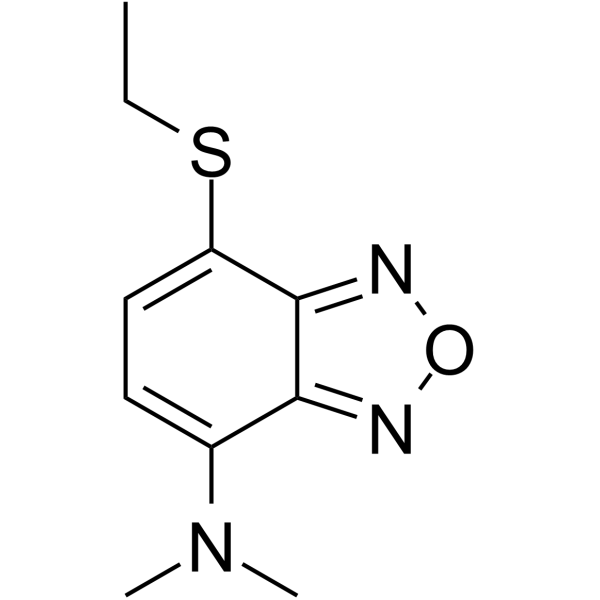
EtS-DMAB (HClO-green) is a fluorescent probe, which can selectively detect hypochlorous acid (HOCl) (λex=440 nm, λem=610 nm). EtS-DMAB is applied to image exogenous and endogenous HOCl in live cells .
|
-
- HY-D2615
-
|
|
Fluorescent Dye
|
Others
|
|
ICG PEG5000 biotin is a fluorescent dye composed of Indocyanine green (ICG) (HY-D0711), PEG and biotin. Indocyanine green provides it with fluorescent labeling function, PEG enhances its biocompatibility and stability, and biotin can bind to target molecules containing streptavidin to achieve targeted imaging or targeted delivery (Ex/Em=785/813 nm).
|
-
- HY-D2614
-
|
|
Fluorescent Dye
|
Others
|
|
ICG PEG2000 biotin is a fluorescent dye composed of Indocyanine green (ICG) (HY-D0711), PEG and biotin. Indocyanine green provides it with fluorescent labeling function, PEG enhances its biocompatibility and stability, and biotin can bind to target molecules containing streptavidin to achieve targeted imaging or targeted delivery (Ex/Em=785/813 nm).
|
-
- HY-D3264
-
|
|
Fluorescent Dye
|
Others
|
|
SiR-PEG4-DBCO is a novel fluorescent labeling molecule that combines the superior fluorescent properties of silicon-rhodamine dyes with the functionalities of polyethylene glycol (PEG) and Click Chemistry. SiR dyes exhibit excellent photostability under identical excitation conditions, making them suitable for long-term cellular imaging (Ex = 640 nm, Em = 670–680 nm).
|
-
- HY-172534
-
|
|
Fluorescent Dye
EGFR
TSPO
|
Cancer
|
|
BPN-01 is a fluorescent probe targeting translocator protein (TSPO) and human epidermal growth factor receptor 2 (HER2) with binding affinities of -10.7 kcal/mol for TSPO and -11.3 kcal/mol for HER2. BPN-01 is promising for research of solid tumor imaging during fluorescence image-guided surgery (FIGS) (Ex/Em = 475/510 nm) .
|
-
- HY-D3266
-
|
|
Fluorescent Dye
|
Cancer
|
|
IR 650 DBCO is a far-red-fluorescent probe, pH-insensitive, azide-reactive probe routinely used for imaging of azide-containing biomolecules without the need for a copper catalyst. (Ex=651nm, Em=668 nm)
|
-
- HY-D2266
-
|
|
Fluorescent Dye
|
Neurological Disease
|
|
FluoBar1 is an imaging fluorescence probe modified by a barbiturate ligand with fluorescent coumarin. FluoBar1 can monitor L-type voltage-gated calcium channels (LTCC) in living cells in real time for the study of neurological diseases .
|
-
- HY-115640
-
|
|
TrxR
|
Others
|
|
TRFS-green is a highly selective off−on fluorescent probe for imaging selenoprotein thioredoxin reductase (TrxR) in living cells. TRFS-green has the maximum absorbance at around 373 nm. After it is activated by TrxR, the maximum absorbance shifts to around 440 nm .
|
-
- HY-D2885H
-
|
Rhodamine B-PEG10000-Mal
|
Fluorescent Dye
|
Others
|
|
RB-PEG10000-Mal (Rhodamine B-PEG10000-Mal) is a fluorescent dye composed of Rhodamine B (HY-Y0016), PEG and Maleimide (HY-W007324) (Mal). RB-PEG10000-Mal can be used for fluorescent labeling and imaging (Ex/Em=546/610 nm) .
|
-
- HY-D2885E
-
|
Rhodamine B-PEG5000-Mal
|
Fluorescent Dye
|
Others
|
|
RB-PEG5000-Mal (Rhodamine B-PEG5000-Mal) is a fluorescent dye composed of Rhodamine B (HY-Y0016), PEG and Maleimide (HY-W007324) (Mal). RB-PEG5000-Mal can be used for fluorescent labeling and imaging (Ex/Em=546/610 nm) .
|
-
- HY-D2885
-
|
Rhodamine B-PEG400-Mal
|
Fluorescent Dye
|
Others
|
|
RB-PEG400-Mal (Rhodamine B-PEG400-Mal) is a fluorescent dye composed of Rhodamine B (HY-Y0016), PEG and Maleimide (HY-W007324) (Mal). RB-PEG400-Mal can be used for fluorescent labeling and imaging (Ex/Em=546/610 nm) .
|
-
- HY-D2885A
-
|
Rhodamine B-PEG600-Mal
|
Fluorescent Dye
|
Others
|
|
RB-PEG600-Mal (Rhodamine B-PEG600-Mal) is a fluorescent dye composed of Rhodamine B (HY-Y0016), PEG and Maleimide (HY-W007324) (Mal). RB-PEG600-Mal can be used for fluorescent labeling and imaging (Ex/Em=546/610 nm) .
|
-
- HY-D2885C
-
|
Rhodamine B-PEG2000-Mal
|
Fluorescent Dye
|
Others
|
|
RB-PEG2000-Mal (Rhodamine B-PEG2000-Mal) is a fluorescent dye composed of Rhodamine B (HY-Y0016), PEG and Maleimide (HY-W007324) (Mal). RB-PEG2000-Mal can be used for fluorescent labeling and imaging (Ex/Em=546/610 nm) .
|
-
- HY-D2885B
-
|
Rhodamine B-PEG1000-Mal
|
Fluorescent Dye
|
Others
|
|
RB-PEG1000-Mal (Rhodamine B-PEG1000-Mal) is a fluorescent dye composed of Rhodamine B (HY-Y0016), PEG and Maleimide (HY-W007324) (Mal). RB-PEG1000-Mal can be used for fluorescent labeling and imaging (Ex/Em=546/610 nm) .
|
-
- HY-D2885D
-
|
Rhodamine B-PEG3400-Mal
|
Fluorescent Dye
|
Others
|
|
RB-PEG3400-Mal (Rhodamine B-PEG3400-Mal) is a fluorescent dye composed of Rhodamine B (HY-Y0016), PEG and Maleimide (HY-W007324) (Mal). RB-PEG3400-Mal can be used for fluorescent labeling and imaging (Ex/Em=546/610 nm) .
|
-
- HY-125273
-
|
|
Fluorescent Dye
Phosphoglycerate Dehydrogenase (PHGDH)
|
Others
|
|
DNS-pE is a 3-phosphoglycerate dehydrogenase (PHGDH) inhibitor with a Ki of 7.4 μM. DNS-pE selectively and irreversibly covalently modifies endogenous PHGDH in live mammalian cells, its vinyl sulfone moiety acts as a fluorescence quencher that becomes highly fluorescent upon covalent modification of PHGDH. DNS-pE can be used as a fluorescent dye for live-cell imaging .
|
-
- HY-170603
-
|
|
Fluorescent Dye
Histone Methyltransferase
Apoptosis
|
Cancer
|
|
PRMT5-targeted fluorescent ligand-1 (Compound 7) is a PRMT5-targeted fluorescent ligand, that inhibits PRMT5 with an IC50 of 29.39 nM. PRMT5-targeted fluorescent ligand-1 exhibits cell imaging activity, that exhibits good fluorescence signal in MCF-7 with an IC50 of 29 nM. PRMT5-targeted fluorescent ligand-1 induces apoptosis. PRMT5-targeted fluorescent ligand-1 exhibits a maximal excitation wavelength of 438 nm and a maximal emission wavelength of 550 nm .
|
-
- HY-D2417
-
|
|
Fluorescent Dye
|
Others
|
|
SiRA 2 is a fluorescent inducer with a Kd value of 430 nM for binding to the SiRA RNA aptamer. When used in combination with the SiRA aptamer, SiRA 2 enables live-cell RNA imaging of aptamer-labeled mRNA as well as stimulated emission depletion super-resolution microscopy imaging. SiRA 2 has high photostability and forms a bright far-red light-up aptamer system upon binding to SiRA .
|
-
- HY-NP071
-
|
LEL
|
Biochemical Assay Reagents
|
Others
|
|
Lycopersicon esculentum (Tomato) Lectin (LEL) specifically recognizes and binds to sugar structures, that combines with fluorescein for fluorescent labeling and imaging of cells and tissues. Lycopersicon esculentum (Tomato) Lectin is used to visualizes the vasculature within transplanted tissues by labeling with fluorescein .
|
-
- HY-D2825
-
|
|
Fluorescent Dye
|
Others
|
|
Chitosan-Cy7.5 (MW 100000) is a Chitosan labeled with Cy7.5 (HY-D0926). Chitosan-Cy7.5 (MW 100000) can be used for fluorescent labeling and imaging .
|
-
- HY-D2816
-
|
|
Fluorescent Dye
|
Others
|
|
Chitosan-Cy7.5 (MW 2000) is a Chitosan labeled with Cy7.5 (HY-D0926). Chitosan-Cy7.5 (MW 2000) can be used for fluorescent labeling and imaging .
|
-
- HY-D2820
-
|
|
Fluorescent Dye
|
Others
|
|
Chitosan-Cy7.5 (MW 75000) is a Chitosan labeled with Cy7.5 (HY-D0926). Chitosan-Cy7.5 (MW 75000) can be used for fluorescent labeling and imaging .
|
-
- HY-D1443
-
|
(trans,trans)-1-Bromo-2,5-bis-(3-hydroxycarbonyl-4-hydroxy)styrylbenzene
|
Amyloid-β
|
Others
|
|
BSB is a Congo red-derived fluorescent probe. BSB binds not only to extracellular amyloid β protein, but also many intracellular lesions composed of abnormal tau and synuclein proteins. BSB acts as a prototype imaging agent for Alzheimer's disease .
|
-
- HY-D2756
-
|
|
Fluorescent Dye
|
Others
|
|
OG 488 alkyne is a bright, green-fluorescent alkyne-activated probe routinely used for imaging of azide-containing biomolecules. OG 488 Alkyne reacts with azides via a copper-catalyzed click reaction (CuAAC) to form a stable triazole linker.
|
-
- HY-D2824
-
|
|
Fluorescent Dye
|
Others
|
|
Chitosan-Cy7.5 (MW 10000) is a Chitosan labeled with Cy7.5 (HY-D0926). Chitosan-Cy7.5 (MW 10000) can be used for fluorescent labeling and imaging .
|
-
- HY-D0791
-
TRITC
1 Publications Verification
5(6)-Tetramethylrhodamine isothiocyanate
|
Fluorescent Dye
|
Others
|
|
TRITC (5(6)-Tetramethylrhodamine isothiocyanate) is a commonly used fluorescent dye, belonging to the Rhodamine derivative family. It exhibits red fluorescence properties (Ex/Em ≈ 550/580 nm). TRITC can be used for cell labeling and imaging .
|
-
- HY-D1816
-
|
|
Fluorescent Dye
|
Others
|
|
Vari Fluor 555-Phalloidin is a fluorescent derivative of Phalloidin that specifically labels myofilament proteins and exhibits red fluorescence when labeled, allowing for fluorescence imaging using the PE channel (Ex/Em=550 nm/561 nm) .
|
-
- HY-D2100B
-
|
|
Fluorescent Dye
|
Others
|
|
Cy5-DSPE chloride is a far-infrared fluorescent phospholipid (λex/λem = 600/665 nm). Cy5-DSPE chloride is used to label liposomes, membranes and lipid nanoparticles, and can be applied to tracking and imaging studies of liposomes .
|
-
- HY-D2100
-
|
|
Fluorescent Dye
|
Others
|
|
Cy5-DSPE is a far-infrared fluorescent phospholipid (λex/λem = 600/665 nm). Cy5-DSPE is used to label liposomes, membranes and lipid nanoparticles, and can be applied to tracking and imaging studies of liposomes .
|
-
- HY-164766
-
|
|
Fluorescent Dye
|
Infection
|
|
ICG-DBCO-1-Maltotriose is a specific imaging agent for detecting bacterial infections. ICG-DBCO-1-Maltotriose is composed of the fluorescent dye Indocyanine green (ICG) (HY-D0711) and a maltotriose sugar .
|
-
- HY-D1817
-
|
|
Fluorescent Dye
|
Others
|
|
Vari Fluor 488-Phalloidin is a fluorescent derivative of Phalloidin that specifically labels myofilament proteins and exhibits green fluorescence when labeled, allowing for fluorescence imaging using FITC channels (Ex/Em=488 nm/513 nm) .
|
-
- HY-D1254
-
|
NBL-SS perchlorate
|
Fluorescent Dye
|
Others
|
|
Trx-red (NBL-SS perchlorate) is a red-emitting fluorescent probe derivatized from the nile blue fluorophore. Trx-red is used for selectively imaging thioredoxin (Trx) in live cells and in vivo (λex=615 nm, λem=661 nm) .
|
-
- HY-145746
-
|
|
Fluorescent Dye
PD-1/PD-L1
|
Inflammation/Immunology
Cancer
|
|
Sulfo-Cy5 azide is a near-infrared fluorescent probe with favorable click chemistry reactivity. Sulfo-Cy5 azide enables fluorescence imaging, tissue and cellular visualization of PD-L1 in tumors, and site-specific modification of anti-PD-L1 antibodies. Sulfo-Cy5 azide has been employed for RNA labeling and imaging. Sulfo-Cy5 azide can be conjugated to targeting agents for fluorescence imaging in atherosclerosis and breast cancer models (Ex/Em = 645/670 nm) .
|
-
- HY-D2884D
-
|
Rhodamine B-PEG3400-NHS
|
Fluorescent Dye
|
Others
|
|
RB-PEG3400-NHS (Rhodamine B-PEG3400-NHS) is a fluorescent dye composed of Rhodamine B (HY-Y0016), PEG and a hydroxysuccinimide (NHS) group. The NHS group can react with amine-containing groups. RB-PEG3400-NHS can be used for fluorescent labeling and imaging (Ex/Em=546/610 nm) .
|
-
- HY-D2884A
-
|
Rhodamine B-PEG600-NHS
|
Fluorescent Dye
|
Others
|
|
RB-PEG600-NHS (Rhodamine B-PEG600-NHS) is a fluorescent dye composed of Rhodamine B (HY-Y0016), PEG and a hydroxysuccinimide (NHS) group. The NHS group can react with amine-containing groups. RB-PEG600-NHS can be used for fluorescent labeling and imaging (Ex/Em=546/610 nm) .
|
-
- HY-D2884B
-
|
Rhodamine B-PEG1000-NHS
|
Fluorescent Dye
|
Others
|
|
RB-PEG1000-NHS (Rhodamine B-PEG1000-NHS) is a fluorescent dye composed of Rhodamine B (HY-Y0016), PEG and a hydroxysuccinimide (NHS) group. The NHS group can react with amine-containing groups. RB-PEG1000-NHS can be used for fluorescent labeling and imaging (Ex/Em=546/610 nm) .
|
-
- HY-D2884E
-
|
Rhodamine B-PEG5000-NHS
|
Fluorescent Dye
|
Others
|
|
RB-PEG5000-NHS (Rhodamine B-PEG5000-NHS) is a fluorescent dye composed of Rhodamine B (HY-Y0016), PEG and a hydroxysuccinimide (NHS) group. The NHS group can react with amine-containing groups. RB-PEG5000-NHS can be used for fluorescent labeling and imaging (Ex/Em=546/610 nm) .
|
-
- HY-D2884H
-
|
Rhodamine B-PEG10000-NHS
|
Fluorescent Dye
|
Others
|
|
RB-PEG10000-NHS (Rhodamine B-PEG10000-NHS) is a fluorescent dye composed of Rhodamine B (HY-Y0016), PEG and a hydroxysuccinimide (NHS) group. The NHS group can react with amine-containing groups. RB-PEG10000-NHS can be used for fluorescent labeling and imaging (Ex/Em=546/610 nm) .
|
-
- HY-D2421
-
|
|
Fluorescent Dye
|
Cardiovascular Disease
Cancer
|
|
DEAE-dex-Cy5 is a fluorescent labeling reagent that combines Cy5 (HY-D0821) fluorescent dye, Dextran (dex) and Diethylaminoethyl (DEAE). Cy5 is a Cyanine dye (with a long wavelength about 662nm) that can be used for molecular labeling and microscopy imaging. Dex has an inhibitory effect on thrombocyte aggregation and coagulation factors and is used as a plasma volume expander .
|
-
- HY-D2884C
-
|
Rhodamine B-PEG2000-NHS
|
Fluorescent Dye
|
Others
|
|
RB-PEG2000-NHS (Rhodamine B-PEG2000-NHS) is a fluorescent dye composed of Rhodamine B (HY-Y0016), PEG and a hydroxysuccinimide (NHS) group. The NHS group can react with amine-containing groups. RB-PEG2000-NHS can be used for fluorescent labeling and imaging (Ex/Em=546/610 nm) .
|
-
- HY-D2884
-
|
Rhodamine B-PEG400-NHS
|
Fluorescent Dye
|
Others
|
|
RB-PEG400-NHS (Rhodamine B-PEG400-NHS) is a fluorescent dye composed of Rhodamine B (HY-Y0016), PEG and a hydroxysuccinimide (NHS) group. The NHS group can react with amine-containing groups. RB-PEG400-NHS can be used for fluorescent labeling and imaging (Ex/Em=546/610 nm) .
|
-
- HY-D1321A
-
|
Cyanine5 amine TFA
|
Fluorescent Dye
|
Others
|
|
Cy 5 amine (Cyanine5 amine) TFA is a fluorescent dye. Cy 5 amine TFA can be used in the preparation of Cy5.5-labeled compound or polymers, which can be used for imaging cellular process and trafficking .
|
-
- HY-W800704
-
|
|
Fluorescent Dye
|
Others
|
|
BP Fluor 594 alkyne is a bright, red-fluorescent alkyne-activated probe routinely used for imaging of azide-containing biomolecules. BP Fluor 594 alkyne reacts with azides via a copper-catalyzed click reaction (CuAAC) to form a stable triazole linker.
|
-
- HY-D1264
-
|
Zn-green
|
Fluorescent Dye
|
Others
|
|
PMQA (Zn-green), an 8-aminoquinoline-based ratiometric fluorescent sensor, demonstrates the Zn 2+-induced redshift of emission (85 nm). PMQA (Zn-green) is a cell membrane-permeable probe and suitable for imaging Zn 2+ in living cells .
|
-
- HY-P10943
-
|
|
Fluorescent Dye
|
Inflammation/Immunology
Cancer
|
|
APO-15 is a phosphatidylserine-binding fluorescent probe and apoptosis imaging reagent. APO-15 exhibits high chemical stability under proteolytic and oxidative conditions, enables quantification and imaging of drug-induced apoptosis in preclinical mouse models, and is applicable to fixed tissue samples and multiple in vivo administration routes (Ex = 488 nm; Em = 525 nm). APO-15 can be used in studies related to acute lung injury and breast cancer .
|
-
- HY-D3225
-
|
|
Fluorescent Dye
|
Neurological Disease
|
|
MD-B is a •OH Fluorescent probe with blood-brain barrier permeability. MD-B undergoes single-electron oxidation by hydroxyl radicals (•OH), which triggers fluorescence enhancement and enables in-situ imaging of •OH. MD-B allows imaging analysis of hydroxyl radicals (•OH) in the mouse brain, revealing a positive correlation between elevated •OH levels and the severity of depressive phenotypes. MD-B can be used in depression-related research .
|
-
- HY-151704
-
|
|
Fluorescent Dye
|
Cancer
|
|
ICG-alkyne is a short-wave infrared (SWIR)-emitting cyanine fluorescent probe based on alkyne-derivatized indocyanine green. ICG-alkyne can undergo click chemistry reaction to conjugate with antibody molecules via binding to the azide groups introduced into antibodies. ICG-alkyne enables SWIR fluorescent molecular imaging of breast tumors in living mice. ICG-alkyne can be used in breast cancer-related research .
|
-
- HY-P992459
-
|
|
ADC Antibody
Transmembrane Glycoprotein
|
Cancer
|
|
SGM-101 Antibody is a chimeric monoclonal antibody targeting carcinoembryonic antigen (CEA). SGM-101 Antibody can serve as a tumor-specific fluorescent imaging probe after being covalently conjugated with the near-infrared fluorescent dye BM104 . SGM-101 Antibody accumulates in CEA-positive tumor tissues via antigen-antibody specific binding, and emits near-infrared fluorescence to enable imaging of tumor lesions. SGM-101 Antibody can be used in research related to gastric cancer, colorectal cancer, pancreatic cancer, non-small cell lung cancer, breast cancer, peritoneal carcinomatosis, and liver metastases .
|
-
- HY-D2100A
-
|
|
Fluorescent Dye
|
Others
|
|
Cy5-DSPE chloride ammonium is a far-infrared fluorescent phospholipid (λex/λem = 600/665 nm). Cy5-DSPE chloride ammonium is used to label liposomes, membranes and lipid nanoparticles, and can be applied to tracking and imaging studies of liposomes .
|
-
- HY-D3033
-
|
|
Fluorescent Dye
|
Others
|
|
FITC-Alginate is a FITC (HY-66019)-labeled alginate. FITC-Alginate combines the polysaccharide properties of alginate with the fluorescence properties of FITC, playing an important role in fields such as fluorescent labeling, cell imaging, and drug delivery research (Ex/Em = 488/525 nm).
|
-
- HY-D2991
-
|
|
Bacterial
Fluorescent Dye
|
Infection
|
|
CDG-DNB3 is a selective fluorescent probe for Mycobacterium tuberculosis. CDG-DNB3 provides rapid and specific labeling of live Mycobacterium tuberculosis. CDG-DNB3 can image Bacillus Calmette-Guérin phagocytosis in real time .
|
-
- HY-W777429
-
|
|
Biochemical Assay Reagents
|
|
|
Ceratamine B is a fluorescent substrate with significant biological activity and can be used for cell imaging and biolabeling. Ceratamine B can effectively penetrate cell membranes, facilitating the study of cellular processes. Ceratamine B also shows broad application potential in compound screening and biosensor development.
|
-
- HY-162161
-
|
|
Fluorescent Dye
Microtubule/Tubulin
|
Cancer
|
|
Flutax-2 is an active fluorescent derivative of Paclitaxel (HY-B0015) that binds to polymerized αβ-tubulin dimers. Flutax-2 is applicable for imaging microtubules in live cells, isolated cytoskeletons and parasites (Ex/Em=496/526 nm) .
|
-
- HY-174978
-
|
|
Isocitrate Dehydrogenase (IDH)
|
Others
|
|
SK60 is a dimethylated derivative of GSK321 (HY-18948) with low nanomolar potency and high selectivity for IDH1R132H (IC50 = 14.5 nM). SK60 can be used as a tracer for brain imaging with the fluorescent label [ 18F] .
|
-
- HY-D0154
-
|
Tetramethylrhodamine-6-isothiocyanate
|
Fluorescent Dye
|
Others
|
|
6-TRITC (Tetramethylrhodamine-6-isothiocyanate) is a potent fluorescent tracer. 6-TRITC can be used as an probe for haptenated proteins/peptides for the research of contact allergy. 6-TRITC can be used as a tracer for the confocal imaging in living cells .
|
-
- HY-131020
-
|
JF525, SE; JF525, NHS
|
Fluorescent Dye
|
Others
|
|
Janelia Fluor 525, SE (JF525, SE) (the SE form of compound 12) is a yellow fluorescent dye (Ex = 525 nm; Em = 549 nm) . Janelia Fluor 525, SE contains an NHS ester, which can be used to label primary amines and is suitable for live cell imaging.
|
-
- HY-D3447
-
|
|
Fluorescent Dye
Ferroptosis
|
Others
|
|
LPd peroxida probe-2 (Compound I-1) is a lipid peroxidation fluorescent indicator (Ex = 488 nm, Em = 535 nm). LPd peroxida probe-2 undergoes fluorescence spectral changes in response to lipid hydroperoxides and can be used for Ferroptosis detection and cell imaging.
|
-
- HY-151759
-
|
|
Fluorescent Dye
|
Cancer
|
|
Sulfo-Cy5-TCO is a water-soluble sulfonated Cy5 fluorescent reagent containing trans-cyclooctene (TCO). Sulfo-Cy5-TCO undergoes an inverse electron demand Diels‑Alder reaction with tetrazine-labeled fixed breast cancer cells to achieve cell labeling. Sulfo-Cy5-TCO is used for fluorescent labeling and imaging of biological samples such as proteins and cells .
|
-
- HY-D2441
-
|
|
Fluorescent Dye
|
Cancer
|
|
TAT-PEG-Cy3 is a fluorescent labeling reagent that combines Cy3 fluorescent dye, Cell membrane penetrating peptide (TAT) and polyethylene glycol (PEG). The Cy3 fluorophore is commonly used in applications such as immunolabeling, nucleic acid labeling, fluorescence microscopy, and flow cytometry. Cy3 has an emission maximum around 562-570 nm. TAT-PEG-Cy3 can be used for cell targeted delivery and biological imaging .
|
-
- HY-D2523
-
|
|
Folate Receptor (FR)
Fluorescent Dye
|
|
|
Cy3-PEG2000-FA is a fluorescent folate-PEG derivative with excitation/emission wavelengths of ~550 nm/~570 nm. Cy3-PEG2000-FA can be readily traced by its intense red fluorescent signal. Cy3-PEG2000-FA can be used for cell imaging, folate receptor targeting and detection.
|
-
- HY-D1876
-
|
|
Fluorescent Dye
|
Cancer
|
|
ZY-2 is a specific fluorescent probe for pyruvate kinase M2 (PKM2). ZY-2 can image in PKM2-positive cells in a time- and concentration-dependent manner. ZY-2 can be used for the detection of cancer cells .
|
-
- HY-155486
-
|
|
Fluorescent Dye
|
Cancer
|
|
HCy-AAN-Bio is a tumor-targeted hemicyanine (HCy) probe for Fluorescent/photoacoustic (FL/PA) imaging of legumain in vivo. Legumain can specifically cleave HCy-AAN-Bio with the generation of FL/PA signal. HCy-AAN-Bio is a powerful tool for early diagnosis of associated cancer .
|
-
- HY-D1412
-
|
|
Ferroptosis
|
Others
|
|
LPd peroxida probe-1, a marker of ferroptosis, is a useful fluorescent probe for investigating the roles of lipid peroxidation in a variety of cell pathophysiologies. LPd peroxida probe-1 reduces lipid hydroperoxides to lipid alcohols and is used for imaging lipid hydroperoxides in living cells .
|
-
- HY-W440921
-
|
|
Liposome
|
Others
|
|
DSPE-PEG5000-Rhodamine is a phospholipid polyPEG with red fluorescent. The polymer can form lipid bilayer and be used to prepare nanoparticles or liposomes for targeted drug delivery. Rhodamine has maximum absorption at 570 nm and emission around 595 nm and can be easily traced using an imaging technique.
|
-
- HY-D2853
-
|
|
Fluorescent Dye
|
Others
|
|
FITC-PEG2000-PBA is a fluorescent dye composed of FITC (HY-66019), PEG and phenylboronic acid (PBA). FITC-PEG2000-PBA can be used for cell imaging and tracking, as well as sugar molecule detection (Ex/Em=488/525 nm).
|
-
- HY-W440920
-
|
|
Liposome
|
Others
|
|
DSPE-PEG3400-Rhodamine is a phospholipid polyPEG with red fluorescent. The polymer can form lipid bilayer and be used to prepare nanoparticles or liposomes for targeted drug delivery. Rhodamine has maximum absorption at 570 nm and emission around 595 nm and can be easily traced using an imaging technique.
|
-
- HY-W800698
-
|
|
Fluorescent Dye
|
Others
|
|
BP Fluor 430 Alkyne is a green-fluorescent alkyne-activated probe routinely used for imaging of moderate to high abundance azide-containing biomolecules. BP Fluor 430 Alkyne reacts with azides via a copper-catalyzed click reaction (CuAAC) to form a stable triazole linker.
BP Fluor 430 is a bright, photostable, green-fluorescent probe optimally excited near 430 nm. This probe is water-soluble and its fluorescence is pH independent over a wide pH range.
|
-
- HY-125385
-
|
|
Endogenous Metabolite
|
Metabolic Disease
|
|
Sulforhodamine 101 DHPE is a fluorescent probe made from the conjugation of the phospholipid 1,2-dipalmitoyl-sn-glycero-3-PE to sulforhodamine 101, a red fluorescent dye that displays excitation/emission spectra of 586/605 nm, respectively. It integrates into phospholipid bilayers and has been used for imaging of solid supported lipid bilayers, detection of protein-ligand binding on bilayers, and to monitor colocalization of lipid probes in liposomes via resonance energy transfer (RET).
|
-
- HY-W800701
-
|
|
Biochemical Assay Reagents
|
Others
|
|
BP Fluor 546 DBCO is an azide-reactive probe that can be used for imaging azide-tagged biomolecules via a copper-free click reaction. The DBCO moiety reacts with azides to form a stable triazole and does not require a Cu-catalyst or elevated temperatures. In applications where the presence of copper is a concern, BP Fluor 546 DBCO is an ideal alternative to copper-requiring fluorescent alkynes.
BP Fluor 546 is a water-soluble, pH-insensitive (from pH 4-10), orange-fluorescent dye with absorption and emission maxima at 554 and 570 nm, respectively. It can be used with the 488 nm and 532 nm laser lines. BP Fluor 546 dye conjugates to a variety of antibodies, peptides, proteins, tracers, and amplification substrates, which are often used for generating stable signals in imaging and flow cytometry.
|
-
- HY-D2755
-
|
|
Fluorescent Dye
|
Others
|
|
BP Light 650 carboxylic acid is an vibrant far-red fluorochrome with comparable or improved performance over other dyes, including BP Fluor 647 and Cy5 dye, for fluorescent applications. It is used to label antibodies and other proteins as molecular probes for cellular imaging and other fluorescence detection methods application.
|
-
- HY-D3035
-
|
|
Fluorescent Dye
|
Others
|
|
Rhodamine-Alginate is a Rhodamine B (HY-Y0016)-labeled alginate. Rhodamine-Alginate combines the polysaccharide properties of alginate with the fluorescence properties of Rhodamine B, playing an important role in fields such as fluorescent labeling, cell imaging, and drug delivery research (Ex/Em = 546/610 nm) .
|
-
- HY-D2988
-
|
|
Fluorescent Dye
Bacterial
|
Infection
|
|
BIN-3 is a novel near-infrared fluorescent probe. BIN-3 has excellent biocompatibility, no cytotoxicity, and no hemolysis. BIN-3 can be used for highly sensitive and selective imaging of drug-resistant bacterial infections expressing β-lactam enzymes in live mice .
|
-
- HY-D3416
-
|
TAMRA-2,4-dinitroaniline
|
Fluorescent Dye
|
Others
|
|
TMR-DN (TAMRA-2,4-dinitroaniline) is a bright orange fluorescent probe that binds to the SRB-2 aptamer, with a Kd value of 35 nM for the SRB-2 aptamer. TMR-DN exhibits low background fluorescence, enabling wash-free live-cell RNA imaging .
|
-
- HY-130015
-
|
|
Reactive Oxygen Species (ROS)
|
Others
|
|
HKSOX-1 (5/6-mixture) is a fluorescent probe which is used for imaging and detection of endogenous superoxide in live cells and in vivo. HKSOX-1 (5/6-mixture) exhibits excellent selectivity and sensitivity towards superoxide anion radical (Ex/Em = 509/534 nm) .
|
-
- HY-D0110A
-
|
|
Fluorescent Dye
|
Others
|
|
Fura-2 pentapotassium is a cell-impermeable scaled fluorescent dye that can be used for intracellular calcium imaging. Fura-2 pentapotassium has an emission wavelength of 510 nm and excitation wavelengths of 340 nm or 380 nm and the ratio of 340/380 fluorescence intensity is proportional to the intracellular Ca 2+ level .
|
-
- HY-130017
-
|
|
Reactive Oxygen Species (ROS)
|
Others
|
|
HKSOX-1r (5/6-mixture) is a fluorescent probe which is used for imaging and detection of endogenous superoxide in live cells and in vivo. HKSOX-1r (5/6-mixture) exhibits excellent selectivity and sensitivity towards superoxide anion radical .
|
-
- HY-D0110B
-
|
|
Fluorescent Dye
|
Others
|
|
Fura-2 pentasodium is a cell-impermeable scaled fluorescent dye that can be used for intracellular calcium imaging. Fura-2 pentasodium has an emission wavelength of 510 nm and excitation wavelengths of 340 nm or 380 nm and the ratio of 340/380 fluorescence intensity is proportional to the intracellular Ca 2+ level .
|
-
- HY-D0286
-
|
2,8-Dimethylnaphtho[3,2,1-kl]xanthene
|
Fluorescent Dye
|
Others
|
|
Fluorol Yellow 088 is a fluorescent dye that can be used as a biological material or an organic compound for life science research. Fluorol Yellow 088 is suitable for lipid staining in plant tissues, particularly for the fluorescence imaging of suberized cell walls and hydrophobic structures, with an excitation wavelength of 365 nm and an emission wavelength of ≥420 nm .
|
-
- HY-D2968
-
|
|
Fluorescent Dye
|
Neurological Disease
|
|
DCM-ONOO is a near-infrared two-photon fluorescence probe specifically designed for real-time monitoring of the dynamic fluctuations of peroxynitrite (ONOO⁻) in epilepsy models. DCM-ONOO exhibits excellent optical properties, with a single photon excitation (Ex) of 520 nm; a single photon emission (Em) of 685 nm; a two-photon excitation of 820 nm; and a Stokes shift of 165 nm. When DCM-ONOO is combined with ONOO⁻, it shifts from 460 nm to 512 nm, and only generates a significant fluorescence response to ONOO⁻. DCM-ONOO has been successfully applied to rat epilepsy models .
|
-
- HY-D2279
-
|
|
Fluorescent Dye
|
Inflammation/Immunology
|
|
NFL-NH2 is a mitochondrial-targeted near-infrared ratiometric fluorescent probe. NFL-NH2 can rapidly detect NO levels associated with the inflammatory damage degree in rheumatoid arthritis (RA) mice models by ratiometric fluorescence imaging. The excitation wavelength and emission wavelength are 650 nm and 780 nm, respectively .
|
-
- HY-W753658
-
|
|
Fluorescent Dye
|
Others
|
|
Coppersensor-3 (CS3) is a bright small-molecule fluorescent probe for selective Cu(I) detection. Coppersensor-3 is selective and sensitive enough to image labile copper pools in living cells at endogenous, basal levels. Coppersensor-3 can be used for the cell biology of copper research .
|
-
- HY-D2998
-
|
|
Fluorescent Dye
|
Others
|
|
ONOO-LysopH is a new Rhodamine-based near-infrared fluorescent probe. ONOO-LysopH is acid-sensitive, exhibiting rapid near-infrared fluorescence enhancement around 686 nm under acidic pH conditions. ONOO-LysopH also displays a rapid NIR turn-on fluorescence around 678 nm for ONOO− at physiological pH. ONOO-LysopH can target lysosomes to track lysosomal pH changes and image endogenous/exogenous ONOO− in live cells. ONOO-LysopH is applicable for cell imaging ONOO− and tracking lysosomal pH changes .
|
-
- HY-P4154
-
|
ALM-488
|
Fluorescent Dye
|
Neurological Disease
Cancer
|
|
Bevonescein (ALM-488) is a fluorescein-conjugated peptide that facilitates the targeted delivery of a fluorescent moiety (5-FAM (HY-66022)) to nerves after intravenous (IV) administration. Bevonescein binds nerve-associated connective tissue, labels peripheral nerves under real-time fluorescence imaging (FL) in living mice and human ex vivo nerve tissue. Bevonescein is a peptide-linked tracer which fluorescently labeled both intact and degenerated nerves (Ex/Em = 480/530 nm) .
|
-
- HY-D1275
-
|
|
Fluorescent Dye
|
Others
|
|
CAY10731 (compound 3) is a highly selective fluorescent probe for detection of hydrogen sulfide (H2S). CAY10731 is used to monitor exo- and endogenous H2S in both cancer and normal cells. CAY10731 is applied for imaging of H2S in living tissues at variable depths and in nematodes .
|
-
- HY-D3411
-
|
|
Fluorescent Dye
|
Others
|
|
Rhobo6 is a cell-impermeable glycan-binding, fluorescence turn-on imaging agent with a Kd of 53 µM for glycans. Rhobo6 reversibly binds target glycans and enables wash-free live ECM visualization. Rhobo6 can be used for fluorescent labeling of ECM in living samples or decellularized tissues (Ex/Em = 488/561 nm) .
|
-
- HY-130735
-
|
JF646, SE; JF646, NHS
|
Fluorescent Dye
|
Others
|
|
Janelia Fluor 646, SE (JF646, SE) is a red fluorescent dye can be used in cellular imaging . Janelia Fluor products are licensed under U.S. Pat. Nos. 9,933,417, 10,018,624 and 10,161,932 and other patents from Howard Hughes Medical Institute.
|
-
- HY-D2987
-
|
|
Fluorescent Dye
Bacterial
|
Others
|
|
BacGO is a highly selective, wash free fluorescent probe for Gram positive bacteria. BacGO binds to the carbohydrate structure in peptidoglycan through boric acid and exhibits depolymerization induced luminescence (DIE) properties. BacGO can be used for imaging complex environmental samples (such as activated sludge) and flat plate bacteria without affecting bacterial activity .
|
-
- HY-110213
-
|
|
Fluorescent Dye
|
Others
|
|
BODIPY 630/650X is a red fluorescent dye that targets amine groups. BODIPY 630/650X displays excitation/emission maxima of 630/650 nm, respectively. BODIPY 630/650X can be used to covalently label proteins, antibodies, or other amine-containing biomolecules for detection and imaging .
|
-
- HY-118667
-
|
|
Liposome
|
Others
|
|
Dehydroergosterolis a naturally occurring fluorescent sterol analog (Ex/Em=325/375 nm), which mimics the properties of cholesterol in cell membranes. DehydroergosterolEasily conjugated by cholesterol-binding proteins for real-time imaging in live cells. DehydroergosterolThe sterol environment and intracellular sterol transport in vivo can be probed/elucidated in real time .
|
-
- HY-D2971
-
|
|
Fluorescent Dye
Autophagy
|
Neurological Disease
|
|
NCIC-VIS is a lysosome-targeted, viscosity-sensitive two-photon near-infrared fluorescent probe. NCIC-VIS has a rigid structure that can restrict molecular torsion, thereby increasing the fluorescence quantum yield and two-photon absorption cross-section. NCIC-VIS enables real-time imaging of the autophagy process in cells .
|
-
- HY-D3019
-
|
|
Fluorescent Dye
|
Others
|
|
CY5-Alginate is a CY5 (HY-D0821)-labeled alginate.CY5-Alginate combines the polysaccharide properties of alginate with the fluorescence properties of CY5, playing an important role in fields such as fluorescent labeling, cell imaging, and drug delivery research (Ex/Em = 633/670 nm).
|
-
- HY-124473
-
|
Naphthafluorescein
|
HIF/HIF Prolyl-Hydroxylase
|
Cancer
|
|
Naphthofluorescein inhibits the interaction between HIF-1 and Mint3.
Naphthofluorescein suppresses Mint3-dependent HIF-1 activity and glycolysis in cancer cells and macrophages without cytotoxicity in vitro and adverse effect in vivo . Naphthofluorescein is also a fluorescent pH-sensitive probe that can be used for functional Cerenkov imaging .
|
-
- HY-P1388F
-
|
FITC-Ahx-Amyloid β-peptide (1-42) (rat/mouse) tris
|
Amyloid-β
|
Neurological Disease
|
|
FITC-Ahx-β-Amyloid (1-42), (rat/mouse) (tris) is a fluorescently labeled (FITC) form of β-Amyloid (1-42), (rat/mouse) (HY-P1388), which can be used in Alzheimer's disease-related research, such as aggregation, fiber formation, cellular uptake or imaging experiments. This product is provided in the form of Tris salt.
|
-
- HY-D2285
-
|
|
Fluorescent Dye
|
Cancer
|
|
MOR-CES2 is a near-infrared fluorescent probe (Ex= 630 nm, Em=735 nm) capable of identifying cancer cells and tissues, as well as exhibiting a sensitive response to inflammation. MOR-CES2 holds potential as an efficient imaging tool in assisting surgical resection of CES2-related tumors .
|
-
- HY-D3018
-
|
|
Fluorescent Dye
|
Others
|
|
CY3-Alginate is a CY3 (HY-D0822)-labeled alginate. CY3-Alginate combines the polysaccharide properties of alginate with the fluorescence properties of CY3, playing an important role in fields such as fluorescent labeling, cell imaging, and drug delivery research (Ex/Em = 550/570 nm).
|
-
- HY-D3021
-
|
|
Fluorescent Dye
|
Others
|
|
CY7-Alginate is a CY7 (HY-D0825)-labeled alginate. CY7-Alginate combines the polysaccharide properties of alginate with the fluorescence properties of CY7, playing an important role in fields such as fluorescent labeling, cell imaging, and drug delivery research (Ex/Em = 740/770 nm).
|
-
- HY-D2459
-
|
|
Fluorescent Dye
|
Cancer
|
|
Alexa Fluor 430 NHS ester is a compound that couples green fluorescent dye Alexa Fluor 430 to a protein or antibody. Alexa Fluor 430 is used for the generation of stable signals in imaging and flow cytometry. NHS ester can be used to label proteins, amine-modified oligonucleotides and other primary amines (R-NH2) containing amine molecules .
|
-
- HY-130533
-
|
|
Fluorescent Dye
|
Others
|
|
ReAsH-EDT2 is a red fluorescent dye that marks proteins. ReAsH-EDT2 is a membrane-permeable biarsenical compound that binds covalently to tetracysteine sequences which allows the protein to be imaged. ReAsH-EDT2 can be used for protein localization and trafficking. (λex=530 nm, λem=592 nm) .
|
-
- HY-112697
-
|
|
Biochemical Assay Reagents
|
Others
|
|
Rhodamine B isothiocyanate (RBITC) is a fluorescent dye commonly used in biological imaging and labeling applications. It has an isothiocyanate functional group that can be covalently attached to amino groups on proteins and other biomolecules, making it useful for fluorescent labeling of cells and tissues. RBITC fluoresces bright orange-red under green light excitation, which makes it easy to detect and track labeled molecules in complex samples. Due to its stability and sensitivity, RBITC has been widely used in various research fields, including cell biology, immunology, and neurobiology.
|
-
- HY-D3405
-
|
|
Fluorescent Dye
|
Others
|
|
BO-TAP-3 is an orange fluorescent carbocyanine monomer dye, and it is also a cell impermeable nucleic acid staining agent. When there is no nucleic acid present, BO-TAP-3 shows a non-fluorescent state. However, when it binds to double-stranded DNA, it exhibits multiple fluorescence enhancement effects. BO-TAP-3 can be used for cell nucleus and cytoplasm imaging, bacterial and sperm labeling, and can also be applied in nucleic acid detection and amplification research. It can also be used as a temperature sensor (Ex/Em = 564/600 nM).
|
-
- HY-D3240
-
|
|
Fluorescent Dye
|
Others
|
|
Photoactive NTR probe (Compound 1) is a covalent crosslinker and Fluorescent indicator targeting Nitroreductase. The Photoactive NTR probe undergoes a sequential activation process: it is first activated via nitroreductase-mediated nitro-to-amino conversion, and then forms a fluorescent product upon photoactivation. The Photoactive NTR probe can form covalent adducts with the side chains of cysteine, tyrosine, lysine and histidine in adjacent proteins to reduce fluorophore diffusion. The Photoactive NTR probe enables super-resolution (STORM) imaging of active mitochondrial nitroreductase microdomains in living cells .
|
-
- HY-D2994
-
|
SNAP-MaP555
|
Fluorescent Dye
|
Others
|
|
SPY555-BG (SNAP-MaP555) is the benzylguanine derivative of SPY555 fluorophore. SPY555-BG emits light in the orange part of the UV-ViS spectrum. SPY555-BG is fluorogenic, highly cell permeable and well suited for STED and SIM superresolution imaging. SPY555-BG can be imaged with a standard Cy3 filterset. SPY555-BG can be used for widefield, confocal, SIM or STED imaging in living or fixed cells and tissue .
|
-
- HY-D1565
-
|
|
Fluorescent Dye
|
Others
|
|
Cy7.5 maleimide is a CY dye. CY, short for Cyanine, is a compound consisting of two nitrogen atoms connected by an odd number of methyl units. Cyanine compounds have the characteristics of long wavelength, adjustable absorption and emission, high extinction coefficient, good water solubility and relatively simple synthesis . CY dyes are of en used for the labeling of proteins, antibodies and small molecular compounds. For the labeling of protein antibodies, the combination can be completed through a simple mixing reaction. Below, we introduce the labeling method of protein antibody labeling, which has certain reference significance .
|
-
- HY-149298
-
|
|
PSMA
|
Cancer
|
|
PSMA-IN-2 is an inhibitor of PSMA with a Ki value of 1.07 nM. PSMA-IN-2 displays favorable in vivo NIR imaging (λEM = 1088 nm, λex = 808 nm), and can be used for NIRII image-guided tumor resection surgery in PSMA-positive tumor-bearing mice .
|
-
- HY-D2194
-
|
|
Fluorescent Dye
|
Others
|
|
AgAuSe-COOH (1000 nm) is a fluorescent quantum dot that emits fluorescence in the near-infrared II region, with an emission peak reaching 1000 nm. AgAuSe-COOH (1000 nm) has the advantages of narrow band gap, large Stokes shift, and good photostability. AgAuSe-COOH (1000 nm) can bind proteins, antibodies, peptides, PEG, etc., and can be widely used in the field of biological imaging.
|
-
- HY-D3234
-
|
|
Fluorescent Dye
|
Others
|
|
Cy-AP is a hypoxia-sensitive near-infrared Fluorescent probe (emission wavelength: 725 nm). Cy-AP exhibits no fluorescence under normoxic microenvironments, while under hypoxic microenvironments, its azo group is reduced, releasing strong near-infrared fluorescence with an emission at 725 nm. Cy-AP enables visualization of intracellular hypoxic status through multiple imaging modalities .
|
-
- HY-D2346
-
|
|
Fluorescent Dye
|
Others
|
|
HBmito Crimson is a deep red fluorescent probe (λex: 658 nm, λem: 678 nm) for the inner mitochondrial membrane. HBmito Crimson is a cell membrane-permeable probe with high selectivity for the mitochondrial inner membrane, suitable for specific fluorescence staining of the inner mitochondrial membrane in living cells. HBmito Crimson has high photostability and brightness, suitable for long-term dynamic fluorescence imaging.
|
-
- HY-D2846
-
|
|
Fluorescent Dye
|
Others
|
|
m-PEG-PEI800-Cy5 is a fluorescent dye composed of CY5 (HY-D0821), methoxypolyethylene glycol (mPEG), and polyethyleneimine (PEI). m-PEG-PEI8800-Cy5 is used for gene delivery, nanodrug delivery, cell imaging and biosensing and bioanalysis (Ex/Em = 633/670 nm).
|
-
- HY-D2062
-
|
|
Fluorescent Dye
Integrin
|
Cancer
|
|
ATTO 740 NHS ester is a near-infrared fluorescent dye and a multimodal fluorescence/photoacoustic contrast agent with excellent near-infrared emission properties and extremely high photostability. The photoacoustic signal of ATTO 740 NHS ester shows no significant decrease after continuous irradiation with a 750 nm laser for 30 min, making it suitable for in vivo fluorescence imaging and photoacoustic contrast imaging. When conjugated with the cystine knot peptide R01, ATTO 740 NHS ester enables precise detection of integrin αvβ6-positive cells and tumors in nude mouse xenograft models .
|
-
- HY-P5295
-
|
|
Fluorescent Dye
|
Others
|
|
Cy3-Ova (323-339) is an Cy3 labled OVA Peptide (323-339) (HY-P0286). Cy3 is a fluorescent dye belonging to the Cyanine family and is a fluorescent light product of Cy5. Cyanine is commonly used in fluorescence microscopy, cell imaging, and molecular biology experiments. OVA Peptide (323-339) represents the T and B cell epitopes of ovalbumin (OVA). OVA Peptide (323-339) has limited immunogenic efficacy in activating OVA-sensitized and attacked mouse spleen cells .
|
-
- HY-D0053
-
|
6-Carboxy-X-rhodamine
|
Fluorescent Dye
|
Others
|
|
6-ROX is a selective fluorescent probe and potential inhibitor of COX-2. 6-ROX binds to the active site of COX-2 and inhibits its conversion of arachidonic acid into prostaglandins. 6-ROX is often used in the field of optical imaging related to tumors and inflammation, and helps detect diseased tissues with high expression of COX-2 .
|
-
- HY-D3048
-
|
|
Fluorescent Dye
|
Others
|
|
Rhodamine B-Chitosan (MW 3000) is a Rhodamine B (HY-Y0016)-labeled chitosan with a molecular weight of 3000. Rhodamine B-Chitosan (MW 3000) combines the polysaccharide properties of chitosan with the fluorescence properties of Rhodamine B, playing an important role in fields such as fluorescent labeling, cell imaging, and drug delivery research (Ex/Em = 546/610 nm) .
|
-
- HY-D3048D
-
|
|
Fluorescent Dye
|
Others
|
|
Rhodamine B-Chitosan (MW 40000) is a Rhodamine B (HY-Y0016)-labeled chitosan with a molecular weight of 40,000. Rhodamine B-Chitosan (MW 40000) combines the polysaccharide properties of chitosan with the fluorescence properties of Rhodamine B, playing an important role in fields such as fluorescent labeling, cell imaging, and drug delivery research (Ex/Em = 546/610 nm) .
|
-
- HY-D3048A
-
|
|
Fluorescent Dye
|
Others
|
|
Rhodamine B-Chitosan (MW 5000) is a Rhodamine B (HY-Y0016)-labeled chitosan with a molecular weight of 5,000. Rhodamine B-Chitosan (MW 5000) combines the polysaccharide properties of chitosan with the fluorescence properties of Rhodamine B, playing an important role in fields such as fluorescent labeling, cell imaging, and drug delivery research (Ex/Em = 546/610 nm) .
|
-
- HY-D3048E
-
|
|
Fluorescent Dye
|
Others
|
|
Rhodamine B-Chitosan (MW 100000) is a Rhodamine B (HY-Y0016)-labeled chitosan with a molecular weight of 100,000. Rhodamine B-Chitosan (MW 100000) combines the polysaccharide properties of chitosan with the fluorescence properties of Rhodamine B, playing an important role in fields such as fluorescent labeling, cell imaging, and drug delivery research (Ex/Em = 546/610 nm) .
|
-
- HY-D3048B
-
|
|
Fluorescent Dye
|
Others
|
|
Rhodamine B-Chitosan (MW 10000) is a Rhodamine B (HY-Y0016)-labeled chitosan with a molecular weight of 10,000. Rhodamine B-Chitosan (MW 10000) combines the polysaccharide properties of chitosan with the fluorescence properties of Rhodamine B, playing an important role in fields such as fluorescent labeling, cell imaging, and drug delivery research (Ex/Em = 546/610 nm) .
|
-
- HY-D2443
-
|
|
Fluorescent Dye
|
Cancer
|
|
AF594 DBCO is an AlexaFluor 594-conjugated DBCO click chemistry probe for fluorescent labeling of azido-modified cholesterol probes. DBCO is a commonly used chemical biomarker group. AF594 DBCO (Excitation wavelength about 590 nm, emission wavelength about 617 nm) can be used to label proteins, cells and other biomolecules for fluorescence imaging and flow cytometry detection .
|
-
- HY-D3166
-
|
|
Fluorescent Dye
|
Others
|
|
CEMT is a carboxylesterase (CE) substrate and a ratiometric two-photon fluorescent reporter probe. CEMT can be hydrolyzed by CE to generate HMT, which is used for mitochondrial pH sensing. After activation by CE, CEMT exhibits ratiometric fluorescence changes in response to pH variations. CEMT targets and covalently binds to mitochondria, and can avoid leakage during acidification, thus enabling in situ imaging .
|
-
- HY-D2843
-
|
|
Fluorescent Dye
|
Others
|
|
FITC-PEG1000-FITC is a fluorescent dye composed of two FITC (HY-66019) molecules and one PEG. FITC-PEG-FITC is connected to each end of the two FITC (HY-66019) molecules to form a dual-labeling structure, which is suitable for high-sensitivity fluorescence detection and imaging (Ex/Em=488/525 nm) .
|
-
- HY-D3048I
-
|
|
Fluorescent Dye
|
Others
|
|
Rhodamine B-Chitosan (MW 10000) is a Rhodamine B (HY-Y0016)-labeled chitosan with a molecular weight of 10,000. Rhodamine B-Chitosan (MW 10000) combines the polysaccharide properties of chitosan with the fluorescence properties of Rhodamine B, playing an important role in fields such as fluorescent labeling, cell imaging, and drug delivery research (Ex/Em = 546/610 nm) .
|
-
- HY-152103
-
|
|
Fluorescent Dye
|
Others
|
|
CB2-H is a dual-channel fluorescent probe for the simultaneous detection of HOCl and ONOO -. CB2-H enables the concurrent detection of HOCl and ONOO - at two independent channels without spectral cross-interference and can be applied for dual-channel fluorescence imaging of endogenously produced HOCl and ONOO - in living cells and zebrafish under different stimulants .
|
-
- HY-D3048H
-
|
|
Fluorescent Dye
|
Others
|
|
Rhodamine B-Chitosan (MW 200000) is a Rhodamine B (HY-Y0016)-labeled chitosan with a molecular weight of 200,000. Rhodamine B-Chitosan (MW 200000) combines the polysaccharide properties of chitosan with the fluorescence properties of Rhodamine B, playing an important role in fields such as fluorescent labeling, cell imaging, and drug delivery research (Ex/Em = 546/610 nm) .
|
-
- HY-D3048C
-
|
|
Fluorescent Dye
|
Others
|
|
Rhodamine B-Chitosan (MW 20000) is a Rhodamine B (HY-Y0016)-labeled chitosan with a molecular weight of 20,000. Rhodamine B-Chitosan (MW 20000) combines the polysaccharide properties of chitosan with the fluorescence properties of Rhodamine B, playing an important role in fields such as fluorescent labeling, cell imaging, and drug delivery research (Ex/Em = 546/610 nm) .
|
-
- HY-D2949
-
|
|
Fluorescent Dye
|
Others
|
|
SNAP-549 is a DY-549P1-labeled SNAP tag fluorescent probe, specifically designed for single-molecule imaging and dynamic tracking of proteins in living cells. SNAP-549 only labels SNAP-tag fusion proteins, with low background signals and forming irreversible connections, making it suitable for long-term observation .
|
-
- HY-D2924
-
|
|
Fluorescent Dye
|
Others
|
|
CBG-549-QSY7 is a Dylight 549-labeled SNAP tag fluorescent probe (Ex/Em: 546 nm/580 nm), specially designed for non-washable fluorescence imaging applications. CBG-549-QSY7 employs an intramolecular FRET quenching mechanism: intramolecular fluorescence quenching occurs before binding to the SNAP tag, and upon binding, the quenching group is cleaved, releasing fluorescence. The background fluorescence of CBG-549-QSY7 is extremely low, and clear cell membrane images can be obtained after 5 minutes of incubation .
|
-
- HY-D2888C
-
|
Rhodamine B-PEG2000-FA
|
Fluorescent Dye
|
Others
|
|
RB-PEG2000-FA (Rhodamine B-PEG2000-FA) is a fluorescent dye composed of Rhodamine B (HY-Y0016), PEG and Folic acid (FA) (HY-16637). RB-PEG2000-FA can be used for cell imaging, folate receptor targeting and detection (Ex/Em=546/610 nm) .
|
-
- HY-D2888E
-
|
Rhodamine B-PEG5000-FA
|
Fluorescent Dye
|
Others
|
|
RB-PEG5000-FA (Rhodamine B-PEG5000-FA) is a fluorescent dye composed of Rhodamine B (HY-Y0016), PEG and Folic acid (FA) (HY-16637). RB-PEG5000-FA can be used for cell imaging, folate receptor targeting and detection (Ex/Em=546/610 nm) .
|
-
- HY-D3020
-
|
|
Fluorescent Dye
|
Others
|
|
CY5.5-Alginate is a CY5.5 (HY-D0924)-labeled alginate. CY5.5-Alginate combines the polysaccharide properties of alginate with the fluorescence properties of CY5.5, playing an important role in fields such as fluorescent labeling, cell imaging, and drug delivery research (Ex/Em = 680/710 nm).
|
-
- HY-D1445
-
|
|
Fluorescent Dye
|
Metabolic Disease
|
|
PDMPO, a lysosome pH indicator, is an excellent fluorescent acidotropic reagent for fluorescence imaging. PDMPO is a potent tool with which to study acidic organelles of live cells. PDMPO exhibits pH-dependent dual-excitation and dual-emission spectral peaks. PDMPO produces a blue fluorescence in weakly acidic organelles and shifts to yellow in more acidic lysosomes. (Abs=329 nm; Em=440/540 nm) .
|
-
- HY-D1258
-
|
VDP-green
|
Fluorescent Dye
|
Others
|
AC-green (VDP-green) is a β-allyl carbamate fluorescent probe for specifically imaging vicinal dithiol proteins (VDPs) in living systems (λex/λem=400/475 nm). AC-green can detect the reduced bovine serum albumin (rBSA) with high sensitivity. AC-green displays low toxicity and features high sensitivity, and is suitable for sensing VDPs in living cells and zebrafishes .
|
-
- HY-D2888A
-
|
Rhodamine B-PEG600-FA
|
Fluorescent Dye
|
Others
|
|
RB-PEG600-FA (Rhodamine B-PEG600-FA) is a fluorescent dye composed of Rhodamine B (HY-Y0016), PEG and Folic acid (FA) (HY-16637). RB-PEG600-FA can be used for cell imaging, folate receptor targeting and detection (Ex/Em=546/610 nm) .
|
-
- HY-D2888B
-
|
Rhodamine B-PEG1000-FA
|
Fluorescent Dye
|
Others
|
|
RB-PEG1000-FA (Rhodamine B-PEG1000-FA) is a fluorescent dye composed of Rhodamine B (HY-Y0016), PEG and Folic acid (FA) (HY-16637). RB-PEG1000-FA can be used for cell imaging, folate receptor targeting and detection (Ex/Em=546/610 nm) .
|
-
- HY-D2888
-
|
Rhodamine B-PEG400-FA
|
Fluorescent Dye
|
Others
|
|
RB-PEG400-FA (Rhodamine B-PEG400-FA) is a fluorescent dye composed of Rhodamine B (HY-Y0016), PEG and Folic acid (FA) (HY-16637). RB-PEG400-FA can be used for cell imaging, folate receptor targeting and detection (Ex/Em=546/610 nm) .
|
-
- HY-D3022
-
|
|
Fluorescent Dye
|
Others
|
|
CY7.5-Alginate is a CY7.5 (HY-D0926)-labeled alginate. CY7.5-Alginate combines the polysaccharide properties of alginate with the fluorescence properties of CY7.5, playing an important role in fields such as fluorescent labeling, cell imaging, and drug delivery research (Ex/Em = 770/820 nm).
|
-
- HY-17672
-
|
|
Drug Derivative
|
Cancer
|
|
Jasplakinolide probe-1 (Compound 12), a Jasplakinolide (HY-P0027) derivative, is a Jasplakinolide probe. Jasplakinolide probe-1 shows anti-proliferative activity and can inhibit the dynamics of actin, cause the collapse of cell lamellipodia, interfering with the dynamic balance of actin. Jasplakinolide probe-1 can be used for imaging of actin structure in cells conjugated with a fluorescent dye .
|
-
- HY-D2888H
-
|
Rhodamine B-PEG10000-FA
|
Fluorescent Dye
|
Others
|
|
RB-PEG10000-FA (Rhodamine B-PEG10000-FA) is a fluorescent dye composed of Rhodamine B (HY-Y0016), PEG and Folic acid (FA) (HY-16637). RB-PEG10000-FA can be used for cell imaging, folate receptor targeting and detection (Ex/Em=546/610 nm) .
|
-
- HY-D2888D
-
|
Rhodamine B-PEG3400-FA
|
Fluorescent Dye
|
Others
|
|
RB-PEG3400-FA (Rhodamine B-PEG3400-FA) is a fluorescent dye composed of Rhodamine B (HY-Y0016), PEG and Folic acid (FA) (HY-16637). RB-PEG3400-FA can be used for cell imaging, folate receptor targeting and detection (Ex/Em=546/610 nm) .
|
-
- HY-181506
-
|
|
Fluorescent Dye
Molecular Glues
CaMK
c-Myc
Bcl-2 Family
Cadherin
|
Cancer
|
|
TYMJ-01 is a fluorescent probe and eEF2K degrader. TYMJ-01 induces dose-dependent and specific degradation of eEF2K via the ubiquitin-proteasome pathway, with a DC50 of 82 nM. TYMJ-01 inhibits the proliferation, migration and invasion of triple-negative breast cancer cells. TYMJ-01 enables dynamic fluorescent imaging of eEF2K degradation in triple-negative breast cancer cells; it enhances the anti-tumor activity of Paclitaxel (HY-B0015). TYMJ-01 can be used for the research of triple-negative breast cancer .
|
-
- HY-D1555
-
|
Cy7 DBCO
|
Fluorescent Dye
|
Others
|
|
Cyanine7 DBCO (Cy7 DBCO) is a near-infrared fluorescent dye and an efficient bio-orthogonal quencher. Cyanine7 DBCO is formed by covalent connection of the near-infrared fluorescent dye Cy7 and the dibenzocyclooctyne (DBCO) functional group. After reacting with N3-Cy5-COOH, the fluorescence of Cy5 decreases by 90% within 90 minutes, and rapid signal attenuation can be observed within 2-5 minutes. Cyanine7 DBCO can be used for the study of deep tissue imaging and receptor-targeted therapeutic strategies .
|
-
- HY-D1274
-
|
|
Fluorescent Dye
|
Inflammation/Immunology
|
|
Sulfo-cyanine3 azide is an azide cyanine dye and fluorescent probe (Ex/Em=548/563 nm). Sulfo-cyanine3 azide can be involved in synthesis of fused tricyclic heterocycles, produces immunostimulatory agents . It contains an azide group and can undergo copper-catalyzed azide-alkyne cycloaddition (CuAAc) with molecules containing alkyne groups. It can also undergo ring strain-promoted alkyne-azide cycloaddition (SPAAC) with molecules containing DBCO or BCN groups.
|
-
- HY-D1274B
-
|
|
Fluorescent Dye
|
Inflammation/Immunology
|
|
Sulfo-cyanine3 azide TEA is an azide cyanine dye and fluorescent probe (Ex/Em=548/563 nm). Sulfo-cyanine3 azide TEA can be involved in synthesis of fused tricyclic heterocycles, produces immunostimulatory agents . It contains an azide group and can undergo copper-catalyzed azide-alkyne cycloaddition (CuAAc) with molecules containing alkyne groups. It can also undergo ring strain-promoted alkyne-azide cycloaddition (SPAAC) with molecules containing DBCO or BCN groups.
|
-
- HY-D1320
-
|
|
Fluorescent Dye
|
Others
|
|
Cyanine5 azide chloride is a potent fluorescent dye. Cyanine5 azide chloride can be reacted with terminal alkynes via a copper-catalyzed click reaction (CuAAC). (λex=646 nm, λem=662 nm) . It contains an azide group and can undergo copper-catalyzed azide-alkyne cycloaddition (CuAAc) with molecules containing alkyne groups. It can also undergo ring strain-promoted alkyne-azide cycloaddition (SPAAC) with molecules containing DBCO or BCN groups.
|
-
- HY-D2956
-
|
CLIP-GLA-NHS
|
Biochemical Assay Reagents
|
Others
|
|
BC-GLA-NHS (CLIP-GLA-NHS) is a NHS-labeled CLIP tag, which is an amine-reactive crosslinker and can achieve site-specific protein labeling. The NHS ester of BC-GLA-NHS reacts with the primary amine of the target molecule (such as antibodies, quantum dots) in a pH 7.5-8.5 buffer solution to form a stable amide bond. After coupling, the BC molecule undergoes a nucleophilic substitution reaction with the active site (Cys) of the CLIP-tagged fusion protein, releasing benzylcytosine and forming an irreversible thioether bond, achieving covalent labeling. BC-GLA-NHS can be used for click chemistry labeling .
|
-
- HY-D1321
-
|
Cyanine5 amine hydrochloride
|
Fluorescent Dye
|
Others
|
|
Cyanine5 amine hydrochloride is a potent fluorescent dye. Cyanine5 amine hydrochloride can be reacted with terminal alkynes via a copper-catalyzed click reaction (CuAAC). (λex=646 nm, λem=662 nm) .
|
-
- HY-D2923
-
|
|
Fluorescent Dye
|
Others
|
|
PA-JF549-Halo ligand is a covalently linked conjugate comprising the photoactivatable fluorescent dye PA-JF549 and a ligand for the HaloTag protein. PA-JF549-Halo ligand exhibts inherent structural properties and predispose it to localize within mitochondria. PA-JF549-Halo ligand combines the exceptional brightness, photostability, and cell permeability of the JF549 dye with photoactivation capabilities and the high specificity characteristic of HaloTag protein labeling technology. PA-JF549-Halo ligand enables high-quality single-molecule imaging and super-resolution imaging of specific proteins within live cells .
|
-
- HY-D2894B
-
|
4Arm-PEG10000-Rhodamine B
|
Fluorescent Dye
|
Others
|
|
4Arm-PEG10000-RB (4Arm-PEG10000-Rhodamine B) is a fluorescent dye composed of Rhodamine B (HY-Y0016) and PEG with a four-arm structure. 4Arm-PEG10000-RB can be used for drug delivery and fluorescence imaging (Ex/Em=546/610 nm) .
|
-
- HY-103465B
-
|
|
Monoamine Transporter
|
Others
|
|
FFN511 (hydrochloride) is a potent fluorescent false neurotransmitters (FFNs) that targets neuronal vesicular monoamine transporter 2 (VMA T2). FFN511 (hydrochloride) inhibits serotonin binding to VMA T2-containing membranes with an IC50 of 1 µM. FFN511 (hydrochloride) directly images the dynamics of release during exocytosis, can be used to label dopamine terminals in live cortical-striatalacute slices .
|
-
- HY-D2894A
-
|
4Arm-PEG5000-Rhodamine B
|
Fluorescent Dye
|
Others
|
|
4Arm-PEG5000-RB (4Arm-PEG5000-Rhodamine B) is a fluorescent dye composed of Rhodamine B (HY-Y0016) and PEG with a four-arm structure. 4Arm-PEG5000-RB can be used for drug delivery and fluorescence imaging (Ex/Em=546/610 nm) .
|
-
- HY-D2894
-
|
4Arm-PEG2000-Rhodamine B
|
Fluorescent Dye
|
Others
|
|
4Arm-PEG2000-RB (4Arm-PEG2000-Rhodamine B) is a fluorescent dye composed of Rhodamine B (HY-Y0016) and PEG with a four-arm structure. 4Arm-PEG2000-RB can be used for drug delivery and fluorescence imaging (Ex/Em=546/610 nm) .
|
-
- HY-103465
-
|
|
Monoamine Transporter
|
Others
|
|
FFN511 is a potent fluorescent false neurotransmitters (FFNs) that targets neuronal vesicular monoamine transporter 2 (VMA T2). FFN511 inhibits serotonin binding to VMA T2-containing membranes with an IC50 of 1 µM. FFN511 directly images the dynamics of release during exocytosis, can be used to label dopamine terminals in live cortical-striatalacute slices .
|
-
- HY-D1346
-
|
|
Fluorescent Dye
|
Others
|
|
610CP is a new type of actin labeling dye. It dissolves in organic solvents. In DMSO the 610CP excitation/emission wavelength is between 609 and 634 nm. 610CP is a fluorescent dye that penetrates living cells. Upon cell entry, 610CP binds to Bromo-des-methyl-Jasplakinolide Therefore, 610CP dye can be used to stain actin fluorescence images with low background and high resolution.
|
-
- HY-W784030
-
|
|
Amino Acid Derivatives
Biochemical Assay Reagents
Fluorescent Dye
|
Others
|
|
N-TCO-L-lysine is a non-canonical amino acid. N-TCO-L-lysine contains a trans-cyclooctene (TCO) bioorthogonal reactive linker. N-TCO-L-lysine undergoes a bioorthogonal click reaction with SiR-Tz to enable fluorescent labeling of endogenously expressed proteins with site-specific incorporation. When used in combination with SiR-Tz, N-TCO-L-lysine allows super-resolution and live-cell imaging of endogenous proteins .
|
-
- HY-D1460
-
|
|
Bacterial
β-glucuronidase
|
Infection
|
|
Fluorescein Di-β-D-Glucuronide is an orally active fluorescent probe substrate and an indicator of β-glucuronidase (βG) activity in intestinal bacteria. Fluorescein Di-β-D-Glucuronide can be used for non-invasive time-lapse optical imaging of βG activity in intestinal bacteria in nude mice. Fluorescein Di-β-D-Glucuronide supports the quantitative analysis of bacterial βG enzyme activity and inhibition .
|
-
- HY-D2894C
-
|
4Arm-PEG20000-Rhodamine B
|
Fluorescent Dye
|
Others
|
|
4Arm-PEG20000-RB (4Arm-PEG20000-Rhodamine B) is a fluorescent dye composed of Rhodamine B (HY-Y0016) and PEG with a four-arm structure. 4Arm-PEG20000-RB can be used for drug delivery and fluorescence imaging (Ex/Em=546/610 nm) .
|
-
- HY-D3244
-
|
|
Fluorescent Dye
|
Others
|
|
RDDB is a rhodamine-based turn-on fluorescent and colorimetric chemosensor selective for Mn 2+, with a limit of detection of 5×10 -8 M (excitation wavelength: 480-550 nm; fluorescence signal collection range: >590 nm). In the presence of Mn 2+, RDDB undergoes a spirolactam ring-opening reaction of its rhodamine hydrazide moiety, resulting in turn-on fluorescence and a color change. RDDB can be used for intracellular Mn 2+ imaging .
|
-
- HY-W740363
-
|
5-AF hydrochloride
|
Fluorescent Dye
|
|
|
5-Aminofluorescein hydrochloride (5-AF hydrochloride) is a protein fluorescent labeling reagent with excellent fluorescence activity. It is widely used in cell imaging and molecular probes in biomedical research. 5-Aminofluorescein hydrochloride can be used to observe the location of proteins and their dynamic changes, providing in-depth biological understanding. 5-Aminofluorescein hydrochloride is also used to detect interactions between biomolecules and help analyze complex biological processes.
|
-
- HY-W008048S
-
|
|
Isotope-Labeled Compounds
Nucleoside Antimetabolite/Analog
|
Others
|
|
2',3'-O-Isopropylideneadenosine- 13C5 is the 13C-labeled 2',3'-O-Isopropylideneadenosine (HY-W008048). 2',3'-O-Isopropylideneadenosine is a nucleoside compound and also a Golgi-targeting moiety. 2',3'-O-Isopropylideneadenosine constitutes a furanose ribose group that undergoes cyclization at the O (2') and O (3') atoms. As a component of the fluorescent probe TPE-Ade, 2',3'-O-Isopropylideneadenosine enables specific Golgi localization for fluorescence imaging. 2',3'-O-Isopropylideneadenosine participates in the synthesis of aggregation-induced emission (AIE) fluorescent probes .
|
-
- HY-D1376
-
|
|
Fluorescent Dye
|
|
|
Sulfo-Cyanine5.5 amine potassium is a water-soluble cyanine dye suitable for far-red/near-infrared applications such as in vivo imaging. The dye has four sulfonate groups, making it highly hydrophilic and water-soluble. Like other cyanines, sulfo-Cyanine5.5 has an excellent extinction coefficient, making it a bright fluorescent marker in the far-red region. This is an amine-containing fluorescent dye. The amine group is separated from the fluorophore by a relatively long linker that facilitates conjugation. Aliphatic primary amine groups can be coupled with various electrophiles (activated esters, epoxides, etc.) and can also be used for enzymatic transamination labeling.
|
-
- HY-203233
-
|
|
Fluorescent Dye
|
Others
|
|
Rhodamine-DHPE is a fluorescently labeled phosphatidylethanolamine lipid that labels phospholipid bilayers. Rhodamine-DHPE serves as a fluorescence quenching substrate and membrane stain. The fluorescence lifetime of Rhodamine-DHPE decreases significantly in the presence of Cu 2+-PS complexes. Rhodamine-DHPE effectively stains the membranes of human red blood cells and mouse fibroblasts, and supports lifetime-resolved imaging via pump-probe fluorescence microscopy .
|
-
- HY-W800703
-
|
|
Fluorescent Dye
|
Others
|
|
Alexa Fluor 594 azide is an azide-modified fluorescent dye and also a FRET acceptor reactant. Owing to its negligible direct absorption under 488 nm excitation light, excellent photostability, and the ability of its azide group to participate in the CuAAC reaction, Alexa Fluor 594 azide can be paired with a donor dye for single-molecule imaging via TIRFM, thereby enabling the visual monitoring of CuNP-catalyzed click reactions .
|
-
- HY-D1540
-
|
Cy 5.5 amine; Lumiprobe Cy 5.5 amine
|
Fluorescent Dye
|
Others
|
|
Cyanine5.5 amine (Cy 5.5 amine), a Cy5.5 Analogue, is a near-infrared (NIR) fluorescent dye (Ex=648 nm, Em=710 nm). Cyanine5.5 amine can be used in the preparation of Cy5.5-labeled nanoparticles, which can be tracked and imaged with low fluorescence background using confocal microscopy .
|
-
- HY-D1390A
-
|
|
Fluorescent Dye
|
Others
|
|
Sulfo-Cy5-Mal is a fluorescent dye derivative composed of a CY5 dye and a maleimide functional group. Sulfo-Cy5-Mal specifically covalently binds to thiol-containing (-SH) biomolecules. Sulfo-Cy5-Mal can be used for protein labeling, antibody conjugation, molecular imaging, and drug delivery studies (Ex/Em = 633 nm/670 nm) .
|
-
- HY-D1390
-
|
|
Fluorescent Dye
|
Others
|
|
Sulfo-Cy5-Mal potassium is a fluorescent dye derivative composed of a CY5 dye and a maleimide functional group. Sulfo-Cy5-Mal potassium specifically covalently binds to thiol-containing (-SH) biomolecules. Sulfo-Cy5-Mal potassium can be used for protein labeling, antibody conjugation, molecular imaging, and drug delivery studies (Ex/Em = 633 nm/670 nm) .
|
-
- HY-D2846B
-
|
|
Fluorescent Dye
|
Others
|
|
m-PEG5000-PEI5000-Cy5 is a fluorescent dye composed of CY5 (HY-D0821), methoxypolyethylene glycol (mPEG), and polyethyleneimine (PEI). m-PEG5000-PEI5000-Cy5 is used for gene delivery, nanodrug delivery, cell imaging and biosensing and bioanalysis (Ex/Em=633/670 nm).
|
-
- HY-D2846A
-
|
|
Fluorescent Dye
|
Others
|
|
m-PEG2000-PEI2000-Cy5 is a fluorescent dye composed of CY5 (HY-D0821), methoxypolyethylene glycol (mPEG), and polyethyleneimine (PEI). m-PEG2000-PEI2000-Cy5 is used for gene delivery, nanodrug delivery, cell imaging and biosensing and bioanalysis (Ex/Em=633/670 nm).
|
-
- HY-148958
-
-
- HY-D2941
-
|
SNAP-AF
|
Fluorescent Dye
|
Others
|
BGAF (SNAP-AF) is a fluorescent diacetyl fluorescein-labeled SNAP tag fluorescent probe, specifically designed for the covalent labeling of SNAP-tag fusion proteins in living cells. BGAF utilizes the specific reaction of the human DNA repair protein hAGT to achieve specific fluorescent labeling of the target protein in the living cell environment .
|
-
- HY-D1274A
-
|
|
Fluorescent Dye
|
Others
|
|
Sulfo-cyanine3 azide sodium a water-soluble azide cyanine dye and fluorescent probe (Ex/Em=548/563 nm). Sulfo-cyanine3 azide sodium can be involved in synthesis of fused tricyclic heterocycles, produces immunostimulatory agents . It contains an azide group and can undergo copper-catalyzed azide-alkyne cycloaddition (CuAAc) with molecules containing alkyne groups. It can also undergo ring strain-promoted alkyne-azide cycloaddition (SPAAC) with molecules containing DBCO or BCN groups.
|
-
- HY-177435
-
|
|
FAP
|
Inflammation/Immunology
|
|
FAPI-800CW is a near-infrared (NIR) fluorescent-labeled fibroblast activation protein (FAP) inhibitor. FAPI-800CW shows specific uptake in inflamed paws in collagen-induced arthritis (CIA) model mice. FAPI-800CW can be used for in vivo molecular imaging of FAP expression in inflammatory diseases such as rheumatoid arthritis (RA) to monitor joint inflammation and disease activity .
|
-
- HY-136675
-
|
|
Fluorescent Dye
|
Others
|
|
ASMI is a ratiometric, two-photon excited fluorescent probe, composed of a highly two-photon active and biocompatible merocyanine fluorophore and an acrylate moiety as a thiol reactive site. ASMI is able to selectively detect and monitor mitochondrial Cys with rapid responsiveness, imaging living cells and intact tissues with high contrast and brightness at a depth of 150 μm. The two-photon action cross section (Φσmax) of ASMI is 65.2 GM, corresponding to an excitation wavelength (λex) of 740 nm.
|
-
- HY-D2601
-
|
|
Fluorescent Dye
|
Others
|
|
ICG PEG3400 NH2 is a polyethylene glycol derivative containing Indocyanine green (ICG) (HY-D0711) fluorescent dye and polyethylene glycol (PEG) and an amino group. The Indocyanine green fluorophore is commonly used in applications such as immunolabeling, nucleic acid labeling, fluorescence microscopy, and flow cytometry. ICG PEG3400 NH2 can be used for fluorescence imaging, fluorescence tracing and fluorescence labeling (Ex/Em=785/813 nm).
|
-
- HY-D0832
-
CY5-N3
1 Publications Verification
Sulfo-Cyanine5-azide
|
DNA Stain
Fluorescent Dye
|
Infection
|
|
CY5-N3 (Sulfo-Cyanine5-azide) is a Cy5-azide, which is a fluorescent dye (ex/em: 646/662 nm). CY5-N3 is cell membrane permeable and can be used for live cell imaging. CY5-N3 can be used in cell imagine by Click reaction .
|
-
- HY-D3220
-
|
|
Fluorescent Dye
Amyloid-β
|
Neurological Disease
|
|
PTO-41 is a blood-brain barrier-permeable near-infrared fluorescent probe that targets β-amyloid oligomers (Aβ Oligomers, AβOs) with a Kd of 349 nM. PTO-41 exhibits low cytotoxicity, high sensitivity to β-amyloid oligomers in in vitro phantom imaging, and can be rapidly cleared from the brain. PTO-41 is applicable to the research of Alzheimer's disease (Ex/Em = 538 nM/680 nM) .
|
-
- HY-D2599
-
|
|
Fluorescent Dye
|
Others
|
|
ICG PEG1000 NH2 is a polyethylene glycol derivative containing Indocyanine green (ICG) (HY-D0711) fluorescent dye and polyethylene glycol (PEG) and an amino group. The Indocyanine green fluorophore is commonly used in applications such as immunolabeling, nucleic acid labeling, fluorescence microscopy, and flow cytometry. ICG PEG1000 NH2 can be used for fluorescence imaging, fluorescence tracing and fluorescence labeling (Ex/Em=785/813 nm).
|
-
- HY-D3171
-
|
|
Fluorescent Dye
Cholinesterase (ChE)
|
Neurological Disease
|
|
AD-BChE/HClO is a dual-target two-photon fluorescent probe. AD-BChE/HClO can release 4-methylumbelliferone via butyrylcholinesterase-mediated hydrolysis of the ester bond at position 7, as well as hypochlorous acid-mediated thiocarbonyl oxidation. AD-BChE/HClO enables two-photon imaging in nerve cells and mouse brain tissues via tail vein injection. AD-BChE/HClO can be used for the research of Alzheimer's disease .
|
-
- HY-111330
-
|
HPF; 3'-p-(Hydroxyphenyl) fluorescein
|
Fluorescent Dye
Reactive Oxygen Species (ROS)
|
Others
|
|
Hydroxyphenyl Fluorescein (HPF) is a stable ROS fluorescent probe dye. Hydroxyphenyl Fluorescein has stronger specificity and stability than H2DCFDA (HY-D0940). Hydroxyphenyl Fluorescein can produce strong green fluorescence through hydroxyl radical reaction with intracellular peroxynitroso. Hydroxyphenyl Fluorescein can be applied for fluorescence microscopy, high-throughput imager, luciferase microplate reader or flow cytometry. Ex/Em=490/515 nm .
|
-
- HY-D2600
-
|
|
Fluorescent Dye
|
Others
|
|
ICG PEG2000 NH2 is a polyethylene glycol derivative containing Indocyanine green (ICG) (HY-D0711) fluorescent dye and polyethylene glycol (PEG) and an amino group. The Indocyanine green fluorophore is commonly used in applications such as immunolabeling, nucleic acid labeling, fluorescence microscopy, and flow cytometry. ICG PEG2000 NH2 can be used for fluorescence imaging, fluorescence tracing and fluorescence labeling (Ex/Em=785/813 nm).
|
-
- HY-D1865
-
|
|
Fluorescent Dye
|
Others
|
|
Cy3 dimethyl iodide is a dye derivative of Cyanine 3 (Cy3) (HY-D0822) with a dimethyl group in the iodide salt form. The iodide salt form increases the water solubility of the compound, making it suitable for use in aqueous solutions. Cy3 is a near-infrared fluorescent dye commonly used in biolabeling and cell imaging. Cy3 dimethyl iodide binds to biomolecules such as proteins and antibodies to track their location and dynamic changes in biological samples.
|
-
- HY-D2602
-
|
|
Fluorescent Dye
|
Others
|
|
ICG PEG5000 NH2 is a polyethylene glycol derivative containing Indocyanine green (ICG) (HY-D0711) fluorescent dye and polyethylene glycol (PEG) and an amino group. The Indocyanine green fluorophore is commonly used in applications such as immunolabeling, nucleic acid labeling, fluorescence microscopy, and flow cytometry. ICG PEG5000 NH2 can be used for fluorescence imaging, fluorescence tracing and fluorescence labeling (Ex/Em=785/813 nm).
|
-
- HY-D2603
-
|
|
Fluorescent Dye
|
Others
|
|
ICG PEG10000 NH2 is a polyethylene glycol derivative containing Indocyanine green (ICG) (HY-D0711) fluorescent dye and polyethylene glycol (PEG) and an amino group. The Indocyanine green fluorophore is commonly used in applications such as immunolabeling, nucleic acid labeling, fluorescence microscopy, and flow cytometry. ICG PEG10000 NH2 can be used for fluorescence imaging, fluorescence tracing and fluorescence labeling (Ex/Em=785/813 nm).
|
-
- HY-160116
-
|
|
Radionuclide-Drug Conjugates (RDCs)
Fluorescent Dye
α-synuclein
|
Neurological Disease
|
|
α-Synuclein aggregate binder 1 (Compound C05-05) is a specific binder for α-synuclein aggregates and can inhibit α-synuclein aggregation. α-Synuclein aggregate binder 1 can be used as a fluorescent probe (excitation wavelength 900 nm, detection wavelength 500-550 nm) for optical imaging, and can also inhibit α-synuclein fibril formation by blocking the aggregation process. α-Synuclein aggregate binder 1 can be used for positron emission tomography (PET) imaging after being labeled with 18F. α-Synuclein aggregate binder 1 can be used for visual diagnosis of brain lesions and mechanism research of neurodegenerative diseases such as Parkinson's disease and Lewy body dementia .
|
-
- HY-D1317A
-
|
|
Fluorescent Dye
|
Others
|
|
Cyanine7.5 carboxylic is a dye derivative of Cyanine 7.5 (Cy7.5) (HY-D0926) with carboxylic acid functional groups. Cy7.5 is a near-infrared fluorescent dye commonly used in biomedical research areas such as biomarkers and cell imaging. Cyanine7.5 carboxylic can be covalently bound to some biological molecules (especially antibodies, proteins, etc.) to track their location and dynamic changes in biological samples.
|
-
- HY-D2588
-
|
|
Fluorescent Dye
|
Others
|
|
Cy7.5 PEG-NH2 is a polyethylene glycol derivative containing CY7.5 (HY-D0926) fluorescent dye and polyethylene glycol (PEG) and an amino group. The CY7.5 fluorophore is commonly used in applications such as immunolabeling, nucleic acid labeling, fluorescence microscopy, and flow cytometry. Cy7.5 PEG-NH2 can be used for fluorescence imaging, fluorescence tracing and fluorescence labeling.
|
-
- HY-165424
-
|
|
Fluorescent Dye
Glycosidase
|
Cardiovascular Disease
Cancer
|
|
NIR-BG2 is a near-infrared fluorescent probe targeting senescence-associated β-galactosidase (SA-β-Gal). NIR-BG2 is activated by SA-β-Gal and undergoes hydrolysis to release electrophilic quinone methide that covalently binds to surrounding proteins for in situ labeling, with a 16-fold enhancement of fluorescence signal at 709 nm . NIR-BG2 is promising for research of vivo imaging of cellular senescence .
|
-
- HY-D1317
-
|
|
Fluorescent Dye
|
Others
|
|
Cyanine7.5 carboxylic acid chloride is a dye derivative of Cyanine 7.5 (Cy7.5) (HY-D0926) with carboxylic acid functional groups. Cy7.5 is a near-infrared fluorescent dye commonly used in biomedical research areas such as biomarkers and cell imaging. Cyanine7.5 carboxylic acid chloride can be covalently bound to some biological molecules (especially antibodies, proteins, etc.) to track their location and dynamic changes in biological samples.
|
-
- HY-D2489
-
|
|
Fluorescent Dye
|
Others
|
|
Cy5-tetrazine is a fluorescent dye. Cy5-tetrazine is a CY5 (HY-D0821) derivative contains a tetrazine moiety. Cyanine5.5 tetrazine can be used for in vivo imaging and low background applications. Cy5-tetrazine is a click chemistry reagent, it contains a Tetrazine group that can undergo an inverse electron demand Diels-Alder reaction (iEDDA) with molecules containing TCO groups .
|
-
- HY-D2962
-
|
|
Fluorescent Dye
|
Neurological Disease
|
CAQ is a near-infrared fluorescent probe based on a curcumin scaffold (Ex/Em = 565/635). CAQ exhibits high affinity for Aβ1-42 aggregates (Kd = 78.89 nM) and excellent selectivity toward common biomolecules. CAQ’s emission wavelength shows significant solvent dependence. CAQ, by incorporating intramolecular rotation donors and quinoline functional groups, can be used for the specific detection and imaging of Aβ aggregates in Alzheimer's disease .
|
-
- HY-W400925
-
|
|
Fluorescent Dye
|
Others
|
|
Sulfo-Cy5-N3 is a click chemistry reagent containing an azide group. Cy5 is a red fluorescent label dye for imaging (Ex/Em=642/670 nm) . It contains an azide group and can undergo copper-catalyzed azide-alkyne cycloaddition (CuAAc) with molecules containing alkyne groups. It can also undergo ring strain-promoted alkyne-azide cycloaddition (SPAAC) with molecules containing DBCO or BCN groups.
|
-
- HY-158616
-
|
|
Fluorescent Dye
|
Others
|
|
4-Methyl-7-(2-nitrophenoxy)-2H-chromen-2-one (compound 2f) is a selenol fluorescent probe designed based on a nucleophilic aromatic substitution mechanism. It can selectively recognize selenols in neutral aqueous solution without significant interference from biological thiols, amines or alcohols. It can be used to quantify the selenium content in selenoenzymes and to image the activity of endogenous selenols in living cells.
|
-
- HY-135799
-
|
|
Phospholipase
|
Neurological Disease
Cancer
|
|
WH-15 is a fluorogenic PLC reporter with Km value of 49; 30, 86.1 µM for PLC-γ1, PLC-δ1, PLC-β2, respectively. WH-15 can be cleaved in a cascade reaction to generate fluorescent 6-aminoquinoline. WH-15 can be used to respond to imaging PLC activity in live cells (Ex/Em = ~344/530 nm) .
|
-
- HY-D2341
-
|
|
Fluorescent Dye
|
Cancer
|
|
6FC-GABA-Taxol is a fluorescent probe with cell permeability, which is formed by connecting 6FC to the anticancer drug Taxol (HY-B0015) via γ-aminobutyric acid (GABA). 6FC-GABA-Taxol can bind to microtubules in living cells and image them through confocal microscopy. Additionally, 6FC-GABA-Taxol enables the quantification of microtubule binding using flow cytometry without the addition of efflux inhibitors .
|
-
- HY-W878608
-
|
|
Fluorescent Dye
|
Others
|
|
Cyanine7 azide is a potent fluorescent dye. Cyanine7 azide can be used for NIR live organism imaging (λex=756 nm, λem=779 nm). Cyanine7 azide is a click chemistry reagent, it contains an Azide group and can undergo copper-catalyzed azide-alkyne cycloaddition reaction (CuAAc) with molecules containing Alkyne groups. It can also undergo strain-promoted alkyne-azide cycloaddition (SPAAC) reactions with molecules containing DBCO or BCN groups .
|
-
- HY-D3172
-
|
|
Fluorescent Dye
|
Metabolic Disease
|
|
BD-105 is a glucagon-binding fluorescent probe with a Ka value of 13.3 μM. BD-105 exhibits changes in fluorescence intensity upon interaction with glucagon, and colocalizes with glucagon in cells and tissues. BD-105 is a selective cell stain that labels glucagon-secreting cells without staining insulin-secreting cells or non-endocrine control cells. BD-105 serves as an imaging reagent for glucagon in live cells and tissues .
|
-
- HY-D3168
-
|
|
Fluorescent Dye
Reactive Oxygen Species (ROS)
|
Inflammation/Immunology
|
|
PCL-2 is a reactive oxygen species-responsive fluorescent probe that shows almost no response to biologically relevant reactive oxygen species other than hydrogen peroxide. PCL-2 reacts with hydrogen peroxide to release 6-hydroxy-2-cyanobenzothiazole. PCL-2 can be used for chemoselective imaging of hydrogen peroxide in in vitro models and acute inflammation mouse models. PCL-2 is applicable to studies related to acute inflammation .
|
-
- HY-D2999
-
|
|
Fluorescent Dye
|
Metabolic Disease
|
|
NIR-RED ATP Probe is a NIR-II fluorescent probe. NIR-RED ATP Probe exhibits high affinity and selectivity for ATP and can non-invasively and with high contrast detect changes in ATP concentration at the cellular level, with minimal interference to the abundant biomolecules within the cells. NIR-RED ATP Probe can be used as a biomarker detection tool for drug-induced liver injury (DILI) .
|
-
- HY-D3189
-
|
|
Fluorescent Dye
PSMA
|
Cancer
|
|
5GluAF-2MeTG is an activatable fluorescent probe targeting the glutamate carboxypeptidase (CP) activity of PSMA (Ex/Em=490/500-600 nm). After being hydrolyzed by PSMA, 5GluAF-2MeTG releases a cell membrane-permeable fluorescent product, and achieves fluorescence activation by disrupting donor-excited photoinduced electron transfer (d-PeT). 5GluAF-2MeTG enables fluorescence imaging of live PSMA-expressing prostate cancer cells in vitro and visualizes the carboxypeptidase activity of PSMA. 5GluAF-2MeTG can be used to detect prostate cancer regions in preclinical excised tissue specimens .
|
-
- HY-D3222
-
|
|
Fluorescent Dye
|
Neurological Disease
|
|
NIR-PN1 is a blood-brain barrier-permeable near-infrared fluorescent indicator targeting peroxynitrite anion (ONOO −) (Ex/Em = 510 nm/670 nm). NIR-PN1 reacts with ONOO − to trigger a strong near-infrared fluorescence enhancement, enabling the detection of ONOO − flux. NIR-PN1 allows the imaging of ONOO − flux in various Parkinson's disease models. NIR-PN1 is applicable to Parkinson's disease-related research .
|
-
- HY-121364
-
|
|
Histamine Receptor
Fluorescent Dye
|
Others
|
|
Bodilisant is a histamine H3 receptor (hH3R) ligand and imaging/labeling agent, with a Ki value of 6.51 nM for hH3R. Bodilisant binds to hH3R to produce strong green fluorescence, localizes to the extracellular membrane without internalization, and generates clear, displaceable fluorescent labeling of hH3R in native human brain tissues. Bodilisant serves as a pharmacological tool to visualize the distribution of hH3R via fluorescence confocal laser scanning microscopy .
|
-
- HY-D2982
-
|
|
Fluorescent Dye
|
Infection
|
|
BTP9-Neu5Ac is a fluorescent imaging probe specifically designed for detecting the neuraminidase (NA) sialidase activity of influenza viruses. BTP9-Neu5Ac can visualize the intracellular Golgi localization of the viral NA activity. BTP9-Neu5Ac can be used for precise and temporal monitoring of the key enzyme activities during the viral life cycle .
|
-
- HY-D1846
-
|
|
Fluorescent Dye
|
Others
|
|
Sulfo-Cy7.5 dimethyl is a dye derivative of Cyanine 7.5 (Cy7.5) (HY-D0926) with a dimethyl group. The sulfonate ion increases the water solubility of the compound, making it suitable for use in aqueous solutions. Cy7.5 is a near-infrared fluorescent dye commonly used for biolabeling and cell imaging. Sulfo-Cy7.5 dimethyl binds to biomolecules such as proteins and antibodies to track their location and dynamic changes in biological samples.
|
-
- HY-DY1035
-
|
|
Reactive Oxygen Species (ROS)
Fluorescent Dye
|
Others
|
Hydroxyphenyl Fluorescein (HPF) (solution) is a stable ROS fluorescent probe dye. Hydroxyphenyl Fluorescein has stronger specificity and stability than H2DCFDA (HY-D0940). Hydroxyphenyl Fluorescein can produce strong green fluorescence through hydroxyl radical reaction with intracellular peroxynitroso. Hydroxyphenyl Fluorescein can be applied for fluorescence microscopy, high-throughput imager, luciferase microplate reader or flow cytometry. Ex/Em=490/515 nm . Solvent and concentration: DMSO: 10 mM
|
-
- HY-13443F2
-
|
Exendin-4-Cys(Cy5)
|
Fluorescent Dye
|
Metabolic Disease
|
|
Exendin-4, Cy5-labeled (Exendin-4-Cys(Cy5)) is a covalently linked Cy5 fluorescent group to Exendin-4 (HY-13443), a GLP-1 receptor agonist. Exendin-4, Cy5-labeled enables the visualization imaging of β cells in vivo, especially for evaluating the expression dynamics of GLP-1R in type 2 diabetes models .
|
-
- HY-D2315
-
|
|
Fluorescent Dye
|
Cancer
|
|
Probe-Cys is a water-soluble and selective near-infrared fluorescent probe for Cysteine (Cys) (λex= 680 nm, λem=710 nm) that is not interfered by Hcy, GSH, and HS-. Probe-Cys can react with the stimulant DTT (HY-15917) and the NEM (HY-D0843) in HepG2 cells and zebrafish for the detection of endogenous Cys. Probe-Cys can also be used for imaging Cys in Arabidopsis thaliana. Probe-Cys provides a method for cancer diagnosis and exploration of plant sulfur metabolism .
|
-
- HY-D2422B
-
|
|
Fluorescent Dye
Microtubule/Tubulin
|
Cancer
|
|
Cy5-Paclitaxel is a Cyanine5 carboxylic acid bromide (HY-D1319) labeled Paclitaxel (HY-B0015) conjugate. Cyanine5 carboxylic acid bromide is a fluorescent dye containing a non-activated carboxylic acid (Ex=646 nm, Em=662 nm) that can be used for molecular labeling and microscopy imaging. Paclitaxel stabilizes tubulin polymerization. Paclitaxel can cause both mitotic arrest and apoptotic cell death. Paclitaxel also induces autophagy .
|
-
- HY-130736
-
|
JF549, SE; JF549, NHS
|
Fluorescent Dye
|
Others
|
|
Janelia Fluor® 549, SE (JF549, SE) is a cell-permeable fluorescent dye with an NHS ester (succinimidyl ester (SE)) reactive group. NHS esters react with primary amines and are commonly used to conjugate dyes to proteins, antibodies, amine-modified oligonucleotides, and other molecules. Janelia Fluor® 549, SE also acts as a ligand for self-labeling tags such as HaloTag and SNAP-tag, and can be used in live-cell imaging studies (Ex/Em = 549 nm/571 nm) .\n
|
-
- HY-103465R
-
|
|
Reference Standards
Monoamine Transporter
|
Others
|
|
FFN511 (Standard) is the analytical standard of FFN511 (HY-103465). This product is intended for research and analytical applications. FFN511 is a potent fluorescent false neurotransmitters (FFNs) that targets neuronal vesicular monoamine transporter 2 (VMA T2). FFN511 inhibits serotonin binding to VMA T2-containing membranes with an IC50 of 1 μM. FFN511 directly images the dynamics of release during exocytosis, can be used to label dopamine terminals in live cortical-striatalacute slices .
|
-
- HY-D1847
-
|
|
Fluorescent Dye
|
Others
|
|
Cy7.5 tetrazine tetrafluoroborate is a dye derivative of Cyanine 7.5 (Cy7.5) (HY-D0926) bearing a tetrazine group. Cy7.5 is a near-infrared fluorescent dye commonly used for biolabeling and cell imaging. Cy7.5 tetrazine tetrafluoroborate can perform efficient click reactions with molecules containing alkyne functional groups (such as alkyne) to form covalent bonds. It can be combined with biological molecules such as proteins and antibodies to track their location and dynamic changes in biological samples.
|
-
- HY-W024271
-
|
9-Formyl-8-hydroxyjulolidine
|
Fluorescent Dye
|
Cardiovascular Disease
Neurological Disease
|
|
8-Hydroxyjulolidine-9-carboxaldehyde (9-Formyl-8-hydroxyjulolidine) is a highly selective fluorescent probe for hydrogen sulfide (S 2−) and silicate (SiO3 2−). 8-Hydroxyjulolidine-9-carboxaldehyde operates via a mechanism of blocking intramolecular charge transfer (ICT), exhibiting significant fluorescence enhancement in the presence of weak acid ions. 8-Hydroxyjulolidine-9-carboxaldehyde is promising for research of fluorescence imaging of hydrogen sulfide within living cells .
|
-
- HY-133535
-
|
PA-JF646-NHS
|
Fluorescent Dye
|
Others
|
|
PA Janelia Fluor® 646, SE (PA-JF646-NHS) is a photo-activatable fluorescent dye. PA Janelia Fluor® 646, SE is a far-red light-excited, 405nm-activated NHS ester-based dye (λex/em = 650/664 nm). PA Janelia Fluor® 646, SE can achieve extremely low background and single-molecule-level ultra-high-resolution imaging through photo-controlled switching, making it a powerful tool for live cell super-resolution microscopy technology.
|
-
- HY-W087028
-
|
|
Radionuclide-Drug Conjugates (RDCs)
Biochemical Assay Reagents
CXCR
|
Cancer
|
|
NOTA-NHS ester is a chelating agent. NOTA-NHS ester can be coupled with T140 (HY-P4810) to produce NOTA-T140. NOTA-T140 can be radiolabeled with Al[ 18F]. The uptake of Al[ 18F]NOTA-T140 in tumors is correlated with the expression level of CXCR4. Al[ 18F]NOTA-T140 can be used in tumor PET imaging studies. NOTA-NHS ester can be used for fluorescent labeling .
|
-
- HY-156404
-
PM-1
2 Publications Verification
|
Fluorescent Dye
|
Others
|
|
PM-1, a derivative of Thioflavin-T (ThT; HY-D0218), is a small but highly specific plasma membrane (PM) fluorescent dye for specific and long-time membrane imaging of living and fixed cells. PM-1 is embedded directly into the cell membrane and exhibits a very long retention time on the plasma membrane with a half-life of approximately 15 h. PM-1 can be used in combination with protein labeling probes to study ectodomain shedding and endocytosis processes of cell surface proteins .
|
-
- HY-W800838
-
|
|
Fluorescent Dye
|
Cancer
|
|
BP Fluor 488 Tetrazine is a bright, green-fluorescent probe used for detection TCO-tagged biopolymers. BP Fluor 488 Tetrazine demonstrates exceptionally fast cycloaddition kinetics (up to 30 000 M-1 s-1) with trans-cyclooctenes (TCO) as the dienophile, the fastest kinetics ever reported for any bioorthogonal reaction. In applications such as in vivo cancer imaging or pre?targeted cell labeling studies where rapid reaction kinetics is a must BP Fluor 488 Tetrazine probe would of great value.
|
-
- HY-D2967
-
|
|
Fluorescent Dye
|
Neurological Disease
|
|
Golgi-NO is a Golgi-targeted fluorescent probe for nitric oxide (NO) (Ex/Em: 560 nm/589 nm). Golgi-NO exhibits excellent selectivity for various potential interfering substances. Golgi-NO can be used to study the function of NO within the Golgi apparatus in disease models such as Alzheimer's disease (AD) .
|
-
- HY-D2317
-
|
|
Fluorescent Dye
|
Others
|
|
HaloFlipper 30 is a fluorescent probe that covalently reacts with HaloTag fusion proteins to form an ester bond, which allows the probe to be stably attached to membrane structures. HaloFlipper 30 has high specificity, precision and good cell permeability .
|
-
- HY-D1375
-
|
|
Fluorescent Dye
|
Others
|
|
Sulfo-Cy5 amine is a dye derivative of Cyanine 5 (Cy5) (HY-D0821) bearing an amine group. The sulfonate ion increases the water solubility of the compound, making it suitable for use in aqueous solutions. Cy5 is a near-infrared fluorescent dye commonly used in biolabeling and cell imaging. The amine functionality of Sulfo-Cy5 amine can react with carboxyl groups to form covalent bonds. Sulfo-Cy5 amine can bind to biomolecules such as proteins and antibodies to track their location and dynamic changes in biological samples.
|
-
- HY-D2505
-
|
|
Fluorescent Dye
|
Others
|
|
Cy3-PEG1000-NH2 is a polyethylene glycol derivative containing Cy3 (HY-D0822) fluorescent dye and polyethylene glycol (PEG) and an amino group. The Cy3 fluorophore is commonly used in applications such as immunolabeling, nucleic acid labeling, fluorescence microscopy, and flow cytometry. Cy3 has an emission maximum around 562-570 nm. Cy3-PEG1000-NH2 can be used for fluorescence imaging, fluorescence tracing and fluorescence labeling .
|
-
- HY-D1583
-
|
DBCO-Cy5 hexafluorophosphate; Cyanine5 dibenzocyclooctyne hexafluorophosphate
|
Fluorescent Dye
|
Others
|
|
Cyanine5 DBCO (DBCO-Cy5) hexafluorophosphate is a low-toxicity azide reactive probe (NIR fluorescent dye), for imaging azide-labeled biomolecules via a copper-free "click-through" reaction. Cyanine5 DBCO hexafluorophosphate has no apparent cytotoxicity or animal toxicity and shows no damage to the physiological functions of cells other than the target cells (azide-labeled cells). Cyanine5 DBCO hexafluorophosphate can be used to label and track cells in vitro and in vivo (Ex=635 nm, Em=650-700 nm) .
|
-
- HY-D2508
-
|
|
Fluorescent Dye
|
Others
|
|
Cy3-PEG10000-NH2 is a polyethylene glycol derivative containing Cy3 (HY-D0822) fluorescent dye and polyethylene glycol (PEG) and an amino group. The Cy3 fluorophore is commonly used in applications such as immunolabeling, nucleic acid labeling, fluorescence microscopy, and flow cytometry. Cy3 has an emission maximum around 562-570 nm. Cy3-PEG10000-NH2 can be used for fluorescence imaging, fluorescence tracing and fluorescence labeling .
|
-
- HY-128536
-
|
|
Fluorescent Dye
|
Others
|
|
KMG-104AM is a Mg 2+ fluorescent probe. KMG-104AM is a membrane-permeable ester-modified derivative of KMG-104, which serves as a reporter and imaging agent. KMG-104AM can track the increase in intracellular free magnesium ion concentration induced by mitochondrial uncoupling. KMG-104AM enables visualization of the three-dimensional distribution of intracellular magnesium ion concentration. KMG-104AM is applicable to research related to the functions of intracellular magnesium ions .
|
-
- HY-D1864
-
|
|
Fluorescent Dye
|
Others
|
|
Sulfo-Cy7.5 dicarboxylic acid is a dye derivative of Cyanine 7.5 (Cy7.5) (HY-D0926) with carboxylic acid and sulfonate functional groups. The sulfonate ion increases the water solubility of the compound, making it suitable for use in aqueous solutions. Cy7.5 is a near-infrared fluorescent dye commonly used in biomedical research areas such as biomarkers and cell imaging. Sulfo-Cy7.5 dicarboxylic acid can be covalently bound to some biomolecules (especially antibodies, proteins, etc.) to track their location and dynamic changes in biological samples.
|
-
- HY-149203
-
|
|
Fluorescent Dye
|
Others
|
|
MQA-P is a multifunctional near-infrared (NIR) fluorescent probe for simultaneously detecting ONOO -, viscosity, and polarity within mitochondria. MQA-P exhibits a remarkable turn-on response to ONOO - (λem=645 nm) and is highly sensitive to viscosity/polarity in the NIR channel with λem>704 nm. MQA-P exhibits excited-state intramolecular charge transfer (ESICT) feature that is highly polarity-sensitive by engineering N,N-dimethylamino as the electron donor and a quinoline cationic unit as the electron acceptor. MQA-P is used for ferroptosis or cancer diagnosis in vitro and in vivo via dual-channel images .
|
-
- HY-130916
-
|
5(6)-CarboxyrhodaMine 6G, succinimidyl ester
|
Biochemical Assay Reagents
|
Others
|
|
5(6)-CR6G,SE (5(6)-CarboxyrhodaMine 6G) is a trace fluorescent labeling reagent for fluorescence imaging of protein crystallization. 5(6)-CR6G,SE can efficiently bind to proteins to produce characteristic fluorescence under specific excitation conditions. 5(6)-CR6G,SE shows a peak absorption wavelength of approximately 525 nm and exhibits a peak fluorescence emission wavelength of around 550 nm when excited by a 530 nm green LED .
|
-
- HY-D2907
-
|
DBCO-Cy5; Cyanine5 dibenzocyclooctyne
|
Fluorescent Dye
|
Others
|
|
Cyanine5 DBCO (DBCO-Cy5) is a low-toxicity azide reactive probe (NIR fluorescent dye), for imaging azide-labeled biomolecules via a copper-free "click-through" reaction. Cyanine5 DBCO has no apparent cytotoxicity or animal toxicity and shows no damage to the physiological functions of cells other than the target cells (azide-labeled cells). Cyanine5 DBCO can be used to label and track cells in vitro and in vivo (Ex=635 nm, Em=650-700 nm) .
|
-
- HY-D1318
-
|
|
Fluorescent Dye
|
Others
|
|
Cyanine7.5 azide chloride is a dye derivative of Cyanine 7.5 (Cy7.5) (HY-D0926) with an azide functional group. Cy7.5 is a near-infrared fluorescent dye commonly used for biolabeling and cell imaging. The azide group of Cyanine7.5 azide chloride can react chemically with molecules containing alkyne functionality, such as alkyne or cyclooctyne, to form covalent bonds. Therefore, Cyanine7.5 azide chloride can bind to biomolecules such as proteins and antibodies to track their location and dynamic changes in biological samples.
|
-
- HY-D2506
-
|
|
Fluorescent Dye
|
Others
|
|
Cy3-PEG3400-NH2 is a polyethylene glycol derivative containing Cy3 (HY-D0822) fluorescent dye and polyethylene glycol (PEG) and an amino group. The Cy3 fluorophore is commonly used in applications such as immunolabeling, nucleic acid labeling, fluorescence microscopy, and flow cytometry. Cy3 has an emission maximum around 562-570 nm. Cy3-PEG3400-NH2 can be used for fluorescence imaging, fluorescence tracing and fluorescence labeling .
|
-
- HY-138659
-
|
JF646, Tetrazine
|
Fluorescent Dye
|
Others
|
|
Janelia Fluor 646, Tetrazine (JF646, Tetrazine) a red fluorescent dye that contains a tetrazine group. JF646, Tetrazine can be used in cellular imaging . Janelia Fluor products are licensed under U.S. Pat. Nos. 9,933,417, 10,018,624 and 10,161,932 and other patents from Howard Hughes Medical Institute. Janelia Fluor? 646, Tetrazine is a click chemistry reagent, it contains a Tetrazine group that can undergo an inverse electron demand Diels-Alder reaction (iEDDA) with molecules containing TCO groups.
|
-
- HY-131025
-
|
JF585, SE; JF585, NHS
|
Fluorescent Dye
|
Others
|
|
Janelia Fluor 585, SE (JF585, SE) is an orange fluorescent dye containing an NHS ester that can be conjugated with primary amine groups. Janelia Fluor 585, SE can be used immediately for structured illumination (SIM) and stimulated emission depletion (STED) imaging and could be converted to photoactivatable derivative for single-molecule localization microscopy (SMLM) experiments . Janelia Fluor products are licensed under U.S. Pat. Nos. 9,933,417, 10,018,624 and 10,161,932 and other patents from Howard Hughes Medical Institute.
|
-
- HY-D2908
-
|
|
Fluorescent Dye
|
Others
|
SYTO9 is a green fluorescent nucleic acid dye (Ex = 485 nm, Em = 498 nm (DNA)/501 nm (RNA)). SYTO9 can penetrate the intact cell membrane of viable bacteria. When the cell membrane is damaged (cell death), its rate of entry into cells increases, and it competes with propidium iodide (PI) (HY-D0815), another membrane-impermeable dye, for nucleic acid binding sites. SYTO9 is widely used in fluorescence microscopy, flow cytometry, and fluorometric assays in microbiology for bacterial counting, viability assessment, and cell imaging .
|
-
- HY-D2729
-
|
|
Fluorescent Dye
|
Infection
|
|
Cy3-NO2-Tre is a nitroreductase-responsive cyanine-based fluorescent probe that specifically labels Mycobacterium tuberculosis (Mtb). Cy3-NO2-tre generated fluorescence after activation by a specific nitroreductase, Rv3368c, which is conserved in the Mycobacteriaceae. Cy3-NO2-tre effectively imaged mycobacteria within infected host cells, tracked the infection process, and visualized Mycobacterium smegmatis being endocytosed by macrophages (Ex/Em= 540-550/575-625 nm) .
|
-
- HY-D3007
-
|
|
Fluorescent Dye
|
Others
|
|
LD-CK is a fluorescent probe based on a coumarin-chromone structure, specifically designed to visualize lipid droplet polarity changes and endowed with multimodal imaging capability. LD-CK contains a high-performance lipophilic coumarin moiety, which enables it to specifically target lipid droplets upon cellular entry while minimizing background fluorescence to the greatest extent. LD-CK has an excitation wavelength (Ex) of 488 nm and an emission wavelength (Em) of 540 nm (in low-polarity environments such as toluene) or 640 nm (in high-polarity environments such as glycerol), with its emission peak undergoing a redshift as solvent polarity increases .
|
-
- HY-D2507
-
|
|
Fluorescent Dye
|
Others
|
|
Cy3-PEG5000-NH2 is a polyethylene glycol derivative containing Cy3 (HY-D0822) fluorescent dye and polyethylene glycol (PEG) and an amino group. The Cy3 fluorophore is commonly used in applications such as immunolabeling, nucleic acid labeling, fluorescence microscopy, and flow cytometry. Cy3 has an emission maximum around 562-570 nm. Cy3-PEG5000-NH2 can be used for fluorescence imaging, fluorescence tracing and fluorescence labeling .
|
-
- HY-D2943
-
|
SNAP-SS-SulfoCy3
|
Fluorescent Dye
|
Others
|
|
BG-SS-SulfoCy3 is a SulfoCy3-labeled SNAP tag fluorescent probe, which is linked by a disulfide bond to achieve selective labeling and controllable cleavage. BG-SS-SulfoCy3 can be used to study the endocytosis and trafficking of membrane proteins such as GPCRs .
|
-
- HY-D2953
-
|
CLIP-CPY
|
Fluorescent Dye
|
Others
|
|
BC-CPY is a CLIP-tagged probe based on the pyridine-benzoanthrone (CPY) fluorophore (Ex/Em: 580 nm/610 nm). BC-CPY has excellent cell membrane permeability, enabling deep imaging, low phototoxicity and high signal-to-noise ratio. BC-CPY can be used for super-resolution microscopy imaging of living cells .
|
-
- HY-D1063
-
|
|
Fluorescent Dye
Apoptosis
Reactive Oxygen Species (ROS)
|
Cancer
|
|
IR-780 is a near-infrared fluorescent probe for in vivo imaging of tumor cells. IR-780 is transported into tumor cells via OATPs and ABCB10, with uptake dependent on glycolytic activity and plasma membrane potential. IR-780 preferentially accumulates in tumor cell mitochondria, including those of drug-resistant cancer cells, without chemical conjugation. IR-780 generates reactive oxygen species (ROS), induces hyperthermia and apoptosis, inhibits tumor growth and recurrence, and modulates HSP70 expression upon ultrasound or 808 nm laser exposure. IR-780 acts as a sonosensitizer, photodynamic and photothermal agent, and drug delivery carrier, with low acute imaging-dose toxicity and rapid vital organ clearance. IR-780 can be used for the research of cancer, such as breast cancer, lung cancer, and non-small cell lung cancer (NSCLC) .
|
-
- HY-D1862
-
|
|
Fluorescent Dye
|
Others
|
|
Cy7.5 alkyne chloride is a dye derivative of Cyanine 7.5 (Cy7.5) (HY-D0926) containing a sulfonate ion and an alkyne functional group. Cy7.5 is a near-infrared fluorescent dye commonly used for biolabeling and cell imaging. The alkyne functional group of Cy7.5 alkyne chloride can react with molecules containing the azide functional group to form covalent bonds. Cy7.5 alkyne chloride can bind to biological molecules such as proteins and antibodies to track their location and dynamic changes in biological samples.
|
-
- HY-D3195
-
|
|
Fluorescent Dye
Bacterial
|
Infection
|
|
CDr15 is a deep-red fluorescent probe (Ex=733 nm) that can selectively intercalate into and label bacterial extracellular DNA (eDNA). CDr15 exhibits extremely high specificity for biofilm imaging and cannot effectively bind to mammalian nuclear DNA. CDr15 enables real-time visualization of the microcolony structure and developmental process of three-dimensional *Pseudomonas aeruginosa* biofilms, and accurately localizes biofilm-forming regions of microorganisms in a mouse corneal infection model. With low background interference signals, CDr15 serves as an ideal diagnostic tool for research fields including bacterial biofilms and corneal infections .
|
-
- HY-D2553
-
|
|
Fluorescent Dye
|
Others
|
|
Cy5.5-PEG3400-NH2 is a polyethylene glycol derivative containing Cy5.5 (HY-D0924) fluorescent dye and polyethylene glycol (PEG) and an amino group. The Cy5.5 fluorophore is commonly used in applications such as immunolabeling, nucleic acid labeling, fluorescence microscopy, and flow cytometry. Cy5.5 has an emission maximum around 710 nm. Cy5.5-PEG3400-NH2 can be used for fluorescence imaging, fluorescence tracing and fluorescence labeling.
|
-
- HY-D1866
-
|
|
Fluorescent Dye
|
Others
|
|
Sulfo-Cy7.5 carboxylic acid is a dye derivative of Cyanine 7.5 (Cy7.5) (HY-D0926) with carboxylic acid and sulfonate ion (sulfonate) functional groups. The sulfonate ion increases the water solubility of the compound, making it suitable for use in aqueous solutions. Cy7.5 is a near-infrared fluorescent dye commonly used in biomedical research areas such as biomarkers and cell imaging. Sulfo-Cy7.5 carboxylic acid can be covalently bound to some biomolecules (especially antibodies, proteins, etc.) to track their location and dynamic changes in biological samples.
|
-
- HY-D1065
-
|
|
Fluorescent Dye
|
Inflammation/Immunology
|
|
NIR-H2O2 is a cell-permeable near-infrared (NIR) fluorescent turn-on sensor. NIR-H2O2 has both absorption and emission in the NIR region. NIR-H2O2 responds to H2O2 with a large turn-on NIR fluorescence signal upon excitation in the NIR region. NIR-H2O2 is capable of imaging endogenously produced H2O2 in living cells and mice .
|
-
- HY-149203A
-
|
|
Fluorescent Dye
|
Others
|
|
MQA-P is a multifunctional near-infrared (NIR) fluorescent probe that simultaneously detects ONOO -, viscosity, and polarity within mitochondria. MQA-P exhibits significant response to ONOO -, λem=645 nm; and NIR channel at λem>704 nm Medium is highly sensitive to viscosity/polarity. MQA-P possesses excited-state intramolecular charge transfer (ESICT) properties that are highly sensitive to polarity by designing the N,N-dimethylamino group as the electron donor and the quinoline cation unit as the electron acceptor. MQA-P is used for ferroptosis or cancer diagnosis in vitro and in vivo via dual-channel images .
|
-
- HY-D2552
-
|
|
Fluorescent Dye
|
Others
|
|
Cy5.5-PEG1000-NH2 is a polyethylene glycol derivative containing Cy5.5 (HY-D0924) fluorescent dye and polyethylene glycol (PEG) and an amino group. The Cy5.5 fluorophore is commonly used in applications such as immunolabeling, nucleic acid labeling, fluorescence microscopy, and flow cytometry. Cy5.5 has an emission maximum around 710 nm. Cy5.5-PEG1000-NH2 can be used for fluorescence imaging, fluorescence tracing and fluorescence labeling.
|
-
- HY-D3141
-
|
|
|
Cancer
|
|
DR probe is a "dual-key-and-lock" fluorescent probe designed based on the Resorufin (HY-123533) scaffold (Ex/Em = 647 nm/663-738 nm). DR probe can be sequentially activated by hydrogen peroxide to form the intermediate SR, which acts as a tyrosinase substrate to trigger a fluorescence turn-on signal. DR probe can distinguish normal melanocytes from melanoma cells. DR probe supports cell imaging and can be applied to mouse melanoma models to achieve melanoma diagnosis with higher accuracy and lower false-positive rates. DR probe is applicable to relevant research on melanoma .
|
-
- HY-D2554
-
|
|
Fluorescent Dye
|
Others
|
|
Cy5.5-PEG5000-NH2 is a polyethylene glycol derivative containing Cy5.5 (HY-D0924) fluorescent dye and polyethylene glycol (PEG) and an amino group. The Cy5.5 fluorophore is commonly used in applications such as immunolabeling, nucleic acid labeling, fluorescence microscopy, and flow cytometry. Cy5.5 has an emission maximum around 710 nm. Cy5.5-PEG5000-NH2 can be used for fluorescence imaging, fluorescence tracing and fluorescence labeling.
|
-
- HY-D2555
-
|
|
Fluorescent Dye
|
Others
|
|
Cy5.5-PEG10000-NH2 is a polyethylene glycol derivative containing Cy5.5 (HY-D0924) fluorescent dye and polyethylene glycol (PEG) and an amino group. The Cy5.5 fluorophore is commonly used in applications such as immunolabeling, nucleic acid labeling, fluorescence microscopy, and flow cytometry. Cy5.5 has an emission maximum around 710 nm. Cy5.5-PEG10000-NH2 can be used for fluorescence imaging, fluorescence tracing and fluorescence labeling.
|
-
- HY-P11263
-
|
|
iGluR
|
Neurological Disease
|
|
AVLX-144 is a highly potent inhibitor of postsynaptic density protein 95 (PSD-95). AVLX-144 can be used as a template to develop imaging probes for postsynaptic density (PSD) molecules, and can be labeled with fluorine-18 (¹⁸F) or tritium (³H) to visualize PSD-95 in vivo. AVLX-144 can be utilized for the study of Parkinson's disease .
|
-
- HY-D1863
-
|
|
Fluorescent Dye
|
Others
|
|
sulfo-Cy7.5 amine is a dye derivative of Cyanine 7.5 (Cy7.5) (HY-D0926) bearing an amine group. The sulfonate ion increases the water solubility of the compound, making it suitable for use in aqueous solutions. Cy7.5 is a near-infrared fluorescent dye commonly used for biolabeling and cell imaging. The amine functionality of sulfo-Cy7.5 amine can react with carboxyl groups to form covalent bonds. Sulfo-Cy7.5 amine can bind to biomolecules such as proteins and antibodies to track their location and dynamic changes in biological samples.
|
-
- HY-DY1068
-
|
|
Fluorescent Dye
|
Others
|
Cyanine5 DBCO (DBCO-Cy5) hexafluorophosphate (solution) is a low-toxicity azide reactive probe (NIR fluorescent dye) , for imaging azide-labeled biomolecules via a copper-free "click-through" reaction. Cyanine5 DBCO hexafluorophosphate has no apparent cytotoxicity or animal toxicity and shows no damage to the physiological functions of cells other than the target cells (azide-labeled cells). Cyanine5 DBCO hexafluorophosphate can be used to label and track cells in vitro and in vivo (Ex=635 nm, Em=650-700 nm) . Solvent and concentration: DMSO: 10 mM
|
-
- HY-D1327
-
|
|
Fluorescent Dye
|
Others
|
|
Cyanine3 azide chloride, an analog of Cy3 azide, is a potent green fluorescent dye. Cyanine3 azide chloride uses click chemistry coupled with Alkyne-labeled proteins. Cyanine3 azide chloride can be detected by fluorometers, imagers, and microscopes. (λex=684 nm, λem=710 nm) [1]. Cyanine3 azide (chloride) is a click chemistry reagent, it contains an Azide group and can undergo copper-catalyzed azide-alkyne cycloaddition reaction (CuAAc) with molecules containing Alkyne groups. It can also undergo strain-promoted alkyne-azide cycloaddition (SPAAC) reactions with molecules containing DBCO or BCN groups.
|
-
- HY-D3000
-
|
|
Fluorescent Dye
|
Metabolic Disease
|
|
NIR-RED ROS-H2O2 Probe is a near-infrared fluorescent probe used for detecting hydrogen peroxide (H₂O₂) and featuring dual-modal fluorescence/photoacoustic imaging capabilities. NIR-RED ROS-H2O2 Probe successfully detects the upregulated fluorescence signal of H₂O₂ in HepG2 cells and a mouse liver injury model. NIR-RED ROS-H2O2 Probe can be used as a biomarker detection tool for drug-induced liver injury (DILI) .
|
-
- HY-175132
-
|
NBD L-threo cer (d18:1/12:0); NBD L-threo ceramide (d18:1/12:0); N-Dodecanoyl-NBD L-threo-sphingosine
|
Fluorescent Dye
|
Others
|
|
C12 NBD L-threo Ceramide (d18:1/12:0) (NBD L-threo cer (d18:1/12:0); NBD L-threo ceramide (d18:1/12:0); N-Dodecanoyl-NBD L-threo-sphingosine) is an NBD fluorescently labeled ceramide analog. C12 NBD L-threo Ceramide (d18:1/12:0) is an isomer of C12 NBD ceramide. C12 NBD L-threo Ceramide (d18:1/12:0) can be used for fluorescence detection, imaging, and kinetic analysis.
|
-
- HY-D2422C
-
|
|
Fluorescent Dye
Microtubule/Tubulin
Autophagy
|
Cancer
|
|
Cy5-Paclitaxel bromide is the bromide of Cy5-Paclitaxel (HY-D2422B). Cy5-Paclitaxel is a Cyanine5 carboxylic acid bromide (HY-D1319) labeled Paclitaxel (HY-B0015) conjugate. Cyanine5 carboxylic acid bromide is a fluorescent dye containing a non-activated carboxylic acid (Ex=646 nm, Em=662 nm) that can be used for molecular labeling and microscopy imaging. Paclitaxel stabilizes tubulin polymerization. Paclitaxel can cause both mitotic arrest and apoptotic cell death. Paclitaxel also induces autophagy .
|
-
- HY-D3221
-
|
|
Fluorescent Dye
Monoamine Oxidase
Amyloid-β
|
Neurological Disease
|
|
MAO Probe 1 is a reactive two-photon fluorescent probe capable of crossing the blood-brain barrier, which is used to detect the activity of monoamine oxidases (MAO-A/MAO-B), with Km values of 70 μM (MAO-A) and 75 μM (MAO-B), respectively. IBC 2 (benzo[g]imino-coumarin 2), the enzymatic product of MAO Probe 1, can further specifically bind to and image Aβ plaques, enabling in vivo two-photon co-monitoring of MAO activity and Aβ plaques. MAO Probe 1 can be used in Alzheimer's disease research (IBC 2: Ex/Em = 850 nm/570-620 nm) .
|
-
- HY-W011696
-
|
cis-1-Amino-9-octadecene, 80-90%
|
Environmental Pollutants
Biochemical Assay Reagents
|
Cancer
|
|
Oleylamine, 80-90% (cis-1-Amino-9-octadecene, 80-90%) is a multifunctional reagent used for metal ion coordination and nanoparticle surface modification, and acts as a solvent, surfactant and reducing agent in the synthesis of metal oxide nanoparticles. Oleylamine, 80-90% regulates nanoparticle morphology, magnetization intensity and water proton relaxation rate via thiol-ene "click" reaction, and enhances the colloidal stability of nanoparticles in organic reagents. Oleylamine, 80-90% is mainly used in research and applications in fields such as nanomaterial synthesis, biomedical imaging (MRI contrast agents, fluorescent probes), cancer cell targeting and drug delivery .
|
-
- HY-D3192
-
|
|
Fluorescent Dye
Bacterial
Amyloid-β
|
Infection
|
|
CDy11 is a fluorescent probe and amyloid-binding dye (λex=590 nm; λem=612 nm), with a Ka of 29 μM for Pseudomonas aeruginosa Fap. CDy11 specifically recognizes amyloid fibrils in bacterial biofilms and exhibits significantly enhanced fluorescence upon binding to the target. CDy11 shows no staining effect on amyloid-deficient mutant strains, planktonic cells or protein monomers. CDy11 supports in vivo imaging of Pseudomonas aeruginosa biofilms in mouse implant and corneal infection models. CDy11 is widely used in studies of Staphylococcus aureus biofilm infections, dental caries, and Pseudomonas aeruginosa-associated implant and corneal infections .
|
-
- HY-D1244
-
|
|
Fluorescent Dye
|
Cardiovascular Disease
Inflammation/Immunology
|
|
CO probe 1 (probe 2) is a highly efficient fluorescent CO probe (Ex=493 nm) with an allyl ether reaction site. In the presence of PdCl₂, CO reduces Pd 2+ to Pd 0, triggering a Tsuji-Trost reaction that removes the allyl protecting group, releases fluorescein, and generates a significant fluorescence signal. CO probe 1 has high selectivity, rapid response (fluorescence enhancement of 150 times within 20 minutes), and low cytotoxicity, and can be used for real-time imaging of CO in living cells. CO probe 1 may be used to study pathological mechanisms involving CO signaling regulation, such as inflammation, vascular disease, or cancer .
|
-
- HY-151728
-
|
|
Fluorescent Dye
|
Others
|
|
Trisulfo-Cy3-Alkyne is a water soluble cyanine linker containing an alkyne group, which enables Click Chemistry to attach trisulfo-Cy3 to various azide-bearing molecules. Trisulfo-Cyanine3 is a fluorophore which is compatible with a wide range of fluorescent scanners, imagers, microscopes, etc. It is a bright and photostable dye and can be easily detected in gels by naked eye in low amounts (nmol). Reagent grade, for research use only . Trisulfo-Cy3-Alkyne is a click chemistry reagent, it contains an Alkyne group and can undergo copper-catalyzed azide-alkyne cycloaddition (CuAAc) with molecules containing Azide groups.
|
-
- HY-D1859
-
|
|
Fluorescent Dye
|
Others
|
|
Sulfo-Cy7.5 alkyne is a dye derivative of Cyanine 7.5 (Cy7.5) (HY-D0926) containing a sulfonate ion and an alkyne functional group. The sulfonate ion increases the water solubility of the compound, making it suitable for use in aqueous solutions. Cy7.5 is a near-infrared fluorescent dye commonly used for biolabeling and cell imaging. The alkyne functionality of Sulfo-Cy7.5 alkyne can react with molecules containing the azide functionality to form covalent bonds. Sulfo-Cy7.5 alkyne can bind to biomolecules such as proteins and antibodies to track their location and dynamic changes in biological samples.
|
-
- HY-W075283
-
|
1-(4-Aminophenyl)-1,2,2-triphenylethene
|
|
Others
|
|
4-(1,2,2-Triphenylvinyl)aniline (1-(4-Aminophenyl)-1,2,2-triphenylethene) is a tetraphenylethene-based aggregation-induced luminescent molecule. 4-(1,2,2-Triphenylvinyl)aniline exhibits weak or no fluorescence in dilute solution/dispersed state, and strong fluorescence with increased quantum yield when aggregated into nanoparticles .
|
-
- HY-D3187
-
|
|
Fluorescent Dye
Glycosidase
|
Infection
Cancer
|
|
HMRef-αMan is a substrate-based green fluorescent probe (Ex/Em=465 nm/515 nm) targeting MAN2C1 (α-mannosidase). HMRef-αMan can be specifically cleaved by MAN2C1 to generate a highly fluorescent product, which thus gets activated to produce green fluorescence in malignant breast tissues, benign lesions and living cancer cells. The signal intensity of HMRef-αMan is directly correlated with MAN2C1 activity, and it can effectively detect tiny breast cancer lesions with a diameter of less than 1 mm. When used in combination with the red-emitting γ-glutamyl transpeptidase (GGT) probe gGlu-2OMe SiR600 (HY-D3188), HMRef-αMan enables precise optical differentiation of breast tissue types via a dual-color imaging strategy. HMRef-αMan has been widely used in the research of breast diseases such as breast cancer, fibroadenoma, phyllodes tumor and various types of papilloma .
|
-
- HY-D2738
-
|
|
Fluorescent Dye
|
Others
|
|
BP Fluor 532 NHS ester is an amine reactive, yellow-emitting dye routinely used to label proteins or antibodies through primary amines (Lys), amine-modified oligonucleotides, and other amine-containing biomolecules. The labeling occurs most efficiently at pH 7-9 and forms a stable, covalent amide bond.
BP Fluor 532 is a bright yellow-fluorescent dye with pH insensitive emission from pH 4 to pH 10. The excitation of BP Fluor 532 is ideally suited for the frequency-doubled Nd:YAG laser line. BP Fluor 532 can be conjugated to a variety of antibodies, peptides, proteins, tracers, and amplification substrates, and is often used for the generation of stable signals in imaging and flow cytometry.
|
-
- HY-126192
-
|
PiB; 6-OH-BTA-1
|
Amyloid-β
|
Neurological Disease
|
|
Pittsburgh Compound B (PiB) is a blood-brain barrier-permeable, specific Aβ deposition PET tracer that binds to Aβ(1-40) fibrils with a Ki value of 678.4 nM. Through click chemical modification (a clickable Pittsburgh Compound B derivative is prepared by introducing a PEG3 linker and an alkynyl group at the 6-hydroxy site of Pittsburgh Compound B, followed by covalent conjugation with azide-labeled fluorescent dyes or affinity tags via copper-catalyzed azide-alkyne cycloaddition (CuAAC)), Pittsburgh Compound B and its conjugates can be used for fluorescence imaging, ultrastructural studies, and enrichment and characterization of Aβ complexes. Pittsburgh Compound B is applicable to Alzheimer's disease research .
|
-
- HY-NP163A
-
|
WGA-AF488
|
Fluorescent Dye
|
Cancer
|
Wheat germ agglutinin-AF488 (WGA-AF488) is a cell membrane-specific staining agent prepared by conjugating wheat germ agglutinin with the Alexa Fluor 488 (HY-D1304) fluorescent dye, and it binds to cell surface glycoproteins with high affinity. Wheat germ agglutinin-AF488 is applied in fluorescence microscopy and confocal imaging techniques, and it can clearly label the membrane structures of various cells including breast cancer cells, enabling high-resolution visual observation. Wheat germ agglutinin-AF488 is used in studies of breast cancer and triple-negative breast cancer to observe cell morphology and membrane dynamic changes .
|
-
- HY-P5520
-
|
|
Bombesin Receptor
Radionuclide-Drug Conjugates (RDCs)
|
Cancer
|
|
GB-6 is a short linear peptide that targets the gastrin releasing peptide receptor (GRPR). GRPR is overexpressed in pancreatic cancer. Based on the tumor selectivity and tumor-specific accumulation properties of GB-6, GB-6 labeled with near infrared (NIR) fluorescent dyes or radionuclide netium-99m (99mTc) can be used as a high-contrast imaging probe. GB-6 has excellent in vivo stability, with tumor to pancreatic and intestinal fluorescence signal ratios of 5.2 and 6.3, respectively, in SW199 0 subcutaneous xenograft models. GB-6 can rapidly target tumors and accurately delineate tumor boundaries, which has broad application prospects .
|
-
- HY-D3197
-
|
|
Fluorescent Dye
|
Inflammation/Immunology
|
|
CDg16 is a selective fluorescent dye targeting SLC18B1 (λabs/λem=458/544 nm) that is actively transported into lysosomal vesicles of activated macrophages independent of the endocytic pathway. CDg16 enables highly specific vesicle localization in live cells. CDg16 exhibits no cytotoxicity and accurately distinguishes activated M1 and M2 subsets from different origins. CDg16 shows low background staining in non-activated cells and normal organs, making it suitable for time-lapse imaging. In preclinical animal models of inflammatory sites, atherosclerotic plaques and liver inflammation, CDg16 allows visualization of activated macrophages. CDg16 can be used to study inflammation-related diseases and atherosclerosis .
|
-
- HY-W800702
-
|
|
Fluorescent Dye
|
Others
|
|
BP Fluor 555 Azide is a water-soluble, bright orange-fluorescent dye with excitation ideally suited for the 532 nm or 555 nm laser lines and visualized with TRITC (tetramethylrhodamine) filter sets. BP Fluor 555 conjugates of antibodies, peptides, and proteins are pH insensitive from pH 4 to pH 10. AF 555 conjugates ideally suited for detection of low abundance targets.
BP Fluor 555 Azide can be reacted with terminal alkynes via a copper-catalyzed click reaction (CuAAC). It also reacts with strained cyclooctyne via a copper-free “click chemistry” reaction to form a stable triazole and does not require Cu-catalyst or elevated temperatures. The brightness and photostability of this dye are best suited to direct imaging of low-abundance targets.
|
-
- HY-174322
-
|
|
SHP2
ERK
Fluorescent Dye
|
Cancer
|
|
SHP2-IN-38 is a novel green-fluorescent SHP2 inhibitor with IC50 values of 2.89 μM (SHP2), 8.73 μM (SHP1), 11.08 μM (PTP1B), 33.07 μM (TCPTP). SHP2-IN-38 blocks the SHP2-mediated ERK signaling pathway and inhibits MV4-11 cells proliferation in vitro with IC50 of 7.90 μM. SHP2-IN-38 has an excitation wavelength of 360 nm, with a maximum emission wavelength of 550 nm in DMSO and 540 nm in DMF. SHP2-IN-38 shows green fluorescence imaging in HeLa cells and zebrafish.
|
-
- HY-D1991
-
|
|
Fluorescent Dye
|
Others
|
|
ATTO 647 is a carborhodamine fluorophore and imaging tracer with photostable properties. ATTO 647 serves as a fluorescent probe to investigate cell membrane structure and diffusion characteristics. When conjugated with wheat germ agglutinin, ATTO 647 specifically binds to N-acetyl-β-D-glucosamine and sialic acid residues on membrane glycoproteins, enabling single-molecule tracing of glycoprotein diffusion. ATTO 647 exhibits highly stable fluorescence properties with significantly reduced blinking in mounting media such as ROXS (AA/MV) and ROXS (TX/TQ), whereas its brightness properties vary in Ibidi-MM and Vectashield. ATTO 647 can also be used to label histone H2B-GFP in fixed cells for confocal microscopy photobleaching experiments .
|
-
- HY-D2930
-
|
SNAP-SS-SulfoCy5
|
Fluorescent Dye
|
Others
|
|
BG-SS-SulfoCy5 (SNAP-SS-SulfoCy5) is a SulfoCy5-labeled SNAP tag fluorescent probe, linked by a disulfide bond. BG-SS-SulfoCy5 combines the specific recognition of SNAP-tag, the cleavability of disulfide bond, and the excellent optical properties of SulfoCy5. BG-SS-SulfoCy5 can be used for tracking the internalization of cell surface proteins and multiple labeling experiments .
|
-
- HY-W015050
-
|
1-Aminoanthracene
|
GABA Receptor
Chloride Channel
Fluorescent Dye
|
Neurological Disease
|
|
1-Anthramine (1-aminoanthracene) is a fluorescent general anesthetic. potentiates GABAergic transmission with Kd = 0.1 mM, for binding to the general anesthetic site in horse spleen apoferritin (HSAF). 1-Anthramine fluorescence is enhanced when bound to HSAF. 1-Anthramine potentiates chloride currents elicited by GABA. 1-Anthramine can reversibly inhibit the movement of Xenopus laevis, with an EC50 value of 16 μM .
|
-
- HY-D3391
-
|
|
Bacterial
|
Infection
|
|
RMR-Tre is a fluorescent probe targeting the mycobacterial acyltransferase Ag85. Under the catalysis of Ag85, RMR-Tre undergoes 6-position mycoloylation and anchors to the mycobacterial membrane, while achieving fluorescence activation by inhibiting the intramolecular twisted charge transfer state transition. RMR-Tre can distinguish live mycobacteria from dead ones through metabolism-driven labeling, enabling rapid, wash-free, low-background detection of viable bacteria. RMR-Tre reports the drug resistance of Mycobacterium tuberculosis via the trehalose catalytic shift activity readout associated with TreS. In addition, RMR-Tre can be combined with flow cytometry or high-content imaging techniques to visualize and quantitatively analyze the metabolic heterogeneity of Mycobacterium tuberculosis related to persistence and drug resistance. RMR-Tre is widely used in tuberculosis-related research .
|
-
- HY-D2763
-
|
|
Fluorescent Dye
|
Others
|
|
BP Fluor 532 maleimide is a photostable, bright yellow-fluorescent dye with pH insensitive emission from pH 4 to pH 10. The excitation of BP Fluor 532 is ideally suited for the frequency-doubled Nd:YAG laser line. BP Fluor 532 dye can be conjugated to a variety of antibodies, peptides, proteins, tracers, and amplification substrates, and is often used for the generation of stable signals in imaging and flow cytometry.
Maleimide is the most popular sulfhydryl-reactive group for conjugating the dye to a thiol group on a protein, oligonucleotide thiophosphate, or low molecular weight ligand. The maleimide group specifically and efficiently reacts with reduced thiols (sulfhydryl groups, –SH) at pH 6.5 to 7.5 to form a stable thioether bond. The resulting conjugates exhibit brighter fluorescence and greater photostability than the conjugates of many other spectrally similar fluorophores.
|
-
- HY-D3186
-
|
|
Fluorescent Dye
Glycosidase
|
Cancer
|
|
HMRef-βGal is a fluorescent probe and a substrate responsive to β-galactosidase (β-galactosidase) (Ex/Em=498 nm/505-600 nm). After being cleaved by β-galactosidase, HMRef-βGal triggers significant fluorescence enhancement via intramolecular spirocyclic function regulation. HMRef-βGal generates bright fluorescence in cancer cells with elevated β-galactosidase activity, enabling visualization of tiny peritoneal metastases in mouse models. HMRef-βGal exhibits low in vitro cytotoxicity and low acute in vivo toxicity in mice. HMRef-βGal can be used for preclinical fluorescence-guided diagnosis and cytoreductive surgery of peritoneal metastases, including compatibility with real-time naked-eye detection and endoscopic imaging, as well as for studies related to peritoneal metastases of ovarian cancer .
|
-
- HY-150175
-
|
|
Fluorescent Dye
|
Inflammation/Immunology
|
|
HKSOX-1 and its derivatives (HKSOX-1r and HKSOX-1m) are novel fluorescent probes designed for highly sensitive and selective detection of the superoxide anion radical (O2 •−) in cellular environments. These probes utilize an aryl trifluoromethanesulfonate group that undergoes O2 •−-mediated cleavage, releasing a free phenol and emitting fluorescence. They demonstrate excellent specificity and sensitivity across various pH ranges, withstand interference from strong oxidants and reductants typical in cellular contexts. HKSOX-1r, optimized for cellular retention, has been effectively employed in diverse assays including confocal imaging, flow cytometry, and zebrafish embryo studies, highlighting its utility in investigating O2 •− roles in inflammation, mitochondrial stress, and other physiological processes .
|
-
- HY-D2060
-
|
|
Fluorescent Dye
|
Others
|
|
ATTO 740 is a near-infrared dye (Ex/Em: 740/764 nm). ATTO 740 can be conjugated with the Cetuximab antibody (HY-P9905) .
|
-
- HY-D2745
-
|
|
Fluorescent Dye
|
Others
|
|
BP Fluor 594 NHS ester is the most popular tool for modifying proteins or antibodies through the primary amines (Lys), amine-modified oligonucleotides, and other amine-containing biomolecules with BP Fluor 594 label. The labeling occurs most efficiently at pH 7-9 and forms a stable, covalent amide bond. BP Fluor 594 dye can be used for proteins labeling at high molar ratios without significant self-quenching, enabling brighter conjugates and more sensitive detection.
BP Fluor 594 is bright, water-soluble, and pH-insensitive from pH 4 to pH 10 red-fluorescent dye with absorption and emission maxima at 590 and 617 nm, respectively. It can be used with the 561 nm and 594 nm laser lines. BP Fluor 594 dye conjugated to a variety of antibodies, peptides, proteins, tracers, and amplification substrates often used for generation of stable signal in imaging and flow cytometry.
|
-
- HY-D1737
-
|
|
Bacterial
|
Infection
|
|
RADA is a fluorescent D-amino acid (FDAA) with high photostability and thermostability, which emits yellow-to-orange fluorescence. RADA shows low outer membrane permeability in wild-type Gram-negative Escherichia coli, but it targets penicillin-binding proteins and L,D-transpeptidases, mimics the interaction between acyl acceptors and enzyme intermediates, and integrates into peptidoglycan during biosynthesis. As a peptidoglycan labeling reagent, RADA metabolically integrates into the nascent peptidoglycan of live bacterial cells, labels the peptidoglycan at the poles and lateral walls of mycobacteria, and enables visualization of peptidoglycan synthesis and remodeling processes. RADA serves as a non-specific stain for fixed cells, is non-toxic to bacterial cells, and its red-shifted excitation/emission spectra reduce phototoxicity. RADA also supports virtual pulse-chase labeling experiments and stochastic optical reconstruction microscopy for sub-diffraction-limited imaging of bacterial cell walls .
|
-
- HY-D1850
-
|
|
Fluorescent Dye
|
Others
|
|
Sulfo-Cy7.5 azide is a Cyanine 7.5 (Cy7.5) (HY-D0926) dye derivative with azide and sulfonate functional groups. The sulfonate ion increases the water solubility of the compound, making it suitable for use in aqueous solutions. Cy7.5 is a near-infrared fluorescent dye commonly used for biolabeling and cell imaging. The azide group of Sulfo-Cy7.5 azide can react chemically with molecules containing alkyne functionality, such as alkyne or cyclooctyne, to form covalent bonds. Therefore, Sulfo-Cy7.5 azide can bind to biomolecules such as proteins and antibodies to track their location and dynamic changes in biological samples. It contains an azide group and can undergo copper-catalyzed azide-alkyne cycloaddition (CuAAc) with molecules containing alkyne groups. It can also undergo ring strain-promoted alkyne-azide cycloaddition (SPAAC) with molecules containing DBCO or BCN groups.
|
-
- HY-174870
-
|
|
PROTACs
Estrogen Receptor/ERR
Apoptosis
Fluorescent Dye
|
Cancer
|
|
PROTAC ERα Degrader-11 is a selective and intrinsically fluorescent (Ex: 366 nm, Em: 440 nm) ERα PROTAC degrader. PROTAC ERα Degrader-11 shows good antiproliferative activity, selective ERα degradation and imaging capabilities in MCF-7 breast cancer cell lines. PROTAC ERα Degrader-11 induces G2/M phase arrest and induces apoptosis in MCF-7 cells. PROTAC ERα Degrader-11 is well-tolerated up to a dose of 500 mg/ kg with no acute toxicity in athymic nude mice. PROTAC ERα Degrader-11 can be used for the study of breast cancer.(Pink: ERα ligand (HY-167701), Blue: CRBN Ligand (HY-150831), Black: Linker, E3 ligase ligand-linker conjugate (HY-174880)) .
|
-
- HY-D3231
-
|
|
Fluorescent Dye
|
Others
|
|
Ratio-Coppersensor-1 is a selective ratiometric copper ion Fluorescent reporter (excitation wavelength: 480 nm; emission peak central wavelengths at 505 nm and 570 nm, respectively). Ratio-Coppersensor-1 exhibits extremely high selectivity for Cu + at cellular concentrations, outperforming other competing metal ions, and shows an approximately 20-fold change in fluorescence ratio upon Cu + binding. Ratio-Coppersensor-1 is capable of reflecting changes in Cu levels .
|
-
| Cat. No. |
Product Name |
Type |
-
- HY-141511
-
Coppersensor 1
Maximum Cited Publications
29 Publications Verification
|
Fluorescent Dyes
|
|
Coppersensor-1 (CS1) is a membrane-permeable fluorescent dye. Coppersensor-1 has a picomolar affinity for Cu + with high selectivity over competing cellular metalions. Coppersensor-1 as a probe, can selective and sensitive detection of copper(I) ions (Cu +) in biological samples, including live cells. Coppersensor-1 can be used for the research of imaging of severe diseases such as cancer, cardiovascular disorders and neurogenerative diseases .
|
-
- HY-D1041
-
|
ICG-OSu
|
Fluorescent Dyes
|
|
ICG NHS ester (ICG-OSu) is a near-infrared fluorescent agent ICG derivative. ICG NHS ester is amine-reactive and has been widely used to design in vivo imaging probes .
|
-
- HY-110210
-
|
BODIPY FL,SE
|
Fluorescent Dyes
|
|
BODIPY FL NHS ester (BODIPY FL, SE) is a cell membranes-penatrable amine-reactive fluorescent probe. The maximum excitation/emission wavelength of the BODIPY-FL NHS ester are 502/511 nm, respectively. BODIPY-FL NHS ester has high stability and is insensitive to the polarity, pH and type of solvent, and can maintain stable fluorescence properties under different environmental conditions. BODIPY-FL NHS ester can be used for the synthesis of protease substrates, live cell imaging, protein labeling and immunoassay .
|
-
- HY-139579
-
|
OTL 38
|
Fluorescent Dyes
|
|
Pafolacianine (OTL 38) is a fluorescent imaging agent made of near-infrared dye used in detecting tumor lesions during surgical procedures. Pafolacianine excites at 774 to 775 nm and emits at 794 to 796 nm .
|
-
- HY-D1464
-
CH1055
1 Publications Verification
|
Fluorescent Dyes
|
|
CH1055 is a near-infrared II (NIR-II) fluorescent dye that can be used as a fluorescent probe for in vivo imaging. CH1055 can be conjugated with antibodies or ligands for specific imaging (for example the tumor imaging) .
|
-
- HY-172286
-
|
|
Fluorescent Dyes
|
|
Cy7 NHS ester is a fluorescent dye that can be used for fluorescent imaging study.
|
-
- HY-D1872
-
|
|
Fluorescent Dyes
|
|
800CW NHS ester is a near-infrared fluorescent dye active ester that can conjugate with amine-containing small molecules, antibodies, peptides, and other substances to form fluorescent conjugates. 800CW NHS ester exhibits high fluorescence quantum yield and low non-specific binding properties. 800CW NHS ester can be used in biomedical research such as microbial infection imaging, tumor imaging, and biochemical detection .
|
-
- HY-159529
-
|
DBCO-PEG4-Eosin Y
|
Fluorescent Dyes
|
DBCO-PEG4-Eosin 5-isothiocyanate (DBCO-PEG4-Eosin Y) is a fluorescent probe. DBCO-PEG4-Eosin 5-isothiocyanate contains a clickable functional group, DBCO, and four PEG units. DBCO-PEG4-Eosin 5-isothiocyanate can be used for various imaging detections.
|
-
- HY-D1581
-
|
|
Fluorescent Dyes
|
|
BODIPY 505/515-8-C3-COOH is a green fluorescing derivative, as a fluorescent dye for imaging lipid droplets in nannochloropsis. BODIPY 505/515-8-C3-COOH can be used for the research of flow cytometric high-throughput screening and cell sorting .
|
-
- HY-131027
-
|
JF646, Azide
|
Fluorescent Dyes
|
|
Janelia Fluor 646, Azide (JF646, Azide) is a red fluorogenic fluorescent dye containing a click chemistry group Azide. Janelia Fluor 646, Azide can be used for live-cell imaging experiments . Janelia Fluor products are licensed under U.S. Pat. Nos. 9,933,417, 10,018,624 and 10,161,932 and other patents from Howard Hughes Medical Institute. Janelia Fluor? 646, Azide is a click chemistry reagent, it contains an Azide group and can undergo copper-catalyzed azide-alkyne cycloaddition reaction (CuAAc) with molecules containing Alkyne groups. It can also undergo strain-promoted alkyne-azide cycloaddition (SPAAC) reactions with molecules containing DBCO or BCN groups.
|
-
- HY-D1567
-
|
|
Fluorescent Dyes
|
|
Cy7.5 NHS ester is a fluorescent dye. Cy7.5 NHS ester can be conjugated to mPEG-b-PDPA to form a mPEG-b-PDPA-Cy7.5 fluorescent copolymer. Cy7.5 NHS ester can be used for fluorescent imaging study (Ex/Em = 780/820 nm) .
|
-
- HY-D2794
-
|
|
Fluorescent Dyes
|
|
FITC-PEG400-NH2 is a fluorescent dye composed of polyethylene glycol (PEG), FITC (HY-66019) and an amino group. FITC-PEG400-NH2 can be used for fluorescent labeling and imaging .
|
-
- HY-113870
-
|
|
Fluorescent Dyes
|
|
6-NBDG is a fluorescent glucose analogue, it can be used for fluorescence imaging and monitoring glucose transport and uptake. 6-NBDG can be used as a fluorescent probe for detecting macrophage-rich atherosclerotic plaques .
|
-
- HY-131029
-
|
JF646, Maleimide
|
Fluorescent Dyes
|
|
Janelia Fluor® 646, Maleimide (JF646, Maleimide) is a red fluorescent dye that contains a maleimide group. JF646, Maleimide can be used in cellular imaging . Janelia Fluor® products are licensed under U.S. Pat. Nos. 9,933,417, 10,018,624 and 10,161,932 and other patents from Howard Hughes Medical Institute.
|
-
- HY-131028
-
|
JF646 TFA
|
Fluorescent Dyes
|
|
Janelia Fluor 646 TFA (JF646 TFA), a red fluorogenic fluorescent dye, can be used in the synthesis of Janelia Fluor 646 HaloTag and SNAP-Tag ligands. JF646 TFA is used in live cell imaging experiments . Janelia Fluor products are licensed under U.S. Pat. Nos. 9,933,417, 10,018,624 and 10,161,932 and other patents from Howard Hughes Medical Institute.
|
-
- HY-D1569
-
|
|
Fluorescent Dyes
|
|
CellTracker Orange CMRA Dye is a fluorescent dye. CellTracker Orange CMRA Dye can be used for cell imaging and monitoring the movement and location of cells .
|
-
- HY-D1707
-
|
|
Fluorescent Dyes
|
|
FDGlcU can be used as a fluorescent probe for non-invasively image with a high level of fluorescent activity. FDGlcU is non-fluorescent when the fluorescein is conjugated with two mono-glucuronides (Ex/Em=480/514 nm) .
|
-
- HY-131026
-
|
JF635, SE; JF635, NHS
|
Fluorescent Dyes
|
|
Janelia Fluor 635, SE (JF635, SE) is a red fluorogenic fluorescent dye containing an NHS ester that can be conjugated with primary amine groups. JF635, SE can be used for live cell imaging . Janelia Fluor products are licensed under U.S. Pat. Nos. 9,933,417, 10,018,624 and 10,161,932 and other patents from Howard Hughes Medical Institute.
|
-
- HY-D1539
-
|
CY 5.5 azide; Lumiprobe CY 5.5 azide
|
Fluorescent Dyes
|
|
Cyanine 5.5 azide (CY 5.5 azide) is a potent fluorescent dye. Cyanine 5.5 azide can label DNA. Cyanine 5.5 azide can be used for NIR live organism imaging. (λex=684 nm, λem=710 nm) . Cyanine 5.5 azide is a click chemistry reagent, it contains an Azide group and can undergo copper-catalyzed azide-alkyne cycloaddition reaction (CuAAc) with molecules containing Alkyne groups. It can also undergo strain-promoted alkyne-azide cycloaddition (SPAAC) reactions with molecules containing DBCO or BCN groups.
|
-
- HY-D2795
-
|
|
Fluorescent Dyes
|
|
FITC-PEG400-COOH is a fluorescent dye composed of polyethylene glycol (PEG), FITC (HY-66019) and a COOH. FITC-PEG400-COOH can be used for fluorescent labeling and imaging .
|
-
- HY-D2335
-
|
|
Fluorescent Dyes
|
|
SERTlight is a fluorescent agent that can specifically label serotonergic neuronal cell bodies, dendrites, and axonal projections as fluorescent substrates of the serotonin transporter (SERT). SERTlight is orthogonal to various genetically encoded sensors in terms of optics, pharmacology, and operation, enabling multiple imaging. SERTlight allows the use of GRAB5HT sensors to label distal 5HT axonal projections and simultaneously image the release of endogenous 5HT, providing a new multifunctional molecular tool for studying serotonergic systems .
|
-
- HY-D1537
-
|
DBCO-Cy5.5; Cyanine5.5 DBCO
|
Fluorescent Dyes
|
|
Dibenzocyclooctyne-Cy5.5 (DBCO-Cy5.5) is a fluorescent dye. Dibenzocyclooctyne-Cy5.5 can be used to syntheses calcium-binding near-infrared fluorescent nanoprobe for bone tissue imaging .
|
-
- HY-DY1072
-
|
ICG-OSu (solution)
|
Fluorescent Dyes
|
ICG NHS ester (ICG-OSu) (solution) is a near-infrared fluorescent agent ICG derivative. ICG NHS ester is amine-reactive and has been widely used to design in vivo imaging probes . Solvent and concentration: DMSO: 10 mM
|
-
- HY-D2840D
-
|
|
Fluorescent Dyes
|
|
FITC-mPEG2000 is a fluorescent dye composed of methoxypolyethylene glycol (mPEG) and FITC (HY-66019). FITC-mPEG2000 can be used for fluorescent labeling and imaging .
|
-
- HY-D1255
-
|
|
Fluorescent Dyes
|
|
Sel-green, a selective selenol fluorescent probe, is applied to quantify the Sec content in the selenoenzyme thioredoxin reductase and image endogenous Sec in live HepG2 cells .
|
-
- HY-D1072
-
|
3,3′-Dipentyloxacarbocyanine iodide
|
Fluorescent Dyes
|
|
DiOC5(3) is the membrane potential (MP)-modifying fluorochrome. DiOC5(3) is an anti-LSC compound available for diagnostic imaging. DiOC5(3) has the advantage of being a single fluorescent chemical .
|
-
- HY-D1464A
-
|
|
Fluorescent Dyes
|
|
CH1055 triethylamine is a near-infrared II (NIR-II) fluorescent dye that can be used as a fluorescent probe for in vivo imaging. CH1055 triethylamine can be conjugated with antibodies or ligands for specific imaging (for example the tumor imaging) .
|
-
- HY-D1423
-
|
|
Fluorescent Dyes
|
|
Dibromobimane is a thiol-selective fluorescent imaging agent. Dibromobimane is used to crosslink cysteine- and homocysteine-containing peptides .
|
-
- HY-D2840E
-
|
|
Fluorescent Dyes
|
|
FITC-mPEG5000 is a fluorescent dye composed of methoxypolyethylene glycol (mPEG) and FITC (HY-66019). FITC-mPEG5000 can be used for fluorescent labeling and imaging .
|
-
- HY-D2892J
-
|
|
Fluorescent Dyes
|
|
Rhodamine-PEG20000 a fluorescent PEG derivative composed of Rhodamine B (HY-Y0016) and PEG. Rhodamine-PEG20000 can be used for fluorescent labeling and imaging (Ex/Em=546/610 nm) .
|
-
- HY-D2798
-
|
|
Fluorescent Dyes
|
|
FITC-PEG400-SH is a fluorescent dye composed of polyethylene glycol (PEG), FITC (HY-66019) and a sulfhydryl (SH). FITC-PEG400-SH can be used for fluorescent labeling and imaging .
|
-
- HY-D2444
-
|
|
Fluorescent Dyes
|
|
AF555 NHS is a red fluorescent dye with excellent fluorescence properties and light stability. The excitation wavelength is 556 nm and the emission wavelength is 571 nm, which can be used for protein labeling, antibody labeling, and cell imaging .
|
-
- HY-145385
-
|
|
Fluorescent Dyes
|
|
Coelenteramide is a oxidative product of Coelenterazine (HY-18743). Coelenteramide can form a complex with apoAequorin/Ca 2+, which is known as blue fluorescent protein (BFP) and shows continuous weak luminescence with Coelenterazine like a luciferase. Coelenteramide can be used as an imaging agent .
|
-
- HY-D1376A
-
|
|
Fluorescent Dyes
|
|
Sulfo-Cyanine5.5 amine consists of four sulfonate groups and has highly hydrophilic. Sulfo-Cyanine5.5 amine is an amine-containing fluorescent dye, the aliphatic primary amine group can be coupled with various electrophiles (activated esters, epoxides, etc). Sulfo-Cyanine5.5 amine can be used for the research of far red/NIR applications (such as in vivo imaging) and also can be used for enzymatic transamination labeling .
|
-
- HY-D2798B
-
|
|
Fluorescent Dyes
|
|
FITC-PEG5000-SH is a fluorescent dye composed of polyethylene glycol (PEG), FITC (HY-66019) and a sulfhydryl (SH). FITC-PEG5000-SH can be used for fluorescent labeling and imaging .
|
-
- HY-D2826E
-
|
|
Fluorescent Dyes
|
|
FITC-Chitosan (MW 2000) is a Chitosan labeled with FITC (HY-66019). FITC-Chitosan (MW 2000) can be used for fluorescent labeling and imaging .
|
-
- HY-D2794A
-
|
|
Fluorescent Dyes
|
|
FITC-PEG1000-NH2 is a fluorescent dye composed of polyethylene glycol (PEG), FITC (HY-66019) and an amino group. FITC-PEG1000-NH2 can be used for fluorescent labeling and imaging .
|
-
- HY-D1391
-
|
PbS/CdSe QD
|
Fluorescent Dyes
|
|
PbS/CdS QDs (PbS/CdSe QD) is a fluorescent probe that can be used for in vivo fluorescence imaging in the second near-infrared window .
|
-
- HY-D1591
-
|
|
Fluorescent Dyes
|
|
BODIPY R6G methyl ester (compound 5′-1) is a BODIPY-like fluorescent dye with good light stability and insensitive to pH value. BODIPY R6G methyl ester shows good photostability, high sensitivity and insensitive to pH value. BODIPY R6G methyl ester can be used in research areas such as photodynamic research, PH probes, ion recognition, photocatalysis, protein labeling, cell imaging, and proteomic analysis .
|
-
- HY-D2840H
-
|
|
Fluorescent Dyes
|
|
FITC-mPEG10000 is a fluorescent dye composed of methoxypolyethylene glycol (mPEG) and FITC (HY-66019). FITC-mPEG10000 can be used for fluorescent labeling and imaging .
|
-
- HY-D2840I
-
|
|
Fluorescent Dyes
|
|
FITC-mPEG20000 is a fluorescent dye composed of methoxypolyethylene glycol (mPEG) and FITC (HY-66019). FITC-mPEG20000 can be used for fluorescent labeling and imaging .
|
-
- HY-D2840A
-
|
|
Fluorescent Dyes
|
|
FITC-mPEG550 is a fluorescent dye composed of methoxypolyethylene glycol (mPEG) and FITC (HY-66019). FITC-mPEG550 can be used for fluorescent labeling and imaging .
|
-
- HY-D2795A
-
|
|
Fluorescent Dyes
|
|
FITC-PEG1000-COOH is a fluorescent dye composed of polyethylene glycol (PEG), FITC (HY-66019) and a COOH. FITC-PEG1000-COOH can be used for fluorescent labeling and imaging .
|
-
- HY-141646
-
|
|
Fluorescent Dyes
|
|
MIT-PZR is a mitochondria-targeted,? low cytotoxicity fluorescent probe that can be used in live cells and in vivo imaging. Ex / Em = 485 / 705 nm
|
-
- HY-D2931
-
|
|
Fluorescent Dyes
|
|
SNAP-FAM is a FAM-labeled SNAP tag fluorescent probe, specifically designed for live-cell protein labeling and real-time imaging applications .
|
-
- HY-D2842B
-
|
|
Fluorescent Dyes
|
|
FITC-PEG2000-biotin is a fluorescent dye composed of polyethylene glycol (PEG), FITC (HY-66019) and a Biotin (HY-B0511). FITC-PEG2000-biotin can be used for fluorescent labeling and imaging .
|
-
- HY-D2800
-
|
|
Fluorescent Dyes
|
|
FITC-PEG400-MAL is a fluorescent dye composed of polyethylene glycol (PEG), FITC (HY-66019) and Maleimide (HY-W007324) (MAL). FITC-PEG400-MAL can be used for fluorescent labeling and imaging .
|
-
- HY-D2800B
-
|
|
Fluorescent Dyes
|
|
FITC-PEG3400-MAL is a fluorescent dye composed of polyethylene glycol (PEG), FITC (HY-66019) and Maleimide (HY-W007324) (MAL). FITC-PEG3400-MAL can be used for fluorescent labeling and imaging .
|
-
- HY-D2800A
-
|
|
Fluorescent Dyes
|
|
FITC-PEG1000-MAL is a fluorescent dye composed of polyethylene glycol (PEG), FITC (HY-66019) and Maleimide (HY-W007324) (MAL). FITC-PEG1000-MAL can be used for fluorescent labeling and imaging .
|
-
- HY-D1394
-
|
AgAuSe
|
Fluorescent Dyes
|
|
AgAuSe QDs (AgAuSe) is a near infrared (NIR) fluorescent quantum dots (QDs), with a bright emission from 820 to 1170 nm. AgAuSe QDs can be used for the research in biomedical imaging and NIR devices .
|
- HY-D2639
-
|
|
Fluorescent Dyes
|
|
TPE-PY is a fluorescent dye targeting mitochondria, which has cationic and lipophilic characteristics, enabling specific targeting of mitochondria. TPE-PY functions through the aggregation-induced emission (AIE) mechanism. TPE-PY mechanism of action is based on the restriction of intramolecular rotation (RIR), which enhances fluorescence in the aggregated state. TPE-PY is mainly used in the field of biological imaging, especially for the specific staining of mitochondria in living cells, facilitating the observation of the location, morphology, and quantity of mitochondria .
|
- HY-W998675
-
|
|
Fluorescent Dyes
|
|
5-FITC-Tetrazine is an fluorescent dye composed of FITC (HY-66019) and Tetrazine. 5-FITC-Tetrazine can be used for fluorescent labeling and imaging .
|
- HY-D2840C
-
|
|
Fluorescent Dyes
|
|
FITC-mPEG1000 is a fluorescent dye composed of methoxypolyethylene glycol (mPEG) and FITC (HY-66019). FITC-mPEG1000 can be used for fluorescent labeling and imaging .
|
- HY-D2840
-
|
|
Fluorescent Dyes
|
|
FITC-mPEG350 is a fluorescent dye composed of methoxypolyethylene glycol (mPEG) and FITC (HY-66019). FITC-mPEG350 can be used for fluorescent labeling and imaging .
|
- HY-145493
-
|
|
Fluorescent Dyes
|
|
C12 NBD galactosylceramide, fluorescent dye, is a biologically active derivative of galactosylceramide that is tagged with a fluorescent C12 nitrobenzoxadiazole (C12 NBD) group. C12 NBD galactosylceramide can be used for the research of imaging .
|
- HY-D2795C
-
|
|
Fluorescent Dyes
|
|
FITC-PEG10000-COOH is a fluorescent dye composed of polyethylene glycol (PEG), FITC (HY-66019) and a COOH. FITC-PEG10000-COOH can be used for fluorescent labeling and imaging .
|
- HY-D2795B
-
|
|
Fluorescent Dyes
|
|
FITC-PEG5000-COOH is a fluorescent dye composed of polyethylene glycol (PEG), FITC (HY-66019) and a COOH. FITC-PEG5000-COOH can be used for fluorescent labeling and imaging .
|
- HY-D2892D
-
|
|
Fluorescent Dyes
|
|
Rhodamine-PEG2000 a fluorescent PEG derivative composed of Rhodamine B (HY-Y0016) and PEG. Rhodamine-PEG2000 can be used for fluorescent labeling and imaging (Ex/Em=546/610 nm) .
|
- HY-D2796B
-
|
|
Fluorescent Dyes
|
|
FITC-PEG5000-OH is a fluorescent dye composed of polyethylene glycol (PEG), FITC (HY-66019) and a Hydroxyl group. FITC-PEG5000-OH can be used for fluorescent labeling and imaging .
|
- HY-D2892E
-
|
|
Fluorescent Dyes
|
|
Rhodamine-PEG5000 a fluorescent PEG derivative composed of Rhodamine B (HY-Y0016) and PEG. Rhodamine-PEG5000 can be used for fluorescent labeling and imaging (Ex/Em=546/610 nm) .
|
- HY-D2892B
-
|
|
Fluorescent Dyes
|
|
Rhodamine-PEG750 a fluorescent PEG derivative composed of Rhodamine B (HY-Y0016) and PEG. Rhodamine-PEG750 can be used for fluorescent labeling and imaging (Ex/Em=546/610 nm) .
|
- HY-D2796C
-
|
|
Fluorescent Dyes
|
|
FITC-PEG10000-OH is a fluorescent dye composed of polyethylene glycol (PEG), FITC (HY-66019) and a Hydroxyl group. FITC-PEG10000-OH can be used for fluorescent labeling and imaging .
|
- HY-D2796
-
|
|
Fluorescent Dyes
|
|
FITC-PEG400-OH is a fluorescent dye composed of polyethylene glycol (PEG), FITC (HY-66019) and a Hydroxyl group. FITC-PEG400-OH can be used for fluorescent labeling and imaging .
|
- HY-D2892C
-
|
|
Fluorescent Dyes
|
|
Rhodamine-PEG1000 a fluorescent PEG derivative composed of Rhodamine B (HY-Y0016) and PEG. Rhodamine-PEG1000 can be used for fluorescent labeling and imaging (Ex/Em=546/610 nm) .
|
- HY-D2798A
-
|
|
Fluorescent Dyes
|
|
FITC-PEG1000-SH is a fluorescent dye composed of polyethylene glycol (PEG), FITC (HY-66019) and a sulfhydryl (SH). FITC-PEG1000-SH can be used for fluorescent labeling and imaging .
|
- HY-D2826C
-
|
|
Fluorescent Dyes
|
|
FITC-Chitosan (MW 10000) is a Chitosan labeled with FITC (HY-66019). FITC-Chitosan (MW 10000) can be used for fluorescent labeling and imaging .
|
- HY-D2826D
-
|
|
Fluorescent Dyes
|
|
FITC-Chitosan (MW 5000) is a Chitosan labeled with FITC (HY-66019). FITC-Chitosan (MW 5000) can be used for fluorescent labeling and imaging .
|
- HY-D2826B
-
|
|
Fluorescent Dyes
|
|
FITC-Chitosan (MW 20000) is a Chitosan labeled with FITC (HY-66019). FITC-Chitosan (MW 20000) can be used for fluorescent labeling and imaging .
|
- HY-D2842D
-
|
|
Fluorescent Dyes
|
|
FITC-PEG5000-biotin is a fluorescent dye composed of polyethylene glycol (PEG), FITC (HY-66019) and a Biotin (HY-B0511). FITC-PEG5000-biotin can be used for fluorescent labeling and imaging .
|
- HY-D2842
-
|
|
Fluorescent Dyes
|
|
FITC-PEG400-biotin is a fluorescent dye composed of polyethylene glycol (PEG), FITC (HY-66019) and a Biotin (HY-B0511). FITC-PEG400-biotin can be used for fluorescent labeling and imaging .
|
- HY-D2842A
-
|
|
Fluorescent Dyes
|
|
FITC-PEG1000-biotin is a fluorescent dye composed of polyethylene glycol (PEG), FITC (HY-66019) and a Biotin (HY-B0511). FITC-PEG1000-biotin can be used for fluorescent labeling and imaging .
|
- HY-D2842C
-
|
|
Fluorescent Dyes
|
|
FITC-PEG3400-biotin is a fluorescent dye composed of polyethylene glycol (PEG), FITC (HY-66019) and a Biotin (HY-B0511). FITC-PEG3400-biotin can be used for fluorescent labeling and imaging .
|
- HY-D2794B
-
|
|
Fluorescent Dyes
|
|
FITC-PEG5000-NH2 is a fluorescent dye composed of polyethylene glycol (PEG), FITC (HY-66019) and an amino group. FITC-PEG5000-NH2 can be used for fluorescent labeling and imaging .
|
- HY-D2800C
-
|
|
Fluorescent Dyes
|
|
FITC-PEG5000-MAL is a fluorescent dye composed of polyethylene glycol (PEG), FITC (HY-66019) and Maleimide (HY-W007324) (MAL). FITC-PEG5000-MAL can be used for fluorescent labeling and imaging .
|
- HY-D2845B
-
|
|
Fluorescent Dyes
|
|
4-Arm-PEG10000-FITC is a fluorescent dye composed of polyethylene glycol (PEG) and 4 FITC (HY-66019) groups. 4-Arm-PEG10000-FITC can be used for fluorescent labeling and imaging .
|
- HY-D2845A
-
|
|
Fluorescent Dyes
|
|
4-Arm-PEG5000-FITC is a fluorescent dye composed of polyethylene glycol (PEG) and 4 FITC (HY-66019) groups. 4-Arm-PEG5000-FITC can be used for fluorescent labeling and imaging .
|
- HY-D2800D
-
|
|
Fluorescent Dyes
|
|
FITC-PEG10000-MAL is a fluorescent dye composed of polyethylene glycol (PEG), FITC (HY-66019) and Maleimide (HY-W007324) (MAL). FITC-PEG10000-MAL can be used for fluorescent labeling and imaging .
|
- HY-D3214
-
|
|
Fluorescent Dyes
|
|
NIR-Cu (Ⅱ) is a near-infrared fluorescent Cu 2+ probe. NIR-Cu (Ⅱ) enables fluorescence imaging of Cu 2+ in living mice. NIR-Cu (Ⅱ) reduces self-absorption and exhibits minimal photobleaching, thus supporting in vivo imaging applications .
|
- HY-D3152
-
|
|
Fluorescent Dyes
|
|
NRh-Cu is a highly sensitive near-infrared fluorescence turn-on indicator and Cu 2+-selective probe (λex=680 nm, λem=740 nm). When NRh-Cu interacts with Cu 2+, it undergoes a structural transition from a non-fluorescent spirocyclic state to a fluorescent ring-opened state, which drives the enhancement of fluorescence emission. NRh-Cu can be used for Cu 2+ imaging in live cells and in vivo .
|
- HY-D2942
-
|
|
Fluorescent Dyes
|
|
BDP-V BG-BODIPY is a SNAP tag fluorescent probe labeled with a BODIPY molecular motor. BDP-V BG-BODIPY contains a BODIPY molecular rotor that functions as a viscosity-sensitive fluorophore, which is highly responsive to local viscosity changes and enables the specific monitoring of the local microviscosity of proteins. BDP-V BG-BODIPY supports one-photon and two-photon imaging, with an excitation wavelength (Ex) of 488 nm (for one-photon excitation) and 850 nm (for two-photon excitation), and an emission wavelength (Em) of 500-600 nm .
|
- HY-DY1087
-
|
|
Fluorescent Dyes
|
Coppersensor 1 (solution) is a membrane-permeable fluorescent dye. Coppersensor-1 has a picomolar affinity for Cu + with high selectivity over competing cellular metalions. Coppersensor-1 as a probe, can selective and sensitive detection of copper(I) ions (Cu +) in biological samples, including live cells. Coppersensor-1 can be used for the research of imaging of severe diseases such as cancer, cardiovascular disorders and neurogenerative diseases . Solvent and concentration: DMSO: 2 mM
|
- HY-D2970
-
|
|
Fluorescent Dyes
|
|
Golgi-P is a near-infrared Golgi-targeted fluorescent probe specifically used for the detection of Golgi polarity in living cells and living tissues. Golgi-P exhibits a significant polarity-dependent spectral behavior, with its emission wavelength shifting redward with polarity (Ex/Em: 700 nm/780-825 nm). Golgi-P achieves near-infrared fluorescence imaging directly in the brain tissue of depressed mice. Golgi-P combines polarity sensing with Golgi-targeting functionality, providing a new tool for the molecular diagnosis of depression .
|
- HY-D3224
-
|
|
Fluorescent Dyes
|
|
HCP is a two-photon fluorescent probe capable of crossing the blood-brain barrier, which is specifically designed for real-time detection of hypochlorous acid (HClO/ClO -) produced by myeloperoxidase (MPO). Chlorination of the quinoline skeleton of HCP generates HCP-Cl, which eliminates intramolecular charge transfer (ICT) quenching and thereby produces fluorescence. HCP is suitable for in vivo dynamic imaging of HClO in the brains of epileptic mice and high-throughput screening of antiepileptic drugs (HCP-Cl: Ex/Em = 800 nm/495 nm) .
|
- HY-D3151
-
|
|
Fluorescent Dyes
|
|
RHBCu is a rhodamine-based azophenol derivative and a fluorescent indicator for Cu 2+. RHBCu exhibits high selectivity for Cu 2+ ions and enables fluorescent imaging of Cu 2+ in cancer cells .
|
- HY-D2840B
-
|
|
Fluorescent Dyes
|
|
FITC-mPEG750 is a fluorescent dye composed of methoxypolyethylene glycol (mPEG) and FITC (HY-66019). FITC-mPEG750 can be used for fluorescent labeling and imaging .
|
- HY-D3199
-
|
|
Fluorescent Dyes
|
|
NIR-fluorescent glucose is a functional glucose-based fluorescent imaging agent. Conjugated with the nitrobenzoselenadiazole-based SCOTfluor (compound 9), NIR-fluorescent glucose acts as a substrate for GLUT4 and GLUT2 transporters. NIR-fluorescent glucose enables the visualization of glucose uptake in live cells and in vivo .
|
- HY-D3270
-
|
|
Fluorescent Dyes
|
|
IR 750 Maleimide is a near-infrared fluorescent dye composed of IRDye 750 near-infrared fluorophore and maleimide reactive group. IR 750 Maleimide can be applied to fluorescent labeling, imaging and detection.
|
- HY-D3271
-
|
|
Fluorescent Dyes
|
|
IR 750 NHS ester is a near-infrared fluorescent dye composed of IRDye 750 near-infrared fluorophore and NHS ester reactive group. IR 750 NHS ester can be applied to fluorescent labeling, imaging and detection.
|
- HY-D2976
-
|
|
Fluorescent Dyes
|
|
CN-N2 is a visible light fluorescent probe. CN-N2 has high selectivity, rapid penetration, good biocompatibility, and imaging effects. CN-N2 is suitable for intraoperative rapid imaging of atherosclerotic plaque .
|
- HY-D3157
-
|
|
Fluorescent Dyes
|
|
Photoactive esterase probe is a photoactivatable fluorescent probe for esterase. Photoactive esterase probe is used for the detection and imaging of esterase activity in living cells .
|
- HY-D3267
-
|
|
Fluorescent Dyes
|
|
ACu1 is a copper (I)-selective two-photon fluorescent probe that enables the visual imaging of Cu + distribution in living cells and tissues .
|
- HY-D2892H
-
|
|
Fluorescent Dyes
|
|
Rhodamine-PEG10000 a fluorescent PEG derivative composed of Rhodamine B (HY-Y0016) and PEG. Rhodamine-PEG10000 can be used for fluorescent labeling and imaging (Ex/Em=546/610 nm) .
|
- HY-D2796A
-
|
|
Fluorescent Dyes
|
|
FITC-PEG1000-OH is a fluorescent dye composed of polyethylene glycol (PEG), FITC (HY-66019) and a Hydroxyl group. FITC-PEG1000-OH can be used for fluorescent labeling and imaging .
|
- HY-D2798C
-
|
|
Fluorescent Dyes
|
|
FITC-PEG10000-SH is a fluorescent dye composed of polyethylene glycol (PEG), FITC (HY-66019) and a sulfhydryl (SH). FITC-PEG10000-SH can be used for fluorescent labeling and imaging .
|
- HY-D2892A
-
|
|
Fluorescent Dyes
|
|
Rhodamine-PEG550 a fluorescent PEG derivative composed of Rhodamine B (HY-Y0016) and PEG. Rhodamine-PEG550 can be used for fluorescent labeling and imaging (Ex/Em=546/610 nm) .
|
- HY-D2892
-
|
|
Fluorescent Dyes
|
|
Rhodamine-PEG350 a fluorescent PEG derivative composed of Rhodamine B (HY-Y0016) and PEG. Rhodamine-PEG350 can be used for fluorescent labeling and imaging (Ex/Em=546/610 nm) .
|
- HY-D2826A
-
|
|
Fluorescent Dyes
|
|
FITC-Chitosan (MW 40000) is a Chitosan labeled with FITC (HY-66019). FITC-Chitosan (MW 40000) can be used for fluorescent labeling and imaging .
|
- HY-D2842E
-
|
|
Fluorescent Dyes
|
|
FITC-PEG10000-biotin is a fluorescent dye composed of polyethylene glycol (PEG), FITC (HY-66019) and a Biotin (HY-B0511). FITC-PEG10000-biotin can be used for fluorescent labeling and imaging .
|
- HY-D2845
-
|
|
Fluorescent Dyes
|
|
4-Arm-PEG2000-FITC is a fluorescent dye composed of polyethylene glycol (PEG) and 4 FITC (HY-66019) groups. 4-Arm-PEG2000-FITC can be used for fluorescent labeling and imaging .
|
- HY-D2794C
-
|
|
Fluorescent Dyes
|
|
FITC-PEG10000-NH2 is a fluorescent dye composed of polyethylene glycol (PEG), FITC (HY-66019) and an amino group. FITC-PEG10000-NH2 can be used for fluorescent labeling and imaging .
|
- HY-D2838
-
|
|
Fluorescent Dyes
|
|
mPEG-PEI-Cy5 (MW 5000) is a fluorescent dye composed of polyethylene glycol (PEG), FITC (HY-66019) and a Biotin (HY-B0511). mPEG-PEI-Cy5 (MW 5000) can be used for fluorescent labeling and imaging .
|
- HY-D2835
-
|
|
Fluorescent Dyes
|
|
mPEG-PEI-Cy5 (MW 1000) is a fluorescent dye composed of polyethylene glycol (PEG), FITC (HY-66019) and a Biotin (HY-B0511). mPEG-PEI-Cy5 (MW 1000) can be used for fluorescent labeling and imaging .
|
- HY-D2452
-
|
|
Fluorescent Dyes
|
|
Cy3-Cisplatin is a Cyanine 3 fluorescent dye CY3 (HY-D0822) labled Cisplatin (HY-17394). Cy3-Cisplatin can be used for drug delivery, fluorescent labeling, cell imaging and tracking .
|
- HY-D2837
-
|
|
Fluorescent Dyes
|
|
mPEG-PEI-Cy5 (MW 2000) is a fluorescent dye composed of polyethylene glycol (PEG), FITC (HY-66019) and a Biotin (HY-B0511). mPEG-PEI-Cy5 (MW 2000) can be used for fluorescent labeling and imaging .
|
- HY-136277
-
DFHO
1 Publications Verification
|
Fluorescent Dyes
|
|
DFHO is a fluorogenic ligand of Corn fluorogenic aptamer. The RNA aptamer, Corn binds DFHO with a Kd value of 70 nM and converts it to a fluorescent form, enabling RNA imaging in cells .
|
- HY-D2418
-
|
|
Fluorescent Dyes
|
|
PS-SCOTfluor-12 (compound 10) is a fluorescent probe for imaging Lactic acid (HY-B2227) metabolism in live cells. λex/λem= 485/605 nm .
|
- HY-D2445
-
|
|
Fluorescent Dyes
|
|
AF405 acid is a fluorescent dye. AF405 exhibits a maximal excitation wavelength of 395 nm, and a maximal emission wavelength of 435 nm. AF405 is used for cell labeling and imaging .
|
- HY-D3047A
-
|
|
Fluorescent Dyes
|
|
Rhodamine B-Dextran (MW 5000) is a Rhodamine B (HY-Y0016)-labeled dextran with a molecular weight of 5000. Rhodamine B-Chitosan (MW 5000) plays an important role in fluorescent labeling, cell imaging, vascular imaging, and drug delivery research (Ex/Em = 546/610 nm) .
|
- HY-D3047
-
|
|
Fluorescent Dyes
|
|
Rhodamine B-Dextran (MW 3000) is a Rhodamine B (HY-Y0016)-labeled dextran with a molecular weight of 3000. Rhodamine B-Chitosan (MW 3000) plays an important role in fluorescent labeling, cell imaging, vascular imaging, and drug delivery research (Ex/Em = 546/610 nm) .
|
- HY-D2890
-
|
|
Fluorescent Dyes
|
|
5-TAMRA-NHS is a fluorescent dye that combines 5-TAMRA (HY-15942) with a hydroxysuccinimide (NHS) group. The NHS group can react with amine-containing groups. 5-TAMRA-NHS can be used for fluorescent labeling and imaging (Ex/Em = 541/567 nm) .
|
- HY-110250
-
|
|
Fluorescent Dyes
|
|
DFHBI is a small molecule that resembles the chromophore of green fluorescent protein (GFP). DFHBI can be used for imaging RNA in living cells. . Spinach and DFHBI are essentially nonfluorescent when unbound, whereas the Spinach-DFHBI complex is brightly fluorescent both in vitro and in living cells (Ex/Em = 469/501 nm).
|
- HY-D2844C
-
|
|
Fluorescent Dyes
|
|
FITC-PEG3400-FA is a fluorescent dye composed of Folic acid (HY-16637) (FA), polyethylene glycol (PEG) and FITC (HY-66019). Fluorescent dye is linked to PEG and Folic acid through a specific chemical reaction to form a molecule with special properties. FITC-PEG3400-FA can be used for fluorescent labeling and imaging .
|
- HY-D2844E
-
|
|
Fluorescent Dyes
|
|
FITC-PEG10000-FA is a fluorescent dye composed of Folic acid (HY-16637) (FA), polyethylene glycol (PEG) and FITC (HY-66019). Fluorescent dye is linked to PEG and Folic acid through a specific chemical reaction to form a molecule with special properties. FITC-PEG10000-FA can be used for fluorescent labeling and imaging .
|
- HY-D2844B
-
|
|
Fluorescent Dyes
|
|
FITC-PEG2000-FA is a fluorescent dye composed of Folic acid (HY-16637) (FA), polyethylene glycol (PEG) and FITC (HY-66019). Fluorescent dye is linked to PEG and Folic acid through a specific chemical reaction to form a molecule with special properties. FITC-PEG2000-FA can be used for fluorescent labeling and imaging .
|
- HY-D2844
-
|
|
Fluorescent Dyes
|
|
FITC-PEG400-FA is a fluorescent dye composed of Folic acid (HY-16637) (FA), polyethylene glycol (PEG) and FITC (HY-66019). Fluorescent dye is linked to PEG and Folic acid through a specific chemical reaction to form a molecule with special properties. FITC-PEG400-FA can be used for fluorescent labeling and imaging .
|
- HY-D2844D
-
|
|
Fluorescent Dyes
|
|
FITC-PEG5000-FA is a fluorescent dye composed of Folic acid (HY-16637) (FA), polyethylene glycol (PEG) and FITC (HY-66019). Fluorescent dye is linked to PEG and Folic acid through a specific chemical reaction to form a molecule with special properties. FITC-PEG5000-FA can be used for fluorescent labeling and imaging .
|
- HY-D2844A
-
|
|
Fluorescent Dyes
|
|
FITC-PEG1000-FA is a fluorescent dye composed of Folic acid (HY-16637) (FA), polyethylene glycol (PEG) and FITC (HY-66019). Fluorescent dye is linked to PEG and Folic acid through a specific chemical reaction to form a molecule with special properties. FITC-PEG1000-FA can be used for fluorescent labeling and imaging .
|
- HY-D3047I
-
|
|
Fluorescent Dyes
|
|
Rhodamine B-Dextran (MW 500000) is a Rhodamine B (HY-Y0016)-labeled dextran with a molecular weight of 500,000. Rhodamine B-Chitosan (MW 500000) plays an important role in fluorescent labeling, cell imaging, vascular imaging, and drug delivery research (Ex/Em = 546/610 nm) .
|
- HY-D3047H
-
|
|
Fluorescent Dyes
|
|
Rhodamine B-Dextran (MW 200000) is a Rhodamine B (HY-Y0016)-labeled dextran with a molecular weight of 200,000. Rhodamine B-Chitosan (MW 200000) plays an important role in fluorescent labeling, cell imaging, vascular imaging, and drug delivery research (Ex/Em = 546/610 nm) .
|
- HY-D3047C
-
|
|
Fluorescent Dyes
|
|
Rhodamine B-Dextran (MW 20000) is a Rhodamine B (HY-Y0016)-labeled dextran with a molecular weight of 20,000. Rhodamine B-Chitosan (MW 20000) plays an important role in fluorescent labeling, cell imaging, vascular imaging, and drug delivery research (Ex/Em = 546/610 nm) .
|
- HY-D3047D
-
|
|
Fluorescent Dyes
|
|
Rhodamine B-Dextran (MW 40000) is a Rhodamine B (HY-Y0016)-labeled dextran with a molecular weight of 40,000. Rhodamine B-Chitosan (MW 40000) plays an important role in fluorescent labeling, cell imaging, vascular imaging, and drug delivery research (Ex/Em = 546/610 nm) .
|
- HY-D3047E
-
|
|
Fluorescent Dyes
|
|
Rhodamine B-Dextran (MW 100000) is a Rhodamine B (HY-Y0016)-labeled dextran with a molecular weight of 100,000. Rhodamine B-Chitosan (MW 100000) plays an important role in fluorescent labeling, cell imaging, vascular imaging, and drug delivery research (Ex/Em = 546/610 nm) .
|
- HY-D3047B
-
|
|
Fluorescent Dyes
|
|
Rhodamine B-Dextran (MW 10000) is a Rhodamine B (HY-Y0016)-labeled dextran with a molecular weight of 10,000. Rhodamine B-Chitosan (MW 10000) plays an important role in fluorescent labeling, cell imaging, vascular imaging, and drug delivery research (Ex/Em = 546/610 nm) .
|
- HY-D1883B
-
|
|
Fluorescent Dyes
|
|
Cy7.5-COOH bromide, a cyanine dye, is a highly fluorescent compound (Abs/Em = 781/808 nm). Cy7.5-COOH bromide can be used as a fluorescent probe in a wide-range of applications such as DNA sequencing, flow cytometry and in vivo imaging .
|
- HY-D2881B
-
|
Rhodamine B-PEG-COOH (MW 1000)
|
Fluorescent Dyes
|
|
RB-PEG-COOH (MW 1000) (Rhodamine B-PEG-COOH (MW 1000)) is a fluorescent dye composed of Rhodamine B (HY-Y0016), PEG and a COOH. RRB-PEG-COOH (MW 1000) can be used for fluorescent labeling and imaging (Ex/Em = 546/610 nm) .
|
- HY-D2801
-
|
|
Fluorescent Dyes
|
|
FITC-PEG400-NHS is a fluorescent dye composed of polyethylene glycol (PEG), FITC (HY-66019) and a hydroxysuccinimide (NHS) group. The NHS group can react with amine-containing groups. FITC-PEG400-NHS can be used for fluorescent labeling and imaging .
|
- HY-D2801A
-
|
|
Fluorescent Dyes
|
|
FITC-PEG1000-NHS is a fluorescent dye composed of polyethylene glycol (PEG), FITC (HY-66019) and a hydroxysuccinimide (NHS) group. The NHS group can react with amine-containing groups. FITC-PEG1000-NHS can be used for fluorescent labeling and imaging .
|
- HY-D2801B
-
|
|
Fluorescent Dyes
|
|
FITC-PEG3400-NHS is a fluorescent dye composed of polyethylene glycol (PEG), FITC (HY-66019) and a hydroxysuccinimide (NHS) group. The NHS group can react with amine-containing groups. FITC-PEG3400-NHS can be used for fluorescent labeling and imaging .
|
- HY-D2801C
-
|
|
Fluorescent Dyes
|
|
FITC-PEG5000-NHS is a fluorescent dye composed of polyethylene glycol (PEG), FITC (HY-66019) and a hydroxysuccinimide (NHS) group. The NHS group can react with amine-containing groups. FITC-PEG5000-NHS can be used for fluorescent labeling and imaging .
|
- HY-D1883
-
|
|
Fluorescent Dyes
|
|
Cy7.5-COOH (compound 8f), a cyanine dye, is a highly fluorescent compound (Abs/Em = 781/808 nm). Cy7.5-COOH can be used as a fluorescent probe in a wide-range of applications such as DNA sequencing, flow cytometry and in vivo imaging .
|
- HY-D2839
-
|
|
Fluorescent Dyes
|
|
m-PEG10000-PEI-Cy5 is a fluorescent dye composed of polyethylene glycol (PEG), Cy5 (HY-D0821) and Polyethyleneimine (PEI). m-PEG10000-PEI-Cy5 can be used for fluorescent labeling and imaging .
|
- HY-D2525
-
|
|
Fluorescent Dyes
|
|
Cy3-PEG-DMPE is a fluorescent probe that combines Cy3 (HY-D0822) fluorescent dye, polyethylene glycol (PEG) and DMPE (HY-142983). Cy3-PEG-DMPE is widely used in biomolecule labeling, cell imaging and liposome research.
|
- HY-149835
-
|
|
Fluorescent Dyes
|
|
TTX-P is a fluorescent probe. TTX-P responds in situ to the overexpressed alkaline phosphatase (ALP) in liver, imaging of diabetic liver injury in the near-infrared second-window (NIR-II) region .
|
- HY-D1853
-
|
|
Fluorescent Dyes
|
|
Sulfo-Cy5 carboxylic acid is a Cy5 derivative that can be used for chemical synthesis. Cy5 is a red fluorescent label dye for imaging (Ex/Em=642/670 nm) .
|
- HY-D2881
-
|
Rhodamine B-PEG400-COOH
|
Fluorescent Dyes
|
|
RB-PEG400-COOH (Rhodamine B-PEG400-COOH) is a fluorescent dye composed of Rhodamine B (HY-Y0016), PEG and a COOH. RRB-PEG400-COOH can be used for fluorescent labeling and imaging (Ex/Em=546/610 nm) .
|
- HY-D2881H
-
|
Rhodamine B-PEG10000-COOH
|
Fluorescent Dyes
|
|
RB-PEG10000-COOH (Rhodamine B-PEG10000-COOH) is a fluorescent dye composed of Rhodamine B (HY-Y0016), PEG and a COOH. RRB-PEG10000-COOH can be used for fluorescent labeling and imaging (Ex/Em=546/610 nm) .
|
- HY-D1883A
-
|
|
Fluorescent Dyes
|
|
Cy7.5-COOH TEA (compound 8f), a cyanine dye, is a highly fluorescent compound (Abs/Em = 781/808 nm). Cy7.5-COOH TEA can be used as a fluorescent probe in a wide-range of applications such as DNA sequencing, flow cytometry and in vivo imaging .
|
- HY-D2881A
-
|
Rhodamine B-PEG600-COOH
|
Fluorescent Dyes
|
|
RB-PEG600-COOH (Rhodamine B-PEG600-COOH) is a fluorescent dye composed of Rhodamine B (HY-Y0016), PEG and a COOH. RRB-PEG600-COOH can be used for fluorescent labeling and imaging (Ex/Em=546/610 nm) .
|
- HY-D2881C
-
|
Rhodamine B-PEG2000-COOH
|
Fluorescent Dyes
|
|
RB-PEG2000-COOH (Rhodamine B-PEG2000-COOH) is a fluorescent dye composed of Rhodamine B (HY-Y0016), PEG and a COOH. RRB-PEG2000-COOH can be used for fluorescent labeling and imaging (Ex/Em=546/610 nm) .
|
- HY-D2881D
-
|
Rhodamine B-PEG3400-COOH
|
Fluorescent Dyes
|
|
RB-PEG3400-COOH (Rhodamine B-PEG3400-COOH) is a fluorescent dye composed of Rhodamine B (HY-Y0016), PEG and a COOH. RRB-PEG3400-COOH can be used for fluorescent labeling and imaging (Ex/Em=546/610 nm) .
|
- HY-D2881E
-
|
Rhodamine B-PEG5000-COOH
|
Fluorescent Dyes
|
|
RB-PEG5000-COOH (Rhodamine B-PEG5000-COOH) is a fluorescent dye composed of Rhodamine B (HY-Y0016), PEG and a COOH. RRB-PEG5000-COOH can be used for fluorescent labeling and imaging (Ex/Em=546/610 nm) .
|
- HY-D3227
-
|
|
Fluorescent Dyes
|
|
HOTN is a hypochlorous acid (HClO) Fluorescent indicator. HOTN is oxidized by HClO, causing cleavage of its Py +-N + moiety and a change in hydrophobicity, which in turn triggers aggregation-induced emission to generate a strong fluorescent signal. HOTN is used for in vivo imaging of inflammation and hepatocellular carcinoma, as these diseases typically result in high levels of HClO .
|
- HY-D2797
-
|
|
Fluorescent Dyes
|
|
Chitosan-Cy7 (MW 2000) is a Chitosan labeled with Cy7 (HY-D0825). Chitosan-Cy7 (MW 2000) can be used for fluorescent labeling and imaging .
|
- HY-D2814
-
|
|
Fluorescent Dyes
|
|
Chitosan-Cy7 (MW 100000) is a Chitosan labeled with Cy7 (HY-D0825). Chitosan-Cy7 (MW 100000) can be used for fluorescent labeling and imaging .
|
- HY-D0029
-
|
5(6)-AFM; Fluoresceinamine mixed isomers
|
Fluorescent Dyes
|
|
5(6)-Aminofluorescein (5(6)-AFM) is an amino-containing fluorescein dye primarily used for biomolecular labeling, fluorescence imaging, and as a precursor for the synthesis of fluorescent probes (Ex/Em = 495/515 nm).
|
- HY-D1853A
-
|
|
Fluorescent Dyes
|
|
Sulfo-Cy5 carboxylic acid TEA is a Cy5 derivative that can be used for chemical synthesis. Cy5 is a red fluorescent label dye for imaging (Ex/Em=642/670 nm) .
|
- HY-D2799
-
|
|
Fluorescent Dyes
|
|
Chitosan-Cy7 (MW 7000) is a Chitosan labeled with Cy7 (HY-D0825). Chitosan-Cy7 (MW 7000) can be used for fluorescent labeling and imaging .
|
- HY-D2804
-
|
|
Fluorescent Dyes
|
|
Chitosan-Cy7 (MW 10000) is a Chitosan labeled with Cy7 (HY-D0825). Chitosan-Cy7 (MW 10000) can be used for fluorescent labeling and imaging .
|
- HY-W800692
-
|
|
Fluorescent Dyes
|
|
BP Fluor 350 Azide is a blue-fluorescent, azide-activated probe that reacts with terminal alkynes via a copper-catalyzed click reaction (CuAAC). It also reacts with strained cyclooctyne via a copper-free click chemistry reaction to form a stable triazole and does not require Cu-catalyst or elevated temperatures.
BP Fluor 350 is a water-soluble, moderately photostable, blue-fluorescent probe optimally excited by the 350 nm laser line. It is routinely used for generation of stable signal in imaging and flow cytometry. The brightness and photostability of blue dyes are best suited to direct imaging of high-abundance targets.
|
- HY-D2893A
-
|
Rhodamine B-PEG400-Rhodamine B
|
Fluorescent Dyes
|
|
RB-PEG400-RB (Rhodamine B-PEG400-Rhodamine B) a fluorescent dye composed of two Rhodamine B (HY-Y0016) and PEG. RB-PEG400-RB can be used for fluorescent labeling and imaging (Ex/Em=546/610 nm) .
|
- HY-D2893D
-
|
Rhodamine B-PEG2000-Rhodamine B
|
Fluorescent Dyes
|
|
RB-PEG2000-RB (Rhodamine B-PEG2000-Rhodamine B) a fluorescent dye composed of two Rhodamine B (HY-Y0016) and PEG. RB-PEG2000-RB can be used for fluorescent labeling and imaging (Ex/Em=546/610 nm) .
|
- HY-D2882B
-
|
Rhodamine B-PEG1000-OH
|
Fluorescent Dyes
|
|
RB-PEG1000-OH (Rhodamine B-PEG1000-OH) is a fluorescent dye composed of Rhodamine B (HY-Y0016), PEG and a Hydroxyl group. RB-PEG1000-OH can be used for fluorescent labeling and imaging (Ex/Em=546/610 nm) .
|
- HY-D2882E
-
|
Rhodamine B-PEG5000-OH
|
Fluorescent Dyes
|
|
RB-PEG5000-OH (Rhodamine B-PEG5000-OH) is a fluorescent dye composed of Rhodamine B (HY-Y0016), PEG and a Hydroxyl group. RB-PEG5000-OH can be used for fluorescent labeling and imaging (Ex/Em=546/610 nm) .
|
- HY-D3352
-
|
AGSCYCSGPPRFECWCYETEGT-Cy5
|
Fluorescent Dyes
|
|
EMI-137 (AGSCYCSGPPRFECWCYETEGT-Cy5) is a fluorescent imaging agent targeting the c-Met receptor. EMI-137 specifically binds to the extracellular domain of the c-Met receptor and is used for fluorescent visualization of c-Met-expressing cells and tissues. EMI-137 can be applied to research related to colorectal cancer .
|
- HY-D2893E
-
|
Rhodamine B-PEG4000-Rhodamine B
|
Fluorescent Dyes
|
|
RB-PEG4000-RB (Rhodamine B-PEG4000-Rhodamine B) a fluorescent dye composed of two Rhodamine B (HY-Y0016) and PEG. RB-PEG4000-RB can be used for fluorescent labeling and imaging (Ex/Em=546/610 nm) .
|
- HY-D2882D
-
|
Rhodamine B-PEG3400-OH
|
Fluorescent Dyes
|
|
RB-PEG3400-OH (Rhodamine B-PEG3400-OH) is a fluorescent dye composed of Rhodamine B (HY-Y0016), PEG and a Hydroxyl group. RB-PEG3400-OH can be used for fluorescent labeling and imaging (Ex/Em=546/610 nm) .
|
- HY-D2882
-
|
Rhodamine B-PEG400-OH
|
Fluorescent Dyes
|
|
RB-PEG400-OH (Rhodamine B-PEG400-OH) is a fluorescent dye composed of Rhodamine B (HY-Y0016), PEG and a Hydroxyl group. RB-PEG400-OH can be used for fluorescent labeling and imaging (Ex/Em=546/610 nm) .
|
- HY-D2893
-
|
Rhodamine B-PEG600-Rhodamine B
|
Fluorescent Dyes
|
|
RB-PEG600-RB (Rhodamine B-PEG600-Rhodamine B) a fluorescent dye composed of two Rhodamine B (HY-Y0016) and PEG. RB-PEG600-RB can be used for fluorescent labeling and imaging (Ex/Em=546/610 nm) .
|
- HY-D2882H
-
|
Rhodamine B-PEG10000-OH
|
Fluorescent Dyes
|
|
RB-PEG10000-OH (Rhodamine B-PEG10000-OH) is a fluorescent dye composed of Rhodamine B (HY-Y0016), PEG and a Hydroxyl group. RB-PEG10000-OH can be used for fluorescent labeling and imaging (Ex/Em=546/610 nm) .
|
- HY-D2882C
-
|
Rhodamine B-PEG2000-OH
|
Fluorescent Dyes
|
|
RB-PEG2000-OH (Rhodamine B-PEG2000-OH) is a fluorescent dye composed of Rhodamine B (HY-Y0016), PEG and a Hydroxyl group. RB-PEG2000-OH can be used for fluorescent labeling and imaging (Ex/Em=546/610 nm) .
|
- HY-D2893J
-
|
Rhodamine B-PEG6000-Rhodamine B
|
Fluorescent Dyes
|
|
RB-PEG6000-RB (Rhodamine B-PEG6000-Rhodamine B) a fluorescent dye composed of two Rhodamine B (HY-Y0016) and PEG. RB-PEG6000-RB can be used for fluorescent labeling and imaging (Ex/Em=546/610 nm) .
|
- HY-D2893H
-
|
Rhodamine B-PEG5000-Rhodamine B
|
Fluorescent Dyes
|
|
RB-PEG5000-RB (Rhodamine B-PEG5000-Rhodamine B) a fluorescent dye composed of two Rhodamine B (HY-Y0016) and PEG. RB-PEG5000-RB can be used for fluorescent labeling and imaging (Ex/Em=546/610 nm) .
|
- HY-D2882A
-
|
Rhodamine B-PEG600-OH
|
Fluorescent Dyes
|
|
RB-PEG600-OH (Rhodamine B-PEG600-OH) is a fluorescent dye composed of Rhodamine B (HY-Y0016), PEG and a Hydroxyl group. RB-PEG600-OH can be used for fluorescent labeling and imaging (Ex/Em=546/610 nm) .
|
- HY-D2893L
-
|
Rhodamine B-PEG10000-Rhodamine B
|
Fluorescent Dyes
|
|
RB-PEG10000-RB (Rhodamine B-PEG10000-Rhodamine B) a fluorescent dye composed of two Rhodamine B (HY-Y0016) and PEG. RB-PEG10000-RB can be used for fluorescent labeling and imaging (Ex/Em=546/610 nm) .
|
- HY-D2893B
-
|
Rhodamine B-PEG1000-Rhodamine B
|
Fluorescent Dyes
|
|
RB-PEG1000-RB (Rhodamine B-PEG1000-Rhodamine B) a fluorescent dye composed of two Rhodamine B (HY-Y0016) and PEG. RB-PEG1000-RB can be used for fluorescent labeling and imaging (Ex/Em=546/610 nm) .
|
- HY-D2893C
-
|
Rhodamine B-PEG3400-Rhodamine B
|
Fluorescent Dyes
|
|
RB-PEG3400-RB (Rhodamine B-PEG3400-Rhodamine B) a fluorescent dye composed of two Rhodamine B (HY-Y0016) and PEG. RB-PEG3400-RB can be used for fluorescent labeling and imaging (Ex/Em=546/610 nm) .
|
- HY-D2893K
-
|
Rhodamine B-PEG8000-Rhodamine B
|
Fluorescent Dyes
|
|
RB-PEG8000-RB (Rhodamine B-PEG8000-Rhodamine B) a fluorescent dye composed of two Rhodamine B (HY-Y0016) and PEG. RB-PEG8000-RB can be used for fluorescent labeling and imaging (Ex/Em=546/610 nm) .
|
- HY-D2893M
-
|
Rhodamine B-PEG20000-Rhodamine B
|
Fluorescent Dyes
|
|
RB-PEG20000-RB (Rhodamine B-PEG20000-Rhodamine B) a fluorescent dye composed of two Rhodamine B (HY-Y0016) and PEG. RB-PEG20000-RB can be used for fluorescent labeling and imaging (Ex/Em=546/610 nm) .
|
- HY-D3446
-
|
|
Fluorescent Dyes
|
|
PA-SiR-Halo is a photoactivatable fluorophore targeting HaloTag. When bound to HaloTag, PA-SiR-Halo stabilizes its fluorescent form under physiological pH. After conjugation and photoactivation, it exhibits enhanced resistance to nucleophiles, and enables live-cell confocal imaging, fixed-cell single-molecule localization microscopy imaging, live-cell single-particle tracking, as well as live-cell single-molecule localization microscopy imaging of dynamic mitochondrial structures without the need for washing .
|
- HY-D3004
-
|
|
Fluorescent Dyes
|
|
GSH Tracker Probe (CPDSA) is a cyanine-based fluorescent probe with a NIR emission that is specific for GSH (excitation: 635 nm; emission: 655-755 nm). CPDSA can monitor and image GSH levels in live cells and in vivo .
|
- HY-130022
-
|
|
Fluorescent Dyes
|
|
HKPerox-1 is a highly sensitive green fluorescent probe for the specific detection of H2O2 in living cells with a maximum excitation wavelength and emission wavelength of 520 nm and 543 nm, respectively .
|
- HY-D1265
-
|
HClO-green
|
Fluorescent Dyes
|
|
EtS-DMAB (HClO-green) is a fluorescent probe, which can selectively detect hypochlorous acid (HOCl) (λex=440 nm, λem=610 nm). EtS-DMAB is applied to image exogenous and endogenous HOCl in live cells .
|
- HY-D2615
-
|
|
Fluorescent Dyes
|
|
ICG PEG5000 biotin is a fluorescent dye composed of Indocyanine green (ICG) (HY-D0711), PEG and biotin. Indocyanine green provides it with fluorescent labeling function, PEG enhances its biocompatibility and stability, and biotin can bind to target molecules containing streptavidin to achieve targeted imaging or targeted delivery (Ex/Em=785/813 nm).
|
- HY-D2614
-
|
|
Fluorescent Dyes
|
|
ICG PEG2000 biotin is a fluorescent dye composed of Indocyanine green (ICG) (HY-D0711), PEG and biotin. Indocyanine green provides it with fluorescent labeling function, PEG enhances its biocompatibility and stability, and biotin can bind to target molecules containing streptavidin to achieve targeted imaging or targeted delivery (Ex/Em=785/813 nm).
|
- HY-D3264
-
|
|
Fluorescent Dyes
|
|
SiR-PEG4-DBCO is a novel fluorescent labeling molecule that combines the superior fluorescent properties of silicon-rhodamine dyes with the functionalities of polyethylene glycol (PEG) and Click Chemistry. SiR dyes exhibit excellent photostability under identical excitation conditions, making them suitable for long-term cellular imaging (Ex = 640 nm, Em = 670–680 nm).
|
- HY-D3266
-
|
|
Fluorescent Dyes
|
|
IR 650 DBCO is a far-red-fluorescent probe, pH-insensitive, azide-reactive probe routinely used for imaging of azide-containing biomolecules without the need for a copper catalyst. (Ex=651nm, Em=668 nm)
|
- HY-D2266
-
|
|
Fluorescent Dyes
|
|
FluoBar1 is an imaging fluorescence probe modified by a barbiturate ligand with fluorescent coumarin. FluoBar1 can monitor L-type voltage-gated calcium channels (LTCC) in living cells in real time for the study of neurological diseases .
|
- HY-D2885H
-
|
Rhodamine B-PEG10000-Mal
|
Fluorescent Dyes
|
|
RB-PEG10000-Mal (Rhodamine B-PEG10000-Mal) is a fluorescent dye composed of Rhodamine B (HY-Y0016), PEG and Maleimide (HY-W007324) (Mal). RB-PEG10000-Mal can be used for fluorescent labeling and imaging (Ex/Em=546/610 nm) .
|
- HY-D2885E
-
|
Rhodamine B-PEG5000-Mal
|
Fluorescent Dyes
|
|
RB-PEG5000-Mal (Rhodamine B-PEG5000-Mal) is a fluorescent dye composed of Rhodamine B (HY-Y0016), PEG and Maleimide (HY-W007324) (Mal). RB-PEG5000-Mal can be used for fluorescent labeling and imaging (Ex/Em=546/610 nm) .
|
- HY-D2885
-
|
Rhodamine B-PEG400-Mal
|
Fluorescent Dyes
|
|
RB-PEG400-Mal (Rhodamine B-PEG400-Mal) is a fluorescent dye composed of Rhodamine B (HY-Y0016), PEG and Maleimide (HY-W007324) (Mal). RB-PEG400-Mal can be used for fluorescent labeling and imaging (Ex/Em=546/610 nm) .
|
- HY-D2885A
-
|
Rhodamine B-PEG600-Mal
|
Fluorescent Dyes
|
|
RB-PEG600-Mal (Rhodamine B-PEG600-Mal) is a fluorescent dye composed of Rhodamine B (HY-Y0016), PEG and Maleimide (HY-W007324) (Mal). RB-PEG600-Mal can be used for fluorescent labeling and imaging (Ex/Em=546/610 nm) .
|
- HY-D2885C
-
|
Rhodamine B-PEG2000-Mal
|
Fluorescent Dyes
|
|
RB-PEG2000-Mal (Rhodamine B-PEG2000-Mal) is a fluorescent dye composed of Rhodamine B (HY-Y0016), PEG and Maleimide (HY-W007324) (Mal). RB-PEG2000-Mal can be used for fluorescent labeling and imaging (Ex/Em=546/610 nm) .
|
- HY-D2885B
-
|
Rhodamine B-PEG1000-Mal
|
Fluorescent Dyes
|
|
RB-PEG1000-Mal (Rhodamine B-PEG1000-Mal) is a fluorescent dye composed of Rhodamine B (HY-Y0016), PEG and Maleimide (HY-W007324) (Mal). RB-PEG1000-Mal can be used for fluorescent labeling and imaging (Ex/Em=546/610 nm) .
|
- HY-D2885D
-
|
Rhodamine B-PEG3400-Mal
|
Fluorescent Dyes
|
|
RB-PEG3400-Mal (Rhodamine B-PEG3400-Mal) is a fluorescent dye composed of Rhodamine B (HY-Y0016), PEG and Maleimide (HY-W007324) (Mal). RB-PEG3400-Mal can be used for fluorescent labeling and imaging (Ex/Em=546/610 nm) .
|
- HY-D2417
-
|
|
Fluorescent Dyes
|
|
SiRA 2 is a fluorescent inducer with a Kd value of 430 nM for binding to the SiRA RNA aptamer. When used in combination with the SiRA aptamer, SiRA 2 enables live-cell RNA imaging of aptamer-labeled mRNA as well as stimulated emission depletion super-resolution microscopy imaging. SiRA 2 has high photostability and forms a bright far-red light-up aptamer system upon binding to SiRA .
|
- HY-D2825
-
|
|
Fluorescent Dyes
|
|
Chitosan-Cy7.5 (MW 100000) is a Chitosan labeled with Cy7.5 (HY-D0926). Chitosan-Cy7.5 (MW 100000) can be used for fluorescent labeling and imaging .
|
- HY-D2816
-
|
|
Fluorescent Dyes
|
|
Chitosan-Cy7.5 (MW 2000) is a Chitosan labeled with Cy7.5 (HY-D0926). Chitosan-Cy7.5 (MW 2000) can be used for fluorescent labeling and imaging .
|
- HY-D2820
-
|
|
Fluorescent Dyes
|
|
Chitosan-Cy7.5 (MW 75000) is a Chitosan labeled with Cy7.5 (HY-D0926). Chitosan-Cy7.5 (MW 75000) can be used for fluorescent labeling and imaging .
|
- HY-D1443
-
|
(trans,trans)-1-Bromo-2,5-bis-(3-hydroxycarbonyl-4-hydroxy)styrylbenzene
|
Fluorescent Dyes
|
|
BSB is a Congo red-derived fluorescent probe. BSB binds not only to extracellular amyloid β protein, but also many intracellular lesions composed of abnormal tau and synuclein proteins. BSB acts as a prototype imaging agent for Alzheimer's disease .
|
- HY-D2756
-
|
|
Fluorescent Dyes
|
|
OG 488 alkyne is a bright, green-fluorescent alkyne-activated probe routinely used for imaging of azide-containing biomolecules. OG 488 Alkyne reacts with azides via a copper-catalyzed click reaction (CuAAC) to form a stable triazole linker.
|
- HY-D2824
-
|
|
Fluorescent Dyes
|
|
Chitosan-Cy7.5 (MW 10000) is a Chitosan labeled with Cy7.5 (HY-D0926). Chitosan-Cy7.5 (MW 10000) can be used for fluorescent labeling and imaging .
|
- HY-D0791
-
TRITC
1 Publications Verification
5(6)-Tetramethylrhodamine isothiocyanate
|
Fluorescent Dyes
|
|
TRITC (5(6)-Tetramethylrhodamine isothiocyanate) is a commonly used fluorescent dye, belonging to the Rhodamine derivative family. It exhibits red fluorescence properties (Ex/Em ≈ 550/580 nm). TRITC can be used for cell labeling and imaging .
|
- HY-D1816
-
|
|
Fluorescent Dyes
|
|
Vari Fluor 555-Phalloidin is a fluorescent derivative of Phalloidin that specifically labels myofilament proteins and exhibits red fluorescence when labeled, allowing for fluorescence imaging using the PE channel (Ex/Em=550 nm/561 nm) .
|
- HY-D2100B
-
|
|
Fluorescent Dyes
|
|
Cy5-DSPE chloride is a far-infrared fluorescent phospholipid (λex/λem = 600/665 nm). Cy5-DSPE chloride is used to label liposomes, membranes and lipid nanoparticles, and can be applied to tracking and imaging studies of liposomes .
|
- HY-D2100
-
|
|
Fluorescent Dyes
|
|
Cy5-DSPE is a far-infrared fluorescent phospholipid (λex/λem = 600/665 nm). Cy5-DSPE is used to label liposomes, membranes and lipid nanoparticles, and can be applied to tracking and imaging studies of liposomes .
|
- HY-D1817
-
|
|
Fluorescent Dyes
|
|
Vari Fluor 488-Phalloidin is a fluorescent derivative of Phalloidin that specifically labels myofilament proteins and exhibits green fluorescence when labeled, allowing for fluorescence imaging using FITC channels (Ex/Em=488 nm/513 nm) .
|
- HY-D1254
-
|
NBL-SS perchlorate
|
Fluorescent Dyes
|
|
Trx-red (NBL-SS perchlorate) is a red-emitting fluorescent probe derivatized from the nile blue fluorophore. Trx-red is used for selectively imaging thioredoxin (Trx) in live cells and in vivo (λex=615 nm, λem=661 nm) .
|
- HY-145746
-
|
|
Fluorescent Dyes
|
|
Sulfo-Cy5 azide is a near-infrared fluorescent probe with favorable click chemistry reactivity. Sulfo-Cy5 azide enables fluorescence imaging, tissue and cellular visualization of PD-L1 in tumors, and site-specific modification of anti-PD-L1 antibodies. Sulfo-Cy5 azide has been employed for RNA labeling and imaging. Sulfo-Cy5 azide can be conjugated to targeting agents for fluorescence imaging in atherosclerosis and breast cancer models (Ex/Em = 645/670 nm) .
|
- HY-D2884D
-
|
Rhodamine B-PEG3400-NHS
|
Fluorescent Dyes
|
|
RB-PEG3400-NHS (Rhodamine B-PEG3400-NHS) is a fluorescent dye composed of Rhodamine B (HY-Y0016), PEG and a hydroxysuccinimide (NHS) group. The NHS group can react with amine-containing groups. RB-PEG3400-NHS can be used for fluorescent labeling and imaging (Ex/Em=546/610 nm) .
|
- HY-D2884A
-
|
Rhodamine B-PEG600-NHS
|
Fluorescent Dyes
|
|
RB-PEG600-NHS (Rhodamine B-PEG600-NHS) is a fluorescent dye composed of Rhodamine B (HY-Y0016), PEG and a hydroxysuccinimide (NHS) group. The NHS group can react with amine-containing groups. RB-PEG600-NHS can be used for fluorescent labeling and imaging (Ex/Em=546/610 nm) .
|
- HY-D2884B
-
|
Rhodamine B-PEG1000-NHS
|
Fluorescent Dyes
|
|
RB-PEG1000-NHS (Rhodamine B-PEG1000-NHS) is a fluorescent dye composed of Rhodamine B (HY-Y0016), PEG and a hydroxysuccinimide (NHS) group. The NHS group can react with amine-containing groups. RB-PEG1000-NHS can be used for fluorescent labeling and imaging (Ex/Em=546/610 nm) .
|
- HY-D2884E
-
|
Rhodamine B-PEG5000-NHS
|
Fluorescent Dyes
|
|
RB-PEG5000-NHS (Rhodamine B-PEG5000-NHS) is a fluorescent dye composed of Rhodamine B (HY-Y0016), PEG and a hydroxysuccinimide (NHS) group. The NHS group can react with amine-containing groups. RB-PEG5000-NHS can be used for fluorescent labeling and imaging (Ex/Em=546/610 nm) .
|
- HY-D2884H
-
|
Rhodamine B-PEG10000-NHS
|
Fluorescent Dyes
|
|
RB-PEG10000-NHS (Rhodamine B-PEG10000-NHS) is a fluorescent dye composed of Rhodamine B (HY-Y0016), PEG and a hydroxysuccinimide (NHS) group. The NHS group can react with amine-containing groups. RB-PEG10000-NHS can be used for fluorescent labeling and imaging (Ex/Em=546/610 nm) .
|
- HY-D2421
-
|
|
Fluorescent Dyes
|
|
DEAE-dex-Cy5 is a fluorescent labeling reagent that combines Cy5 (HY-D0821) fluorescent dye, Dextran (dex) and Diethylaminoethyl (DEAE). Cy5 is a Cyanine dye (with a long wavelength about 662nm) that can be used for molecular labeling and microscopy imaging. Dex has an inhibitory effect on thrombocyte aggregation and coagulation factors and is used as a plasma volume expander .
|
- HY-D2884C
-
|
Rhodamine B-PEG2000-NHS
|
Fluorescent Dyes
|
|
RB-PEG2000-NHS (Rhodamine B-PEG2000-NHS) is a fluorescent dye composed of Rhodamine B (HY-Y0016), PEG and a hydroxysuccinimide (NHS) group. The NHS group can react with amine-containing groups. RB-PEG2000-NHS can be used for fluorescent labeling and imaging (Ex/Em=546/610 nm) .
|
- HY-D2884
-
|
Rhodamine B-PEG400-NHS
|
Fluorescent Dyes
|
|
RB-PEG400-NHS (Rhodamine B-PEG400-NHS) is a fluorescent dye composed of Rhodamine B (HY-Y0016), PEG and a hydroxysuccinimide (NHS) group. The NHS group can react with amine-containing groups. RB-PEG400-NHS can be used for fluorescent labeling and imaging (Ex/Em=546/610 nm) .
|
- HY-D1321A
-
|
Cyanine5 amine TFA
|
Fluorescent Dyes
|
|
Cy 5 amine (Cyanine5 amine) TFA is a fluorescent dye. Cy 5 amine TFA can be used in the preparation of Cy5.5-labeled compound or polymers, which can be used for imaging cellular process and trafficking .
|
- HY-W800704
-
|
|
Fluorescent Dyes
|
|
BP Fluor 594 alkyne is a bright, red-fluorescent alkyne-activated probe routinely used for imaging of azide-containing biomolecules. BP Fluor 594 alkyne reacts with azides via a copper-catalyzed click reaction (CuAAC) to form a stable triazole linker.
|
- HY-D1264
-
|
Zn-green
|
Fluorescent Dyes
|
|
PMQA (Zn-green), an 8-aminoquinoline-based ratiometric fluorescent sensor, demonstrates the Zn 2+-induced redshift of emission (85 nm). PMQA (Zn-green) is a cell membrane-permeable probe and suitable for imaging Zn 2+ in living cells .
|
- HY-D3225
-
|
|
Fluorescent Dyes
|
|
MD-B is a •OH Fluorescent probe with blood-brain barrier permeability. MD-B undergoes single-electron oxidation by hydroxyl radicals (•OH), which triggers fluorescence enhancement and enables in-situ imaging of •OH. MD-B allows imaging analysis of hydroxyl radicals (•OH) in the mouse brain, revealing a positive correlation between elevated •OH levels and the severity of depressive phenotypes. MD-B can be used in depression-related research .
|
- HY-151704
-
|
|
Fluorescent Dyes
|
|
ICG-alkyne is a short-wave infrared (SWIR)-emitting cyanine fluorescent probe based on alkyne-derivatized indocyanine green. ICG-alkyne can undergo click chemistry reaction to conjugate with antibody molecules via binding to the azide groups introduced into antibodies. ICG-alkyne enables SWIR fluorescent molecular imaging of breast tumors in living mice. ICG-alkyne can be used in breast cancer-related research .
|
- HY-D2100A
-
|
|
Fluorescent Dyes
|
|
Cy5-DSPE chloride ammonium is a far-infrared fluorescent phospholipid (λex/λem = 600/665 nm). Cy5-DSPE chloride ammonium is used to label liposomes, membranes and lipid nanoparticles, and can be applied to tracking and imaging studies of liposomes .
|
- HY-D3033
-
|
|
Fluorescent Dyes
|
|
FITC-Alginate is a FITC (HY-66019)-labeled alginate. FITC-Alginate combines the polysaccharide properties of alginate with the fluorescence properties of FITC, playing an important role in fields such as fluorescent labeling, cell imaging, and drug delivery research (Ex/Em = 488/525 nm).
|
- HY-D2991
-
|
|
Fluorescent Dyes
|
|
CDG-DNB3 is a selective fluorescent probe for Mycobacterium tuberculosis. CDG-DNB3 provides rapid and specific labeling of live Mycobacterium tuberculosis. CDG-DNB3 can image Bacillus Calmette-Guérin phagocytosis in real time .
|
- HY-D0154
-
|
Tetramethylrhodamine-6-isothiocyanate
|
Fluorescent Dyes
|
|
6-TRITC (Tetramethylrhodamine-6-isothiocyanate) is a potent fluorescent tracer. 6-TRITC can be used as an probe for haptenated proteins/peptides for the research of contact allergy. 6-TRITC can be used as a tracer for the confocal imaging in living cells .
|
- HY-131020
-
|
JF525, SE; JF525, NHS
|
Fluorescent Dyes
|
|
Janelia Fluor 525, SE (JF525, SE) (the SE form of compound 12) is a yellow fluorescent dye (Ex = 525 nm; Em = 549 nm) . Janelia Fluor 525, SE contains an NHS ester, which can be used to label primary amines and is suitable for live cell imaging.
|
- HY-151759
-
|
|
Fluorescent Dyes
|
|
Sulfo-Cy5-TCO is a water-soluble sulfonated Cy5 fluorescent reagent containing trans-cyclooctene (TCO). Sulfo-Cy5-TCO undergoes an inverse electron demand Diels‑Alder reaction with tetrazine-labeled fixed breast cancer cells to achieve cell labeling. Sulfo-Cy5-TCO is used for fluorescent labeling and imaging of biological samples such as proteins and cells .
|
- HY-D2441
-
|
|
Fluorescent Dyes
|
|
TAT-PEG-Cy3 is a fluorescent labeling reagent that combines Cy3 fluorescent dye, Cell membrane penetrating peptide (TAT) and polyethylene glycol (PEG). The Cy3 fluorophore is commonly used in applications such as immunolabeling, nucleic acid labeling, fluorescence microscopy, and flow cytometry. Cy3 has an emission maximum around 562-570 nm. TAT-PEG-Cy3 can be used for cell targeted delivery and biological imaging .
|
- HY-D2523
-
|
|
Fluorescent Dyes
|
|
Cy3-PEG2000-FA is a fluorescent folate-PEG derivative with excitation/emission wavelengths of ~550 nm/~570 nm. Cy3-PEG2000-FA can be readily traced by its intense red fluorescent signal. Cy3-PEG2000-FA can be used for cell imaging, folate receptor targeting and detection.
|
- HY-D1876
-
|
|
Fluorescent Dyes
|
|
ZY-2 is a specific fluorescent probe for pyruvate kinase M2 (PKM2). ZY-2 can image in PKM2-positive cells in a time- and concentration-dependent manner. ZY-2 can be used for the detection of cancer cells .
|
- HY-D1412
-
|
|
Fluorescent Dyes
|
|
LPd peroxida probe-1, a marker of ferroptosis, is a useful fluorescent probe for investigating the roles of lipid peroxidation in a variety of cell pathophysiologies. LPd peroxida probe-1 reduces lipid hydroperoxides to lipid alcohols and is used for imaging lipid hydroperoxides in living cells .
|
- HY-D2853
-
|
|
Fluorescent Dyes
|
|
FITC-PEG2000-PBA is a fluorescent dye composed of FITC (HY-66019), PEG and phenylboronic acid (PBA). FITC-PEG2000-PBA can be used for cell imaging and tracking, as well as sugar molecule detection (Ex/Em=488/525 nm).
|
- HY-W800698
-
|
|
Fluorescent Dyes
|
|
BP Fluor 430 Alkyne is a green-fluorescent alkyne-activated probe routinely used for imaging of moderate to high abundance azide-containing biomolecules. BP Fluor 430 Alkyne reacts with azides via a copper-catalyzed click reaction (CuAAC) to form a stable triazole linker.
BP Fluor 430 is a bright, photostable, green-fluorescent probe optimally excited near 430 nm. This probe is water-soluble and its fluorescence is pH independent over a wide pH range.
|
- HY-W800701
-
|
|
Fluorescent Dyes
|
|
BP Fluor 546 DBCO is an azide-reactive probe that can be used for imaging azide-tagged biomolecules via a copper-free click reaction. The DBCO moiety reacts with azides to form a stable triazole and does not require a Cu-catalyst or elevated temperatures. In applications where the presence of copper is a concern, BP Fluor 546 DBCO is an ideal alternative to copper-requiring fluorescent alkynes.
BP Fluor 546 is a water-soluble, pH-insensitive (from pH 4-10), orange-fluorescent dye with absorption and emission maxima at 554 and 570 nm, respectively. It can be used with the 488 nm and 532 nm laser lines. BP Fluor 546 dye conjugates to a variety of antibodies, peptides, proteins, tracers, and amplification substrates, which are often used for generating stable signals in imaging and flow cytometry.
|
- HY-D2755
-
|
|
Fluorescent Dyes
|
|
BP Light 650 carboxylic acid is an vibrant far-red fluorochrome with comparable or improved performance over other dyes, including BP Fluor 647 and Cy5 dye, for fluorescent applications. It is used to label antibodies and other proteins as molecular probes for cellular imaging and other fluorescence detection methods application.
|
- HY-D3035
-
|
|
Fluorescent Dyes
|
|
Rhodamine-Alginate is a Rhodamine B (HY-Y0016)-labeled alginate. Rhodamine-Alginate combines the polysaccharide properties of alginate with the fluorescence properties of Rhodamine B, playing an important role in fields such as fluorescent labeling, cell imaging, and drug delivery research (Ex/Em = 546/610 nm) .
|
- HY-D2988
-
|
|
Fluorescent Dyes
|
|
BIN-3 is a novel near-infrared fluorescent probe. BIN-3 has excellent biocompatibility, no cytotoxicity, and no hemolysis. BIN-3 can be used for highly sensitive and selective imaging of drug-resistant bacterial infections expressing β-lactam enzymes in live mice .
|
- HY-D3416
-
|
TAMRA-2,4-dinitroaniline
|
Fluorescent Dyes
|
|
TMR-DN (TAMRA-2,4-dinitroaniline) is a bright orange fluorescent probe that binds to the SRB-2 aptamer, with a Kd value of 35 nM for the SRB-2 aptamer. TMR-DN exhibits low background fluorescence, enabling wash-free live-cell RNA imaging .
|
- HY-130015
-
|
|
Fluorescent Dyes
|
|
HKSOX-1 (5/6-mixture) is a fluorescent probe which is used for imaging and detection of endogenous superoxide in live cells and in vivo. HKSOX-1 (5/6-mixture) exhibits excellent selectivity and sensitivity towards superoxide anion radical (Ex/Em = 509/534 nm) .
|
- HY-D0110A
-
|
|
Fluorescent Dyes
|
|
Fura-2 pentapotassium is a cell-impermeable scaled fluorescent dye that can be used for intracellular calcium imaging. Fura-2 pentapotassium has an emission wavelength of 510 nm and excitation wavelengths of 340 nm or 380 nm and the ratio of 340/380 fluorescence intensity is proportional to the intracellular Ca 2+ level .
|
- HY-130017
-
|
|
Fluorescent Dyes
|
|
HKSOX-1r (5/6-mixture) is a fluorescent probe which is used for imaging and detection of endogenous superoxide in live cells and in vivo. HKSOX-1r (5/6-mixture) exhibits excellent selectivity and sensitivity towards superoxide anion radical .
|
- HY-D0110B
-
|
|
Fluorescent Dyes
|
|
Fura-2 pentasodium is a cell-impermeable scaled fluorescent dye that can be used for intracellular calcium imaging. Fura-2 pentasodium has an emission wavelength of 510 nm and excitation wavelengths of 340 nm or 380 nm and the ratio of 340/380 fluorescence intensity is proportional to the intracellular Ca 2+ level .
|
- HY-D0286
-
|
2,8-Dimethylnaphtho[3,2,1-kl]xanthene
|
Fluorescent Dyes
|
|
Fluorol Yellow 088 is a fluorescent dye that can be used as a biological material or an organic compound for life science research. Fluorol Yellow 088 is suitable for lipid staining in plant tissues, particularly for the fluorescence imaging of suberized cell walls and hydrophobic structures, with an excitation wavelength of 365 nm and an emission wavelength of ≥420 nm .
|
- HY-D2968
-
|
|
Fluorescent Dyes
|
|
DCM-ONOO is a near-infrared two-photon fluorescence probe specifically designed for real-time monitoring of the dynamic fluctuations of peroxynitrite (ONOO⁻) in epilepsy models. DCM-ONOO exhibits excellent optical properties, with a single photon excitation (Ex) of 520 nm; a single photon emission (Em) of 685 nm; a two-photon excitation of 820 nm; and a Stokes shift of 165 nm. When DCM-ONOO is combined with ONOO⁻, it shifts from 460 nm to 512 nm, and only generates a significant fluorescence response to ONOO⁻. DCM-ONOO has been successfully applied to rat epilepsy models .
|
- HY-D2279
-
|
|
Fluorescent Dyes
|
|
NFL-NH2 is a mitochondrial-targeted near-infrared ratiometric fluorescent probe. NFL-NH2 can rapidly detect NO levels associated with the inflammatory damage degree in rheumatoid arthritis (RA) mice models by ratiometric fluorescence imaging. The excitation wavelength and emission wavelength are 650 nm and 780 nm, respectively .
|
- HY-D2998
-
|
|
Fluorescent Dyes
|
|
ONOO-LysopH is a new Rhodamine-based near-infrared fluorescent probe. ONOO-LysopH is acid-sensitive, exhibiting rapid near-infrared fluorescence enhancement around 686 nm under acidic pH conditions. ONOO-LysopH also displays a rapid NIR turn-on fluorescence around 678 nm for ONOO− at physiological pH. ONOO-LysopH can target lysosomes to track lysosomal pH changes and image endogenous/exogenous ONOO− in live cells. ONOO-LysopH is applicable for cell imaging ONOO− and tracking lysosomal pH changes .
|
- HY-D1275
-
|
|
Fluorescent Dyes
|
|
CAY10731 (compound 3) is a highly selective fluorescent probe for detection of hydrogen sulfide (H2S). CAY10731 is used to monitor exo- and endogenous H2S in both cancer and normal cells. CAY10731 is applied for imaging of H2S in living tissues at variable depths and in nematodes .
|
- HY-D3411
-
|
|
Fluorescent Dyes
|
|
Rhobo6 is a cell-impermeable glycan-binding, fluorescence turn-on imaging agent with a Kd of 53 µM for glycans. Rhobo6 reversibly binds target glycans and enables wash-free live ECM visualization. Rhobo6 can be used for fluorescent labeling of ECM in living samples or decellularized tissues (Ex/Em = 488/561 nm) .
|
- HY-130735
-
|
JF646, SE; JF646, NHS
|
Fluorescent Dyes
|
|
Janelia Fluor 646, SE (JF646, SE) is a red fluorescent dye can be used in cellular imaging . Janelia Fluor products are licensed under U.S. Pat. Nos. 9,933,417, 10,018,624 and 10,161,932 and other patents from Howard Hughes Medical Institute.
|
- HY-D2987
-
|
|
Fluorescent Dyes
|
|
BacGO is a highly selective, wash free fluorescent probe for Gram positive bacteria. BacGO binds to the carbohydrate structure in peptidoglycan through boric acid and exhibits depolymerization induced luminescence (DIE) properties. BacGO can be used for imaging complex environmental samples (such as activated sludge) and flat plate bacteria without affecting bacterial activity .
|
- HY-110213
-
|
|
Fluorescent Dyes
|
|
BODIPY 630/650X is a red fluorescent dye that targets amine groups. BODIPY 630/650X displays excitation/emission maxima of 630/650 nm, respectively. BODIPY 630/650X can be used to covalently label proteins, antibodies, or other amine-containing biomolecules for detection and imaging .
|
- HY-D2971
-
|
|
Fluorescent Dyes
|
|
NCIC-VIS is a lysosome-targeted, viscosity-sensitive two-photon near-infrared fluorescent probe. NCIC-VIS has a rigid structure that can restrict molecular torsion, thereby increasing the fluorescence quantum yield and two-photon absorption cross-section. NCIC-VIS enables real-time imaging of the autophagy process in cells .
|
- HY-D3019
-
|
|
Fluorescent Dyes
|
|
CY5-Alginate is a CY5 (HY-D0821)-labeled alginate.CY5-Alginate combines the polysaccharide properties of alginate with the fluorescence properties of CY5, playing an important role in fields such as fluorescent labeling, cell imaging, and drug delivery research (Ex/Em = 633/670 nm).
|
- HY-D2285
-
|
|
Fluorescent Dyes
|
|
MOR-CES2 is a near-infrared fluorescent probe (Ex= 630 nm, Em=735 nm) capable of identifying cancer cells and tissues, as well as exhibiting a sensitive response to inflammation. MOR-CES2 holds potential as an efficient imaging tool in assisting surgical resection of CES2-related tumors .
|
- HY-D3018
-
|
|
Fluorescent Dyes
|
|
CY3-Alginate is a CY3 (HY-D0822)-labeled alginate. CY3-Alginate combines the polysaccharide properties of alginate with the fluorescence properties of CY3, playing an important role in fields such as fluorescent labeling, cell imaging, and drug delivery research (Ex/Em = 550/570 nm).
|
- HY-D3021
-
|
|
Fluorescent Dyes
|
|
CY7-Alginate is a CY7 (HY-D0825)-labeled alginate. CY7-Alginate combines the polysaccharide properties of alginate with the fluorescence properties of CY7, playing an important role in fields such as fluorescent labeling, cell imaging, and drug delivery research (Ex/Em = 740/770 nm).
|
- HY-D2459
-
|
|
Fluorescent Dyes
|
|
Alexa Fluor 430 NHS ester is a compound that couples green fluorescent dye Alexa Fluor 430 to a protein or antibody. Alexa Fluor 430 is used for the generation of stable signals in imaging and flow cytometry. NHS ester can be used to label proteins, amine-modified oligonucleotides and other primary amines (R-NH2) containing amine molecules .
|
- HY-130533
-
|
|
Fluorescent Dyes
|
|
ReAsH-EDT2 is a red fluorescent dye that marks proteins. ReAsH-EDT2 is a membrane-permeable biarsenical compound that binds covalently to tetracysteine sequences which allows the protein to be imaged. ReAsH-EDT2 can be used for protein localization and trafficking. (λex=530 nm, λem=592 nm) .
|
- HY-112697
-
|
|
Fluorescent Dyes
|
|
Rhodamine B isothiocyanate (RBITC) is a fluorescent dye commonly used in biological imaging and labeling applications. It has an isothiocyanate functional group that can be covalently attached to amino groups on proteins and other biomolecules, making it useful for fluorescent labeling of cells and tissues. RBITC fluoresces bright orange-red under green light excitation, which makes it easy to detect and track labeled molecules in complex samples. Due to its stability and sensitivity, RBITC has been widely used in various research fields, including cell biology, immunology, and neurobiology.
|
- HY-D3405
-
|
|
Fluorescent Dyes
|
|
BO-TAP-3 is an orange fluorescent carbocyanine monomer dye, and it is also a cell impermeable nucleic acid staining agent. When there is no nucleic acid present, BO-TAP-3 shows a non-fluorescent state. However, when it binds to double-stranded DNA, it exhibits multiple fluorescence enhancement effects. BO-TAP-3 can be used for cell nucleus and cytoplasm imaging, bacterial and sperm labeling, and can also be applied in nucleic acid detection and amplification research. It can also be used as a temperature sensor (Ex/Em = 564/600 nM).
|
- HY-D3240
-
|
|
Fluorescent Dyes
|
|
Photoactive NTR probe (Compound 1) is a covalent crosslinker and Fluorescent indicator targeting Nitroreductase. The Photoactive NTR probe undergoes a sequential activation process: it is first activated via nitroreductase-mediated nitro-to-amino conversion, and then forms a fluorescent product upon photoactivation. The Photoactive NTR probe can form covalent adducts with the side chains of cysteine, tyrosine, lysine and histidine in adjacent proteins to reduce fluorophore diffusion. The Photoactive NTR probe enables super-resolution (STORM) imaging of active mitochondrial nitroreductase microdomains in living cells .
|
- HY-D2994
-
|
SNAP-MaP555
|
Fluorescent Dyes
|
|
SPY555-BG (SNAP-MaP555) is the benzylguanine derivative of SPY555 fluorophore. SPY555-BG emits light in the orange part of the UV-ViS spectrum. SPY555-BG is fluorogenic, highly cell permeable and well suited for STED and SIM superresolution imaging. SPY555-BG can be imaged with a standard Cy3 filterset. SPY555-BG can be used for widefield, confocal, SIM or STED imaging in living or fixed cells and tissue .
|
- HY-D1565
-
|
|
Fluorescent Dyes
|
|
Cy7.5 maleimide is a CY dye. CY, short for Cyanine, is a compound consisting of two nitrogen atoms connected by an odd number of methyl units. Cyanine compounds have the characteristics of long wavelength, adjustable absorption and emission, high extinction coefficient, good water solubility and relatively simple synthesis . CY dyes are of en used for the labeling of proteins, antibodies and small molecular compounds. For the labeling of protein antibodies, the combination can be completed through a simple mixing reaction. Below, we introduce the labeling method of protein antibody labeling, which has certain reference significance .
|
- HY-D2194
-
|
|
Fluorescent Dyes
|
|
AgAuSe-COOH (1000 nm) is a fluorescent quantum dot that emits fluorescence in the near-infrared II region, with an emission peak reaching 1000 nm. AgAuSe-COOH (1000 nm) has the advantages of narrow band gap, large Stokes shift, and good photostability. AgAuSe-COOH (1000 nm) can bind proteins, antibodies, peptides, PEG, etc., and can be widely used in the field of biological imaging.
|
- HY-D3234
-
|
|
Fluorescent Dyes
|
|
Cy-AP is a hypoxia-sensitive near-infrared Fluorescent probe (emission wavelength: 725 nm). Cy-AP exhibits no fluorescence under normoxic microenvironments, while under hypoxic microenvironments, its azo group is reduced, releasing strong near-infrared fluorescence with an emission at 725 nm. Cy-AP enables visualization of intracellular hypoxic status through multiple imaging modalities .
|
- HY-D2346
-
|
|
Fluorescent Dyes
|
|
HBmito Crimson is a deep red fluorescent probe (λex: 658 nm, λem: 678 nm) for the inner mitochondrial membrane. HBmito Crimson is a cell membrane-permeable probe with high selectivity for the mitochondrial inner membrane, suitable for specific fluorescence staining of the inner mitochondrial membrane in living cells. HBmito Crimson has high photostability and brightness, suitable for long-term dynamic fluorescence imaging.
|
- HY-D2846
-
|
|
Fluorescent Dyes
|
|
m-PEG-PEI800-Cy5 is a fluorescent dye composed of CY5 (HY-D0821), methoxypolyethylene glycol (mPEG), and polyethyleneimine (PEI). m-PEG-PEI8800-Cy5 is used for gene delivery, nanodrug delivery, cell imaging and biosensing and bioanalysis (Ex/Em = 633/670 nm).
|
- HY-D2062
-
|
|
Fluorescent Dyes
|
|
ATTO 740 NHS ester is a near-infrared fluorescent dye and a multimodal fluorescence/photoacoustic contrast agent with excellent near-infrared emission properties and extremely high photostability. The photoacoustic signal of ATTO 740 NHS ester shows no significant decrease after continuous irradiation with a 750 nm laser for 30 min, making it suitable for in vivo fluorescence imaging and photoacoustic contrast imaging. When conjugated with the cystine knot peptide R01, ATTO 740 NHS ester enables precise detection of integrin αvβ6-positive cells and tumors in nude mouse xenograft models .
|
- HY-D0053
-
|
6-Carboxy-X-rhodamine
|
Fluorescent Dyes
|
|
6-ROX is a selective fluorescent probe and potential inhibitor of COX-2. 6-ROX binds to the active site of COX-2 and inhibits its conversion of arachidonic acid into prostaglandins. 6-ROX is often used in the field of optical imaging related to tumors and inflammation, and helps detect diseased tissues with high expression of COX-2 .
|
- HY-D3048
-
|
|
Fluorescent Dyes
|
|
Rhodamine B-Chitosan (MW 3000) is a Rhodamine B (HY-Y0016)-labeled chitosan with a molecular weight of 3000. Rhodamine B-Chitosan (MW 3000) combines the polysaccharide properties of chitosan with the fluorescence properties of Rhodamine B, playing an important role in fields such as fluorescent labeling, cell imaging, and drug delivery research (Ex/Em = 546/610 nm) .
|
- HY-D3048D
-
|
|
Fluorescent Dyes
|
|
Rhodamine B-Chitosan (MW 40000) is a Rhodamine B (HY-Y0016)-labeled chitosan with a molecular weight of 40,000. Rhodamine B-Chitosan (MW 40000) combines the polysaccharide properties of chitosan with the fluorescence properties of Rhodamine B, playing an important role in fields such as fluorescent labeling, cell imaging, and drug delivery research (Ex/Em = 546/610 nm) .
|
- HY-D3048A
-
|
|
Fluorescent Dyes
|
|
Rhodamine B-Chitosan (MW 5000) is a Rhodamine B (HY-Y0016)-labeled chitosan with a molecular weight of 5,000. Rhodamine B-Chitosan (MW 5000) combines the polysaccharide properties of chitosan with the fluorescence properties of Rhodamine B, playing an important role in fields such as fluorescent labeling, cell imaging, and drug delivery research (Ex/Em = 546/610 nm) .
|
- HY-D3048E
-
|
|
Fluorescent Dyes
|
|
Rhodamine B-Chitosan (MW 100000) is a Rhodamine B (HY-Y0016)-labeled chitosan with a molecular weight of 100,000. Rhodamine B-Chitosan (MW 100000) combines the polysaccharide properties of chitosan with the fluorescence properties of Rhodamine B, playing an important role in fields such as fluorescent labeling, cell imaging, and drug delivery research (Ex/Em = 546/610 nm) .
|
- HY-D3048B
-
|
|
Fluorescent Dyes
|
|
Rhodamine B-Chitosan (MW 10000) is a Rhodamine B (HY-Y0016)-labeled chitosan with a molecular weight of 10,000. Rhodamine B-Chitosan (MW 10000) combines the polysaccharide properties of chitosan with the fluorescence properties of Rhodamine B, playing an important role in fields such as fluorescent labeling, cell imaging, and drug delivery research (Ex/Em = 546/610 nm) .
|
- HY-D2443
-
|
|
Fluorescent Dyes
|
|
AF594 DBCO is an AlexaFluor 594-conjugated DBCO click chemistry probe for fluorescent labeling of azido-modified cholesterol probes. DBCO is a commonly used chemical biomarker group. AF594 DBCO (Excitation wavelength about 590 nm, emission wavelength about 617 nm) can be used to label proteins, cells and other biomolecules for fluorescence imaging and flow cytometry detection .
|
- HY-D3166
-
|
|
Fluorescent Dyes
|
|
CEMT is a carboxylesterase (CE) substrate and a ratiometric two-photon fluorescent reporter probe. CEMT can be hydrolyzed by CE to generate HMT, which is used for mitochondrial pH sensing. After activation by CE, CEMT exhibits ratiometric fluorescence changes in response to pH variations. CEMT targets and covalently binds to mitochondria, and can avoid leakage during acidification, thus enabling in situ imaging .
|
- HY-D2843
-
|
|
Fluorescent Dyes
|
|
FITC-PEG1000-FITC is a fluorescent dye composed of two FITC (HY-66019) molecules and one PEG. FITC-PEG-FITC is connected to each end of the two FITC (HY-66019) molecules to form a dual-labeling structure, which is suitable for high-sensitivity fluorescence detection and imaging (Ex/Em=488/525 nm) .
|
- HY-D3048I
-
|
|
Fluorescent Dyes
|
|
Rhodamine B-Chitosan (MW 10000) is a Rhodamine B (HY-Y0016)-labeled chitosan with a molecular weight of 10,000. Rhodamine B-Chitosan (MW 10000) combines the polysaccharide properties of chitosan with the fluorescence properties of Rhodamine B, playing an important role in fields such as fluorescent labeling, cell imaging, and drug delivery research (Ex/Em = 546/610 nm) .
|
- HY-D3048H
-
|
|
Fluorescent Dyes
|
|
Rhodamine B-Chitosan (MW 200000) is a Rhodamine B (HY-Y0016)-labeled chitosan with a molecular weight of 200,000. Rhodamine B-Chitosan (MW 200000) combines the polysaccharide properties of chitosan with the fluorescence properties of Rhodamine B, playing an important role in fields such as fluorescent labeling, cell imaging, and drug delivery research (Ex/Em = 546/610 nm) .
|
- HY-D3048C
-
|
|
Fluorescent Dyes
|
|
Rhodamine B-Chitosan (MW 20000) is a Rhodamine B (HY-Y0016)-labeled chitosan with a molecular weight of 20,000. Rhodamine B-Chitosan (MW 20000) combines the polysaccharide properties of chitosan with the fluorescence properties of Rhodamine B, playing an important role in fields such as fluorescent labeling, cell imaging, and drug delivery research (Ex/Em = 546/610 nm) .
|
- HY-D2949
-
|
|
Fluorescent Dyes
|
|
SNAP-549 is a DY-549P1-labeled SNAP tag fluorescent probe, specifically designed for single-molecule imaging and dynamic tracking of proteins in living cells. SNAP-549 only labels SNAP-tag fusion proteins, with low background signals and forming irreversible connections, making it suitable for long-term observation .
|
- HY-D2924
-
|
|
Fluorescent Dyes
|
|
CBG-549-QSY7 is a Dylight 549-labeled SNAP tag fluorescent probe (Ex/Em: 546 nm/580 nm), specially designed for non-washable fluorescence imaging applications. CBG-549-QSY7 employs an intramolecular FRET quenching mechanism: intramolecular fluorescence quenching occurs before binding to the SNAP tag, and upon binding, the quenching group is cleaved, releasing fluorescence. The background fluorescence of CBG-549-QSY7 is extremely low, and clear cell membrane images can be obtained after 5 minutes of incubation .
|
- HY-D2888C
-
|
Rhodamine B-PEG2000-FA
|
Fluorescent Dyes
|
|
RB-PEG2000-FA (Rhodamine B-PEG2000-FA) is a fluorescent dye composed of Rhodamine B (HY-Y0016), PEG and Folic acid (FA) (HY-16637). RB-PEG2000-FA can be used for cell imaging, folate receptor targeting and detection (Ex/Em=546/610 nm) .
|
- HY-D2888E
-
|
Rhodamine B-PEG5000-FA
|
Fluorescent Dyes
|
|
RB-PEG5000-FA (Rhodamine B-PEG5000-FA) is a fluorescent dye composed of Rhodamine B (HY-Y0016), PEG and Folic acid (FA) (HY-16637). RB-PEG5000-FA can be used for cell imaging, folate receptor targeting and detection (Ex/Em=546/610 nm) .
|
- HY-D3020
-
|
|
Fluorescent Dyes
|
|
CY5.5-Alginate is a CY5.5 (HY-D0924)-labeled alginate. CY5.5-Alginate combines the polysaccharide properties of alginate with the fluorescence properties of CY5.5, playing an important role in fields such as fluorescent labeling, cell imaging, and drug delivery research (Ex/Em = 680/710 nm).
|
- HY-D1445
-
|
|
Fluorescent Dyes
|
|
PDMPO, a lysosome pH indicator, is an excellent fluorescent acidotropic reagent for fluorescence imaging. PDMPO is a potent tool with which to study acidic organelles of live cells. PDMPO exhibits pH-dependent dual-excitation and dual-emission spectral peaks. PDMPO produces a blue fluorescence in weakly acidic organelles and shifts to yellow in more acidic lysosomes. (Abs=329 nm; Em=440/540 nm) .
|
- HY-D1258
-
|
VDP-green
|
Fluorescent Dyes
|
AC-green (VDP-green) is a β-allyl carbamate fluorescent probe for specifically imaging vicinal dithiol proteins (VDPs) in living systems (λex/λem=400/475 nm). AC-green can detect the reduced bovine serum albumin (rBSA) with high sensitivity. AC-green displays low toxicity and features high sensitivity, and is suitable for sensing VDPs in living cells and zebrafishes .
|
- HY-D2888A
-
|
Rhodamine B-PEG600-FA
|
Fluorescent Dyes
|
|
RB-PEG600-FA (Rhodamine B-PEG600-FA) is a fluorescent dye composed of Rhodamine B (HY-Y0016), PEG and Folic acid (FA) (HY-16637). RB-PEG600-FA can be used for cell imaging, folate receptor targeting and detection (Ex/Em=546/610 nm) .
|
- HY-D2888B
-
|
Rhodamine B-PEG1000-FA
|
Fluorescent Dyes
|
|
RB-PEG1000-FA (Rhodamine B-PEG1000-FA) is a fluorescent dye composed of Rhodamine B (HY-Y0016), PEG and Folic acid (FA) (HY-16637). RB-PEG1000-FA can be used for cell imaging, folate receptor targeting and detection (Ex/Em=546/610 nm) .
|
- HY-D2888
-
|
Rhodamine B-PEG400-FA
|
Fluorescent Dyes
|
|
RB-PEG400-FA (Rhodamine B-PEG400-FA) is a fluorescent dye composed of Rhodamine B (HY-Y0016), PEG and Folic acid (FA) (HY-16637). RB-PEG400-FA can be used for cell imaging, folate receptor targeting and detection (Ex/Em=546/610 nm) .
|
- HY-D3022
-
|
|
Fluorescent Dyes
|
|
CY7.5-Alginate is a CY7.5 (HY-D0926)-labeled alginate. CY7.5-Alginate combines the polysaccharide properties of alginate with the fluorescence properties of CY7.5, playing an important role in fields such as fluorescent labeling, cell imaging, and drug delivery research (Ex/Em = 770/820 nm).
|
- HY-D2888H
-
|
Rhodamine B-PEG10000-FA
|
Fluorescent Dyes
|
|
RB-PEG10000-FA (Rhodamine B-PEG10000-FA) is a fluorescent dye composed of Rhodamine B (HY-Y0016), PEG and Folic acid (FA) (HY-16637). RB-PEG10000-FA can be used for cell imaging, folate receptor targeting and detection (Ex/Em=546/610 nm) .
|
- HY-D2888D
-
|
Rhodamine B-PEG3400-FA
|
Fluorescent Dyes
|
|
RB-PEG3400-FA (Rhodamine B-PEG3400-FA) is a fluorescent dye composed of Rhodamine B (HY-Y0016), PEG and Folic acid (FA) (HY-16637). RB-PEG3400-FA can be used for cell imaging, folate receptor targeting and detection (Ex/Em=546/610 nm) .
|
- HY-D1555
-
|
Cy7 DBCO
|
Fluorescent Dyes
|
|
Cyanine7 DBCO (Cy7 DBCO) is a near-infrared fluorescent dye and an efficient bio-orthogonal quencher. Cyanine7 DBCO is formed by covalent connection of the near-infrared fluorescent dye Cy7 and the dibenzocyclooctyne (DBCO) functional group. After reacting with N3-Cy5-COOH, the fluorescence of Cy5 decreases by 90% within 90 minutes, and rapid signal attenuation can be observed within 2-5 minutes. Cyanine7 DBCO can be used for the study of deep tissue imaging and receptor-targeted therapeutic strategies .
|
- HY-D1274
-
|
|
Fluorescent Dyes
|
|
Sulfo-cyanine3 azide is an azide cyanine dye and fluorescent probe (Ex/Em=548/563 nm). Sulfo-cyanine3 azide can be involved in synthesis of fused tricyclic heterocycles, produces immunostimulatory agents . It contains an azide group and can undergo copper-catalyzed azide-alkyne cycloaddition (CuAAc) with molecules containing alkyne groups. It can also undergo ring strain-promoted alkyne-azide cycloaddition (SPAAC) with molecules containing DBCO or BCN groups.
|
- HY-D1274B
-
|
|
Fluorescent Dyes
|
|
Sulfo-cyanine3 azide TEA is an azide cyanine dye and fluorescent probe (Ex/Em=548/563 nm). Sulfo-cyanine3 azide TEA can be involved in synthesis of fused tricyclic heterocycles, produces immunostimulatory agents . It contains an azide group and can undergo copper-catalyzed azide-alkyne cycloaddition (CuAAc) with molecules containing alkyne groups. It can also undergo ring strain-promoted alkyne-azide cycloaddition (SPAAC) with molecules containing DBCO or BCN groups.
|
- HY-D1320
-
|
|
Fluorescent Dyes
|
|
Cyanine5 azide chloride is a potent fluorescent dye. Cyanine5 azide chloride can be reacted with terminal alkynes via a copper-catalyzed click reaction (CuAAC). (λex=646 nm, λem=662 nm) . It contains an azide group and can undergo copper-catalyzed azide-alkyne cycloaddition (CuAAc) with molecules containing alkyne groups. It can also undergo ring strain-promoted alkyne-azide cycloaddition (SPAAC) with molecules containing DBCO or BCN groups.
|
- HY-D2956
-
|
CLIP-GLA-NHS
|
Fluorescent Dyes
|
|
BC-GLA-NHS (CLIP-GLA-NHS) is a NHS-labeled CLIP tag, which is an amine-reactive crosslinker and can achieve site-specific protein labeling. The NHS ester of BC-GLA-NHS reacts with the primary amine of the target molecule (such as antibodies, quantum dots) in a pH 7.5-8.5 buffer solution to form a stable amide bond. After coupling, the BC molecule undergoes a nucleophilic substitution reaction with the active site (Cys) of the CLIP-tagged fusion protein, releasing benzylcytosine and forming an irreversible thioether bond, achieving covalent labeling. BC-GLA-NHS can be used for click chemistry labeling .
|
- HY-D1321
-
|
Cyanine5 amine hydrochloride
|
Fluorescent Dyes
|
|
Cyanine5 amine hydrochloride is a potent fluorescent dye. Cyanine5 amine hydrochloride can be reacted with terminal alkynes via a copper-catalyzed click reaction (CuAAC). (λex=646 nm, λem=662 nm) .
|
- HY-D2923
-
|
|
Fluorescent Dyes
|
|
PA-JF549-Halo ligand is a covalently linked conjugate comprising the photoactivatable fluorescent dye PA-JF549 and a ligand for the HaloTag protein. PA-JF549-Halo ligand exhibts inherent structural properties and predispose it to localize within mitochondria. PA-JF549-Halo ligand combines the exceptional brightness, photostability, and cell permeability of the JF549 dye with photoactivation capabilities and the high specificity characteristic of HaloTag protein labeling technology. PA-JF549-Halo ligand enables high-quality single-molecule imaging and super-resolution imaging of specific proteins within live cells .
|
- HY-D2894B
-
|
4Arm-PEG10000-Rhodamine B
|
Fluorescent Dyes
|
|
4Arm-PEG10000-RB (4Arm-PEG10000-Rhodamine B) is a fluorescent dye composed of Rhodamine B (HY-Y0016) and PEG with a four-arm structure. 4Arm-PEG10000-RB can be used for drug delivery and fluorescence imaging (Ex/Em=546/610 nm) .
|
- HY-D2894A
-
|
4Arm-PEG5000-Rhodamine B
|
Fluorescent Dyes
|
|
4Arm-PEG5000-RB (4Arm-PEG5000-Rhodamine B) is a fluorescent dye composed of Rhodamine B (HY-Y0016) and PEG with a four-arm structure. 4Arm-PEG5000-RB can be used for drug delivery and fluorescence imaging (Ex/Em=546/610 nm) .
|
- HY-D2894
-
|
4Arm-PEG2000-Rhodamine B
|
Fluorescent Dyes
|
|
4Arm-PEG2000-RB (4Arm-PEG2000-Rhodamine B) is a fluorescent dye composed of Rhodamine B (HY-Y0016) and PEG with a four-arm structure. 4Arm-PEG2000-RB can be used for drug delivery and fluorescence imaging (Ex/Em=546/610 nm) .
|
- HY-D1346
-
|
|
Fluorescent Dyes
|
|
610CP is a new type of actin labeling dye. It dissolves in organic solvents. In DMSO the 610CP excitation/emission wavelength is between 609 and 634 nm. 610CP is a fluorescent dye that penetrates living cells. Upon cell entry, 610CP binds to Bromo-des-methyl-Jasplakinolide Therefore, 610CP dye can be used to stain actin fluorescence images with low background and high resolution.
|
- HY-D1460
-
|
|
Fluorescent Dyes
|
|
Fluorescein Di-β-D-Glucuronide is an orally active fluorescent probe substrate and an indicator of β-glucuronidase (βG) activity in intestinal bacteria. Fluorescein Di-β-D-Glucuronide can be used for non-invasive time-lapse optical imaging of βG activity in intestinal bacteria in nude mice. Fluorescein Di-β-D-Glucuronide supports the quantitative analysis of bacterial βG enzyme activity and inhibition .
|
- HY-D2894C
-
|
4Arm-PEG20000-Rhodamine B
|
Fluorescent Dyes
|
|
4Arm-PEG20000-RB (4Arm-PEG20000-Rhodamine B) is a fluorescent dye composed of Rhodamine B (HY-Y0016) and PEG with a four-arm structure. 4Arm-PEG20000-RB can be used for drug delivery and fluorescence imaging (Ex/Em=546/610 nm) .
|
- HY-D3244
-
|
|
Fluorescent Dyes
|
|
RDDB is a rhodamine-based turn-on fluorescent and colorimetric chemosensor selective for Mn 2+, with a limit of detection of 5×10 -8 M (excitation wavelength: 480-550 nm; fluorescence signal collection range: >590 nm). In the presence of Mn 2+, RDDB undergoes a spirolactam ring-opening reaction of its rhodamine hydrazide moiety, resulting in turn-on fluorescence and a color change. RDDB can be used for intracellular Mn 2+ imaging .
|
- HY-D1376
-
|
|
Fluorescent Dyes
|
|
Sulfo-Cyanine5.5 amine potassium is a water-soluble cyanine dye suitable for far-red/near-infrared applications such as in vivo imaging. The dye has four sulfonate groups, making it highly hydrophilic and water-soluble. Like other cyanines, sulfo-Cyanine5.5 has an excellent extinction coefficient, making it a bright fluorescent marker in the far-red region. This is an amine-containing fluorescent dye. The amine group is separated from the fluorophore by a relatively long linker that facilitates conjugation. Aliphatic primary amine groups can be coupled with various electrophiles (activated esters, epoxides, etc.) and can also be used for enzymatic transamination labeling.
|
- HY-203233
-
|
|
Fluorescent Dyes
|
|
Rhodamine-DHPE is a fluorescently labeled phosphatidylethanolamine lipid that labels phospholipid bilayers. Rhodamine-DHPE serves as a fluorescence quenching substrate and membrane stain. The fluorescence lifetime of Rhodamine-DHPE decreases significantly in the presence of Cu 2+-PS complexes. Rhodamine-DHPE effectively stains the membranes of human red blood cells and mouse fibroblasts, and supports lifetime-resolved imaging via pump-probe fluorescence microscopy .
|
- HY-D1540
-
|
Cy 5.5 amine; Lumiprobe Cy 5.5 amine
|
Fluorescent Dyes
|
|
Cyanine5.5 amine (Cy 5.5 amine), a Cy5.5 Analogue, is a near-infrared (NIR) fluorescent dye (Ex=648 nm, Em=710 nm). Cyanine5.5 amine can be used in the preparation of Cy5.5-labeled nanoparticles, which can be tracked and imaged with low fluorescence background using confocal microscopy .
|
- HY-D1390A
-
|
|
Fluorescent Dyes
|
|
Sulfo-Cy5-Mal is a fluorescent dye derivative composed of a CY5 dye and a maleimide functional group. Sulfo-Cy5-Mal specifically covalently binds to thiol-containing (-SH) biomolecules. Sulfo-Cy5-Mal can be used for protein labeling, antibody conjugation, molecular imaging, and drug delivery studies (Ex/Em = 633 nm/670 nm) .
|
- HY-D1390
-
|
|
Fluorescent Dyes
|
|
Sulfo-Cy5-Mal potassium is a fluorescent dye derivative composed of a CY5 dye and a maleimide functional group. Sulfo-Cy5-Mal potassium specifically covalently binds to thiol-containing (-SH) biomolecules. Sulfo-Cy5-Mal potassium can be used for protein labeling, antibody conjugation, molecular imaging, and drug delivery studies (Ex/Em = 633 nm/670 nm) .
|
- HY-D2846B
-
|
|
Fluorescent Dyes
|
|
m-PEG5000-PEI5000-Cy5 is a fluorescent dye composed of CY5 (HY-D0821), methoxypolyethylene glycol (mPEG), and polyethyleneimine (PEI). m-PEG5000-PEI5000-Cy5 is used for gene delivery, nanodrug delivery, cell imaging and biosensing and bioanalysis (Ex/Em=633/670 nm).
|
- HY-D2846A
-
|
|
Fluorescent Dyes
|
|
m-PEG2000-PEI2000-Cy5 is a fluorescent dye composed of CY5 (HY-D0821), methoxypolyethylene glycol (mPEG), and polyethyleneimine (PEI). m-PEG2000-PEI2000-Cy5 is used for gene delivery, nanodrug delivery, cell imaging and biosensing and bioanalysis (Ex/Em=633/670 nm).
|
- HY-148958
-
|
|
Fluorescent Dyes
|
SNAP-Biotin is a biotin-labeled SNAP tag probe. SNAP-Biotin can be used for protein biotinylation .
|
- HY-D2941
-
|
SNAP-AF
|
Fluorescent Dyes
|
BGAF (SNAP-AF) is a fluorescent diacetyl fluorescein-labeled SNAP tag fluorescent probe, specifically designed for the covalent labeling of SNAP-tag fusion proteins in living cells. BGAF utilizes the specific reaction of the human DNA repair protein hAGT to achieve specific fluorescent labeling of the target protein in the living cell environment .
|
- HY-D1274A
-
|
|
Fluorescent Dyes
|
|
Sulfo-cyanine3 azide sodium a water-soluble azide cyanine dye and fluorescent probe (Ex/Em=548/563 nm). Sulfo-cyanine3 azide sodium can be involved in synthesis of fused tricyclic heterocycles, produces immunostimulatory agents . It contains an azide group and can undergo copper-catalyzed azide-alkyne cycloaddition (CuAAc) with molecules containing alkyne groups. It can also undergo ring strain-promoted alkyne-azide cycloaddition (SPAAC) with molecules containing DBCO or BCN groups.
|
- HY-D2601
-
|
|
Fluorescent Dyes
|
|
ICG PEG3400 NH2 is a polyethylene glycol derivative containing Indocyanine green (ICG) (HY-D0711) fluorescent dye and polyethylene glycol (PEG) and an amino group. The Indocyanine green fluorophore is commonly used in applications such as immunolabeling, nucleic acid labeling, fluorescence microscopy, and flow cytometry. ICG PEG3400 NH2 can be used for fluorescence imaging, fluorescence tracing and fluorescence labeling (Ex/Em=785/813 nm).
|
- HY-D0832
-
CY5-N3
1 Publications Verification
Sulfo-Cyanine5-azide
|
Fluorescent Dyes
|
|
CY5-N3 (Sulfo-Cyanine5-azide) is a Cy5-azide, which is a fluorescent dye (ex/em: 646/662 nm). CY5-N3 is cell membrane permeable and can be used for live cell imaging. CY5-N3 can be used in cell imagine by Click reaction .
|
- HY-D3220
-
|
|
Fluorescent Dyes
|
|
PTO-41 is a blood-brain barrier-permeable near-infrared fluorescent probe that targets β-amyloid oligomers (Aβ Oligomers, AβOs) with a Kd of 349 nM. PTO-41 exhibits low cytotoxicity, high sensitivity to β-amyloid oligomers in in vitro phantom imaging, and can be rapidly cleared from the brain. PTO-41 is applicable to the research of Alzheimer's disease (Ex/Em = 538 nM/680 nM) .
|
- HY-D2599
-
|
|
Fluorescent Dyes
|
|
ICG PEG1000 NH2 is a polyethylene glycol derivative containing Indocyanine green (ICG) (HY-D0711) fluorescent dye and polyethylene glycol (PEG) and an amino group. The Indocyanine green fluorophore is commonly used in applications such as immunolabeling, nucleic acid labeling, fluorescence microscopy, and flow cytometry. ICG PEG1000 NH2 can be used for fluorescence imaging, fluorescence tracing and fluorescence labeling (Ex/Em=785/813 nm).
|
- HY-D3171
-
|
|
Fluorescent Dyes
|
|
AD-BChE/HClO is a dual-target two-photon fluorescent probe. AD-BChE/HClO can release 4-methylumbelliferone via butyrylcholinesterase-mediated hydrolysis of the ester bond at position 7, as well as hypochlorous acid-mediated thiocarbonyl oxidation. AD-BChE/HClO enables two-photon imaging in nerve cells and mouse brain tissues via tail vein injection. AD-BChE/HClO can be used for the research of Alzheimer's disease .
|
- HY-111330
-
|
HPF; 3'-p-(Hydroxyphenyl) fluorescein
|
Fluorescent Dyes
|
|
Hydroxyphenyl Fluorescein (HPF) is a stable ROS fluorescent probe dye. Hydroxyphenyl Fluorescein has stronger specificity and stability than H2DCFDA (HY-D0940). Hydroxyphenyl Fluorescein can produce strong green fluorescence through hydroxyl radical reaction with intracellular peroxynitroso. Hydroxyphenyl Fluorescein can be applied for fluorescence microscopy, high-throughput imager, luciferase microplate reader or flow cytometry. Ex/Em=490/515 nm .
|
- HY-D2600
-
|
|
Fluorescent Dyes
|
|
ICG PEG2000 NH2 is a polyethylene glycol derivative containing Indocyanine green (ICG) (HY-D0711) fluorescent dye and polyethylene glycol (PEG) and an amino group. The Indocyanine green fluorophore is commonly used in applications such as immunolabeling, nucleic acid labeling, fluorescence microscopy, and flow cytometry. ICG PEG2000 NH2 can be used for fluorescence imaging, fluorescence tracing and fluorescence labeling (Ex/Em=785/813 nm).
|
- HY-D1865
-
|
|
Fluorescent Dyes
|
|
Cy3 dimethyl iodide is a dye derivative of Cyanine 3 (Cy3) (HY-D0822) with a dimethyl group in the iodide salt form. The iodide salt form increases the water solubility of the compound, making it suitable for use in aqueous solutions. Cy3 is a near-infrared fluorescent dye commonly used in biolabeling and cell imaging. Cy3 dimethyl iodide binds to biomolecules such as proteins and antibodies to track their location and dynamic changes in biological samples.
|
- HY-D2602
-
|
|
Fluorescent Dyes
|
|
ICG PEG5000 NH2 is a polyethylene glycol derivative containing Indocyanine green (ICG) (HY-D0711) fluorescent dye and polyethylene glycol (PEG) and an amino group. The Indocyanine green fluorophore is commonly used in applications such as immunolabeling, nucleic acid labeling, fluorescence microscopy, and flow cytometry. ICG PEG5000 NH2 can be used for fluorescence imaging, fluorescence tracing and fluorescence labeling (Ex/Em=785/813 nm).
|
- HY-D2603
-
|
|
Fluorescent Dyes
|
|
ICG PEG10000 NH2 is a polyethylene glycol derivative containing Indocyanine green (ICG) (HY-D0711) fluorescent dye and polyethylene glycol (PEG) and an amino group. The Indocyanine green fluorophore is commonly used in applications such as immunolabeling, nucleic acid labeling, fluorescence microscopy, and flow cytometry. ICG PEG10000 NH2 can be used for fluorescence imaging, fluorescence tracing and fluorescence labeling (Ex/Em=785/813 nm).
|
- HY-D1317A
-
|
|
Fluorescent Dyes
|
|
Cyanine7.5 carboxylic is a dye derivative of Cyanine 7.5 (Cy7.5) (HY-D0926) with carboxylic acid functional groups. Cy7.5 is a near-infrared fluorescent dye commonly used in biomedical research areas such as biomarkers and cell imaging. Cyanine7.5 carboxylic can be covalently bound to some biological molecules (especially antibodies, proteins, etc.) to track their location and dynamic changes in biological samples.
|
- HY-D2588
-
|
|
Fluorescent Dyes
|
|
Cy7.5 PEG-NH2 is a polyethylene glycol derivative containing CY7.5 (HY-D0926) fluorescent dye and polyethylene glycol (PEG) and an amino group. The CY7.5 fluorophore is commonly used in applications such as immunolabeling, nucleic acid labeling, fluorescence microscopy, and flow cytometry. Cy7.5 PEG-NH2 can be used for fluorescence imaging, fluorescence tracing and fluorescence labeling.
|
- HY-D2489
-
|
|
Fluorescent Dyes
|
|
Cy5-tetrazine is a fluorescent dye. Cy5-tetrazine is a CY5 (HY-D0821) derivative contains a tetrazine moiety. Cyanine5.5 tetrazine can be used for in vivo imaging and low background applications. Cy5-tetrazine is a click chemistry reagent, it contains a Tetrazine group that can undergo an inverse electron demand Diels-Alder reaction (iEDDA) with molecules containing TCO groups .
|
- HY-D2962
-
|
|
Fluorescent Dyes
|
CAQ is a near-infrared fluorescent probe based on a curcumin scaffold (Ex/Em = 565/635). CAQ exhibits high affinity for Aβ1-42 aggregates (Kd = 78.89 nM) and excellent selectivity toward common biomolecules. CAQ’s emission wavelength shows significant solvent dependence. CAQ, by incorporating intramolecular rotation donors and quinoline functional groups, can be used for the specific detection and imaging of Aβ aggregates in Alzheimer's disease .
|
- HY-W400925
-
|
|
Fluorescent Dyes
|
|
Sulfo-Cy5-N3 is a click chemistry reagent containing an azide group. Cy5 is a red fluorescent label dye for imaging (Ex/Em=642/670 nm) . It contains an azide group and can undergo copper-catalyzed azide-alkyne cycloaddition (CuAAc) with molecules containing alkyne groups. It can also undergo ring strain-promoted alkyne-azide cycloaddition (SPAAC) with molecules containing DBCO or BCN groups.
|
- HY-158616
-
|
|
Fluorescent Dyes
|
|
4-Methyl-7-(2-nitrophenoxy)-2H-chromen-2-one (compound 2f) is a selenol fluorescent probe designed based on a nucleophilic aromatic substitution mechanism. It can selectively recognize selenols in neutral aqueous solution without significant interference from biological thiols, amines or alcohols. It can be used to quantify the selenium content in selenoenzymes and to image the activity of endogenous selenols in living cells.
|
- HY-D2341
-
|
|
Fluorescent Dyes
|
|
6FC-GABA-Taxol is a fluorescent probe with cell permeability, which is formed by connecting 6FC to the anticancer drug Taxol (HY-B0015) via γ-aminobutyric acid (GABA). 6FC-GABA-Taxol can bind to microtubules in living cells and image them through confocal microscopy. Additionally, 6FC-GABA-Taxol enables the quantification of microtubule binding using flow cytometry without the addition of efflux inhibitors .
|
- HY-D3172
-
|
|
Fluorescent Dyes
|
|
BD-105 is a glucagon-binding fluorescent probe with a Ka value of 13.3 μM. BD-105 exhibits changes in fluorescence intensity upon interaction with glucagon, and colocalizes with glucagon in cells and tissues. BD-105 is a selective cell stain that labels glucagon-secreting cells without staining insulin-secreting cells or non-endocrine control cells. BD-105 serves as an imaging reagent for glucagon in live cells and tissues .
|
- HY-D3168
-
|
|
Fluorescent Dyes
|
|
PCL-2 is a reactive oxygen species-responsive fluorescent probe that shows almost no response to biologically relevant reactive oxygen species other than hydrogen peroxide. PCL-2 reacts with hydrogen peroxide to release 6-hydroxy-2-cyanobenzothiazole. PCL-2 can be used for chemoselective imaging of hydrogen peroxide in in vitro models and acute inflammation mouse models. PCL-2 is applicable to studies related to acute inflammation .
|
- HY-D2999
-
|
|
Fluorescent Dyes
|
|
NIR-RED ATP Probe is a NIR-II fluorescent probe. NIR-RED ATP Probe exhibits high affinity and selectivity for ATP and can non-invasively and with high contrast detect changes in ATP concentration at the cellular level, with minimal interference to the abundant biomolecules within the cells. NIR-RED ATP Probe can be used as a biomarker detection tool for drug-induced liver injury (DILI) .
|
- HY-D3189
-
|
|
Fluorescent Dyes
|
|
5GluAF-2MeTG is an activatable fluorescent probe targeting the glutamate carboxypeptidase (CP) activity of PSMA (Ex/Em=490/500-600 nm). After being hydrolyzed by PSMA, 5GluAF-2MeTG releases a cell membrane-permeable fluorescent product, and achieves fluorescence activation by disrupting donor-excited photoinduced electron transfer (d-PeT). 5GluAF-2MeTG enables fluorescence imaging of live PSMA-expressing prostate cancer cells in vitro and visualizes the carboxypeptidase activity of PSMA. 5GluAF-2MeTG can be used to detect prostate cancer regions in preclinical excised tissue specimens .
|
- HY-W923645
-
|
Diacryloyloxyfluorescein
|
Fluorescent Dyes
|
|
Fluorescein O,O′-diacrylate (Diacryloyloxyfluorescein) is a fluorescent compound with good biocompatibility and cell labeling ability. Fluorescein O,O′-diacrylate is often used in biological imaging and cell tracking research, and can effectively label cells and track their dynamic changes in vivo. Fluorescein O,O′-diacrylate is also used in compound delivery systems to improve the localization accuracy and inhibitory effect of compounds. Fluorescein O,O′-diacrylate is also used to prepare polymer materials to enhance their optical properties and biological interactions.
|
- HY-D3222
-
|
|
Fluorescent Dyes
|
|
NIR-PN1 is a blood-brain barrier-permeable near-infrared fluorescent indicator targeting peroxynitrite anion (ONOO −) (Ex/Em = 510 nm/670 nm). NIR-PN1 reacts with ONOO − to trigger a strong near-infrared fluorescence enhancement, enabling the detection of ONOO − flux. NIR-PN1 allows the imaging of ONOO − flux in various Parkinson's disease models. NIR-PN1 is applicable to Parkinson's disease-related research .
|
- HY-D2982
-
|
|
Fluorescent Dyes
|
|
BTP9-Neu5Ac is a fluorescent imaging probe specifically designed for detecting the neuraminidase (NA) sialidase activity of influenza viruses. BTP9-Neu5Ac can visualize the intracellular Golgi localization of the viral NA activity. BTP9-Neu5Ac can be used for precise and temporal monitoring of the key enzyme activities during the viral life cycle .
|
- HY-D1846
-
|
|
Fluorescent Dyes
|
|
Sulfo-Cy7.5 dimethyl is a dye derivative of Cyanine 7.5 (Cy7.5) (HY-D0926) with a dimethyl group. The sulfonate ion increases the water solubility of the compound, making it suitable for use in aqueous solutions. Cy7.5 is a near-infrared fluorescent dye commonly used for biolabeling and cell imaging. Sulfo-Cy7.5 dimethyl binds to biomolecules such as proteins and antibodies to track their location and dynamic changes in biological samples.
|
- HY-DY1035
-
|
|
Fluorescent Dyes
|
Hydroxyphenyl Fluorescein (HPF) (solution) is a stable ROS fluorescent probe dye. Hydroxyphenyl Fluorescein has stronger specificity and stability than H2DCFDA (HY-D0940). Hydroxyphenyl Fluorescein can produce strong green fluorescence through hydroxyl radical reaction with intracellular peroxynitroso. Hydroxyphenyl Fluorescein can be applied for fluorescence microscopy, high-throughput imager, luciferase microplate reader or flow cytometry. Ex/Em=490/515 nm . Solvent and concentration: DMSO: 10 mM
|
- HY-D2315
-
|
|
Fluorescent Dyes
|
|
Probe-Cys is a water-soluble and selective near-infrared fluorescent probe for Cysteine (Cys) (λex= 680 nm, λem=710 nm) that is not interfered by Hcy, GSH, and HS-. Probe-Cys can react with the stimulant DTT (HY-15917) and the NEM (HY-D0843) in HepG2 cells and zebrafish for the detection of endogenous Cys. Probe-Cys can also be used for imaging Cys in Arabidopsis thaliana. Probe-Cys provides a method for cancer diagnosis and exploration of plant sulfur metabolism .
|
- HY-D2422B
-
|
|
Fluorescent Dyes
|
|
Cy5-Paclitaxel is a Cyanine5 carboxylic acid bromide (HY-D1319) labeled Paclitaxel (HY-B0015) conjugate. Cyanine5 carboxylic acid bromide is a fluorescent dye containing a non-activated carboxylic acid (Ex=646 nm, Em=662 nm) that can be used for molecular labeling and microscopy imaging. Paclitaxel stabilizes tubulin polymerization. Paclitaxel can cause both mitotic arrest and apoptotic cell death. Paclitaxel also induces autophagy .
|
- HY-130736
-
|
JF549, SE; JF549, NHS
|
Fluorescent Dyes
|
|
Janelia Fluor® 549, SE (JF549, SE) is a cell-permeable fluorescent dye with an NHS ester (succinimidyl ester (SE)) reactive group. NHS esters react with primary amines and are commonly used to conjugate dyes to proteins, antibodies, amine-modified oligonucleotides, and other molecules. Janelia Fluor® 549, SE also acts as a ligand for self-labeling tags such as HaloTag and SNAP-tag, and can be used in live-cell imaging studies (Ex/Em = 549 nm/571 nm) .\n
|
- HY-D1847
-
|
|
Fluorescent Dyes
|
|
Cy7.5 tetrazine tetrafluoroborate is a dye derivative of Cyanine 7.5 (Cy7.5) (HY-D0926) bearing a tetrazine group. Cy7.5 is a near-infrared fluorescent dye commonly used for biolabeling and cell imaging. Cy7.5 tetrazine tetrafluoroborate can perform efficient click reactions with molecules containing alkyne functional groups (such as alkyne) to form covalent bonds. It can be combined with biological molecules such as proteins and antibodies to track their location and dynamic changes in biological samples.
|
- HY-133535
-
|
PA-JF646-NHS
|
Fluorescent Dyes
|
|
PA Janelia Fluor® 646, SE (PA-JF646-NHS) is a photo-activatable fluorescent dye. PA Janelia Fluor® 646, SE is a far-red light-excited, 405nm-activated NHS ester-based dye (λex/em = 650/664 nm). PA Janelia Fluor® 646, SE can achieve extremely low background and single-molecule-level ultra-high-resolution imaging through photo-controlled switching, making it a powerful tool for live cell super-resolution microscopy technology.
|
- HY-156404
-
PM-1
2 Publications Verification
|
Fluorescent Dyes
|
|
PM-1, a derivative of Thioflavin-T (ThT; HY-D0218), is a small but highly specific plasma membrane (PM) fluorescent dye for specific and long-time membrane imaging of living and fixed cells. PM-1 is embedded directly into the cell membrane and exhibits a very long retention time on the plasma membrane with a half-life of approximately 15 h. PM-1 can be used in combination with protein labeling probes to study ectodomain shedding and endocytosis processes of cell surface proteins .
|
- HY-W800838
-
|
|
Fluorescent Dyes
|
|
BP Fluor 488 Tetrazine is a bright, green-fluorescent probe used for detection TCO-tagged biopolymers. BP Fluor 488 Tetrazine demonstrates exceptionally fast cycloaddition kinetics (up to 30 000 M-1 s-1) with trans-cyclooctenes (TCO) as the dienophile, the fastest kinetics ever reported for any bioorthogonal reaction. In applications such as in vivo cancer imaging or pre?targeted cell labeling studies where rapid reaction kinetics is a must BP Fluor 488 Tetrazine probe would of great value.
|
- HY-D2967
-
|
|
Fluorescent Dyes
|
|
Golgi-NO is a Golgi-targeted fluorescent probe for nitric oxide (NO) (Ex/Em: 560 nm/589 nm). Golgi-NO exhibits excellent selectivity for various potential interfering substances. Golgi-NO can be used to study the function of NO within the Golgi apparatus in disease models such as Alzheimer's disease (AD) .
|
- HY-D2317
-
|
|
Fluorescent Dyes
|
|
HaloFlipper 30 is a fluorescent probe that covalently reacts with HaloTag fusion proteins to form an ester bond, which allows the probe to be stably attached to membrane structures. HaloFlipper 30 has high specificity, precision and good cell permeability .
|
- HY-D1375
-
|
|
Fluorescent Dyes
|
|
Sulfo-Cy5 amine is a dye derivative of Cyanine 5 (Cy5) (HY-D0821) bearing an amine group. The sulfonate ion increases the water solubility of the compound, making it suitable for use in aqueous solutions. Cy5 is a near-infrared fluorescent dye commonly used in biolabeling and cell imaging. The amine functionality of Sulfo-Cy5 amine can react with carboxyl groups to form covalent bonds. Sulfo-Cy5 amine can bind to biomolecules such as proteins and antibodies to track their location and dynamic changes in biological samples.
|
- HY-D2505
-
|
|
Fluorescent Dyes
|
|
Cy3-PEG1000-NH2 is a polyethylene glycol derivative containing Cy3 (HY-D0822) fluorescent dye and polyethylene glycol (PEG) and an amino group. The Cy3 fluorophore is commonly used in applications such as immunolabeling, nucleic acid labeling, fluorescence microscopy, and flow cytometry. Cy3 has an emission maximum around 562-570 nm. Cy3-PEG1000-NH2 can be used for fluorescence imaging, fluorescence tracing and fluorescence labeling .
|
- HY-D1583
-
|
DBCO-Cy5 hexafluorophosphate; Cyanine5 dibenzocyclooctyne hexafluorophosphate
|
Fluorescent Dyes
|
|
Cyanine5 DBCO (DBCO-Cy5) hexafluorophosphate is a low-toxicity azide reactive probe (NIR fluorescent dye), for imaging azide-labeled biomolecules via a copper-free "click-through" reaction. Cyanine5 DBCO hexafluorophosphate has no apparent cytotoxicity or animal toxicity and shows no damage to the physiological functions of cells other than the target cells (azide-labeled cells). Cyanine5 DBCO hexafluorophosphate can be used to label and track cells in vitro and in vivo (Ex=635 nm, Em=650-700 nm) .
|
- HY-D2508
-
|
|
Fluorescent Dyes
|
|
Cy3-PEG10000-NH2 is a polyethylene glycol derivative containing Cy3 (HY-D0822) fluorescent dye and polyethylene glycol (PEG) and an amino group. The Cy3 fluorophore is commonly used in applications such as immunolabeling, nucleic acid labeling, fluorescence microscopy, and flow cytometry. Cy3 has an emission maximum around 562-570 nm. Cy3-PEG10000-NH2 can be used for fluorescence imaging, fluorescence tracing and fluorescence labeling .
|
- HY-128536
-
|
|
Fluorescent Dyes
|
|
KMG-104AM is a Mg 2+ fluorescent probe. KMG-104AM is a membrane-permeable ester-modified derivative of KMG-104, which serves as a reporter and imaging agent. KMG-104AM can track the increase in intracellular free magnesium ion concentration induced by mitochondrial uncoupling. KMG-104AM enables visualization of the three-dimensional distribution of intracellular magnesium ion concentration. KMG-104AM is applicable to research related to the functions of intracellular magnesium ions .
|
- HY-D1864
-
|
|
Fluorescent Dyes
|
|
Sulfo-Cy7.5 dicarboxylic acid is a dye derivative of Cyanine 7.5 (Cy7.5) (HY-D0926) with carboxylic acid and sulfonate functional groups. The sulfonate ion increases the water solubility of the compound, making it suitable for use in aqueous solutions. Cy7.5 is a near-infrared fluorescent dye commonly used in biomedical research areas such as biomarkers and cell imaging. Sulfo-Cy7.5 dicarboxylic acid can be covalently bound to some biomolecules (especially antibodies, proteins, etc.) to track their location and dynamic changes in biological samples.
|
- HY-149203
-
|
|
Fluorescent Dyes
|
|
MQA-P is a multifunctional near-infrared (NIR) fluorescent probe for simultaneously detecting ONOO -, viscosity, and polarity within mitochondria. MQA-P exhibits a remarkable turn-on response to ONOO - (λem=645 nm) and is highly sensitive to viscosity/polarity in the NIR channel with λem>704 nm. MQA-P exhibits excited-state intramolecular charge transfer (ESICT) feature that is highly polarity-sensitive by engineering N,N-dimethylamino as the electron donor and a quinoline cationic unit as the electron acceptor. MQA-P is used for ferroptosis or cancer diagnosis in vitro and in vivo via dual-channel images .
|
- HY-130916
-
|
5(6)-CarboxyrhodaMine 6G, succinimidyl ester
|
Fluorescent Dyes
|
|
5(6)-CR6G,SE (5(6)-CarboxyrhodaMine 6G) is a trace fluorescent labeling reagent for fluorescence imaging of protein crystallization. 5(6)-CR6G,SE can efficiently bind to proteins to produce characteristic fluorescence under specific excitation conditions. 5(6)-CR6G,SE shows a peak absorption wavelength of approximately 525 nm and exhibits a peak fluorescence emission wavelength of around 550 nm when excited by a 530 nm green LED .
|
- HY-D2907
-
|
DBCO-Cy5; Cyanine5 dibenzocyclooctyne
|
Fluorescent Dyes
|
|
Cyanine5 DBCO (DBCO-Cy5) is a low-toxicity azide reactive probe (NIR fluorescent dye), for imaging azide-labeled biomolecules via a copper-free "click-through" reaction. Cyanine5 DBCO has no apparent cytotoxicity or animal toxicity and shows no damage to the physiological functions of cells other than the target cells (azide-labeled cells). Cyanine5 DBCO can be used to label and track cells in vitro and in vivo (Ex=635 nm, Em=650-700 nm) .
|
- HY-D1318
-
|
|
Fluorescent Dyes
|
|
Cyanine7.5 azide chloride is a dye derivative of Cyanine 7.5 (Cy7.5) (HY-D0926) with an azide functional group. Cy7.5 is a near-infrared fluorescent dye commonly used for biolabeling and cell imaging. The azide group of Cyanine7.5 azide chloride can react chemically with molecules containing alkyne functionality, such as alkyne or cyclooctyne, to form covalent bonds. Therefore, Cyanine7.5 azide chloride can bind to biomolecules such as proteins and antibodies to track their location and dynamic changes in biological samples.
|
- HY-D2506
-
|
|
Fluorescent Dyes
|
|
Cy3-PEG3400-NH2 is a polyethylene glycol derivative containing Cy3 (HY-D0822) fluorescent dye and polyethylene glycol (PEG) and an amino group. The Cy3 fluorophore is commonly used in applications such as immunolabeling, nucleic acid labeling, fluorescence microscopy, and flow cytometry. Cy3 has an emission maximum around 562-570 nm. Cy3-PEG3400-NH2 can be used for fluorescence imaging, fluorescence tracing and fluorescence labeling .
|
- HY-138659
-
|
JF646, Tetrazine
|
Fluorescent Dyes
|
|
Janelia Fluor 646, Tetrazine (JF646, Tetrazine) a red fluorescent dye that contains a tetrazine group. JF646, Tetrazine can be used in cellular imaging . Janelia Fluor products are licensed under U.S. Pat. Nos. 9,933,417, 10,018,624 and 10,161,932 and other patents from Howard Hughes Medical Institute. Janelia Fluor? 646, Tetrazine is a click chemistry reagent, it contains a Tetrazine group that can undergo an inverse electron demand Diels-Alder reaction (iEDDA) with molecules containing TCO groups.
|
- HY-131025
-
|
JF585, SE; JF585, NHS
|
Fluorescent Dyes
|
|
Janelia Fluor 585, SE (JF585, SE) is an orange fluorescent dye containing an NHS ester that can be conjugated with primary amine groups. Janelia Fluor 585, SE can be used immediately for structured illumination (SIM) and stimulated emission depletion (STED) imaging and could be converted to photoactivatable derivative for single-molecule localization microscopy (SMLM) experiments . Janelia Fluor products are licensed under U.S. Pat. Nos. 9,933,417, 10,018,624 and 10,161,932 and other patents from Howard Hughes Medical Institute.
|
- HY-D2908
-
|
|
Fluorescent Dyes
|
SYTO9 is a green fluorescent nucleic acid dye (Ex = 485 nm, Em = 498 nm (DNA)/501 nm (RNA)). SYTO9 can penetrate the intact cell membrane of viable bacteria. When the cell membrane is damaged (cell death), its rate of entry into cells increases, and it competes with propidium iodide (PI) (HY-D0815), another membrane-impermeable dye, for nucleic acid binding sites. SYTO9 is widely used in fluorescence microscopy, flow cytometry, and fluorometric assays in microbiology for bacterial counting, viability assessment, and cell imaging .
|
- HY-D2729
-
|
|
Fluorescent Dyes
|
|
Cy3-NO2-Tre is a nitroreductase-responsive cyanine-based fluorescent probe that specifically labels Mycobacterium tuberculosis (Mtb). Cy3-NO2-tre generated fluorescence after activation by a specific nitroreductase, Rv3368c, which is conserved in the Mycobacteriaceae. Cy3-NO2-tre effectively imaged mycobacteria within infected host cells, tracked the infection process, and visualized Mycobacterium smegmatis being endocytosed by macrophages (Ex/Em= 540-550/575-625 nm) .
|
- HY-D3007
-
|
|
Fluorescent Dyes
|
|
LD-CK is a fluorescent probe based on a coumarin-chromone structure, specifically designed to visualize lipid droplet polarity changes and endowed with multimodal imaging capability. LD-CK contains a high-performance lipophilic coumarin moiety, which enables it to specifically target lipid droplets upon cellular entry while minimizing background fluorescence to the greatest extent. LD-CK has an excitation wavelength (Ex) of 488 nm and an emission wavelength (Em) of 540 nm (in low-polarity environments such as toluene) or 640 nm (in high-polarity environments such as glycerol), with its emission peak undergoing a redshift as solvent polarity increases .
|
- HY-D2507
-
|
|
Fluorescent Dyes
|
|
Cy3-PEG5000-NH2 is a polyethylene glycol derivative containing Cy3 (HY-D0822) fluorescent dye and polyethylene glycol (PEG) and an amino group. The Cy3 fluorophore is commonly used in applications such as immunolabeling, nucleic acid labeling, fluorescence microscopy, and flow cytometry. Cy3 has an emission maximum around 562-570 nm. Cy3-PEG5000-NH2 can be used for fluorescence imaging, fluorescence tracing and fluorescence labeling .
|
- HY-D2943
-
|
SNAP-SS-SulfoCy3
|
Fluorescent Dyes
|
|
BG-SS-SulfoCy3 is a SulfoCy3-labeled SNAP tag fluorescent probe, which is linked by a disulfide bond to achieve selective labeling and controllable cleavage. BG-SS-SulfoCy3 can be used to study the endocytosis and trafficking of membrane proteins such as GPCRs .
|
- HY-D2953
-
|
CLIP-CPY
|
Fluorescent Dyes
|
|
BC-CPY is a CLIP-tagged probe based on the pyridine-benzoanthrone (CPY) fluorophore (Ex/Em: 580 nm/610 nm). BC-CPY has excellent cell membrane permeability, enabling deep imaging, low phototoxicity and high signal-to-noise ratio. BC-CPY can be used for super-resolution microscopy imaging of living cells .
|
- HY-D1063
-
|
|
Fluorescent Dyes
|
|
IR-780 is a near-infrared fluorescent probe for in vivo imaging of tumor cells. IR-780 is transported into tumor cells via OATPs and ABCB10, with uptake dependent on glycolytic activity and plasma membrane potential. IR-780 preferentially accumulates in tumor cell mitochondria, including those of drug-resistant cancer cells, without chemical conjugation. IR-780 generates reactive oxygen species (ROS), induces hyperthermia and apoptosis, inhibits tumor growth and recurrence, and modulates HSP70 expression upon ultrasound or 808 nm laser exposure. IR-780 acts as a sonosensitizer, photodynamic and photothermal agent, and drug delivery carrier, with low acute imaging-dose toxicity and rapid vital organ clearance. IR-780 can be used for the research of cancer, such as breast cancer, lung cancer, and non-small cell lung cancer (NSCLC) .
|
- HY-D1862
-
|
|
Fluorescent Dyes
|
|
Cy7.5 alkyne chloride is a dye derivative of Cyanine 7.5 (Cy7.5) (HY-D0926) containing a sulfonate ion and an alkyne functional group. Cy7.5 is a near-infrared fluorescent dye commonly used for biolabeling and cell imaging. The alkyne functional group of Cy7.5 alkyne chloride can react with molecules containing the azide functional group to form covalent bonds. Cy7.5 alkyne chloride can bind to biological molecules such as proteins and antibodies to track their location and dynamic changes in biological samples.
|
- HY-D3195
-
|
|
Fluorescent Dyes
|
|
CDr15 is a deep-red fluorescent probe (Ex=733 nm) that can selectively intercalate into and label bacterial extracellular DNA (eDNA). CDr15 exhibits extremely high specificity for biofilm imaging and cannot effectively bind to mammalian nuclear DNA. CDr15 enables real-time visualization of the microcolony structure and developmental process of three-dimensional *Pseudomonas aeruginosa* biofilms, and accurately localizes biofilm-forming regions of microorganisms in a mouse corneal infection model. With low background interference signals, CDr15 serves as an ideal diagnostic tool for research fields including bacterial biofilms and corneal infections .
|
- HY-D2553
-
|
|
Fluorescent Dyes
|
|
Cy5.5-PEG3400-NH2 is a polyethylene glycol derivative containing Cy5.5 (HY-D0924) fluorescent dye and polyethylene glycol (PEG) and an amino group. The Cy5.5 fluorophore is commonly used in applications such as immunolabeling, nucleic acid labeling, fluorescence microscopy, and flow cytometry. Cy5.5 has an emission maximum around 710 nm. Cy5.5-PEG3400-NH2 can be used for fluorescence imaging, fluorescence tracing and fluorescence labeling.
|
- HY-D1866
-
|
|
Fluorescent Dyes
|
|
Sulfo-Cy7.5 carboxylic acid is a dye derivative of Cyanine 7.5 (Cy7.5) (HY-D0926) with carboxylic acid and sulfonate ion (sulfonate) functional groups. The sulfonate ion increases the water solubility of the compound, making it suitable for use in aqueous solutions. Cy7.5 is a near-infrared fluorescent dye commonly used in biomedical research areas such as biomarkers and cell imaging. Sulfo-Cy7.5 carboxylic acid can be covalently bound to some biomolecules (especially antibodies, proteins, etc.) to track their location and dynamic changes in biological samples.
|
- HY-D1065
-
|
|
Fluorescent Dyes
|
|
NIR-H2O2 is a cell-permeable near-infrared (NIR) fluorescent turn-on sensor. NIR-H2O2 has both absorption and emission in the NIR region. NIR-H2O2 responds to H2O2 with a large turn-on NIR fluorescence signal upon excitation in the NIR region. NIR-H2O2 is capable of imaging endogenously produced H2O2 in living cells and mice .
|
- HY-D2552
-
|
|
Fluorescent Dyes
|
|
Cy5.5-PEG1000-NH2 is a polyethylene glycol derivative containing Cy5.5 (HY-D0924) fluorescent dye and polyethylene glycol (PEG) and an amino group. The Cy5.5 fluorophore is commonly used in applications such as immunolabeling, nucleic acid labeling, fluorescence microscopy, and flow cytometry. Cy5.5 has an emission maximum around 710 nm. Cy5.5-PEG1000-NH2 can be used for fluorescence imaging, fluorescence tracing and fluorescence labeling.
|
- HY-D3141
-
|
|
Fluorescent Dyes
|
|
DR probe is a "dual-key-and-lock" fluorescent probe designed based on the Resorufin (HY-123533) scaffold (Ex/Em = 647 nm/663-738 nm). DR probe can be sequentially activated by hydrogen peroxide to form the intermediate SR, which acts as a tyrosinase substrate to trigger a fluorescence turn-on signal. DR probe can distinguish normal melanocytes from melanoma cells. DR probe supports cell imaging and can be applied to mouse melanoma models to achieve melanoma diagnosis with higher accuracy and lower false-positive rates. DR probe is applicable to relevant research on melanoma .
|
- HY-D2554
-
|
|
Fluorescent Dyes
|
|
Cy5.5-PEG5000-NH2 is a polyethylene glycol derivative containing Cy5.5 (HY-D0924) fluorescent dye and polyethylene glycol (PEG) and an amino group. The Cy5.5 fluorophore is commonly used in applications such as immunolabeling, nucleic acid labeling, fluorescence microscopy, and flow cytometry. Cy5.5 has an emission maximum around 710 nm. Cy5.5-PEG5000-NH2 can be used for fluorescence imaging, fluorescence tracing and fluorescence labeling.
|
- HY-D2555
-
|
|
Fluorescent Dyes
|
|
Cy5.5-PEG10000-NH2 is a polyethylene glycol derivative containing Cy5.5 (HY-D0924) fluorescent dye and polyethylene glycol (PEG) and an amino group. The Cy5.5 fluorophore is commonly used in applications such as immunolabeling, nucleic acid labeling, fluorescence microscopy, and flow cytometry. Cy5.5 has an emission maximum around 710 nm. Cy5.5-PEG10000-NH2 can be used for fluorescence imaging, fluorescence tracing and fluorescence labeling.
|
- HY-D1863
-
|
|
Fluorescent Dyes
|
|
sulfo-Cy7.5 amine is a dye derivative of Cyanine 7.5 (Cy7.5) (HY-D0926) bearing an amine group. The sulfonate ion increases the water solubility of the compound, making it suitable for use in aqueous solutions. Cy7.5 is a near-infrared fluorescent dye commonly used for biolabeling and cell imaging. The amine functionality of sulfo-Cy7.5 amine can react with carboxyl groups to form covalent bonds. Sulfo-Cy7.5 amine can bind to biomolecules such as proteins and antibodies to track their location and dynamic changes in biological samples.
|
- HY-DY1068
-
|
|
Fluorescent Dyes
|
Cyanine5 DBCO (DBCO-Cy5) hexafluorophosphate (solution) is a low-toxicity azide reactive probe (NIR fluorescent dye) , for imaging azide-labeled biomolecules via a copper-free "click-through" reaction. Cyanine5 DBCO hexafluorophosphate has no apparent cytotoxicity or animal toxicity and shows no damage to the physiological functions of cells other than the target cells (azide-labeled cells). Cyanine5 DBCO hexafluorophosphate can be used to label and track cells in vitro and in vivo (Ex=635 nm, Em=650-700 nm) . Solvent and concentration: DMSO: 10 mM
|
- HY-D1327
-
|
|
Fluorescent Dyes
|
|
Cyanine3 azide chloride, an analog of Cy3 azide, is a potent green fluorescent dye. Cyanine3 azide chloride uses click chemistry coupled with Alkyne-labeled proteins. Cyanine3 azide chloride can be detected by fluorometers, imagers, and microscopes. (λex=684 nm, λem=710 nm) [1]. Cyanine3 azide (chloride) is a click chemistry reagent, it contains an Azide group and can undergo copper-catalyzed azide-alkyne cycloaddition reaction (CuAAc) with molecules containing Alkyne groups. It can also undergo strain-promoted alkyne-azide cycloaddition (SPAAC) reactions with molecules containing DBCO or BCN groups.
|
- HY-D3000
-
|
|
Fluorescent Dyes
|
|
NIR-RED ROS-H2O2 Probe is a near-infrared fluorescent probe used for detecting hydrogen peroxide (H₂O₂) and featuring dual-modal fluorescence/photoacoustic imaging capabilities. NIR-RED ROS-H2O2 Probe successfully detects the upregulated fluorescence signal of H₂O₂ in HepG2 cells and a mouse liver injury model. NIR-RED ROS-H2O2 Probe can be used as a biomarker detection tool for drug-induced liver injury (DILI) .
|
- HY-D2422C
-
|
|
Fluorescent Dyes
|
|
Cy5-Paclitaxel bromide is the bromide of Cy5-Paclitaxel (HY-D2422B). Cy5-Paclitaxel is a Cyanine5 carboxylic acid bromide (HY-D1319) labeled Paclitaxel (HY-B0015) conjugate. Cyanine5 carboxylic acid bromide is a fluorescent dye containing a non-activated carboxylic acid (Ex=646 nm, Em=662 nm) that can be used for molecular labeling and microscopy imaging. Paclitaxel stabilizes tubulin polymerization. Paclitaxel can cause both mitotic arrest and apoptotic cell death. Paclitaxel also induces autophagy .
|
- HY-D3221
-
|
|
Fluorescent Dyes
|
|
MAO Probe 1 is a reactive two-photon fluorescent probe capable of crossing the blood-brain barrier, which is used to detect the activity of monoamine oxidases (MAO-A/MAO-B), with Km values of 70 μM (MAO-A) and 75 μM (MAO-B), respectively. IBC 2 (benzo[g]imino-coumarin 2), the enzymatic product of MAO Probe 1, can further specifically bind to and image Aβ plaques, enabling in vivo two-photon co-monitoring of MAO activity and Aβ plaques. MAO Probe 1 can be used in Alzheimer's disease research (IBC 2: Ex/Em = 850 nm/570-620 nm) .
|
- HY-D3192
-
|
|
Fluorescent Dyes
|
|
CDy11 is a fluorescent probe and amyloid-binding dye (λex=590 nm; λem=612 nm), with a Ka of 29 μM for Pseudomonas aeruginosa Fap. CDy11 specifically recognizes amyloid fibrils in bacterial biofilms and exhibits significantly enhanced fluorescence upon binding to the target. CDy11 shows no staining effect on amyloid-deficient mutant strains, planktonic cells or protein monomers. CDy11 supports in vivo imaging of Pseudomonas aeruginosa biofilms in mouse implant and corneal infection models. CDy11 is widely used in studies of Staphylococcus aureus biofilm infections, dental caries, and Pseudomonas aeruginosa-associated implant and corneal infections .
|
- HY-D1244
-
|
|
Fluorescent Dyes
|
|
CO probe 1 (probe 2) is a highly efficient fluorescent CO probe (Ex=493 nm) with an allyl ether reaction site. In the presence of PdCl₂, CO reduces Pd 2+ to Pd 0, triggering a Tsuji-Trost reaction that removes the allyl protecting group, releases fluorescein, and generates a significant fluorescence signal. CO probe 1 has high selectivity, rapid response (fluorescence enhancement of 150 times within 20 minutes), and low cytotoxicity, and can be used for real-time imaging of CO in living cells. CO probe 1 may be used to study pathological mechanisms involving CO signaling regulation, such as inflammation, vascular disease, or cancer .
|
- HY-D1859
-
|
|
Fluorescent Dyes
|
|
Sulfo-Cy7.5 alkyne is a dye derivative of Cyanine 7.5 (Cy7.5) (HY-D0926) containing a sulfonate ion and an alkyne functional group. The sulfonate ion increases the water solubility of the compound, making it suitable for use in aqueous solutions. Cy7.5 is a near-infrared fluorescent dye commonly used for biolabeling and cell imaging. The alkyne functionality of Sulfo-Cy7.5 alkyne can react with molecules containing the azide functionality to form covalent bonds. Sulfo-Cy7.5 alkyne can bind to biomolecules such as proteins and antibodies to track their location and dynamic changes in biological samples.
|
- HY-D3187
-
|
|
Fluorescent Dyes
|
|
HMRef-αMan is a substrate-based green fluorescent probe (Ex/Em=465 nm/515 nm) targeting MAN2C1 (α-mannosidase). HMRef-αMan can be specifically cleaved by MAN2C1 to generate a highly fluorescent product, which thus gets activated to produce green fluorescence in malignant breast tissues, benign lesions and living cancer cells. The signal intensity of HMRef-αMan is directly correlated with MAN2C1 activity, and it can effectively detect tiny breast cancer lesions with a diameter of less than 1 mm. When used in combination with the red-emitting γ-glutamyl transpeptidase (GGT) probe gGlu-2OMe SiR600 (HY-D3188), HMRef-αMan enables precise optical differentiation of breast tissue types via a dual-color imaging strategy. HMRef-αMan has been widely used in the research of breast diseases such as breast cancer, fibroadenoma, phyllodes tumor and various types of papilloma .
|
- HY-D2738
-
|
|
Fluorescent Dyes
|
|
BP Fluor 532 NHS ester is an amine reactive, yellow-emitting dye routinely used to label proteins or antibodies through primary amines (Lys), amine-modified oligonucleotides, and other amine-containing biomolecules. The labeling occurs most efficiently at pH 7-9 and forms a stable, covalent amide bond.
BP Fluor 532 is a bright yellow-fluorescent dye with pH insensitive emission from pH 4 to pH 10. The excitation of BP Fluor 532 is ideally suited for the frequency-doubled Nd:YAG laser line. BP Fluor 532 can be conjugated to a variety of antibodies, peptides, proteins, tracers, and amplification substrates, and is often used for the generation of stable signals in imaging and flow cytometry.
|
- HY-D3197
-
|
|
Fluorescent Dyes
|
|
CDg16 is a selective fluorescent dye targeting SLC18B1 (λabs/λem=458/544 nm) that is actively transported into lysosomal vesicles of activated macrophages independent of the endocytic pathway. CDg16 enables highly specific vesicle localization in live cells. CDg16 exhibits no cytotoxicity and accurately distinguishes activated M1 and M2 subsets from different origins. CDg16 shows low background staining in non-activated cells and normal organs, making it suitable for time-lapse imaging. In preclinical animal models of inflammatory sites, atherosclerotic plaques and liver inflammation, CDg16 allows visualization of activated macrophages. CDg16 can be used to study inflammation-related diseases and atherosclerosis .
|
- HY-W800702
-
|
|
Fluorescent Dyes
|
|
BP Fluor 555 Azide is a water-soluble, bright orange-fluorescent dye with excitation ideally suited for the 532 nm or 555 nm laser lines and visualized with TRITC (tetramethylrhodamine) filter sets. BP Fluor 555 conjugates of antibodies, peptides, and proteins are pH insensitive from pH 4 to pH 10. AF 555 conjugates ideally suited for detection of low abundance targets.
BP Fluor 555 Azide can be reacted with terminal alkynes via a copper-catalyzed click reaction (CuAAC). It also reacts with strained cyclooctyne via a copper-free “click chemistry” reaction to form a stable triazole and does not require Cu-catalyst or elevated temperatures. The brightness and photostability of this dye are best suited to direct imaging of low-abundance targets.
|
- HY-D1991
-
|
|
Fluorescent Dyes
|
|
ATTO 647 is a carborhodamine fluorophore and imaging tracer with photostable properties. ATTO 647 serves as a fluorescent probe to investigate cell membrane structure and diffusion characteristics. When conjugated with wheat germ agglutinin, ATTO 647 specifically binds to N-acetyl-β-D-glucosamine and sialic acid residues on membrane glycoproteins, enabling single-molecule tracing of glycoprotein diffusion. ATTO 647 exhibits highly stable fluorescence properties with significantly reduced blinking in mounting media such as ROXS (AA/MV) and ROXS (TX/TQ), whereas its brightness properties vary in Ibidi-MM and Vectashield. ATTO 647 can also be used to label histone H2B-GFP in fixed cells for confocal microscopy photobleaching experiments .
|
- HY-D2930
-
|
SNAP-SS-SulfoCy5
|
Fluorescent Dyes
|
|
BG-SS-SulfoCy5 (SNAP-SS-SulfoCy5) is a SulfoCy5-labeled SNAP tag fluorescent probe, linked by a disulfide bond. BG-SS-SulfoCy5 combines the specific recognition of SNAP-tag, the cleavability of disulfide bond, and the excellent optical properties of SulfoCy5. BG-SS-SulfoCy5 can be used for tracking the internalization of cell surface proteins and multiple labeling experiments .
|
- HY-D3391
-
|
|
Fluorescent Dyes
|
|
RMR-Tre is a fluorescent probe targeting the mycobacterial acyltransferase Ag85. Under the catalysis of Ag85, RMR-Tre undergoes 6-position mycoloylation and anchors to the mycobacterial membrane, while achieving fluorescence activation by inhibiting the intramolecular twisted charge transfer state transition. RMR-Tre can distinguish live mycobacteria from dead ones through metabolism-driven labeling, enabling rapid, wash-free, low-background detection of viable bacteria. RMR-Tre reports the drug resistance of Mycobacterium tuberculosis via the trehalose catalytic shift activity readout associated with TreS. In addition, RMR-Tre can be combined with flow cytometry or high-content imaging techniques to visualize and quantitatively analyze the metabolic heterogeneity of Mycobacterium tuberculosis related to persistence and drug resistance. RMR-Tre is widely used in tuberculosis-related research .
|
- HY-D2763
-
|
|
Fluorescent Dyes
|
|
BP Fluor 532 maleimide is a photostable, bright yellow-fluorescent dye with pH insensitive emission from pH 4 to pH 10. The excitation of BP Fluor 532 is ideally suited for the frequency-doubled Nd:YAG laser line. BP Fluor 532 dye can be conjugated to a variety of antibodies, peptides, proteins, tracers, and amplification substrates, and is often used for the generation of stable signals in imaging and flow cytometry.
Maleimide is the most popular sulfhydryl-reactive group for conjugating the dye to a thiol group on a protein, oligonucleotide thiophosphate, or low molecular weight ligand. The maleimide group specifically and efficiently reacts with reduced thiols (sulfhydryl groups, –SH) at pH 6.5 to 7.5 to form a stable thioether bond. The resulting conjugates exhibit brighter fluorescence and greater photostability than the conjugates of many other spectrally similar fluorophores.
|
- HY-D3186
-
|
|
Fluorescent Dyes
|
|
HMRef-βGal is a fluorescent probe and a substrate responsive to β-galactosidase (β-galactosidase) (Ex/Em=498 nm/505-600 nm). After being cleaved by β-galactosidase, HMRef-βGal triggers significant fluorescence enhancement via intramolecular spirocyclic function regulation. HMRef-βGal generates bright fluorescence in cancer cells with elevated β-galactosidase activity, enabling visualization of tiny peritoneal metastases in mouse models. HMRef-βGal exhibits low in vitro cytotoxicity and low acute in vivo toxicity in mice. HMRef-βGal can be used for preclinical fluorescence-guided diagnosis and cytoreductive surgery of peritoneal metastases, including compatibility with real-time naked-eye detection and endoscopic imaging, as well as for studies related to peritoneal metastases of ovarian cancer .
|
- HY-D2060
-
|
|
Fluorescent Dyes
|
|
ATTO 740 is a near-infrared dye (Ex/Em: 740/764 nm). ATTO 740 can be conjugated with the Cetuximab antibody (HY-P9905) .
|
- HY-D2745
-
|
|
Fluorescent Dyes
|
|
BP Fluor 594 NHS ester is the most popular tool for modifying proteins or antibodies through the primary amines (Lys), amine-modified oligonucleotides, and other amine-containing biomolecules with BP Fluor 594 label. The labeling occurs most efficiently at pH 7-9 and forms a stable, covalent amide bond. BP Fluor 594 dye can be used for proteins labeling at high molar ratios without significant self-quenching, enabling brighter conjugates and more sensitive detection.
BP Fluor 594 is bright, water-soluble, and pH-insensitive from pH 4 to pH 10 red-fluorescent dye with absorption and emission maxima at 590 and 617 nm, respectively. It can be used with the 561 nm and 594 nm laser lines. BP Fluor 594 dye conjugated to a variety of antibodies, peptides, proteins, tracers, and amplification substrates often used for generation of stable signal in imaging and flow cytometry.
|
- HY-D1737
-
|
|
Fluorescent Dyes
|
|
RADA is a fluorescent D-amino acid (FDAA) with high photostability and thermostability, which emits yellow-to-orange fluorescence. RADA shows low outer membrane permeability in wild-type Gram-negative Escherichia coli, but it targets penicillin-binding proteins and L,D-transpeptidases, mimics the interaction between acyl acceptors and enzyme intermediates, and integrates into peptidoglycan during biosynthesis. As a peptidoglycan labeling reagent, RADA metabolically integrates into the nascent peptidoglycan of live bacterial cells, labels the peptidoglycan at the poles and lateral walls of mycobacteria, and enables visualization of peptidoglycan synthesis and remodeling processes. RADA serves as a non-specific stain for fixed cells, is non-toxic to bacterial cells, and its red-shifted excitation/emission spectra reduce phototoxicity. RADA also supports virtual pulse-chase labeling experiments and stochastic optical reconstruction microscopy for sub-diffraction-limited imaging of bacterial cell walls .
|
- HY-D1850
-
|
|
Fluorescent Dyes
|
|
Sulfo-Cy7.5 azide is a Cyanine 7.5 (Cy7.5) (HY-D0926) dye derivative with azide and sulfonate functional groups. The sulfonate ion increases the water solubility of the compound, making it suitable for use in aqueous solutions. Cy7.5 is a near-infrared fluorescent dye commonly used for biolabeling and cell imaging. The azide group of Sulfo-Cy7.5 azide can react chemically with molecules containing alkyne functionality, such as alkyne or cyclooctyne, to form covalent bonds. Therefore, Sulfo-Cy7.5 azide can bind to biomolecules such as proteins and antibodies to track their location and dynamic changes in biological samples. It contains an azide group and can undergo copper-catalyzed azide-alkyne cycloaddition (CuAAc) with molecules containing alkyne groups. It can also undergo ring strain-promoted alkyne-azide cycloaddition (SPAAC) with molecules containing DBCO or BCN groups.
|
- HY-D3231
-
|
|
Fluorescent Dyes
|
|
Ratio-Coppersensor-1 is a selective ratiometric copper ion Fluorescent reporter (excitation wavelength: 480 nm; emission peak central wavelengths at 505 nm and 570 nm, respectively). Ratio-Coppersensor-1 exhibits extremely high selectivity for Cu + at cellular concentrations, outperforming other competing metal ions, and shows an approximately 20-fold change in fluorescence ratio upon Cu + binding. Ratio-Coppersensor-1 is capable of reflecting changes in Cu levels .
|
| Cat. No. |
Product Name |
Type |
-
- HY-D0286
-
|
2,8-Dimethylnaphtho[3,2,1-kl]xanthene
|
Biochemical Assay Reagents
|
|
Fluorol Yellow 088 is a fluorescent dye that can be used as a biological material or an organic compound for life science research. Fluorol Yellow 088 is suitable for lipid staining in plant tissues, particularly for the fluorescence imaging of suberized cell walls and hydrophobic structures, with an excitation wavelength of 365 nm and an emission wavelength of ≥420 nm .
|
-
- HY-W011696
-
|
cis-1-Amino-9-octadecene, 80-90%
|
Biochemical Assay Reagents
|
|
Oleylamine, 80-90% (cis-1-Amino-9-octadecene, 80-90%) is a multifunctional reagent used for metal ion coordination and nanoparticle surface modification, and acts as a solvent, surfactant and reducing agent in the synthesis of metal oxide nanoparticles. Oleylamine, 80-90% regulates nanoparticle morphology, magnetization intensity and water proton relaxation rate via thiol-ene "click" reaction, and enhances the colloidal stability of nanoparticles in organic reagents. Oleylamine, 80-90% is mainly used in research and applications in fields such as nanomaterial synthesis, biomedical imaging (MRI contrast agents, fluorescent probes), cancer cell targeting and drug delivery .
|
-
- HY-143702
-
|
NBD-DOTAP
|
Biochemical Assay Reagents
|
|
Fluorescent DOTAP (NBD-DOTAP) is a cationic lipid which can be used for nucleic acid and protein delivery. Fluorescent DOTAP is labeled with a fluorophore NBD (maximum excitation/emission wavelength ∼463/536 nm). Fluorescent DOTAP can be used for gene delivery systems, drug delivery, as well as cell imaging and nanocarrier tracking. Fluorescent DOTAP is an ideal candidate for both biological and pharmaceutical formulation (e.g. co-delivery of vaccines) research .
|
-
- HY-NP163A
-
|
WGA-AF488
|
Biochemical Assay Reagents
|
Wheat germ agglutinin-AF488 (WGA-AF488) is a cell membrane-specific staining agent prepared by conjugating wheat germ agglutinin with the Alexa Fluor 488 (HY-D1304) fluorescent dye, and it binds to cell surface glycoproteins with high affinity. Wheat germ agglutinin-AF488 is applied in fluorescence microscopy and confocal imaging techniques, and it can clearly label the membrane structures of various cells including breast cancer cells, enabling high-resolution visual observation. Wheat germ agglutinin-AF488 is used in studies of breast cancer and triple-negative breast cancer to observe cell morphology and membrane dynamic changes .
|
-
- HY-D2100
-
|
|
Biochemical Assay Reagents
|
|
Cy5-DSPE is a far-infrared fluorescent phospholipid (λex/λem = 600/665 nm). Cy5-DSPE is used to label liposomes, membranes and lipid nanoparticles, and can be applied to tracking and imaging studies of liposomes .
|
-
- HY-168947
-
|
|
Biochemical Assay Reagents
|
|
Green Fluorescent PLGA nanoparticles, 100nm is a PLGA nanoparticle labeled with a green fluorescent dye and is commonly used in imaging and diagnostic applications.
|
-
- HY-NP071
-
|
LEL
|
Biochemical Assay Reagents
|
|
Lycopersicon esculentum (Tomato) Lectin (LEL) specifically recognizes and binds to sugar structures, that combines with fluorescein for fluorescent labeling and imaging of cells and tissues. Lycopersicon esculentum (Tomato) Lectin is used to visualizes the vasculature within transplanted tissues by labeling with fluorescein .
|
-
- HY-168947A
-
|
|
Biochemical Assay Reagents
|
|
Green Fluorescent PLGA nanoparticles, 200nm is a PLGA nanoparticle labeled with a green fluorescent dye and is commonly used in imaging and diagnostic applications.
|
-
- HY-168947B
-
|
|
Biochemical Assay Reagents
|
|
Green Fluorescent PLGA nanoparticles, 500nm is a PLGA nanoparticle labeled with a green fluorescent dye and is commonly used in imaging and diagnostic applications.
|
-
- HY-W777429
-
|
|
Biochemical Assay Reagents
|
|
Ceratamine B is a fluorescent substrate with significant biological activity and can be used for cell imaging and biolabeling. Ceratamine B can effectively penetrate cell membranes, facilitating the study of cellular processes. Ceratamine B also shows broad application potential in compound screening and biosensor development.
|
-
- HY-W440921
-
|
|
Biochemical Assay Reagents
|
|
DSPE-PEG5000-Rhodamine is a phospholipid polyPEG with red fluorescent. The polymer can form lipid bilayer and be used to prepare nanoparticles or liposomes for targeted drug delivery. Rhodamine has maximum absorption at 570 nm and emission around 595 nm and can be easily traced using an imaging technique.
|
-
- HY-W440920
-
|
|
Biochemical Assay Reagents
|
|
DSPE-PEG3400-Rhodamine is a phospholipid polyPEG with red fluorescent. The polymer can form lipid bilayer and be used to prepare nanoparticles or liposomes for targeted drug delivery. Rhodamine has maximum absorption at 570 nm and emission around 595 nm and can be easily traced using an imaging technique.
|
-
- HY-W740363
-
|
5-AF hydrochloride
|
Biochemical Assay Reagents
|
|
5-Aminofluorescein hydrochloride (5-AF hydrochloride) is a protein fluorescent labeling reagent with excellent fluorescence activity. It is widely used in cell imaging and molecular probes in biomedical research. 5-Aminofluorescein hydrochloride can be used to observe the location of proteins and their dynamic changes, providing in-depth biological understanding. 5-Aminofluorescein hydrochloride is also used to detect interactions between biomolecules and help analyze complex biological processes.
|
| Cat. No. |
Product Name |
Target |
Research Area |
-
- HY-P4154
-
|
ALM-488
|
Fluorescent Dye
|
Neurological Disease
Cancer
|
|
Bevonescein (ALM-488) is a fluorescein-conjugated peptide that facilitates the targeted delivery of a fluorescent moiety (5-FAM (HY-66022)) to nerves after intravenous (IV) administration. Bevonescein binds nerve-associated connective tissue, labels peripheral nerves under real-time fluorescence imaging (FL) in living mice and human ex vivo nerve tissue. Bevonescein is a peptide-linked tracer which fluorescently labeled both intact and degenerated nerves (Ex/Em = 480/530 nm) .
|
-
- HY-P5287
-
|
|
Integrin
|
Cancer
|
|
cRGDfK-thioacetyl ester is a bioactive polypeptide molecule. cRGDfK peptide has a selective affinity for integrins. cRGDfK peptide can modify NIR fluorescent probes for cancer targeting imaging .
|
-
- HY-P10943
-
|
|
Fluorescent Dye
|
Inflammation/Immunology
Cancer
|
|
APO-15 is a phosphatidylserine-binding fluorescent probe and apoptosis imaging reagent. APO-15 exhibits high chemical stability under proteolytic and oxidative conditions, enables quantification and imaging of drug-induced apoptosis in preclinical mouse models, and is applicable to fixed tissue samples and multiple in vivo administration routes (Ex = 488 nm; Em = 525 nm). APO-15 can be used in studies related to acute lung injury and breast cancer .
|
-
- HY-P11263
-
|
|
iGluR
|
Neurological Disease
|
|
AVLX-144 is a highly potent inhibitor of postsynaptic density protein 95 (PSD-95). AVLX-144 can be used as a template to develop imaging probes for postsynaptic density (PSD) molecules, and can be labeled with fluorine-18 (¹⁸F) or tritium (³H) to visualize PSD-95 in vivo. AVLX-144 can be utilized for the study of Parkinson's disease .
|
-
- HY-P5287A
-
|
|
Integrin
|
Cancer
|
|
cRGDfK-thioacetyl ester TFA is a bioactive polypeptide molecule. cRGDfK peptide has a selective affinity for integrins. cRGDfK peptide can modify NIR fluorescent probes for cancer targeting imaging .
|
-
- HY-P1388F
-
|
FITC-Ahx-Amyloid β-peptide (1-42) (rat/mouse) tris
|
Amyloid-β
|
Neurological Disease
|
|
FITC-Ahx-β-Amyloid (1-42), (rat/mouse) (tris) is a fluorescently labeled (FITC) form of β-Amyloid (1-42), (rat/mouse) (HY-P1388), which can be used in Alzheimer's disease-related research, such as aggregation, fiber formation, cellular uptake or imaging experiments. This product is provided in the form of Tris salt.
|
-
- HY-13443F2
-
|
Exendin-4-Cys(Cy5)
|
Fluorescent Dye
|
Metabolic Disease
|
|
Exendin-4, Cy5-labeled (Exendin-4-Cys(Cy5)) is a covalently linked Cy5 fluorescent group to Exendin-4 (HY-13443), a GLP-1 receptor agonist. Exendin-4, Cy5-labeled enables the visualization imaging of β cells in vivo, especially for evaluating the expression dynamics of GLP-1R in type 2 diabetes models .
|
-
- HY-P5520
-
|
|
Bombesin Receptor
Radionuclide-Drug Conjugates (RDCs)
|
Cancer
|
|
GB-6 is a short linear peptide that targets the gastrin releasing peptide receptor (GRPR). GRPR is overexpressed in pancreatic cancer. Based on the tumor selectivity and tumor-specific accumulation properties of GB-6, GB-6 labeled with near infrared (NIR) fluorescent dyes or radionuclide netium-99m (99mTc) can be used as a high-contrast imaging probe. GB-6 has excellent in vivo stability, with tumor to pancreatic and intestinal fluorescence signal ratios of 5.2 and 6.3, respectively, in SW199 0 subcutaneous xenograft models. GB-6 can rapidly target tumors and accurately delineate tumor boundaries, which has broad application prospects .
|
-
- HY-P5295
-
|
|
Fluorescent Dye
|
Others
|
|
Cy3-Ova (323-339) is an Cy3 labled OVA Peptide (323-339) (HY-P0286). Cy3 is a fluorescent dye belonging to the Cyanine family and is a fluorescent light product of Cy5. Cyanine is commonly used in fluorescence microscopy, cell imaging, and molecular biology experiments. OVA Peptide (323-339) represents the T and B cell epitopes of ovalbumin (OVA). OVA Peptide (323-339) has limited immunogenic efficacy in activating OVA-sensitized and attacked mouse spleen cells .
|
| Cat. No. |
Product Name |
Target |
Research Area |
Image |
-
- HY-P991650
-
|
|
PSMA
|
Cancer
|
|
MDX1201 is a humanized monoclonal antibody targeting PSMA1/7. MDX1201 conjugated with a fluorescent dye AlexaTM488 can be used as a probe for near-infrared fluorescence imaging (NIRF) imaging of prostate cancer .
|
-
(5)
-
- HY-P992459
-
|
|
ADC Antibody
Transmembrane Glycoprotein
|
Cancer
|
|
SGM-101 Antibody is a chimeric monoclonal antibody targeting carcinoembryonic antigen (CEA). SGM-101 Antibody can serve as a tumor-specific fluorescent imaging probe after being covalently conjugated with the near-infrared fluorescent dye BM104 . SGM-101 Antibody accumulates in CEA-positive tumor tissues via antigen-antibody specific binding, and emits near-infrared fluorescence to enable imaging of tumor lesions. SGM-101 Antibody can be used in research related to gastric cancer, colorectal cancer, pancreatic cancer, non-small cell lung cancer, breast cancer, peritoneal carcinomatosis, and liver metastases .
|
-
(5)
| Cat. No. |
Product Name |
Category |
Target |
Chemical Structure |
| Cat. No. |
Product Name |
Chemical Structure |
-
- HY-W008048S
-
|
|
|
2',3'-O-Isopropylideneadenosine- 13C5 is the 13C-labeled 2',3'-O-Isopropylideneadenosine (HY-W008048). 2',3'-O-Isopropylideneadenosine is a nucleoside compound and also a Golgi-targeting moiety. 2',3'-O-Isopropylideneadenosine constitutes a furanose ribose group that undergoes cyclization at the O (2') and O (3') atoms. As a component of the fluorescent probe TPE-Ade, 2',3'-O-Isopropylideneadenosine enables specific Golgi localization for fluorescence imaging. 2',3'-O-Isopropylideneadenosine participates in the synthesis of aggregation-induced emission (AIE) fluorescent probes .
|
-
| Cat. No. |
Product Name |
|
Classification |
-
- HY-145746
-
|
|
|
Azide
Labeling and Fluorescence Imaging
|
|
Sulfo-Cy5 azide is a near-infrared fluorescent probe with favorable click chemistry reactivity. Sulfo-Cy5 azide enables fluorescence imaging, tissue and cellular visualization of PD-L1 in tumors, and site-specific modification of anti-PD-L1 antibodies. Sulfo-Cy5 azide has been employed for RNA labeling and imaging. Sulfo-Cy5 azide can be conjugated to targeting agents for fluorescence imaging in atherosclerosis and breast cancer models (Ex/Em = 645/670 nm) .
|
-
- HY-D1583
-
|
DBCO-Cy5 hexafluorophosphate; Cyanine5 dibenzocyclooctyne hexafluorophosphate
|
|
DBCO
|
|
Cyanine5 DBCO (DBCO-Cy5) hexafluorophosphate is a low-toxicity azide reactive probe (NIR fluorescent dye), for imaging azide-labeled biomolecules via a copper-free "click-through" reaction. Cyanine5 DBCO hexafluorophosphate has no apparent cytotoxicity or animal toxicity and shows no damage to the physiological functions of cells other than the target cells (azide-labeled cells). Cyanine5 DBCO hexafluorophosphate can be used to label and track cells in vitro and in vivo (Ex=635 nm, Em=650-700 nm) .
|
-
- HY-D0832
-
CY5-N3
1 Publications Verification
Sulfo-Cyanine5-azide
|
|
Labeling and Fluorescence Imaging
Azide
|
|
CY5-N3 (Sulfo-Cyanine5-azide) is a Cy5-azide, which is a fluorescent dye (ex/em: 646/662 nm). CY5-N3 is cell membrane permeable and can be used for live cell imaging. CY5-N3 can be used in cell imagine by Click reaction .
|
-
- HY-159529
-
|
DBCO-PEG4-Eosin Y
|
|
DBCO
|
DBCO-PEG4-Eosin 5-isothiocyanate (DBCO-PEG4-Eosin Y) is a fluorescent probe. DBCO-PEG4-Eosin 5-isothiocyanate contains a clickable functional group, DBCO, and four PEG units. DBCO-PEG4-Eosin 5-isothiocyanate can be used for various imaging detections.
|
-
- HY-131027
-
|
JF646, Azide
|
|
Labeling and Fluorescence Imaging
Azide
|
|
Janelia Fluor 646, Azide (JF646, Azide) is a red fluorogenic fluorescent dye containing a click chemistry group Azide. Janelia Fluor 646, Azide can be used for live-cell imaging experiments . Janelia Fluor products are licensed under U.S. Pat. Nos. 9,933,417, 10,018,624 and 10,161,932 and other patents from Howard Hughes Medical Institute. Janelia Fluor? 646, Azide is a click chemistry reagent, it contains an Azide group and can undergo copper-catalyzed azide-alkyne cycloaddition reaction (CuAAc) with molecules containing Alkyne groups. It can also undergo strain-promoted alkyne-azide cycloaddition (SPAAC) reactions with molecules containing DBCO or BCN groups.
|
-
- HY-W800703
-
|
|
|
Azide
|
|
Alexa Fluor 594 azide is an azide-modified fluorescent dye and also a FRET acceptor reactant. Owing to its negligible direct absorption under 488 nm excitation light, excellent photostability, and the ability of its azide group to participate in the CuAAC reaction, Alexa Fluor 594 azide can be paired with a donor dye for single-molecule imaging via TIRFM, thereby enabling the visual monitoring of CuNP-catalyzed click reactions .
|
-
- HY-D1555
-
|
Cy7 DBCO
|
|
DBCO
|
|
Cyanine7 DBCO (Cy7 DBCO) is a near-infrared fluorescent dye and an efficient bio-orthogonal quencher. Cyanine7 DBCO is formed by covalent connection of the near-infrared fluorescent dye Cy7 and the dibenzocyclooctyne (DBCO) functional group. After reacting with N3-Cy5-COOH, the fluorescence of Cy5 decreases by 90% within 90 minutes, and rapid signal attenuation can be observed within 2-5 minutes. Cyanine7 DBCO can be used for the study of deep tissue imaging and receptor-targeted therapeutic strategies .
|
-
- HY-D1320
-
|
|
|
Azide
Labeling and Fluorescence Imaging
|
|
Cyanine5 azide chloride is a potent fluorescent dye. Cyanine5 azide chloride can be reacted with terminal alkynes via a copper-catalyzed click reaction (CuAAC). (λex=646 nm, λem=662 nm) . It contains an azide group and can undergo copper-catalyzed azide-alkyne cycloaddition (CuAAc) with molecules containing alkyne groups. It can also undergo ring strain-promoted alkyne-azide cycloaddition (SPAAC) with molecules containing DBCO or BCN groups.
|
-
- HY-W400925
-
|
|
|
Azide
|
|
Sulfo-Cy5-N3 is a click chemistry reagent containing an azide group. Cy5 is a red fluorescent label dye for imaging (Ex/Em=642/670 nm) . It contains an azide group and can undergo copper-catalyzed azide-alkyne cycloaddition (CuAAc) with molecules containing alkyne groups. It can also undergo ring strain-promoted alkyne-azide cycloaddition (SPAAC) with molecules containing DBCO or BCN groups.
|
-
- HY-D1539
-
|
CY 5.5 azide; Lumiprobe CY 5.5 azide
|
|
Azide
Labeling and Fluorescence Imaging
|
|
Cyanine 5.5 azide (CY 5.5 azide) is a potent fluorescent dye. Cyanine 5.5 azide can label DNA. Cyanine 5.5 azide can be used for NIR live organism imaging. (λex=684 nm, λem=710 nm) . Cyanine 5.5 azide is a click chemistry reagent, it contains an Azide group and can undergo copper-catalyzed azide-alkyne cycloaddition reaction (CuAAc) with molecules containing Alkyne groups. It can also undergo strain-promoted alkyne-azide cycloaddition (SPAAC) reactions with molecules containing DBCO or BCN groups.
|
-
- HY-D2443
-
|
|
|
DBCO
|
|
AF594 DBCO is an AlexaFluor 594-conjugated DBCO click chemistry probe for fluorescent labeling of azido-modified cholesterol probes. DBCO is a commonly used chemical biomarker group. AF594 DBCO (Excitation wavelength about 590 nm, emission wavelength about 617 nm) can be used to label proteins, cells and other biomolecules for fluorescence imaging and flow cytometry detection .
|
-
- HY-138659
-
|
JF646, Tetrazine
|
|
Tetrazine
Labeling and Fluorescence Imaging
|
|
Janelia Fluor 646, Tetrazine (JF646, Tetrazine) a red fluorescent dye that contains a tetrazine group. JF646, Tetrazine can be used in cellular imaging . Janelia Fluor products are licensed under U.S. Pat. Nos. 9,933,417, 10,018,624 and 10,161,932 and other patents from Howard Hughes Medical Institute. Janelia Fluor? 646, Tetrazine is a click chemistry reagent, it contains a Tetrazine group that can undergo an inverse electron demand Diels-Alder reaction (iEDDA) with molecules containing TCO groups.
|
-
- HY-151759
-
|
|
|
Labeling and Fluorescence Imaging
TCO
|
|
Sulfo-Cy5-TCO is a water-soluble sulfonated Cy5 fluorescent reagent containing trans-cyclooctene (TCO). Sulfo-Cy5-TCO undergoes an inverse electron demand Diels‑Alder reaction with tetrazine-labeled fixed breast cancer cells to achieve cell labeling. Sulfo-Cy5-TCO is used for fluorescent labeling and imaging of biological samples such as proteins and cells .
|
-
- HY-D1327
-
|
|
|
Labeling and Fluorescence Imaging
Azide
|
|
Cyanine3 azide chloride, an analog of Cy3 azide, is a potent green fluorescent dye. Cyanine3 azide chloride uses click chemistry coupled with Alkyne-labeled proteins. Cyanine3 azide chloride can be detected by fluorometers, imagers, and microscopes. (λex=684 nm, λem=710 nm) [1]. Cyanine3 azide (chloride) is a click chemistry reagent, it contains an Azide group and can undergo copper-catalyzed azide-alkyne cycloaddition reaction (CuAAc) with molecules containing Alkyne groups. It can also undergo strain-promoted alkyne-azide cycloaddition (SPAAC) reactions with molecules containing DBCO or BCN groups.
|
-
- HY-151728
-
|
|
|
Alkynes
Labeling and Fluorescence Imaging
|
|
Trisulfo-Cy3-Alkyne is a water soluble cyanine linker containing an alkyne group, which enables Click Chemistry to attach trisulfo-Cy3 to various azide-bearing molecules. Trisulfo-Cyanine3 is a fluorophore which is compatible with a wide range of fluorescent scanners, imagers, microscopes, etc. It is a bright and photostable dye and can be easily detected in gels by naked eye in low amounts (nmol). Reagent grade, for research use only . Trisulfo-Cy3-Alkyne is a click chemistry reagent, it contains an Alkyne group and can undergo copper-catalyzed azide-alkyne cycloaddition (CuAAc) with molecules containing Azide groups.
|
-
- HY-D2756
-
|
|
|
Alkynes
|
|
OG 488 alkyne is a bright, green-fluorescent alkyne-activated probe routinely used for imaging of azide-containing biomolecules. OG 488 Alkyne reacts with azides via a copper-catalyzed click reaction (CuAAC) to form a stable triazole linker.
|
-
- HY-151704
-
|
|
|
Alkynes
|
|
ICG-alkyne is a short-wave infrared (SWIR)-emitting cyanine fluorescent probe based on alkyne-derivatized indocyanine green. ICG-alkyne can undergo click chemistry reaction to conjugate with antibody molecules via binding to the azide groups introduced into antibodies. ICG-alkyne enables SWIR fluorescent molecular imaging of breast tumors in living mice. ICG-alkyne can be used in breast cancer-related research .
|
-
- HY-D1274
-
|
|
|
Azide
|
|
Sulfo-cyanine3 azide is an azide cyanine dye and fluorescent probe (Ex/Em=548/563 nm). Sulfo-cyanine3 azide can be involved in synthesis of fused tricyclic heterocycles, produces immunostimulatory agents . It contains an azide group and can undergo copper-catalyzed azide-alkyne cycloaddition (CuAAc) with molecules containing alkyne groups. It can also undergo ring strain-promoted alkyne-azide cycloaddition (SPAAC) with molecules containing DBCO or BCN groups.
|
-
- HY-D1274A
-
|
|
|
Labeling and Fluorescence Imaging
Azide
|
|
Sulfo-cyanine3 azide sodium a water-soluble azide cyanine dye and fluorescent probe (Ex/Em=548/563 nm). Sulfo-cyanine3 azide sodium can be involved in synthesis of fused tricyclic heterocycles, produces immunostimulatory agents . It contains an azide group and can undergo copper-catalyzed azide-alkyne cycloaddition (CuAAc) with molecules containing alkyne groups. It can also undergo ring strain-promoted alkyne-azide cycloaddition (SPAAC) with molecules containing DBCO or BCN groups.
|
-
- HY-W998675
-
|
|
|
Tetrazine
|
|
5-FITC-Tetrazine is an fluorescent dye composed of FITC (HY-66019) and Tetrazine. 5-FITC-Tetrazine can be used for fluorescent labeling and imaging .
|
-
- HY-164766
-
|
|
|
DBCO
|
|
ICG-DBCO-1-Maltotriose is a specific imaging agent for detecting bacterial infections. ICG-DBCO-1-Maltotriose is composed of the fluorescent dye Indocyanine green (ICG) (HY-D0711) and a maltotriose sugar .
|
-
- HY-W800698
-
|
|
|
Alkynes
|
|
BP Fluor 430 Alkyne is a green-fluorescent alkyne-activated probe routinely used for imaging of moderate to high abundance azide-containing biomolecules. BP Fluor 430 Alkyne reacts with azides via a copper-catalyzed click reaction (CuAAC) to form a stable triazole linker.
BP Fluor 430 is a bright, photostable, green-fluorescent probe optimally excited near 430 nm. This probe is water-soluble and its fluorescence is pH independent over a wide pH range.
|
-
- HY-D1274B
-
|
|
|
Azide
|
|
Sulfo-cyanine3 azide TEA is an azide cyanine dye and fluorescent probe (Ex/Em=548/563 nm). Sulfo-cyanine3 azide TEA can be involved in synthesis of fused tricyclic heterocycles, produces immunostimulatory agents . It contains an azide group and can undergo copper-catalyzed azide-alkyne cycloaddition (CuAAc) with molecules containing alkyne groups. It can also undergo ring strain-promoted alkyne-azide cycloaddition (SPAAC) with molecules containing DBCO or BCN groups.
|
-
- HY-W878608
-
|
|
|
Azide
|
|
Cyanine7 azide is a potent fluorescent dye. Cyanine7 azide can be used for NIR live organism imaging (λex=756 nm, λem=779 nm). Cyanine7 azide is a click chemistry reagent, it contains an Azide group and can undergo copper-catalyzed azide-alkyne cycloaddition reaction (CuAAc) with molecules containing Alkyne groups. It can also undergo strain-promoted alkyne-azide cycloaddition (SPAAC) reactions with molecules containing DBCO or BCN groups .
|
-
- HY-D1862
-
|
|
|
Alkynes
|
|
Cy7.5 alkyne chloride is a dye derivative of Cyanine 7.5 (Cy7.5) (HY-D0926) containing a sulfonate ion and an alkyne functional group. Cy7.5 is a near-infrared fluorescent dye commonly used for biolabeling and cell imaging. The alkyne functional group of Cy7.5 alkyne chloride can react with molecules containing the azide functional group to form covalent bonds. Cy7.5 alkyne chloride can bind to biological molecules such as proteins and antibodies to track their location and dynamic changes in biological samples.
|
-
- HY-D1859
-
|
|
|
Alkynes
|
|
Sulfo-Cy7.5 alkyne is a dye derivative of Cyanine 7.5 (Cy7.5) (HY-D0926) containing a sulfonate ion and an alkyne functional group. The sulfonate ion increases the water solubility of the compound, making it suitable for use in aqueous solutions. Cy7.5 is a near-infrared fluorescent dye commonly used for biolabeling and cell imaging. The alkyne functionality of Sulfo-Cy7.5 alkyne can react with molecules containing the azide functionality to form covalent bonds. Sulfo-Cy7.5 alkyne can bind to biomolecules such as proteins and antibodies to track their location and dynamic changes in biological samples.
|
-
- HY-D1850
-
|
|
|
Azide
|
|
Sulfo-Cy7.5 azide is a Cyanine 7.5 (Cy7.5) (HY-D0926) dye derivative with azide and sulfonate functional groups. The sulfonate ion increases the water solubility of the compound, making it suitable for use in aqueous solutions. Cy7.5 is a near-infrared fluorescent dye commonly used for biolabeling and cell imaging. The azide group of Sulfo-Cy7.5 azide can react chemically with molecules containing alkyne functionality, such as alkyne or cyclooctyne, to form covalent bonds. Therefore, Sulfo-Cy7.5 azide can bind to biomolecules such as proteins and antibodies to track their location and dynamic changes in biological samples. It contains an azide group and can undergo copper-catalyzed azide-alkyne cycloaddition (CuAAc) with molecules containing alkyne groups. It can also undergo ring strain-promoted alkyne-azide cycloaddition (SPAAC) with molecules containing DBCO or BCN groups.
|
-
- HY-D3264
-
|
|
|
DBCO
|
|
SiR-PEG4-DBCO is a novel fluorescent labeling molecule that combines the superior fluorescent properties of silicon-rhodamine dyes with the functionalities of polyethylene glycol (PEG) and Click Chemistry. SiR dyes exhibit excellent photostability under identical excitation conditions, making them suitable for long-term cellular imaging (Ex = 640 nm, Em = 670–680 nm).
|
-
- HY-D3266
-
|
|
|
DBCO
|
|
IR 650 DBCO is a far-red-fluorescent probe, pH-insensitive, azide-reactive probe routinely used for imaging of azide-containing biomolecules without the need for a copper catalyst. (Ex=651nm, Em=668 nm)
|
| Cat. No. |
Product Name |
|
Classification |
-
- HY-143702
-
|
NBD-DOTAP
|
|
Cationic Lipids
|
|
Fluorescent DOTAP (NBD-DOTAP) is a cationic lipid which can be used for nucleic acid and protein delivery. Fluorescent DOTAP is labeled with a fluorophore NBD (maximum excitation/emission wavelength ∼463/536 nm). Fluorescent DOTAP can be used for gene delivery systems, drug delivery, as well as cell imaging and nanocarrier tracking. Fluorescent DOTAP is an ideal candidate for both biological and pharmaceutical formulation (e.g. co-delivery of vaccines) research .
|
-
- HY-W008048
-
|
|
|
Nucleoside Analogs
Adenosine
|
|
2',3'-O-Isopropylideneadenosine is a nucleoside compound and also a Golgi-targeting moiety. 2',3'-O-Isopropylideneadenosine constitutes a furanose ribose group that undergoes cyclization at the O (2') and O (3') atoms. As a component of the fluorescent probe TPE-Ade, 2',3'-O-Isopropylideneadenosine enables specific Golgi localization for fluorescence imaging. 2',3'-O-Isopropylideneadenosine participates in the synthesis of aggregation-induced emission (AIE) fluorescent probes .
|
-
- HY-171493
-
|
|
|
mRNA
|
|
mCherry mRNA(N1-Me-Pseudo UTP) is a reporter mRNA encoding a red fluorescent protein, suitable for gene expression analysis, cell viability assays, and in vivo imaging. mCherry, derived from mushroom coral, is a widely used red fluorescent protein tracer in biotechnology applications.
|
-
- HY-D2100
-
|
|
|
Fluorescent Lipids
|
|
Cy5-DSPE is a far-infrared fluorescent phospholipid (λex/λem = 600/665 nm). Cy5-DSPE is used to label liposomes, membranes and lipid nanoparticles, and can be applied to tracking and imaging studies of liposomes .
|
-
- HY-118667
-
|
|
|
Cholesterol
|
|
Dehydroergosterolis a naturally occurring fluorescent sterol analog (Ex/Em=325/375 nm), which mimics the properties of cholesterol in cell membranes. DehydroergosterolEasily conjugated by cholesterol-binding proteins for real-time imaging in live cells. DehydroergosterolThe sterol environment and intracellular sterol transport in vivo can be probed/elucidated in real time .
|
-
- HY-D2525
-
|
|
|
Fluorescent Lipids
|
|
Cy3-PEG-DMPE is a fluorescent probe that combines Cy3 (HY-D0822) fluorescent dye, polyethylene glycol (PEG) and DMPE (HY-142983). Cy3-PEG-DMPE is widely used in biomolecule labeling, cell imaging and liposome research.
|
-
- HY-W440921
-
|
|
|
Pegylated Lipids
Fluorescent Lipids
|
|
DSPE-PEG5000-Rhodamine is a phospholipid polyPEG with red fluorescent. The polymer can form lipid bilayer and be used to prepare nanoparticles or liposomes for targeted drug delivery. Rhodamine has maximum absorption at 570 nm and emission around 595 nm and can be easily traced using an imaging technique.
|
-
- HY-W440920
-
|
|
|
Pegylated Lipids
Fluorescent Lipids
|
|
DSPE-PEG3400-Rhodamine is a phospholipid polyPEG with red fluorescent. The polymer can form lipid bilayer and be used to prepare nanoparticles or liposomes for targeted drug delivery. Rhodamine has maximum absorption at 570 nm and emission around 595 nm and can be easily traced using an imaging technique.
|
Your information is safe with us. * Required Fields.
Inquiry Information
- Product Name:
- Cat. No.:
- Quantity:
- MCE Japan Authorized Agent:

