



1448846-35-2
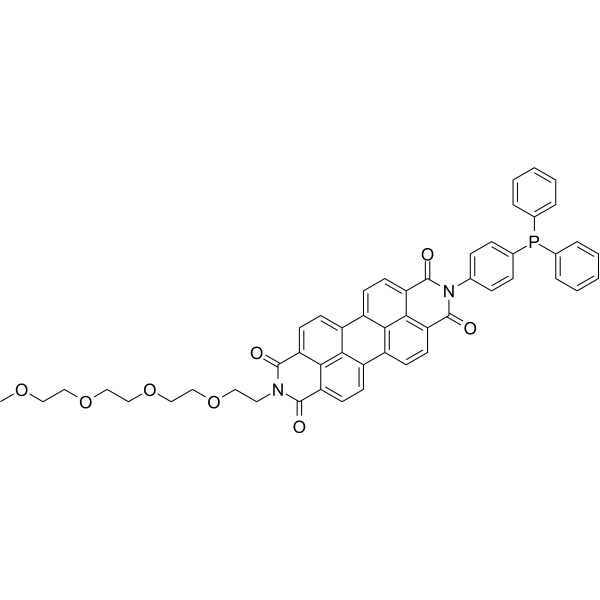
Chemical Structure
LPd peroxida probe-1
- CAS No.: 1448846-35-2
- Formula:C51H41N2O8P
- Molecular Weight:840.85
IUPAC Name: 2-(4-(diphenylphosphanyl)phenyl)-9-(2,5,8,11-tetraoxatridecan-13-yl)anthra[2,1,9-def:6,5,10-d'e'f']diisoquinoline-1,3,8,10(2H,9H)-tetraone
InChIKey: MDGOURRQWXHVBZ-UHFFFAOYSA-N
SMILES: O=C1C2=CC=C3C4=CC=C5C(N(CCOCCOCCOCCOC)C(C6=CC=C(C4=C56)C7=C3C2=C(C(N1C8=CC=C(P(C9=CC=CC=C9)C%10=CC=CC=C%10)C=C8)=O)C=C7)=O)=O
Biological Activity: LPd peroxida probe-1, a marker of ferroptosis, is a useful fluorescent probe for investigating the roles of lipid peroxidation in a variety of cell pathophysiologies. LPd peroxida probe-1 reduces lipid hydroperoxides to lipid alcohols and is used for imaging lipid hydroperoxides in living cells[1][2][3].
| Cat. No. | Product Name | Purity | Description | Pricing | |||||||||||||||||||
|---|---|---|---|---|---|---|---|---|---|---|---|---|---|---|---|---|---|---|---|---|---|---|---|
|
|
LPd peroxida probe-1 | 97.7% | LPd peroxida probe-1, a marker of ferroptosis, is a useful fluorescent probe for investigating the roles of lipid peroxidation in a variety of cell pathophysiologies. LPd peroxida probe-1 reduces lipid hydroperoxides to lipid alcohols and is used for imaging lipid hydroperoxides in living cells. | ||||||||||||||||||||
|
loading...
/
|
|||||||||||||||||||||||
-
Similarity Score 0.85
 HY-D3447LPd peroxida probe-2
-
Similarity Score 0.65
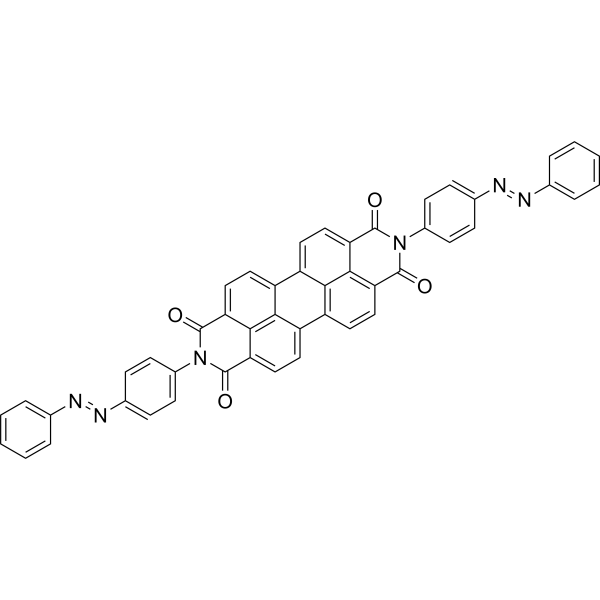 HY-D0345Pigment Red 178
-
Similarity Score 0.63
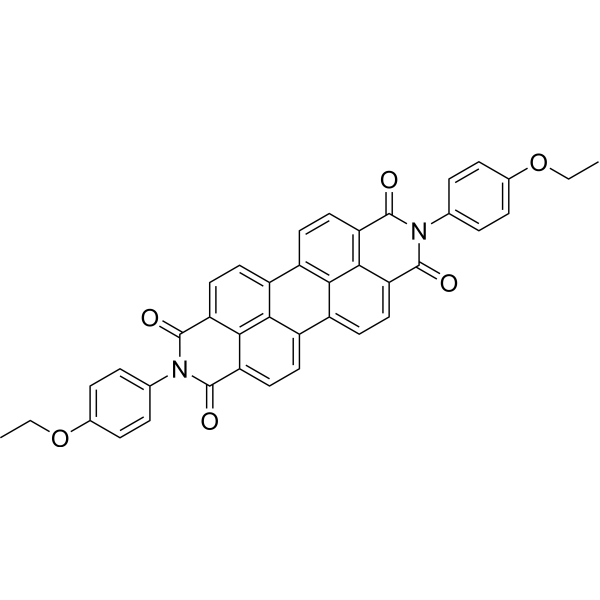 HY-D0531C.I. Pigment red 123
-
Similarity Score 0.59
 HY-W1125882,9-Di(pyridin-4-yl)anthra[2,1,9-def:6,5,10-d'e'f']diisoquinoline-1,3,8,10(2H,9H)-tetraone
-
Similarity Score 0.58
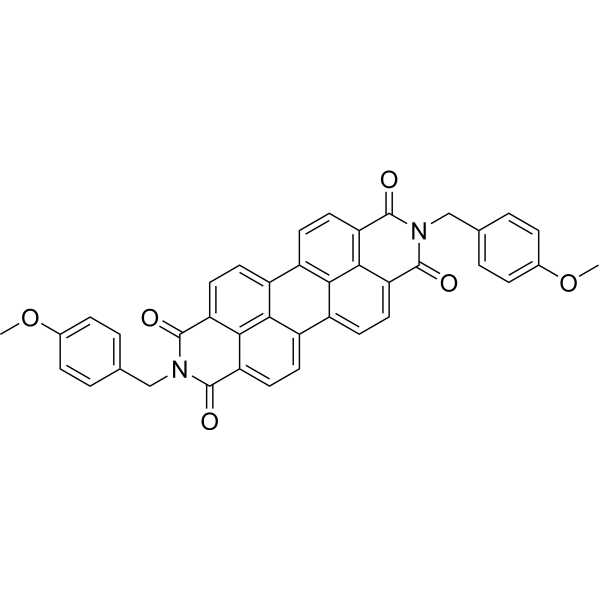 HY-D0741Pigment black 32
-
Similarity Score 0.56
 HY-W8562225,5'-(1,3,8,10-Tetraoxo-1,3,8,10-tetrahydroanthra[2,1,9-def:6,5,10-d'e'f']diisoquinoline-2,9-diyl)diisophthalic acid
-
Similarity Score 0.55
 HY-W251144N,N′-Dipentyl-3,4,9,10-perylenedicarboximide
-
Similarity Score 0.55
 HY-W251143N,N′-Bis(2,5-di-tert-butylphenyl)-3,4,9,10-perylenedicarboximide
-
Similarity Score 0.51
 HY-W075595(2S,2'S)-2,2'-(1,3,8,10-Tetraoxo-1,3,8,10-tetrahydroanthra[2,1,9-def:6,5,10-d'e'f']diisoquinoline-2,9-diyl)dipropionic acid
-

Explore the MedChemAI to find more analogs


References
- [1]. Kazuo Tomita, et al. MiR-7-5p Is Involved in Ferroptosis Signaling and Radioresistance Thru the Generation of ROS in Radioresistant HeLa and SAS Cell Lines. Int J Mol Sci. 2021 Aug 2;22(15):8300. [Content Brief]
- [2]. Elizabeth M Kenny, et al. Ferroptosis Contributes to Neuronal Death and Functional Outcome After Traumatic Brain Injury. Crit Care Med. 2019 Mar;47(3):410-418. [Content Brief]
- [3]. Kazunori Yamanaka, et al. A novel fluorescent probe with high sensitivity and selective detection of lipid hydroperoxides in cells. RSC Advances, 2012, 2, 7894–7900.



