
1. Search Result
Search Result
Results for "

gene transfer

" in MedChemExpress (MCE) Product Catalog:

17

Inhibitors & Agonists

3

Biochemical Assay Reagents

5

Peptides

2

Natural
Products

5

Oligonucleotides

Cat. No. Product Name Target Research Areas Chemical Structure
  • HY-112735
    Hexadimethrine bromide
    105+ Cited Publications

    Polybrene; 1,5-Dimethyl-1,5-diazaundecamethylene polymethobromide

    Biochemical Assay Reagents Cancer
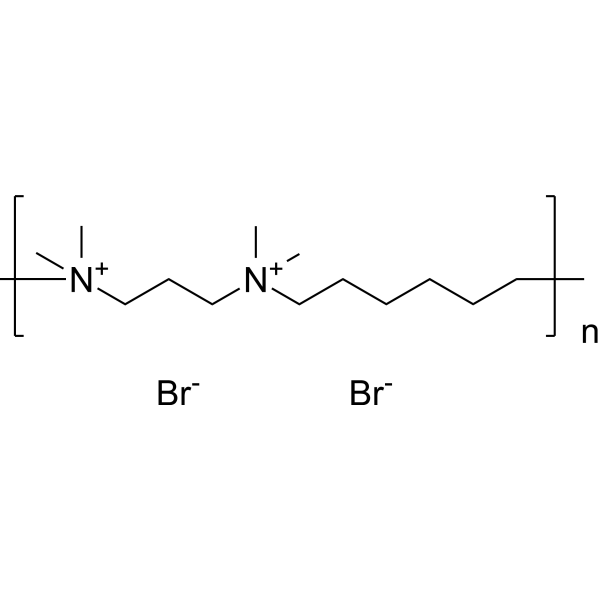
    Hexadimethrine bromide (Polybrene) is a cationic polymer used routinely to enhance the efficiency of retrovirus vector-mediated gene transfer .
    Hexadimethrine bromide
  • HY-107911
    Protamine sulfate
    3 Publications Verification

    Thrombin Metabolic Disease
    Protamine sulfate, polycationic peptide and a antiheparin agent, could neutralize the anticoagulant action of heparin and enhances lipid-mediated gene transfer .
    Protamine sulfate
  • HY-113355

    Endogenous Metabolite Apoptosis Neurological Disease Inflammation/Immunology Endocrinology
    NADH is an orally active dehydrogenase coenzyme that acts as a crucial electron carrier in cellular respiration and participates in ATP production. NADH promotes metabolism, supports brain function, and counteracts oxidative stress by transferring electrons to the electron transport chain. As a signaling molecule, NADH regulates multiple biological processes, including anti-apoptosis, synaptic plasticity, gene expression, and calcium homeostasis. Redox imbalance of NADH/NAD⁺ is one of the key pathological mechanisms of various diseases, such as diabetic nephropathy, neurodegenerative diseases, and ischemia-reperfusion injury.
    NADH
  • HY-P1876B
    NLS (PKKKRKV) (hydrochloride)
    3 Publications Verification

    DNA/RNA Synthesis Cancer
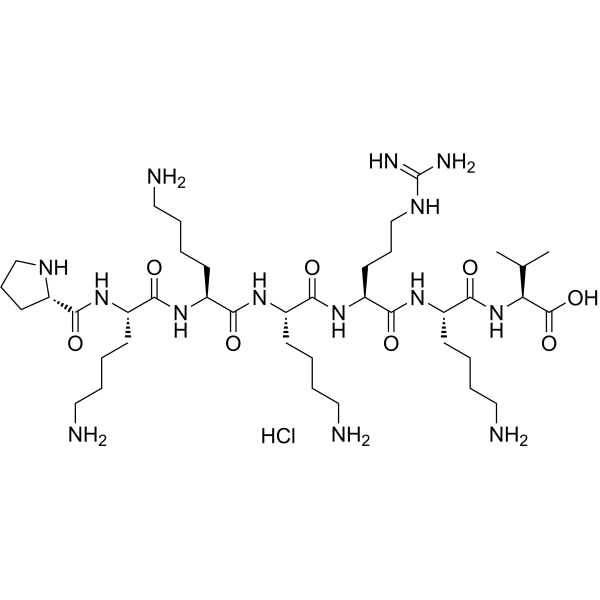
    NLS (PKKKRKV) hydrochloride is the hydrochloride form of NLS (PKKKRKV) (HY-P1876). NLS (PKKKRKV) is a nuclear localization signal (NLS) derived from the simian virus 40 large tumor antigen (SV40 large T antigen), that mediates binding of the karyophilic protein to importin α. NLS (PKKKRKV) can function as a method to enhance nuclear entry in the field of gene transfer research .
    NLS (PKKKRKV) (hydrochloride)
  • HY-P1876
    NLS (PKKKRKV)
    3 Publications Verification

    DNA/RNA Synthesis Cancer
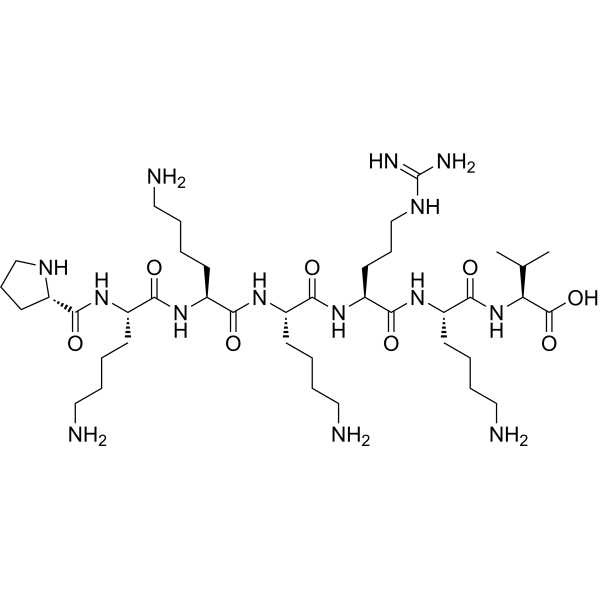
    NLS (PKKKRKV) is a nuclear localization signal (NLS) derived from the SV40 large T antigen, which mediates the binding of karyophilic proteins to importin α. NLS (PKKKRKV) serves as a method to enhance nuclear entry in the field of gene transfer research .
    NLS (PKKKRKV)
  • HY-W590549

    DODAC

    Liposome Cancer
    Dioleyldimethylammonium chloride (DODAC) is a positively charged lipid promoter with membrane-disrupting activity, which is often formulated into cationic liposomes with dioleoylphosphatidylethanolamine. Dioleyldimethylammonium chloride is used in gene transfection research; through electrostatic interactions, it effectively promotes the binding of programmable fusion vesicles to cells and induces membrane disruption. Dioleyldimethylammonium chloride is also applied in studies on L1210 leukemia and LS180 human colon cancer .
    Dioleyldimethylammonium chloride
  • HY-W342664

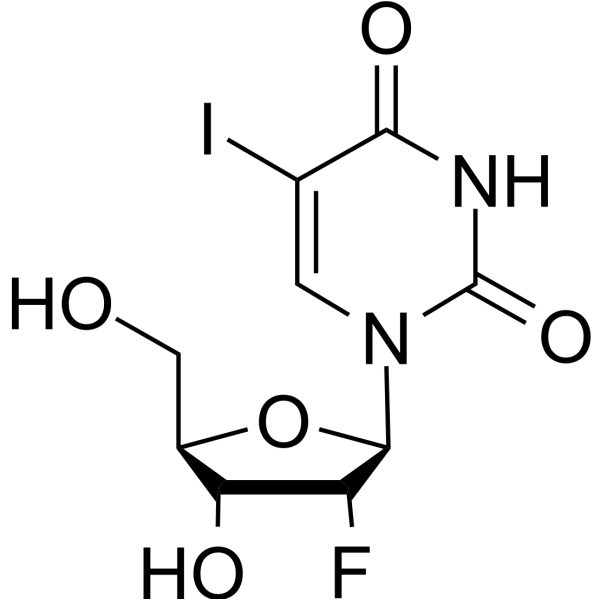
    FIRU

    Nucleoside Antimetabolite/Analog HSV Cancer
    2'-Deoxy-2'-fluoro-5-iodouridine (FIRU) is a nucleoside analog. When labeled with 123I, 2'-Deoxy-2'-fluoro-5-iodouridine accumulates highly selectively in tumors expressing the HSV1-tk gene. Radiolabeled 2'-Deoxy-2'-fluoro-5-iodouridine enables imaging of adenovirus-mediated HSV1-tk suicide gene transfer .
    2'-Deoxy-2'-fluoro-5-iodouridine
  • HY-143210

    Liposome Metabolic Disease
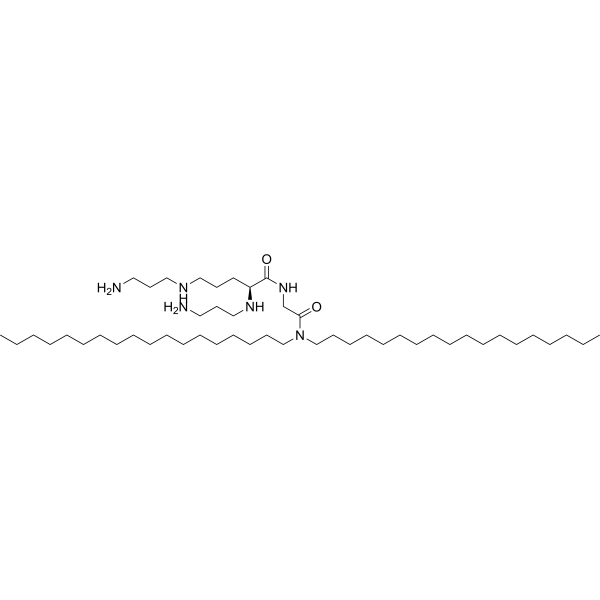
    Transfectam is a cationic lipid able to interact with DNA to form complexes that mediate efficient gene transfer into various eukaryotic cells .
    Transfectam
  • HY-159067

    DEAE-dextran, MW 500000 hydrochloride, from bacterial (Leuconostoc mesenteroides); Diethylaminoethyl-dextran, MW 500000 hydrochloride

    Biochemical Assay Reagents Cancer
    DEAE-dextran, MW 500000 hydrochloride (DEAE-dextran, MW 500000 hydrochloride, from bacterial (Leuconostoc mesenteroides)) is a high-molecular-weight positively charged polymer that significantly enhances the uptake of viral RNA by tissue culture cells. When employed in the delivery system for "tumor immunity" RNA-splenocyte transfer, DEAE-dextran can markedly extend the lifespan of tumor-bearing animals, comparable to that of actively immunized animals. Furthermore, DEAE-dextran serves as a complexing agent for nucleic acids, forming composite particles with DNA/RNA for extensive applications in gene delivery. Additionally, DEAE-dextran can be utilized as a coating for liposomes .
    DEAE-dextran, MW 500000 hydrochloride
  • HY-W059747

    Environmental Pollutants Others
    Chloroxynil is a Vir gene of Agrobacterium tumefaciens activator. Chloroxynil enhances T-DNA transfer efficiency by activating the expression of Agrobacterium Vir genes. Chloroxynil is promising for research of Agrobacterium-mediated transformation efficiency in legumes and rice .
    Chloroxynil
  • HY-124843
    LLL3
    1 Publications Verification

    CLT-005

    STAT Apoptosis Cancer
    LLL3 (CLT-005) is a STAT3 inhibitor. LLL3 inhibits dimerization and phosphorylation of STAT3, thereby preventing intraconuclear transfer of STAT3 and inhibits the expression of STAT3 dependent genes, which encode proteins such as Bcl-xL and cyclin D1. In addition, LLL3 can induce cell growth inhibition and apoptosis in human breast cancer and rhabdomyosarcoma cells via the caspase pathway. LLL3 can be used in the study of STAT3 persistent activation types of cancer .
    LLL3
  • HY-P1876A

    DNA/RNA Synthesis Cancer
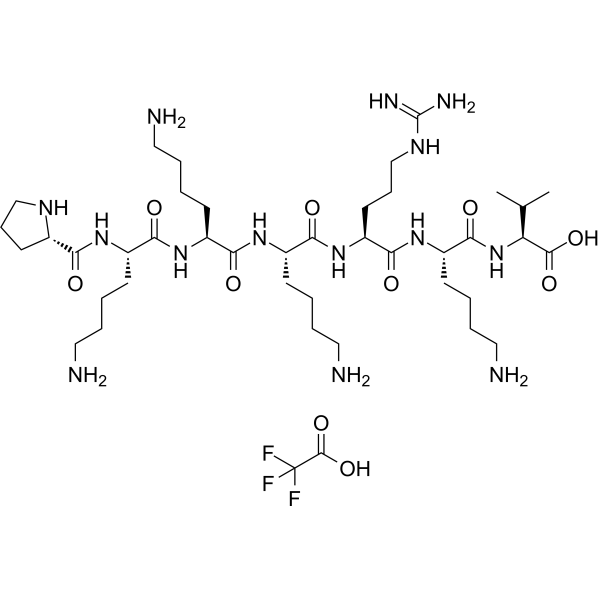
    NLS (PKKKRKV) TFA is the TFA form of NLS (PKKKRKV) (HY-P1876). NLS (PKKKRKV) is a nuclear localization signal (NLS) derived from the simian virus 40 large tumor antigen (SV40 large T antigen), that mediates binding of the karyophilic protein to importin α. NLS (PKKKRKV) can function as a method to enhance nuclear entry in the field of gene transfer research .
    NLS (PKKKRKV) TFA
  • HY-N11882

    PQ-9

    Reactive Oxygen Species (ROS) Others
    Plastoquinone (PQ-9) is a photosynthetic electron carrier as well as a redox sensor capable of regulating state transitions and gene expression. Plastoquinone transfers electrons to the cytochrome b6/f complex via the Q cycle, and participates in the establishment of the thylakoid transmembrane pH gradient. Plastoquinone can react with ROS. Plastoquinone is used in plant photosynthesis research .
    Plastoquinone
  • HY-158705

    Liposome Others
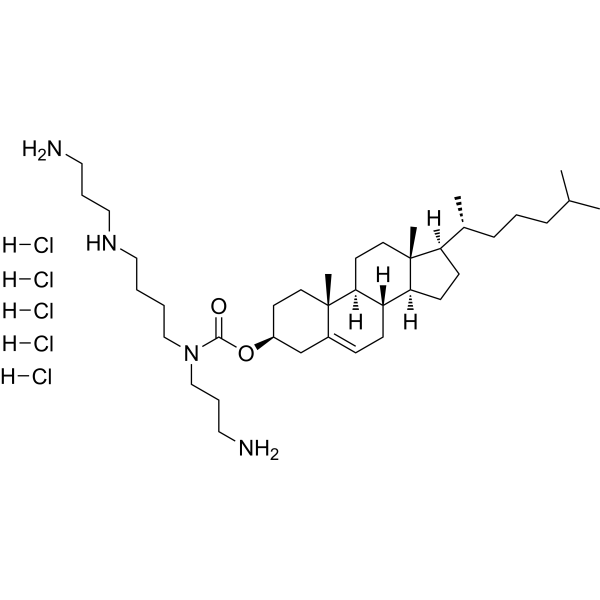
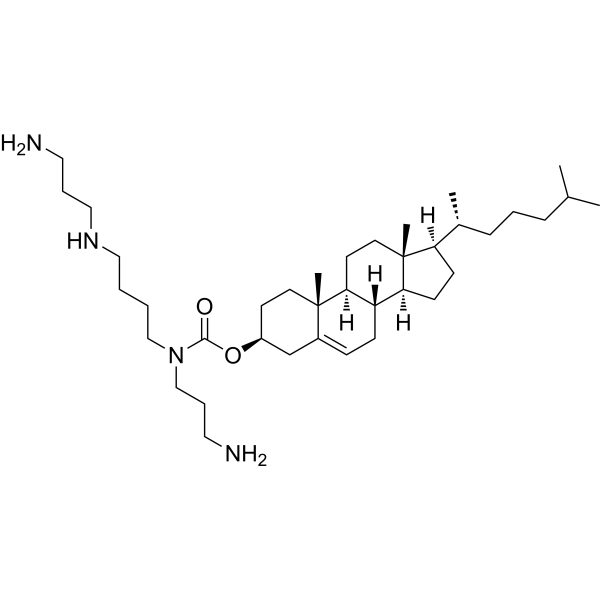
    SAINT-2 is a cationic lipid with gene transfection activity and is a pyridyl lipid analog. Molecular membranes prepared by SAINT-2 can interact with plasmids to form lipid complexes. After the complex is taken up by cells, the plasmid dissociates from the lipid complex under the action of DOPE and the plasmid translocates across the endosome and/or nuclear membrane. Thus, SAINT-2 effectively transfers small oligonucleotides into cells .
    SAINT-2
  • HY-175454

    DNA/RNA Synthesis PDGFR Oxidative Phosphorylation Mitochondrial Metabolism Cancer
    YH-0623 is an orally active mitochondrial RNA polymerase (POLRMT) inhibitor (IC50 = 50.48 nM, Nanoluciferase Bioluminescence Resonance Energy Transfer (NanoBRET) assay). YH-0623 exhibits antiproliferative effects on 22Rv1 cells by reducing the expression of mitochondrial-related genes. YH-0623 inhibits 22Rv1 cell growth, colony formation, and the expression of OXPHOS-related proteins. YH-0623 significantly inhibits tumor growth in a prostate cancer xenograft mouse model. YH-0623 is indicated for prostate cancer research .
    YH-0623
  • HY-163327

    Biochemical Assay Reagents Neurological Disease
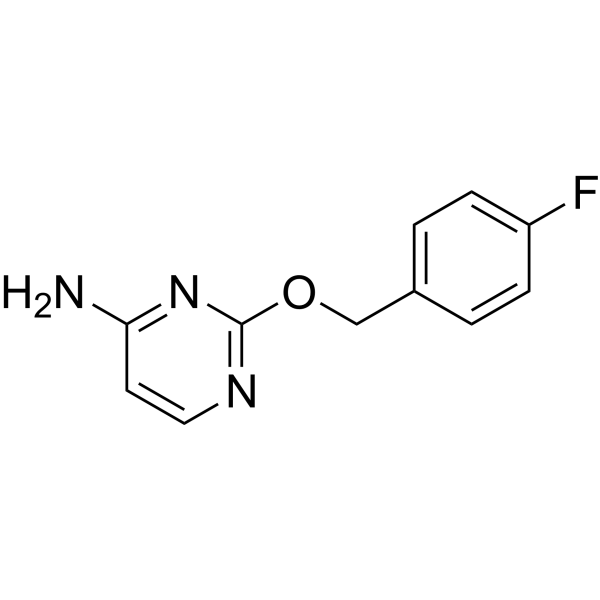
    pFBC ([ 18F]pEBC) is a covalent CLIP-tag radiotracer for detection of viral reporter gene transfer in the murine brain. pFBC can be used in neurobiological research .
    pFBC
  • HY-168995

    Bacterial Infection
    BAR-072 is a small-molecule inhibitor targeting TraE, with a KD of 2.7 µM. It significantly inhibits the transfer of the antibiotic resistance-associated plasmid pKM101. BAR-072 shows promise as a candidate compound for blocking the spread of bacterial resistance genes and holds potential for research in infectious disease and antimicrobial resistance control .
    BAR-072

Inquiry Online

Your information is safe with us. * Required Fields.

Salutation


Country or Region *

Applicant Name *


Organization Name *

Department *


Email Address *


Product Name *

Cat. No.


Requested quantity *

Phone Number *


Remarks

Inquiry Online

Inquiry Information

Product Name:
Cat. No.:
Quantity:
MCE Japan Authorized Agent:

