




1. Search Result
Search Result
Results for "

glucagon

" in MedChemExpress (MCE) Product Catalog:

273

Inhibitors & Agonists

1

Screening Libraries

3

Fluorescent Dye

1

Biochemical Assay Reagents

134

Peptides

5

Inhibitory Antibodies

8

Natural
Products

17

Recombinant Proteins

14

Isotope-Labeled Compounds

4

Antibodies

1

Oligonucleotides

Targets Recommended:
Cat. No. Product Name Target Research Areas Chemical Structure
  • HY-P0082
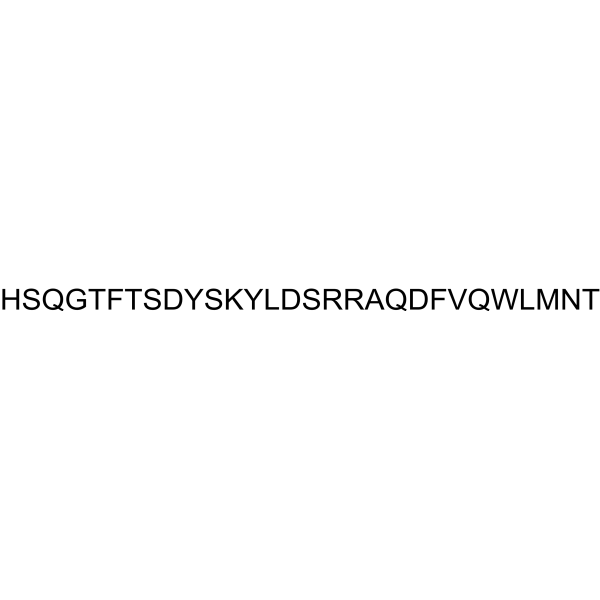
    Glucagon (1-29), bovine, human
    10+ Cited Publications

    glucagon

    GCGR Metabolic Disease Cancer
    Glucagon (1-29), bovine, human, porcine is a peptide hormone, produced by pancreatic α-cells. Glucagon stimulates gluconeogenesis . Glucagon (1-29), bovine, human, porcine activates HNF4α and increases HNF4α phosphorylation .
    Glucagon (1-29), bovine, human
  • HY-P3506
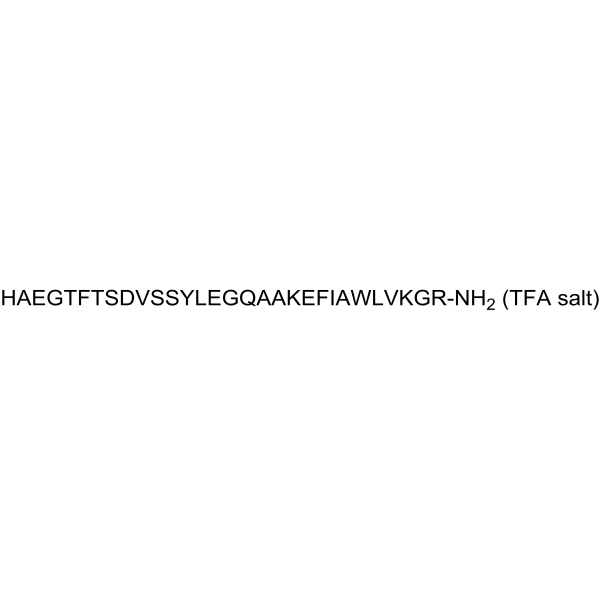
    Retatrutide
    3 Publications Verification

    LY3437943

    GCGR GLP Receptor Metabolic Disease
    Retatrutide (LY3437943) is a triple agonist peptide of the glucagon receptor (GCGR), glucosedependent insulinotropic polypeptide receptor (GIPR), and glucagon-like peptide-1 receptor (GLP-1R). Retatrutide binds human GCGR, GIPR, and GLP-1R with EC50 values of 5.79, 0.0643 and 0.775 nM, respectively. Retatrutide can be used for the research of obesity .
    Retatrutide
  • HY-P0014
    Liraglutide
    35+ Cited Publications

    GCGR GLP Receptor Metabolic Disease Cancer
    Liraglutide is a glucagon-like peptide-1 (GLP-1) receptor agonist used clinically to treat type 2 diabetes mellitus.
    Liraglutide
  • HY-17365
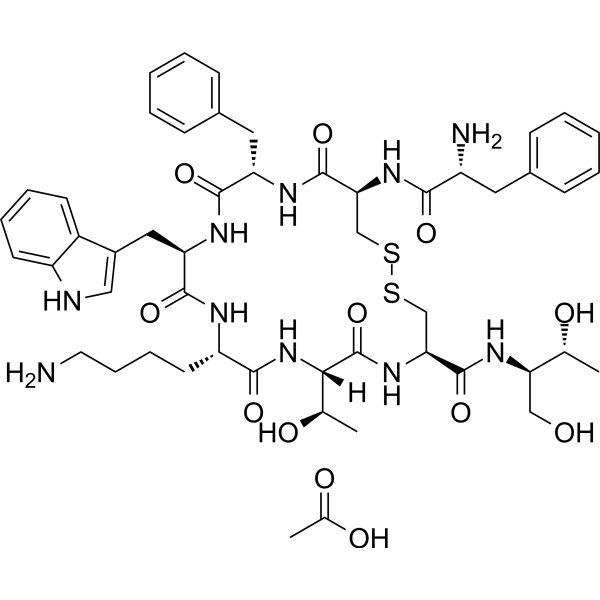
    Octreotide acetate
    15+ Cited Publications

    SMS 201-995 acetate

    Somatostatin Receptor Cardiovascular Disease Inflammation/Immunology Endocrinology Cancer
    Octreotide acetate, a long-acting synthetic analog of native somatostatin, inhibits growth hormone, glucagon, and insulin more potently.
    Octreotide acetate
  • HY-P3375

    IBI-362; LY-3305677; OXM-3

    GCGR GLP Receptor Metabolic Disease
    Mazdutide (IBI-362; LY-3305677) is a long-acting synthetic oxyntomodulin analog. Mazdutide is also a co-agonist of glucagon-like peptide (GLP-1R) and glucagon receptor (GCGR). Mazdutide binds human and mouse GCGR (Ki: 17.7 nM and 15.9 nM, respectively) and GLP-1R (Ki: 28.6 nM and 25.1 nM, respectively) and stimulates insulin secretion from mouse islets (EC50: 5.2 nM). Mazdutide is used in studies of obesity and type 2 diabetes (T2D) .
    Mazdutide
  • HY-P0054A
    GLP-1(7-36), amide
    5+ Cited Publications

    glucagon-like peptide-1 (GLP-1)(7-36), amide; Human GLP-1 (7-36), amide

    GCGR Metabolic Disease
    GLP-1(7-36), amide is a physiological incretin hormone that stimulates insulin secretion.
    GLP-1(7-36), amide
  • HY-P4146

    BI 456906

    GLP Receptor GCGR Metabolic Disease
    Survodutide (BI 456906) is a potent, selective glucagon receptor/GLP-1 receptor (GCGR/GLP-1R) dual agonist with EC50s of 0.52 nM and 0.33 nM in CHO-K1 cells, respectively. Survodutide, a 29-amino-acid peptide, is a potent acylated peptide containing a C18 fatty acid. Survodutide has robust anti-obesity efficacy achieved by increasing energy expenditure and decreasing food intake .
    Survodutide
  • HY-W018781
    Benzamidine hydrochloride
    3 Publications Verification

    Ser/Thr Protease Cancer
    Benzamidine hydrochloride is a competitive protease inhibitor that blocks the hydrolytic cleavage of glucagon by plasmin, trypsin and thrombin. Benzamidine hydrochloride effectively inhibits the degradation of glucagon by relevant proteases during the collection, storage and analysis of human plasma and blood samples. During in vivo metabolism, Benzamidine hydrochloride undergoes N-hydroxylation and produces multiple metabolites, exhibiting characteristics of delayed excretion or biphasic elimination. Benzamidine hydrochloride only induces slight single-strand DNA breaks at high concentrations and shows no significant genotoxic potential overall. Benzamidine hydrochloride may interfere with the detection of some glucagon antisera, but does not affect key antigen-antibody affinity at specific concentrations. Benzamidine hydrochloride can be used as a stabilizer in glucagon radioimmunoassays to ensure the accuracy and recovery rate of detection results .
    Benzamidine hydrochloride
  • HY-142114
    SRI-37330
    5 Publications Verification

    Arrestin Metabolic Disease
    SRI-37330 is an orally bioavailable thioredoxin-interacting protein (TXNIP) inhibitor. SRI-37330 inhibits glucagon secretion and function, reduces hepatic glucose production and reverses hepatic steatosis. SRI-37330 can be used for type 2 diabetes research .
    SRI-37330
  • HY-50663
    MK 0893
    5+ Cited Publications

    GCGR Metabolic Disease
    MK 0893 is a potent and selective glucagon receptor antagonist with an IC50 of 6.6 nM.
    MK 0893
  • HY-P0082A

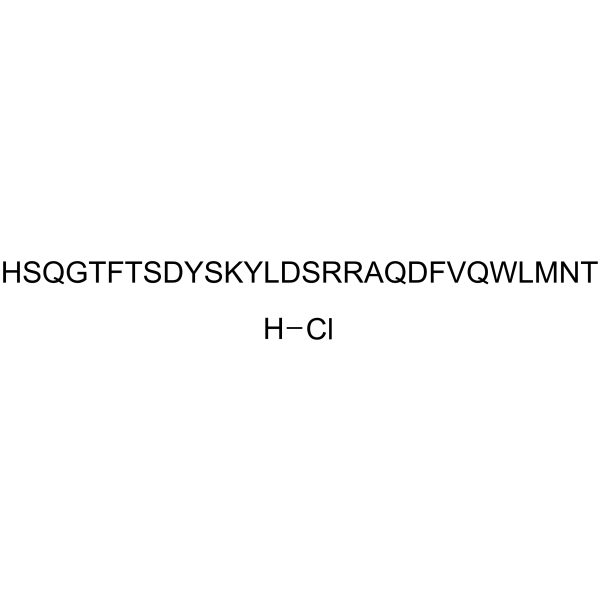
    glucagon hydrochloride

    GCGR Metabolic Disease Cancer
    Glucagon (1-29), bovine, human, porcine hydrochloride is a peptide hormone, produced by pancreatic α-cells. Glucagon hydrochloride stimulates gluconeogenesis . Glucagon (1-29), bovine, human, porcine hydrochloride activates HNF4α and increases HNF4α phosphorylation .
    Glucagon (1-29), bovine, human hydrochloride
  • HY-P3506A
    Retatrutide TFA
    3 Publications Verification

    LY3437943 TFA

    GLP Receptor GCGR Metabolic Disease
    Retatrutide (LY3437943) TFA is a triple agonist peptide of the glucagon receptor (GCGR), glucosedependent insulinotropic polypeptide receptor (GIPR), and glucagon-like peptide-1 receptor (GLP-1R). Retatrutide TFA binds human GCGR, GIPR, and GLP-1R with EC50 values of 5.79, 0.0643 and 0.775 nM, respectively. Retatrutide TFA can be used for the research of obesity .
    Retatrutide TFA
  • HY-P1024

    GLP-2 (human); glucagon-like peptide 2 (human)

    GCGR Metabolic Disease
    GLP-2(1-33) (human) is an enteroendocrine hormone which can bind to the GLP-2 receptor and stimulate the growth of intestinal epithelium.
    GLP-2(1-33)(human)
  • HY-P0054
    GLP-1(7-36), amide acetate
    5+ Cited Publications

    glucagon-like peptide-1 (GLP-1)(7-36), amide acetate; Human GLP-1 (7-36), amide acetate

    GCGR Metabolic Disease
    GLP-1(7-36), amide acetate is a major intestinal hormone that stimulates glucose-induced insulin secretion from β cells.
    GLP-1(7-36), amide acetate
  • HY-19947
    PF-06291874
    1 Publications Verification

    glucagon receptor antagonists-4

    GCGR Metabolic Disease
    PF-06291874 is a highly potent, non-peptide and orally active glucagon receptor antagonist. PF-06291874 is under the study for type 2 diabetes mellitus (T2DM) .
    PF-06291874
  • HY-12525

    GCGR Metabolic Disease
    LGD-6972 is a selective and orally active glucagon receptor antagonist. LGD-6972 has the potential for type 2 diabetes research .
    LGD-6972
  • HY-P1070A

    DAP amide, human TFA

    Amylin Receptor Metabolic Disease
    Amylin, amide, human TFA, a 37-amino acid polypeptide, is a pancreatic hormone cosecreted with insulin that exerts unique roles in metabolism and glucose homeostasis. Amylin, amide, human TFA inhibits glucagon secretion, delays gastric emptying, and acts as a satiety agent .
    Amylin, amide, human TFA
  • HY-13443
    Exendin-4
    Maximum Cited Publications
    66 Publications Verification

    Exenatide

    GCGR Cardiovascular Disease Metabolic Disease Cancer
    Exendin-4 (Exenatide), a 39 amino acid peptide, is a long-acting glucagon-like peptide-1 receptor agonist with an IC50 of 3.22 nM.
    Exendin-4
  • HY-P0150

    GCGR Neurological Disease
    Glucagon (19-29), human is a potent and efficient inhibitor of insulin secretion.
    Glucagon (19-29), human
  • HY-P1070

    DAP amide, human

    Amylin Receptor Metabolic Disease
    Amylin, amide, human, a 37-amino acid polypeptide, is a pancreatic hormone cosecreted with insulin that exerts unique roles in metabolism and glucose homeostasis. Amylin, amide, human inhibits glucagon secretion, delays gastric emptying, and acts as a satiety agent .
    Amylin, amide, human
  • HY-125913
    Benzamidine
    3 Publications Verification

    Ser/Thr Protease Inflammation/Immunology
    Benzamidine is a competitive protease inhibitor that blocks the hydrolytic cleavage of glucagon by plasmin, trypsin and thrombin. Benzamidine effectively inhibits the degradation of glucagon by relevant proteases during the collection, storage and analysis of human plasma and blood samples. During in vivo metabolism, Benzamidine undergoes N-hydroxylation and produces multiple metabolites, exhibiting characteristics of delayed excretion or biphasic elimination. Benzamidine only induces slight single-strand DNA breaks at high concentrations and shows no significant genotoxic potential overall. Benzamidine may interfere with the detection of some glucagon antisera, but does not affect key antigen-antibody affinity at specific concentrations. Benzamidine can be used as a stabilizer in glucagon radioimmunoassays to ensure the accuracy and recovery rate of detection results .
    Benzamidine
  • HY-P3375A

    IBI-362 TFA; LY-3305677 TFA; OXM-3 TFA

    GCGR GLP Receptor Metabolic Disease
    Mazdutide (IBI-362; LY-3305677) TFA is a long-acting synthetic oxyntomodulin analog. Mazdutide is also a co-agonist of glucagon-like peptide (GLP-1R) and glucagon receptor (GCGR). Mazdutide TFA binds human and mouse GCGR (Ki: 17.7 nM and 15.9 nM, respectively) and GLP-1R (Ki: 28.6 nM and 25.1 nM, respectively) and stimulates insulin secretion from mouse islets (EC50: 5.2 nM). Mazdutide TFA is used in studies of obesity and type 2 diabetes (T2D) .
    Mazdutide TFA
  • HY-P1782

    Amylin Receptor Metabolic Disease
    Calcitonin (8-32), salmon is a highly selective Amylin receptor antagonist. Calcitonin (8-32), salmon reverses the Amylin-mediated inhibition of glucose-induced insulin release, but has no effect on either glucagon release or somatostatin release. Calcitonin (8-32), salmon can be used for studies related to β-cell amylin .
    Calcitonin (8-32), salmon
  • HY-P3617

    GCGR Metabolic Disease
    Glucagon (22-29) is partial agonist of Glucagon (19–29). Glucagon specifically inhibits the Ca 2+ pump in liver plasma membranes independently of adenylate cyclase activation .
    Glucagon (22-29)
  • HY-P3469A

    GCGR Metabolic Disease
    Dasiglucagon acetate is a human glucagon analog, and can increase plasma glucose. Dasiglucagon can be used in hypoglycemia research .
    Dasiglucagon acetate
  • HY-P1145
    Glucagon-like peptide 1 (1-37), human
    1 Publications Verification

    GLP-1 (1-37) human

    GCGR Metabolic Disease
    Glucagon-like peptide 1 (1-37), human is a highly potent agonist of the GLP-1 receptor.
    Glucagon-like peptide 1 (1-37), human
  • HY-110197
    6bK TFA
    2 Publications Verification

    IDE Metabolic Disease
    6bK TFA is a selective insulin-degrading enzyme (IDE) inhibitor with an IC50 of 50 nM. 6bK TFA binds to the distal pocket of IDE, thereby blocking substrate binding, peptide unfolding and cleavage processes, and reducing the degradation of insulin, glucagon and amylin. 6bK TFA improves oral glucose tolerance but impairs intraperitoneal glucose tolerance. 6bK TFA can be used in research related to type 2 diabetes .
    6bK TFA
  • HY-103547
    L-168049
    1 Publications Verification

    GCGR Metabolic Disease
    L-168049 is a potent, selective, orally active and non-competitive glucagon receptor antagonist with IC50s of 3.7 nM, 63 nM, and 60 nM for human, murine, and canine glucagon receptors, respectively .
    L-168049
  • HY-P3291
    Dapiglutide
    1 Publications Verification

    ZP7570

    GCGR Metabolic Disease
    Dapiglutide (ZP7570) is a long-acting glucagon-like peptide-1 receptor 1R (GLP-1R)/Glucagon-like peptide-2 receptor (GLP-2R) dual agonist. Dapiglutide alleviates intestinal dysfunction in a mouse short bowel model and has anti-obesity effects .
    Dapiglutide
  • HY-P10957

    MBX 1416

    GLP Receptor Metabolic Disease
    Imapextide is a glucagon-like peptide-1 (GLP-1) receptor antagonist that can be used in hypoglycemia research .
    Imapextide
  • HY-P0054B
    GLP-1(7-36), amide TFA
    5+ Cited Publications

    glucagon-like peptide-1 (GLP-1)(7-36), amide TFA; Human GLP-1 (7-36), amide TFA

    GCGR Metabolic Disease
    GLP-1(7-36), amide TFA is a major intestinal hormone that stimulates glucose-induced insulin secretion from β cells .
    GLP-1(7-36), amide TFA
  • HY-P1144

    glucagon-37 (bovine, porcine)

    GCGR Metabolic Disease
    Oxyntomodulin (bovine, porcine), a 37-amino acid peptide hormone, is a glucagon-like peptide 1 (GLP-1) receptor agonist .
    Oxyntomodulin (bovine, porcine)
  • HY-P1145A

    HuGLP-1 TFA

    GCGR Metabolic Disease
    Glucagon-like peptide 1 (1-37), human (TFA) is a highly potent agonist of the GLP-1 receptor.
    Glucagon-like peptide 1 (1-37), human TFA
  • HY-50675

    GCGR Metabolic Disease
    GRA Ex-25 is an inhibitor of glucagon receptor, with IC50 of 56 and 55 nM for rat and human glucagon receptors, respectively.
    GRA Ex-25
  • HY-148844

    GCGR Metabolic Disease
    GCGR antagonist 2, a Furan-2-carbohydrazide, is an orally active glucagon receptor antagonist. GCGR antagonist 2 binds to hGluR with an Kd value of 2.3 nM, and inhibits rat receptor with an IC50 value of 0.43 nM. GCGR antagonist 2 inhibits glucagon-stimulated glycogenolysis .
    GCGR antagonist 2
  • HY-P10018

    SAR425899

    GLP Receptor GCGR Metabolic Disease
    Bamadutide (SAR425899) is a potent dual glucagon-like peptide-1 receptor/glucagon receptor (GLP-1R/GCGR) agonist. Bamadutide improves post-meal blood glucose control by significantly enhancing β-cell function and slowing down the rate of glucose absorption in the body. Bamadutide can be used for the research of metabolic diseases such as type 2 diabetes .
    Bamadutide
  • HY-50159

    GCGR Metabolic Disease
    Glucagon receptor antagonist-3 is a highly potent glucagon receptor antagonist.
    Glucagon receptor antagonist-3
  • HY-P5815

    glucagon-like Peptide 1 (1-36) amide (human, rat)

    GLP Receptor GCGR Metabolic Disease
    GLP-1 (1-36) amide (human, rat) (Glucagon-like Peptide 1 (1-36) amide (human, rat) ) is a molecular variant of glucagon-like peptide 1 (GLP-1)-(7-36) amide. GLP-1 (1-36) amide (human, rat) can stimulate [14C]aminopyrine accumulation on enzymatically dispersed enriched rat parietal cells .
    GLP-1 (1-36) amide (human, rat)
  • HY-P10032

    NNC9204-1177

    GCGR GLP Receptor Cytochrome P450 Metabolic Disease
    NN1177 is a long-acting GLP-1/glucagon receptor co-agonist. NN1177 can induce a dose-dependent body weight loss in diet-induced obese (DIO) mice .
    NN1177
  • HY-P1143A

    GCGR Metabolic Disease
    [Des-His1,Glu9]-Glucagon amide TFA is a potent and peptide antagonist of the glucagon receptor, with a pA2 of 7.2. [Des-His1,Glu9]-Glucagon amide TFA is potentially useful in the study of the pathogenesis of diabetes .
    [Des-His1,Glu9]-Glucagon amide TFA
  • HY-P0014B
    Liraglutide TFA
    35+ Cited Publications

    GLP Receptor Metabolic Disease
    Liraglutide (TFA) is an agonist of glucagon-like peptide 1 receptor (GLP-1). Liraglutide (TFA) can activate GLP-1, leading to the release of insulin in the presence of increased glucose concentration. Liraglutide (TFA) also reduces glucagon secretion in a glucose-dependent manner. Liraglutide (TFA) can be studied in research on type 2 diabetes .
    Liraglutide TFA
  • HY-P990013

    Glutazumab; GMA-102; GMA-105

    GCGR Metabolic Disease
    Gulgafafusp alfa is a human IgG2κ antibody targeting the glucagon-like peptide 1 receptor GLP1R .
    Gulgafafusp alfa
  • HY-10036

    GCGR Metabolic Disease
    Glucagon receptor antagonist-1 is a highly potent glucagon receptor antagonist.
    Glucagon receptor antagonist-1
  • HY-50158

    GCGR Metabolic Disease
    Glucagon receptor antagonist-2 is a highly potent glucagon receptor antagonist.
    Glucagon receptor antagonist-2
  • HY-P0082F

    Fluorescent Dye Others
    Glucagon (1-29), FAM-labeled is a biological active peptide. (FAM labeled HY-P0082)
    Glucagon (1-29), FAM-labeled
  • HY-P5815A

    glucagon-like Peptide 1 (1-36) amide (human, rat) TFA

    GLP Receptor GCGR Metabolic Disease
    GLP-1 (1-36) amide (human, rat) (Glucagon-like Peptide 1 (1-36) amide (human, rat) ) TFA is a molecular variant of glucagon-like peptide 1 (GLP-1)-(7-36) amide. GLP-1 (1-36) amide (human, rat) TFA can stimulate [14C]aminopyrine accumulation on enzymatically dispersed enriched rat parietal cells .
    GLP-1 (1-36) amide (human, rat) TFA
  • HY-P1143

    GCGR Metabolic Disease
    [Des-His1,Glu9]-Glucagon amide is a potent and peptide antagonist of the glucagon receptor, with a pA2 of 7.2. [Des-His1,Glu9]-Glucagon amide is potentially useful in the study of the pathogenesis of diabetes .
    [Des-His1,Glu9]-Glucagon amide
  • HY-W087937
    Benzamidine hydrochloride hydrate
    3 Publications Verification

    Benzenecarboximidamide hydrochloride hydrate

    Ser/Thr Protease Cancer
    Benzamidine (Benzenecarboximidamide) hydrochloride hydrate is a competitive protease inhibitor that blocks the hydrolytic cleavage of glucagon by plasmin, trypsin and thrombin. Benzamidine hydrochloride hydrate effectively inhibits the degradation of glucagon by relevant proteases during the collection, storage and analysis of human plasma and blood samples. During in vivo metabolism, Benzamidine hydrochloride hydrate undergoes N-hydroxylation and produces multiple metabolites, exhibiting characteristics of delayed excretion or biphasic elimination. Benzamidine hydrochloride hydrate only induces slight single-strand DNA breaks at high concentrations and shows no significant genotoxic potential overall. Benzamidine hydrochloride hydrate may interfere with the detection of some glucagon antisera, but does not affect key antigen-antibody affinity at specific concentrations. Benzamidine hydrochloride hydrate can be used as a stabilizer in glucagon radioimmunoassays to ensure the accuracy and recovery rate of detection results .
    Benzamidine hydrochloride hydrate
  • HY-P4389

    GLP Receptor Metabolic Disease
    (Asp28)-Glucagon (1-29) (human, rat, porcine) is an optimized structure of glucagon, the 28th position is replaced by aspartic acid (Asp) which significantly increases the aqueous solubility of glucagon in a physiological pH buffer, has the same activity as glucagon .
    (Asp28)-Glucagon (1-29) (human, rat, porcine)
  • HY-P3506B

    LY3437943 acetate

    GCGR GLP Receptor Metabolic Disease
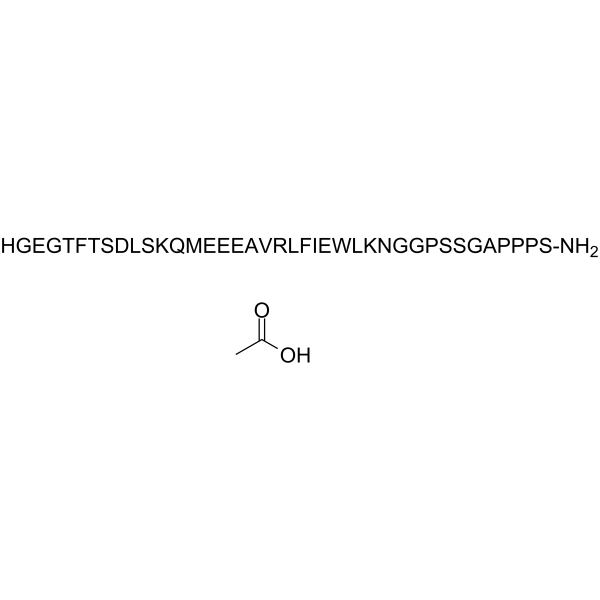
    Retatrutide (LY3437943) acetate is a triple agonist peptide of the glucagon receptor (GCGR), glucosedependent insulinotropic polypeptide receptor (GIPR), and glucagon-like peptide-1 receptor (GLP-1R). Retatrutide acetate inhibits human GCGR, GIPR, and GLP-1R with EC50 values of 5.79, 0.0643 and 0.775 nM, respectively. Retatrutide acetate can be used for the research of obesity .
    Retatrutide acetate

Inquiry Online

Your information is safe with us. * Required Fields.

Salutation


Country or Region *

Applicant Name *


Organization Name *

Department *


Email Address *


Product Name *

Cat. No.


Requested quantity *

Phone Number *


Remarks

Inquiry Online

Inquiry Information

Product Name:
Cat. No.:
Quantity:
MCE Japan Authorized Agent:

