



Glucagon (1-29), bovine, human hydrochloride
Based on 14 publication(s) in Google Scholar
Glucagon (1-29), bovine, human, porcine hydrochloride is a peptide hormone, produced by pancreatic α-cells. Glucagon hydrochloride stimulates gluconeogenesis. Glucagon (1-29), bovine, human, porcine hydrochloride activates HNF4α and increases HNF4α phosphorylation.
For research use only. We do not sell to patients.
- Purity : 99.91%
- CAS No.: 28270-04-4
- Formula: C153H226ClN43O49S
- Molecular Weight:3519.21
-
Storage:
Sealed storage, away from moisture.
Powder -80°C, 2 years , -20°C, 1 year* In solvent : -80°C, 6 months; -20°C, 1 month (sealed storage, away from moisture)

To place orders, for customer services and technical support, please contact: MedChemExpress USA
Tel: 609-228-6898 E-mail: [email protected] [email protected]


-
 Biological Activity
-
Chemical Information
-
Solvent & Solubility
- Protocols
- Purity & Documentation
- References
-
 Help & FAQs


-

HY-P3506
RetatrutideGCGR/GIPR/GLP-1R Agonist -
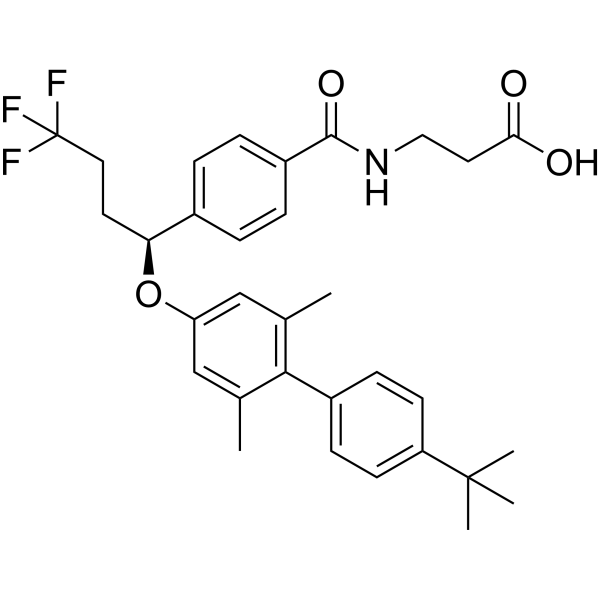
HY-19904
AdomeglivantGluR Antagonist -
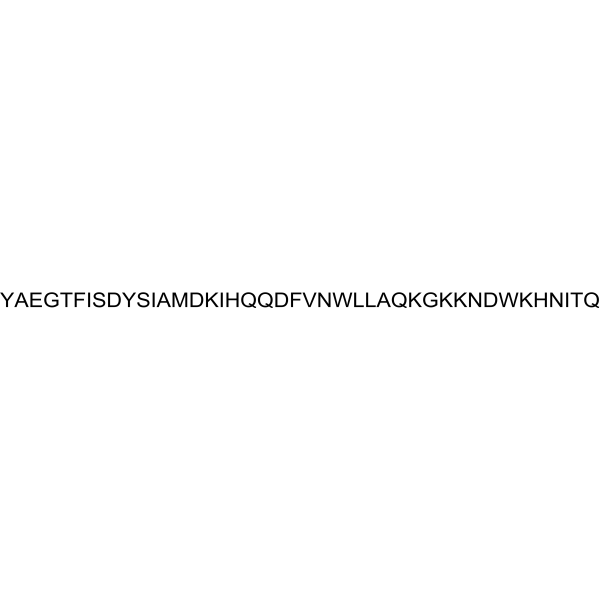
HY-P0276
GIP, humanInsulin Secretion Stimulator -
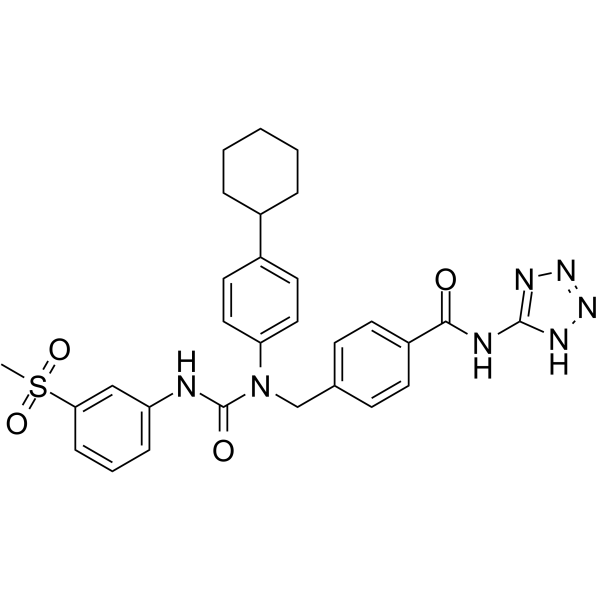
HY-124622
NNC-0640GCGR Modulator -
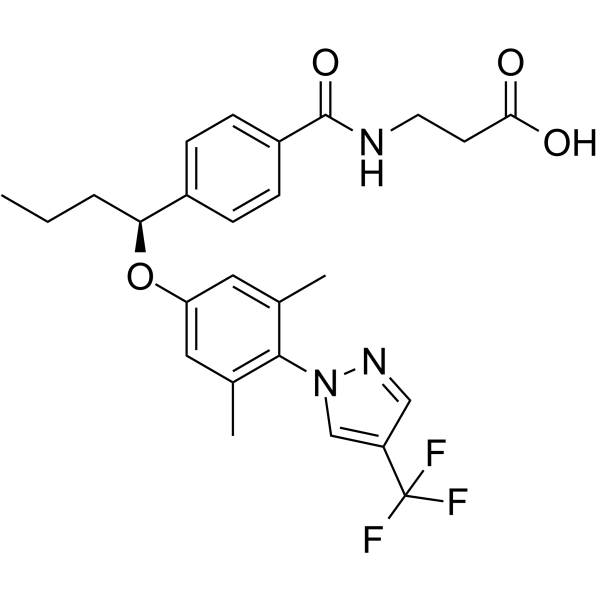
HY-19947
PF-06291874Glucagon Receptor Antagonist -
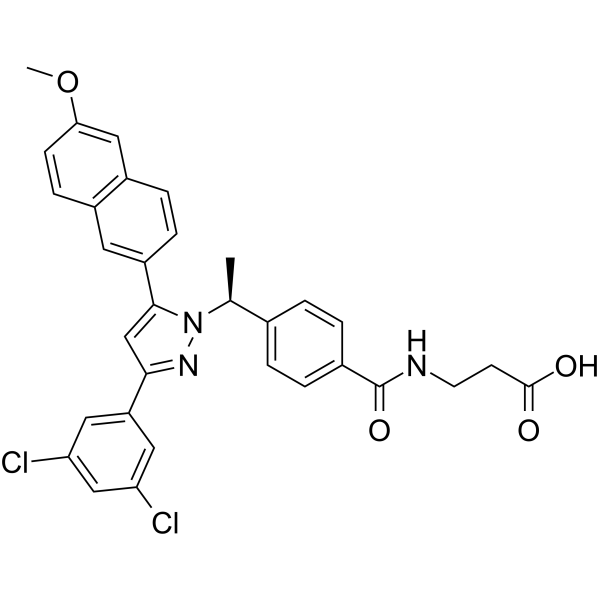
HY-50663
MK 0893GCGR Antagonist -
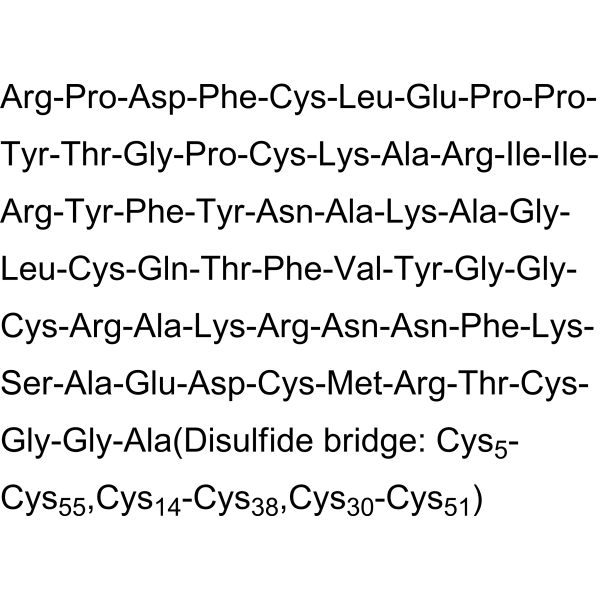
HY-P0017
AprotininBPTI Inhibitor -

HY-P0059
TeriparatideParathyroid Hormone Agonist -

HY-P0014
LiraglutideGLP-1R Agonist -
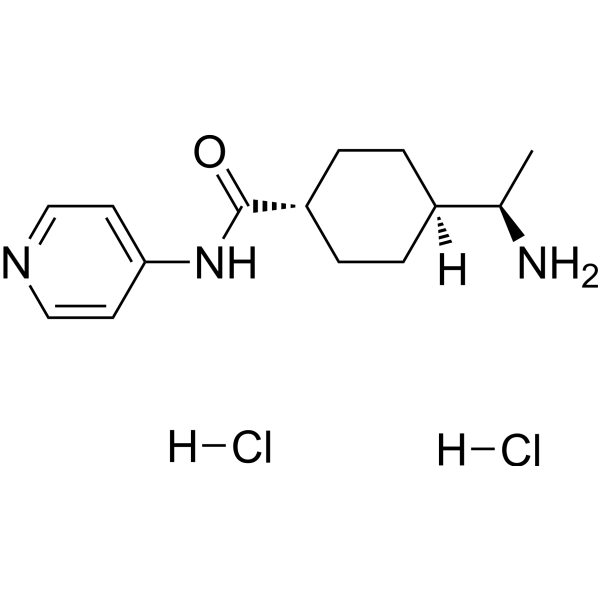
HY-10583
Y-27632 dihydrochlorideROCK Inhibitor -
HY-P0252
α-MSHMC4R Agonist -
HY-W015913
Pyruvic acid sodiumGlycolysis Intermediate
Publications Citing Use of MedChemExpress (MCE) Glucagon (1-29), bovine, human hydrochloride
More- Cell Res. 2023 Apr;33(4):273-287. [Abstract]
- Nat Metab. 2025 Feb;7(2):367-382. [Abstract]
- Nat Metab. 2022 Jan;4(1):29-43. [Abstract]
- Exp Mol Med. 2026 May;58(5):1536-1555. [Abstract]
- Metabolism. 2025 Jan:162:156049. [Abstract]
- Mol Cell. 2023 Apr 6;83(7):1093-1108.e8. [Abstract]
- Phytomedicine. 2021 Mar:83:153487. [Abstract]
- Proc Natl Acad Sci U S A. 2020 Feb 11;117(6):3144-3149. [Abstract]
- Food Sci Hum Wellness. 2026 Apr 3.
- J Med Chem. 2026 Feb 26;69(4):4984-5001. [Abstract]
- Cell Mol Life Sci. 2026 Jul 1. [Abstract]
- Endocrinology. 2023 Jan 9;164(3):bqac217. [Abstract]
- Patent. US20230021840A1.
- Research Square Preprint. 2021 May.
 Customer Validation & Images

-
Bio/Physico-chemical Assay
-
RT-PCR
-
Cell Imaging/Staining
-
Cell Imaging/Staining
-
Bio/Physico-chemical Assay


Biological Activity
Description
In Vitro
Upon binding to its receptor Gcgr, Glucagon activates cAMP-PKA signaling to stimulate hepatic glucose production (HGP) and cause hyperglycemia[1].
Glucagon stimulates both hepatic kisspeptin1 production and gluconeogenesis[1].
Glucagon (100 nM) represses CYP7A1 mRNA expression in human primary hepatocytes[3].
Glucagon (100 nM) increases phosphorylayion of HNF4α[3].
MedChemExpress (MCE) has not independently confirmed the accuracy of these methods. They are for reference only. Further protocols information, click here.
-
Cell Line:Human primary hepatocytes (H1211, HH1215)
-
Concentration:100 nM
-
Incubation Time:
-
Result:Resulted in a marked increase in the amount of phosphorylated HNF4α.
In Vivo
MedChemExpress (MCE) has not independently confirmed the accuracy of these methods. They are for reference only.
-
Animal Model:C57BL/6J mice (12- to 24-week-old)[4]
-
Dosage:20 μg/kg and 1 mg/kg
-
Administration:Administered by i.p. injection; 45 minutes
-
Result:Low-dose (20 μg/kg) increased glycemia and did not stimulate insulin secretion.
High-dose (1 mg/kg) lowered glycemia and stimulated insulin secretion.
Clinical Trial
| NCT Number | Sponsor | Condition | Start Date |
Phase

|
|---|---|---|---|---|
| NCT01329991 | Plexxikon| | 2011-05 | PHASE1 |


Chemical Information
-
CAS No. 28270-04-4
-
Appearance Solid
-
Molecular Weight 3519.21
-
Formula C153H226ClN43O49S
-
Color White to off-white
-
Synonyms
Glucagon hydrochloride
-
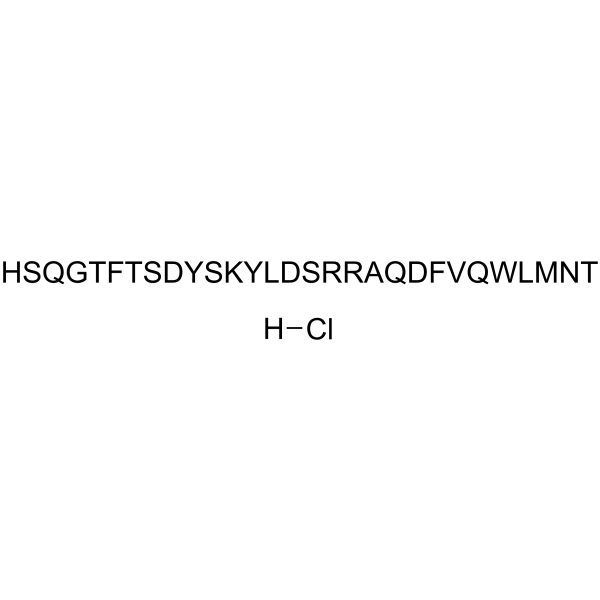
Sequence
His-Ser-Gln-Gly-Thr-Phe-Thr-Ser-Asp-Tyr-Ser-Lys-Tyr-Leu-Asp-Ser-Arg-Arg-Ala-Gln-Asp-Phe-Val-Gln-Trp-Leu-Met-Asn-Thr
-
Sequence Shortening
HSQGTFTSDYSKYLDSRRAQDFVQWLMNT
-
Shipping
Room temperature in continental US; may vary elsewhere.
-
Storage
Sealed storage, away from moisture
Powder -80°C 2 years -20°C 1 year * In solvent : -80°C, 6 months; -20°C, 1 month (sealed storage, away from moisture)


Publications (14)
-
Journal Impact Factor
-
Most Recent
-
Cell Res
Famsin, a novel gut-secreted hormone, contributes to metabolic adaptations to fasting via binding to its receptor OLFR796. [Abstract]2023 Apr;33(4):273-287. PMID: 36806353
Glucagon (1-29), bovine, human hydrochloride purchased from MedChemExpress. Usage Cited in: Cell Res. 2023 Apr;33(4):273-287. [Abstract]
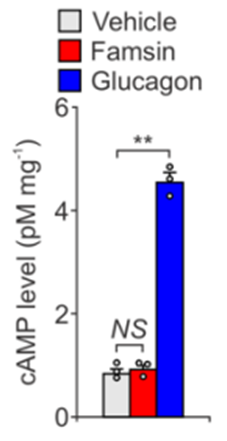
Effect of 10 min treatment with famsin (30 nM) or Glucagon (100 nM) on cellular cAMP levels in mouse primary hepatocytes.
-
Nat Metab
2025 Feb;7(2):367-382. PMID: 39820557
Glucagon (1-29), bovine, human hydrochloride purchased from MedChemExpress. Usage Cited in: Nat Metab. 2025 Feb;7(2):367-382. [Abstract]
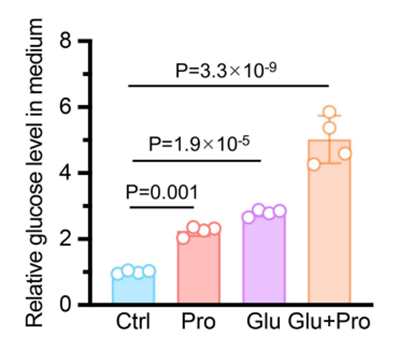
Glucose production in hepatocytes treated with proline, Glucagon (200 nM), or proline+glucagon for 24 h compared to control cells, n = 4.
Glucagon (1-29), bovine, human hydrochloride purchased from MedChemExpress. Usage Cited in: Nat Metab. 2025 Feb;7(2):367-382. [Abstract]
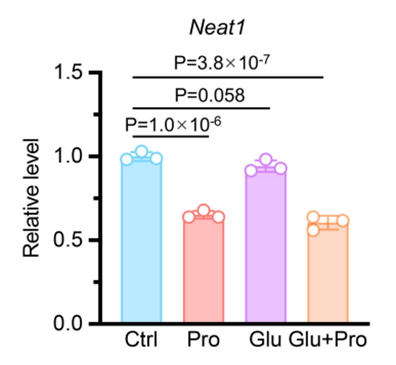
Neat1 level in hepatocytes treated with proline, Glucagon (200 nM), or proline+glucagon for 24 h, n = 4.
Glucagon (1-29), bovine, human hydrochloride purchased from MedChemExpress. Usage Cited in: Nat Metab. 2025 Feb;7(2):367-382. [Abstract]
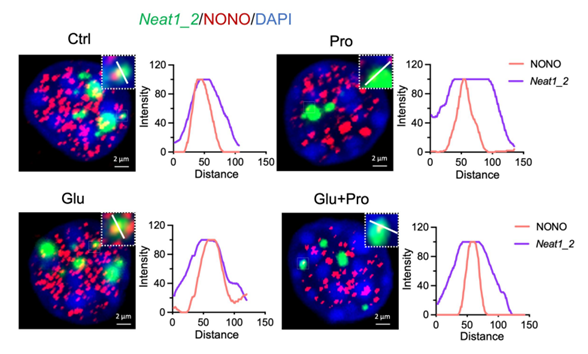
Representative images showing cellular distribution of Neat1_2 (green) and NONO (red) in hepatocytes treated with proline, Glucagon (200 nM), or proline+glucagon for 24 h. The graph plots the fluorescence intensity of each probe or protein (y-axis) vs. distance (x-axis) for the corresponding white line.
Glucagon (1-29), bovine, human hydrochloride purchased from MedChemExpress. Usage Cited in: Nat Metab. 2025 Feb;7(2):367-382. [Abstract]
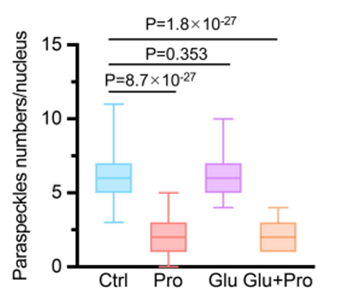
Quantification of paraspeckle numbers in hepatocytes treated with proline, Glucagon (200 nM), or proline+glucagon for 24 h, n = 40 cells per group.
-
Nat Metab
2022 Jan;4(1):29-43. PMID: 34992299 -
Exp Mol Med
Hepatocyte estrogen-related receptor α modulates a gluconeogenic-epigenetic crosstalk counteracting MASLD/MASH progression. [Abstract]2026 May;58(5):1536-1555. PMID: 42104013 -
Metabolism
ZBED3 exacerbates hyperglycemia by promoting hepatic gluconeogenesis through CREB signaling. [Abstract]2025 Jan:162:156049. PMID: 39454821 -
Mol Cell
Histone phosphorylation integrates the hepatic glucagon-PKA-CREB gluconeogenesis program in response to fasting. [Abstract]2023 Apr 6;83(7):1093-1108.e8. PMID: 36863348 -
Phytomedicine
A bioinformatics and transcriptomics based investigation reveals an inhibitory role of Huanglian-Renshen-Decoction on hepatic glucose production of T2DM mice via PI3K/Akt/FoxO1 signaling pathway. [Abstract]2021 Mar:83:153487. PMID: 33636476 -
Proc Natl Acad Sci U S A
2020 Feb 11;117(6):3144-3149. PMID: 32001509 -
-
J Med Chem
Discovery and Preclinical Evaluation of TPM003: A Novel GLP-1/GIP/Glucagon Triple Hormone Receptor Agonist with Robust Efficacy in Obesity and NASH. [Abstract]2026 Feb 26;69(4):4984-5001. PMID: 41640214 -
Cell Mol Life Sci
Ablation of the renal tubular gluconeogenic enzyme PCK1 drives AKI-to-CKD transition by negatively regulating the TGF-β/Smad3 signaling pathway. [Abstract]2026 Jul 1. PMID: 42380498 -
Endocrinology
Aspirin Suppresses Hepatic Glucagon Signaling Through Decreasing Production of Thromboxane A2. [Abstract]2023 Jan 9;164(3):bqac217. PMID: 36592127 -
-


Solvent & Solubility
In Vitro:
DMSO : 25 mg/mL (7.10 mM; Need ultrasonic; Hygroscopic DMSO has a significant impact on the solubility of product, please use newly opened DMSO)
H2O : 16.67 mg/mL (4.74 mM; Need ultrasonic)
Please refer to the solubility information to select the appropriate solvent. Once prepared, please aliquot and store the solution to prevent product inactivation from repeated freeze-thaw cycles.
Storage method and period of stock solution: -80°C, 6 months; -20°C, 1 month (sealed storage, away from moisture). When stored at -80°C, please use it within 6 months. When stored at -20°C, please use it within 1 month.
* Note: If you choose water as the stock solution, please dilute it to the working solution, then filter and sterilize it with a 0.22 μm filter before use.
Please refer to the solubility information to select the appropriate solvent. Once prepared, please aliquot and store the solution to prevent product inactivation from repeated freeze-thaw cycles.
Storage method and period of stock solution: -80°C, 6 months; -20°C, 1 month (sealed storage, away from moisture). When stored at -80°C, please use it within 6 months. When stored at -20°C, please use it within 1 month.
* Note: If you choose water as the stock solution, please dilute it to the working solution, then filter and sterilize it with a 0.22 μm filter before use.
Concentration (start) × Volume (start) = Concentration (final) × Volume (final)

Protocols
-
Kinase activity and phosphorylation assays
Kinase activity assays measure the ability of kinases to transfer phosphate groups from ATP to specific substrates, while phosphorylation assays detect the presence and levels of phosphorylated proteins. Common methods include radiolabeled ATP incorporation (e. g. ,), ADP release detection via bioluminescence (e. g. ,[3]), enzyme-linked immunosorbent assays (ELISA) for phospho-specific epitopes (e. g. ,[6]), and microtiter-based formats for high-throughput screening (e. g. ,[8]). The ADP-Glo assay quantifies kinase activity by measuring ADP produced during phosphorylation using a luciferase-based system. Radiometric assays involve autoradiography or scintillation counting after incorporation of 32P-labeled ATP into substrate proteins. ELISA-based approaches rely on phospho-specific antibodies to detect activated kinases in cell lysates or purified samples.
-
Western Blot
Western blotting (WB) is a commonly used experimental method in molecular biology, biochemistry, and immunogenetics for identifying and quantifying target proteins. It combines gel electrophoresis with immunoassay, enabling researchers to analyze protein expression, post-translational modifications, and molecular weight.
-
Research Protocol for Endocrine Diseases
Endocrine diseases often arise from disrupted hormone production, hormone signaling, or target-tissue responsiveness; for diabetes-focused endocrine disease models, insulin signaling regulates glucose uptake, hepatic glucose output, lipid metabolism, and β-cell compensation. Type 2 diabetes develops through interacting defects in insulin resistance, β-cell dysfunction, adipose inflammation, hepatic glucose overproduction, altered incretin signaling, and ectopic lipid metabolism. A major unresolved question is whether endocrine dysfunction is driven primarily by target-tissue insulin resistance, intrinsic β-cell failure, immune/inflammatory stress, or combined multi-organ failure that differs by disease stage.
-
Protocol for Kinase activity and phosphorylation assays
Kinase activity assays measure transfer of phosphate from ATP to a protein or peptide substrate, generating phosphorylated substrate, ADP, or incorporated radiolabeled phosphate as the readout; phosphorylation assays measure site-specific phosphorylation in cells or tissues as a proxy for kinase-pathway activation, inhibition, or substrate regulation. Phosphorylation can be detected by phospho-specific Western blot, immunoprecipitation kinase assay, phospho-immunofluorescence, phospho-flow cytometry, luminescent ADP detection, radiolabeled ATP incorporation, or reporter-based pathway assays, and these readouts can be applied to cancer cells, primary neurons, mouse tumors, organoids, inflammatory macrophages, ferroptosis studies, and mitophagy studies when the kinase target is biologically relevant.


Purity & Documentation
-
Data Sheet (285 KB)
-
SDS (254 KB)
- English - EN (254 KB)
- Français - FR (254 KB)
- Deutsch - DE (254 KB)
- Norwegian - NO (254 KB)
- Español - ES (254 KB)
- Swedish - SV (254 KB)
- Italian - IT (254 KB)
- Korean - KR (254 KB)
- Portuguese - PT (254 KB)
-
Handling Instructions (2659 KB)
References
[1]. Song WJ, et al. Glucagon regulates hepatic kisspeptin to impair insulin secretion. Cell Metab. 2014 Apr 1;19(4):667-81. [Content Brief]
[2]. Hirota K, et al. Hepatocyte nuclear factor-4 is a novel downstream target of insulin via FKHR as a signal-regulated transcriptional inhibitor. J Biol Chem. 2003 Apr 11;278(15):13056-60. [Content Brief]
[3]. Song KH, et al. Glucagon and cAMP inhibit cholesterol 7alpha-hydroxylase (CYP7A1) gene expression in humanhepatocytes: discordant regulation of bile acid synthesis and gluconeogenesis. Hepatology. 2006 Jan;43(1):117-25. [Content Brief]
[4]. Capozzi ME, et al. Glucagon lowers glycemia when β-cells are active. JCI Insight. 2019 Jul 23;5. pii: 129954. [Content Brief]


Complete Stock Solution Preparation Table
Please refer to the solubility information to select the appropriate solvent. Once prepared, please aliquot and store the solution to prevent product inactivation from repeated freeze-thaw cycles.
Storage method and period of stock solution: -80°C, 6 months; -20°C, 1 month (sealed storage, away from moisture). When stored at -80°C, please use it within 6 months. When stored at -20°C, please use it within 1 month.
| Optional Solvent | Concentration Solvent Mass | 1 mg | 5 mg | 10 mg | 25 mg |
|---|---|---|---|---|---|
| H2O / DMSO | 1 mM | 0.2842 mL | 1.4208 mL | 2.8415 mL | 7.1039 mL |
| DMSO | 5 mM | 0.0568 mL | 0.2842 mL | 0.5683 mL | 1.4208 mL |
* Note: If you choose water as the stock solution, please dilute it to the working solution, then filter and sterilize it with a 0.22 μm filter before use.


Glucagon (1-29), bovine, human hydrochloride Related Classifications
HY-P0082A Related Classifications
 Powered by Bioz