





1. Search Result
Search Result
Results for "

gravis

" in MedChemExpress (MCE) Product Catalog:

43

Inhibitors & Agonists

2

Peptides

10

Inhibitory Antibodies

6

Natural
Products

1

Isotope-Labeled Compounds

2

Oligonucleotides

Cat. No. Product Name Target Research Areas Chemical Structure
  • HY-P99037
    Nipocalimab
    3 Publications Verification

    M281

    Fc Receptor (FcR) Inflammation/Immunology
    Nipocalimab (M281) is a fully humanized, recombinant, and non-glycosylated IgG1 monoclonal antibody. Nipocalimab can bind to the IgG-binding site of FcRn with high affinity and inhibit the transplacental transfer of IgG. Nipocalimab can be used in the research of fetal and neonatal hemolytic disease, myasthenia gravis, and various IgG-mediated autoimmune diseases .
    Nipocalimab
  • HY-147305

    ARGX-113

    Fc Receptor (FcR) Inflammation/Immunology
    Efgartigimod alfa (ARGX-113) is a reversibility, humanized Fc receptor antagonist . Efgartigimod alfa is a anti FcRn monoclonal immunoglobulin G (IgG1) Fc fragment. Efgartigimod reduces serum levels of total IgG, including pathogenic autoantibodies, by blocking FcRn function without permanent impairment. Efgartigimod alfa can be used for generalised myasthenia gravis (gMG) and primary immune thrombocytopenia research .
    Efgartigimod alfa
  • HY-P990706

    ALPN-303

    TNF Receptor Inflammation/Immunology
    Povetacicept (ALPN-303) is an engineered Fc fusion protein containing the TACI domain, and acts as a dual APRIL/BAFF antagonist. The Kd value of Povetacicept for human BAFF is 59.3 pM, while its Kd value for human APRIL is 1.00 pM. Povetacicept reduces the activation, proliferation, differentiation and survival of B cells, and inhibits the production of immunoglobulins and autoantibodies. Povetacicept can be used in research related to autoimmune hemolytic anemia, immune thrombocytopenia, systemic lupus erythematosus, lupus nephritis and myasthenia gravis .
    Povetacicept
  • HY-P99113
    Inebilizumab
    1 Publications Verification

    MEDI-551

    ADC Antibody CD19 Inflammation/Immunology
    Inebilizumab is an anti-CD19 monoclonal antibody (mAb) with enhanced antibody-dependent cell-mediated cytotoxicity against B cells. Inebilizumab can be used for multiple sclerosis and neuromyelitis optica research .
    Inebilizumab
  • HY-B0423
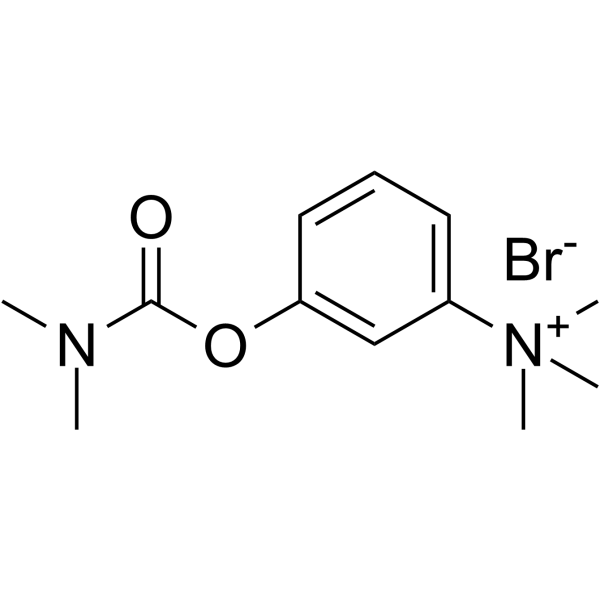
    Neostigmine Bromide
    1 Publications Verification

    Eustigmin bromide; Neoserine bromide

    Cholinesterase (ChE) Neurological Disease
    Neostigmine (Eustigmin) Bromide is an orally active and reversible cholinesterase inhibitor that acts on myasthenia gravis to prolong and intensify the muscarinic and nicotinic effects of acetylcholine. Neostigmine Bromide can be used in anesthesia to reverse the neuromuscular blockade produced by competitive neuromuscular blockers .
    Neostigmine Bromide
  • HY-P99009

    RVT-1401; HBM9161; IMVT-1401

    Fc Receptor (FcR) Inflammation/Immunology
    Batoclimab (RVT-1401) is a fully humanized IgG1 monoclonal antibody targeting FcRn. Batoclimab has high affinity for the IgG-binding site on FcRn. By competitively binding to the IgG binding site on FcRn, Batoclimab blocks FcRn-mediated recycling of IgG, resulting in enhanced degradation and subsequent reductions in IgG levels. Batoclimab can be used in the research of autoimmune diseases such as myasthenia gravis and thyroid eye disease .
    Batoclimab
  • HY-B0882

    Cholinesterase (ChE) Neurological Disease Inflammation/Immunology
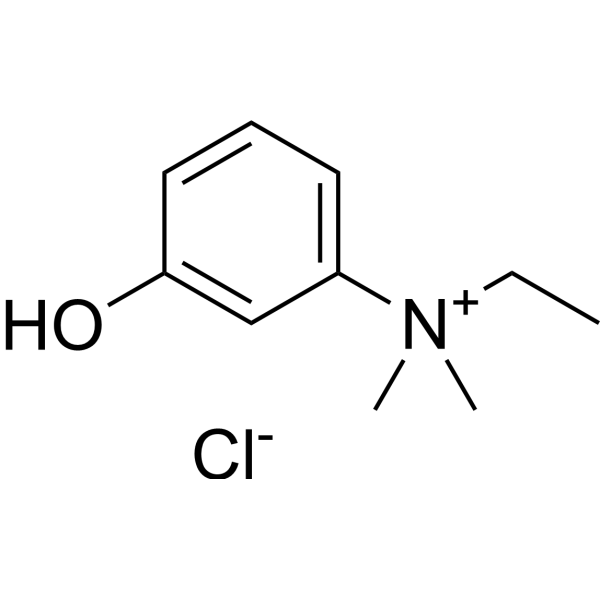
    Edrophonium chloride is a short-acting acetylcholinesterase (AChE) inhibitor. Edrophonium chloride has Ki values of 0.2, 0.2, and 0.4 μM and IC50 values of 0.2, 0.05, and 0.5 μM for AChE in human erythrocytes, purified calf forebrain, and purified octopus brain, respectively. Edrophonium chloride can be used to detect early digitalis toxicity and in the study of myasthenia gravis .
    Edrophonium chloride
  • HY-P5766

    nAChR
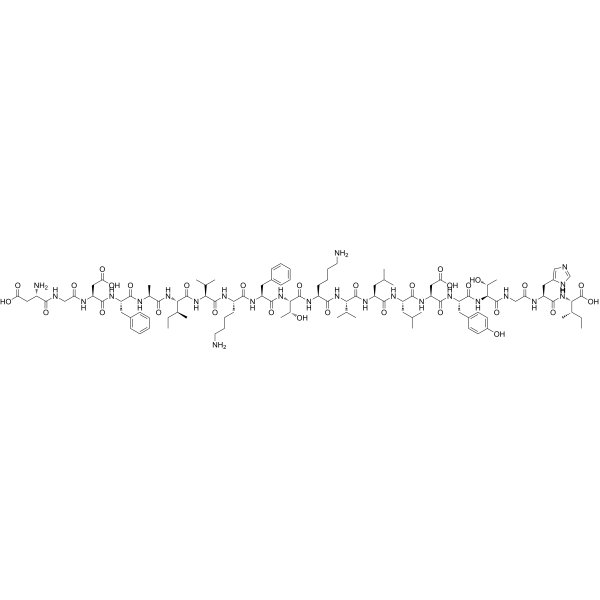
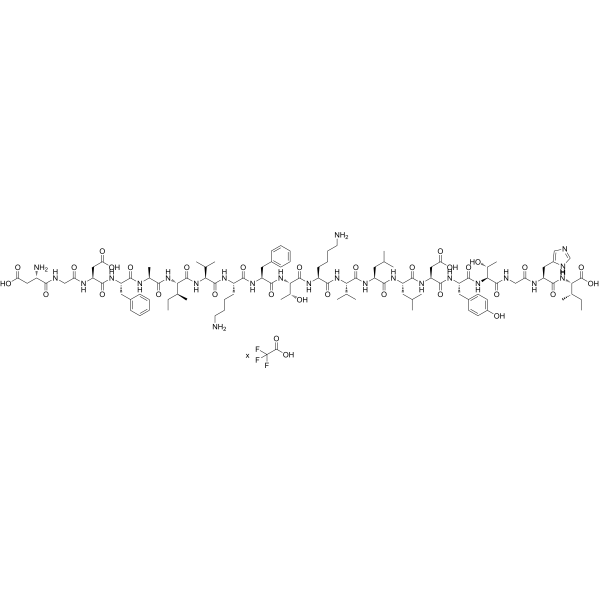
    AChRα(97-116) is a synthetic peptide corresponding to the 97-116 region of the rat acetylcholine receptor α-subunit, and also an inducer of autoimmune diseases. AChRα(97-116) can be used in studies related to experimental autoimmune myasthenia gravis .
    AChRα(97-116)
  • HY-P99365

    ALXN1210

    Complement System Metabolic Disease
    Ravulizumab (ALXN1210) is a humanized monoclonal antibody that specifically binds with high affinity to the human complement protein C5. Ravulizumab can be used for the research of paroxysmal nocturnal hemoglobinuria, atypical hemolytic uremic syndrome, and myasthenia gravis .
    Ravulizumab
  • HY-P991127

    DNTH103

    Complement System Inflammation/Immunology
    Claseprubart (DNTH103) is an inhibitor targeting C1s of the complement system and an inhibitor of the C1 component of the complement cascade. Claseprubart is in phase 2 clinical evaluation. Claseprubart has application potential in research related to multifocal motor neuropathy and generalized myasthenia gravis .
    Claseprubart
  • HY-N5077
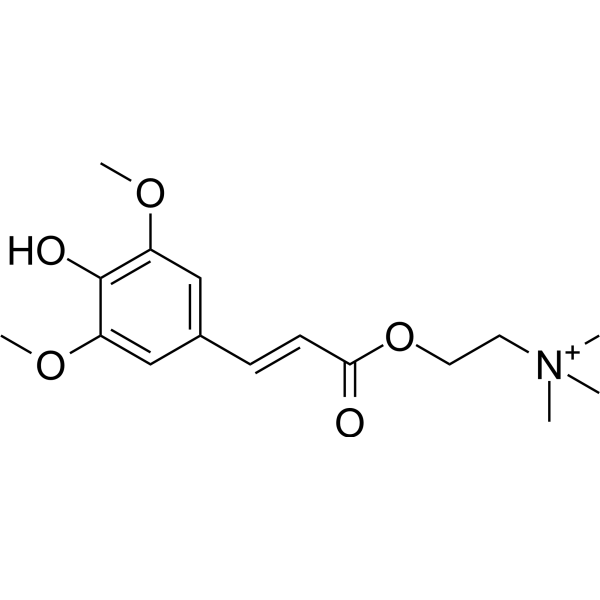
    Sinapine
    2 Publications Verification

    Cholinesterase (ChE) P-glycoprotein Neurological Disease Inflammation/Immunology Cancer
    Sinapine is an alkaloid isolated from seeds of the cruciferous species. Sinapine exhibits anti-inflammatory, anti-oxidant, anti-tumor, anti-angiogenic and radio-protective effects. Sinapine is also an acetylcholinesterase (AChE) inhibitor and can be used for the research of Alzheimer’s disease, ataxia, myasthenia gravis, and Parkinson’s disease .
    Sinapine
  • HY-139588
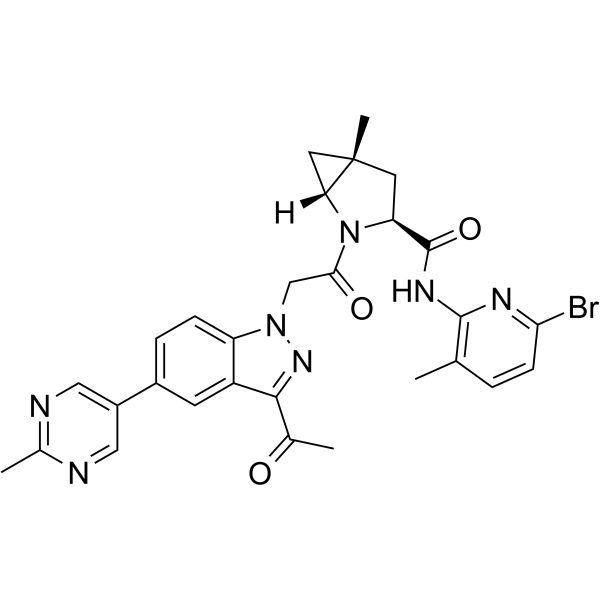
    Vemircopan
    2 Publications Verification

    ALXN2050; ACH 0145228; ACH-5228

    Complement System Interleukin Related Metabolic Disease Inflammation/Immunology
    Vemircopan (ALXN2050) is an orally active complement factor D (FD) inhibitor. Vemircopan can be used in the research of diseases such as myasthenia gravis, lupus nephritis, IgA nephropathy, and paroxysmal nocturnal hemoglobinuria .
    Vemircopan
  • HY-119577

    Distigmine dibromide

    Cholinesterase (ChE) Neurological Disease
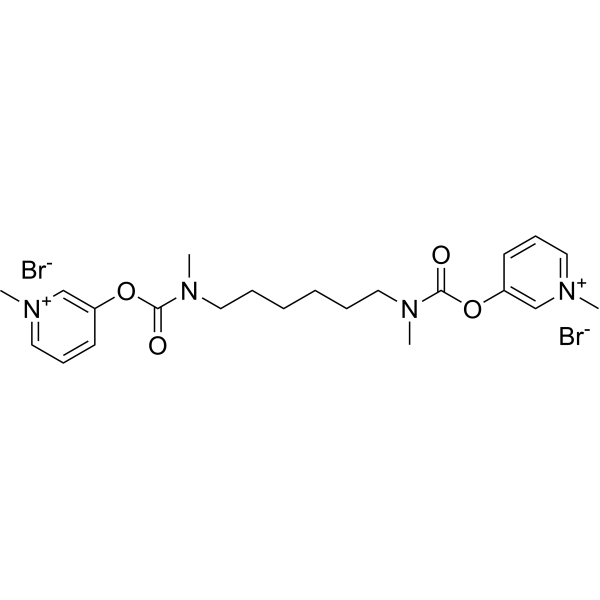
    Ubretid is a potent inhibitor of plasma cholinesterase. Ubretid therefore delays the hydrolysis of suxamethonium and prolongs its action, similar to the effects shown by other anticholinesterase agents, such as pyridostigmine and donepezil. Ubretid has the potential for the research of urinary retention prolongs the effect of suxamethonium. Ubretid is commonly prescribed for the research of myasthenia gravis and for difficulty in emptying the bladder .
    Ubretid
  • HY-N0450
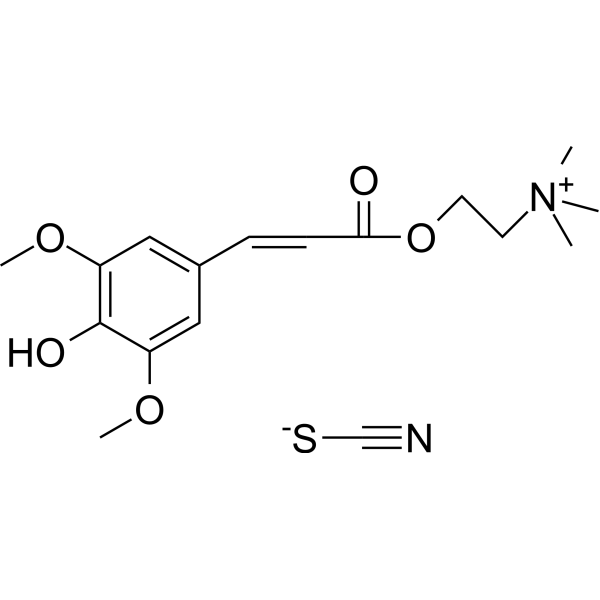
    Sinapine thiocyanate
    2 Publications Verification

    P-glycoprotein Cholinesterase (ChE) Cancer
    Sinapine thiocyanate is an alkaloid isolated from seeds of the cruciferous species. Sinapine thiocyanate exhibits anti-inflammatory, anti-oxidant, anti-tumor, anti-angiogenic and radio-protective effects. Sinapine thiocyanate is also an acetylcholinesterase (AChE) inhibitor and can be used for the research of Alzheimer’s disease, ataxia, myasthenia gravis, and Parkinson’s disease .
    Sinapine thiocyanate
  • HY-100919

    WIN 8077 chloride

    Cholinesterase (ChE) Others
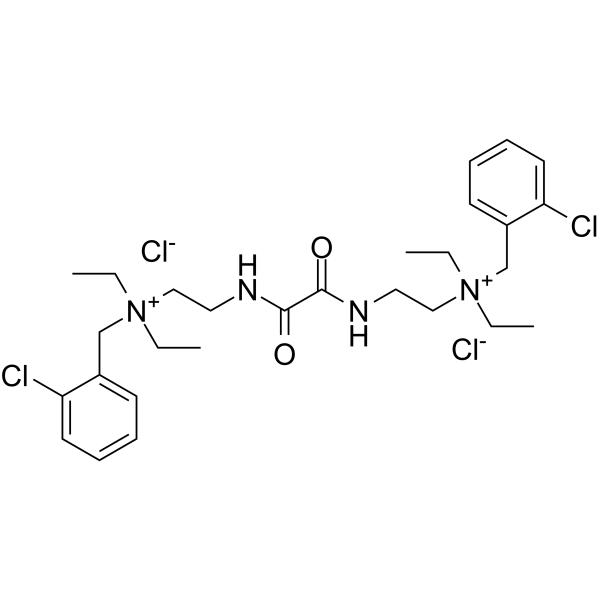
    Ambenonium (WIN 8077) chloride is an orally active and reversible inhibitor of Acetyicholinesterase (AChE) with high affinity. Ambenonium chloride inhibits human AChE with an IC50 value of 0.7 nM (hAChE) .
    Ambenonium chloride
  • HY-158183

    Chloride Channel Neurological Disease
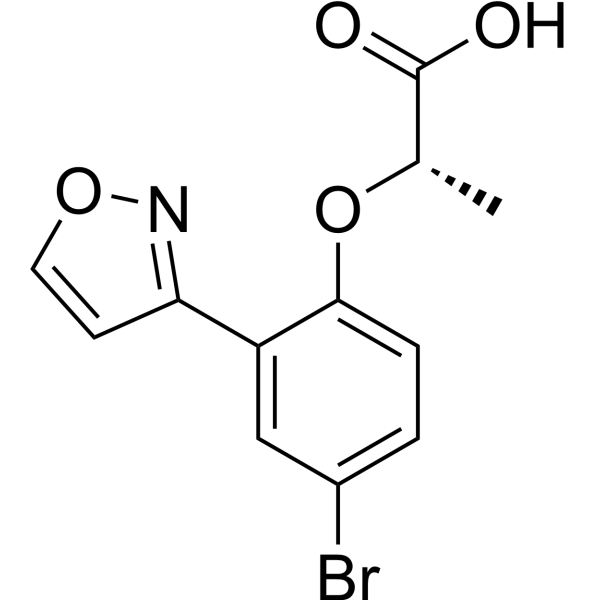
    NMD670 is an orally active inhibitor of skeletal muscle specific chloride channel ClC-1 with an EC50 of 1.6 μM. NMD670 enhances neuromuscular transmission and improves muscle contraction and strength. NMD670 can be used in the study of muscle weakness and muscle fatigue .
    NMD670
  • HY-P99638

    ALXN-1720

    Complement System Inflammation/Immunology
    Gefurulimab (ALXN-1720) is a high-affinity antibody inhibitor targeting complement protein C5, which can specifically bind to C5 and inhibit its cleavage into C5a and C5b. Gefurulimab can block the activation of the terminal complement pathway and reduce inflammatory damage. Gefurulimab can effectively reduce the formation of membrane attack complex (MAC) and has good pharmacokinetic properties. Gefurulimab can be used to study kidney and autoimmune diseases related to abnormal activation of the complement system, such as IgA nephropathy, lupus nephritis, and myasthenia gravis .
    Gefurulimab
  • HY-P5766A

    nAChR Metabolic Disease
    AChRα(97-116) TFA, a peptide, can be used to induce experimental autoimmune myasthenia gravis (EAMG)
    AChRα(97-116) TFA
  • HY-P990302

    nAChR Neurological Disease
    Anti-Human/Rat/Fish AChR Antibody (Mab35) is an anti-human/rat/fish AChR IgG1 monoclonal antibody. Anti-Human/Rat/Fish AChR Antibody (Mab35) can attack the AChR of neuromuscular junctions. Anti-Human/Rat/Fish AChR Antibody (Mab35) can be used for the construction of myasthenia gravis models .
    Anti-Human/Rat/Fish AChR Antibody (Mab35)
  • HY-122140

    Cholinesterase (ChE) Neurological Disease
    ACG548B (compound 24) is a potent inhibitor of acetyl- and butyrylcholinesterase (AChE and BChE) with IC50s of 1.78 and 0.496 μM, respectively. ACG548B has higher AChE affinity and selectivity over BChE and ChoK (choline kinase). ACG548B can be uesd for the study of myasthenia gravis and neuromuscular blockade .
    ACG548B
  • HY-P990818

    Fc Receptor (FcR) Inflammation/Immunology
    Anti-Rat FcRn heavy chain heterodimers Antibody (1G3) is an anti-rat FcRn heavy chain heterodimers IgG1 monoclonal antibody. Anti-Rat FcRn heavy chain heterodimers Antibody (1G3) can effectively bind to FcRn and competitively inhibit the binding of IgG to FcRn. Anti-Rat FcRn heavy chain heterodimers Antibody (1G3) can reduce the total serum IgG level. Anti-Rat FcRn heavy chain heterodimers Antibody (1G3) can be used for researches on autoimmune conditions such as experimental autoimmune myasthenia gravis (EAMG). The recommend isotype control of Anti-Rat FcRn heavy chain heterodimers Antibody (1G3): Mouse IgG1 kappa, Isotype Control (HY-P99977) .
    Anti-Rat FcRn heavy chain heterodimers Antibody (1G3)
  • HY-148108

    Cholinesterase (ChE) Neurological Disease
    AChE-IN-27 (compound 8c) is an AChE inhibitor (IC50=0.19 µM). AChE-IN-27 can be used in studies of neurological diseases such as alzheimer's disease, dementia, ataxia and myasthenia gravis .
    AChE-IN-27
  • HY-N5077R

    Reference Standards Cholinesterase (ChE) P-glycoprotein Neurological Disease Inflammation/Immunology Cancer
    Sinapine is an alkaloid isolated from seeds of the cruciferous species. Sinapine exhibits anti-inflammatory, anti-oxidant, anti-tumor, anti-angiogenic and radio-protective effects. Sinapine is also an acetylcholinesterase (AChE) inhibitor and can be used for the research of Alzheimer’s disease, ataxia, myasthenia gravis, and Parkinson’s disease .
    Sinapine (Standard)
  • HY-148412

    EN101; ODN 7040; BL 7040

    Cholinesterase (ChE) Others
    Monarsen (EN101) is a synthetic 20-base antisense oligodeoxynucleotide directed against the human AChE gene. Monarsen is used in the study of Autoimmune myasthenia gravis (MG), a neuromuscular disorder caused by autoantibodies directed against the acetylcholine receptor (AChR).
    Monarsen
  • HY-B0882S

    Isotope-Labeled Compounds Cholinesterase (ChE) Neurological Disease Inflammation/Immunology
    Edrophonium-d5 chloride is the deuterium labeled Edrophonium chloride (HY-B0882). Edrophonium chloride is a short-acting acetylcholinesterase (AChE) inhibitor. Edrophonium chloride has Ki values of 0.2, 0.2, and 0.4 μM and IC50 values of 0.2, 0.05, and 0.5 μM for AChE in human erythrocytes, purified calf forebrain, and purified octopus brain, respectively. Edrophonium chloride can be used to detect early digitalis toxicity and in the study of myasthenia gravis .
    Edrophonium-d5 chloride
  • HY-119792A

    Cholinesterase (ChE) Metabolic Disease
    Neostigmine hydroxide is a cholinesterase inhibitor and can be used for study of myasthenia gravis .
    Neostigmine hydroxide
  • HY-W715341

    Cholinesterase (ChE) Others
    RO-1-5237 is a metabolite of Pyridostigmine Bromide, which is a cholinergic and can be used for myasthenia gravis research .
    RO-1-5237
  • HY-N15452

    Cholinesterase (ChE) Neurological Disease Inflammation/Immunology
    Eseramine is a weak acetylcholinesterase inhibitor with an IC50 value of 9300 nM. Eseramine is promising for research of diseases involving the regulation of acetylcholinesterase, such as glaucoma, myasthenia gravis, and protection against organophosphate poisoning .
    Eseramine
  • HY-W715341R

    Drug Derivative Reference Standards Others
    RO-1-5237 (Standard) is the analytical standard of RO-1-5237. This product is intended for research and analytical applications. RO-1-5237 is a metabolite of Pyridostigmine Bromide, which is a cholinergic and can be used for myasthenia gravis research .
    RO-1-5237 (Standard)
  • HY-119577R

    Distigmine dibromide (Standard)

    Cholinesterase (ChE) Reference Standards Neurological Disease
    Ubretid (Standard) is the analytical standard of Ubretid. This product is intended for research and analytical applications. Ubretid is a potent inhibitor of plasma cholinesterase. Ubretid therefore delays the hydrolysis of suxamethonium and prolongs its action, similar to the effects shown by other anticholinesterase agents, such as pyridostigmine and donepezil. Ubretid has the potential for the research of urinary retention prolongs the effect of suxamethonium. Ubretid is commonly prescribed for the research of myasthenia gravis and for difficulty in emptying the bladder .
    Ubretid (Standard)
  • HY-N5077B

    Cholinesterase (ChE) P-glycoprotein Neurological Disease Inflammation/Immunology Cancer
    Sinapine hydroxide is an alkaloid isolated from seeds of the cruciferous species. Sinapine hydroxide exhibits anti-inflammatory, anti-oxidant, anti-tumor, anti-angiogenic and radio-protective effects. Sinapine hydroxide is also an acetylcholinesterase (AChE) inhibitor and can be used for the research of Alzheimer’s disease, ataxia, myasthenia gravis, and Parkinson’s disease .
    Sinapine hydroxide
  • HY-N0450R

    Reference Standards P-glycoprotein Cholinesterase (ChE) Cancer
    Sinapine (thiocyanate) (Standard) is the analytical standard of Sinapine (thiocyanate). This product is intended for research and analytical applications. Sinapine thiocyanate is an alkaloid isolated from seeds of the cruciferous species. Sinapine thiocyanate exhibits anti-inflammatory, anti-oxidant, anti-tumor, anti-angiogenic and radio-protective effects. Sinapine thiocyanate is also an acetylcholinesterase (AChE) inhibitor and can be used for the research of Alzheimer’s disease, ataxia, myasthenia gravis, and Parkinson’s disease .
    Sinapine thiocyanate (Standard)
  • HY-B0423R

    Eustigmin bromide (Standard); Neoserine bromide (Standard)

    Reference Standards Cholinesterase (ChE) Metabolic Disease Cancer
    Neostigmine (Bromide) (Standard) is the analytical standard of Neostigmine (Bromide). This product is intended for research and analytical applications. Neostigmine Bromide is a cholinesterase inhibitor that acts on myasthenia gravis.
    Neostigmine Bromide (Standard)
  • HY-148412A

    EN101 sodium; ODN 7040 sodium; BL 7040 sodium

    Cholinesterase (ChE) Others
    Monarsen sodium is a synthetic 20-base antisense oligodeoxynucleotide directed against the human AChE gene. Monarsen sodium is used in the study of Autoimmune myasthenia gravis (MG), a neuromuscular disorder caused by autoantibodies directed against the acetylcholine receptor (AChR).
    Monarsen sodium
  • HY-126175

    Endogenous Metabolite Neurological Disease
    Neostigmine iodide is a reversible acetylcholinesterase inhibitor with muscle tone-enhancing activity. Neostigmine iodide is primarily used to improve muscle function in patients with myasthenia gravis. Neostigmine iodide is also used in routine anesthesia to reverse the effects of nondepolarizing muscle relaxants such as rocuronium .
    Neostigmine iodide
  • HY-151927

    Cholinesterase (ChE) Neurological Disease
    AChE-IN-28 (Compound 2h) is a selective slow-binding inhibitor of acetylcholinesterase with an IC50 of 0.2 nM .
    AChE-IN-28
  • HY-118533A

    WIN 8077 dichloride tetrahydrate

    Cholinesterase (ChE) Neurological Disease
    Ambenonium (WIN 8077) dichloride tetrahydrate is an orally active and reversible inhibitor of Acetyicholinesterase (AChE) with high affinity. Ambenonium dichloride tetrahydrate inhibits human AChE with an IC50 value of 0.7 nM (hAChE) .
    Ambenonium dichloride tetrahydrate
  • HY-B0882R

    Reference Standards Cholinesterase (ChE) Neurological Disease Inflammation/Immunology
    Edrophonium chloride (Standard) is the analytical standard of Edrophonium chloride (HY-B0882). This product is intended for research and analytical applications. Edrophonium chloride is a short-acting acetylcholinesterase (AChE) inhibitor. Edrophonium chloride has Ki values of 0.2, 0.2, and 0.4 μM and IC50 values of 0.2, 0.05, and 0.5 μM for AChE in human erythrocytes, purified calf forebrain, and purified octopus brain, respectively. Edrophonium chloride can be used to detect early digitalis toxicity and in the study of myasthenia gravis.
    Edrophonium chloride (Standard)
  • HY-U00035R

    Antibiotic Reference Standards Bacterial Infection
    Sinapine (thiocyanate) (Standard) is the analytical standard of Sinapine (thiocyanate). This product is intended for research and analytical applications. Sinapine thiocyanate is an alkaloid isolated from seeds of the cruciferous species. Sinapine thiocyanate exhibits anti-inflammatory, anti-oxidant, anti-tumor, anti-angiogenic and radio-protective effects. Sinapine thiocyanate is also an acetylcholinesterase (AChE) inhibitor and can be used for the research of Alzheimer’s disease, ataxia, myasthenia gravis, and Parkinson’s disease .
    MGB-BP-3 (Standard)
  • HY-100919R

    WIN 8077 chloride (Standard)

    Reference Standards Cholinesterase (ChE) Others
    Ambenonium (chloride) (Standard) is the analytical standard of Ambenonium (chloride). This product is intended for research and analytical applications. Ambenonium (WIN 8077) chloride is an orally active and reversible inhibitor of Acetyicholinesterase (AChE) with high affinity. Ambenonium chloride inhibits human AChE with an IC50 value of 0.7 nM (hAChE) .
    Ambenonium chloride (Standard)
  • HY-108723

    Cholinesterase (ChE) Neurological Disease
    Dihydrogalanthamine hydrobromide is an acetylcholinesterase inhibitor. Dihydrogalanthamine hydrobromide can be used in research on neurological diseases such as sequelae of poliomyelitis and myasthenia gravis .
    Dihydrogalanthamine hydrobromide
  • HY-10540

    AEB071 acetate

    PKC NF-κB Inflammation/Immunology
    Sotrastaurin (AEB071) acetate is a selective, orally active PKC inhibitor. Sotrastaurin acetate inactivates NF-κB by inhibiting PKC α, β, θ, γ subtypes, thereby reducing the transcription levels of immune response-related genes. Sotrastaurin acetate effectively inhibits alloreactive T cell proliferation, conventional T cell activation, as well as the production of pro-inflammatory cytokines and B lymphocytes. Sotrastaurin acetate also maintains the functional and phenotypic stability of regulatory T cells, enhances Foxp3 expression and restores the balance of helper T lymphocytes. Sotrastaurin acetate can prolong the survival time of allografts, and alleviate inflammatory responses and myasthenic symptoms by reducing anti-AChR antibody levels. Sotrastaurin acetate is widely used in studies related to kidney transplantation, psoriasis and myasthenia gravis .
    Sotrastaurin acetate
  • HY-B1778C

    Suxamethonium iodide

    nAChR mAChR Neurological Disease
    Succinylcholine iodide is a depolarizing neuromuscular blocker with rapid onset and short duration of action. Succinylcholine iodide also acts as an agonist of the Acetylcholine receptor. Succinylcholine iodide is used for emergency airway management .
    Succinylcholine iodide

Inquiry Online

Your information is safe with us. * Required Fields.

Salutation


Country or Region *

Applicant Name *


Organization Name *

Department *


Email Address *


Product Name *

Cat. No.


Requested quantity *

Phone Number *


Remarks

Inquiry Online

Inquiry Information

Product Name:
Cat. No.:
Quantity:
MCE Japan Authorized Agent:

