
31 Results for "

hypersensitive pain

" in MedChemExpress (MCE) Product Catalog:
Products (31)

31 Results for "hypersensitive pain" in MCE Product Catalog:

5
5 Cited Publications
Cat. No.: HY-100375
CAS No.: 1577222-14-0
Purity:  99.90%
Synonyms: ALKS 8700; BIIB098
Target:  

Keap1-Nrf2

Research Areas:  

Inflammation/Immunology

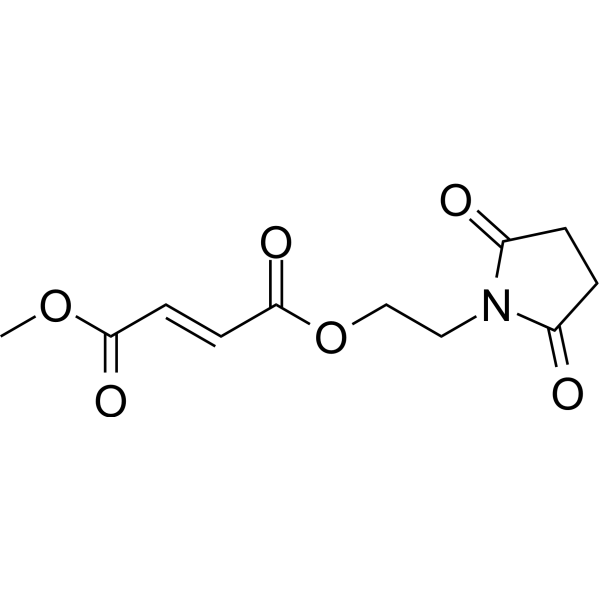
Diroximel fumarate (ALKS 8700) is an orally-active and well-tolerated monomethyl fumarate (MMF) proagent in a controlled-release formulation. Diroximel fumarate is considered as active equivalent to its active metabolite dimethyl fumarate (DMF). Diroximel fumarate has a favorable safety and efficacy profile, has the potential for the study of multiple sclerosis (MS). Diroximel fumarate is a Nrf2 activator that alleviate MGO-induced pain hypersensitivity .
loading...
    loading...
3
3 Cited Publications
Cat. No.: HY-18099
CAS No.: 878141-96-9
Synonyms: E-52862
Research Areas:  

Neurological Disease

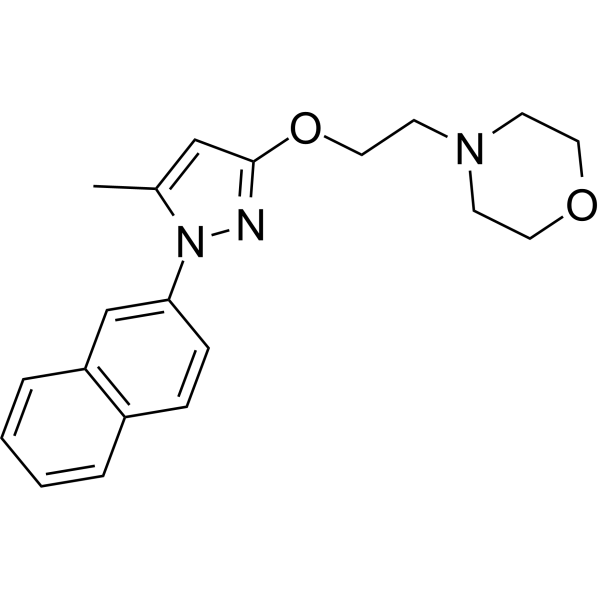
S1RA (E-52862) is a highly selective σ1 receptor (σ1R) antagonist with Kis of 17 nM and 23.5 nM for human σ1R and guinea pig σ1R, respectively. S1RA has Moderate antagonistic activity for human 5-HT2B receptor (Ki= 328 nM). S1RA has antinociceptive effects in neuropathic pain models. S1RA prevents mechanical and cold hypersensitivity in Oxaliplatin (HY-17371)-treated mice .
loading...
    loading...
2
2 Cited Publications
Cat. No.: HY-10035
CAS No.: 1072018-68-8
Purity:  99.92%
Synonyms: T-Type calcium channel inhibitor
Target:  

Calcium Channel

Research Areas:  

Neurological Disease

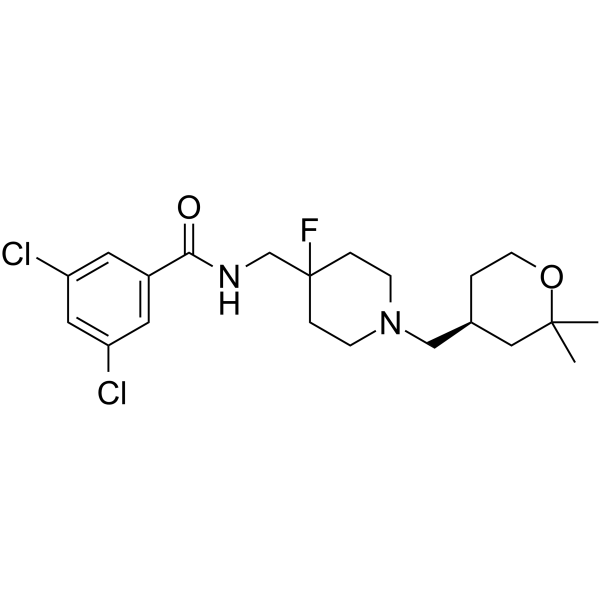
TTA-P2 (T-Type calcium channel inhibitor) is a selective, orally active, and BBB-penetrant T-type calcium channel blocker (IC50 = 22 nM). TTA-P2 reduces mechanical hypersensitivity and alleviates acute as well as chronic pain. TTA-P2 significantly reduces firing rates in temporal lobe epilepsy (TLE) neurons to control levels and suppresses synaptically evoked burst firing. TTA-P2 can be studied in research for neurological diseases such as tremor and absence epilepsy < sup>[4] .
loading...
    loading...
1
1 Cited Publications
Cat. No.: HY-106199
CAS No.: 40312-34-3
Purity:  98.93%
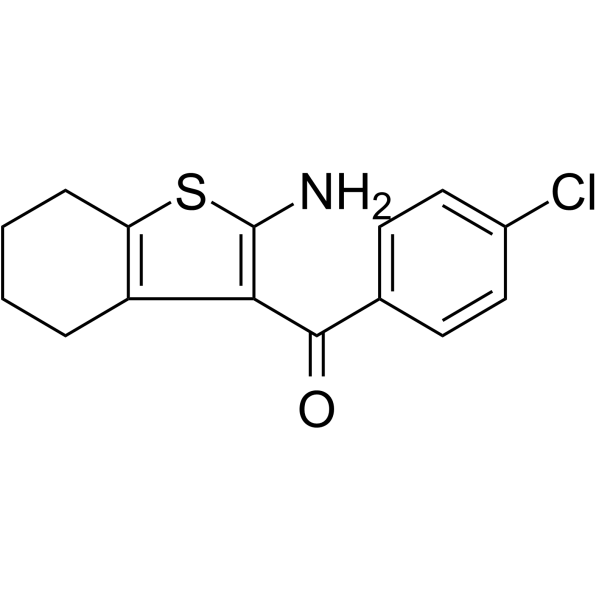
Adenosine A1 receptor activator T62 is an allosteric enhancer of adenosine A1 receptor. Adenosine A1 receptor activator T62 produces antinociception in animal models of acute pain and also reduces hypersensitivity in models of inflammatory and nerve-injury pain .
loading...
    loading...
1
1 Cited Publications
Cat. No.: HY-148244
Purity:  99.88%
Research Areas:  

Others

MS47134 is a potent and selective MRGPRX4 agonist with an EC50 value of 149 nM. MS47134 can be used for research of pain, itch and mast cell-mediated hypersensitivity .
loading...
    loading...
Cat. No.: HY-110143
CAS No.: 1181081-71-9
Purity:  99.31%
Target:  

Potassium Channel

Research Areas:  

Neurological Disease

CLP257 is a selective K +-Cl cotransporter KCC2 activator with an EC50 of 616 nM. CLP257 is inactive against NKCC1, GABAA receptors, KCC1, KCC3 or KCC4. CLP257 restores impaired Cl transport in neurons with diminished KCC2 activity. CLP257 alleviates hypersensitivity in rats with neuropathic pain. CLP257 modulates plasmalemmal KCC2 protein turnover post-translationally .
loading...
    loading...
Cat. No.: HY-P1726
CAS No.: 1416983-77-1
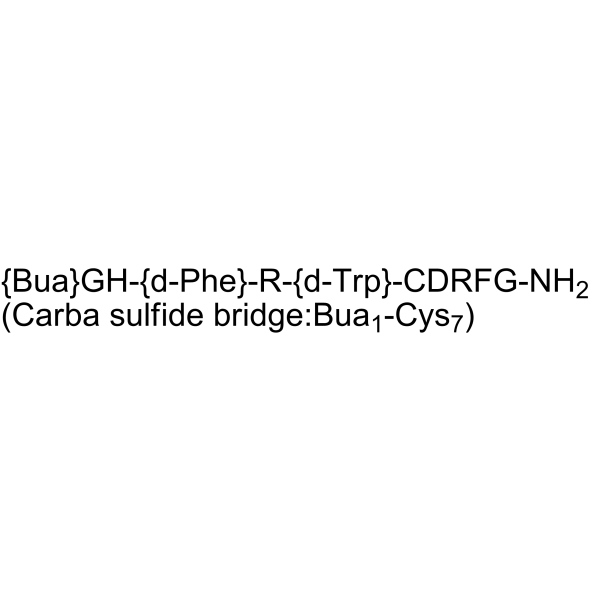
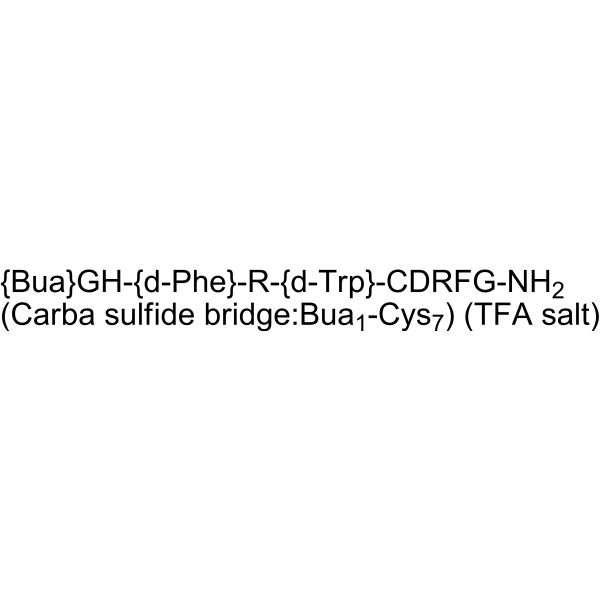
MSG606 is a selective melanocortin 1 receptor (MC1R) antagonist. MSG606 can abolish the neuroprotective effects of BMS-470539 (HY-15616) (MC1R agonist). MSG606 can inhibit cancer cell proliferation and transition from the G1 to the S phase. MSG606 can delay pain hypersensitivity and reduce cholesterol levels. MSG606 can be used for the researches of cancer, inflammation, neurological and metabolic disease, such as breast cancer and subarachnoid hemorrhage (SAH) .
loading...
    loading...
Cat. No.: HY-N5025
CAS No.: 1354-84-3
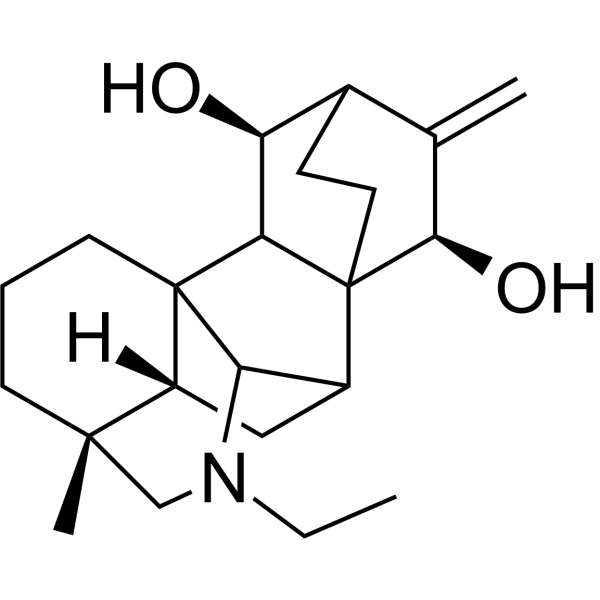
Bullatine A, a diterpenoid alkaloid, is a potent P2X7 antagonist. Bullatine A possesses anti-rheumatic, anti-inflammatory and anti-nociceptive effects. Bullatine A inhibits ATP-induced BV-2 cell death/apoptosis and P2X receptor-mediated inflammatory responses. Bullatine A suppresses glioma cell growth by targeting SIRT6. Bullatine A specifically attenuates pain hypersensitivity in rats. Bullatine A attenuates LPS (HY-D1056)-induced systemic inflammatory response by inhibiting the ROS/JNK/NF-κB pathway in mice. Bullatine A improves despair behavior in Chronic chronic social defeat stress (CSDS) mice. Bullatine A can be used for the study of inflammation, glioblastoma (GBM) and depression .
loading...
    loading...
Cat. No.: HY-117731
CAS No.: 2113664-14-3
Target:  

Sigma Receptor

Research Areas:  

Neurological Disease

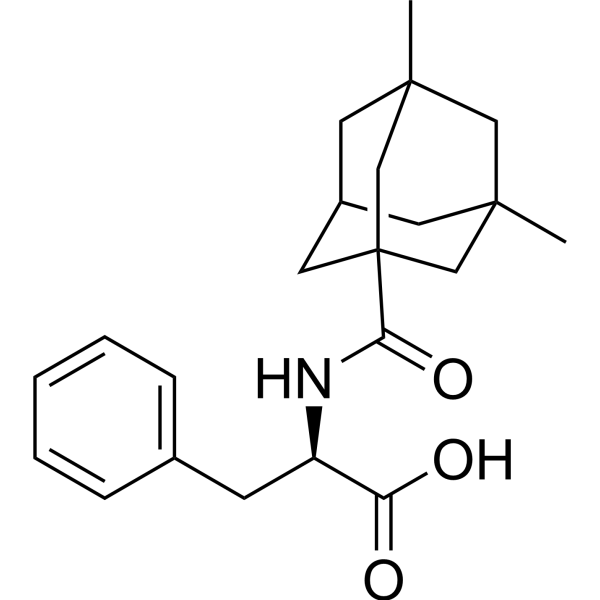
UKH-1114 is a selective TMEM97 (a sigma-2 receptor) agonist with a Ki values of 1279 and 46 nM for σ1R and σ2R/TMEM97, respectively. UKH-1114 exhibits exceptional selectivity with negligible affinity for over 50 other receptors and channels. UKH-1114 effectively relieves spared nerve injury (SNI)-induced mechanical hypersensitivity with a long-lasting duration and without motor impairment. UKH-1114 can be used for neuropathic pain research .
loading...
    loading...
Cat. No.: HY-175231
Target:  

5-HT Receptor

Research Areas:  

Neurological Disease

ST171 is a bitopic 5-HT1AR agonist with an Ki of 0.41  nM. ST171 selectively activates Gi/o signaling pathway and inhibits 5-HT1AR-mediated cAMP accumulation without Gs activation and marginal β-arrestin recruitment. T171 reduces hypersensitivity in chronic neuropathic and inflammatory pain mice model. ST171 can be used for pain research .
loading...
    loading...
Cat. No.: HY-110099
CAS No.: 473722-68-8
Target:  

CXCR

Research Areas:  

Inflammation/Immunology

(±)-NBI-74330 is a potent and selective CXCR3 antagonist. (±)-NBI-74330 not only reduces tactile and thermal hypersensitivity but also enhances the analgesic properties of morphine. (±)-NBI-74330 can reduce microglial cell activation, increase astroglial cell activation, and downregulate the expression of some CXCR3 ligands in a rat neuropathic pain model .
loading...
    loading...
Cat. No.: HY-143880
CAS No.: 2764889-60-1
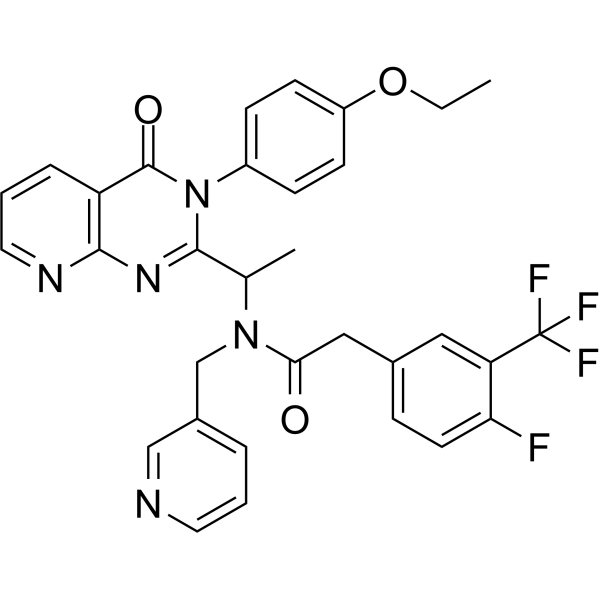
MRGPRX1 agonist 4 (compound 1t) is a potent and orally active Mas-related G protein-coupled receptor X1 (MRGPRX1) positive allosteric modulator with an EC50 value of 0.1 μM. MRGPRX1 agonist 4 has good metabolic stability and oral bioavailability. MRGPRX1 agonist 4 can reduce behavioral heat hypersensitivity in a neuropathic pain model humanized MRGPRX1 mice. MRGPRX1 agonist 4 can be used for researching neuropathic pain .
loading...
    loading...
Cat. No.: HY-P10767
CAS No.: 2468971-42-6
Target:  

Neurotensin Receptor

Research Areas:  

Neurological Disease

MD01-67 is a selective macrocyclic compound targeting the neurotensin receptor type 2 (NTS2), with Ki of 2.9 nM. MD01-67 exhibits analgesic and tactile hypersensitivity reducing activity in rats acute/persistent/chronic inflammatory pain models .
loading...
    loading...
Cat. No.: HY-P1726A
MSG606 TFA is a selective melanocortin 1 receptor (MC1R) antagonist. MSG606 TFA can abolish the neuroprotective effects of BMS-470539 (HY-15616) (MC1R agonist). MSG606 TFA can inhibit cancer cell proliferation and transition from the G1 to the S phase. MSG606 TFA can delay pain hypersensitivity and reduce cholesterol levels. MSG606 TFA can be used for the researches of cancer, inflammation, neurological and metabolic disease, such as breast cancer and subarachnoid hemorrhage (SAH) .
loading...
    loading...
Cat. No.: HY-171096
CAS No.: 2378159-28-3
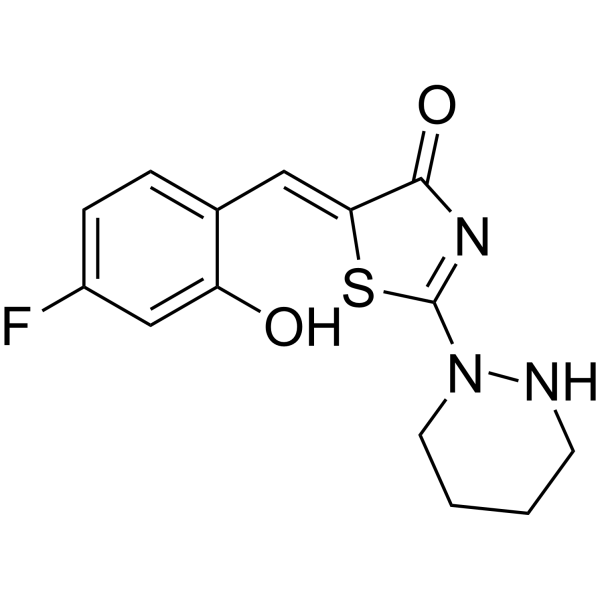
PAR2 modulator-1 is a biased protease-activated receptor 2 (PAR2) inhibitor. PAR2 modulator-1 blocks the PAR2-dependent MAPK signaling pathway with an IC50 value of 8.5 μM, without altering the PAR2-dependent Ca 2+ signaling pathway. PAR2 modulator-1 blocks pain responses induced by PAR2 agonists. PAR2 modulator-1 can be used in the research of chronic pain .
loading...
    loading...
Cat. No.: HY-175340
CAS No.: 1361107-81-4
Target:  

Potassium Channel TSPO

Research Areas:  

Neurological Disease

Kv7.2/Kv7.3 activator-3 (GRT-X) is an orally active Kv7.2/Kv7.3 and TSPO activator. Kv7.2/Kv7.3 activator-3 activates Kv7.2/Kv7.3, Kv7.4, and Kv7.5 with EC50 values of 0.37, 2.06, and 0.75 μM, respectively, and binds to TSPO with Ki values of 0.07 μM (rat membrane) and 4.60 μM (human U-118 MG cells). Kv7.2/Kv7.3 activator-3 prevents motor neuron degeneration in mice and humans conditioned by ALS/FTD astrocytes. Kv7.2/Kv7.3 activator-3 stimulates dorsal root ganglion axonal growth through TSPO and Kv7.2/3 activation. Kv7.2/Kv7.3 activator-3 has anti-epileptic effects in epileptic seizure models. Kv7.2/Kv7.3 activator-3 reduces pain hypersensitivity in patients with diabetic neuropathy, promotes neuronal survival and regeneration after cervical neuropathy in rats, and accelerates the recovery of normal function of sensory and motor neurons .
loading...
    loading...
Cat. No.: HY-P5874
Target:  

Calcium Channel

Research Areas:  

Inflammation/Immunology

Myr-TAT-CBD3 is CRMP2-CaV2.2 interaction inhibitor. Myr-tat-CBD3 can significantly attenuate carrageenan-induced thermal hypersensitivity and reverse thermal hypersensitivity induced in a rat model of postoperative pain. Myr-TAT-CBD3 can be used to study inflammation and postoperative pain .
loading...
    loading...
Cat. No.: HY-117518A
CAS No.: 5585-60-4
Target:  

Endogenous Metabolite

Research Areas:  

Inflammation/Immunology

Paranyline hydrochloride is an anti-inflammatory agent with topical antiallodynic activity .
loading...
    loading...
Cat. No.: HY-149863
CAS No.: 3017181-08-4
Research Areas:  

Neurological Disease

DDO-8926 is a potent and selective BET inhibitor that can significantly reduce mechanical hypersensitivity by inhibiting the expression of pro-inflammatory cytokines and reducing excitability for neuropathic pain research .
loading...
    loading...
Cat. No.: HY-101440A
CAS No.: 202914-18-9
Synonyms: CHF-3381
Target:  

iGluR Monoamine Oxidase

Research Areas:  

Neurological Disease

Indantadol hydrochloride (CHF-3381) is an orally active, non-selective NMDA antagonist and MAO inhibitor. Indantadol hydrochloride blocks the binding of [³H]-MK-801 to NMDA receptors in a non-competitive manner, with an IC50 of 8.1 μM. Indantadol hydrochloride completely inhibits dopamine release caused by NMDA. Indantadol hydrochloride protects neurons, with an ED₅₀ of 35 μM. Indantadol hydrochloride has anticonvulsant and anti-high pain hypersensitivity activities .
loading...
    loading...

