
9 Results for "

intranasal administration

" in MedChemExpress (MCE) Product Catalog:
Products (9)

9 Results for "intranasal administration" in MCE Product Catalog:

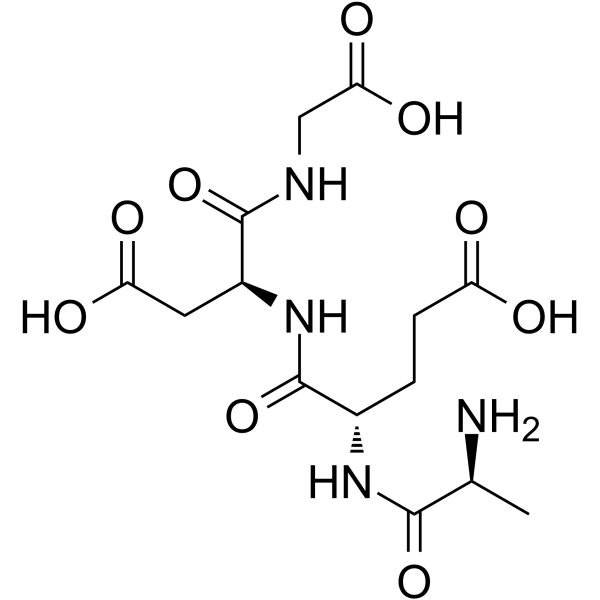
Cat. No.: HY-P1149
CAS No.: 307297-39-8
Synonyms: Epithalon; Epithalamin
Target:  

Telomerase

Research Areas:  

Neurological Disease Cancer

Epitalon is an anti-aging agent and a telomerase activator. Epitalon has an inhibitory effect of the on the development of spontaneous tumors in mice, has geroprotective actions and intranasal administration increases neuronal activity. Epitalon can be used for cancer, old age and Retinitis Pigmentosa .
loading...
    loading...
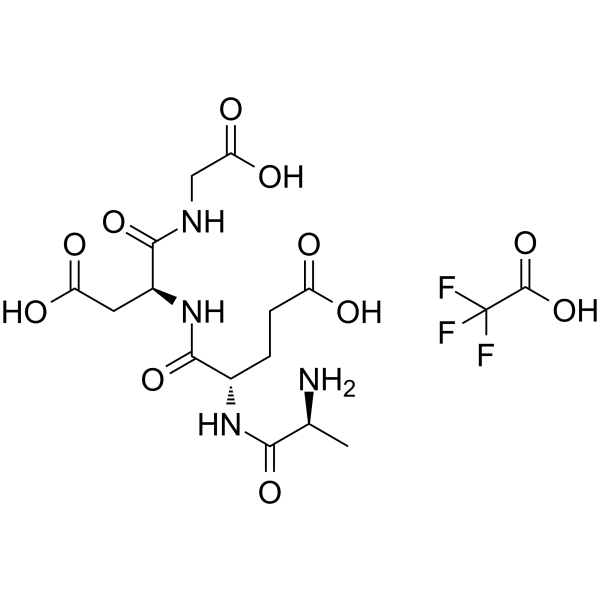
Cat. No.: HY-P1149A
Synonyms: Epithalon TFA; Epithalamin TFA
Target:  

Telomerase

Research Areas:  

Neurological Disease Cancer

Epitalon TFA is an anti-aging agent and a telomerase activator. Epitalon TFA has an inhibitory effect of the on the development of spontaneous tumors in mice, has geroprotective actions and intranasal administration increases neuronal activity. Epitalon TFA can be used for cancer, old age and Retinitis Pigmentosa .
loading...
    loading...
Cat. No.: HY-P99647
CAS No.: 1257358-38-5
Synonyms: ALX-0171; VR-465

Target:  

RSV

Research Areas:  

Infection

Gontivimab (ALX-0171; VR-465) is a poent anti-RSV prefusion F protein nanobody with a KD value of 0.113 nM. Gontivimab shows antiviral activity. Gontivimab reduces the RSV load in the nose and lung .
loading...
    loading...
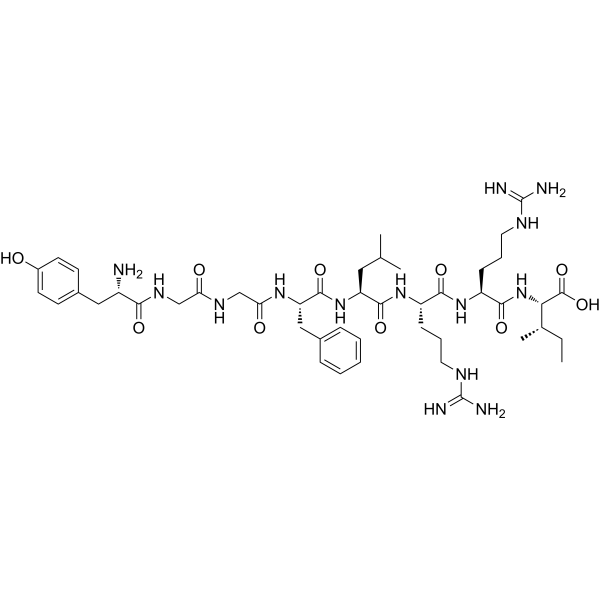
Cat. No.: HY-P2159
CAS No.: 75790-53-3
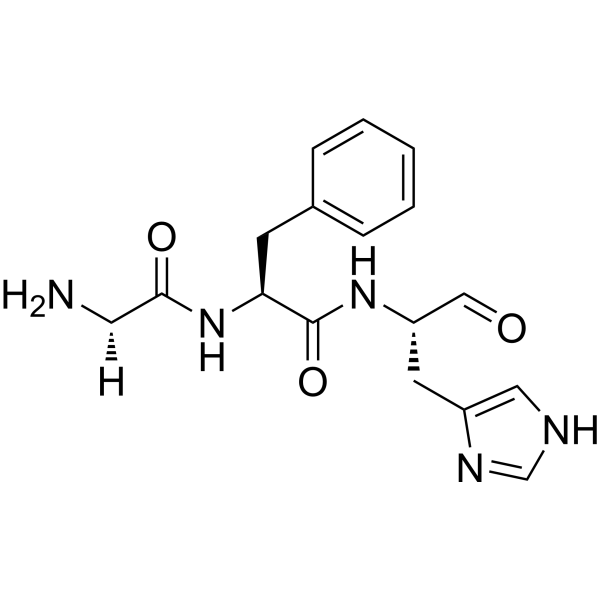
Dynorphin A (1-8) is a ligand with preference for the κ-opioid receptor, and its IC50 value against human placental κ-opioid receptor is 330 nM. Dynorphin A (1-8) mediates neuroprotective effects by inhibiting oxidative stress, suppressing apoptosis, and competitively displacing the binding of κ partial agonists. Dynorphin A (1-8) is the dominant opioid peptide in human placental villi and tissue extracts; it undergoes rapid hydrolysis and can enter the central nervous system via intranasal administration. Dynorphin A (1-8) can be used in studies related to ischemic stroke .
loading...
    loading...
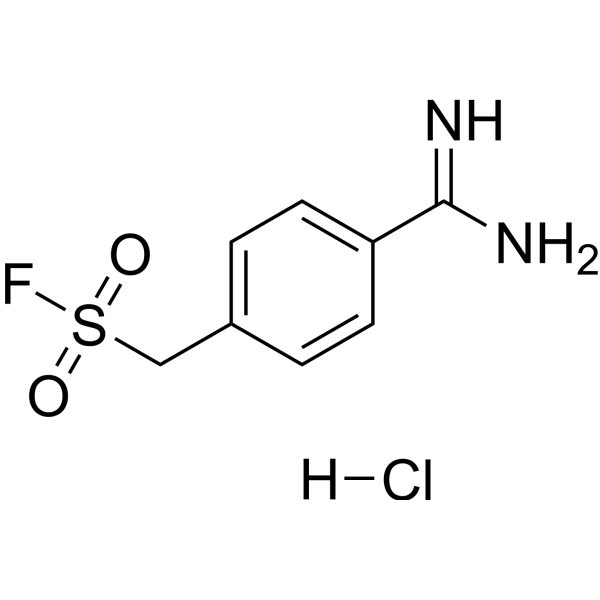
Cat. No.: HY-W014134
CAS No.: 74938-88-8
Synonyms: p-Amidinophenylmethylsulfonylfluoride hydrochloride
Target:  

Ser/Thr Protease

Research Areas:  

Inflammation/Immunology

p-APMSF (p-Amidinophenylmethylsulfonylfluoride) hydrochloride is a serine protease and trypsin inhibitor with the characteristic of rapid onset of action. p-APMSF hydrochloride reduces the enzymatic hydrolysis of recombinant human G-CSF in rat pulmonary mucosa. Combined intratracheal treatment with p-APMSF hydrochloride and Laureth-9 significantly enhances its absorption efficiency in rat lungs. Following intranasal administration, p-APMSF hydrochloride does not increase the concentration of recombinant human G-CSF in rat plasma, nor does it alter the effect of G-CSF on inducing an increase in total white blood cell count .
loading...
    loading...
Cat. No.: HY-N2216
CAS No.: 79103-90-5
Synonyms: Onjisaponin F
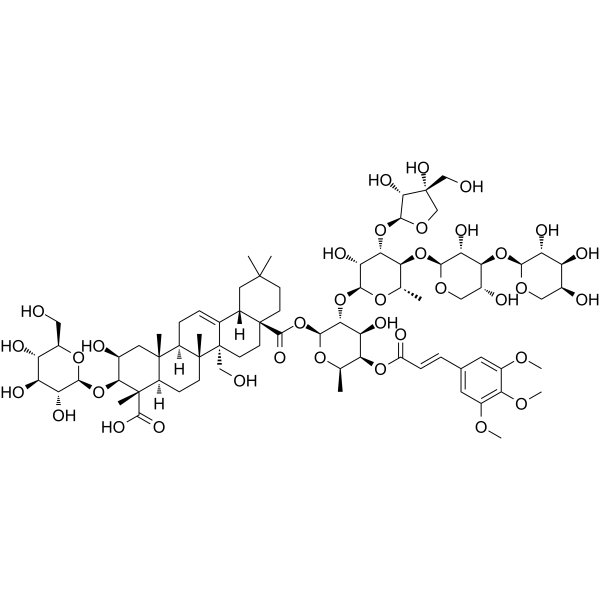
Polygalasaponin XXXI (Onjisaponin F) is an effective adjuvant for intranasal administration of influenza Influenza hemagglutinin (HA) vaccine to protect influenza virus infection .
loading...
    loading...
Cat. No.: HY-151988
Target:  

SARS-CoV

Research Areas:  

Infection

SARS-CoV-2-IN-36 is a potent SARS-CoV-2 Mpro (SARS-CoV) inhibitor with an IC50 of 2.37 μM and a Kd of 1.19 μM in enzymatic assays. SARS-CoV-2-IN-36 shows antiviral activity against UC-1074, RG2674, and NVDBB-2220 SARS-CoV-2 variants in Vero cells .
loading...
    loading...
Cat. No.: HY-101633
CAS No.: 955359-72-5
Target:  

Histamine Receptor

Research Areas:  

Others

GSK-1004723 is a novel H1/H3 receptor antagonist with limited activity for the suppression of seasonal allergic rhinitis. GSK-1004723 is available as a suspension or solution for intranasal administration.
loading...
    loading...
Cat. No.: HY-184485
Research Areas:  

Infection

MB-32 is a potent and selective allosteric inhibitor of human angiotensin-converting enzyme 2 (hACE2) with a Kd value of 7.078 μM. MB-32 binds to a non-catalytic surface pocket on the N-terminal helix of ACE2, disrupts the interaction between ACE2 and the receptor-binding domain of SARS-CoV-2 spike protein through allosteric action, and preserves the enzymatic activity of ACE2 across different species. MB-32 achieves high concentrations in the airway via intranasal administration, with no detected cardiovascular toxicity. MB-32 can be used for research on coronavirus disease 2019 .
loading...
    loading...

