
1. Search Result
Search Result
Results for "

invertebrates

" in MedChemExpress (MCE) Product Catalog:

21

Inhibitors & Agonists

1

Biochemical Assay Reagents

6

Peptides

5

Natural
Products

1

Isotope-Labeled Compounds

Cat. No. Nombre del producto Target Áreas de investigación Chemical Structure
  • HY-B0528A
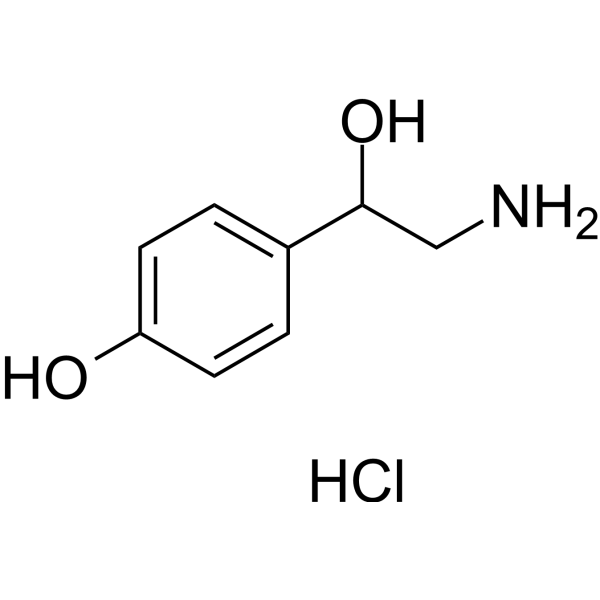
    Octopamine hydrochloride
    5 Publications Verification

    (±)-p-Octopamine hydrochloride

    Adrenergic Receptor Endogenous Metabolite Neurological Disease Endocrinology
    Octopamine ((±)-p-Octopamine) hydrochloride, a biogenic monoamine structurally related to noradrenaline, acts as a neurohormone, a neuromodulator and a neurotransmitter in invertebrates. Octopamine hydrochloride can stimulate alpha2-adrenoceptors (ARs) in Chinese hamster ovary cells transfected with human alpha2-ARs. Octopamine hydrochloride increased glycogenolysis, glycolysis, oxygen uptake, gluconeogenesis and the portal perfusion pressure .
    Octopamine hydrochloride
  • HY-113413
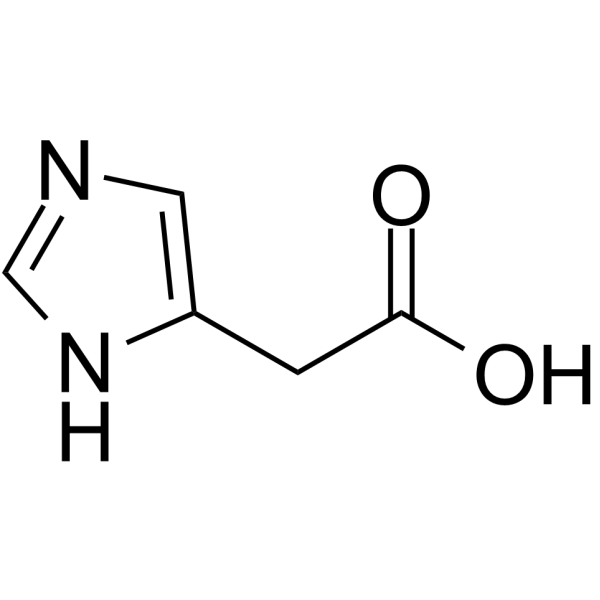
    Imidazoleacetic acid
    2 Publications Verification

    Imidazolyl-4-acetic acid

    Endogenous Metabolite GABA Receptor Cardiovascular Disease Neurological Disease Metabolic Disease
    Imidazoleacetic acid (Imidazolyl-4-acetic acid) is a blood-brain barrier-permeable full agonist of the GABAA receptor. Imidazoleacetic acid forms via histamine oxidation in the mouse brain. Imidazoleacetic acid exerts multiple neurochemical and behavioral effects. Imidazoleacetic acid induces a range of centrally mediated effects, including analgesia, sedation, hypnosis, as well as reductions in blood pressure, body temperature, isolation-induced aggression and motor activity .
    Imidazoleacetic acid
  • HY-P0066

    Neurotensin Receptor Neurological Disease
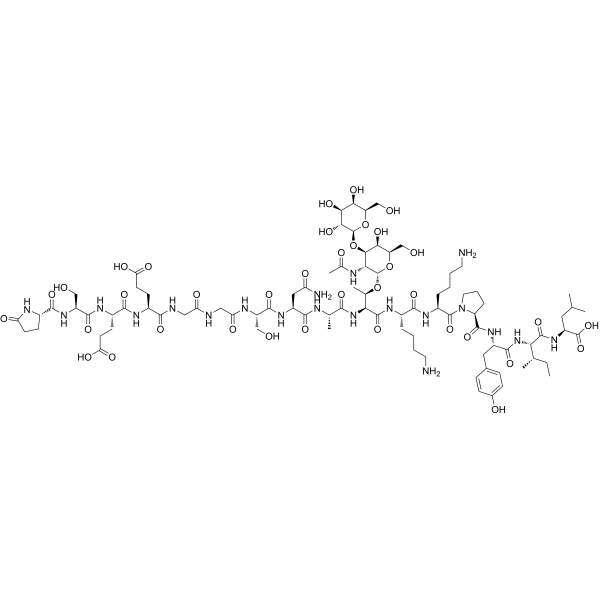
    Contulakin G is an O-glycosylated invertebrate neurotensin. Contulakin-G is a weaker agonist for the neurotensin receptor. Contulakin G is also a potent antinociceptive agent .
    Contulakin G
  • HY-B0528AR

    (±)-p-Octopamine hydrochloride (Standard)

    Reference Standards Adrenergic Receptor Endogenous Metabolite Neurological Disease Endocrinology
    Octopamine (hydrochloride) (Standard) is the analytical standard of Octopamine (hydrochloride). This product is intended for research and analytical applications. Octopamine ((±)-p-Octopamine) hydrochloride, a biogenic monoamine structurally related to noradrenaline, acts as a neurohormone, a neuromodulator and a neurotransmitter in invertebrates. Octopamine hydrochloride can stimulate alpha2-adrenoceptors (ARs) in Chinese hamster ovary cells transfected with human alpha2-ARs. Octopamine hydrochloride increased glycogenolysis, glycolysis, oxygen uptake, gluconeogenesis and the portal perfusion pressure .
    Octopamine hydrochloride (Standard)
  • HY-B0867

    Environmental Pollutants Herbicide Others
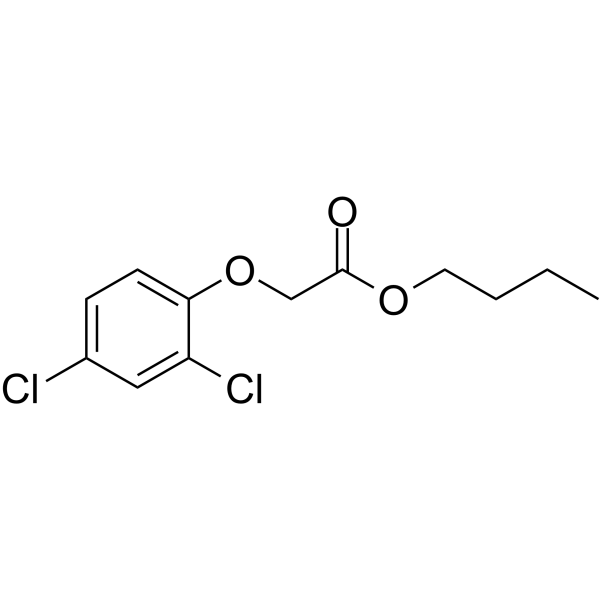
    2,4-D Butyl ester is a phenoxyacetic acid herbicide used to control woody broadleaf weeds. 2,4-D Butyl ester shows high toxicity to fish and aquatic invertebrates. In animals, 2,4-D Butyl ester hydrolyzes to produce n-butanol, which further induces neurobehavioral toxicity such as ataxia in rats .
    2,4-D Butyl ester
  • HY-N10631

    Drug Intermediate Cancer
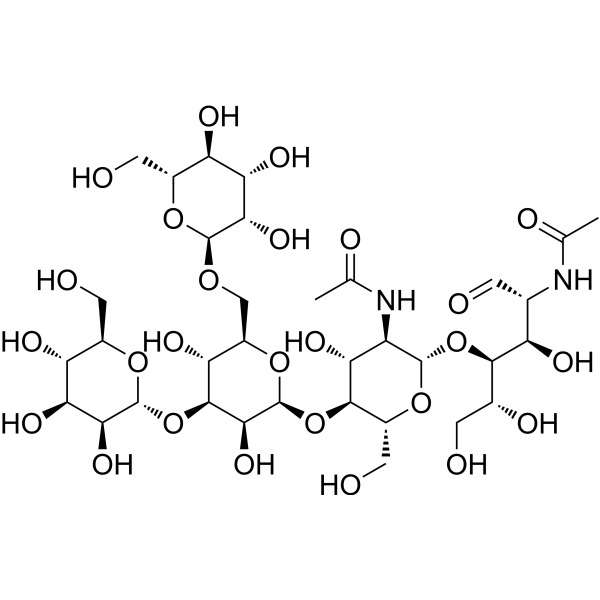
    Paucimannose is a common mannosidic N-glycoepitope that exists in invertebrates and plants. paucimannosidic glycans are expressed in cancers .
    Paucimannose
  • HY-B0528

    Adrenergic Receptor Endogenous Metabolite Neurological Disease Endocrinology
    Octopamine is a biogenic monoamine structurally related to noradrenaline, acts as a neurohormone, a neuromodulator and a neurotransmitter in invertebrates. Octopamine can stimulate alpha2-adrenoceptors (ARs) in Chinese hamster ovary cells transfected with human alpha2-ARs. Octopamine increased glycogenolysis, glycolysis, oxygen uptake, gluconeogenesis and the portal perfusion pressure .
    Octopamine
  • HY-170318

    Myosin Cancer
    Adhibin is an allosteric inhibitor for RhoGAP class IX myosin, that inhibits Myo9 ATPase in mammalian and invertebrate with IC50 of 2.5 µM and 2.6 µM. Adhibin binds to the ATPase of myosin, interfers with its motor function, blocks the RhoGTPase related signaling pathway, and affects the cell migration, adhesion and cell division. Adhibin can be used in research about cancer metastasis .
    Adhibin
  • HY-P1768

    Uru-TK I

    Bacterial Infection
    Urechistachykinin I (Uru-TK I), an invertebrate tachykinin-related peptides (TRPs) isolated from echiuroid worms, shows antimicrobial activities without a hemolytic effect .
    Urechistachykinin I
  • HY-P3710

    Calcium Channel Others
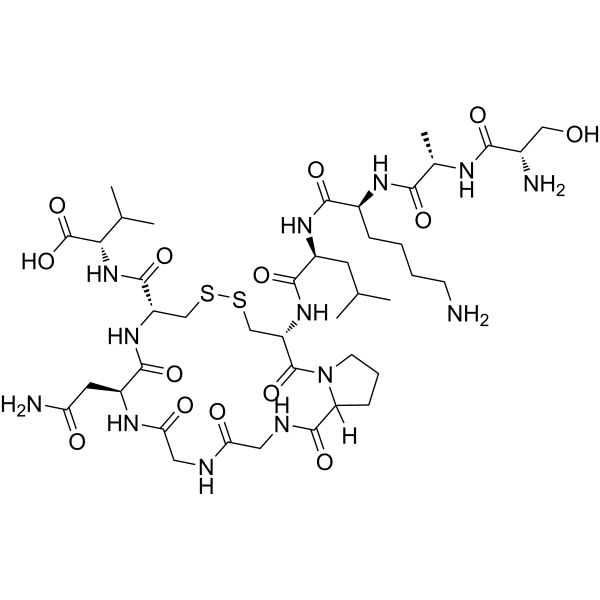
    Ser-Ala-alloresact is a sperm activating peptide (SAP). The peptides released from eggs of marine invertebrates play a central role in fertilization .
    Ser-Ala-alloresact
  • HY-P1763

    Uru-TK II

    Bacterial Infection
    Urechistachykinin II (Uru-TK II), an invertebrate tachykinin-related peptides (TRPs) isolated from echiuroid worms, shows antimicrobial activities without a hemolytic effect .
    Urechistachykinin II
  • HY-120460

    8(R)-Hydroxyeicosatetraenoic acid

    Endogenous Metabolite Inflammation/Immunology
    8(R)-HETE is biosynthesized by lipoxygenation of arachidonic acid in marine invertebrates such as gorgonian corals and starfish. Stereochemical assignment of the (R) enantiomer is based on comparison of chiral HPLC retention times to published results.
    8(R)-HETE
  • HY-161049

    Fungal Infection
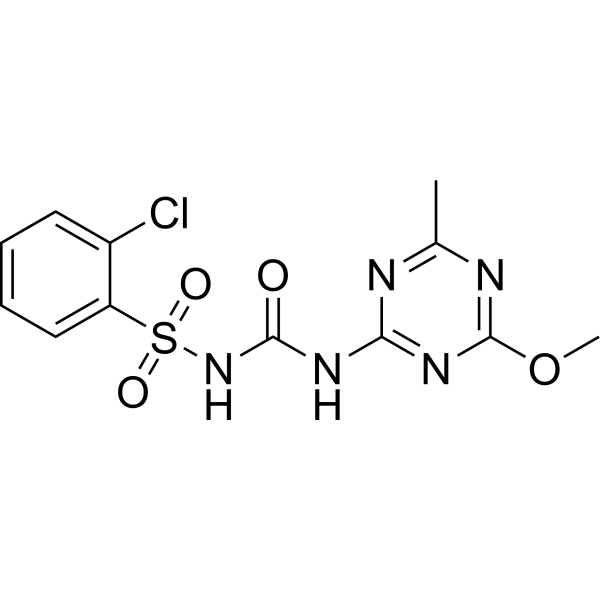
    Antifungal agent 89 (compound 28) is a antifungal agent against Cryptococcus neoformans with minimum inhibitory concentration value ranging from 0.8 to 52.17 μM .
    Antifungal agent 89
  • HY-P10595

    Sodium Channel Neurological Disease
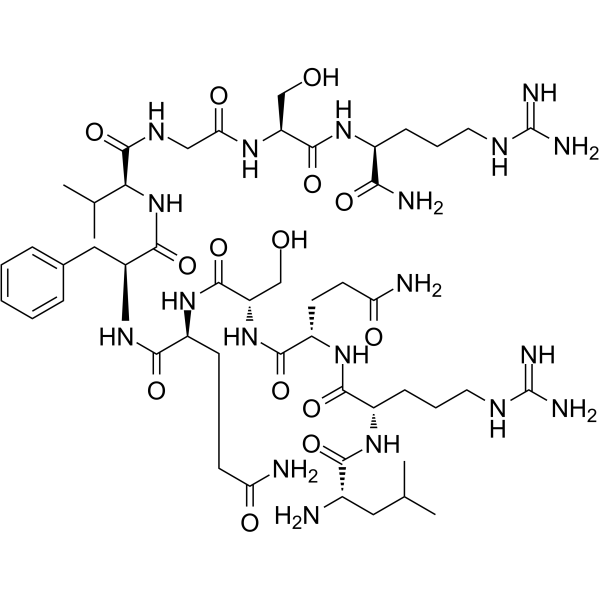
    Antho-Rwamide II is a neuropeptide that can be isolated from the sea anemone Anthopleura elegantissima. Antho-Rwamide II can induce contraction of the endothelial muscles of the sea anemone and participate in neurotransmission. Antho-Rwamide II can be used to explore the function of the nervous system in invertebrates .
    Antho-Rwamide II
  • HY-15308B

    Parasite Chloride Channel Neurological Disease
    Δ²-Avermectin B₁ₐ (Compound 3) is an antiparasitic agent targeting glutamate-gated chloride channels (GluCls) in the neuromuscular system of invertebrates. Δ²-Avermectin B₁ₐ enhances chloride ion influx, leading to hyperpolarization of the neuromuscular cell membrane, inhibition of neural signal transmission, and ultimately paralysis and death of parasites. Δ²-Avermectin B₁ₐ is promising for research of agricultural pests .
    Δ2-Avermectin B1a
  • HY-B0528AS

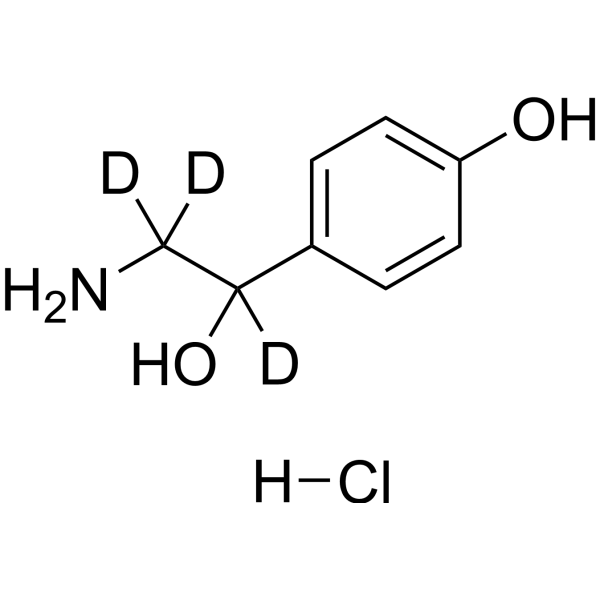
    (±)-p-Octopamine-d4 hydrochloride

    Adrenergic Receptor Endogenous Metabolite Neurological Disease Endocrinology
    Octopamine-d4 (hydrochloride) is the deuterium labeled Octopamine hydrochloride. Octopamine ((±)-p-Octopamine) hydrochloride, a biogenic monoamine structurally related to noradrenaline, acts as a neurohormone, a neuromodulator and a neurotransmitter in invertebrates. Octopamine hydrochloride can stimulate alpha2-adrenoceptors (ARs) in Chinese hamster ovary cells transfected with human alpha2-ARs. Octopamine hydrochloride increased glycogenolysis, glycolysis, oxygen uptake, gluconeogenesis and the portal perfusion pressure .
    Octopamine-d4 hydrochloride
  • HY-B0867R

    Herbicide Reference Standards Environmental Pollutants Others
    2,4-D Butyl ester (Standard) is the analytical standard of 2,4-D Butyl ester (HY-B0867). This product is intended for research and analytical applications. 2,4-D Butyl ester is a phenoxyacetic acid herbicide used to control woody broadleaf weeds. 2,4-D Butyl ester shows high toxicity to fish and aquatic invertebrates. In animals, 2,4-D Butyl ester hydrolyzes to produce n-butanol, which further induces neurobehavioral toxicity such as ataxia in rats .
    2,4-D Butyl ester (Standard)
  • HY-182731

    Biochemical Assay Reagents Others
    Brain CPE is a sphingolipid found in mammalian cells, bacteria, and invertebrates. Brain CPE is the main sphingolipid found in the cell membranes of fruit flies and houseflies.
    Brain CPE
  • HY-118720A

    U-23 TFA

    Reactive Oxygen Species (ROS) Others
    Ovothiol A TFA (U-23 TFA) is an antioxidant. Ovothiol A TFA can be isolated from the tissues of marine invertebrates, algae and fish. Ovothiol A acts synergistically with glutathione to actively scavenge ROS and free radicals, and quench the triplet state of Kynurenic acid (HY-100806), thereby inhibiting oxidative stress and photodamage. OSH is expected to serve as an excellent photoprotective agent to inhibit the harmful effects caused by solar ultraviolet radiation .
    Ovothiol A TFA
  • HY-W743773

    Parasite Infection
    γ-Cyhalothrin is an orally active, blood-brain barrier permeable Type II synthetic pyrethroid insecticide. γ-Cyhalothrin is the insecticidally active enantiomer of λ-Cyhalothrin (HY-B0836). γ-Cyhalothrin disrupts voltage-gated sodium channels, induces salivation and reduces spontaneous activity in rats. γ-Cyhalothrin exerts toxic effects on aquatic invertebrates and fish, triggers community-level effects in aquatic ecosystems, and inhibits host-seeking Ixodes scapularis nymphs in residential lawn ecotones. γ-Cyhalothrin is applicable to insecticidal-related research .
    γ-Cyhalothrin
  • HY-136897

    Endogenous Metabolite Insecticide Parasite Infection
    Avermectin A2b (Compound A2b) is an avermectin. Avermectins are produced during the fermentation of the actinomycete Streptomyces avermitilis. Avermectins possess anthelmintic and insecticidal properties, and are commonly used as insecticides for the control of pests and parasitic worms .
    Avermectin A2b

Consulta en línea

Your information is safe with us. * Required Fields.

Saludo


Country or Region *

Nombre del solicitante *


Nombre de la Organizaciòn *

Department *


Direcciòn del E-mail *


Nombre del producto *

Cat. No.


Requested quantity *

Número de teléfono *


Observaciones

Consulta en línea

Inquiry Information

Nombre del producto:
Cat. No.:
Cantidad:
MCE Japan Authorized Agent:

