
1. Search Result
Search Result
Results for "

longitudinal

" in MedChemExpress (MCE) Product Catalog:

14

Inhibitors & Agonists

6

Peptides

1

Inhibitory Antibodies

2

Natural
Products

1

Isotope-Labeled Compounds

Cat. No. Product Name Target Research Areas Chemical Structure
  • HY-P99112

    RG-6168; SA-237

    Interleukin Related Inflammation/Immunology Cancer
    Satralizumab is a humanized monoclonal antibody that targets IL-6R. Satralizumab prevents dTAA formation and progression in rattus norvegicus. Satralizumab can be used for neuromyelitis optica spectrum disorder (NMOSD) and descending thoracic aorta aneurysm (dTAA) research .
    Satralizumab
  • HY-117040
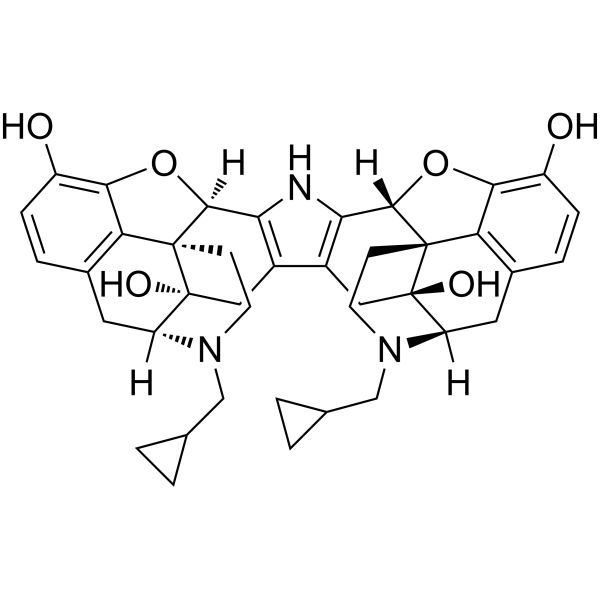
    nor-Binaltorphimine
    5+ Cited Publications

    Norbinaltorphimine; NorBNI

    Opioid Receptor Neurological Disease
    nor-Binaltorphimine (Norbinaltorphimine; NorBNI) is a selective, long-acting competitive antagonist of the κ-opioid receptor. nor-Binaltorphimine blocks κ-opioid receptor-mediated analgesic effects, and inhibits butorphanol-induced changes in κ-opioid receptor binding kinetics, desensitization and down-regulation. nor-Binaltorphimine suppresses specific opioid withdrawal symptoms, precipitates withdrawal behaviors in butorphanol-dependent rats, and serves as a molecular probe for studying κ-opioid receptor-agonist interactions. nor-Binaltorphimine is applicable to research related to neurological disorders such as pain .
    nor-Binaltorphimine
  • HY-118335

    SZL 49

    Adrenergic Receptor Cardiovascular Disease
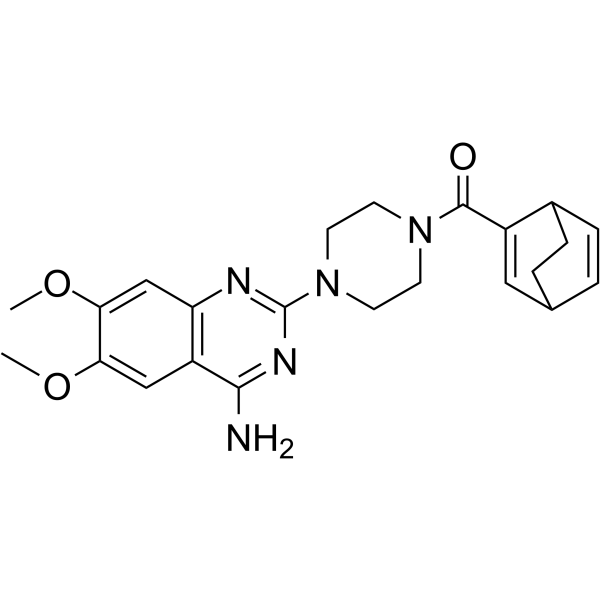
    Prazobind (SZL 49), a prazosin analog, is an irreversible α1-adrenoceptor antagonist. Prazobind competes for alpha 1-adrenoceptor binding sites with a similar potency (IC50 of 1 nM) in tissues enriched in both the alpha 1A (hippocampus) and alpha 1B (liver) subtypes. Prazobind partially inhibits the contractions of circular muscles, longitudinal muscles and smooth muscles of the spleen. Prazobind can be used for the study of blood pressure .
    Prazobind
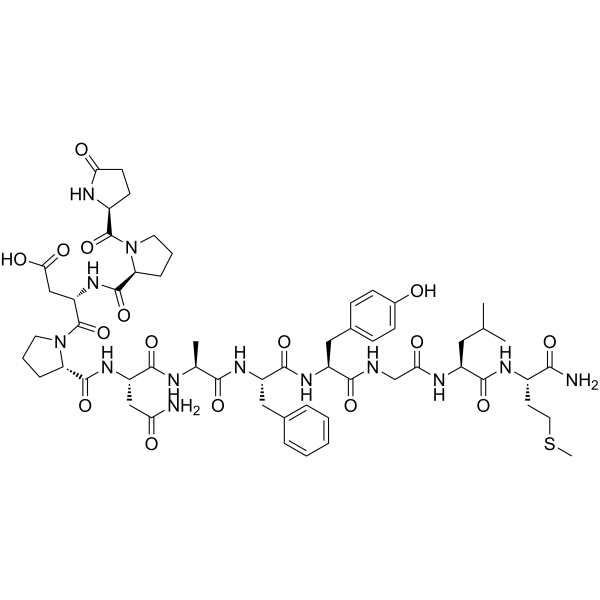
  • HY-P2793

    Neurokinin Receptor Neurological Disease
    Uperolein is a physalaemin-like endecapeptide, produced in the skin of Uperoleia rugosa and Uperoleia marmorata. Uperolein has a spasmodic effect on both the gastrointestinal tract and longitudinal muscles .
    Uperolein
  • HY-P10599

    Neurokinin Receptor Neurological Disease
    Scyliorhinin I is a tachykinin-1 (NK-1) and tachykinin-2 (NK-2) receptor agonist with a Ki value of 0.9 nM for rat submandibular gland NK-1 receptor and 2 nM for hamster bladder NK-2 receptor. Scyliorhinin I has the ability to contract the longitudinal muscles of the guinea pig ileum .
    Scyliorhinin I
  • HY-N4080

    mAChR Inflammation/Immunology
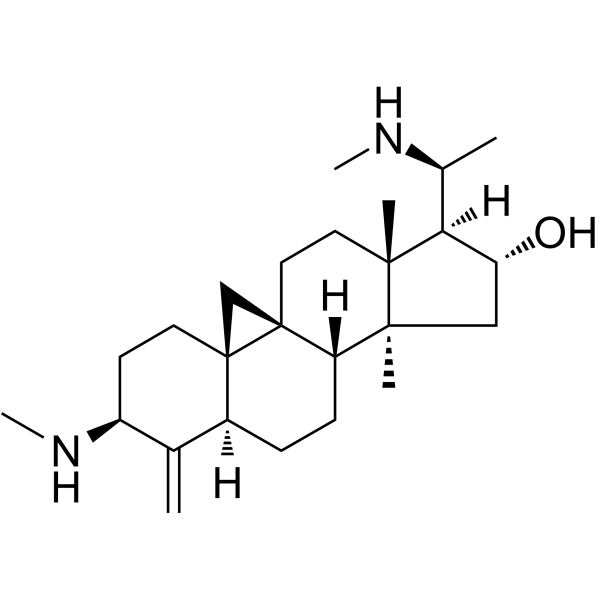
    Cyclobuxine D is a steroidal alkaloid extracted from Buxus microphylla. Cyclobuxine D has a significant bradycardic effect in the rat heart and an inhibitory action on acetylcholine and Ba ++−induced contraction of the longitudinal muscle isolated from the rabbit jejunum .
    Cyclobuxine D
  • HY-P10006

    Opioid Receptor Neurological Disease
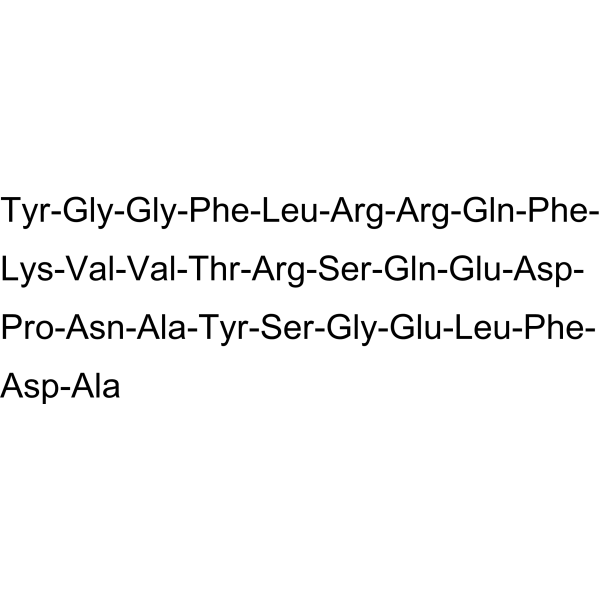
    Leumorphin, human is a potent kappa opioid receptor (κ opioid receptor) agonist. Leumorphin, human inhibits the contraction of the myenteric plexus-longitudinal muscle preparation of the guinea pig ileum .
    Leumorphin, human
  • HY-P1721

    Bradykinin Receptor Cardiovascular Disease
    NPC 17731 is a new bradykinin (BK) receptor antagonist. NPC 17731 antagonized both the contractile and relaxant responses caused by BK in longitudinal smooth muscle with IC50 of 23 and 29 nM, respectively .
    NPC 17731
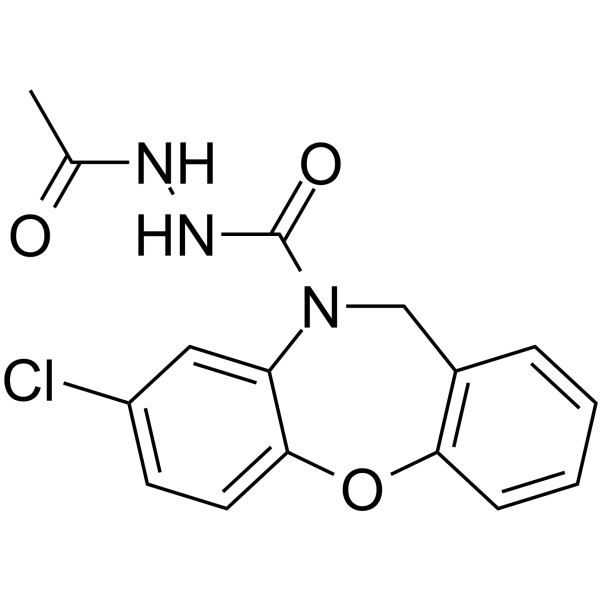
  • HY-120915

    mAChR Neurological Disease
    L 689660 maleate, a cholinomimetic agent, is a selective M1 and M3 muscarinic receptors agonist. L 689660 maleate is a potent M1 muscarinic receptor full agonist in the rat superior cervical ganglion (pEC50 of 7.3). L 689660 maleate is a potent M3 receptors agonist in the guinea-pig ileum myenteric plexus-longitudinal muscle or in trachea (pEC50 of 7.5 and 7.7, respectively) .
    L 689660 maleate
  • HY-118335S

    SZL 49-d8

    Isotope-Labeled Compounds Adrenergic Receptor Cardiovascular Disease
    Prazobind-d8 (SZL 49-d8) is the deuterium labeled Prazobind (HY-118335). Prazobind, a prazosin analog, is an irreversible α1-adrenoceptor antagonist. Prazobind competes for alpha 1-adrenoceptor binding sites with a similar potency (IC50 of 1 nM) in tissues enriched in both the alpha 1A (hippocampus) and alpha 1B (liver) subtypes. Prazobind partially inhibits the contractions of circular muscles, longitudinal muscles and smooth muscles of the spleen. Prazobind can be used for the study of blood pressure.
    Prazobind-d8
  • HY-P11770

    Microtubule/Tubulin Others
    α-Tubulin (residues 440-451) (α-Tubulin Tail) is a Microtubule growth inhibitor. α-Tubulin (residues 440-451) transiently interacts with the longitudinal polymerization interface of α-tubulin, regulating the apparent association and dissociation rates of tubulin at the microtubule growing end. α-Tubulin (residues 440-451) inhibits microtubule growth .
    α-Tubulin (residues 440–451)
  • HY-N17361

    Drug Isomer Endocrinology
    Methylgerambullone is a constitutional isomer of Methylisogerambullone. Methylgerambullone can be isolated from the methanolic leaf extract of Glycosmis angustifolia. Methylgerambullone shows the relaxatory effect on guinea-pig isolated ileum precontracted with Acetylcholine .
    Methylgerambullone
  • HY-182701

    5-HT Receptor Cardiovascular Disease Neurological Disease Inflammation/Immunology
    5-HT3 antagonist-7 (Compound 7e) is a competitive and selective 5-HT3 receptor antagonist. 5-HT3 antagonist-7 inhibits 5-HT-induced contractions in guinea pig ileum and guinea pig thoracic aorta. 5-HT3 antagonist-7 prevents 2-methyl-5-HT-induced vomiting episodes in ferrets .
    5-HT3 antagonist-7
  • HY-W783351

    Coppersensor 790 acetoxymethyl ester

    Fluorescent Dye Metabolic Disease
    CS790AM (Coppersensor 790 acetoxymethyl ester) is a cell-permeable, Cu +-targeted near-infrared fluorescent probe (λabs=760 nm, λem=790 nm) applicable to live cells. CS790AM can cross lipophilic cell membranes, and is converted into negatively charged CS790 under the action of intracellular esterases to be retained, thus enabling highly sensitive, reversible "turn-on" detection of labile Cu + pools in live cells and mice. CS790AM possesses excellent biocompatibility and selectivity, avoids interference from other metal ions, shows no obvious toxicity, and can be rapidly cleared. CS790AM allows long-term longitudinal monitoring of individual mice, visualizes copper levels in internal organs and isolated livers, and effectively evaluates abnormal copper accumulation in Wilson's disease models (Atp7b -/-) as well as dynamic changes after chelator treatment. CS790AM can be used for research on Wilson's disease and related copper metabolic disorders .
    CS790AM

Inquiry Online

Your information is safe with us. * Required Fields.

Salutation


Country or Region *

Applicant Name *


Organization Name *

Department *


Email Address *


Product Name *

Cat. No.


Requested quantity *

Phone Number *


Remarks

Inquiry Online

Inquiry Information

Product Name:
Cat. No.:
Quantity:
MCE Japan Authorized Agent:

