
Search Result
Results for "
luminescence
" in MedChemExpress (MCE) Product Catalog:
1
Biochemical Assay Reagents
| Cat. No. |
Product Name |
Target |
Research Areas |
Chemical Structure |
-
- HY-111653
-
CycLuc1
2 Publications Verification
|
Reactive Oxygen Species (ROS)
|
Others
|
|
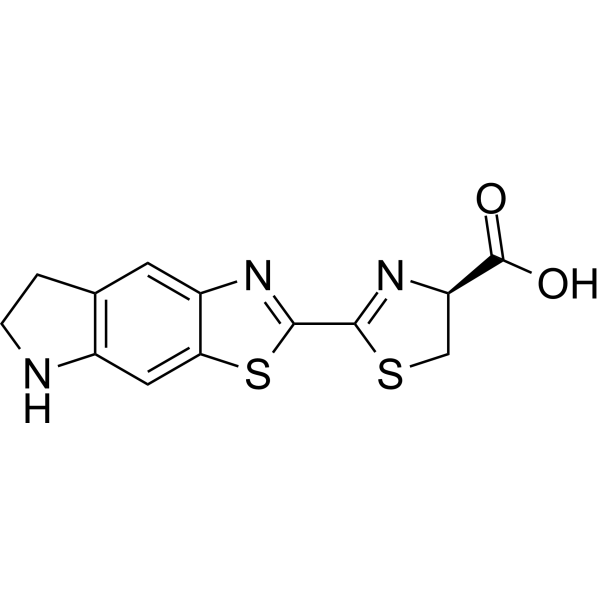
CycLuc1 is a blood-brain barrier permeable luciferase substrate that displays near-infrared (NIR) emission with a peak luminescence wavelength of 599 nm. CycLuc1 can be used for in vivo bioluminescence imaging .
|
-
-
- HY-P1004
-
|
|
Biochemical Assay Reagents
|
Cancer
|
|
Luciferase (bacterial) catalyzes the oxidation of a long-chain aldehyde and reduced flavin mononucleotide. Luciferase (bacterial) protection against oxidative stress for bacterial luminescence .
|
-
-
- HY-W007599
-
|
|
Drug Derivative
|
Cancer
|
|
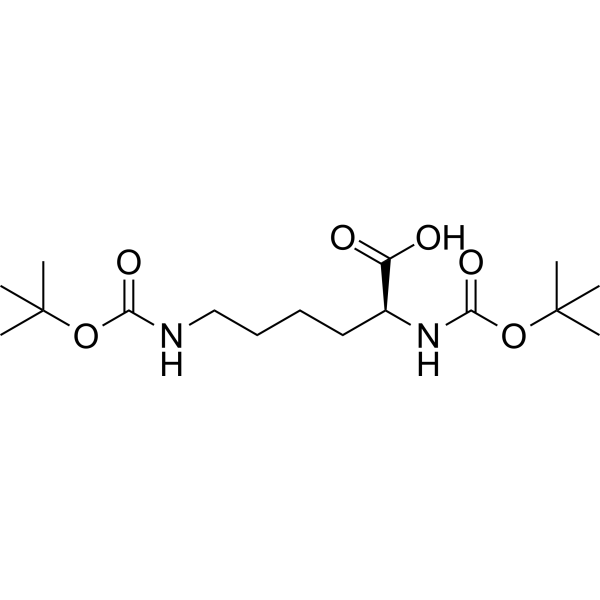
(S)-2,6-Bis((tert-butoxycarbonyl)amino)hexanoic acid is a polypeptide derivative, can be used to synthesis multifunctional amphiphilic peptide dendrimer for non-viral gene delivery in cancer research. (S)-2,6-Bis((tert-butoxycarbonyl)amino)hexanoic acid can be used in the preparation of organic substances that enhance the luminescence intensity of alkaline phosphatase substrates .
|
-
-
- HY-W007596
-
|
Ir(ppy)3; Tris[2-(pyridin-2-yl)phenyl]iridium
|
Biochemical Assay Reagents
|
Others
|
|
Tris(2-phenylpyridinato-C2,N)iridium(III) (Ir(ppy)3) is an iridium(III) containing organometallic complex, which is used as a phosphorescent light-emitting material. Tris(2-phenylpyridinato-C2,N)iridium(III) exhibits high luminous efficiency and good thermal stability, that can be used in organic optoelectronics, especially in improving the luminescence efficiency and stability of organic light-emitting diodes (OLEDs) .
|
-
-
- HY-W800705
-
|
|
Fluorescent Dye
|
Others
|
|
Tamra azide is an azide-terminated fluorescent dye and click reaction partner. Tamra azide undergoes Cu I-catalyzed cycloaddition click reaction with alkyne-functionalized nanodiamonds. After conjugation with nanodiamonds, Tamra azide serves as a fluorescent label that can be excited at a specific wavelength to exhibit characteristic luminescence (Ex/Em=555/580 nm) .
|
-
-
- HY-D2769
-
|
Difluorocarboxyfluorescein azide, 6-isomer
|
Fluorescent Dye
|
Others
|
|
Oregon green 488 azide (Difluorocarboxyfluorescein azide, 6-isomer) is a bright green fluorescent azide-activated probe that reacts with terminal alkynes via copper-catalyzed azide-alkyne cycloaddition (CuAAC). Oregon green 488 azide can label goat anti-mouse IgG and exhibits excellent luminescence efficiency. Oregon green 488 azide, as a streptavidin conjugate, is used for flow cytometry staining of macrophages .
|
-
-
- HY-135368
-
8pyDTZ
3 Publications Verification
|
Fluorescent Dye
|
Others
|
|
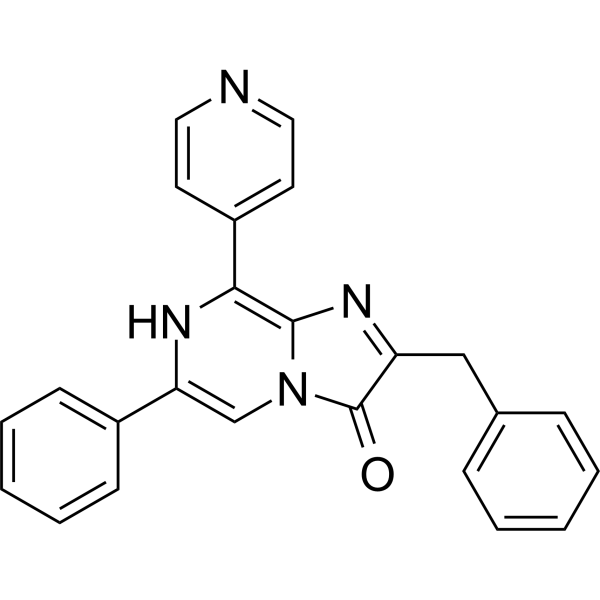
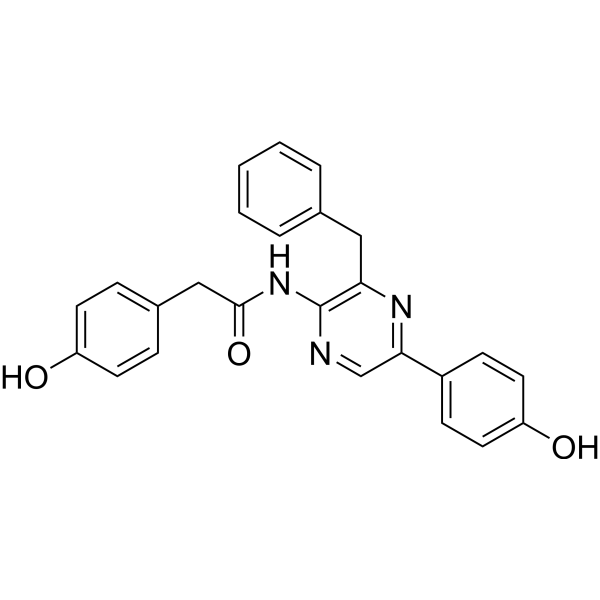
8pyDTZ is a pyridyl diphenylterazine (DTZ) analog and an ATP-independent pyridyl substrate of LumiLuc luciferase. 8pyDTZ exhibits spectrally shifted emission. 8pyDTZ has excellent biocompatibility and superior in vivo sensitivity. 8pyDTZ can be used for in vivo luminescence imaging .
|
-
-
- HY-P11335A
-
|
|
Ser/Thr Protease
Bacterial
|
Others
|
|
Oscillamide Y TFA is the trifluoroacetate salt of Oscillamide Y (HY-P11335). Oscillamide Y (Compound 1), a ureido-containing cyclic peptide, is a Chymotrypsin inhibitor. Oscillamide Y can be isolated from freshwater toxic cyanobacterium Oscillatoria agardhii. Oscillamide Y has potent toxicity against fish, daphnid magna and algae with a stimulatory effect for Raphidocelis subcapitata (EC50: 4.62 mg/L). Oscillamide Y induces high luminescence inhibition in Aliivibrio fischeri. Oscillamide Y can be used for ecological development research .
|
-
-
- HY-W020086
-
|
2,3-Phenazinediamine; NNC39-0028
|
DNA Alkylator/Crosslinker
Fluorescent Dye
|
Metabolic Disease
|
|
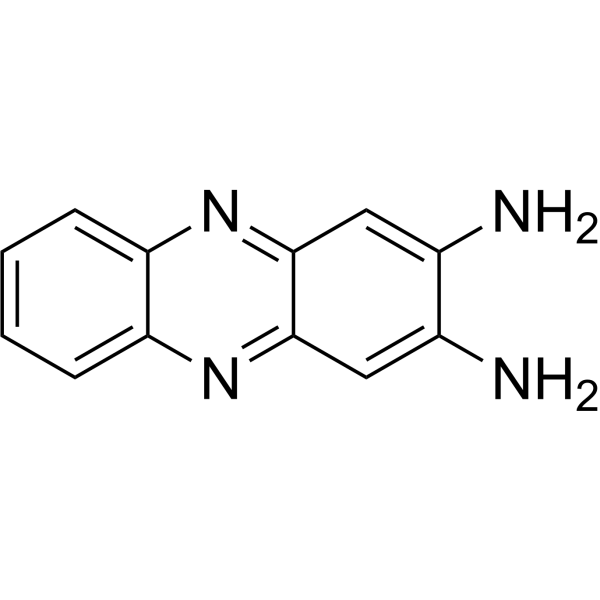
2,3-Diaminophenazine (2,3-Phenazinediamine) is an orally active amino derivative of phenazine. 2,3-Diaminophenazine can intercalate into DNA. 2,3-Diaminophenazine triggers photochemical reactions. 2,3-Diaminophenazine inhibits vascular hypertrophy and tissue AGE deposition in diabetic rats. 2,3-Diaminophenazine can be used for luminescence and diabetes research .
|
-
-
- HY-W002000
-
|
|
Drug Intermediate
|
Others
|
|
Pyridine-3,5-dicarboxylic acid is a drug intermediate that can be used to construct new metal-organic framework materials .
|
-
-
- HY-145385
-
|
|
Fluorescent Dye
|
Others
|
|
Coelenteramide is a oxidative product of Coelenterazine (HY-18743). Coelenteramide can form a complex with apoAequorin/Ca 2+, which is known as blue fluorescent protein (BFP) and shows continuous weak luminescence with Coelenterazine like a luciferase. Coelenteramide can be used as an imaging agent .
|
-
-
- HY-P0020A
-
|
tos-GPR-ANBA-IPA acetate
|
Biochemical Assay Reagents
|
Others
|
|
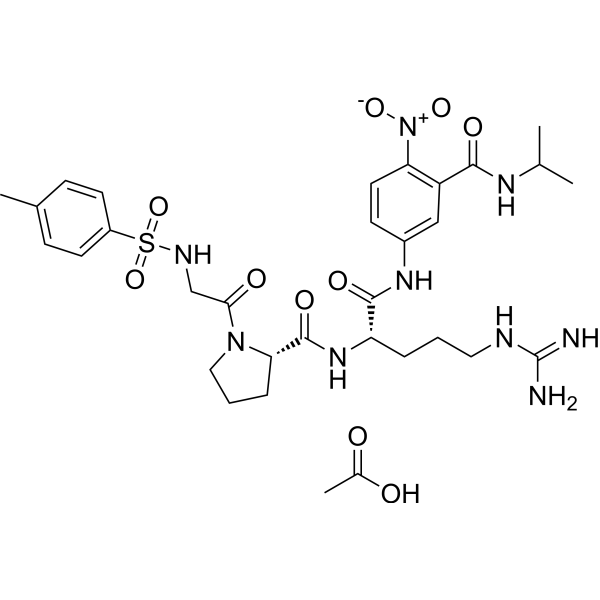
Tos-Gly-Pro-Arg-ANBA-IPA (tos-GPR-ANBA-IPA) acetate is a chromogenic peptide substrate. Tos-Gly-Pro-Arg-ANBA-IPA acetate can be used for luminescence measurement .
|
-
-
- HY-W004617
-
|
4,4',4''-(1,3,5-Triazine-2,4,6-triyl)tribenzoic acid
|
MOFs
|
Others
|
|
2,4,6-Tris(4-carboxyphenyl)-1,3,5-triazine (4,4',4''-(1,3,5-Triazine-2,4,6-triyl) tribenzoic acid) is a metal-organic framework. 2,4,6-Tris(4-carboxyphenyl)-1,3,5-triazine is a C3-symmetric organic ligand with temperature-sensitive ratioluminescent properties. Complexes derived from 2,4,6-Tris(4-carboxyphenyl)-1,3,5-triazine exhibit strong emissivity and can be used for highly sensitive ratiometric fluorescent temperature sensing .
|
-
-
- HY-P11335
-
|
|
Ser/Thr Protease
Bacterial
|
Others
|
|
Oscillamide Y (Compound 1), a ureido-containing cyclic peptide, is a Chymotrypsin inhibitor. Oscillamide Y can be isolated from freshwater toxic cyanobacterium Oscillatoria agardhii. Oscillamide Y has potent toxicity against fish, daphnid magna and algae with a stimulatory effect for Raphidocelis subcapitata (EC50: 4.62 mg/L). Oscillamide Y induces high luminescence inhibition in Aliivibrio fischeri. Oscillamide Y can be used for ecological development research .
|
-
-
- HY-W112090
-
|
PdTFPP; 5,10,15,20-Tetrakis(pentafluorophenyl)-21H,23H-porphine palladium(II)
|
Fluorescent Dye
|
Others
|
|
Palladium meso-tetra(pentafluorophenyl)porphyrin (PdTFPP) derives from palladium(II), acting as a fluorescence-quenched optical probe and high-performance oxygen concentration sensor with outstanding photostability and antioxidant capacity. Palladium meso-tetra(pentafluorophenyl)porphyrin exhibits reduced luminescence intensity as dissolved oxygen concentration rises. Palladium meso-tetra(pentafluorophenyl)porphyrin can be applied for real-time monitoring of live-cell respiration, hypoxic tissue imaging, and nanofibrous organic semiconductors in photodetectors for ambient oxygen detection .
|
-
-
- HY-P0020
-
|
tos-GPR-ANBA-IPA
|
Biochemical Assay Reagents
|
Others
|
|
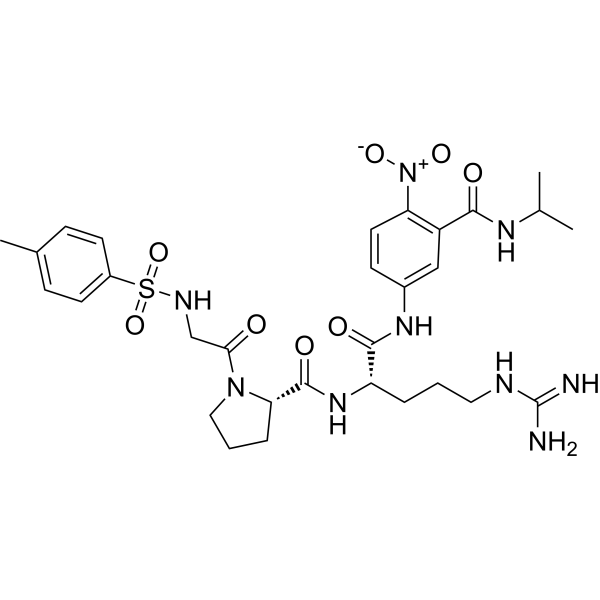
Tos-Gly-Pro-Arg-ANBA-IPA is a chromogenic peptide substrate. Tos-Gly-Pro-Arg-ANBA-IPA can be used for luminescence measurement .
|
-
-
- HY-D2987
-
|
|
Fluorescent Dye
Bacterial
|
Others
|
|
BacGO is a highly selective, wash free fluorescent probe for Gram positive bacteria. BacGO binds to the carbohydrate structure in peptidoglycan through boric acid and exhibits depolymerization induced luminescence (DIE) properties. BacGO can be used for imaging complex environmental samples (such as activated sludge) and flat plate bacteria without affecting bacterial activity .
|
-
-
- HY-P10674
-
|
|
Biochemical Assay Reagents
|
Neurological Disease
|
|
QMT-CBT is a near-infrared aggregation-induced luminescent photon. After activation of caspase1 (Cas1), QMT-CBT undergoes a CBT-Cys click reaction to form a cyclic dimer QMT-Dimer (the first aggregate) and assembles into nanoparticles (the second aggregate), turning the AIE signal "on" to enhance imaging of Alzheimer's disease (AD) .
|
-
-
- HY-176913
-
|
|
Fluorescent Dye
|
Others
|
|
TA is an anthracene derivative with ultrasound-activated luminescence properties. TA can be activated by ultrasound and emit fluorescence. TA is generally not used directly but can be used to construct TA-NP nanoparticles. The ultrasound-activated luminescence of TA-NPs is mainly concentrated in the wavelength range of 600~650 nm, exhibiting good penetration ability into biological tissues, making it suitable for in vivo imaging .
|
-
-
- HY-180958
-
|
|
PROTACs
|
Others
|
|
Chlorohexane-PEG-clozapine is a HaloTag PROTAC degrader based on Clozapine (HY-14539). Chlorohexane-PEG-clozapine leads to a significant decrease in the luminescence intensity and protein level of Halo-Eluc .
|
-
-
- HY-P11743
-
|
|
Biochemical Assay Reagents
Reactive Oxygen Species (ROS)
|
Metabolic Disease
|
|
Mitochondrial penetrating peptide is a peptide sequence (FrFKFrFK-CONH2) that selectively transports cargo into mitochondria. Mitochondrial penetrating peptide possesses special physicochemical properties, enabling it to selectively translocate dinuclear Ru (II) polypyridine complexes into mitochondria of living mammalian cells without the aid of solvents or membrane permeabilization treatments, thus achieving precise mitochondrial localization and enrichment of the complexes while excluding their distribution in the nucleus. Mitochondrial penetrating peptide enables dynamic monitoring of mitochondrial oxygen concentration and ROS production in living mammalian cells via changes in the luminescence lifetime of the coupled Ru (II) complex .
|
-
| Cat. No. |
Product Name |
Type |
-
- HY-111653
-
CycLuc1
2 Publications Verification
|
Fluorescent Dyes
|
|
CycLuc1 is a blood-brain barrier permeable luciferase substrate that displays near-infrared (NIR) emission with a peak luminescence wavelength of 599 nm. CycLuc1 can be used for in vivo bioluminescence imaging .
|
-
- HY-P1004
-
|
|
Fluorescent Dyes
|
|
Luciferase (bacterial) catalyzes the oxidation of a long-chain aldehyde and reduced flavin mononucleotide. Luciferase (bacterial) protection against oxidative stress for bacterial luminescence .
|
-
- HY-D2769
-
|
Difluorocarboxyfluorescein azide, 6-isomer
|
Fluorescent Dyes
|
|
Oregon green 488 azide (Difluorocarboxyfluorescein azide, 6-isomer) is a bright green fluorescent azide-activated probe that reacts with terminal alkynes via copper-catalyzed azide-alkyne cycloaddition (CuAAC). Oregon green 488 azide can label goat anti-mouse IgG and exhibits excellent luminescence efficiency. Oregon green 488 azide, as a streptavidin conjugate, is used for flow cytometry staining of macrophages .
|
-
- HY-145385
-
|
|
Fluorescent Dyes
|
|
Coelenteramide is a oxidative product of Coelenterazine (HY-18743). Coelenteramide can form a complex with apoAequorin/Ca 2+, which is known as blue fluorescent protein (BFP) and shows continuous weak luminescence with Coelenterazine like a luciferase. Coelenteramide can be used as an imaging agent .
|
-
- HY-D2987
-
|
|
Fluorescent Dyes
|
|
BacGO is a highly selective, wash free fluorescent probe for Gram positive bacteria. BacGO binds to the carbohydrate structure in peptidoglycan through boric acid and exhibits depolymerization induced luminescence (DIE) properties. BacGO can be used for imaging complex environmental samples (such as activated sludge) and flat plate bacteria without affecting bacterial activity .
|
| Cat. No. |
Product Name |
Type |
| Cat. No. |
Product Name |
Target |
Research Area |
-
- HY-W007599
-
|
|
Drug Derivative
|
Cancer
|
|
(S)-2,6-Bis((tert-butoxycarbonyl)amino)hexanoic acid is a polypeptide derivative, can be used to synthesis multifunctional amphiphilic peptide dendrimer for non-viral gene delivery in cancer research. (S)-2,6-Bis((tert-butoxycarbonyl)amino)hexanoic acid can be used in the preparation of organic substances that enhance the luminescence intensity of alkaline phosphatase substrates .
|
-
- HY-P11335A
-
|
|
Ser/Thr Protease
Bacterial
|
Others
|
|
Oscillamide Y TFA is the trifluoroacetate salt of Oscillamide Y (HY-P11335). Oscillamide Y (Compound 1), a ureido-containing cyclic peptide, is a Chymotrypsin inhibitor. Oscillamide Y can be isolated from freshwater toxic cyanobacterium Oscillatoria agardhii. Oscillamide Y has potent toxicity against fish, daphnid magna and algae with a stimulatory effect for Raphidocelis subcapitata (EC50: 4.62 mg/L). Oscillamide Y induces high luminescence inhibition in Aliivibrio fischeri. Oscillamide Y can be used for ecological development research .
|
-
- HY-P0020A
-
|
tos-GPR-ANBA-IPA acetate
|
Biochemical Assay Reagents
|
Others
|
|
Tos-Gly-Pro-Arg-ANBA-IPA (tos-GPR-ANBA-IPA) acetate is a chromogenic peptide substrate. Tos-Gly-Pro-Arg-ANBA-IPA acetate can be used for luminescence measurement .
|
-
- HY-P11335
-
|
|
Ser/Thr Protease
Bacterial
|
Others
|
|
Oscillamide Y (Compound 1), a ureido-containing cyclic peptide, is a Chymotrypsin inhibitor. Oscillamide Y can be isolated from freshwater toxic cyanobacterium Oscillatoria agardhii. Oscillamide Y has potent toxicity against fish, daphnid magna and algae with a stimulatory effect for Raphidocelis subcapitata (EC50: 4.62 mg/L). Oscillamide Y induces high luminescence inhibition in Aliivibrio fischeri. Oscillamide Y can be used for ecological development research .
|
-
- HY-P0020
-
|
tos-GPR-ANBA-IPA
|
Biochemical Assay Reagents
|
Others
|
|
Tos-Gly-Pro-Arg-ANBA-IPA is a chromogenic peptide substrate. Tos-Gly-Pro-Arg-ANBA-IPA can be used for luminescence measurement .
|
-
- HY-P10674
-
|
|
Biochemical Assay Reagents
|
Neurological Disease
|
|
QMT-CBT is a near-infrared aggregation-induced luminescent photon. After activation of caspase1 (Cas1), QMT-CBT undergoes a CBT-Cys click reaction to form a cyclic dimer QMT-Dimer (the first aggregate) and assembles into nanoparticles (the second aggregate), turning the AIE signal "on" to enhance imaging of Alzheimer's disease (AD) .
|
-
- HY-P11743
-
|
|
Biochemical Assay Reagents
Reactive Oxygen Species (ROS)
|
Metabolic Disease
|
|
Mitochondrial penetrating peptide is a peptide sequence (FrFKFrFK-CONH2) that selectively transports cargo into mitochondria. Mitochondrial penetrating peptide possesses special physicochemical properties, enabling it to selectively translocate dinuclear Ru (II) polypyridine complexes into mitochondria of living mammalian cells without the aid of solvents or membrane permeabilization treatments, thus achieving precise mitochondrial localization and enrichment of the complexes while excluding their distribution in the nucleus. Mitochondrial penetrating peptide enables dynamic monitoring of mitochondrial oxygen concentration and ROS production in living mammalian cells via changes in the luminescence lifetime of the coupled Ru (II) complex .
|
-
- HY-K0551
-
1 Publications Verification
|
|
MCE Mycoplasma Detection Kit (Luminescence) utilizes chemiluminescence technology to detect the activity of specific enzymes in the sample, determining the presence of mycoplasma contamination.
|
-
- HY-K2111
-
1 Publications Verification
|
|
MCE HOLO Mouse Interferon-γ (IFN-γ) Detection Kit is a homogeneous luminescence-based assay used for the quantitative detection of mouse IFN-γ concentrations in biological samples such as buffer solutions, cell culture supernatants, or serum.
|
-
- HY-K2110
-
|
|
|
MCE HOLO Human Interferon-γ (IFN-γ) Detection Kit is a homogeneous luminescence-based assay used for the quantitative detection of human IFN-γ concentrations in biological samples such as buffer solutions, cell culture supernatants, or serum.
|
-
- HY-K2114
-
|
|
|
MCE HOLO Mouse Tumor Necrosis Factor-α (TNF-α) Detection Kit is a homogeneous luminescence-based assay used for the quantitative detection of mouse TNF-α concentrations in biological samples such as buffer solutions, cell culture supernatants, or serum.
|
-
- HY-K2112
-
|
|
|
MCE HOLO Human Tumor Necrosis Factor-α (TNF-α) Detection Kit is a homogeneous luminescence-based assay used for the quantitative detection of human TNF-α concentrations in biological samples such as buffer solutions, cell culture supernatants, or serum.
|
-
- HY-K2113
-
|
|
|
MCE HOLO Human Tumor Necrosis Factor-β (TNF-β) Detection Kit is a homogeneous luminescence-based assay used for the quantitative detection of human TNF-β concentrations in biological samples such as buffer solutions, cell culture supernatants, or serum.
|
-
- HY-K2101
-
|
|
|
MCE HOLO Human Interleukin-2 (IL-2) Detection Kit is a homogeneous luminescence-based assay used for the quantitative detection of human IL-2 concentrations in biological samples such as buffer solutions, cell culture supernatants, or serum.
|
-
- HY-K2103
-
|
|
|
MCE HOLO Human Interleukin-6 (IL-6) Detection Kit is a homogeneous luminescence-based assay used for the quantitative detection of human IL-6 concentrations in biological samples such as buffer solutions, cell culture supernatants, or serum.
|
-
- HY-K2104
-
|
|
|
MCE HOLO Human Interleukin-8 (IL-8) Detection Kit is a homogeneous luminescence-based assay used for the quantitative detection of human IL-8 concentrations in biological samples such as buffer solutions, cell culture supernatants, or serum.
|
-
- HY-K2105
-
|
|
|
MCE HOLO Human Interleukin-10 (IL-10) Detection Kit is a homogeneous luminescence-based assay used for the quantitative detection of human IL-10 concentrations in biological samples such as buffer solutions, cell culture supernatants, or serum.
|
-
- HY-K2117
-
|
|
|
MCE HOLO Mouse Interleukin-6 (IL-6) Detection Kit is a homogeneous luminescence-based assay used for the quantitative detection of Mouse IL-6 concentrations in biological samples such as buffer solutions, cell culture supernatants, or serum.
|
-
- HY-K2102
-
|
|
|
MCE HOLO Human Interleukin-5 (IL-5) Detection Kit is a homogeneous luminescence-based assay used for the quantitative detection of human IL-5 concentrations in biological samples such as buffer solutions, cell culture supernatants, or serum.
|
-
- HY-K2109
-
|
|
|
MCE HOLO Human Interleukin-22 (IL-22) Detection Kit is a homogeneous luminescence-based assay used for the quantitative detection of human IL-22 concentrations in biological samples such as buffer solutions, cell culture supernatants, or serum.
|
-
- HY-K2118
-
|
|
|
MCE HOLO Mouse Interleukin-2 (IL-2) Detection Kit is a homogeneous luminescence-based assay used for the quantitative detection of Mouse IL-2 concentrations in biological samples such as buffer solutions, cell culture supernatants, or serum.
|
-
- HY-K2107
-
|
|
|
MCE HOLO Human Interleukin-17A (IL-17A) Detection Kit is a homogeneous luminescence-based assay used for the quantitative detection of human IL-17A concentrations in biological samples such as buffer solutions, cell culture supernatants, or serum.
|
-
- HY-K2115
-
|
|
|
MCE HOLO Human Interleukin-2 Receptor (IL-2R) Detection Kit is a homogeneous luminescence-based assay used for the quantitative detection of human IL-2R concentrations in biological samples such as buffer solutions, cell culture supernatants, or serum.
|
-
- HY-K2116
-
|
|
|
MCE HOLO Human Interleukin-1β (IL-1β) Detection Kit is a homogeneous luminescence-based assay used for the quantitative detection of human IL-1β concentrations in biological samples such as buffer solutions, cell culture supernatants, or serum.
|
-
- HY-K2108
-
|
|
|
MCE HOLO Human Interleukin-17F (IL-17F) Detection Kit is a homogeneous luminescence-based assay used for the quantitative detection of human IL-17F concentrations in biological samples such as buffer solutions, cell culture supernatants, or serum.
|
-
- HY-K2106
-
|
|
|
MCE HOLO Human Interleukin-12p70 (IL-12p70) Detection Kit is a homogeneous luminescence-based assay used for the quantitative detection of human IL-12p70 concentrations in biological samples such as buffer solutions, cell culture supernatants, or serum.
|
| Cat. No. |
Product Name |
Category |
Target |
Chemical Structure |
| Cat. No. |
Product Name |
|
Classification |
-
- HY-D2769
-
|
Difluorocarboxyfluorescein azide, 6-isomer
|
|
Azide
|
|
Oregon green 488 azide (Difluorocarboxyfluorescein azide, 6-isomer) is a bright green fluorescent azide-activated probe that reacts with terminal alkynes via copper-catalyzed azide-alkyne cycloaddition (CuAAC). Oregon green 488 azide can label goat anti-mouse IgG and exhibits excellent luminescence efficiency. Oregon green 488 azide, as a streptavidin conjugate, is used for flow cytometry staining of macrophages .
|
| Cat. No. |
Product Name |
|
Classification |
-
- HY-180958
-
|
|
|
Pegylated Lipids
|
|
Chlorohexane-PEG-clozapine is a HaloTag PROTAC degrader based on Clozapine (HY-14539). Chlorohexane-PEG-clozapine leads to a significant decrease in the luminescence intensity and protein level of Halo-Eluc .
|
Your information is safe with us. * Required Fields.
Inquiry Information
- Product Name:
- Cat. No.:
- Quantity:
- MCE Japan Authorized Agent:

