1. Search Result
Search Result
Results for "

lysosomes probe

" in MedChemExpress (MCE) Product Catalog:

22

Inhibitors & Agonists

17

Fluorescent Dyes

1

MCE Kits

1

Natural
Products

Cat. No. Product Name Target Research Areas Chemical Structure
  • HY-D1300
    LysoTracker Red
    Maximum Cited Publications
    15 Publications Verification

    LysoTracker Red DND-99

    Biochemical Assay Reagents Fluorescent Dye Others
    LysoTracker Red is a Red fluorescently labeled lysosomal probe with a maximum excitation/emission wavelength of 577/590 nm. The structure is composed of a fluorescein group and linked weak bases, which can freely cross the cell membrane and gather on spherical organelles. It is suitable for observing the internal biosynthesis and related pathogenesis of lysosomes .
    LysoTracker Red
  • HY-DY1040

    Fluorescent Dye Biochemical Assay Reagents Others
    LysoTracker Red (solution) is a Red fluorescently labeled lysosomal probe with a maximum excitation/emission wavelength of 577/590 nm. The structure is composed of a fluorescein group and linked weak bases, which can freely cross the cell membrane and gather on spherical organelles. It is suitable for observing the internal biosynthesis and related pathogenesis of lysosomes .
    Solvent and concentration: DMSO: 1 mM
    LysoTracker Red (solution)
  • HY-D1296
    Green DND-26
    2 Publications Verification

    Fluorescent Dye Others
    Green DND-26 is a green fluorescently labeled lysosomal probe with a maximum excitation/emission wavelength of 504/511 nm. The structure is composed of a fluorescein group and linked weak bases, which can freely cross the cell membrane and generally gather on spherical organelles. Green DND-26 is suitable for observing the internal biosynthesis and related pathogenesis of lysosomes .
    Green DND-26
  • HY-D2119
    CQ-Lyso
    2 Publications Verification

    Fluorescent Dye Cancer
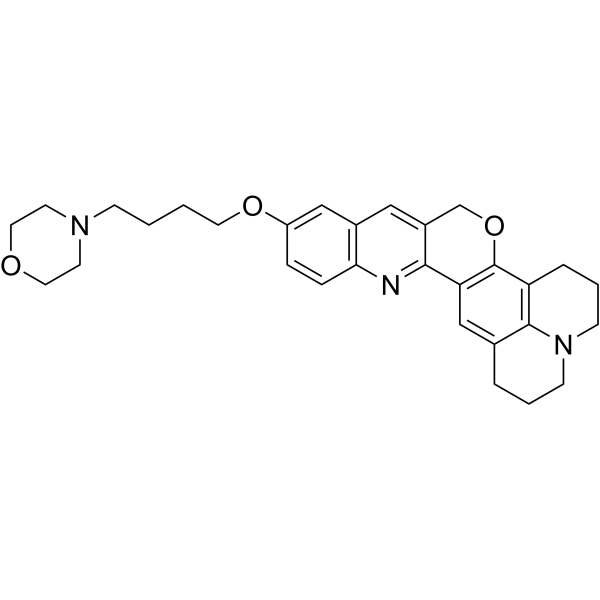
    CQ-Lyso is a lysosome-targeting chromenoquinoline. CQ-Lyso is a fluorescent probe for measuring the pH of lysosomes in living cells using only single wavelength excitation. CQ-Lyso can visualize the dynamic pH changes in lysosomes .
    CQ-Lyso
  • HY-157036

    Fluorescent Dye Others
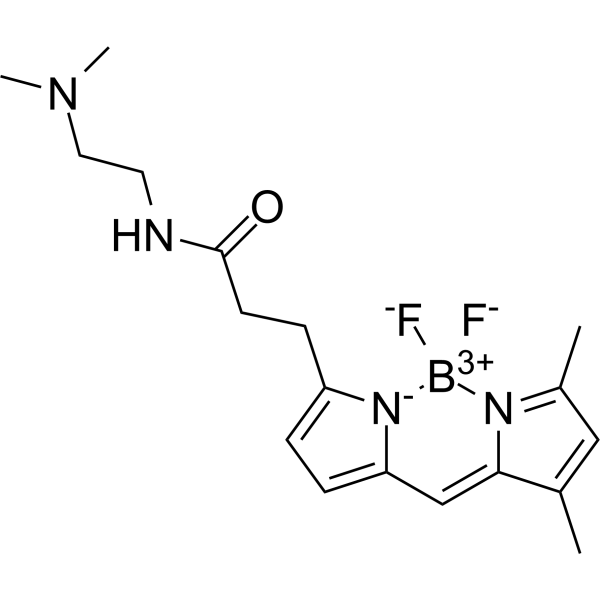
    INSA is a a pH-sensitive fluorescent probe. INSA can simultaneously light up mitochondria (red emission) and lysosomes (green emission) for their internal pH differences .
    INSA
  • HY-130783

    Fluorescent Dye Others
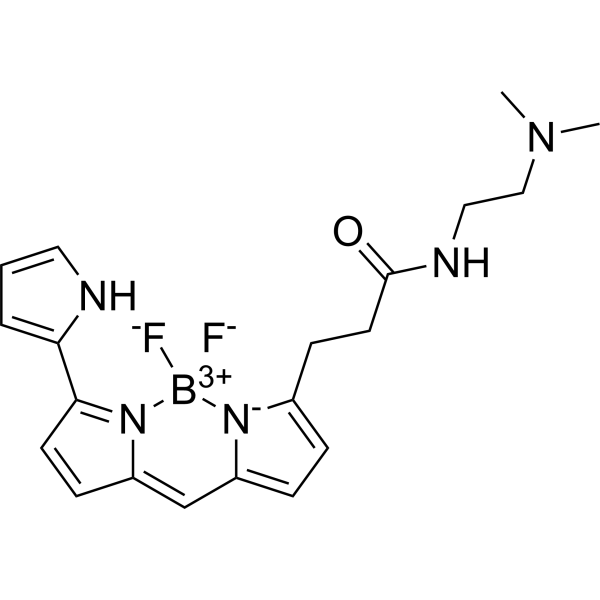
    LysoFP-NO2 is a turn-on fluorescent probe for carbon monoxide (CO) that localizes to the lysosome. In the presence of lysosomal CO, lysoFP-NO2 is transformed into lysoFP-NH2, which is highly fluorescent. LysoFP-NO2 is selective for CO over various reactive nitrogen, oxygen, and sulfur species. It displays excitation/emission maxima of 440/528 nm, respectively, and is not cytotoxic to HepG2 cells for up to five hours when used at a concentration of 30 μM.
    LysoFP-NO2
  • HY-D2321

    Fluorescent Dye Others
    Lyso Flipper-TR 29 is a Flipper probe that can label lysosomes. Lyso Flipper-TR 29 enters lysosomes and late endosomes by transient deprotonation to cross their membranes in neutral form .
    Lyso Flipper-TR 29
  • HY-172333

    Fluorescent Dye Others
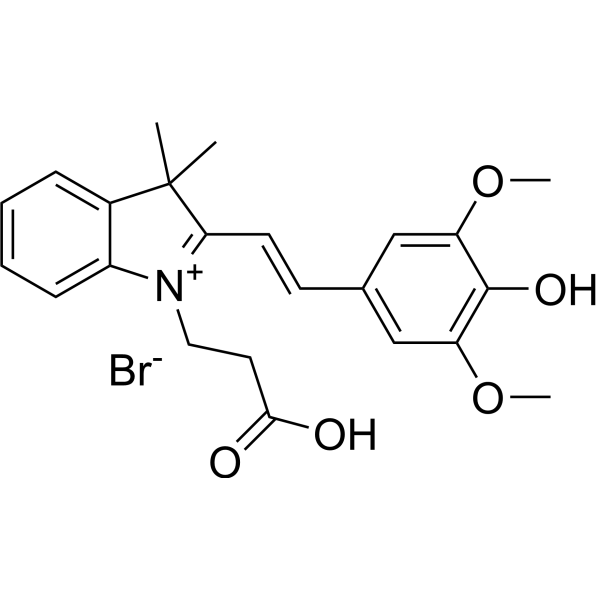
    HCy-Lyso is a lysosome-targeting turn-on fluorescent probe based on hydrocyanine. HCy-Lyso integrates a hydrocyanine moiety for selective recognition of hydroxyl radicals (•OH) and a morpholine group for lysosome targeting. Upon reacting with •OH, HCy-Lyso undergoes an extension of its π-conjugation system, producing a strong fluorescence signal at 598 nm when excited at 510 nm .
    HCy-Lyso
  • HY-D2971

    Fluorescent Dye Autophagy Neurological Disease
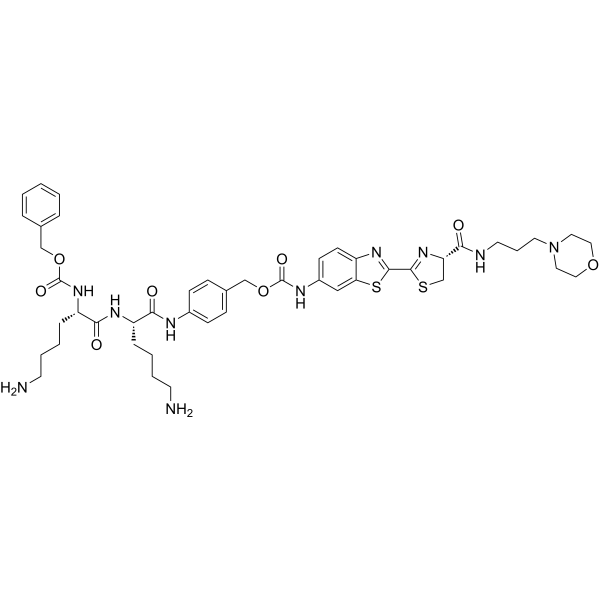
    NCIC-VIS is a lysosome-targeted, viscosity-sensitive two-photon near-infrared fluorescent probe. NCIC-VIS has a rigid structure that can restrict molecular torsion, thereby increasing the fluorescence quantum yield and two-photon absorption cross-section. NCIC-VIS enables real-time imaging of the autophagy process in cells .
    NCIC-VIS
  • HY-D2338

    Fluorescent Dye Others
    PMBD is a lysosome (Lyso)-targeting fluorescent probe. PMBD selectively and sensitively detects endogenous N-acylethanolamine amidase (NAAA), allowing real-time visual monitoring of endogenous NAAA in living cells. PMBD has a maximum absorption peak at 350 nm. After the metabolism of NAAA, the maximum absorption peak of the product AMBD shifts red to 450 nm, and a significant fluorescence emission signal appears at 550 nm .
    PMBD
  • HY-151544

    Fluorescent Dye Others
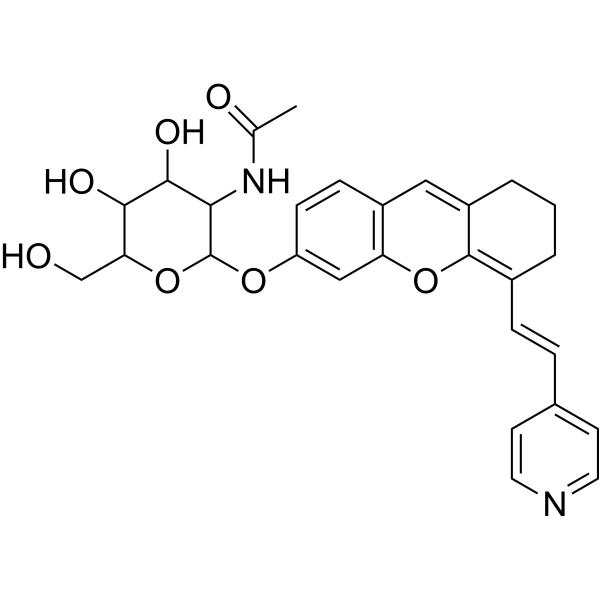
    PNE-Lyso is a activatable fluorescent probe. PNE-Lyso can be used to detect intracellular pH and hexosaminidases with two kinds of fluorescence signals. PNE-Lyso can be used to distinguish apoptosis from necrosis through visualizing lysosome morphology. PNE-Lyso is capable of investigating the agent-induced cell death process .
    PNE-Lyso
  • HY-D2254

    Fluorescent Dye Others
    CTB probe-1 (probe 1) a lysosome-targeting fluorogenic small-molecule probe for fluorescence imaging in living cells .
    CTB probe-1
  • HY-N16306

    Fluorescent Dye Others
    Lyso-laurdan, a derivative of Laurdan (HY-D0080), is a fluorescent probe. Lyso-Laurdan accumulates in the lysosome via a morpholine group that is entrapped in lysosome via protonation to its cationic form in the acidic compartment. Lyso-laurdan is localized to lysosomes, allowing for the study of lysosomal membranes .
    Lyso-laurdan
  • HY-155717

    Autophagy Pim Cancer
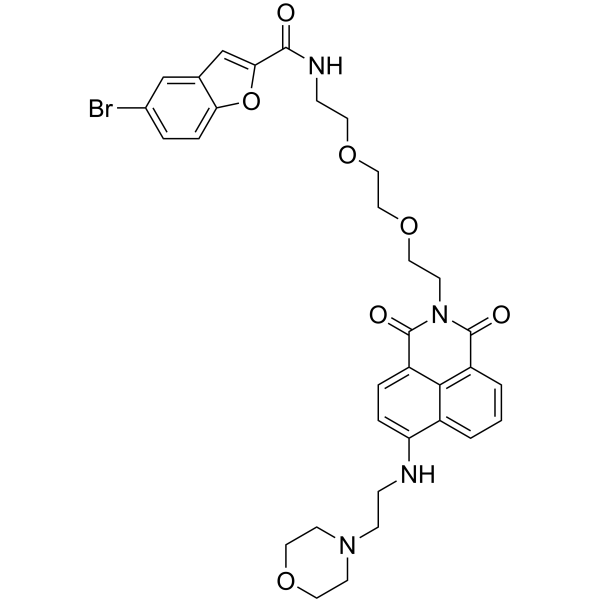
    NDBM is a probe and binds to tumor-specific Pim-1 kinase, releases strong fluorescence, and produces cytotoxicity, thus achieving cell screening and killing effects. NDBM can specifically target lysosomes and sensitively respond to pH. NDBM can be used to track the pH changes in the intracellular environment under conditions of autophagy and external stimulation .
    NDBM
  • HY-151468

    Fluorescent Dye Others
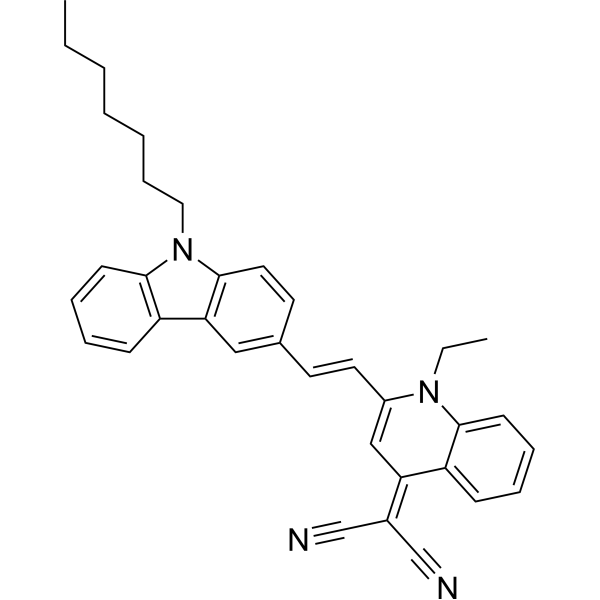
    AIECbz-LD-C7 is an aggregation-induced emission (AIE) probe based on the conjugation of quinoline-malononitrile (QM) and carbazole. AIECbz-LD-C7 has excellent LD-specificity. AIECbz-LD-C7 can be used for tracking the dynamic changes of LDs and studying the association between LDs and lysosome/endoplasmic reticulum (ER) .
    AIE-Cbz-LD-C7
  • HY-D3215

    Fluorescent Dye Neurological Disease
    Lyso-Cu (II) is a lysosome-targeted divalent copper ion probe. Lyso-Cu (II) is applicable to the research of Wilson's disease, Menkes disease and Alzheimer's disease .
    Lyso-Cu(II)
  • HY-D3207

    Fluorescent Dye Neurological Disease
    DHUCu-1 is a lysosome-targeted NIR divalent copper ion probe with high water solubility. DHUCu-1 serves as a tool for investigating the physiological functions of Cu 2+ and related diseases, such as Menke syndrome, Wilson's disease, and Alzheimer's disease .
    DHUCu-1
  • HY-DY1082

    Fluorescent Dye Others
    Green DND-26 (solution) is a green fluorescently labeled lysosomal probe with a maximum excitation/emission wavelength of 504/511 nm. The structure is composed of a fluorescein group and linked weak bases, which can freely cross the cell membrane and generally gather on spherical organelles. Green DND-26 is suitable for observing the internal biosynthesis and related pathogenesis of lysosomes .
    Solvent and concentration: DMSO: 2 mM
    Green DND-26 (solution)
  • HY-D3251

    Fluorescent Dye Cancer
    LCP is a fluorescent probe applicable for subcellular localization. LCP responds to polarity changes in the cellular microenvironment via fluorescence resonance energy transfer, emitting blue fluorescence in low-polarity environments and red fluorescence in high-polarity environments. LCP enables dual-color visualization of dynamic changes in lysosomes and cytoplasmic membranes during drug-induced cell apoptosis, and monitors cell viability through localization and emission color changes. LCP can be used in cancer research .
    LCP
  • HY-D3250

    Fluorescent Dye NO Synthase Cardiovascular Disease
    PYSNO is a lysosome-targeted fluorescent probe based on a pyridazinone skeleton (λem=515-565 nm, λex=405 nm) that can be used to track nitric oxide (NO) production in vivo. PYSNO exhibits a rapid, highly sensitive and highly selective "turn-on" response to endogenous and exogenous NO by blocking photoinduced electron transfer and regulating radiative decay rates. PYSNO enables precise in vivo monitoring in a mouse model of myocardial fibrosis and can be applied to the research of related diseases .
    PYSNO
  • HY-D2998

    Fluorescent Dye Others
    ONOO-LysopH is a new Rhodamine-based near-infrared fluorescent probe. ONOO-LysopH is acid-sensitive, exhibiting rapid near-infrared fluorescence enhancement around 686 nm under acidic pH conditions. ONOO-LysopH also displays a rapid NIR turn-on fluorescence around 678 nm for ONOO− at physiological pH. ONOO-LysopH can target lysosomes to track lysosomal pH changes and image endogenous/exogenous ONOO− in live cells. ONOO-LysopH is applicable for cell imaging ONOO− and tracking lysosomal pH changes .
    ONOO-LysopH
  • HY-D3198

    Fluorescent Dye Endogenous Metabolite Cancer
    NIR-fluorescent ceramide is a neutral near-infrared (NIF) fluorescent probe (λem=650 nm) based on the C-bridged nitrobenzoxadiazole SCOTfluor core, which enables visualization of lipid metabolic processes such as sphingolipid trafficking. The emission signal of NIR-fluorescent ceramide increases significantly in liposomal environments. NIR-fluorescent ceramide acts as an intracellular trafficking tracer, localizing to regions surrounding the endoplasmic reticulum and Golgi apparatus within a short period, and then translocating to recycling lysosomes over a longer period, thus enabling real-time visualization of sphingolipid trafficking and biological lipid functions in living cells. NIR-fluorescent ceramide also generates metabolic uptake profiles and provides multiple metabolic readouts in human cancer cell lines .
    NIR‐fluorescent ceramide

Inquiry Online

Your information is safe with us. * Required Fields.

Salutation


Country or Region *

Applicant Name *


Organization Name *

Department *


Email Address *


Product Name *

Cat. No.


Requested quantity *

Phone Number *


Remarks

Inquiry Online

Inquiry Information

Product Name:
Cat. No.:
Quantity:
MCE Japan Authorized Agent:

