
15 Results for "

manifestations

" in MedChemExpress (MCE) Product Catalog:
Products (15)

15 Results for "manifestations" in MCE Product Catalog:

2
2 Cited Publications
Cat. No.: HY-101392
CAS No.: 486-84-0
Purity:  99.91%
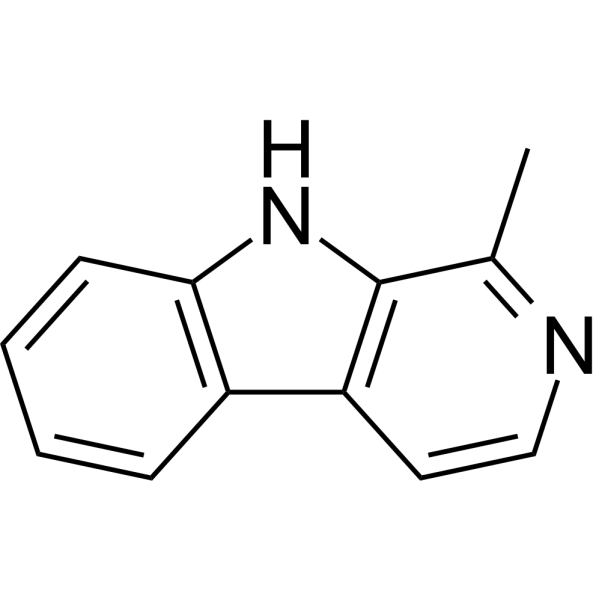
Harmane is a benzodiazepine receptor inhibitor (IC50=7 μM), with IC50 values for mACh, Opioid Receptor, MAO-A/B, and α2-adrenergic receptor of 24 μM, 2.8 μM, 0.5 μM, 5 μM, and 18 μM, respectively. Harmane inhibits the I1 imidazoline receptor (IC50 = 30 nM) to reduce blood pressure and has antidepressant, anti-anxiety, anticonvulsant, and analgesic effects. Harmane inhibits dopamine biosynthesis by decreasing tyrosine hydroxylase (TH) activity and enhancing L-DOPA-induced cytotoxicity in PC12 cells. Additionally, Harmane can increase the mutagenic effect induced by 2-acetylaminofluorene (AAF) .
loading...
    loading...
2
2 Cited Publications
Cat. No.: HY-101392A
CAS No.: 21655-84-5
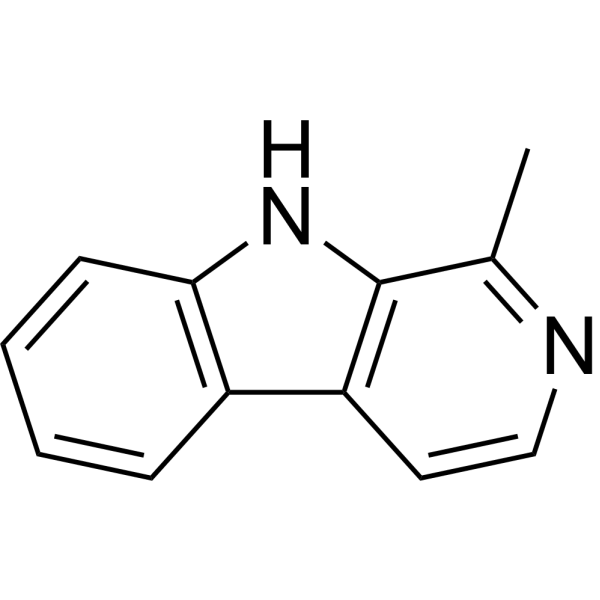
Harmane hydrochloride is a benzodiazepine receptor inhibitor (IC50=7 μM), with IC50 values for mACh, Opioid Receptor, MAO-A/B, and α2-adrenergic receptor of 24 μM, 2.8 μM, 0.5 μM, 5 μM, and 18 μM, respectively. Harmane hydrochloride inhibits the I1 imidazoline receptor (IC50 = 30 nM) to reduce blood pressure and has antidepressant, anti-anxiety, anticonvulsant, and analgesic effects. Harmane hydrochloride inhibits dopamine biosynthesis by decreasing tyrosine hydroxylase (TH) activity and enhancing L-DOPA-induced cytotoxicity in PC12 cells. Additionally, Harmane hydrochloride can increase the mutagenic effect induced by 2-acetylaminofluorene (AAF) .
loading...
    loading...
1
1 Cited Publications
Cat. No.: HY-132588
CAS No.: 1834610-13-7
Synonyms: ALN-G01
Lumasiran (ALN-G01), a siRNA product, reduces hepatic oxalate production by targeting glycolate oxidase. By silencing the gene encoding glycolate oxidase, Lumasiran depletes glycolate oxidase and thereby inhibits the synthesis of oxalate, which is the toxic metabolite that is directly associated with the clinical manifestations of Primary hyperoxaluria type 1 (PH1) .
loading...
    loading...
Cat. No.: HY-59291
CAS No.: 1188-21-2
Synonyms: N-Acetyl-L-leucine
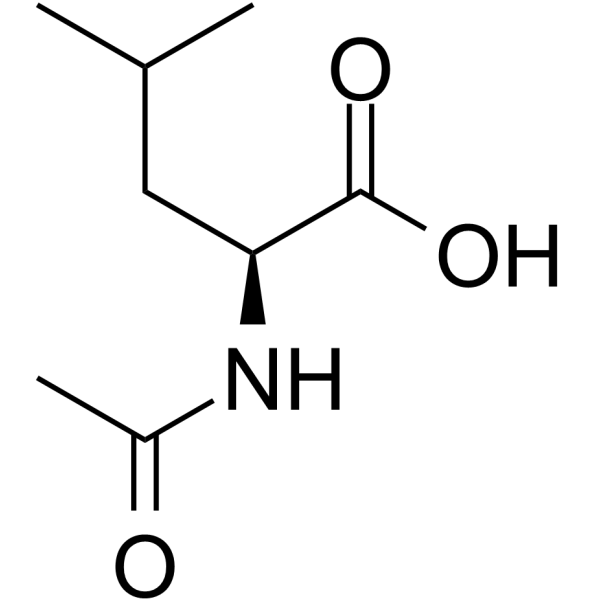
Levacetylleucine (N-acetyl-L-leucine), an orally bioavailable and brain-penetrant compound, is an acetylated derivative of amino acid Leucine. Levacetylleucine is the active form of N-acetyl-leucine (NAL). Levacetylleucine attenuates neuronal death and neuroinflammation in the cortical tissue of mice. Levacetylleucine also potentially improves ameliorates lysosomal and metabolic dysfunction. Levacetylleucine improves compensation of postural symptoms after unilateral chemical labyrinthectomy (UL) in rats. Levacetylleucine is promising for research of neurological manifestations of Niemann-Pick disease type C, traumatic brain injury and neurodegeneration prevention .
loading...
    loading...
Cat. No.: HY-B1834
CAS No.: 3562-63-8
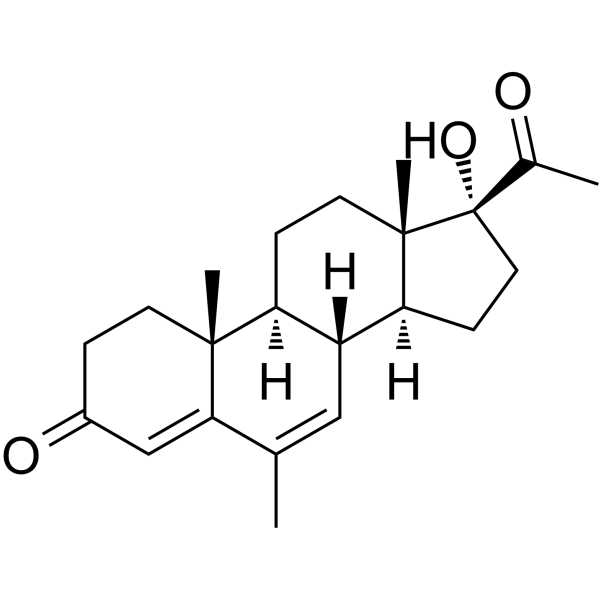
Megestrol is an orally active glucocorticoid and progesterone receptor agonist. Megestrol can alleviate anorexia, cachexia or unexplained significant weight loss associated with acquired immunodeficiency syndrome (AIDS). Megestrol may cause manifestations similar to those of glucocorticoids and increase the risk of mental disorders .
loading...
    loading...
Cat. No.: HY-P990540
Synonyms: CSL346; Reflocibart

Target:  

VEGFR

Research Areas:  

Metabolic Disease

Anti-VEGFB Antibody (CSL346; Reflocibart) is a humanized IgG4κ monoclonal antibody targeting VEGF-B, which binds to VEGF-B with high affinity to reduce its activity. Anti-VEGFB Antibody (CSL346) inhibits ectopic lipid deposition in the kidney, improves the histological manifestations of glomerular injury, and reduces proteinuria in animal models. Anti-VEGFB Antibody (CSL346) can be used in studies related to diabetic nephropathy .
loading...
    loading...
Cat. No.: HY-101392R
CAS No.: 486-84-0
Harmane (Standard) is the analytical standard of Harmane. This product is intended for research and analytical applications. Harmane, a β-Carboline alkaloid (BCA), is a potent neurotoxin that causes severe action tremors and psychiatric manifestations. Harmane shows 1000-fold selectivity for I1-Imidazoline receptor (IC50=30 nM) over α2-adrenoceptor (IC50=18 μM). Harmane is also a potent and selective inhibitor of monoamine oxidase (MAO) (IC50s=0.5 and 5 μM for human MAO A/B, respectively). Harmane exhibits comutagenic effect .
loading...
    loading...
Cat. No.: HY-B1834R
CAS No.: 3562-63-8
Megestrol (Standard) is the analytical standard of Megestrol. This product is intended for research and analytical applications. Megestrol is an orally active glucocorticoid and progesterone receptor agonist. Megestrol can alleviate anorexia, cachexia or unexplained significant weight loss associated with acquired immunodeficiency syndrome (AIDS). Megestrol may cause manifestations similar to those of glucocorticoids and increase the risk of mental disorders.
loading...
    loading...
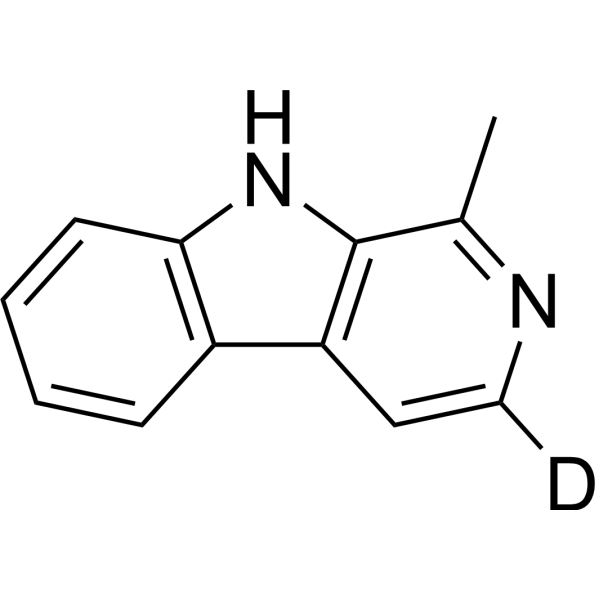
Cat. No.: HY-101392S
CAS No.: 3013688-52-0
Purity:  98.01%
Harmane-d is the deuterium labeled Harmane. Harmane, a β-Carboline alkaloid (BCA), is a potent neurotoxin that causes severe action tremors and psychiatric manifestations. Harmane shows 1000-fold selectivity for I1-Imidazoline receptor (IC50=30 nM) over α2-adrenoceptor (IC50=18 μM). Harmane is also a potent and selective inhibitor of monoamine oxidase (MAO) (IC50s=0.5 and 5 μM for human MAO A/B, respectively) .
loading...
    loading...
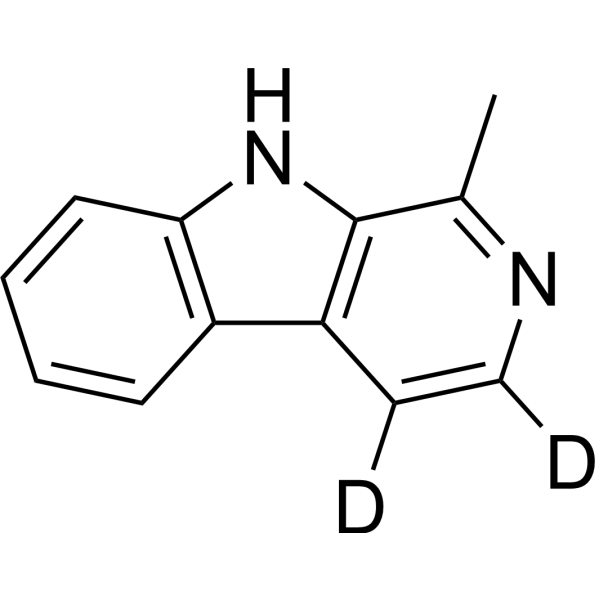
Cat. No.: HY-101392S1
Harmane-d2 is the deuterium labeled Harmane. Harmane, a β-Carboline alkaloid (BCA), is a potent neurotoxin that causes severe action tremors and psychiatric manifestations. Harmane shows 1000-fold selectivity for I1-Imidazoline receptor (IC50=30 nM) over α2-adrenoceptor (IC50=18 μM). Harmane is also a potent and selective inhibitor of monoamine oxidase (MAO) (IC50s=0.5 and 5 μM for human MAO A/B, respectively) .
loading...
    loading...
Cat. No.: HY-N18828
CAS No.: 8015-73-4
Category:  

Extract

Target:  

Bacterial

Basil oil is an exquisite natural substance extensively employed in the research of biomedical science due to its profound manifestation of antimicrobial and antioxidant attributes. Infused with copious quantities of bioactive substances such as eugenol and linalool, basil oil annihilates bacteria and fungi.
loading...
    loading...
Cat. No.: HY-127119
CAS No.: 525-02-0
Target:  

Endogenous Metabolite

Research Areas:  

Neurological Disease

Benanserin hydrochloride is a serotonin antagonist with psychopharmacological activity. Benanserin hydrochloride can be used to study specific behavioral manifestations in monitoring systems for drug effects. The effects of Benanserin hydrochloride can be sensitively and effectively assessed, for example, by measuring muscle movement capacity and reaction time. Benanserin hydrochloride is suitable for monitoring specific muscle physiological changes. The biological activity of Benanserin hydrochloride can provide reproducible bioassay parameters for experiments .
loading...
    loading...
Cat. No.: HY-L108
3,033 compounds

Depression is a serious global affective disorder and one of the most common neurological diseases whose clinical manifestations are low mood, loss of interest, anhedonia, loss of energy, and fatigue, people with major depressive disorder (MDD) can even have suicidal thoughts and behaviors.

Currently available antidepressants have significant limitations, including a long time lag for a therapeutic response (weeks to months) and low response rates. This is particularly problematic for a disease with a high suicide rate. Therefore, the development of new antidepressant drugs is particularly urgent.

MCE offers a unique collection of 3,033 compounds with antidepressant activities or targeting the unique targets of depression. MCE Antidepressant Compound Library is a useful tool for exploring the mechanism of depression and discovering new drugs for depression.

Cat. No.: HY-L199
4,957 compounds

Non-alcoholic fatty liver disease (NAFLD) is one of the most common liver diseases worldwide and is the primary liver manifestation of metabolic syndrome. The growth of NAFLD has coincided with the obesity epidemic. NAFLD is composed of excess lipid accumulation in the liver, causing steatotoxicity, and shows a wide range of histopathological abnormalities. NAFLD may progress from simple steatosis to Non-alcoholic steatohepatitis (NASH) with or without fibrosis (NASH), and eventually to cirrhosis and hepatocellular carcinoma. To date, very few drugs have been approved for marketing specifically for the treatment of NAFLD, so increased efforts to develop NAFLD drugs are necessary.

MCE designs a unique collection of 4,957 small molecules with definite or potential anti-NAFLD activity, which is an important tool for studying the pathological mechanism of NAFLD and developing drugs for NAFLD.

Cat. No.: HY-L125
2,792 compounds

Pulmonary fibrosis (PF), also known as diffuse interstitial pulmonary fibrosis, is a very common end-stage manifestation of several diseases, including idiopathic pulmonary fibrosis (IPF), pulmonary hypertension, and scleroderma, characterised by excessive matrix deposition and destruction of the lung architecture, finally leading to respiratory insufficiency. PF has become a global disease with significantly increased incidence rate, and the most common form of pulmonary fibrosis is idiopathic pulmonary fibrosis (IPF).

Lung fibrosis is a complex disease, a multitude of signal factors and signaling pathways is disrupted in this complex disease, such as TGF-β, Wnt, VEGF and PI3K–Akt. MCE offers a unique collection of 2,792 compounds with identified and potential anti-pulmonary fibrosis activity. MCE Anti-Pulmonary Fibrosis Compound Library is a useful tool for anti-pulmonary fibrosis drugs screening and other related research.

  • 1

