
1. Search Result
Search Result
Results for "

onion

" in MedChemExpress (MCE) Product Catalog:

24

Inhibitors & Agonists

1

Fluorescent Dye

1

Biochemical Assay Reagents

14

Natural
Products

2

Isotope-Labeled Compounds

Cat. No. Product Name Target Research Areas Chemical Structure
  • HY-107863

    Oligolevulose

    Biochemical Assay Reagents Bacterial Infection Metabolic Disease
    Fructooligosaccharides (Oligolevulose) are a class of orally active dietary fibers and prebiotics. Fructooligosaccharides exist in foods such as breast milk, wheat, honey, onions, garlic and bananas. Fructooligosaccharides resist hydrolysis by the body's digestive enzymes and stimulate the growth of beneficial intestinal bacteria through colonic fermentation. Fructooligosaccharides significantly prevent bone loss in the femur and lumbar spine .
    Fructooligosaccharides
  • HY-128454

    Environmental Pollutants Biochemical Assay Reagents Infection Neurological Disease
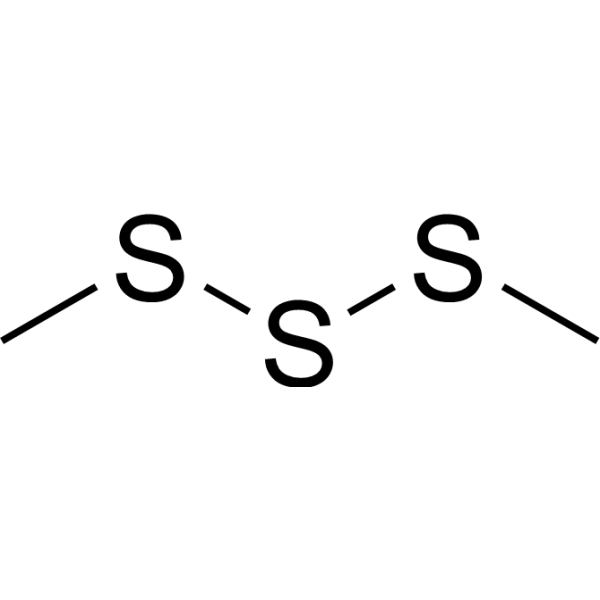
    Dimethyl trisulfide is a cyanide scavenger. Dimethyl trisulfide can be isolated from garlic, onions, broccoli and similar plants. Dimethyl trisulfide converts cyanide into thiocyanate. Dimethyl trisulfide is used by saprophagous insects to locate breeding sites (decaying organic matter), and is also used by deceptive flowers in brood sites to attract such insects. Dimethyl trisulfide induces electrophysiological responses in houseflies .
    Dimethyl trisulfide
  • HY-178872

    Sodium 2-propenyl thiosulfate; 2PTS

    COX Inflammation/Immunology Cancer
    Allyl thiosulfate (Sodium 2-propenyl thiosulfate) is found in Allium plants such as garlic and onion. Allyl thiosulfate can inhibit COX activity and reduce GSH concentration in platelets. Allyl thiosulfate exhibits anti-aggregatory and anti-cancer effects. Allyl thiosulfate can be used for the researches of cancer, inflammation and cardiovascular disease .
    Allyl thiosulfate
  • HY-117089

    Environmental Pollutants Fungal Infection
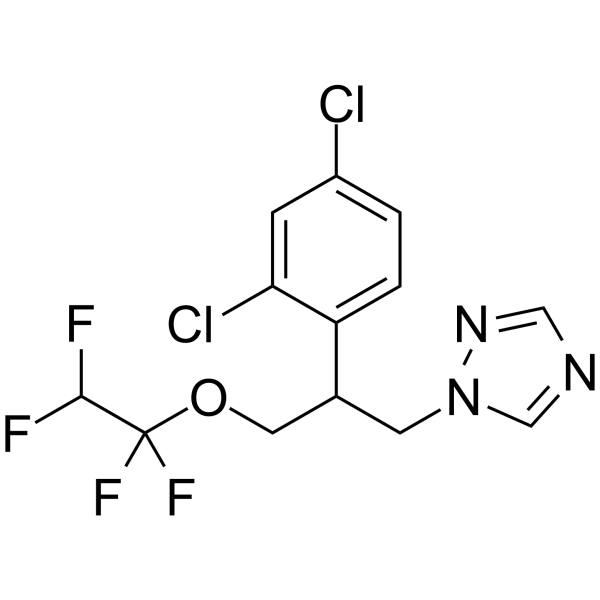
    Tetraconazole is a selective irreversible inhibitor of 14-α-sterol demethylase (CYP51) with antifungal activity. Tetraconazole competitively binds to the enzyme to block fungal ergosterol synthesis, resulting in cell membrane damage. The EC50 of tetraconazole against wheat pathogens is 0.382-0.802 mg/L, and the EC50 against onion root tip meristem cell growth is 6.7 mg/L, and (R)-(+)-Tetraconazole is 1.49-1.98 times more active than (S)-(-)-Tetraconazole. Tetraconazole can also induce oxidative stress and chromosomal aberrations in plant cells .
    Tetraconazole
  • HY-111825A

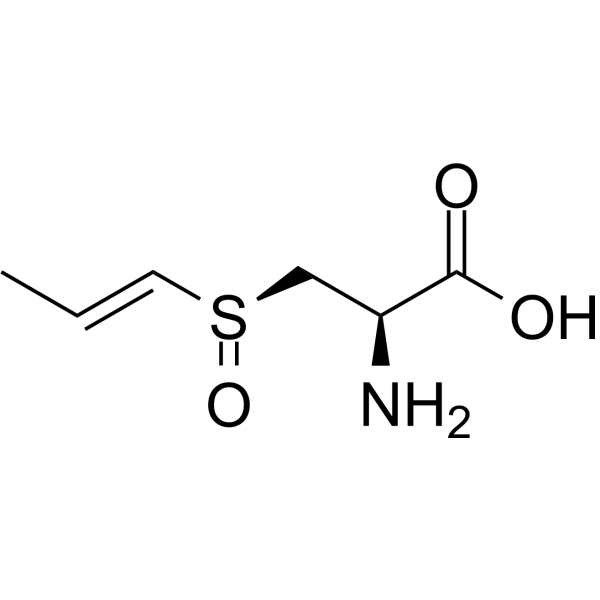
    Isoalliin; trans-(+)-S-1-Propenyl-L-cysteine sulfoxide

    Endogenous Metabolite Others
    (R)-1-PeCSO (trans-(+)-S-1-Propenyl-L-cysteine sulfoxide) is the most abundant flavor precursor in onions .
    (R)-1-PeCSO
  • HY-N7436

    Glutathione S-transferase Cancer
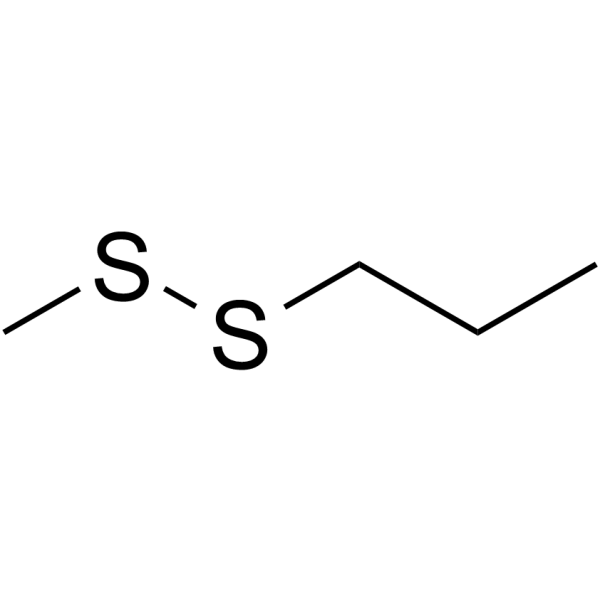
    Methyl propyl disulfide is an orally administrable volatile sulfide present in onions. Methyl propyl disulfide reduces the activity of spermine N'1-acetyltransferase (SAT), inhibits cell proliferation, and decreases the induction of placental glutathione S-transferase (GST-P)-positive hepatocyte foci in rat livers. Methyl propyl disulfide can be used in studies related to the mechanism of hepatocarcinogenesis .
    Methyl propyl disulfide
  • HY-N12510

    Others Others
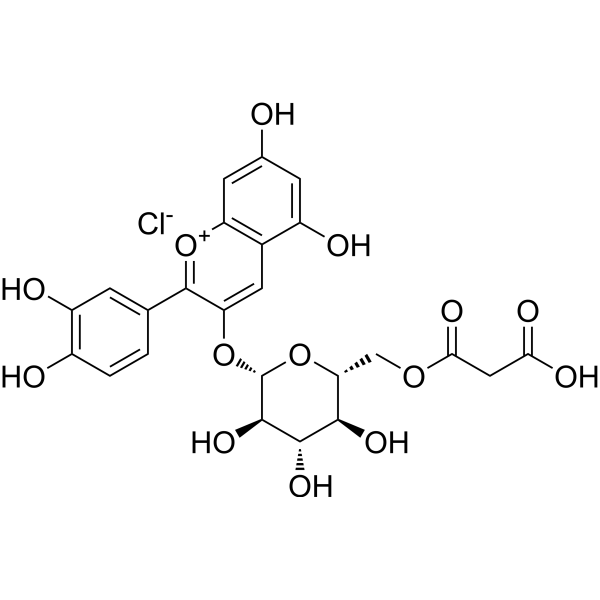
    Cyanidin 3-(6′′-malonylglucoside) (Compound 3) is an anthocyanin that can be isolated from Bulbs of Red Onion, Allium cepa L .
    Cyanidin 3-(6′′-malonylglucoside)
  • HY-W013605

    Insecticide Infection
    (E)-4-Methoxycinnamaldehyde acts as an oviposition deterrent against Delia antiqua, with a BR90 (concentration eliciting 90% deterrency) of 0.38% when formulated in Polyethylene glycol (HY-Y0873A). (E)-4-Methoxycinnamaldehyde is used to study oviposition behavior in Delia antiqua .
    (E)-4-Methoxycinnamaldehyde
  • HY-N1901

    Glycosidase Metabolic Disease
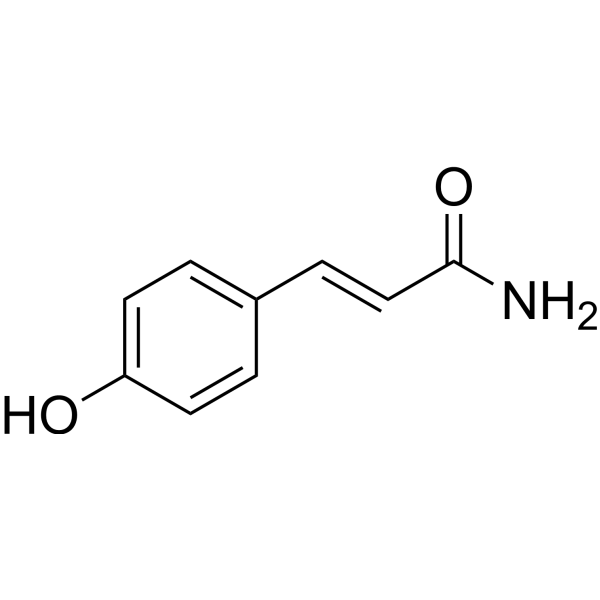
    (E)-p-Coumaramide is an α-Glucosidase inhibitor that can be isolated from Welsh onion .
    (E)-p-Coumaramide
  • HY-N12977

    Others Others
    Dipropenyl sulfide is a constituent of Garlic oil, onion oil .
    Dipropenyl sulfide
  • HY-Z17187

    13-Deoxydaunorubicin

    Antibiotic Bacterial Infection Cancer
    Feudomycin A is an onion ring antibiotic with anti-tumor cell activity .
    Feudomycin A
  • HY-N18791

    Bacterial Infection
    Onion oil, extracted from onions, has significant antibacterial and anti-inflammatory properties, which are helpful in the study of bacterial infections, respiratory diseases, and skin abnormalities.
    Onion oil
  • HY-N7436S

    Isotope-Labeled Compounds Cancer
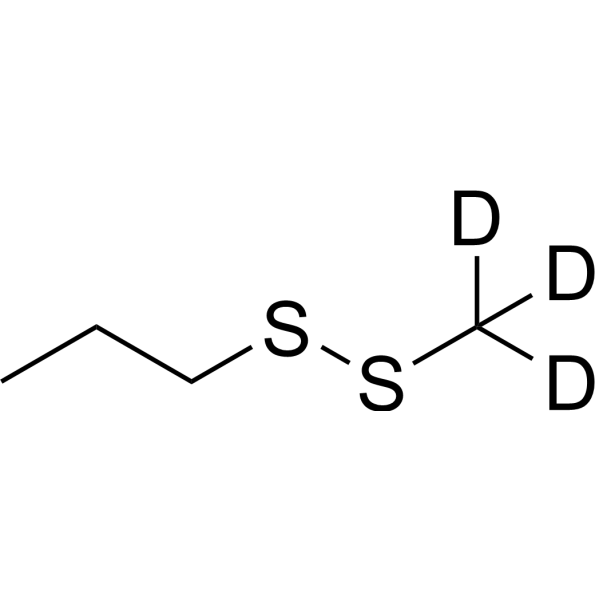
    Methyl propyl disulfide-d3 is deuterated labeled Methyl propyl disulfide (HY-N7436). Methyl propyl disulfide is an volatile sulfur-containing compound produced in garlic and onions with anticaner effect .
    Methyl propyl disulfide-d3
  • HY-N7436R

    Reference Standards Others Cancer
    Methyl propyl disulfide (Standard) is the analytical standard of Methyl propyl disulfide. This product is intended for research and analytical applications. Methyl propyl disulfide is an volatile sulfur-containing compound produced in garlic and onions with anticaner effect[1][2].
    Methyl propyl disulfide (Standard)
  • HY-128454R

    Reference Standards Endogenous Metabolite Others
    Dimethyl trisulfide (Standard) is the analytical standard of Dimethyl trisulfide. This product is intended for research and analytical applications. Dimethyl trisulfide is an organic chemical compound and the simplest organic trisulfide found in garlic, onion, broccoli, and similar plants. Dimethyl trisulfide is a cyanide antidote. Dimethyl trisulfide formation requires the thermal degradation of Met .
    Dimethyl trisulfide (Standard)
  • HY-N11890

    Others Others
    Isorhamnetin 4′-glucoside is a flavonol monoglycoside and also a minor flavonoid component. Isorhamnetin 4′-glucoside can be isolated from red-skinned onions (Allium cepa L.) in southern Italy .
    Isorhamnetin 4′-glucoside
  • HY-N11889

    Others Others
    Isorhamnetin 3,4′-diglucoside is a flavonol diglucoside that can be isolated from red-skinned onions (Allium cepa L.) from southern Italy, shallots (Allium ascalonicum Hort.), Zea mays pollen, and flowers of Crocus chrysanthus-biflorus cultivars .
    Isorhamnetin 3,4′-diglucoside
  • HY-W721611

    Herbicide Others
    Terbucarb is a phenylcarbamate herbicide. Terbucarb disrupts the mitotic microtubule organizing centers in plant cells, leading to the formation of multipolar spindles and branched phragmoplasts, thereby inhibiting plant growth. An "anaphase star" pattern induced by Terbucarb is observed in onion root tips. Terbucarb is cytotoxic to isolated rat hepatocytes, inducing cell death accompanied by depletion of intracellular ATP, protein thiols and glutathione .
    Terbucarb
  • HY-D0335

    Biochemical Assay Reagents Others
    Acid blue 9 diammonium is a triarylmethane dye and inducer. Acid blue 9 diammonium induces chromosomal aberrations in onion root tip meristematic cells. Acid blue 9 diammonium exhibits cytogenetic toxicity to onion root tip meristematic cells .
    Acid blue 9 diammonium
  • HY-N7818

    Drug Derivative Others
    3-(Methylthio)propyl acetate is a heavy volatile sulfur compound with mushroom, onion, garlic odour. 3-(Methylthio)propyl acetate can be found in Vinhos Verdes wines. 3-(Methylthio)propyl acetate occurs in high content in Trajadura wines and low content in Azal Branco wines .
    3-(Methylthio)propyl acetate
  • HY-124920

    Mercaptodimethur

    Insecticide SOD Glutathione Peroxidase Reactive Oxygen Species (ROS) Cholinesterase (ChE) Infection Inflammation/Immunology
    Methiocarb (Mercaptodimethur) is an orally active carbamate insecticide. Methiocarb exerts dose-dependent toxic effects on onions. In addition to inhibiting acetylcholinesterase to induce cholinergic excitation, Methiocarb can induce lipid peroxidation in liver, kidney, brain and testicular tissues and alter reduced glutathione levels by generating ROS. Methiocarb can be used for agricultural pest control and research on oxidative stress-related cellular damage in mammals .
    Methiocarb
  • HY-124920S

    Mercaptodimethur-d3

    Isotope-Labeled Compounds Infection Inflammation/Immunology
    Methiocarb-d3 is the deuterium labeled Methiocarb (HY-124920). Methiocarb (Mercaptodimethur) is an orally active carbamate insecticide. Methiocarb exerts dose-dependent toxic effects on onions. In addition to inhibiting acetylcholinesterase to induce cholinergic excitation, Methiocarb can induce lipid peroxidation in liver, kidney, brain and testicular tissues and alter reduced glutathione levels by generating ROS. Methiocarb can be used for agricultural pest control and research on oxidative stress-related cellular damage in mammals .
    Methiocarb-d3
  • HY-N11839

    Drug Derivative Others
    Quercetin 7,4′-diglucoside is a flavonol diglucoside and a derivative of Quercetin (HY-18085) that can be found in Allium cepa L. Quercetin is a natural flavonoid compound that can activate or inhibit the activity of many proteins .
    Quercetin 7,4′-diglucoside
  • HY-W714199

    Potablan

    Herbicide Others
    Monalide (Potablan) is a soil-applied and contact herbicide that acts both via absorption by plant roots from the soil and through contact with the aboveground parts of plants. Monalide inhibits weed growth. Monalide decomposes within several weeks in soil and leaves no residues on crops .
    Monalide

Inquiry Online

Your information is safe with us. * Required Fields.

Salutation


Country or Region *

Applicant Name *


Organization Name *

Department *


Email Address *


Product Name *

Cat. No.


Requested quantity *

Phone Number *


Remarks

Inquiry Online

Inquiry Information

Product Name:
Cat. No.:
Quantity:
MCE Japan Authorized Agent:

